The Records Hidden in Stone: Historical Superlatives of the World’s Greatest Cathedrals
There’s something quietly humbling about standing inside a great cathedral. The ceilings push so far overhead that your eyes take a second to adjust.
The light comes in sideways through colored glass. And somewhere in the back of your mind, you start to wonder — how did people build this, and why did they build it so big?
The answer is rarely simple. Cathedrals were statements of faith, yes, but also of wealth, ambition, political power, and sometimes plain stubbornness.
They took centuries to finish. Some were never fully finished at all.
And in chasing the biggest, the tallest, the oldest, builders left behind a record of human determination that nothing else quite matches.
The Tallest Spire Ever Built
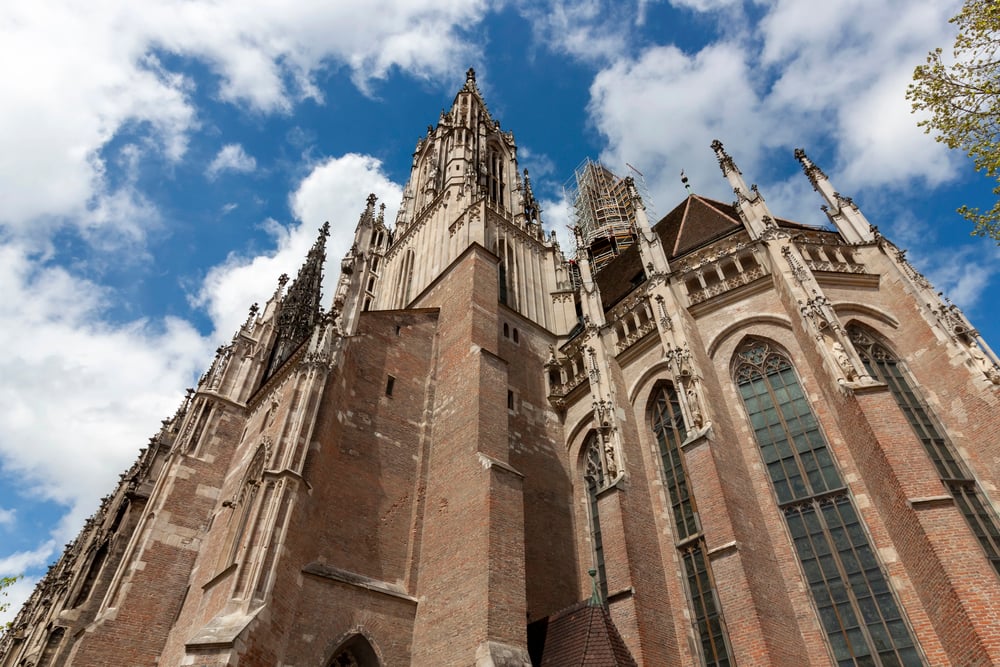
Ulm Minster in Germany holds the record for the world’s tallest church spire, reaching 161.5 meters. Construction began in 1377, but the spire wasn’t actually completed until 1890.
That’s over 500 years of work on a single building. The medieval builders who laid the foundation had no idea what the finished thing would look like, and the men who set the final stone had no memory of the men who started it.
The spire was designed to be seen from far across the flat Swabian countryside. On a clear day, you can spot it from more than 40 kilometers away.
The Largest Floor Area in the World
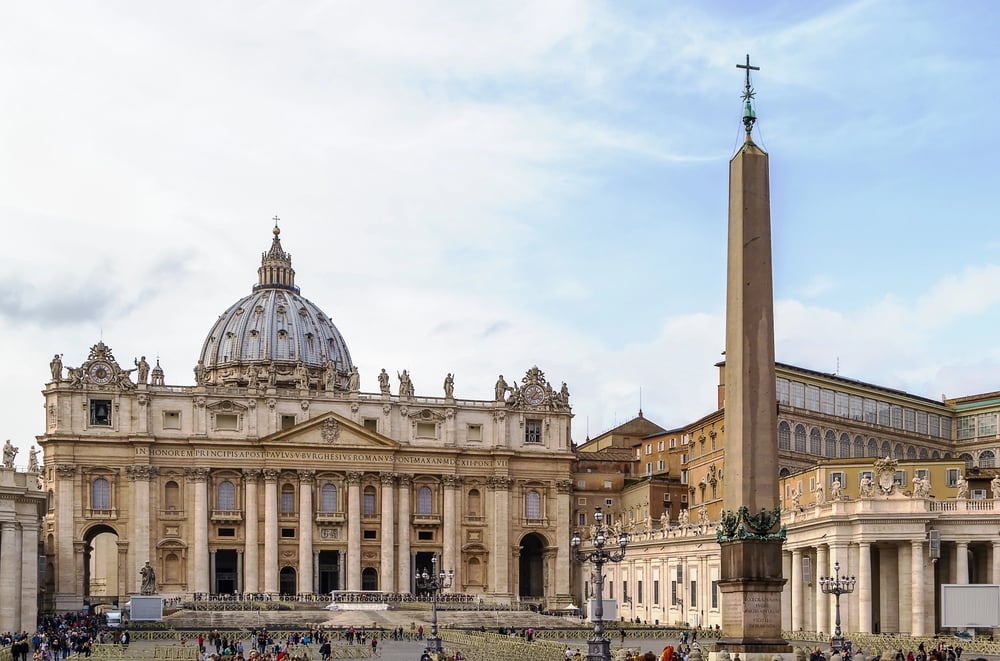
St. Peter’s Basilica in Vatican City covers roughly 15,160 square meters of floor space. That number doesn’t quite land until you hear what fits inside it — the entire Cathedral of Notre-Dame in Paris, with room to spare.
What makes St. Peter’s genuinely strange is that it was designed to be experienced from the inside rather than the outside. Michelangelo, Bramante, and Maderno all had a hand in it, and each man’s contribution shifted the proportions in ways that still confuse architectural historians.
The dome is so large and so carefully scaled that many visitors don’t realize how enormous it is until they see a person standing beneath it.
The Oldest Cathedral Still in Active Use
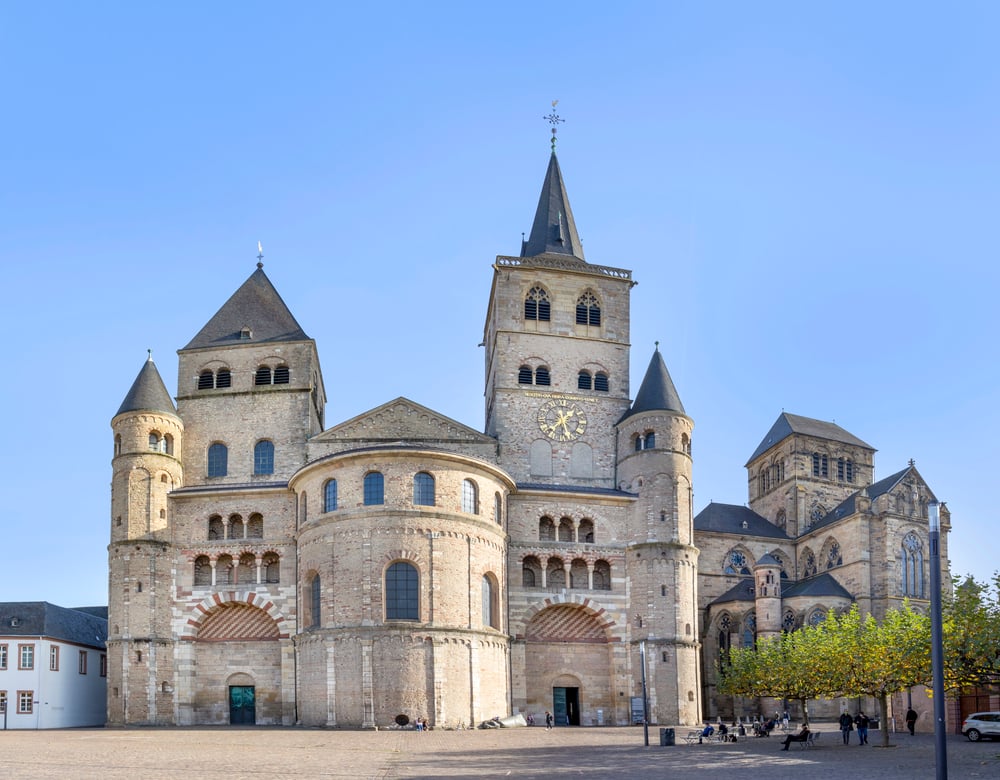
The Cathedral of Trier in Germany holds a strong claim to the title of the oldest cathedral in continuous use. Parts of the building date back to the 4th century, when the Roman Emperor Constantine ordered a massive basilica complex built on the site.
What stands today blends Roman foundations with Romanesque additions from the 11th and 12th centuries. “Oldest” is always a tricky category with cathedrals because so much depends on what you count.
Many buildings have been rebuilt, expanded, or destroyed and reconstructed. But Trier’s foundations have been in place since roughly 340 AD, and the church has functioned as a Christian place of worship ever since.
The Longest Construction Time
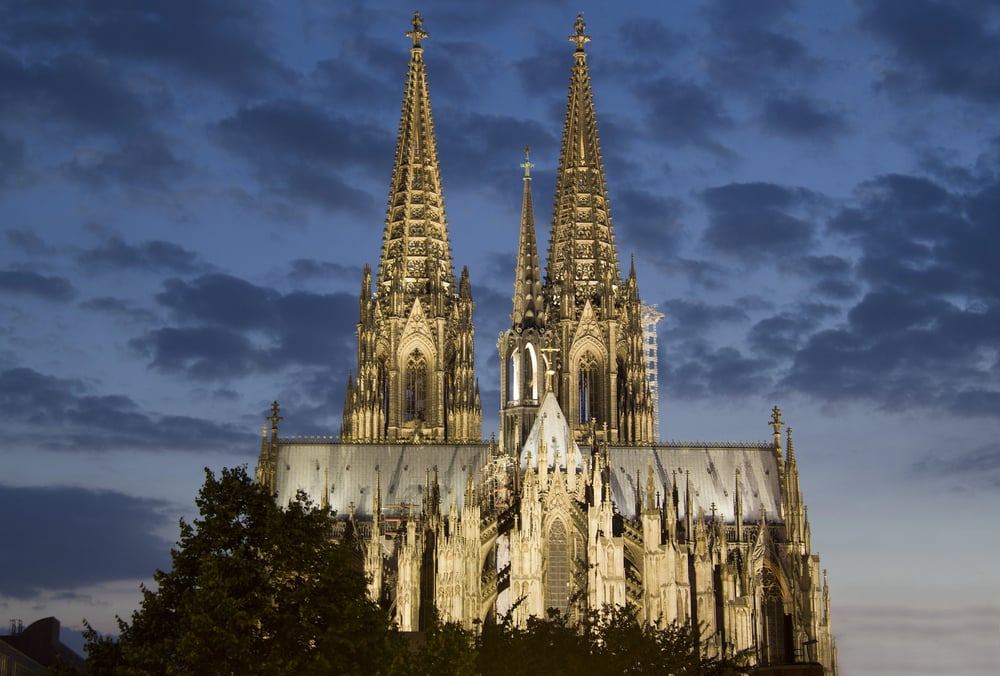
Cologne Cathedral in Germany took 632 years to complete. Work began in 1248. It stopped in the 1560s when funding ran out, leaving a massive wooden crane sitting at the top of the incomplete south tower for over 300 years — long enough that the crane became a city landmark in its own right.
Construction resumed in the 1840s, using the original medieval plans, and the cathedral was finally finished in 1880. It remains the largest Gothic cathedral in Northern Europe.
The twin spires dominate the skyline directly next to Cologne’s central train station, which creates one of the more jarring architectural contrasts on the continent.
The Widest Nave
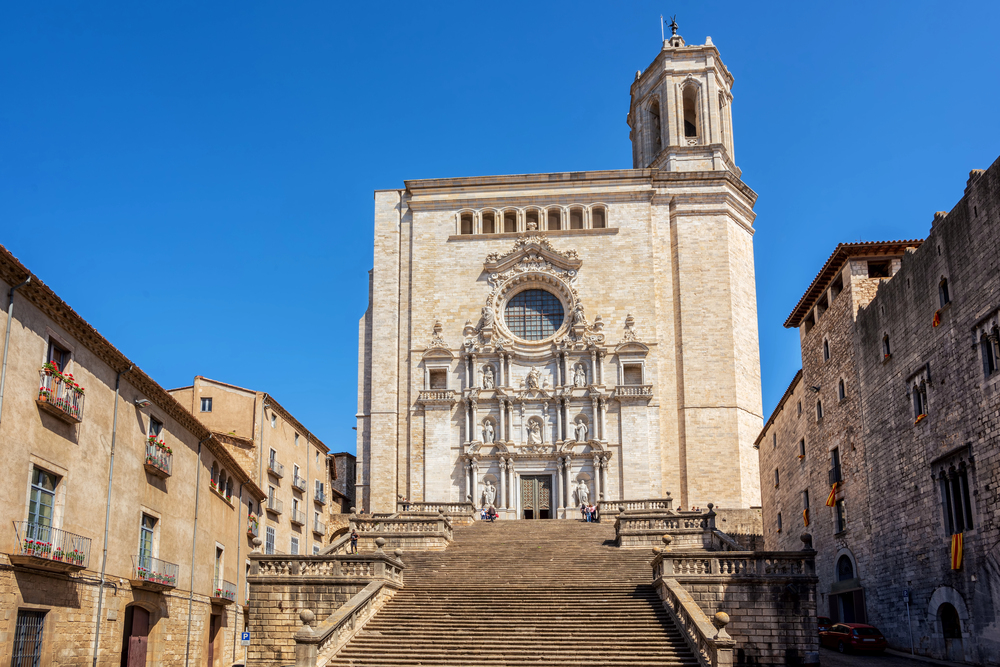
The Cathedral of Girona in Spain has the widest Gothic nave anywhere in the world, measuring 22.98 meters across. When the architects proposed this width in the 15th century, a committee of builders from across Europe was convened to decide whether it was structurally possible.
The committee was split. The project moved forward anyway, and the vault has been held for over 600 years.
The effect inside is extraordinary. Without side aisles to break up the space, the nave feels more like a great hall than a church.
The barrel vault overhead seems to float.
The Most Stained Glass
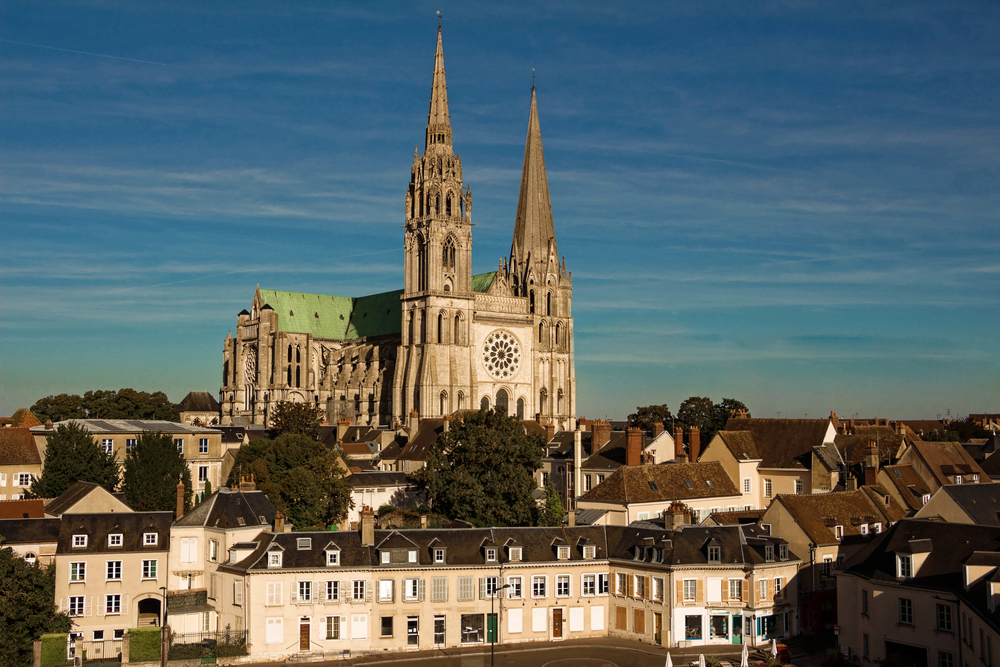
Chartres Cathedral in France contains approximately 2,600 square meters of medieval stained glass, making it the largest collection of medieval stained glass anywhere in the world. Most of it dates from the 12th and 13th centuries, and much of it survived the Second World War because local townspeople dismantled and hid each panel before German forces arrived. The deep blue of Chartres glass — sometimes called “Chartres blue” — comes from a combination of cobalt and other minerals that medieval craftsmen used.
The exact formula was lost for centuries. Modern glassmakers have studied and analyzed the original panels extensively and still can’t fully replicate the color.
The Highest Dome
— Photo by kasto
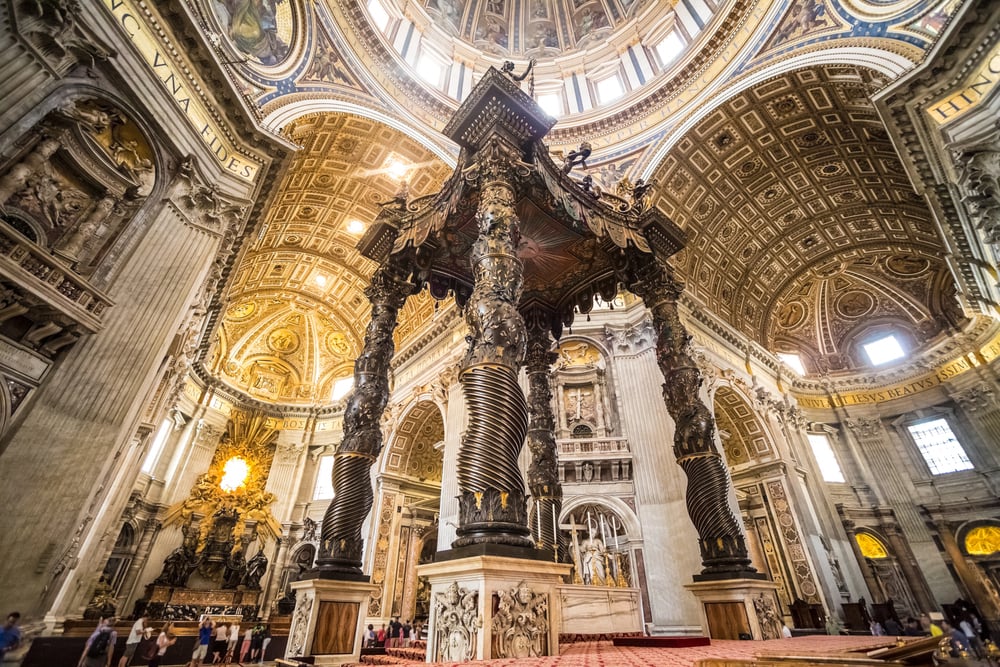
The dome of St. Peter’s Basilica rises to 136.57 meters above the floor — higher than any other dome in the world when measured from the interior. Michelangelo designed it, though he died before it was completed.
His original design called for a hemispherical dome similar to the Pantheon. His successor, Giacomo della Porta, elongated it, giving it the slightly elliptical profile you see today.
Climbing to the top involves 551 steps, and toward the end the walls tilt inward at an angle that makes the passage feel narrower than it actually is. The view from the lantern at the top looks out over the entire city of Rome.
The Heaviest Bell
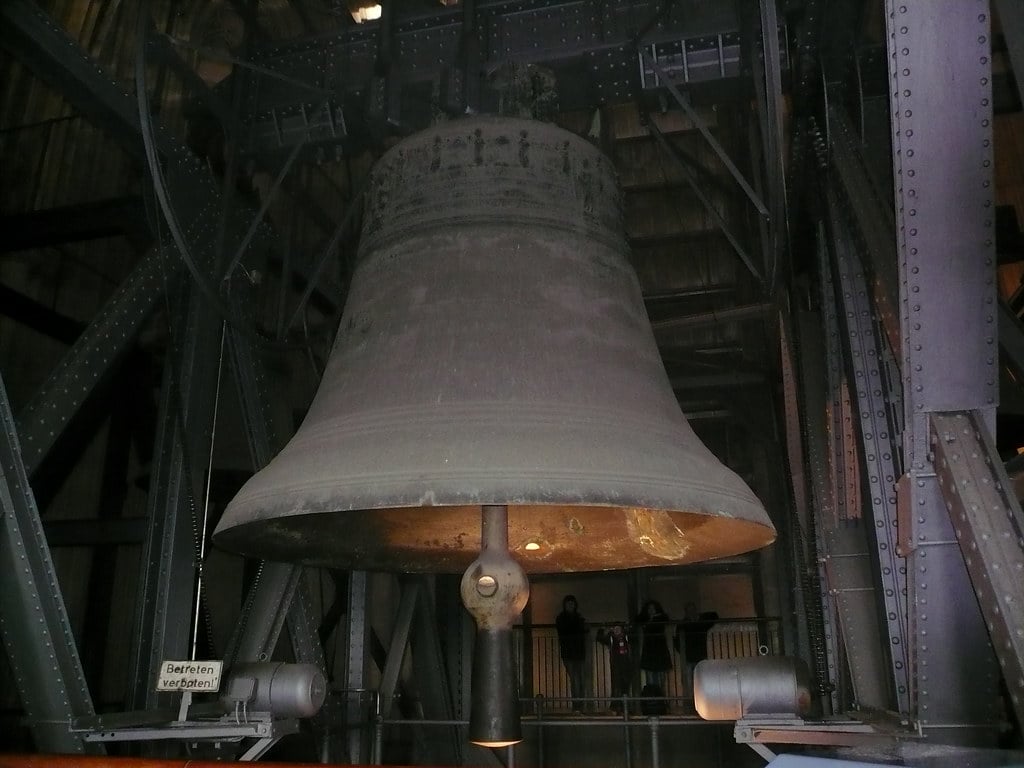
The Petersglocke, installed in Cologne Cathedral in 1924, weighs 24,000 kilograms — roughly the same as three adult African elephants. It is the largest free-swinging bell in the world. When it rings, the sound can be heard across the entire city.
Bells this size require precise engineering to swing at all. The Petersglocke hangs in the cathedral’s south tower on a wooden frame designed specifically to absorb the forces involved.
Even so, ringing it too frequently risks structural stress, so it is reserved for major feast days.
The Crypt That Goes Deepest into History
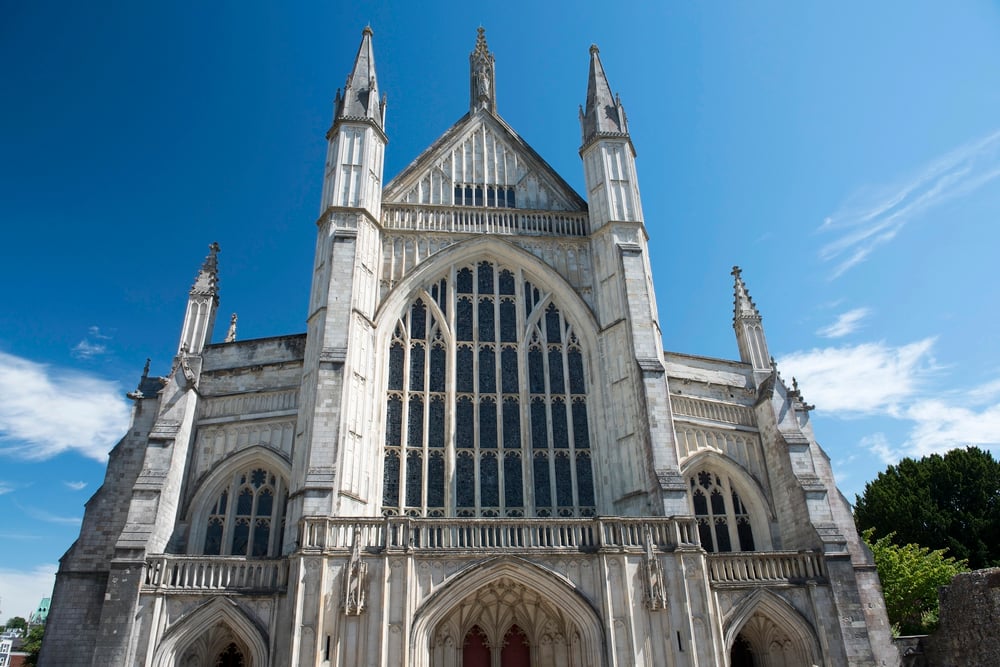
Winchester Cathedral in England has a crypt that regularly floods. The water table beneath the city sits so close to the surface that the crypt fills with groundwater every winter.
For decades, conservators worried about the effect on the cathedral’s foundations until a diver named William Walker spent six years, from 1906 to 1912, working entirely underwater to replace the crumbling peat foundations with concrete bags — one bag at a time, in complete darkness. The crypt is now famous partly for the flooding, which creates extraordinary reflections in winter, and partly for a modern sculpture by Antony Gormley that stands in the water when it rises.
The Most Lightning Strikes
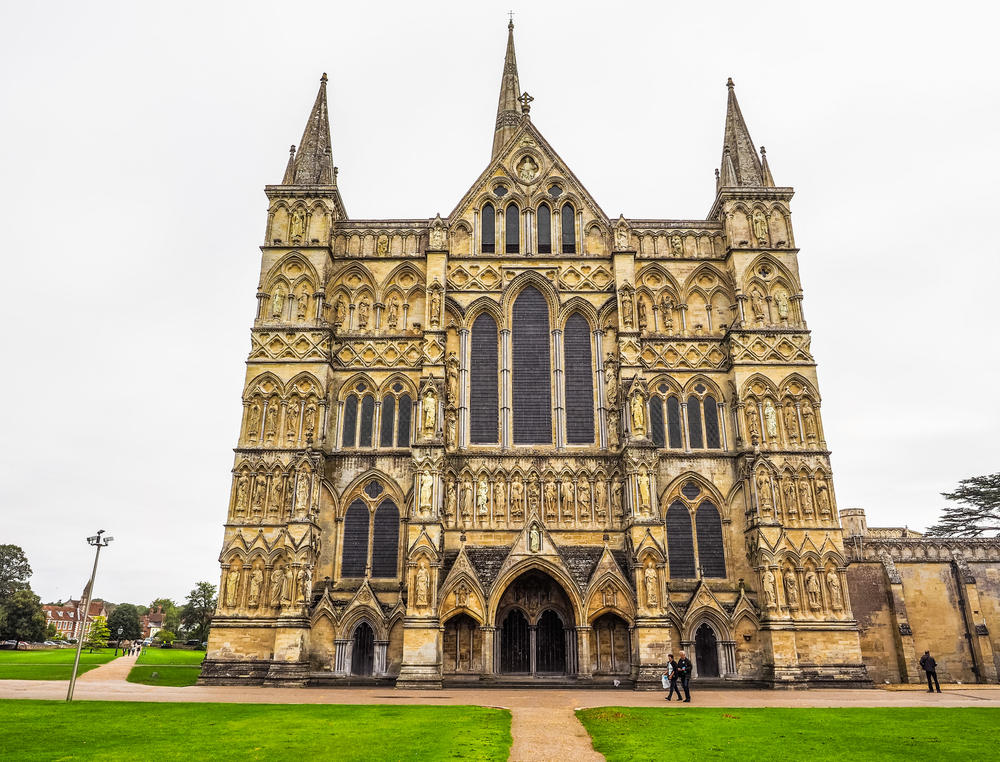
Salisbury Cathedral in England holds the somewhat unfortunate distinction of having attracted more lightning strikes than almost any other building in Britain. Its spire, completed around 1320, is the tallest medieval spire in the world at 123 meters.
It was struck so frequently that parts of the structure had to be reinforced multiple times over the centuries. The spire itself has tilted slightly from the weight and from the strikes it has absorbed.
When you look up at it from inside the cathedral, you can see the visible lean in the structure. Engineers estimate the stone is under roughly 6,400 tons of lateral pressure at any given time.
The Most Expensive Medieval Construction Project
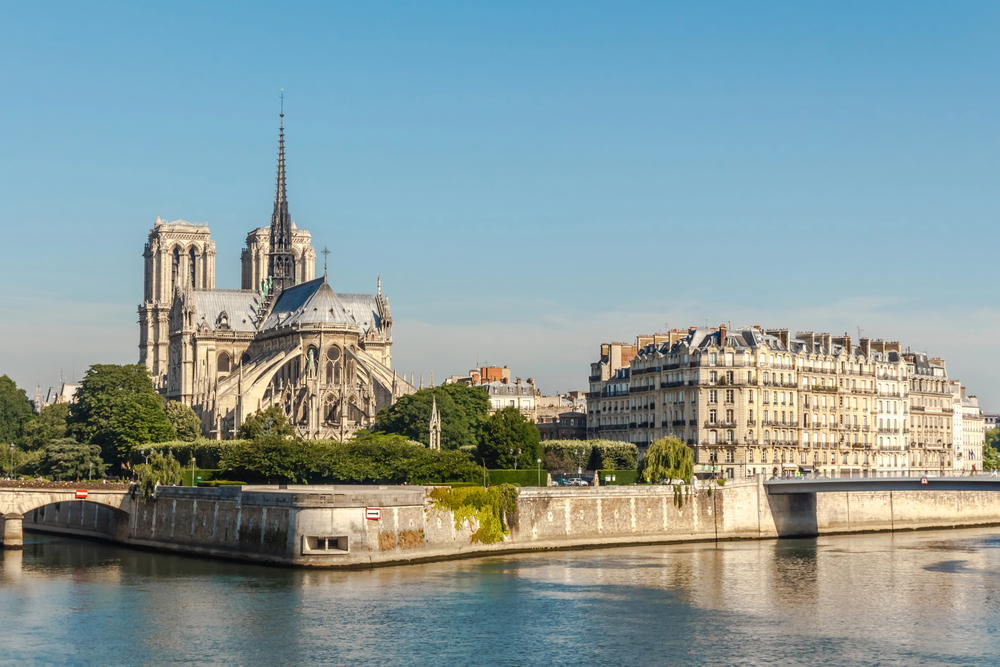
Estimates for the original construction cost of Notre-Dame Cathedral in Paris, adjusted for modern equivalents, run into the billions. The building was under construction from 1163 to roughly 1345, with modifications continuing for centuries after.
When it burned in April 2019, the speed and scale of donations for its restoration — over a billion euros pledged within 48 hours — reflected just how much the building meant to people far beyond France. The reconstruction that followed uncovered details about the original construction that had been unknown for centuries, including the precision of the wooden “forest” of medieval timber that had supported the roof before the fire.
The Cathedral Built on a Swamp
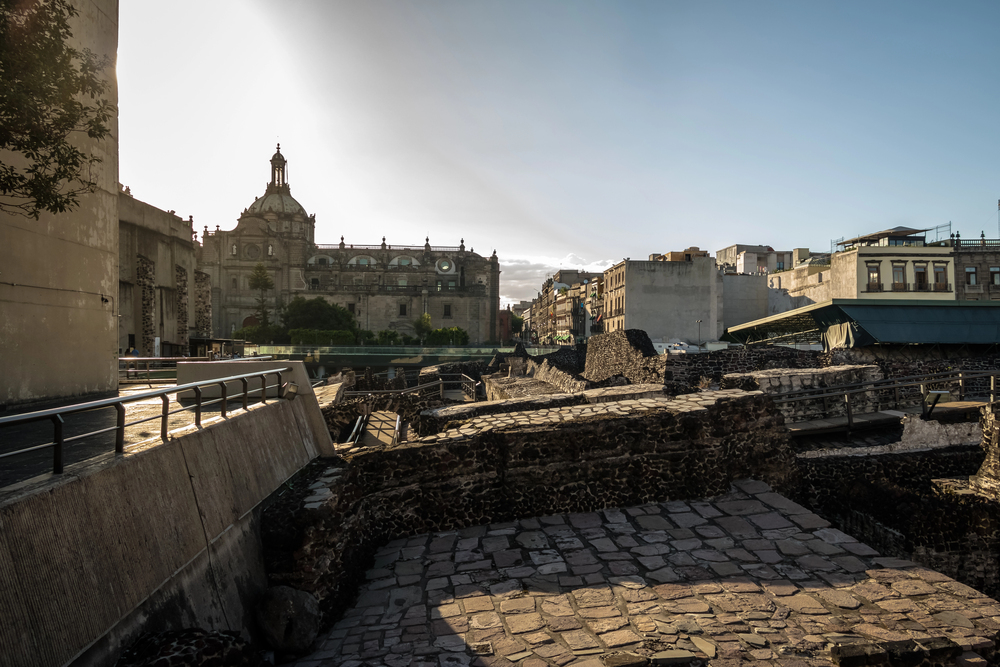
Right where ancient Tenochtitlan once stood, Mexico City’s main cathedral rises above buried temple stones. Built across soft lakebed layers, it rests uneasily on ground that shifts beneath.
Centuries pass, yet the earth still settles at different rates under its walls. What was once an imperial heart now holds a colonial giant, slowly tilting with time.
A noticeable lean defines the structure today. Though once straight, its columns now show clear deviation from vertical.
For many years specialists bored into the earth below, pulling out dirt at key spots to reduce subsidence and adjust the angle slightly. Work on the church started back in 1573, yet only finished in 1813 – nearly two and a half centuries of construction alone.
Since then, another two hundred years have passed with efforts focused underfoot.
The Only Cathedral On An Island
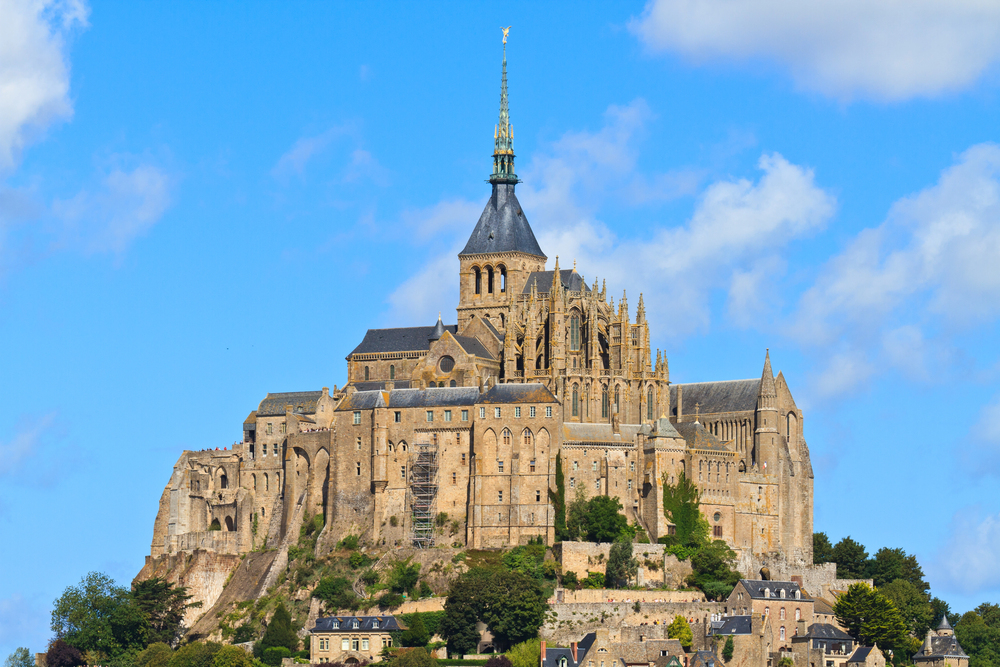
Perched on a rocky isle along Normandy’s shore, Mont-Saint-Michel Abbey stands apart – not quite a cathedral, yet echoing their grandeur through time. When tides rise, seawater cuts it off completely from the mainland. Rising upward in layers, its design blends Gothic spires with older Romanesque forms, step by stone step toward the sky.
At the peak sits the monastic heart, crowning centuries of effort. Recognition follows such bold placement and form – few structures match its silhouette.
Foot by foot, medieval pilgrims made their way across wet mudflats, moving only when the sea pulled back. Fast as a running horse, the tide rushes in here – quicker than anyone could escape – so many never made it through.
Because of that, stories began to stick: risk and belief tangled like roots beneath the surface.
The Unfinished Giant
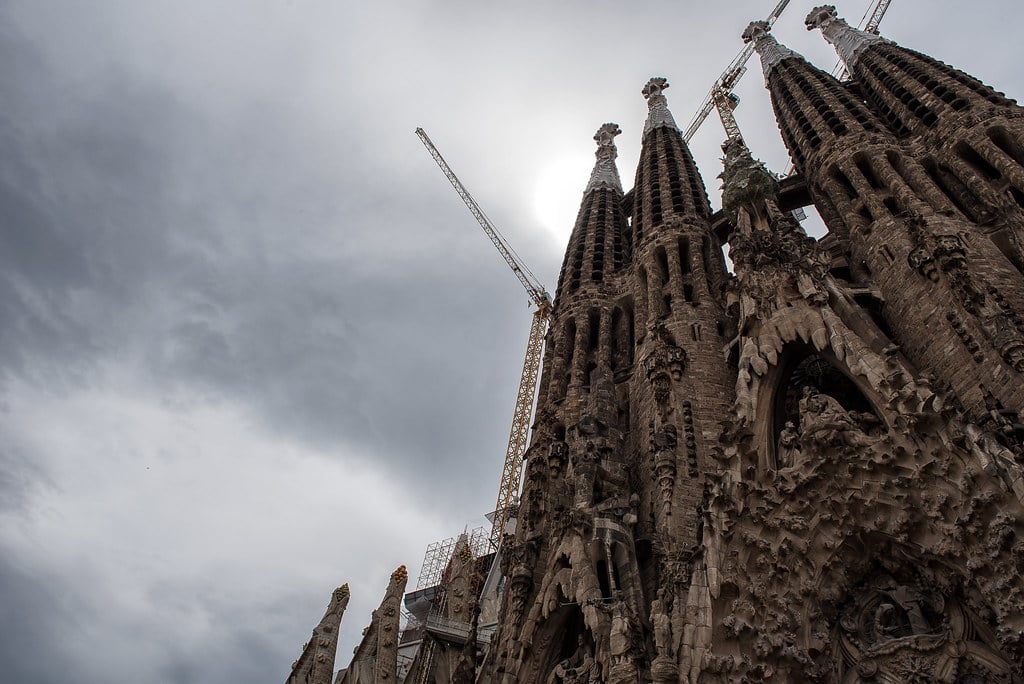
Building work on La Sagrada Familia began back in 1882, right there in Barcelona. One year later, Antoni Gaudí stepped into the role, shifting its direction.
He spent nearly half a century focused only on this creation until his death in 1926, following injuries from a tram accident. Then came war – Spain’s civil conflict – and with it, fire damaged many of his original designs.
Still going up, piece by piece, pulled together from old stones, pictures, and computer designs. Set to wrap up in the 2030s – nearly a century and a half since work began.
More folks show up here every year than anywhere else in Spain. Millions walk in just to stand before something still under construction.
Stone Lasts Beyond Those Who Thought of It

One odd fact stands out – those who began constructing these grand buildings never witnessed their completion. Workers shaping stone at Cologne Cathedral could not imagine others centuries later stepping off cranes to carry on their work.
Designs drawn for St. Peter’s were left behind when its planners passed away long before the dome took shape. Facing tasks like these changes how a person shows up each day.
Not seeing the finish line becomes part of the job. Faith matters – faith that what you start keeps moving without you around.
Others take over where you left off. The piece you shaped stays long after voices speaking your name fade completely.
Last time we checked, things stayed much the same. There it remains – the old stone, upright.
More from Go2Tutors!

- The Romanov Crown Jewels and Their Tragic Fate
- 13 Historical Mysteries That Science Still Can’t Solve
- Famous Hoaxes That Fooled the World for Years
- 15 Child Stars with Tragic Adult Lives
- 16 Famous Jewelry Pieces in History
Like Go2Tutors’s content? Follow us on MSN.