14 Strange Culinary Gadgets Invented in the 1900s
The 1900s brought us the automobile, the airplane, and electricity in every home — but they also brought us some truly bizarre kitchen inventions. While most households were just figuring out how to use their newfangled electric refrigerators, inventors were busy creating gadgets that promised to revolutionize cooking in ways nobody actually wanted.
Some were solutions to problems that didn’t exist. Others were problems disguised as solutions.
All of them tell the story of a century obsessed with mechanizing every aspect of daily life, including the simple act of preparing food.
Presto Hot Dogger
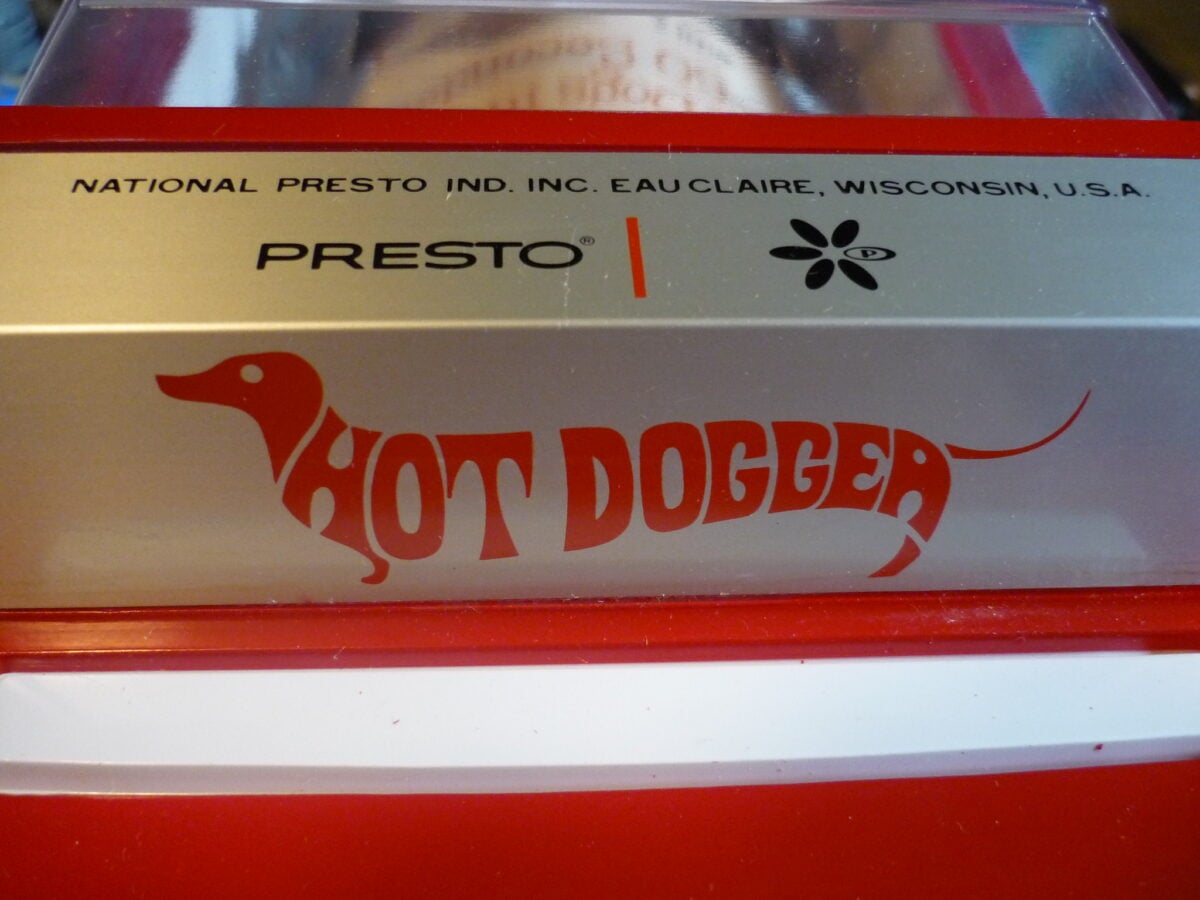
Hot dogs don’t need electricity to cook properly. Water works fine.
Fire works even better. The Presto Hot Dogger ignored both options.
Instead, it electrified the hot dogs directly, running current through two metal spikes that you’d jam into each end of the sausage. The electricity cooked the hot dog from the inside out in about a minute.
Automatic Spaghetti Fork
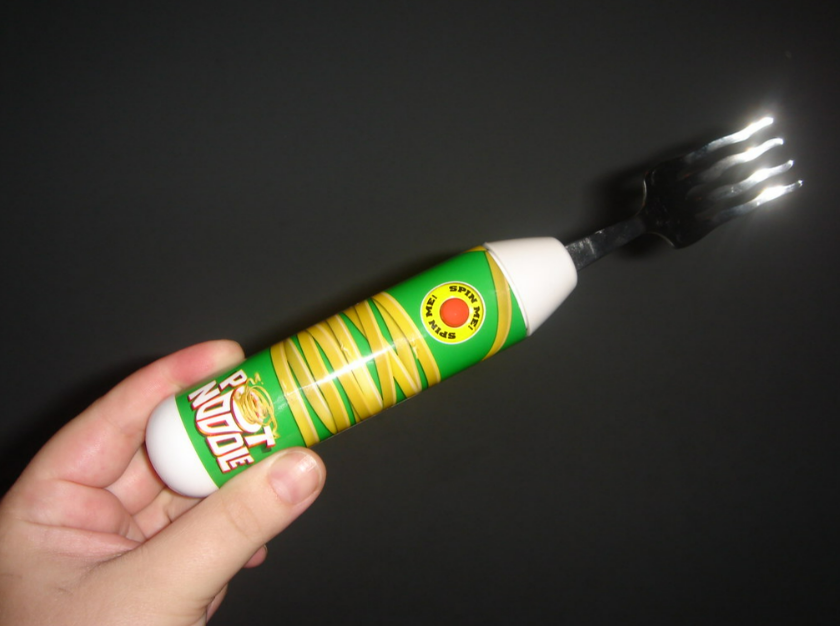
Picture this: you’re eating spaghetti, but your wrist is too tired to twist the fork yourself, so you reach for a battery-powered utensil to do the twirling for you. That was the promise of the automatic spaghetti fork — and yes, someone actually thought this was worth manufacturing.
The device looked like a regular fork attached to a small motor (because that’s exactly what it was), and when you pressed a button, it would spin the tines to wind up your pasta. The motor was loud enough that conversation became difficult, which meant you could focus entirely on the absurdity of what you were doing.
And yet, for all its mechanical precision, it never managed to create the neat little nests of spaghetti that a simple twist of the wrist produces — turns out there’s something to be said for the human touch, especially when that touch involves basic motor skills that most people master by age six.
Egg Cuber
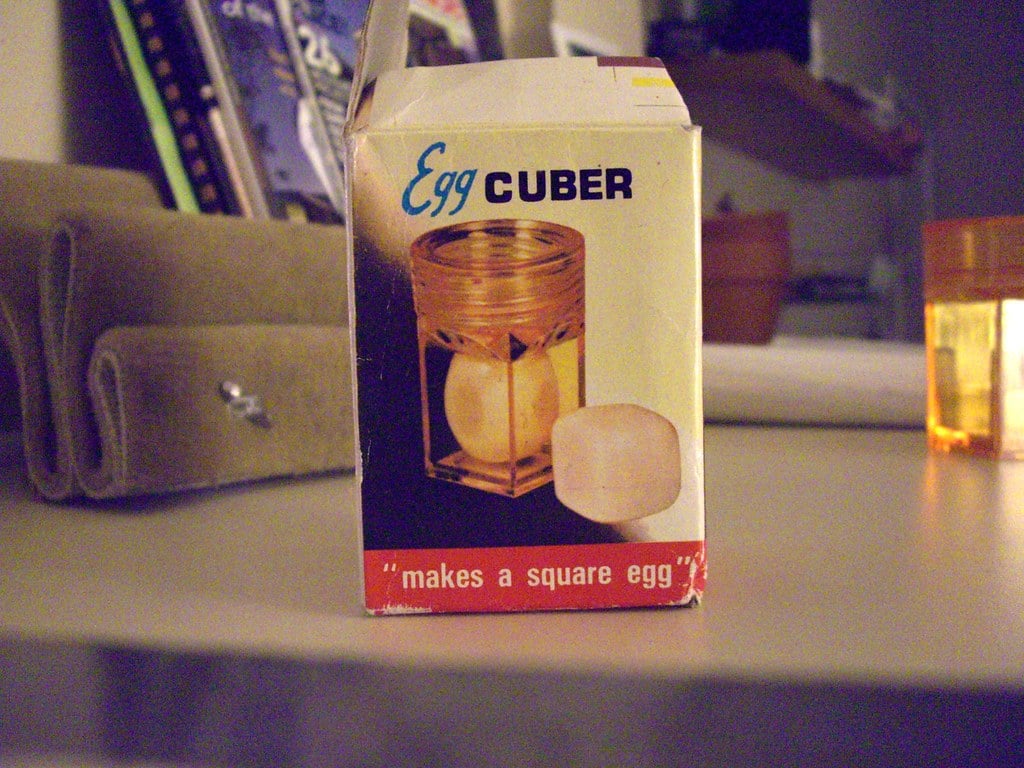
Eggs come out of the chickens ‘ round. Some inventor in the 1970s decided this was a mistake that needed correcting. The egg cuber was a small plastic contraption that you’d place around a hard-boiled egg while it was still warm.
As the egg cooled, the device would compress it into a perfect cube. The result was an egg that looked like it had been through some kind of geometric trauma.
Square eggs fit better in lunch boxes, the marketing claimed. They also rolled less when you set them down.
These were real problems that real people definitely had.
Banana Slicer
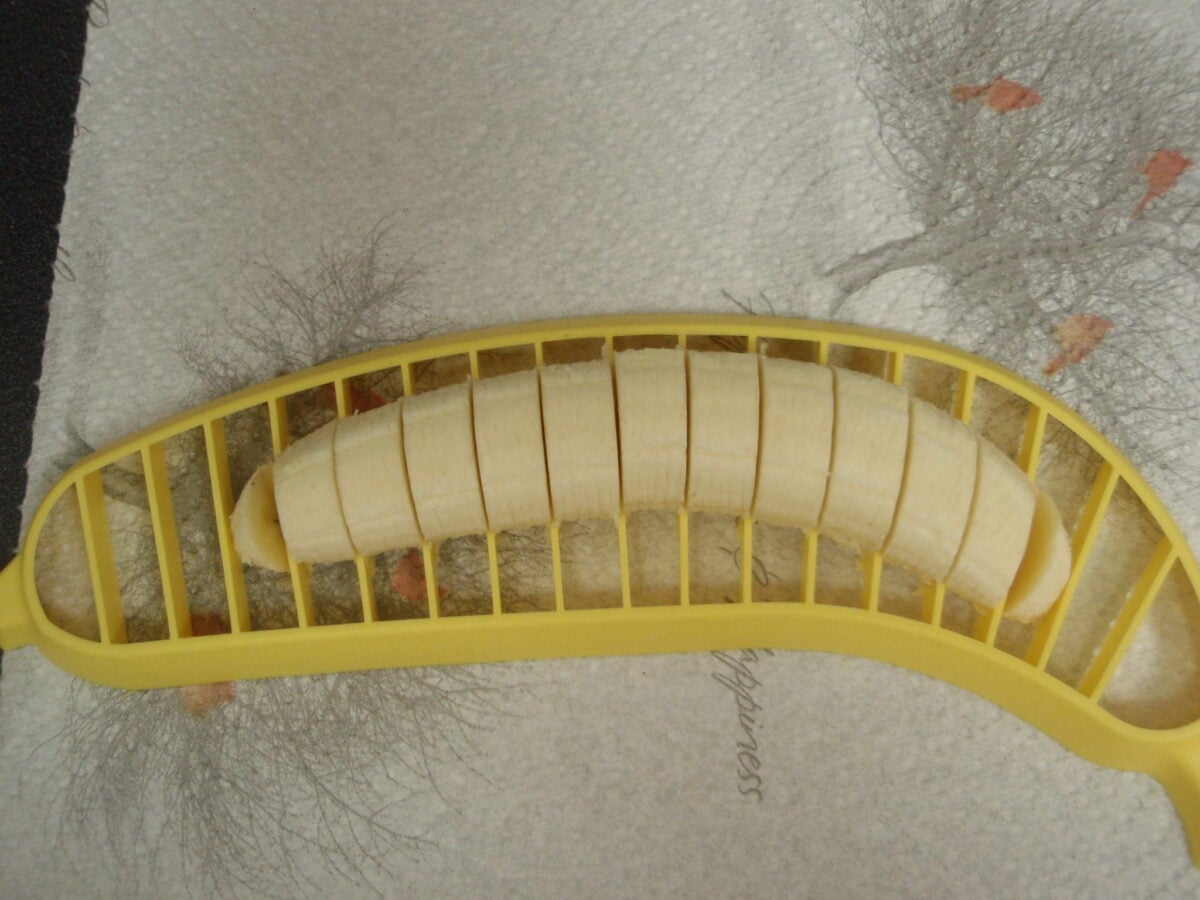
There exists in this world a special kind of optimism — the kind that looks at a banana and sees not something easily sliced with any knife in any kitchen drawer, but rather an engineering challenge that demands its own specialized tool. The banana slicer embodied this optimism with the purity of a geometric theorem.
It was a curved plastic device, shaped exactly like a banana (because of course it was), with thin metal wires stretched across it at regular intervals. You’d place a peeled banana in the curved groove and press down, and the wires would slice through the fruit in one motion, creating uniform rounds that were identical in thickness.
The slices were too perfect, really — they looked like they’d been produced in a factory rather than cut in a kitchen, which drained some essential banana-ness from the experience. But the device worked exactly as advertised, which somehow made it more unsettling than if it had failed completely.
Motorized Ice Cream Cone
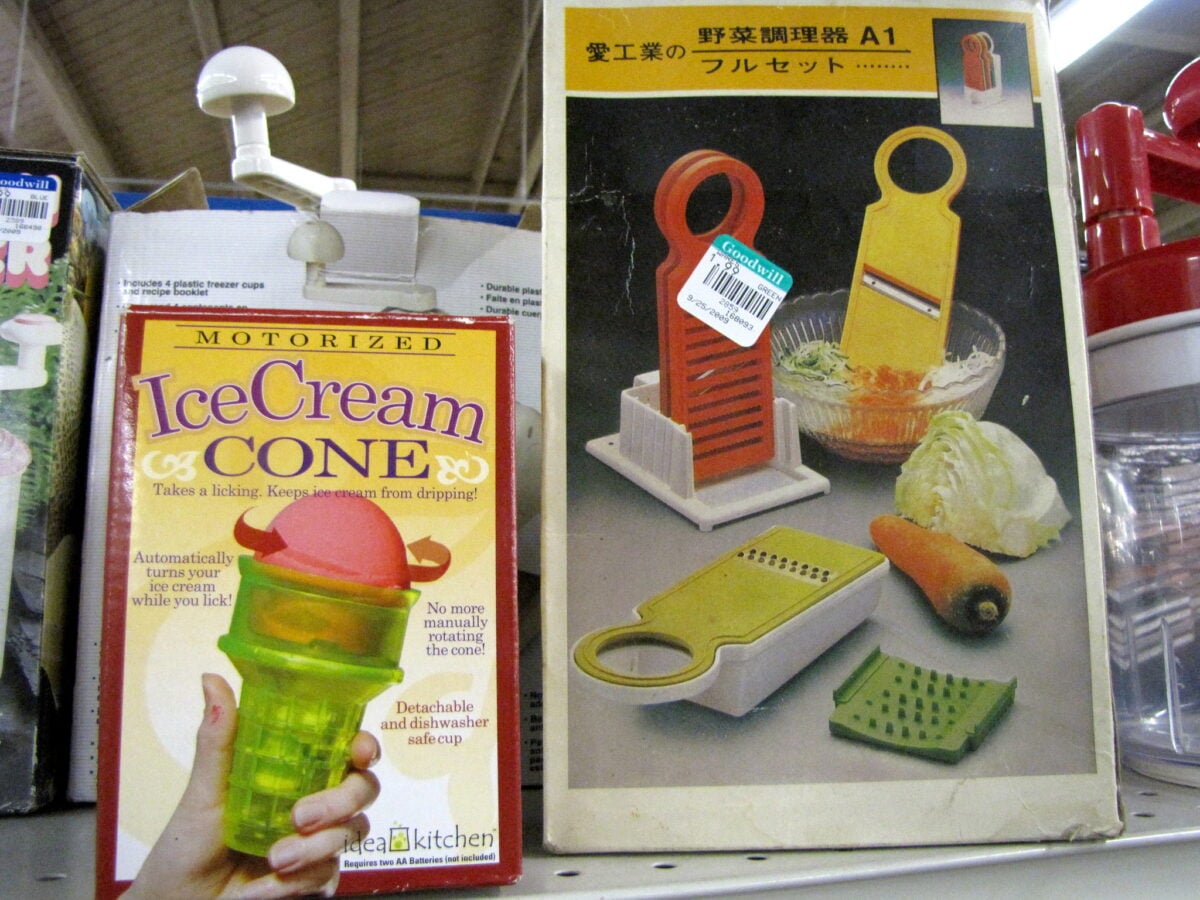
Ice cream cones don’t rotate on their own. This bothered someone enough to invent a battery-powered cone that spun while you licked it.
The motorized ice cream cone looked like a regular waffle cone attached to a small motor at the bottom. You’d switch it on, and the cone would rotate slowly, ensuring even licking coverage without requiring you to turn your wrist.
The motor added considerable weight to what was supposed to be a handheld treat. The cone came with a stand for when the motor needed charging.
It also came with the implicit assumption that people found manual ice cream consumption too physically demanding.
Baby Food Masher Hat
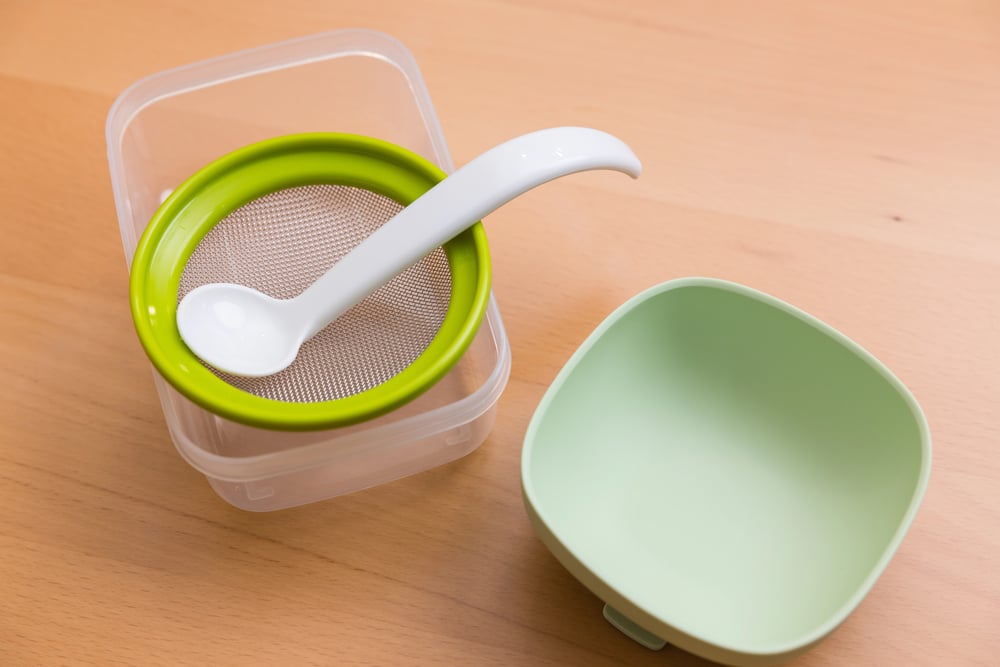
Someone looked at the process of feeding a baby and thought: this needs more head involvement. The baby food masher hat was exactly what it sounds like — a hat with a small grinding mechanism attached to the top that would mash food as you moved your head up and down.
Parents would put soft foods like bananas or cooked carrots into the small chamber on top of the hat, then nod rhythmically to operate the grinding mechanism (which worked on the same principle as an old-fashioned butter churn, except mounted on your head where everyone could see it). The mashed food would collect in a small bowl that hung from the brim, positioned conveniently near your mouth so you could taste-test as you worked.
It was hands-free, which was genuinely useful when you had a squirming infant to manage, but it was also deeply undignified in a way that made regular food preparation seem almost elegant by comparison. So you had to decide what mattered more: convenience or the last shreds of your adult dignity.
Corn Kerneler
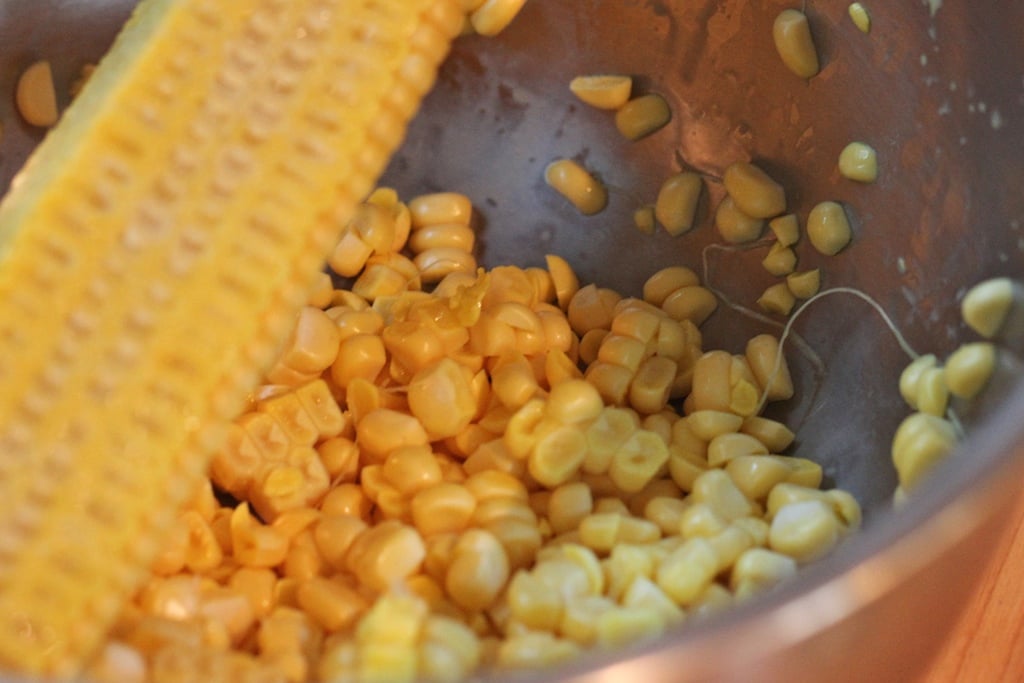
Corn kernels fall off the cob when you scrape them with a knife. This basic fact of corn physics wasn’t good enough for the inventors of the corn kerneler.
The device looked like a small tunnel that you’d slide over an ear of corn. Inside the tunnel were sharp metal blades positioned to scrape the kernels off as you pushed the corn through.
The kernels would fall into a collection tray below. It worked perfectly.
It also required more cleanup time than just using a knife and a bowl.
Pizza Scissors
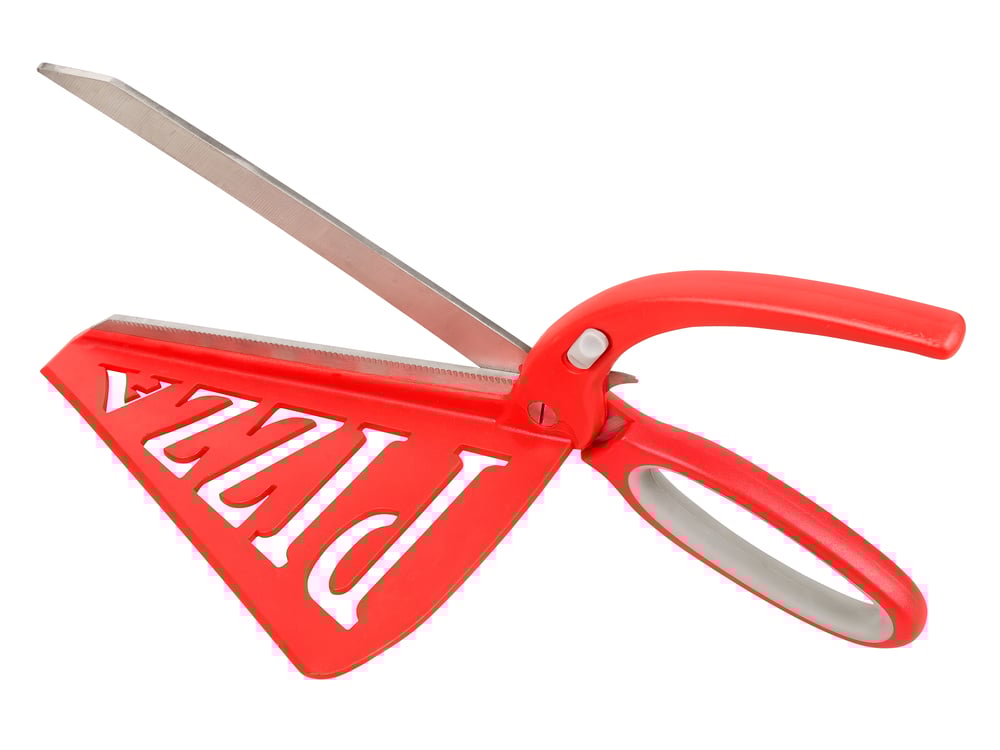
Cutting pizza with a wheel seems simple enough, but someone decided the real solution was scissors — specifically, scissors with a small spatula attached to the bottom blade so you could cut and serve in one motion. Pizza scissors looked exactly like regular kitchen shears, except one blade had a flat metal spatula welded to it (the kind of modification that made you wonder if this was an official product or something someone cobbled together in their garage).
You’d cut through the pizza with the scissor action, and the spatula would simultaneously slide under the slice, allowing you to lift it directly onto a plate without needing a separate serving utensil. The cutting action was surprisingly clean — scissors actually work better than pizza wheels on thick crusts — but using them required a kind of surgical precision that turned casual pizza eating into a formal procedure.
And yet, once you got the hang of it, there was something deeply satisfying about the whole operation, even if you felt slightly ridiculous doing it.
Butter Stick Dispenser
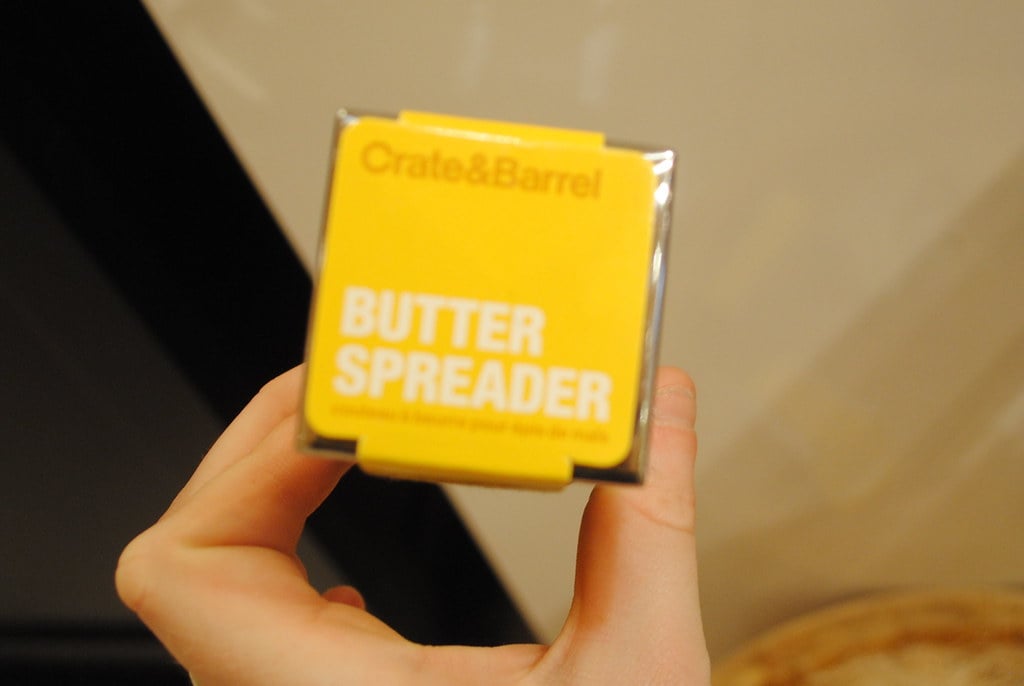
Butter comes in sticks. These sticks are easy to unwrap and use.
The butter stick dispenser existed to solve this non-problem. The device looked like a large glue stick — you’d load a stick of butter into the plastic tube, then twist the bottom to push the butter up through the top.
This allowed for more precise butter application, assuming precision was what your toast had been missing. The dispenser kept your hands clean and prevented the butter wrapper from tearing.
These were benefits that nobody had requested.
Pineapple Corer and Slicer
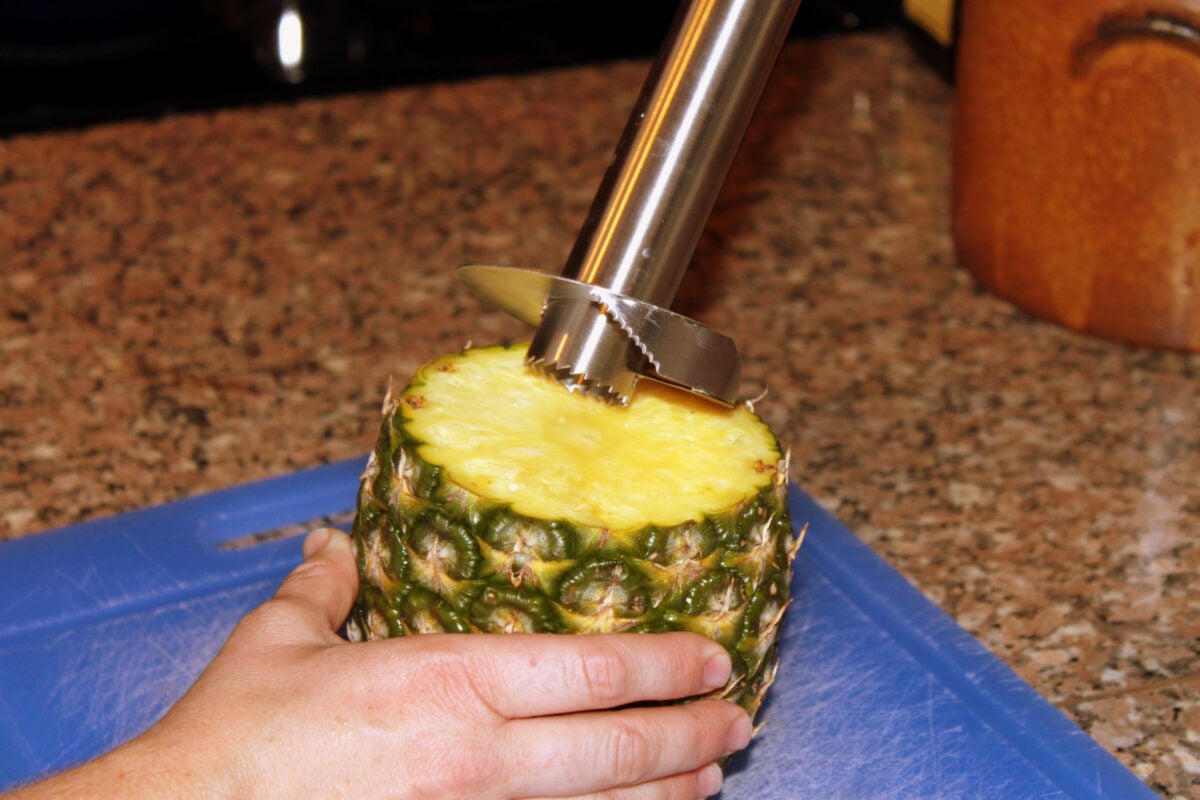
Imagine a small, medieval torture device designed specifically for fruit, and you’ll have a pretty good mental picture of the pineapple corer and slicer. This contraption approached the pineapple like a problem that required both violence and precision to solve.
The device consisted of a central coring tube surrounded by circular cutting blades, the whole assembly attached to a handle that you’d grip while drilling down through the pineapple from the top. As you twisted and pushed, the corner would hollow out the tough center while the outer blades carved the flesh into perfect rings, leaving you with a stack of pineapple donuts and a clean, empty shell.
The engineering was actually quite elegant — it accomplished in one motion what would otherwise require a knife, a cutting board, and considerable patience. But there was something unsettling about the mechanical precision of it all, the way it reduced a sweet, tropical fruit to a series of uniform industrial components.
Egg Separator Funnel
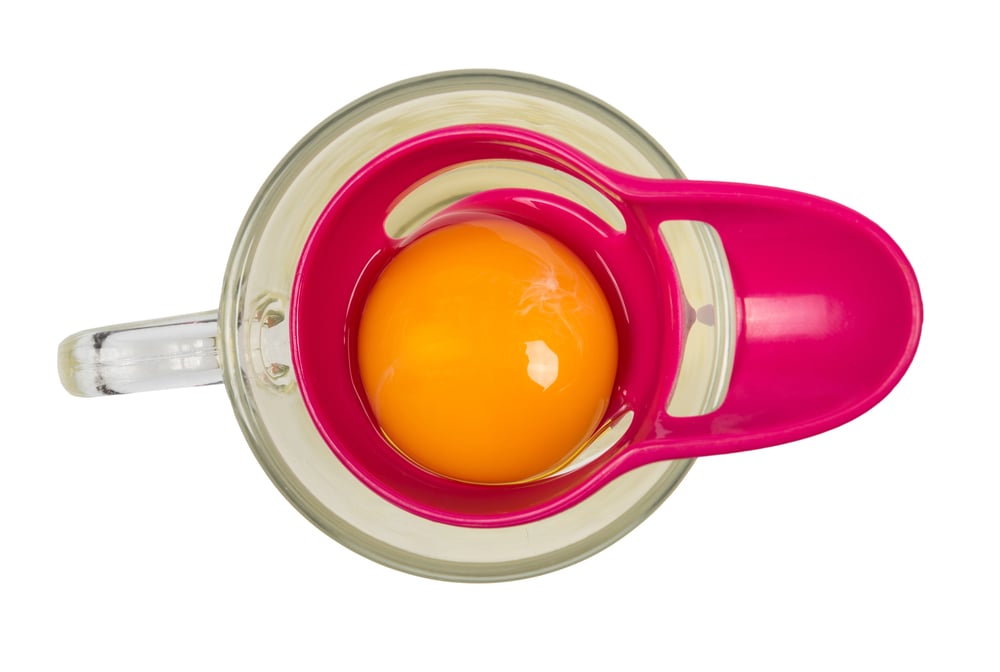
Separating egg whites from yolks requires cracking an egg and passing the yolk back and forth between the shell halves. This technique has worked for centuries.
The egg separator funnel offered an alternative: crack the egg into a plastic funnel with a small opening at the bottom, then wait for the white to drain through while the yolk stays behind. The process took longer than the traditional method and required washing an extra piece of equipment.
The funnel came with detailed instructions, as if egg separation were a complex technical procedure rather than a basic cooking skill.
Grape and Cherry Pitter
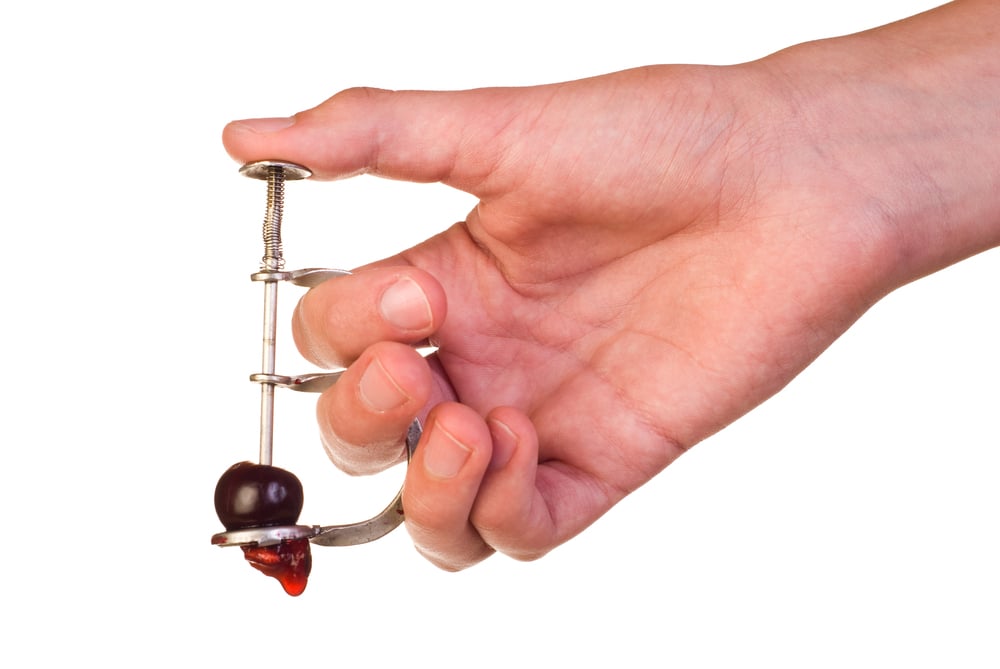
There’s something almost meditative about pitting cherries by hand — the small ritual of finding the stem end, pressing just hard enough to split the flesh, working the pit free with your fingertip while the juice stains your hands the color of summer. The grape and cherry pitter eliminated this entire experience in favor of industrial efficiency.
The device worked like a small round punch: you’d place the fruit in a plastic cradle, position it under a spring-loaded plunger, then press down to drive a metal rod straight through the fruit and push the pit out the other side. It was fast, it was clean, and it turned pitting into an assembly-line operation that you could complete while watching television or carrying on a conversation.
The pitted fruit came out looking professionally processed, with perfectly round openings where the pits used to be, but something essential was lost in the translation — the connection between your hands and your food, the awareness of what you were preparing. And yet, when you had five pounds of cherries to pit for a pie, efficiency started to look less like laziness and more like sanity.
Pancake Pen
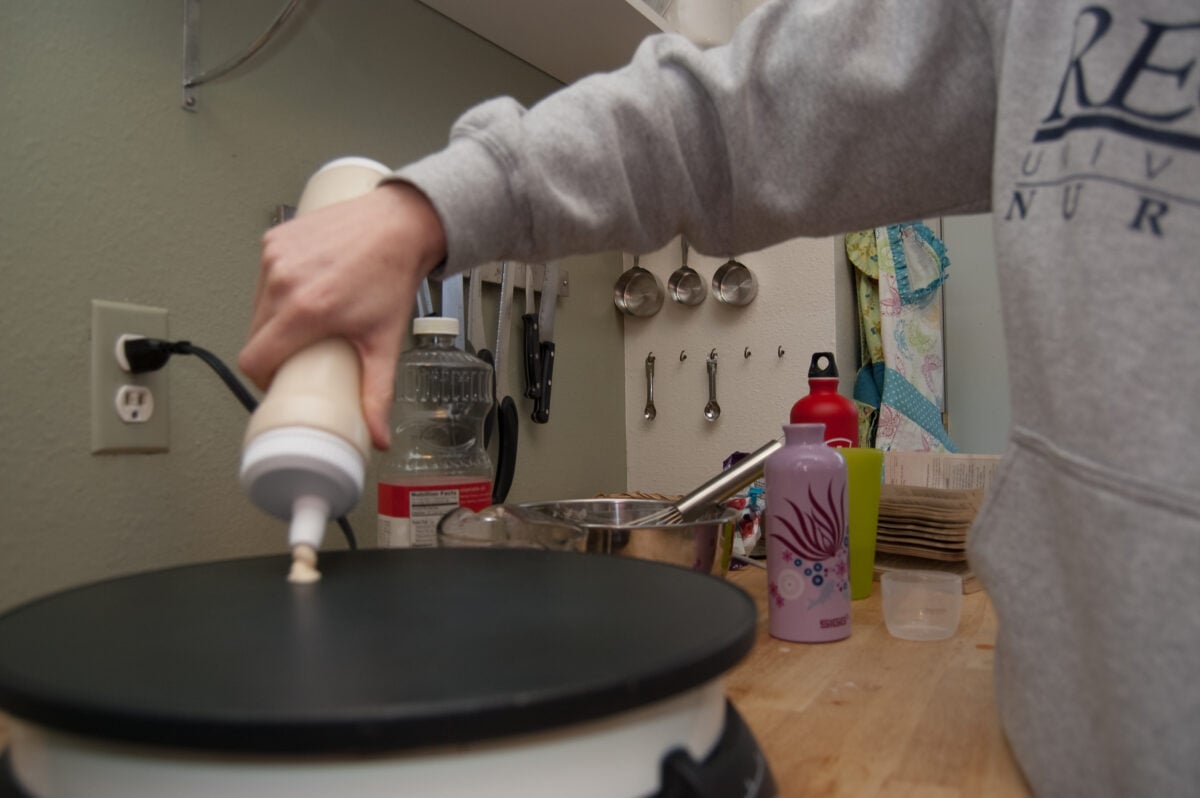
Pancake batter belongs in a bowl, where you can pour it onto a griddle in whatever size and shape you prefer. The pancake pen disagreed.
This device looked like a large squeeze bottle with a narrow tip, designed to hold pancake batter so you could “draw” pancakes directly onto the cooking surface. You could make pancakes in the shapes of letters, animals, or geometric patterns.
The pen solved the problem of pancake uniformity while creating new problems involving refilling, cleaning, and explaining to house guests why you owned a pancake pen.
Condiment Gun
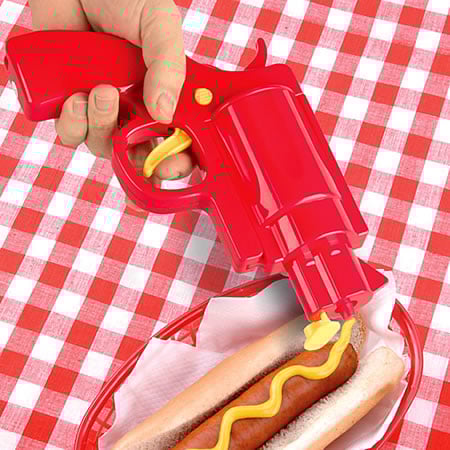
Picture a caulk gun, but instead of dispensing construction adhesive, it shoots mustard and ketchup with the precision of a marksman and the dignity of a food fight. The condiment gun was designed for people who found squeeze bottles insufficiently dramatic.
You’d load standard condiment bottles into the plastic gun mechanism, then pull the trigger to dispense whatever sauce you’d loaded with considerably more force than necessary (because apparently what barbecue sauce really needed was a ballistic delivery system). The gun provided excellent portion control and could shoot condiments across considerable distances, which was useful if you were trying to add mustard to a sandwich while standing several feet away from it — a scenario that came up more often than you’d think, according to the marketing materials.
But mostly it turned lunch preparation into a kind of performance art, where the simple act of putting ketchup on a hamburger became an event that required both aim and commitment.
When Innovation Meets Reality

Looking back at these inventions, it’s hard to know whether to laugh or feel slightly sad for the optimism behind them. Each device represents someone’s genuine belief that they had identified a problem worth solving, even when that problem was “my ice cream cone doesn’t rotate itself” or “separating eggs by hand is too difficult.”
The 1900s were drunk on the possibilities of mechanization. If electricity could power factories and motors could move cars, why shouldn’t every kitchen task have its own specialized gadget? The inventors weren’t wrong to experiment — they were just applying industrial solutions to problems that had already been solved by thousands of years of human hands figuring things out.
Most of these gadgets disappeared because they were solutions in search of problems. But they remain fascinating artifacts of a century that believed technology could improve everything, even the simple pleasure of eating food that hadn’t been processed by a machine first.
More from Go2Tutors!

- The Romanov Crown Jewels and Their Tragic Fate
- 13 Historical Mysteries That Science Still Can’t Solve
- Famous Hoaxes That Fooled the World for Years
- 15 Child Stars with Tragic Adult Lives
- 16 Famous Jewelry Pieces in History
Like Go2Tutors’s content? Follow us on MSN.



