Obscure Geography Facts About the Islands Of Hawaii
Most people think they know Hawaii. Eight main islands, volcanic origin, tropical paradise in the Pacific.
But beneath that postcard-perfect surface lies a collection of geographic oddities that would surprise even frequent visitors. These islands hold secrets that textbooks skip and tour guides rarely mention.
The Big Island Is Still Growing
The Big Island adds new land through volcanic activity, though at a variable rate. Kilauea volcano doesn’t take breaks.
While tourists snap photos of lava meeting ocean, they’re witnessing the literal birth of earth. The newest land on the planet forms here daily, one molten rock at a time.
Mauna Kea Is Taller Than Everest
Mount Everest gets the headlines, but Mauna Kea corrects the record when you measure from base to summit. Starting from the ocean floor, this Hawaiian giant stretches over 33,500 feet — making Everest’s 29,032 feet look modest.
The mountain hides most of its height underwater (which feels like cheating, but geography doesn’t care about our expectations). And yet most people drive right past it without realizing they’re looking at the tallest mountain on Earth.
Go figure.
Hawaii Moves Northwest At Two Inches Per Year
The entire island chain drifts like a slow-motion conveyor belt, carried by the Pacific Plate toward Alaska. Two inches annually — about the same rate your fingernails grow — which means in roughly 50 million years, these tropical islands will be sitting somewhere near the Aleutians.
The hotspot that creates the volcanoes stays put (anchored deep in the Earth’s mantle, fixed like a cosmic blowtorch), while the seafloor slides over it.
So the Big Island sits directly above the heat source now, but Kauai — the oldest main island — has already drifted 350 miles northwest and lost its volcanic connection.
It’s a geological assembly line that’s been running for at least 70 million years, maybe longer, cranking out islands that eventually drift away to become seamounts and atolls in the North Pacific.
Ni’ihau Forbids Almost Everyone
The “Forbidden Island” operates under rules that would make a medieval kingdom jealous. The Robinson family has owned Ni’ihau since 1864 and maintains it as a private refuge where Hawaiian culture exists largely unchanged.
No visitors without invitation.
No hotels, no restaurants, no gift shops selling plastic leis.
About 170 Native Hawaiians live there, speak Hawaiian as their primary language, and follow traditions that disappeared elsewhere generations ago.
The island serves as a living museum — except museums don’t usually come with “Keep Out” signs this serious.
Moloka’i Has The World’s Highest Sea Cliffs
The north shore of Moloka’i rises straight out of the Pacific like a 3,000-foot wall. These aren’t gentle slopes that happen to meet the ocean — they’re sheer faces of rock that make you dizzy just looking up.
Ancient landslides carved these cliffs, tearing away half the island in catastrophic collapses that sent chunks of Hawaii sliding into the deep ocean.
What remains looks like a cross-section of a volcano, exposing layers of lava flows stacked like geological pancakes.
The cliffs are so steep that most remain inaccessible except by helicopter, which seems appropriate for something this dramatic.
Kaho’olawe Was A Military Bombing Range For 50 Years
The U.S. Navy used this entire island for target practice from 1941 to 1990. Bombs, shells, rockets — anything that needed testing got dropped on Kaho’olawe.
The island still contains unexploded ordnance scattered across its 45 square miles.
Cleanup efforts have removed thousands of pieces of military debris, but walking around freely remains inadvisable.
It’s the only Hawaiian island where you might literally stumble across a leftover bomb from World War II.
Lanai Was Once The World’s Largest Pineapple Plantation

James Dole bought nearly the entire island in 1922 and turned it into a pineapple factory. At its peak, Lanai produced 75% of the world’s pineapples — which seems impossible for a island only 140 square miles in size.
The plantation employed most of the island’s residents and shipped millions of pineapples to the mainland (back when people thought putting pineapple on pizza was exotic rather than controversial).
Dole built the town of Lanai City specifically to house plantation workers, creating what was essentially a company town in the middle of the Pacific.
The pineapple era ended in 1992 when production moved to cheaper locations, but the geometric patterns of old plantation roads still mark the landscape like faint scars.
O’ahu Contains 80% Of Hawaii’s Population On 10% Of Its Land
Population distribution in Hawaii makes no geographic sense. O’ahu occupies the third-largest land area among the Hawaiian islands but somehow crams in four out of every five residents.
Honolulu’s urban sprawl has consumed most of the island’s usable space, creating traffic jams that would impress Los Angeles.
Meanwhile, the Big Island — with four times more land than O’ahu — remains mostly empty.
It’s as if everyone decided to live in the same corner of paradise and ignore the rest.
Kauai Gets 460 Inches Of Rain Annually In One Spot
Mount Waialeale ranks as one of the wettest places on Earth, receiving enough annual rainfall to submerge a four-story building. The mountain catches trade winds loaded with Pacific moisture and wrings them dry.
But drive 15 miles west to Waimea and you’ll find desert conditions with less than 20 inches of rain per year (the difference between a rainforest and a cactus garden exists within a short drive on the same small island).
The dramatic contrast happens because mountains create their own weather — the windward side gets soaked while the leeward side stays bone dry.
It’s basic meteorology, but experiencing it feels like crossing into a different climate zone every few miles.
The Islands Sit On Oceanic Crust 15,000 Feet Underwater
Hawaii rests on some of the deepest ocean floor on the planet. The volcanic islands rise from abyssal depths that could swallow most mountain ranges without a trace.
This explains why the islands feel so isolated — they’re literally peaks of underwater mountains surrounded by some of the deepest water in the Pacific.
The nearest land masses are over 2,000 miles away in any direction, making Hawaii the most isolated populated land on Earth.
Early Polynesian navigators who found these islands in the middle of endless ocean accomplished something that still seems impossible.
Haleakala Crater Could Fit Manhattan
The summit crater of Haleakala on Maui spans 7 miles long, 2 miles wide, and drops 3,000 feet deep. You could lose entire cities in there.
The “crater” isn’t actually a crater in the traditional sense — it formed when two valleys eroded from opposite sides of the mountain until they merged at the summit.
But standing on the rim at sunrise (which everyone says you must do), the technical geological terminology matters less than the sheer scale of the depression carved into the mountaintop.
The silence up there feels heavier than the thin air.
Lo’ihi Seamount Will Become Hawaii’s Next Island

About 22 miles southeast of the Big Island, an underwater volcano grows toward the surface. Lo’ihi currently sits 3,200 feet below sea level but adds height with each eruption.
Scientists estimate it will breach the surface in 10,000 to 100,000 years — a blink of an eye in geological time but enough generations that your descendants will think you’re ancient history.
The seamount already rises 10,000 feet from the ocean floor, making it taller than most mountains on land.
It just happens to be completely underwater for now.
Hawaii Spans Two Time Zones During Daylight Saving Time
Hawaii doesn’t observe daylight saving time, which creates a timing quirk twice a year. During standard time, Hawaii runs two hours behind Pacific Standard Time.
But when the mainland springs forward, the gap becomes three hours.
This means business calls between Hawaii and the West Coast require seasonal math.
Winter meetings scheduled for 2 PM Pacific happen at noon in Hawaii.
Summer meetings at the same Pacific time catch Hawaii at 11 AM.
The islands stay consistent while everyone else jumps around the clock.
Most Hawaiian Islands Are Actually Uninhabited
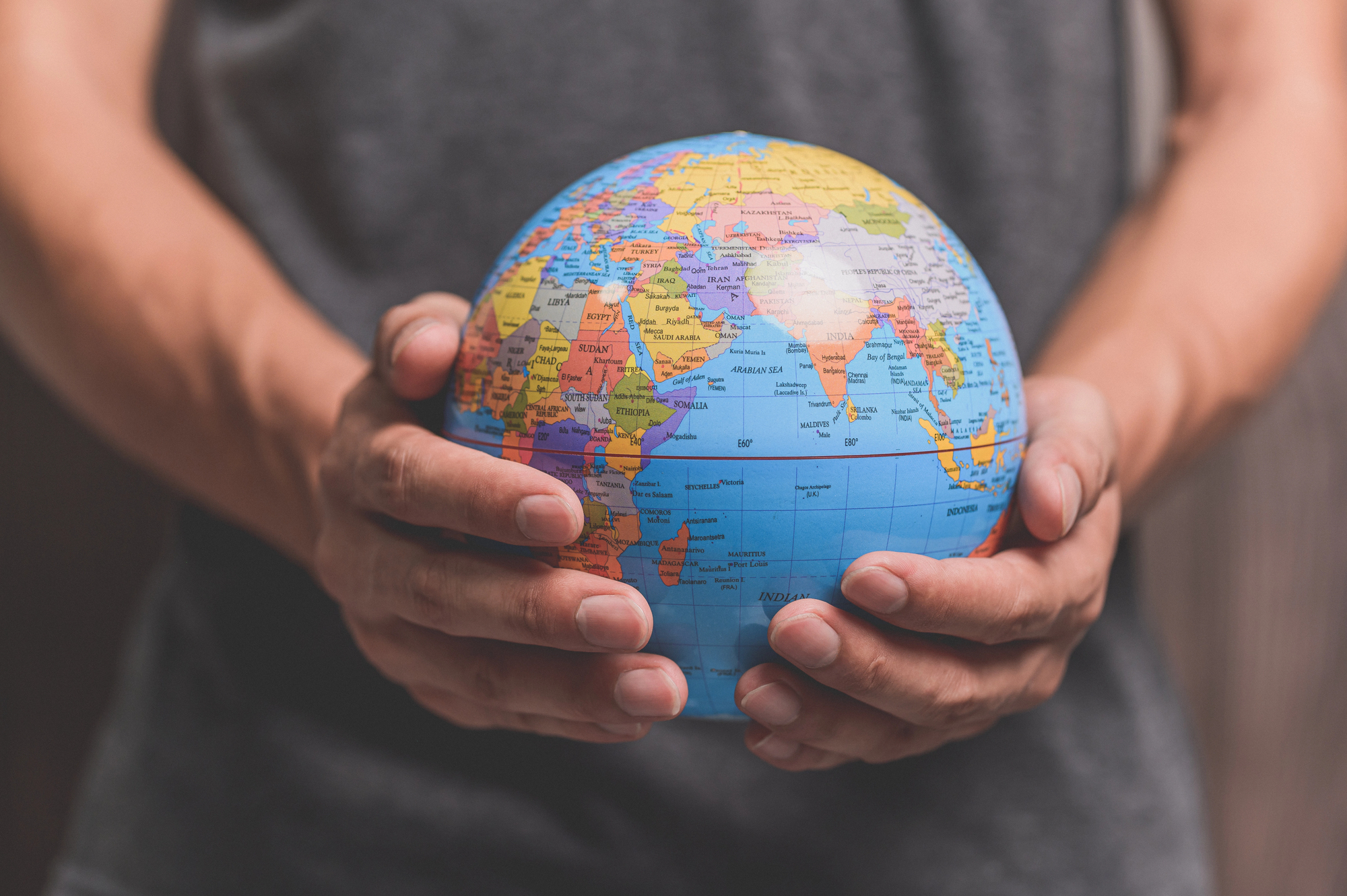
The state contains 137 islands, atolls, and seamounts — but people live on exactly seven of them. The rest remain empty rocks, coral reefs, or underwater peaks.
Many of these forgotten islands are tiny — some no bigger than a football field.
Others, like French Frigate Shoals, stretch for miles but consist mostly of sand and coral unsuitable for permanent settlement.
The Northwestern Hawaiian Islands form a 1,200-mile chain of mostly deserted atolls that few people have ever seen.
They exist as wildlife refuges and navigational hazards, reminders that Hawaii extends far beyond the tourist maps.
Hidden In Plain Sight
Geography keeps its secrets well, even in places millions of people visit each year. These islands float in the middle of the Pacific like puzzle pieces from different boxes — desert and rainforest, ancient and brand new, forbidden and overcrowded, all scattered across a patch of ocean deeper than mountains are tall.
Maybe that’s what makes them feel like nowhere else on Earth.
More from Go2Tutors!

- The Romanov Crown Jewels and Their Tragic Fate
- 13 Historical Mysteries That Science Still Can’t Solve
- Famous Hoaxes That Fooled the World for Years
- 15 Child Stars with Tragic Adult Lives
- 16 Famous Jewelry Pieces in History
Like Go2Tutors’s content? Follow us on MSN.