Photos of 15 Striking Tropical Birds Displaying Unusual Feathers
Tropical birds don’t follow the rules of subtle plumage. Where temperate species blend into bark and brush, these feathered showstoppers have evolved to stand out in ways that seem almost impossible for flight or survival.
Their feathers twist, curl, shimmer, and extend in directions that challenge what seems reasonable for flight or survival. The photographs that capture these birds reveal something that field guides can’t quite convey.
The texture of a single feather, the way light catches an iridescent throat, the improbable geometry of a tail that defies aerodynamics. These images freeze moments where nature’s creativity becomes undeniable.
Resplendent Quetzal
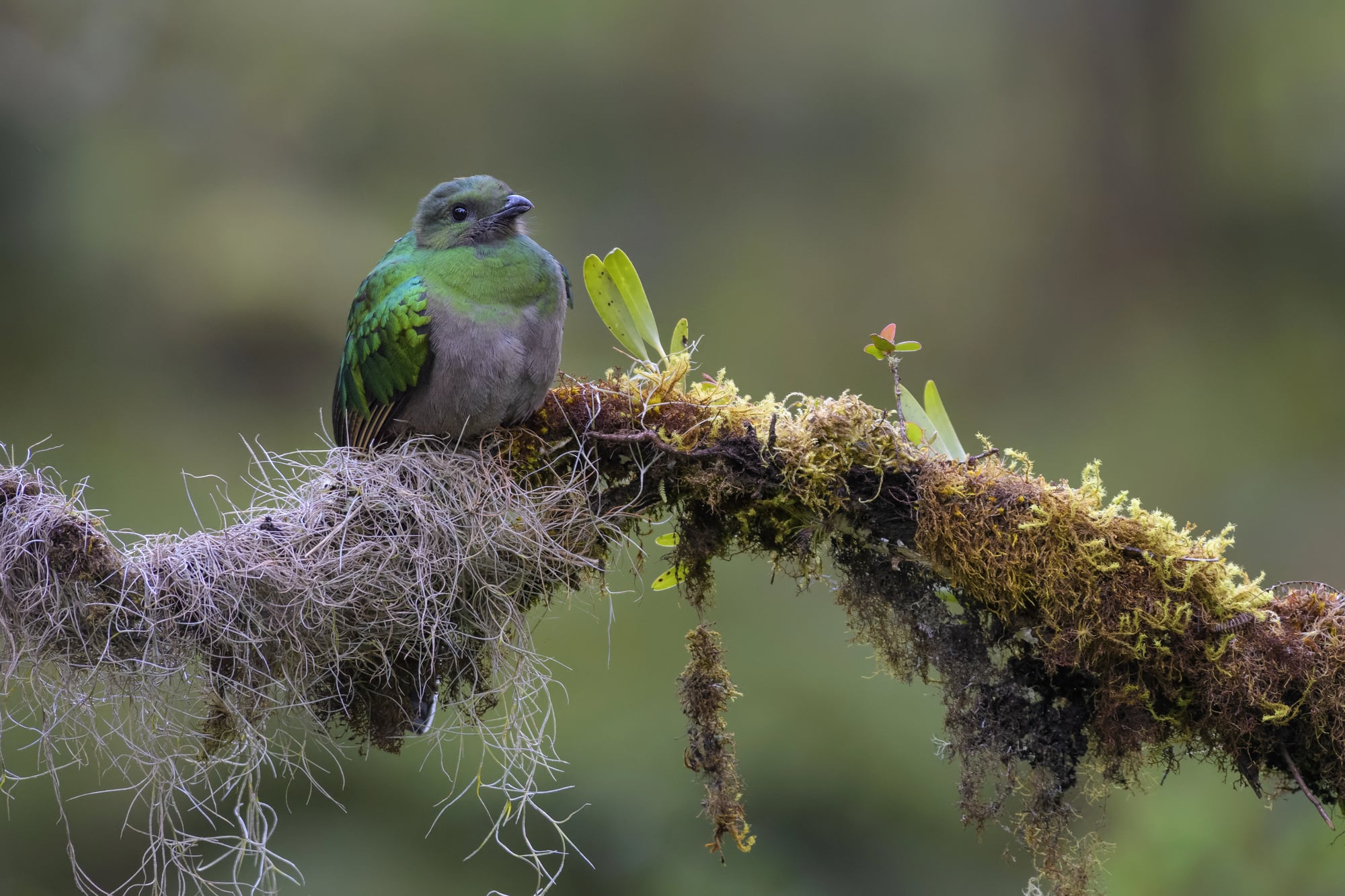
The quetzal’s tail feathers stretch beyond practical into the realm of pure spectacle. Males grow coverts that can reach three feet long, trailing behind them like emerald ribbons that catch every shift of light filtering through cloud forest canopies.
These aren’t just long feathers. They’re architectural marvels that shimmer between green and gold depending on the angle of view.
The bird becomes a living prism, refracting sunlight into colors that seem too intense for the natural world. The bird becomes a living prism, refracting sunlight into colors that seem too intense for the natural world.
King Bird-Of-Paradise
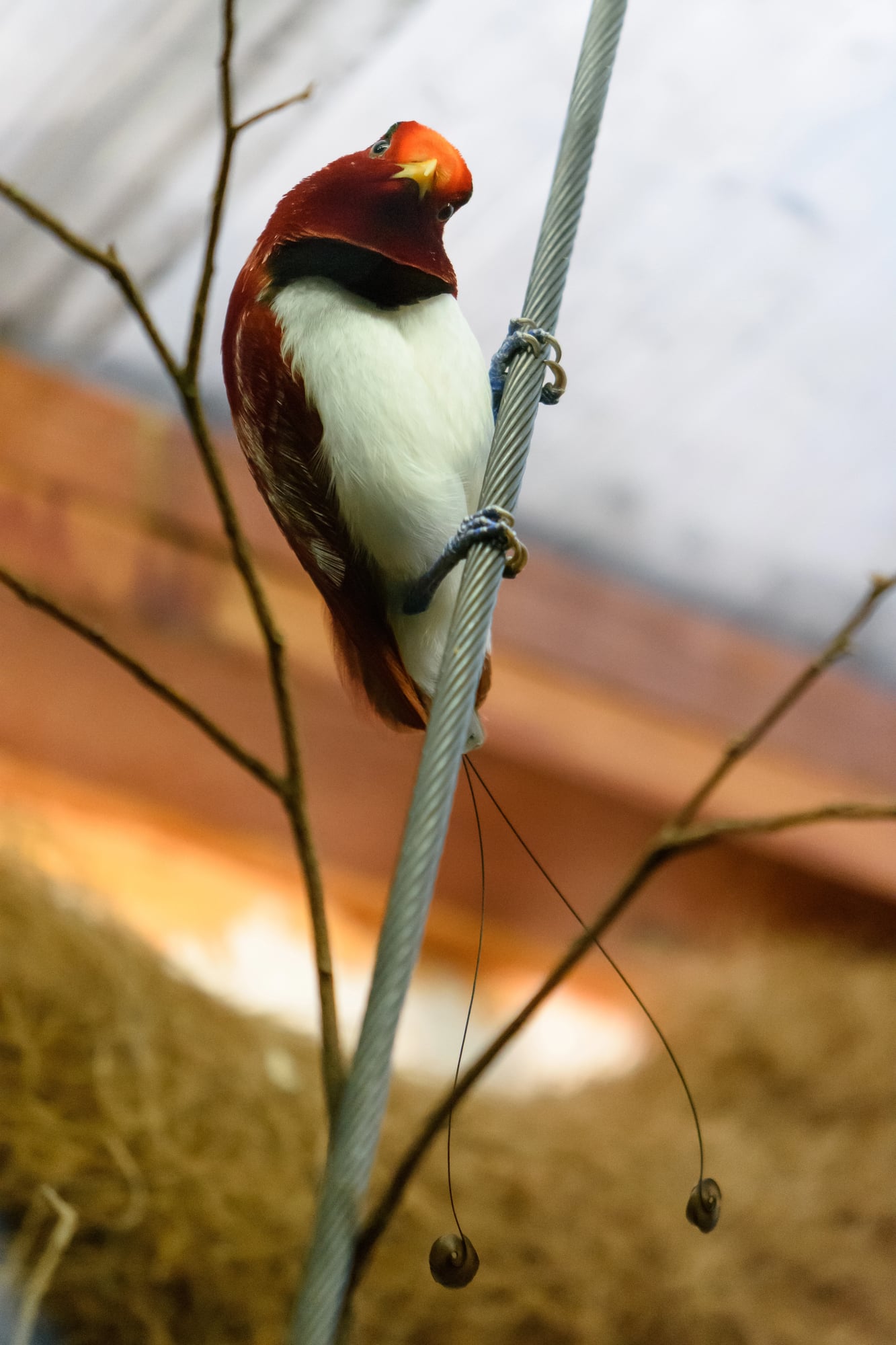
Male king birds-of-paradise carry feathers that look like they were designed by someone who’d never seen a bird before. The flank plumes curl in perfect spirals, white as fresh snow, while the belly feathers hang in loose, almost fur-like tufts that seem better suited to a mammal than something that flies.
The crimson body feathers contrast so sharply with the white ornamental plumes that photographs often look artificially enhanced. They’re not.
Wilson’s Bird-Of-Paradise
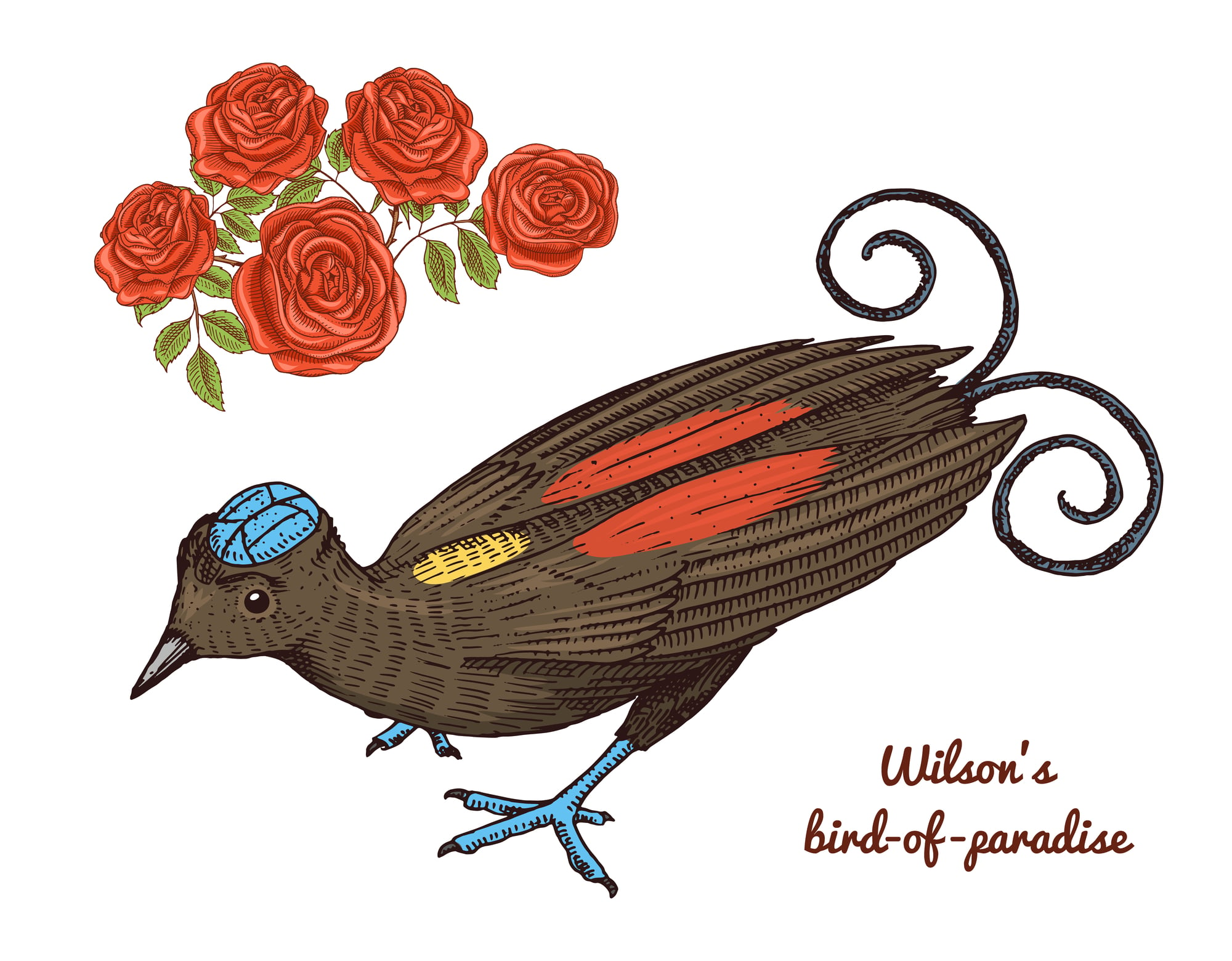
Wilson’s bird-of-paradise looks like nature’s attempt at modernist art. The male sports a patch of electric blue skin so vivid it appears to glow, surrounded by feathers in patterns that seem almost geometric in their precision.
The tail curves in a perfect spiral, each feather catching light differently as it moves. It’s the kind of design that makes you wonder if evolution sometimes prioritizes aesthetics over function, then reminds you that in the world of courtship displays, aesthetics are function.
Mandarin Duck
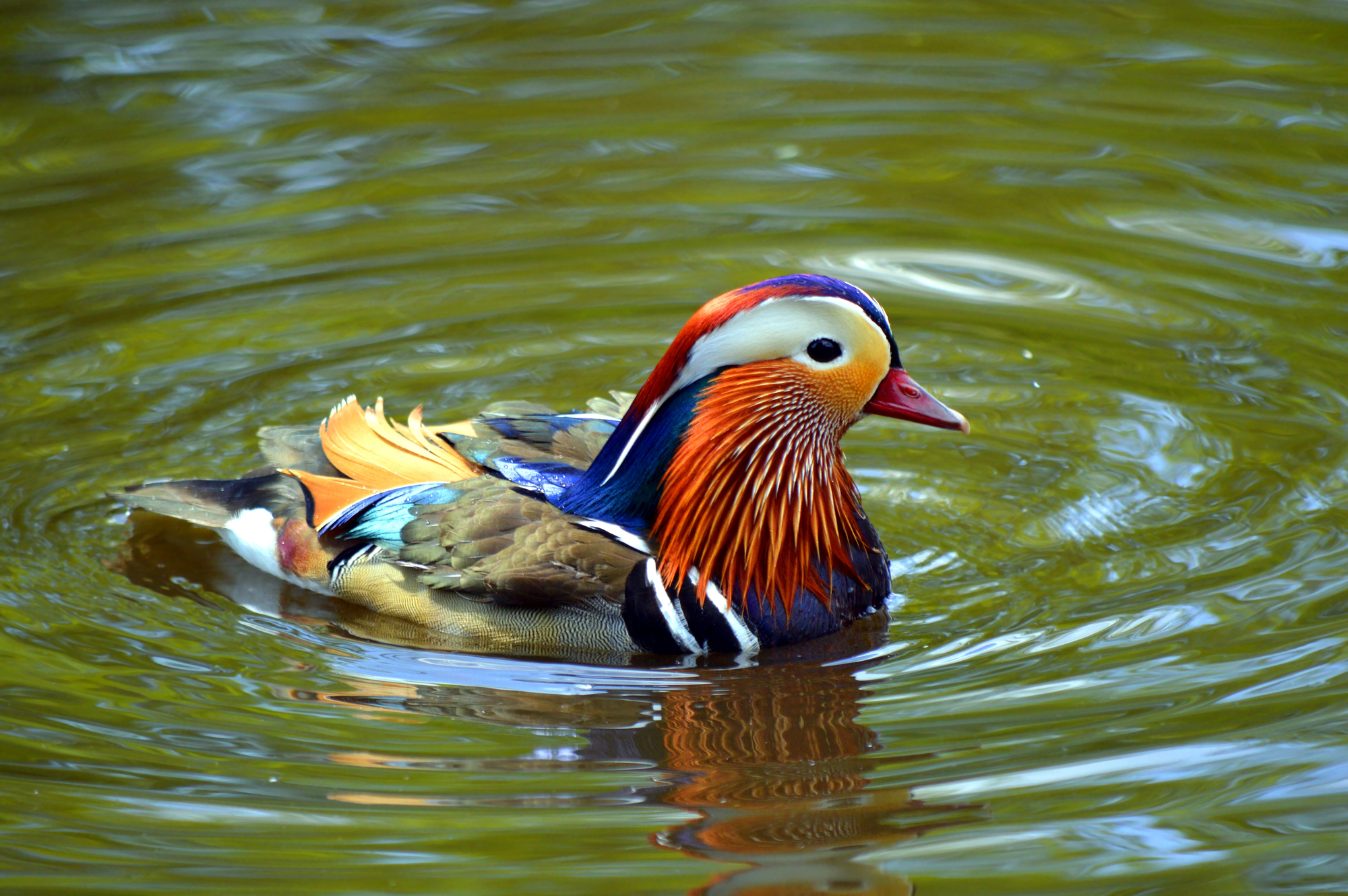
Duck feathers shouldn’t be this elaborate, but mandarin ducks never got that memo. The male’s wing feathers fan out into sails of orange and blue, with white stripes that create patterns too complex for the eye to follow easily.
Each feather seems individually designed rather than part of a cohesive whole (which is exactly what selection tends to produce when it runs unchecked). The result is a bird that looks like it belongs in an ornamental garden rather than a wild wetland.
The feathers photograph beautifully, but they also serve as a reminder that nature’s idea of practical and human ideas of practical rarely align. The feathers photograph beautifully, but they also serve as a reminder that nature’s idea of practical and human ideas of practical rarely align.
Secretary Bird
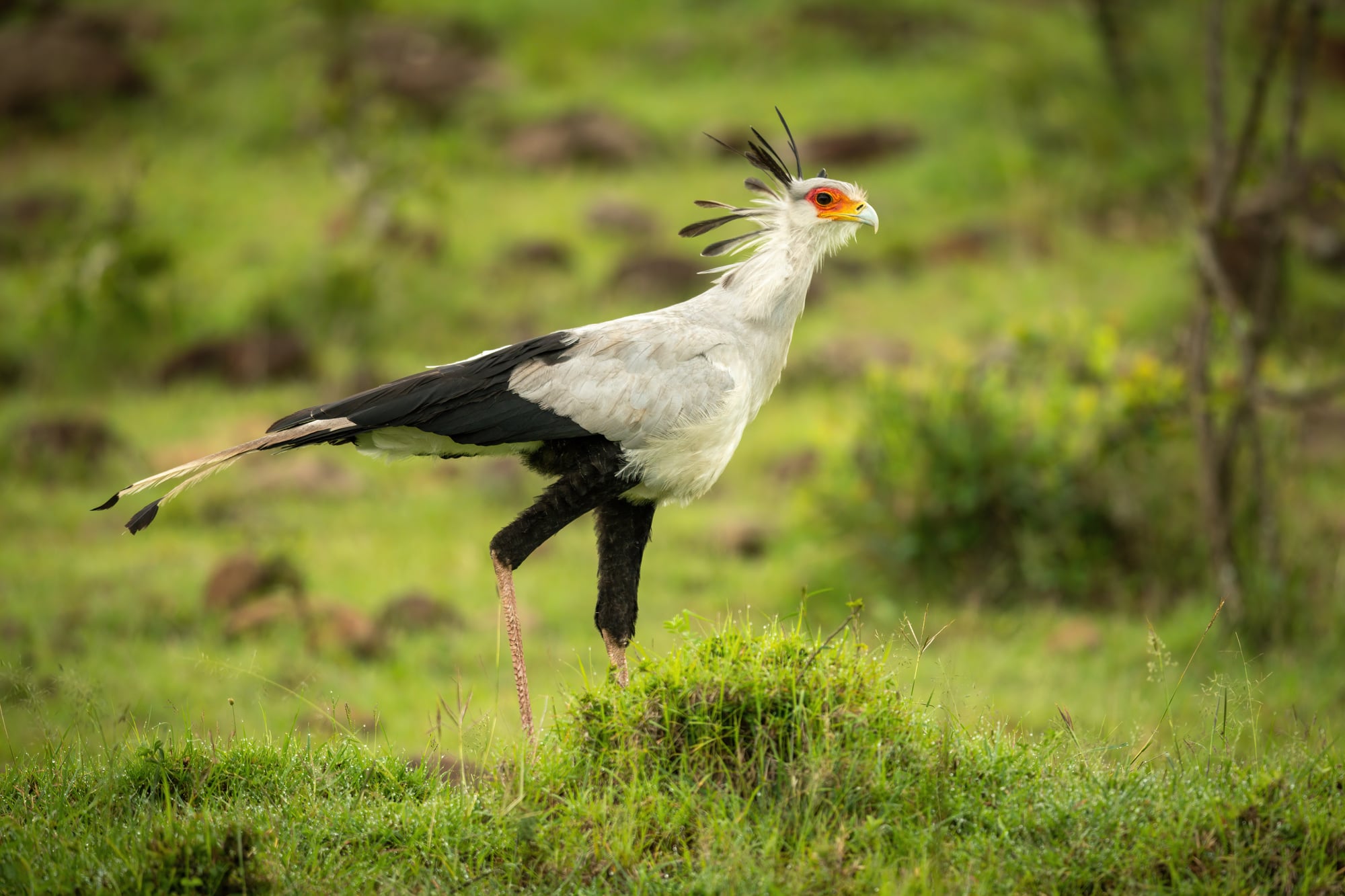
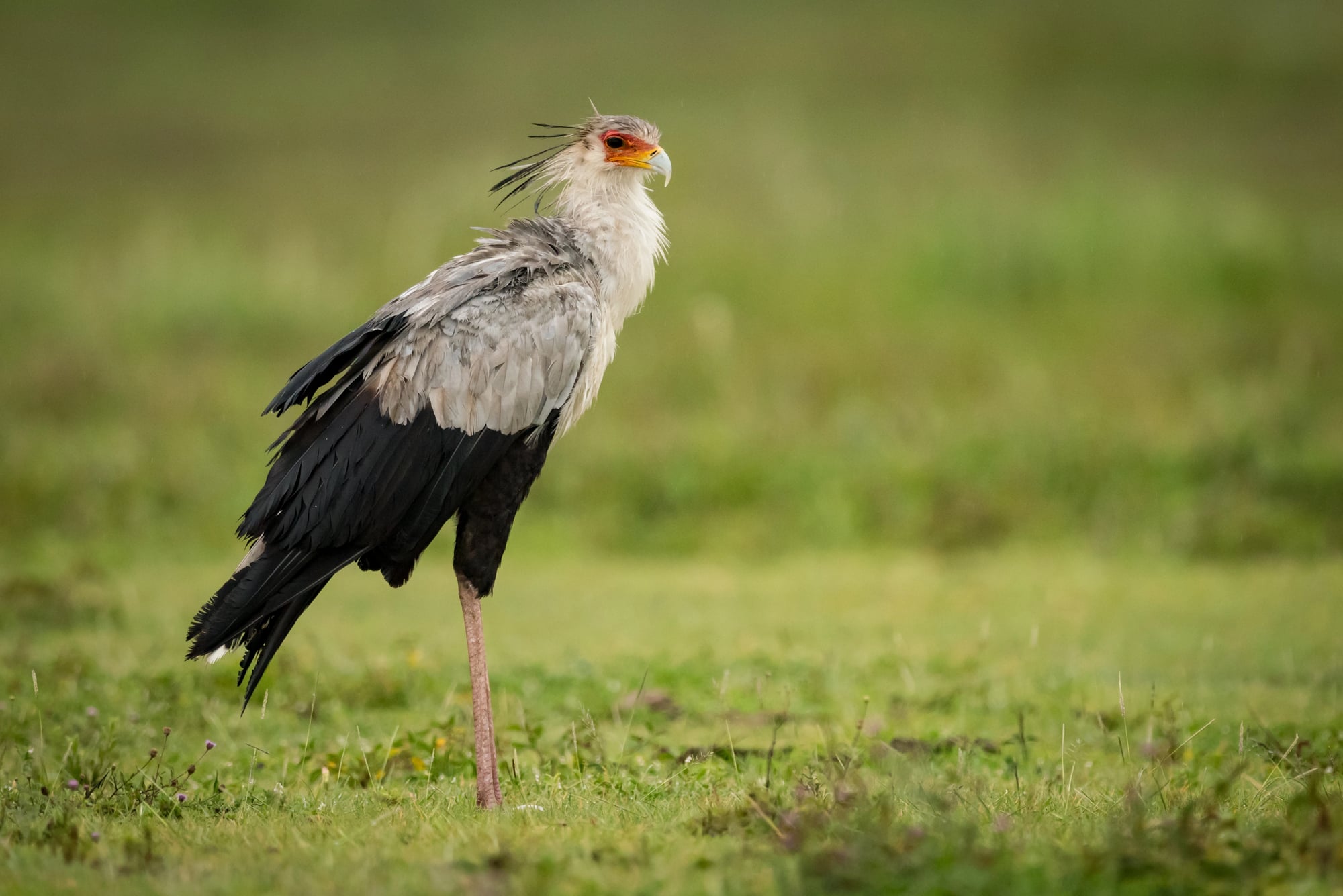
Secretary birds wear their unusual feathers like a crown that’s perpetually blown by wind. The long crest feathers at the back of the head stream behind them whether they’re walking or flying, creating a silhouette that’s unmistakably regal.
These aren’t decorative flourishes. The feathers can be raised or lowered to communicate mood and intention, turning the bird’s head into a semaphore system visible from considerable distances across African grasslands.
Hoatzin
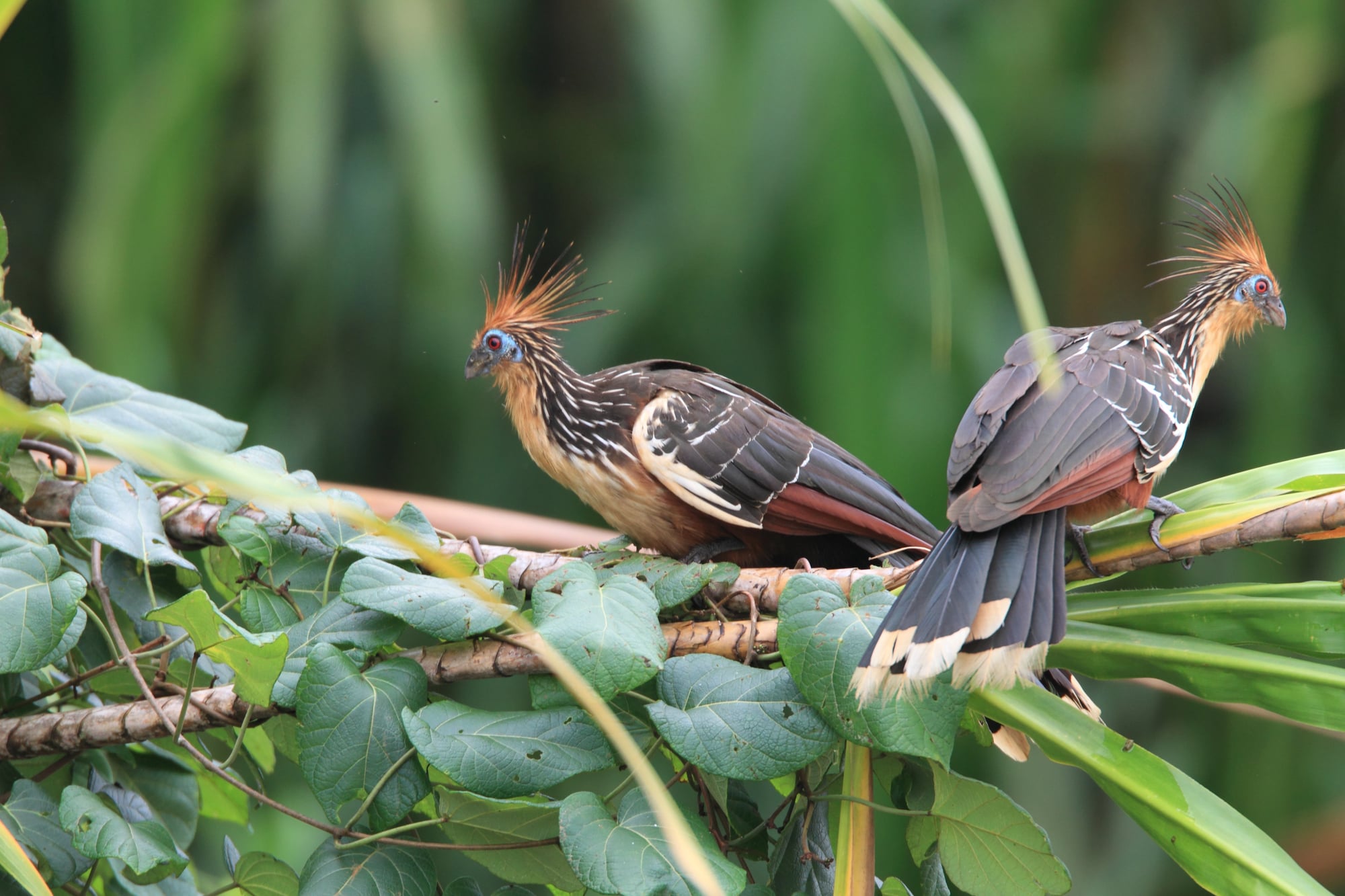
Hoatzin chicks possess something no other bird has retained: claws on their wings. These aren’t modified feathers but actual functional claws that allow young birds to climb through branches before their flight feathers develop properly.
The adult birds replace these claws with standard flight feathers, but they keep something else unusual — a digestive system that ferments leaves like a cow’s rumen. This makes them smell distinctly unpleasant, but it also gives their feathers a texture and sheen that’s unlike any other bird species.
Curl-Crested Aracari
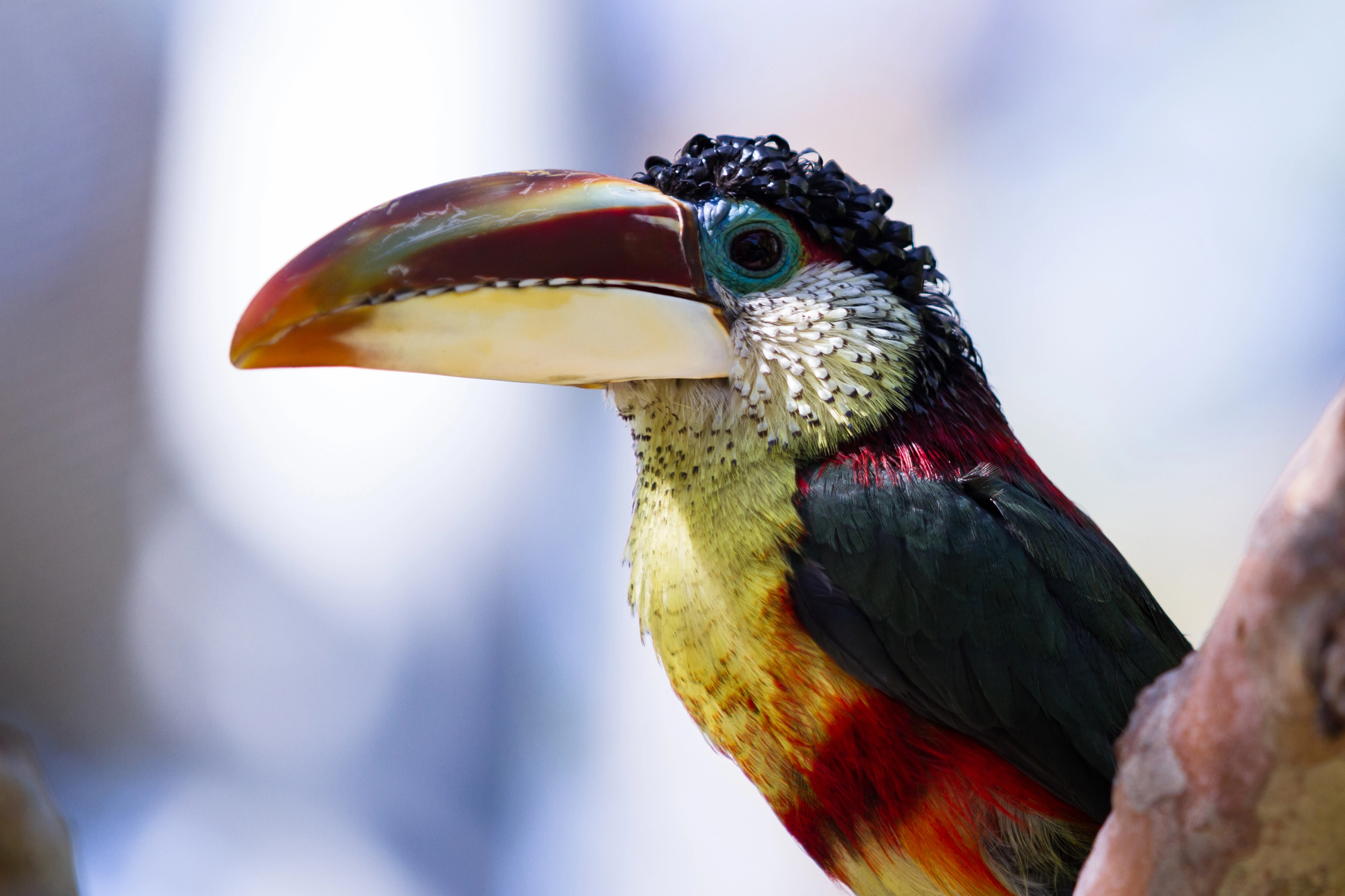
The curl-crested aracari’s head feathers spiral into tight coils that look more like wood shavings than anything that should grow from a bird’s skull. Each feather curls independently, creating a textured crown that changes appearance as the bird moves.
These modified feathers serve no obvious aerodynamic purpose, which makes them even more remarkable. They exist purely because, somewhere in the bird’s evolutionary history, curly head feathers became attractive to potential mates.
The photographs capture textures that seem almost tactile — you can nearly feel the springiness of each individual curl. The photographs capture textures that seem almost tactile — you can nearly feel the springiness of each individual curl.
Royal Flycatcher
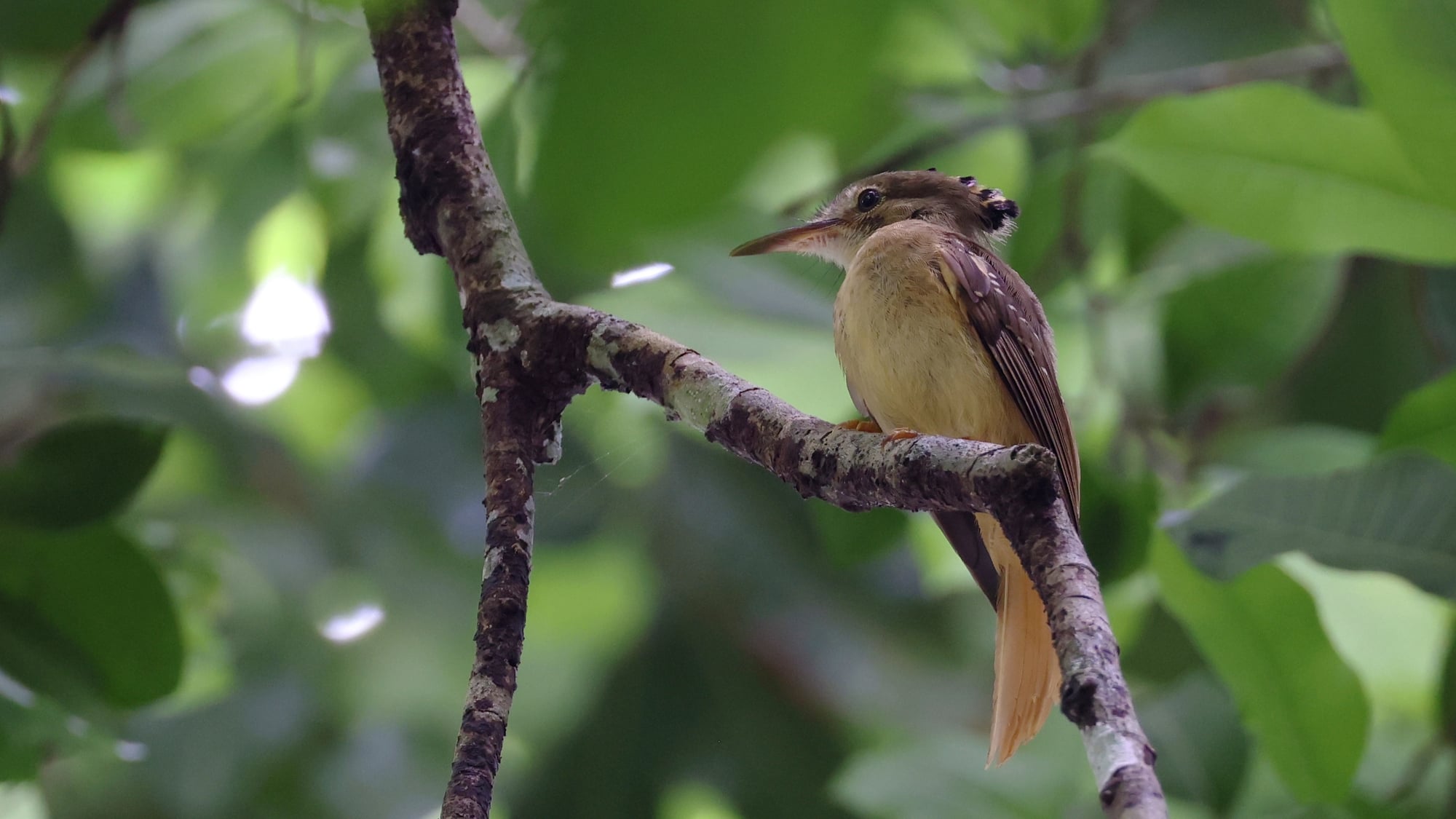
Royal flycatchers keep their most spectacular feathers hidden most of the time. The crest lies flat against the head until the bird decides to reveal it — then it fans into a crown of orange and blue that transforms the entire appearance of what seemed like a modest brown bird.
This is feather drama at its finest. The transformation happens in seconds, turning a bird that blends into forest backgrounds into something that demands immediate attention from everything within visual range.
Long-Tailed Widowbird
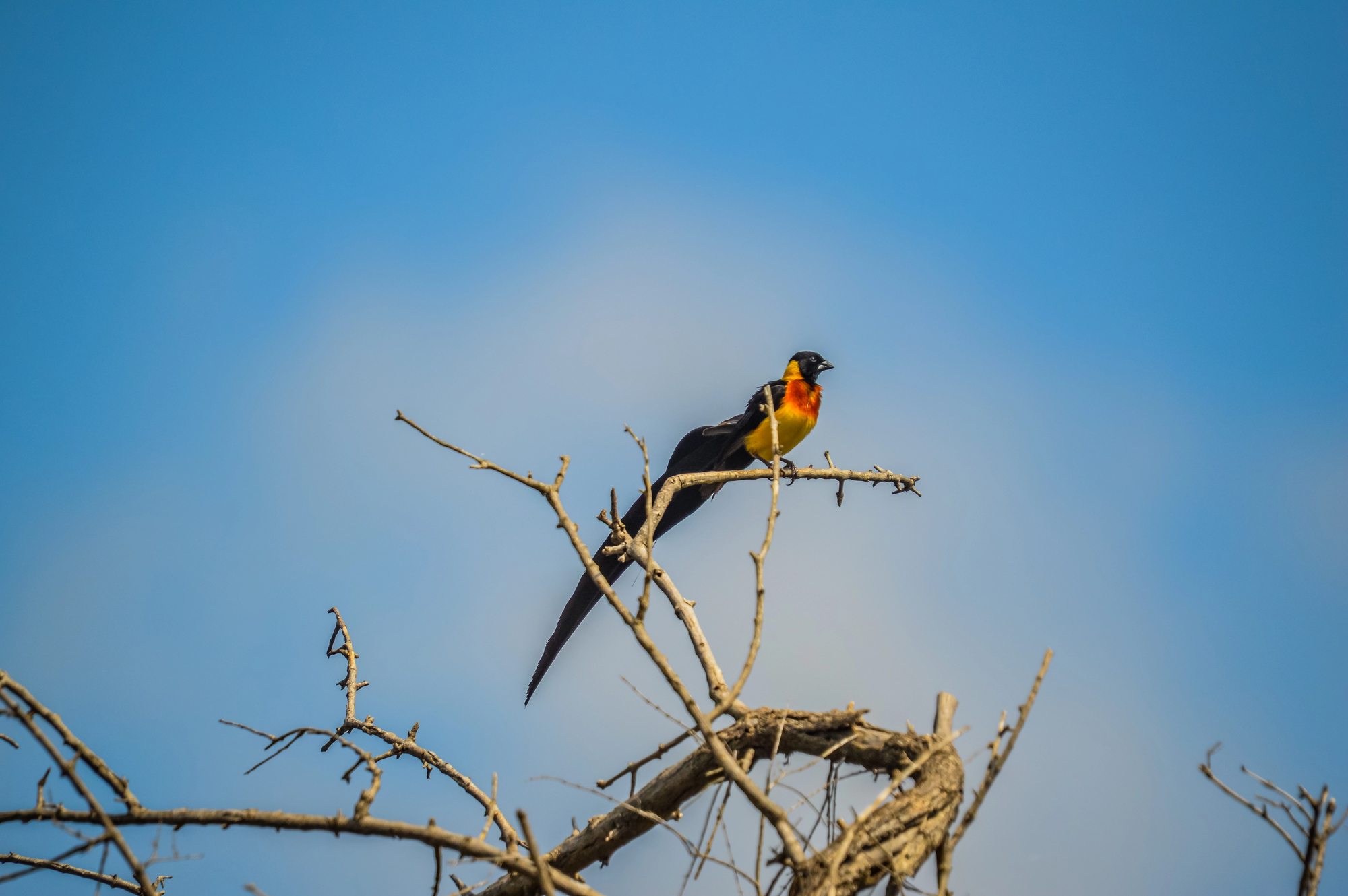
Male long-tailed widowbirds grow tail feathers that can reach twenty inches in length — roughly three times the length of their body. During breeding season, they fly across African grasslands trailing these feathers like black streamers that undulate with each wingbeat.
The feathers are so long they actually impair flight performance, which is precisely the point. Any male that can survive while handicapped by such extravagant plumage must possess superior genes worth passing to the next generation.
The photographs capture this biological gamble in action — beauty literally weighing down survival. The photographs capture this biological gamble in action — beauty literally weighing down survival.
Cock-Of-The-Rock
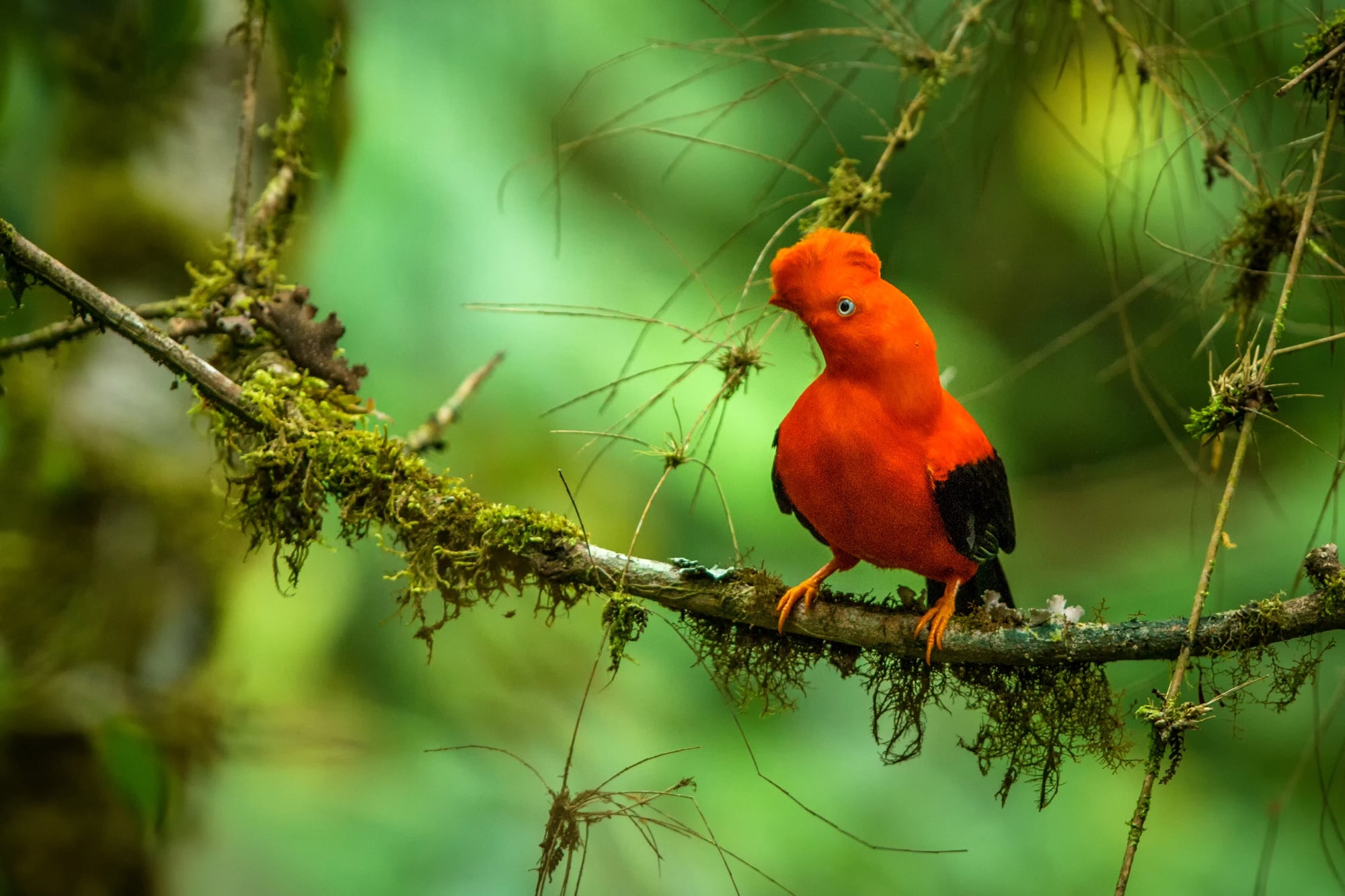
Cock-of-the-rock males sport head crests that extend forward over their beaks like bright orange visors. The feathers form a perfect semicircle that frames the entire head, turning each bird into a living sunset against the dim understory of South American forests.
These crests don’t fold or adjust — they’re permanently deployed. The birds have committed entirely to this look, which requires them to navigate through dense vegetation while essentially wearing a feathered helmet that blocks forward vision.
Victoria Crowned Pigeon
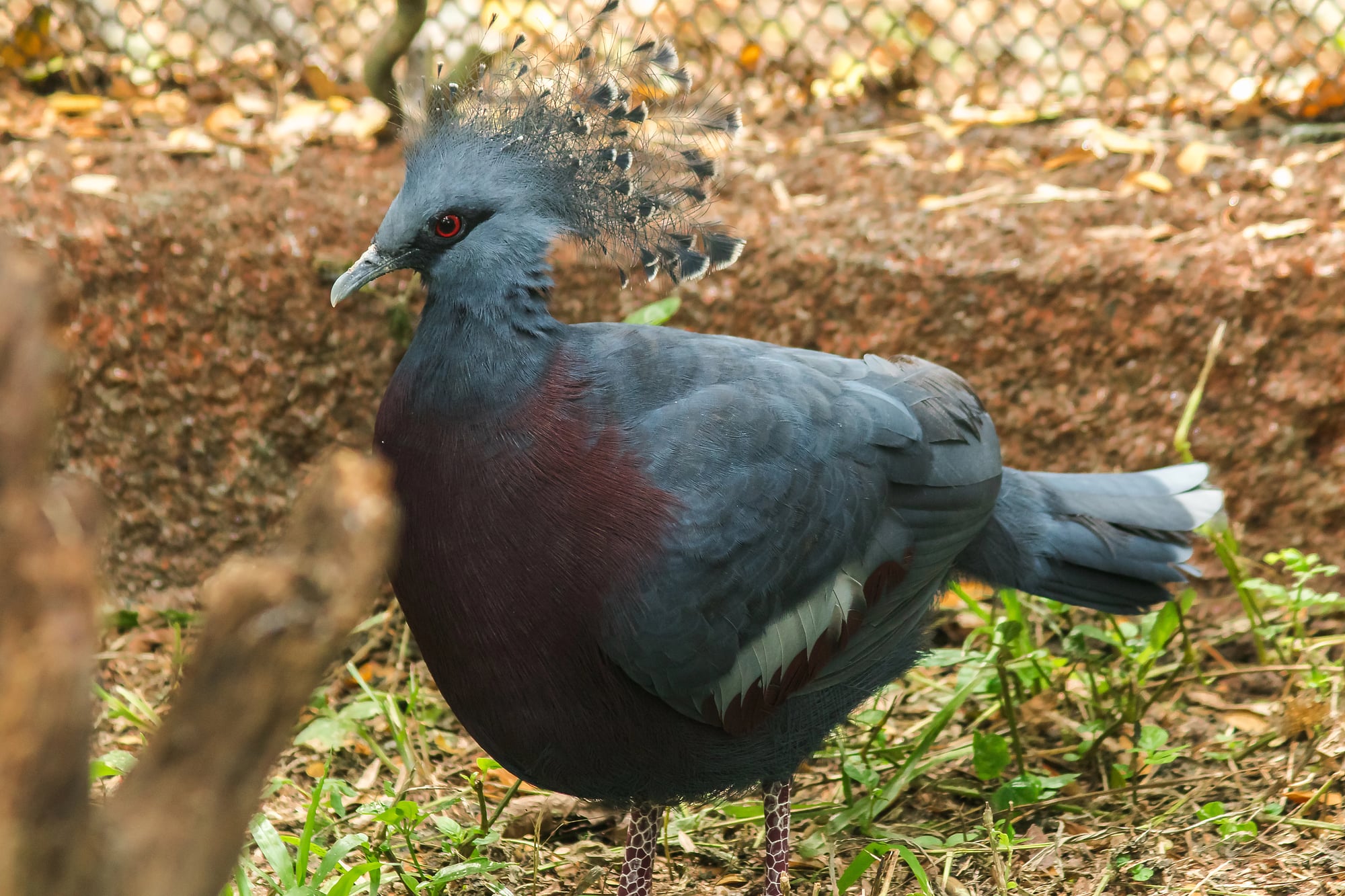
Victoria crowned pigeons wear feather crowns that look like delicate lace fans. Each feather in the crest terminates in a small, lacy tip that creates an intricate pattern when viewed as a whole.
The crown feathers can be raised or lowered slightly, but they’re always visible, giving these ground-dwelling birds a perpetually formal appearance. They’re the largest pigeons in the world, but it’s the intricate headpiece that makes them unforgettable in photographs.
Himalayan Monal
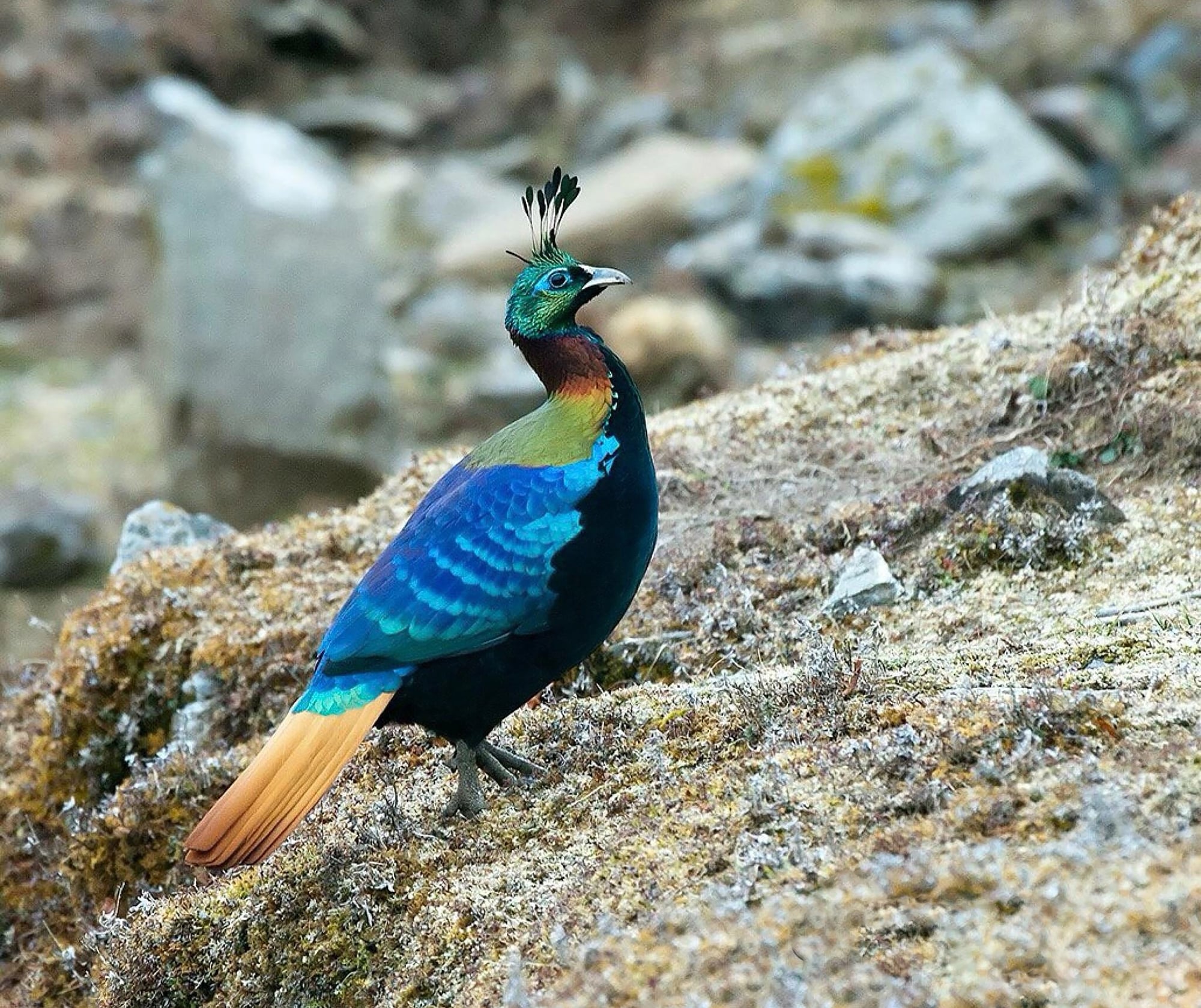
Himalayan monal feathers shift color so dramatically with changing light that photographs of the same bird can look like different species entirely. The neck and back feathers contain microscopic structures that break white light into component colors, creating iridescence that ranges from deep purple to brilliant gold.
The tail feathers add another layer of complexity — they’re shorter than many pheasant species but broader, creating a fan that displays multiple colors simultaneously. Each feather seems to contain an entire rainbow compressed into a few square inches of surface area.
Great Argus Pheasant
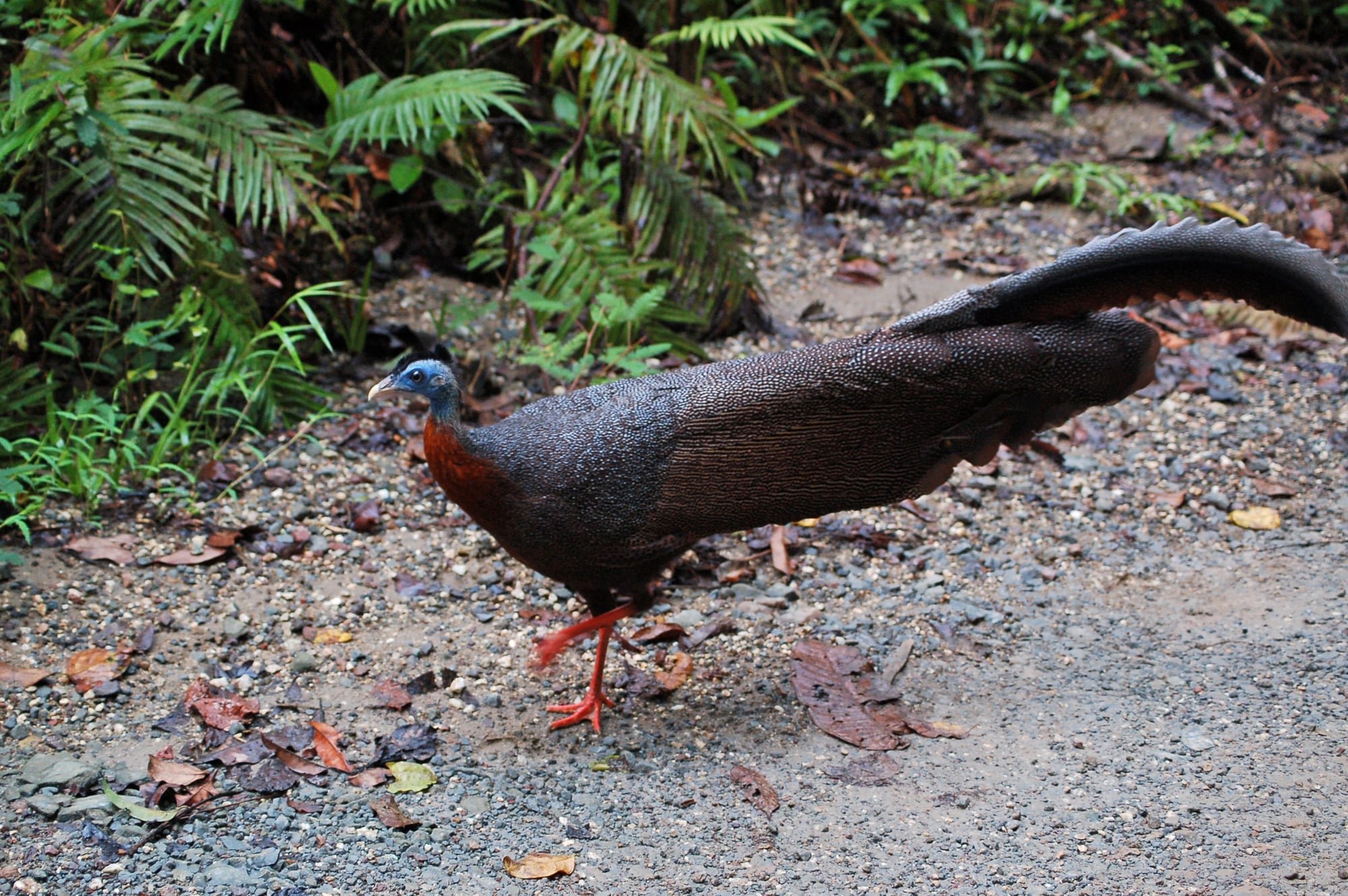
Great argus pheasants possess wing feathers decorated with eye-spots so realistic they create an optical illusion during courtship displays. When the male spreads his wings, dozens of three-dimensional spheres seem to hover in space, each one appearing to have depth and shadow.
These aren’t simple patterns. Each eye-spot is created through precise arrangements of different colored barbules that trick the human eye into perceiving depth where none exists.
The photographic effect is startling — flat feathers that appear to contain actual spherical objects. The photographic effect is startling — flat feathers that appear to contain actual spherical objects.
Nicobar Pigeon
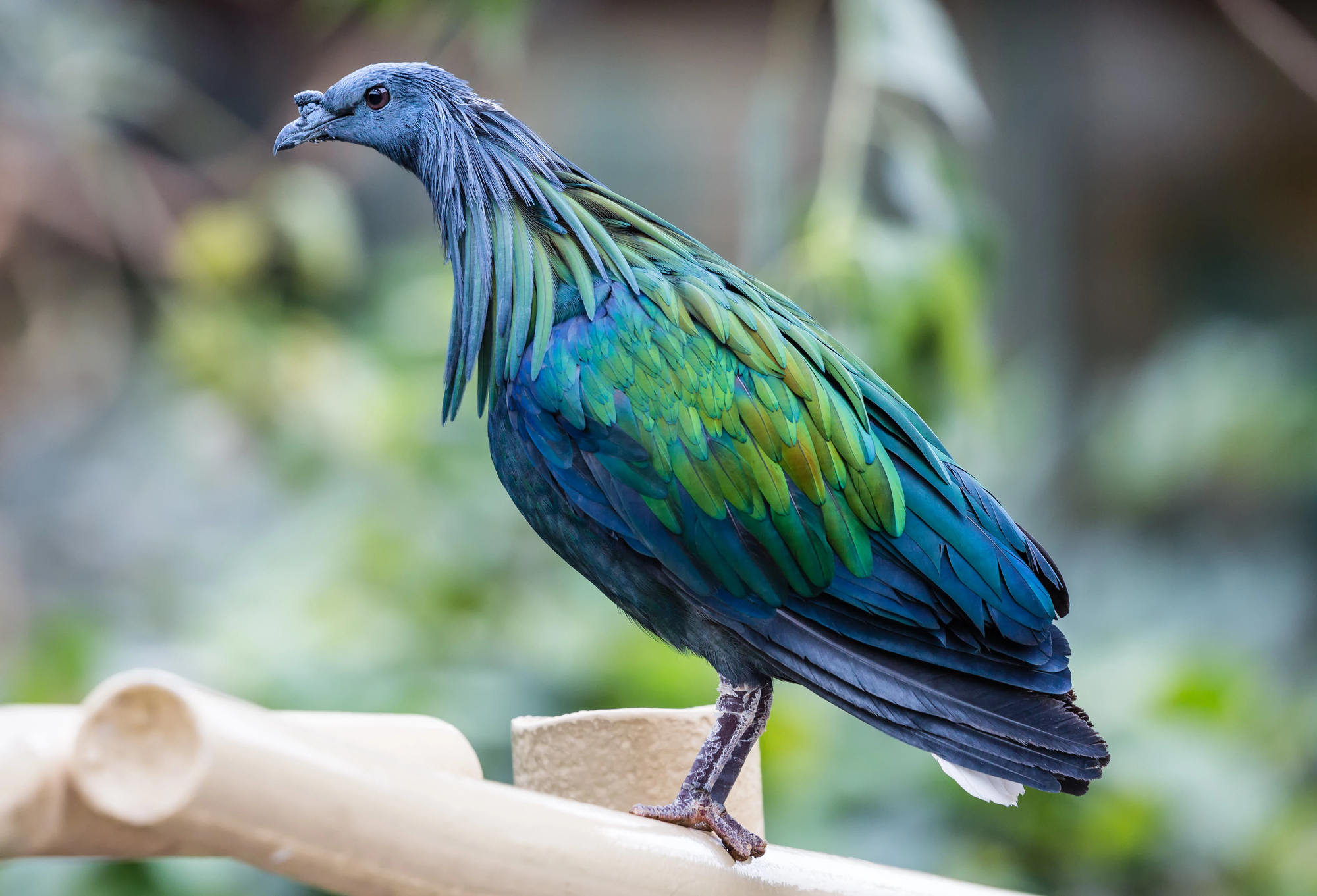
Nicobar pigeon feathers grow in hackles that flow like metallic chain mail. Each feather catches light independently, creating a surface that shimmers with every movement the bird makes.
The neck feathers are particularly striking — they’re longer than normal pigeon plumage and have an almost liquid quality in photographs. The birds appear to be wearing armor made of jeweled metal rather than anything that could grow naturally from follicles.
When Feathers Become Art
These birds remind us that evolution doesn’t always follow the path of least resistance. Sometimes it takes extravagant detours that produce results so visually striking they seem to belong in galleries rather than forests.
The photographs preserve moments where biology becomes indistinguishable from artistry, where survival strategies transform into pure spectacle. The unusual feathers serve their purposes — attracting mates, intimidating rivals, or communicating across distances.
But they also transcend function to become something approaching sculpture, each bird a mobile artwork that happens to breathe and fly.
More from Go2Tutors!

- The Romanov Crown Jewels and Their Tragic Fate
- 13 Historical Mysteries That Science Still Can’t Solve
- Famous Hoaxes That Fooled the World for Years
- 15 Child Stars with Tragic Adult Lives
- 16 Famous Jewelry Pieces in History
Like Go2Tutors’s content? Follow us on MSN.