Unusual History of the First Planes
Aviation history feels predictable when told the same way over and over. Wright brothers, Kitty Hawk, twelve seconds of flight that changed everything.
But the real story of early aviation reads more like a collection of fever dreams than orderly progress. Inventors strapped wings to their backs and jumped off cliffs. Others built machines that looked more like sailing ships than anything meant to fly. Some succeeded by accident.
Others failed spectacularly despite having all the right ideas. The path to powered flight twisted through decades of brilliant miscalculations, lucky breaks, and machines that defied both logic and gravity in equal measure.
Otto Lilienthal’s Death-Defying Gliders
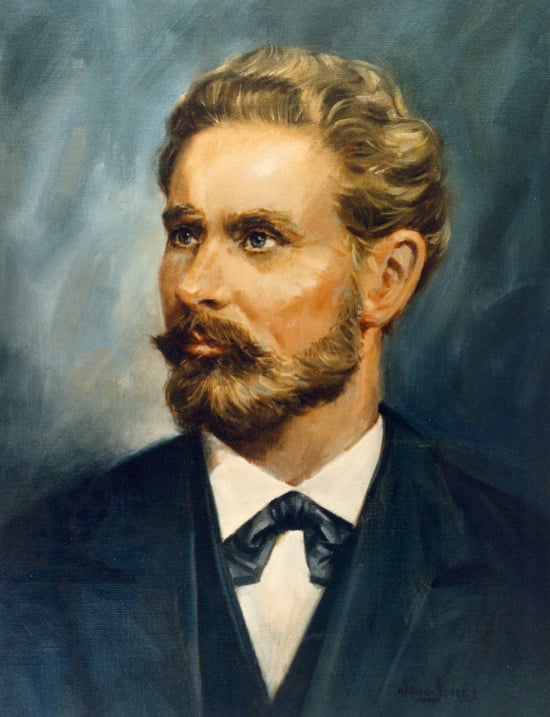
Lilienthal built wings and wore them. His gliders looked like enormous bat wings stretched across bamboo frames.
He’d run down hills in Germany, leap into the air, and actually stay airborne for meaningful distances. This was the 1890s. Most people had never seen anything larger than a bird leave the ground.
He made over 2,000 flights before a gust of wind sent him crashing to his death in 1896. But those flights proved something crucial: humans could control winged flight, at least briefly.
Clement Ader’s Steam-Powered Contraption
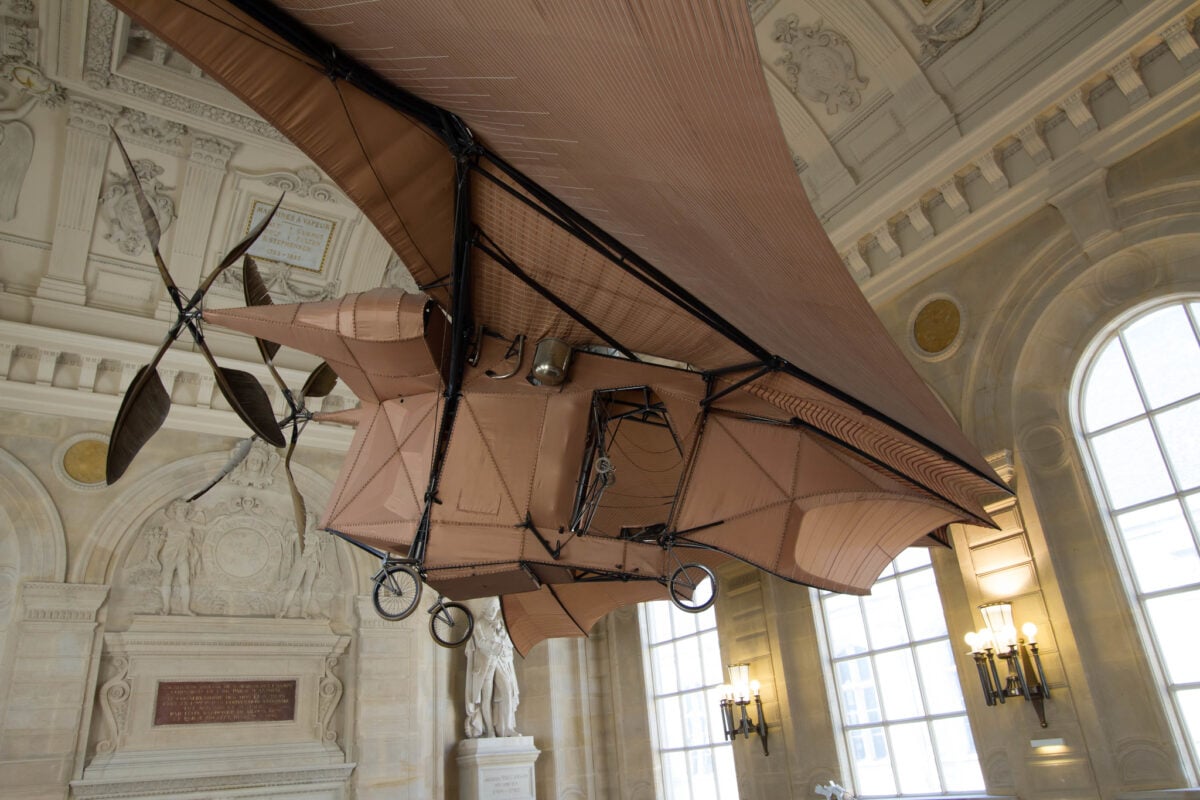
Ader built a machine that looked like a mechanical bat designed by someone who had only heard bats described secondhand. The Éole had wings that flapped (sort of), a steam engine that weighed more than most carriages, and propellers that spun in directions that made no aerodynamic sense whatsoever.
And yet, on October 9, 1890, this bizarre creation lifted off the ground in France and stayed airborne for about 165 feet—though calling it “controlled flight” would be generous, since Ader had roughly the same steering capability as a cannonball. What makes this even stranger is that Ader genuinely believed he had solved powered flight thirteen years before the Wright brothers, and the French military (briefly) believed him too.
They funded a larger version that was, predictably, even less capable of actual flight. But for a few moments in 1890, that steam-powered bat-machine had actually worked, which was more than anyone had managed before.
So there’s something to be said for building machines that shouldn’t work according to any reasonable theory—sometimes they work anyway, for reasons that become clear only decades later.
Hiram Maxim’s Flying Monster
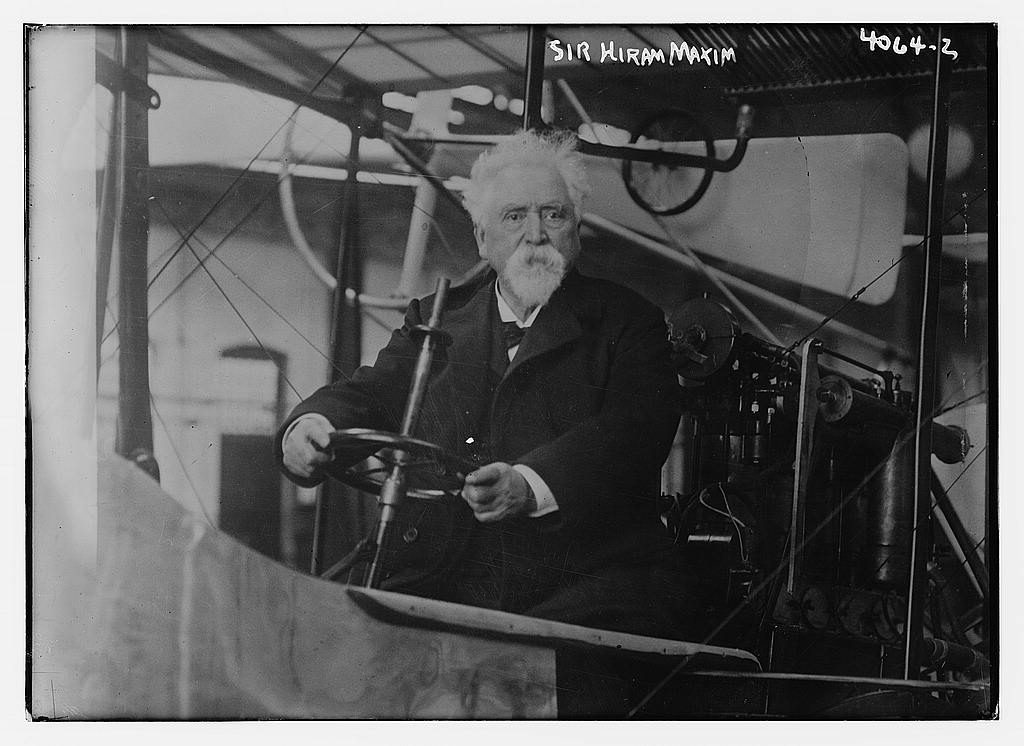
Picture a locomotive with wings. Not metaphorically—literally picture train wheels, a massive steam engine, and wings stretched across a 110-foot frame. Maxim’s flying machine weighed over 8,000 pounds and ran on railroad tracks because it was too heavy to support its own weight on landing gear.
The machine generated so much lift during its test run in 1894 that it broke free from the restraining rails Maxim had installed to prevent it from actually flying. He hadn’t intended for it to leave the ground during that particular test.
The machine lifted briefly, crashed back down, and was never flown again. Maxim had accidentally built something capable of powered flight but had designed it specifically not to fly.
The irony wasn’t lost on him.
Samuel Langley’s Spectacular Failures
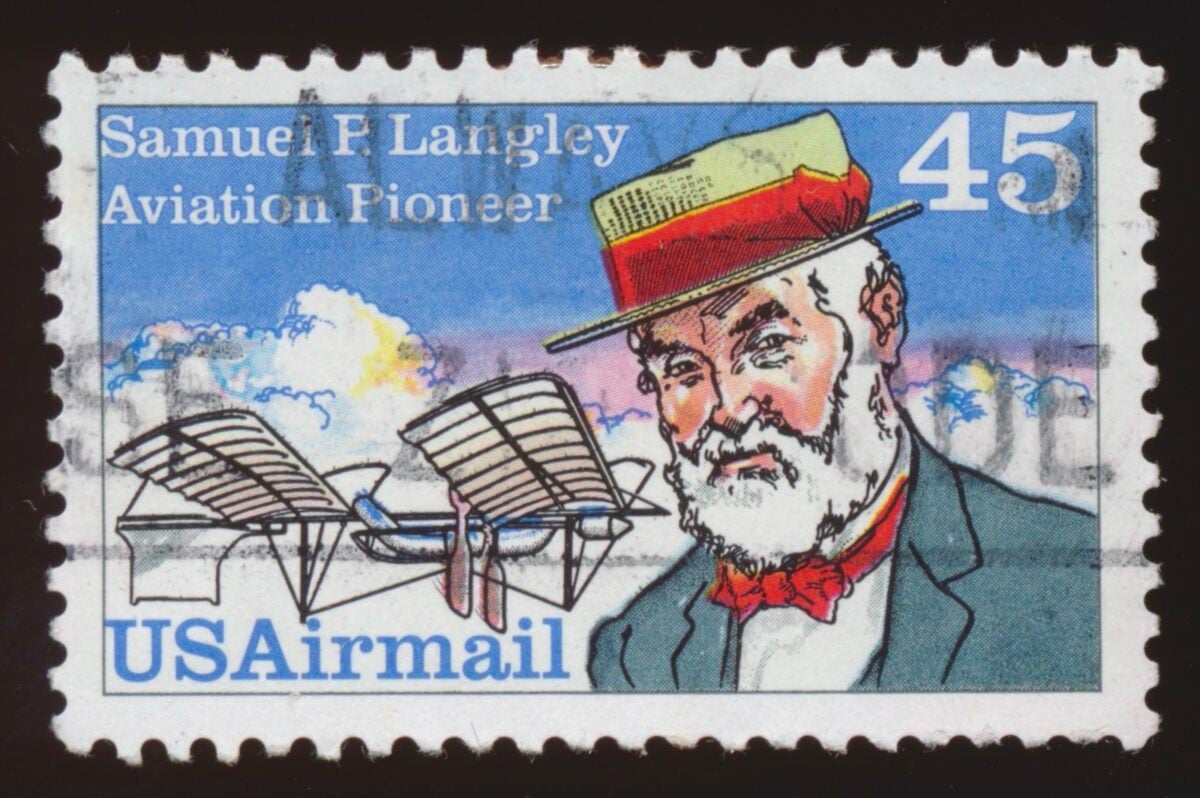
Langley had everything going for him. Respected scientist.
Government funding. A working model that had successfully flown unmanned.
His full-scale Aerodrome should have beaten the Wright brothers into the history books. Instead, it crashed into the Potomac River twice within weeks of each other in 1903.
Both times, the machine simply folded up and dropped like a broken umbrella. The pilot survived. The funding didn’t.
Nine days after Langley’s second failure, the Wright brothers achieved sustained powered flight. Timing, apparently, matters almost as much as engineering.
Alberto Santos-Dumont’s Backwards Approach
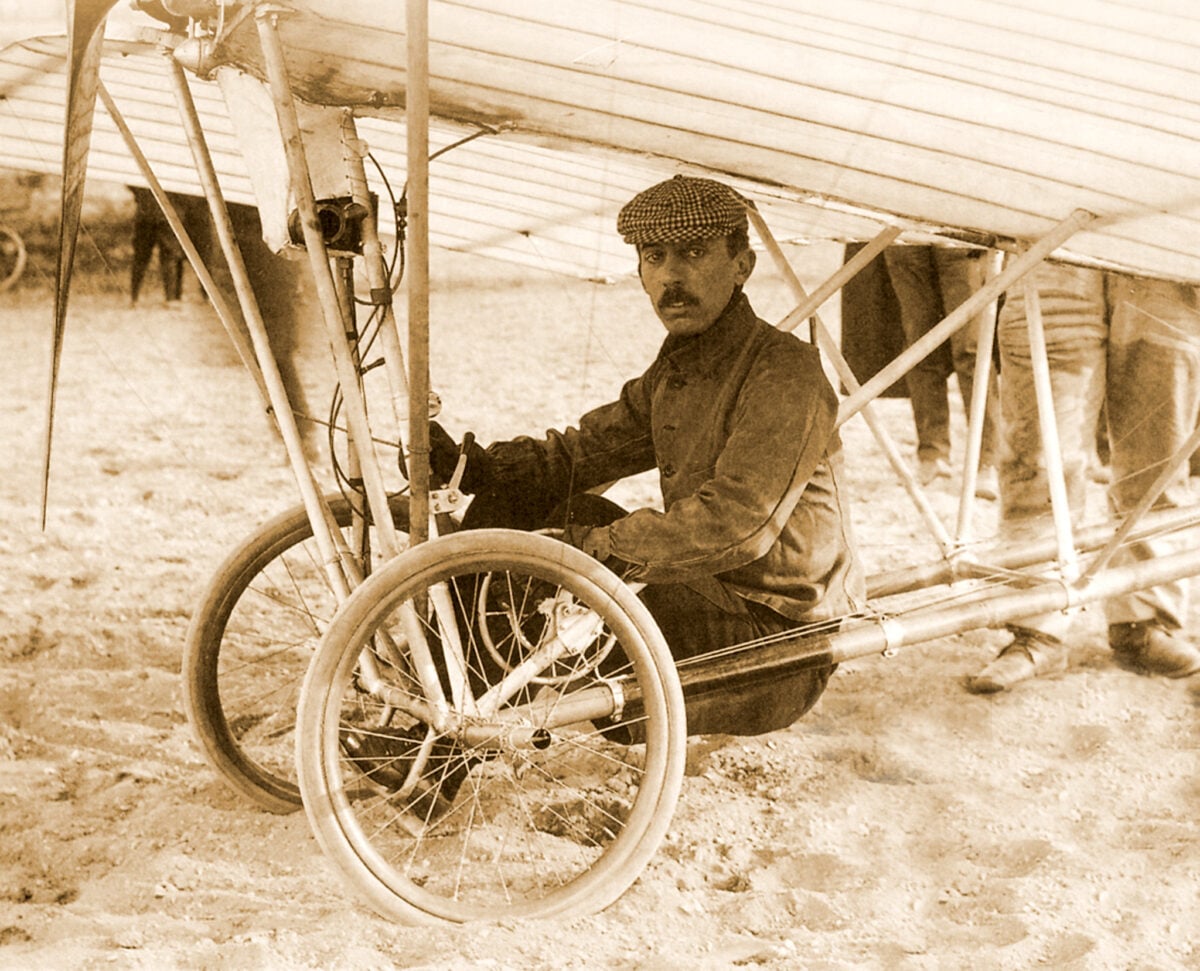
Santos-Dumont built his airplane backwards. The 14-bis had its elevator in front, its propeller facing backwards, and looked like it was flying tail-first even when moving forward.
This configuration violated everything that would later become standard aircraft design—and yet, on October 23, 1906, it flew 197 feet in front of a crowd in Paris who had never seen anything like it. Europeans considered Santos-Dumont’s flight the first true powered flight because it happened in public with witnesses and official documentation (the Wright brothers’ 1903 flights had been essentially private affairs with minimal documentation).
The 14-bis also took off under its own power rather than requiring a catapult, which seemed more legitimate to observers at the time. But here’s what makes Santos-Dumont’s story particularly strange: he was already famous for flying dirigibles around Paris, including one that he regularly parked outside his favorite café.
He approached airplane design as someone who already understood how to navigate three-dimensional space, which gave him insights that pure theorists missed. His backwards airplane worked because he had learned to fly before he learned what was supposedly impossible.
The Wright Brothers’ Secret Success
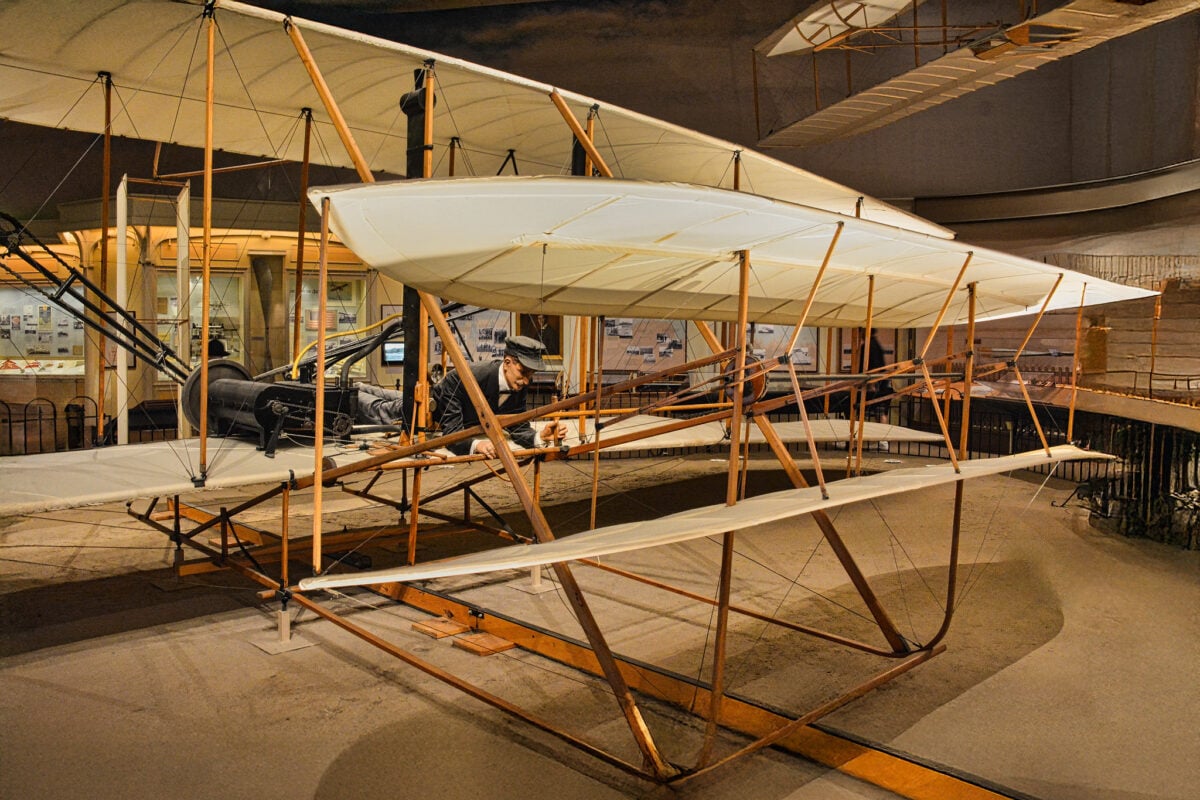
The Wright brothers flew successfully for nearly five years before most people believed they had actually done it. Their 1903 flight lasted 12 seconds and covered 120 feet.
By 1905, they were staying airborne for over 30 minutes and covering 20+ miles per flight. Yet aviation experts continued building machines that didn’t work while dismissing the Wrights’ claims as exaggerated.
The brothers were secretive about their methods, rarely flew in public, and refused to demonstrate their machine without a signed contract. This created a bizarre situation where the problem of powered flight had been solved, but almost nobody knew it.
Other inventors continued pursuing dead-end approaches for years after the Wright Flyer had proven them unnecessary.
Early Planes That Looked Like Ships
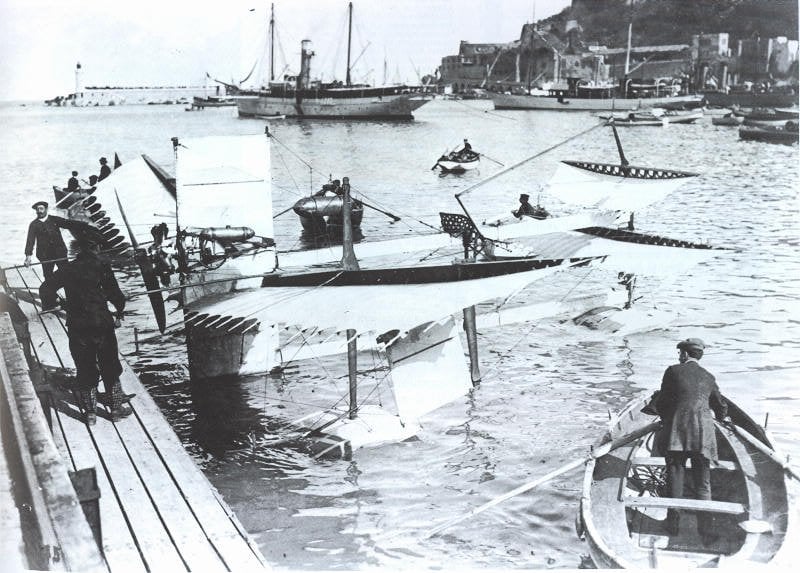
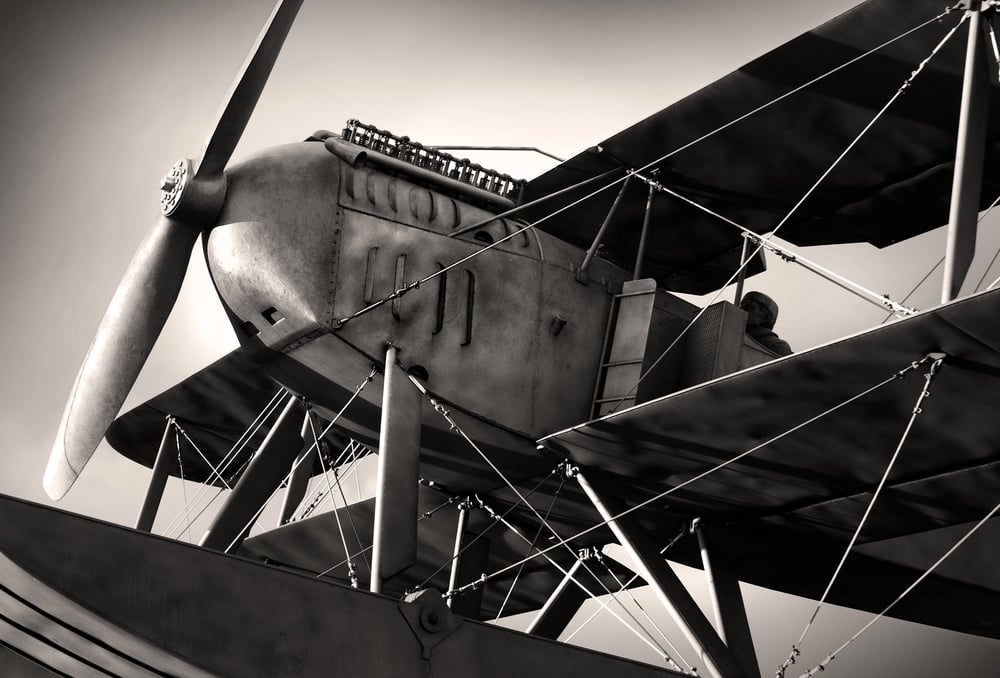
Early aviation borrowed heavily from maritime design because boats were the only vehicles people understood that moved through a fluid medium. Many early planes featured ship-like hulls, maritime steering systems, and even anchors for landing.
Henri Fabre’s seaplane looked exactly like a sailing yacht with wings attached as an afterthought. Glenn Curtiss’s early designs included boat hulls that could land on water but looked absurd in the air.
The connection made intuitive sense—air and water were both fluid mediums that offered both resistance and support. This nautical approach worked better than it had any right to.
Water landings were often gentler than ground landings in the early days, and the boat-hull design provided structural strength that purpose-built aircraft frames often lacked.
Flying Machines with No Steering
Many early aircraft had no method for turning. Pilots could control pitch (nose up or down) and sometimes roll, but turning required shifting body weight or hoping the wind would push them in the right direction.
This wasn’t an oversight—many inventors assumed that steering would be unnecessary because flights would be brief and straight-line affairs. The idea of actually navigating through the air seemed like an advanced problem to solve later.
Some pilots learned to turn by dragging a foot or hand in the air to create asymmetrical drag. Others would simply land, manually reposition the aircraft, and take off in a new direction.
The concept of controlled aerial navigation took years to develop after powered flight itself had been achieved.
The Catapult Launch Era

The Wright brothers used a catapult system for launching because their engine wasn’t powerful enough for conventional takeoff. A falling weight pulled the aircraft forward on a rail until it gained enough speed to fly.
This approach became standard for early aviation demonstrations. Pilots would spend hours setting up elaborate launch systems for flights that lasted minutes.
Some catapult systems were more complex and expensive than the aircraft they launched. The irony was that many of these underpowered aircraft could sustain flight once airborne—they just couldn’t generate enough speed from a standing start.
Modern aircraft carriers use essentially the same catapult principle today, though for different reasons.
Bamboo and Fabric Construction

Early aircraft were built like furniture, not vehicles. Bamboo frames, bicycle wheels, fabric coverings held together with wire and hope.
These machines looked impossibly delicate because they were impossibly delicate. Yet this construction method was often stronger and more flexible than the heavier alternatives.
Bamboo could bend without breaking. Fabric could tear but still maintain structural integrity.
When early aircraft crashed—and they crashed frequently—the lightweight construction often meant the pilot survived impacts that would have been fatal in heavier machines. Modern ultralight aircraft still use similar construction principles, proving that the early builders had stumbled onto something genuinely sensible despite appearances.
Engines That Barely Worked
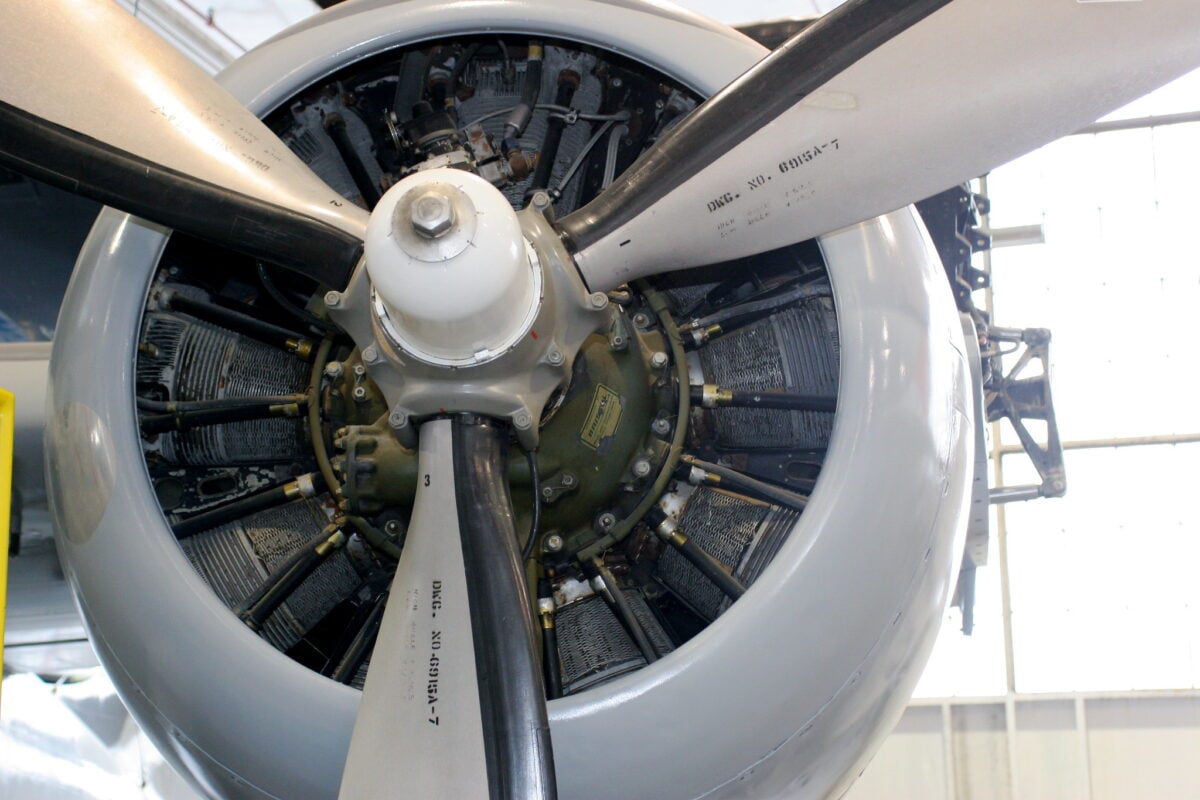
Early aircraft engines were catastrophically unreliable. The Wright brothers’ 1903 engine produced about 12 horsepower and weighed nearly 200 pounds.
It used a simple gravity-fed fuel system rather than a conventional carburetor, and relied on a water-jacket cooling system rather than air cooling — a practical engineering choice for an engine that needed to run reliably however long the flight lasted. Most engines of the era quit without warning, overheated constantly, and required complete rebuilds after a few hours of operation.
Pilots planned for engine failure as a routine part of every flight rather than an emergency. This forced early aviators to become expert glider pilots by necessity.
When the engine quit—and it would quit—they needed to land safely using only gravity and lift. Many of the best early pilots were those who had learned to fly engineless aircraft first.
Landing Wherever Possible
Early aircraft couldn’t choose their landing spots with much precision. Pilots aimed for large, flat areas and hoped for the best.
Farmers’ fields, beaches, and city parks became impromptu airports. This led to surreal scenes of aircraft appearing in completely ordinary locations with no warning.
A plane might land in someone’s pasture, the pilot would make minor repairs, and then take off again, leaving behind only confused livestock and damaged crops. Some pilots carried repair materials and would spend days camped next to their aircraft, fixing whatever had broken during the last flight.
Rural communities became accustomed to aviators appearing suddenly and requesting tools, food, or directions.
When the Sky Belonged to Everyone
The early aviation era existed in a regulatory vacuum. No licenses, no air traffic control, no designated airways.
Anyone who could build or buy an aircraft could fly it anywhere they wanted, assuming they could figure out how to make it work. This freedom was both liberating and terrifying.
Pilots routinely flew over cities, through mountain passes, and across international borders without permission or flight plans. Some carried mail or passengers for money without any oversight whatsoever.
The casualty rate was horrific, but the sense of possibility was unlimited. For a brief period in history, the sky was genuinely open territory where individual boldness mattered more than institutional approval.
That era ended as aviation became safer, more regulated, and far less personally adventurous.
The Unfinished Revolution
Early aviation never really ended—it just evolved into something more predictable. But those first decades of flying machines that barely worked, pilots who made up procedures as they went along, and aircraft that looked like the fever dreams of imaginative inventors established something irreversible about human capability.
The strange, improvised, often ridiculous early history of flight matters not because it was efficient or safe, but because it proved that the impossible was merely improbable. Every modern aircraft traces its lineage back to those bamboo-and-fabric machines that had no business staying airborne but did anyway, carrying pilots who had no business surviving but mostly did, solving problems that had never existed before because no one had ever needed to navigate through empty sky.
More from Go2Tutors!

- The Romanov Crown Jewels and Their Tragic Fate
- 13 Historical Mysteries That Science Still Can’t Solve
- Famous Hoaxes That Fooled the World for Years
- 15 Child Stars with Tragic Adult Lives
- 16 Famous Jewelry Pieces in History
Like Go2Tutors’s content? Follow us on MSN.



