Largest Waterfalls in the World by Water Volume
Standing before a massive waterfall changes something in your chest — that thundering weight of water carries a power that photographs never capture. While height gets most of the attention when people talk about waterfalls, the truly overwhelming ones are measured by how much water they move.
These are the giants that reshape landscapes, create their own weather systems, and remind you that nature operates on a scale that makes human engineering look quaint.
Niagara Falls
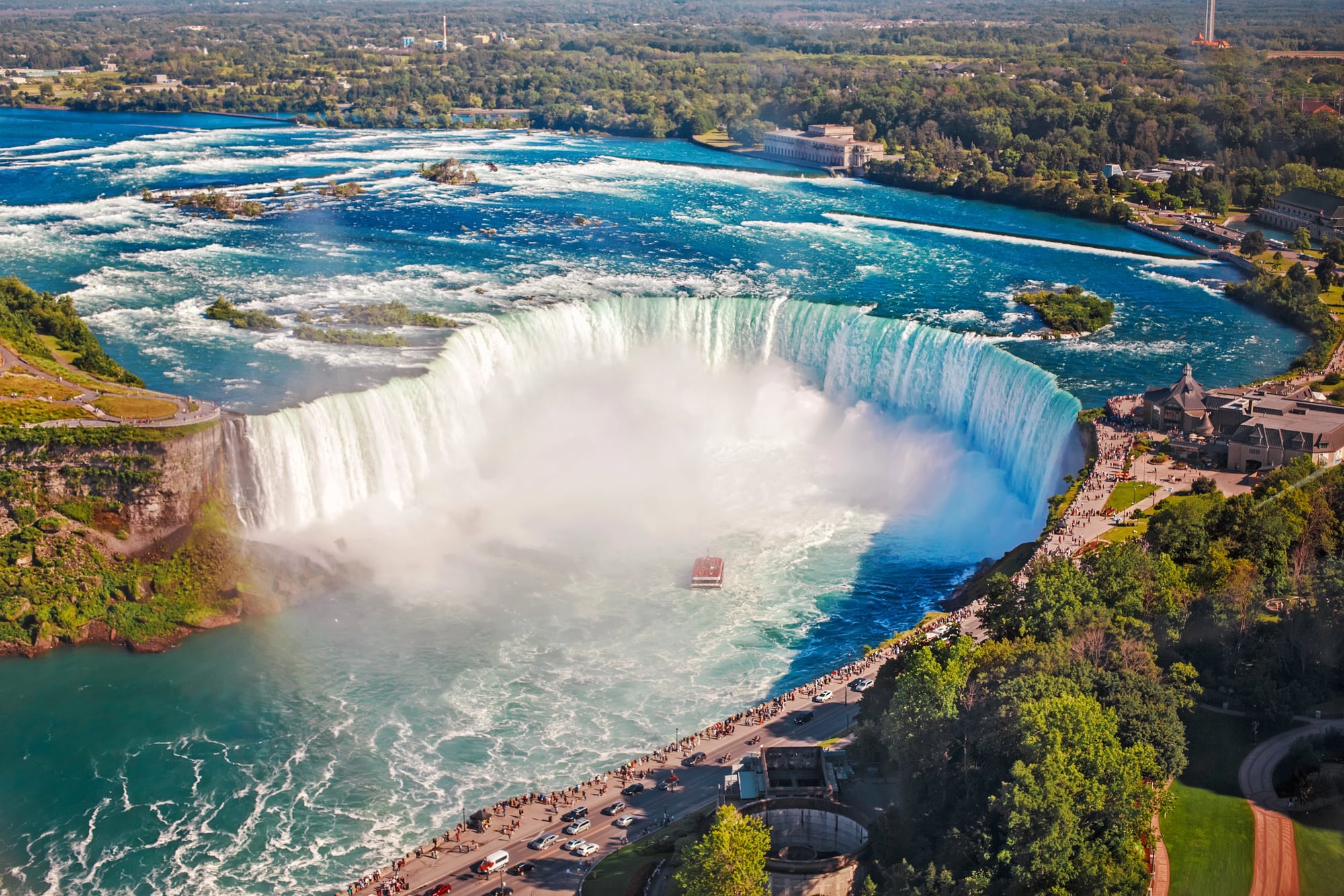
The American side gets the postcards, but the Horseshoe Falls on the Canadian border does the real work. Six million cubic feet of water per minute during peak flow.
That’s enough water to fill an Olympic swimming pool every three seconds.
The mist cloud rises 500 feet on calm days. On windy ones, it drifts for miles.
Iguazu Falls
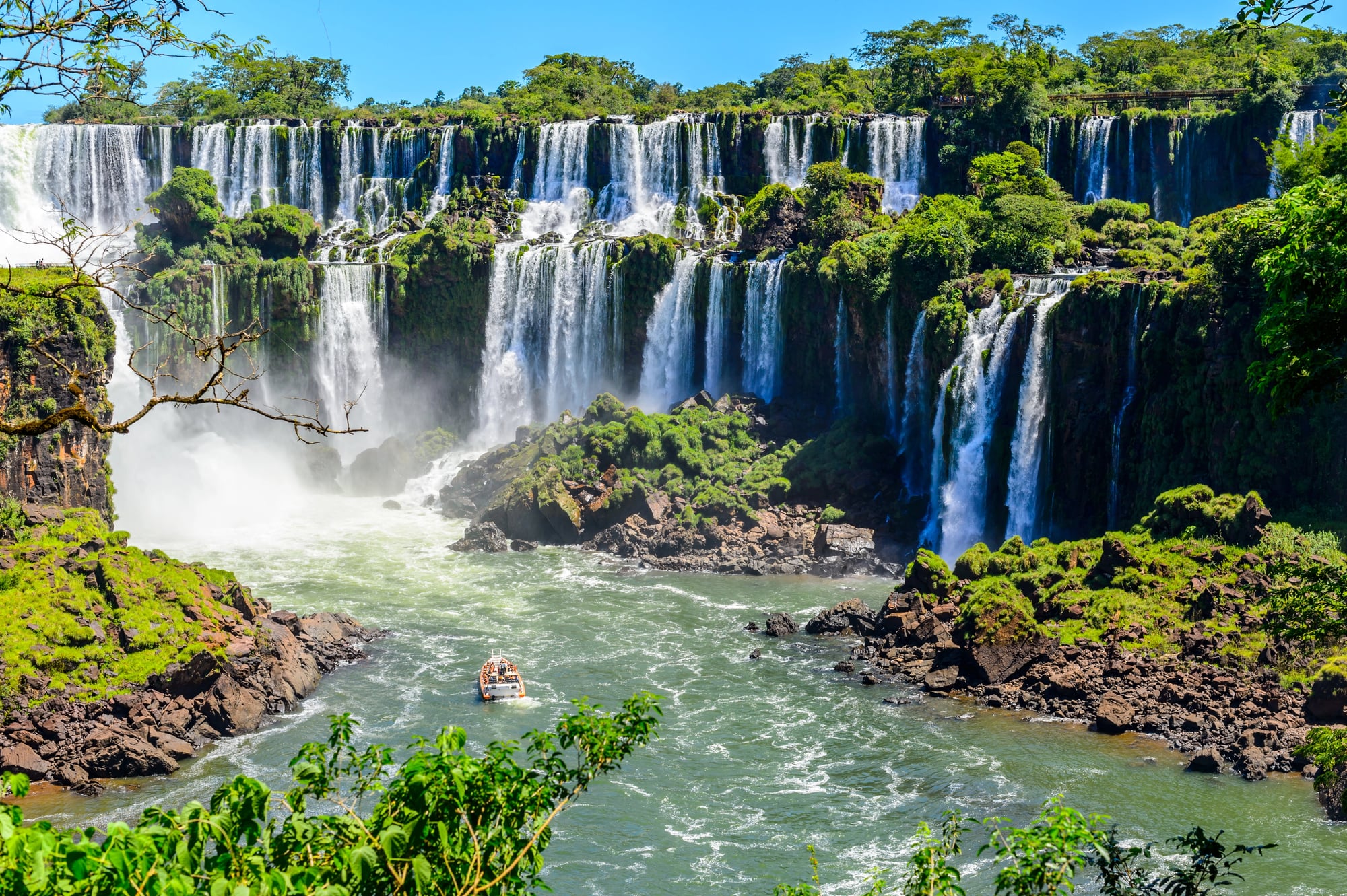
Picture 275 individual waterfalls spread across nearly two miles, and you start to understand why Eleanor Roosevelt reportedly said Niagara Falls made her feel sorry for the poor thing (though that quote might be too perfect to be true — it certainly captures the feeling when you first see Iguazu sprawled across the horizon like nature showing off). The Garganta del Diablo, or Devil’s Throat, handles the heaviest lifting here, but even the smaller cascades move more water than most rivers, and during the rainy season the entire system becomes something that sounds less like falling water and more like a freight train that never stops coming.
But here’s what the statistics miss: Iguazu doesn’t just move water. It moves air.
The collective force of all those falls creates wind patterns that can be felt miles away, and the negative ions produced by that much churning water create an atmosphere that feels electric — literally and figuratively.
Victoria Falls
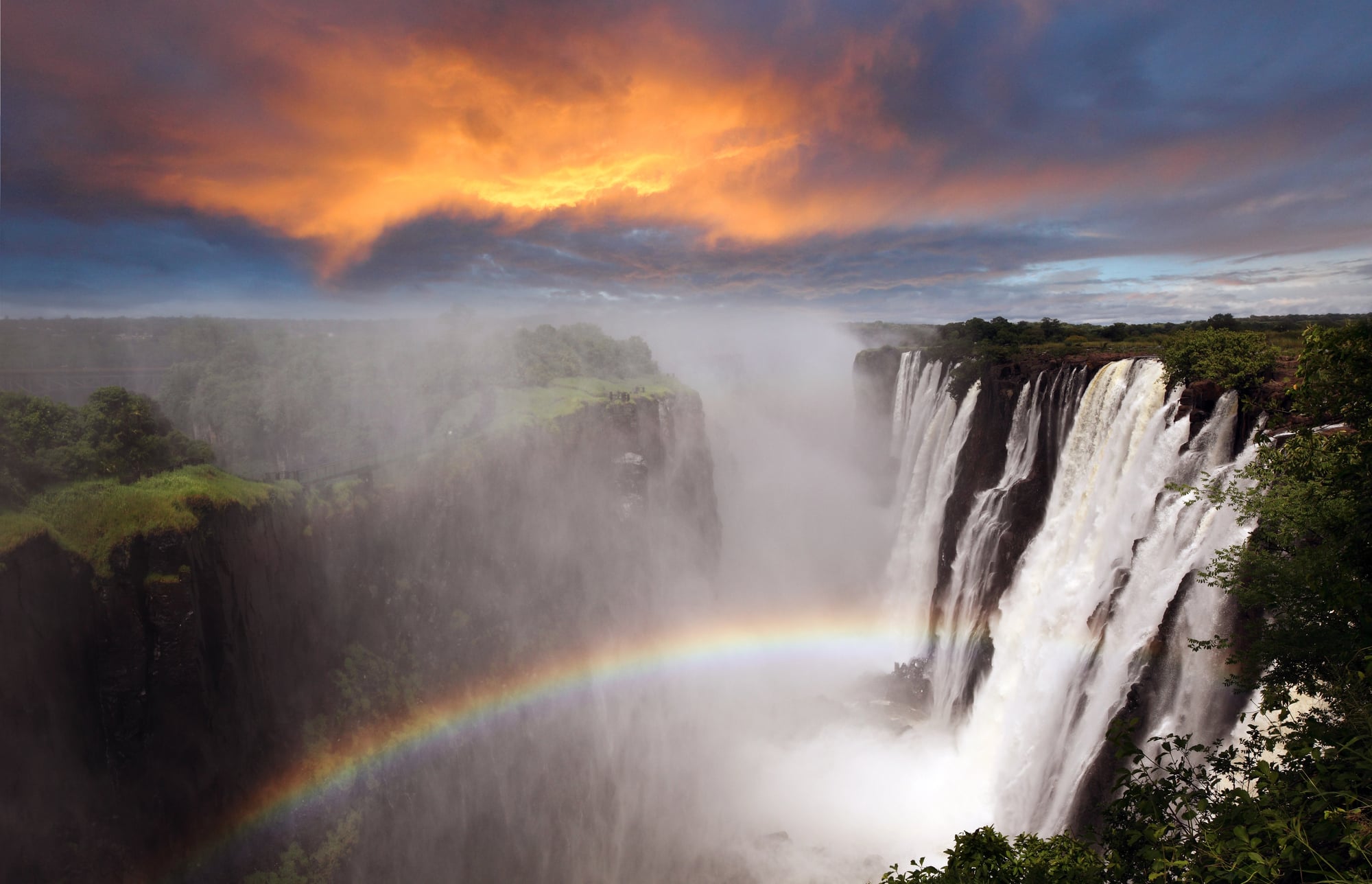
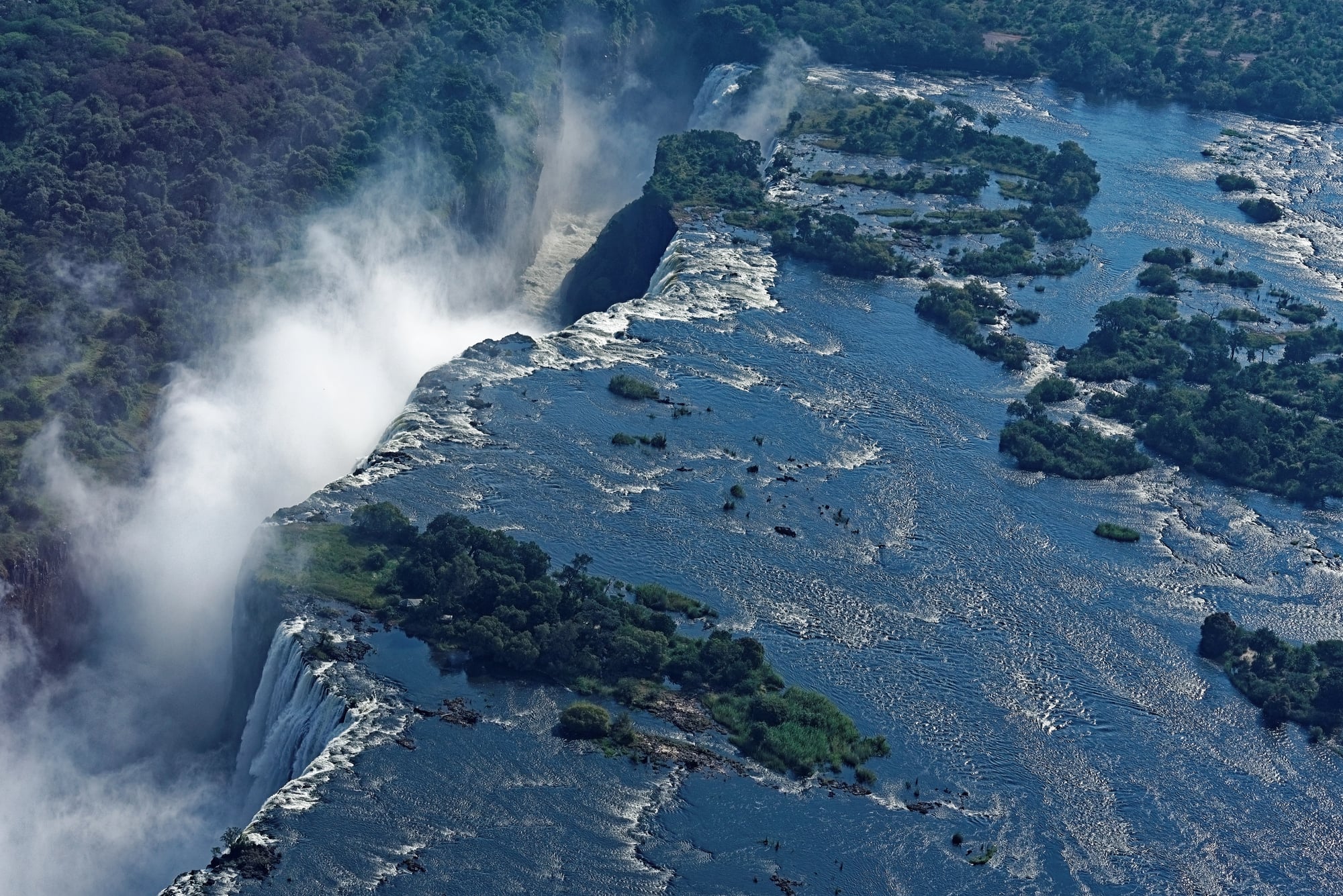
Water doesn’t usually teach geography lessons, but Victoria Falls corrects any assumptions about gentle African rivers. The Zambezi River, flowing calm and wide for hundreds of miles, suddenly discovers a crack in the earth 5,604 feet wide and drops everything it’s carrying straight down 354 feet.
During flood season, the roar can be heard 25 miles away. The local name, Mosi-oa-Tunya, translates to “the smoke that thunders” — which describes both the sound and the column of spray that rises like a permanent storm cloud.
You can see that cloud from 30 miles away on clear days, marking the spot where a river briefly becomes a vertical event.
Boyoma Falls
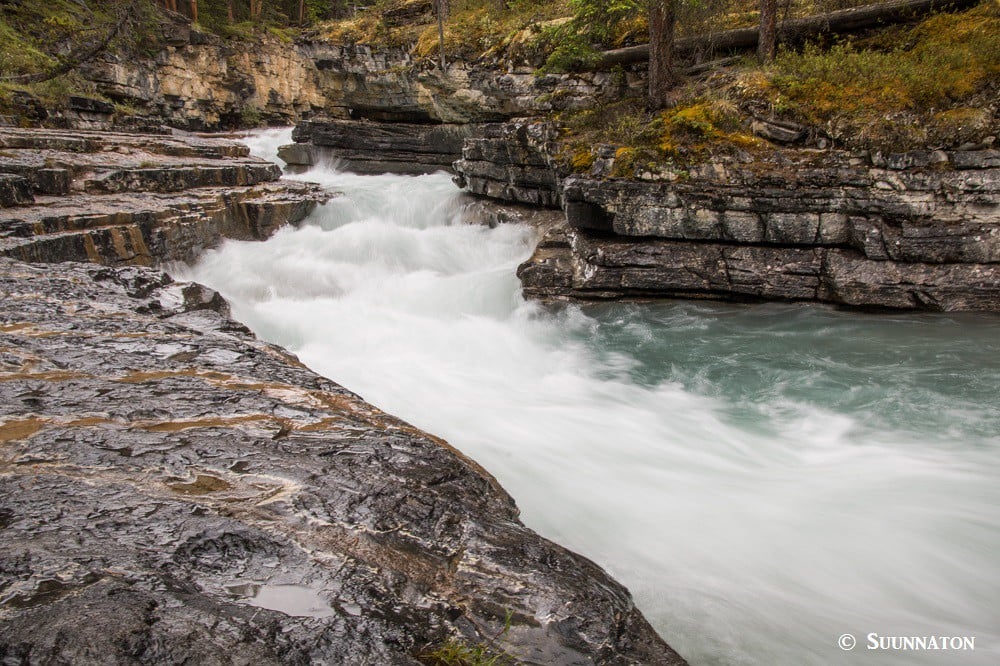
Most waterfalls are punctuation marks — dramatic moments where a river pauses to make a statement. Boyoma Falls is different: it’s a 60-mile conversation between the Congo River and gravity, played out across seven distinct cataracts that collectively move more water than almost anywhere else on earth.
The Congo carries the runoff from an area larger than India, and when all that water hits the granite shelves at Boyoma, it creates a hydraulic system so complex that no single measurement captures what’s happening. Some sections roar, others whisper, but the cumulative effect moves roughly 600,000 cubic feet per second — enough to power half of Africa, if you could harness it.
Khone Phapheng Falls
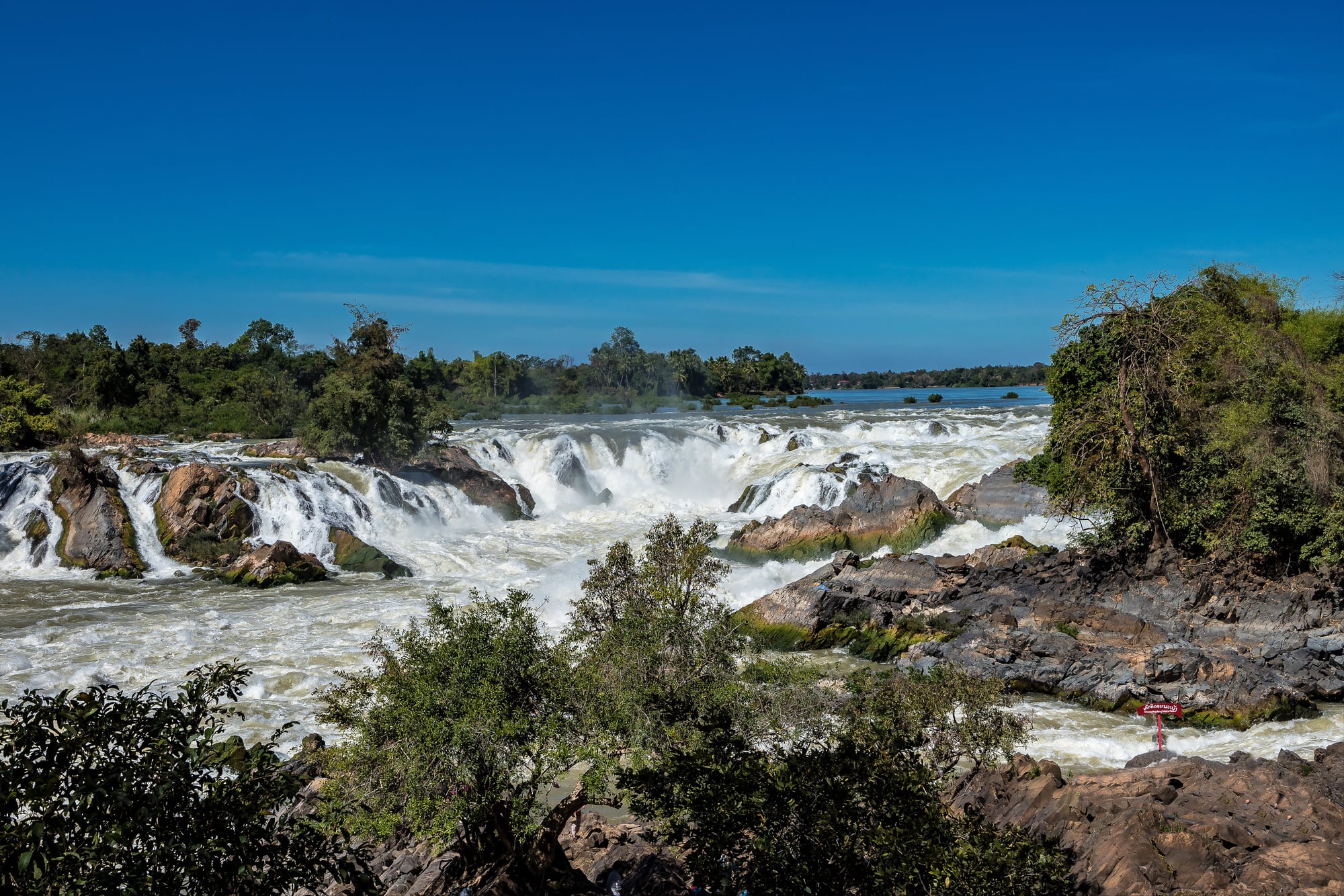
The Mekong River spends most of its 2,700-mile journey being reasonable — meandering through rice paddies, supporting fishing villages, generally behaving like water that understands its responsibilities. Then it hits the Li Phi Falls area in southern Laos and remembers it’s one of the great rivers of the world.
Technically a series of rapids and waterfalls spread across several miles, Khone Phapheng moves enough water to make the Mekong temporarily impassable. During monsoon season, the volume reaches 1.6 million cubic feet per second.
The sound carries for miles through the jungle, and the mist supports its own microclimate where orchids grow in trees that never fully dry.
Urubupungá Falls
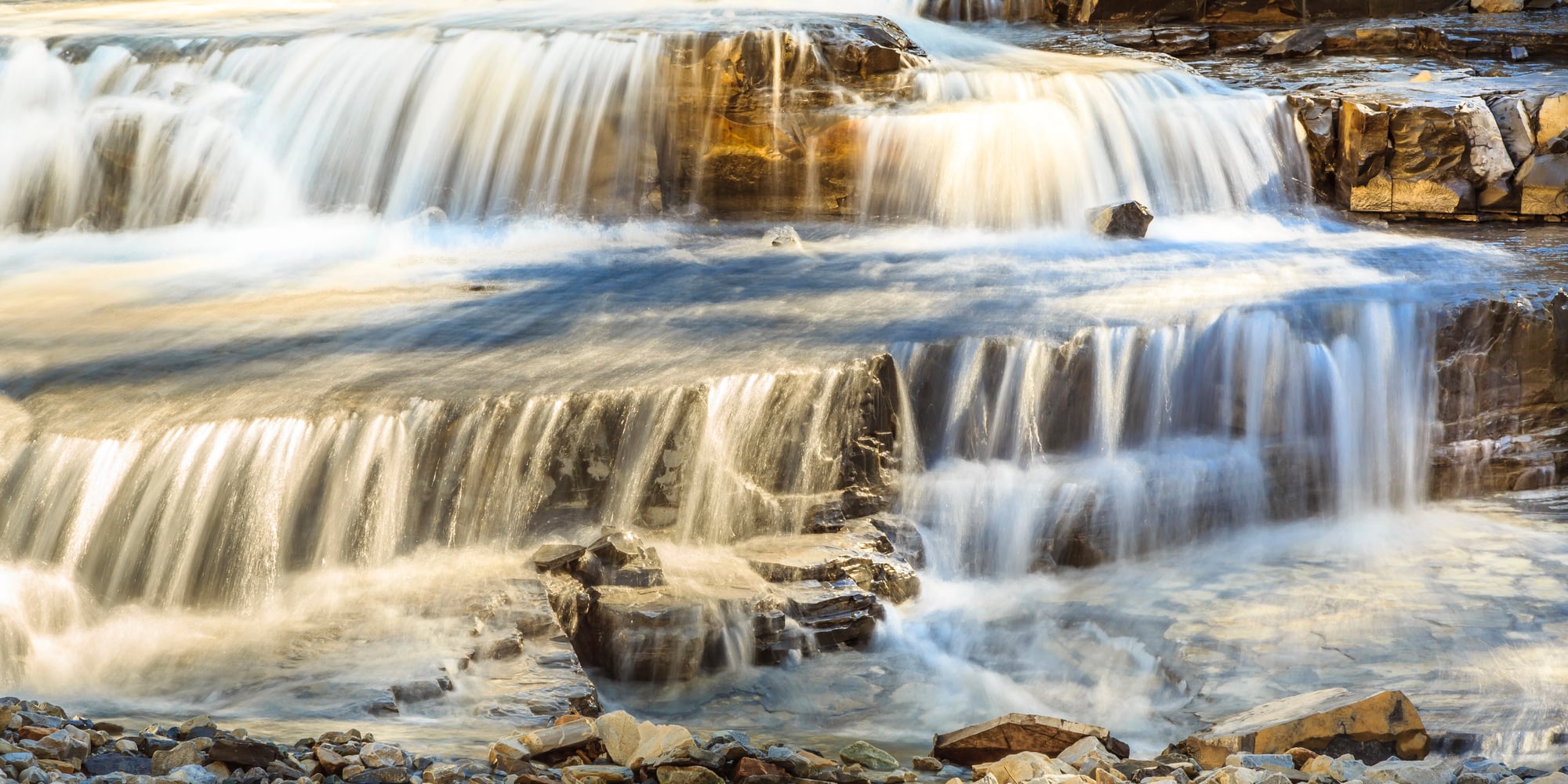
Brazil doesn’t do anything halfway, and the Urubupungá Falls prove the point. Before being largely tamed by hydroelectric projects, this system on the Paraná River moved water on a scale that made engineers nervous and geologists excited.
The original falls dropped 40 feet across a front more than a mile wide. Peak flow reached 1.75 million cubic feet per second — enough water to supply New York City for three months, passing by every minute.
Even with dams controlling most of the flow now, what remains demonstrates why early explorers described the sound as “the earth tearing.”
Paulo Afonso Falls
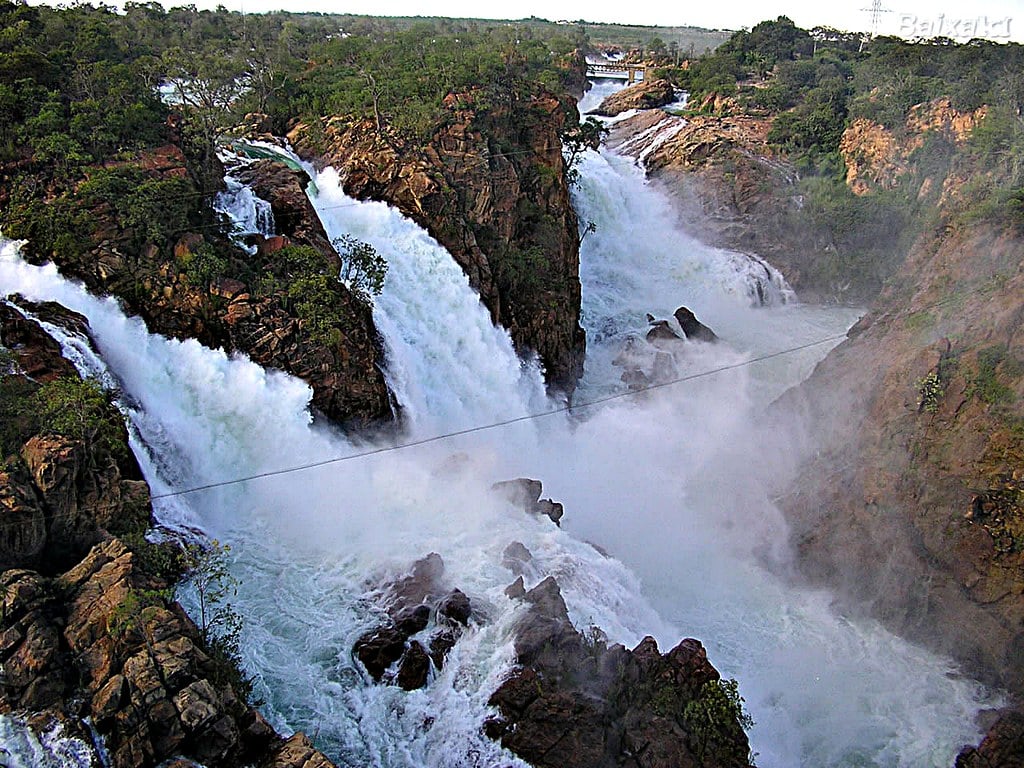
Thunderstorms make noise by splitting air for a fraction of a second, but the São Francisco River at Paulo Afonso splits rock continuously — not through force alone, but through the simple persistence of moving 100,000 cubic feet of water per second over a granite ledge that’s been slowly surrendering to the process for millions of years.
The falls drop 262 feet through a narrow gorge that amplifies every gallon. And yet this isn’t chaos — it’s precision.
The water has carved channels so exact that locals can predict where specific currents will emerge at the bottom, which explains how people have been navigating around these falls for centuries while still respecting what they can do.
Dettifoss
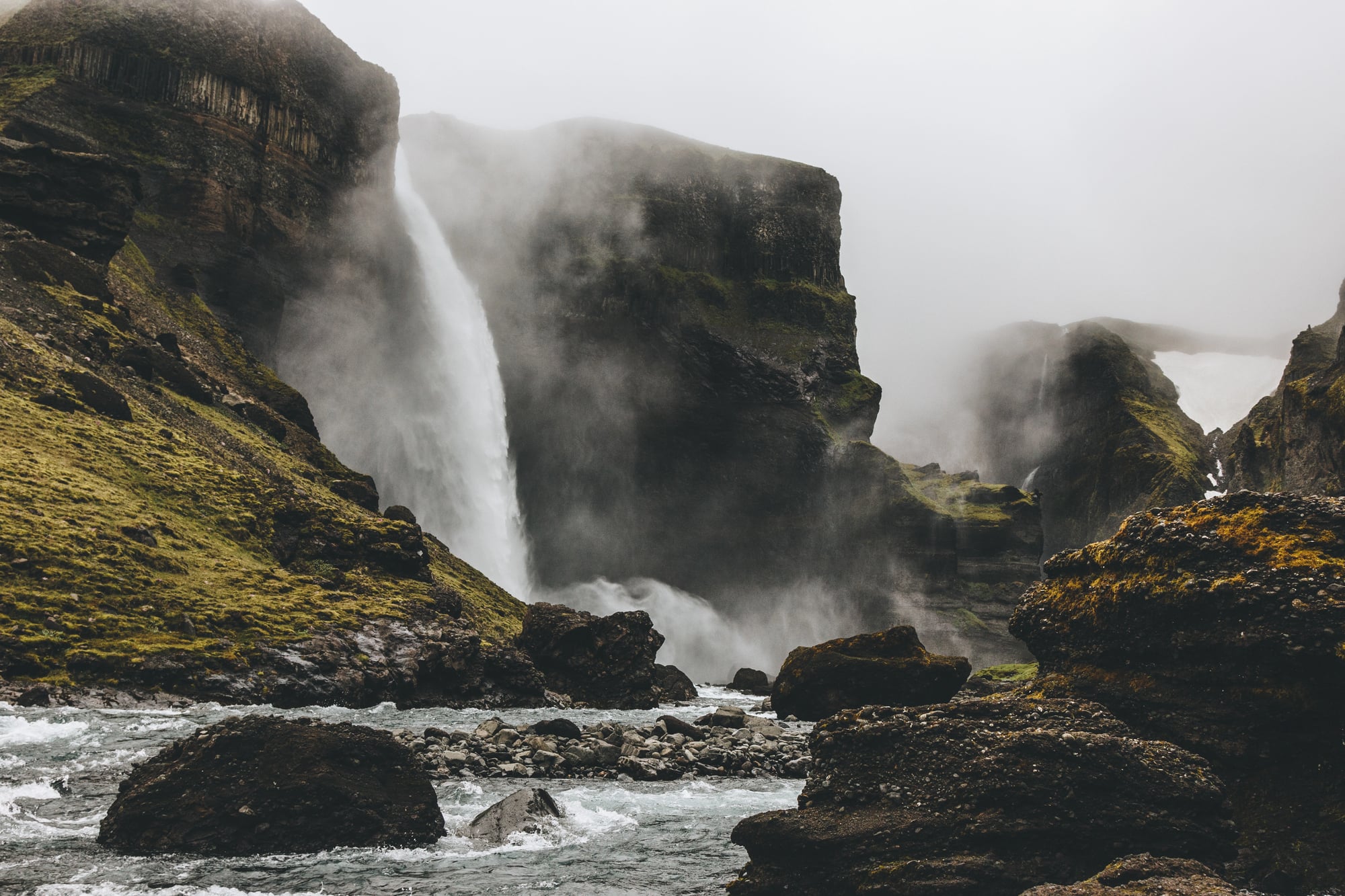
Iceland specializes in landscapes that look like other planets, and Dettifoss delivers on that promise with the subtlety of a volcanic eruption (which, given Iceland’s geological enthusiasm, isn’t entirely metaphorical). The Jökulsá á Fjöllum river, fed by glacier melt that’s been frozen since before humans figured out agriculture, suddenly encounters a 144-foot drop and handles it the way Iceland handles most things: dramatically and without apology.
This is water with weight behind it — not just the 193,000 cubic feet per second of peak flow, but the geological authority of ice that’s been waiting centuries for this moment. The spray carries rock particles that turn the mist into something you feel on your skin like fine sandpaper, and the sound echoes off canyon walls in a way that makes you understand why Vikings believed in gods who spoke through weather.
Celilo Falls
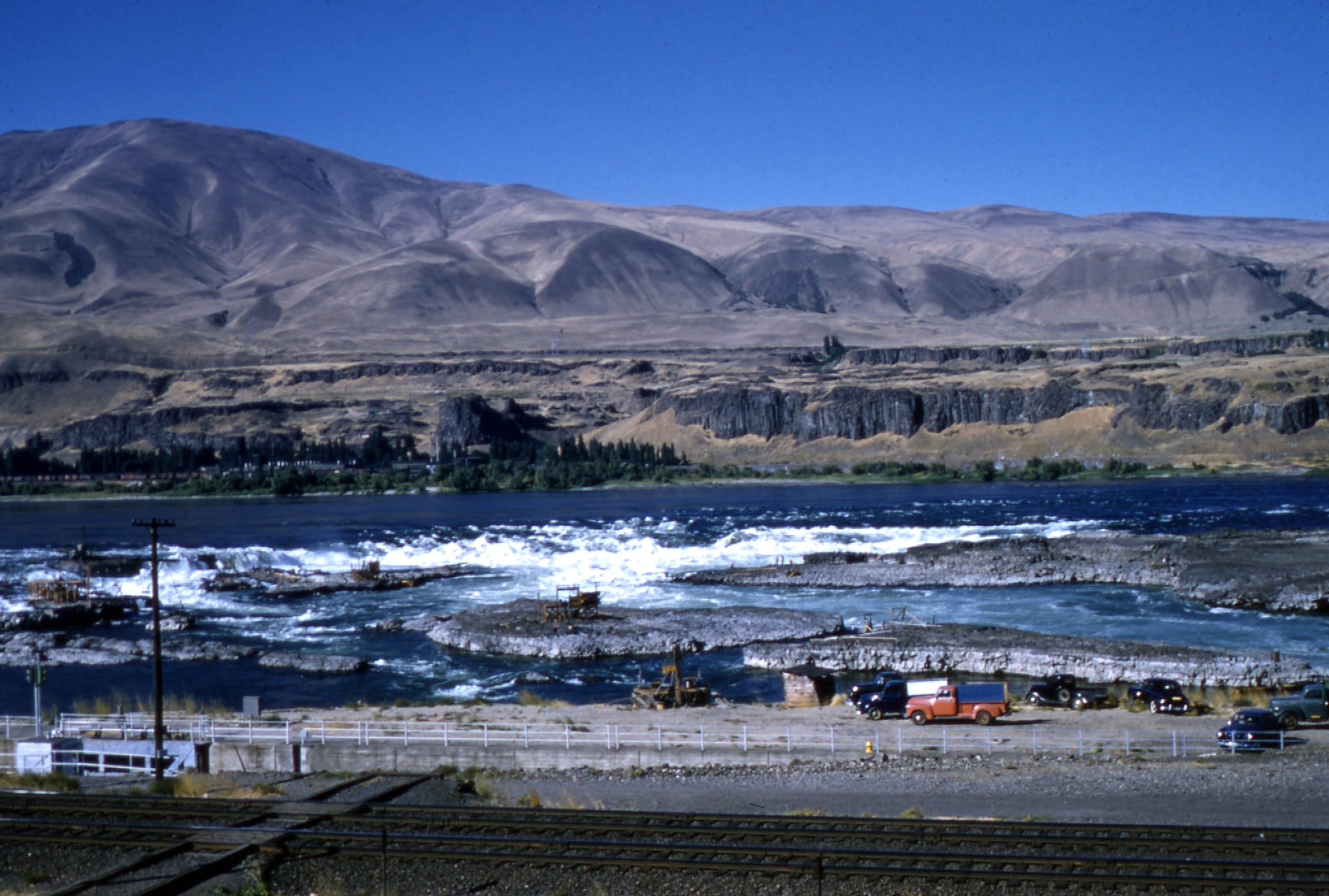
Before The Dalles Dam flooded it in 1957, Celilo Falls on the Columbia River was North America’s most important waterfall — not for its height, but for what it made possible. For over 10,000 years, Native American tribes gathered here during salmon runs to harvest fish that were essentially launching themselves up a natural conveyor belt of churning water.
The falls moved 200,000 cubic feet per second during spring floods, creating a hydraulic system so complex that fishing required generational knowledge passed down through families. When the dam buried Celilo under 40 feet of slack water, it didn’t just eliminate a waterfall — it ended a way of life that had persisted since the last ice age.
Livingstone Falls
The Congo River saves its best argument for last. After flowing 2,900 miles across central Africa, carrying the drainage from an area the size of India, the river encounters a series of rapids and falls that drop 900 feet over 220 miles.
Livingstone Falls isn’t one waterfall — it’s 32 separate cataracts that collectively handle more water than any other waterfall system on earth.
Peak flow reaches 2.5 million cubic feet per second. That’s enough water to fill Lake Superior in three years, passing by every second.
The sound can be heard 15 miles away, and the spray creates weather patterns that extend hundreds of miles downstream.
Guaíra Falls
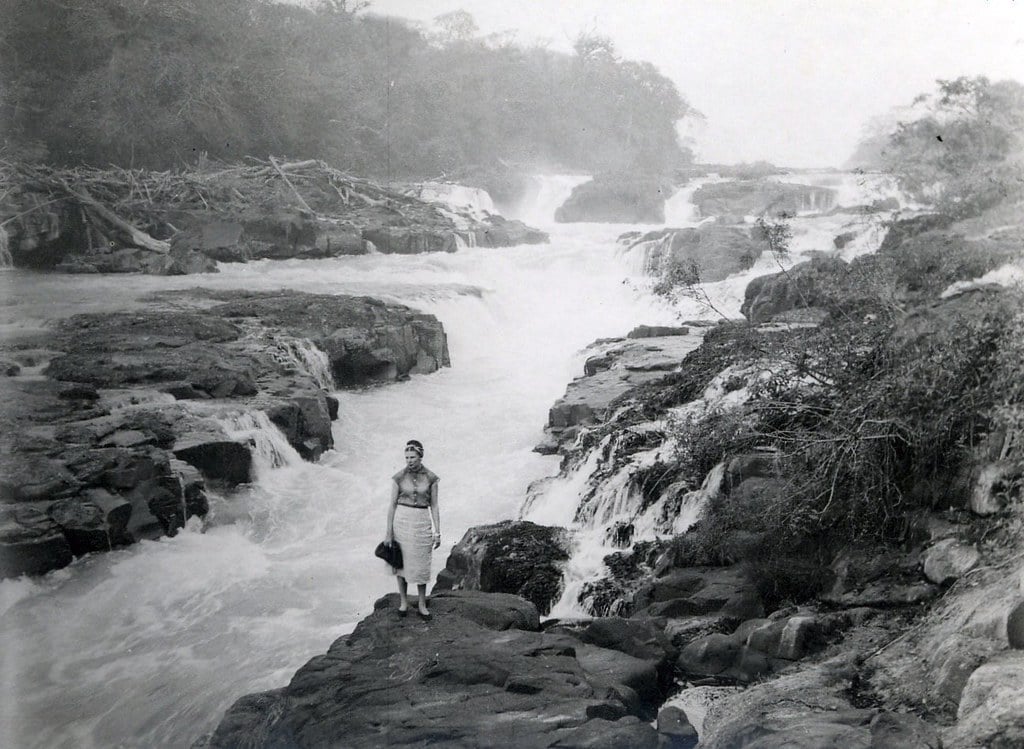
Until Brazil and Paraguay built the Itaipu Dam in 1982, Guaíra Falls on the Paraná River was arguably the most powerful waterfall on earth. Seven cataracts spread across a mile-wide front moved up to 1.75 million cubic feet per second through a gorge so narrow that the water level rose 130 feet during flood season.
The falls are gone now, buried under the reservoir behind what’s currently the world’s second-largest hydroelectric plant. But before their submersion, Guaíra Falls demonstrated what happens when one of South America’s great rivers hits an immovable geological obstacle: the river wins, eventually, but the process creates something that reshapes everything around it.
Skógafoss
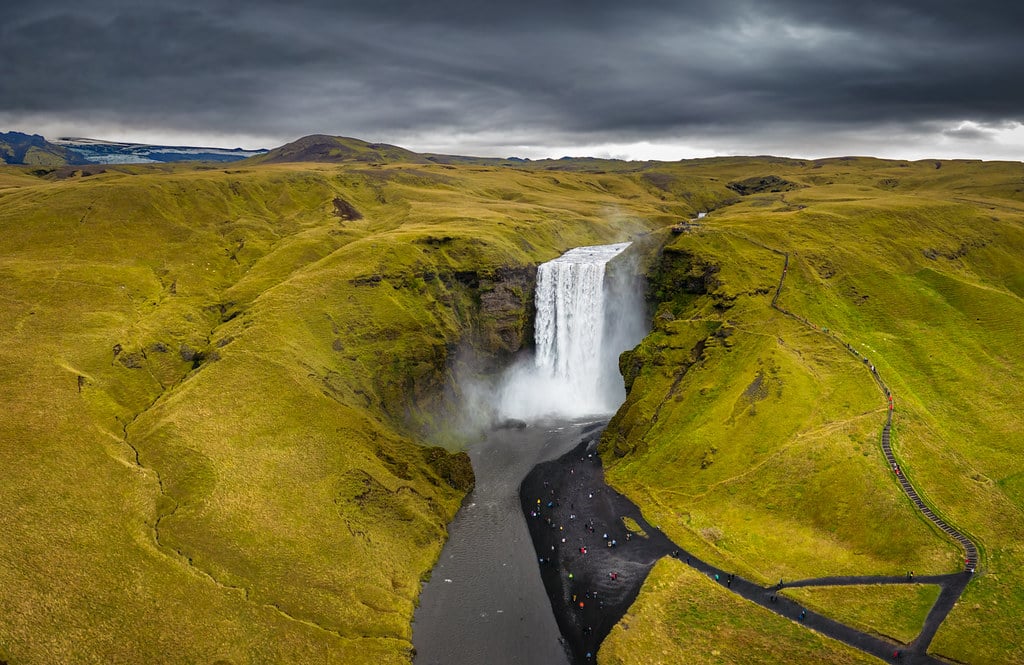
Iceland’s Skóga River doesn’t carry the volume of tropical giants, but it makes up for scale with the pure drama of glacier-fed water hitting a 200-foot cliff that used to be Iceland’s southern coastline. During spring melt, Skógafoss moves enough water to create its own weather system — the spray rises 300 feet and creates rainbows so reliably that they’re practically scheduled.
The sound carries for miles across the black sand plains, a constant reminder that Iceland’s rivers don’t meander — they announce themselves. Local folklore claims treasure is buried behind the falls, which explains the hiking trail that leads to the top but not the feeling of standing at the base while 35,000 cubic feet of water per second hammers the rocks beside you.
Rhine Falls
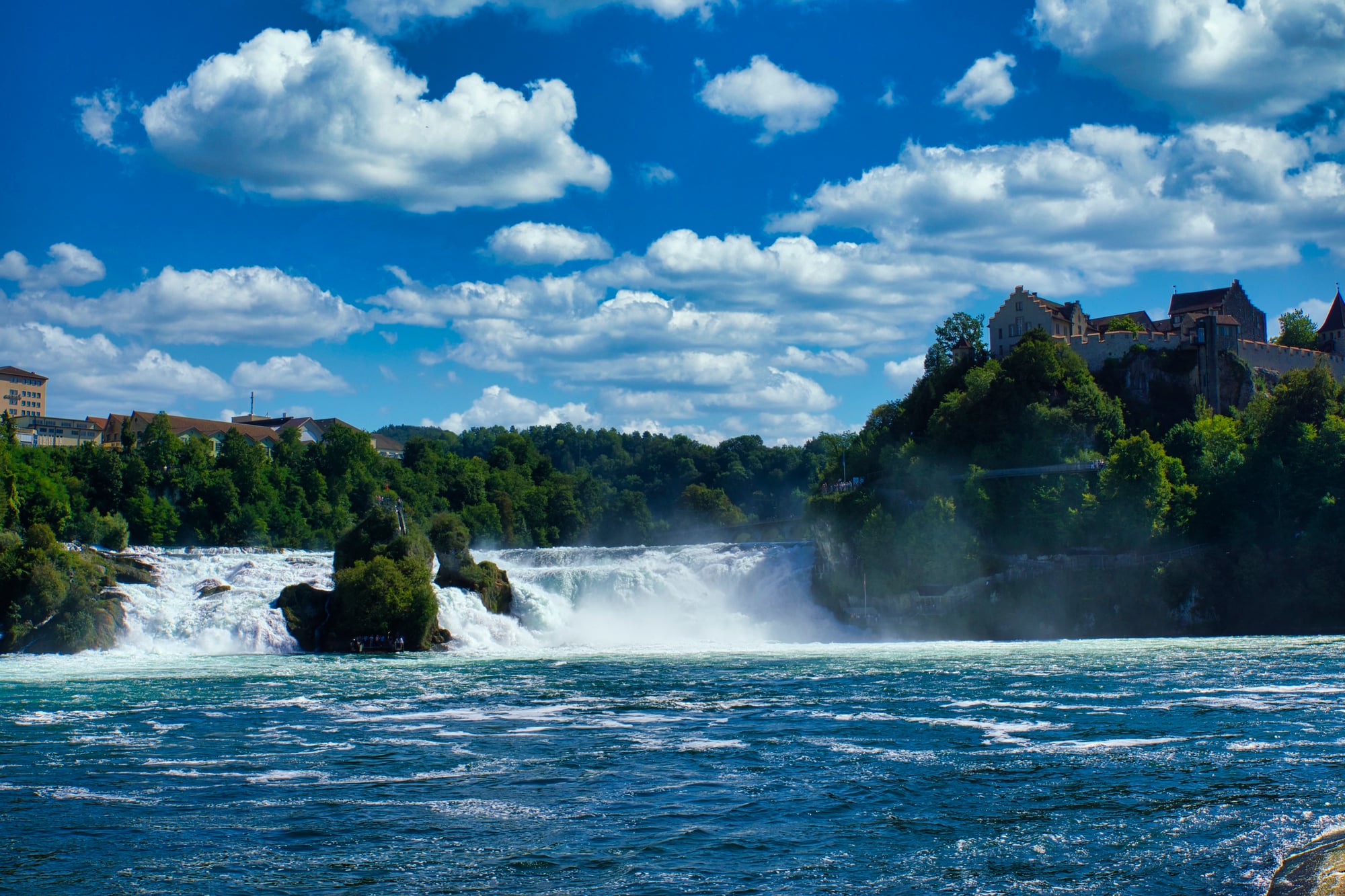
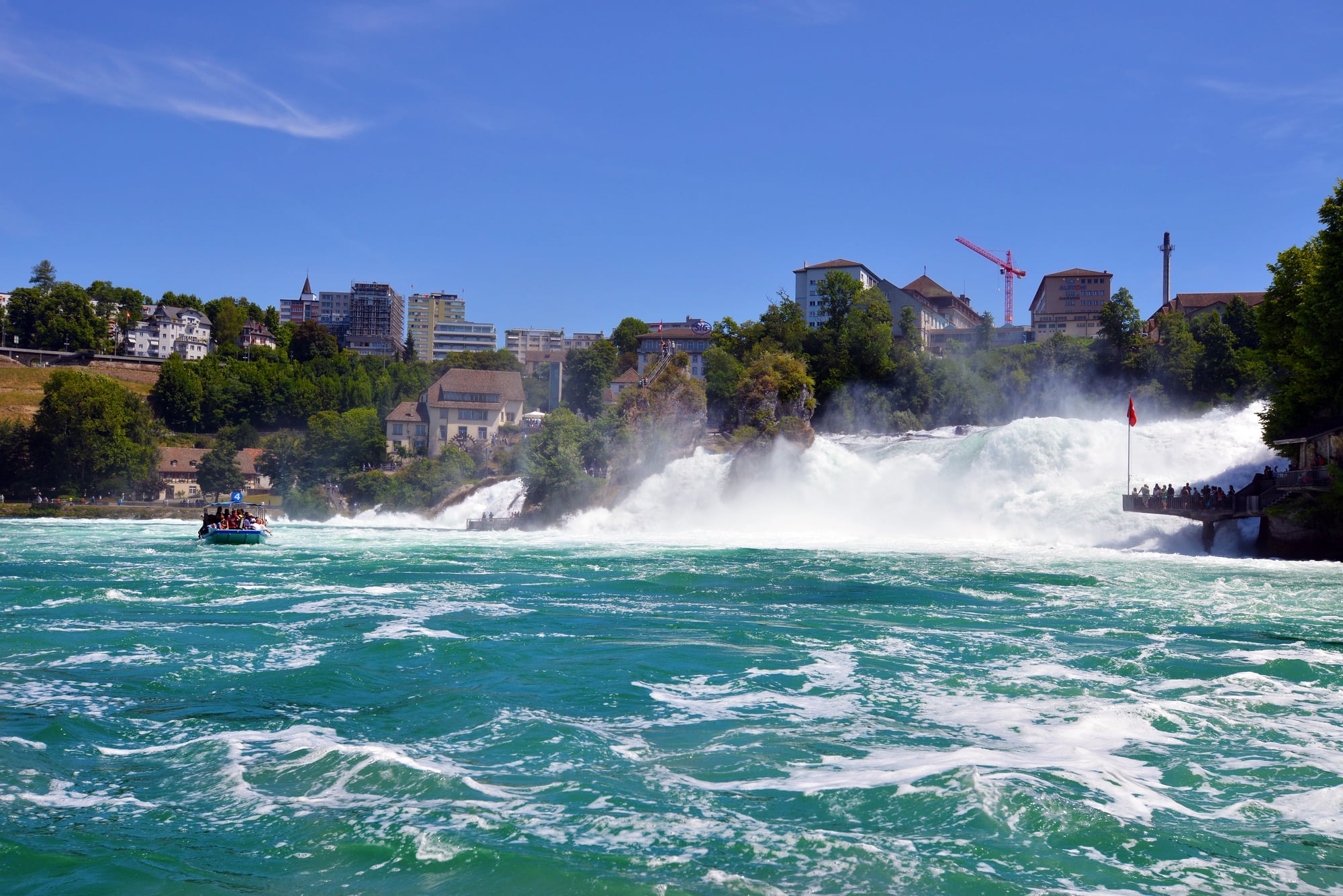
Europe’s most powerful waterfall doesn’t try to impress through height — the Rhine Falls at Schaffhausen drop only 75 feet — but the Rhine River carries the drainage from half of Switzerland and a good portion of southern Germany, so when all that water hits the limestone ledge, it creates something that’s been stopping boat traffic for centuries.
Peak flow reaches 250,000 cubic feet per second, spread across a front 500 feet wide. The Swiss have built viewing platforms, tourist boats, and even a restaurant overlooking the falls, but the Rhine doesn’t seem to notice the audience.
It just keeps doing what it’s done since the last ice age: moving an entire mountain range toward the North Sea, one grain of sediment at a time.
When Volume Speaks Louder Than Height
Height gets the headlines, but volume does the real work of reshaping continents. These waterfalls demonstrate something that’s easy to forget in our engineered world: water always wins, given enough time and persistence.
The largest waterfalls by volume aren’t just tourist destinations — they’re geological forces that have carved valleys, created ecosystems, and sustained civilizations for thousands of years.
Standing beside them changes your perspective on what power actually looks like. It’s not dramatic or flashy — it’s simply inexorable.
More from Go2Tutors!

- The Romanov Crown Jewels and Their Tragic Fate
- 13 Historical Mysteries That Science Still Can’t Solve
- Famous Hoaxes That Fooled the World for Years
- 15 Child Stars with Tragic Adult Lives
- 16 Famous Jewelry Pieces in History
Like Go2Tutors’s content? Follow us on MSN.