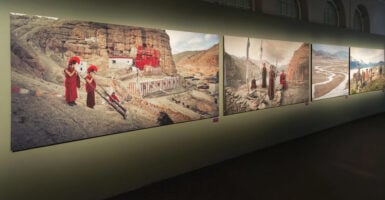
15 Bizarre Mummification Practices Worldwide
Death doesn’t have to mean disappearance. Across cultures and centuries, humans have found ways to preserve their dead that range from practical to profound to downright strange.
Some practices involved elaborate rituals spanning months, while others happened naturally in the right conditions. These aren’t just ancient curiosities—many of these traditions reveal deep beliefs about the afterlife, respect for ancestors, and what it means to be human.
Ancient Egyptian Animal Mummies

Egyptians didn’t stop at preserving pharaohs. They mummified millions of animals—cats, birds, crocodiles, even beetles.
Sacred animals received the full treatment with expensive resins and elaborate wrappings, while others were mass-produced for religious offerings (because apparently the gods needed quantity as much as quality). Recent X-ray studies have revealed that many “animal mummies” sold to pilgrims contained nothing but sticks and stones wrapped in linen—the world’s first religious scam industry was already thriving along the Nile.
Chinchorro Mummies of Chile
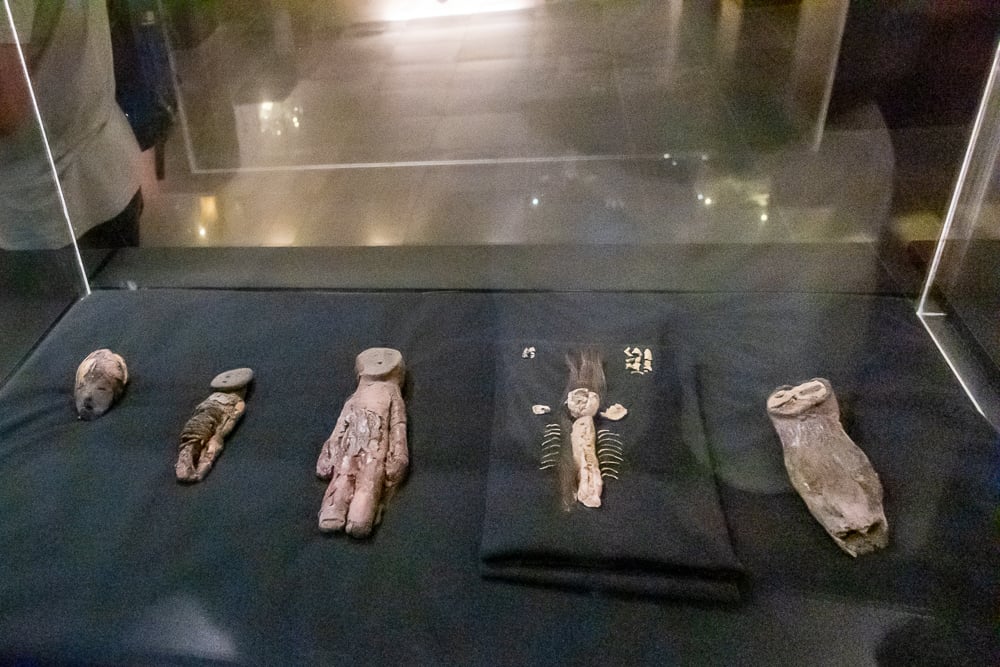
The Chinchorro people were mummifying their dead 2,000 years before the Egyptians figured it out, and their approach was beautifully democratic: everyone got preserved, from newborns to elders, regardless of social status. But here’s where it gets strange (and touching, in its own way)—they would remove all the skin, organs, and flesh, reinforce the skeleton with sticks, stuff the body cavity with clay and grass, then carefully reattach the original skin like a wetsuit.
The faces were painted with clay masks, and the whole process seemed less about preparing for the afterlife and more about keeping the family together in a very literal sense, as if death was just another thing that happened to people, not something that had to separate them from the living.
Bog Bodies of Northern Europe
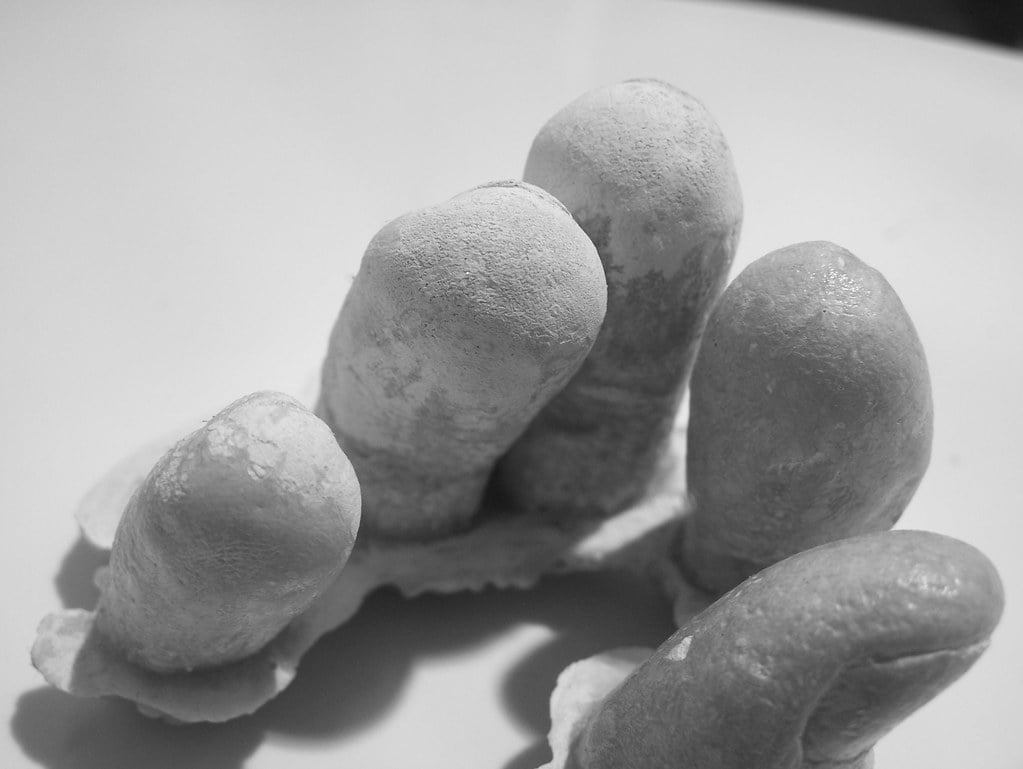
Peat bogs are accidental time machines. The acidic, oxygen-free environment turns human skin into leather and preserves details that would vanish anywhere else—fingernails, facial expressions, the contents of stomachs from meals eaten 2,000 years ago. These aren’t planned mummies but casualties of circumstance, people who fell into marshes or were placed there deliberately.
Some show signs of ritual sacrifice. Others might have been criminals or outcasts.
The bog doesn’t judge—it just holds onto everything with equal care, turning tragedy into archaeology.
Tibetan Sky Burial
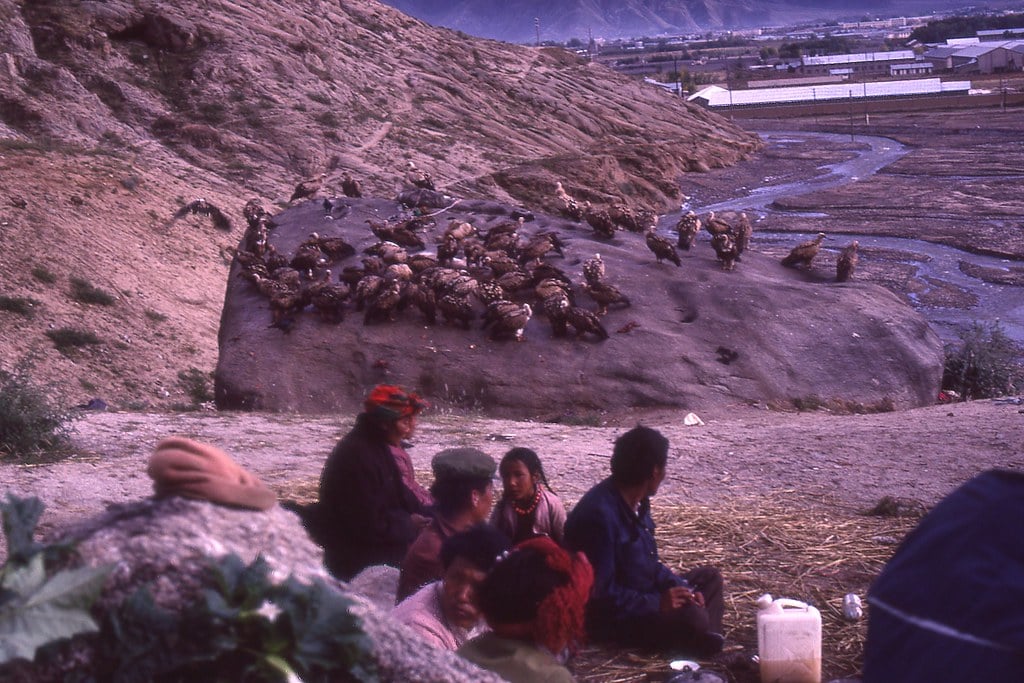
Sky burial isn’t mummification in any traditional sense, but it represents the opposite philosophy entirely and deserves mention for its stark practicality. Bodies are taken to mountaintops, dismembered, and fed to vultures.
Nothing is preserved because nothing needs to be—the body is just a vessel, and once the spirit moves on, recycling the physical remains back into the ecosystem makes perfect sense. The practice requires specially trained sky burial masters who know exactly how to prepare bodies so the vultures can do their work efficiently.
It’s mummification’s philosophical opposite: instead of preservation, complete dissolution.
Japanese Buddhist Monks
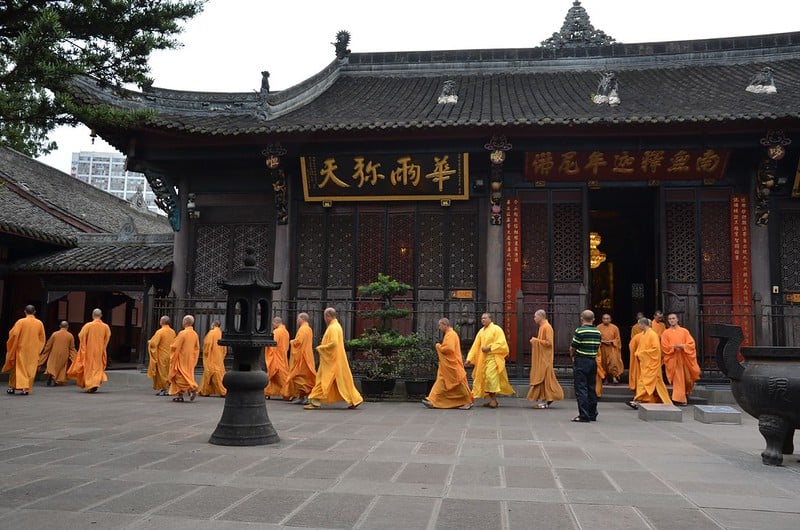
Some Japanese Buddhist monks achieved mummification while still alive through a practice called sokushinbutsu. They’d spend years slowly starving themselves, first eliminating grains, then all food except nuts, berries, and tree bark, while drinking tea made from toxic lacquer tree sap.
This poisoned their bodies from the inside, making them unsuitable for bacteria and insects after death. The final step involved being sealed alive in a tomb with just an air tube and a bell.
When the bell stopped ringing, they were gone—and if the body was perfectly preserved when opened years later, they were considered to have achieved Buddhahood through ultimate self-discipline.
Capuchin Catacombs of Palermo
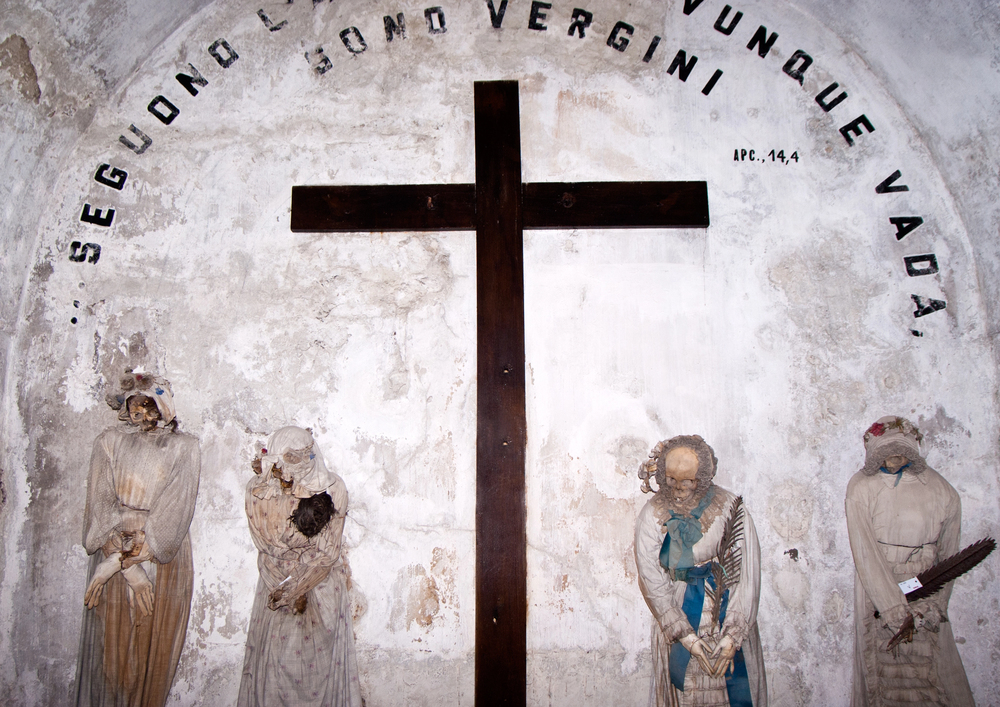
— Photo by gandolfos
The Capuchin monks of Palermo turned death into a social event that lasted centuries, creating what amounts to the world’s most extensive underground fashion show of the deceased. Starting in the 16th century, they developed techniques to naturally mummify bodies, then dressed them in their finest clothes and arranged them along the catacomb walls according to profession, gender, and social status—priests in one section, military officers in another, children in their own area.
Families would visit regularly, changing the clothes of their deceased relatives for holidays and special occasions, maintaining relationships that technically should have ended at the grave. And the strangest part (which is saying something): people paid handsomely for the privilege, with better spots in the catacombs costing more, because apparently even in death, location matters.
The practice continued until 1920, creating a bizarre timeline of fashion, social customs, and family dynamics spanning four centuries, all preserved in the dry Sicilian air.
Inca Child Sacrifices
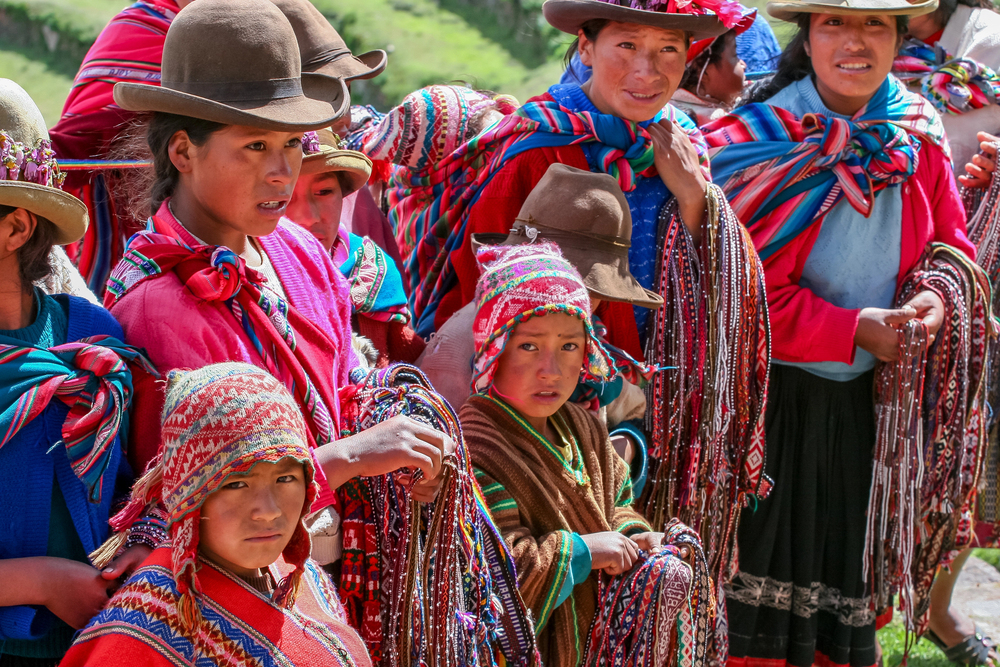
— Photo by BGStock72
High in the Andes, the thin air and freezing temperatures created natural mummies from children sacrificed in Inca rituals called capacocha. These weren’t acts of cruelty but the highest honor—children chosen for their physical perfection were taken to sacred mountain peaks, given ceremonial food and drink, then left to die from exposure at altitudes where few could survive.
The mummies discovered centuries later are so well-preserved that scientists can read their facial expressions, analyze their clothing, and even determine what they ate in their final months. The children look peaceful, as if they simply fell asleep.
There’s something haunting about preservation that is perfect—it collapses time in ways that feel almost intrusive.
Guanche Mummies of the Canary Islands
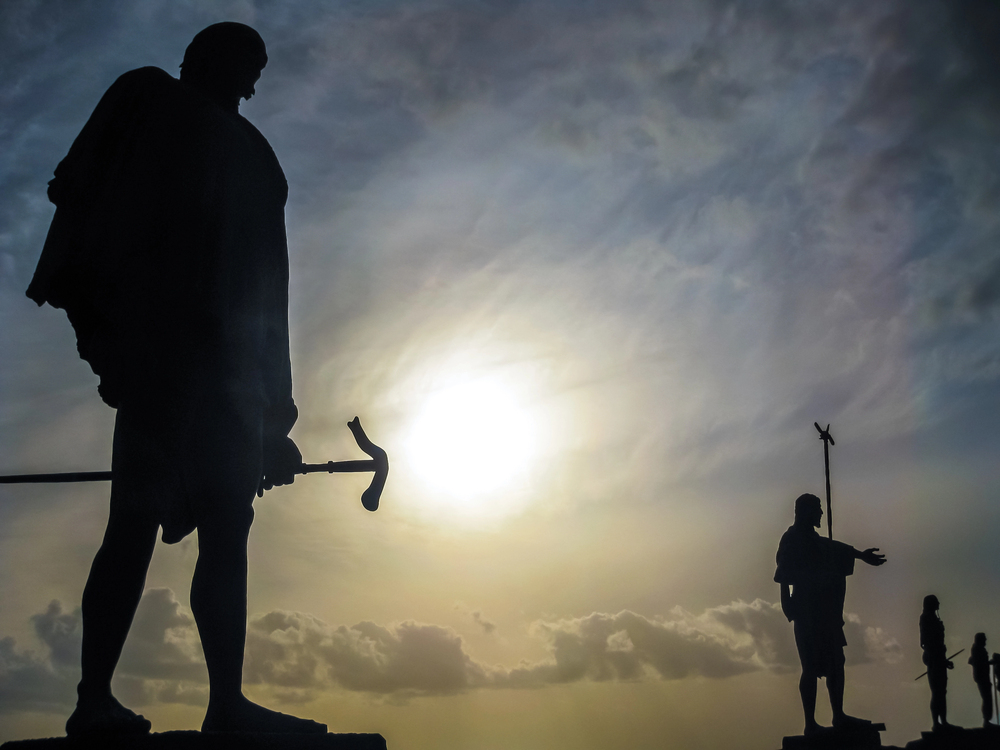
The Guanche people developed mummification independently on the Canary Islands, using techniques remarkably similar to those in Egypt despite no known contact between the cultures. Social status determined the treatment—nobles received the full preservation process with expensive resins and multiple layers of goatskin wrappings, while commoners were simply dried in the sun.
But here’s what made their practice unique: they had professional mummifiers who were considered so ritually unclean that they lived in complete isolation from society and could only communicate with others by shouting across valleys. These specialists were paid well for their expertise but paid the price of total social exile—they literally couldn’t touch another living person.
Chinchorro Black Mummies
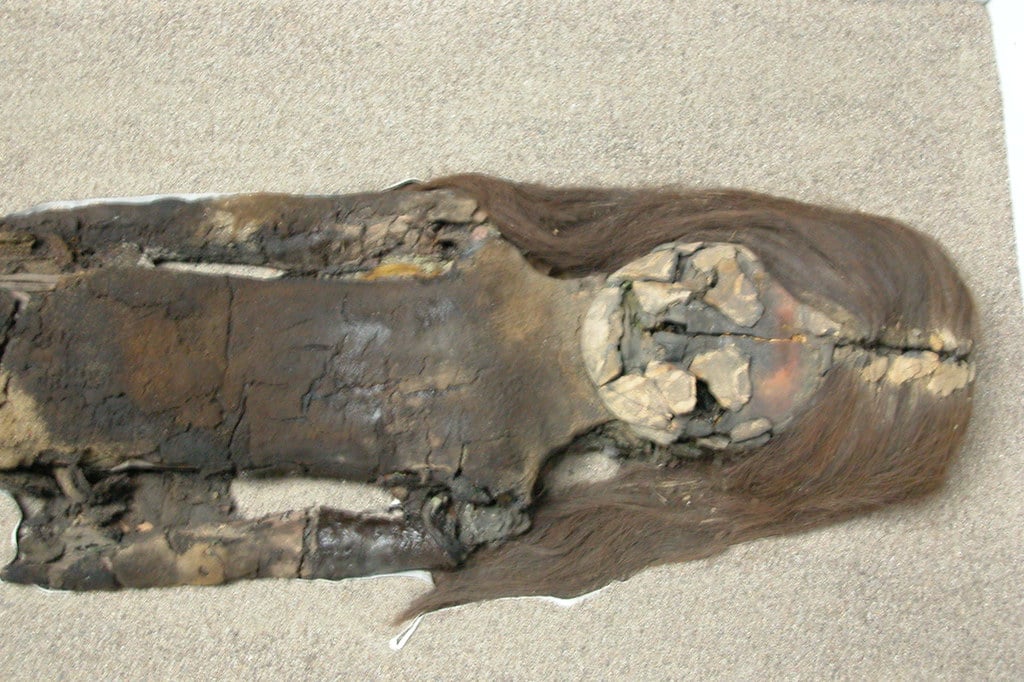
The Chinchorro didn’t stick to one mummification style but developed several techniques over thousands of years, with the black mummies representing their most complex approach. They would completely disassemble the body—removing every organ, every piece of flesh, even splitting the bones lengthwise to remove the marrow—then rebuild the person from scratch using clay, grass, and ash as filling material.
The reconstructed body was covered with a black paste made from manganese, creating figures that looked more like sculptures than preserved corpses. But what’s remarkable is the care involved: these weren’t just preservation techniques but acts of reconstruction, as if death was simply disassembly and the living had both the obligation and the ability to put their loved ones back together again.
Mellified Man

Chinese historical texts describe a process called mellification, where elderly volunteers would consume nothing but honey for months until their bodily fluids turned sweet, eventually dying from the diet. Their bodies were then immersed in honey for a century, creating a confection believed to have medicinal properties.
Whether this actually happened remains debatable among historians, but the concept reveals something fascinating about how different cultures viewed the boundary between food, medicine, and human remains. The idea that a person could literally become medicine through careful preparation suggests a worldview where individual identity could be transformed into communal healing—death as ultimate generosity.
Aboriginal Australian Mummification
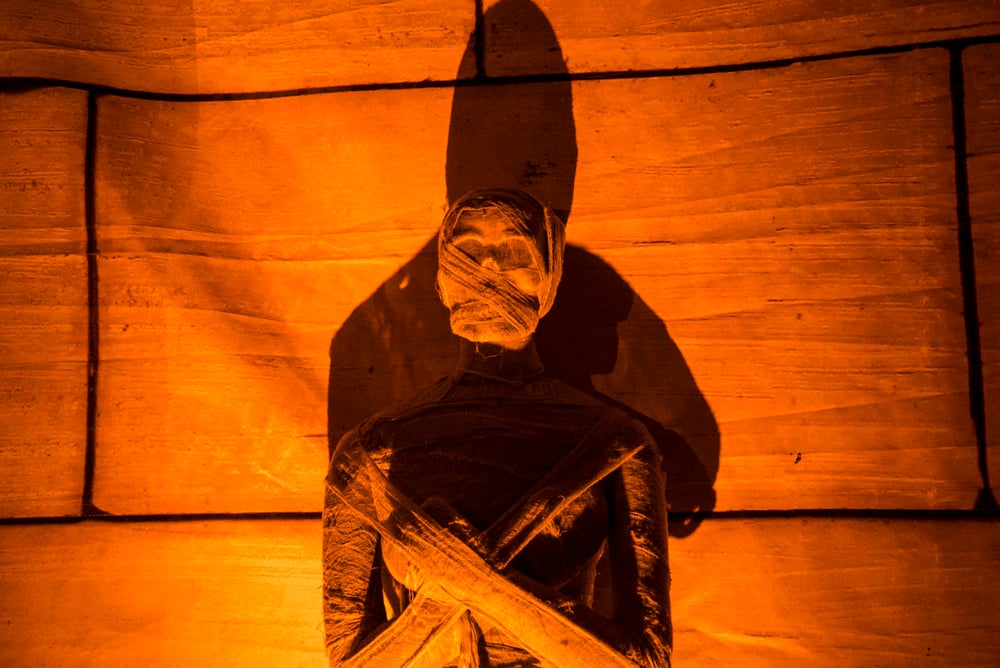
Some Aboriginal Australian groups practiced mummification techniques that involved bodies over fires for weeks while family members maintained continuous vigil. The process wasn’t about permanent preservation but about providing time for proper grieving and allowing distant relatives to travel for funeral ceremonies.
Bodies were wrapped in paperbark and positioned carefully so the smoke could penetrate evenly. Once the ceremonies concluded, the mummified remains were either buried or placed in sacred caves.
This temporary mummification served social and spiritual needs rather than attempting permanent preservation—it was preservation with a built-in expiration date.
Sicilian Mummification Techniques
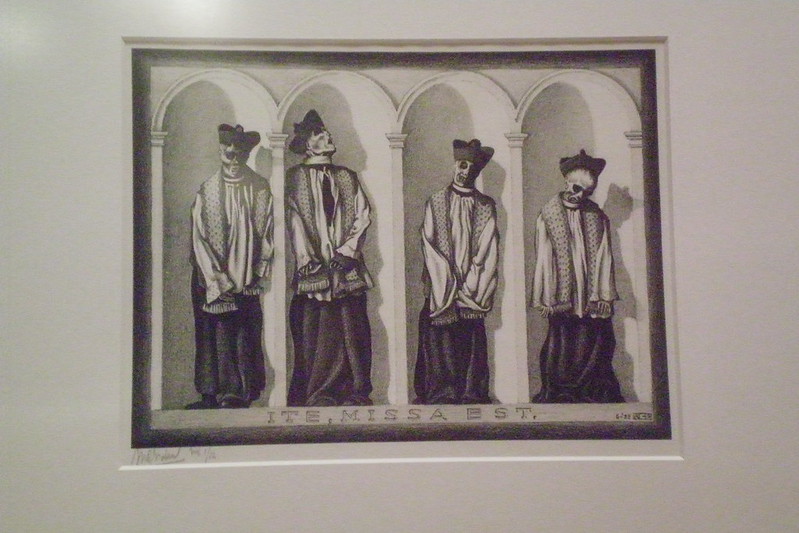
Beyond the famous Palermo catacombs, Sicily developed regional mummification techniques that took advantage of the island’s unique climate and geology. Bodies were dehydrated using a combination of salt, lime, and arsenic, then left in special drying chambers called colatoi.
The process took about a year and created naturally preserved remains that could last for centuries without additional treatment. Sicilian mummification was more democratic than Egyptian practices—middle-class families could afford basic preservation, creating a substantial population of accidentally preserved ordinary people whose clothing, jewelry, and even hairstyles provide detailed records of daily life across several centuries.
Maori Mokomokai
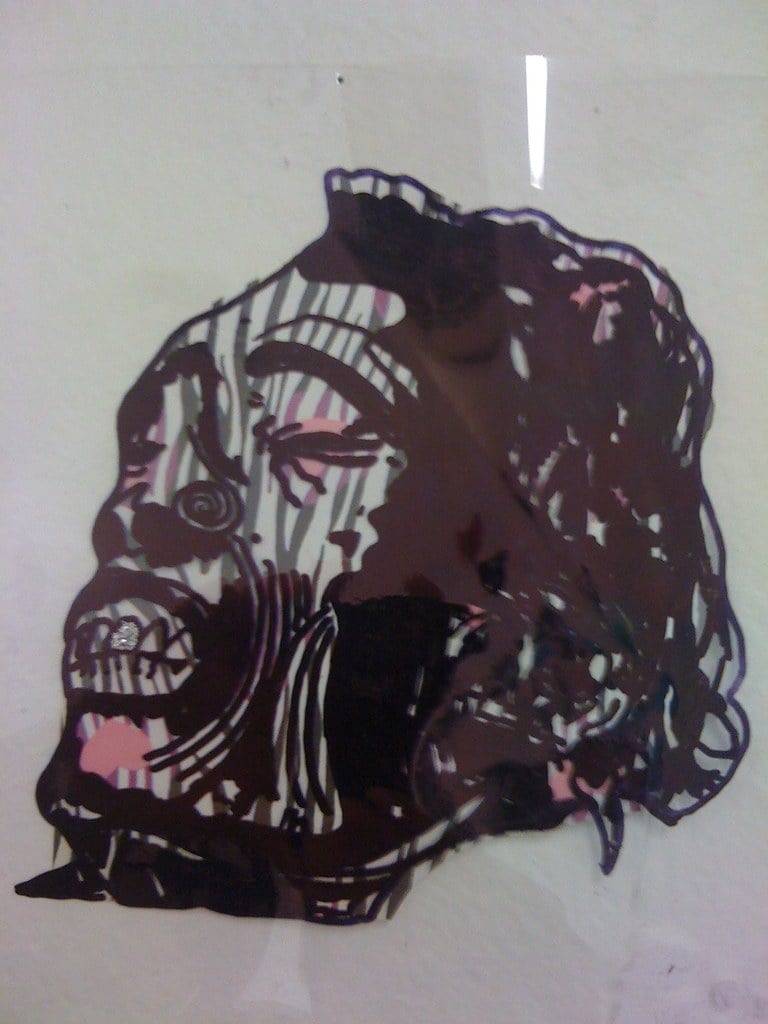
The Maori practice of preserving tattooed heads called mokomokai began as a way to honor deceased relatives with distinctive facial tattoos, but became tragically commercialized during European contact. Traditional preservation involved removing the brain and eyes, filling the skull with flax fibers, and puffing the head until the skin took on a leather-like quality that preserved the intricate tattoo patterns.
These preserved heads held deep spiritual significance and were kept by families as a connection to ancestors. However, European demand for mokomokai as curiosities led to a horrific trade where people were killed specifically for their tattooed heads—a reminder of how cultural practices can be corrupted when filtered through outside economic systems.
Torajan Ma’nene Ritual
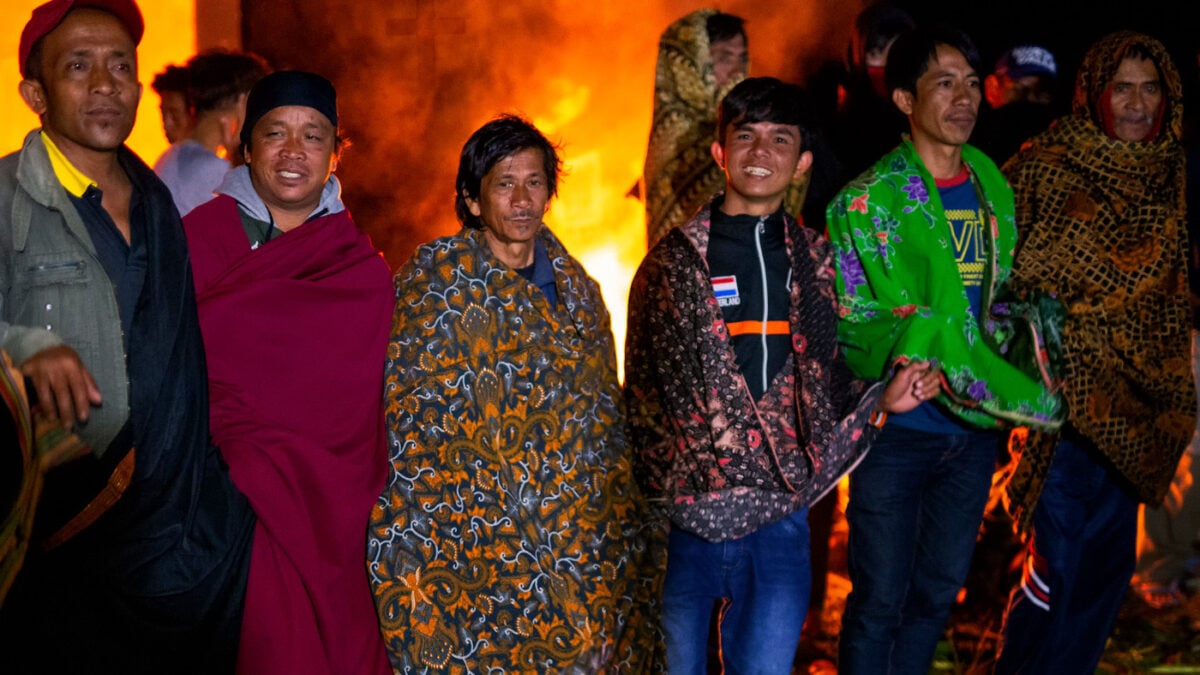
The Torajan people of Indonesia practice ma’nene, a ritual where mummified ancestors are removed from their tombs every few years, cleaned, dressed in new clothes, and paraded around the village. This isn’t mummification in the strict sense but rather the maintenance of mummies as active family members.
The preserved bodies are treated as if they’re simply sleeping relatives who need occasional care—their clothes are changed, their hair is combed, and they’re given updates on family news. Children are taught to interact with the mummified ancestors naturally, creating a culture where death doesn’t mean absence but rather a different kind of presence that requires ongoing attention.
Plasticization
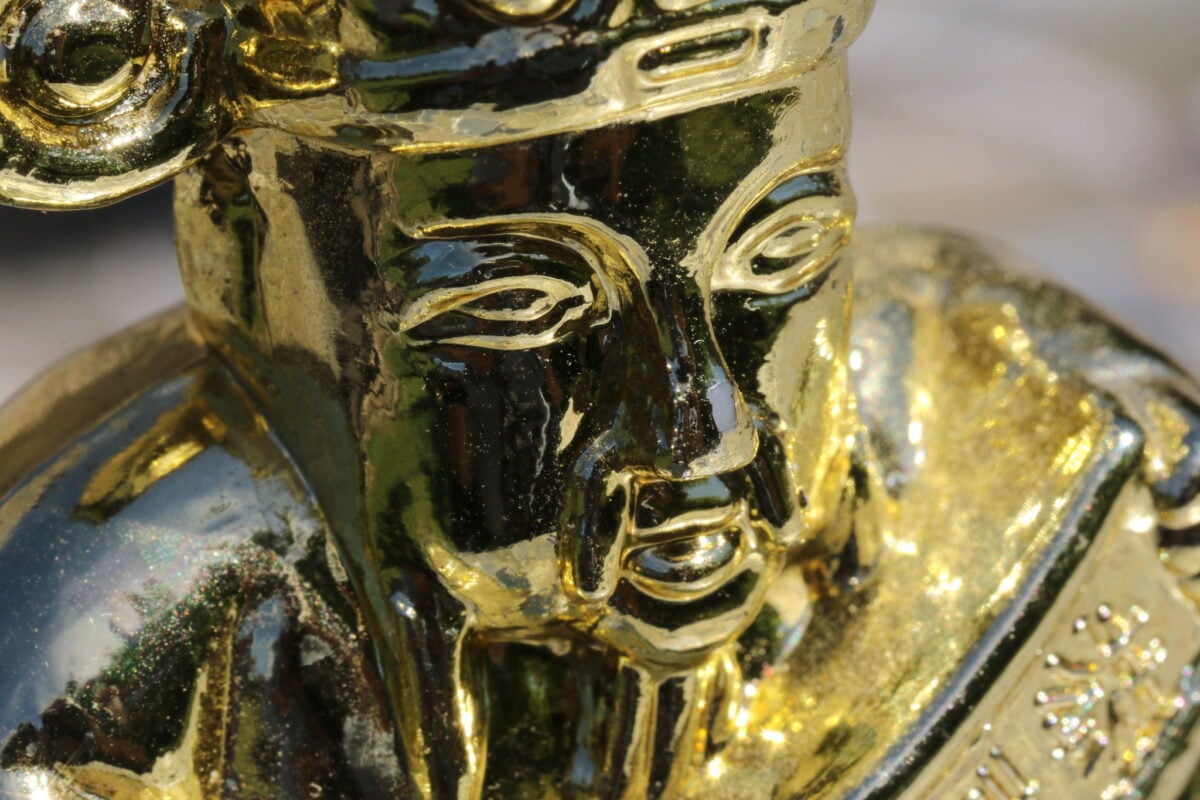
Modern plastination techniques developed by anatomist Gunther von Hagens represent the newest form of human preservation, where bodily fluids are replaced with liquid plastics that harden to create permanent, odorless specimens. While primarily used for medical education, some people have chosen plastination as their preferred form of body preservation after death.
The process creates mummies that are technically more durable than any historical technique—they won’t decay, don’t require special storage conditions, and can be positioned in lifelike poses that traditional mummification couldn’t achieve. It’s mummification stripped of spiritual significance and optimized for permanence, which somehow makes it both the most advanced and most sterile preservation method ever developed.
The Thread That Binds Us All
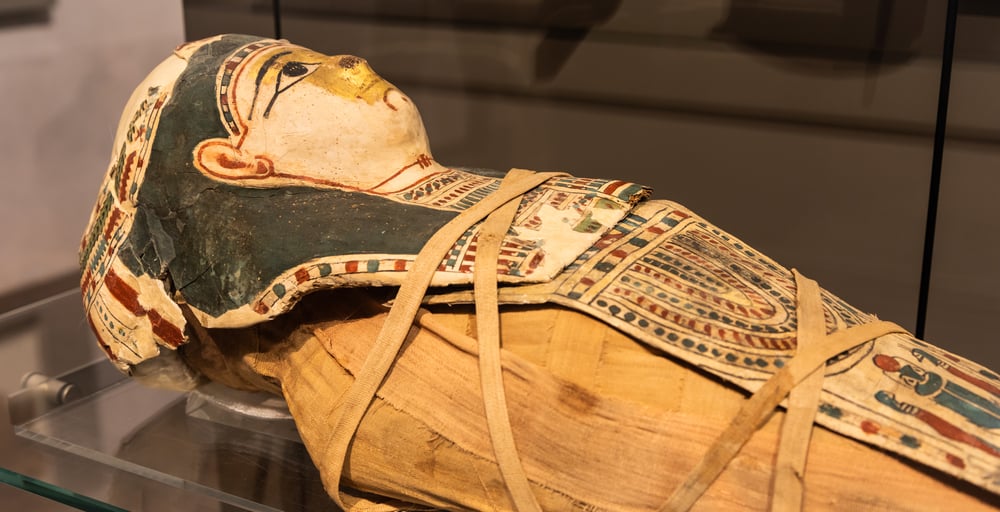
Every culture that developed mummification was trying to solve the same fundamental problem: how to maintain connection across the absolute boundary of death. Whether through elaborate Egyptian rituals or simple Chinchorro reconstructions, the impulse remains recognizably human—we don’t want to let go completely.
These practices reveal as much about the living as the dead, showing how different societies balanced practical needs with spiritual beliefs, individual identity with community values, and the desire for permanence against the reality of change. The techniques may seem bizarre from our perspective, but the underlying motivation is something anyone can understand who has ever wished for just a little more time with someone who mattered.
More from Go2Tutors!

- The Romanov Crown Jewels and Their Tragic Fate
- 13 Historical Mysteries That Science Still Can’t Solve
- Famous Hoaxes That Fooled the World for Years
- 15 Child Stars with Tragic Adult Lives
- 16 Famous Jewelry Pieces in History
Like Go2Tutors’s content? Follow us on MSN.