Incredible Tales Of the Worst Luck in Human History
Life has a way of testing people beyond their limits, and some individuals throughout history have faced such extraordinary misfortune that their stories defy belief. These aren’t just tales of bad days or unlucky breaks — they’re accounts of cosmic-level catastrophes that seem almost too absurd to be true.
Yet these stories remind us that sometimes reality outpaces fiction in its capacity for cruelty, coincidence, and sheer bewildering tragedy.
Roy Sullivan

Lightning doesn’t strike twice in the same place — except when it comes to Roy Sullivan, a park ranger in Virginia who attracted electrical storms like a human lightning rod. Between 1942 and 1977, Sullivan was struck by lightning seven separate times and survived each encounter, earning him a place in the Guinness Book of World Records that nobody else wanted.
The strikes left him with burned eyebrows, singed hair, and damaged hearing. His wife was struck once while standing next to him.
Sullivan eventually began carrying a can of water in his truck to douse fires that lightning strikes would start on his body.
Violet Jessop

The ocean seemed determined to claim Violet Jessop, yet she stubbornly refused to cooperate. This British-Irish nurse and ocean liner stewardess survived not one, but three major maritime disasters that should have killed her multiple times over.
She was aboard the RMS Olympic when it collided with HMS Hawke in 1911 (though this wasn’t as catastrophic as her later experiences, it set an ominous pattern that anyone paying attention might have recognized as a warning). The following year, she sailed on the Titanic’s maiden voyage — and survived the sinking by escaping in lifeboat 16.
But the ocean wasn’t finished with her yet, because in 1916 she found herself on the HMHS Britannic when it struck a mine in the Aegean Sea and sank. She survived that too, though she sustained a serious head injury when her lifeboat was nearly chopped to pieces by the ship’s propeller.
Some people learn to avoid certain activities after one close call; Jessop apparently decided that repeatedly tempting maritime fate was her calling.
Frane Selak

Croatian music teacher Frane Selak experienced a string of near-death experiences so improbable that they read like a rejected script for a slapstick comedy about mortality. His misfortunes began in 1962 when the train he was riding derailed and plunged into an icy river, killing 17 passengers.
Selak escaped with a broken arm and hypothermia. The following year, his first airplane flight resulted in the plane’s door blowing off mid-flight.
He was blown from the aircraft and landed in a haystack while the plane crashed, killing 19 people. A few years later, a bus he was riding skidded off the road and into a river — four passengers drowned, but Selak swam to safety.
He survived two car fires, being hit by a bus, and driving off a 300-foot cliff (he was thrown from his car and caught onto a tree while the vehicle exploded below). In 2003, at age 73, he won the lottery.
Tsutomu Yamaguchi

Being in the wrong place at the wrong time takes on new meaning when examining the life of Tsutomu Yamaguchi, a Japanese naval engineer who happened to be on business trips during both atomic bombings in World War II. He was in Hiroshima on August 6, 1945, when the first bomb detonated — burned and partially deaf, he returned home to Nagasaki just in time for the second bombing on August 9.
Yamaguchi was roughly two miles from ground zero during both explosions. His burns from Hiroshima were still being treated when the Nagasaki bomb exploded, rupturing his bandages and exposing him to radiation once again.
He spent the next several days in an air raid shelter before emerging to a devastated city. He lived until 2010, dying at age 93 of stomach cancer that he attributed to radiation exposure.
John Lyne

The life of John Lyne reads like a case study in how the universe occasionally selects one person to serve as a target for every conceivable form of misfortune. This 19th-century British soldier managed to survive multiple disasters that each should have been fatal, creating a pattern so unlikely that it borders on supernatural.
Lyne was struck by lightning twice (though not as many times as Roy Sullivan, he still deserves recognition for this particular form of electrical harassment). He survived being buried in an avalanche, lived through a building collapse, and escaped drowning on multiple occasions when ships he was traveling on encountered severe storms or structural failures.
What makes his story particularly remarkable isn’t just the frequency of these incidents, but the fact that he seemed to walk away from each one relatively unscathed, as if the universe kept testing increasingly creative ways to eliminate him but couldn’t quite manage to finish the job.
Melvin Dummar

Sometimes bad luck isn’t about physical survival — it’s about having something extraordinary happen to you and then having absolutely nobody believe it. Melvin Dummar claimed he once picked up Howard Hughes hitchhiking in the Nevada desert in 1967, gave him a ride, and bought him a burger.
Years later, after Hughes died, a handwritten will surfaced leaving Dummar $156 million. The will was declared a forgery in court.
Dummar lost his gas station, his marriage fell apart, and he struggled financially for decades while insisting his story was true. He became a cautionary tale about the dangers of extraordinary claims without extraordinary evidence.
Whether his story was true or false, the aftermath destroyed his life in ways that winning the lottery might have fixed.
The Unsinkable Margaret Brown
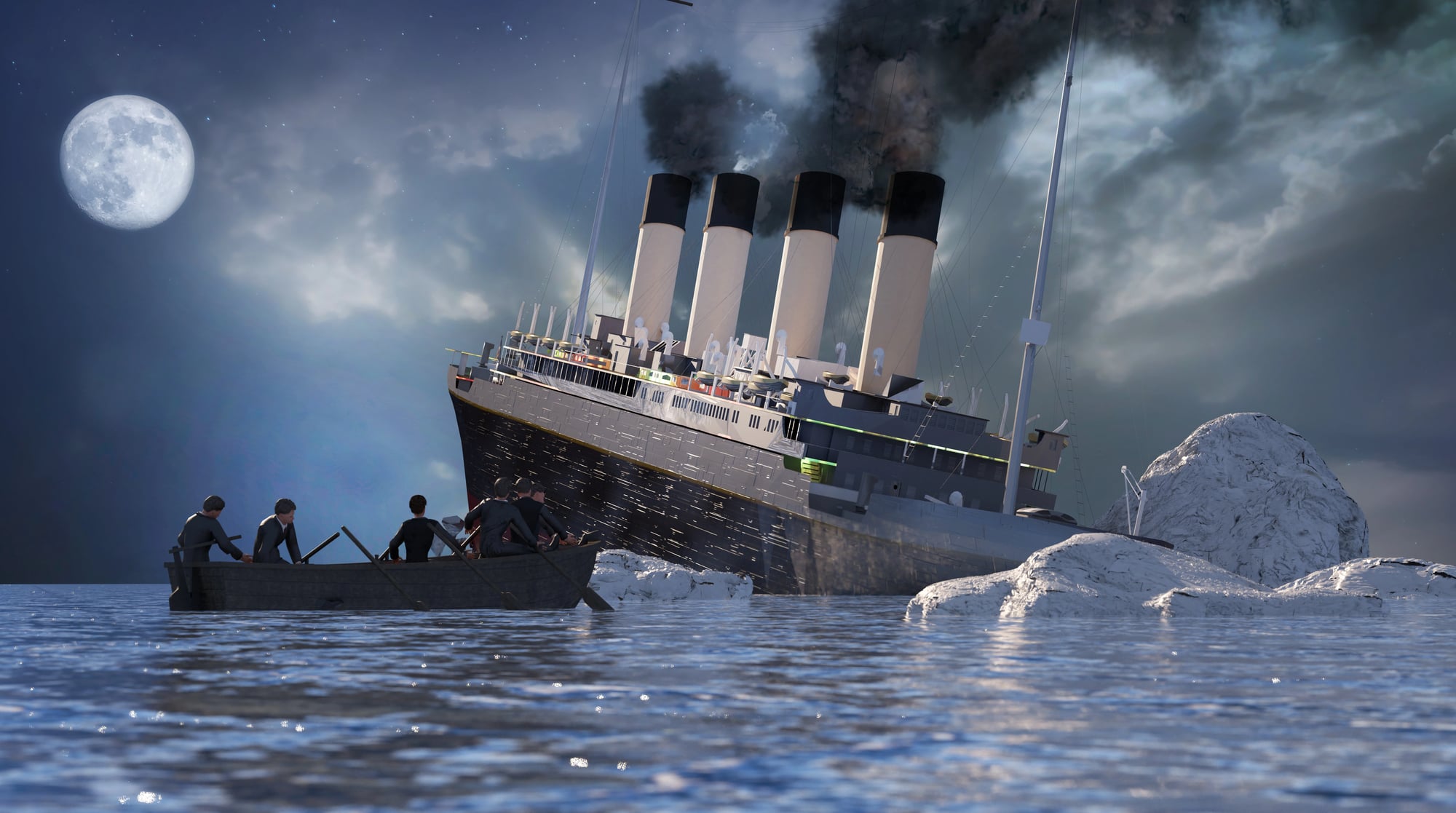
Margaret Brown earned her “unsinkable” nickname by surviving the Titanic disaster, but that singular event was just one chapter in a life that seemed magnetically attracted to catastrophe. She had a peculiar talent for finding herself at the epicenter of historical disasters, as if fate had assigned her the role of professional survivor.
Before the Titanic, she had already lived through mining accidents in Colorado (her husband was involved in mining, and she often visited dangerous mining camps where cave-ins and explosions were routine hazards). After the Titanic, she traveled extensively and managed to be present during several natural disasters and political upheavals around the world.
But here’s what made her story particularly strange: she didn’t just survive these events — she often ended up in leadership roles during the crises, organizing rescue efforts and helping other survivors. The universe kept placing her in impossible situations, and she kept refusing to accept that impossible meant unsurvivable.
Adolphe Sax

The inventor of the saxophone faced a childhood that reads like a cartoon character’s list of mishaps, except with real consequences and genuine danger. Adolphe Sax survived so many potentially fatal accidents as a child that his neighbors reportedly called him “the ghost” because they couldn’t believe he was still alive.
He fell from a third-story window at age three, hit his head on a stone and lay unconscious for days. At various points during his youth, he drank a bowl of sulfuric acid thinking it was milk, swallowed a pin, was severely burned in a gunpowder explosion, fell into a river and nearly drowned, was struck on the head by a cobblestone, and accidentally poisoned himself with furniture varnish.
His mother once said she was convinced he was not meant for this world. Instead, he lived to age 81 and invented one of the most important musical instruments in modern music.
Ann Hodges

Being struck by a meteorite sounds like the kind of freak accident that happens maybe once in recorded history — which makes it exactly the kind of thing that would happen to Ann Hodges. On November 30, 1954, she was napping on her couch in Alabama when an 8.5-pound meteorite crashed through her roof, bounced off her wooden radio console, and struck her on the hip and hand.
This was the first documented case of a human being struck by a meteorite. The rock left her with severe bruising, but the real damage came afterward.
The meteorite became the center of a legal battle between Hodges, her landlord, and various parties who claimed ownership. The stress of the situation, combined with the constant media attention and legal disputes, reportedly contributed to a nervous breakdown.
She never received any money from the meteorite and spent years fighting over something that had literally fallen from space to injure her.
Grigori Rasputin

Rasputin’s death has become legendary precisely because it took so many attempts to actually kill him, but his extraordinary resistance to mortality was matched by his extraordinary ability to attract people who wanted him dead. The Russian mystic seemed to accumulate enemies the way other people collect stamps.
Multiple assassination attempts failed before the famous final one in 1916. He survived poisoning attempts, stabbings, and beatings that should have been fatal.
When Prince Felix Yusupov and his conspirators finally decided to end Rasputin’s influence over the royal family, they reportedly poisoned him with enough cyanide to kill several men — he kept eating and asking for more wine. They shot him, and he got back up.
They beat him with clubs, and he continued moving. They finally shot him again and threw his body into the icy Neva River.
Phineas Gage

Railroad foreman Phineas Gage experienced what might be the most famous workplace accident in history — and survived something that should have been instantly fatal. In 1848, while clearing rocks for a new rail line in Vermont, an explosion drove a three-foot-long iron tamping rod completely through his skull, entering below his left cheekbone and exiting through the top of his head.
Gage not only survived the accident but remained conscious throughout. He walked to a cart and rode to town to see a doctor, reportedly telling him that he hoped he wouldn’t have to work that afternoon.
The iron rod had destroyed much of his frontal lobe, and while he recovered physically, his personality changed dramatically. He became impulsive, irreverent, and unreliable — a completely different person than before the accident.
He lived for 12 more years, but his case became a foundational study in neuroscience about the relationship between brain function and personality.
The Donner Party

The Donner Party represents collective bad luck on an almost incomprehensible scale — a group of American pioneers whose journey west became a cascading series of poor decisions, terrible timing, and brutal weather that trapped them in the Sierra Nevada mountains during the winter of 1846-47. What started as poor route planning (they took an untested shortcut that actually added time to their journey) escalated when early snows trapped the group near Truckee Lake.
They built crude shelters and waited for rescue, but supply parties faced the same harsh conditions. As food ran out, conditions became increasingly desperate for the stranded group.
Of the 87 members of the party, only 48 survived. The tragedy became synonymous with the dangers of westward expansion and the extreme measures people will take to survive.
Claude Volter

Belgian actor Claude Volter’s bad luck was so consistent and varied that it reads like a systematic exploration of every possible way the universe can torment a single individual. His misfortunes weren’t limited to a single type of disaster — instead, he seemed to attract trouble from every conceivable direction with remarkable consistency.
Volter survived multiple car accidents, house fires, and stage accidents during his acting career (which makes sense given that theater work involves dangerous equipment, but his incidents went well beyond normal occupational hazards). He was struck by lightning, survived several serious illnesses that doctors expected to be fatal, and lived through both natural disasters and human-caused catastrophes during his extensive travels.
What made his story particularly remarkable wasn’t just the frequency of these events, but their variety — it was as if the universe couldn’t decide which method of disaster to focus on, so it tried them all. He lived to be 88, dying peacefully in his sleep, which was probably the least dramatic thing that happened to him in decades.
When Fortune Finally Smiles

These stories of extraordinary misfortune remind us that luck — both good and bad — operates according to rules we don’t fully understand. Some of these individuals eventually found their fortunes reversed, while others carried their burden of bad luck throughout their lives.
What’s remarkable isn’t just their survival, but their persistence in the face of circumstances that would have broken most people’s will to continue. Their stories become testaments not just to human resilience, but to the strange mathematics of chance that occasionally selects certain individuals to bear witness to just how cruel and unusual fate can become.
More from Go2Tutors!

- The Romanov Crown Jewels and Their Tragic Fate
- 13 Historical Mysteries That Science Still Can’t Solve
- Famous Hoaxes That Fooled the World for Years
- 15 Child Stars with Tragic Adult Lives
- 16 Famous Jewelry Pieces in History
Like Go2Tutors’s content? Follow us on MSN.