Warplanes That Dominated Every Battlefield
War has always been about advantage. One side develops a weapon that tilts the balance, and suddenly the rules change.
Throughout aviation history, certain aircraft have emerged that didn’t just participate in conflicts—they rewrote how wars were fought. These machines became legendary not through marketing campaigns or impressive specifications on paper, but because they proved unstoppable when it mattered most.
Supermarine Spitfire
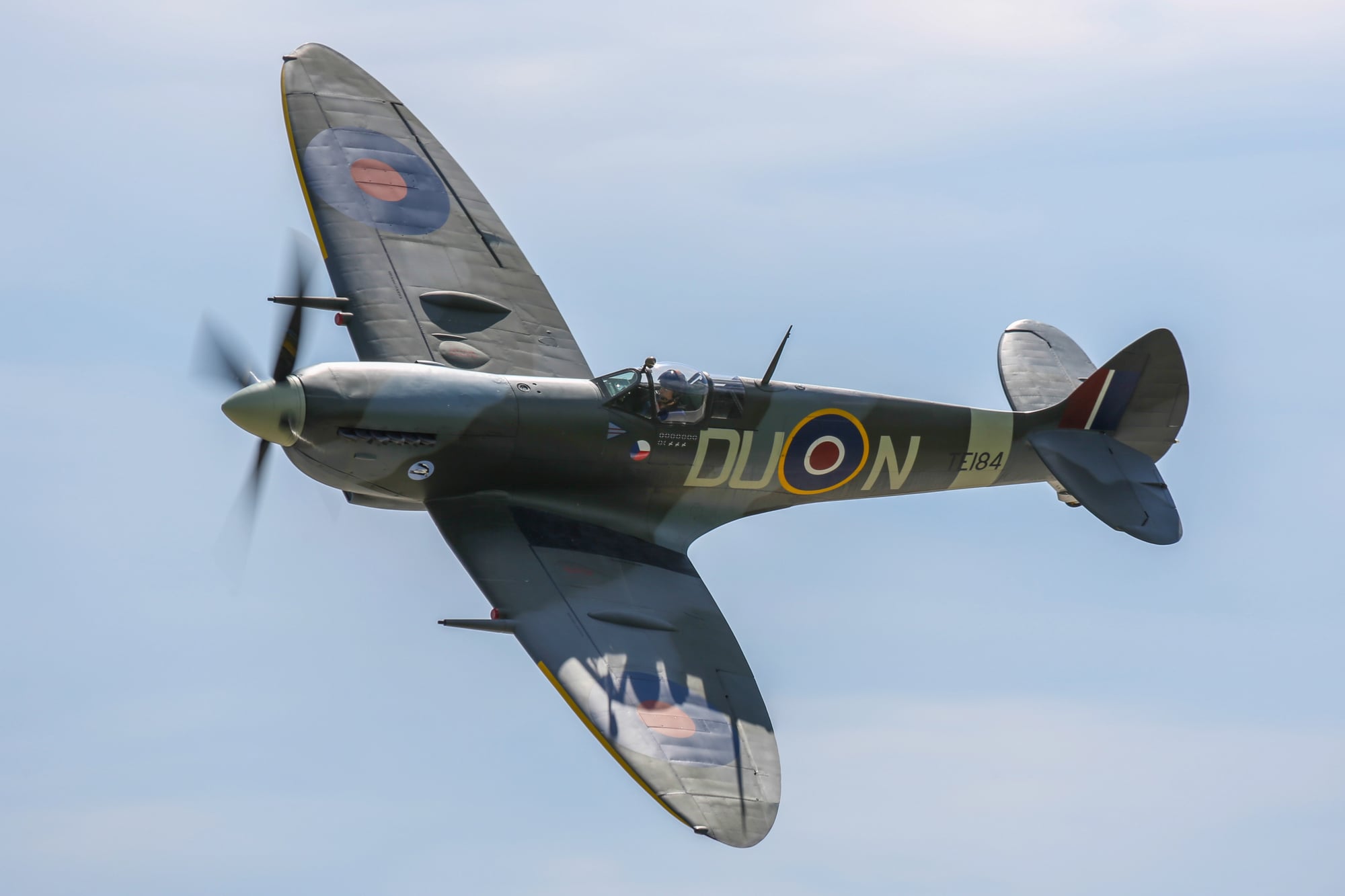
The Spitfire saved Britain. That’s not hyperbole.
During the Battle of Britain in 1940, this fighter held the line when everything hung in the balance.
Its elliptical wings gave it a grace that matched its lethality. The Merlin engine provided the power to climb fast and turn tight.
German pilots learned to respect the distinctive silhouette—many never got the chance to forget it.
North American P-51 Mustang
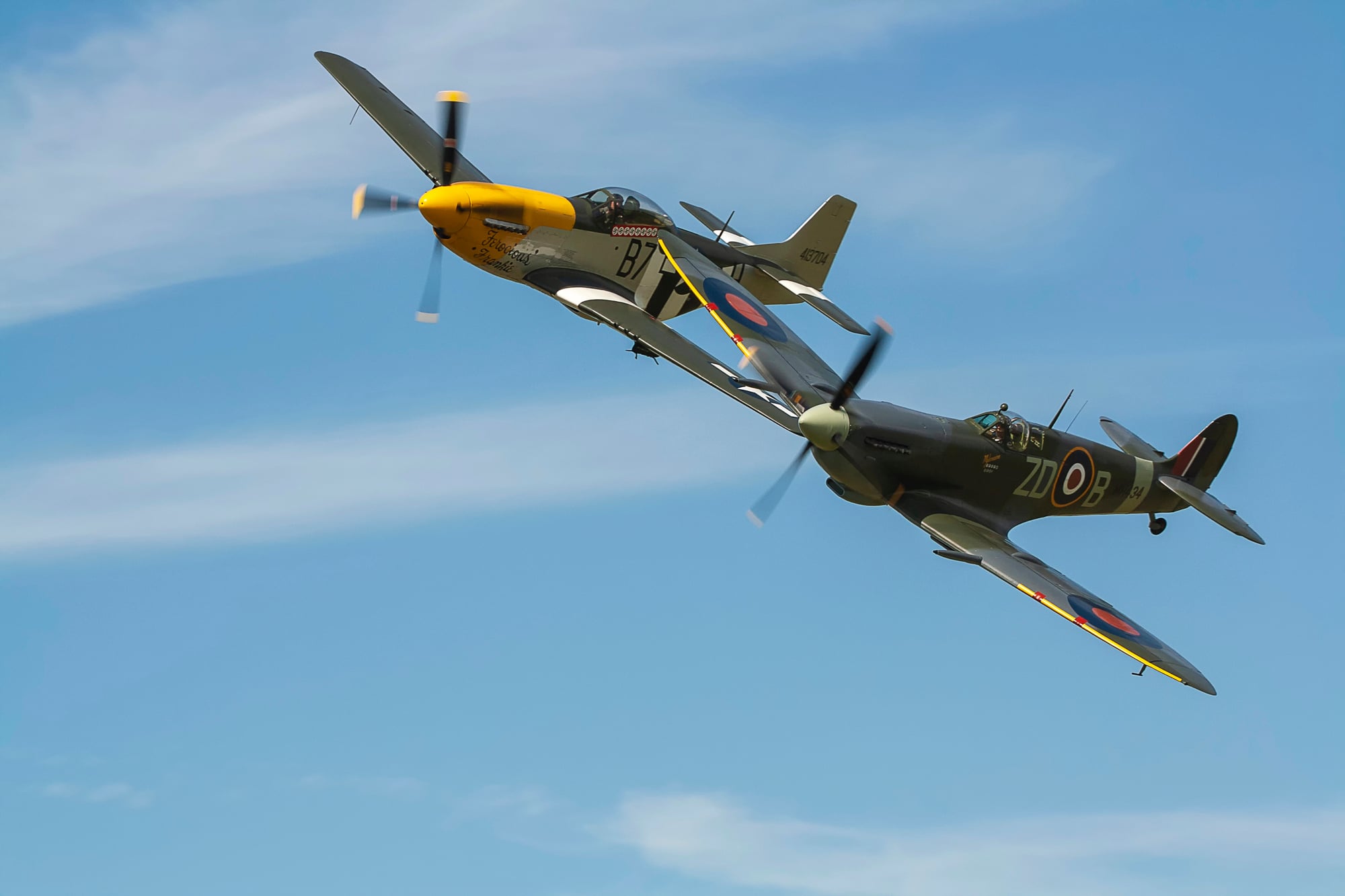
Long-range escort duty sounds boring until you realize what it meant for World War II. Before the Mustang, Allied bombers flew deep into Germany without fighter protection, getting slaughtered by Luftwaffe interceptors.
The P-51 changed that calculation entirely (and the war along with it), because suddenly American fighters could accompany bombers all the way to Berlin and back—something that had been impossible before the Mustang’s remarkable range capabilities emerged.
So the daylight bombing campaign that crippled German industry became feasible. The Mustang didn’t just escort bombers; it hunted German fighters over their own airfields, and that aggressive strategy, which pushed the fight to the enemy’s doorstep rather than waiting defensively, broke the back of the Luftwaffe pilot training program since experienced instructors found themselves under constant attack.
But here’s what made it truly dominant: the P-51 could outfight almost anything the Germans had while carrying enough fuel to do it hundreds of miles from home. Range plus performance.
Deadly combination.
Messerschmitt Bf 109
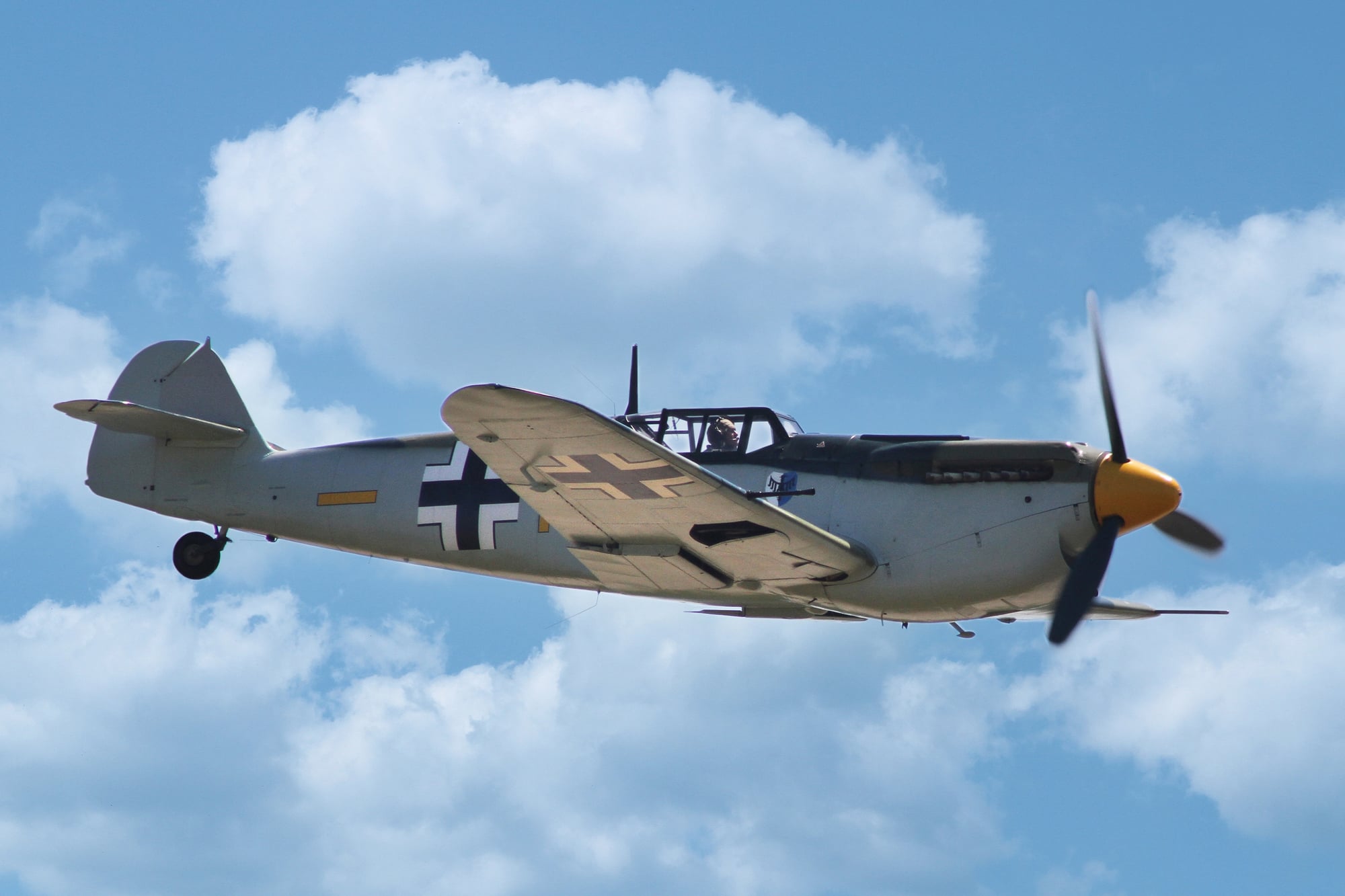
Think of the Bf 109 as the backbone of German air power—not flashy, just relentlessly effective across every theater where it appeared. Like a well-worn tool that fits perfectly in your hand, this fighter adapted to whatever role the war demanded, whether intercepting bombers over the Reich or providing close support to advancing panzer divisions.
The 109 accumulated more air-to-air victories than any other fighter in history, though that statistic carries the weight of six years of continuous combat rather than superior design alone.
Pilots who flew it described an aircraft that forgave mistakes while punishing enemies, reliable in the way that only simple, proven designs can be. It corrects your flying rather than fighting you—the mark of a machine built by people who understood that wars are won by tools that work, not ones that impress.
Republic P-47 Thunderbolt
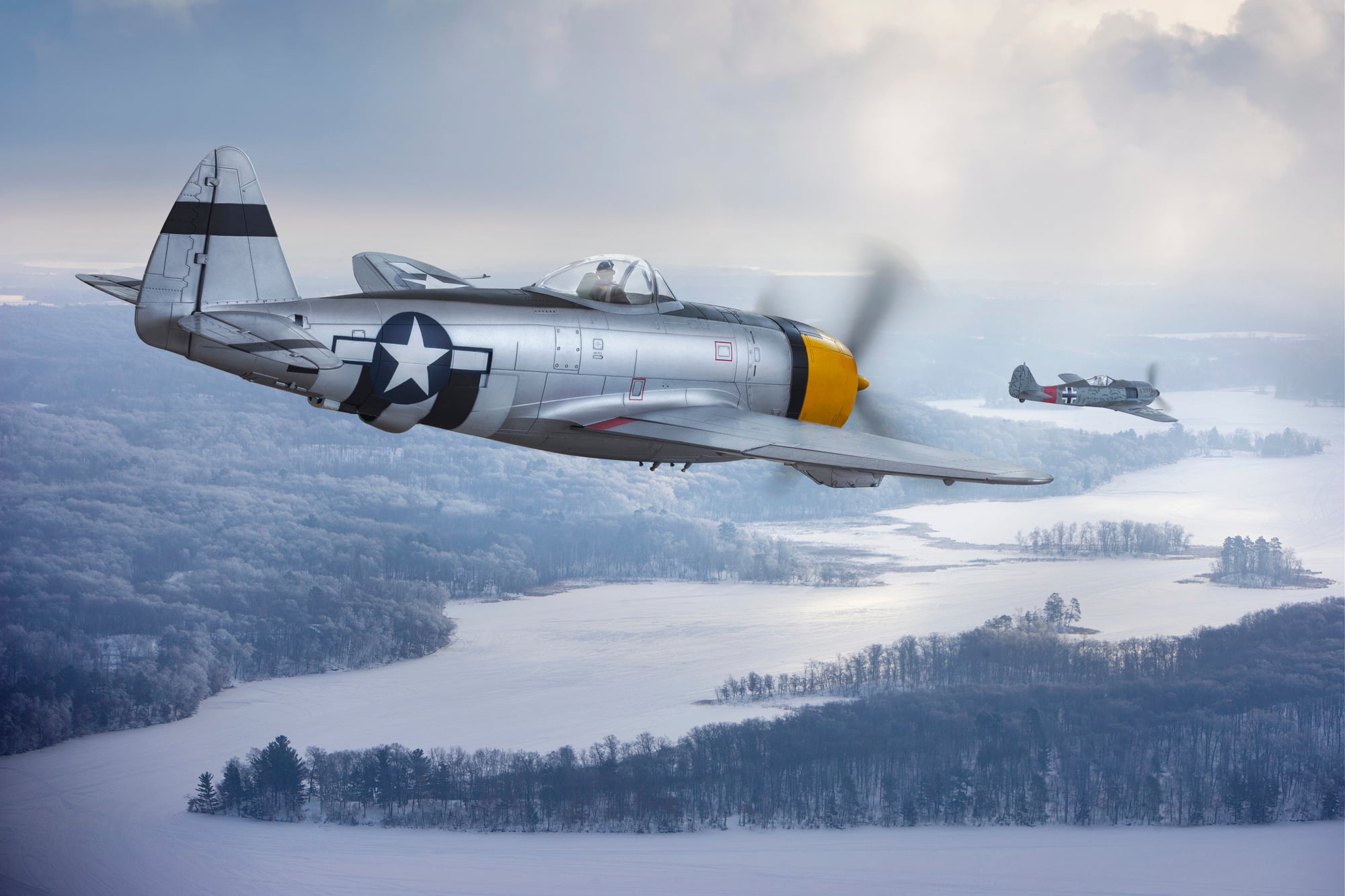
The P-47 was overbuilt and proud of it. While other fighters chased elegance, the Thunderbolt embraced brute force wrapped in aluminum.
Eight .50-caliber machine guns. Armor plating that could stop cannon shells.
An engine that produced more power than seemed reasonable.
This approach worked exactly as intended. P-47 pilots developed a reputation for coming home when other aircraft wouldn’t have made it past the first burst of enemy fire.
The Thunderbolt could absorb punishment, dish it out, and still have enough fuel to loiter over the battlefield providing close air support to ground troops.
Focke-Wulf Fw 190
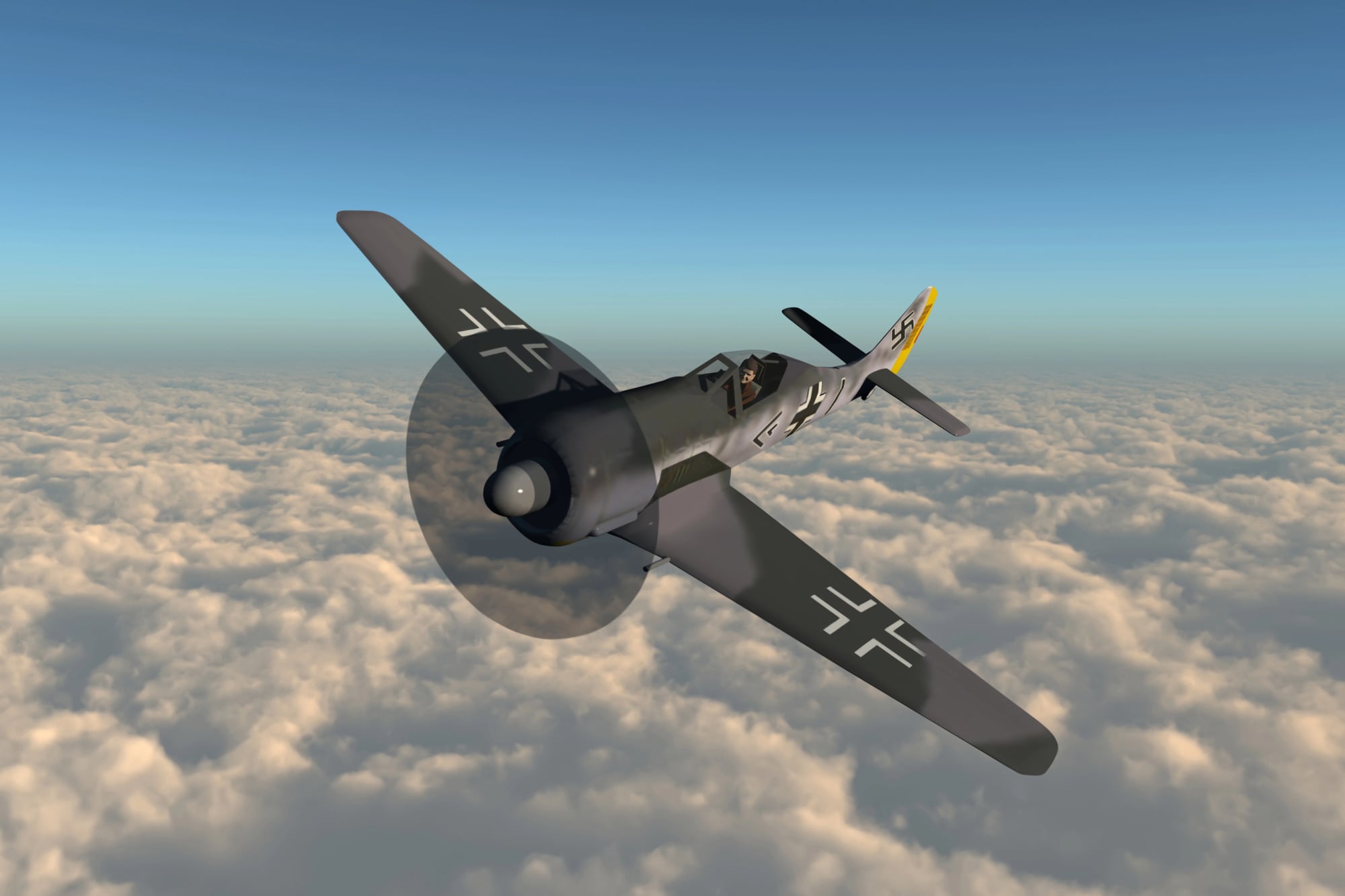
So the Luftwaffe had this problem. Their Bf 109s were getting outclassed by newer Allied fighters, particularly at low altitude where much of the real fighting happened.
And what they needed was something that could hold its own in a knife fight while still maintaining the performance edge that German engineering was known for—which turned out to be exactly what the Fw 190 delivered when it first appeared over the Western Front in 1941, shocking Allied pilots who had grown comfortable with their tactical advantages.
But this wasn’t just another German fighter; it was a radial-engine design in a war dominated by inline engines, and that choice (along with the wide-track landing gear that made it forgiving on rough airfields) created an aircraft that excelled in the ground-attack role that became increasingly important as the war progressed.
The 190 hit harder and survived more punishment than the sleek 109. Sometimes brute strength wins over finesse.
Grumman F6F Hellcat
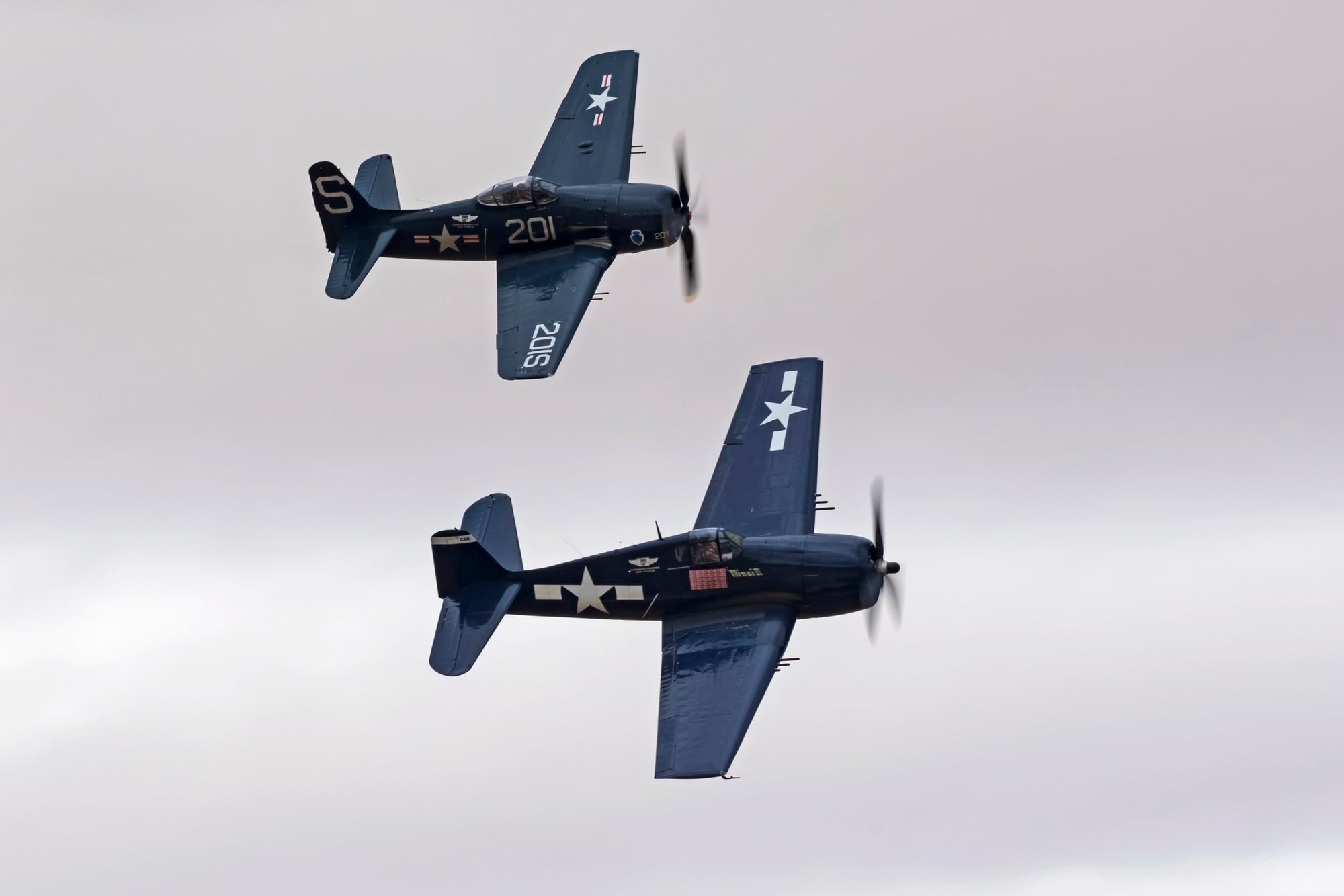
Picture a fighter designed by people who had studied every mistake made in the first two years of Pacific war, then built the opposite. The Hellcat emerged from that methodical process—not revolutionary, just systematically better at everything that mattered in carrier operations.
It climbed faster than the Zero. Dove faster than the Zero.
Survived damage that would have destroyed a Zero.
Most importantly, it was simple enough that pilots with minimal training could fly it effectively, while being robust enough to operate from carrier decks in the middle of the Pacific. The Hellcat didn’t just beat Japanese fighters; it massacred them so thoroughly that experienced Japanese pilots became extinct, leaving only trainees to face increasingly skilled American aviators.
Vought F4U Corsair
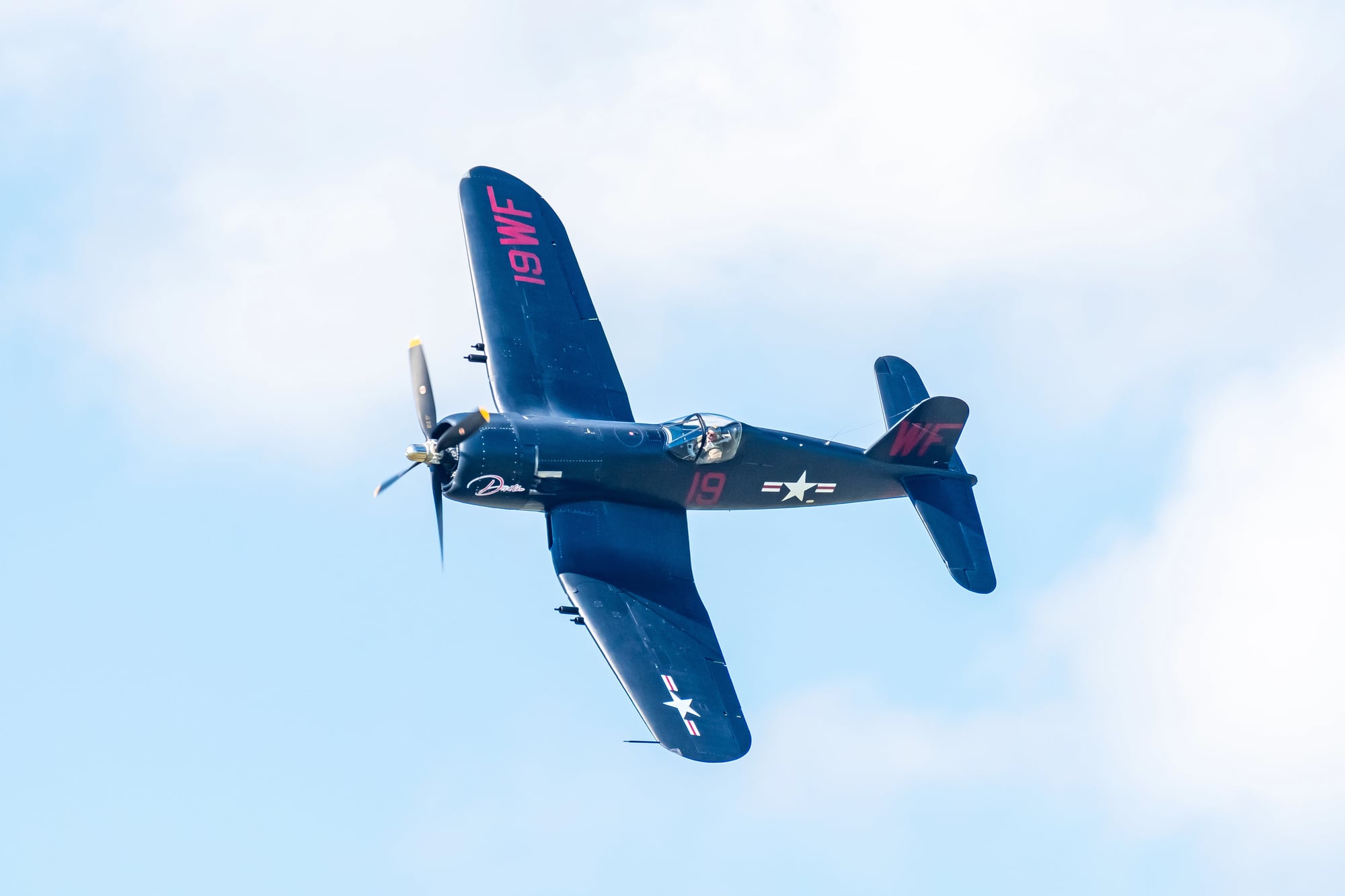
The bent-wing bird looked wrong and flew right. That distinctive inverted gull wing wasn’t an aesthetic choice—it solved the problem of fitting a massive propeller onto a carrier-based fighter without making the landing gear impossibly long.
Early Corsairs had a reputation for being difficult to land on carriers, which pushed them to Marine Corps land-based squadrons.
Turned out to be a perfect match.
Marines needed something that could deliver punishment in close support roles, and the Corsair excelled at carrying bombs and rockets while still maintaining air-to-air superiority. Japanese pilots called it “Whistling Death” for the distinctive sound it made in a dive.
The nickname stuck because it was accurate.
McDonnell Douglas F-4 Phantom II
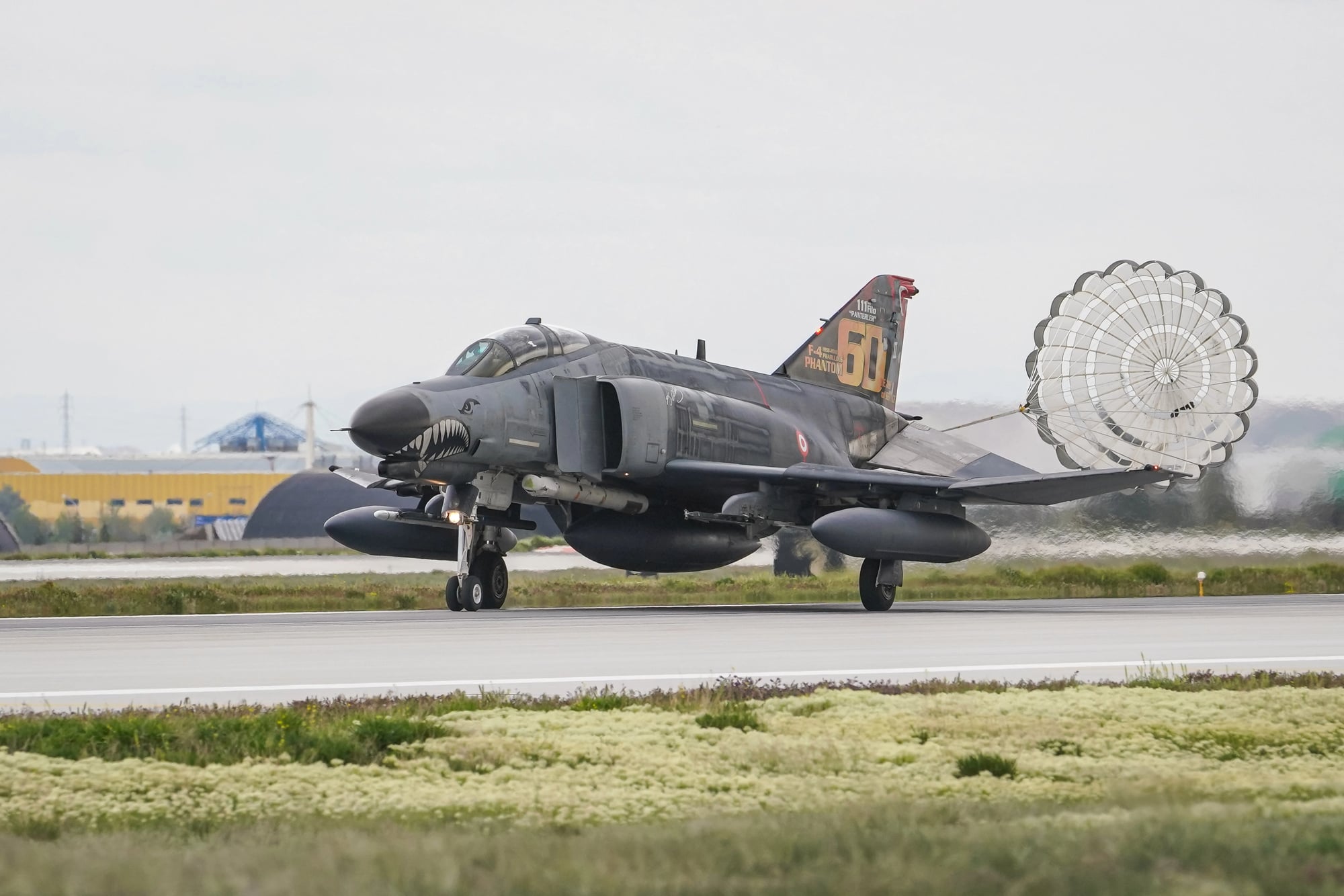
The F-4 dominated because it was designed around one simple principle: more of everything. More engines.
More speed. More missiles.
More fuel. More electronics.
The result was an aircraft that could outfight, outrun, or simply overpower whatever it encountered.
What made it truly dominant was versatility wrapped in overwhelming capability—the Phantom served as an interceptor, ground-attack aircraft, reconnaissance platform, and electronic warfare suite, often switching between roles during the same mission.
Vietnam, the Middle East, and dozens of smaller conflicts proved that raw performance could substitute for specialization, provided you had enough of it. The F-4 had enough of everything that mattered.
General Dynamics F-16 Fighting Falcon
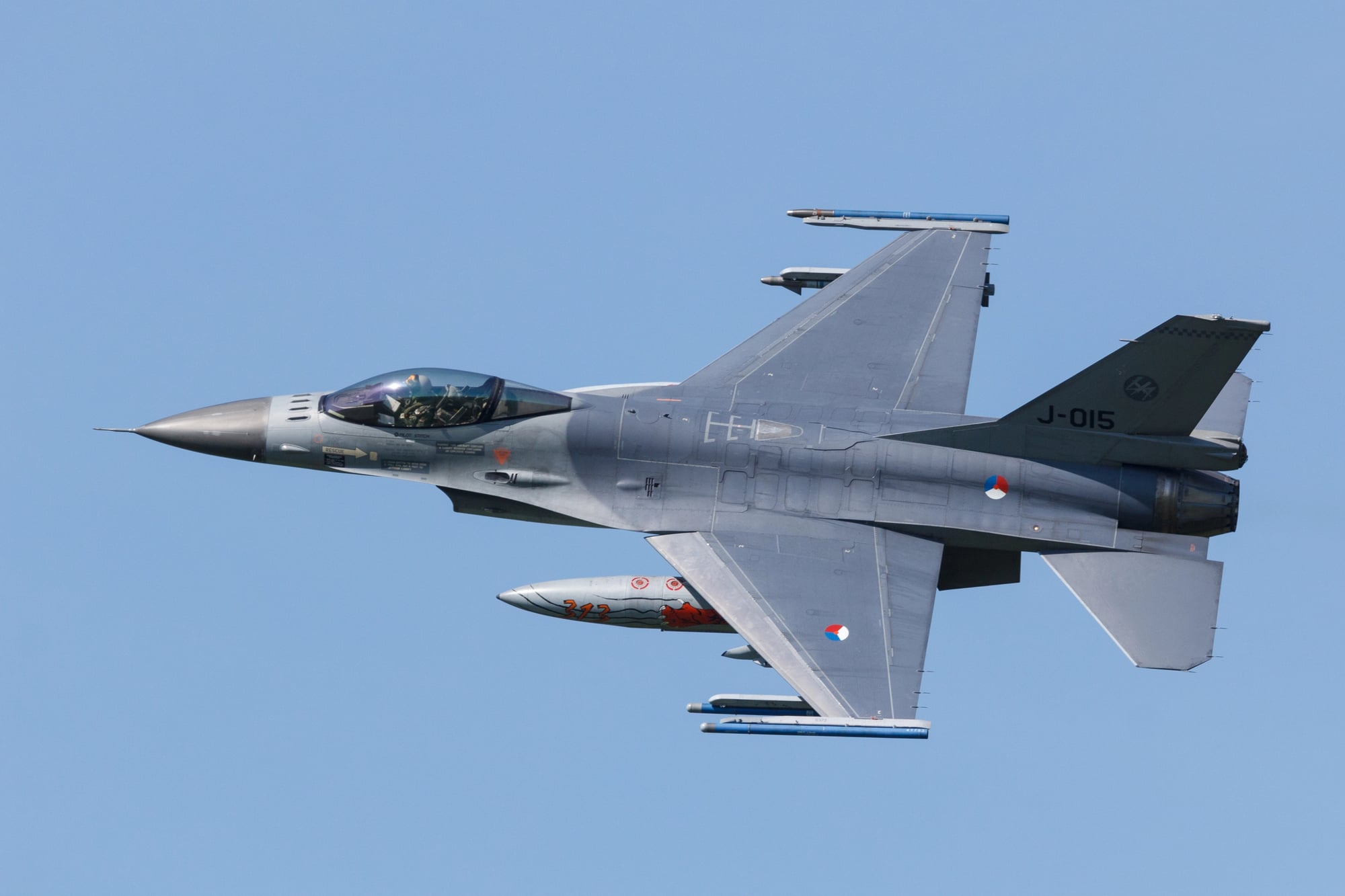
Lightweight fighters were supposed to be cheap supplements to expensive, complex aircraft like the F-15. The F-16 had other plans.
It turned out that a small, agile fighter with modern electronics could handle missions that previously required much larger aircraft.
The key insight was energy management—the F-16’s designers understood that fights are won by pilots who can maintain airspeed and altitude advantage, so they built an aircraft around that principle.
The result was something that could out-turn almost anything while carrying a respectable weapons load.
More than 4,500 F-16s have been built, and they’re still in production decades after the first flight. That’s what happens when you get the fundamentals right.
McDonnell Douglas F-15 Eagle
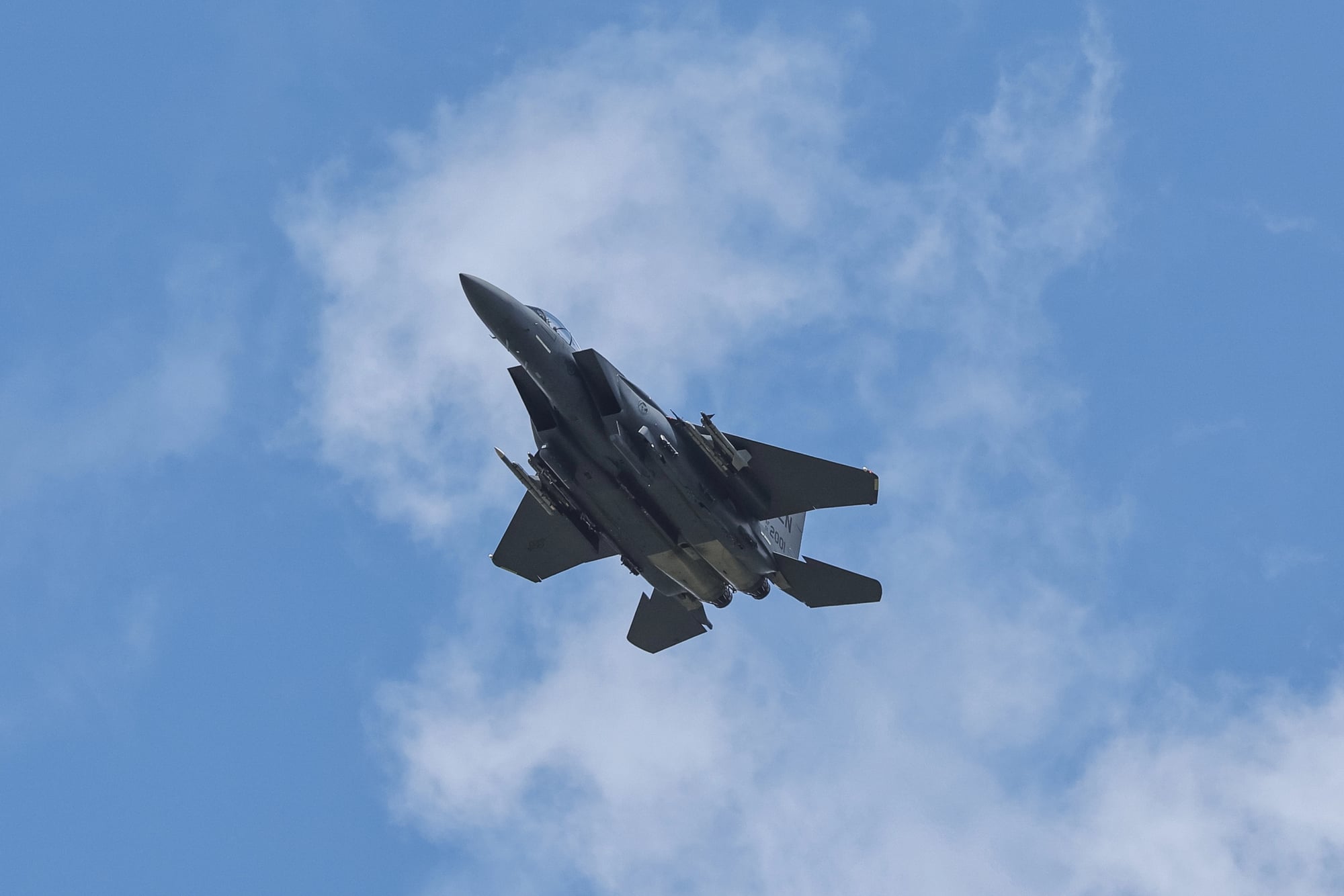
Air superiority means nobody else gets to fly. The F-15 was designed specifically to achieve that condition and maintain it indefinitely.
Twin engines, powerful radar, long-range missiles, and enough fuel to patrol for hours without refueling.
The result speaks for itself: over 100 air-to-air victories with zero losses in aerial combat. No other fighter in history has maintained that record across multiple conflicts and decades of service.
The F-15 didn’t just win dogfights; it prevented them by establishing such clear technological superiority that enemy pilots avoided engagement entirely. Sometimes the most dominant weapon is one that wins without firing a shot.
Lockheed F-117 Nighthawk
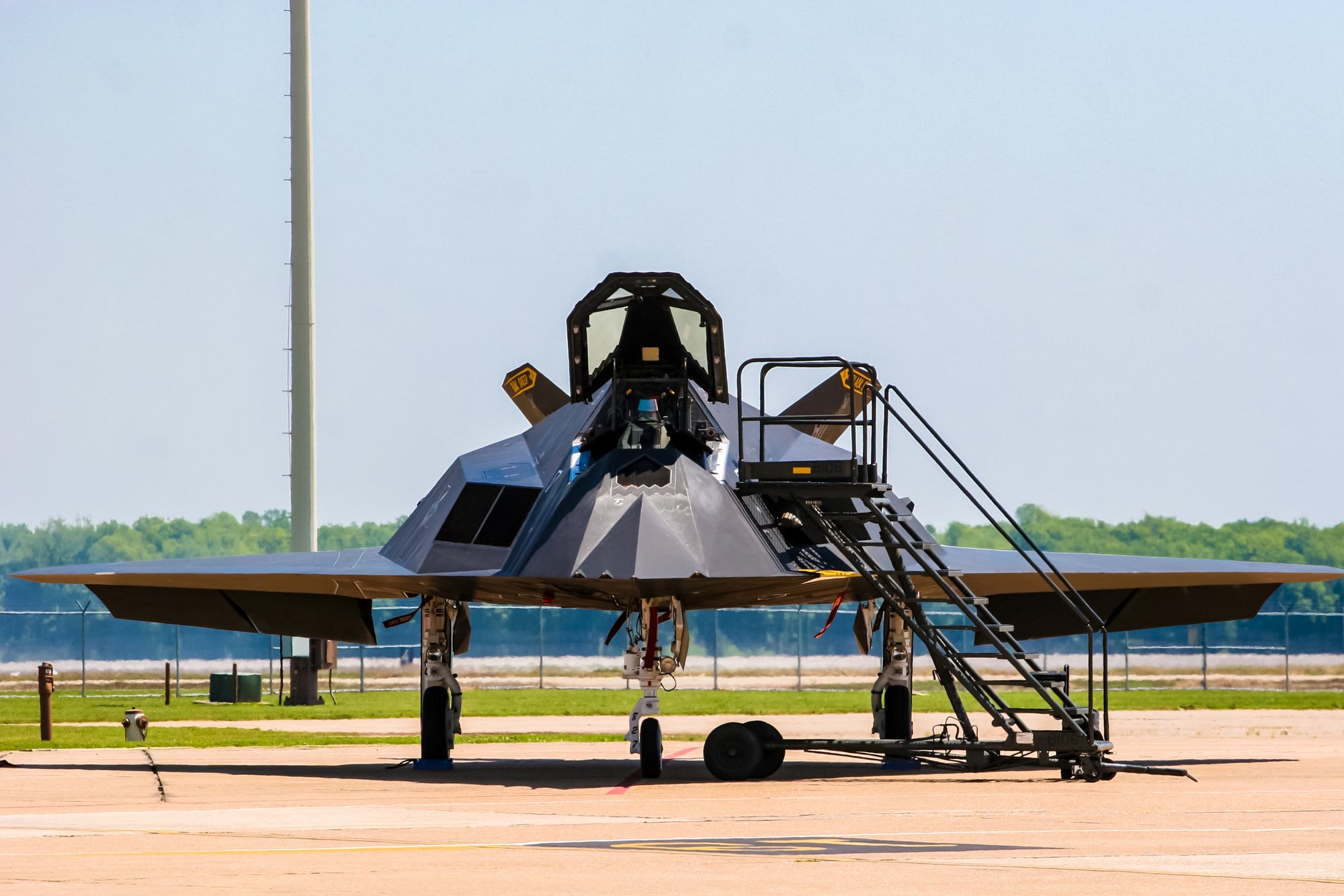
Stealth technology changed warfare by making the invisible possible. The F-117 proved that aircraft could penetrate the most heavily defended airspace on Earth without being detected, fundamentally altering how air campaigns were planned and executed.
Desert Storm provided the definitive demonstration—F-117s struck targets in downtown Baghdad while conventional aircraft faced withering surface-to-air missile fire elsewhere in Iraq.
The psychological impact matched the tactical advantage: air defenses designed around detecting and engaging visible targets became obsolete overnight. The Nighthawk forced every military in the world to reconsider their assumptions about air warfare.
Lockheed Martin F-22 Raptor
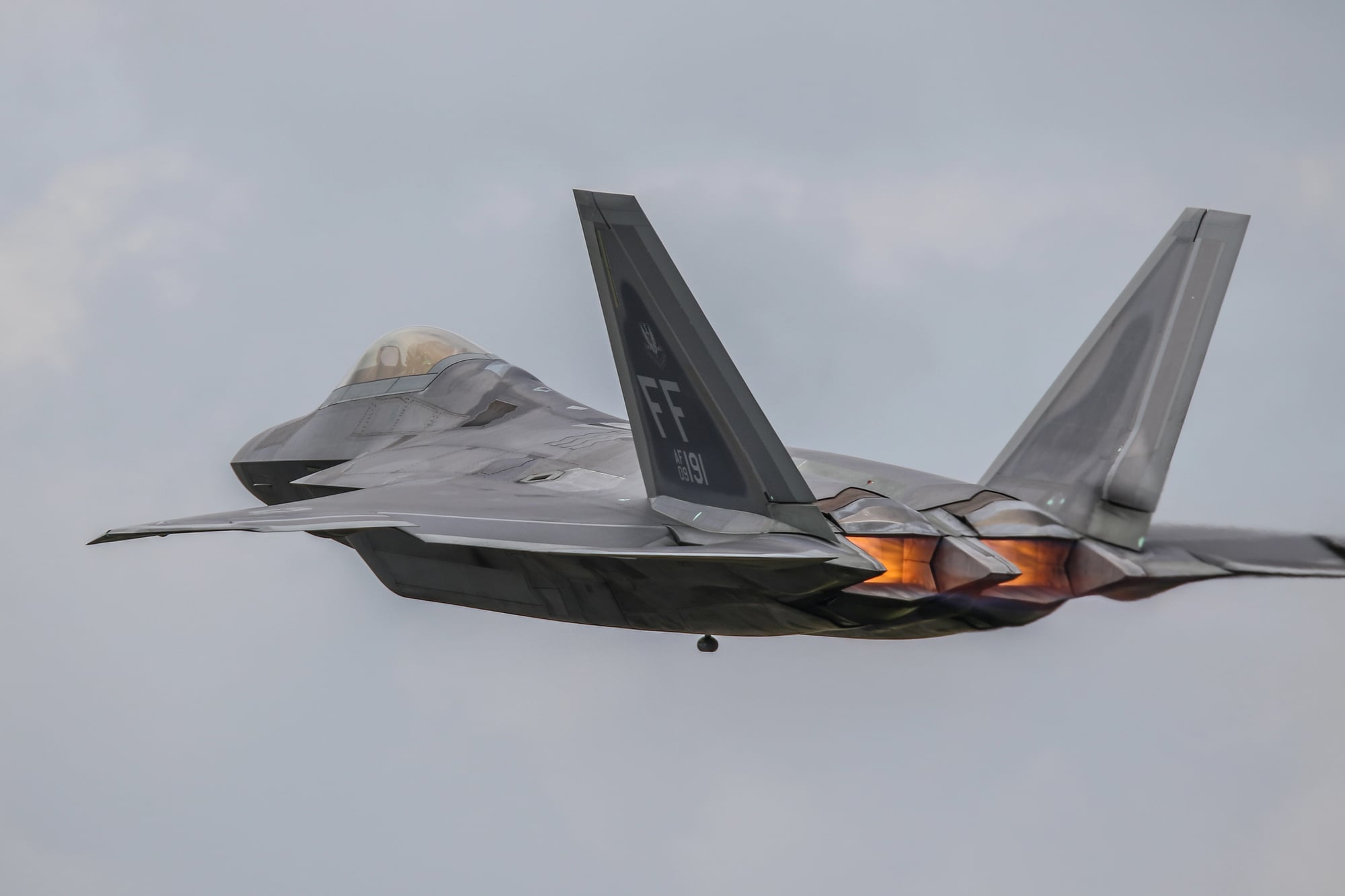
The F-22 represents air superiority taken to its logical extreme (though production limitations mean only 187 were ever built, making it both the most capable fighter ever created and one of the rarest). Everything about this aircraft exceeds what seemed possible just decades earlier—supercruise without afterburners, stealth that makes it nearly invisible to radar, sensors that can track multiple targets at ranges where the Raptor remains undetected, and maneuverability that defies physics as most people understand it.
And yet the real dominance comes not from any single capability but from the combination: an aircraft that can see without being seen, strike without being touched, and disappear before anyone realizes what happened.
So complete is its superiority that realistic training exercises require artificial handicaps to give opposing forces any chance at all. The F-22 doesn’t just win air battles; it makes them pointless.
Fairchild Republic A-10 Thunderbolt II
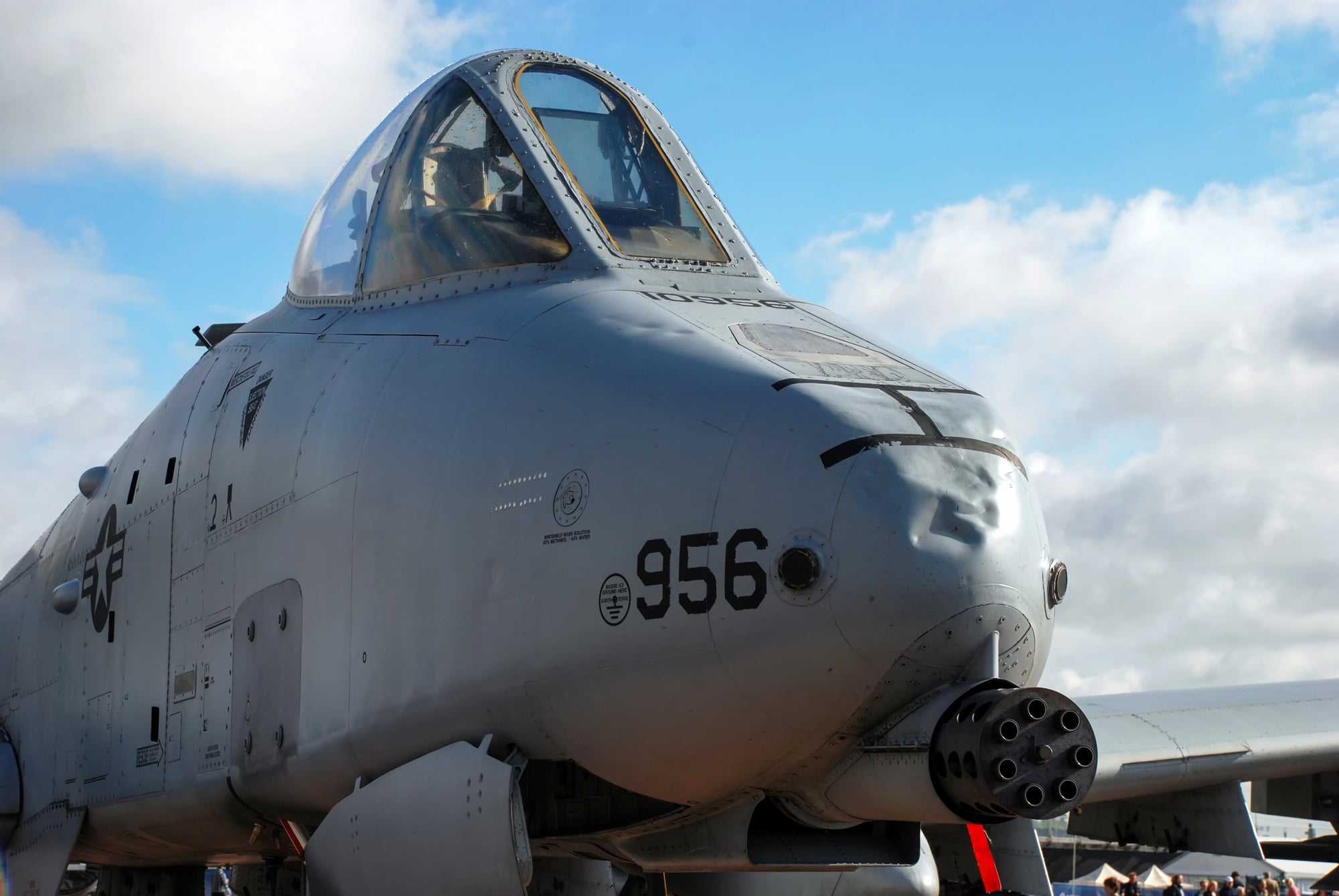
Close air support had always been a secondary mission for fighters pressed into ground-attack roles. The A-10 approached the problem differently: build an aircraft around a massive cannon, then add everything else needed to get that gun where it could do the most damage.
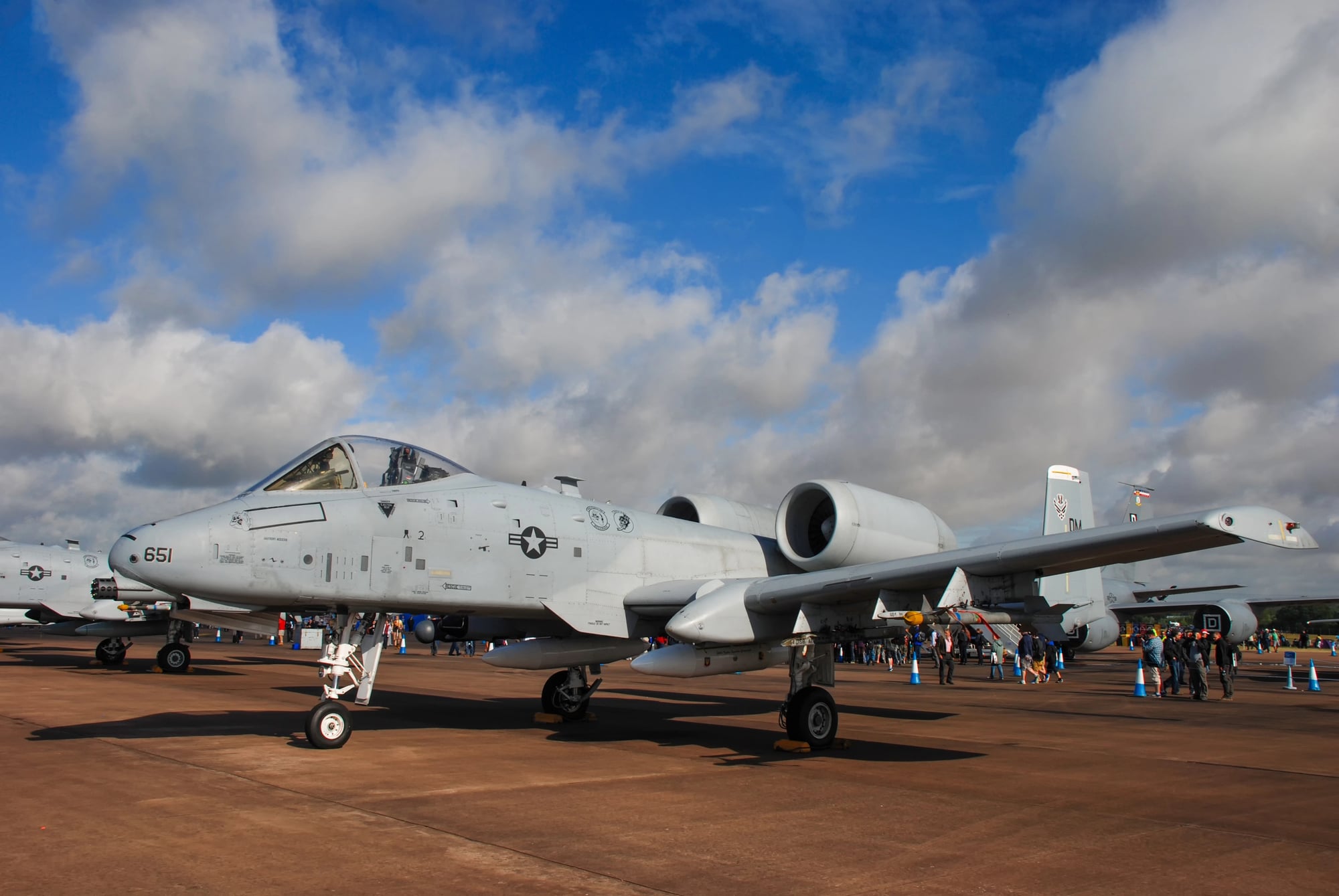
The result was something that looked like it belonged in a different era of aviation—straight wings, twin engines mounted high to avoid foreign object damage, titanium armor around the cockpit.
Ugly and proud of it.
But when ground troops needed immediate fire support, the A-10 delivered precision destruction that saved countless lives. The distinctive sound of its GAU-8 cannon became known as the “sound of freedom” to friendly forces and something considerably less pleasant to enemy tank crews.
Beyond The Cockpit
These aircraft succeeded because they solved problems that mattered. Not the problems engineers thought were interesting, or the ones that looked good in specifications, but the messy, urgent problems of actual combat.
The best warplanes have always been tools first and marvels of engineering second—though the two categories overlap more often than you might expect.
More from Go2Tutors!

- The Romanov Crown Jewels and Their Tragic Fate
- 13 Historical Mysteries That Science Still Can’t Solve
- Famous Hoaxes That Fooled the World for Years
- 15 Child Stars with Tragic Adult Lives
- 16 Famous Jewelry Pieces in History
Like Go2Tutors’s content? Follow us on MSN.