Bridges Destroyed in Wartime and What Happened After
When war comes for a bridge, the decision to destroy it usually takes minutes. The decision to rebuild it — or not — can take decades, or sometimes never comes at all.
Bridges are among the most deliberate targets in warfare because of what they represent: connection, movement, the possibility of crossing over. Destroy a bridge and you slow an army.
You also slow everything else — commerce, family visits, the rhythms of ordinary life — often long after the shooting stops.
What follows are stories of bridges deliberately destroyed during wartime and what happened in the aftermath. Some were rebuilt with obsessive faithfulness.
Some were replaced with something practical but stripped of meaning. Some were never rebuilt at all, and the gaps they left tell their own stories about why certain divisions outlast the conflicts that created them.
Stari Most, Mostar, Bosnia and Herzegovina
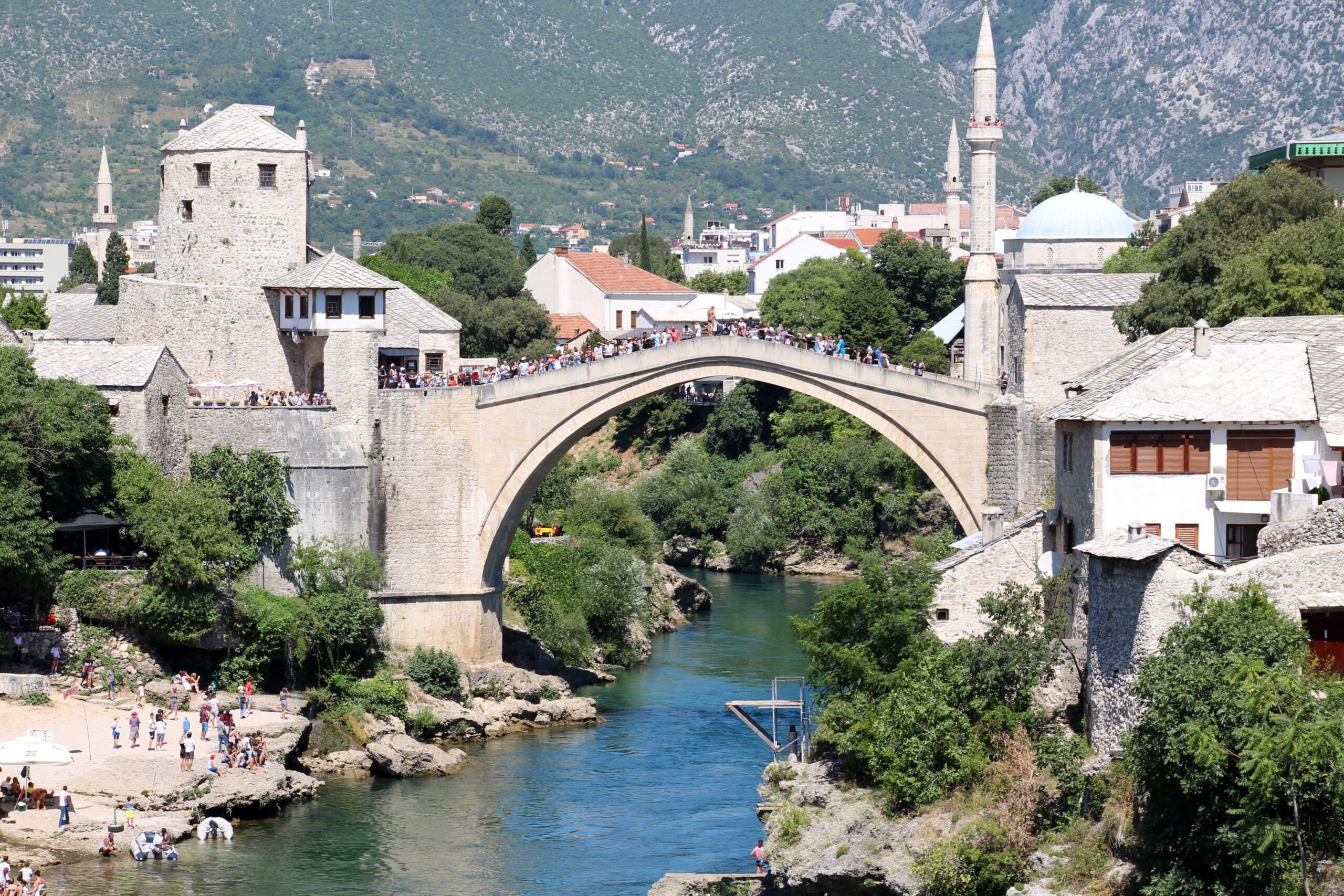
The Stari Most stood for 427 years before Croatian artillery brought it down on November 9, 1993. Built between 1557 and 1566 under Ottoman Sultan Suleiman the Magnificent, it had survived empires and even Nazi tanks in the Second World War. The destruction was filmed and broadcast internationally; commanders responsible were later prosecuted at The Hague.
Rebuilding began in 2001, led by UNESCO, using the same limestone from the same quarry and the same construction techniques as the original. Around 30 percent of the rebuilt bridge’s stone was recovered from the Neretva riverbed. It reopened in July 2004 and became a UNESCO World Heritage Site in 2005. Anyone who lived through the war will tell you it is not the same bridge. The young men who dive from its arch today are performing for tourists, not continuing an unbroken tradition.
Ludendorff Bridge, Remagen, Germany
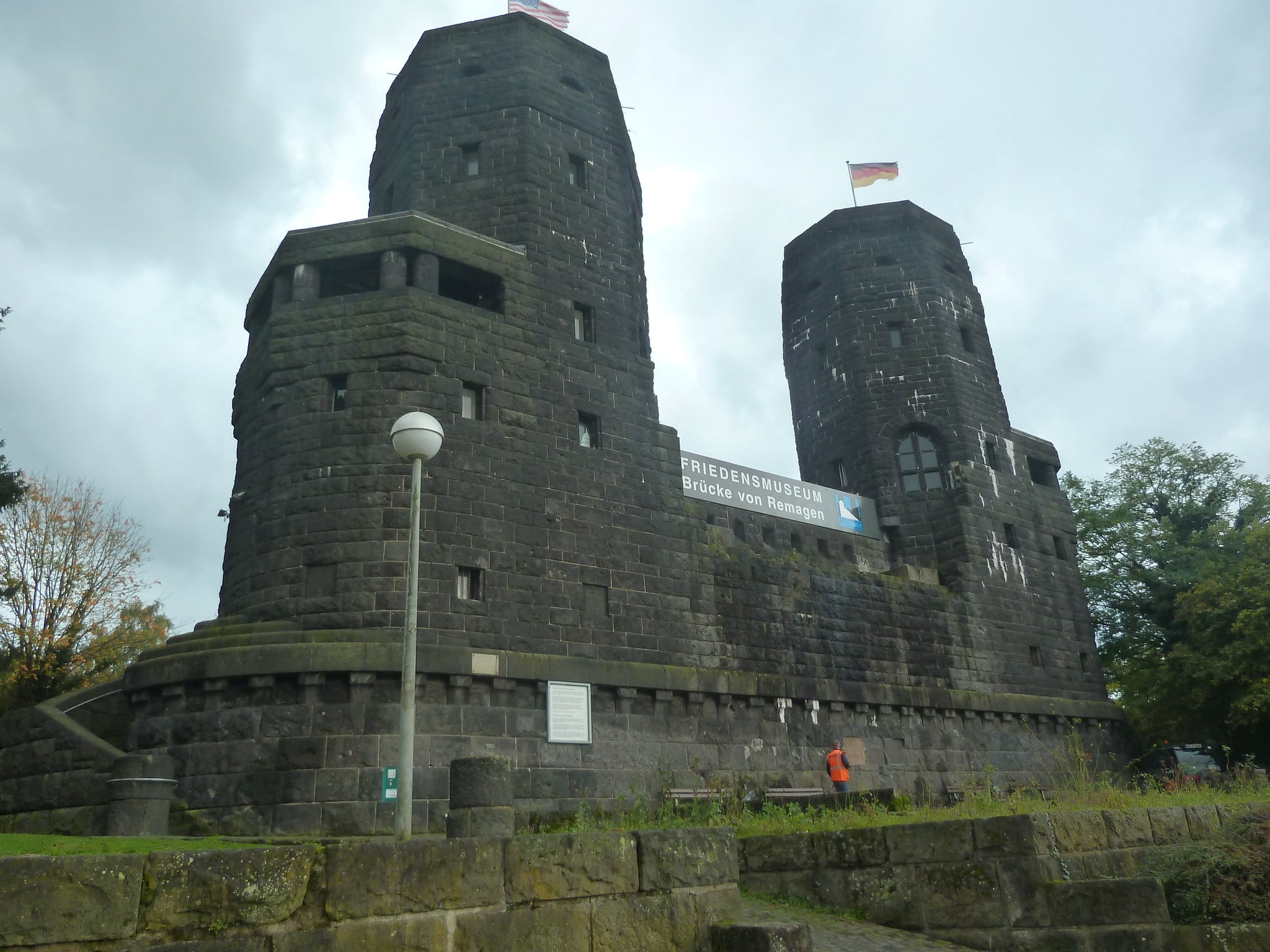
The Americans captured the bridge at Remagen on March 7, 1945 — the only Allied Rhine crossing — after German engineers failed to destroy it in time. Ten days and tens of thousands of troops later, the weakened structure collapsed on its own, killing 28 American engineers working on repairs.
After the war, nobody saw sufficient reason to rebuild a bridge that had already served its most consequential purpose. The stone towers on each bank became a Peace Museum, and for decades there was no crossing for roughly 44 kilometers in either direction. In 2020, local communities began planning a pedestrian and cycling bridge — 75 years after the war, the gap is only now being reconsidered.
Chain Bridge, Budapest, Hungary
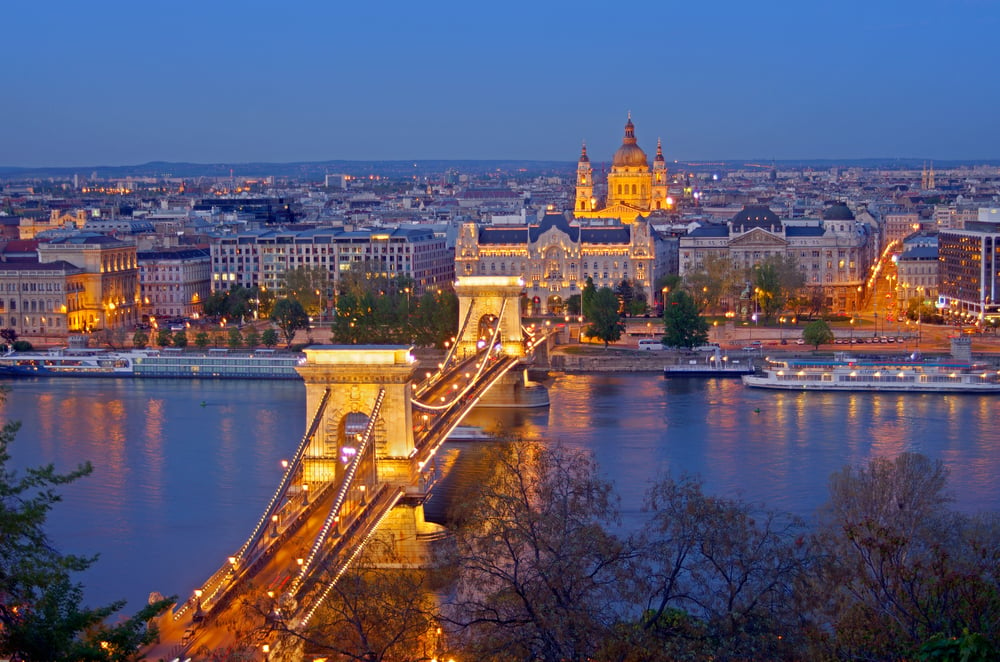
The Chain Bridge was Budapest’s first permanent Danube crossing, completed in 1849 and a symbol of Hungarian national pride — the structure that physically united Buda and Pest. The Germans blew all of Budapest’s bridges in January 1945, but the Chain Bridge’s loss hurt most, not for strategic reasons but for what it meant.
The city rebuilt it stone by stone, reopening it in 1949 on the crossing’s centenary. The rebuilt version is visually identical to what stood before. Residents who remember the war say crossing it feels different now — less a triumph over the Danube than a triumph over the impulse to destroy beautiful things.
The Bridges of Florence, Italy
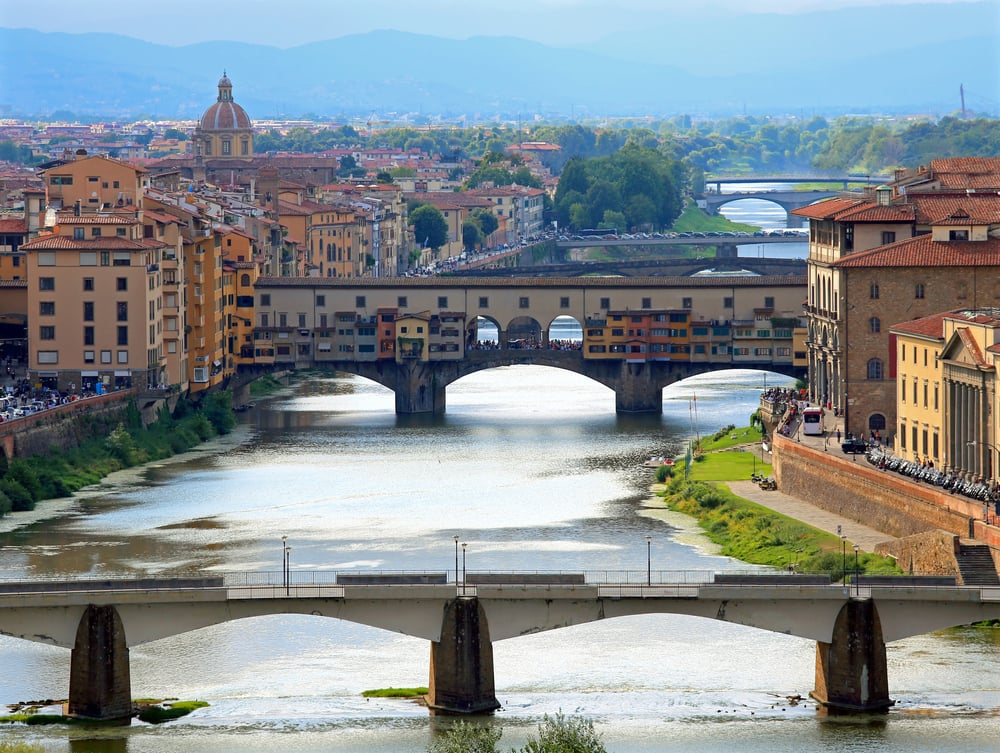
When German forces retreated from Florence on the night of August 3–4, 1944, they destroyed all five bridges spanning the Arno except the Ponte Vecchio, whose destruction an officer reportedly refused to order. The Ponte Santa Trinità — completed in 1569 and considered by many the most beautiful bridge in the world — fell with the others.
Florence rebuilt all of them, but the Ponte Santa Trinità’s reconstruction was extraordinary. Divers dredged the Arno for years, recovering almost all the original stones. The quarry in the Boboli Gardens that Ammannati had used in the 16th century was reopened for the rest. The bridge reopened in 1958. The marble head of the Spring statue, thought lost, was found in the riverbed by a dredger in 1961.
Pegasus Bridge, Normandy, France
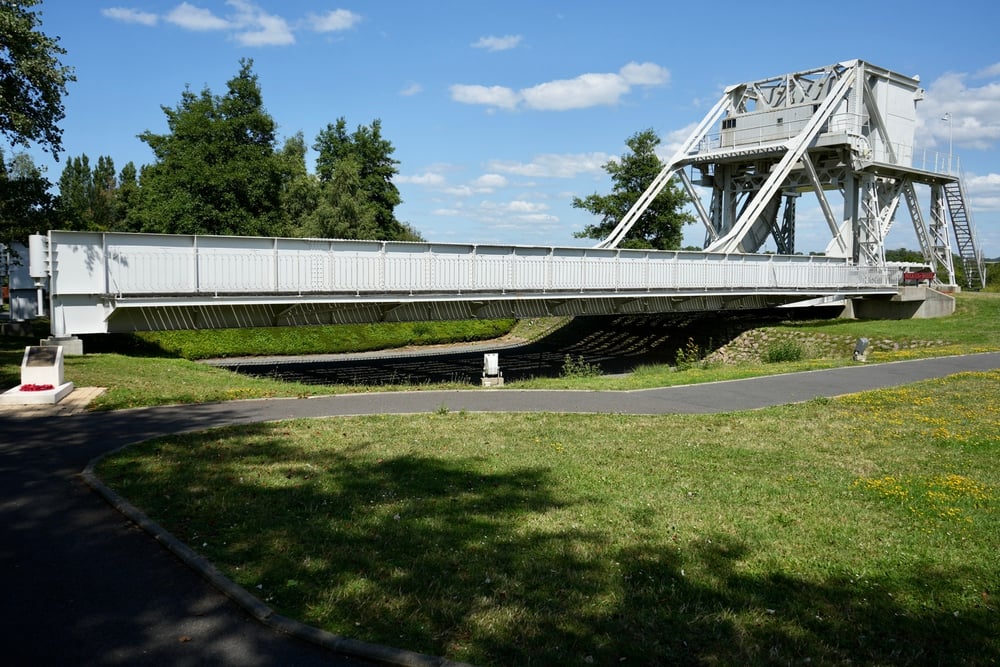
The original Pegasus Bridge was captured intact by British glider troops in the first minutes of D-Day — the first Allied objective secured in occupied France. By the 1990s it needed replacement for safety and traffic reasons.
The original swing span was carefully removed and placed in the nearby Mémorial Pegasus museum. The new bridge serves traffic better. The debate about what was lost when the original was moved rather than kept in place has never fully resolved. Some historical presence cannot be relocated.
Hohenzollern Bridge, Cologne, Germany
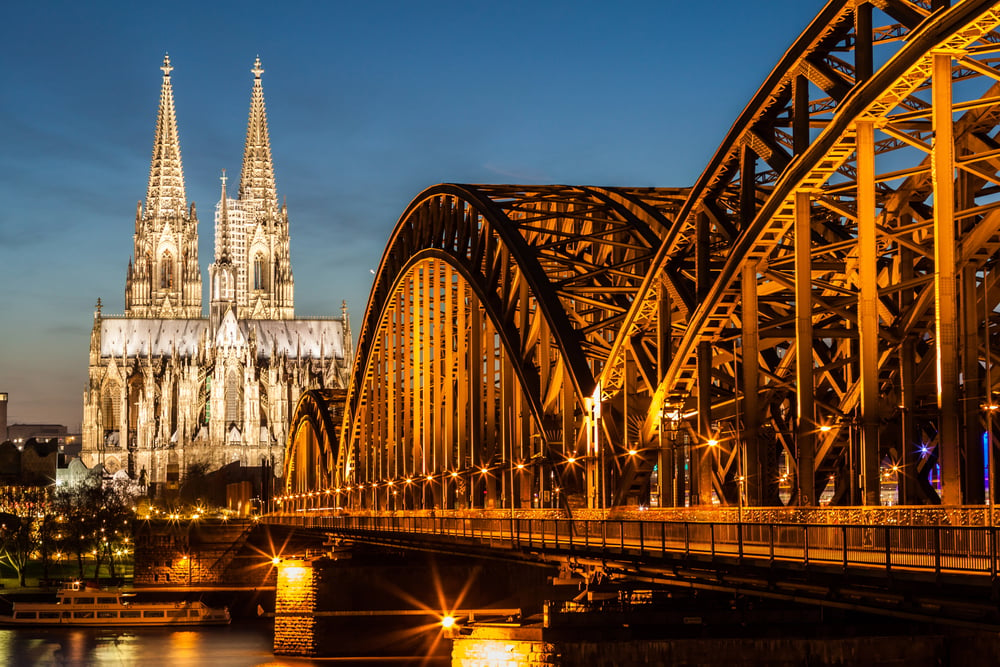
German engineers destroyed the Hohenzollern Bridge in March 1945 to slow the Allied advance, dropping into the Rhine a crossing that had carried both rail and pedestrian traffic since 1911. The replacement, finished in 1959, carries only trains, with pedestrians on narrow sidewalks alongside the tracks.
It is not the same bridge despite sharing the name and location. The new version prioritized function over form — appropriate for a city that learned through suffering the difference between what you want and what you need. The iron railings are now covered with hundreds of thousands of padlocked “love locks,” a modern tradition attached to a structure born of wartime necessity.
Railway Bridge at Arnhem, Netherlands
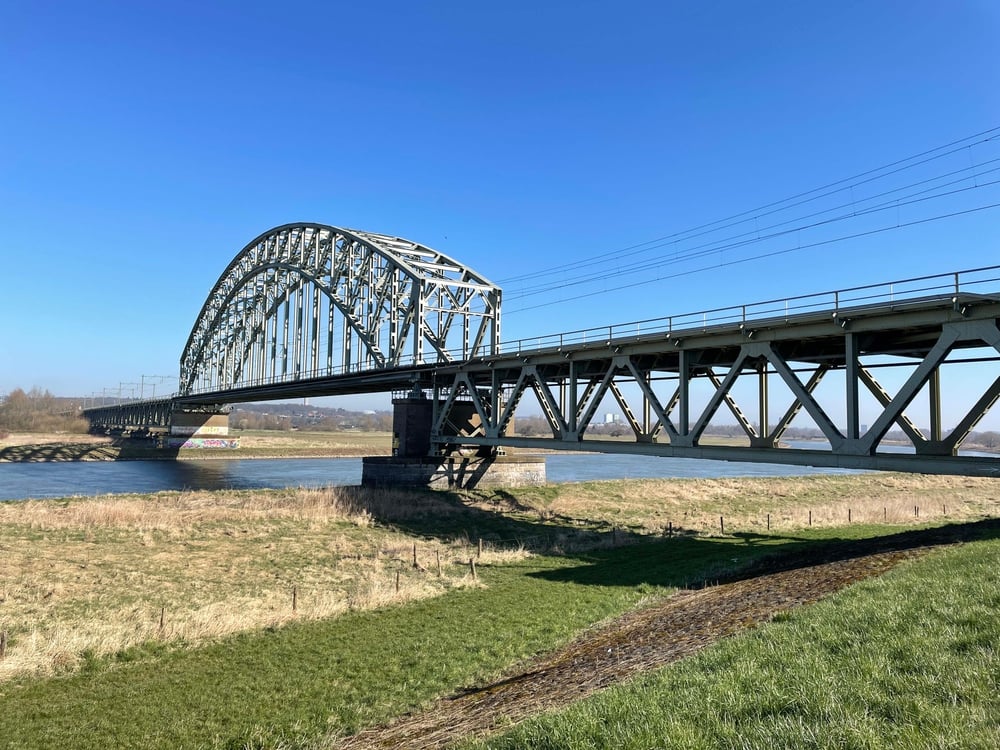
While Operation Market Garden was failing at the famous road bridge, German engineers methodically destroyed the railway span nearby to prevent Allied reinforcements from reaching the encircled British paratroopers. The twisted steel was eventually cleared, but the railway crossing was never rebuilt.
Trains that once crossed there were rerouted. Sometimes the most honest response to destruction is accepting that certain connections, however useful, weren’t essential enough to justify restoring — though whether that calculus was correct has been debated ever since.
Brandenburg Autobahn Bridge, East Germany
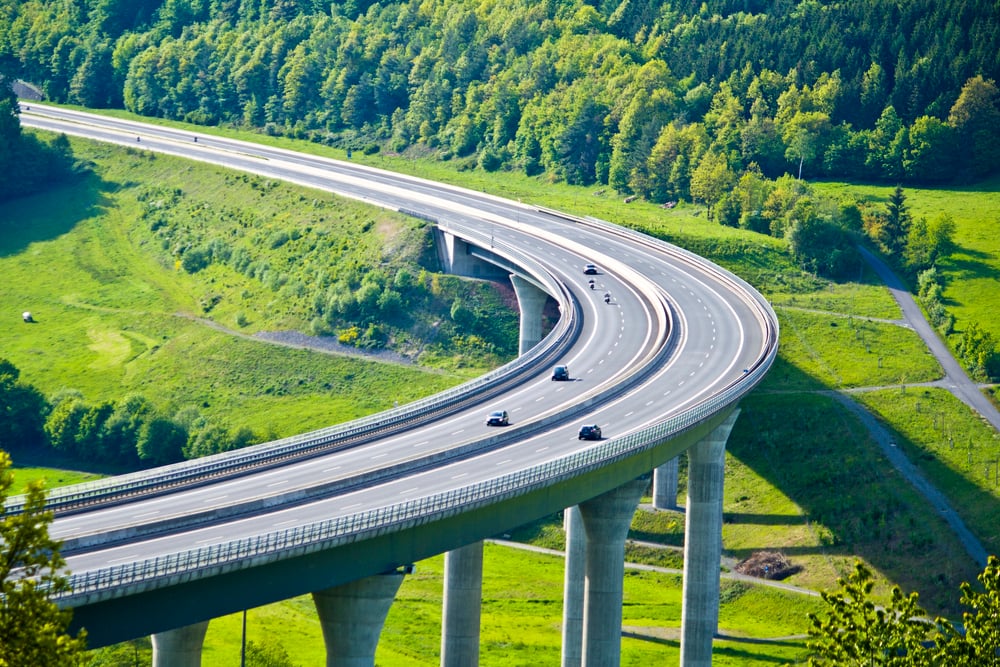
East German engineers demolished this autobahn crossing in 1961 not for military reasons but because it offered an escape route to the West the state couldn’t control. The gap remained for nearly three decades, marked by concrete barriers and watchtowers.
After reunification a replacement was built and traffic resumed in both directions. Modern drivers crossing it rarely know they’re passing over what was once a physical symbol of a state’s determination to keep its own people in. The crossing exists again. The memory of why it was removed travels less well.
Drina Bridge, Višegrad, Bosnia and Herzegovina
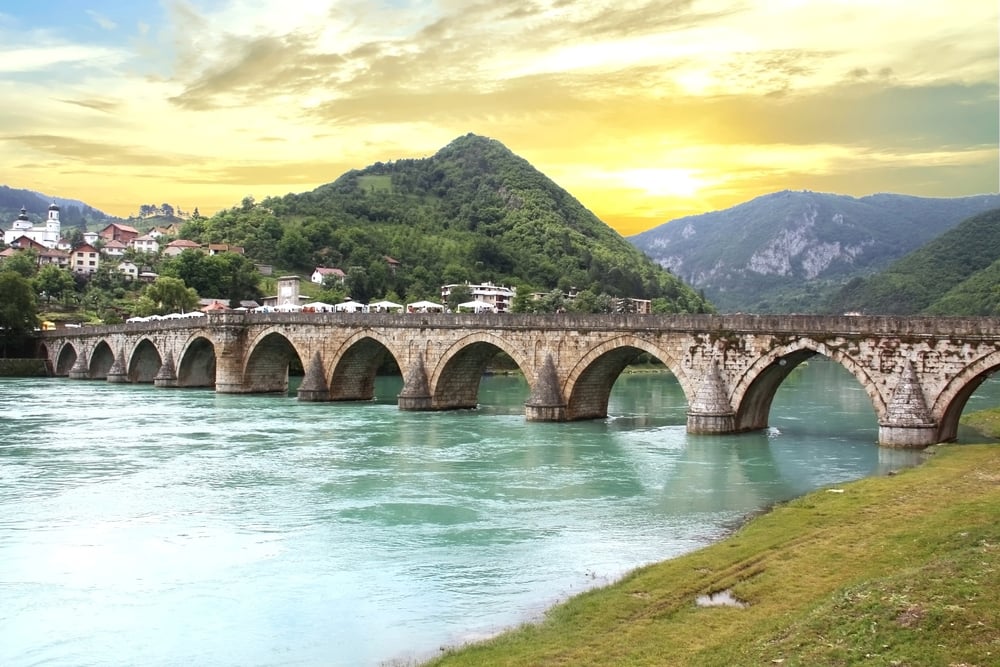
The bridge at Višegrad was built in the 16th century by Mimar Sinan and earned literary immortality in Ivo Andrić’s Nobel Prize-winning novel “The Bridge on the Drina,” which uses it as a symbol of the weight of history — the empires and generations that pass while the stone endures.
Andrić’s themes proved grimly prophetic. During the 1992–95 Bosnian War, the bridge became a site of atrocity, used by Bosnian Serb forces as a place of execution. The physical structure survived but its meaning changed permanently. It stands today, partially repaired, carrying the overlay of terrible recent history onto something already saturated with the past.
Chain Bridges of the Ipoly River, Hungary-Slovakia Border
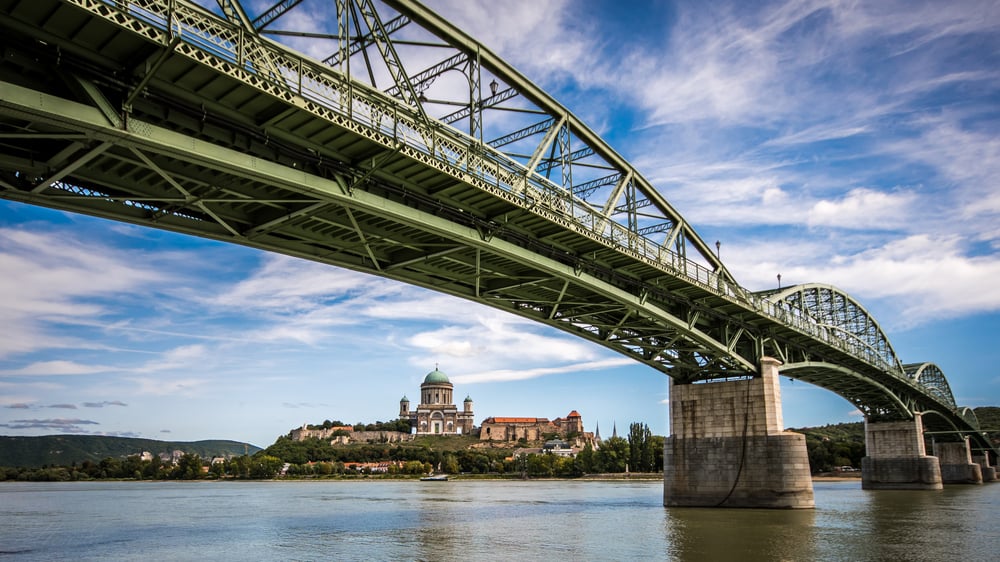
Along the Ipoly River forming the border between Hungary and Slovakia, 47 bridges once crossed the water. Most were destroyed during the Second World War. Communities that had crossed freely for generations were separated by a river that suddenly had no way across it.
Reconstruction was long delayed by Cold War politics that made the border a line of division. Several crossings weren’t rebuilt until both countries had joined the European Union — a reminder that a bridge’s reconstruction often has to wait for the political conditions that make crossing feel safe again.
Tczew Bridge, Poland
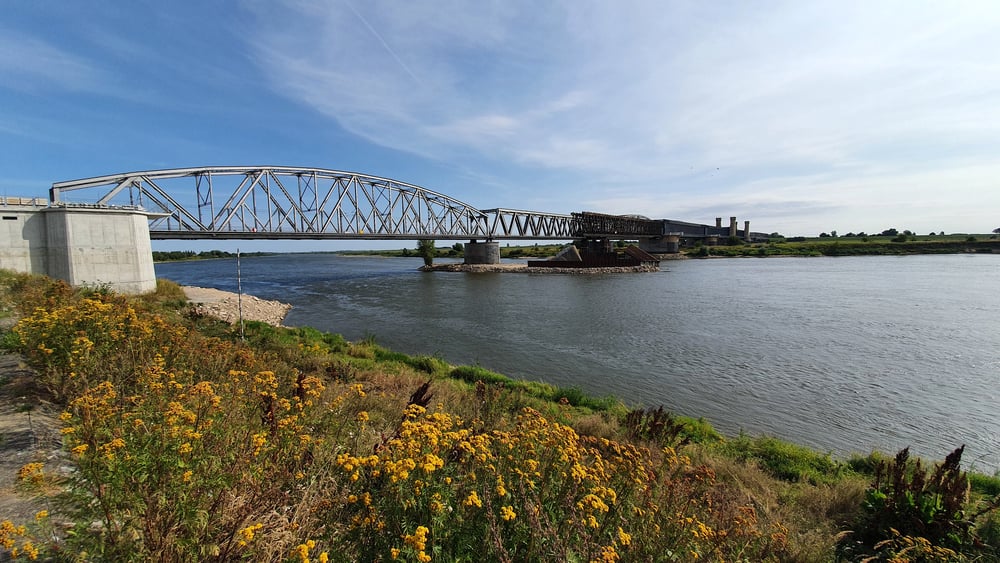
The Germans attempted to blow the Tczew Bridge on September 1, 1939 — the Kriegsmarine’s first combat operation of the war. The Polish blew it themselves later. Over the following years the bridge was destroyed and patched repeatedly until the accumulated damage left it unable to carry modern traffic.
A replacement was built downstream. The ruins of the wartime span remained visible at low water for years, steel rising from the Vistula like evidence of how many times this particular crossing had been fought over. Few bridges have a longer documented history of military targeting.
Sava Bridge, Slavonski Brod, Croatia
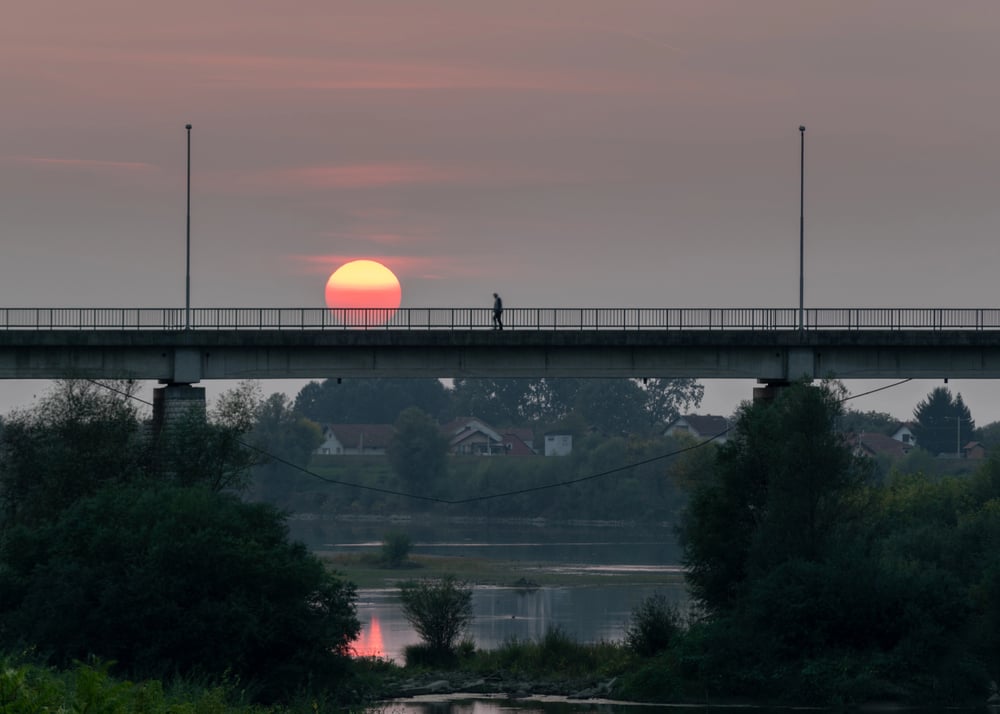
The bridge connecting Croatian Slavonski Brod to Bosnian Bosanski Brod was destroyed in 1991, severing communities that had intermarried for generations. Ferry service resumed after the fighting, but permanent reconstruction plans appeared in government documents periodically — usually around elections — without funding materializing.
The prolonged absence became its own political symbol. Some bridges take longer to rebuild than the conflict that destroyed them lasted.
Narva River Bridges, Estonia-Russia Border
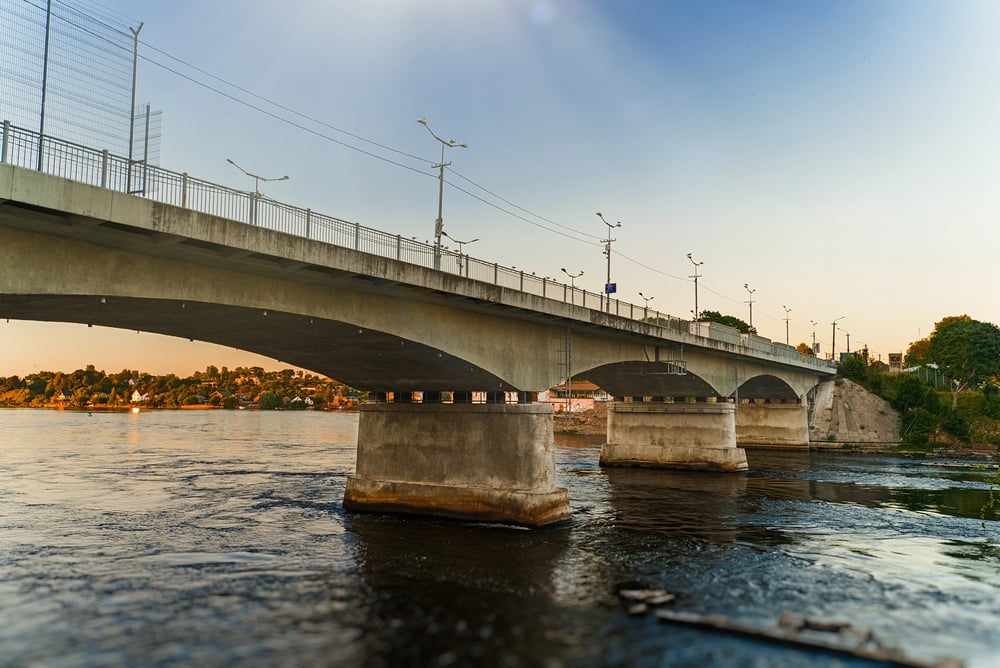
The city of Narva was roughly 90 percent destroyed in the 1944 fighting, and the old Narva River crossings were lost with it. The city rebuilt afterward was rebuilt in Soviet style, with bridges positioned to serve Soviet strategic requirements rather than the historical patterns of movement that had connected communities across this border for centuries.
The Narva crossing today is monitored by border guards and crossed only with documentation. A river that once connected now serves more obviously as a boundary — a function wartime destruction helped cement and Cold War politics made permanent.
The Yugoslav Partisan Bridge Campaigns
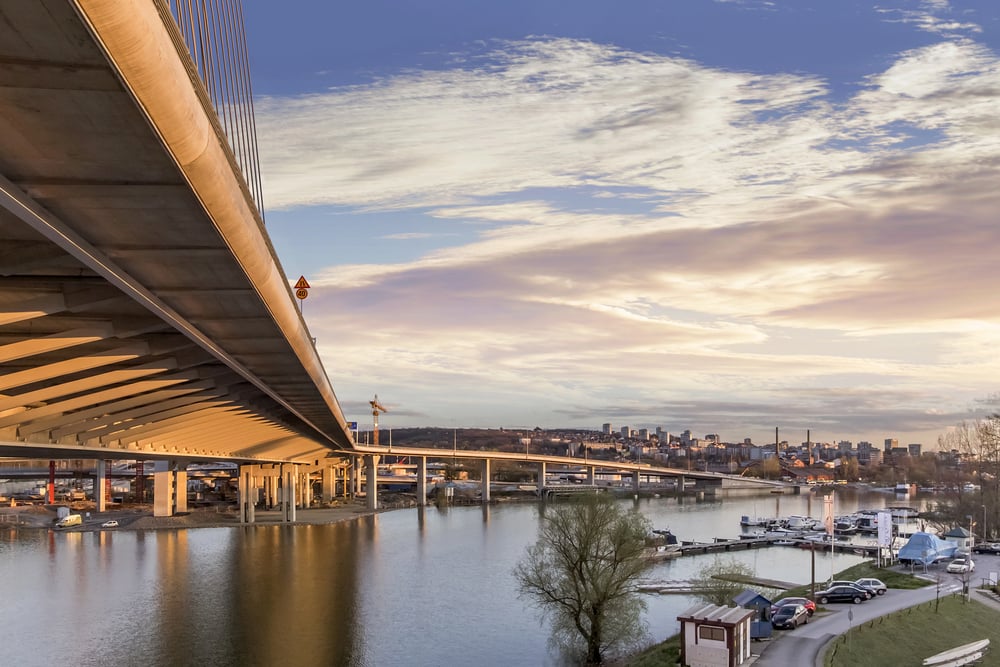
The Yugoslav Partisans became specialists in bridge destruction during the Second World War, understanding that cutting road and rail links across the mountainous Balkan terrain could neutralize German mobility more effectively than conventional combat. Germans responded with determined rebuilding, creating years-long cycles of demolition and reconstruction.
Many of these bridges in Bosnia and Serbia were simply not rebuilt after the war — communities had scattered, roads were rerouted, the economic rationale had disappeared. Concrete piers from wartime bridges still rise from rural Bosnian rivers: local landmarks without names, evidence of infrastructure destroyed, rebuilt, destroyed again, and eventually abandoned when peace didn’t bring the conditions that would justify another attempt.
Pont d’Avignon, Avignon, France
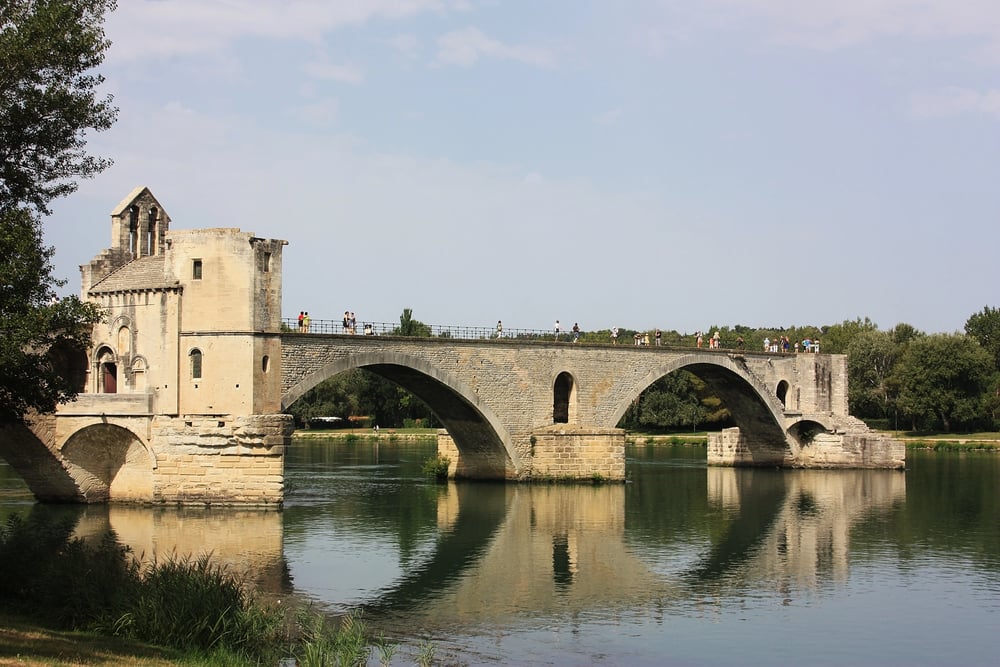
The Pont Saint-Bénézet — the famous Pont d’Avignon of the French song — is a medieval bridge deliberately left incomplete over centuries of conflict, flooding, and political calculation. Originally built in the 12th century, it was repeatedly damaged and rebuilt until the 17th century, when the arches destroyed by flooding and war were simply never replaced.
It became a UNESCO World Heritage Site in its ruined state — one of the few cases where the gap itself is the monument. The decision to stop rebuilding involved questions of jurisdiction and taxation between papal and French territories that neither side found convenient to resolve. The half-bridge that ends in mid-river is both failure and, now, one of France’s most visited sites.
Arslanagić Bridge, Bosnia and Herzegovina
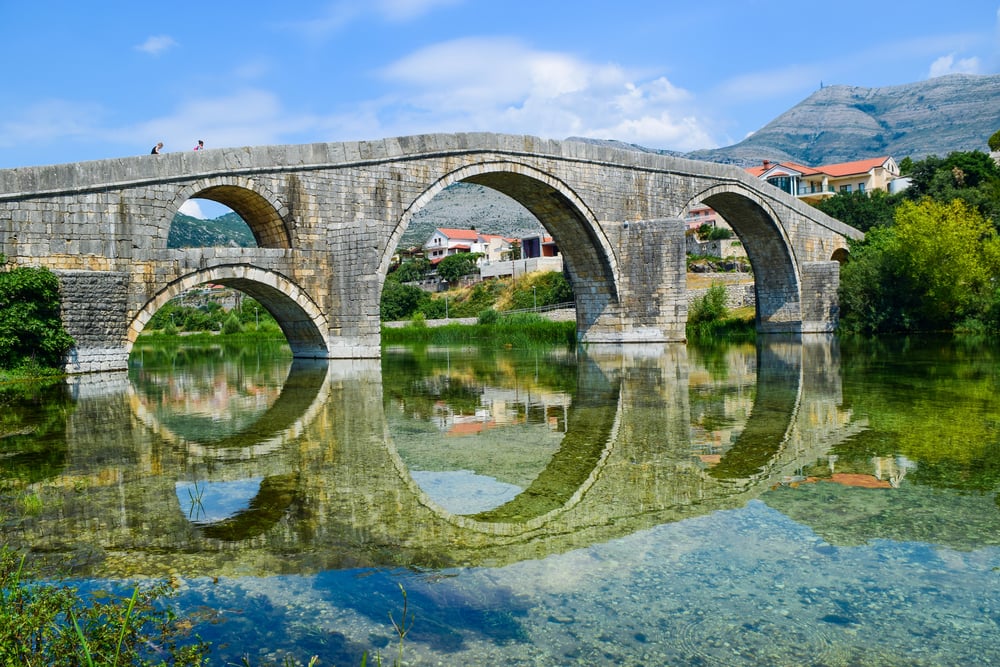
The Arslanagić Bridge presents a different kind of survival story. This 16th-century Ottoman bridge over the Trebišnjica River wasn’t destroyed by combat but threatened by the post-war construction of a hydroelectric dam that would have submerged it.
In 1965 it was dismantled stone by stone and reassembled 2 kilometers from its original site. It survived — technically. Whether a bridge moved stone by stone to a different location is the same bridge is a question that still bothers historians. The reservoir that required its relocation was itself drained during the 1990s war. The bridge stands today in its transplanted location, a survivor of both flooding and warfare, though not in the form or place it originally occupied.
The Rhine Bridges, 1945
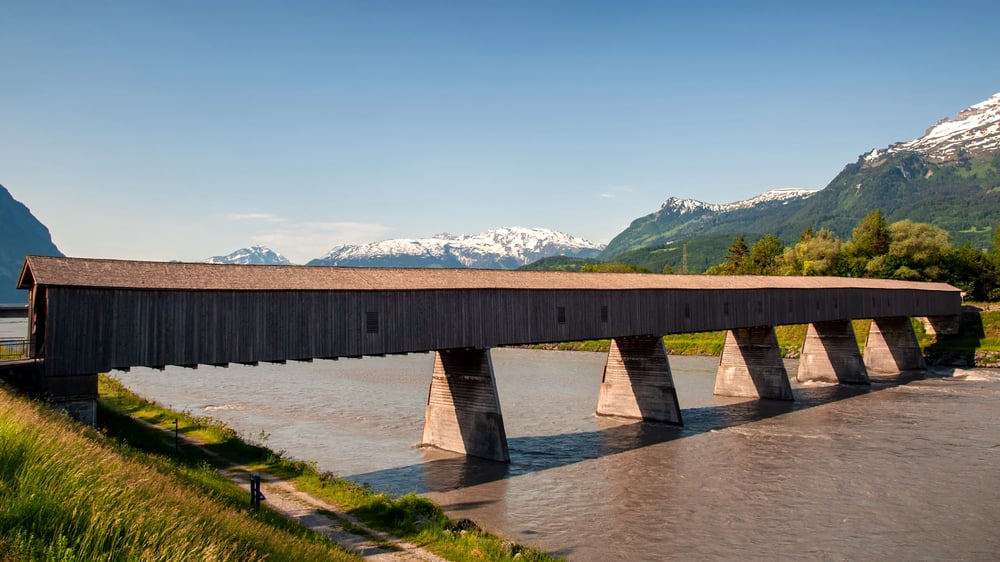
German forces destroyed virtually every Rhine crossing as they retreated in late 1944 and early 1945. By the war’s end, one of Europe’s great commercial arteries had become an impassable barrier along most of its length. The reconstruction over the following decade was enormous, and most major crossings were rebuilt within fifteen years.
But not all. Secondary railway bridges, pedestrian spans, and crossings whose communities had changed or routes been superseded were simply not replaced. The Rhine’s current bridge pattern reflects not the pre-war network but post-war decisions about which connections were worth restoring — made during the urgent business of rebuilding a shattered economy, not through any deliberate historical reckoning.
What the Gap Leaves Behind

Every destroyed bridge that stays destroyed eventually becomes something else: a historical marker, a political fact, a habit of going the long way around that outlasts anyone who remembers why the direct route no longer exists. Communities adapt to the absence faster than governments acknowledge it. The decisions made in the aftermath — rebuild faithfully, rebuild practically, rebuild later, or never rebuild at all — turn out to be among the most revealing choices a society makes about what it values. A bridge rebuilt in the same stone by the same techniques is an act of memory.
A bridge rebuilt in concrete a hundred meters downstream is an act of pragmatism. A bridge not rebuilt at all is a statement, even if nobody meant it that way. The gap says something, even after everyone who remembers the original is gone.
More from Go2Tutors!

- The Romanov Crown Jewels and Their Tragic Fate
- 13 Historical Mysteries That Science Still Can’t Solve
- Famous Hoaxes That Fooled the World for Years
- 15 Child Stars with Tragic Adult Lives
- 16 Famous Jewelry Pieces in History
Like Go2Tutors’s content? Follow us on MSN.



