The Real Reason Certain Colors Were Reserved Exclusively for Royalty
There’s something quietly astonishing about the idea that a color — just a wavelength of light, just a pigment on cloth — could get someone executed. And yet, for most of human history, wearing the wrong shade was genuinely dangerous.
Not rude. Not presumptuous. Dangerous. The colors that kings and emperors claimed for themselves weren’t arbitrary aesthetic preferences; they were declarations of power, backed by economics, theology, and the very real threat of punishment.
Understanding why certain hues became untouchable tells you something uncomfortable about how power has always worked — and how much human beings have always understood the language of spectacle.
Tyrian Purple

The most coveted color in the ancient world didn’t come from a plant or a mineral. It came from a sea snail — specifically, the Murex species found along the Phoenician coast — and extracting it was brutal, smelly, labor-intensive work that required thousands of snails to produce a single gram of dye.
So the color was expensive not because someone decided it should be; it was expensive because the economics of producing it made exclusivity inevitable, and power simply moved in to claim what scarcity had already made rare.
The Roman Connection
Roman emperors didn’t just wear purple — they weaponized it. The toga picta, that deep purple garment reserved for triumphing generals and later for emperors alone, became such a loaded symbol that simply possessing unauthorized purple fabric was treated as a treasonous act under certain reigns.
To be fair, when a color becomes synonymous with the state itself, protecting it stops being vanity and starts looking (to the people enforcing it) like constitutional logic.
Imperial Yellow in China

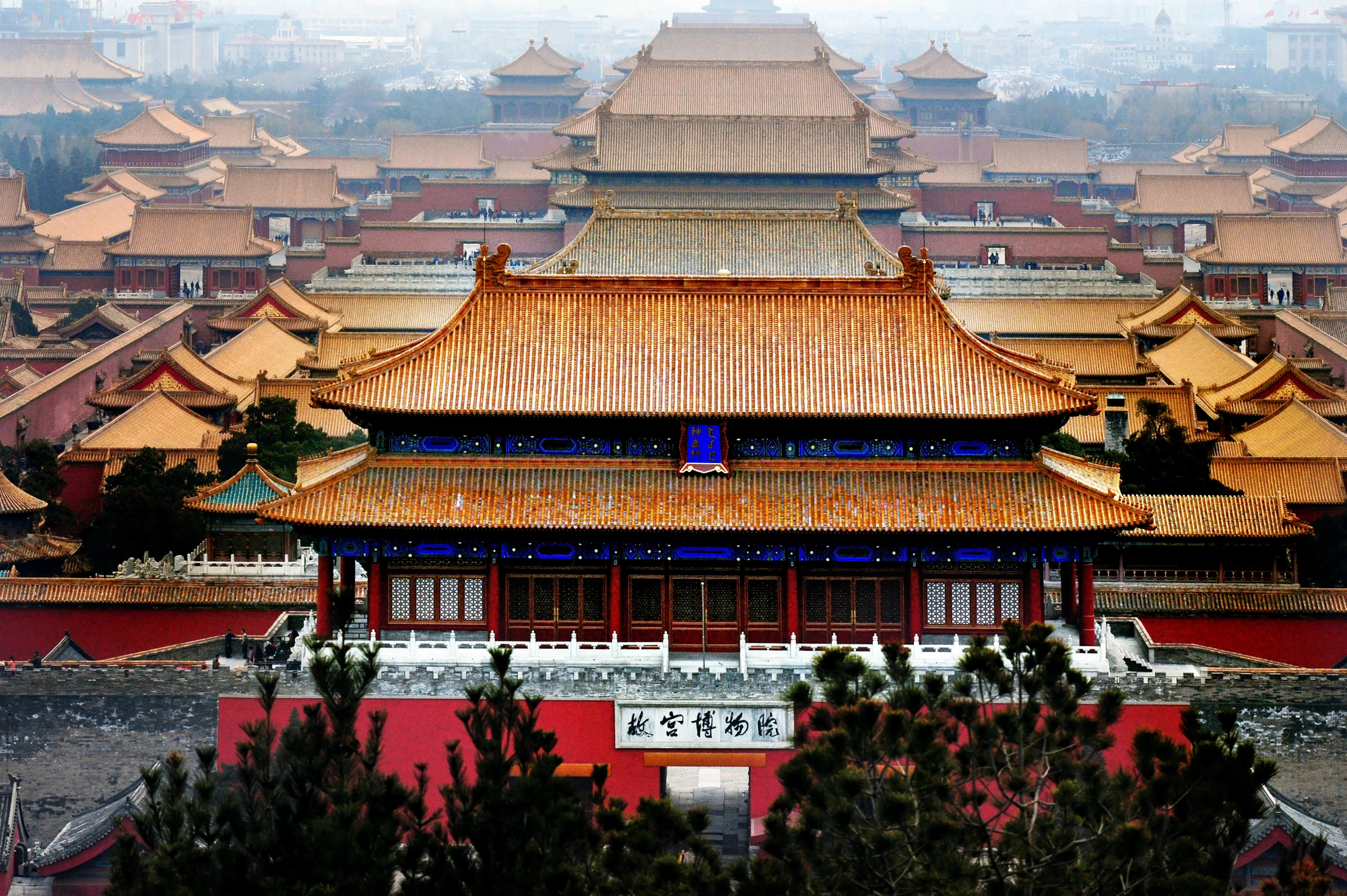
In imperial China, the specific shade known as “bright yellow” — a warm, saturated gold-yellow — was the exclusive property of the emperor, full stop. Commoners caught wearing it faced punishment, and the restriction wasn’t just legal but cosmological: the emperor was considered the Son of Heaven, and his color was an extension of that divine mandate.
The color didn’t represent power so much as it was power, woven into fabric and worn as proof.
The Dye Trade as Economic Engine

Controlling a color meant controlling the trade that produced it, which meant controlling enormous wealth — and the rulers who monopolized certain dyes understood this with uncomfortable clarity. Tyrian purple ran through Phoenicia’s economy the way oil runs through certain modern states: everything orbited around it, every alliance touched it, and losing control of it would have been catastrophic in ways that went far beyond fashion.
Power and pigment were, for centuries, the same conversation.
Sumptuary Laws

Sumptuary laws were the legal mechanism that turned color preference into criminal code, and they appeared in nearly every major civilization — Rome, medieval England, feudal Japan, Renaissance Florence. These laws regulated what fabrics, colors, and trims different social classes were permitted to wear, and violations carried real consequences: fines, confiscation, public shaming, worse.
The laws weren’t really about aesthetics; they were about making social hierarchy visible at a glance, so that anyone who looked at you knew exactly where you stood before you opened your mouth.
Cochineal Red

When Spanish conquistadors arrived in the Americas, they encountered a red so vivid it looked almost supernatural — produced from the dried bodies of the cochineal insect, which parasitizes cacti across Mexico and Central America. The Spanish Crown moved quickly to control its production and export, and for roughly two centuries, the source of the dye was a closely guarded secret, with Spain maintaining a near-monopoly that made cochineal red one of the most valuable commodities traded between the Old and New Worlds.
A color built on a bug became a pillar of colonial economics.
Lapis Lazuli Blue
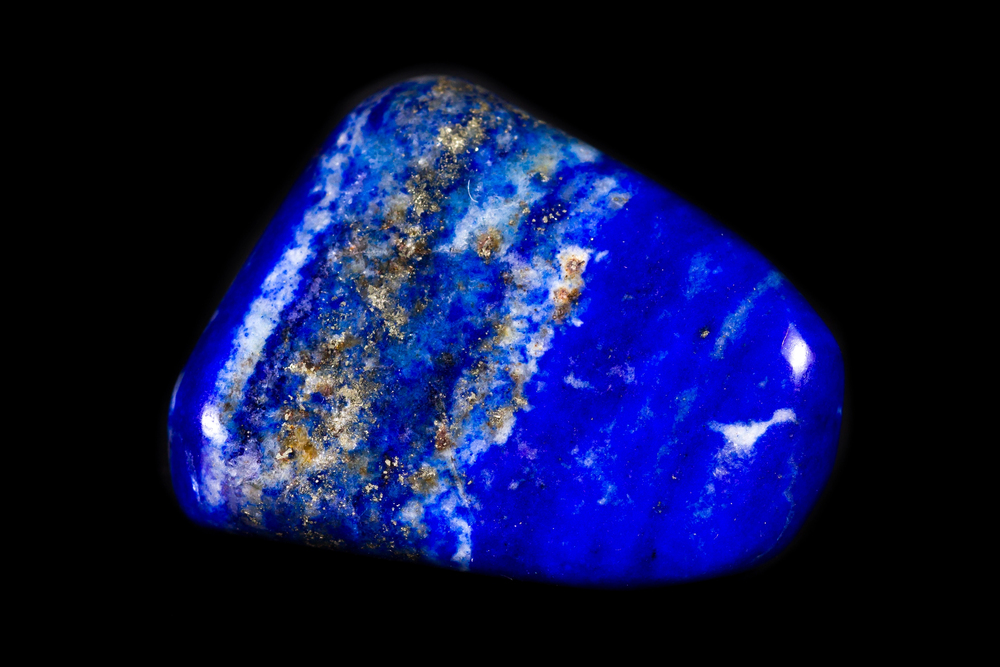
Ultramarine blue — the kind ground from lapis lazuli stone mined almost exclusively in what is now Afghanistan — was, at various points in European history, more expensive by weight than gold. Painters in Renaissance Europe used it with deliberate restraint, saving it for the robes of the Virgin Mary in religious commissions, and its rarity meant that using it was itself a statement about who was paying for the work.
Blue didn’t belong to royalty the way purple did, but it carried a gravity that came from the same place: the cost of the thing.
Japanese Restrictions on Shades

Feudal Japan developed an intricate system of color hierarchy that went well beyond simply reserving one hue for the shogun. Different ranks within the samurai class were permitted specific shades, specific combinations, specific seasonal colors — and the distinctions were fine enough that an insider could read a person’s entire social position from their clothing palette before exchanging a word.
The control wasn’t blunt; it was almost architectural, a whole grammar of status written in dye.
Sacred and Secular Power Intertwined

In medieval Europe, the Catholic Church claimed its own color hierarchies that overlapped with — and sometimes competed with — those of secular rulers. Cardinals wore red (symbolizing blood and martyrdom), bishops wore purple, and the Pope claimed white as his exclusive domain within certain liturgical contexts.
The result was a landscape where the colors of heaven and the colors of earthly power were deliberately, carefully separated — and where getting the distinction wrong had implications that were simultaneously political and theological.
The Rarity Principle
There is a pattern underneath all of these specific histories, and it’s not subtle: scarcity creates value, value attracts power, and power legislates exclusivity once it arrives. The original reason a color became royal was almost never a king sitting down and deciding he liked a particular hue — it was that the hue was so difficult or expensive to produce that only the very wealthiest could access it, and the monarchy then formalized what economics had already established.
The law caught up to the market, not the other way around.
Purple’s Survival Into the 19th Century

Even as trade expanded and some dyes became marginally more accessible, purple retained its royal associations through sheer cultural inertia long after the Tyrian monopoly had collapsed. European monarchs continued wearing it not because they had to — the legal teeth behind sumptuary laws were weakening — but because the symbolism had embedded itself so deeply into the visual language of authority that abandoning it would have felt like abdication.
Some symbols are stubborn long after the necessity that created them has dissolved.
The Perkin Moment

In 1856, an eighteen-year-old chemistry student named William Henry Perkin accidentally synthesized the first synthetic dye — a pale purple he called mauveine, now known as mauve — while attempting to synthesize quinine. The discovery didn’t just create a new color option; it fundamentally destabilized the economics of the dye trade, eventually making purple available to anyone who could afford a yard of fabric.
What had been the exclusive property of emperors became a fashionable choice for the Victorian middle class within a generation.
Gold as a Color, Not Just a Metal

Gold leaf and gold thread were used throughout history as literal color statements — stitched into royal garments not just for decoration but as a direct display of treasury access. Byzantine emperors wore garments embroidered so heavily with gold that the fabric beneath was almost irrelevant; the clothing was wealth made visible.
You weren’t just seeing a rich person’s taste; you were looking at a walking audit of state finances.
The Psychology of Visual Dominance

Human beings are wired to read visual hierarchy — status signals embedded in appearance trigger social responses that predate language by a considerable margin. Rulers who claimed specific colors weren’t just being vain; they were — consciously or not — exploiting a deeply embedded cognitive response that made the visual assertion of dominance feel natural, even correct, to the people observing it.
Black’s Complicated History

Black occupied a strange position in the color hierarchy — sometimes associated with mourning and therefore avoided by the powerful, and at other times claimed as a mark of austere authority by Spanish Habsburg monarchs who wore it deliberately as a statement of gravity and seriousness. Philip II of Spain’s habitual black was a political choice as calculated as any purple robe: it said that his power needed no ornament.
The absence of color, turns out, can say as much as any dye.
Vermillion in East Asia

In China and Japan, vermillion — a vivid red-orange produced from cinnabar — carried deep ritual significance that made it more than a status marker; it was protective, sacred, and tied to cosmological ideas about life force and good fortune. Imperial palaces were painted in it, official seals were stamped with it, and its use in certain contexts was strictly controlled.
Color, here, wasn’t just about looking powerful — it was about occupying a position in a sacred order that color made visible.
The Economics of Enforcement

Sumptuary laws required actual enforcement — inspectors, penalties, courts willing to prosecute — and the historical record shows that enforcement was inconsistent at best, suggesting that even in periods of strict legal restriction, the wealthy found ways around the rules when they wanted to. What the laws really did was create a social norm strong enough that most people self-policed: not because the punishment was guaranteed, but because wearing the wrong color meant announcing yourself as a social threat.
The most effective enforcement was always the community’s own gaze.
Color and Colonial Extraction

The global trade in dyes was inseparable from the colonial projects that made it possible — cochineal extracted from Mexico, indigo harvested under brutal conditions across Bengal and the American South, Tyrian purple as a product of Phoenician maritime power. The colors that signaled European aristocratic refinement were almost always produced by labor that was coerced, poorly compensated, or violently exploited.
The beauty of the finished garment and the ugliness of its production were kept in separate conversations, deliberately.
Indigo and Its Reach

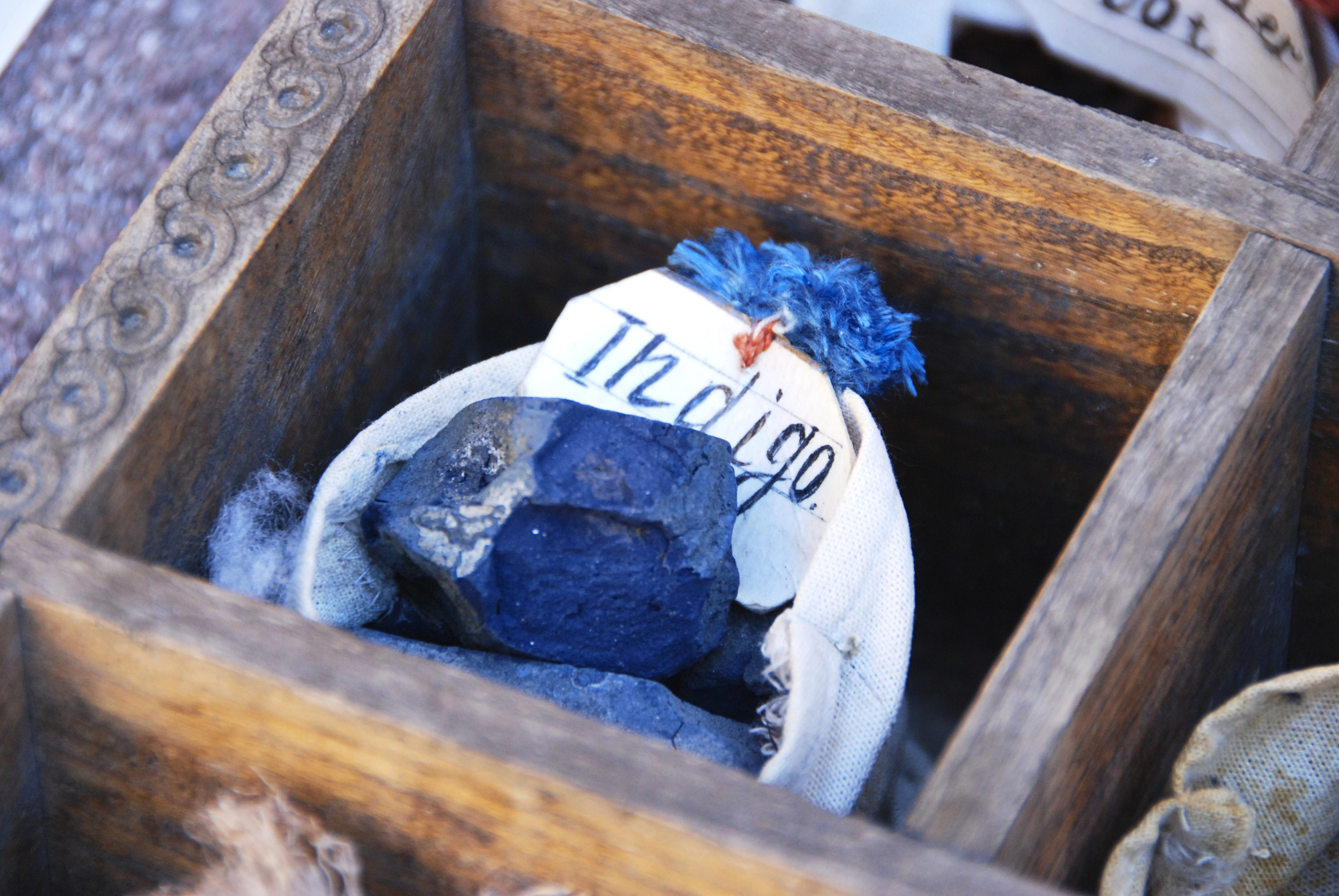
Indigo blue became one of the most traded commodities in the early modern world — carried across oceans, fought over between colonial powers, and produced under conditions that drove revolts in Bengal as late as 1859. The deep, stable blue it produced was valued in textiles from Europe to Japan, and the scramble to control its supply shaped the economies of entire regions.
A color that today’s consumers encounter in denim without a second thought was once worth fighting wars over.
When the Rules Finally Broke
The collapse of sumptuary law in Europe wasn’t dramatic — it happened gradually as merchant wealth grew too large to be politely contained within the old frameworks, and as enforcement became both impractical and politically awkward when the people breaking the laws were also the people financing the governments. By the time synthetic dyes arrived in the mid-19th century, the legal architecture was already crumbling; Perkin’s mauve was just the final verdict.
The Enduring Symbolism

Purple still means royalty. Gold still means wealth. Red still carries authority.
None of these associations disappeared when the laws enforcing them were repealed — they just migrated from the legal realm into the cultural one, where they operate through habit and association rather than enforcement. Marketing departments, film costume designers, and political strategists all know this and use it fluently, which is perhaps the most honest measure of how durable those original power codes really were.
What a Color Can Hold

It’s easy to look back at sumptuary laws and find them absurd — the idea that a color could be contraband, that a shade of fabric could mark you as a criminal. But color was never really the point.
Color was the surface; underneath it was the persistent human project of making hierarchy legible, of turning social order into something you could see across a crowded room before anyone had spoken. The colors changed.
The project didn’t.
The Thread That Runs Through All of It
What’s striking, when you pull all of these histories together, is how consistent the underlying logic is across civilizations that never communicated with each other. Rome and China and feudal Japan and medieval Europe all arrived at roughly the same conclusion: that visual markers of status need to be protected or they lose their power, and that protecting them requires force.
Color, in this reading, is just the most elegant form of propaganda — quiet, immediate, impossible to misread, and requiring no translation whatsoever.
When Pigment Becomes a Political Act
The real reason certain colors were reserved for royalty was never purely about aesthetics. It was about control — over perception, over economics, over the story that a society told about itself every time someone stepped into public view.
And the remarkable thing isn’t that those controls eventually failed; it’s how long they held, and how thoroughly the associations they created still shape the way you respond to color today, without your even noticing.
More from Go2Tutors!

- The Romanov Crown Jewels and Their Tragic Fate
- 13 Historical Mysteries That Science Still Can’t Solve
- Famous Hoaxes That Fooled the World for Years
- 15 Child Stars with Tragic Adult Lives
- 16 Famous Jewelry Pieces in History
Like Go2Tutors’s content? Follow us on MSN.