How a Single Photograph Shifted Public Opinion on an Entire War
There’s a particular kind of photograph that doesn’t just document history — it makes it. Not the polished, composed images commissioned by governments or run through the careful hands of military censors, but the accidental ones, the ones taken in the wrong place at the wrong moment by someone who happened to be standing close enough to feel the heat.
These photographs carry something official accounts never can: the specific, undeniable weight of a single human second. And once a photograph like that lands in front of enough people, the story a war’s architects have been telling starts to crack at the edges.
The Photograph That Changed Everything
Eddie Adams took the photograph on February 1, 1968, on a Saigon street during the Tet Offensive. It shows South Vietnamese National Police Chief Nguyen Ngoc Loan pressing a pistol to the temple of a Viet Cong prisoner named Nguyen Van Lem — and then it shows the instant the trigger is pulled.
One frame. Less than a fraction of a second captured on film.
The Context the Image Couldn’t Carry
The photograph is brutal in its simplicity, but simplicity strips context, and context — as it happens — is where wars live and breathe. Loan was executing a man who had reportedly killed the families of South Vietnamese officers that same morning, during a coordinated massacre across dozens of cities.
None of that appears in the frame.
What the American Public Saw in 1968
By February 1968, the Johnson administration had spent years insisting the war was going well — “the light at the end of the tunnel” was practically a government slogan. Then the Tet Offensive erupted across South Vietnam in coordinated attacks that hit more than 100 cities, and suddenly, the official story had a serious credibility problem.
The Adams photograph arrived into that exact crack in public trust.
The Speed of the Image’s Spread
The photograph moved fast — faster than any correction, clarification, or military briefing could follow. It ran on the front pages of newspapers across the United States within 24 hours of being taken, and wire services distributed it internationally before most American officials had even seen it.
The image was already inside people’s homes before anyone in Washington had drafted a response.
The Face in the Frame
There’s something about a face in a photograph that statistics cannot replicate, no matter how staggering those statistics are. The prisoner’s face — that particular wince, the body caught mid-collapse — made the war visible in a way that casualty figures published in newspapers had somehow never managed.
And a face, once seen, is stubborn.
What the Pulitzer Prize Did to the Image’s Reach
Winning the 1969 Pulitzer Prize for Spot News Photography didn’t just honor the image — it institutionalized it. Awards committees elevated the photograph from a single published moment into an artifact of historical record, which meant editors and educators had permission, even obligation, to keep showing it.
So it accumulated reach that a single newspaper run could never have sustained on its own.
Eddie Adams’ Own Complicated Relationship with the Shot
Adams spent years regretting what his most famous photograph had done to Loan’s reputation — which is, to be fair, not something most photographers have to reckon with at scale. He publicly defended Loan multiple times, wrote about the photograph’s power to deceive through omission, and attended Loan’s funeral in 1998.
The man who made the image became one of its most persistent critics.
How Television Amplified What the Still Image Started

The photograph arrived at a moment when television news was becoming the primary way Americans processed the war, and the two media fed each other in ways that editorial teams hadn’t fully anticipated. Walter Cronkite’s February 27 broadcast — where he declared the war a stalemate — came weeks after the Adams image had already softened the ground.
Television confirmed what the photograph had planted.
The Antiwar Movement’s Use of the Image
Antiwar organizations printed the photograph on flyers, projected it at rallies, and used it in pamphlets distributed on college campuses across the country throughout 1968 and into the early 1970s. It became something close to a recruiting tool — not because organizers had orchestrated that use, but because the image was simply available and devastatingly effective at communicating what antiwar groups were trying to say.
Images, once released, choose their own politics.
Lyndon Johnson’s Credibility Gap
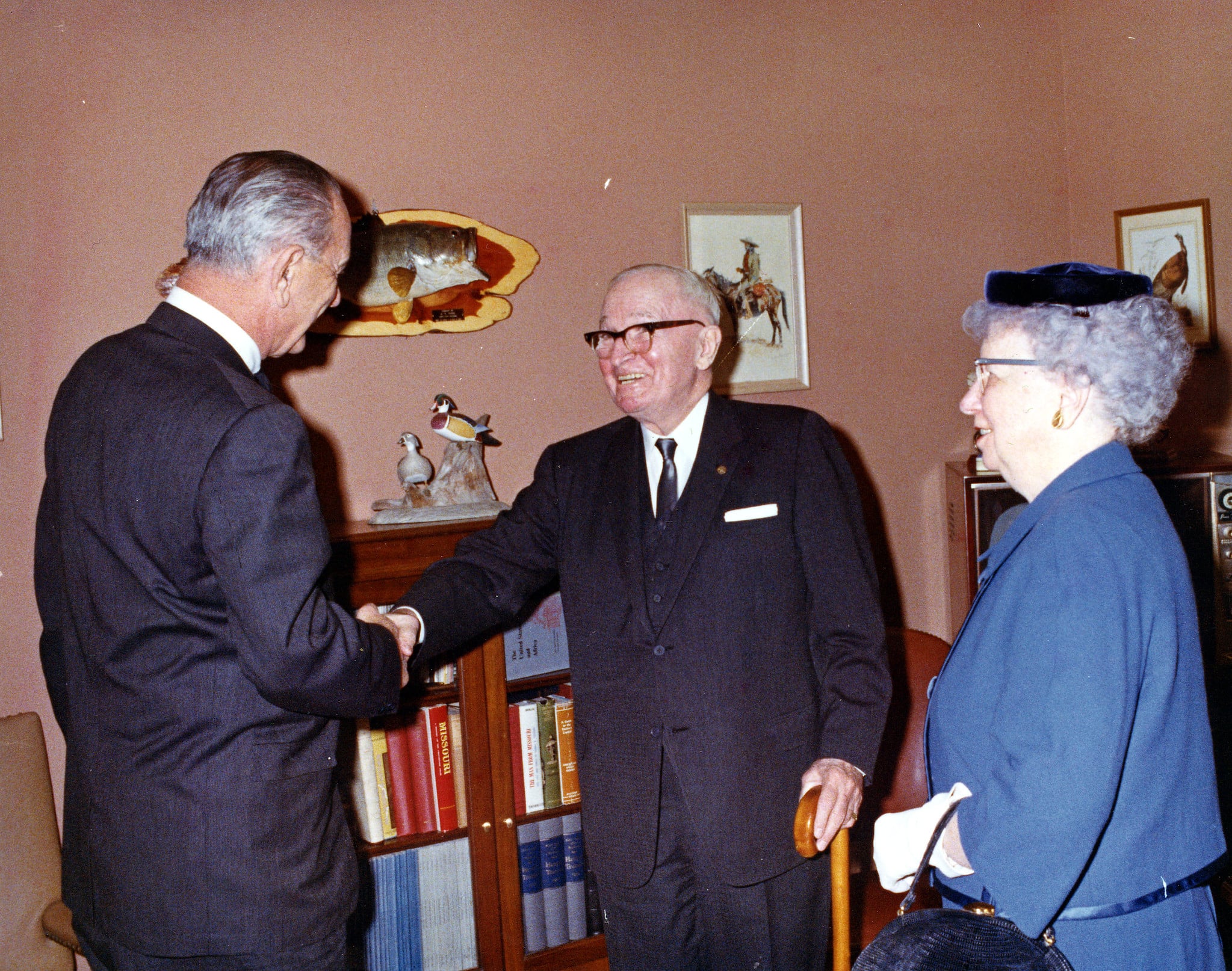
The term “credibility gap” — describing the distance between what the administration claimed about the war and what journalists were actually reporting — was already in circulation before the Adams photograph existed. But the image made the gap visible in a single frame, something that editorials and investigative pieces had struggled to do with thousands of words.
Johnson announced he would not seek re-election on March 31, 1968, less than two months after the photograph appeared.
What the Image Did to Support for the South Vietnamese Government
American public support for South Vietnam’s government had never been particularly robust, built more on Cold War policy logic than genuine affinity, and a photograph showing a South Vietnamese official executing a prisoner on a public street did nothing to reinforce whatever goodwill existed. The image didn’t just complicate the war — it complicated the ally.
And that distinction mattered when Congress began debating military funding.
The Photograph’s Relationship to the My Lai Massacre Coverage
My Lai had happened in March 1968 — the same month Adams’ photograph was circulating on front pages — but the massacre wouldn’t become public knowledge until November 1969, when investigative journalist Seymour Hersh broke the story. By then, the Adams image had already conditioned a significant portion of the American public to believe atrocity in Vietnam was not an aberration.
So My Lai landed on already-prepared ground.
How Military Officials Attempted Damage Control
The Pentagon and State Department issued statements providing context for the execution — Lem’s alleged crimes, the chaos of the Tet Offensive, the pressures on South Vietnamese forces — but press statements issued after a photograph has already circulated are essentially letters sent after the building has burned.
The factual corrections reached people already holding a formed opinion.
The Longer Arc of War Photography After This Moment
The Adams photograph, alongside Nick Ut’s 1972 image of nine-year-old Kim Phúc fleeing a napalm attack, fundamentally altered how the military and government managed journalist access in subsequent conflicts. By the time of the Gulf War in 1991, press pools had been formalized, access was tightly controlled, and the spontaneous, unmediated photograph of the kind Adams captured on that Saigon street became considerably harder to take.
The image didn’t just change public opinion — it changed the conditions under which future images could be made.
The Weight of What One Frame Can Hold
A photograph cannot tell the whole truth — it can only tell a very specific, very compressed version of one moment, stripped of everything before and after it. That limitation is exactly what makes certain photographs so powerful: they remove the complexity that allows people to look away.
The Adams photograph is not a full account of the Vietnam War, or even of Nguyen Ngoc Loan, or even of that February morning. What it is, without apology, is the clearest possible argument that what was happening in Vietnam was real — and that it was happening whether or not the people watching the evening news wanted it to be.
What Remains
The photograph still circulates. It appears in history textbooks, documentary films, museum exhibitions, and university courses on media ethics — which means generations of Americans who were not alive in 1968 have still had their understanding of the Vietnam War shaped, at least in part, by one-sixtieth of a second on a Saigon street.
Some images don’t age. They just keep doing their work.
More from Go2Tutors!

- The Romanov Crown Jewels and Their Tragic Fate
- 13 Historical Mysteries That Science Still Can’t Solve
- Famous Hoaxes That Fooled the World for Years
- 15 Child Stars with Tragic Adult Lives
- 16 Famous Jewelry Pieces in History
Like Go2Tutors’s content? Follow us on MSN.