26 Old Coins in Loose Change Worth Far More Than Face Value
Most people dump their change into a jar and forget about it. That jar might be worth more than you think — not because change adds up (it does, slowly, painfully), but because certain coins still circulate that are worth multiples, sometimes hundreds of times, their face value.
Coin collectors call these “finds,” and they’re not as rare as you’d expect. The key is knowing what to look for. Some coins are valuable because of their age, others because of a minting error, and others simply because silver was still used to make them. None of this requires special equipment or a collector’s pedigree — just a sharper eye than the person who handled the coin before you.
1942–1945 Jefferson Nickel (Wartime Silver)
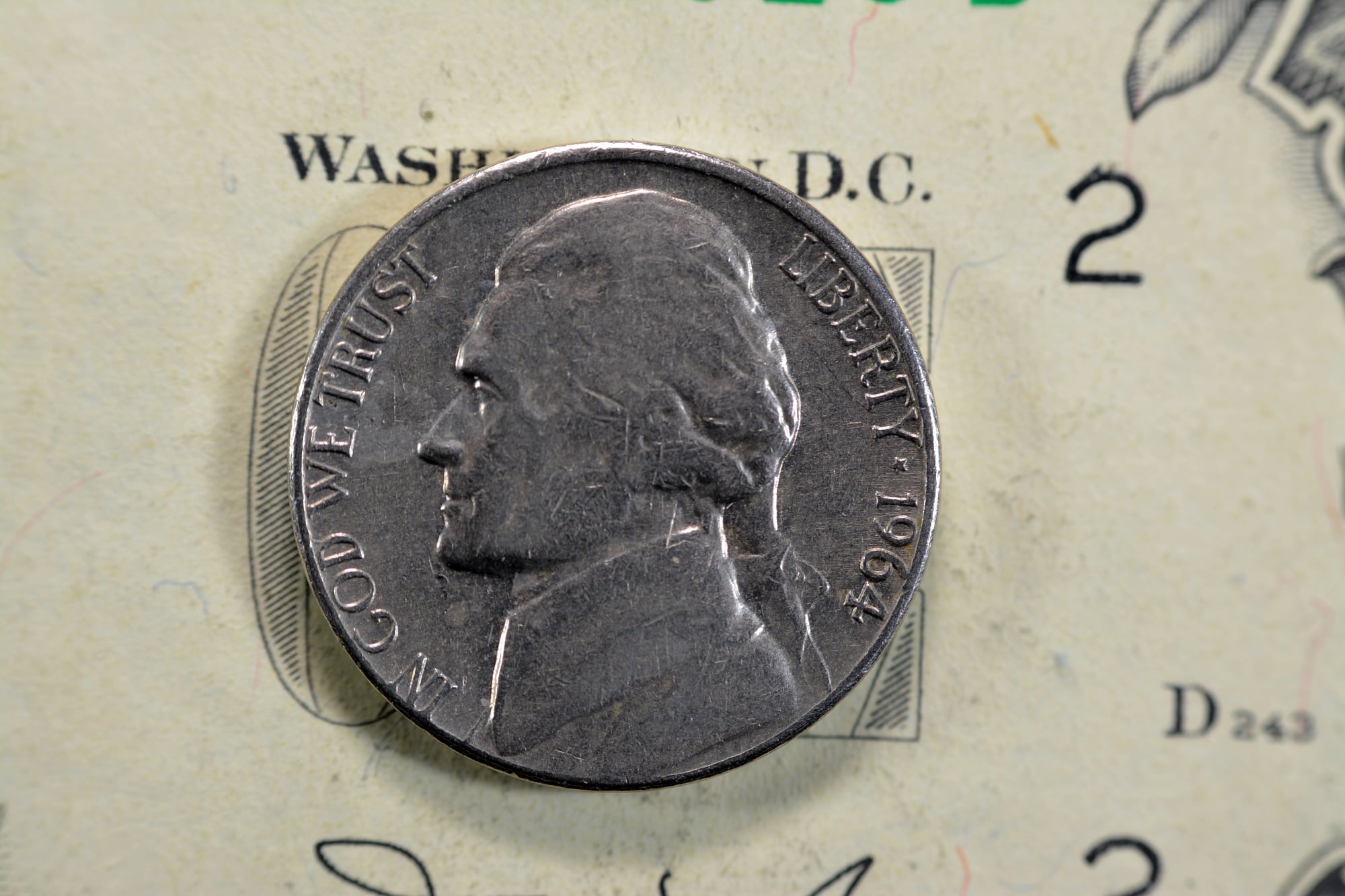
Most nickels are worth exactly five cents. These are not.
During World War II, nickel was reserved for military use, so the U.S. Mint replaced it with a composition of 35% silver — and marked the coins with a large mint mark above Monticello so they could be recovered later. Most weren’t. A mint mark of P, D, or S sitting prominently above the building is your giveaway, and the silver content alone pushes each coin’s melt value well past face value regardless of condition.
1964 Kennedy Half Dollar
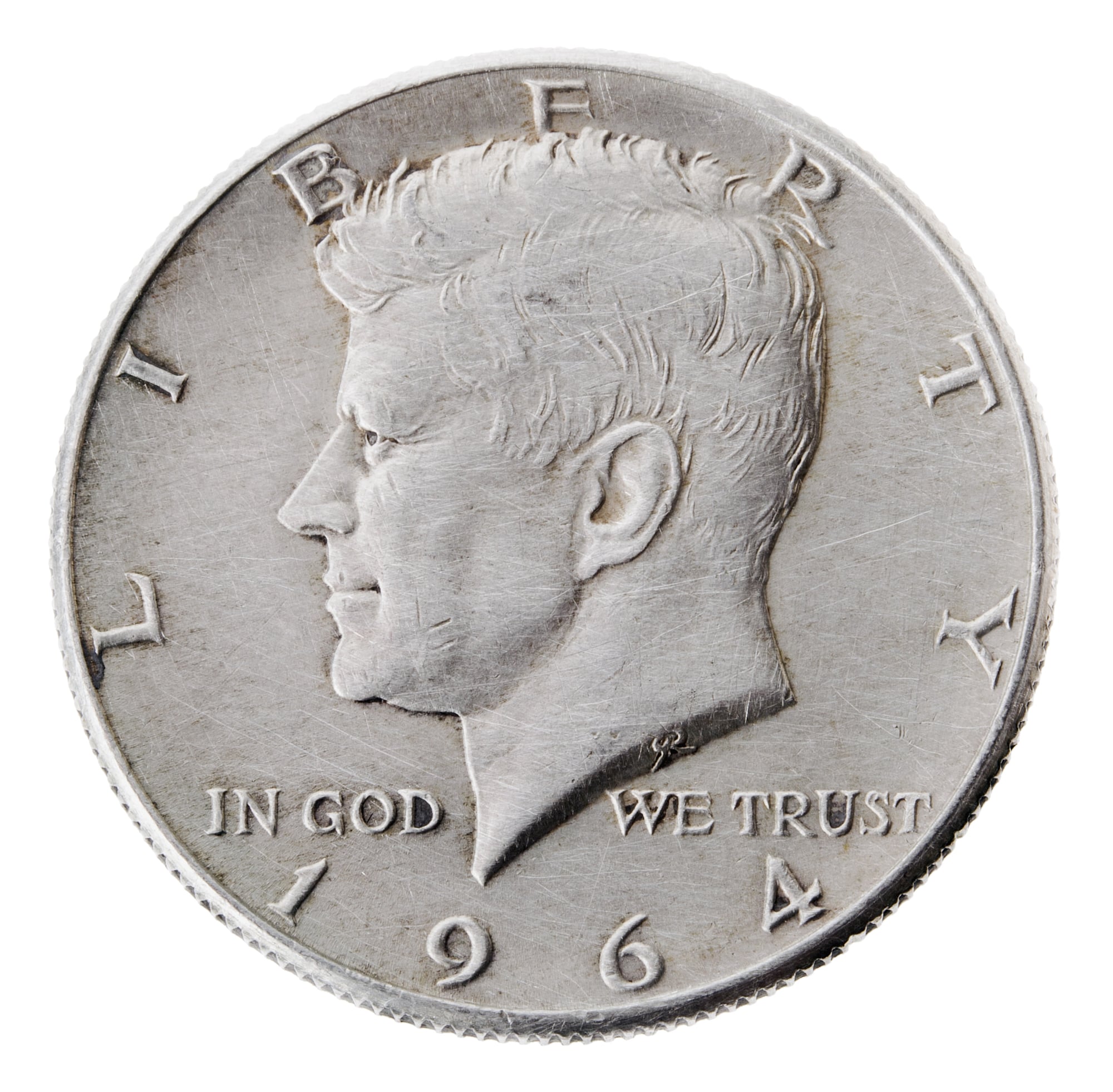
The Kennedy half dollar is probably the most common silver coin still turning up in circulation. Struck in 90% silver, the 1964 issue was the first year of the series — produced in massive quantities after President Kennedy’s assassination, which meant people hoarded them almost immediately, but plenty still slipped through.
At today’s silver prices, each one carries roughly ten times its face value in metal alone.
1965–1970 Kennedy Half Dollar
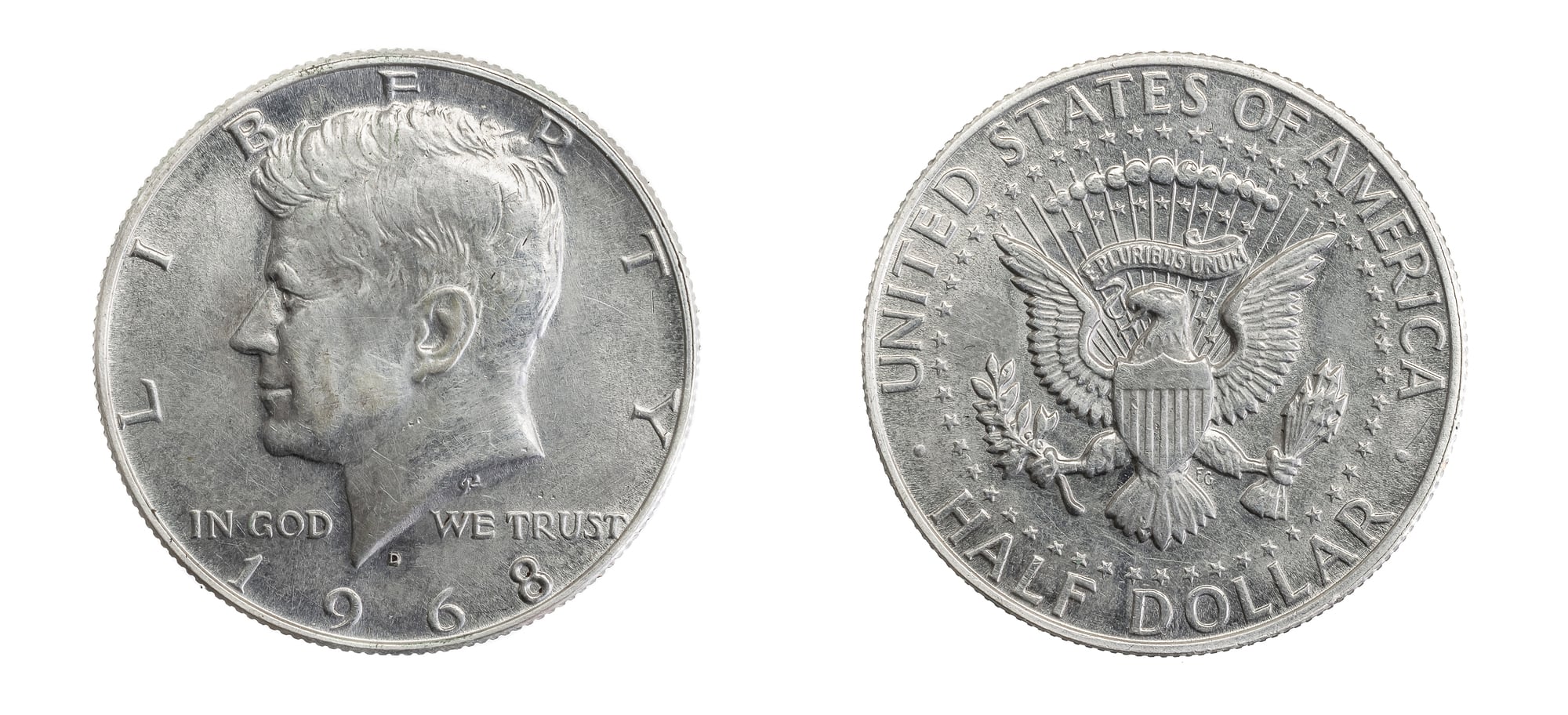
The years right after 1964 matter too, and this is where people trip up. From 1965 through 1970, Kennedy halves were struck in 40% silver — reduced, yes, but still silver, still worth more than fifty cents.
They look almost identical to later copper-nickel versions, so the only reliable check is the date. Anything dated 1965 through 1970 deserves a second look before it goes back into your wallet.
1916–1945 Mercury Dime
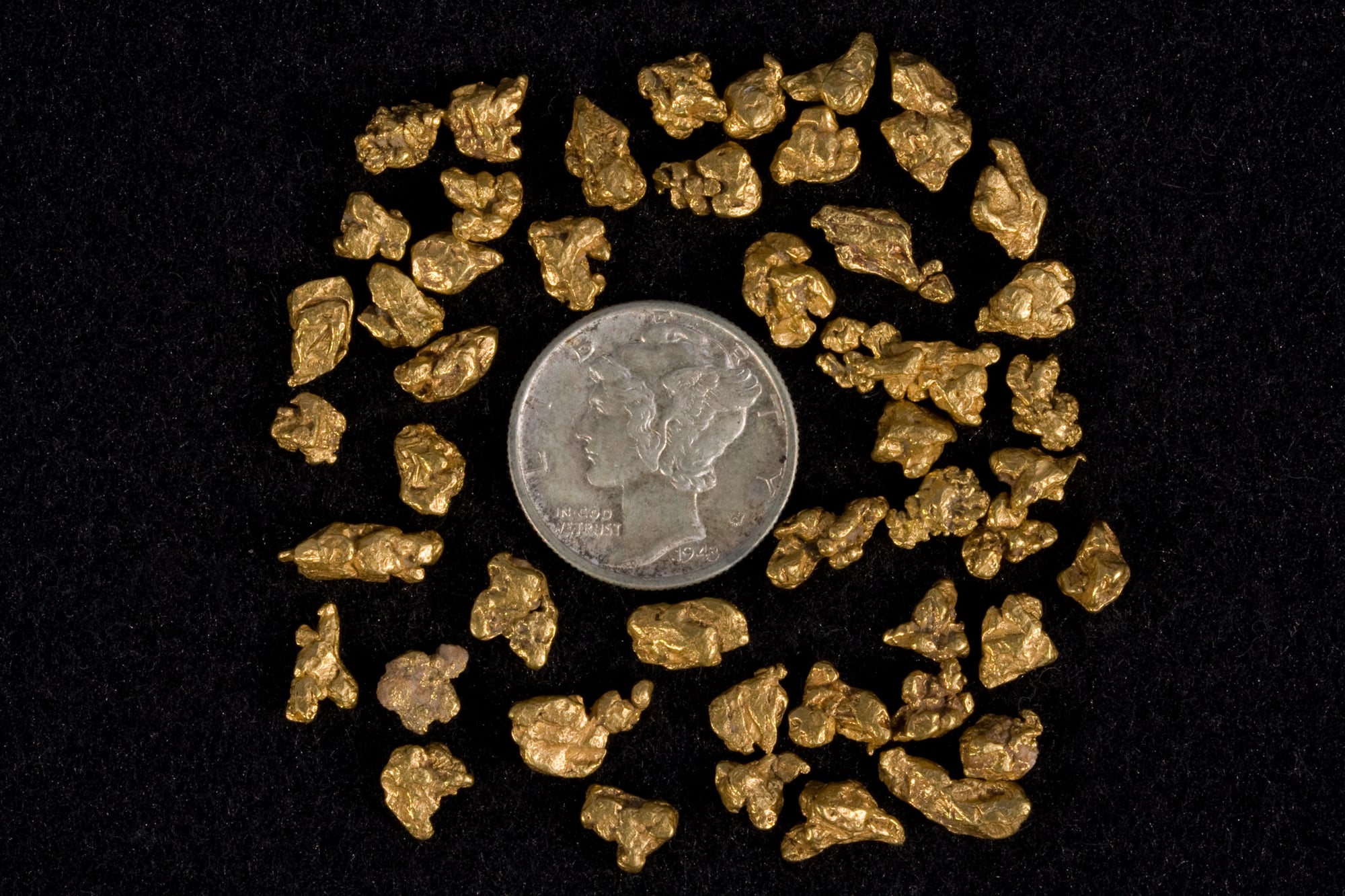
There’s something quietly elegant about the Mercury dime — a portrait so fine that it almost seems out of place on a coin meant for everyday commerce. Struck in 90% silver and featuring a winged Liberty head that’s been mistaken for Mercury since the day it was issued, these dimes were produced through 1945 and still appear in circulation occasionally, indifferent to the decades that have passed.
The silver alone makes each one worth over a dollar at current melt values, and certain dates — the 1916-D in particular — climb into the hundreds or thousands depending on condition.
1946–1964 Roosevelt Dime
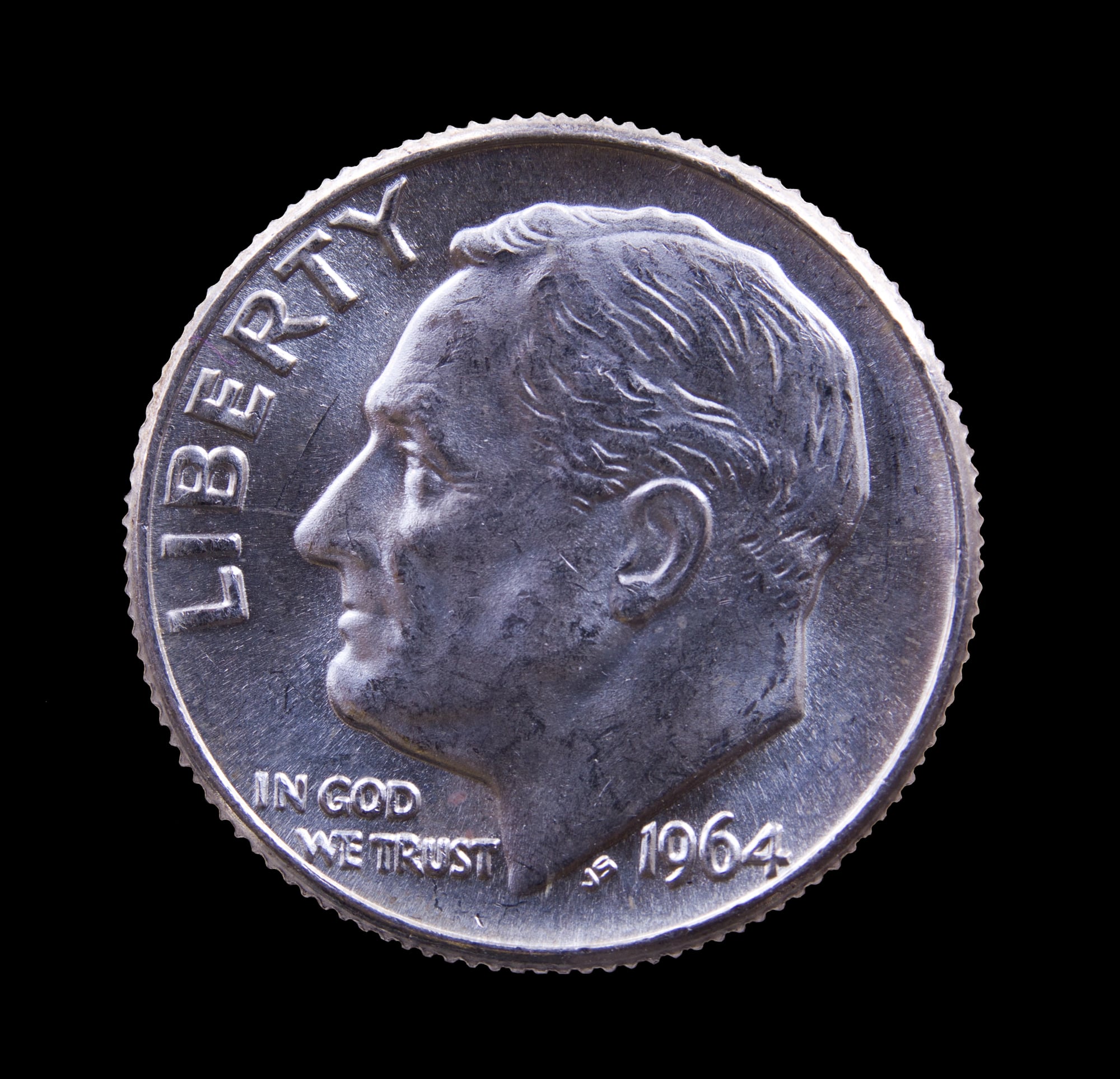
Roosevelt dimes from 1946 through 1964 are 90% silver, full stop. The design change from Mercury to Roosevelt happened in 1946, but the silver content didn’t disappear until 1965 when the Mint switched to copper-nickel clad.
Post-1964 Roosevelt dimes are worth ten cents; pre-1965 ones are worth closer to a dollar and a half in silver content alone, which means the date is the only thing standing between pocket change and something worth pocketing deliberately.
1932–1964 Washington Quarter
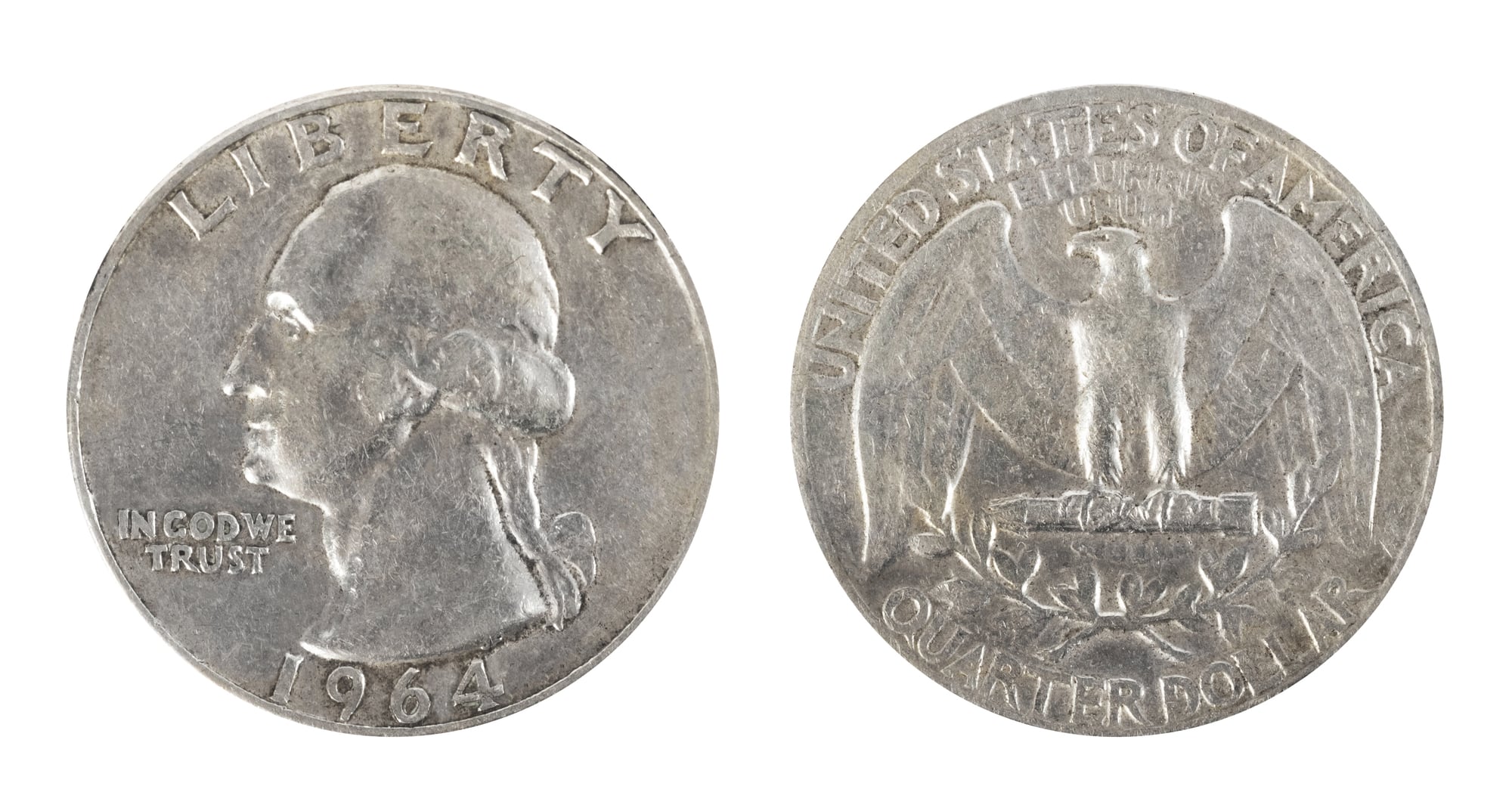
Pre-1965 Washington quarters are 90% silver, and they surface more often than most people realize — often because someone found a jar of old coins and spent them without checking. The giveaway is simple: look at the edge.
Silver quarters have a solid silver edge; clad quarters show a copper stripe. Any Washington quarter dated 1964 or earlier is worth around three to four dollars in silver value, with certain key dates like the 1932-D and 1932-S worth considerably more.
1916–1930 Standing Liberty Quarter
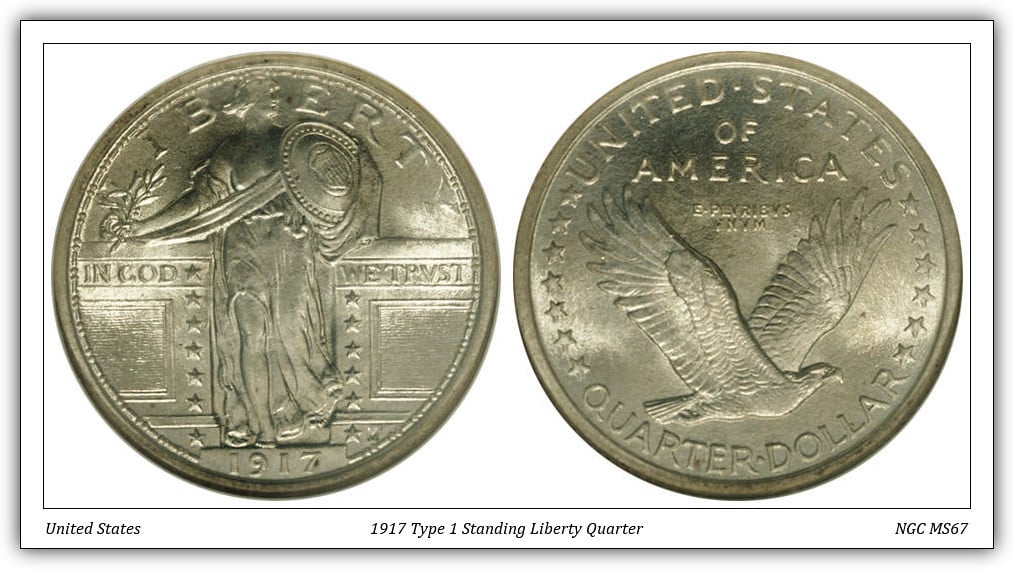
The Standing Liberty quarter is one of those coins that feels wrong to spend — not just because it’s worth real money, but because it carries the kind of austere, almost architectural beauty that modern coins have largely abandoned. Minted in 90% silver through 1930, these quarters occasionally appear in old collections that get dumped into circulation without a second thought.
A circulated 1916-D is a different matter entirely, worth thousands, but even common dates from the series are worth several dollars in silver.
1921 Morgan Dollar
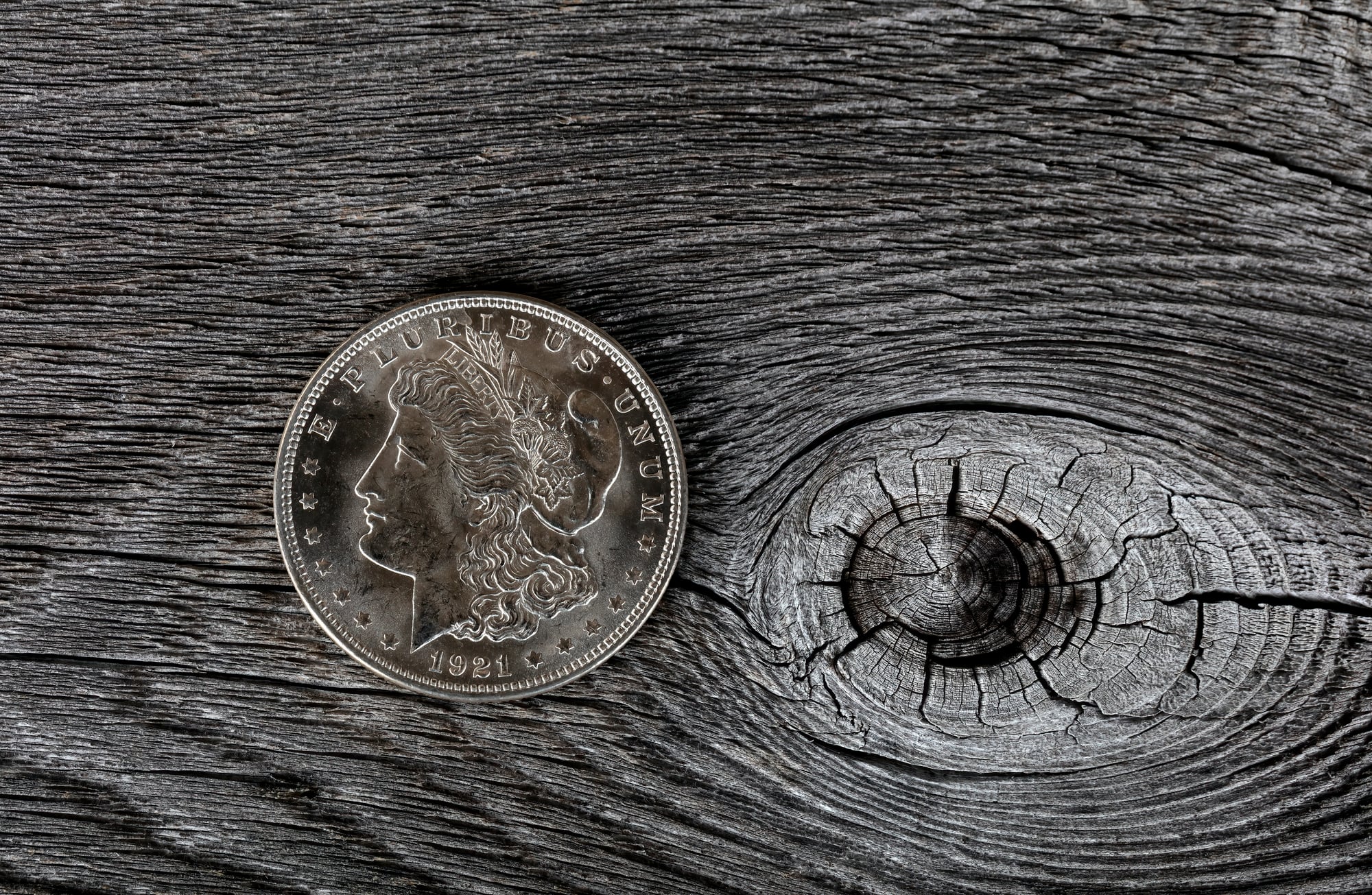
The 1921 Morgan dollar is the last year of a legendary series, and it’s worth noting that it was also the highest-mintage year — which makes it the version most likely to actually show up somewhere. At 90% silver and weighing 26.73 grams, the metal content alone exceeds twenty dollars at current prices, and collector demand pushes it higher.
These rarely circulate in the traditional sense, but they do appear at estate sales, in old sock drawers, and occasionally in collections that someone’s grandmother kept and nobody knew about.
1878–1904 Morgan Dollar
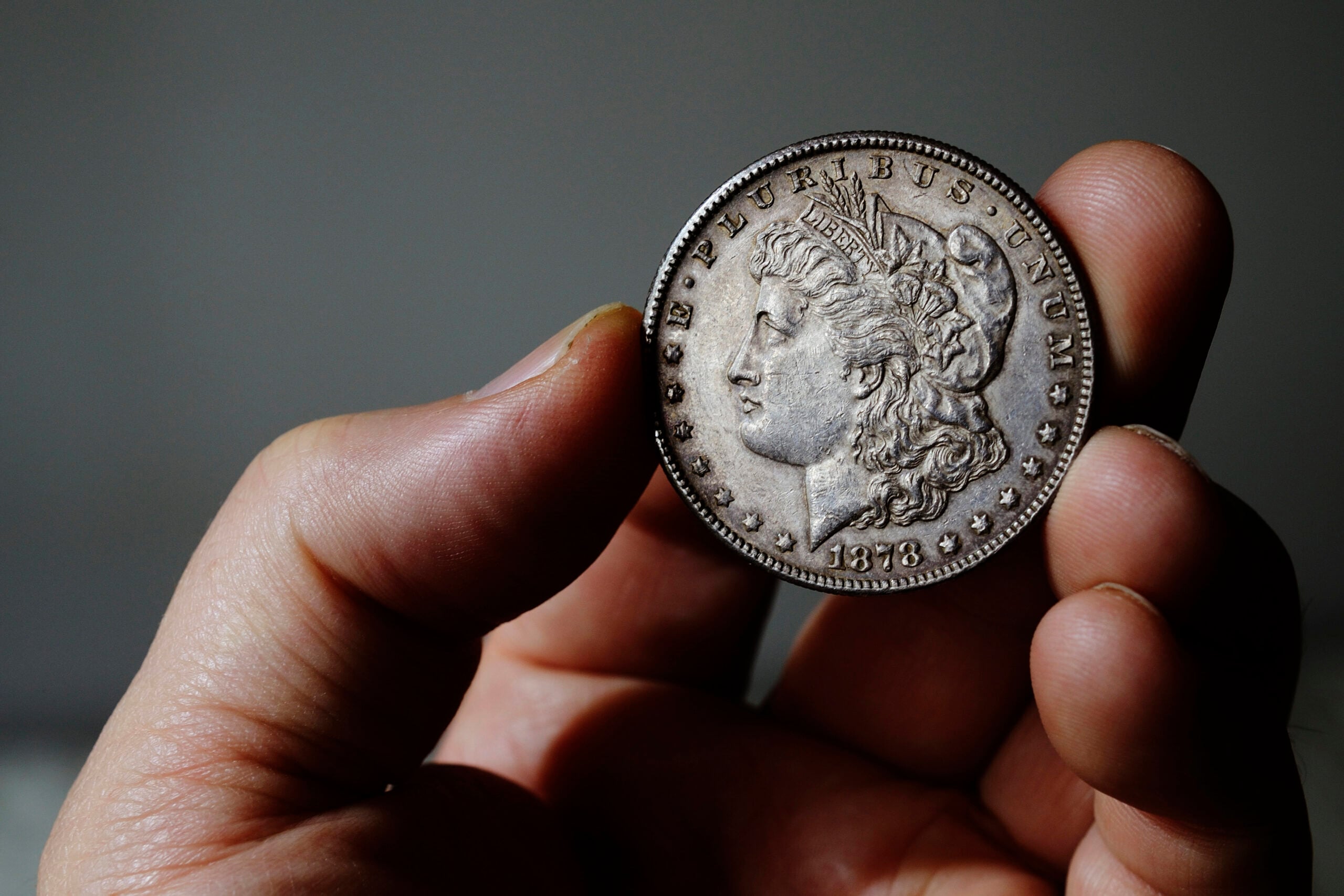
The earlier Morgan dollars — those struck between 1878 and 1904 — carry the same silver weight but far more collector interest than the 1921 issue, and the range of values is genuinely wild depending on mint mark and date. A common-date Morgan from Philadelphia might fetch thirty dollars; a Carson City mint mark (CC) on the reverse can push that same coin into the hundreds.
The design is unmistakable: a bold Liberty portrait on the obverse, an eagle with spread wings on the reverse, and a heft in the hand that modern coins simply don’t replicate.
1878–1921 Peace Dollar
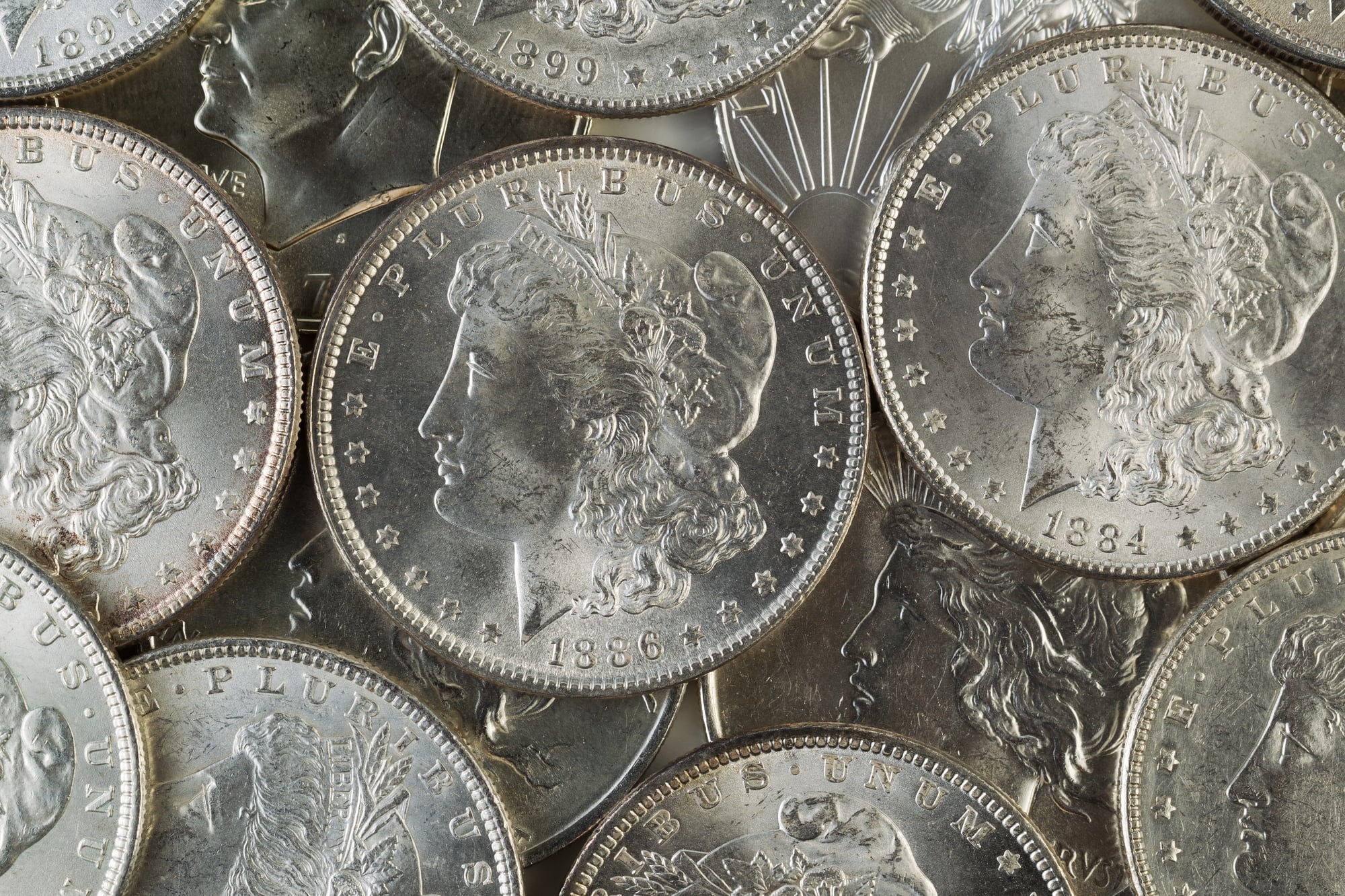
The Peace dollar replaced the Morgan in 1921 and ran through 1935, commemorating the end of World War I with a design so serene it almost seems naive in retrospect. Still 90% silver, still worth over twenty dollars in metal content alone — but the Peace dollar carries a different kind of collector appeal, quieter than the Morgan but stubborn in its own right.
The 1921 Peace dollar is the key date, struck in high relief and produced for only one year before the design was flattened for easier minting.
1909-S VDB Lincoln Cent
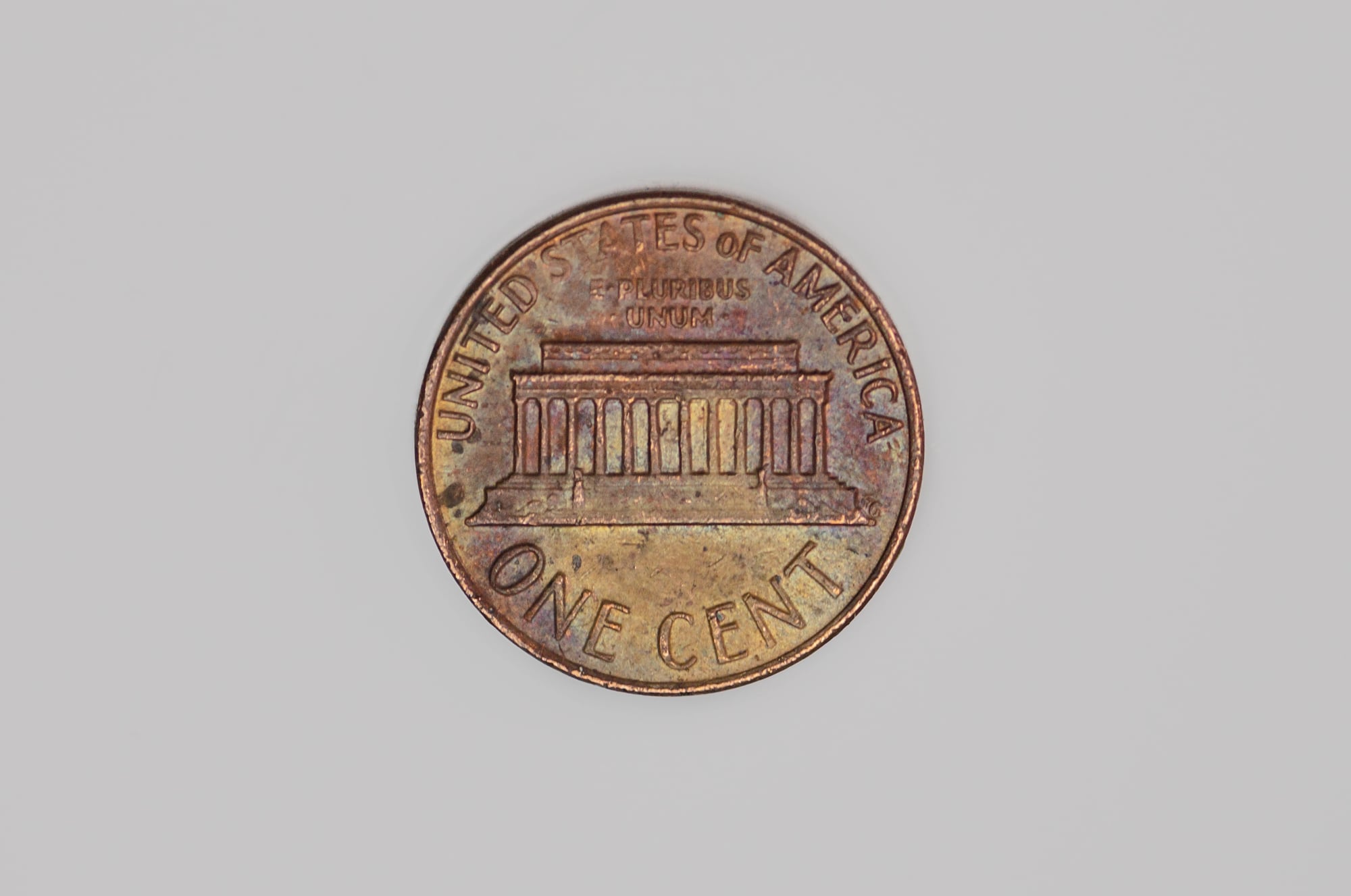
The 1909-S VDB cent is the coin that turned casual collectors into obsessives. Struck at the San Francisco Mint in the first year of Lincoln cents, it carries the designer Victor David Brenner’s initials on the reverse — initials that were removed almost immediately after public outcry, making the combination of S mint mark and VDB extremely scarce.
Only 484,000 were minted. Finding one in change today would be the kind of thing you’d remember for the rest of your life, and its value runs from several hundred to several thousand dollars depending on condition.
1914-D Lincoln Cent

The 1914-D is the kind of coin that rewards anyone patient enough to actually look at the dates on their pennies, which almost nobody does. Struck at the Denver Mint in modest numbers, it’s not as famous as the 1909-S VDB but scarcity and collector demand have pushed its value into the hundreds even in worn condition.
The D mint mark sits just below the date, small but decisive.
1922 Plain Lincoln Cent
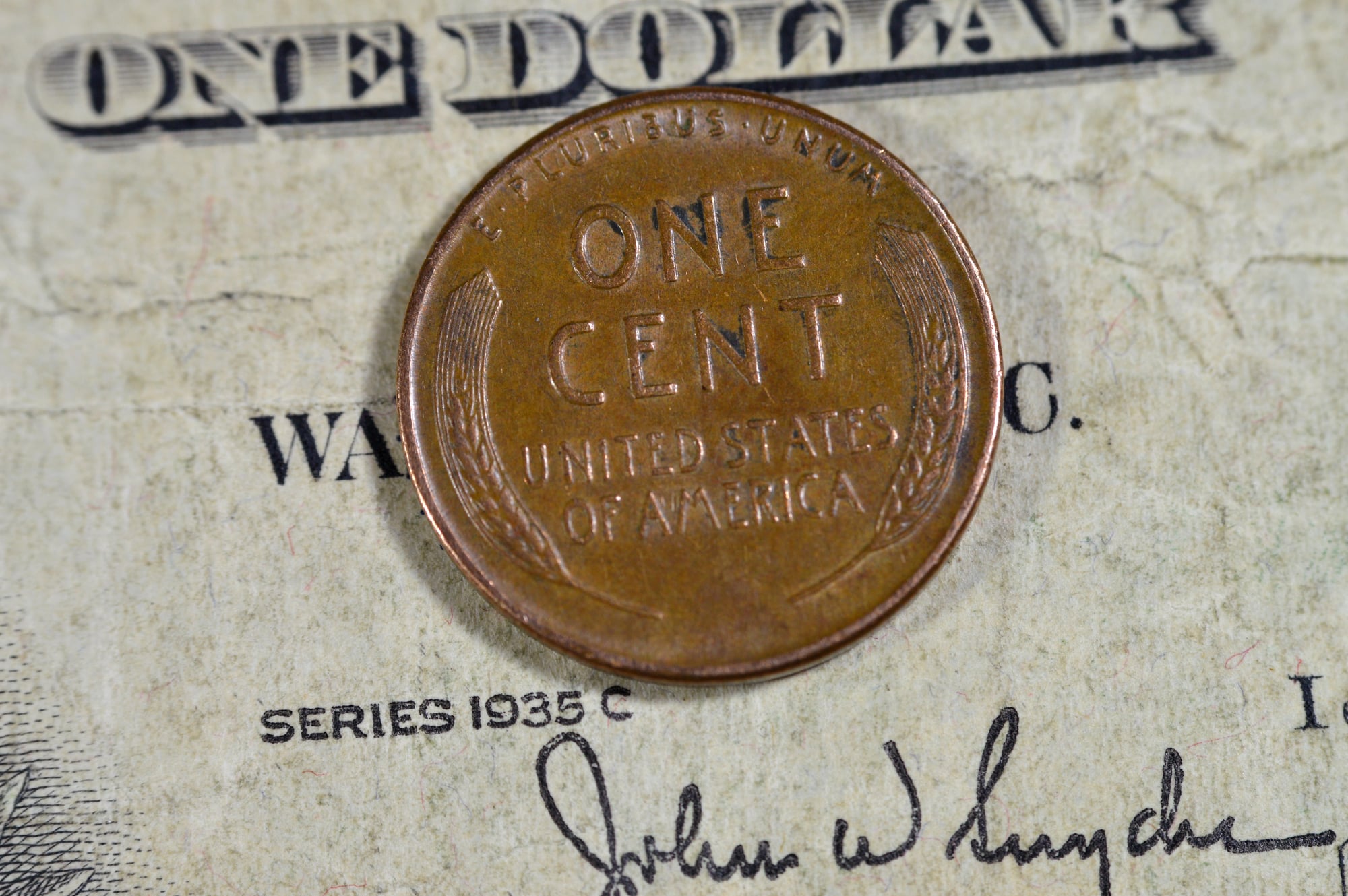
Something strange happened in 1922, all three U.S. mints struck Lincoln cents, but Denver’s output was particularly notable. Some coins came out with a faint or completely missing D mint mark due to worn dies, but some coins came out with a faint or completely missing D mint mark due to worn dies.
These “plain” 1922 cents look like they were struck with no mint mark at all, which should be impossible for that year. Collectors have fought over the distinctions between weak-D and no-D examples for decades, but a genuine no-D 1922 cent is worth well over five hundred dollars even in moderate circulated condition.
1943 Copper Lincoln Cent
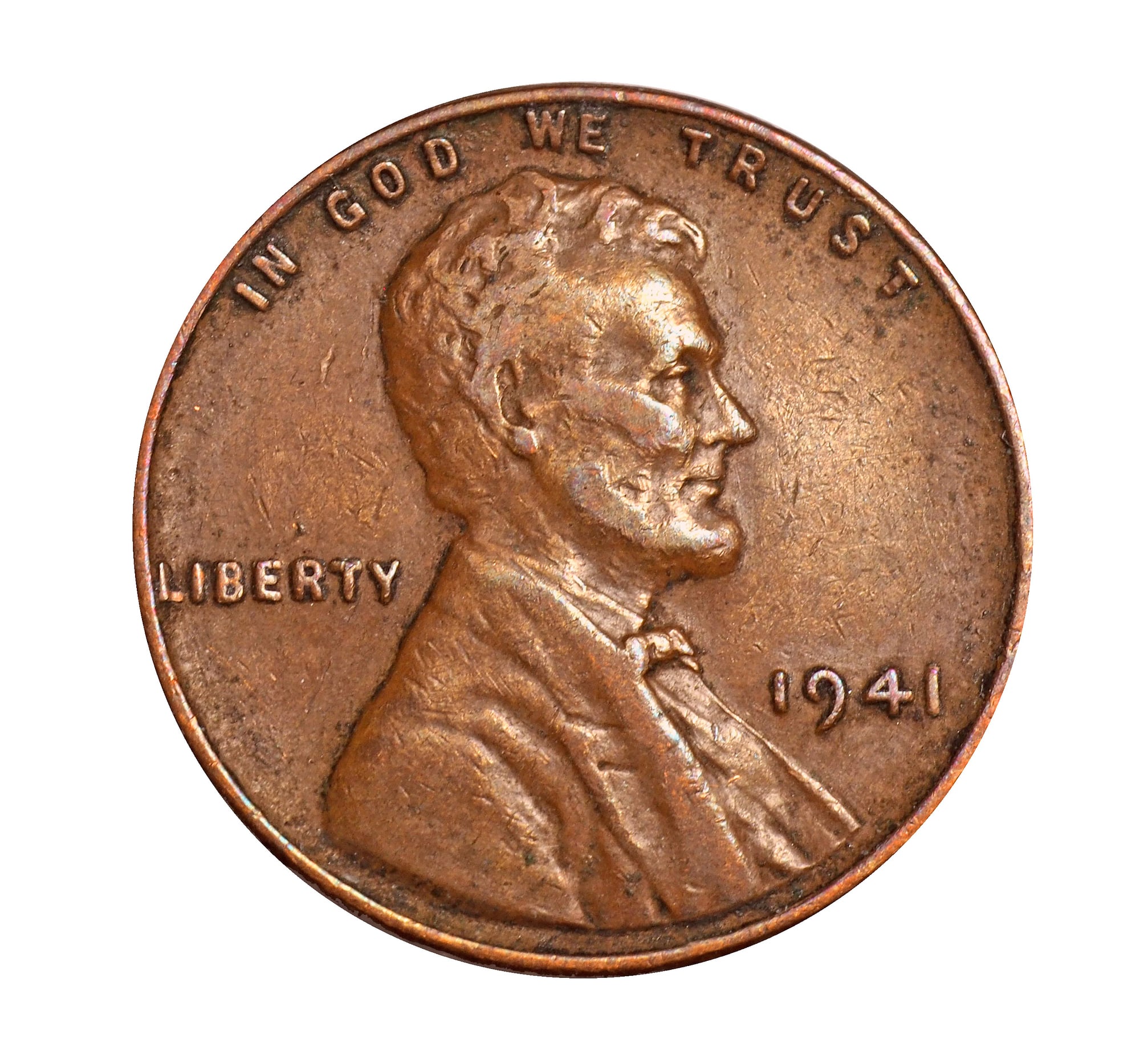
The 1943 copper Lincoln cent is one of the most storied errors in American numismatic history — in 1943, cents were supposed to be struck in zinc-coated steel to conserve copper for the war effort, but a handful of copper planchets from 1942 got fed into the presses by accident.
Most “copper 1943 cents” people find are either steel cents that have been copper-plated (a fake) or simply darkened steel cents, so the magnet test matters: steel cents stick to a magnet, copper ones don’t. A genuine 1943 copper cent is worth six figures.
1955 Doubled Die Lincoln Cent
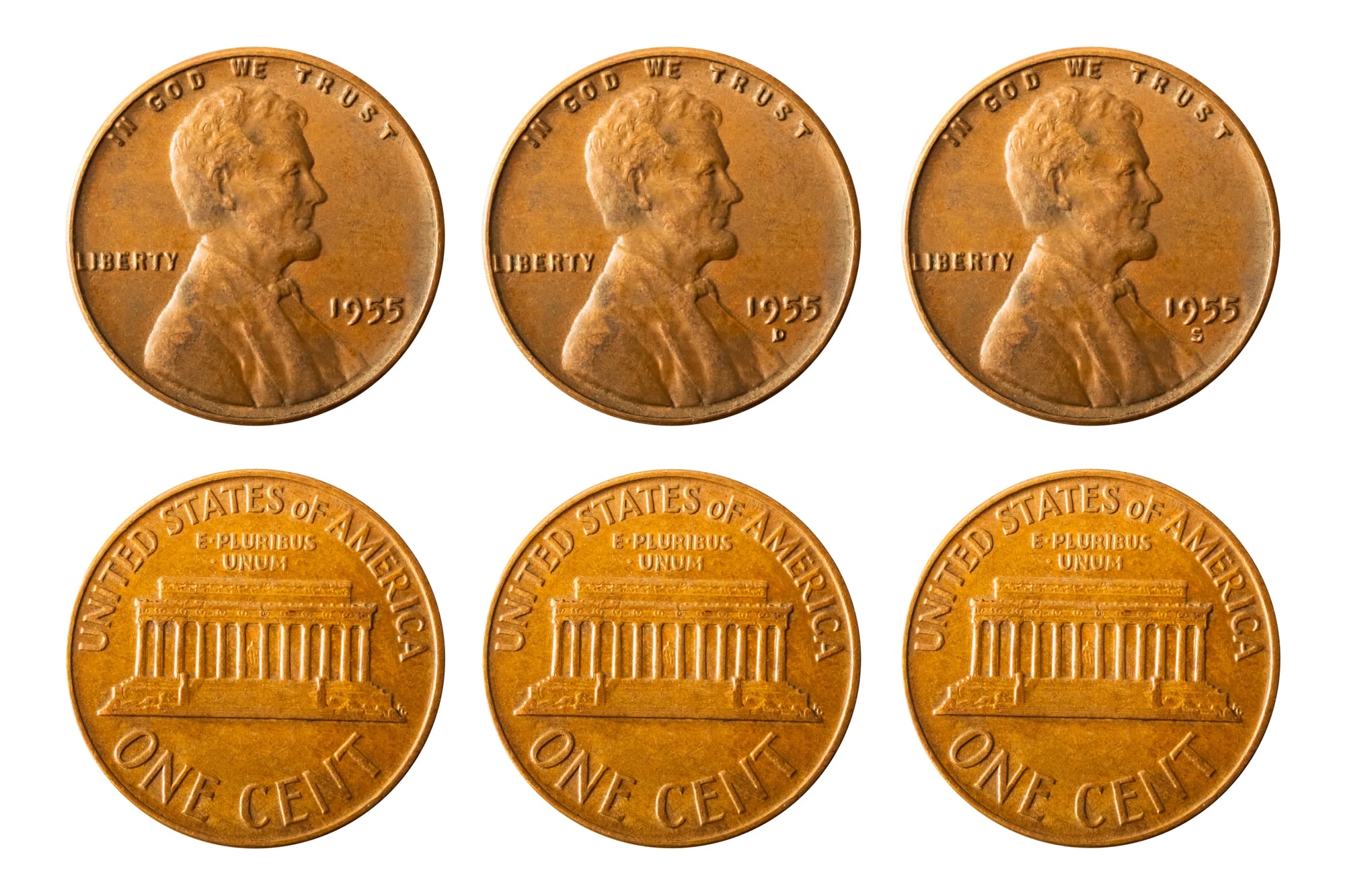
The 1955 doubled die is one of the most visually dramatic errors ever produced by the U.S. Mint — the date and lettering appear clearly doubled, as if the coin was stamped twice with the die slightly offset. It wasn’t.
The doubling occurred during the die-making process, and somewhere between 20,000 and 24,000 of these coins entered circulation before anyone noticed, mostly through cig vending machines in the Northeast. In circulated condition, these run from $1,000 to $2,000; in uncirculated grades, significantly more.
1969-S Doubled Die Lincoln Cent
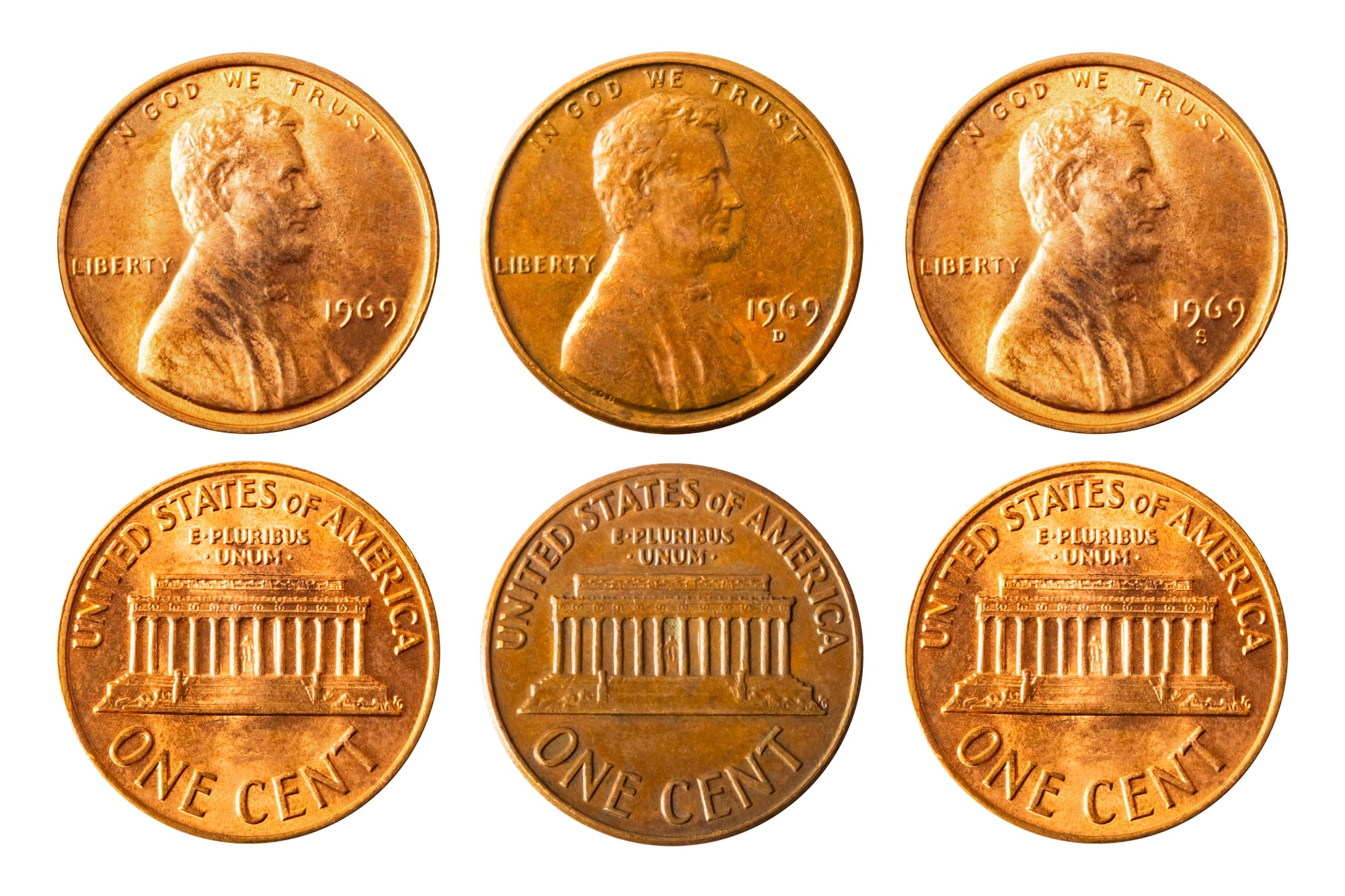
If the 1955 doubled die is the famous one, the 1969-S is the one that collectors argue is actually rarer. The doubling on the obverse is similarly dramatic — date, motto, and lettering all visibly doubled — but fewer examples are known to exist, and the Secret Service initially seized many of them under the mistaken belief they were counterfeits.
Only a few hundred examples are confirmed. One in heavily circulated condition still commands tens of thousands of dollars.
1982 No Mint Mark Roosevelt Dime
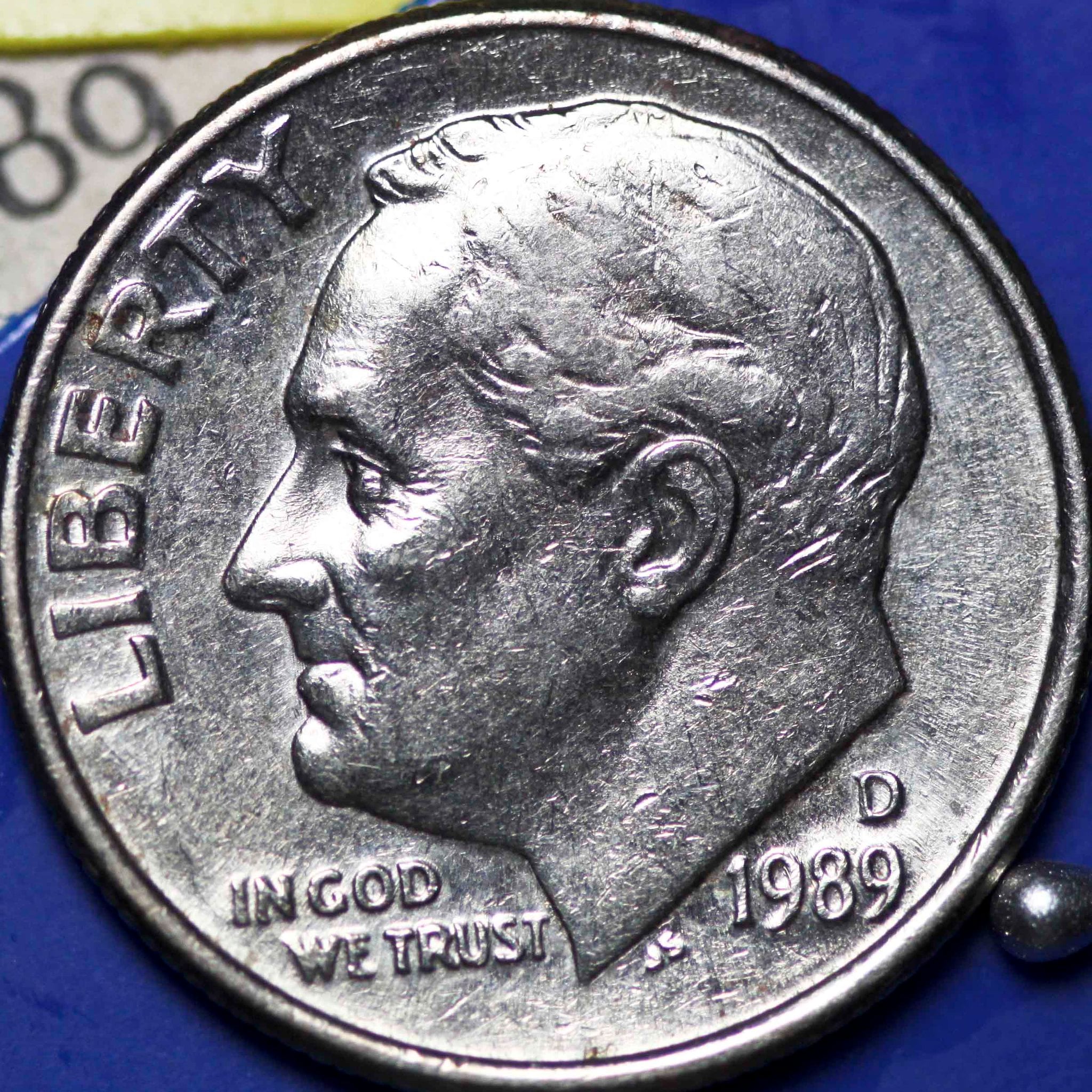
In 1982, a small number of Roosevelt dimes left the Philadelphia Mint without the P mint mark that had been standard since 1980. Philadelphia had added the P to distinguish its coins, so its absence on a 1982 dime is an error — a quiet one, easy to miss, but worth around thirty to fifty dollars to collectors who specifically hunt for it.
The check is simple: look at the obverse, above the date, for a small P that should be there and isn’t.
1972 Doubled Die Lincoln Cent
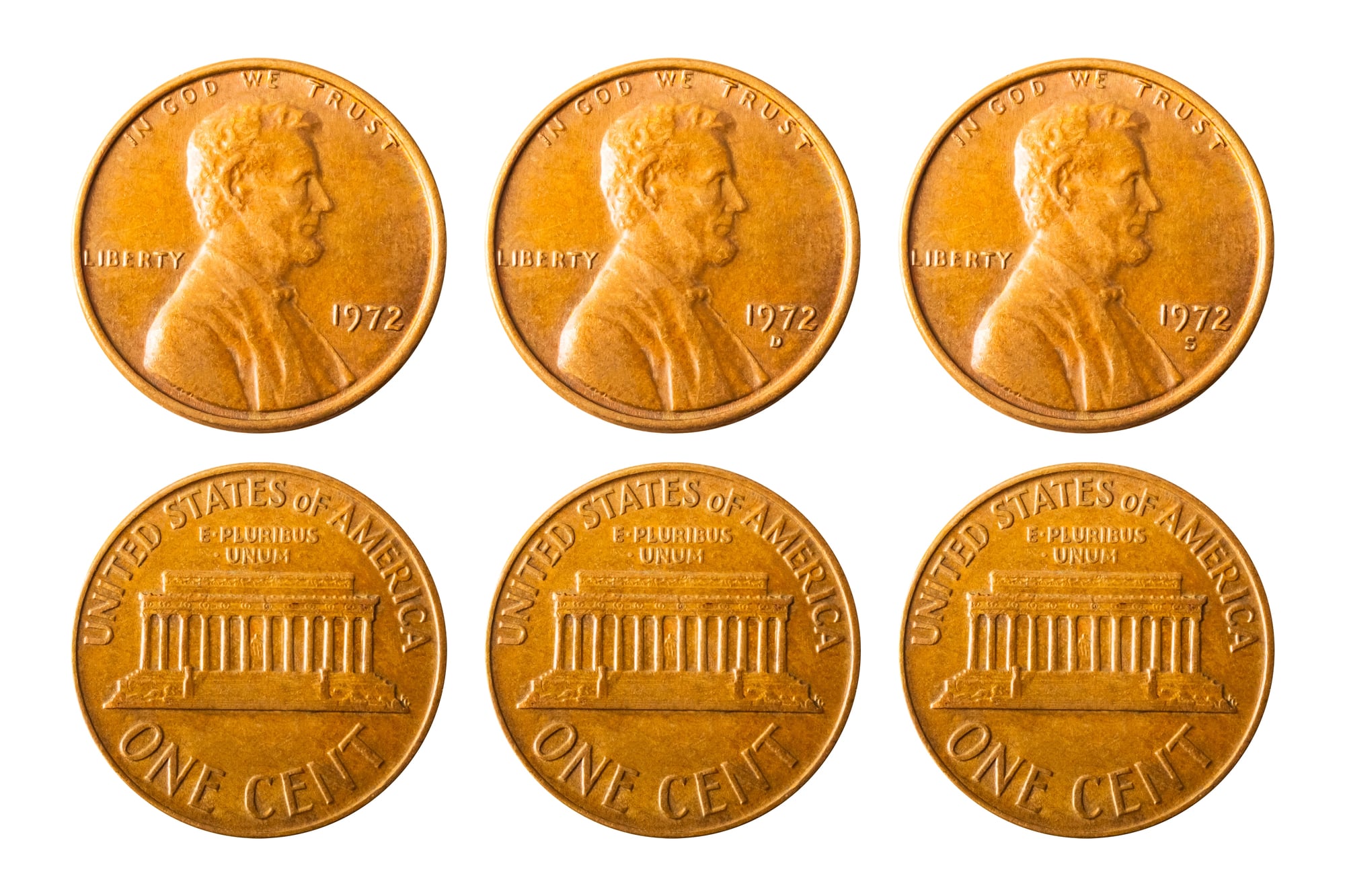
The 1972 doubled die isn’t as dramatic as 1955, but it’s considerably more available — and still worth real money, which makes it the more realistic find of the two. Several doubled die varieties exist for 1972, with the most prominent showing clear doubling on LIBERTY and IN GOD WE TRUST.
A strongly doubled example in circulated condition runs from $100 to $300, which is a meaningful return on a cent you might have dropped without noticing.
1995 Doubled Die Lincoln Cent
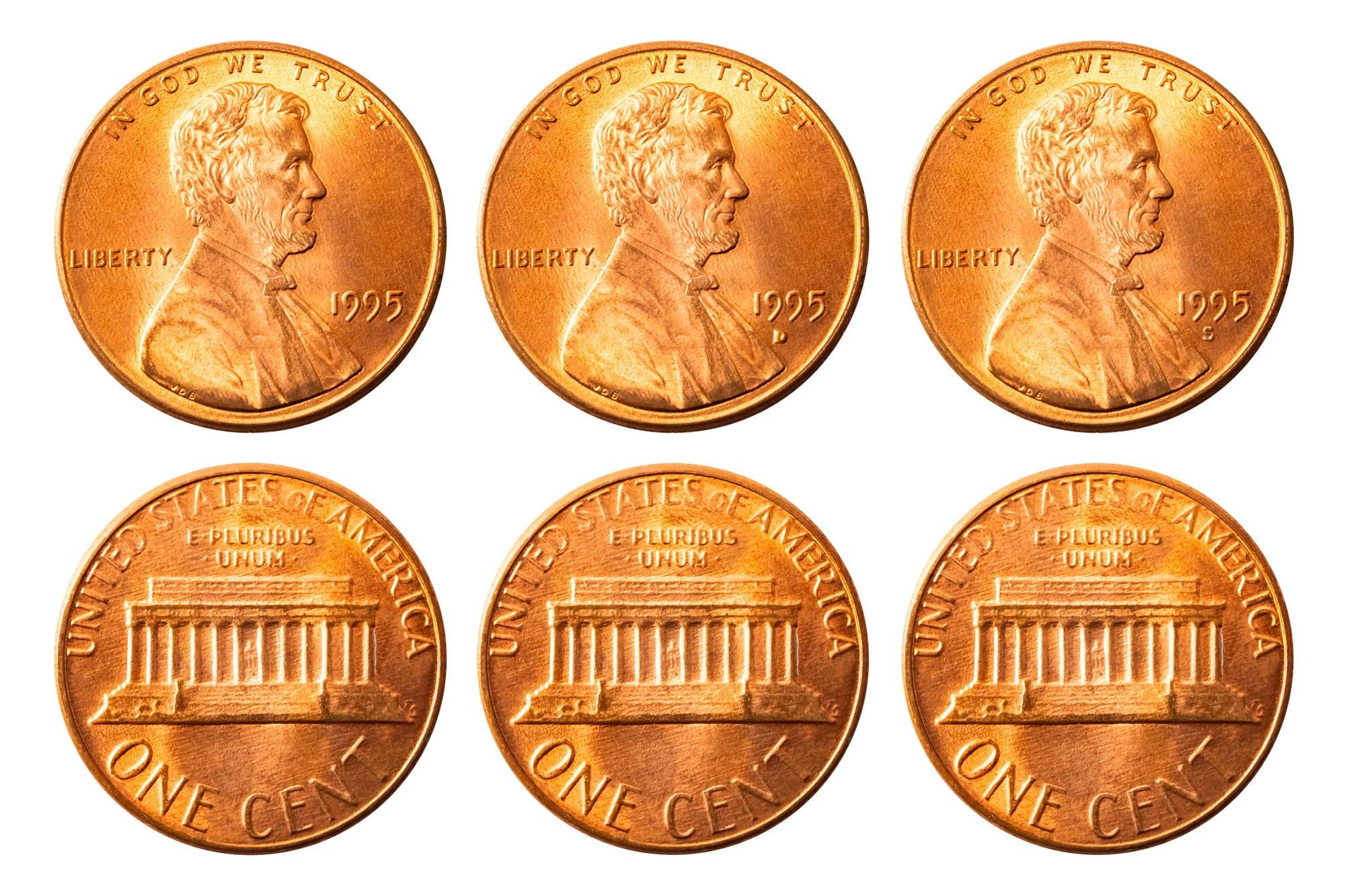
The 1995 doubled die is the modern version of the classic error — close enough to the present day that millions of people have handled these coins without knowing what they had. The doubling on LIBERTY and IN GOD WE TRUST is visible to the unaided eye, no magnifier needed, and the coins entered circulation in significant numbers.
Even so, collector interest keeps the value between $20 and $50 for circulated examples, which is fifty times face value for a penny that was minted within many people’s lifetimes.
1916-D Mercury Dime

The 1916-D Mercury dime is in a category by itself — only 264,000 were struck at the Denver Mint in the first year of the design, making it one of the rarest twentieth-century dimes in existence. It’s also one of the most frequently counterfeited, with unscrupulous sellers adding D mint marks to common 1916 Philadelphia issues.
A genuine 1916-D in circulated condition starts around $800 and climbs sharply from there, which makes authentication by a professional grading service non-negotiable before any transaction.
1796 Draped Bust Dime
Finding a 1796 Draped Bust dime in change would be an event bordering on the supernatural — but these coins do surface in old collections, estate sales, and the occasional unsorted accumulation, and the person who finds one without knowing what it is might spend it.
Only 22,135 were minted, making this among the earliest and scarcest dimes ever produced. Any example, regardless of condition, commands thousands of dollars, and the design — a small eagle reverse that was only used for two years — marks it unmistakably as something different.
1877 Indian Head Cent
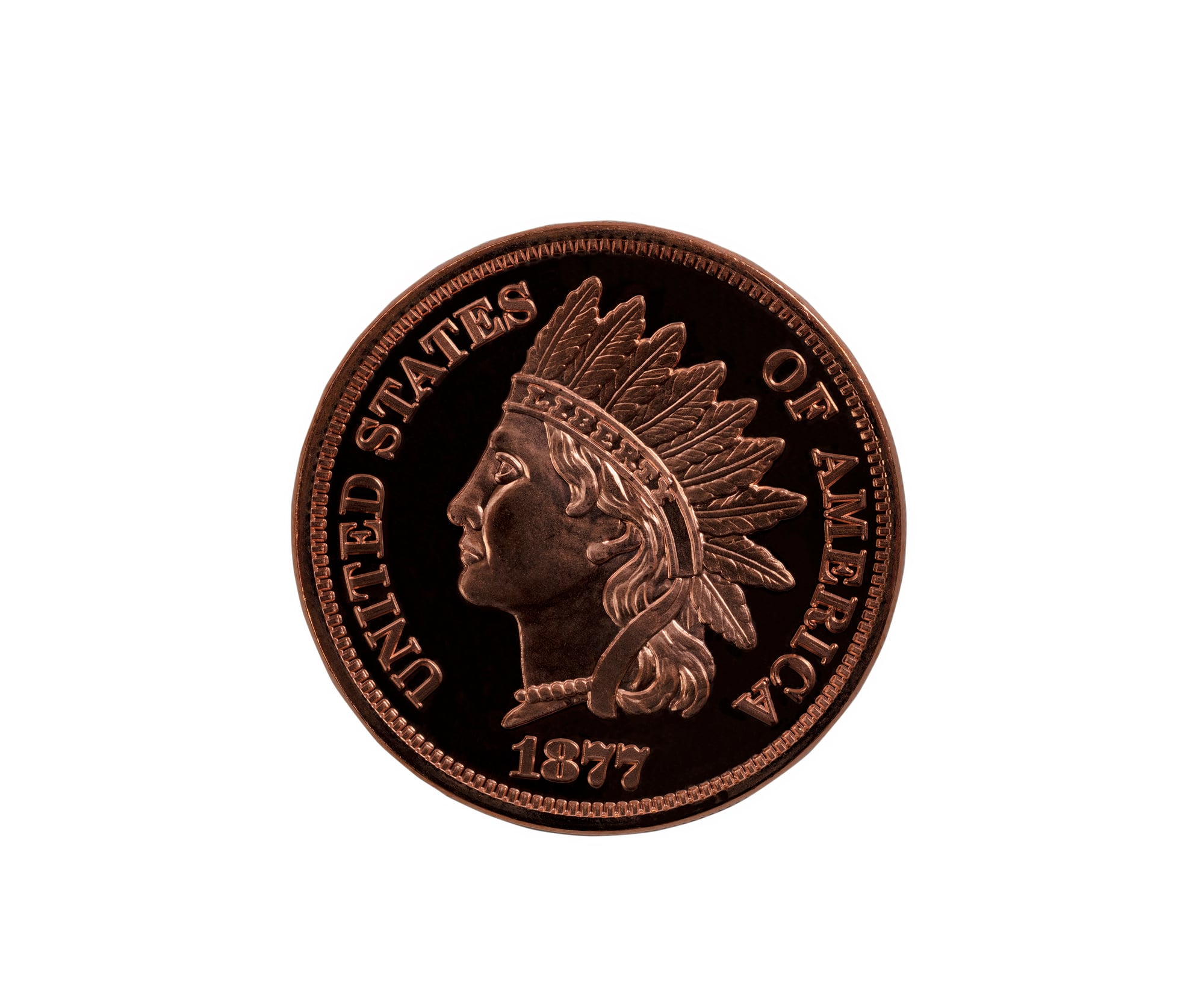
The 1877 Indian Head cent is the key date of the series, struck during a period of economic depression when cent production plummeted to just 852,500 pieces. It’s not impossible to find, but it’s rare enough that most examples have been picked out of circulation for decades — which makes any unchecked accumulation of old cents worth sorting through carefully.
Circulated examples in decent shape sell for several hundred dollars; better pieces climb well past a thousand.
1879–1893 Morgan Dollar (Carson City Mint)
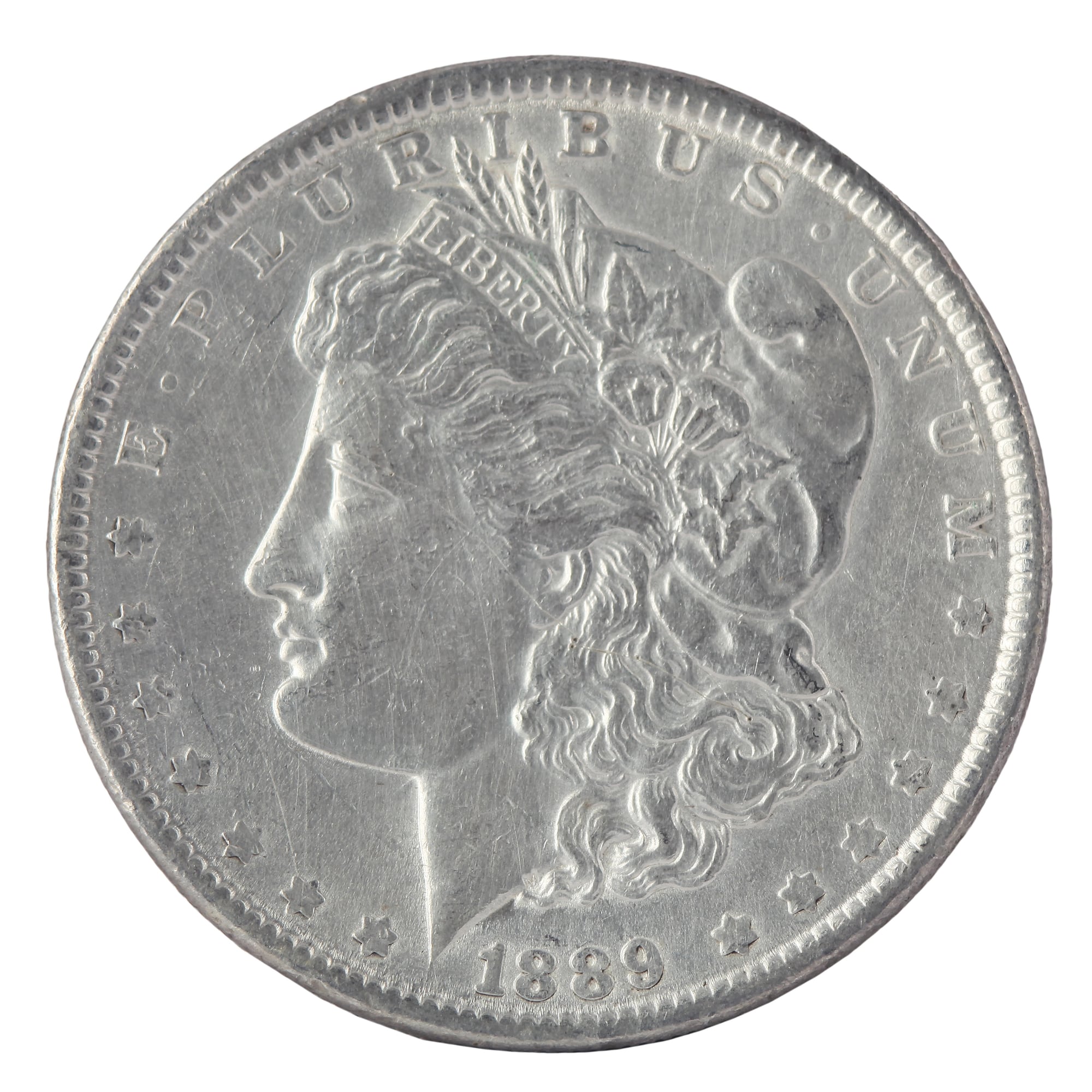
Carson City Morgan dollars occupy a special place in American coin collecting — struck in Nevada silver at a mint that only operated for a few decades, they carry both a scarcity premium and a romantic association with the Old West that keeps demand perpetually warm. The CC mint mark on the reverse, below the eagle’s tail feathers, is the identifying feature.
Some dates are common enough to find in circulated condition for under a hundred dollars; the 1879-CC and 1889-CC are dramatically scarcer and worth far more.
1804 Draped Bust Dollar
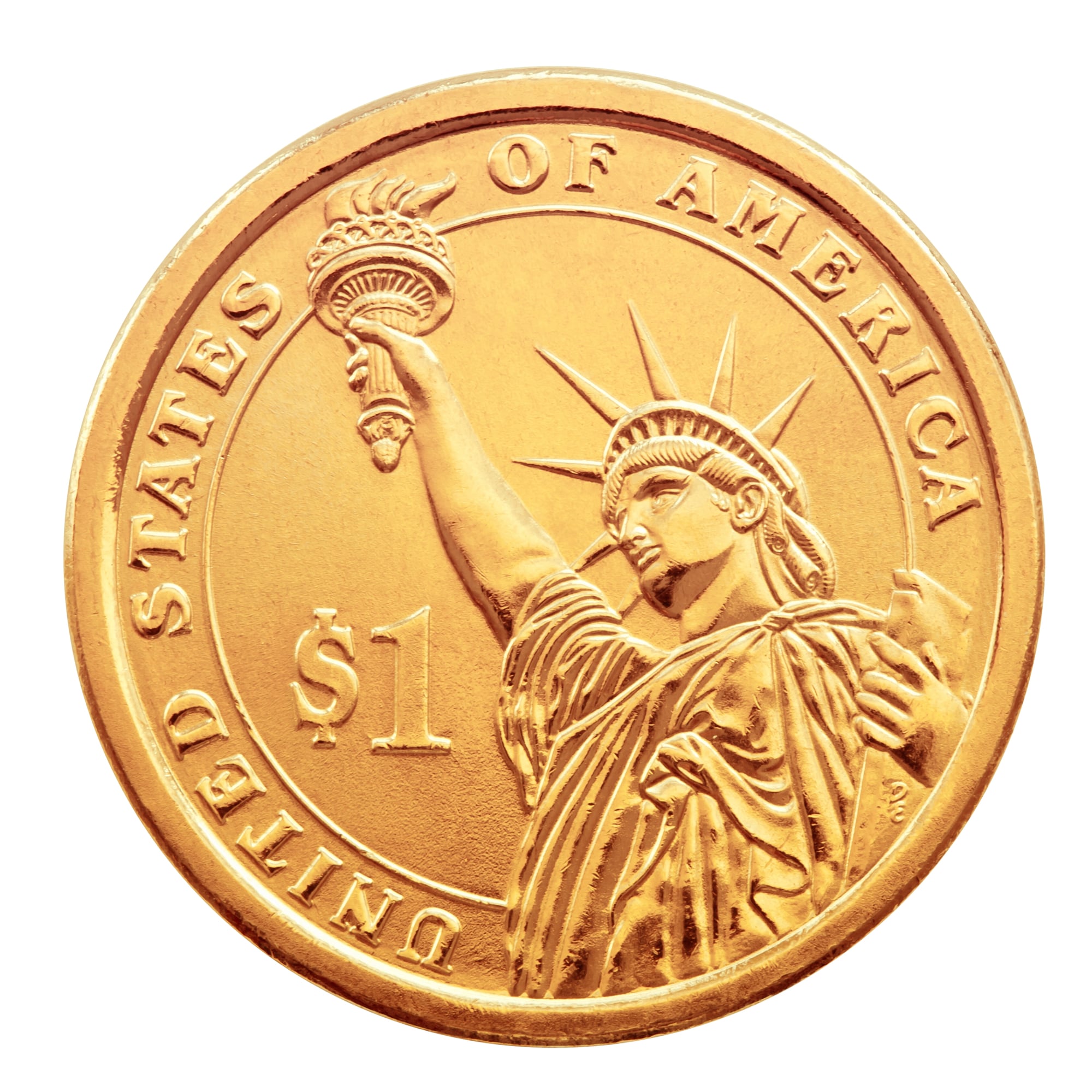
The 1804 dollar is arguably the most famous American coin ever struck — but “struck” is a complicated word here, since the known examples were produced decades after the date they bear. What matters practically is that any coin purporting to be an 1804 dollar is either worth an astronomical sum (genuine examples have sold for over three million dollars) or worth nothing (a replica).
If something resembling one ever appeared in your change, the odds would be essentially zero, but the story of the coin is worth knowing.
1943 Steel Lincoln Cent
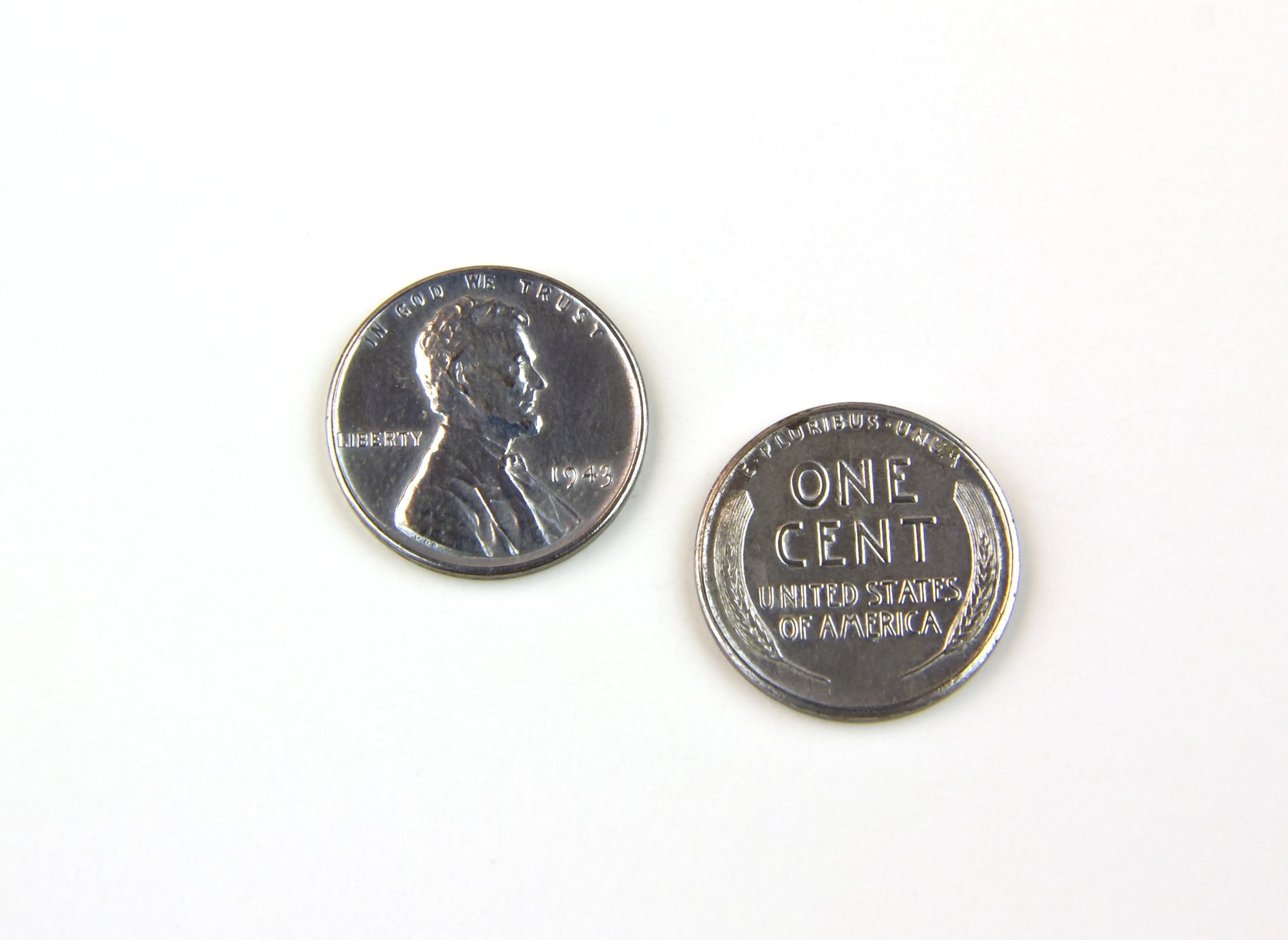
Most people have never held a steel cent, which is strange given that over a billion were produced in 1943. The zinc-coated steel planchet replaced copper for that single year, and the result is a coin that sticks to a magnet, tarnishes to a grayish-black, and looks wrong in a way that’s hard to pin down at first glance.
Common dates in decent condition are worth around fifteen to twenty-five cents — not dramatic — but better-preserved examples and the 1943-S and 1943-D issues command more, and their novelty alone makes them worth pulling from circulation.
1932-D and 1932-S Washington Quarter
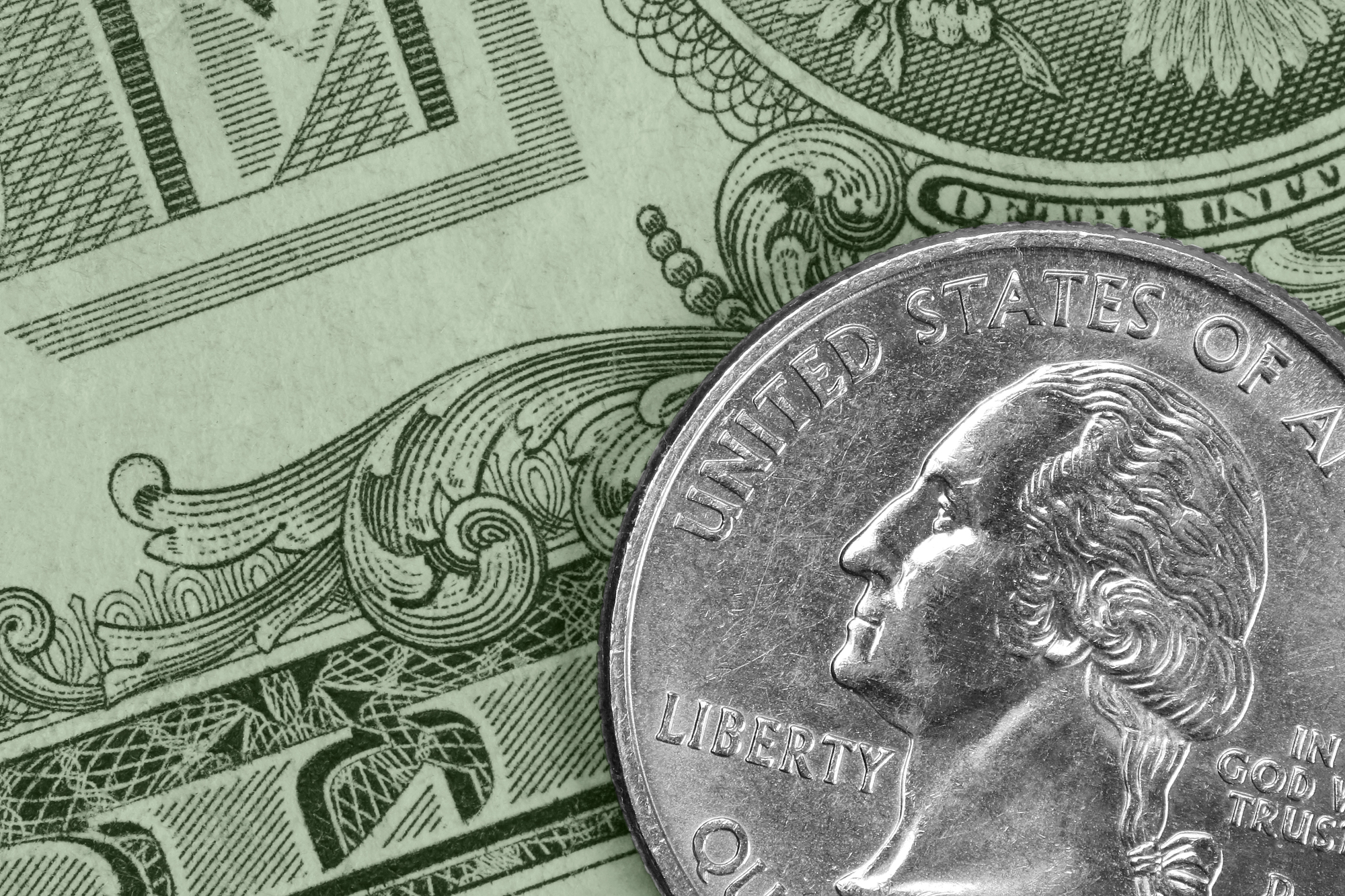
The first year of the Washington quarter series produced three mint versions — Philadelphia, Denver, and San Francisco — and the Denver and San Francisco issues are dramatically scarcer than their Philadelphia counterpart. The 1932-D saw a mintage of only 436,800; the 1932-S, 408,000 — both remarkably low for a coin that was genuinely intended to circulate.
These are the key dates of the entire Washington quarter series, and a worn example of either is worth several hundred dollars without any additional numismatic distinction.
The Coins Already in Your Pocket
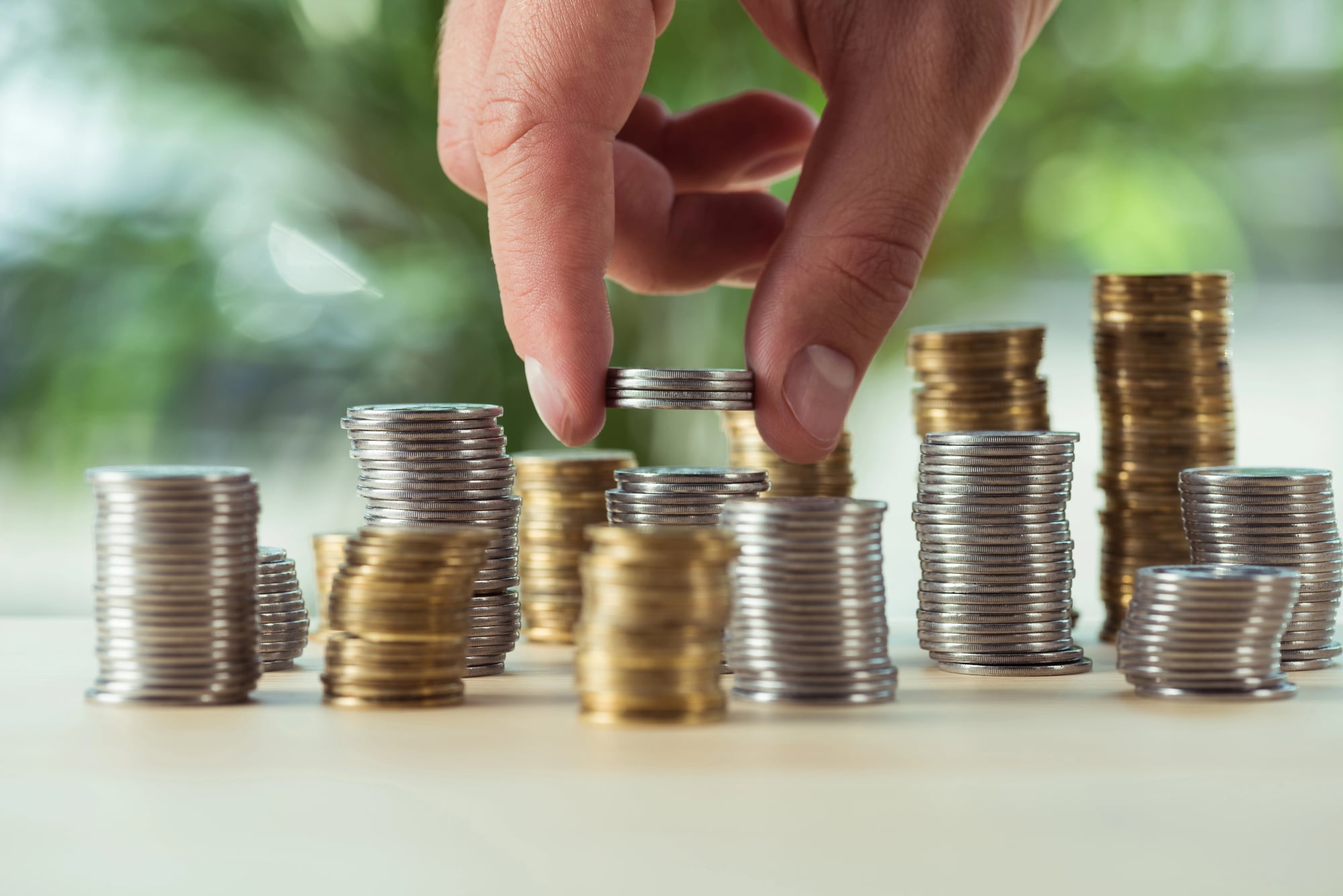
The real frustration of coin collecting isn’t the searching — it’s knowing that most people have already spent something valuable without a second glance. These coins didn’t vanish into vaults; many of them circulated for years, passed through dozens of hands, and wound up in change jars or parking meters or forgotten coat pockets.
The difference between finding one and missing one is almost entirely attention — the kind of attention that costs nothing but a few seconds. So next time you get change back, look at the dates. Look at the edges. Look at the mint marks. What’s sitting in your jar right now might be worth considerably more than the jar.
More from Go2Tutors!

- The Romanov Crown Jewels and Their Tragic Fate
- 13 Historical Mysteries That Science Still Can’t Solve
- Famous Hoaxes That Fooled the World for Years
- 15 Child Stars with Tragic Adult Lives
- 16 Famous Jewelry Pieces in History
Like Go2Tutors’s content? Follow us on MSN.