26 Censored Artworks That Were Hidden From Public View for Decades
Art has always made people uncomfortable. That’s partly the point.
But discomfort has a way of hardening into policy — and policy has a way of turning paint, marble, and film into contraband. The works collected here weren’t just controversial.
They were actively suppressed, locked away, draped in cloth, banned by governments, or quietly buried by the institutions that commissioned them. Some disappeared for political reasons.
Others offended the wrong church, the wrong committee, or the wrong moment in history. A few simply told the truth too plainly for the era they arrived in.
What they share is a stubborn refusal to stay hidden — because the things people most want you to forget are usually the things most worth remembering.
Michelangelo’s Sistine Chapel Figures
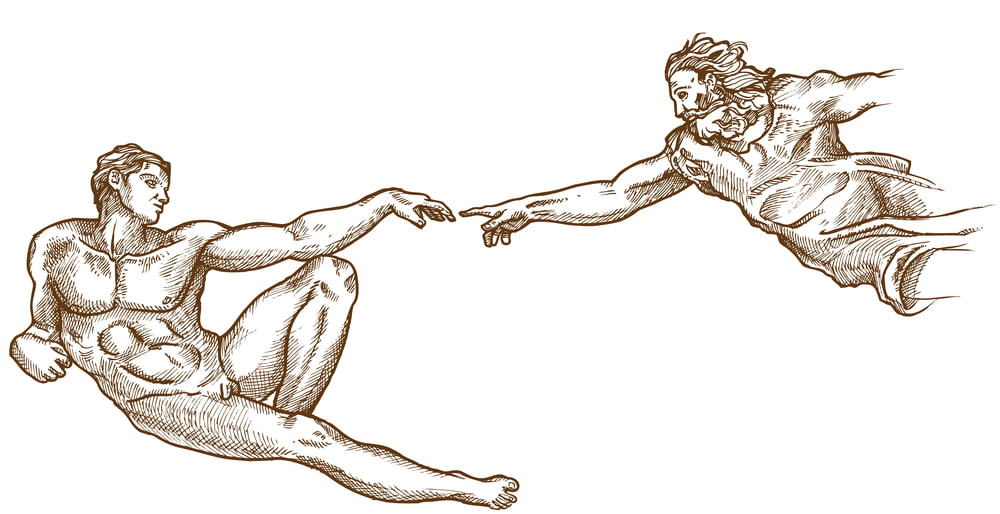
The Sistine Chapel’s figures were not always dressed. Michelangelo painted the ceiling and the Last Judgment altar wall with the human form as he understood it — unclothed, muscular, unflinching — and for a time, that was that.
Then came the Council of Trent and a painter named Daniele da Volterra, commissioned to add drapery over the most conspicuous figures after Michelangelo’s death in 1564. Da Volterra earned the unfortunate nickname Il Braghettone — “The Breeches Maker” — a legacy that probably wasn’t what he’d hoped for.
Most of his additions were removed during the 1990s restoration, but some remain.
Diego Rivera’s Rockefeller Center Mural
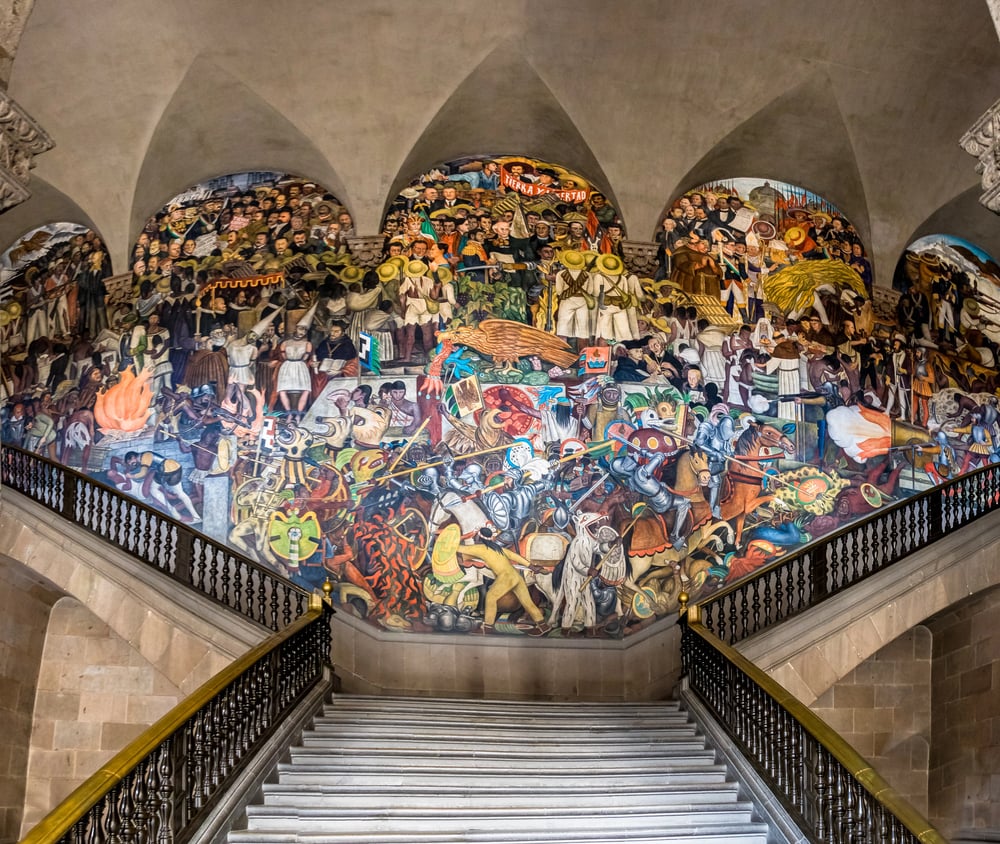
Diego Rivera was hired to paint a mural in Rockefeller Center in 1933, which went smoothly right up until he included a portrait of Vladimir Lenin. Nelson Rockefeller asked him to remove it.
Rivera refused. The mural was covered with brown paper almost immediately, and by February 1934 it had been chiseled off the wall entirely — an act Rivera called cultural vandalism, which, to be fair, it was.
He later recreated it in Mexico City’s Palacio de Bellas Artes, where it hangs today with Lenin still very much intact.
Gustave Courbet’s “L’Origine du Monde”
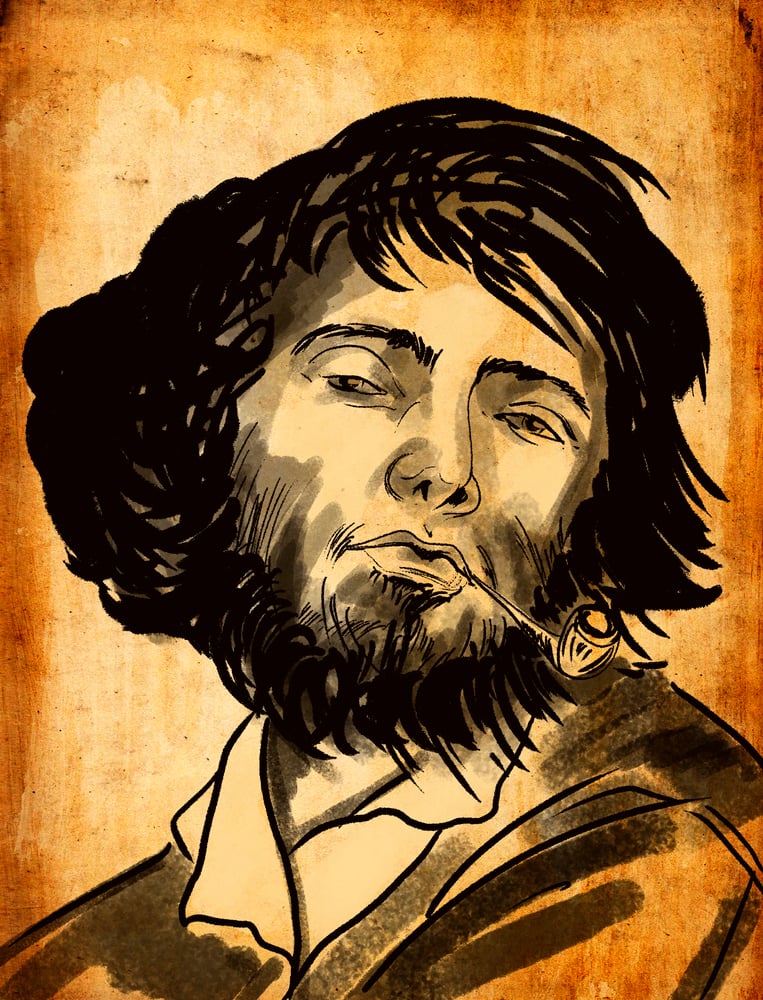
Courbet painted L’Origine du Monde in 1866 for a private collector, and it spent the better part of a century passing between discreet owners who understood that keeping it visible was not an option. The painting — a direct, close-cropped depiction of the female torso — lived behind locked doors, inside cabinets, occasionally hidden behind other paintings hung on top of it, like a secret folded inside another secret.
Jacques Lacan owned it for years and had a wooden panel painted over it. It only entered permanent public display at the Musée d’Orsay in 1995.
John Singer Sargent’s “Madame X”
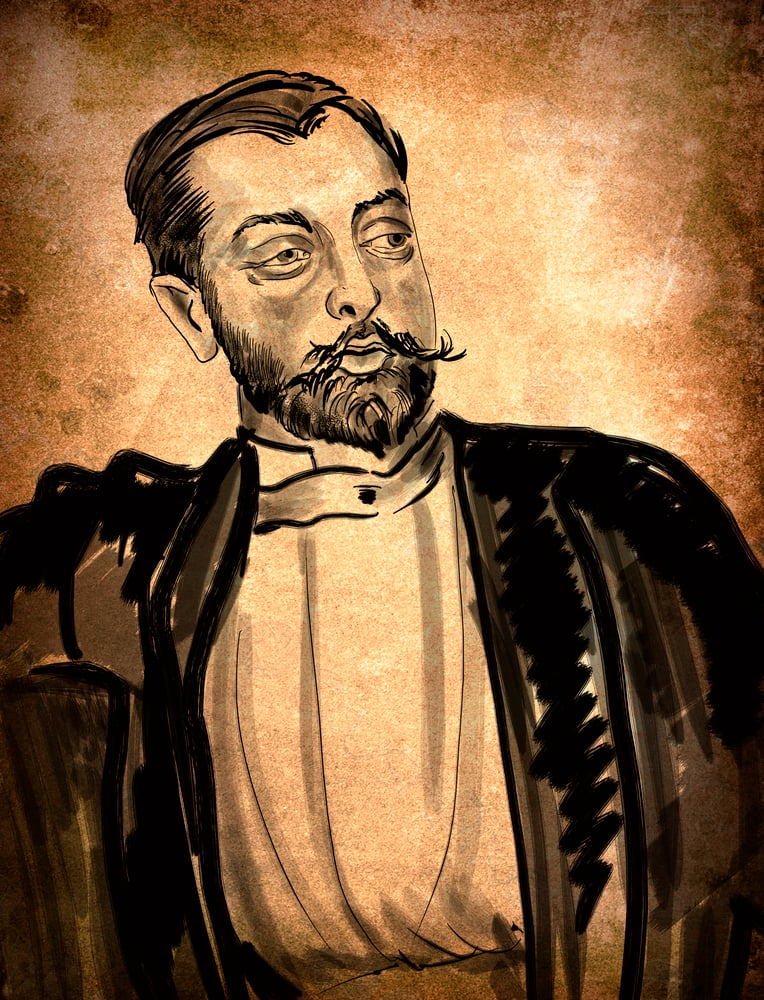
Madame X nearly ended Sargent’s career when it debuted at the 1884 Paris Salon. The subject — Virginie Amélie Avegno Gautreau — was shown with one dress strap fallen off her shoulder, which the crowd found scandalous enough to force Sargent into temporary exile in London.
He repainted the strap in its proper raised position and kept the work in his studio for decades, refusing to sell it publicly during her lifetime. The painting eventually went to the Metropolitan Museum of Art in 1916, where it’s now considered one of the great portraits of the 19th century.
Käthe Kollwitz’s Memorial Sculptures
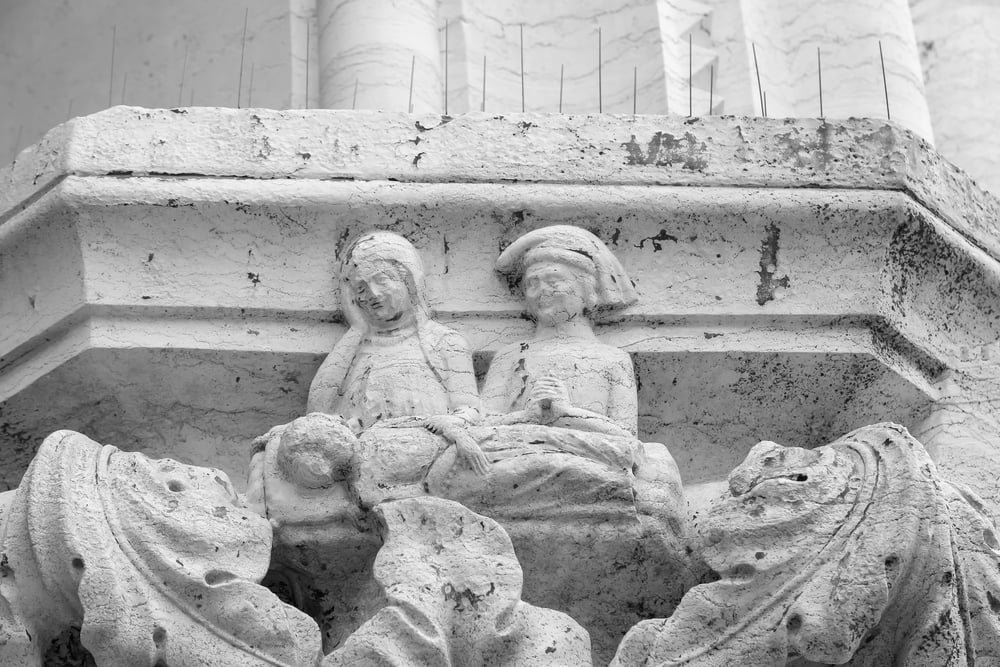
Käthe Kollwitz completed The Grieving Parents in 1932, a pair of stone figures kneeling in grief at a German war cemetery in Belgium — her own son Peter buried among the dead there. The Nazis found her work ideologically useless, possibly dangerous: art about mourning soldiers rather than glorifying them was not the story they wanted told.
She was removed from the Prussian Academy of Arts in 1933, her work was pulled from exhibitions, and for years her sculptures were largely absent from German public life. She died in 1945, weeks before the war ended.
Thomas Hart Benton’s Indiana Murals
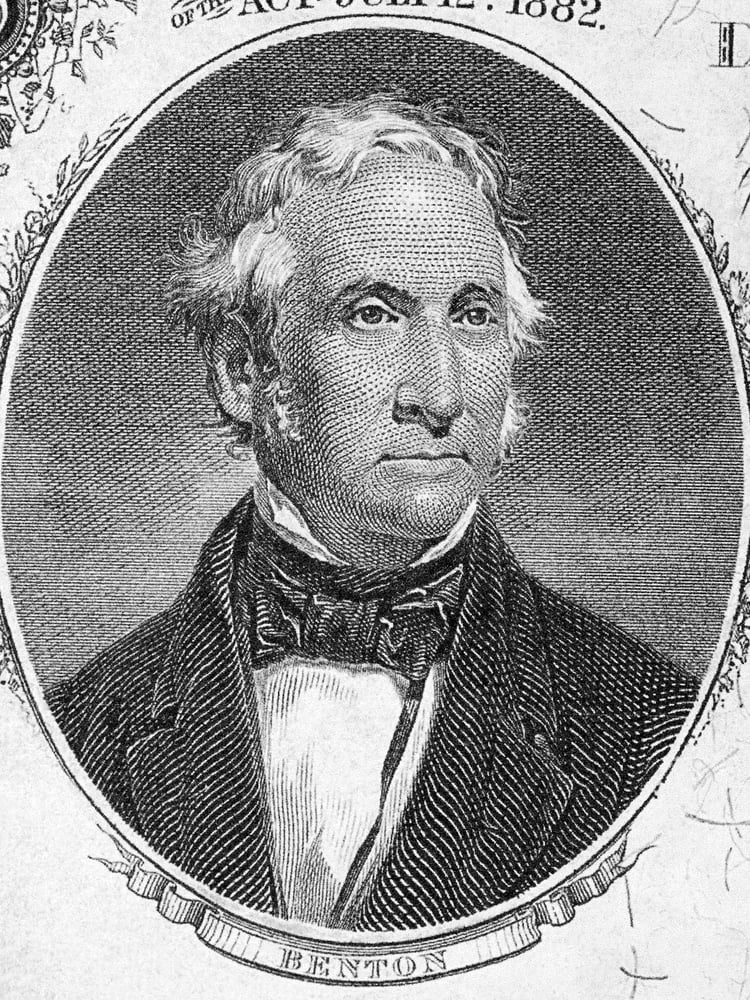
Thomas Hart Benton painted a sweeping mural cycle for the 1933 Chicago World’s Fair depicting Indiana’s history — including its documented history with the Ku Klux Klan, which had held enormous political power in the state during the 1920s. The panels were too honest for comfort.
After the Fair, the murals were essentially buried: stored, moved, argued over, and kept out of public view for decades before eventually landing at Indiana University’s Eskenazi Museum of Art, where they remain one of the most politically uncomfortable large-scale American artworks of their era.
Aubrey Beardsley’s Lysistrata Illustrations
Beardsley’s illustrations for Aristophanes’ Lysistrata, produced in 1896, were commissioned as a limited private edition — which was the Victorian publishing world’s way of acknowledging that something was too explicit for general circulation. The drawings are elaborate, grotesque, and deliberately intriguing, full of figures drawn with an almost architectural precision.
They circulated quietly among collectors for decades and were not reproduced openly until well into the 20th century. Beardsley died at 25, which somehow made the work feel more transgressive rather than less.
Paul Gauguin’s Noa Noa Woodcuts
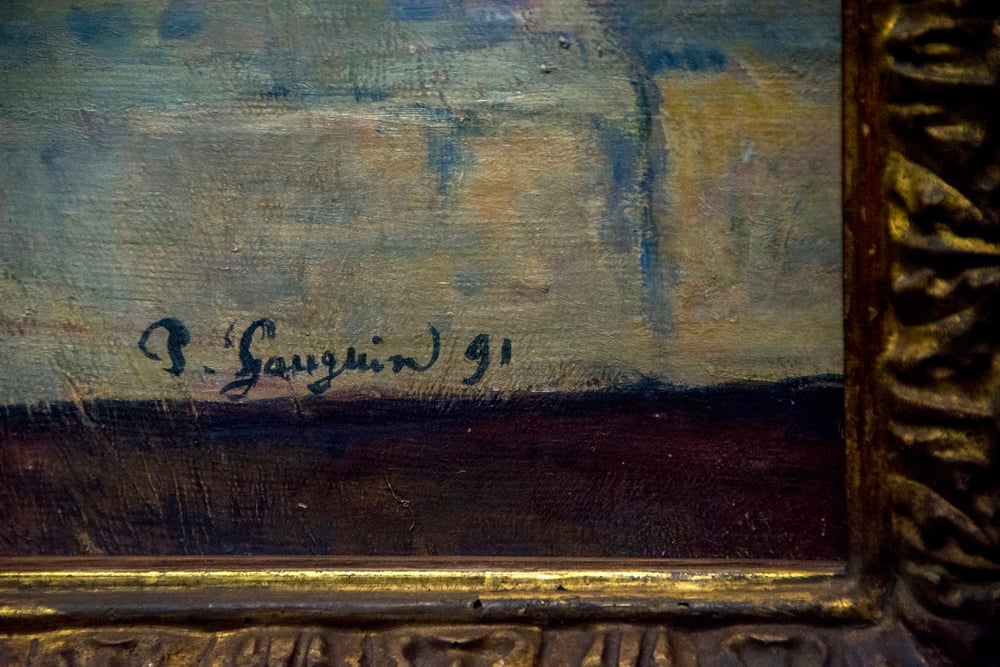
Gauguin produced the Noa Noa woodcut series between 1893 and 1894 after his first return from Tahiti, raw and deliberately rough — the opposite of polished Parisian printmaking. Dealers weren’t interested, collectors found them primitive in the wrong way, and the series languished with almost no public exposure during his lifetime.
What makes this particular suppression quietly painful is that Gauguin understood these prints as his most honest work — not decorative objects but records of something he’d actually experienced. The prints are now in major museum collections worldwide.
Salvador Dalí’s Dream of Venus Pavilion
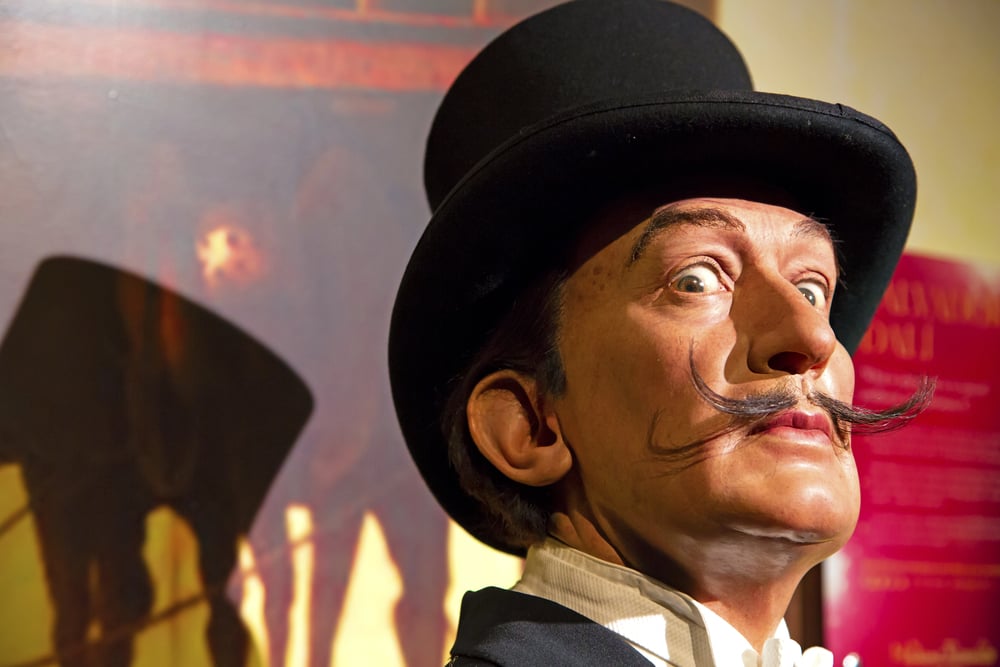
Dalí’s Dream of Venus pavilion at the 1939 New York World’s Fair was meant to include a figure of Venus with a fish head — Dalí’s design, his vision. The World’s Fair committee rejected it as too bizarre and forced alterations.
Dalí was so furious he wrote and distributed a manifesto titled Declaration of the Independence of the Imagination and the Rights of Man to His Own Madness, which is exactly the kind of response you’d expect from Salvador Dalí and also, frankly, correct. The original design was never fully realized.
Ben Shahn’s Rockefeller Center Studies
Before Rivera’s mural was destroyed, Ben Shahn had been working on preliminary studies for other proposed Rockefeller Center murals focused on American labor and social justice. The political climate — and what happened to Rivera — made the Rockefeller organization deeply nervous about social realist content on their walls.
Shahn’s designs were rejected, the project was shelved, and those studies remained in private hands and sketchbooks rather than on the walls of one of the most visible buildings in New York.
Hans Haacke’s “Shapolsky et al.”
Hans Haacke’s 1971 installation Shapolsky et al. Manhattan Real Estate Holdings, a Real-Time Social System, as of May 1, 1971 documented a slumlord real estate network through photographs and property records — art as investigative journalism. The Guggenheim Museum canceled his scheduled solo exhibition six weeks before it opened, citing that the work crossed from art into politics.
The curator who supported the show, Edward Fry, was fired. The piece became a landmark case in the censorship of institutional critique, and the Guggenheim spent years trying to live down the decision.
Arnold Schoenberg’s “Die Jakobsleiter”
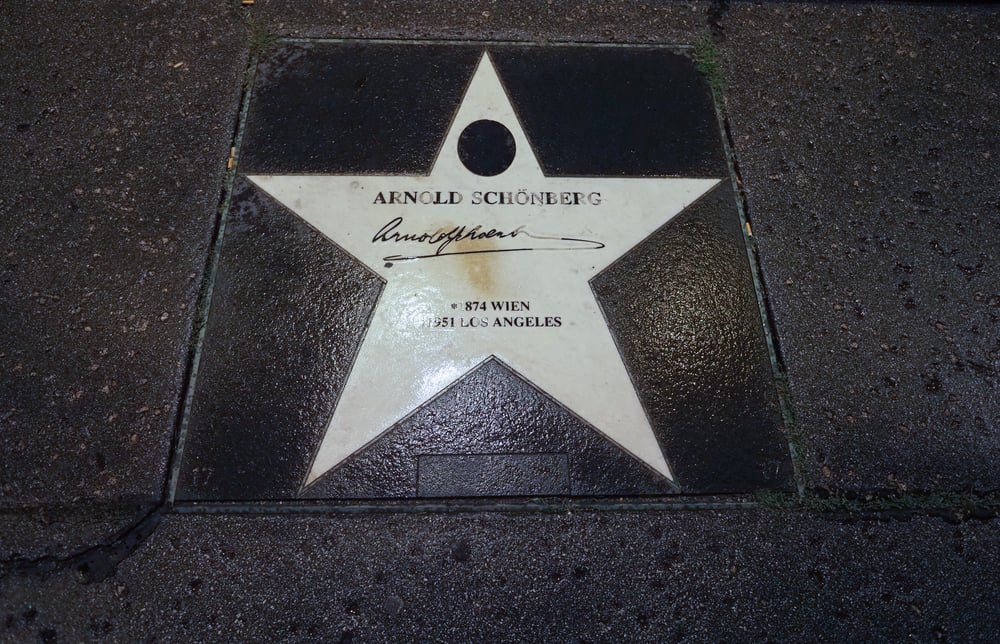
Schoenberg began composing Die Jakobsleiter in 1917, an oratorio of enormous ambition — spiritual, atonal, unresolvable — and never finished it. He worked on it on and off for decades, and after his death in 1951 the unfinished manuscript sat in an archive, the kind of thing scholars whispered about but the public never heard.
A performing version was eventually completed by Winfried Zillig and premiered in 1961, but the work remains one of those permanent near-things: a massive artistic statement that history kept interrupting.
Constantin Brancusi’s “Princess X”
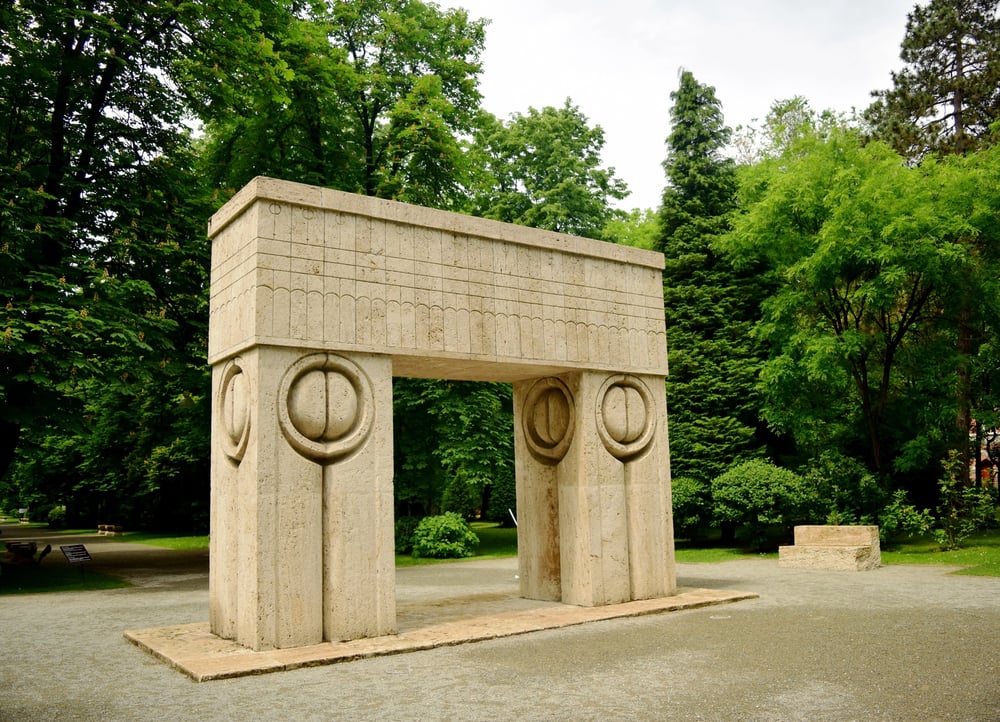
Brancusi exhibited Princess X at the 1920 Salon des Indépendants in Paris, a polished bronze abstraction of a female form — or, as the police who showed up decided, an indecent sculpture. They ordered it removed from the exhibition.
Brancusi insisted it was a portrait of Princess Marie Bonaparte rendered in pure form. The police were unmoved.
The sculpture spent decades circulating through private collections and was largely absent from major museum displays until the late 20th century.
Francisco Goya’s “Saturn Devouring His Son”
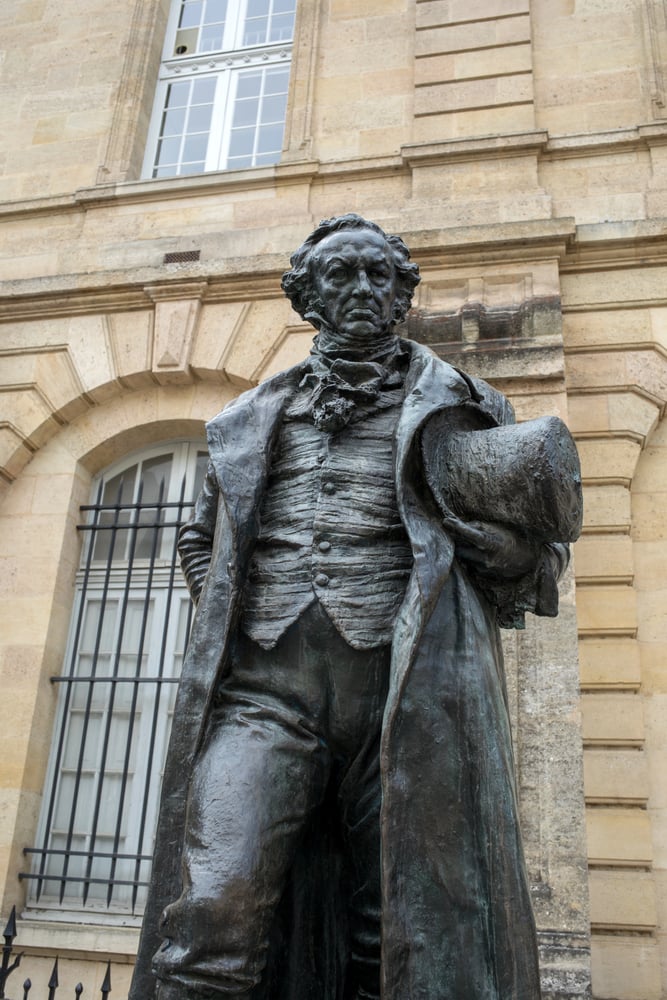
Goya painted Saturn Devouring His Son directly onto the wall of his house — one of fourteen “Black Paintings” he made in the last years of his life, apparently with no intention of ever showing them publicly. They were plaster murals in a private home, raw and unframed, painted for an audience of one.
After his death, they were transferred to canvas and eventually acquired by the Prado, but for decades they existed as rumors, described by the few people who visited the house, unknown to the broader public. What you see in the Prado is a transfer of something that was never meant to leave the wall.
Judy Chicago’s “The Dinner Party”
The Dinner Party debuted in 1979 to enormous public attention and immediate institutional resistance. The work — a triangular table setting honoring 39 historical women, with ceramic plates of stylized butterfly and floral imagery — was described on the floor of Congress as “ceramic pornography” by Representative Robert Dornan, who helped block its planned donation to the University of District of Columbia.
It spent decades in storage, owned by Chicago herself, shown occasionally but without a permanent home. The Brooklyn Museum finally gave it a permanent installation in 2007.
Otto Dix’s War Triptych
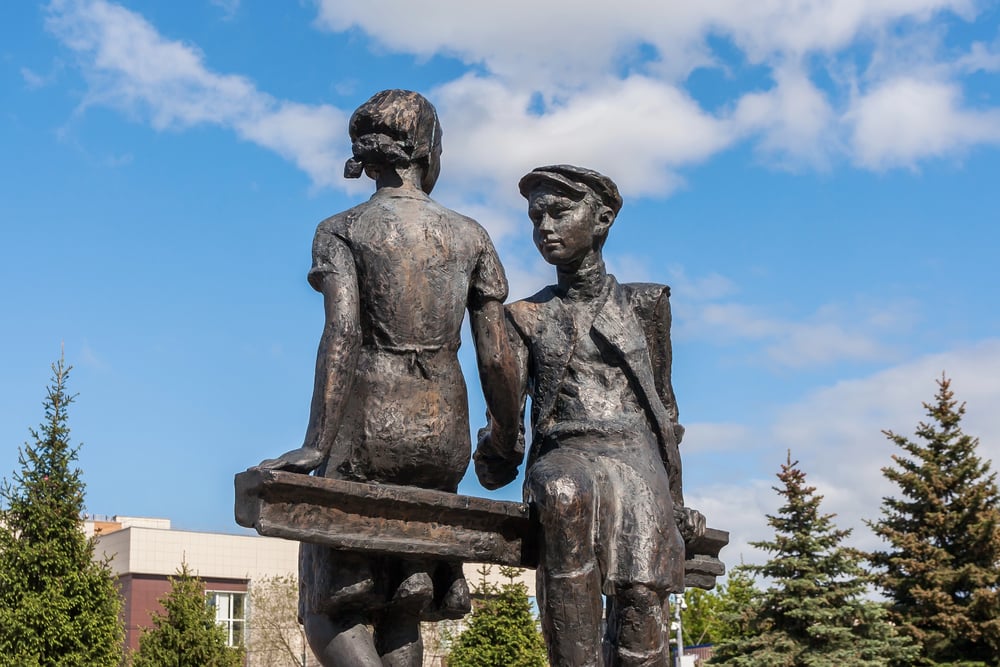
Otto Dix completed his triptych Der Krieg in 1932, a deliberately medieval altarpiece structure used to depict the Western Front in unflinching, rotting detail — bodies, gas, mud, rats. The Nazis confiscated it in 1937 when they seized works from German museums for the Entartete Kunst (“Degenerate Art”) exhibition, designed to mock modernism rather than celebrate it.
The triptych was hidden in the basement of the Dresden city museum for years, surviving the war in storage while the city above it burned.
Norman Rockwell’s “Southern Justice”
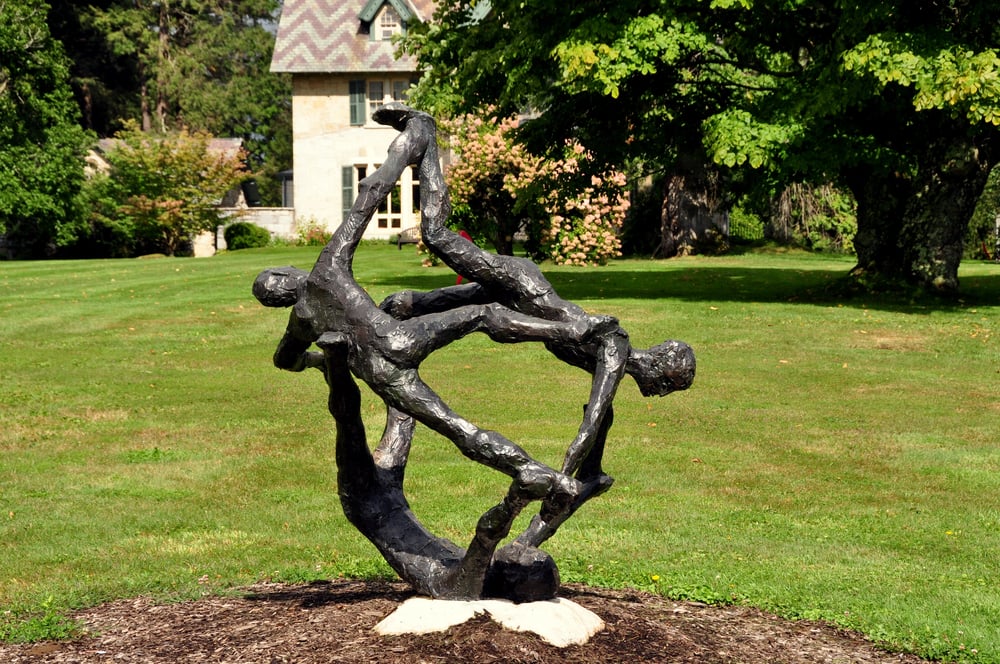
Rockwell painted Southern Justice (Murder in Mississippi) in 1965 depicting the murders of civil rights workers Chaney, Goodman, and Schwerner. Look magazine published it, but the painting itself had a strange subsequent invisibility — not officially banned, just quietly unwelcome in the civic mythology of Rockwell as the cheerful illustrator of American life.
The painting contradicted that story completely. It was donated to the Mississippi Museum of Art in 2007, which might be the most pointed act of provenance in American art history.
Egon Schiele’s Confiscated Works
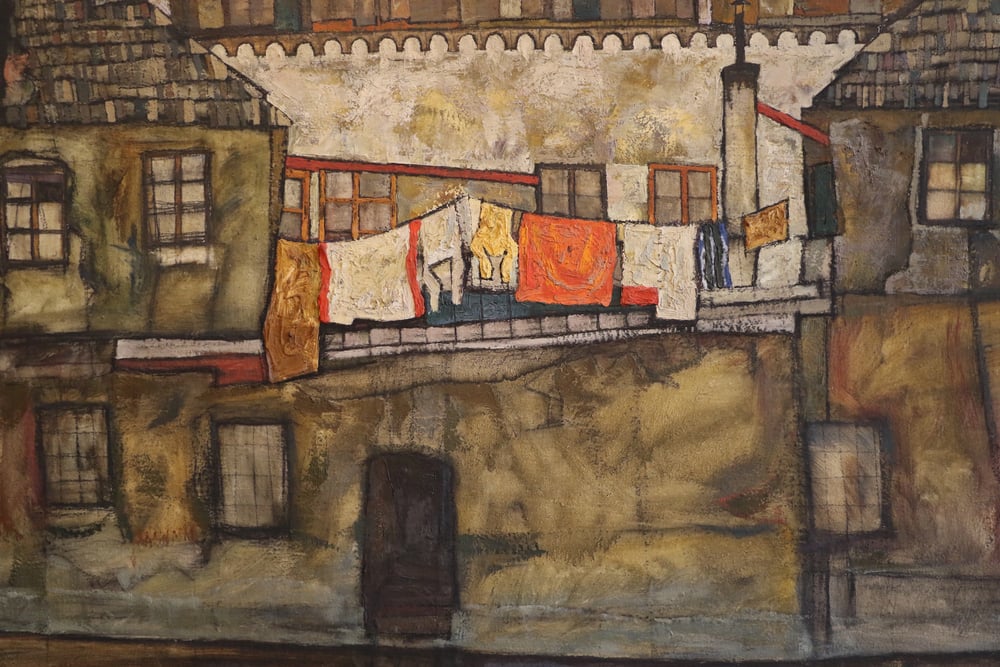
Egon Schiele was actually arrested in 1912 in the Austrian town of Neulengbach, and the local magistrate had one of his drawings burned in the courtroom as a symbolic act of censorship. Multiple other works were confiscated.
Schiele served 24 days in prison. He died of Spanish flu in 1918 at age 28, and his entire body of work remained genuinely difficult to exhibit publicly in many countries until the latter half of the 20th century — the kind of slow, institutional discomfort that outlasts any individual arrest.
Marc Chagall’s Jewish Museum Murals
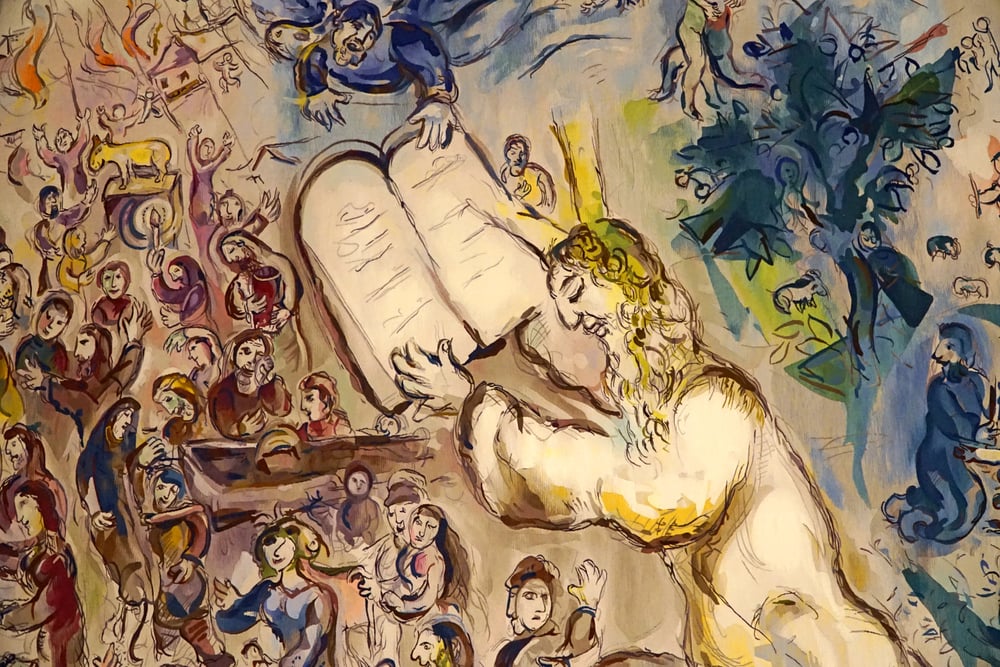
In 1920, Chagall painted a series of large panels for the Moscow State Jewish Theatre — a landmark of modernist Jewish art made possible by the brief window of cultural openness in early Soviet Russia. By the 1930s, official Soviet policy had turned against both modernism and Jewish cultural institutions, and the panels were taken down and stored.
They survived only because they were kept in the theater’s collection rather than destroyed outright, but they were invisible to the public for decades before finally being restored and exhibited.
Rockwell Kent’s Government Building Mural
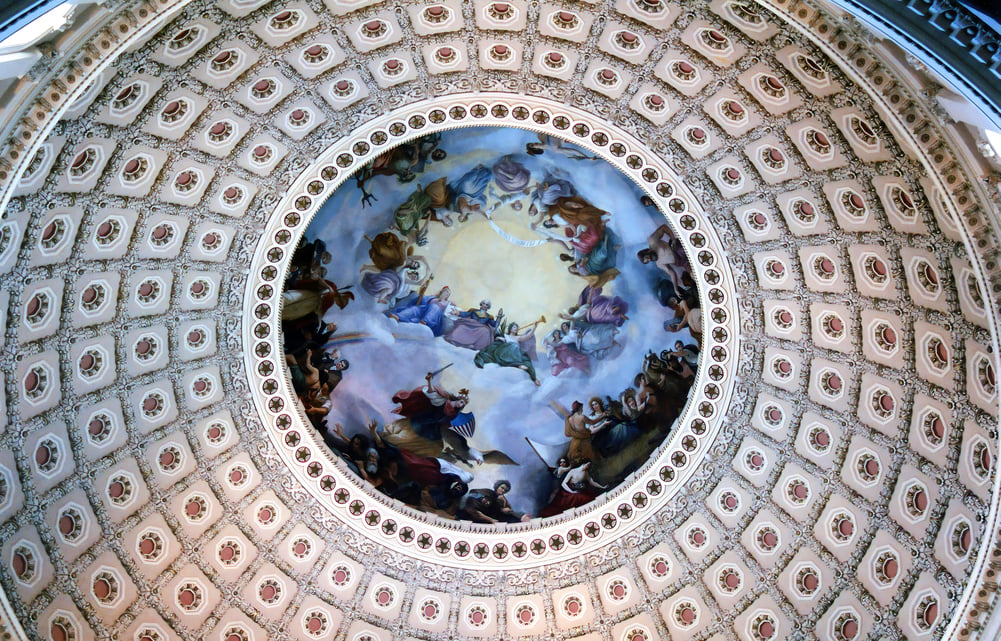
Rockwell Kent painted two murals for the Washington, D.C. post office in 1937, and one of them contained a hidden message in the Aleut language calling for Puerto Rican and Hawaiian independence. When the message was discovered and decoded in the 1940s, the Postmaster General ordered the mural concealed.
It was covered for years, Kent was investigated by the House Un-American Activities Committee, and the mural only became visible again after a long restoration process. The message is still there.
Frida Kahlo’s “My Birth”
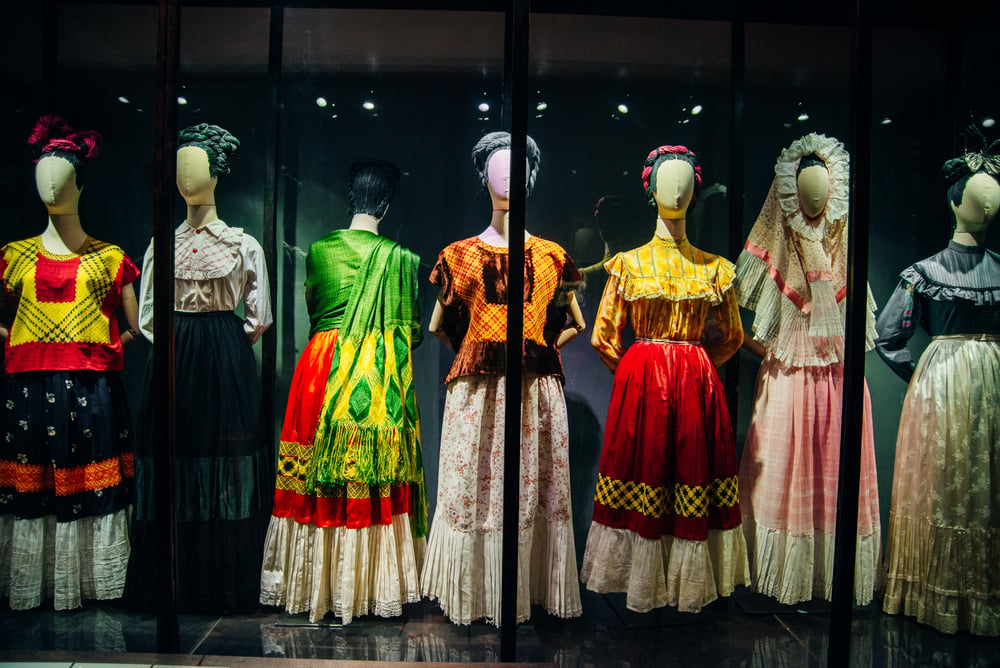
Kahlo painted My Birth in 1932 — a confrontational, unapologetic depiction of childbirth and grief rolled into one image — and it spent decades unseen by the public. Diego Rivera owned it and kept it; most collectors who encountered it quietly declined to pursue it.
When Madonna purchased the painting in the 1980s and mentioned it publicly, critics were genuinely surprised the work existed. It is now considered one of the most important self-referential works in 20th-century painting, which makes its long absence from public view feel less like prudishness and more like a missed conversation.
Fernand Léger’s Rejected American Works
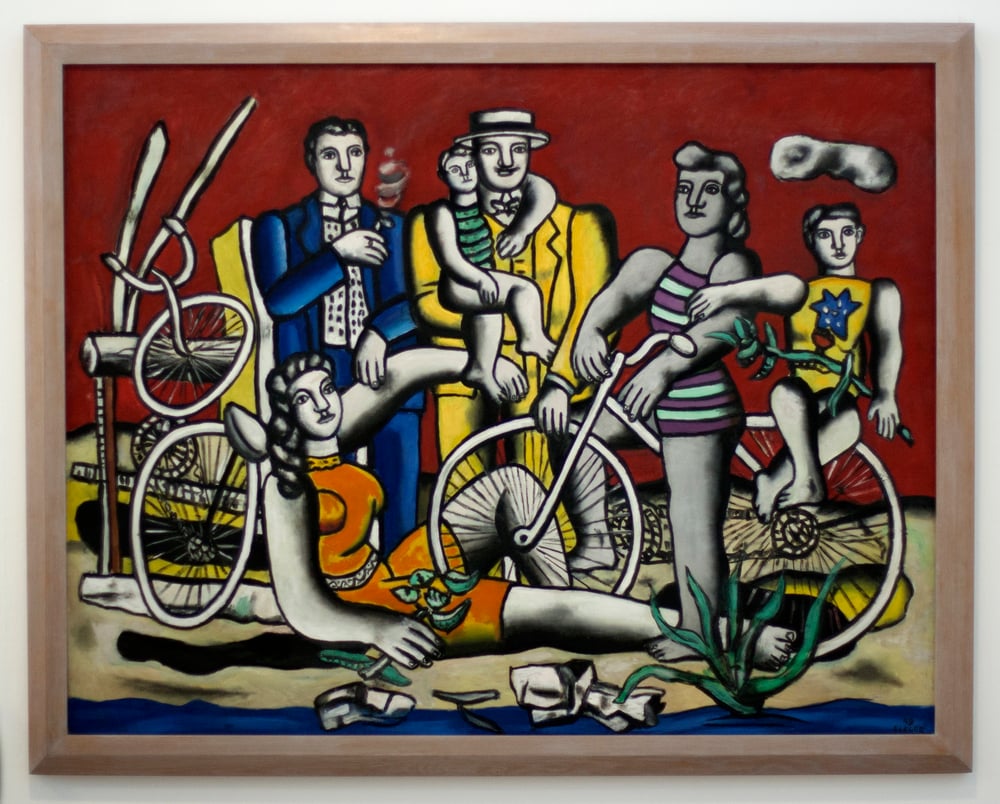
Léger spent years in the United States during World War II, and several of his large-scale works commissioned for American sites were either rejected or quietly shelved when patrons realized the content had a strong socialist underpinning — workers, machines, collective labor depicted with the dignity of religious iconography. The postwar Red Scare made anything that looked sympathetically at labor politically charged.
Several major works went into private collections rather than the public buildings they were designed for, and their intended context was simply lost.
Ai Weiwei’s Confiscated Works
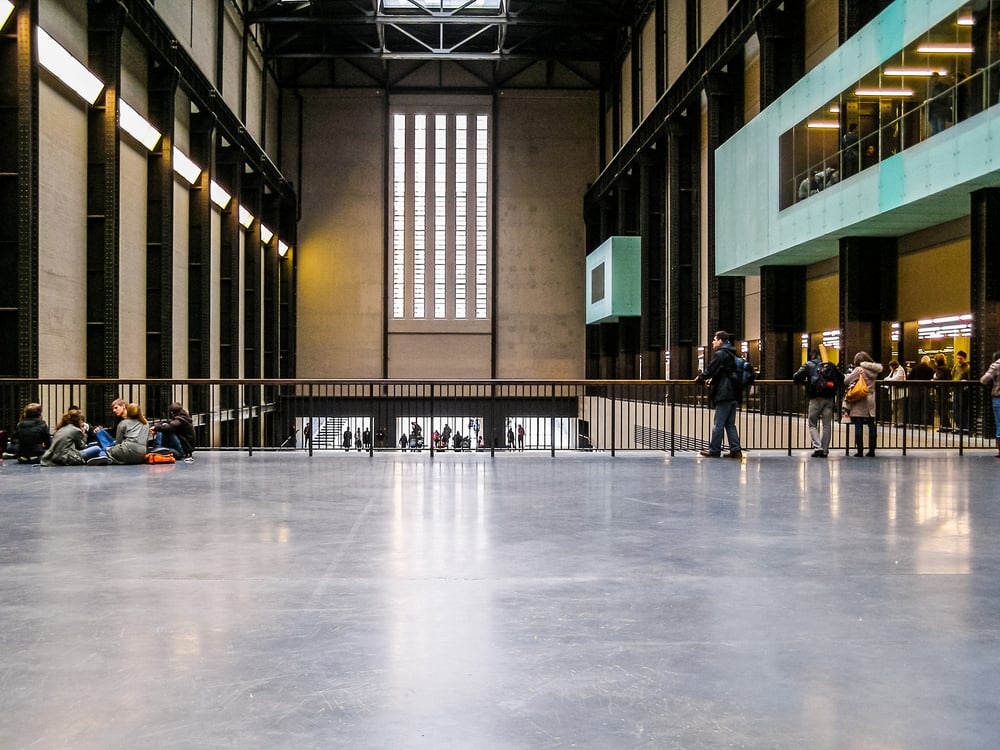
When Ai Weiwei installed Sunflower Seeds at the Tate Modern’s Turbine Hall in 2010 — 100 million hand-painted porcelain seeds spread across the floor — the public was invited to walk on it. That wasn’t censorship.
But in 2011 the Chinese government demolished Ai Weiwei’s Shanghai studio, confiscated works, and detained him for 81 days without charge, effectively suppressing his entire practice for a period. The studio demolition was documented; the confiscated works have never been fully accounted for.
The government’s position was that no art had been destroyed. Nobody believed it.
Tomi Ungerer’s Children’s Books
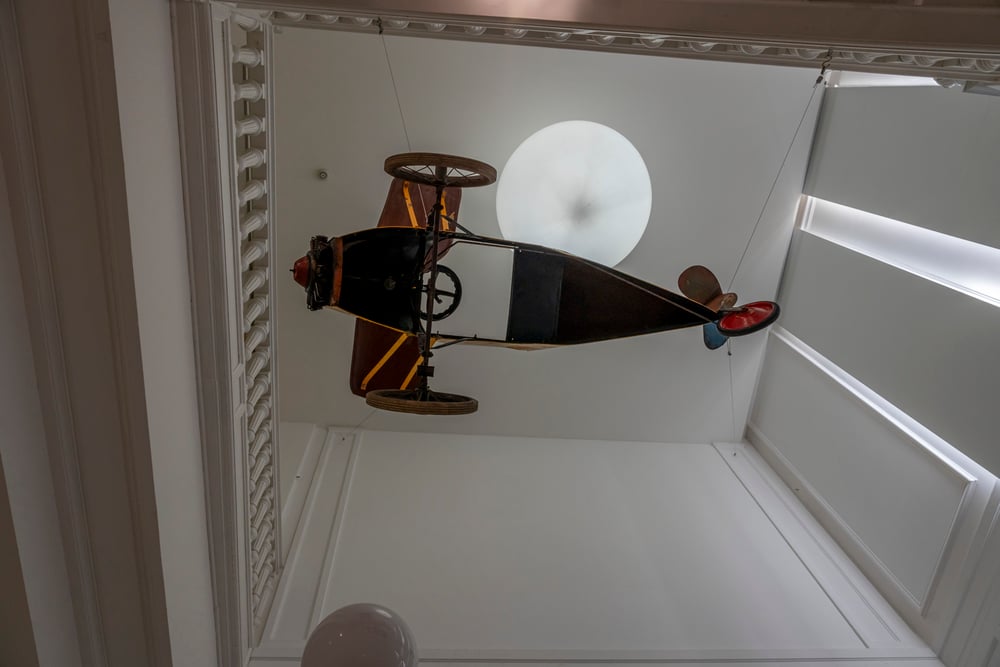
Tomi Ungerer was one of the most celebrated illustrators in America in the late 1960s — beloved for children’s books — until his adult satirical work became widely known and libraries began pulling his children’s titles from shelves in protest. He was effectively blacklisted from the American children’s book market for roughly two decades.
His books remained out of print in the U.S. while he continued working in Europe, and his rehabilitation in American publishing didn’t begin in earnest until the 1990s. The books themselves hadn’t changed.
The climate around them had.
George Bellows’s “Stag at Sharkey’s”
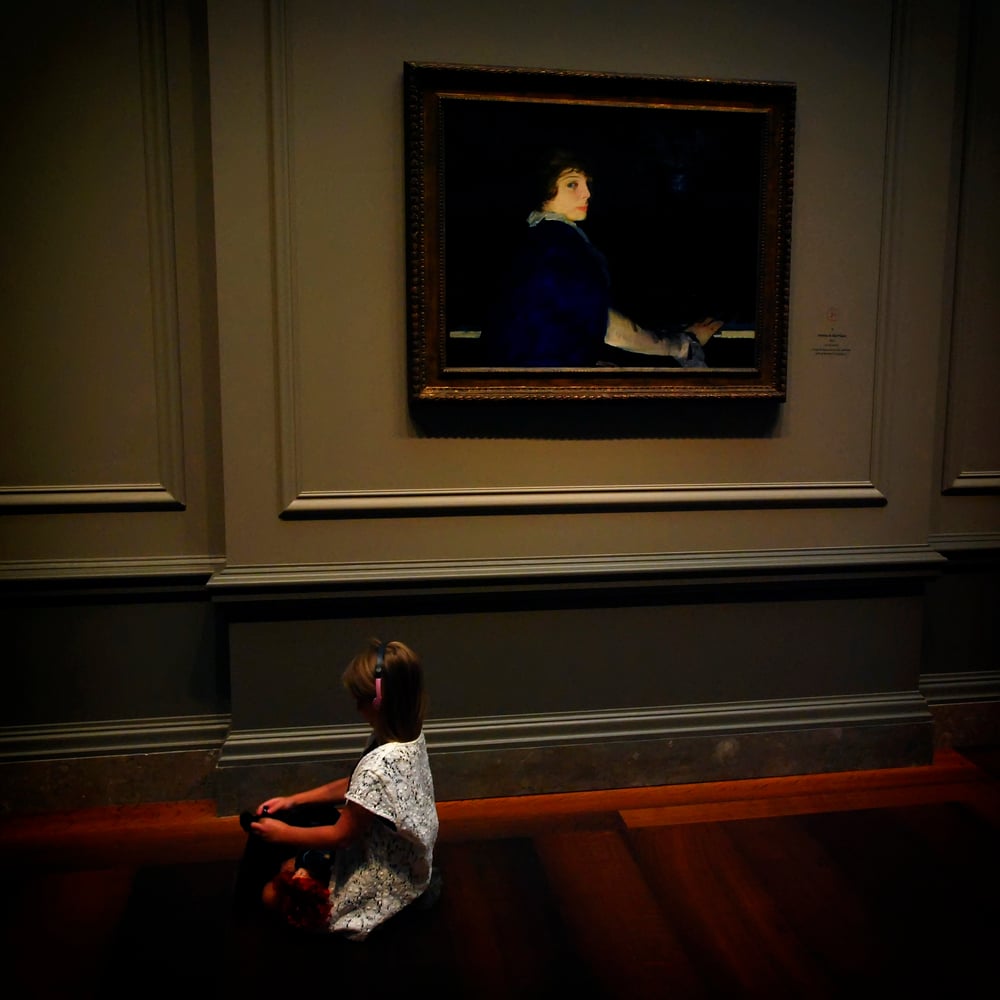
Bellows painted Stag at Sharkey’s in 1909, depicting an illegal prize fight at a private athletic club, with enough visceral energy that you can almost smell the canvas. Prize-fighting was illegal in New York at the time, and the work existed in a legal gray zone that made its public exhibition complicated.
It circulated through private exhibitions and was not widely reproduced in the press for years. The Cleveland Museum of Art acquired it in 1922, where it’s been ever since — though it took a long time for the mainstream art world to treat it as more than a curiosity.
Käthe Kollwitz’s “The Weavers” Cycle
Kollwitz’s first major cycle, The Weavers, depicted the 1844 Silesian weavers’ revolt with a directness that made the Prussian authorities deeply uneasy. Kaiser Wilhelm II personally blocked her from receiving the Great Berlin Art Exhibition’s gold medal in 1898, which the jury had voted to award her.
The work was shown — it couldn’t be entirely hidden — but the official machinery of the German art establishment spent years making sure it did not receive the recognition it was owed. The Kaiser reportedly said he had no wish to give medals to the gutter.
When the Walls Talk Anyway
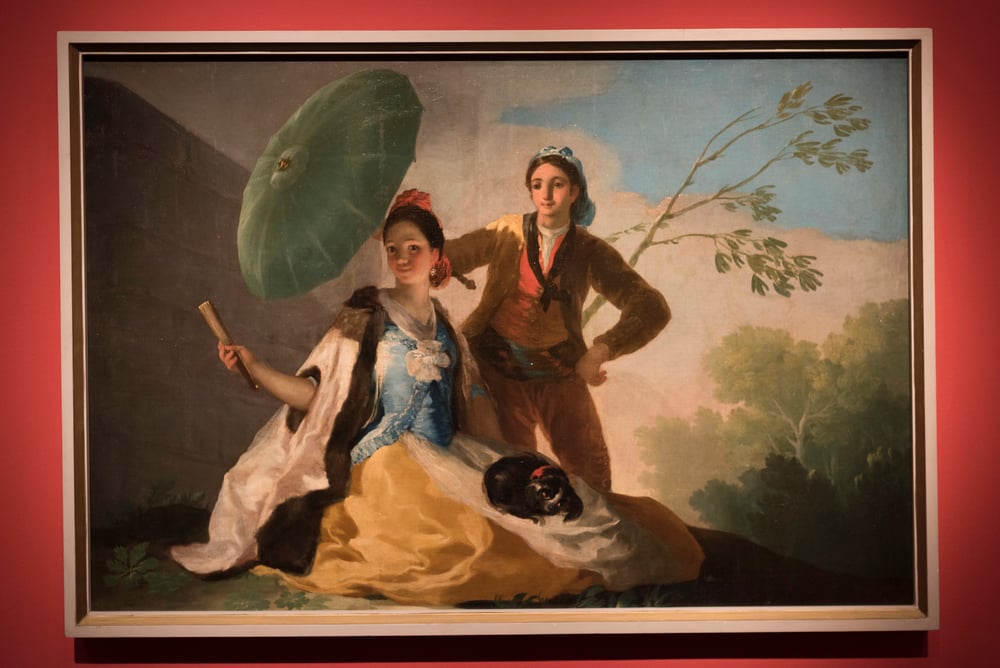
There’s something almost reassuring about how poorly censorship has worked across the centuries. Governments chiseled murals off walls and the artists recreated them elsewhere.
Committees draped statues and the drapery became part of the story. Works were stored in basements, hidden behind other paintings, locked in private collections — and they kept surfacing, kept demanding attention, kept outlasting the people who wanted them gone.
The Prado now has Goya’s wall paintings. The Brooklyn Museum has The Dinner Party.
Rockwell Kent’s hidden message is still in the post office wall. What the censors understood, and what ultimately didn’t save them, is that suppression is a form of attention.
You cannot lock a thing away without also telling everyone that it’s there, and that it matters enough to hide.
More from Go2Tutors!

- The Romanov Crown Jewels and Their Tragic Fate
- 13 Historical Mysteries That Science Still Can’t Solve
- Famous Hoaxes That Fooled the World for Years
- 15 Child Stars with Tragic Adult Lives
- 16 Famous Jewelry Pieces in History
Like Go2Tutors’s content? Follow us on MSN.