Unique Cultural Traditions from Around the Globe
Every culture has its own rhythm. The way people mark births, mourn the dead, celebrate harvests, welcome strangers — these rituals say more about a community than any history book could. Some traditions look strange from the outside. Others make you wish you’d been born into them.
All of them remind you that there are hundreds of different ways to be human. Here’s a look at some of the most fascinating cultural traditions practiced around the world today.
Tossing the Caber in Scotland
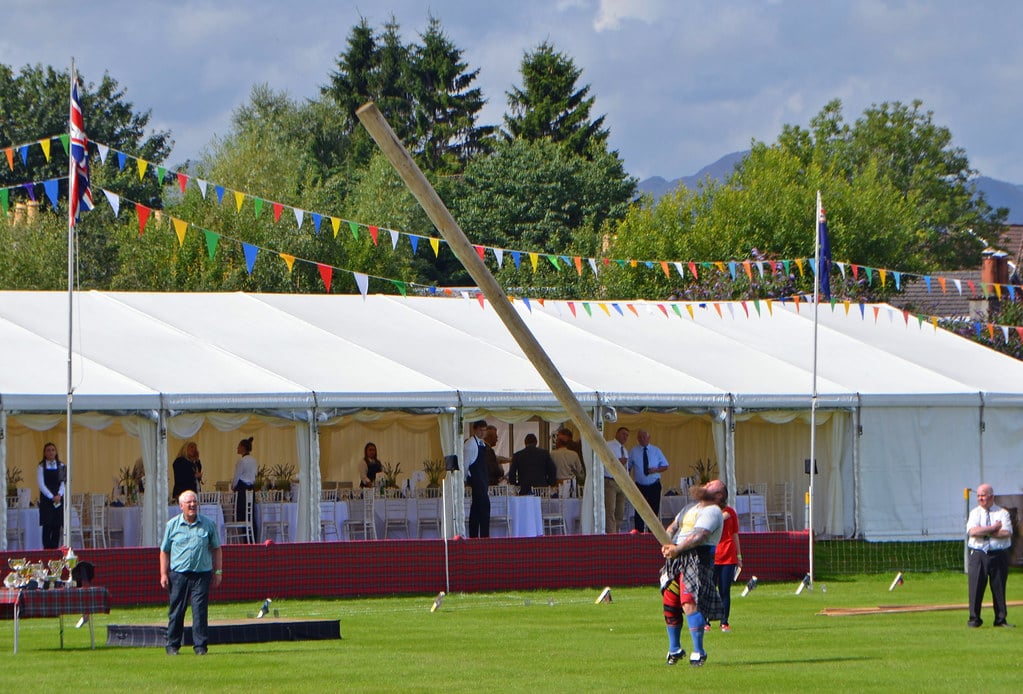
Every summer, Scots gather at Highland Games events to watch enormous men hurl a telephone pole-sized log end over end across a field. The caber toss isn’t about distance — it’s about how straight the log lands after the flip.
A perfect toss falls at exactly 12 o’clock from the thrower’s perspective. Nobody fully agrees on where this tradition started, but it’s been part of Scottish culture for centuries.
These days, Highland Games are held across the world, from New Zealand to Canada, wherever Scottish communities put down roots.
The Famadihana Festival in Madagascar
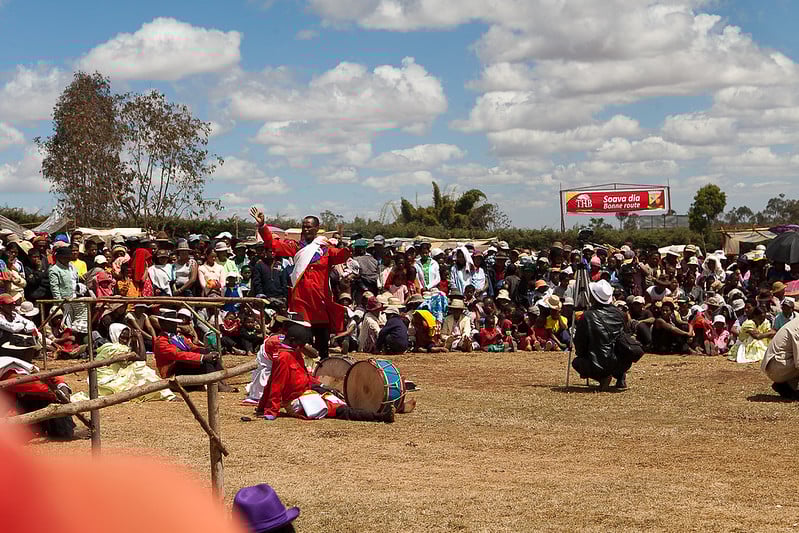
In Madagascar, the Merina and Betsileo peoples practice a tradition called Famadihana — or “the turning of the bones.” Every few years, families exhume the remains of their ancestors, wrap them in fresh cloth, dance with them around the tomb, and then rebury them with celebration and music.
To outsiders, this sounds unsettling. But within the tradition, it’s an act of love. It keeps the connection between the living and the dead intact. The ancestors aren’t gone — they’re still part of the family.
Songkran Water Festival in Thailand
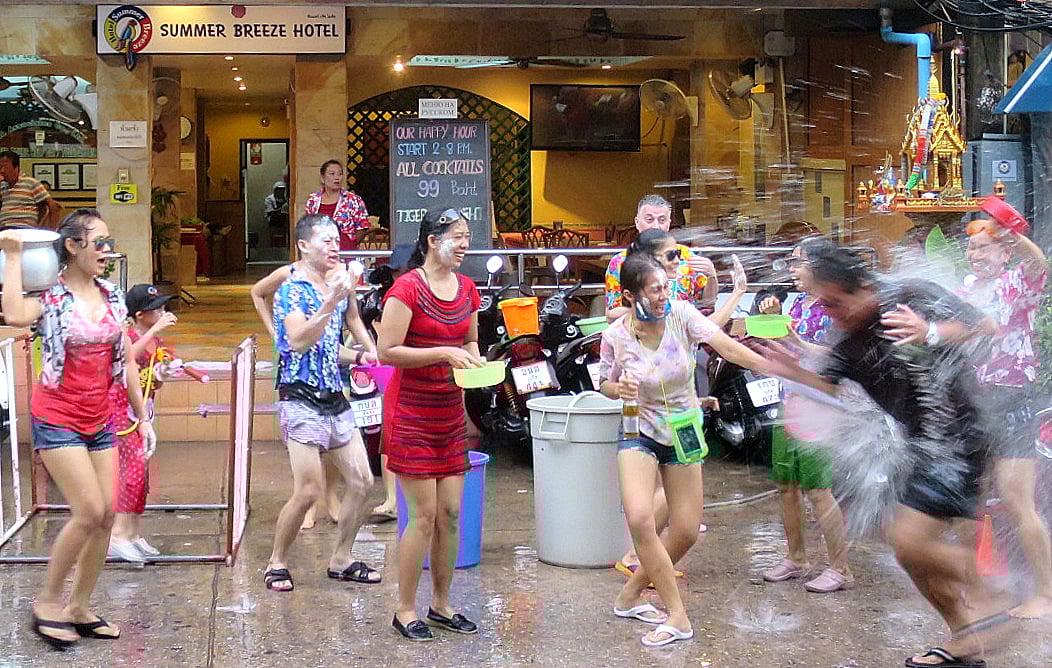
Thailand’s New Year falls in April, which is the warmest time of year. So the Thai people celebrate by throwing water at each other. For three days, streets turn into massive water fights. Trucks drive through cities with barrels in the back, strangers drench strangers, and even monks aren’t entirely off limits.
Songkran has roots in a gentle religious ritual — pouring water over the hands of elders as a sign of respect and blessing. That part still happens. But the streets? The streets are chaotic, and everyone loves it.
La Tomatina in Spain
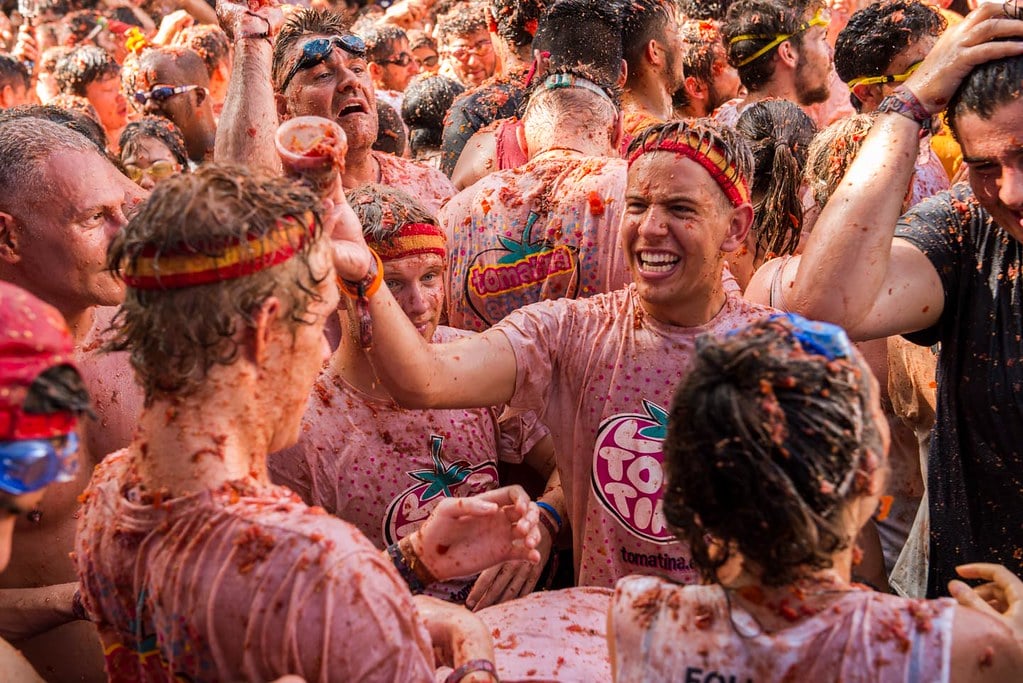
Every last Wednesday of August, the town of Buñol in Valencia hosts the world’s largest food fight. About 20,000 people cram into the streets and throw roughly 150,000 tomatoes at each other for exactly one hour. Then it stops. People wash off in the streets. The town hoses down the pavement.
It started in 1945, and the exact origin story is still debated. Some say it began when a group of young men crashed a parade and started throwing tomatoes from a nearby stall. Others have different versions. Whatever the origin, it’s stuck around for nearly 80 years.
The Cheese Rolling Race in England
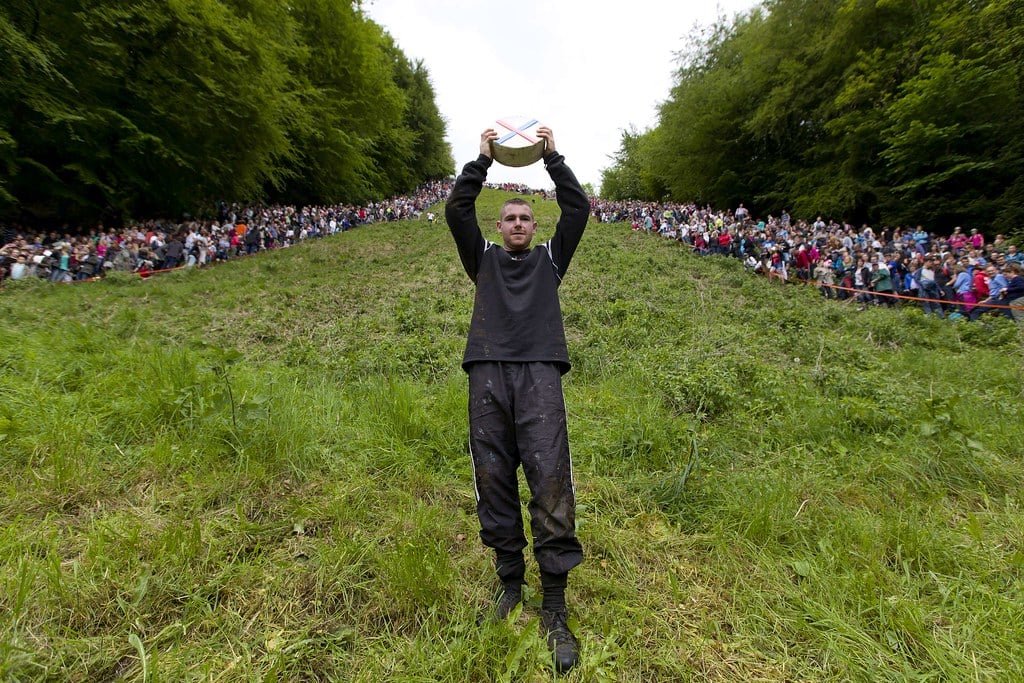
Once a year, people gather at Cooper’s Hill in Gloucestershire and hurl themselves down a dangerously steep slope chasing a wheel of Double Gloucester cheese. The cheese gets a one-second head start and can reach speeds over 70 miles per hour. The people chasing it tumble, roll, and crash. The first person to reach the bottom wins the cheese.
There are no real safety measures. Injuries happen every year. People come from around the world to compete anyway.
Holi in India
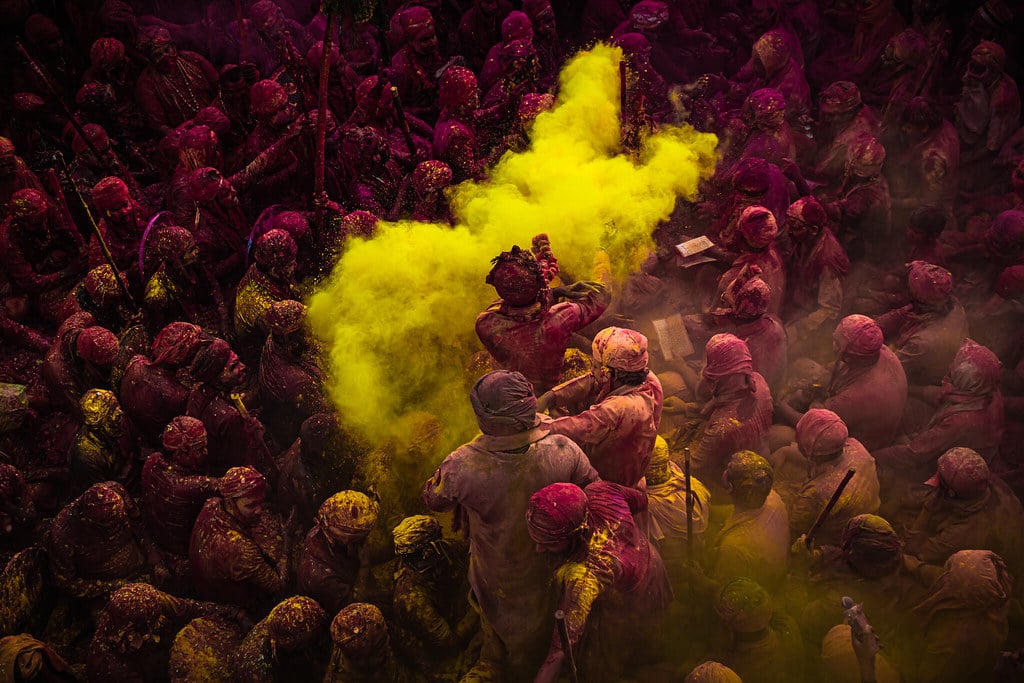
Holi begins on the evening of the full moon in late February or early March with a bonfire called Holika Dahan. The next morning, people take to the streets armed with colored powder and water, covering each other in clouds of pink, green, yellow, and blue.
The festival marks the arrival of spring and the victory of good over evil. But in practice, it’s also just a day when social boundaries dissolve. Rich, poor, young, old — everyone is equally covered in color by the end of it.
The Living Goddess Tradition in Nepal
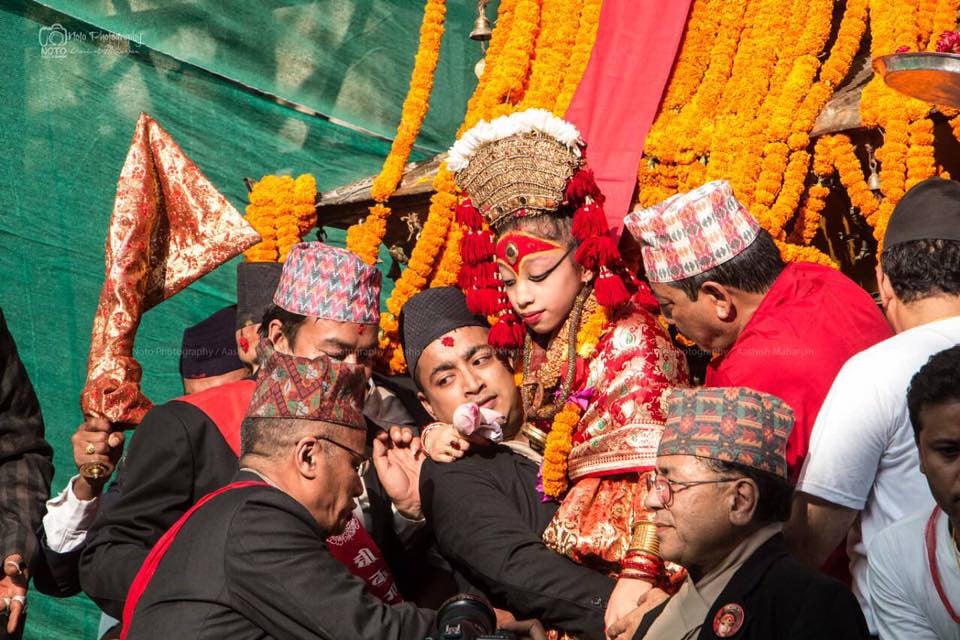
In the Kathmandu Valley, certain young girls are chosen to serve as Kumari — living embodiments of the goddess Taleju. The selection process is rigorous and involves examining 32 physical attributes, and the chosen girl must show no fear during a nighttime ritual surrounded by masked dancers.
A Kumari lives in a temple, appears in public for festivals, and is believed to hold divine power. When she reaches puberty, she returns to ordinary life, and a new Kumari is chosen. Former Kumaris are considered very auspicious to marry.
Groundhog Day In The United States
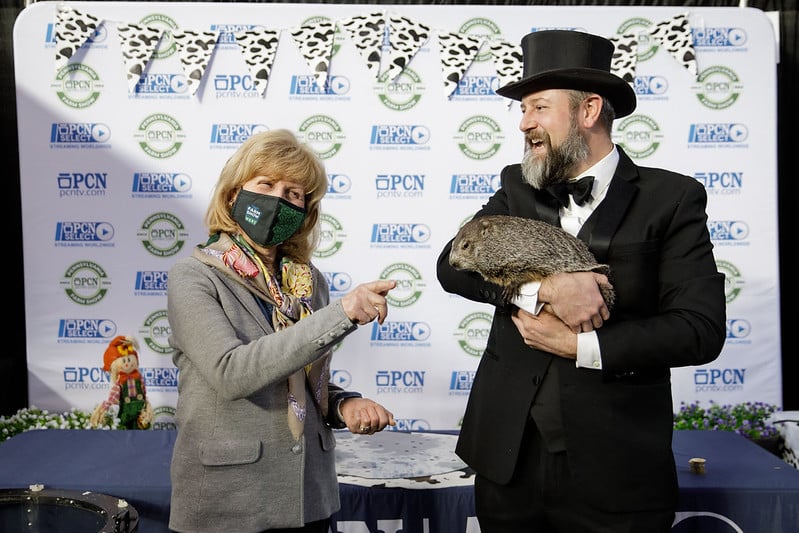
Every February 2nd, the town of Punxsutawney, Pennsylvania draws tens of thousands of people to watch a groundhog named Phil emerge from his burrow. If he sees his shadow, according to tradition, winter will last six more weeks. If he doesn’t, spring comes early.
Phil has been making this prediction since 1887. His accuracy rate is roughly 40 percent — slightly worse than flipping a coin. This has done nothing to reduce the crowd.
The Boat Festival Of The Torajan People In Indonesia
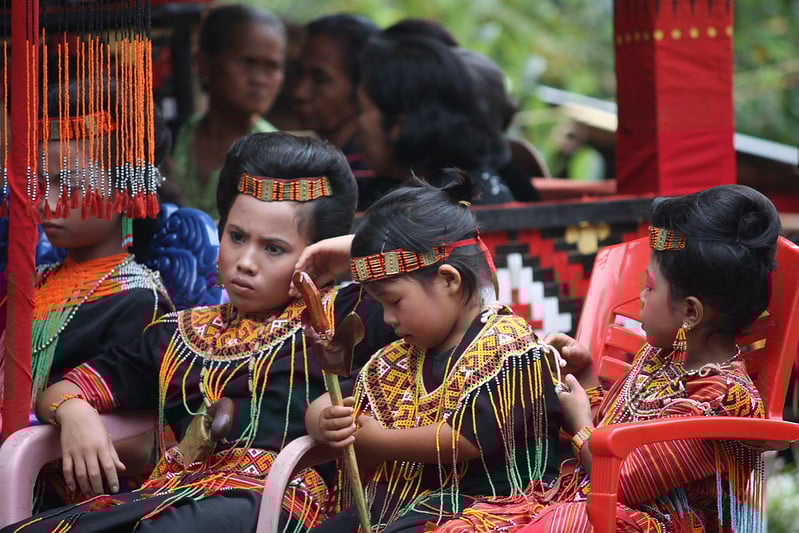
The Torajan people of Sulawesi, Indonesia have elaborate funeral traditions that can span days or even weeks, involving buffalo sacrifices, wooden effigies of the deceased, and entire villages coming together to honor the dead.
But there’s another tradition that stands out: the Ma’nene festival, where families retrieve the mummified remains of their ancestors, clean and dress them in fresh clothes, and parade them through the village. Like Famadihana in Madagascar, it’s a way of honoring the dead by keeping them present in the lives of the living.
Fire Walking In Multiple Cultures
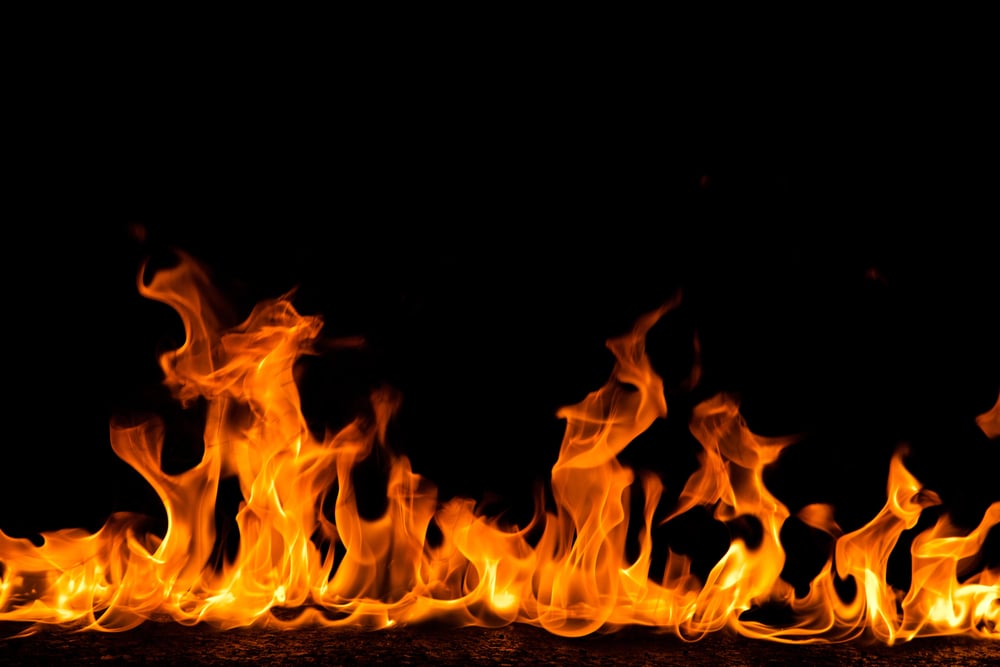
Walking barefoot across burning coals sounds like a stunt. But fire walking has been practiced for over 4,000 years across cultures as different as ancient Greece, India, Fiji, Spain, and China. In most traditions, it’s tied to spiritual preparation — a demonstration of faith, mental focus, or community belonging.
The physics of why it’s possible without severe burns is genuinely fascinating. But the meaning behind it depends entirely on where you are and who you ask.
The Carnival Of Venice In Italy
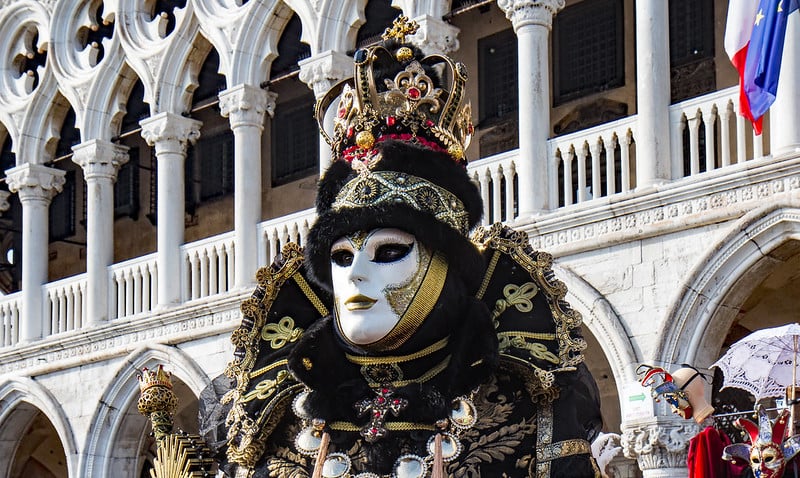
Midwinter brings a flood of masked figures to Venice’s narrow streets. Held for fourteen days, the festival began ages ago in the 1100s. Back then, disguises let everyone move through the city without labels. Rich or poor, identities vanished beneath fabric and paint. Because of that, palaces and alleyways saw the same hidden faces.
Out near Napoleon’s time, the custom faded away – only to spark back up decades later in the 1970s. These days, close to three million people show up, some having stitched together period-precise outfits over weeks or even longer.
Naadam In Mongolia
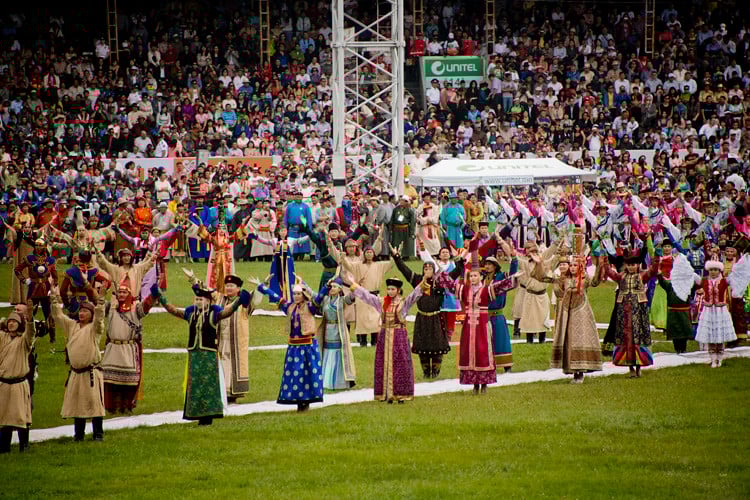
Every third season, Mongolia hosts Naadam – a gathering centered on what some call the three manly sports: wrestling, shooting arrows, then galloping horses. What stands out most is the race where kids guide the animals, small riders aged five up to thirteen, guiding mounts across wide grasslands stretching from fifteen to thirty kilometers.
Back when Genghis Khan ruled, those three abilities meant staying alive. These days, Naadam stands as Mongolia’s biggest yearly festival, where every race victor earns an honored name and inspires folk tunes. Instead of just competing, riders now carry tradition forward through praise sung at dusk.
The Bullet Ant Glove Ritual Among The Sateré-Mawé
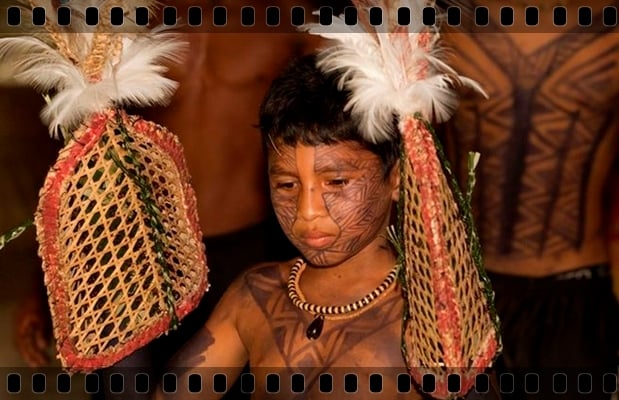
Out in the Amazon, the Sateré-Mawé have a rite few could face without fear. Not just any youth can claim warrior status; it demands endurance beyond belief. Instead of praise or tests, they step into gloves packed tight with living bullet ants. These insects earned their name – victims say each sting hits like a gunshot wound. Ten full minutes locked inside, skin burning, nerves screaming. Yet one rule stands above all: do not react, no matter how fierce the agony.
Twenty times across many months, they wear the gloves. Not because someone did wrong. Because what matters comes after. When pain hits hard on purpose, something changes inside. That change helps a person stand firm when others depend on them.
The Day Sound Changed
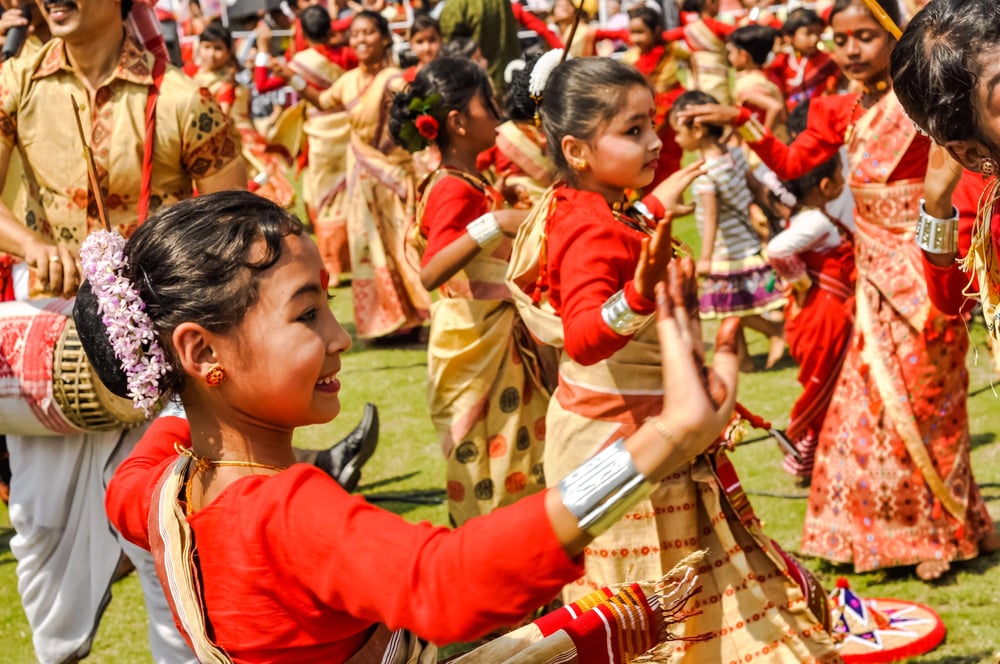
Strange as they seem from afar, each custom fits perfectly where it lives. Water battles, rituals with bones, rolling after dairy, handling insects barehanded – each one clicks when seen through local eyes.
When groups gather, patterns emerge. Marking seasons matters – so do remembrances for those gone. Passage into adulthood finds its moment through repeated acts. Celebrations around gathering food tie people to place. What a ritual looks like reveals soil, story, yet unspoken beliefs beneath. How things are done speaks louder than words ever could.
Right this moment, across the planet, a person moves in steps passed down through generations. Though odd it might seem to an observer, such repetition stitches societies into place.
More from Go2Tutors!

- The Romanov Crown Jewels and Their Tragic Fate
- 13 Historical Mysteries That Science Still Can’t Solve
- Famous Hoaxes That Fooled the World for Years
- 15 Child Stars with Tragic Adult Lives
- 16 Famous Jewelry Pieces in History
Like Go2Tutors’s content? Follow us on MSN.