25 Playground Games That Required Zero Equipment and Maximum Imagination
There was a stretch of recess, sometime before every kid carried a tablet in a backpack, when the entire playground ran on nothing but rules everyone somehow already knew. No coach handed out gear.
No parent packed a bag of props. Somebody just yelled a name, pointed at a tree as “base,” and forty kids understood exactly what was about to happen.
What follows is a walk back through the games that asked for nothing but bodies, lungs, and a little bit of nerve.
Tag

Tag is the original game. No rules committee wrote it, no one owns the copyright, and every kid on Earth somehow learns it without being taught.
You get chased, you get touched, you’re it. That’s the whole system, and it’s never once needed an upgrade.
Freeze Tag

There’s something almost theatrical about the way a kid’s whole body locks mid-stride, one leg still in the air, arms frozen like a poorly balanced statue — and for a second the entire blacktop looks like a photograph instead of a playground. The game asks you to become still in a world built entirely around motion, which is a stranger request than it sounds, and yet every kid understood it instinctively.
Someone always got stuck holding an awkward pose near the swings, arms out like a scarecrow having a bad day. And there was always that one friend, the loyal one, who circled back through danger just to tag you loose.
Red Light, Green Light
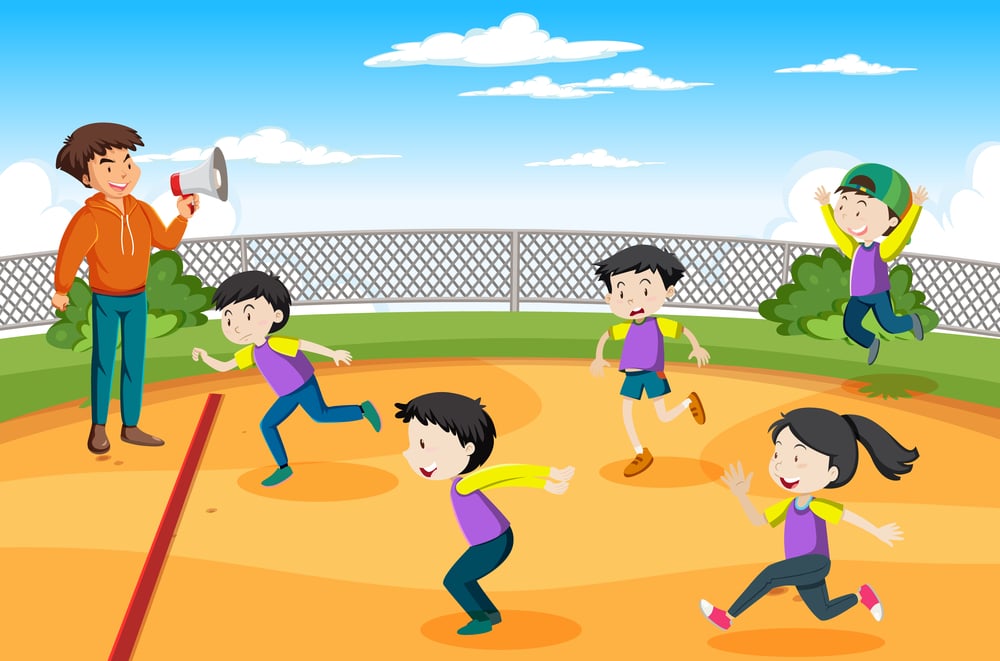
A grown-up says “green light” and the whole line of children lurches forward like a poorly rehearsed dance number. Say “red light” and everyone stops, except the two kids who can’t stop laughing and get sent back to start.
It’s a game about restraint dressed up as a race, which is a clever trick, and kids never seem to notice they’ve been taught patience by a game that sounds like it’s about speed.
Simon Says

Simon Says works because it exploits a very specific weakness: kids cannot resist doing what they’re told. The trick is simple and a little cruel — leave off the magic words and half the group still jumps, hands on heads, utterly betrayed by their own obedience.
Nobody needs a whistle or a scoreboard for this one, just a bossy voice and a room full of suckers. To be fair, that’s most of childhood in a single sentence.
Duck, Duck, Goose

There’s a particular kind of dread that settles over a circle of seated kids, each one bracing as a hand hovers just above their head — will it be “duck” again, or is this the moment everything changes? The game turns stillness into suspense, which shouldn’t work with something this simple, but it does every single time.
Somebody always gets tapped “goose” a beat too late and sits there stunned, like the world just shifted without permission.
Red Rover

Red Rover is a straightforward test of arm strength disguised as a chant. Two lines, locked hands, and a kid getting sent full speed at a human chain that may or may not hold — it’s a small miracle nobody sued over this one for decades.
The game has mostly vanished from schools now, banned more often than not, which says everything about how much trust it required and how little most playgrounds have left. Turns out running at your friends’ linked arms was never actually a great idea, which is obvious now and apparently wasn’t then.
Hide and Seek
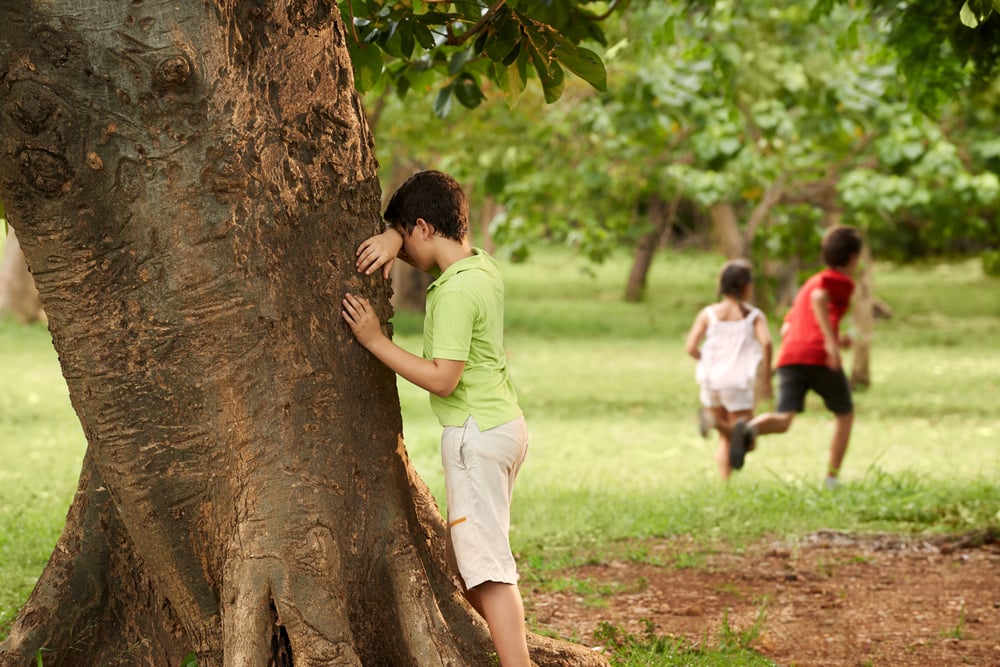
Hide and Seek turns a familiar place strange for a few minutes. The supply closet becomes a cave, the shrub by the fence becomes a fortress, and the whole yard rearranges itself around one question: who’s watching, and who isn’t.
There’s a particular quiet that settles over a kid crouched behind a trash can, breath held, heart working overtime — and that quiet is the entire point of the game.
Mother May I

Mother May I is a game about permission, and permission is funnier than it sounds when you’re seven. You want three giant steps forward, you have to ask nicely, and if you forget the magic words you go straight back to the start — no exceptions, no mercy, no equipment needed to enforce any of it.
It rewards politeness over speed, which is a strange thing for a children’s game to prioritize, but somehow it works. The kid who finally makes it across usually did so by asking better, not moving faster.
What Time Is It, Mr. Fox?

Kids chant the question, the fox answers with a number, and everyone takes that many steps closer to a predator who might snap at any moment. Then, without warning, the fox says “dinnertime,” and the whole crowd bolts.
It’s a countdown with teeth, and it never once needed a timer, a whistle, or anything more than one kid willing to lie about how close he’d let everyone get.
Ghost in the Graveyard

Somewhere around dusk, when the playground starts losing its color and the equipment starts throwing longer shadows than it should, Ghost in the Graveyard turns an ordinary yard into something with actual stakes. The rules are basically Hide and Seek wearing a costume — but the setting does the heavy lifting, because nothing recruits a kid’s imagination faster than bad lighting and a countdown chanted in the dark.
Somebody’s always convinced they heard footsteps that weren’t there. And that’s not a flaw in the game — that’s the entire product.
Grandmother’s Footsteps

Grandmother’s Footsteps is patience wearing a disguise. One kid stands with their back turned while everyone else creeps forward, and the second that kid spins around, every single creeper has to freeze mid-motion or get sent back to the start.
There’s no equipment, no scoring system, just the quiet humiliation of getting caught mid-step with one foot dangling like a flamingo.
Stuck in the Mud

Stuck in the Mud takes regular tag and adds a layer of teamwork nobody asked for. Get tagged, and you’re frozen with your legs spread wide, stuck until a teammate crawls through and sets you free — which means the fastest kid on the yard spends half the game rescuing everyone else instead of running.
It rewards generosity as much as speed, which is a rare thing for a playground game to pull off. Somebody’s always left stuck at the end, arms out, yelling for a friend who conveniently didn’t hear them.
Sharks and Minnows

One kid stands in the middle as the shark, everyone else lines up on one side as minnows, and on the signal the whole group sprints for the opposite line while the shark tries to tag as many as possible. Every minnow caught becomes a shark for the next round, so the field gets thinner and the sprint gets scarier each time.
There’s no orb, no net, no boundary marker beyond two imaginary lines drawn with a pointed finger.
TV Tag

TV Tag hands out a strange kind of safety: shout the name of a television show while crouched down, and you’re untouchable — at least until someone repeats your show and you’re fair game again. It’s tag with a built-in loophole, which kids exploited constantly, screaming show titles they’d clearly made up on the spot.
The game basically ran on the honor system, and somehow that held up fine for generations. Nobody needed a rulebook for a game whose entire premise was “yell a show name and hope for the best.”
Blind Man’s Bluff

There’s a particular vulnerability in being spun around blindfolded while a circle of your friends goes dead silent just to mess with your sense of direction. The game strips away the one sense kids rely on most and replaces it with sound, touch, and pure guesswork, which turns a simple playground into something disorienting and strange.
A hand brushes a sleeve, a laugh gives someone away, and the blind kid lunges toward a voice that’s already moved. It’s chaos with a blindfold on, and somehow that’s the whole appeal.
Octopus Tag

Octopus Tag is Tag’s weirder cousin, the one who insists on rules nobody else remembers agreeing to. Get tagged, and instead of joining the chase you plant your feet and become an “octopus,” swinging your arms to tag anyone who runs past — which means the middle of the field gets more dangerous with every round.
By the end, half the yard is standing still with arms flailing, and running from one side to the other looks less like a game and more like navigating a minefield made of children. Which is, honestly, the appeal.
Leapfrog
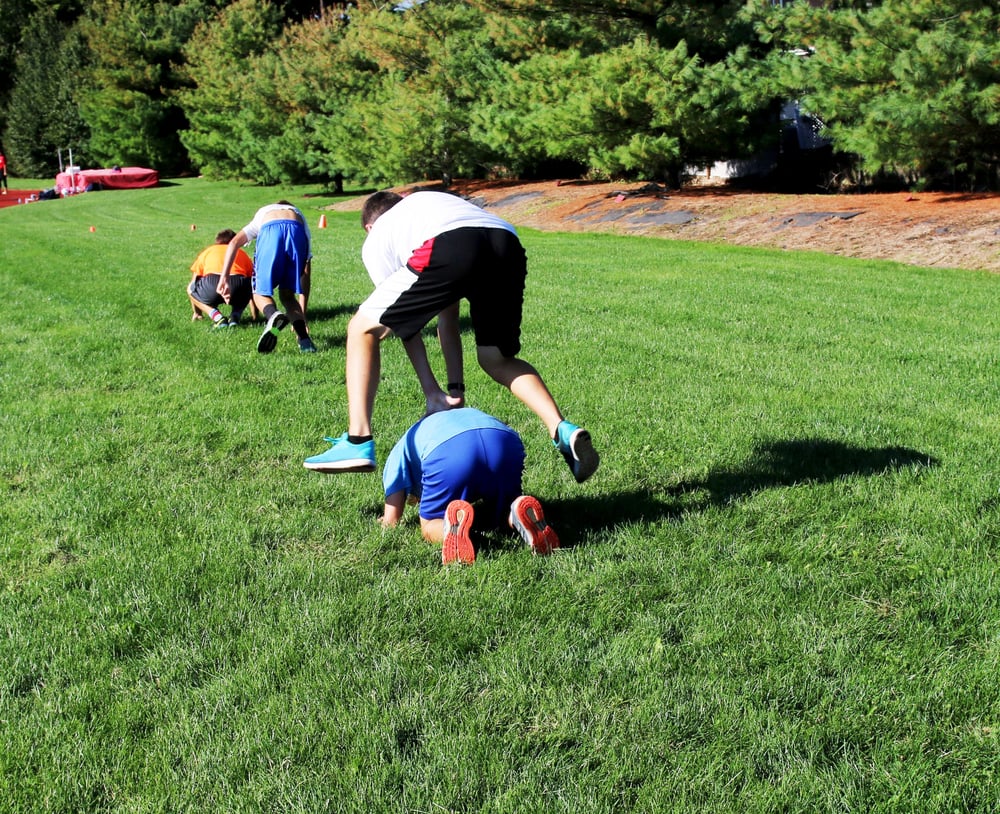
Leapfrog only requires one thing: a kid willing to crouch low enough to get vaulted over without complaint. Line up, hunch down, and take turns springing over each other’s backs down the length of the yard — no gear, no setup, just a chain of kids getting progressively more confident about their jumping height.
Someone always overestimates that height. And someone always ends up flat on the ground because of it.
Follow the Leader
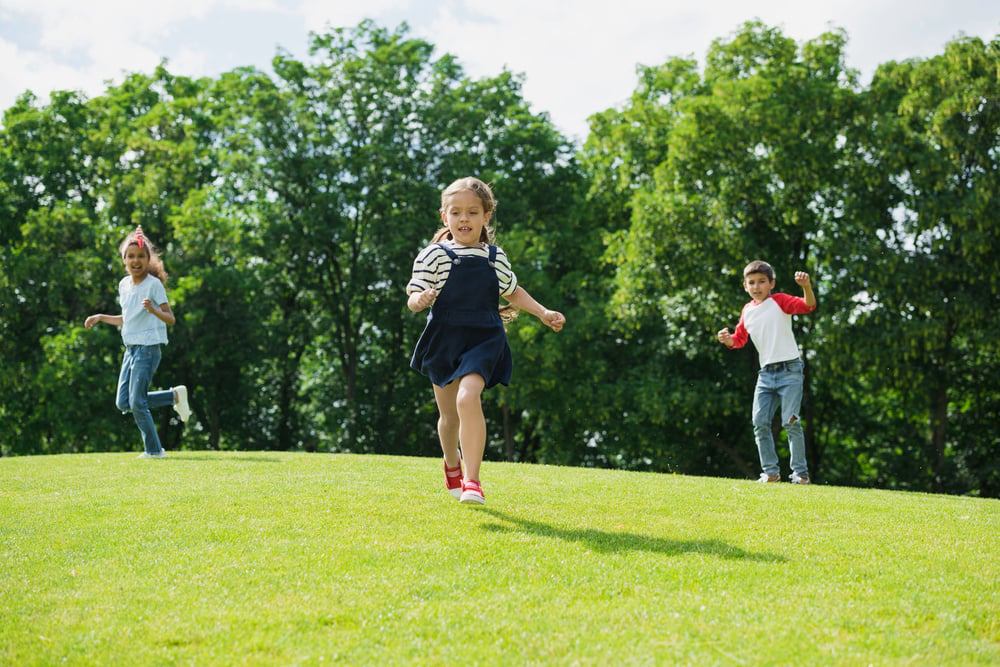
Follow the Leader hands one kid total, unchecked authority for exactly as long as everyone else agrees to follow. Whatever the leader does — hop on one foot, walk backward, pretend to be a chicken — the rest of the line copies without question, right up until someone breaks formation because the demands got too ridiculous.
It’s less a game than a brief experiment in group psychology, run entirely by an eight-year-old. Every empire falls eventually, and this one usually falls the second the leader tries to make everyone crawl through the mud.
London Bridge

London Bridge is a song wearing the costume of a game, and most kids never noticed the difference. Two kids form an arch with their arms, everyone else parades through in a line, and on the final line of the song, the bridge comes crashing down around whoever’s unlucky enough to be caught underneath.
There’s a rhyme, a rhythm, and absolutely nothing else required — no bridge, no toy, no prop, just two raised arms and a song passed down without anyone remembering where it started.
Ring Around the Rosie

Ring Around the Rosie is deceptively simple: a circle of kids holds hands, spins in rhythm to a rhyme, and collapses to the ground on the final line like a tiny theatrical troupe rehearsing a fainting scene. There’s no winner, no loser, no real objective beyond the collective joy of falling down on purpose.
It’s one of the oldest games still standing on modern playgrounds, largely because it asks for absolutely nothing except a few linked hands and a willingness to hit the grass.
Cat and Mouse

Cat and Mouse takes a circle of kids holding hands and turns it into a maze for two runners — one cast as the mouse, one as the cat, weaving in and out of the linked arms while the circle tries to help one and hinder the other. The circle itself becomes the equipment, bending and twisting on command, arms lifting to let the mouse through and dropping to block the cat behind.
It’s a strange kind of teamwork, everyone conspiring in real time to save one kid from another. Nobody needed a prop when forty arms could just become the obstacle course.
British Bulldog

British Bulldog does not pretend to be gentle. One kid stands in the middle of the field, the rest line up on one side, and on the signal everyone sprints across while the middle kid tries to tackle, tag, or otherwise wrestle them to the ground — and every kid caught joins the middle for the next round.
It’s louder, rougher, and more chaotic than most tag variants, which is exactly why it’s been banned from more schoolyards than it’s been allowed on. Nobody needed equipment for this one; the danger was the entire equipment.
Sardines
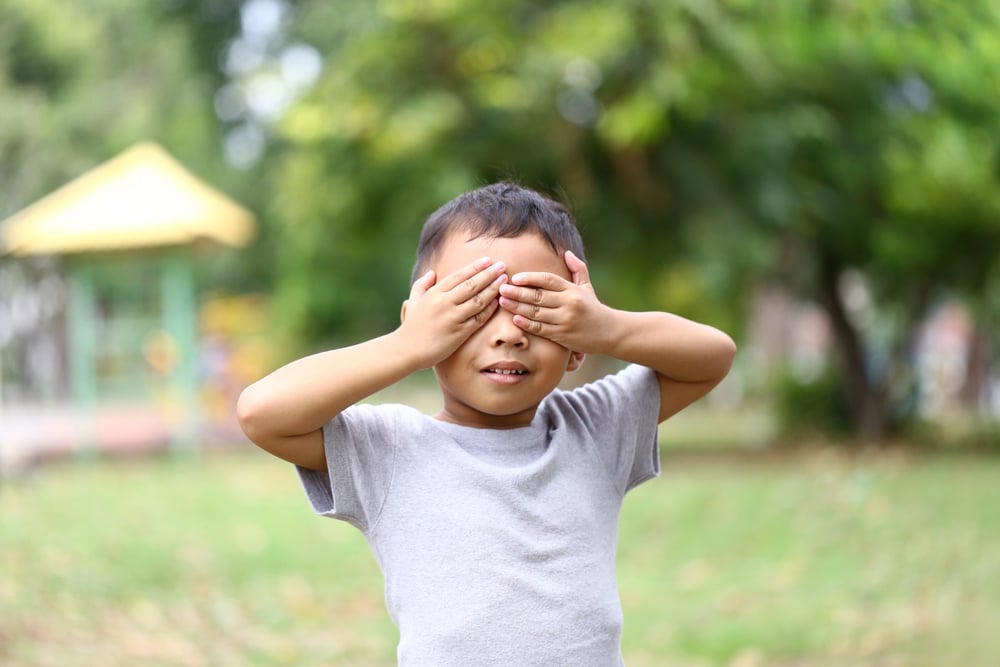
Sardines flips Hide and Seek on its head, and the flip is what makes it work. One kid hides, everyone else searches separately, and the moment someone finds the hider, they squeeze in beside them instead of announcing it — so the hiding spot gets more crowded and more ridiculous with every passing minute.
Eventually there’s a closet packed with eight kids trying not to laugh while one last searcher wanders the yard, utterly baffled at how empty everything looks. The whole game rewards good hiding with claustrophobia, which feels like a fair trade somehow.
The Floor Is Lava
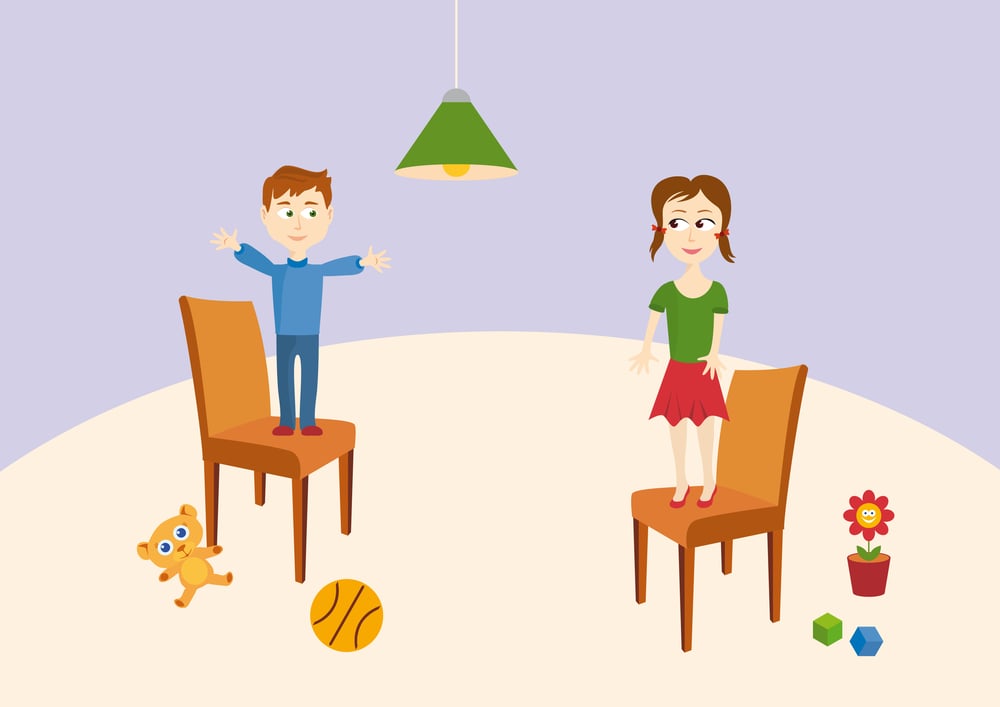
The Floor is Lava turns a completely ordinary playground into a survival exercise, no props required beyond the equipment that’s already bolted to the ground. Suddenly the bench is an island, the low wall is a bridge, and the patch of grass between them might as well be an ocean of molten rock according to whichever kid declared the rule first.
Everyone scrambles, someone always slips and “dies” theatrically, and the game somehow makes an entire yard feel like a different, more dangerous planet. It never needed a single toy, just a shared willingness to pretend the ground was trying to kill you.
Shadow Tag
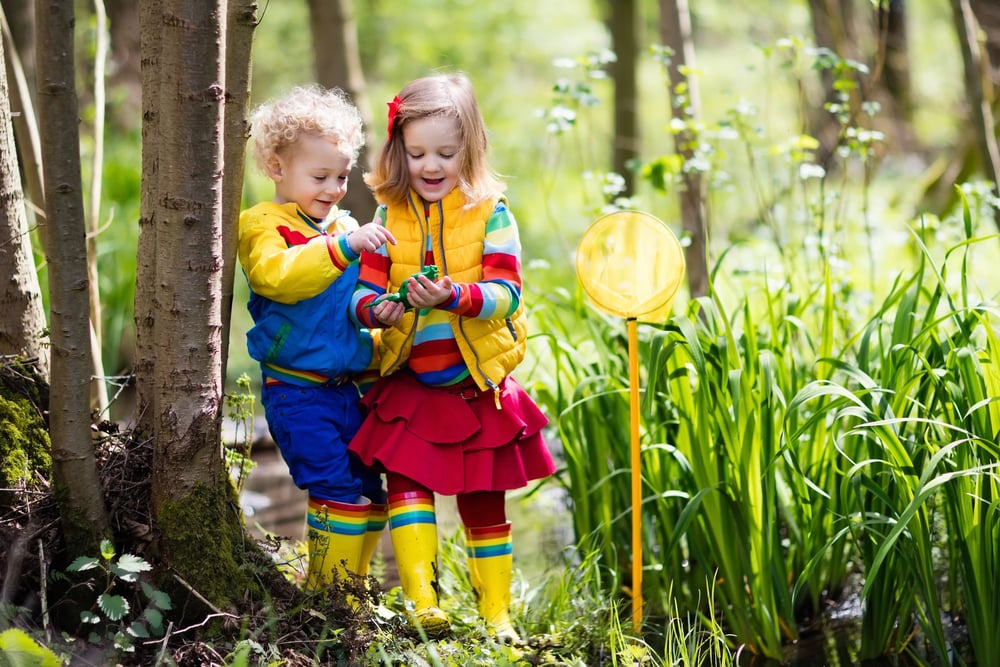
Shadow Tag replaces the usual tag with something quieter and stranger: instead of touching a kid, you step on their shadow, and that’s the whole hit. It only really works with the sun cooperating, low and slanted, stretching everyone’s shadow long enough to actually catch.
There’s something almost poetic about chasing a shape instead of a person, stomping at a dark outline stretched across the blacktop while the kid attached to it sprints in a blind panic. No gear, no orb, no rope — just light, ground, and the strange logic that a shadow counts as a body.
What These Games Actually Taught

None of these games came with instructions, and none of them needed a single dollar spent to work. A kid, a patch of blacktop, and a rule shouted loud enough for everyone to hear — that was the entire operating system, and it ran for generations without an upgrade.
What’s easy to miss now is how much these games actually asked of kids: quick thinking, fair play, the occasional heartbreak of getting caught, and the constant negotiation of rules with people who had zero interest in negotiating. Somewhere between the shouting and the scraped knees, that was the whole point, and it never once needed a single piece of equipment to get there.
More from Go2Tutors!

- The Romanov Crown Jewels and Their Tragic Fate
- 13 Historical Mysteries That Science Still Can’t Solve
- Famous Hoaxes That Fooled the World for Years
- 15 Child Stars with Tragic Adult Lives
- 16 Famous Jewelry Pieces in History
Like Go2Tutors’s content? Follow us on MSN.