25 Scams That Have Worked for Centuries and Still Catch People Today
The recurring embarrassment of fraud is not that people are stupid. It’s that the mechanics of deception are extraordinarily stable across time.
Con artists in ancient Rome and con artists in modern call centres are exploiting the same cognitive vulnerabilities: the desire to get something for nothing, the reluctance to seem rude or suspicious, the difficulty of believing that someone who seems trustworthy is lying to your face. These impulses don’t get smarter with technology. They just move platforms.
What follows are scams with documented histories stretching across centuries, most of which are still producing victims today.
The Confidence Trick Itself

The term “con” comes from “confidence,” and the first person formally named a “confidence man” was William Thompson, who operated in New York City in the 1840s. His method was almost embarrassingly simple: approach a well-dressed stranger, pretend to recognise them from a prior acquaintance, chat briefly, and then ask “Have you confidence in me to trust me with your watch until tomorrow?” Most people handed it over.
They didn’t want to seem suspicious or rude. Thompson was eventually caught, but the fundamental mechanism — trading on social trust to extract something of value — has been the engine of virtually every confidence trick since.
The Spanish Prisoner

A letter arrives explaining that a wealthy nobleman is imprisoned in a foreign country. His fortune is locked up and inaccessible. If you can advance a sum of money to cover bribes, legal fees, or transportation, you will be rewarded handsomely when the prisoner is released and the fortune recovered.
This scam was being documented in letters as far back as the late 16th century and was circulating widely through printed correspondence in the 1800s. It is now known as the Nigerian Prince scam or 419 fraud, and despite nearly universal awareness of the format, it continues to generate hundreds of millions of dollars in losses annually.
The victims tend to be people who are already in financial difficulty and desperately hope the promise is real.
The Shell Game

Three cups, or walnut shells, or thimbles. One pea, or stone, or small object. The dealer shuffles them rapidly and invites you to guess which one hides the object.
This game of apparent skill has been documented in ancient Greece and Rome, in medieval European markets, on street corners in 19th-century American cities, and on tourist-heavy pavements in every major city in the world today. The secret is that the game is never fair — the dealer palms the object and the shill in the crowd is there to win conspicuously and encourage you to play.
You can know exactly how it works and still lose.
The Pyramid Scheme

Pay a fee to join, recruit others who pay the same fee, collect a portion of what the new recruits pay in. The mathematical certainty that this structure collapses as the base of recruits runs out is not intuitive — it is genuinely counterintuitive — which is why pyramid schemes have been collapsing and relaunching under new names since at least the 19th century.
Charles Ponzi industrialised the concept in 1920, lending it his name. Bernie Madoff ran a variation for decades.
New versions surface under the labels of network marketing, investment clubs, and cryptocurrency schemes every few years.
The Pigeon Drop

Two strangers approach you in quick succession. The first shows you a wallet or envelope they’ve found containing cash.
They want to split the found money with you, but first — to establish good faith — you’ll both need to put up some of your own money as a deposit. The second stranger vouches for the first.
You hand over your deposit. The envelope turns out to be full of newspaper.
This trick was being documented in 18th-century London and is still practised in cities worldwide. The element of social proof — one stranger vouching for another — is what makes it work.
The Counterfeit Gold Brick

Historically, this involved a block of lead gilded to resemble a gold ingot, sold at a discount to a buyer who was told they were getting access to something valuable through unofficial channels. The buyer was meant to feel they were the one getting away with something, which discouraged them from reporting the fraud when they discovered the lead.
In its modern iterations, the same principle appears in counterfeit electronics: a box filled with stones or a bricked phone sold to someone who believes they’re buying cut-price genuine goods. The sense of complicity in what appears to be a bargain is the hook.
The Lottery Advance Fee

You’ve won a prize — a car, a sum of money, a holiday. To claim it, you’ll need to pay a processing fee, a customs charge, or a transfer tax in advance.
This scam has existed in various forms since organised lotteries began, which in some countries means the 17th century. The specific format adapts — postal mail, then phone calls, then emails, then text messages — but the basic structure never changes.
People pay the fee. The prize doesn’t exist. The “lottery” they won was one they never entered.
The Fake Official

A person in uniform, with a badge, with official-sounding authority, approaches you and requests something — a payment to avoid a fine, personal information to verify an account, access to your computer to fix a problem. The specific presentation has evolved from men in frock coats claiming to be government inspectors in the 19th century, to phone calls from people claiming to be from the tax authority, to emails from apparent bank security departments.
The psychology is constant: uniform creates compliance, and most people do not challenge apparent authority.
Three-Card Monte

An ancestor of the shell game and descended from it. The dealer shows a queen among three face-down cards, shuffles them, invites you to follow the queen with your eyes and bet on where it is.
It is not possible to win consistently because the dealer has techniques for controlling which card is where that are invisible to an untrained eye, and the shills in the crowd are there to win large bets and create an impression of a beatable game. Documented on European street corners from at least the 16th century.
Still common in tourist districts of major cities.
The Rent or Property Scam

An advertisement for a flat or house at a price slightly below market value. The landlord is abroad — a missionary, a soldier, an engineer on a project.
The keys can be sent once a deposit or advance rent is paid. The deposit is sent.
The keys don’t arrive. The property, if it existed, is not the sender’s to rent.
This scam was operating through newspaper advertisements in the 19th century and is now most commonly run through online property listing platforms. The combination of a desirable property, reasonable pricing, and a plausible reason for the remote landlord makes it persistently effective.
The Work-From-Home Envelope Stuffing Scheme

Pay a fee to receive a starter kit for a job stuffing envelopes at home. The starter kit, when it arrives, turns out to contain instructions for placing the same advertisement in newspapers and charging others a fee to receive the same kit.
This scheme was documented in American newspapers from the late 19th century. Variations now circulate on job boards, promising “data entry” or “social media rating” work that requires an upfront software purchase or training fee.
The Fake Charity

A crisis or disaster occurs. The solicitations for donations follow almost immediately — some genuine, some not.
Fake charities using names similar to well-known organisations have been operating since at least the mid-19th century, when fraudulent collectors appeared in the wake of famines and floods. Donation-request fraud now operates primarily through social media, where a photograph of genuine suffering is matched with bank account details or a payment link belonging to someone who has nothing to do with the people in the image.
The Advance Fee Fraud

You are promised a large sum of money — an inheritance, a business deal, a commission — in exchange for a relatively small advance payment to cover administrative costs. The advance payment is made. A reason is found to request another advance payment. Then another.
The sum owed to you keeps growing and the payments required to unlock it keep multiplying, until the victim runs out of money or hope. This structure has been used since at least the early 19th century.
The documented ancestors of the Nigerian letter scam predate the telegraph.
The Melon Drop

A stranger is carrying something fragile — historically a melon, because of the historically high value of fresh produce in certain markets, but it could be anything expensive. They “accidentally” collide with you, drop the item, and it shatters or breaks.
They then demand that you compensate them for the loss, and often a small crowd materialises to confirm that yes, you were at fault. Payment is made, and the stranger moves on to the next victim.
Versions of this have been documented in markets across Asia and Europe for centuries and have appeared in contemporary tourist areas from Barcelona to Tokyo.
The Pump and Dump

Buy shares in a worthless or almost worthless company. Circulate breathless positive information about that company to drive up the share price.
Sell when the price is high. The inflated stock collapses and latecomers lose their money.
This scam was being run on early stock exchanges in Amsterdam and London in the 17th century, with pamphlets replacing the pressure-selling calls and social media posts that do the same job now. The South Sea Bubble of 1720, which ruined thousands of British investors including Isaac Newton, was a large-scale version of the same principle.
The Pirated Ticket

Fake tickets to concerts, sporting events, theatre performances — sold at face value or slightly below, to buyers who discover the fraud only when they arrive at the venue. This scam existed long before digital printing made convincing counterfeits easy to produce.
Victorian-era newspapers documented cases of buyers purchasing fraudulent tickets to boxing matches, horse races, and theatrical productions. The internet has vastly expanded the market and reduced the friction for buyers and sellers alike.
The Romance Scam

An emotional relationship is established online over weeks or months. The other person is attractive, attentive, and interested in a long-term connection.
Then a crisis emerges — a medical emergency, a business problem, a stranded relative — that requires financial help. The money is sent.
The relationship continues, and more crises follow, until the victim has nothing left to give. While online versions of this scam are relatively recent, the underlying structure — manufacturing emotional attachment as a precursor to financial extraction — is one of the oldest forms of interpersonal fraud.
Documented cases from the 19th century involve con artists who cultivated romantic correspondence by post before requesting financial assistance.
The Fake Investment Opportunity

An insider tip, a guaranteed return, a low-risk high-reward investment available only to a select few. This format has been used to sell shares in bogus mines, fraudulent land schemes, non-existent oil wells, and fictitious technology companies since formal investment markets existed.
The specific asset class changes with fashion — railroad stocks in the 19th century, internet companies in the 1990s, cryptocurrency in the 2010s — but the promise of exceptional returns available to those who act quickly on exclusive information remains constant.
The Funeral Scam

Family members grieving a death receive a phone call or letter from a company claiming that the deceased had entered into a pre-paid funeral or services contract, and that outstanding amounts are due. Or a supplier presents an invoice to the estate for goods or services that were never ordered.
Fraudsters targeting estates and grieving families were documented in Victorian legal records and continue to appear in consumer fraud reports today. Grief creates urgency, confusion, and a strong desire to handle administrative matters quickly, all of which the scam exploits.
The Over-Payment Trick

A buyer for a product or service sends a cheque for more than the agreed amount and asks the seller to refund the difference. The original cheque, while it clears initially, eventually bounces — but by then the seller has already transferred the “refund.”
This scam depends on the gap between a cheque appearing to clear in a bank account and the bank actually verifying the funds, a technical vulnerability that has existed since paper cheques were introduced. It is still effective because many people don’t know the difference between a pending clearance and confirmed funds.
The Gem Scam

A new acquaintance — or a series of strangers who appear to be strangers to each other but are not — steers you toward a jewellery shop where you are invited to buy gemstones at what appears to be a local price, well below what they would cost at home. The stones, when evaluated by a proper gemologist, turn out to be worth a fraction of what was paid.
This scam has been particularly documented in Bangkok, where it has operated for decades, but versions of it exist in tourist markets worldwide. The combination of apparent insider knowledge and the flattery of being trusted with a deal not available to ordinary visitors is the mechanism.
The Grandparent Scam
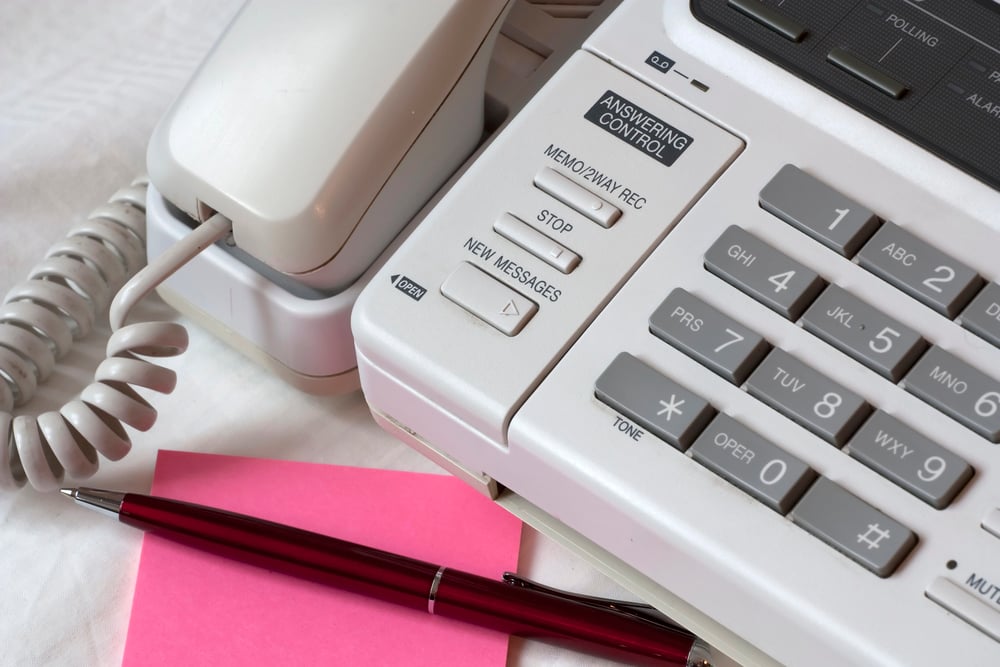
A phone call arrives for an elderly person from someone claiming to be a grandchild in serious trouble — arrested, hospitalised, stranded abroad. They need money immediately, and please don’t tell the rest of the family.
A second caller, pretending to be a lawyer or police officer, confirms the crisis and provides details for payment. The emotional urgency and the specific instruction not to verify the story with other family members are the critical elements.
While the phone version is modern, the underlying structure of impersonating a distressed family member to extract emergency funds has older roots in telegraph and postal fraud.
The Too-Good-To-Be-True Job Offer

A job is offered with an exceptional salary, flexible hours, and minimal requirements. An offer letter arrives quickly.
Before starting, a background check fee, uniform deposit, or software subscription must be paid. The job vanishes once the fee is paid.
Employment fraud has been documented from the 19th century onward, when newspaper advertisements for domestic service, factory work, and emigration opportunities were used to take fees from people who never received employment. The contemporary versions now circulate primarily on legitimate job platforms, lending them an appearance of credibility that makes the fraud harder to immediately identify.
The Fake Escrow

A transaction — usually for a high-value item, a car, a piece of equipment — is proposed using an escrow service to ensure safety for both buyer and seller. The escrow service is fake, operated by the scammer.
The seller ships the goods when the fake escrow “confirms” payment. The goods arrive.
The payment is never released. The same concept works in reverse, where a buyer sends money to a fake escrow and receives nothing.
The legitimacy of real escrow services and the genuine consumer protection logic behind them is what makes this scam effective.
The Street Money Changing Trick

Especially targeted at tourists, a money changer offers to exchange currency at a favourable rate. The notes handed back are subtly short-changed — folded, counted quickly, with some smaller denomination notes slipped in — so that the exchange rate appears correct but the total received is less than what was paid.
More elaborate versions involve a slight-of-hand during the counting process. This has been documented in every era of international travel and is among the most persistent tourist-targeted frauds in existence.
Why Scams Don’t Need to Be New to Work
The reason these particular frauds keep working is that they don’t rely on ignorance of their existence — many victims are vaguely aware that such things happen. They rely on the exploitation of legitimate social instincts: the desire to be polite, to trust apparent authority, to help someone in distress, to take advantage of a genuine opportunity when one appears.
These instincts don’t disappear when you know that scammers exploit them, any more than knowing about optical illusions makes the illusions disappear. The most effective protection is specific and practical: verify any financial request independently before acting, slow down any interaction that creates artificial urgency, and maintain the understanding that the more attractive an unsolicited offer, the more carefully it deserves to be examined.
The scam artists throughout history have always understood something simple — they don’t need to defeat reason. They just need to move slightly faster than it.
More from Go2Tutors!

- The Romanov Crown Jewels and Their Tragic Fate
- 13 Historical Mysteries That Science Still Can’t Solve
- Famous Hoaxes That Fooled the World for Years
- 15 Child Stars with Tragic Adult Lives
- 16 Famous Jewelry Pieces in History
Like Go2Tutors’s content? Follow us on MSN.