Historical Photos That Most Textbooks Chose Not to Print
Every history textbook contains photographs, but they are carefully chosen. Editorial boards decide which images tell the story they want students to learn, and just as often, which images to leave out. Some photographs are excluded because they’re too graphic, too political, or too troubling to include in a classroom setting.
Others are omitted because they contradict the official narrative or make uncomfortable truths impossible to ignore. The photographs listed here exist in archives and museums—sometimes well-known to scholars—but most high school students have never seen them, because textbook publishers have repeatedly chosen silence over inclusion.
The visual record of history is incomplete by design. What follows are images that document moments textbooks have largely declined to share, for reasons ranging from discomfort to deliberate erasure.
Lewis Hine’s Child Spinner, Whitnel Cotton Mill, North Carolina, 1909
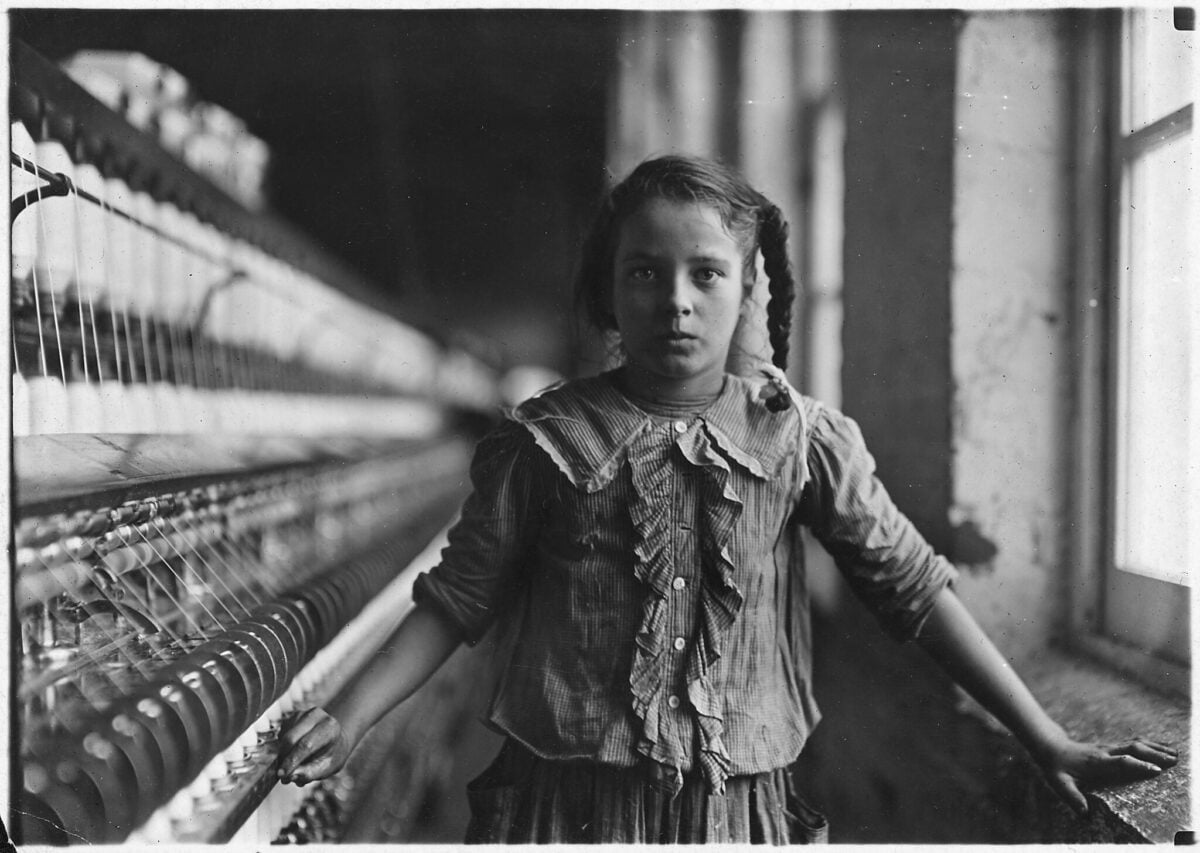
This photograph shows a young girl, barely tall enough to reach the spinning frames, positioned between endless rows of whirling textile bobbins. Her job was to repair broken threads, a task that required speed, dexterity, and constant danger.
The child’s expression is almost expressionless—not smiling for the camera, but focused and tired. Hine took the photograph to document child labor for the National Child Labor Committee, and it was instrumental in pushing Congress toward reform. Yet most American history textbooks minimize this image in favor of more sanitized Depression-era photographs, perhaps because the industrial exploitation of children remains uncomfortable to confront.
The Lynching of Leo Frank, 1915
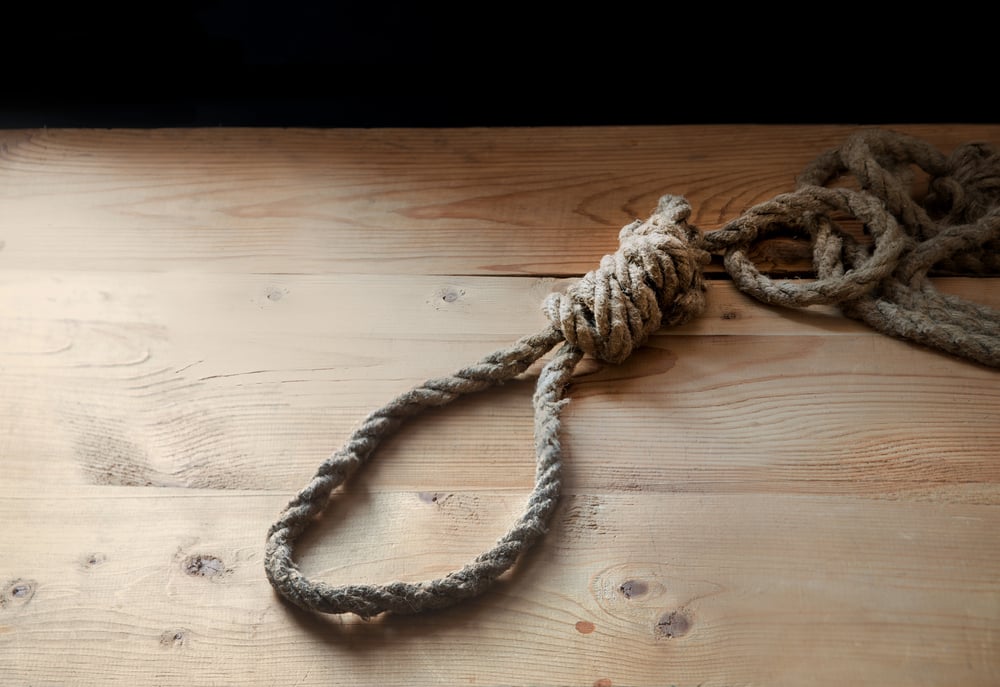
On August 16, 1915, a mob in Marietta, Georgia, hanged Leo Frank, a Jewish factory manager convicted on disputed evidence of murdering a young girl. The event sparked one of the largest lynchings of a white man in American history and contributed to the resurgence of the Ku Klux Klan.
Photographs from the scene exist, documenting the crowd and the aftermath, yet most textbooks either omit the image entirely or use it only sparingly, perhaps because depicting lynching—even of a white victim—forces students to confront the reality of mob violence and systemic injustice in early twentieth-century America.
Dorothea Lange’s Japanese American Incarceration Camp Photographs, 1942
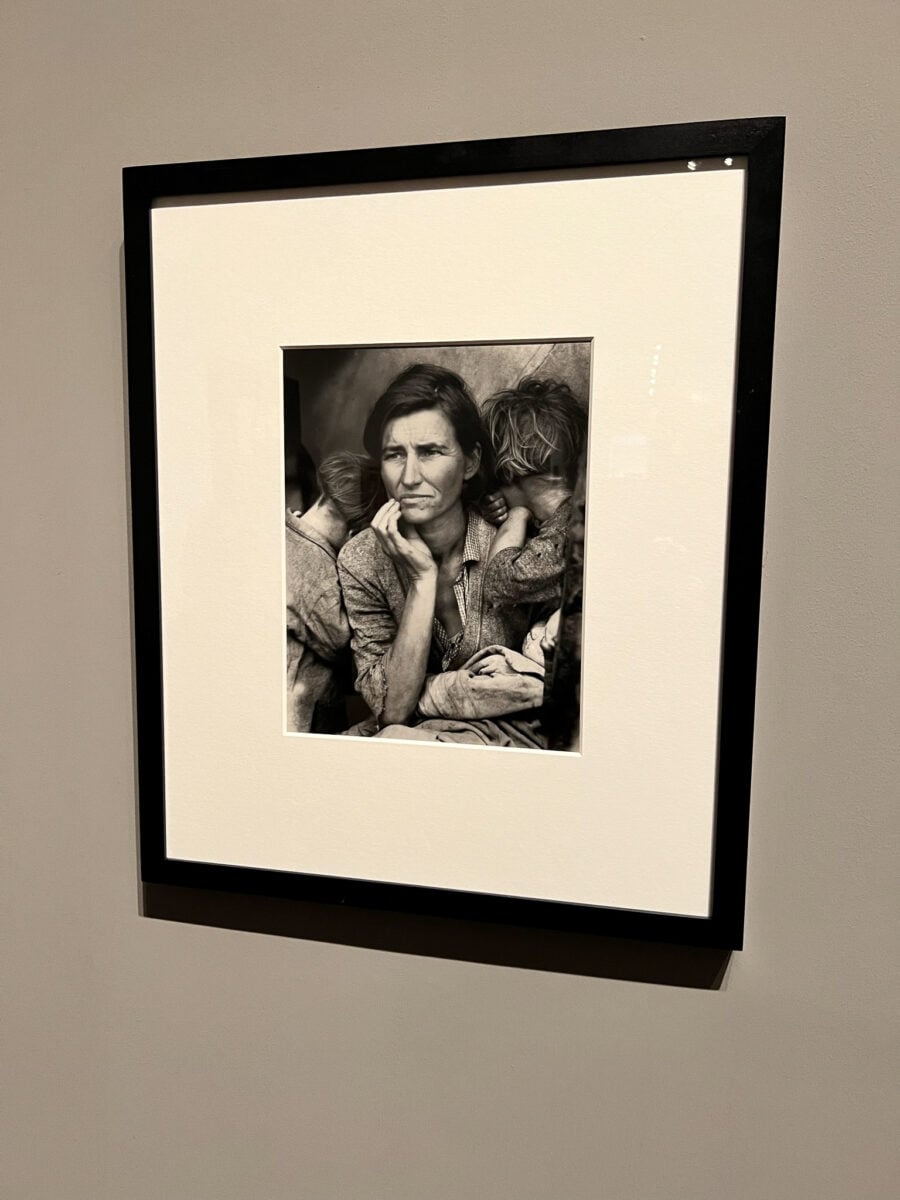
While “Migrant Mother” appears in countless textbooks, Lange’s photographs documenting the incarceration of Japanese Americans during World War II remain far less commonly included in educational materials. These images show families behind barbed wire at Manzanar, their lives reduced to bare necessities in desert camps.
The U.S. government initially classified many of Lange’s photographs, and textbooks have been slow to integrate them fully, perhaps because they complicate the narrative of American moral superiority during the war years.
Walker Evans’ Sharecropper Portraits, 1936
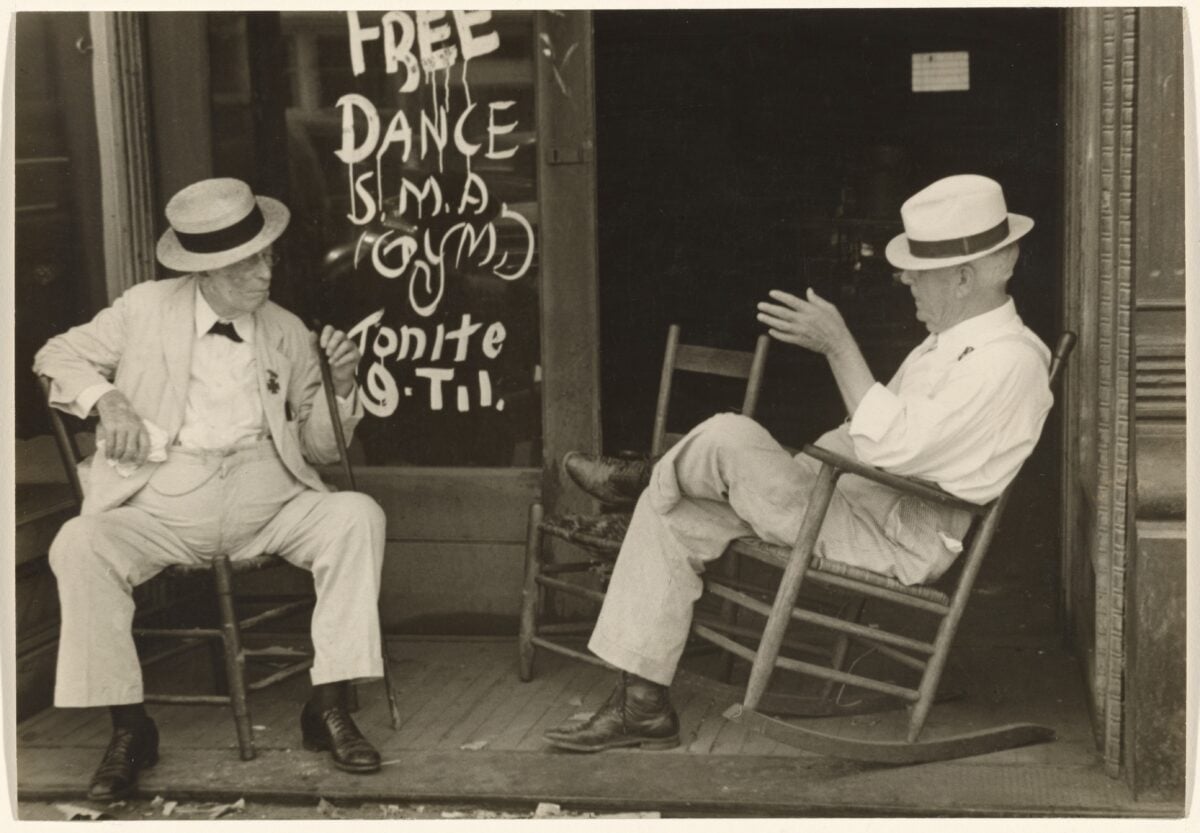
Photographer Walker Evans documented Alabama sharecroppers for the Farm Security Administration in 1936, creating intimate portraits of extreme poverty—families in bare wooden shacks, faces marked by exhaustion and uncertainty. These images are powerful documentations of American inequality, yet they appear sparingly in textbooks, possibly because their stark honesty about class disparity challenges comfortable narratives about American progress and opportunity.
The Hindenburg Disaster Photographs, May 1937
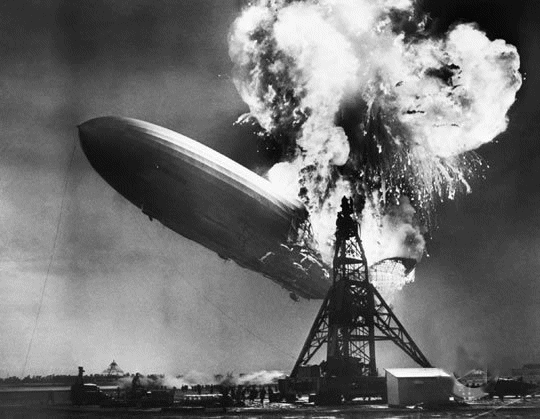
Multiple photographers captured the Hindenburg’s explosion in New Jersey—one of history’s most catastrophic moments, killing thirty-five people aboard and one on the ground. While some images appear in science and history texts, the most graphic photographs of victims and the burning wreckage are routinely excluded, relegated to specialized history books or archives rather than general education materials.
Execution of a Viet Cong Prisoner by South Vietnamese General Nguyễn Ngọc Loan, 1968
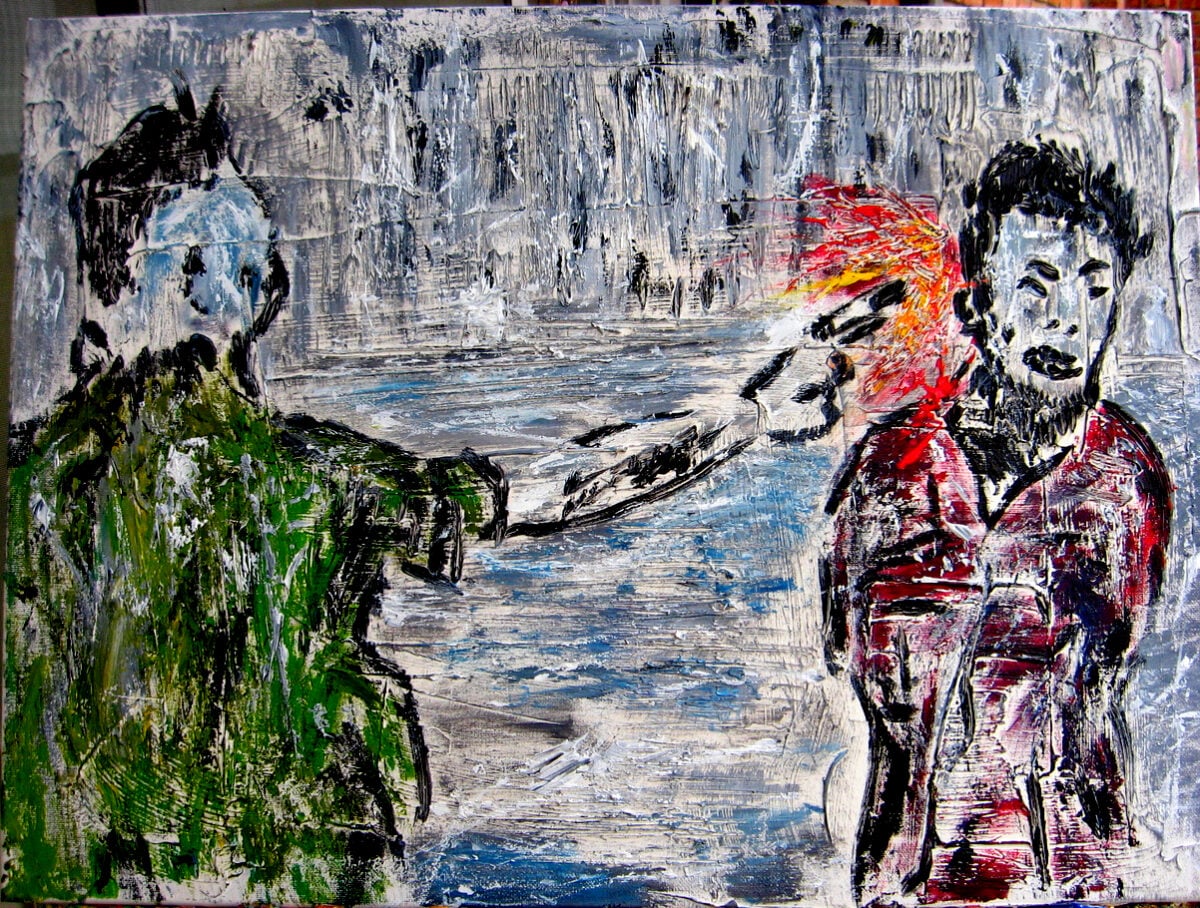
Eddie Adams’ photograph of a South Vietnamese general executing a suspected Viet Cong soldier on a Saigon street won a Pulitzer Prize for its unflinching documentation of war’s brutality. The image was controversial at the time and remains largely absent from American high school history textbooks, possibly because the graphic nature of point-blank execution challenges comfortable distance from historical atrocity.
Photography from the Jonestown Collective Deaths, 1978
In Guyana, over 900 members of the Peoples Temple died in a mass poisoning. Photographs from the scene exist in archives—some showing the scale of death, others documenting the compound before the tragedy. Most textbooks that mention Jonestown include no photographs, leaving students to imagine rather than confront the historical event visually.
Tiananmen Square Tank Man Photograph, June 1989
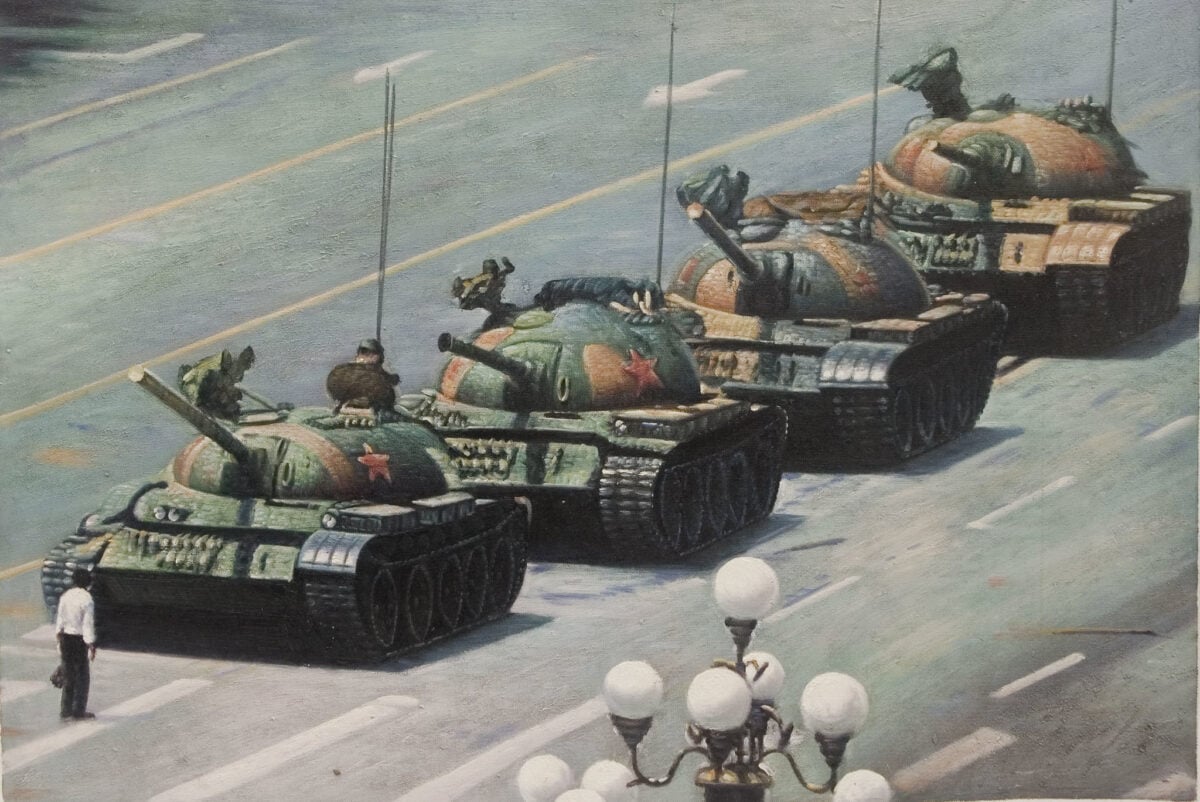
On June 5, 1989, an unidentified man stood in front of a column of military tanks in Beijing, China, during the crackdown on pro-democracy protests. The image became one of the most iconic photographs of resistance in modern history, yet it appears rarely in American textbooks.
Some publishers have been cautious about including it, perhaps mindful of political sensitivity or concerns about student reaction to such a direct image of confrontation.
Photograph of Roy Bryant and J.W. Milam, Emmett Till’s Murderers, 1955
Two weeks after murdering Emmett Till, Roy Bryant and J.W. Milam was acquitted by an all-white jury in Mississippi. Photographs from their trial exist, showing the men’s faces clearly, their names recorded for history. Yet these images rarely appear in textbooks, perhaps because including them would require addressing the mechanics of injustice—jury selection, witness intimidation, the deliberate failures of the legal system.
Holocaust Photographs Initially Suppressed by Allied Forces
The first Allied soldiers to enter concentration camps in 1945 photographed the emaciated bodies and death machinery they found. Some photographs were considered too graphic for immediate publication and were restricted by military authorities.
While Holocaust education has improved in recent decades, the most disturbing photographic evidence remains selectively included in textbooks, if at all, creating a visual record that is more sanitized than the historical reality.
Napalm Girl, Phan Thị Kim Phúc, Vietnam War, 1972
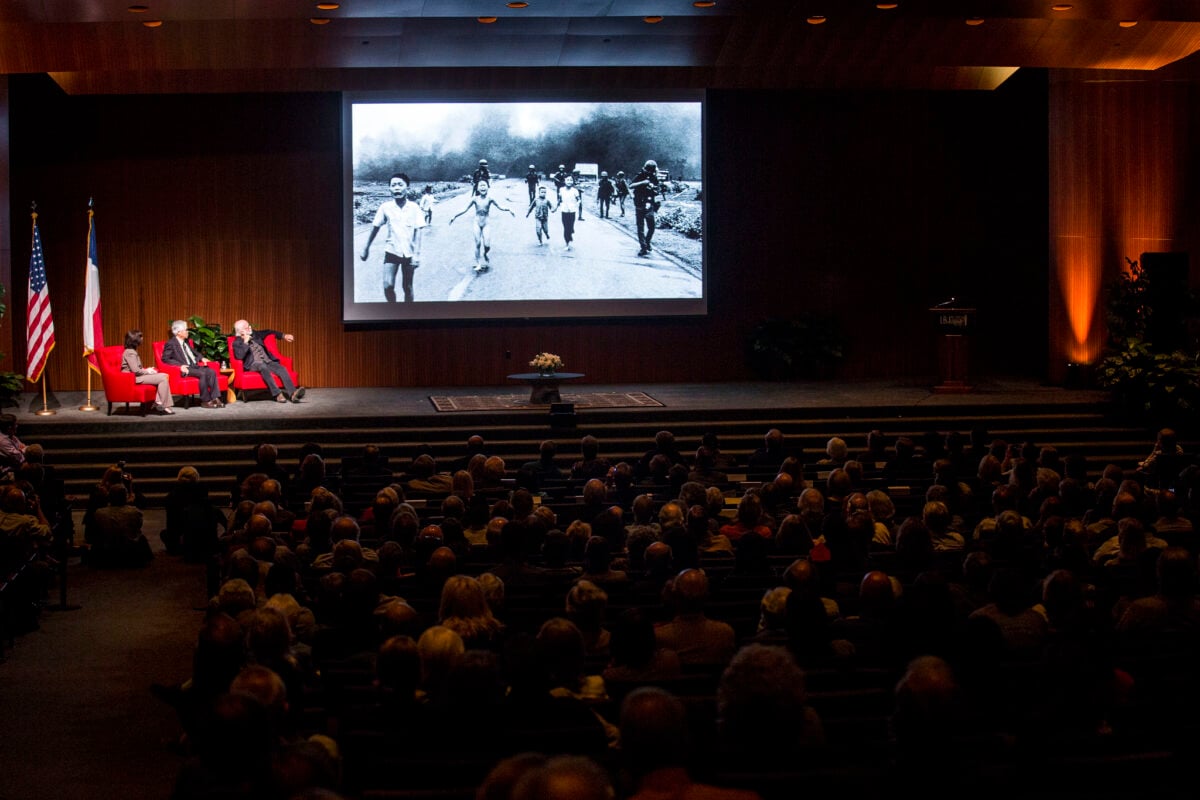
Nick Ut’s photograph of an unclothed nine-year-old girl running from a napalm attack in Vietnam became an anti-war symbol and won a Pulitzer Prize. The image’s graphic nature—showing burned skin and a child’s trauma—has made it controversial in schools.
Many textbooks either exclude it entirely or use it only in advanced history courses, fearing parent objections to the nudity despite the photograph’s historical and moral significance.
Police Attack on Peaceful Protesters, Selma, Alabama, 1965
Photographs of police attacking civil rights marchers on the Edmund Pettus Bridge exist in vivid color, documenting the moment when law enforcement attacked citizens who were exercising constitutional rights. While some versions of events appear in textbooks, the most graphic photographs of violence are often omitted or minimized, possibly because such direct visual evidence of state violence against Americans remains uncomfortable to display in educational settings.
Starvation Photographs from the Bengal Famine, 1943
During World War II, British policies contributed to a catastrophic famine in Bengal that killed millions. Photographs documenting starving families and bodies in streets exist in archives but appear rarely in textbooks, despite the famine’s historical significance.
The images challenge the heroic narrative of the Allied powers during the war and may be excluded for that reason.
Photograph of James Chaney, Andrew Goodman, and Michael Schwerner’s Bodies, 1964
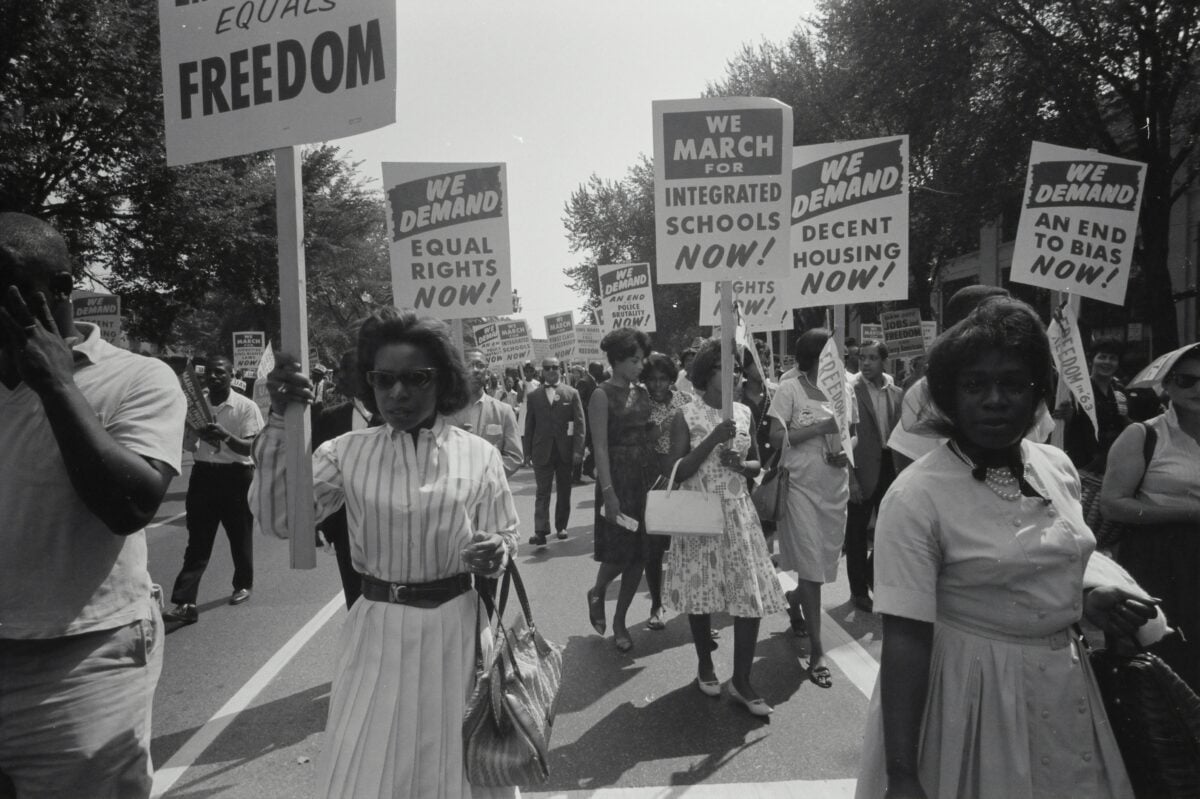
In Mississippi, three civil rights workers—two white, one Black—were murdered by KKK members. Photographs of their bodies, discovered in a dam, exist but are rarely included in textbooks.
The graphic nature of the images, combined with their documentation of racial violence, has kept them from mainstream educational circulation.
Lynching Photographs from the Early Twentieth Century
Photographer James Allen spent decades collecting lynching photographs—many taken by white Americans as souvenirs of mob violence. These images document actual murders, often with crowds of spectators visible.
Despite their historical value as evidence of systemic racial terror, they appear almost never in high school textbooks, kept instead in specialized archives where researchers can access them.
Abu Ghraib Prison Photographs, 2003
U.S. military personnel photographed themselves abusing and humiliating Iraqi prisoners at Abu Ghraib prison. The images were leaked to the press and documented war crimes.
While some versions appeared in newspapers, most textbooks have avoided including them entirely, despite their significance to understanding the Iraq War and American military conduct.
The Dead of World War I, Trench Warfare Photographs
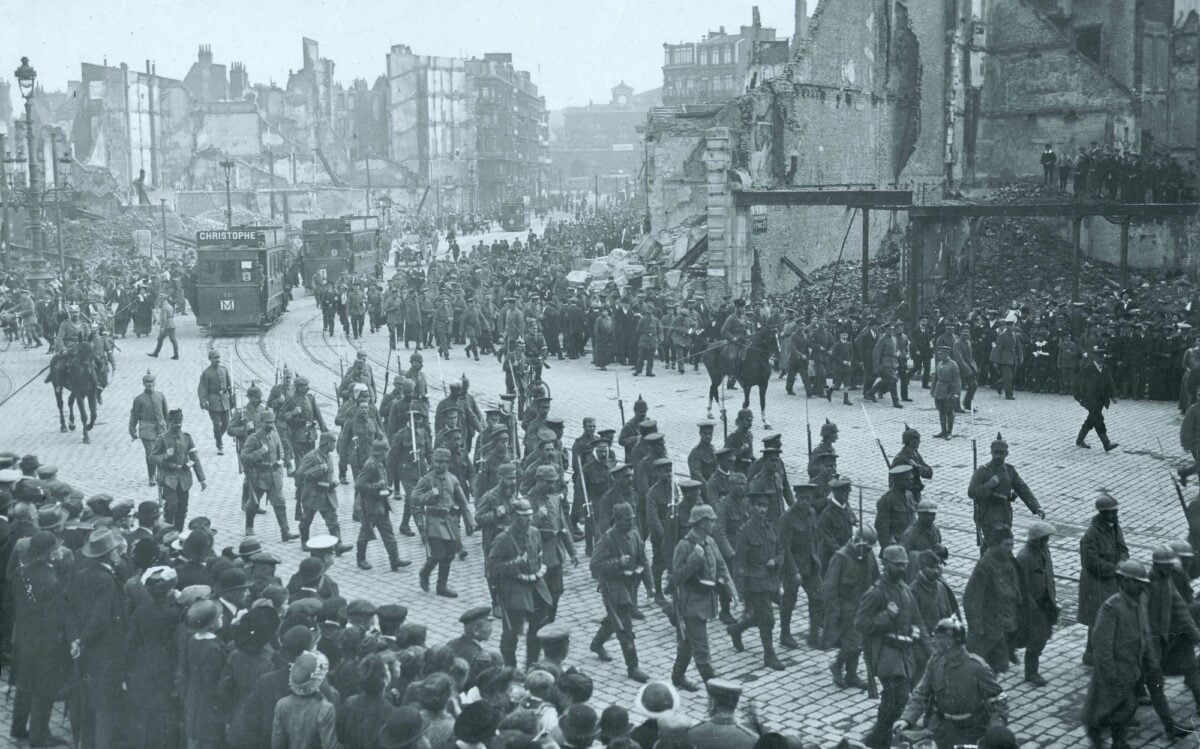
Photographs documenting soldiers’ bodies in muddy trenches, their remains partially decomposed, exist from World War I. These images are among the most disturbing visual evidence of industrial-scale warfare.
Most textbooks that cover the war use landscape photographs of trenches rather than photographs of actual casualties, keeping students visually distant from the war’s reality.
Photographs from the Irish Famine, 1845-1852
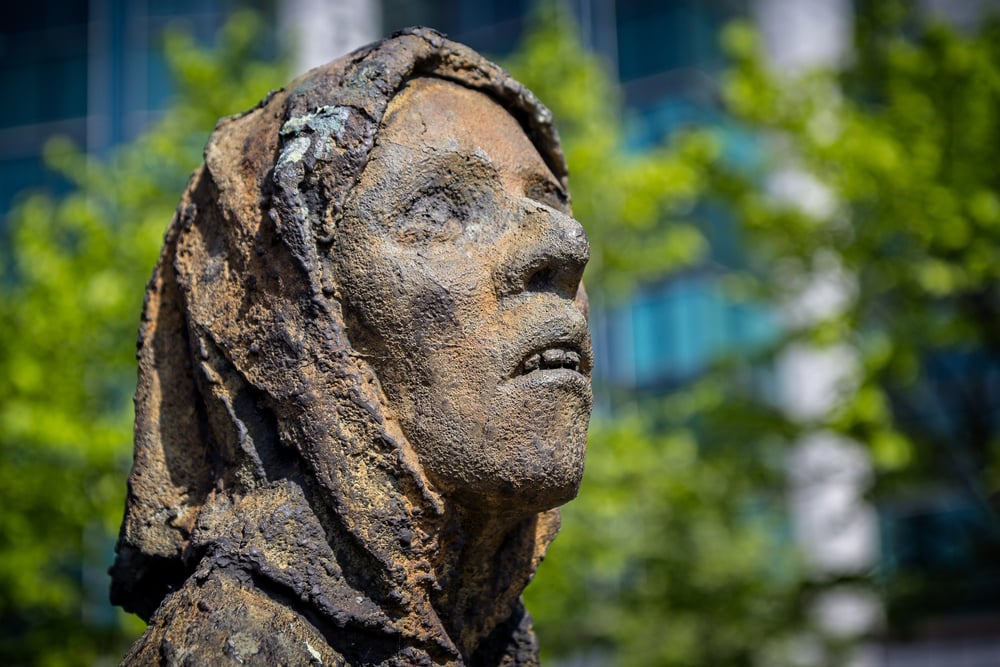
During the Irish Famine, photographs documented skeletal figures, mass graves, and the physical toll of mass starvation. While textbooks discuss the famine, photographs of victims are rarely included, leaving the tragedy more abstract than visual.
Kent State Shooting Photographs, May 1970
On May 4, 1970, Ohio National Guardsmen shot thirteen college students protesting the Vietnam War, killing four and wounding nine. Photographs of the moment of gunfire and the immediate aftermath exist and document state violence against American civilians.
Eugene Smith’s Minamata Photographs, 1971

American photographer Eugene Smith documented the victims of mercury poisoning in Minamata, Japan—children with severe neurological damage, families devastated by corporate negligence. The photographs are powerful documentations of industrial catastrophe and human suffering.
They remain largely absent from American textbooks, possibly because they implicate industrial systems in harm and remain uncomfortable in that capacity.
Photographs of Atomic Bomb Testing Casualties in the Pacific, 1946-1954
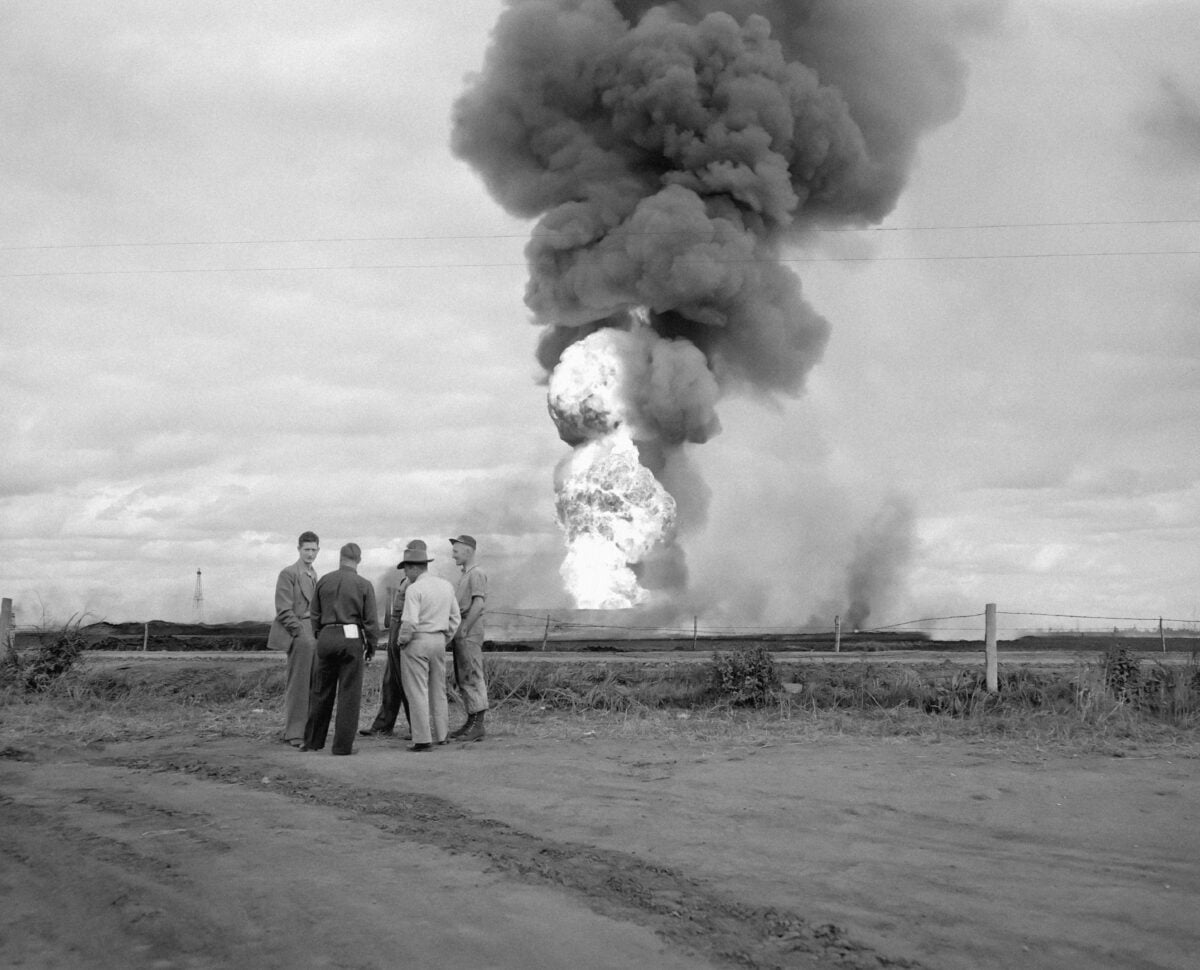
The U.S. military conducted nuclear tests in the Marshall Islands and Atoll, using populations as unwitting subjects for radiation exposure studies. Photographs of islanders with radiation burns and cancer exist but are rare in American textbooks, despite documenting unethical medical experimentation on colonized peoples.
The Bhopal Disaster Photographs, December 1984
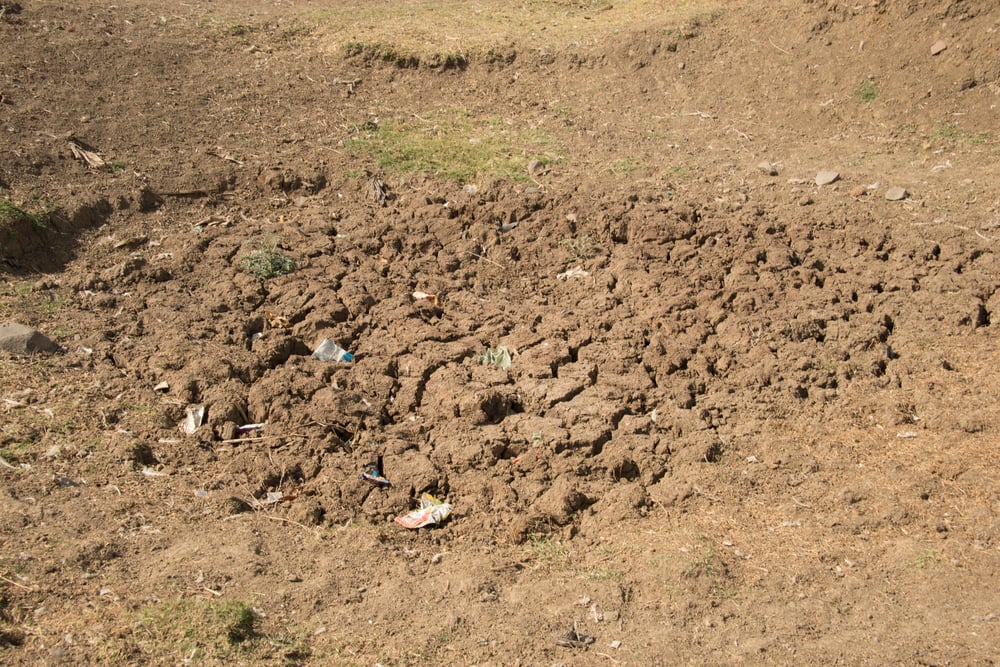
In India, a Union Carbide pesticide plant leaked toxic gas, killing thousands of people—some estimates range as high as 8,000. Photographs from the aftermath document the scale of death and suffering.
Yet American textbooks rarely include images from Bhopal, leaving the disaster more statistical than visual reality.
Photographs of Laundries and Reformatory Violence in Ireland

Magdalene Laundries in Ireland confined women under brutal conditions for decades. Photographs documenting conditions in these institutions exist but are almost never included in textbooks, despite their significance to understanding institutional abuse and state violence against marginalized populations.
What We Choose Not to See
The photographs that textbooks exclude are as important as those they include. By selecting certain images and rejecting others, publishers and educators shape which historical truths remain visual and which become abstract. The most graphic evidence of suffering, injustice, and American failings often disappears from educational materials, leaving students with a sanitized version of the past.
The archives preserve these photographs, and they exist for those willing to look. But for most students, history textbooks present a curated image rather than a complete one—and what is left unseen becomes easier to forget.
More from Go2Tutors!

- The Romanov Crown Jewels and Their Tragic Fate
- 13 Historical Mysteries That Science Still Can’t Solve
- Famous Hoaxes That Fooled the World for Years
- 15 Child Stars with Tragic Adult Lives
- 16 Famous Jewelry Pieces in History
Like Go2Tutors’s content? Follow us on MSN.