Twin Studies That Revealed Surprising Truths About Human Behavior
Twin studies represent one of the most elegant and deceptively simple research methods ever devised: compare genetically identical siblings who were raised apart. Yet the findings emerging from decades of such research have repeatedly challenged assumptions about who we are, what drives our behavior, and how much of our personalities and abilities are written in our genes rather than shaped by our upbringing.
These studies have moved far beyond demonstrating that people resemble their relatives; they’ve revealed that many traits considered uniquely personal or culturally determined have surprising genetic foundations. The results have fundamentally altered how psychologists, educators, and society understand human development.
The Jim Twins Revealed Uncanny Parallels in Separated Identical Twins

When Jim Lewis and Jim Springer reunited at age thirty-nine in 1979 after being separated at three weeks old, they discovered they had both married women named Linda, divorced them, and remarried women named Betty. Both had sons named James, smoked Salem cigarettes, drove light-blue Chevrolets, vacationed at the same Florida beach, and suffered from tension headaches.
They shared interests in woodworking and mechanical drawing, had both been weak in spelling, enjoyed the same subjects in school, and even worked in law enforcement roles. Their story became the cornerstone case for the landmark Minnesota Twin Study, providing media-friendly evidence that genetic influence extended far beyond physical traits.
The Minnesota Twin Study Examined Over 100 Twin Pairs Separated at Birth

Psychologist Thomas Bouchard initiated a groundbreaking longitudinal study in 1979 at the University of Minnesota, eventually recruiting 137 pairs of twins who had been raised apart. Identical twins were compared with fraternal twins and “virtual twins” (unrelated same-age siblings raised together) across dozens of measures including intelligence, personality, interests, and behaviors.
The study generated over 170 individual research papers examining specific traits and continued for decades, providing unprecedented evidence of genetic influence on characteristics previously assumed to be primarily environmental.
Identical Twins Stood and Moved Identically Despite Different Upbringings

Researchers photographed twins in various poses and discovered that identical twins adopted by different families naturally adopted nearly identical postures and body positions, while fraternal twins showed distinct differences in how they stood and moved. This finding suggested that something as seemingly behavioral and learned as body language and physical positioning has substantial genetic influence independent of environmental modeling or learned imitation.
Intelligence Showed Greater Similarity in Identical Twins Separated at Birth

The Minnesota study found that identical twins reared apart had nearly identical intelligence quotient scores, with correlations approaching those of identical twins raised together. This challenged the assumption that IQ scores primarily reflected environmental advantages and educational opportunity, suggesting instead that genetic factors account for a substantial portion of variation in intelligence.
Environmental factors appeared more influential during early childhood but less so on adult intellectual abilities.
The Loehlin and Nichols Study of 850 Twin Pairs Established Personality Genetics

In 1976, psychologists John C. Loehlin and Robert C. Nichols published an analysis of 850 sets of twins who had participated in the National Merit Scholarship Qualifying Test. Their findings demonstrated that identical twins showed significantly greater similarity than fraternal twins in personality traits, opinions, abilities, and ambitions.
Critically, careful analysis of their family backgrounds revealed these similarities could not be explained by identical twins receiving more similar treatment than fraternal twins, suggesting genetic rather than environmental causation.
Identity Orientation Showed Stronger Genetic Influence in Males Than Females

Twin studies comparing identical with fraternal twins found that genetics contributed substantially to identity orientation, but this genetic influence appeared significantly stronger in male twins than female twins. Studies of identical twins who were discordant for identity orientation (one homosexual, one heterosexual) revealed that environmental factors unique to each twin during development played a critical role in identity orientation divergence, challenging purely biological determinism.
Antisocial Behavior and Criminal Tendencies Showed Genetic Influence

Adoption and twin studies found that individuals with biological parents displaying criminal behavior were more likely to become criminal themselves, even when raised by adoptive families with no criminal history. About half of the variance in antisocial behavior appeared genetically influenced.
However, when both biological and adoptive parents had criminal backgrounds, adoptees faced substantially elevated risk, demonstrating that genetics and environment interact rather than operate independently.
Schizophrenia Showed 60% Concordance in Identical Twins But Only 10% in Fraternal Twins

Twin studies consistently found that while identical twins shared a 60% concordance rate for schizophrenia, fraternal twins showed only 10%, compared to 1% in the general population. This dramatic difference provided strong evidence that genetic factors play a major role in vulnerability to this serious mental illness, though the incomplete concordance in identical twins demonstrated that environment also matters substantially.
Manic Depression Displayed 70% Concordance in Identical Twins

Identical twins showed a 70% concordance rate for manic depression, compared to only 15% in fraternal twins and 1% in the general population. This high concordance in identical twins despite diverse life experiences provided compelling evidence that mood disorders have strong genetic foundations.
The Bobbys, Eddys, and Davids: Triplets Separated at Birth Reunited by Chance
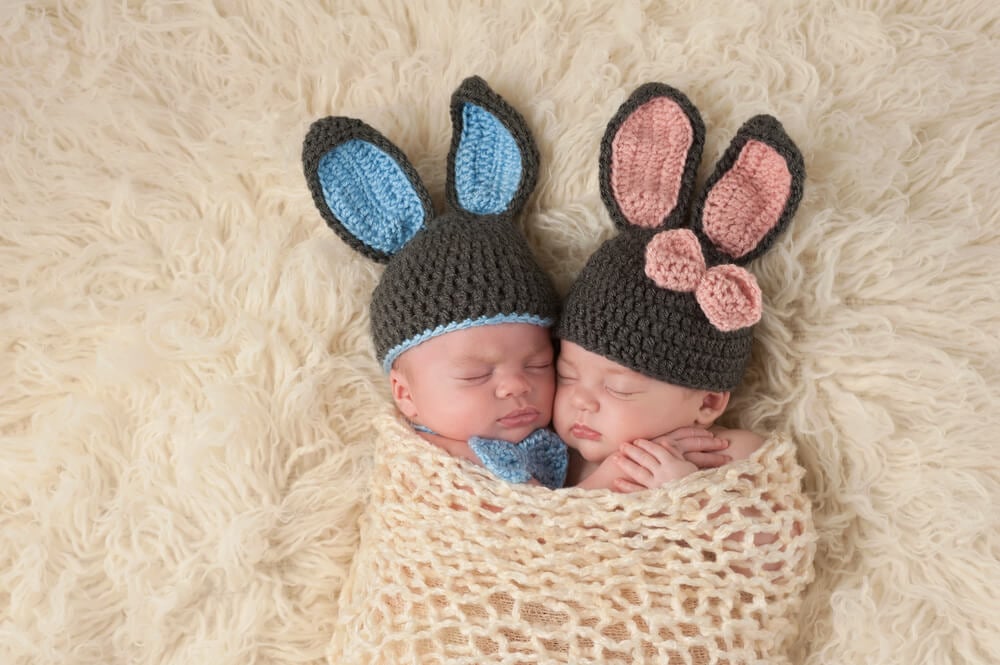
The Minnesota study included triplets Bobby Shafran, David Kellman, and Eddy Galland, who had been separated at birth and placed in three different adoptive families. When Eddy and Bobby discovered each other in college, all three were soon reunited.
Despite being raised in completely different environments, all three demonstrated similar personality traits described as intelligent, extraverted, and slightly rambunctious. Their story became a documentary subject and demonstrated that genetic influence extended to complex personality profiles even when three individuals developed entirely separately.
The Longest Separated Twins Reunited After Seventy-Three Years Apart

A pair of female twins in the Minnesota study became the world record holders for the longest separation period, reunited only at age seventy-eight after being separated at five months old. Despite living approximately seventy-seven years in different countries, different social classes, and different cultures, they reportedly displayed remarkable similarities in personality and interests, providing powerful evidence of genetic influence persisting across an entire lifetime and diverse environments.
Job Satisfaction Showed Genetic Influence in Twin Studies

Surprising research found that identical twins separated at birth showed greater similarity in job satisfaction levels than could be explained by the similarity of their actual jobs or work conditions. This suggested that individuals possess genetically influenced dispositions toward contentment or dissatisfaction that persist across various occupational environments, challenging the assumption that job satisfaction primarily results from employment conditions.
Vocational Interests and Talents Showed Genetic Influence

Twin studies found that identical twins reared apart selected similar occupations and vocations more frequently than would occur by chance. The similarity in interests and aptitudes suggested genetic contributions to career preferences and talents, complicating the narrative that career paths result primarily from social opportunity and environmental exposure.
Headaches and Migraines Showed Genetic Patterns in Separated Twins

Beyond personality and intelligence, the Jim twins both suffered from identical tension headaches and migraines despite being unaware of each other. More systematic studies found that identical twins showed much higher concordance rates for various types of headaches and chronic pain conditions than fraternal twins, suggesting genetic influences on pain sensitivity and neurological predisposition.
Religious Belief and Religiosity Demonstrated Genetic Influence

Twin studies examining religious belief found that identical twins separated at birth showed greater similarity in religiosity, belief intensity, and religious preference than fraternal twins or unrelated siblings. This suggested that predispositions toward religious belief and spiritual seeking have genetic foundations, challenging purely cultural or environmental explanations for religious differences.
Methodology Revealed That Identical Twins Were Not Always Treated Identically

Critics pointed out that even though identical twins were separated at birth, people still treated them more similarly than they treated fraternal twins because of their identical appearance. However, careful analyses of the actual treatment and environments the twins experienced, as documented through parental questionnaires, found that similarities could not be explained by more similar treatment of identical twins, strengthening the genetic interpretation.
Twin Studies Demonstrated That Genes Create Opportunities, Not Certainties

An important finding across all major twin studies was that genetic influence meant predisposition or probability, not destiny. Identical twins raised in vastly different environments did not always end up identical in outcomes.
Even for highly heritable traits like intelligence, environment still mattered substantially. For complex behaviors and mental illnesses, concordance in identical twins never reached 100 percent, clearly demonstrating environmental influence.
The Nature-Nurture Debate Shifted From Either-Or to Understanding Interaction

The most important insight from decades of twin research was not that genes determine everything or that environment is irrelevant. Instead, twin studies revealed that genetic and environmental factors work interactively in complex ways.
Genetic predisposition toward certain traits could be enhanced or suppressed by environmental factors. Identical twins’ divergences in some traits despite shared genetics proved that unique environmental experiences profoundly shaped individuals.
The Complex Legacy of Twin Studies Continues to Shape Modern Psychology

Twin research remains foundational to behavioral genetics and continues to generate new insights into human development, mental health, intelligence, and personality. Modern studies incorporating advanced genetic sequencing, neuroimaging, and longitudinal tracking have refined earlier findings while generally confirming that most human characteristics reflect both genetic and environmental influence.
These studies remind us that understanding ourselves requires appreciating both the biological blueprints written in our DNA and the environmental contexts that determine how those blueprints are expressed in actual human lives.
More from Go2Tutors!

- The Romanov Crown Jewels and Their Tragic Fate
- 13 Historical Mysteries That Science Still Can’t Solve
- Famous Hoaxes That Fooled the World for Years
- 15 Child Stars with Tragic Adult Lives
- 16 Famous Jewelry Pieces in History
Like Go2Tutors’s content? Follow us on MSN.