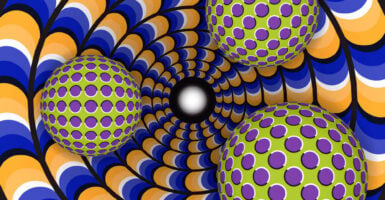
24 Optical Illusions That Fool the Eye Every Time
The human visual system evolved to detect patterns and movement in nature, but it can be fooled by careful manipulation of contrast, perspective, and spatial relationships. These optical illusions exploit the brain’s shortcuts and assumptions, making us see motion in static images, perceive depth where there is none, or miss obvious elements staring directly at us.
The Spinning Dancer Silhouette

A rotating silhouette of a dancing figure can appear to spin either clockwise or counterclockwise depending on which direction your brain interprets first. Looking away and back can flip your perception instantly, yet the image hasn’t changed.
It’s the same reason watching a ceiling fan can make you unsure of its direction.
Kanizsa Triangle
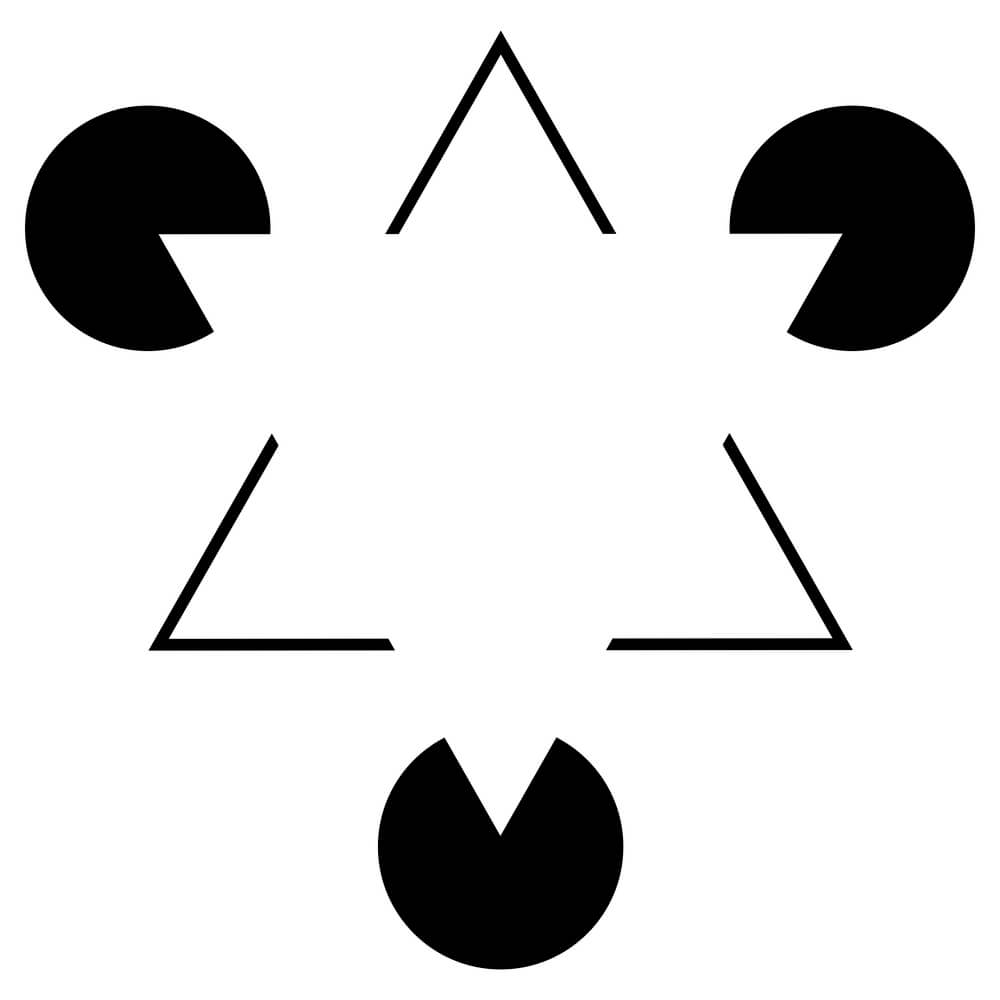
Three black circles with wedge-shaped sections removed appear to form a white triangle in the center that doesn’t actually exist. Your brain completes the missing shape automatically, fabricating an image on a white background that matches nothing in the stimulus.
The Checker Shadow Illusion
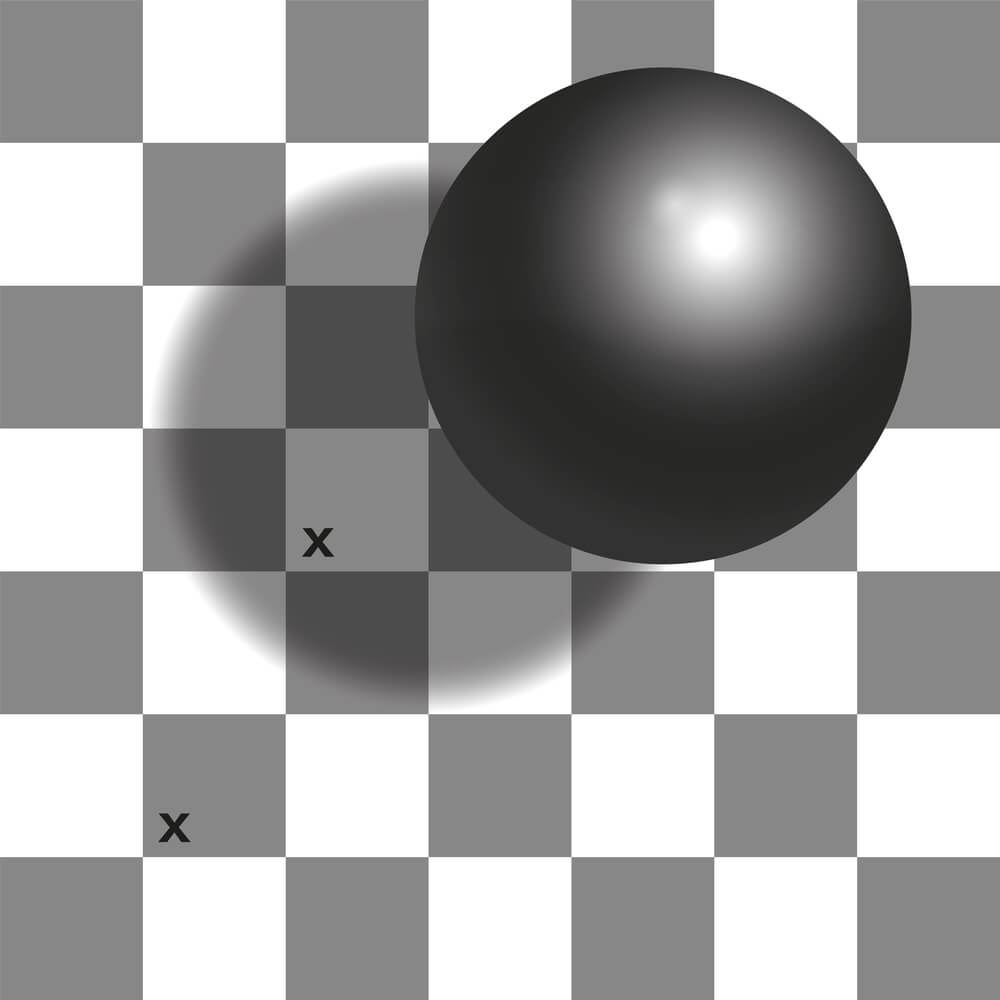
A checkerboard pattern with a shadow cast across it appears to have different colored squares in the shadow versus in the light. If you measure the actual pixel values, the “shadowed” squares are actually lighter than the “lit” squares—they’re identical in shade.
Your brain corrects for the shadow it thinks it sees.
Penrose Stairs
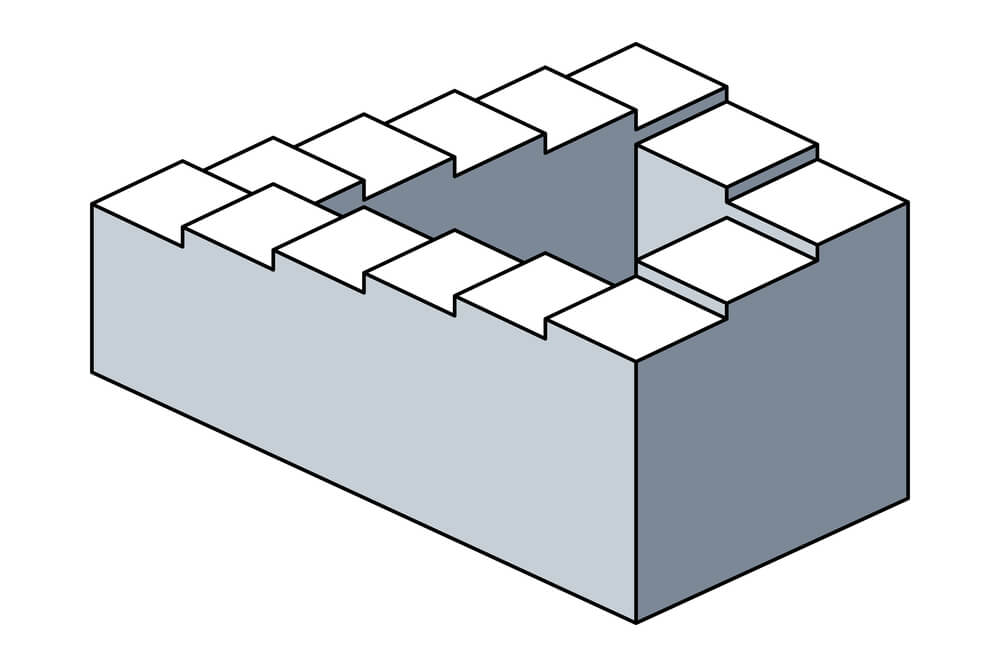
Also known as an impossible staircase, this drawing shows stairs that appear to ascend continuously in one direction yet return to the starting point. Following the stairs with your eye creates cognitive dissonance because the image violates three-dimensional logic.
The Rubin Vase

This image can be perceived either as a white vase or as two black profile faces staring at each other. Most people see one interpretation first, then can train themselves to see the other.
Both are equally valid, yet the image itself hasn’t changed.
Motion Illusion in Tilted Lines
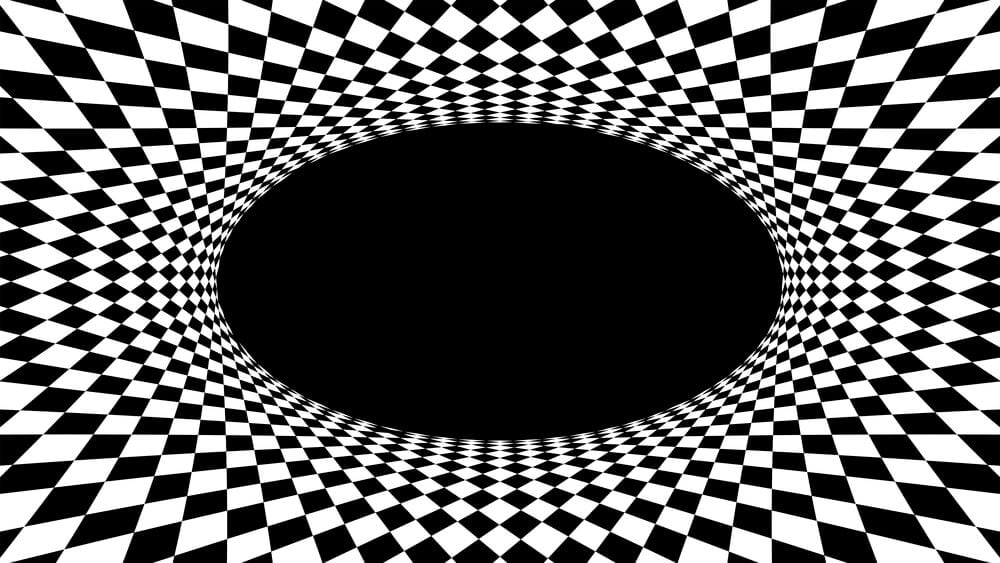
Tilted parallel lines with certain stripe patterns can appear to move or drift across the page when you’re not looking directly at them. The illusion vanishes when you focus your central vision on the lines, returning when you look away.
Disappearing Circle Illusion

A slowly rotating dot among smaller dots moving in different directions causes your eye to lose track of the central dot repeatedly. The brain prioritizes the coherent motion of the surrounding dots, making you “lose” the target.
The Rotating Snakes
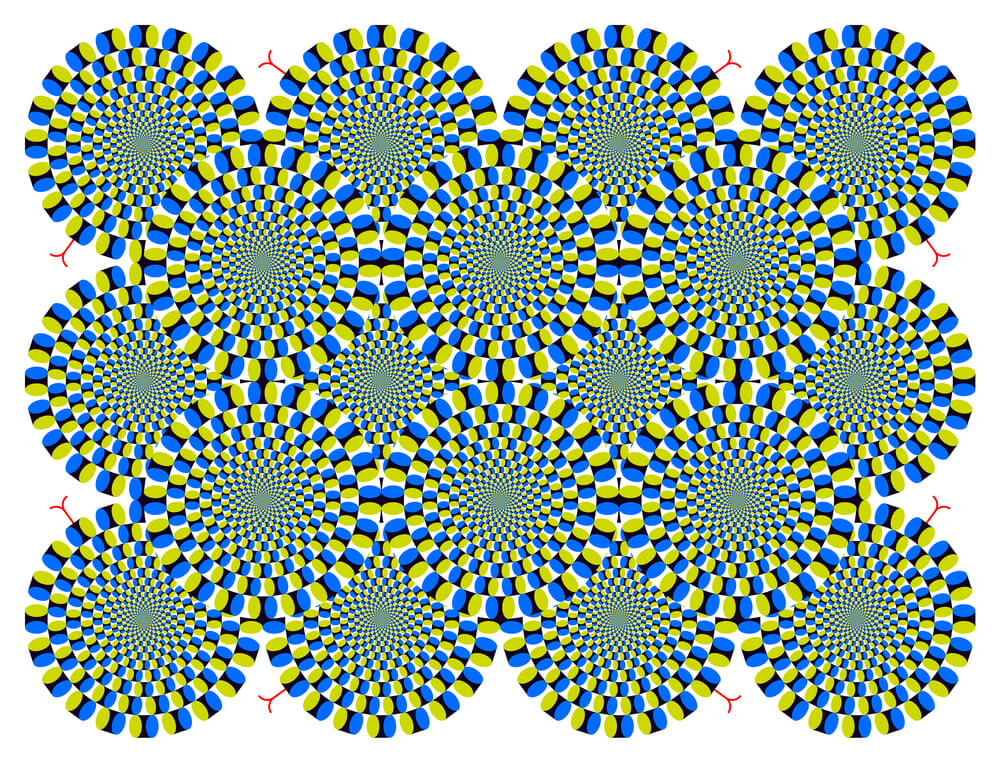
Although the image is static, the pattern of colored circles arranged in a pinwheel creates the illusion of slow rotation. The illusion is stronger in peripheral vision—when you focus directly on the center, rotation appears to slow.
Müller-Lyer Illusion
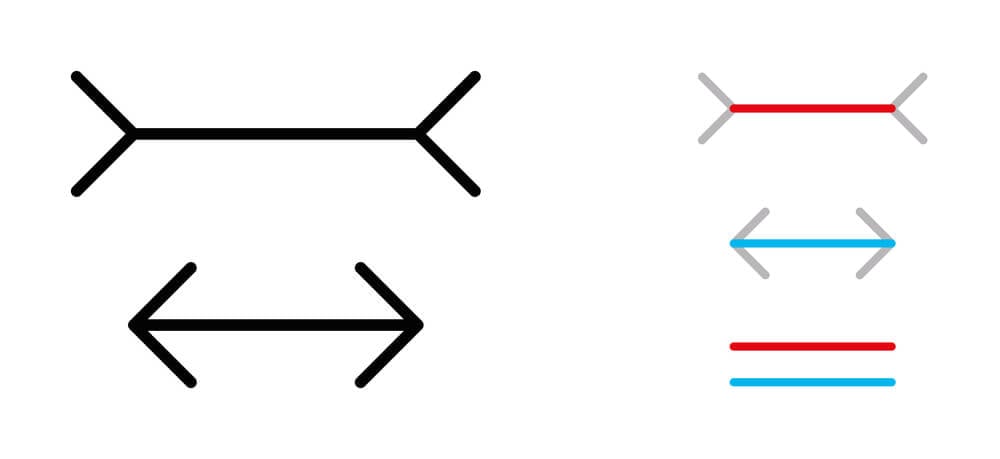
Two lines of identical length appear different when one has arrow-like fins pointing inward and the other has fins pointing outward. The version with outward-pointing fins appears longer.
Your brain treats the fins as perspective cues suggesting depth.
The Impossible Cube
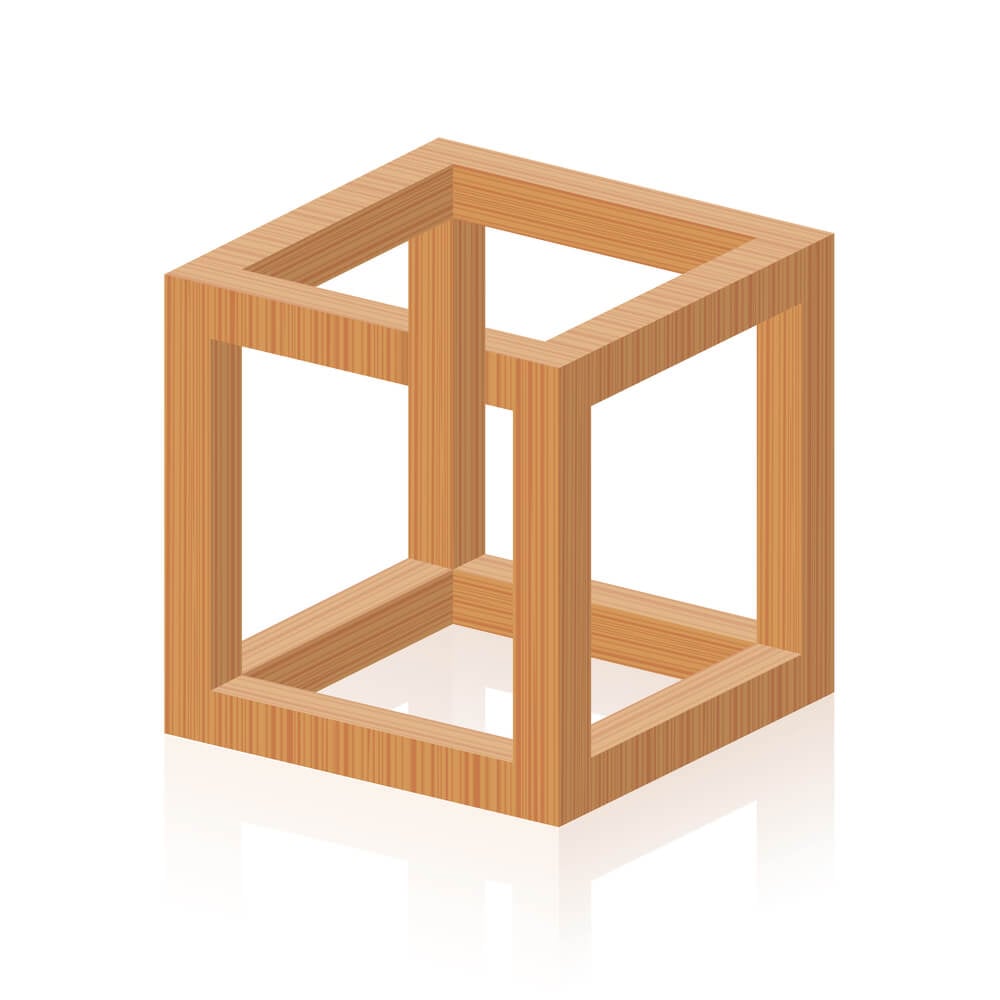
A simple line drawing of a cube can be perceived in two different three-dimensional orientations simultaneously, and switching between them creates an unsettling sensation. The image provides enough visual information to suggest both interpretations equally well.
Shepard Tone Illusion (Auditory)
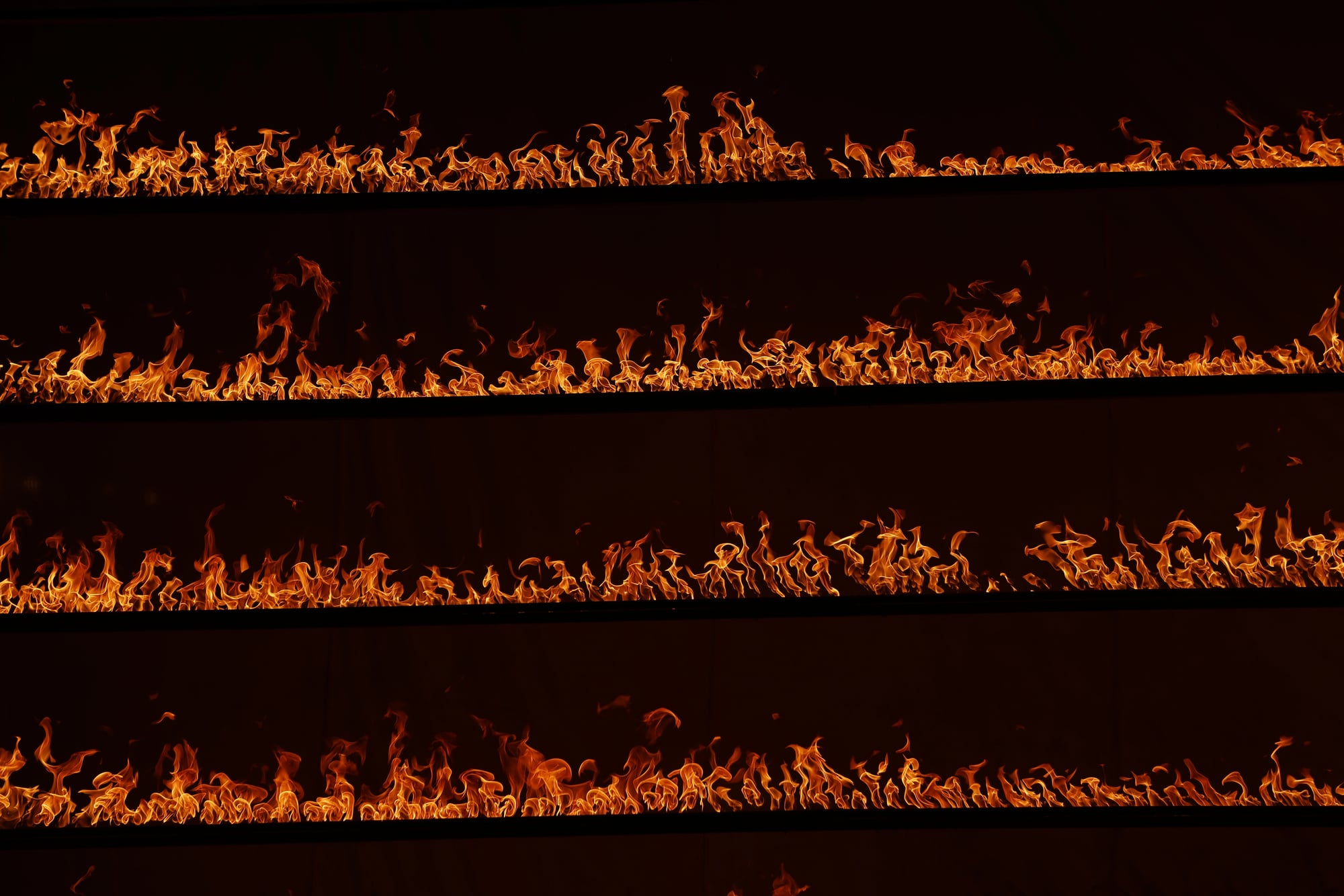
While primarily an auditory illusion, this creates a perpetually ascending scale in music that never actually gets higher—the notes loop but your ear perceives continuous ascent. Visual versions use similar principles.
The Neon Color Spreading Illusion
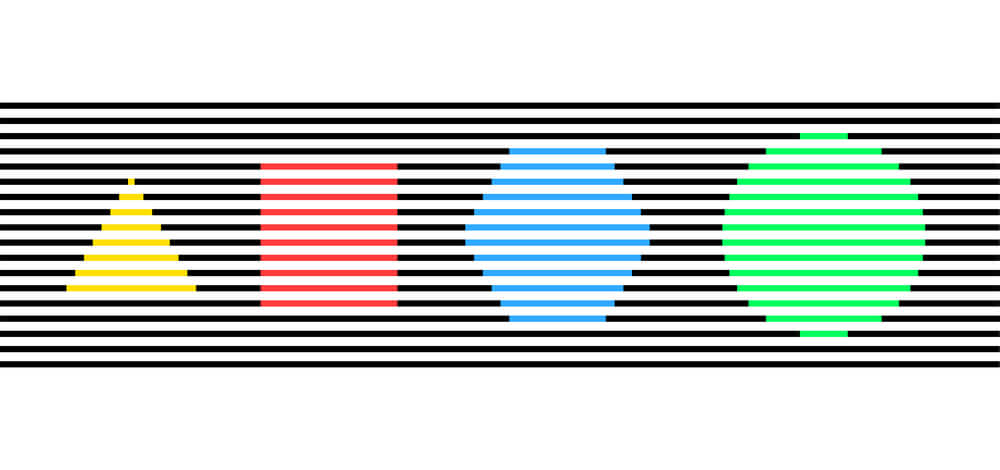
Thin lines of one color appearing to glow and spread across regions of another color, making the regions appear to have more of the line’s color than they actually do. The effect creates colors that don’t physically exist in the image.
The Ebbinghaus Illusion
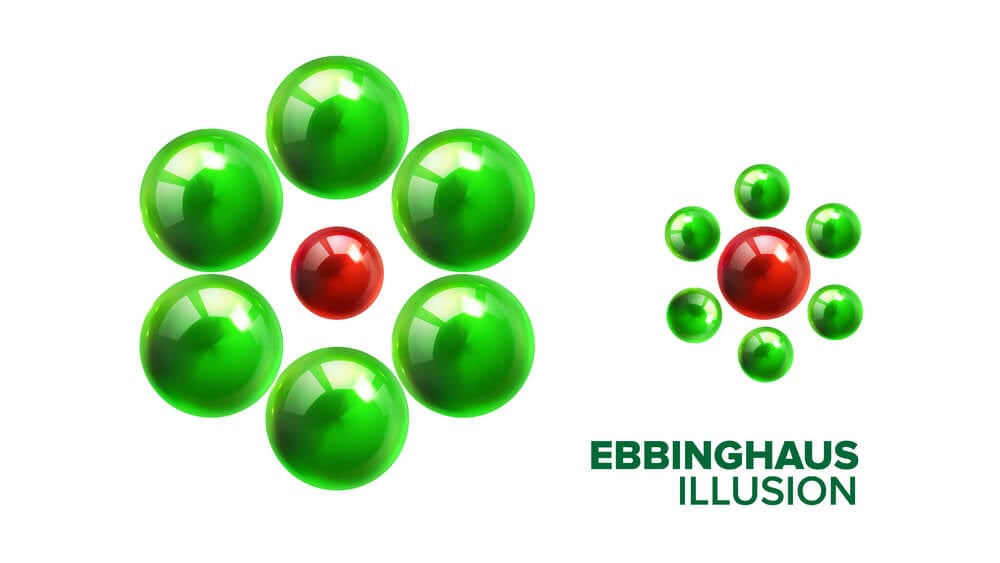
A circle surrounded by larger circles appears smaller than an identical circle surrounded by smaller circles. Context determines apparent size, regardless of actual pixel dimensions.
Motion in Static Dots
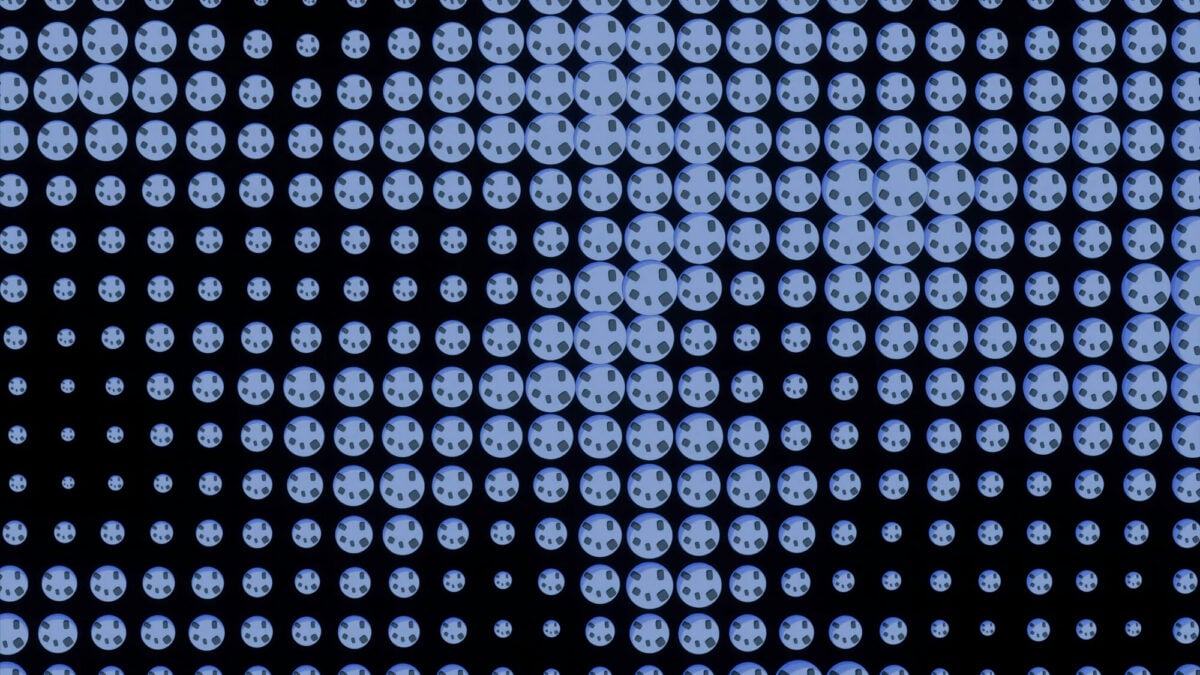
A pattern of randomly positioned dots, when arranged in a specific way, appears to move in concentric circles despite being completely stationary. This exploits how the brain processes visual motion from position shifts.
The Café Wall Illusion
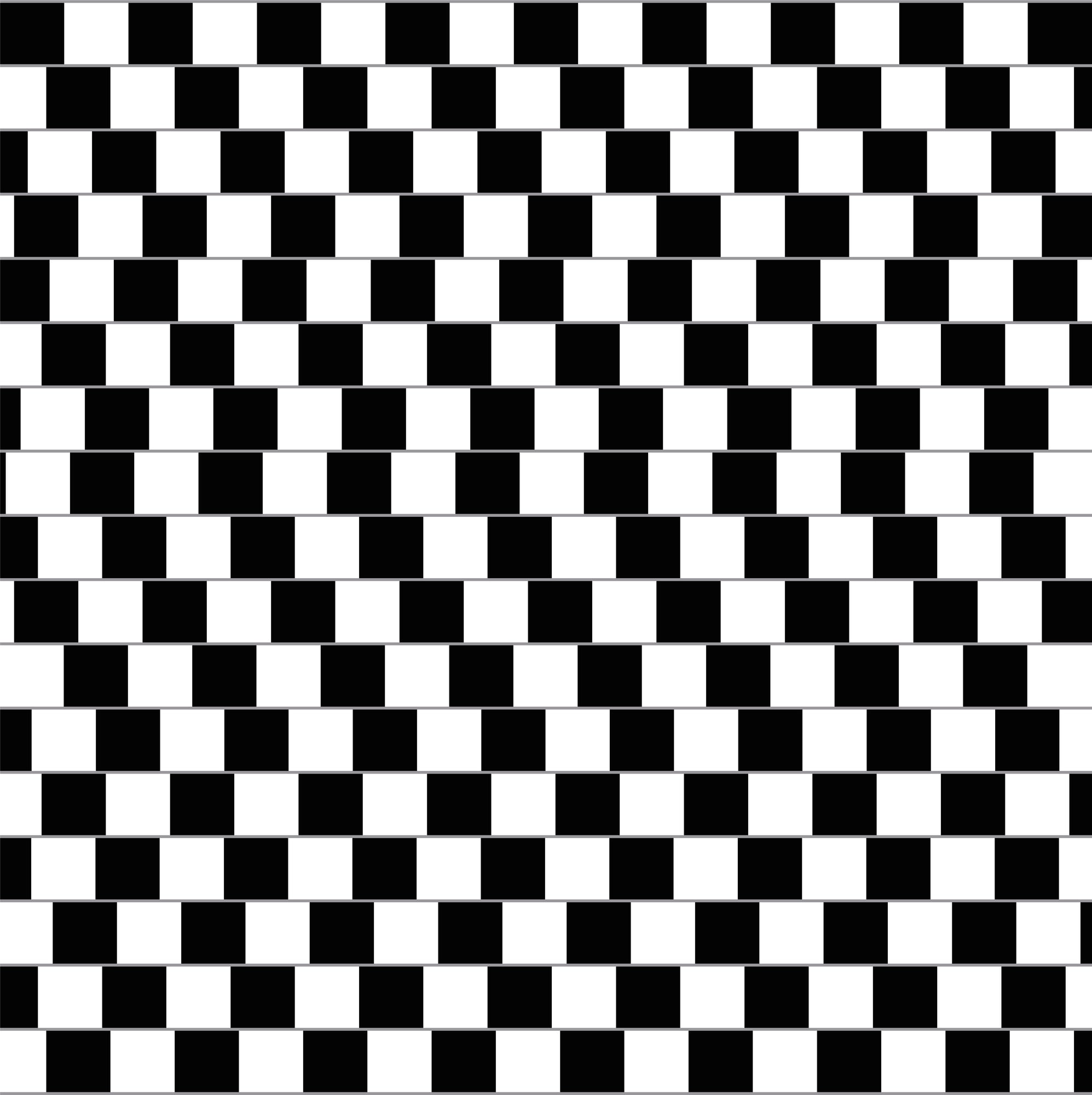
Horizontal lines overlaid on a checkerboard pattern appear to tilt or wave up and down, even though they’re perfectly horizontal and parallel. The contrast at the boundaries between black and white squares creates misperception of line direction.
Phantom Words

In audio-visual form, the same words repeated appear to change meaning based on background patterns of other words. Visual versions use similar disruption of expectation.
The Dress (Online Viral Illusion)
A photograph of a dress appeared in different colors to different observers based on assumptions about lighting and fabric color. Some saw blue and black; others saw white and gold.
The illusion revealed how the brain corrects for perceived lighting conditions.
Ambiguous Figures (Old Woman / Young Woman)
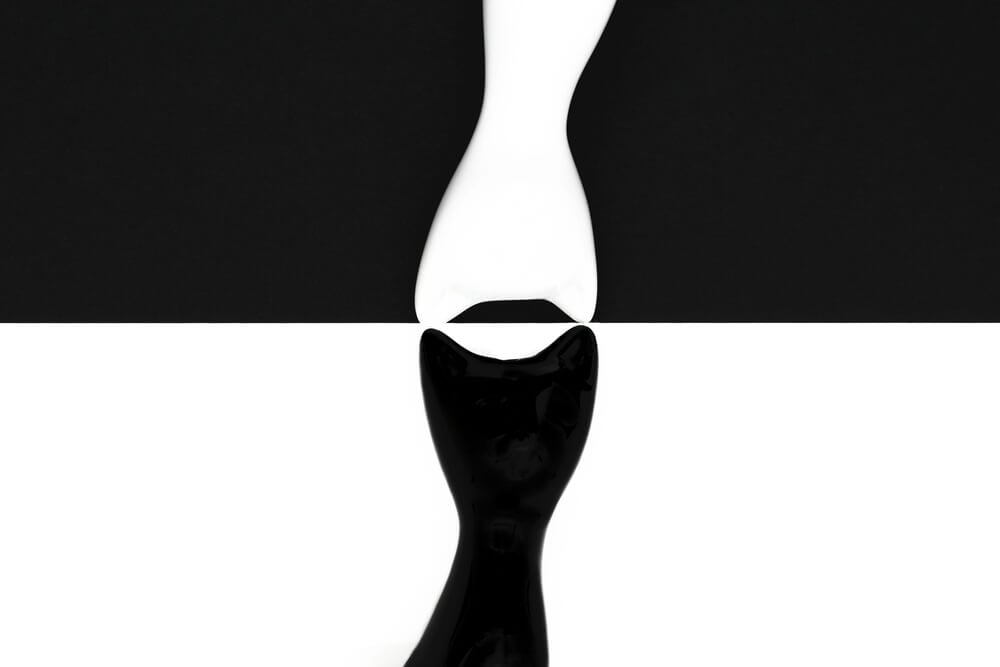
A single image can depict either an old woman looking down or a young woman looking away, depending on whether you interpret certain lines as the old woman’s nose or the young woman’s chin.
The Breathing Wall

Animated undulating patterns on a flat wall surface create the illusion that the wall is expanding and contracting, particularly in peripheral vision. The illusion mimics motion that isn’t happening in three-dimensional space.
Perpetual Motion Illusions
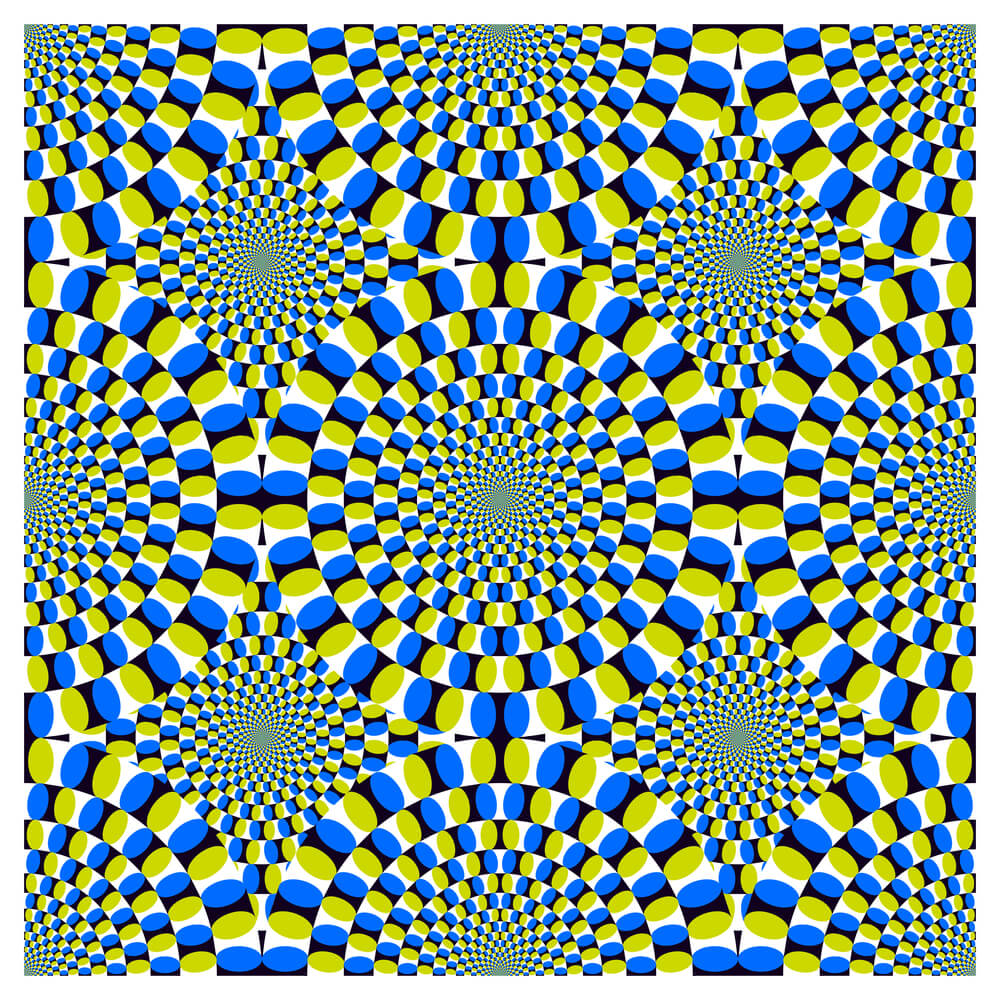
Certain arrangements of colored shapes with gradients appear to move continuously, even though the image itself never changes. Your brain extrapolates motion from the position and color shifts.
The Hourglass Illusion

Two triangular shapes can be perceived as either two triangles facing each other or as an hourglass in the center. Like the Rubin vase, both interpretations are equally valid.
The Face/Vase Illusion (Rubin’s Variations)
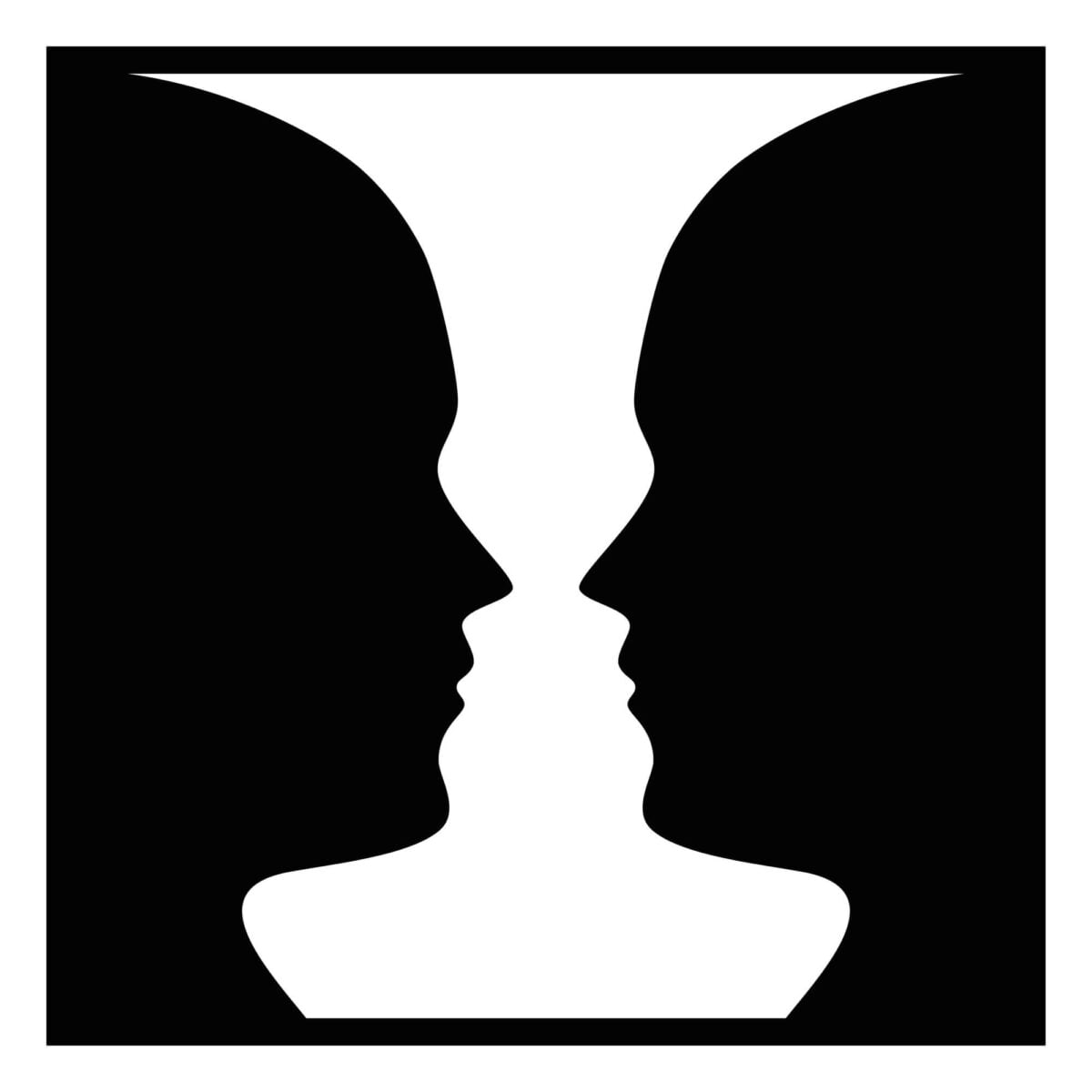
Multiple versions of Rubin’s principle exist where the same image depicts human faces or household objects depending on interpretation. Each version is as perceptually valid as the other.
The Impossible Fork (Trident Illusion)

A fork drawn with three prongs that appear to seamlessly connect at the handle in an impossible way. Following the prongs creates cognitive confusion because the geometry violates physical possibility.
Floaters in Motion Illusion
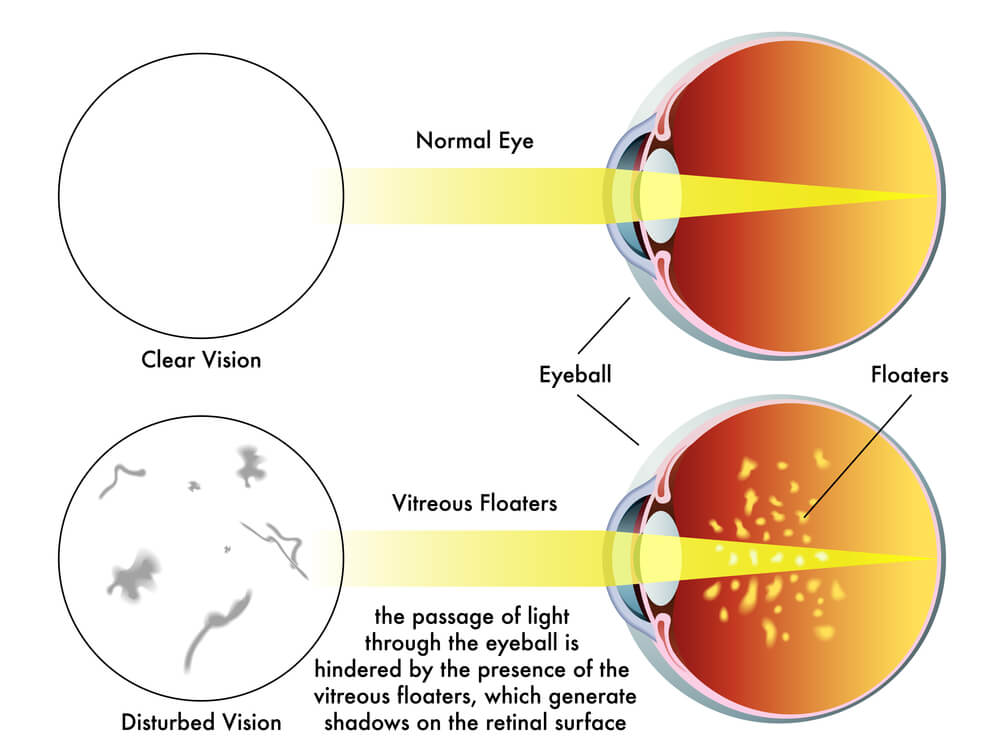
Animated backgrounds with drifting particles can make the foreground appear to move opposite to the background motion, even though the foreground is static. This tracks how the brain interprets motion relativity.
The Eye Sees, but the Brain Decides
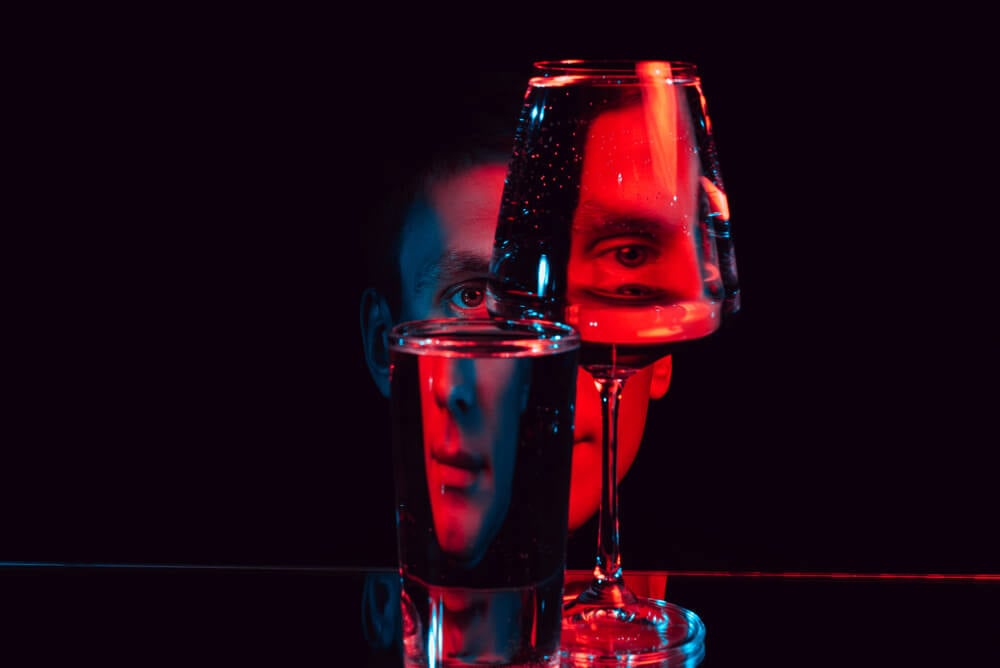
Optical illusions are failures of perception, not failures of the eye. Your visual system works correctly—it’s your brain’s interpretation that goes astray.
These illusions exploit the shortcuts your brain evolved to process visual information quickly in natural environments. Confronted with impossible geometry or conflicting depth cues, your brain often chooses the most likely interpretation of reality, even when the image itself violates reality.
Understanding how easily you’re fooled is the first step to appreciating how constructed all visual perception truly is.
More from Go2Tutors!

- The Romanov Crown Jewels and Their Tragic Fate
- 13 Historical Mysteries That Science Still Can’t Solve
- Famous Hoaxes That Fooled the World for Years
- 15 Child Stars with Tragic Adult Lives
- 16 Famous Jewelry Pieces in History
Like Go2Tutors’s content? Follow us on MSN.