20 Laws Towns Enforced and Later Repealed
Municipal codes accumulate the way attics do. A rule gets written for a real problem, the problem fades, and the rule just sits there, technically binding, until someone finally notices and asks why it is still on the books.
What follows are documented cases, not the invented “you can’t tie a giraffe to a lamppost” trivia that circulates online. Each of these was a real, enforceable ordinance, repealed on the public record, often generations after it stopped making sense.
New York City’s Cabaret Law

Enacted in 1926 during Prohibition, New York City’s Cabaret Law required any venue selling food or drink to hold a special license before patrons could dance. Fewer than a hundred of the city’s tens of thousands of eligible bars and restaurants ever held that license, and enforcement over the decades fell hardest on jazz clubs, immigrant-owned venues, and LGBTQ spaces. The City Council repealed it in October 2017, ninety-one years after it passed.
Henryetta, Oklahoma’s Dance Ordinance

For forty years, an ordinance in Henryetta, Oklahoma, prohibited dancing within five hundred feet of a place of worship, a rule residents openly compared to the plot of the film “Footloose.” The law resurfaced in 2017 when a business owner had to cancel a Valentine’s Day dance after a resident pointed out it was technically illegal. The city council repealed the ordinance shortly afterward.
Jackson, Wyoming’s Concealed Weapon Ban

A 1970s-era ordinance in Jackson, Wyoming, outlawed carrying any hidden weapon in town, a list that on paper included pistols, daggers, and swords concealed inside canes. Wyoming’s state legislature eliminated its permit requirement for concealed carry in 2011, leaving the town’s stricter local rule in direct conflict with state law for years. The town council formally repealed its ordinance to bring the code into alignment.
San Diego’s Bathhouse Ordinance

San Diego passed an ordinance in 1988, amended in 1991, that regulated bathhouses at the height of the HIV and AIDS crisis, written specifically to discourage gay men and other men attracted to men from gathering at such venues. The law sat unenforced for years until a city staffer came across it while reviewing the municipal code. The city council voted unanimously to strike it from the books.
Boynton Beach’s Segregation Ordinances
Boynton Beach, Florida, adopted ordinances in 1924 creating racially designated districts, followed by a 1933 rule requiring Black residents to leave the town center by nightfall. Though unenforced for decades and unenforceable under federal law since the 1960s, the ordinances technically remained in the city’s code until the commission formally repealed them in 2024, a century after they passed.
Alamo, Nevada’s Alcohol Ban

The small Nevada town of Alamo adopted a prohibition on alcohol sales in 1985, reflecting the preferences of a community with a large population belonging to the Church of Jesus Christ of Latter-day Saints. Nearly four decades later, the town board and county commission repealed it, citing the survival of local businesses as the deciding factor. Bars remain restricted even under the new rule.
Argyle, New York’s Dry Status

Argyle, a farming town north of Albany, had banned alcohol sales since before national Prohibition even began, one of eight towns in New York State still legally dry heading into 2019. Residents were free to drink but no business could legally sell them anything to drink. Voters ended the town’s dry status in a 2019 referendum.
Hodgdon, Maine’s Sunday Liquor Ban

Hodgdon, a small town in Maine’s Aroostook County, kept a Prohibition-era rule against Sunday liquor sales on its books for nearly ninety years. A 2021 town meeting vote to repeal it passed by a margin of just fourteen votes, 105 in favor to 91 opposed. Alcohol still cannot be consumed on the premises where it is sold under the revised rule.
Monroe, Maine’s Liquor Restriction

In Monroe, Maine, a farm-to-table restaurant applying for a liquor license in 2019 discovered that the town was still legally dry under an ordinance nobody at the town office knew still existed. The rule dated back to the years immediately following national Prohibition’s end. Monroe voters repealed it in 2020 once the oversight came to light.
Belmont, Massachusetts’s Liquor Store Ban

The Boston suburb of Belmont banned retail liquor stores for seventy-four years following national Prohibition, one of many Massachusetts towns that never opted back in after the federal ban ended in 1933. Voters finally approved liquor store licenses in 2007. Neighboring Needham held out even longer, permitting off-premise liquor sales for the first time only in 2013.
Moore County, Tennessee’s Dry Law

Moore County, Tennessee, remained legally dry for most of the twentieth century despite being home to the Jack Daniel’s distillery, meaning the world-famous whiskey could be made there but not legally sold there. County voters approved retail alcohol sales in 2020, ending the contradiction after nearly a century.
Winona, Texas’s Wet Vote

The small East Texas town of Winona, population under six hundred, voted in 2010 to allow alcohol sales after its mayor argued publicly that the town was behind the times. The vote was part of a broader wave that saw thirty-two of thirty-six Texas localities approve similar measures on a single Election Day in November 2014. Winona’s own repeal came several years ahead of that surge.
Chicago’s Gang Loitering Ordinance
Chicago passed an ordinance in 1992 allowing police to order groups of people to disperse from public places if an officer believed one member belonged to a gang, with arrest for anyone who refused to move. The United States Supreme Court struck the ordinance down in 1999 in Chicago v. Morales, ruling it unconstitutionally vague. The city subsequently repealed and rewrote the law with narrower language.
San Francisco’s Cross-Dressing Ordinance

San Francisco’s municipal code carried a nineteenth-century rule against appearing in public in clothing associated with the opposite gender, originally justified as a public-decency measure. The ordinance was used periodically against the city’s gay and transgender residents well into the twentieth century. The city formally removed it from its code in 1974 as part of a broader modernization of outdated public-conduct laws.
New York City’s Arcade Machine Ban

New York City outlawed coin-operated flipper amusement machines outright in 1942, on the theory that they were unregulated gambling devices rather than games of skill. The prohibition held for thirty-four years until 1976, when a journalist demonstrated to the city council that a skilled player could guide the game’s outcome with precision, proving the result was not left to chance. The council repealed the ban the same year.
Sunday Retail Closing Laws

Blue laws requiring most retail businesses to close on Sundays were common across American towns for most of the twentieth century, rooted in nineteenth-century religious observance rules. Many towns repealed theirs piecemeal between the 1960s and 1990s as regional shopping centers and seven-day retail competition made the closures increasingly impractical. A handful of towns and counties, mostly in the Northeast, kept partial versions on the books well into the twenty-first century.
Bans on Women Working as Licensed Bartenders
Numerous American cities and states restricted or barred women from working as licensed bartenders for most of the twentieth century, a restriction the United States Supreme Court upheld in 1948 in Goesaert v. Cleary. Local ordinances enforcing the ban persisted in various forms in individual towns even after that ruling. Most were repealed piecemeal between the 1970s and 1990s as state legislatures and city councils responded to gender-discrimination challenges.
Public Spitting Ordinances
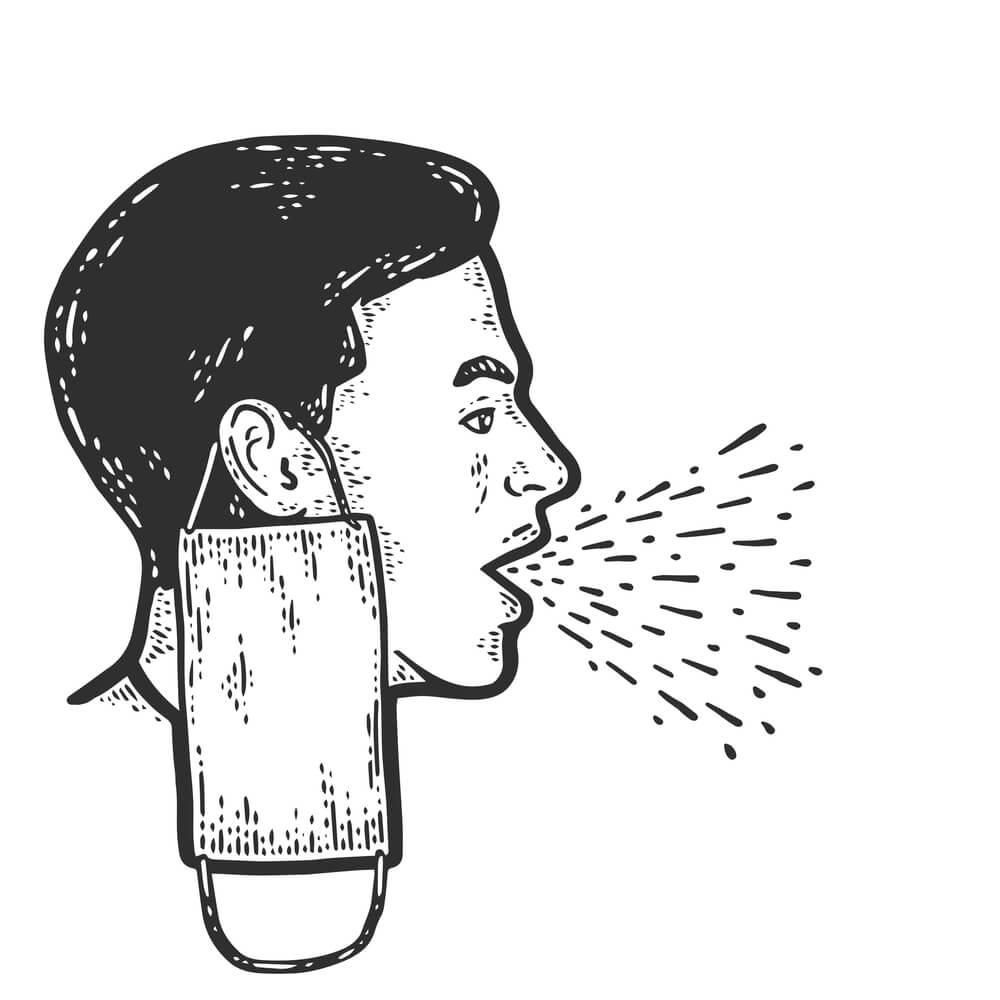
Cities and towns across the United States passed ordinances banning spitting on sidewalks and in public buildings around the turn of the twentieth century, part of a public-health campaign against the spread of tuberculosis. The rules were aggressively enforced for a period, with fines and even brief arrests in some cities. Most towns allowed the ordinances to lapse into disuse decades later and formally struck them during later rounds of municipal code cleanup.
Colored Margarine Bans

Many American towns and states banned the sale of margarine tinted to resemble butter, a restriction pushed by dairy industry groups beginning in the late nineteenth century to prevent consumer confusion at the counter. Some jurisdictions required margarine to be dyed an unappetizing color instead, or sold with a separate coloring packet the buyer mixed in at home. The last of these restrictions fell through the 1960s as the laws lost support and faced growing legal challenges.
A Century of Sundown Ordinances

Numerous towns across the Midwest and beyond adopted “sundown” ordinances in the early twentieth century, formally requiring non-white residents to leave town limits by nightfall under threat of arrest. One rural county’s version, adopted in 1917, remained on the books for fifty-seven years before it was formally repealed in 1974. Many such towns never held a public repeal vote at all, simply allowing the rule to become unenforceable as federal civil rights law overtook it.
The Rule That Outlived Its Reason

Every ordinance on this list solved a real problem for the people who wrote it, whether that problem was a public-health scare, a moral panic, or plain prejudice dressed up as order. What makes them strange in hindsight is not that they existed but that they kept existing, sitting quietly enforceable, long after the reasoning behind them had gone.
Repeal, when it finally came, rarely arrived as some grand reckoning. Usually it was a business owner filling out a license application, a staffer skimming the code for something else, or a councilmember who had simply had enough of explaining an outdated rule to visitors who did not believe it was real.
More from Go2Tutors!

- The Romanov Crown Jewels and Their Tragic Fate
- 13 Historical Mysteries That Science Still Can’t Solve
- Famous Hoaxes That Fooled the World for Years
- 15 Child Stars with Tragic Adult Lives
- 16 Famous Jewelry Pieces in History
Like Go2Tutors’s content? Follow us on MSN.