28 Ancient Games Played Thousands of Years Ago
Archaeologists dig up weapons, temples and tombs, but they also keep finding game boards. Scratched into palace steps, buried beside pharaohs and carved into temple roofs, these boards show that people thousands of years ago spent their spare hours much as people do now.
Some of these games vanished and had to be reconstructed from fragments. Others never stopped being played.
Royal Game of Ur
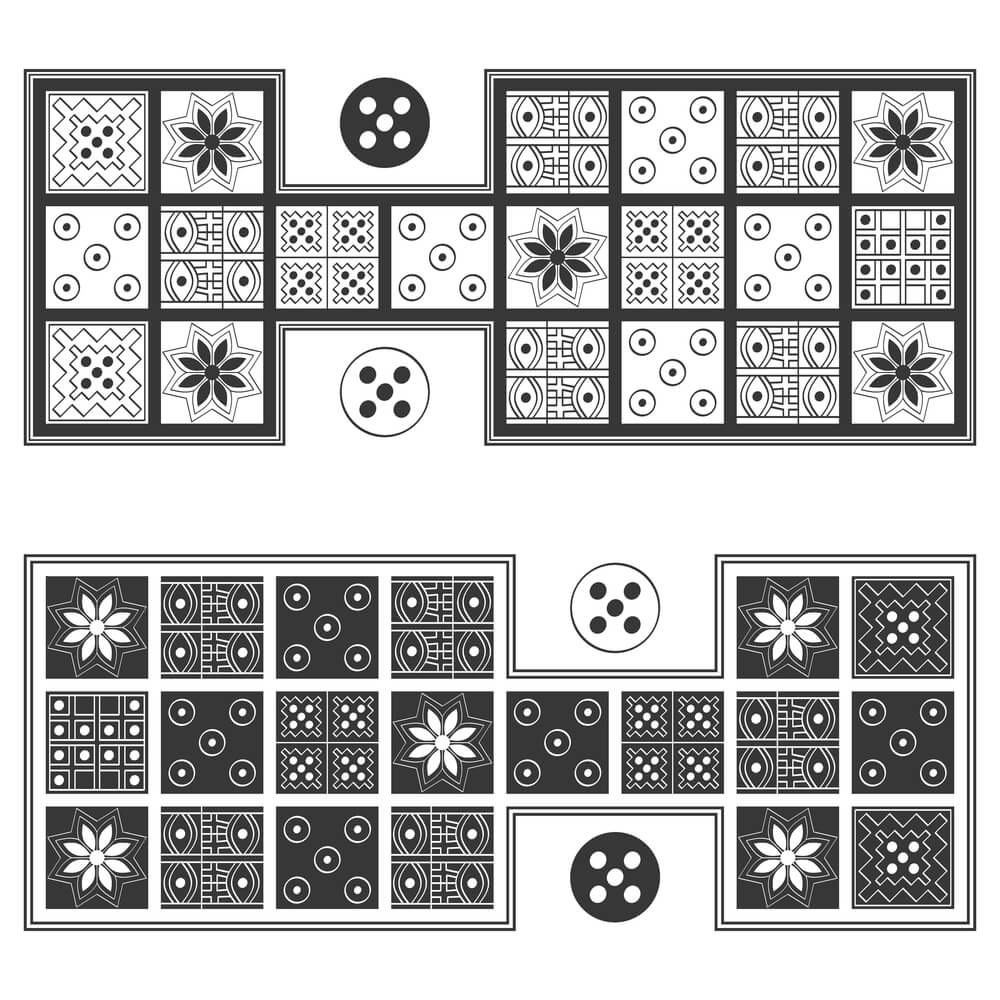
Leonard Woolley uncovered several elaborate game boards in the Royal Cemetery at Ur, in modern Iraq, during excavations in the 1920s. The boards date to around 2600 BC and have 20 squares decorated with shell and lapis lazuli.
For decades no one knew how the game was played. Then Irving Finkel, a curator at the British Museum, deciphered a cuneiform tablet written by a Babylonian scribe in 177 BC that described the rules.
It turned out to be a race game played with dice, and a version survived among the Jewish community of Kochi in India into the 20th century.
Senet
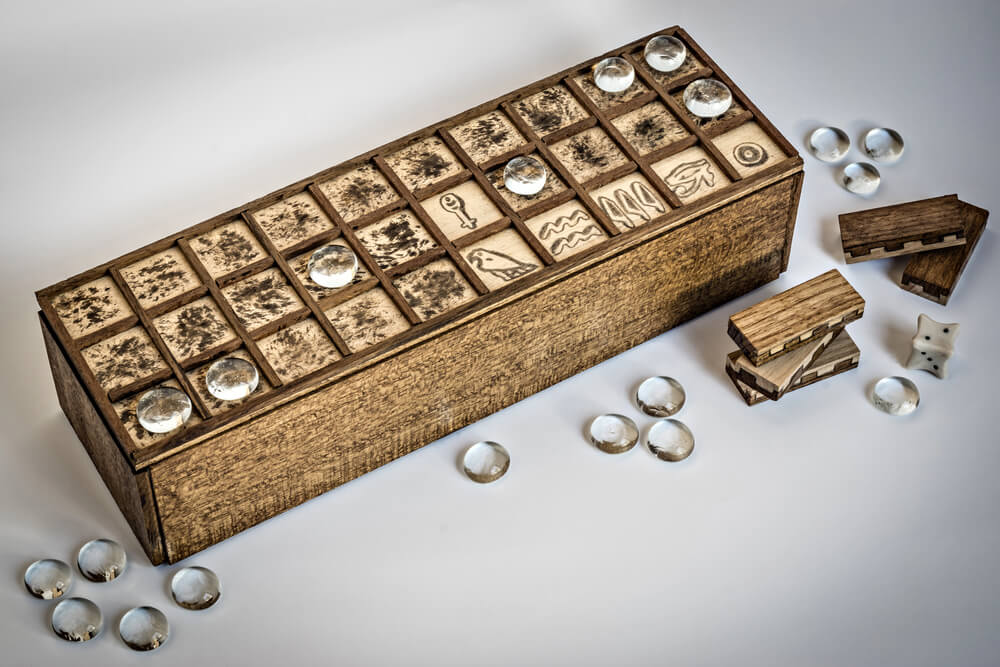
Senet is one of the oldest known board games, with evidence of it in Egypt from around 3100 BC. The board has 30 squares arranged in three rows of ten, and players moved their pieces according to throws of flat sticks.
Over time the game took on religious meaning, and it came to represent the passage of the soul through the afterlife. Tutankhamun was buried with several senet boards, including an elaborate one made of ebony and ivory.
Tomb paintings show the dead playing senet, sometimes against an invisible opponent, as part of their spiritual trial.
Mehen
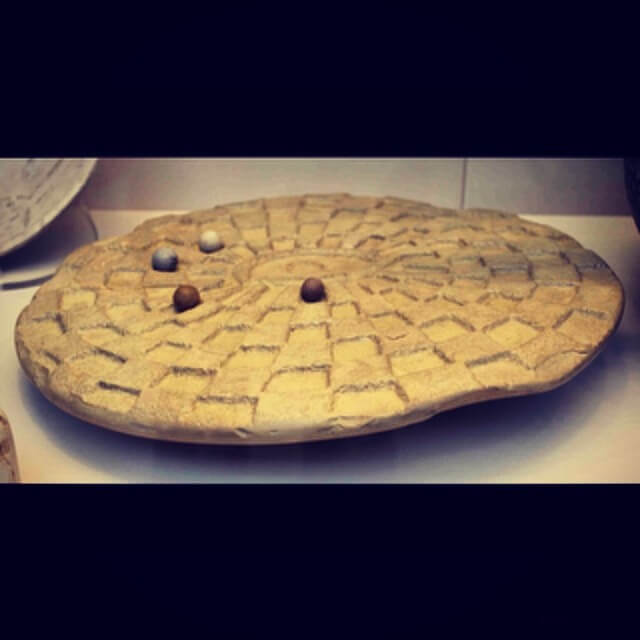
Mehen was played in Egypt from around 3000 BC on a circular board shaped like a coiled snake. The snake’s body was divided into segments, with its head at the center, and players raced their pieces toward the middle.
The game pieces often included small carved lions and spherical marbles, suggesting a combination of different moves. Mehen was named after a protective snake god in Egyptian religion.
The game fell out of use in Egypt after the Old Kingdom, but boards continued to appear in Cyprus for centuries afterward. Its exact rules have never been recovered.
Hounds and Jackals
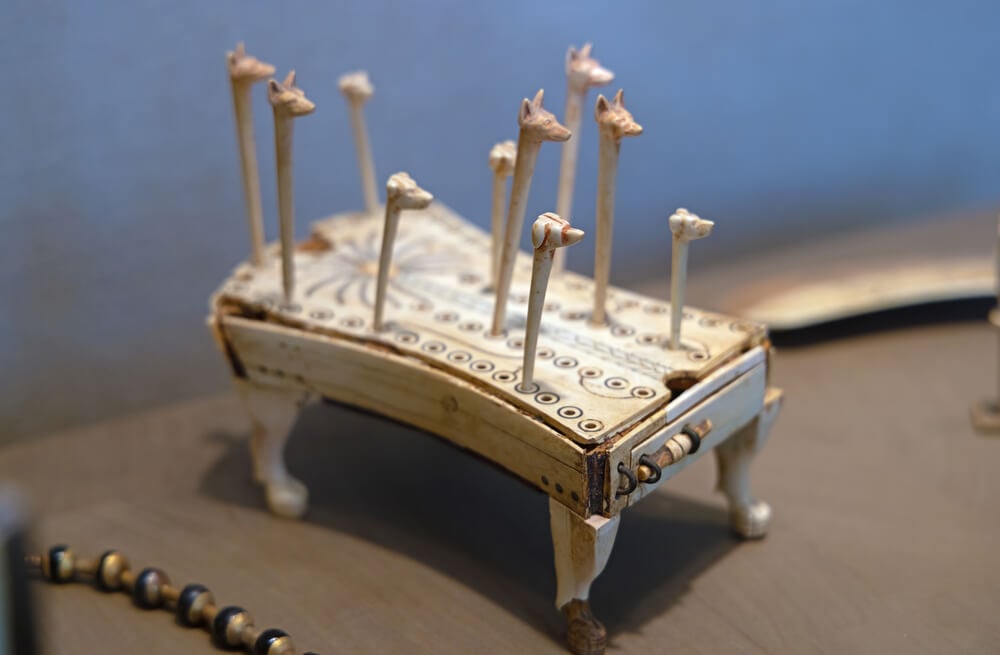
In 1910 Howard Carter and Lord Carnarvon found a beautiful game set in a tomb at Thebes dating to around 1800 BC. The board was made of ebony and ivory and shaped like a small table, with peg positions arranged along its surface.
The playing pieces were slender pins topped with carved heads of dogs and jackals, five of each. Players raced their pegs along the board, with some positions linked by lines that allowed pieces to jump ahead or fall back.
The set is now in the Metropolitan Museum of Art in New York.
Mancala
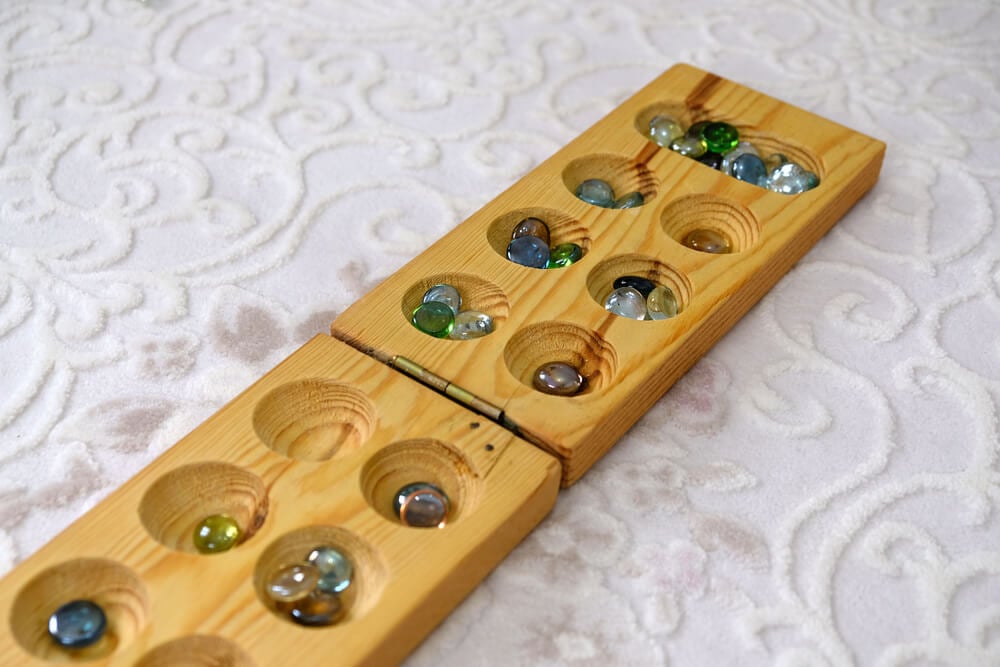
Mancala is not a single game but a family of games played by sowing seeds or stones into rows of pits and capturing an opponent’s pieces. Versions such as Oware in West Africa and Bao in East Africa are still played across the continent and beyond.
Some of the oldest reliably dated boards were carved into stone at Aksum, in modern Ethiopia, during the 6th and 7th centuries AD. Mancala boards were often scratched into the ground or into rock, which makes them hard to date.
The game’s simplicity has helped it survive for centuries across many cultures.
Go
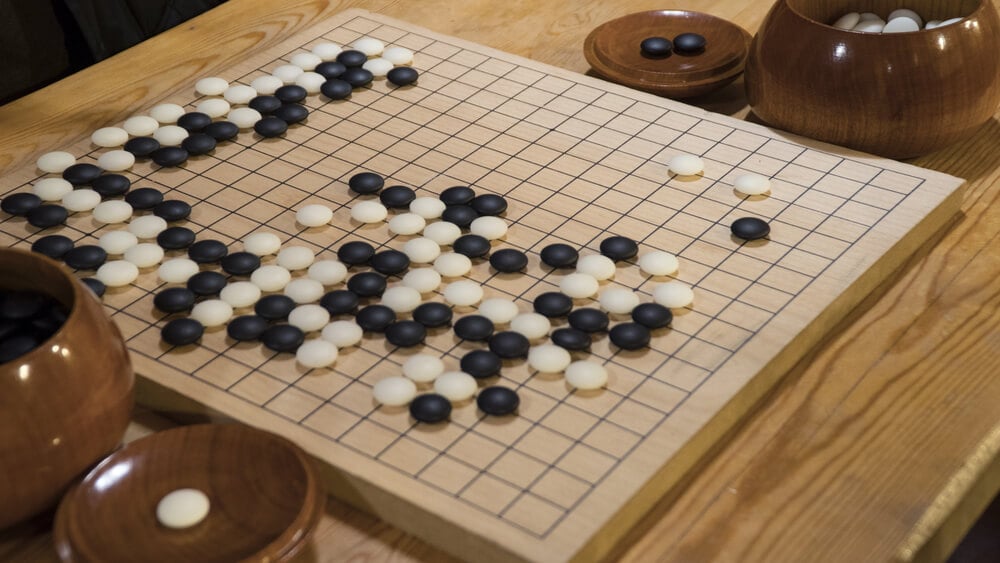
Go, known as weiqi in China, is a strategy game played on a grid of 19 by 19 lines with black and white stones. Players surround territory and capture their opponent’s stones.
The game is mentioned in Chinese texts from the 4th century BC, making it one of the oldest board games still played in its original form. Despite its simple rules, the number of possible positions is astronomically large.
In 2016 the computer program AlphaGo defeated the champion Lee Sedol four games to one in Seoul, an event that shocked Go players and computer scientists alike.
Liubo
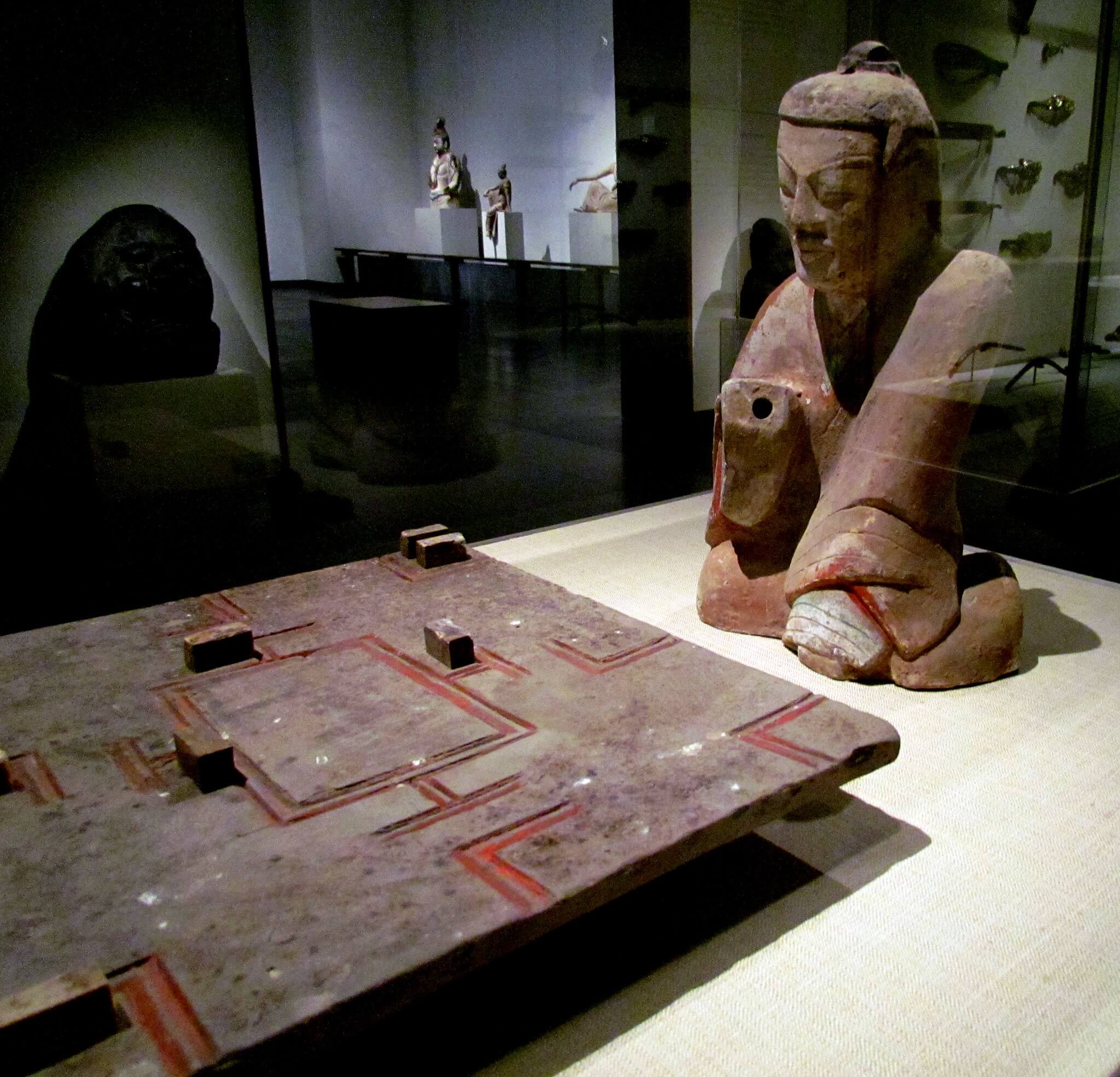
Liubo was one of the most popular games in ancient China, especially during the Han dynasty. Players threw six sticks to determine moves on a square board marked with a distinctive pattern of lines.
Liubo was so popular that boards were buried in tombs, and the game appears on Han dynasty carvings. According to historical accounts, a quarrel over the game led the future Emperor Jing to kill the son of the Prince of Wu with a game board, a death that helped fuel the Rebellion of the Seven States in 154 BC.
The rules were eventually lost.
Chaturanga
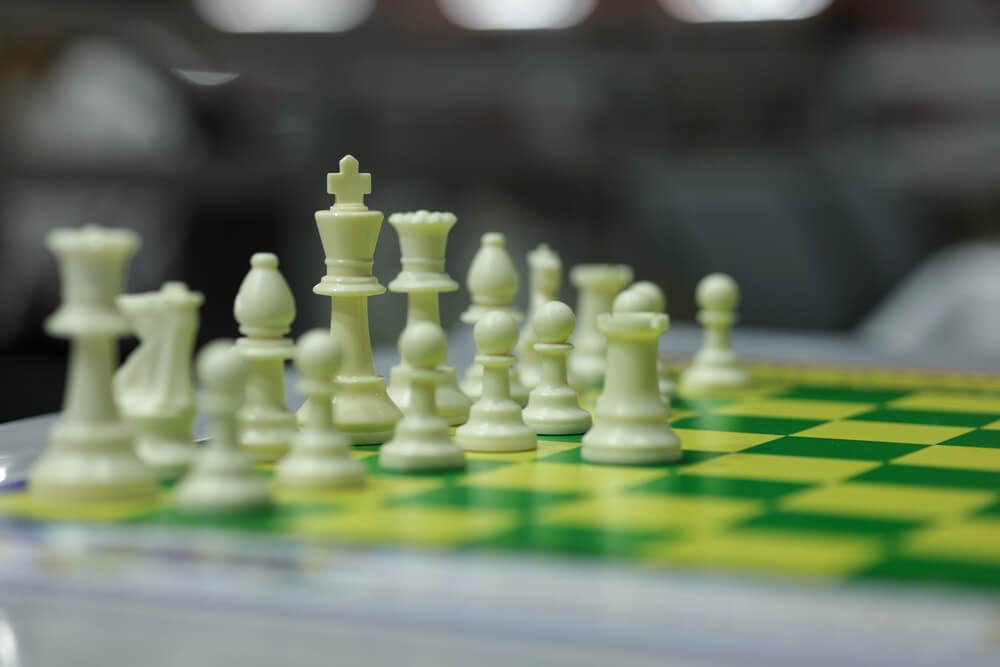
Chaturanga emerged in India around the 6th century AD and is widely regarded as the ancestor of chess. Its name refers to the four divisions of an ancient army, infantry, cavalry, elephants and chariots, and those became the pieces now known as pawns, knights, bishops and rooks.
The game spread to Persia, where it became shatranj, and from there to the Islamic world and Europe. Over the centuries its pieces and rules changed, and the queen gradually became the most powerful piece on the board.
Chess players today are still moving the same army.
Pachisi
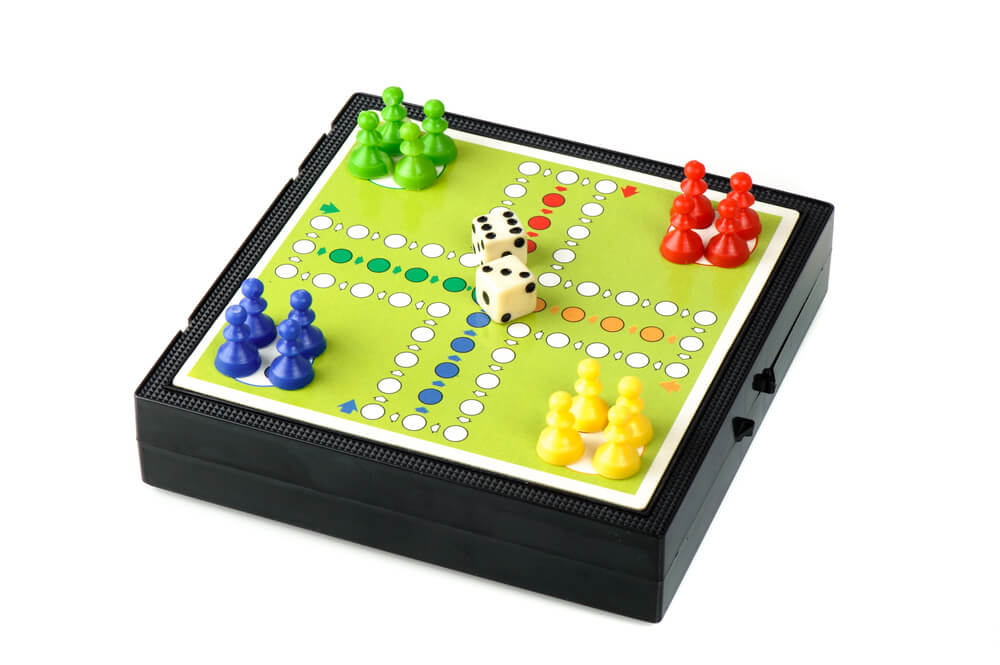
Pachisi is a race game from India played on a cross-shaped board, with players moving pieces according to throws of cowrie shells. Its name comes from the Hindi word for 25, the highest score possible in a single throw.
The Mughal emperor Akbar is said to have played it on a giant board laid out in a courtyard at Fatehpur Sikri, using people as living pieces. Pachisi inspired many modern games, including Ludo, which was patented in England in 1896, and Parcheesi in the United States.
It remains popular in South Asia.
Knucklebones
Knucklebones were among the most common games in the ancient Greek and Roman world. The pieces were the small ankle bones of sheep or goats, known as astragali, which could be tossed and caught in a game of skill.
They were also used like dice, with each of their four sides assigned a value of 1, 3, 4 or 6. A famous painting on marble found at Herculaneum shows women playing the game.
Greek legend credited the invention of knucklebones to Palamedes during the Trojan War. The game survives today as jacks.
Ludus Latrunculorum
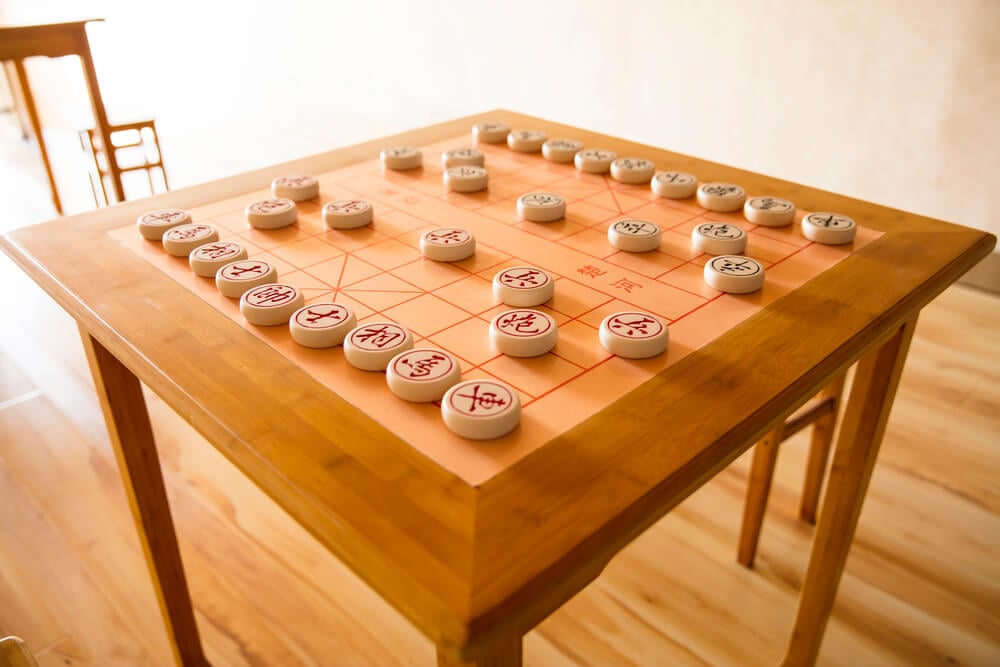
Ludus latrunculorum, the game of little soldiers, was a Roman strategy game played on a grid. Players captured an opponent’s piece by surrounding it on two sides with their own pieces.
The game appears to have been especially popular with soldiers, and boards have been found at military sites across the empire, including along Hadrian’s Wall. A Roman poem praising a man named Piso describes his skill at the game in some detail.
The exact rules are unknown, but modern historians have reconstructed playable versions based on the surviving texts and boards.
Tabula and the Emperor Zeno
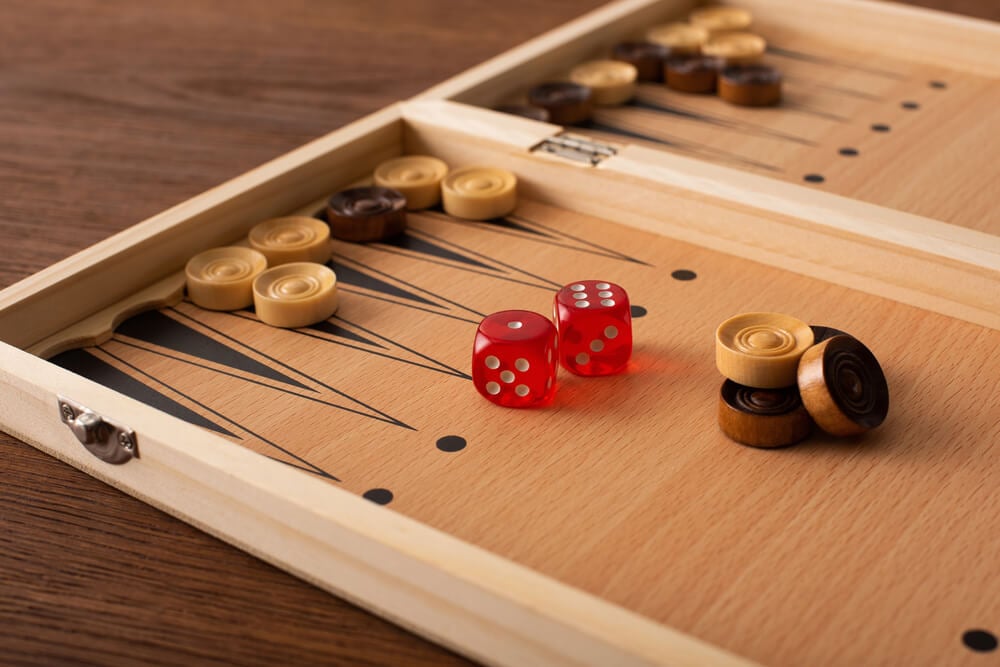
Tabula was a Roman race game played with dice and 15 pieces per player on a board of 24 points, and it is a direct ancestor of backgammon. The emperor Claudius was so fond of dice games that he wrote a book about them and had a board fitted in his carriage so he could play while traveling.
A Greek epigram records a disastrous position faced by Emperor Zeno in AD 480, in which a single unlucky throw ruined his game. Modern players have reconstructed the position, and it can be played out move by move, more than 1,500 years later.
Petteia
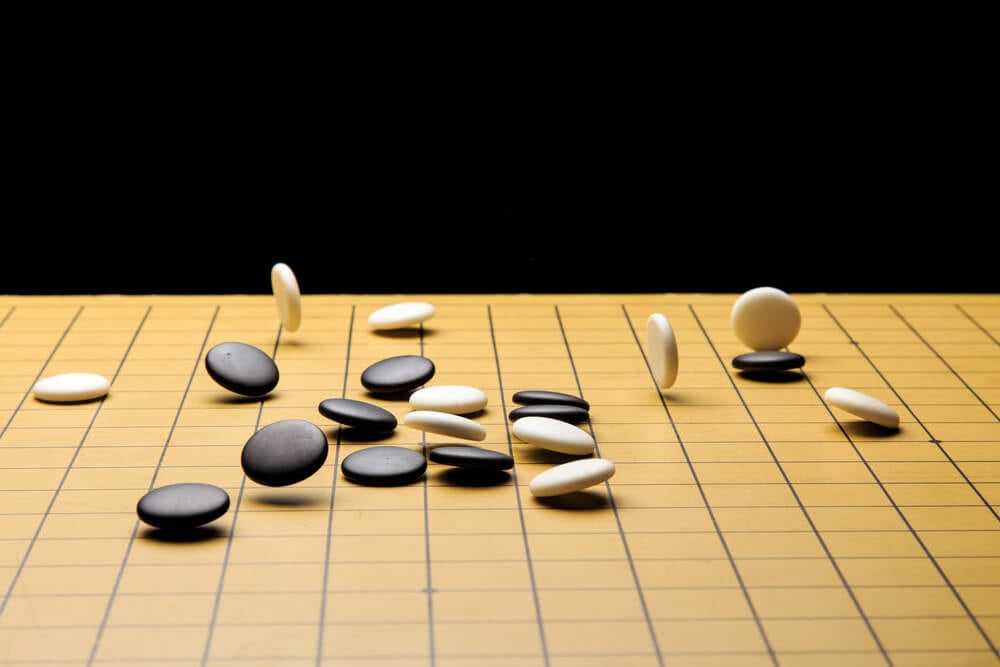
Petteia was a strategy game played in ancient Greece, with players moving pieces on a grid and capturing by surrounding. Plato mentioned it in his dialogues as a game that required skill and practice.
One of the most famous images of ancient Greek gaming appears on an amphora painted by Exekias around 530 BC. It shows the heroes Achilles and Ajax bent over a board, deeply absorbed in play while wearing their armor.
The vase is now in the Vatican Museums. Whether the heroes were playing petteia or a dice game is still debated.
Hnefatafl
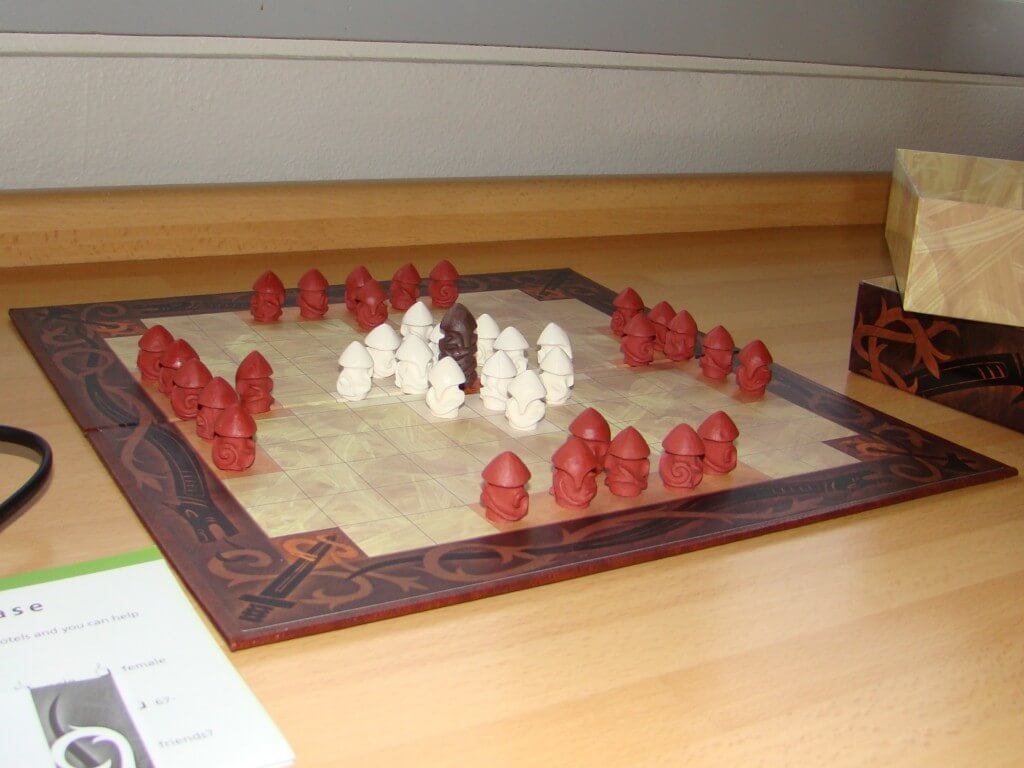
Hnefatafl was a strategy game played in Scandinavia and across the Viking world long before chess arrived. A king piece stood at the center of the board, surrounded by defenders, while a larger force of attackers tried to capture him.
The king’s side won if he escaped to the edge or a corner of the board. Game boards and pieces have been found at Viking sites from Norway to Ireland.
Much of what is known about how to play comes from notes made by Carl Linnaeus in 1732, when he observed a related game called tablut in Lapland.
Nine Men’s Morris
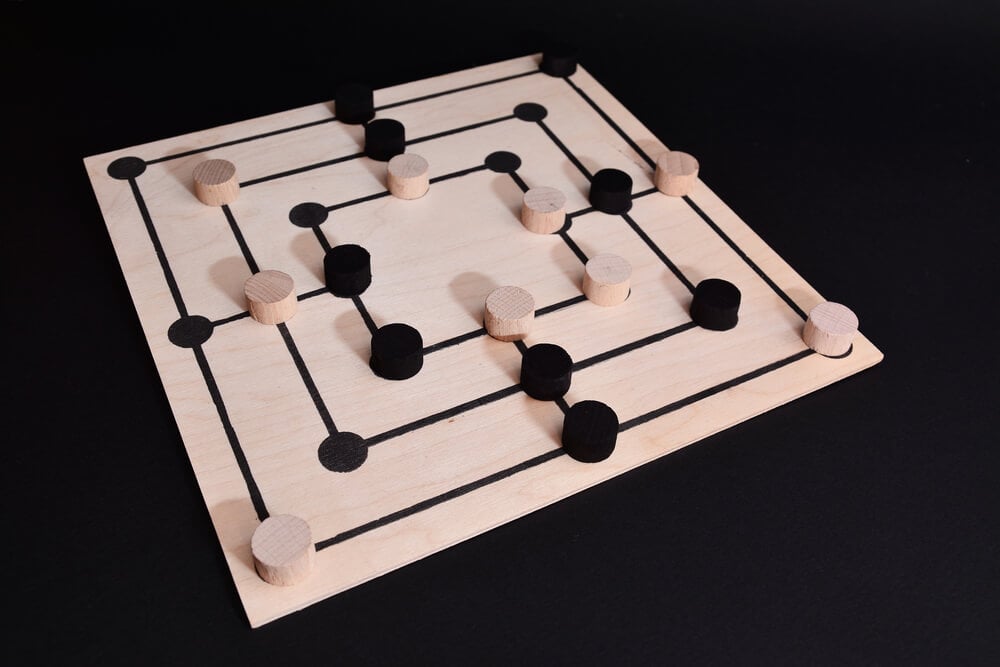
Nine men’s morris is a strategy game in which players place and move pieces on a board of three concentric squares, trying to form rows of three. Boards carved into the roof slabs of a temple at Kurna in Egypt have been dated by some scholars to around 1400 BC, though that date is disputed.
The game was very popular in medieval Europe, and boards have been found carved into cathedral benches and castle walls. A board was found on the Gokstad Viking ship in Norway.
Shakespeare mentioned the game in A Midsummer Night’s Dream.
Ulama, the Mesoamerican Rubber Game
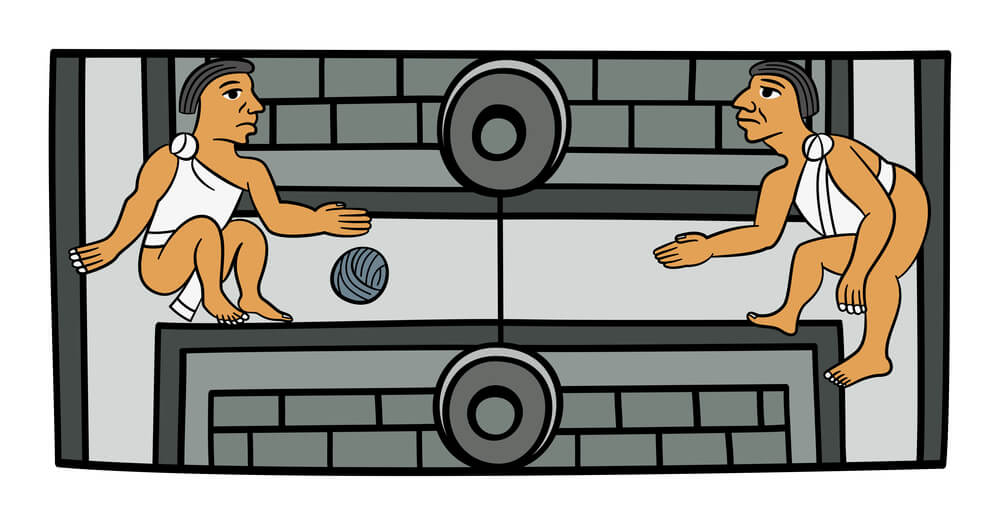
For thousands of years, people in Mesoamerica played a game with a heavy solid rubber sphere that players struck with their hips. The earliest known playing alley, at Paso de la Amada in southern Mexico, dates to around 1650 BC.
Mesoamericans were the first people known to make rubber, mixing latex with the juice of morning glory vines. The game had religious and political significance, and some matches may have ended in human sacrifice.
A version of the game called ulama is still played in the Mexican state of Sinaloa, keeping the ancient tradition alive.
Cuju
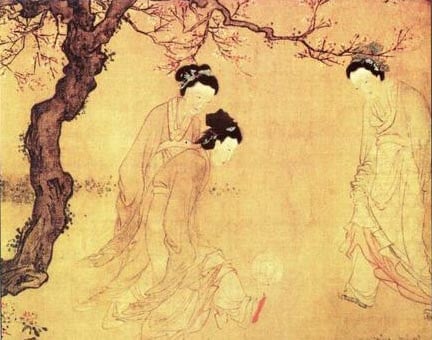
Cuju was a Chinese kicking game played as early as the Warring States period and especially popular during the Han dynasty. Players kicked a stuffed leather sphere through a goal made of netting stretched between bamboo poles.
The game was used for military training and later became a pastime of the imperial court and city dwellers. By the Song dynasty, professional clubs existed.
In 2004 FIFA acknowledged cuju as the earliest known form of soccer, and the city of Linzi in Shandong Province has since promoted itself as the birthplace of the sport.
Terni Lapilli
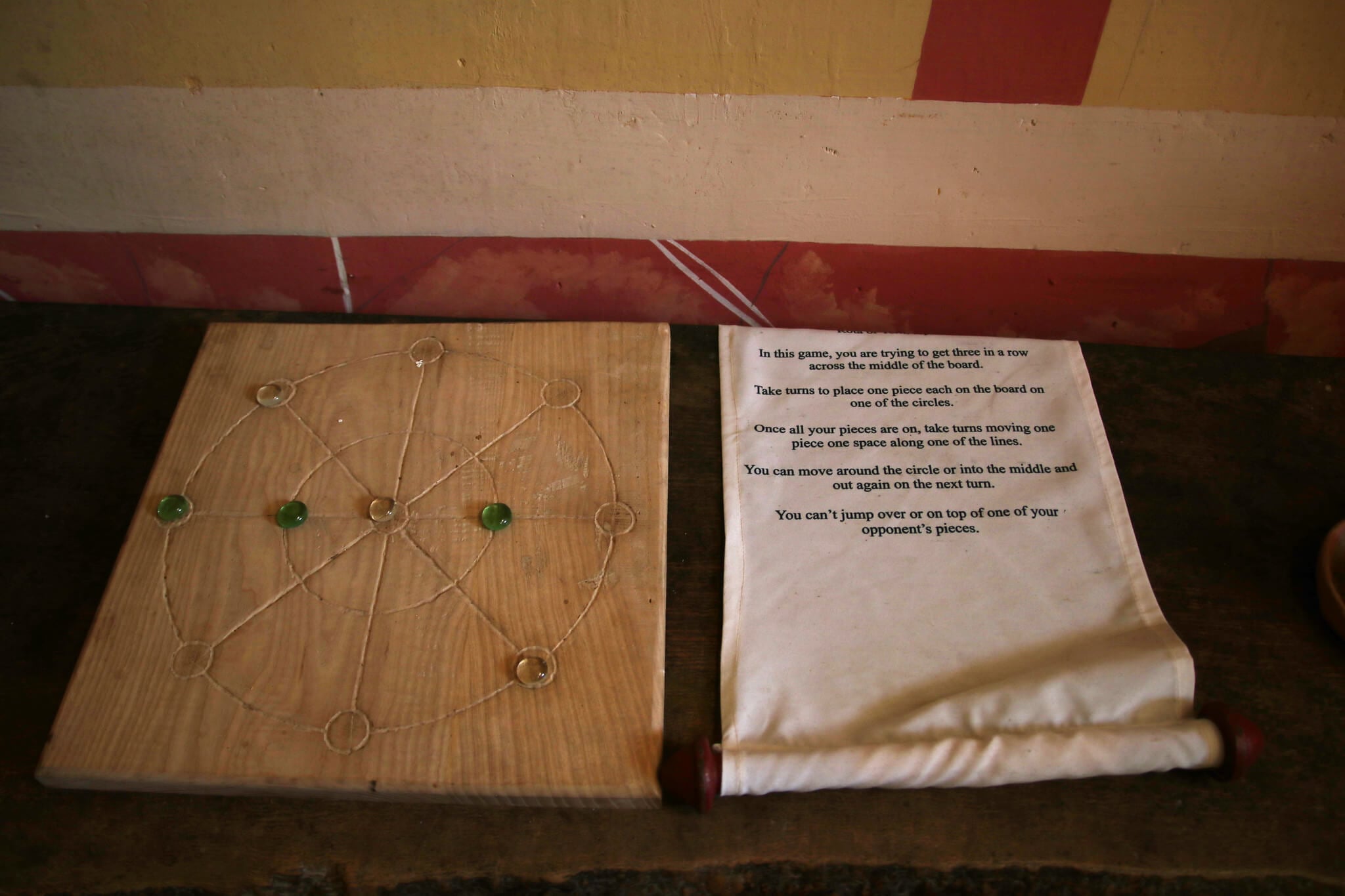
Terni lapilli was a simple Roman game in which players tried to line up three pieces in a row. It is often described as an ancestor of tic-tac-toe, though it may have included moving pieces after they were placed.
Grids for the game were scratched into stone surfaces across the Roman world, including the steps of the Basilica Julia in the Roman Forum. The poet Ovid mentioned a game of this kind in his Art of Love, recommending it to women as a way to charm men.
Roman boards can still be found by careful visitors today.
Dice at Shahr-i Sokhta
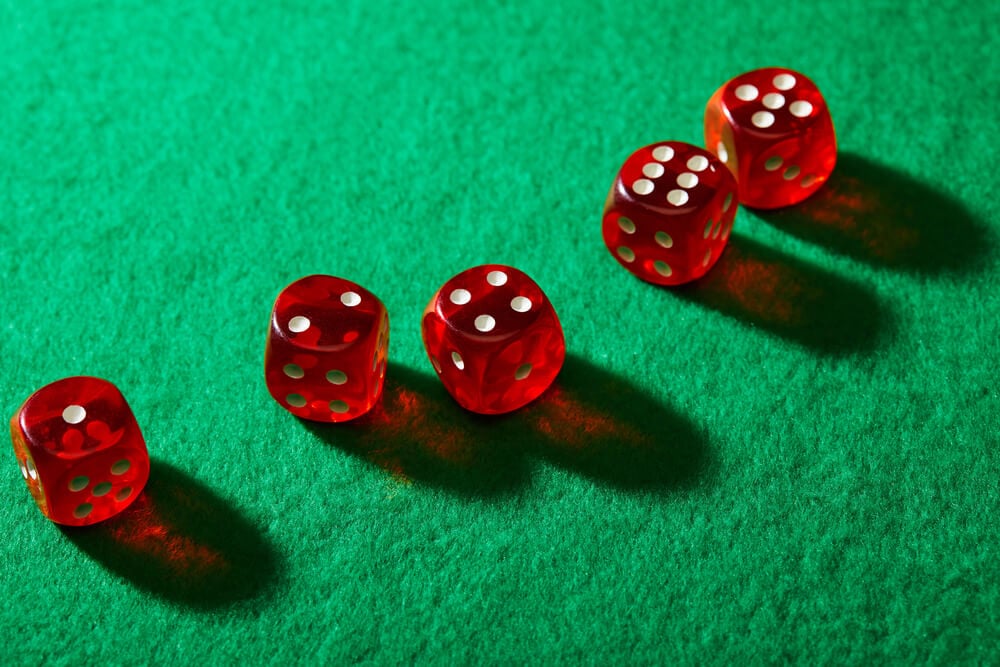
Shahr-i Sokhta, the Burnt City in southeastern Iran, was a thriving Bronze Age settlement from about 3200 BC. Excavators there found a game board with pieces and a pair of dice dated to roughly 2800 to 2500 BC.
It is among the oldest complete game sets ever found. Some researchers have described it as an ancestor of backgammon, though that link is debated.
The dice are remarkably similar to modern ones, with pips representing numbers from one to six. The city was abandoned around 1800 BC.
Patolli
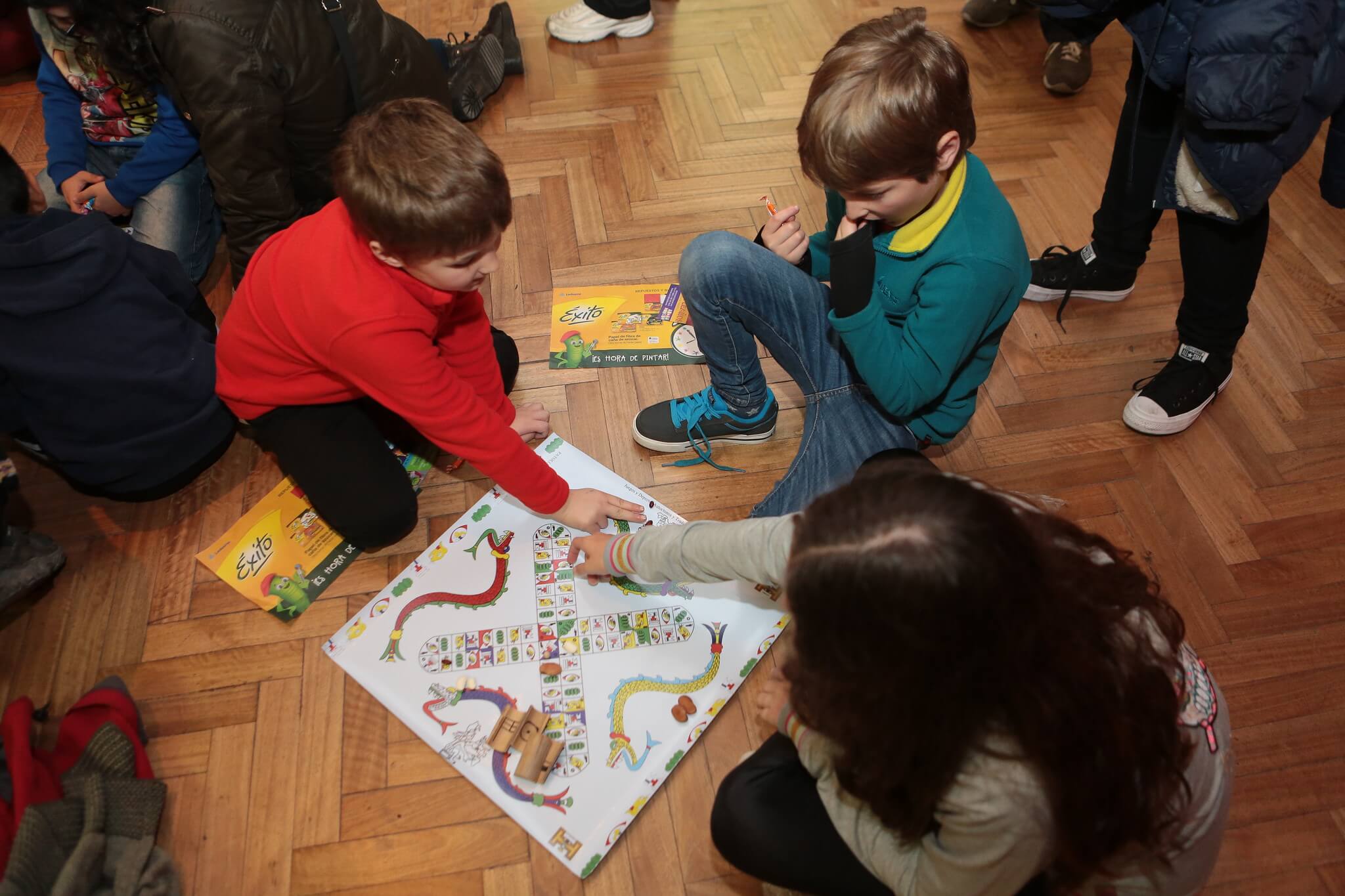
Patolli was a race game played by the Aztecs and other Mesoamerican peoples on a cross-shaped board. Players moved pieces according to throws of beans marked on one side, which served as dice.
The game was closely associated with gambling, and Spanish chroniclers reported that players bet blankets, jewels, food and sometimes even their own freedom. Players called on the god Macuilxochitl for luck before throwing.
After the Spanish conquest, missionaries tried to suppress the game because of its religious meaning and its connection to gambling.
Tug of War

Few games are as simple as tug of war, and few are as old. A relief in the tomb of Mereruka at Saqqara in Egypt, dating to around 2300 BC, depicts boys in two teams pulling against each other.
Similar contests appear in ancient Chinese, Greek and Indian traditions, often as part of rituals or military training. Tug of war was even an Olympic event from 1900 to 1920.
Great Britain won five medals in the event, and teams of London policemen took gold at the 1908 and 1920 Games.
Morra
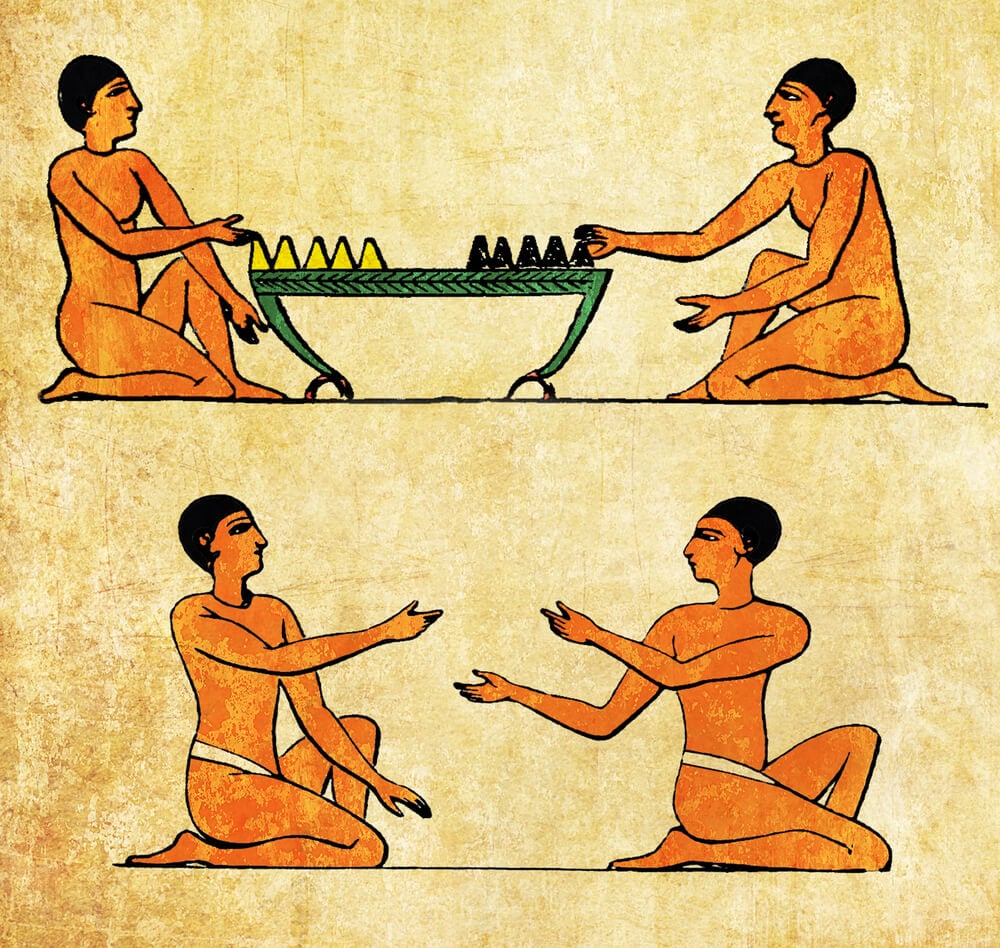
Morra is a hand game in which two players simultaneously throw out a number of fingers while shouting a guess at the total. The Romans called it micatio, and it was so common that Cicero used it in a proverb about trustworthy people, describing someone honest enough to play with in the dark.
The game required quick thinking and quick hands. Morra is still played in parts of Italy, and it has sometimes been banned because of fights and gambling.
Versions of the game appear in many cultures around the world.
Kottabos
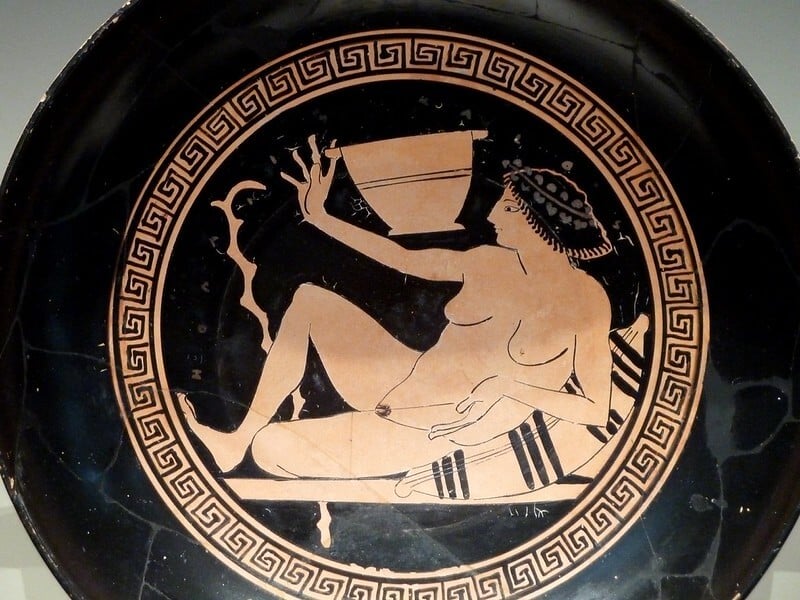
Kottabos was a drinking game popular at Greek symposiums in the 5th and 4th centuries BC. Guests reclining on couches flicked the last drops of wine from their shallow cups at a target, often a small bronze disc balanced on a stand.
Success required a skillful twist of the wrist. Players sometimes dedicated their throws to someone they admired, and the game was seen as a sign of refinement.
Kottabos stands and cups have survived, and the game appears on many Greek vase paintings, showing its role in social life.
Ostomachion
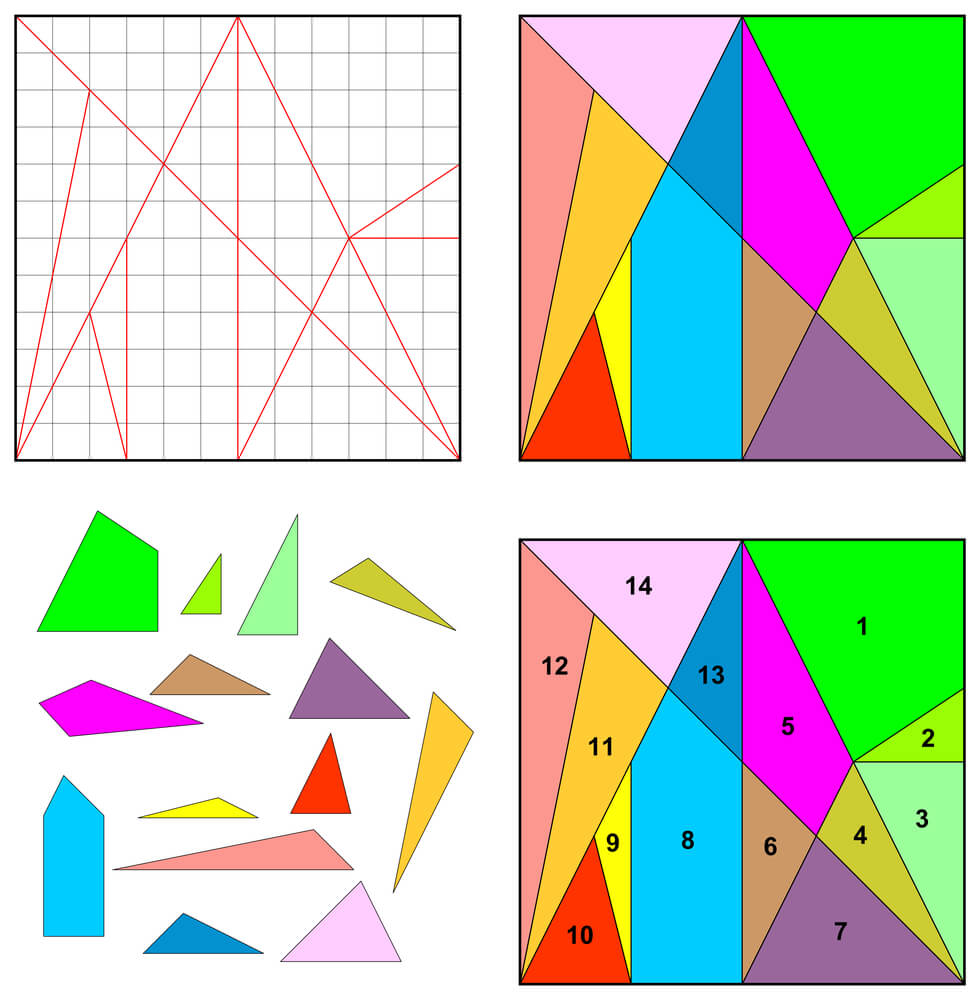
Ostomachion was a puzzle attributed to Archimedes in which 14 flat pieces of different shapes could be arranged to form a square. It survives in fragments of the Archimedes Palimpsest, a medieval prayer book written over an older copy of his work.
Scholars have debated what Archimedes was studying, but one theory is that he was counting the ways the pieces could fit together. In 2003 the mathematician Bill Cutler used a computer to find 536 distinct solutions.
The puzzle may be one of the oldest known problems in combinatorics.
Hoop Rolling
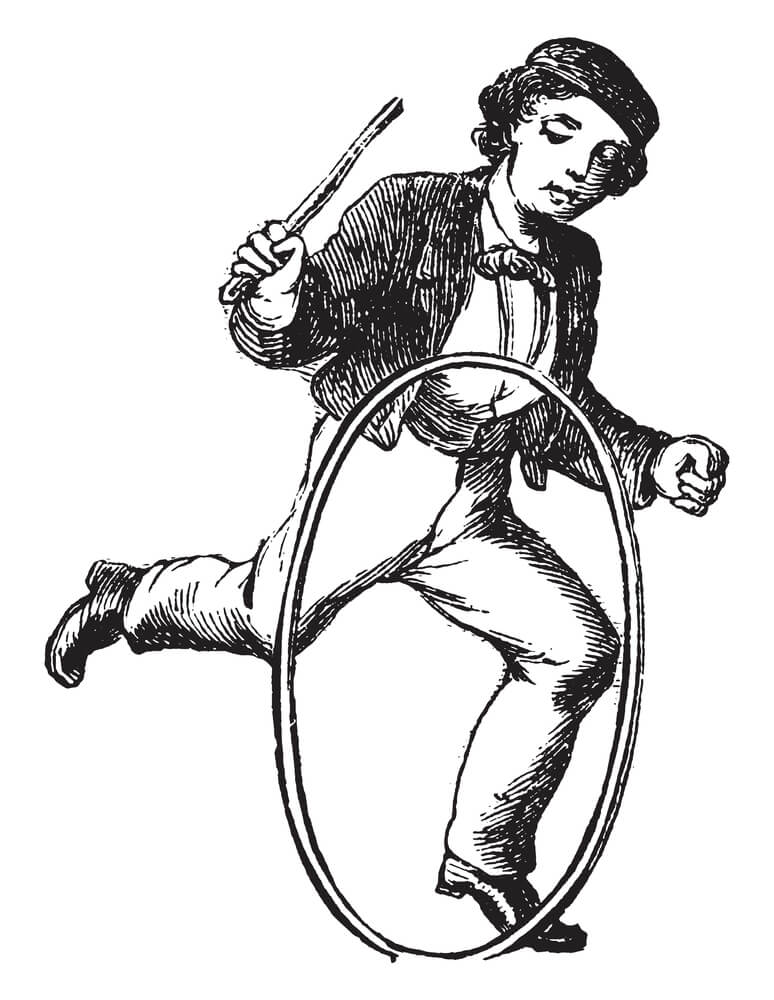
Rolling a hoop with a stick was a popular pastime for children in ancient Greece and Rome. The Greeks called the hoop a trochus, and it appears on vase paintings, including images of the mythical youth Ganymede playing with one.
Roman hoops were sometimes fitted with small metal rings that jingled as they rolled, warning pedestrians to get out of the way. The poet Martial mentioned them.
Hoop rolling remained popular in Europe and North America until the 20th century, and it can still be seen at festivals and fairs today.
Touhu
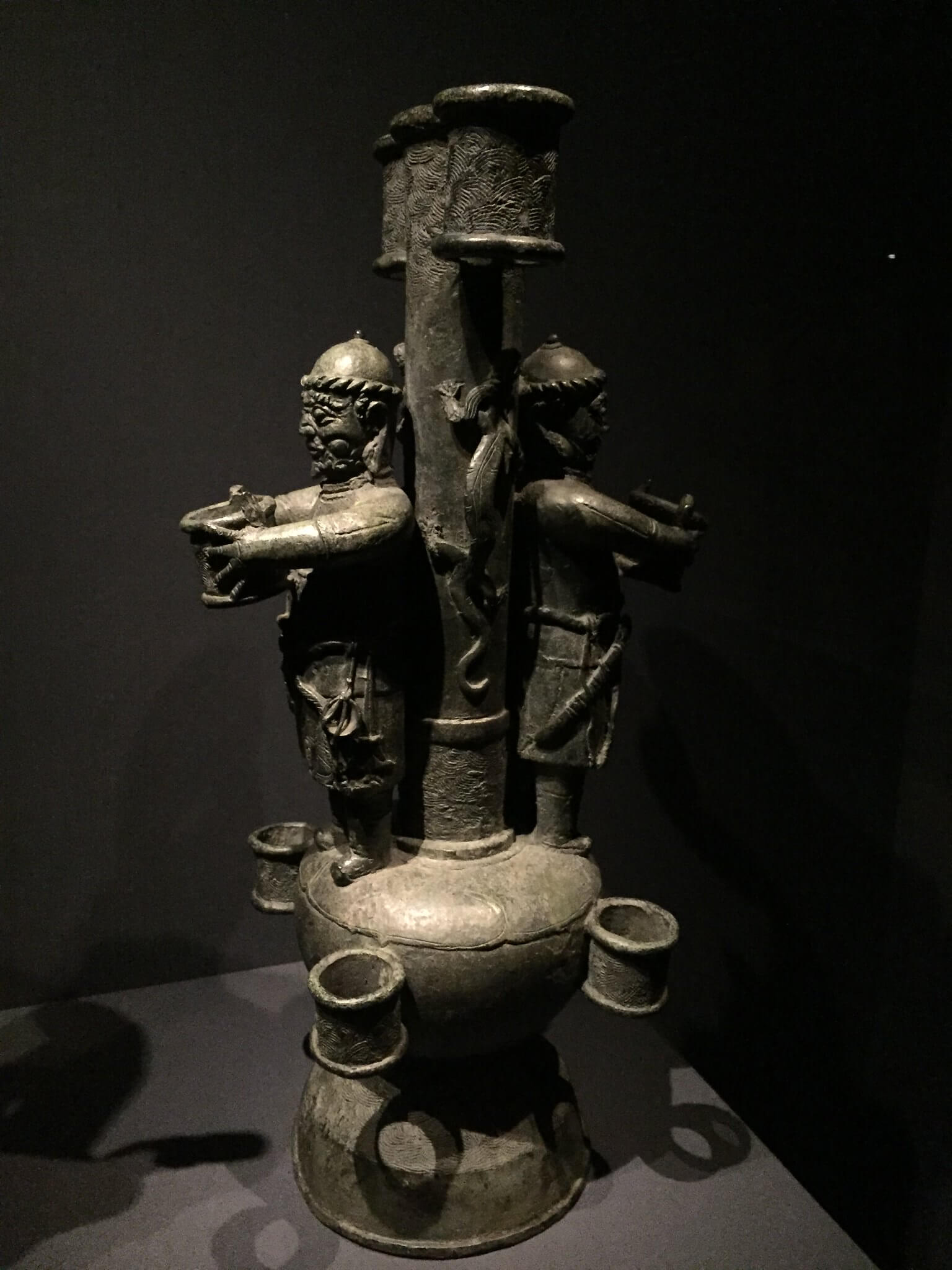
Touhu, or pitch-pot, was a game in which players tossed arrows into a narrow-necked vessel from a set distance. It developed in China during the Warring States period, possibly as a gentler alternative to archery contests at formal banquets.
The rules of the game were recorded in the Book of Rites, one of the Confucian classics. Touhu spread to Korea and Japan and became a common entertainment at gatherings, where the losers often had to drink.
Versions of the game are still played in Korea during holidays such as the lunar new year.
Nuces

Roman children played many games with walnuts, known collectively as nuces. They rolled nuts down slopes to hit targets, built small pyramids of them, and tossed them into narrow jars.
The games were so closely tied to childhood that the Latin phrase for leaving childhood was to give up the nuts. The poet Ovid wrote a poem told from the point of view of a walnut tree.
According to the historian Suetonius, even the emperor Augustus enjoyed playing with nuts and marbles alongside young boys to relax.
Whipping Tops
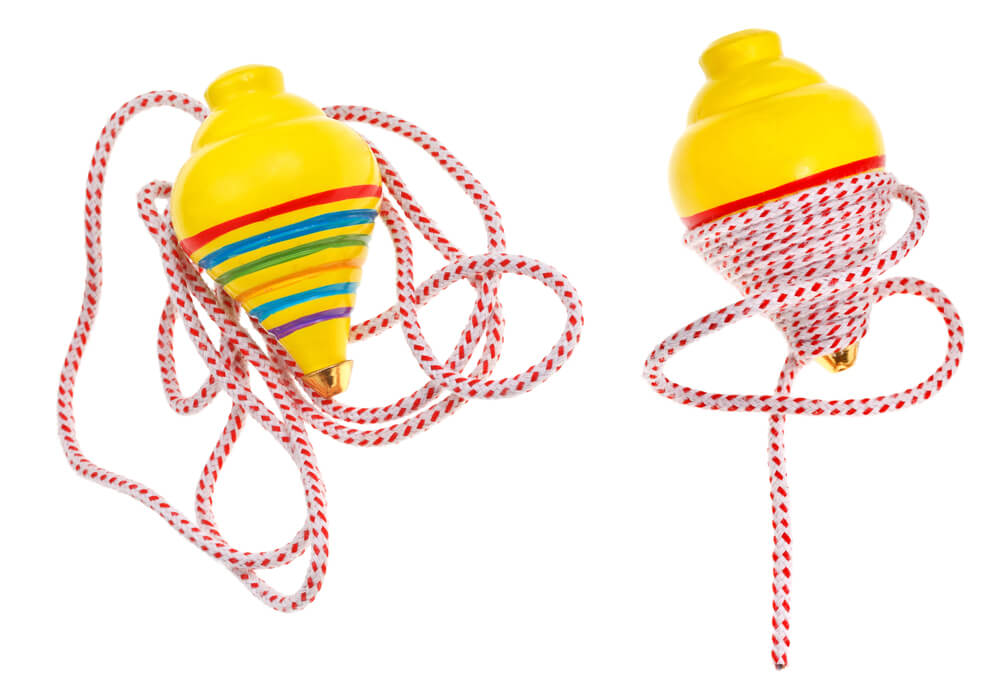
Spinning tops rank among the oldest toys in the world, and clay tops have been found at sites in ancient Mesopotamia and the Indus Valley. The Greeks and Romans played with whipping tops, which were kept spinning by striking them with a cord attached to a stick.
The Roman poet Virgil used the image of a boy’s top spinning around an empty courtyard in the Aeneid to describe a frenzied queen. Tops have been made of wood, clay, bone and metal.
Children across many cultures still play with versions of them.
Rules Carved in Stone
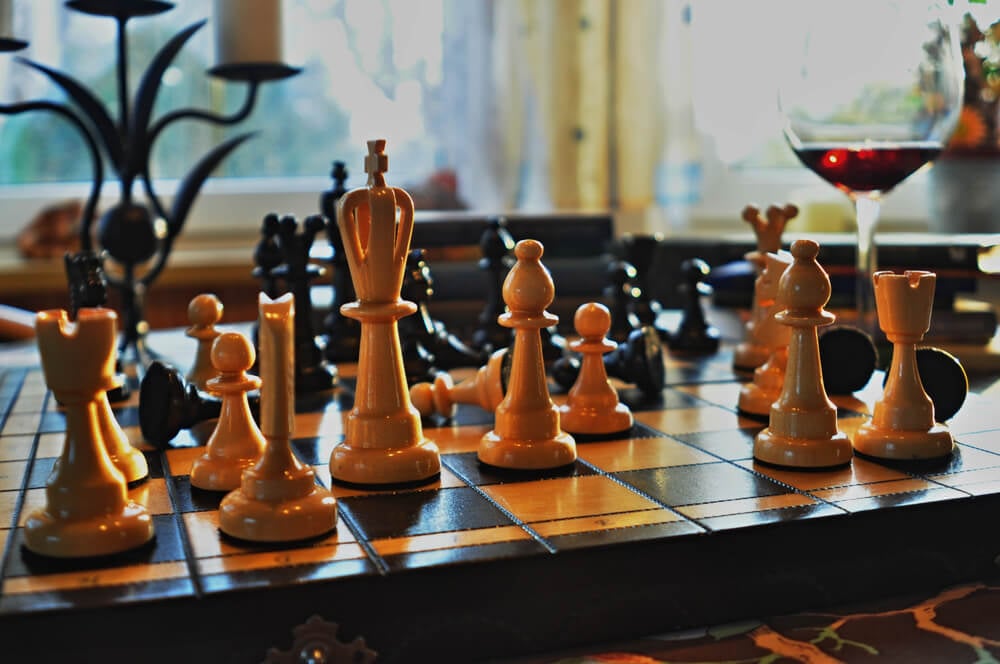
Ancient games survived because people could not stop playing them. Boards were carved into temple roofs, scratched into steps and buried with kings.
Even when the rules were lost, the boards remained as evidence of how much time people devoted to play. The same impulses drive games today.
People want to compete, to take risks, to pass the time and to test their luck and skill. A child rolling a hoop in Rome and a Go master in Seoul are part of the same long tradition
More from Go2Tutors!

- The Romanov Crown Jewels and Their Tragic Fate
- 13 Historical Mysteries That Science Still Can’t Solve
- Famous Hoaxes That Fooled the World for Years
- 15 Child Stars with Tragic Adult Lives
- 16 Famous Jewelry Pieces in History
Like Go2Tutors’s content? Follow us on MSN.