25 Old Postcards and Stamps Worth Real Money
A shoebox of old mail looks like the least valuable thing in any estate. Faded vacation greetings, yellowed envelopes, a stamp album somebody abandoned at age twelve: most of it really is worth very little.
Yet postal history rewards careful sorting better than almost any other collecting field. A single printing error, a photograph of a vanished main street, or a card mailed from the wrong ship on the wrong day can turn one piece of paper into the most valuable object in the house.
Inverted Jenny Airmail Stamps
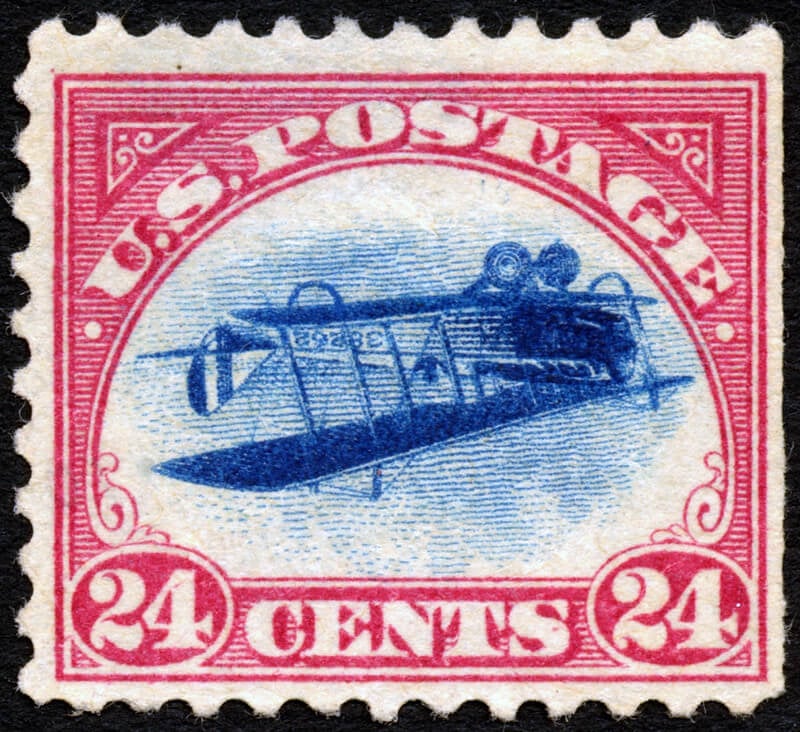
In May 1918, the U.S. Post Office rushed out a 24 cent stamp for the first scheduled airmail service, and one sheet of 100 reached a Washington post office with the Curtiss Jenny biplane printed upside down. Collector William Robey bought the entire sheet at face value.
Every one of the 100 stamps has been tracked since. In November 2023, the stamp from position 49, graded 95 with never-hinged gum, reached 2,006,000 dollars at Robert A. Siegel Auction Galleries, a record for a single U.S. stamp.
Centering, gum, and faults such as thins or creases separate one Jenny from the next by hundreds of thousands.
British Guiana One Cent Magenta
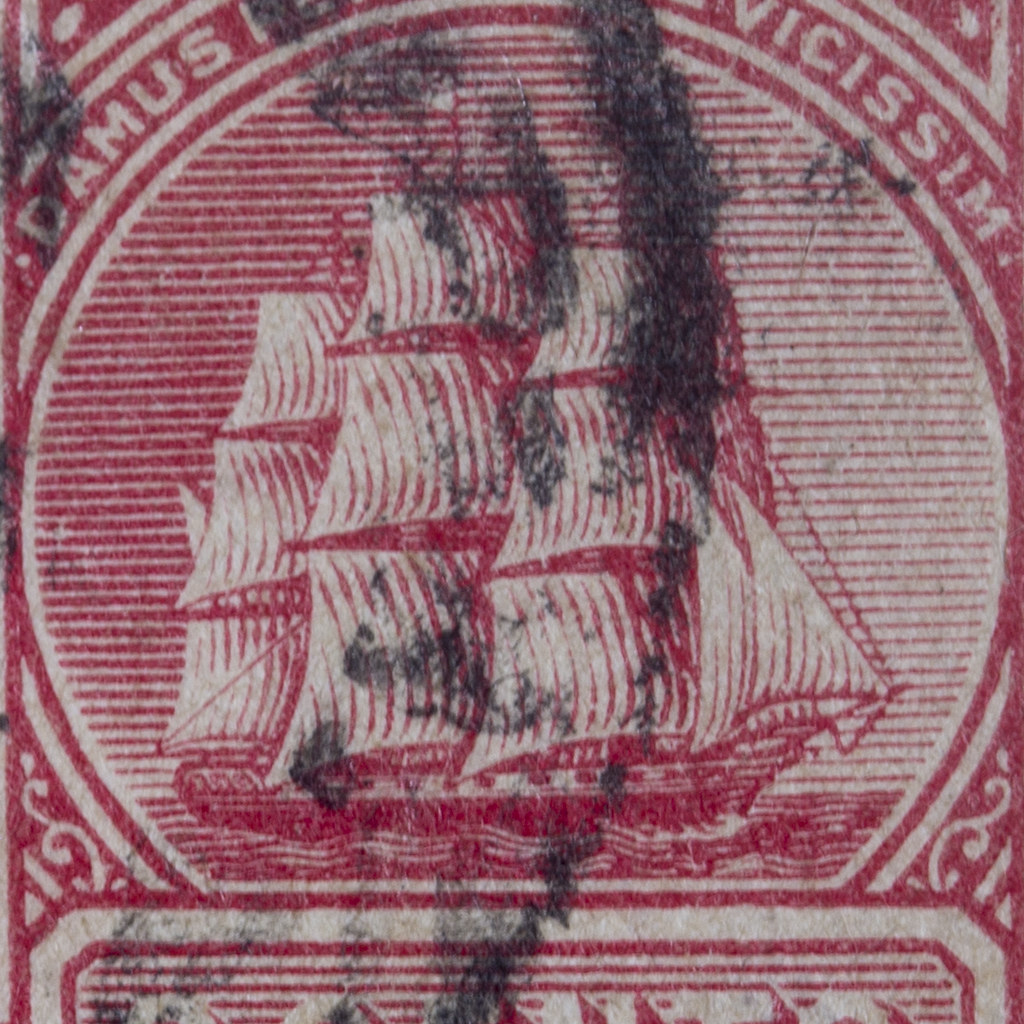
Printed in 1856 on a local newspaper press when a shipment of stamps failed to arrive, the British Guiana one cent magenta is the only known example of its kind. A schoolboy found it among family papers in 1873 and sold it for a few shillings.
It has since passed through several of the most famous collections in philatelic history. The stamp reached about 8.3 million dollars at Sotheby’s in 2021.
Its corners were clipped long ago, which would ruin an ordinary stamp. Here, uniqueness outweighs condition entirely.
Penny Black From 1840
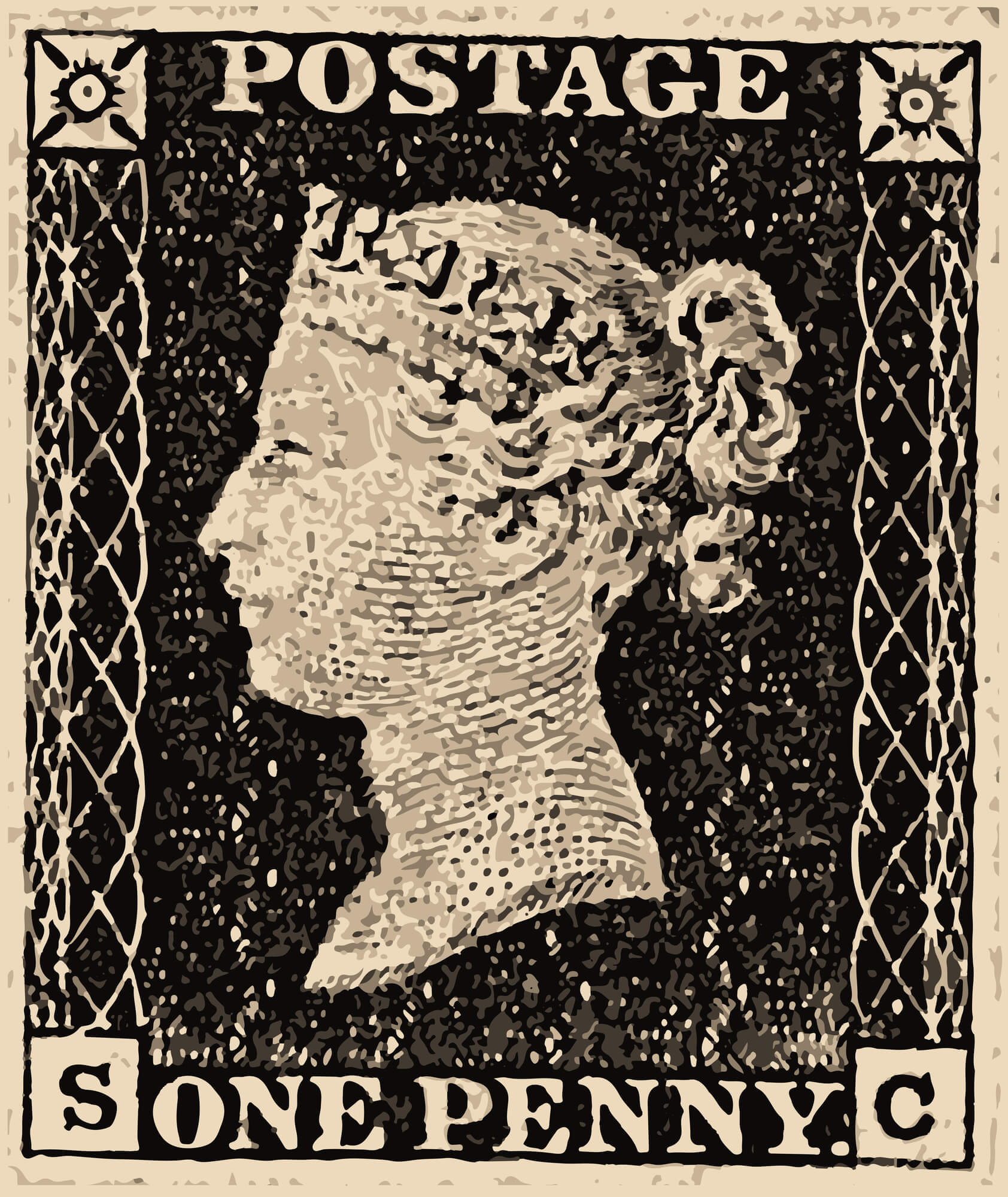
Britain’s Penny Black, valid for postage from May 1840, was the world’s first adhesive postage stamp. Tens of millions were printed, so used copies are not rare, yet collectors still pay well for good ones.
Each stamp carries letters in its lower corners that show its position on the printing plate. A used copy with four clear margins sits around 100 to 500 dollars, while mint examples with original gum reach thousands.
Cut-into margins, thins, and heavy cancellations reduce value. Plate varieties and rare cancellations push prices higher for specialists.
First U.S. Stamps From 1847
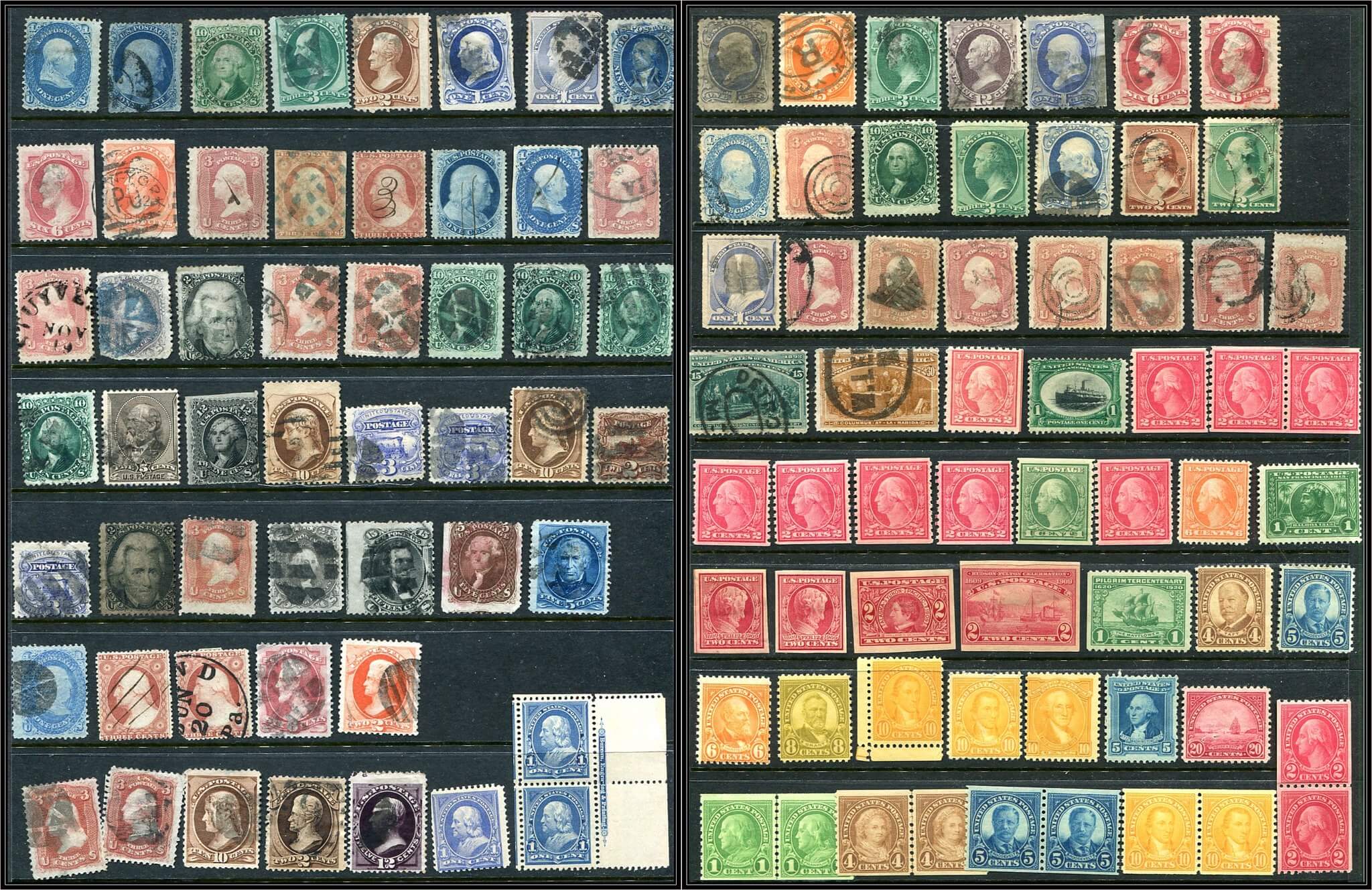
The United States issued its first general postage stamps on July 1, 1847, a five cent Benjamin Franklin and a ten cent George Washington. Both were printed without perforations, so clerks cut them apart with scissors, often carelessly.
Used copies sit around several hundred dollars, while copies with wide margins on all four sides reach much higher. Mint examples are scarce and command thousands.
Tears, thins, and cut-into designs reduce value. Stamps still on their original envelopes, called covers, draw extra interest when the postmarks are clear.
Hawaiian Missionaries From 1851
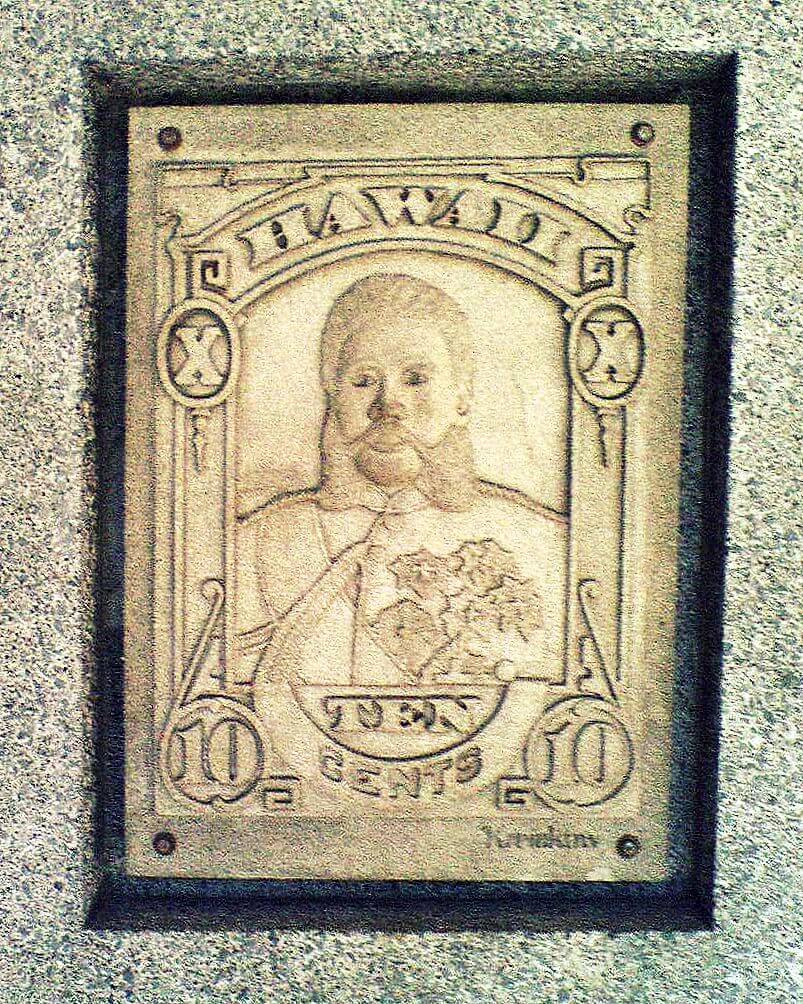
Hawaii issued its first stamps in 1851, simple typeset designs printed in Honolulu and used mainly on letters sent by American missionaries. Collectors named them after those letter writers.
Only a few hundred examples are known across the four values, and most show damage from the thin paper they were printed on. Individual stamps reach six figures, and covers bearing them reach higher.
Tears, repairs, and faded ink affect value, though almost any genuine example is a significant find. Forgeries exist, so certification is essential.
Z Grill One Cent Stamps
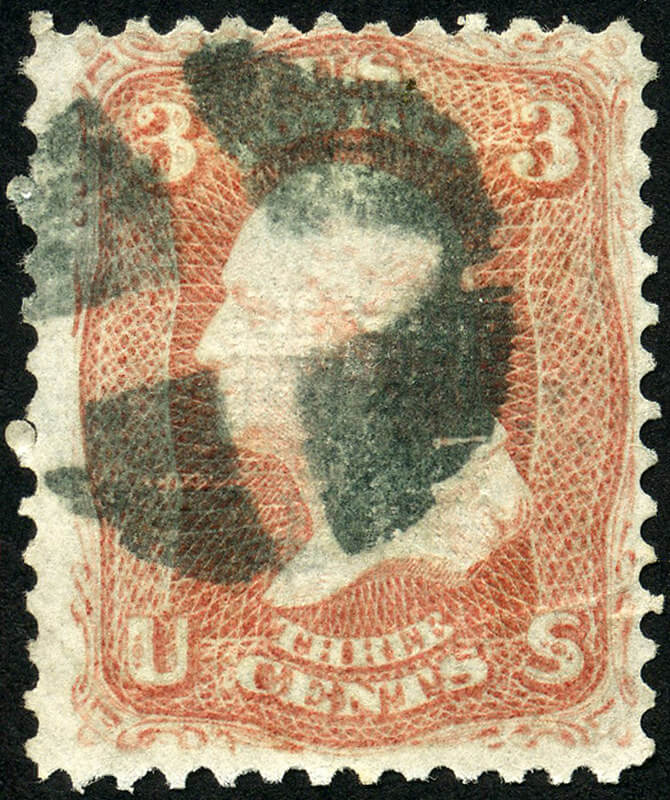
In 1867 and 1868 the Post Office embossed a waffle pattern called a grill into some stamps, meant to absorb ink and prevent cleaning and reuse. The one cent Benjamin Franklin with the Z grill pattern is known in only two examples.
In 2005 investor Bill Gross acquired one in a trade for a block of four Inverted Jennys. It is widely considered the rarest U.S. stamp.
Although no ordinary collector will find one, other grilled stamps from the period reach hundreds or thousands of dollars depending on grill type and condition.
Pictorial Inverts From 1869
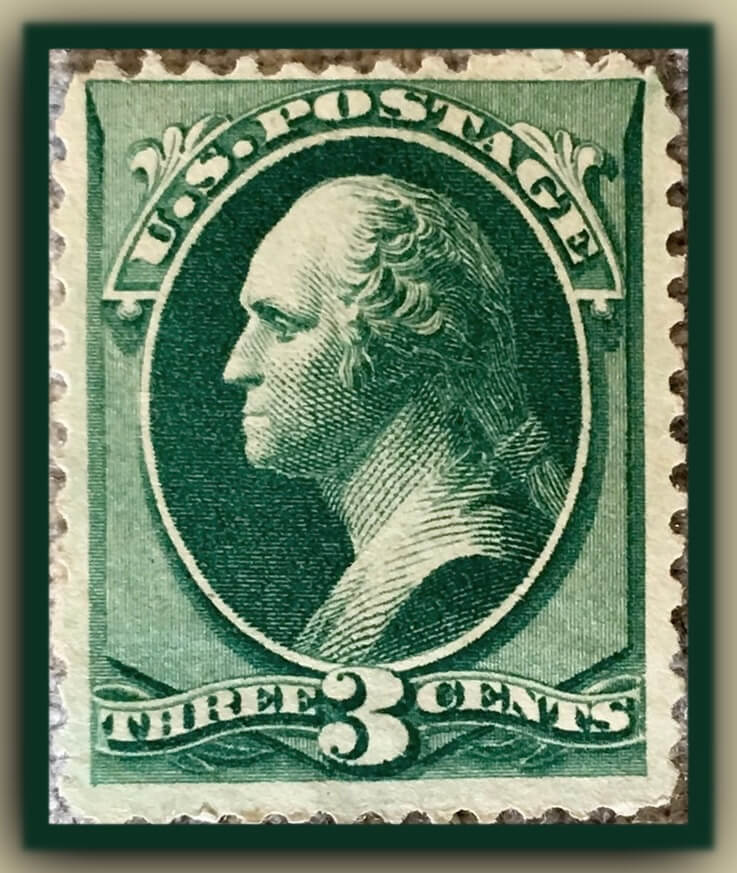
Issued in 1869, the pictorial series was the first U.S. set to show scenes rather than portraits, and three values were printed in two colors. That two-step process produced inverted center errors on the 15, 24, and 30 cent stamps.
The 24 cent invert shows the signing of the Declaration of Independence upside down. These errors reach six figures in used condition.
Faults such as thins and tears reduce value, but the rarity is so great that even damaged examples draw serious bids. Ordinary 1869 stamps without errors sit around tens to hundreds of dollars.
Pan-American Inverts From 1901

Buffalo’s 1901 Pan-American Exposition got its own set of bicolor stamps showing modern transport, from lake steamers to fast trains and an electric automobile. Printing each stamp in two passes invited mistakes, and inverted centers turned up on the one, two, and four cent values.
The two cent error shows a locomotive racing along upside down. These inverts reach tens of thousands of dollars and more, depending on the value, centering, and gum.
Thins and short perforations reduce what they bring. Normal stamps from the set are affordable singly, though a complete mint set in fine condition still sits around several hundred dollars.
Columbian Exposition High Values From 1893
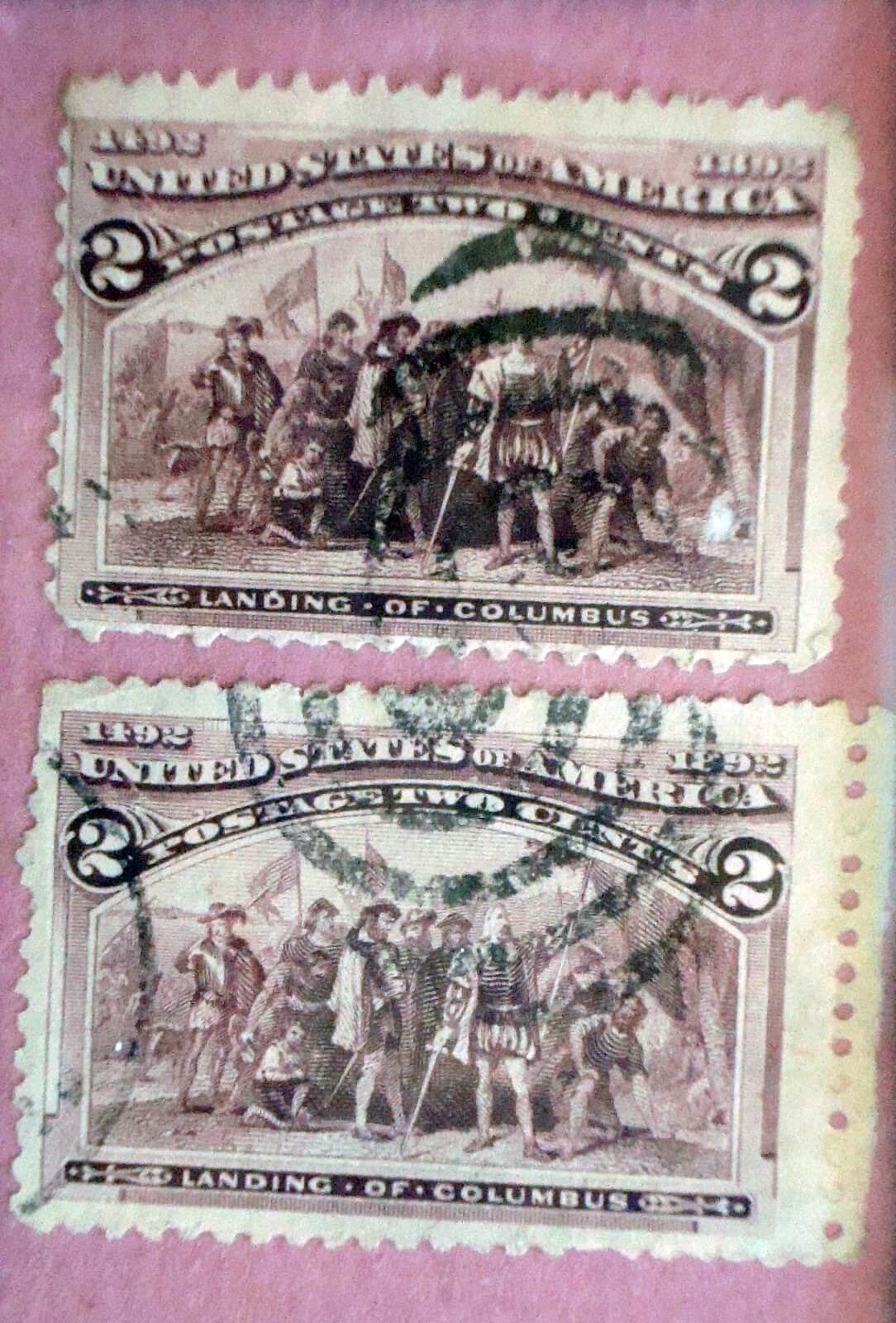
Issued for the Chicago fair, the 1893 Columbian Exposition series marked the 400th anniversary of Christopher Columbus’s voyage and ran from one cent to five dollars. The five dollar stamp was a staggering sum at the time, equal to days of wages for many workers.
Few people bought the high values, and those that survived in mint condition are scarce. The five dollar stamp reaches thousands of dollars in fine mint condition.
Thins, creases, and toning reduce value. Lower values from the set are common, but high values in good condition sit around hundreds to thousands.
Graf Zeppelin Stamps From 1930
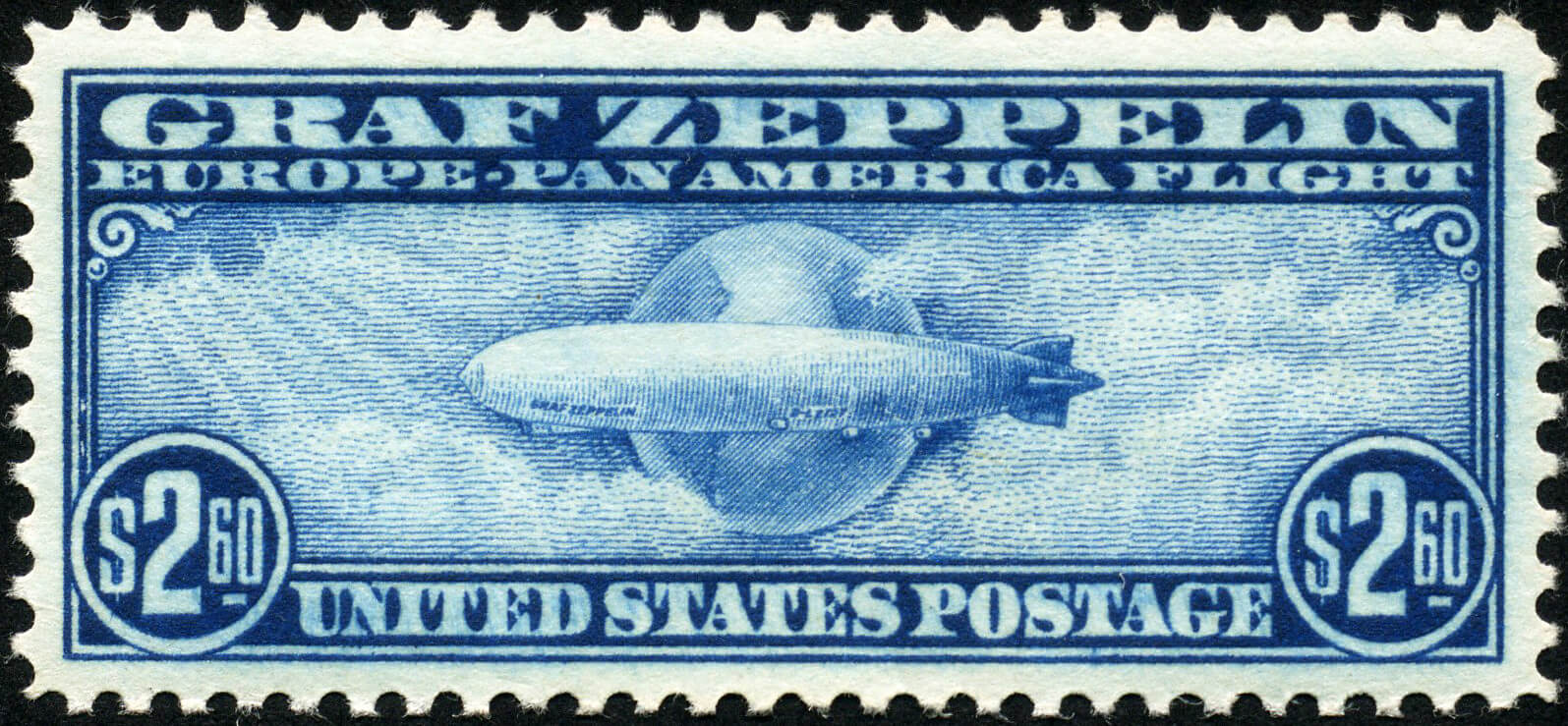
The Post Office issued three stamps in 1930 for mail carried on the Graf Zeppelin’s Europe-Pan American flight, with face values of 65 cents, 1.30 dollars, and 2.60 dollars. The set cost 4.55 dollars in the middle of the Depression, so sales were poor and remaining stock was destroyed.
That low survival is why the set reaches 1,000 dollars and more in mint condition. Centering, gum, and faults affect value.
Covers actually flown on the zeppelin draw extra interest from airmail collectors. Forgeries and regummed stamps exist, so certification is wise.
First Federal Duck Stamp From 1934
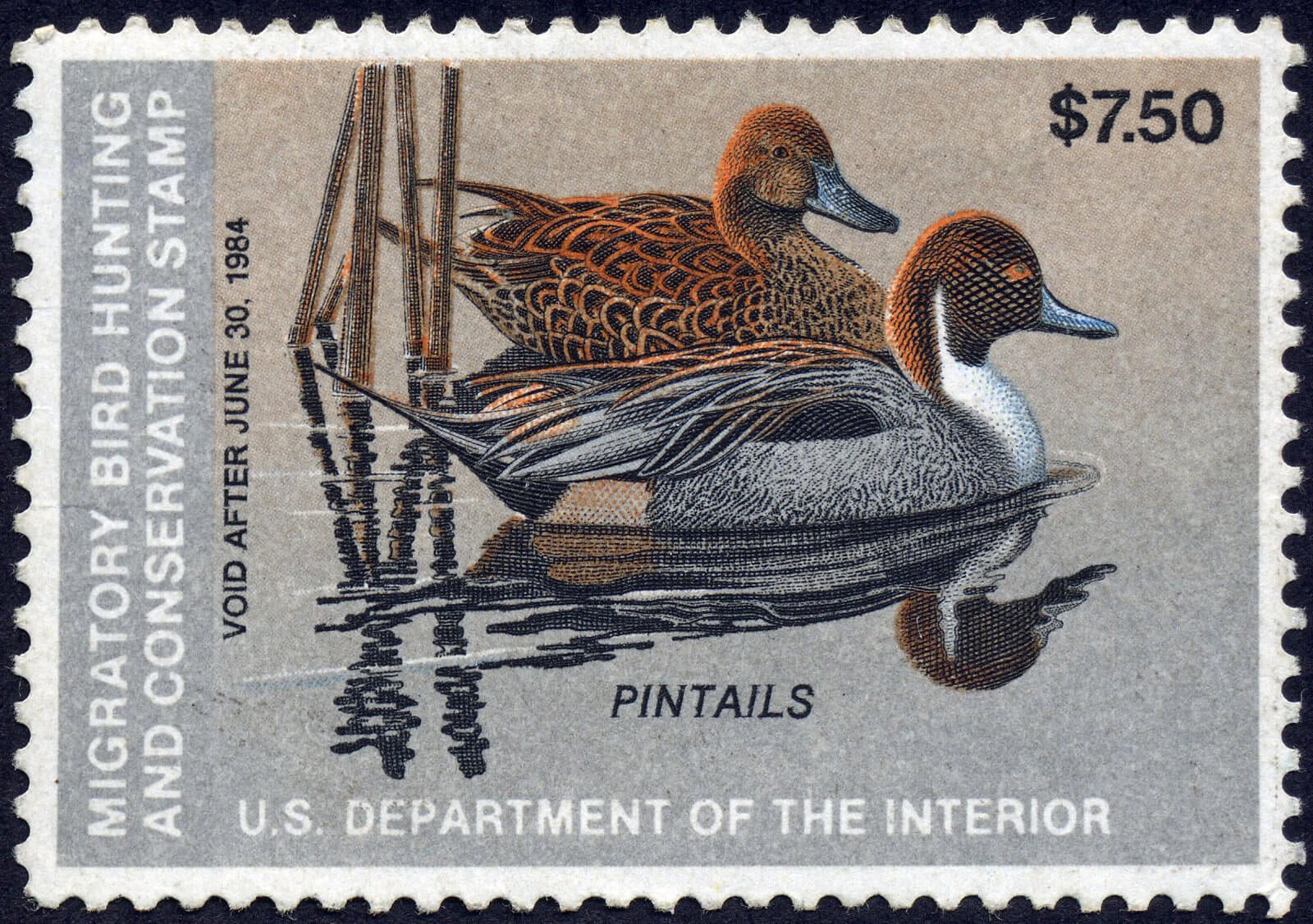
Congress created the Federal Duck Stamp in 1934, and the first design showed mallards dropping into a marsh, drawn by the political cartoonist Jay Ding Darling. Hunters had to buy the one dollar stamp as part of their license, and most signed it across the face and pasted it into a license book.
That habit makes clean, unused copies scarce today. Unused examples sit around several hundred dollars in fine condition, while signed copies sell for considerably less.
Thins, creases, and toned gum reduce value. The program still funds wetland conservation, which gives the first issue real historical weight.
CIA Invert From 1986

In 1986, employees of the Central Intelligence Agency bought a sheet of one dollar stamps from the Americana series at a Virginia post office and noticed that the image of a candle holder was printed upside down. The sheet was split among the buyers, and the find became one of the most famous modern errors.
The sheet held 100 stamps, and most have since passed through the market. They reach tens of thousands of dollars in fine condition.
Centering and gum affect value. The story of spies discovering a stamp error keeps interest strong well beyond philatelic circles.
St. Lawrence Seaway Invert From 1959
Canada and the United States jointly issued stamps in 1959 to mark the opening of the St. Lawrence Seaway, and a small number of the Canadian version came off the press with the blue center printed upside down. Around 400 examples are believed to exist.
Collectors reported the first copies soon after issue, and the discovery quickly made national news. Singles reach thousands of dollars in fine condition, and blocks reach considerably more.
Centering, gum, and small faults affect price. The error remains the most famous in Canadian stamp collecting, and forgeries have appeared, so certificates matter.
Hindenburg Crash Mail From 1937
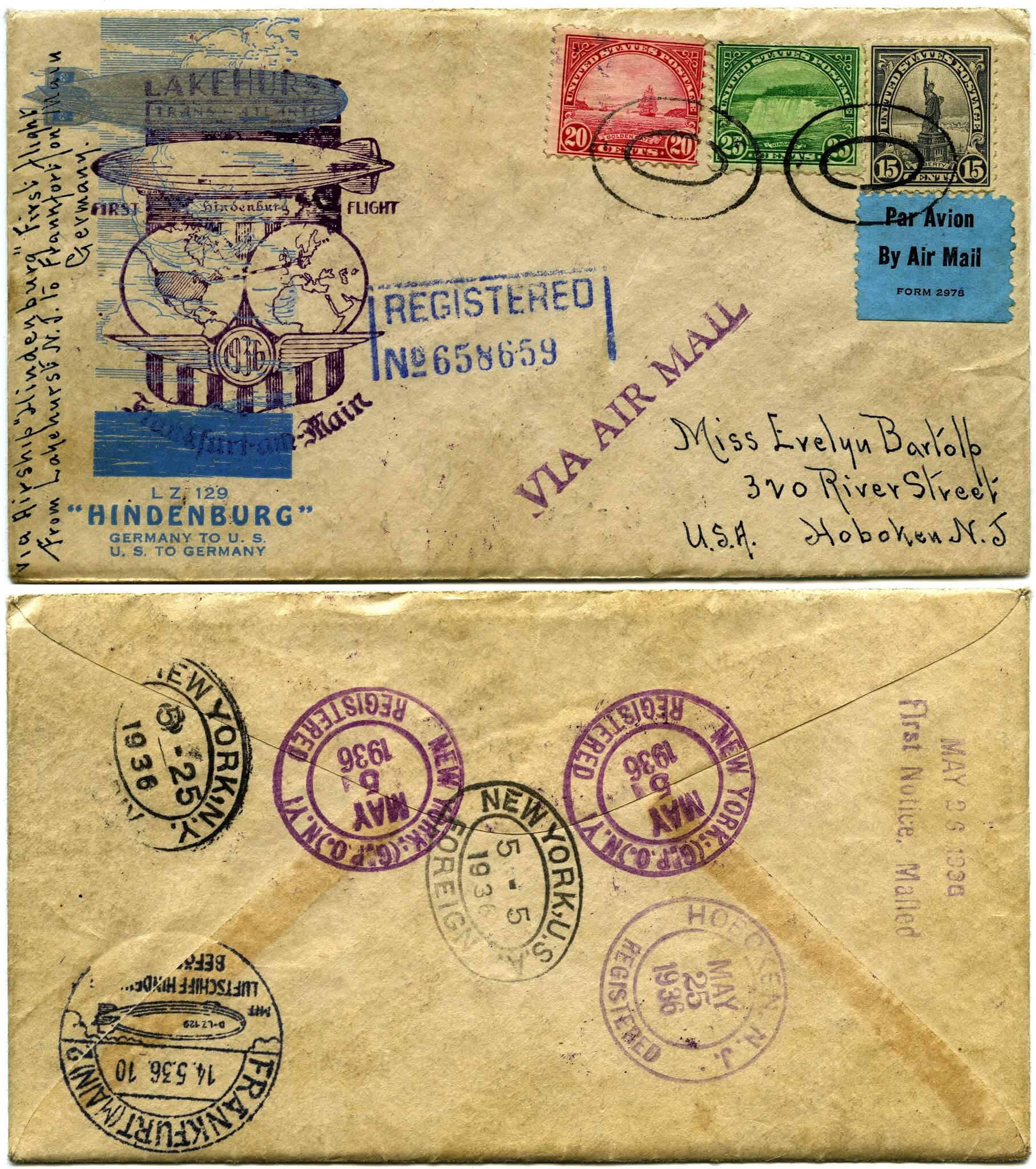
When the Hindenburg burst into flames at Lakehurst, New Jersey, in May 1937, it was carrying thousands of letters and cards for American addresses. Only about 360 pieces survived the fire, many of them charred along the edges and stained by water.
Postal officials delivered them with special markings explaining the damage. Crash covers reach thousands of dollars today, depending on how much burning shows and whether the address and postmark can still be read.
Forgeries exist, so certification is essential before any sale. Few pieces of mail carry a more dramatic story in their scorch marks.
Real Photo Postcards
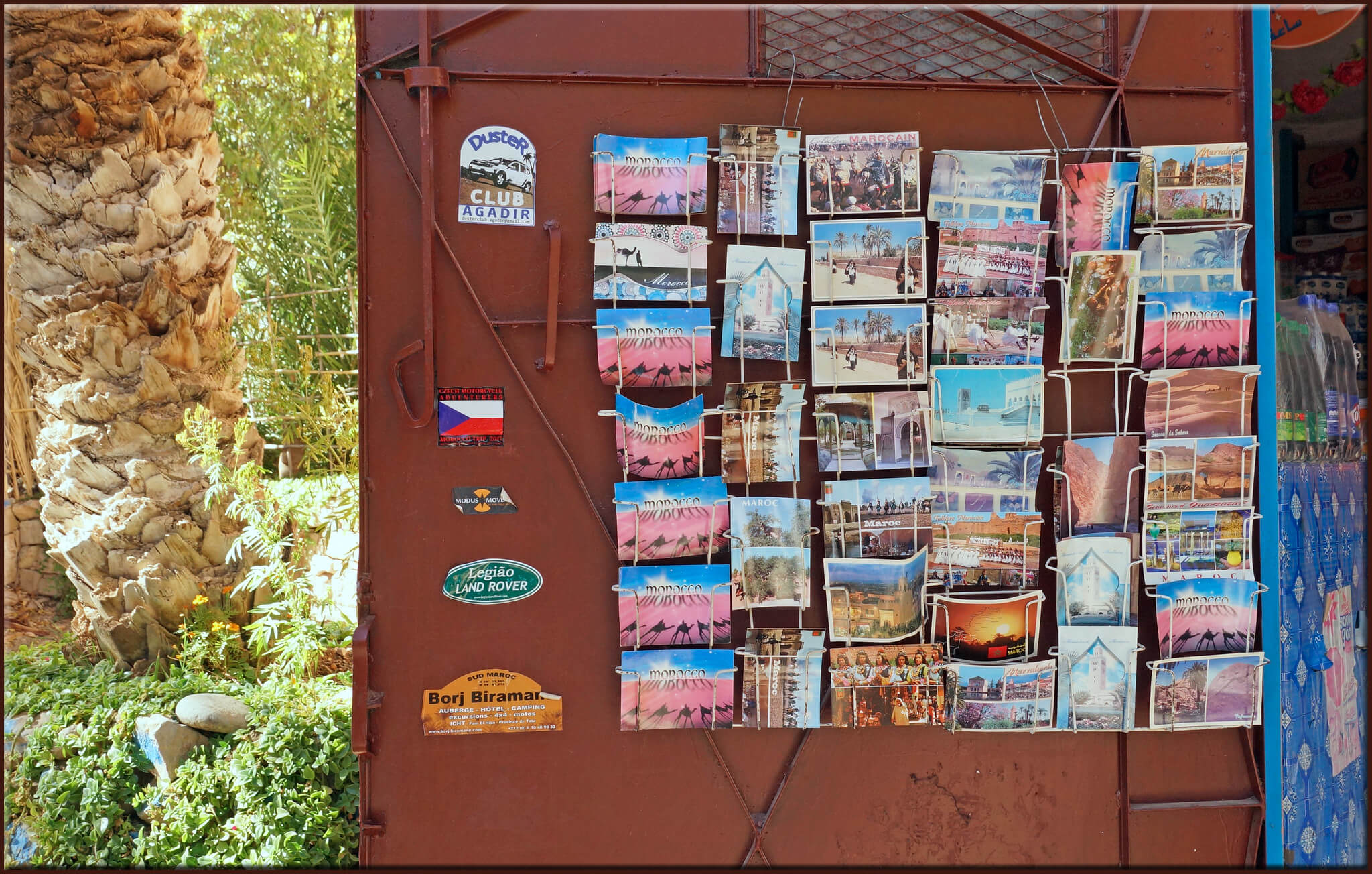
Kodak’s 3A Folding Pocket camera, introduced in 1903, made negatives sized to fit postcard stock, and photographers across America began printing their own cards. Real photo postcards captured main streets, general stores, parades, fires, floods, and families posing on front porches.
Most show ordinary scenes and sit around 5 to 20 dollars. Rare views reach hundreds, especially small-town street scenes with signage, early automobiles, or local disasters that no newspaper photographed.
Creases, silvering, fading, and stains reduce value. Many collectors hunt a single town or county, which keeps demand strong for unusual local views.
Winsch Halloween Postcards
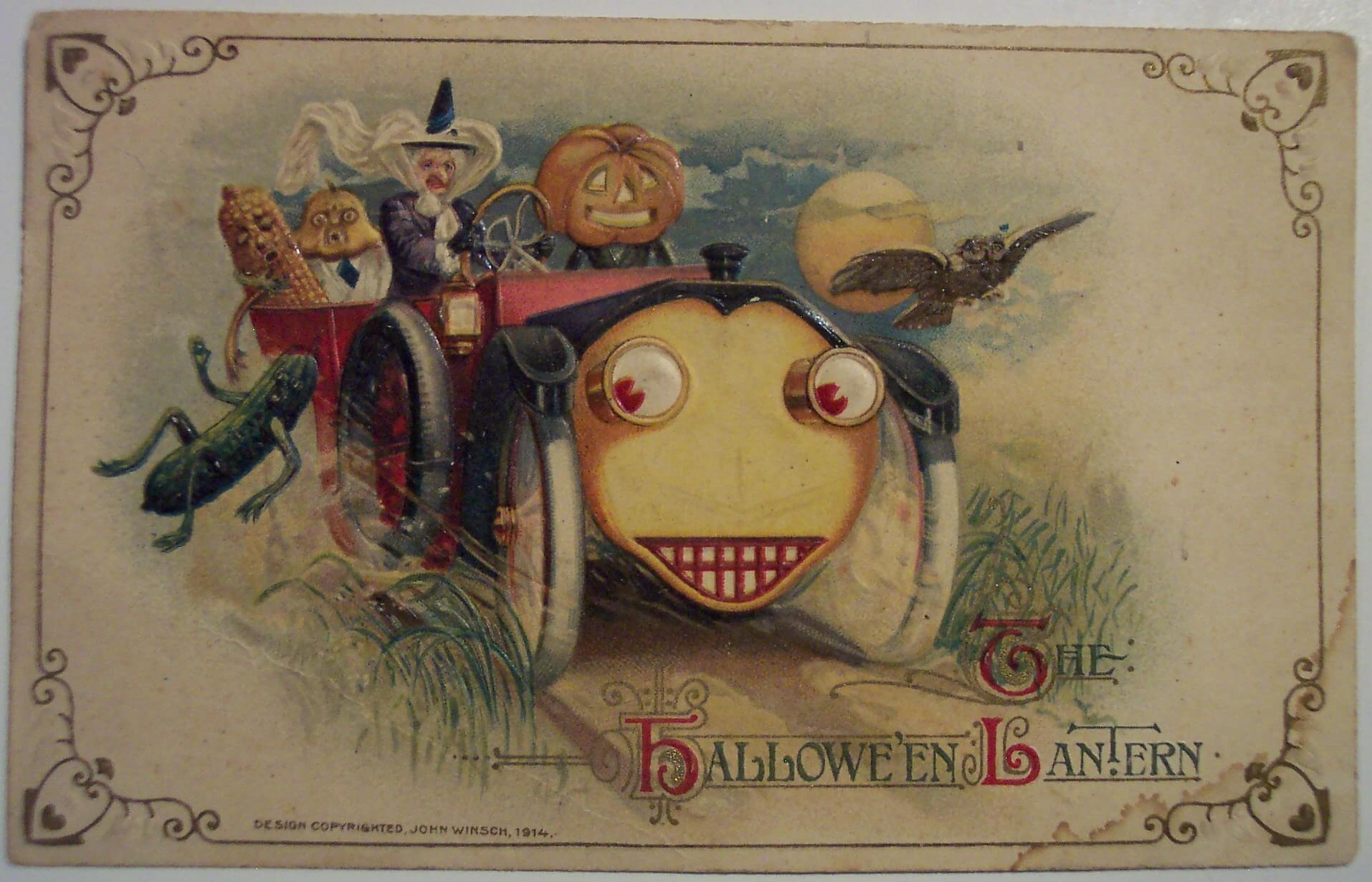
John O. Winsch of Stapleton, New York, published Halloween postcards in the 1910s with artwork by Samuel Schmucker and several other illustrators. The cards featured witches, black cats, jack-o-lanterns, and elegantly dressed women framed by autumn leaves, all printed in rich, heavily embossed color.
Winsch cards are among the most sought-after holiday postcards of the golden age. Common designs sit around 20 to 50 dollars, while rare Schmucker images reach hundreds.
Creases, rounded corners, fading, and stains reduce value. Collectors prize strong embossing and unfaded orange tones, which fade quickly in sunlight.
Hold-to-Light Santa Postcards
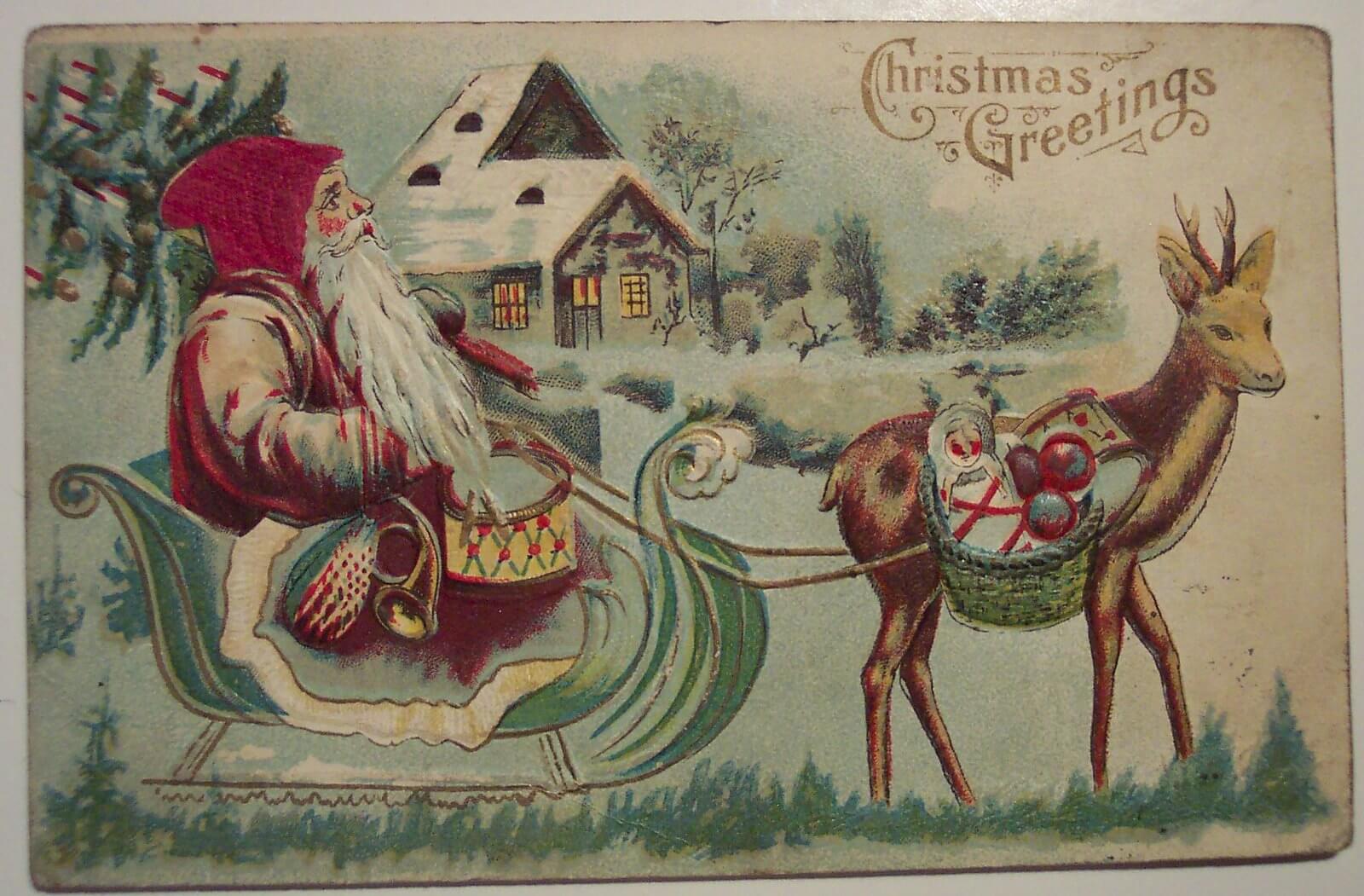
German publishers in the early 1900s produced hold-to-light postcards with tiny die-cut windows backed by colored tissue paper. Held up to a lamp, the windows glowed, lighting up Santa’s lantern, a church interior, or the windows of a snowy village.
Santa designs are especially popular and scarce. Examples reach 100 to 500 dollars, depending on the design and how intact the tissue remains.
Torn or missing tissue, creases, and stains reduce value sharply. Collectors look for crisp die cuts and complete backing, since the fragile tissue was often damaged by curious fingers long ago.
Krampus Postcards From Central Europe
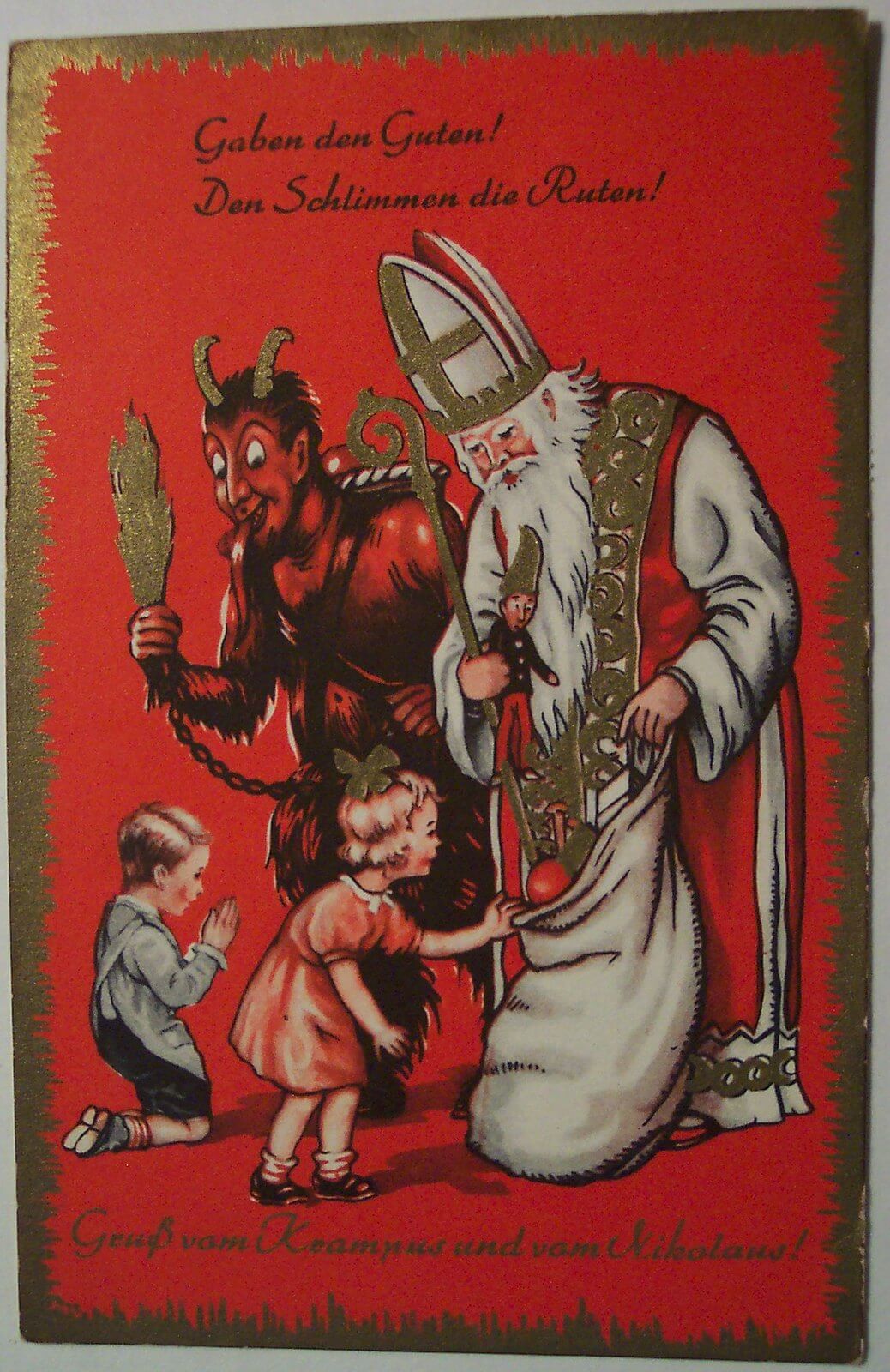
Austrian and German publishers in the early 1900s produced postcards featuring Krampus, the horned, chain-rattling figure who punished misbehaving children during the Christmas season. The cards often carried the greeting Gruss vom Krampus and showed him carrying naughty children off in a basket.
Their mix of menace and dark humor makes them a favorite with collectors today. Examples sit around 20 to 200 dollars, and rare artist-signed designs reach more.
Creases, fading, and stains reduce value. Growing interest in Krampus traditions across North America has pushed prices steadily upward over the past decade.
Ellen Clapsaddle Postcards
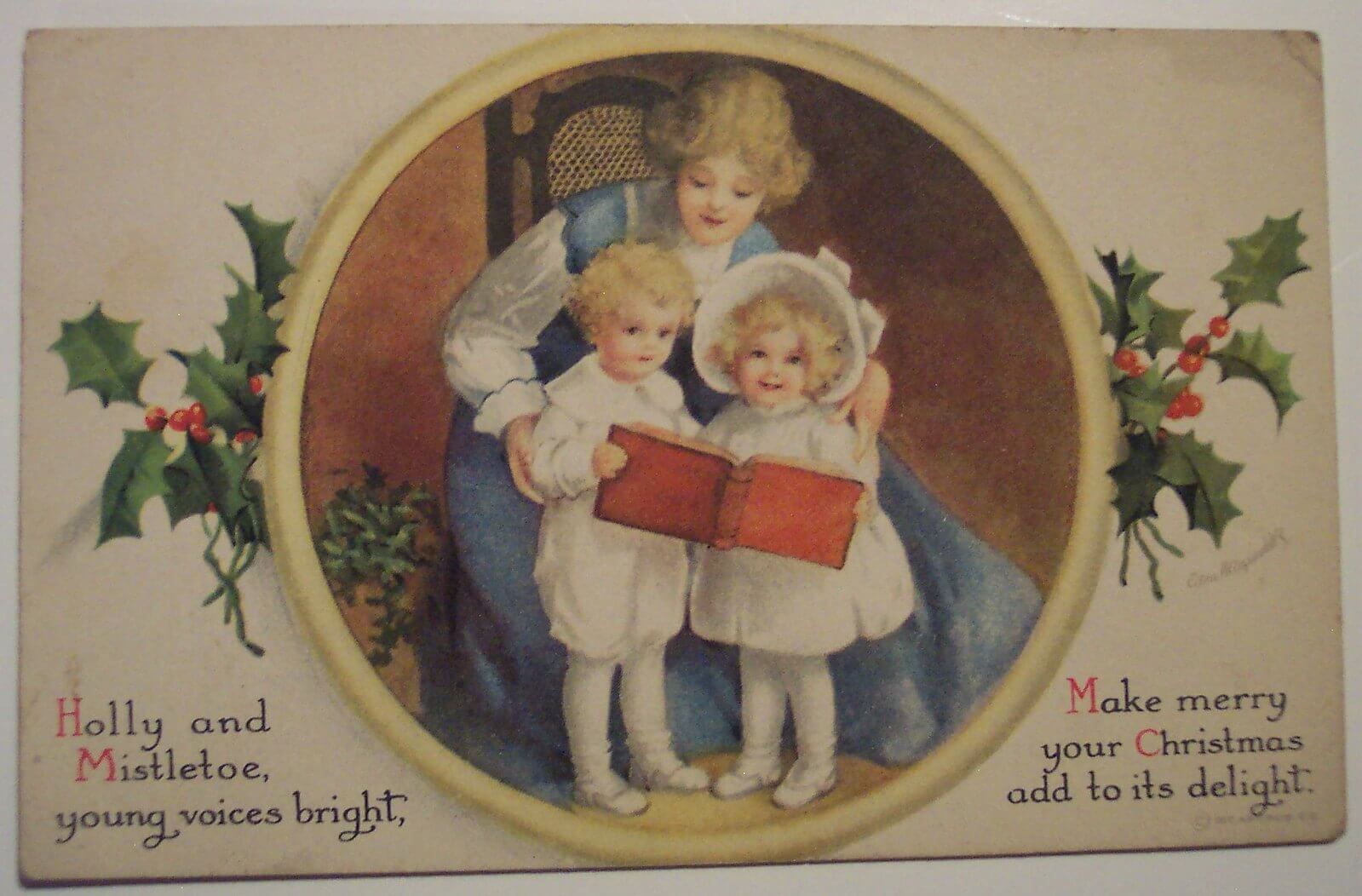
Ellen Clapsaddle was one of the most prolific postcard artists of the early twentieth century, producing thousands of designs for holidays and greetings. Many were published by the International Art Publishing Company, and her rosy-cheeked children became a signature of the period.
Because so many survive, common designs sit around 5 to 20 dollars. Rare Halloween cards and mechanical designs with moving parts reach hundreds.
Creases, fading, and album damage reduce value. Collectors look for her signature on the image and for strong, unfaded color, which separates a good example from an ordinary one.
Alphonse Mucha Art Nouveau Postcards
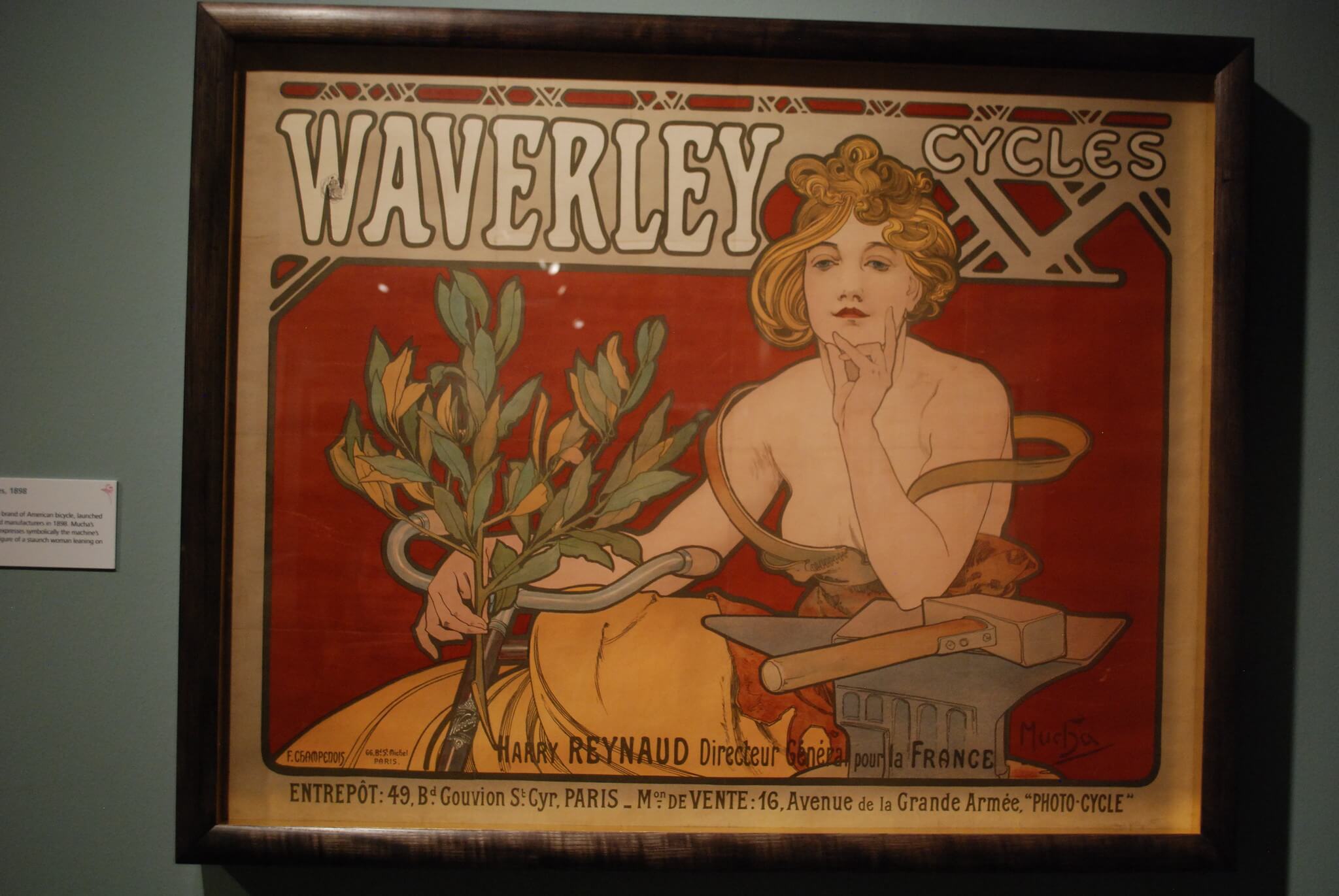
Czech artist Alphonse Mucha designed postcards around 1900 showing women framed by flowers, halos, and swirling hair, the look that came to define Art Nouveau. Many adapted his famous theater posters and advertising designs into a format anyone could afford to buy and mail.
They were published in Paris and elsewhere in several series. Examples reach 100 to 500 dollars, depending on design and condition.
Creases, fading, and stains reduce value, and trimmed edges hurt badly. Collectors prize bright colors and crisp printing, and later reproductions are common, so paper and printing method matter.
Postcards Mailed From the Titanic
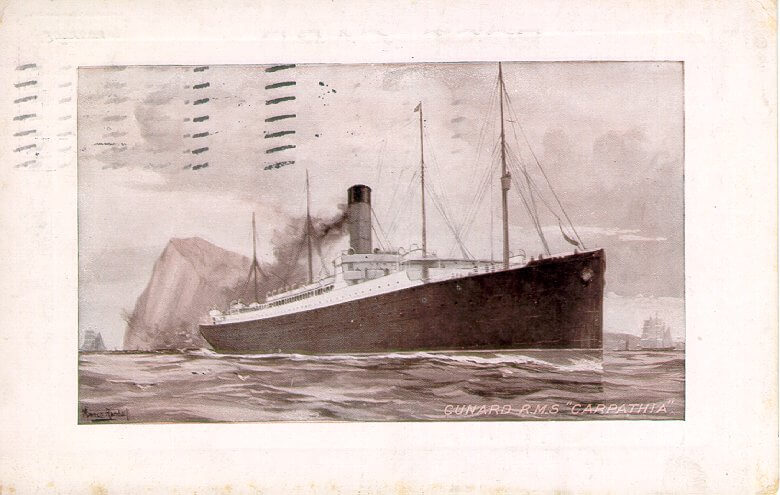
Passengers aboard the Titanic wrote postcards that went ashore at Cherbourg, France, or Queenstown, Ireland, before the ship headed into the Atlantic in April 1912. Those cards survived precisely because they left the ship early.
Few are known today, and genuine examples reach thousands of dollars and often far more. A clear postmark and a legible message mentioning the voyage add considerably to value.
Creases, stains, and tears reduce price. Authentication is essential because the market attracts fakes.
Few objects carry such an eerie sense of timing.
Columbian Exposition Souvenir Postcards From 1893
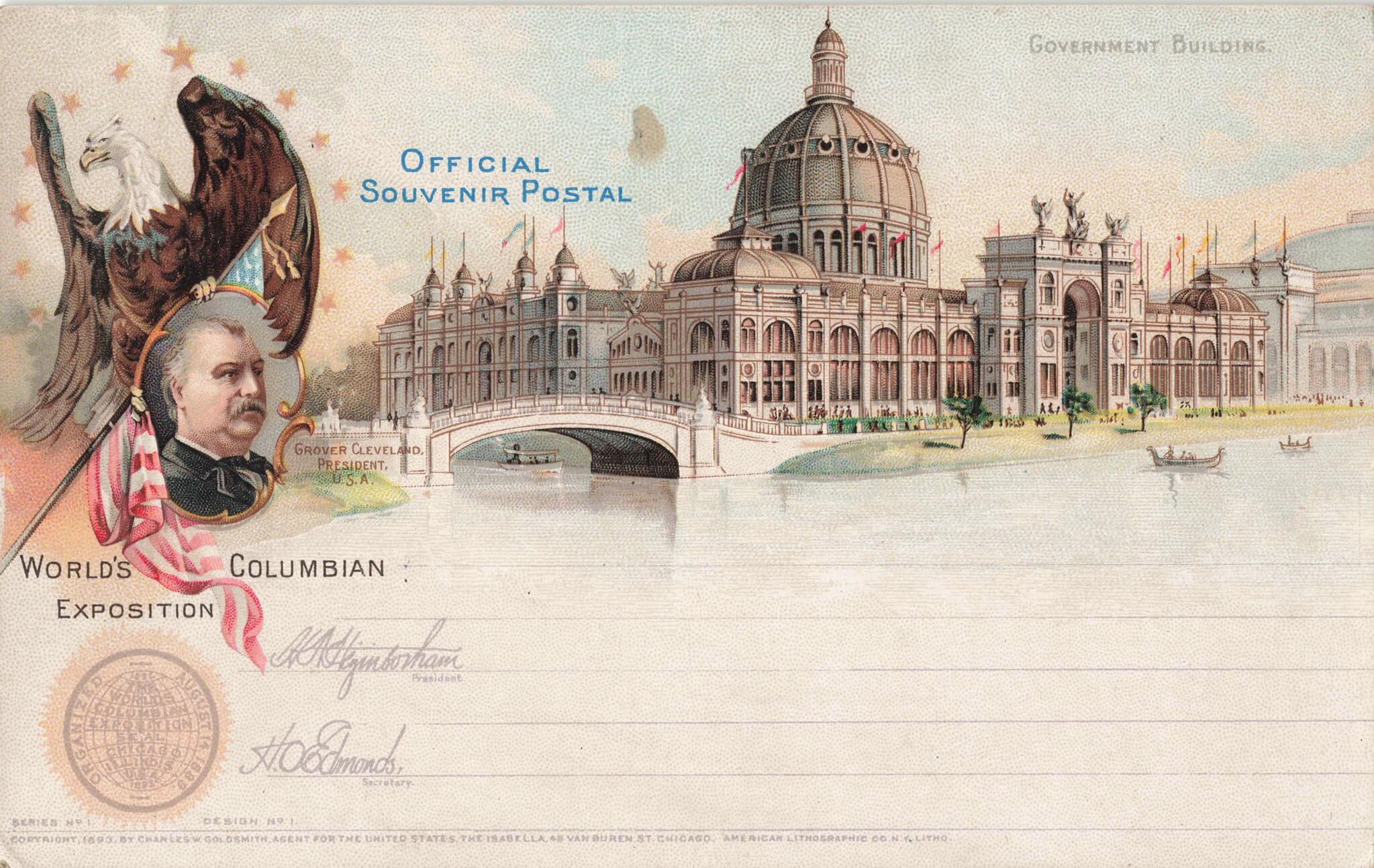
Charles W. Goldsmith published official souvenir postcards for the 1893 World’s Columbian Exposition in Chicago, and they are often cited as the first picture postcards sold in the United States. The cards showed the fair’s great white buildings, lagoons, and attractions, and visitors mailed them home by the thousands.
Individual cards reach 20 to 100 dollars, and complete sets reach considerably more. Creases, fading, and stains reduce value.
Collectors prize bright colors, unused examples, and cards with fair postmarks, which tie the souvenir directly to a visit to the grounds.
Suffrage Postcards
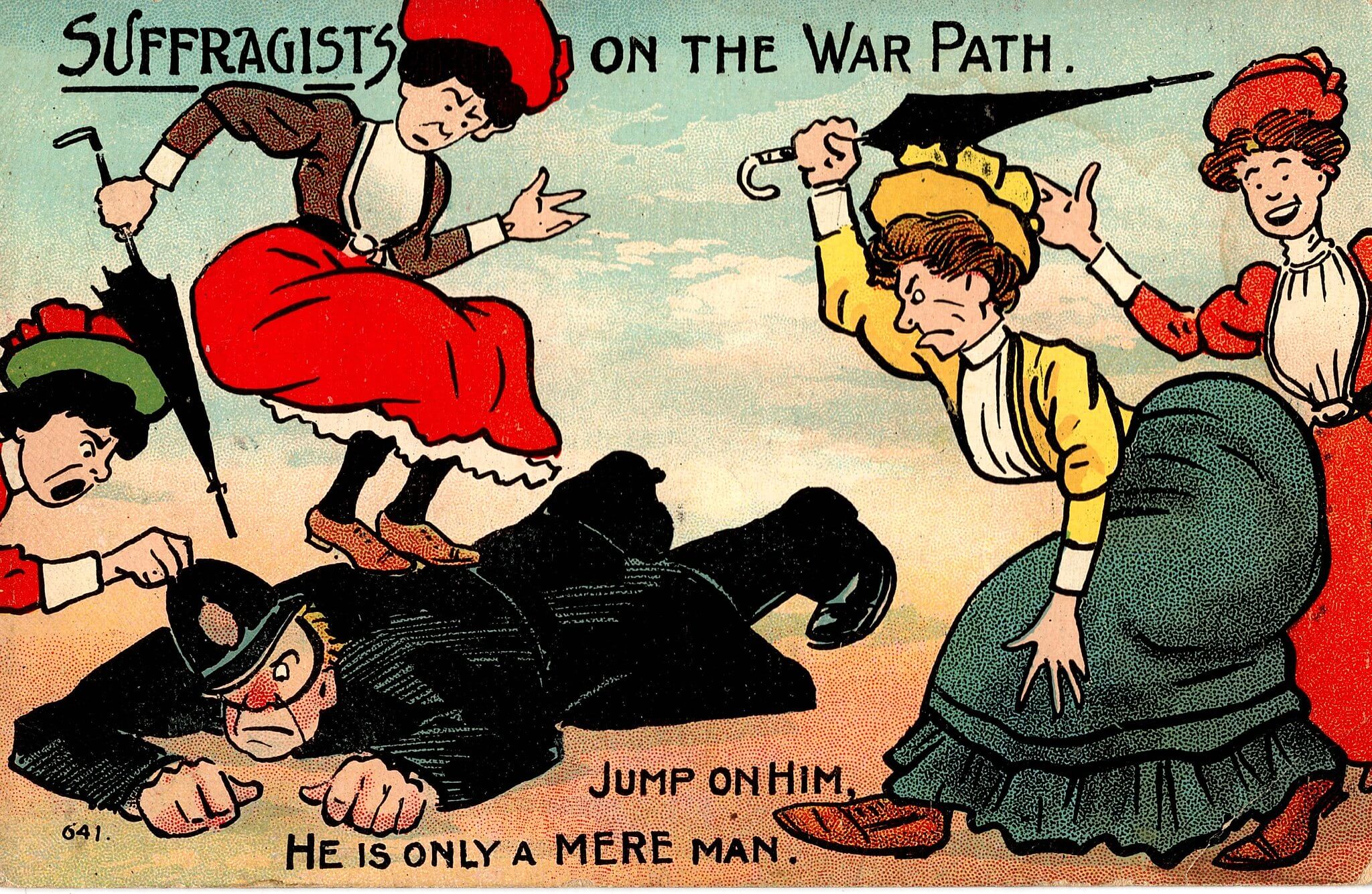
Postcards for and against women’s suffrage circulated widely in the 1900s and 1910s, carrying slogans, cartoons, and portraits of campaigners. Supporters used them as cheap advertising, while opponents printed cards mocking women who wanted the vote and the husbands left minding the babies.
Both sides are collected today as political history. Examples sit around 50 to 300 dollars, and rare designs reach more.
Creases, fading, and stains reduce value. Collectors prize strong imagery, clear publisher information, and cards actually mailed during the campaigns, which show the messages in real use.
Early Aviation Postcards

Aviation meets drew enormous crowds in the years after the Wright brothers flew, and postcards from events such as the 1910 Dominguez Field meet near Los Angeles captured biplanes, pilots, and packed grandstands. Real photo cards of aircraft on the ground, in flight, and occasionally wrecked draw especially strong interest.
Examples reach 20 to 200 dollars, and rare scenes with identified pilots reach more. Creases, fading, and stains reduce value.
Collectors look for named aviators and specific aircraft, since those details connect a card to a documented moment in early flight.
Detroit Publishing Photochrom Postcards
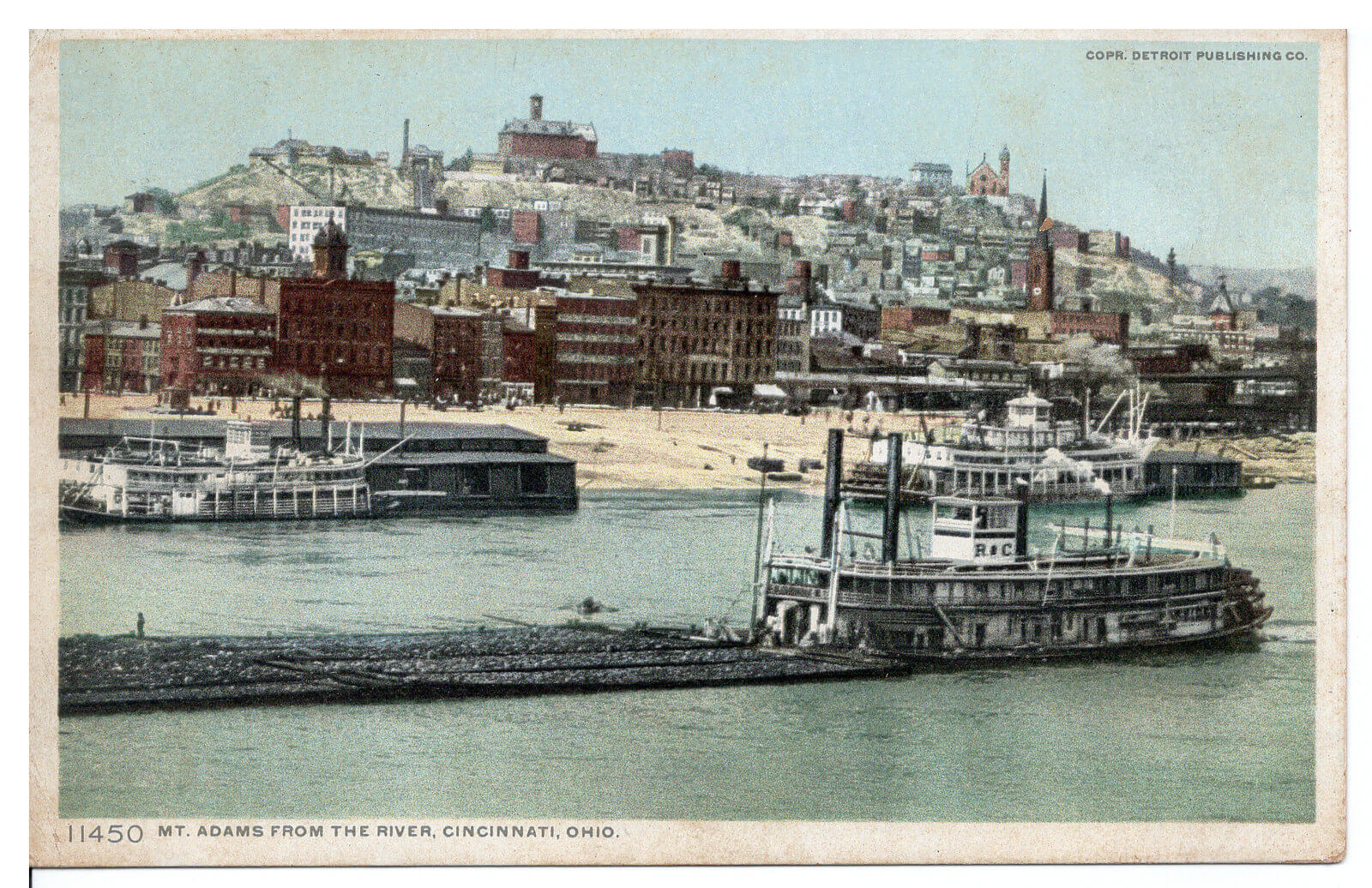
Detroit Publishing Company licensed the Swiss Photochrom process in the late 1890s, turning black and white negatives into postcards with rich, painterly color. William Henry Jackson, the famous Western photographer, supplied many of the images.
Views of American cities, national parks, and landmarks sold widely to travelers. Common cards sit around 10 to 50 dollars, while rare views and early numbered series reach more.
Creases, fading, and stains reduce value. Collectors prize crisp printing and unusual subjects, since the company produced many thousands of different views.
Postage Paid in Full, With Interest
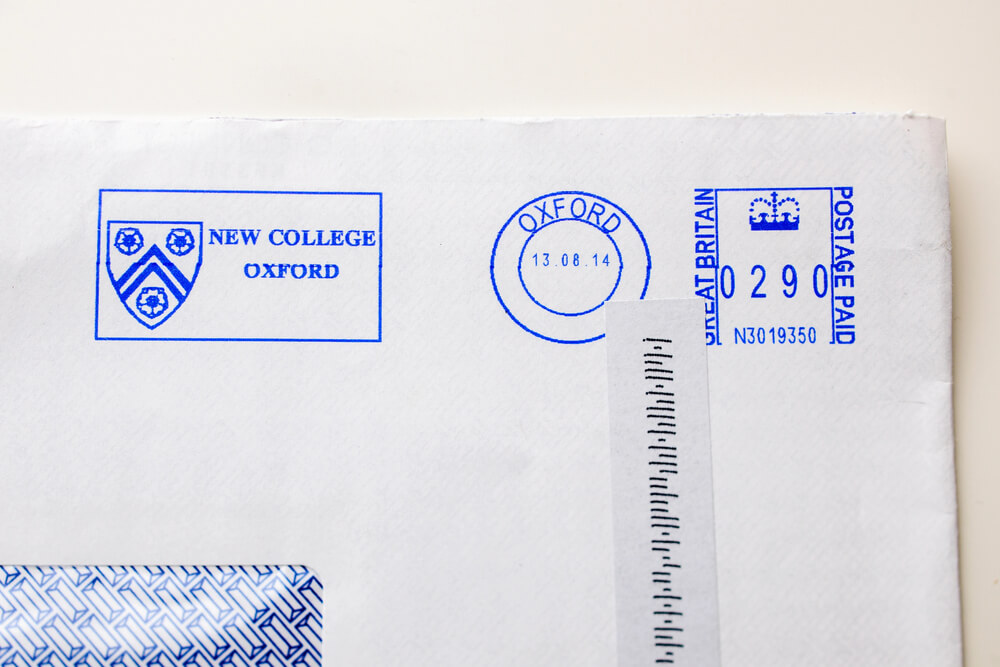
Every item on this list began as a few cents of postage or a souvenir from a trip. The value arrived later, from errors, scarcity, and the stories that attached themselves to each piece.
Condition and authenticity decide what collectors actually pay. That makes old mail worth sorting before it goes to recycling.
A single stamp or card can outweigh an entire album, and a local street scene can matter more than a famous landmark. The best finds usually hide among the ordinary, waiting for someone patient enough to look.
More from Go2Tutors!

- The Romanov Crown Jewels and Their Tragic Fate
- 13 Historical Mysteries That Science Still Can’t Solve
- Famous Hoaxes That Fooled the World for Years
- 15 Child Stars with Tragic Adult Lives
- 16 Famous Jewelry Pieces in History
Like Go2Tutors’s content? Follow us on MSN.