28 Old Major League Trading Cards With Surprising Value
For most of the 20th century, trading cards were something kids flipped against walls, rubber-banded by team and clothespinned to bicycle spokes for the motor sound. Mothers threw out shoeboxes of them when sons left for college, which became one of the great collecting legends of all time.
The cards that escaped that fate now trade like fine art. Corners, centering and surface wear decide whether a card sells for lunch money or for the price of a house, and a few unassuming pieces of cardboard have broken auction records.
Honus Wagner’s T206 Card
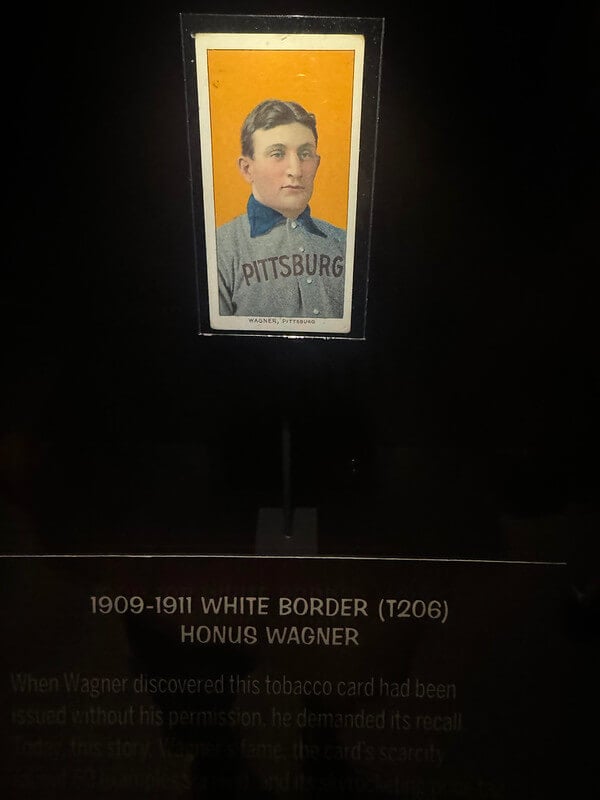
The T206 set was distributed from 1909 to 1911 as a free insert with consumer products, and it included Pittsburgh Pirates shortstop Honus Wagner. Wagner reportedly objected to the use of his image, and production of his card stopped early, leaving only a few dozen known copies.
One sold for 7.25 million dollars in 2022 despite heavy wear. Even badly creased examples sell for well over a million dollars.
Counterfeits are everywhere, so any T206 Wagner needs authentication by a major grading company before anyone gets excited.
The 1952 Topps Mickey Mantle
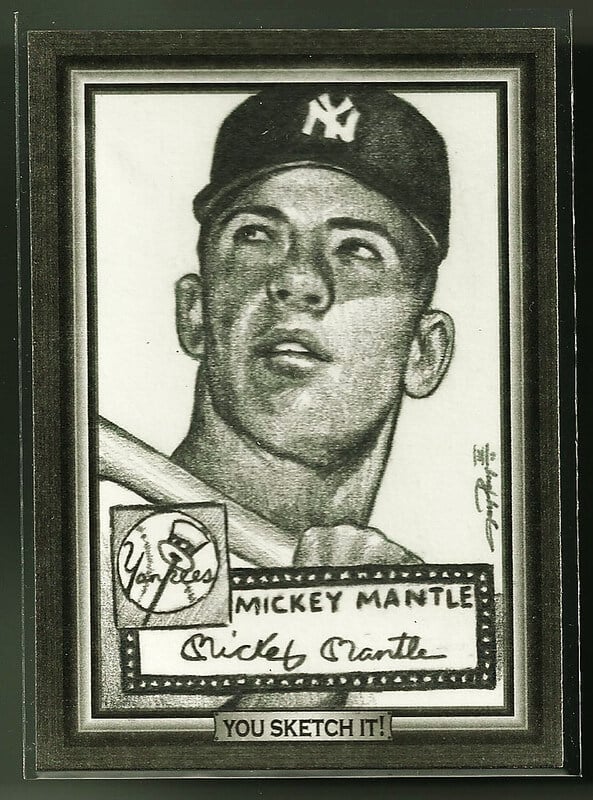
Topps issued card No. 311, Mickey Mantle, in the high-number series of its 1952 set, which shipped late in the season when sales were slowing. Unsold stock piled up, and in 1960 Topps executive Sy Berger reportedly dumped cases of leftover cards into the ocean off New Jersey.
A near-mint example sold for 12.6 million dollars in 2022, a record for any trading card at the time. Lower-grade copies still bring tens of thousands to hundreds of thousands.
Off-center printing, soft corners and creases all lower value, and reprints are common.
Mantle’s 1951 Bowman Rookie
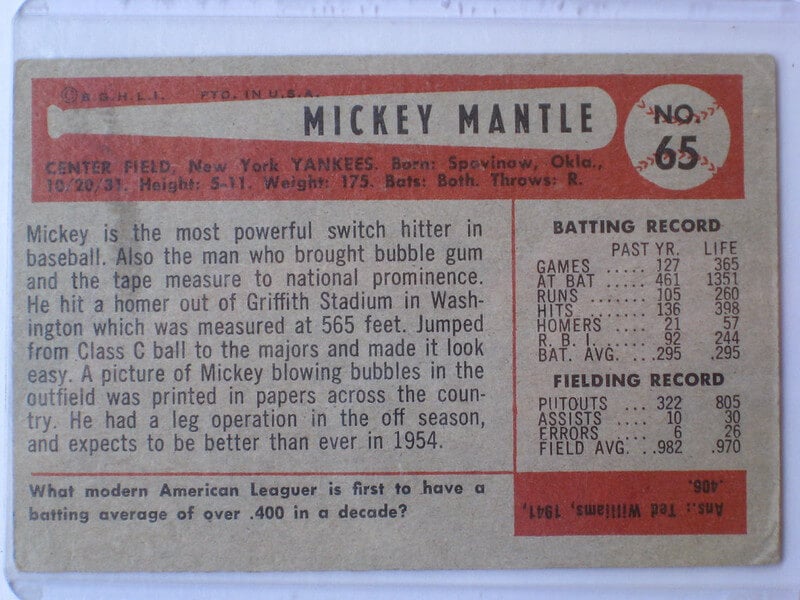
Bowman’s 1951 set included Mickey Mantle’s true rookie card, issued a year before his more famous Topps card. The card shows Mantle in a painted portrait with a bat on his shoulder, and it is part of the set’s scarcer high-number series printed late in the year.
High-grade examples sell for hundreds of thousands of dollars or more, while lower grades still bring tens of thousands. Collectors look for strong centering and sharp corners, since the card stock was prone to wear.
Creases, stains and trimmed edges reduce value, and authentication is essential.
Babe Ruth on 1933 Goudey Cards
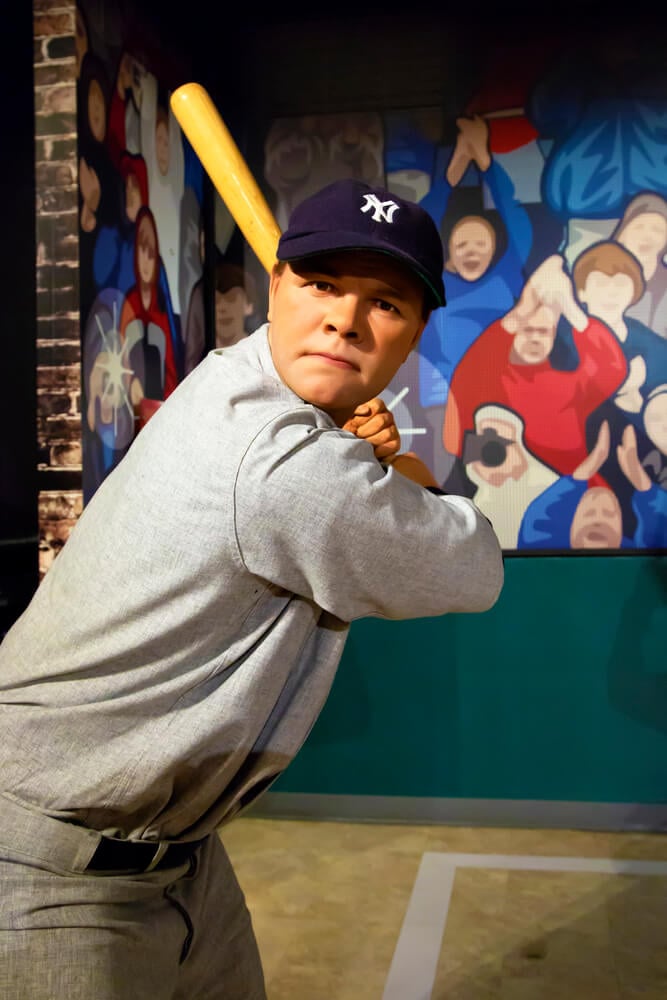
Boston’s Goudey Gum Company included four different Babe Ruth cards in its 1933 set, which came with a stick of gum in each pack. The cards feature colorful artwork and are among the most recognizable from the Depression era.
Values range from thousands of dollars for low-grade copies to six figures for high-grade examples, depending on which of the four Ruth cards it is. Gum stains are a common problem, along with creases and rounded corners, since cards sat against sticky slabs of gum.
Authentication is essential.
The Missing Nap Lajoie Card From 1933 Goudey
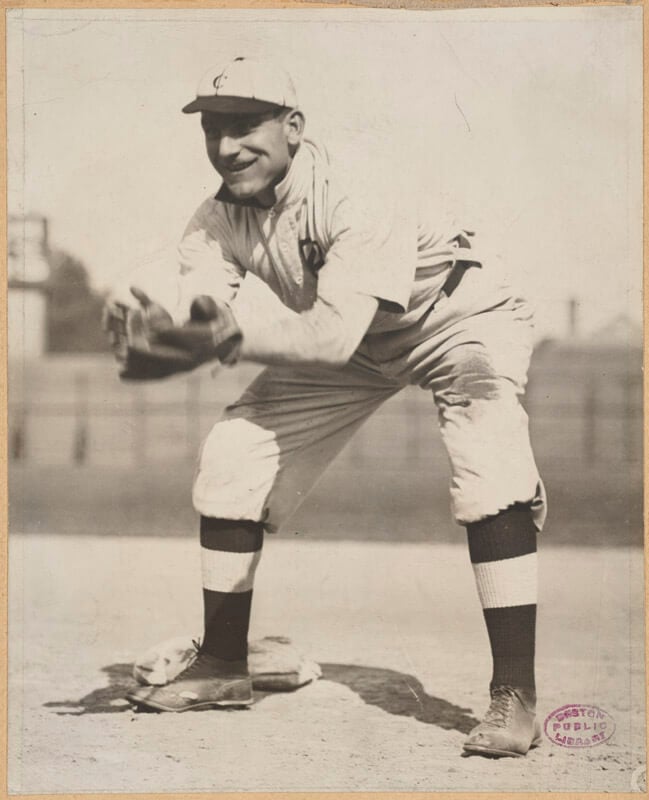
Goudey’s 1933 set was numbered to 240, but card No. 106 was never issued that year. Collectors who wrote to complain received a Napoleon Lajoie card by mail in 1934, which made it extremely scarce.
Because the cards were mailed rather than packed, many were never handled by kids, so higher grades survive than for other cards of the era. Examples sell for tens of thousands of dollars or more, depending on condition.
Authentication is essential, and reprints are common, often with suspiciously bright colors.
Shoeless Joe Jackson on a 1914 Cracker Jack Card
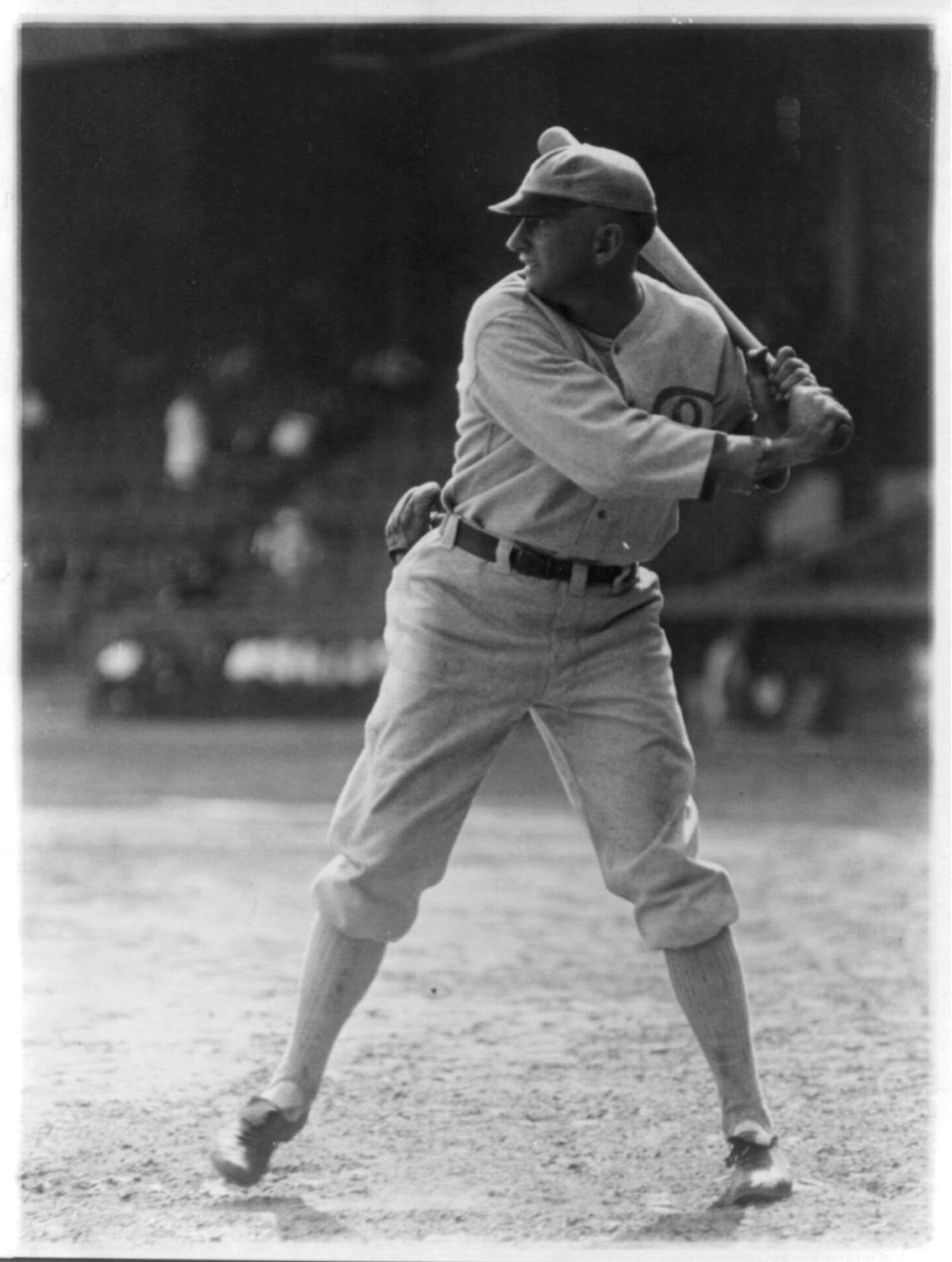
Cracker Jack included trading cards in its boxes in 1914 and 1915, and the set features Shoeless Joe Jackson, later banned from the game for his role in the 1919 Black Sox scandal. The 1914 cards were printed on thin, brittle paper and often stained by the caramel corn, so clean examples are scarce.
Jackson’s card sells for tens of thousands to hundreds of thousands of dollars, depending on condition. Stains, creases and paper loss reduce value significantly, and authentication is essential, since convincing reprints of the set circulate widely.
Babe Ruth’s 1916 Rookie Card
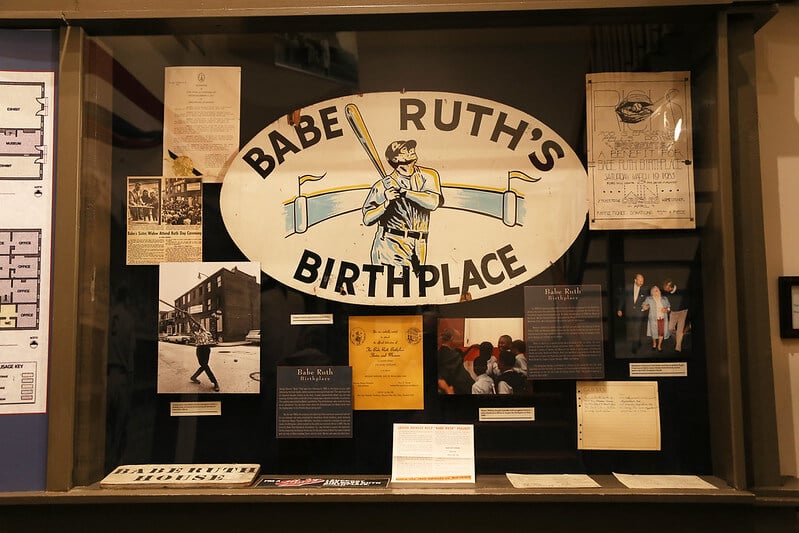
Babe Ruth’s rookie card comes from a 1916 set issued in several versions with different advertising backs, including one promoting the weekly newspaper The Sporting News. At the time, Ruth was a promising young left-handed pitcher for the Boston Red Sox, years before his trade to New York and his transformation into a home run hitter.
Surviving copies are extremely scarce, and examples sell for hundreds of thousands to millions of dollars, depending on condition and back variation. Counterfeits and reprints are common.
Authentication by a major grading company is essential before any sale.
Willie Mays and the 1951 Bowman Set
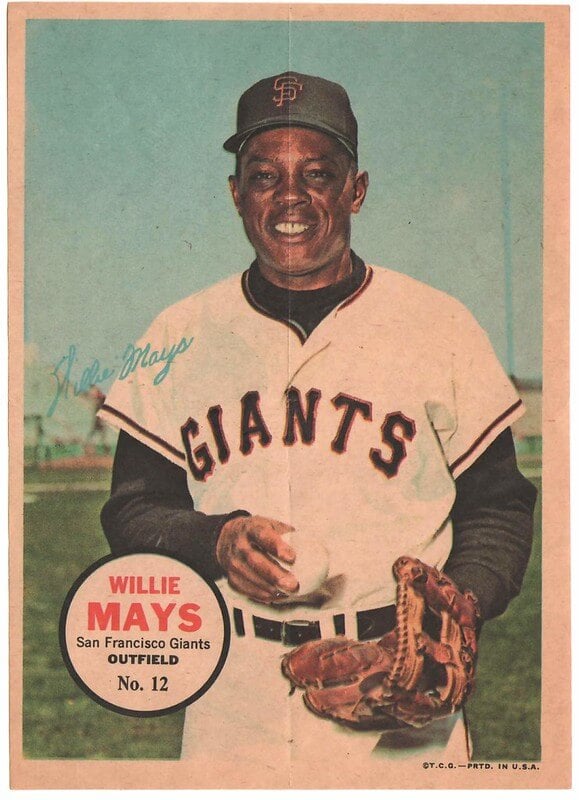
Willie Mays’s rookie card, No. 305, appears in the 1951 Bowman set, the same set that holds Mantle’s rookie, which makes 1951 Bowman one of the most important sets of the decade. Mays went on to hit 660 home runs and make one of the most famous catches in World Series history in 1954.
The card is part of the scarcer high-number series. High-grade examples sell for hundreds of thousands of dollars, while lower grades still bring thousands.
Centering, corners and surface condition matter significantly, and creases and stains reduce value.
Hank Aaron’s 1954 Topps Rookie
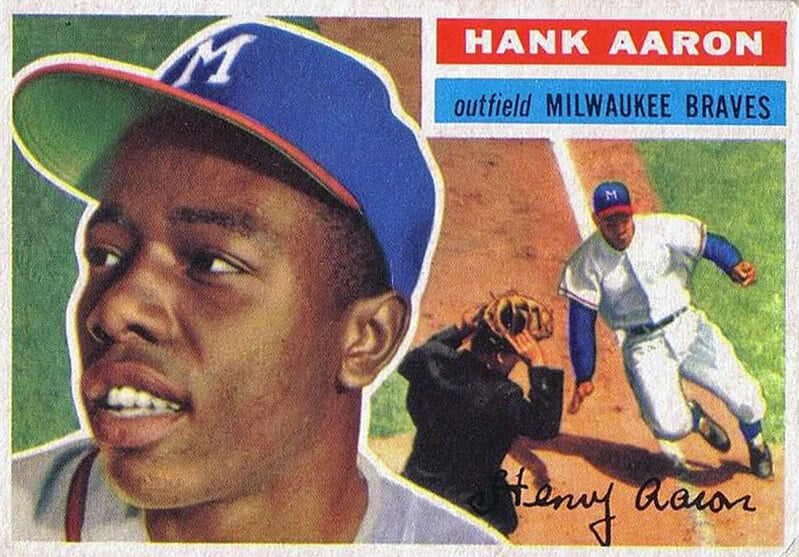
Hank Aaron’s rookie card, No. 128 in the 1954 Topps set, shows a young Milwaukee Braves outfielder in both a portrait and a small action drawing. Aaron went on to break Babe Ruth’s career home run record in April 1974 and finished with 755.
The card’s bright orange background shows every scuff and chip along the edges, which makes high grades scarce. Examples sell for thousands of dollars in middle grades and into six figures for the best copies.
Off-center printing, soft corners and creases reduce value, and reprints of this card are common.
Roberto Clemente’s 1955 Topps Rookie
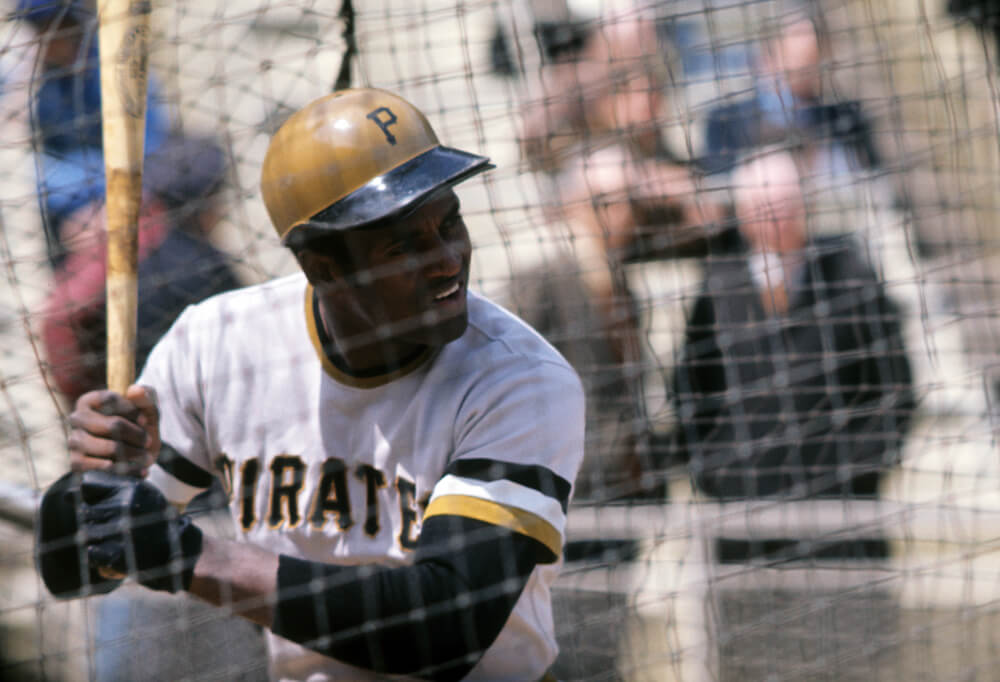
Roberto Clemente’s rookie card, No. 164 in the 1955 Topps set, shows him early in an 18-season career with the Pittsburgh Pirates. Clemente collected exactly 3,000 hits and died in a plane crash on New Year’s Eve 1972 while delivering earthquake relief supplies to Nicaragua.
He became the first Latin American player inducted into the Hall of Fame. Examples sell for thousands of dollars in middle grades, with top copies bringing far more.
Centering, corners and surface gloss matter significantly, and creases or stains pull prices down quickly.
Jackie Robinson’s 1948 Leaf Rookie
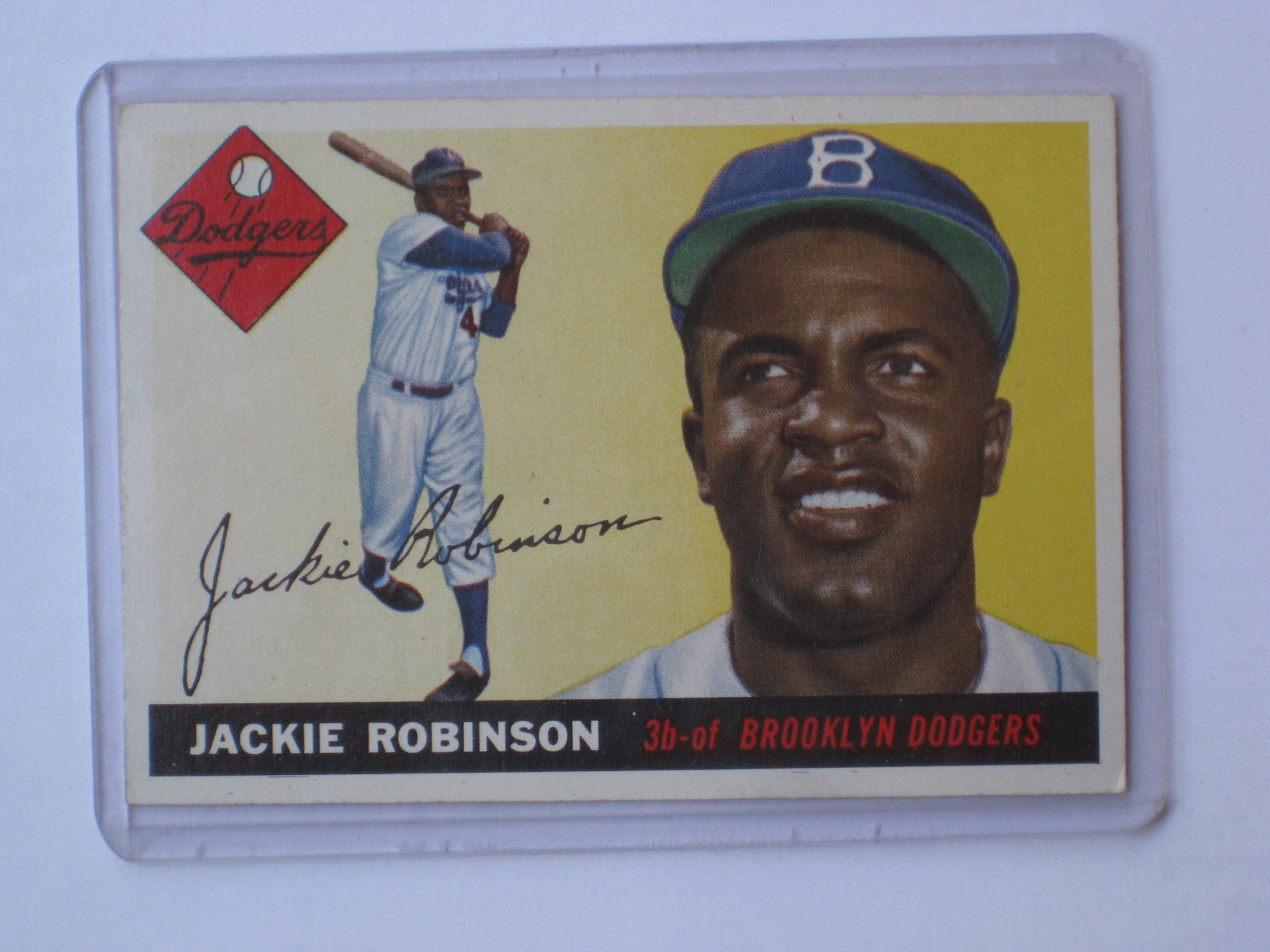
Jackie Robinson’s rookie card appears in the 1948 Leaf set, issued a year after he broke the major league color barrier with the Brooklyn Dodgers. Leaf printed the set on rough, thin card stock with notoriously poor centering, so well-centered copies command a large premium.
The set also includes rookie cards of other future Hall of Famers, adding to its appeal. Examples sell for tens of thousands of dollars in middle grades and far more for top copies.
Print defects, creases and soft corners reduce value, and authentication is essential.
Satchel Paige’s 1948 Leaf Rookie
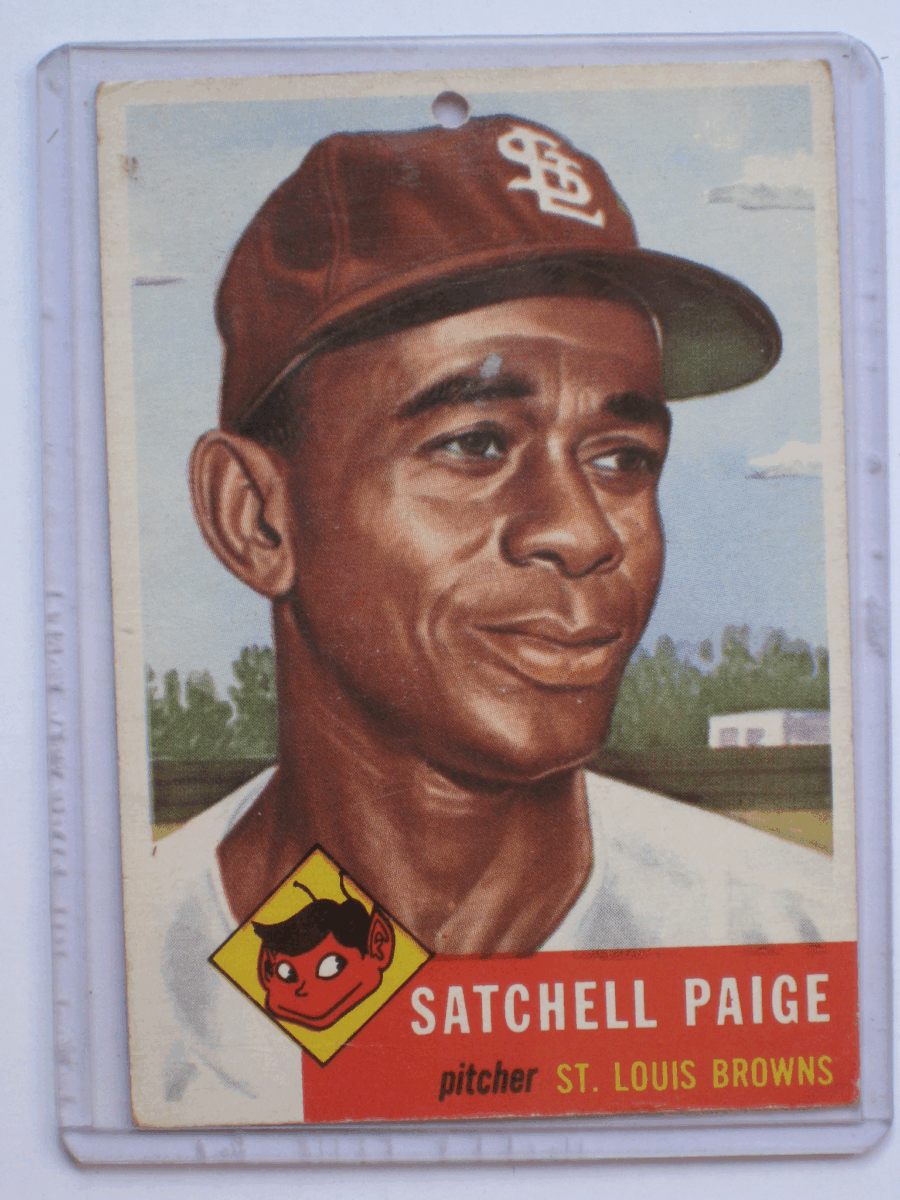
Satchel Paige’s rookie card comes from the same 1948 Leaf set, issued after he joined the Cleveland Indians at age 42 following decades as a star in the Negro Leagues. That July debut made him the oldest rookie in major league history, and he helped Cleveland win the World Series that fall.
The card is one of the high-number short prints in the set, so it is much scarcer than many others. Examples sell for thousands to tens of thousands of dollars, depending on condition.
Centering problems and edge wear are common.
Ted Williams on Both Ends of 1954 Topps
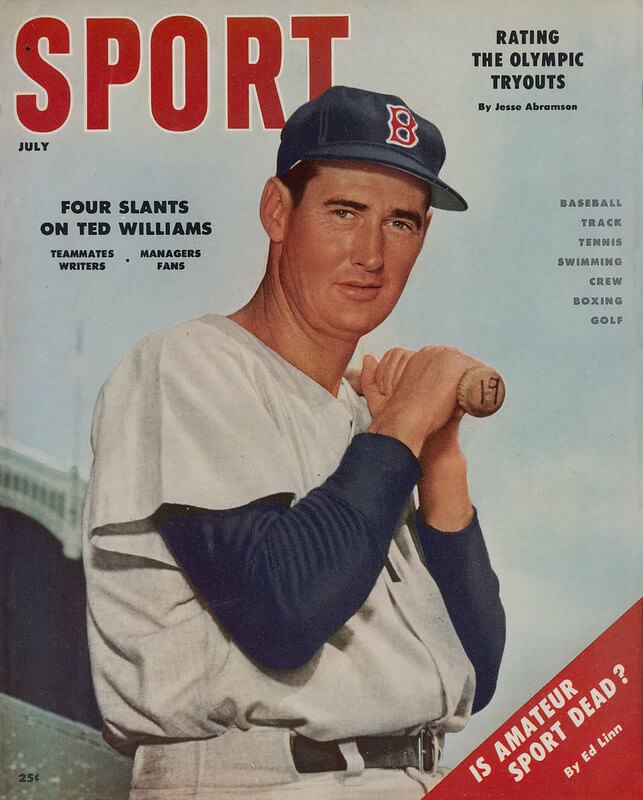
Topps put Ted Williams on both card No. 1 and card No. 250 of its 1954 set, bookending the entire checklist with the Boston Red Sox slugger. First and last cards in any set tend to show extra wear because they sat on the outside of rubber-banded stacks and took the brunt of the band itself.
That makes high-grade copies of both cards scarcer than their print runs suggest. Examples sell for hundreds to thousands of dollars, depending on condition.
Rubber band dents, creases and rounded corners are the usual flaws.
Pete Rose’s 1963 Topps Rookie
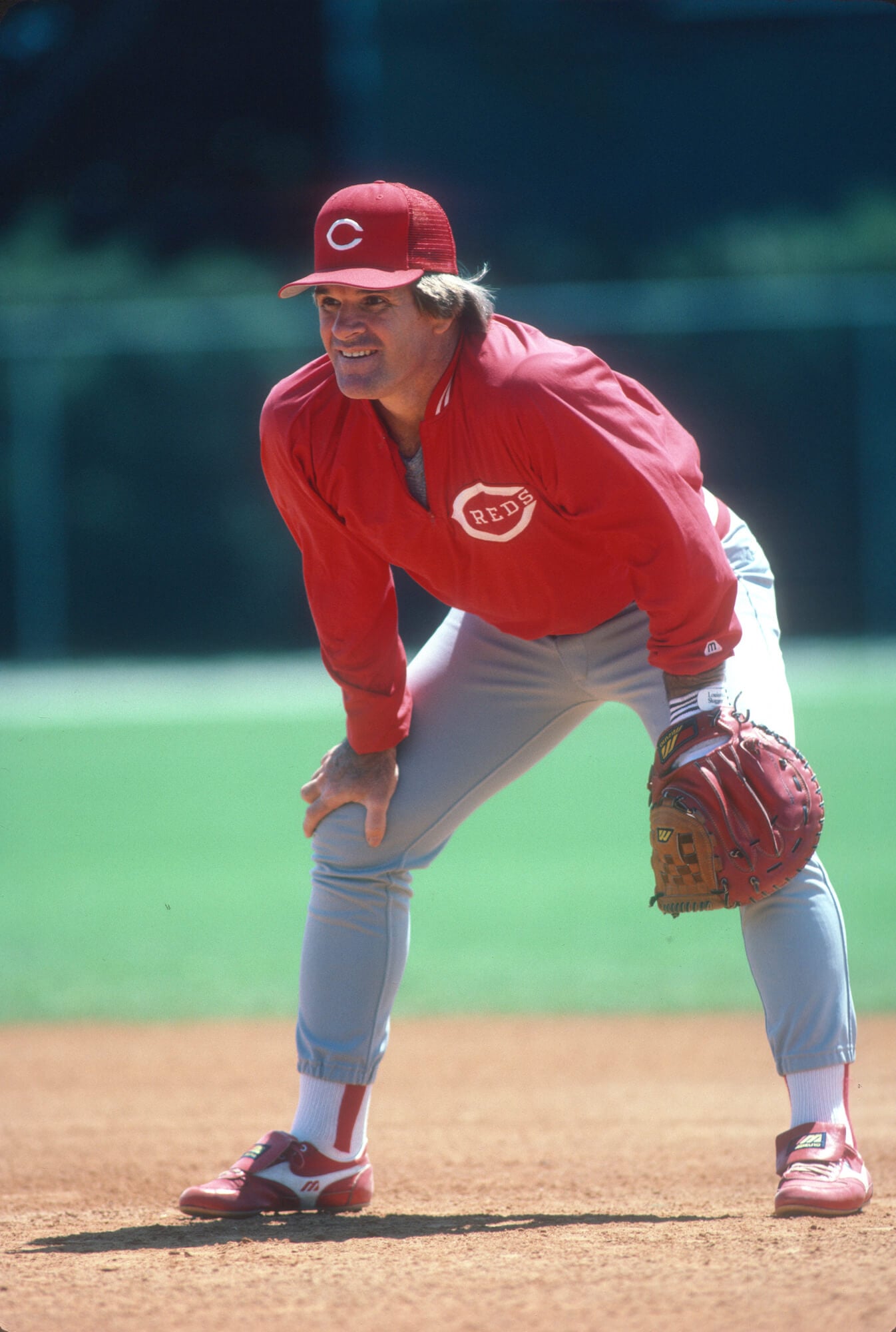
Pete Rose’s rookie card in the 1963 Topps set shares space with three other rookies on card No. 537, each shown in a small head shot. Rose went on to become the major league career hits leader with 4,256, though a lifetime gambling ban kept him out of the Hall of Fame for decades.
The card is part of a high-number series that was printed in smaller quantities late in the year. Examples sell for hundreds to tens of thousands of dollars, depending on condition.
Centering and corners matter, and counterfeits exist.
Nolan Ryan’s 1968 Topps Rookie
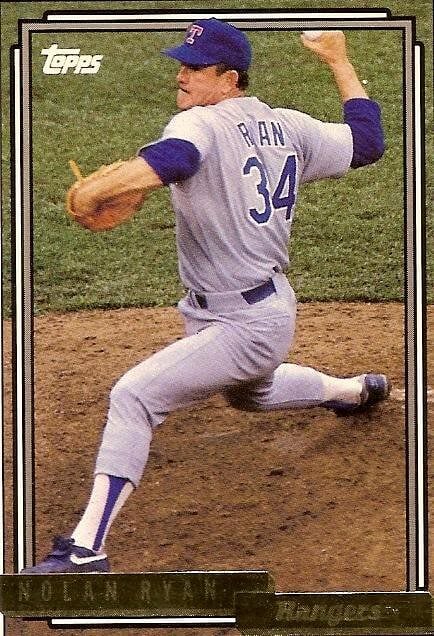
Nolan Ryan’s rookie card, No. 177 in the 1968 Topps set, shares space with a fellow New York Mets pitcher under a Rookie Stars banner. Ryan went on to pitch 27 seasons and set the major league career strikeout record with 5,714, along with seven no-hitters.
The card’s burlap-style border, used across the 1968 set, makes wear and print spots easy to spot. Examples sell for hundreds to tens of thousands of dollars, depending on condition.
Off-center copies are common, and well-centered examples bring a sizable premium.
Reggie Jackson’s 1969 Topps Rookie
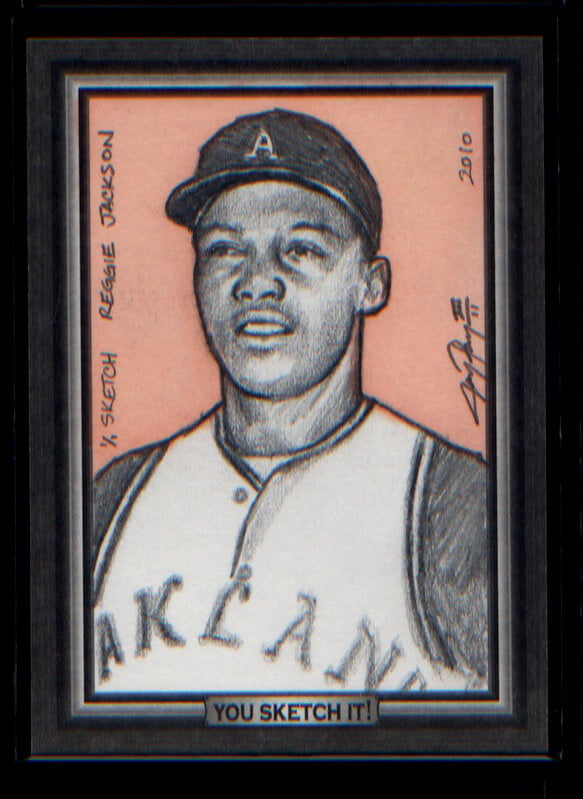
Reggie Jackson’s rookie card, No. 260 in the 1969 Topps set, shows him with the Oakland Athletics before the World Series heroics that earned him the nickname Mr. October. Jackson hit three home runs on three consecutive pitches in Game 6 of the 1977 World Series for the Yankees.
The card is common in low grades but tough in high grades because of frequent centering problems. Examples sell for hundreds to thousands of dollars, depending on condition.
Creases, soft corners and print lines reduce value.
Tom Seaver’s 1967 Topps Rookie
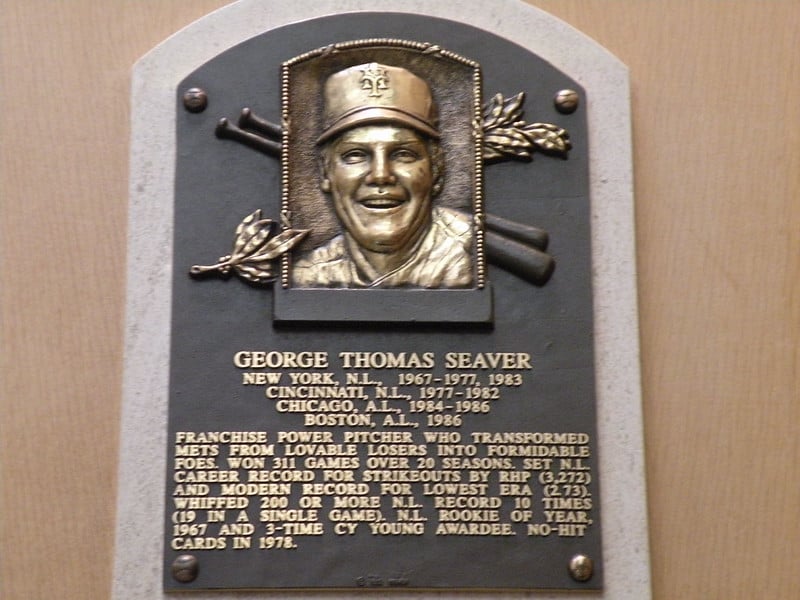
Tom Seaver’s rookie card, No. 581 in the 1967 Topps set, shares space with another Mets rookie and comes from the scarcer high-number series. Seaver led the 1969 Miracle Mets to a World Series title and won three Cy Young Awards in his career, earning the nickname Tom Terrific.
High-number cards were printed late in the season when fewer packs sold, so surviving copies are less common. Examples sell for hundreds to thousands of dollars, depending on condition.
Off-center printing, edge chipping and soft corners reduce value.
Bob Gibson’s 1959 Topps Rookie
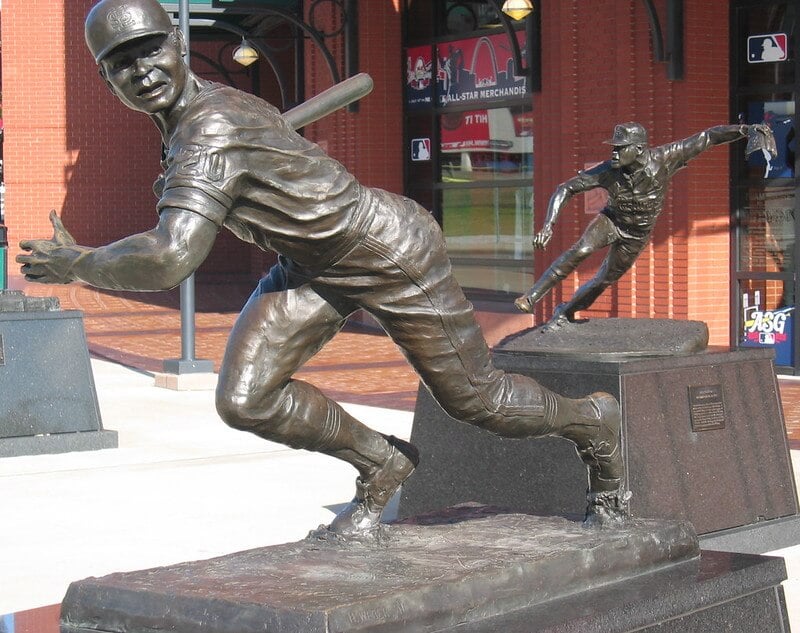
Bob Gibson’s rookie card, No. 514 in the 1959 Topps set, shows the St. Louis Cardinals pitcher early in a career built on intimidation. Gibson posted a 1.12 earned run average in 1968, a mark so dominant that the league lowered the pitching mound the next season.
The card comes from the high-number series and is tougher to find than many from the set. Examples sell for hundreds to thousands of dollars, depending on condition.
Centering, corners and the condition of the white border all affect price.
Roger Maris’s 1958 Topps Rookie
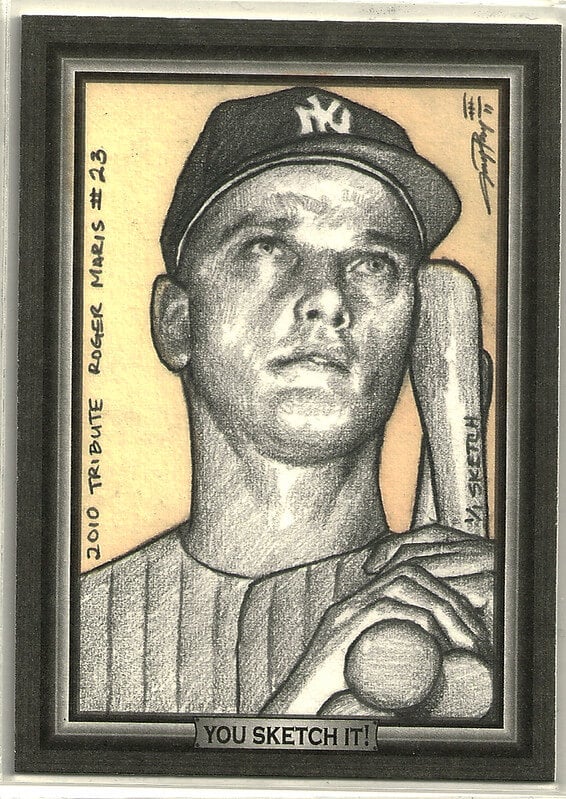
Roger Maris’s rookie card, No. 47 in the 1958 Topps set, shows him with the Cleveland Indians, years before his record season in New York. Maris hit 61 home runs for the Yankees in 1961, breaking Babe Ruth’s single-season mark amid enormous public pressure.
The card’s solid-color background reveals print defects and wear easily, and many copies show faint print dots across the photo. Examples sell for hundreds to thousands of dollars, depending on condition.
Creases, rounded corners and off-center printing reduce value, and high-grade copies bring much more.
Mike Schmidt’s 1973 Topps Rookie
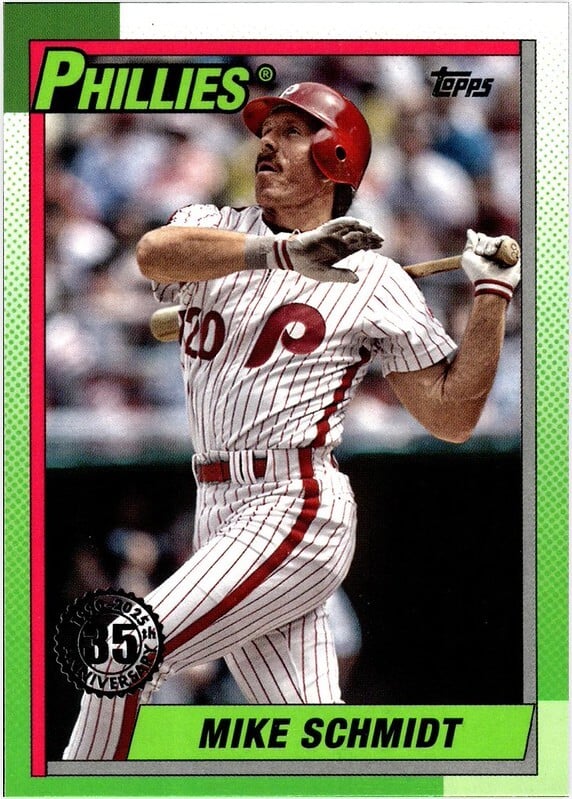
Mike Schmidt’s rookie card in the 1973 Topps set shares space with two other third basemen on card No. 615. Schmidt spent his entire career with the Philadelphia Phillies, hit 548 home runs and won 10 Gold Gloves, becoming one of the greatest third basemen in history.
The shared format means his small head shot sits beside players most fans have forgotten. Examples sell for hundreds to thousands of dollars, depending on condition.
Centering problems and print defects are common, and high grades bring a premium.
George Brett’s 1975 Topps Rookie
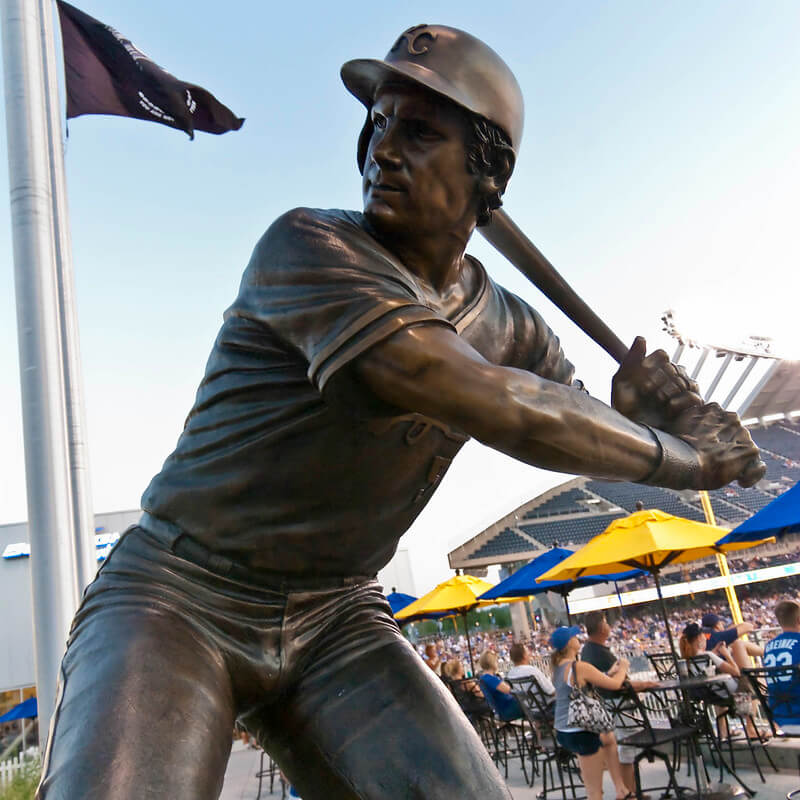
George Brett’s rookie card, No. 228 in the 1975 Topps set, features the set’s loud two-tone borders. Topps also issued a smaller Mini version of the 1975 set as a test, and Brett’s Mini card is the more valuable of the two in comparable grades.
Brett spent his entire career with the Kansas City Royals, finished with 3,154 hits and flirted with a .400 average in 1980. Examples sell for hundreds to thousands of dollars, depending on condition.
Colored borders make edge wear easy to see, and centering problems are frequent.
Rickey Henderson’s 1980 Topps Rookie
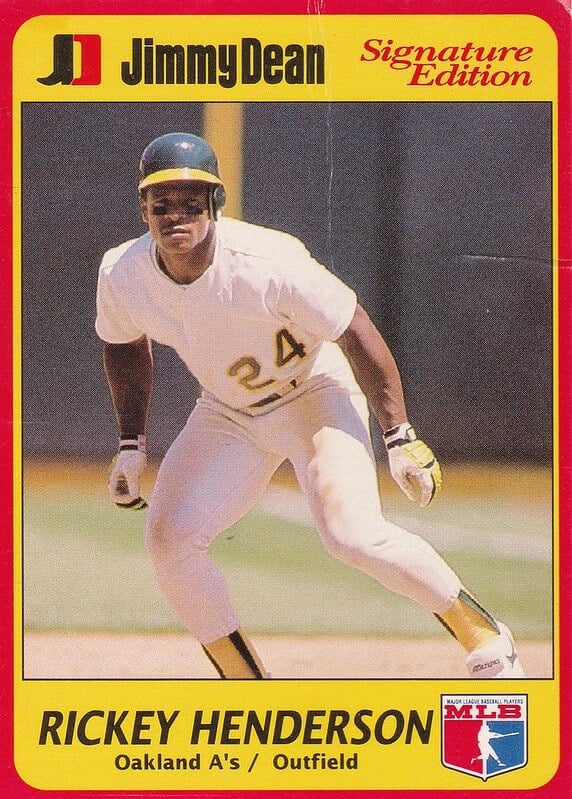
Rickey Henderson’s rookie card, No. 482 in the 1980 Topps set, shows the Oakland outfielder before he became the career stolen base leader with 1,406. Henderson also holds the career record for runs scored, and he played for nine different teams over 25 seasons.
The card is plentiful in low grades, but sharp, well-centered copies are scarce, and top-graded examples have sold for large sums. Examples typically sell for hundreds to thousands of dollars, depending on condition.
Print lines and off-center cuts are common problems that limit how high a copy can grade.
Cal Ripken Jr. in 1982 Topps Traded
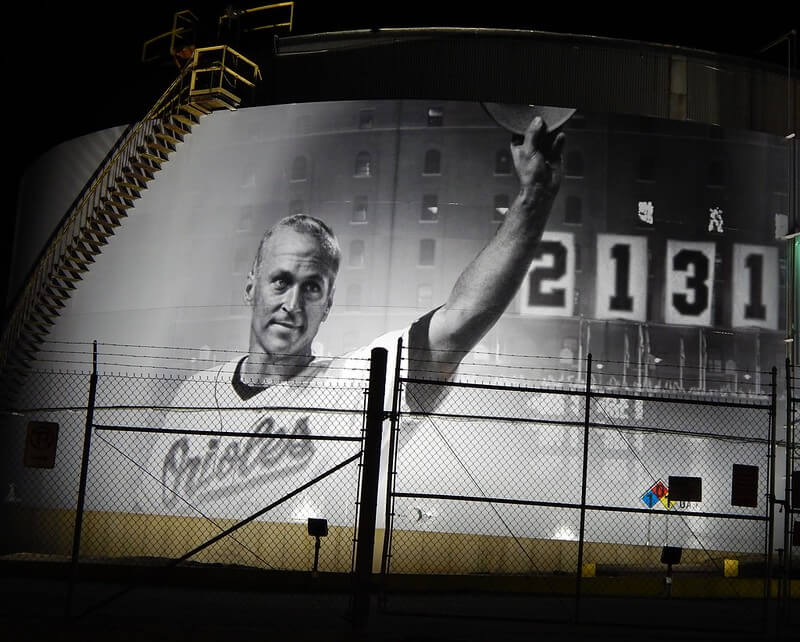
Cal Ripken Jr.’s first solo Topps card appears in the 1982 Topps Traded set, sold as a complete boxed set through hobby dealers rather than in packs. Ripken went on to break Lou Gehrig’s consecutive games record in 1995 and finished with 2,632 straight games, a streak that lasted more than 16 years.
Because the boxed sets were handled less, more high-grade copies survive than for pack-issued cards. Examples sell for hundreds to thousands of dollars, depending on condition.
Collectors pay close attention to centering and surface quality on top-grade copies.
Ken Griffey Jr.’s 1989 Upper Deck Rookie
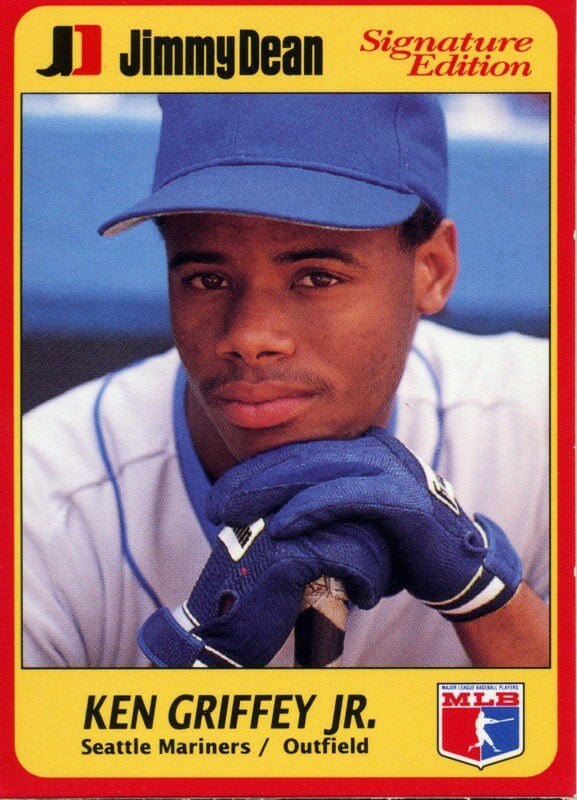
Ken Griffey Jr.’s rookie card was No. 1 in the first Upper Deck set in 1989, a premium product with a hologram on the back meant to stop counterfeiters. The card became the face of the era, but huge print runs keep most copies affordable at modest prices.
Only high-grade examples bring serious money, often hundreds to thousands of dollars for the top grades. Centering, corners and surface scratches decide almost everything.
Many copies were saved in plastic sleeves from day one, so competition at the top grades is fierce.
The Billy Ripken Error Card From 1989 Fleer
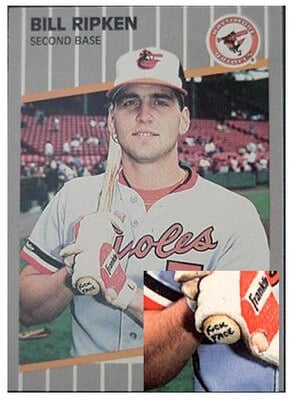
Fleer’s 1989 card of Baltimore Orioles infielder Billy Ripken showed an obscenity written on the knob of his bat, plainly visible in the photo. Fleer scrambled to fix it, issuing versions with the words scribbled over, whited out and covered with a black box.
The uncorrected card and certain fix variations are worth more than the final version. Some variations sell for hundreds of dollars in high grades, while common versions bring far less.
Condition, centering and the exact variation determine value, so careful identification matters.
Frank Thomas With No Name on Front
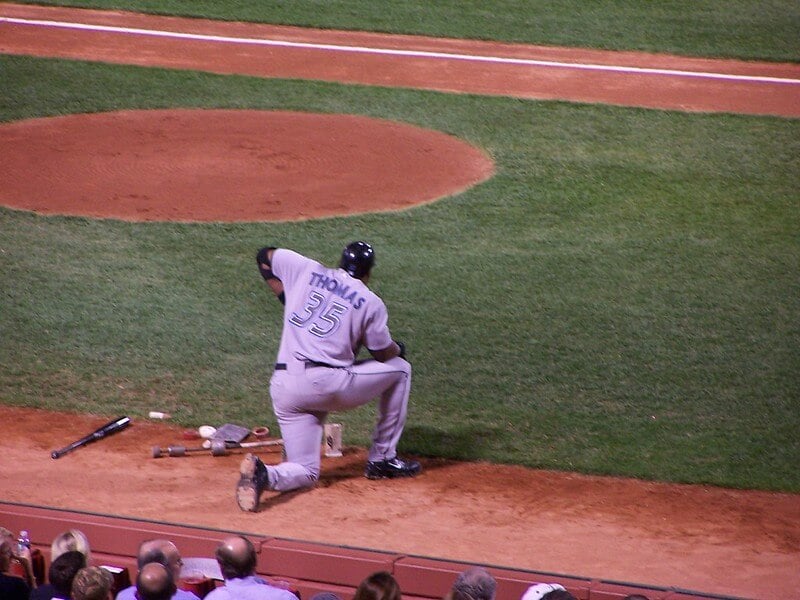
Frank Thomas’s 1990 Topps rookie card exists in a rare error version with no name printed on the front, caused by a printing plate problem that left out the black ink for his name. Only a small number of these errors are known.
Examples sell for thousands of dollars, and high-grade copies bring considerably more. Fakes made by removing the name exist, so authentication is essential.
The regular version of the card, with his name intact, is common and inexpensive, which makes the error easy to spot in a stack.
Sherry Magie’s T206 Misspelling
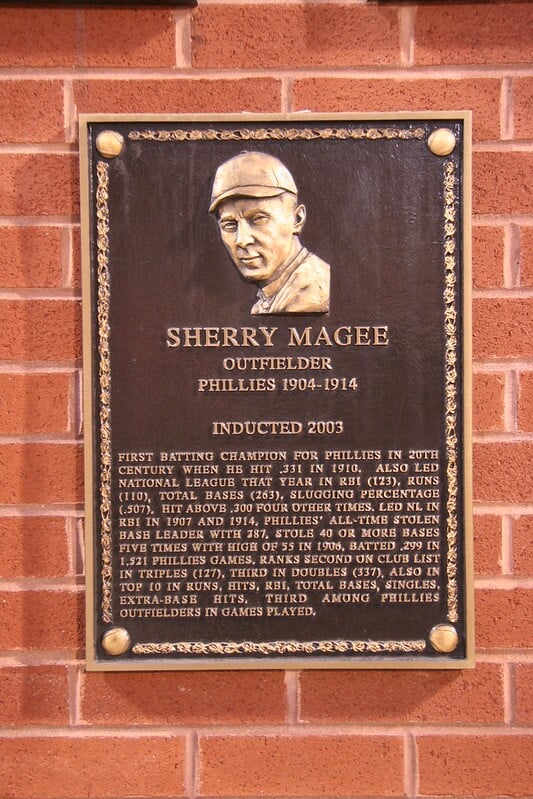
Among the T206 cards is one of Philadelphia Phillies outfielder Sherry Magee with his name misspelled as Magie. The error was corrected quickly, so far fewer misspelled cards were printed than corrected ones.
The Magie error is one of the most famous mistakes in the hobby and ranks among the key cards of the set, alongside the Wagner and a handful of other rarities. Examples sell for thousands to tens of thousands of dollars, depending on condition.
Creases, stains and rounded corners are common on cards this old, and authentication is essential.
Unopened Wax Packs From the 1950s and 1960s
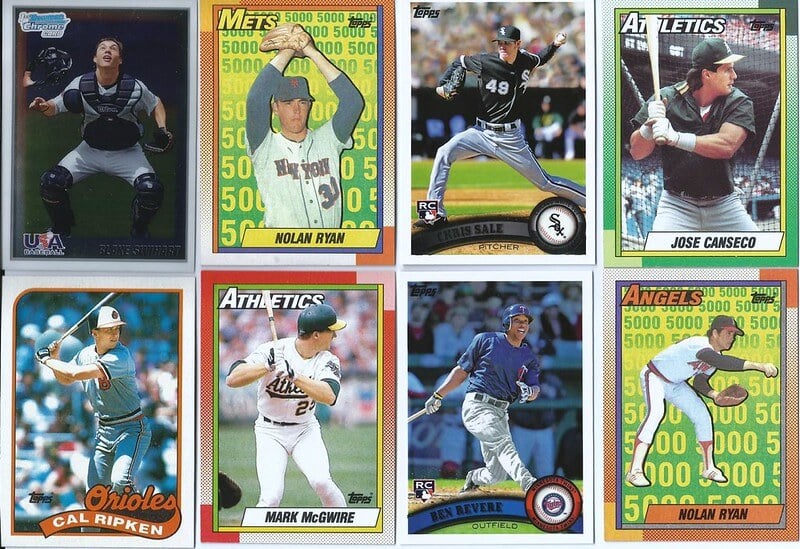
Unopened packs from the 1950s and 1960s are prized because nobody knows what is inside, and the cards within are often in better condition than loose survivors. Packs from sets with big rookies, such as 1952 Topps, bring the highest prices, and the visible top card can swing value dramatically.
Values range from hundreds to many thousands of dollars per pack, depending on the year and condition. Resealed and tampered packs are a serious problem, so authentication by a specialist is essential.
Torn wrappers, stains and visible tampering reduce value.
Cardboard That Survived the Bicycle Spokes
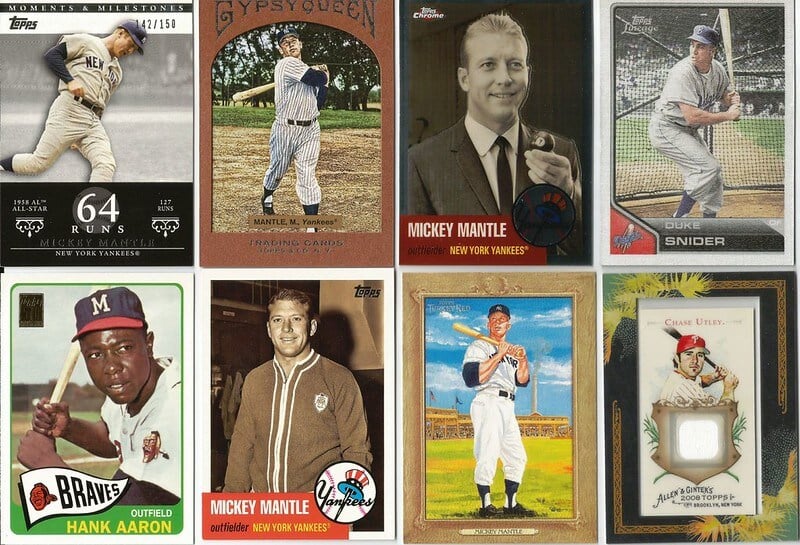
Most of these cards were made for kids, not collectors, and they were treated accordingly. They were traded, flipped, rubber-banded and clipped to bicycles until the corners wore round.
The survivors are scarce for exactly that reason. Rarity in this hobby is often the product of carelessness rather than design.
Condition matters more than almost anything else, and a single crease can cut a price in half. Grading companies have turned that judgment into numbers buyers trust.
Most cards in an old shoebox will never pay for more than a tank of gas. The rare survivors are why that shoebox deserves a careful look before it goes anywhere.
More from Go2Tutors!

- The Romanov Crown Jewels and Their Tragic Fate
- 13 Historical Mysteries That Science Still Can’t Solve
- Famous Hoaxes That Fooled the World for Years
- 15 Child Stars with Tragic Adult Lives
- 16 Famous Jewelry Pieces in History
Like Go2Tutors’s content? Follow us on MSN.