31 Medieval Punishments Stranger Than Fiction
Medieval justice had no prisons worth the name for most offenders, so courts relied on pain, shame, exile and spectacle. A sentence was often meant to be seen, talked about and remembered by everyone in town.
The results could be brutal, but they could also be bizarre, inventive and oddly specific. Some punishments fit the crime with almost poetic precision, while others targeted corpses, pigs and even an entire kingdom.
Drinking the Wine That Was Sold

A London taverner named John Penrose was found guilty in 1364 of selling spoiled, unsafe red wine to the public. The court first considered a year and a day in prison, then chose something more memorable.
Penrose was made to drink a draft of his own bad wine, and the rest was poured over his head. He also had to swear off the vintner’s trade in the city.
A year later, a London seller of rotten pigeons stood in the pillory while his spoiled birds were burned beneath him, so the crowd could smell the crime.
Sitting in the Town Stocks
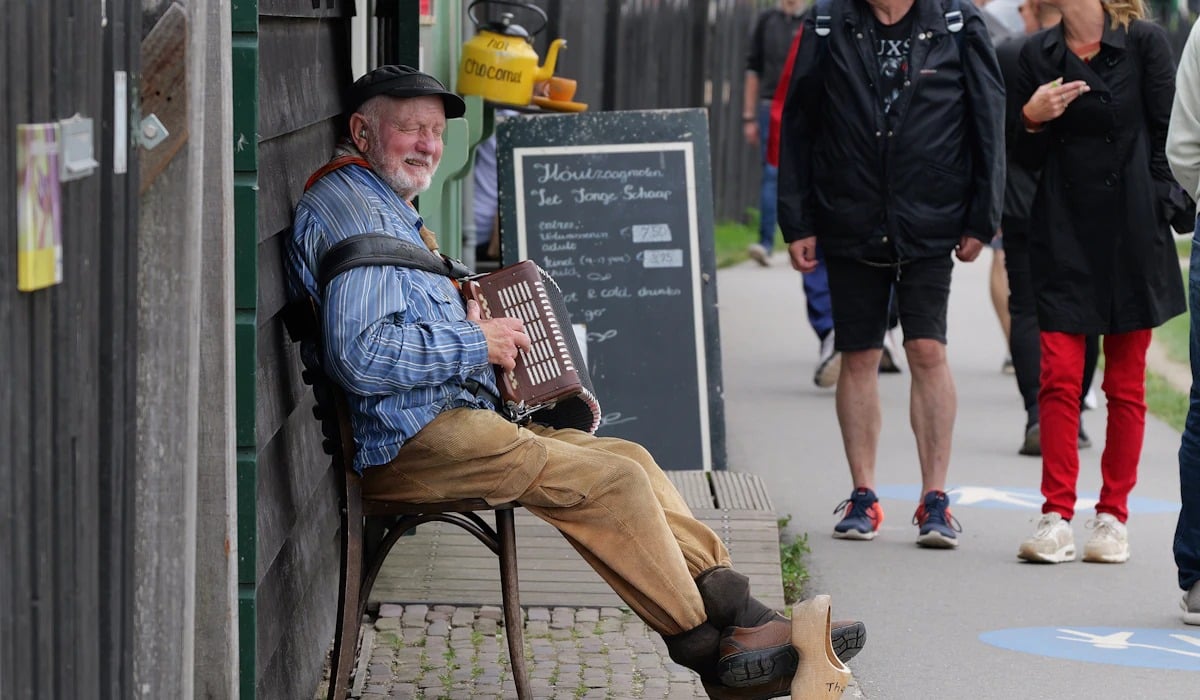
Stocks held an offender by the ankles on a public bench, leaving the person stuck for hours while neighbors jeered, threw rubbish and passed judgment. English law after the Black Death expected towns to keep stocks ready for workers who demanded higher wages than a 1351 statute allowed.
The punishment was cheap, quick and required no jailer. Drunkenness, swearing and minor disorder could all earn a spell in the stocks.
Many English villages kept their stocks long after they stopped being used, and some still stand on village greens as curiosities.
Cucking Stools and Ducking Ponds

Originally, the cucking stool was a seat where offenders, often women accused of scolding or brewers who sold bad ale, were displayed in public to be mocked. Over time it became associated with the ducking stool, a chair on a long beam that plunged the offender into a pond or river.
Records from medieval and early modern England show towns paying carpenters to build and repair them. The punishment targeted a vaguely defined offense of being a common scold.
Some towns used ducking stools into the eighteenth century.
A Bridle for the Tongue

An iron frame called the scold’s bridle was locked around the head, fitted with a metal plate pressed onto the tongue to keep the wearer silent. It was used mainly against women accused of gossip, nagging or quarreling.
The earliest records come from Scotland in 1567, so it belongs to the very end of the medieval world rather than its heart. Offenders were sometimes led through the streets on a chain.
Surviving bridles in museums show decorative touches, including bells and devilish faces, which made the humiliation even louder.
Hanged, Drawn and Quartered

English law reserved its harshest sentence for high treason against the king. The condemned man was dragged to the place of execution, hanged until nearly dead, then disemboweled and cut into four pieces.
Dafydd ap Gruffydd, the last independent prince of Wales, suffered this fate in 1283. The Scottish leader William Wallace was executed the same way in London in 1305.
The quarters were often displayed in different towns as warnings. The sentence stayed on English law books until the nineteenth century, long after it had stopped being carried out in full.
Heads Displayed on London Bridge

For centuries, the severed heads of traitors were dipped in tar and placed on spikes above the southern gatehouse of London Bridge. William Wallace’s head was reportedly the first to be displayed there in 1305.
The heads served as a grim welcome to travelers entering the city. Thomas More’s head was placed there in 1535, and his daughter reportedly bribed a keeper to retrieve it.
The practice continued into the seventeenth century, and visitors from abroad often mentioned the gruesome rows in their travel writing.
Broken on the Wheel

The breaking wheel was used across much of continental Europe for murderers and other serious criminals. The executioner used a heavy wheel or iron bar to break the condemned person’s limbs, and the body was then woven through the spokes of a wheel and raised on a pole for display.
The punishment could last for hours, though judges sometimes ordered a quick death first as an act of mercy. It survived in parts of Europe into the eighteenth and even nineteenth centuries.
The name Catherine wheel comes from the legend of Saint Catherine of Alexandria.
Pressed for Refusing to Plead

Under English law, a defendant who refused to enter a plea could not be tried, so courts devised a way to force an answer. A statute of 1275 established harsh imprisonment for such prisoners, which evolved into peine forte et dure, piling heavy weights on the prisoner’s chest.
Some chose to die rather than plead, because a person who died untried could not have their property seized by the crown, protecting their heirs. Giles Corey was pressed to death in Salem, Massachusetts, in 1692.
The practice was abolished in 1772.
Boiled Alive for Poisoning

In 1531, a cook named Richard Roose was accused of poisoning a pot of porridge in the household of the Bishop of Rochester, killing at least two people. Henry VIII responded with an act of Parliament that made poisoning a form of treason punishable by boiling alive.
Roose was executed at Smithfield in London that year. At least one other poisoner suffered the same fate before the law was repealed in 1547.
The episode came at the very end of the medieval era, but it shows how far a single crime could reshape the law.
Halifax and Its Falling Blade

Long before the French guillotine, the town of Halifax in Yorkshire used a heavy blade dropped between two upright posts to behead thieves. Under local custom, anyone caught stealing goods worth 13.5 pence or more could be executed, a rule meant to protect the town’s valuable cloth trade.
The device was in use by the sixteenth century, and its origins are probably older. Its last executions took place in 1650.
A replica now stands on the original site, and a similar device in Scotland was known as the Maiden.
Hanging in Chains

After execution, the bodies of some criminals were coated in tar and hung in iron cages from a tall post called a gibbet, often near the scene of the crime or a busy road. The display could last for months or years as the remains decayed.
The goal was to warn travelers and deny the dead a proper burial. Relatives sometimes tried to steal the bodies at night.
The practice continued in England long after the Middle Ages and was formally abolished in 1834. Some gibbet posts gave their names to roads and hills that still exist.
Burning at the Stake

Burning was reserved mostly for heresy, witchcraft and certain forms of treason, and it was meant to destroy the body entirely so nothing remained for burial. Jan Hus, the Czech reformer, was burned at Constance in 1415.
Joan of Arc was burned in Rouen in 1431 at the age of about 19, and her ashes were thrown into the Seine. The Catholic Church later reversed her conviction and eventually made her a saint.
Executioners sometimes strangled victims before the flames reached them as a small mercy.
Trial by Ordeal
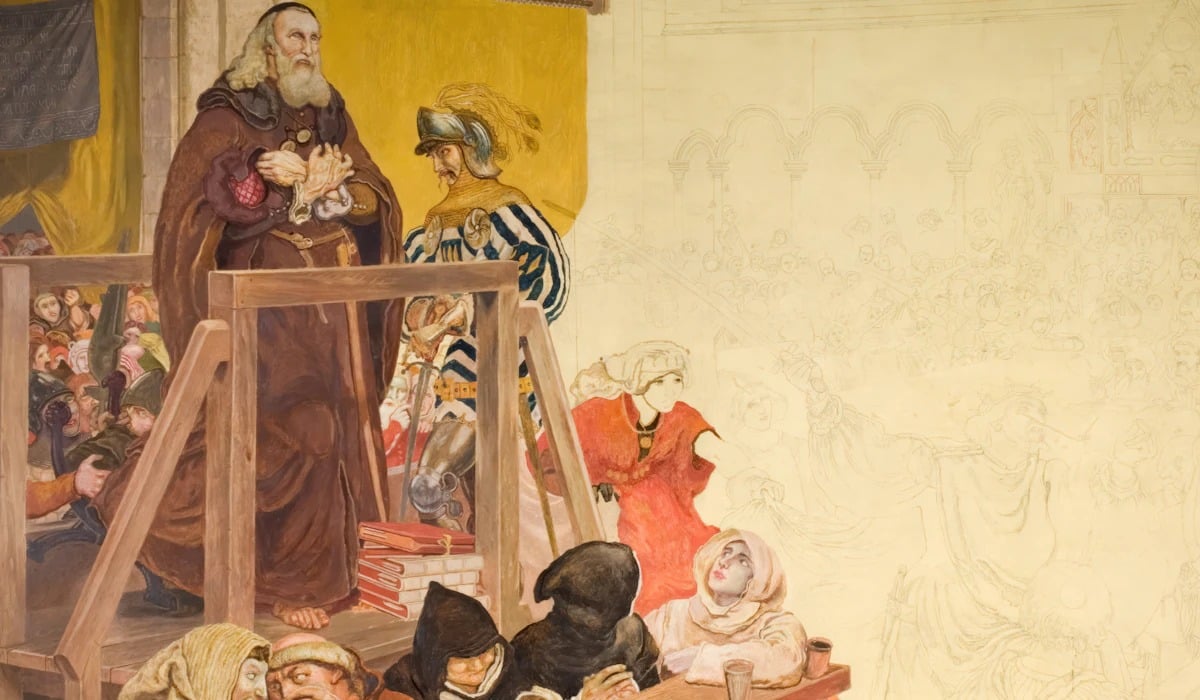
When evidence was thin, medieval courts sometimes asked God to decide guilt through an ordeal. In the ordeal by cold water, the accused was bound and lowered into water, and sinking meant innocence because the water accepted them.
In the ordeal by hot iron, the accused carried a red-hot bar a few paces, and the hand was bandaged and examined days later for signs of healing. The Fourth Lateran Council of 1215 forbade clergy to take part.
Without priests to bless the proceedings, ordeals faded quickly in much of Europe.
Corsned, the Cursed Morsel
Corsned was a lesser-known ordeal in which an accused person swallowed a piece of bread or cheese that had been blessed. If the person choked, guilt was considered proven.
According to legend, Godwin, the powerful English earl and father of King Harold, swore his innocence of a killing in 1053 and asked that the bread choke him if he lied, then promptly choked and died at the royal table. The story was probably embellished, but the ordeal was real.
It gave an entirely new meaning to the idea of a meal that was hard to swallow.
Trial by Combat
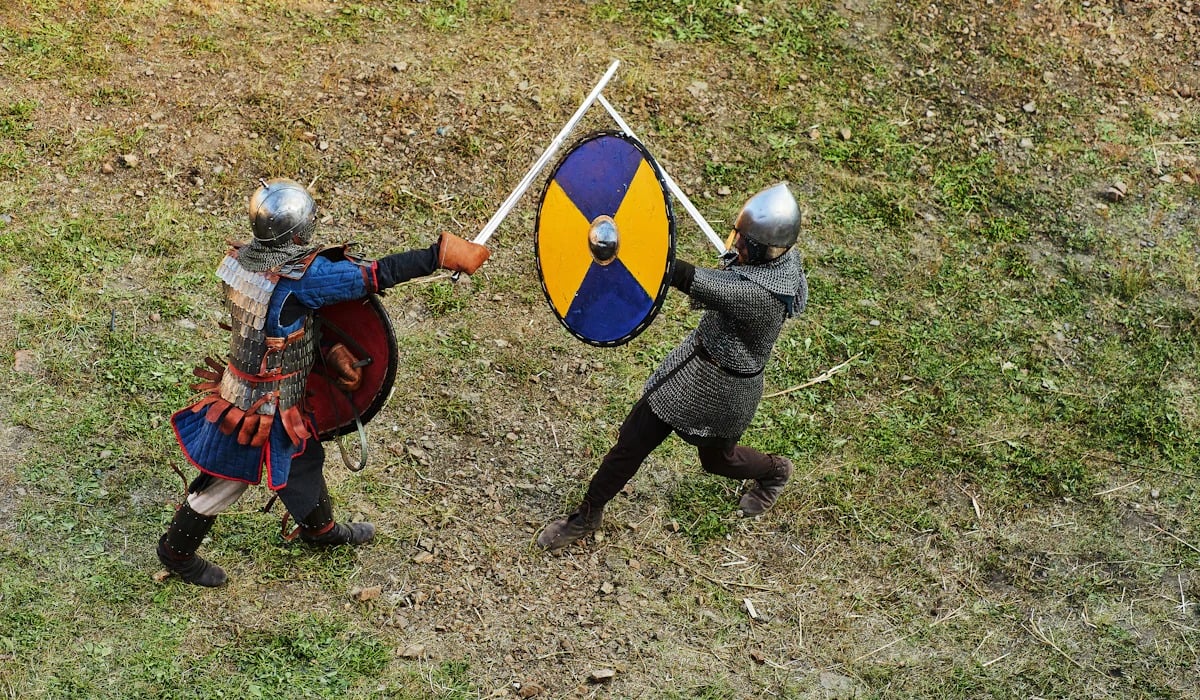
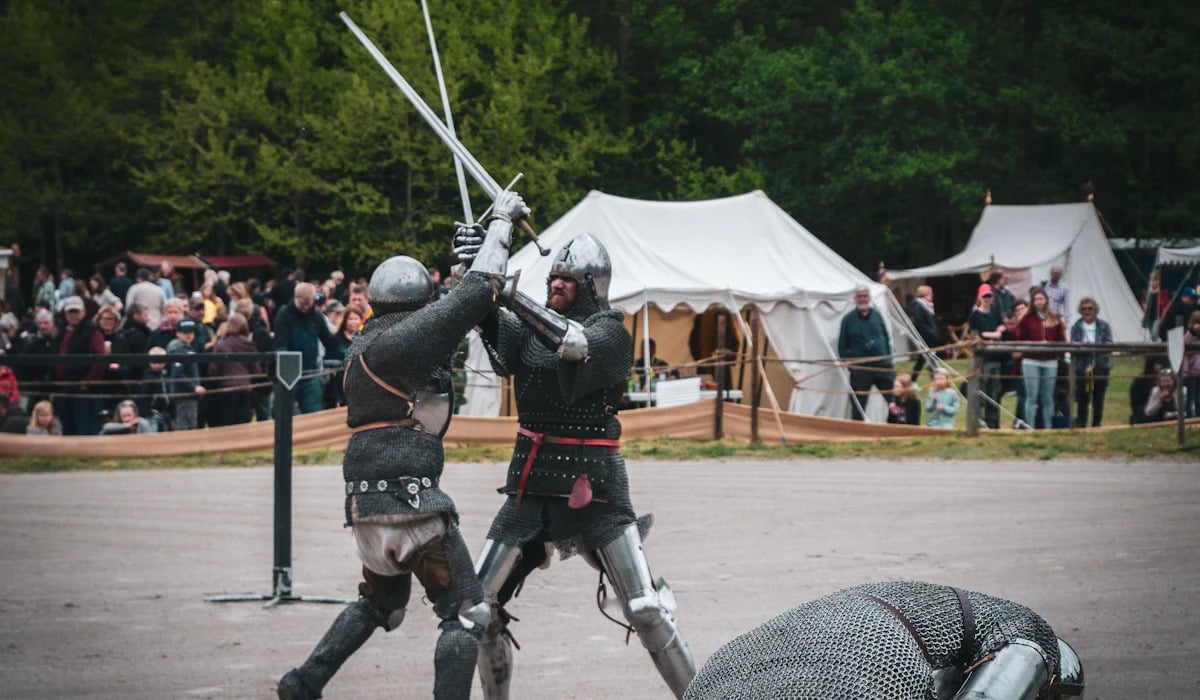
An accuser and the accused fought each other in trial by combat, and the winner was considered to be in the right, since God would favor the truthful party. Parties could sometimes hire champions to fight for them.
The practice faded during the late Middle Ages but was never formally abolished in England. In 1818, a man accused of murder, Abraham Thornton, invoked his right to trial by combat, and the court had to allow it.
His accuser declined to fight, and Parliament abolished the option the following year.
Reading the Neck Verse

Benefit of clergy allowed members of the church to be tried in church courts, which could not impose death sentences. Over time, anyone who could read a passage from the Bible, usually the opening of Psalm 51, could claim it.
The passage became known as the neck verse because reading it could save a person from hanging. Illiterate prisoners sometimes memorized it.
From 1490, those who claimed the benefit were branded on the thumb so they could use it only once. Benefit of clergy was finally abolished in England in 1827.
Abjuring the Kingdom
A criminal who fled to a church could claim sanctuary for up to 40 days. If they confessed, they could choose to abjure the kingdom, swearing to leave England forever.
The abjurer was assigned a port and had to walk there directly, often carrying a wooden cross and staying on the main road. If no ship was available, the person was expected to wade into the sea up to the knees each day to show willingness to leave.
Straying from the route could mean being killed on sight.
Declared a Wolf’s Head

Outlawry placed a person outside the protection of the law entirely. In medieval England, an outlaw was said to bear a wolf’s head, meaning anyone could kill them without penalty, just as they could kill a wolf.
Outlawry was often used against people who failed to appear in court. Their property could be seized, and anyone who helped them risked punishment.
The Robin Hood legends grew out of this world, turning outlaws into heroes who lived in the forest beyond royal justice. In practice, most outlaws were far less romantic figures.
Animals Put on Trial

Medieval courts sometimes put animals on trial for crimes, complete with lawyers and formal sentences. In 1386, a sow in Falaise, France, was tried and executed for killing a child, reportedly dressed in human clothing for the hanging.
Pigs, which roamed freely in towns, were the most common defendants. Church courts also issued sentences against rats, locusts and other pests that damaged crops.
Historians still debate what these trials meant, but they reflected a belief that justice should apply to all creatures. Some animals even received defense lawyers.
The Cadaver Synod

Pope Stephen VI had the body of his predecessor, Pope Formosus, dug up and put on trial in Rome in January 897. The corpse was dressed in papal robes and propped on a throne, while a deacon answered questions on its behalf.
Formosus was found guilty of various violations of church law. His papal acts were declared invalid, three fingers of his blessing hand were cut off and his body was thrown into the Tiber River.
Public outrage followed, and Stephen was later imprisoned and strangled.
Paying the Price of a Life

Many crimes in early medieval England and much of Germanic Europe were settled by payment rather than punishment. Wergild was the price set on a person’s life according to social rank, payable to the victim’s family to prevent blood feuds.
The laws of King Aethelberht of Kent, from around 600, listed specific compensation for injuries, down to individual fingers and teeth. A nobleman’s life was worth far more than a peasant’s.
The system was a practical way to keep the peace when there was no police force.
Basil II Blinds an Army

After defeating the Bulgarian army at the Battle of Kleidion in 1014, Byzantine Emperor Basil II reportedly blinded thousands of prisoners. Chroniclers claimed he left one man in every hundred with a single eye to lead the others home.
The figures were likely exaggerated, but the story earned Basil the nickname Bulgar Slayer. According to tradition, the Bulgarian ruler Tsar Samuel collapsed at the sight of his returning men and died soon after.
Blinding was a common Byzantine punishment for political rivals, since it was thought to disqualify them from rule.
An Emperor With a Golden Nose

Byzantine Emperor Justinian II was overthrown in 695, and his nose was cut off, a common Byzantine punishment meant to disqualify a person from ruling because emperors were expected to be free of visible disfigurement. Exiled, he plotted a return and reclaimed the throne in 705.
According to some accounts, he wore a golden replacement nose. He took bloody revenge on his enemies before being overthrown and killed again in 711.
His nickname, Rhinotmetos, means the one with the cut nose. His return made a mockery of the old assumption that a mutilated ruler could never reign again.
An Entire Kingdom Under Interdict

Pope Innocent III placed England under interdict in 1208 during a dispute with King John over the appointment of the Archbishop of Canterbury. Churches across the kingdom stopped holding most services, marriages took place outside church doors and the dead were buried in unconsecrated ground.
The punishment fell on ordinary people rather than the king himself. It lasted until 1214, when John finally submitted to the pope.
The interdict showed how the church could punish a nation to pressure a single ruler. Many clergy left England during those years.
Penance in a White Sheet

Church courts often sentenced offenders, especially those guilty of adultery or slander, to public penance. The offender stood before the congregation during Sunday service wearing a white sheet, barefoot and holding a candle, and confessed the sin aloud.
The aim was shame and reconciliation rather than physical pain. The practice continued in England for centuries after the Middle Ages.
It turned a private moral failing into a public spectacle, ensuring the entire parish knew what had happened. Records show some offenders had to repeat the penance in several churches or at the local market.
Padua’s Stone of Shame

Inside Padua’s Palazzo della Ragione, a black stone known as the Pietra del Vituperio was used to humiliate debtors who could not pay. According to tradition, the punishment was introduced in 1231 at the urging of Saint Anthony of Padua as a merciful alternative to life in debtors’ prison.
The debtor stripped to undergarments in front of a crowd and struck the stone with bare buttocks three times while renouncing worldly goods. The debtor then had to leave the city.
The stone still sits in the great hall for visitors to see.
Pit and Gallows in Scotland

Barons in medieval Scotland held the right of pit and gallows, allowing them to execute criminals on their own lands. Men were typically hanged on the gallows, while women were drowned in a pit or pool.
Many Scottish estates kept a hanging hill and a drowning pond nearby. The right gave local lords enormous power over the people on their land.
It was finally abolished by the Heritable Jurisdictions Act of 1747, after the Jacobite rising. Place names such as Gallows Hill still mark many of the old execution sites, and some estate ponds keep their grim local nicknames.
Oubliettes, Real and Imagined

The oubliette, from the French word for forget, was said to be a narrow underground cell reached only by a trapdoor in the ceiling, where prisoners were left to die. Guides at castles across Europe still point them out with relish.
Historians are skeptical, however, noting that many supposed oubliettes were actually storage chambers, cisterns or garderobe pits. The idea gained much of its popularity from nineteenth-century romantic writers.
The oubliette may be one medieval punishment that owes more to fiction than fact. That makes it a fitting entry on a list where reality often outdid invention.
Riding Backward on a Donkey

Across medieval Europe, offenders were sometimes paraded through town seated backward on a donkey, facing its tail. The punishment targeted adulterers, cheats and others who had violated community norms, and crowds jeered and threw rubbish.
Variations appeared in Byzantium, France, Italy and Germany. The backward ride symbolized a world turned upside down by the offender’s behavior.
Similar rituals, sometimes called rough music, continued in rural communities long after official courts abandoned them. In some English villages, neighbors staged mock processions with pots and pans to shame wife beaters or quarrelsome couples.
The noise itself was the punishment, and nobody could pretend not to hear it.
Sentenced to a Pilgrimage

Courts in the medieval Low Countries and other parts of Europe sometimes sentenced offenders to make a pilgrimage to a distant shrine. A person guilty of violence might be ordered to walk to Santiago de Compostela, Rome or even Cyprus.
The pilgrim had to return with a certificate from the shrine proving the trip was complete. Wealthier offenders could sometimes pay a fee instead of traveling.
The sentence removed troublemakers from town for months and offered a chance at spiritual redemption. Some cities set fixed prices for each destination, so a sentence could be calculated almost like a fine.
The Moneyers’ Christmas of 1124

King Henry I of England became furious in 1124 over the poor quality of the kingdom’s silver coins, which were being debased by the moneyers who struck them. He ordered all the moneyers summoned to Winchester at Christmas.
According to the Anglo-Saxon Chronicle, dozens were found guilty, and each lost his right hand and was castrated. The punishment became known as the Assize of the Moneyers.
It shows how seriously medieval kings took the integrity of their money. Bad coins hurt soldiers and merchants alike, and the king wanted a lesson no moneyer would forget.
Spectacle Was the Point of the Sentence
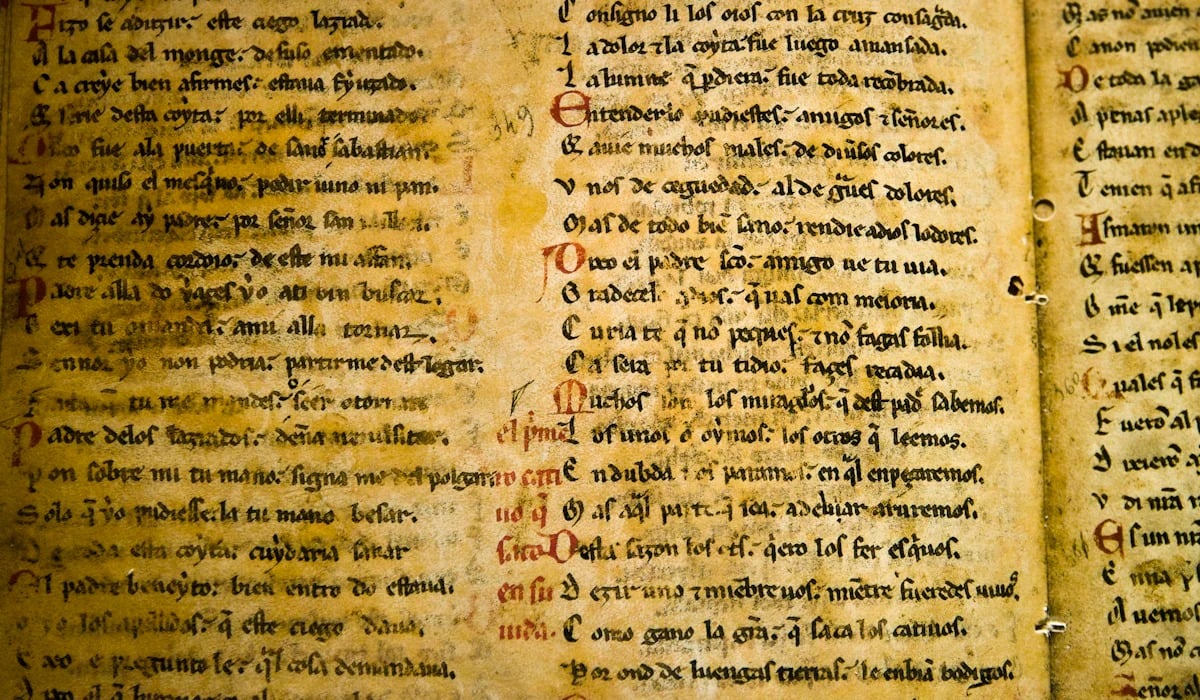
Medieval punishments were rarely about locking people away. They were about display, whether through stocks, gibbets or a parade on a donkey.
Everyone in the community was supposed to watch, learn and remember.
Some of these sentences reflected deep cruelty, while others showed creativity, mercy or even dark humor. Together they reveal societies trying to keep order without police or prisons.
Modern justice hides punishment behind walls, but medieval justice put it on center stage.
More from Go2Tutors!

- The Romanov Crown Jewels and Their Tragic Fate
- 13 Historical Mysteries That Science Still Can’t Solve
- Famous Hoaxes That Fooled the World for Years
- 15 Child Stars with Tragic Adult Lives
- 16 Famous Jewelry Pieces in History
Like Go2Tutors’s content?Follow us on MSN.