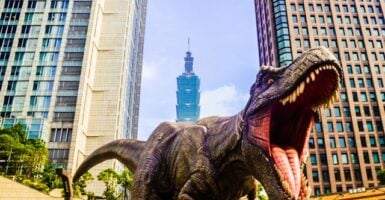
30 Prehistoric Predators That Ruled the Earth
Stand on a dirt road in the Karoo at dusk and the silence feels permanent. Sheep, windpumps, a few thorn trees. But the rocks under your boots tell a different story.
Roughly 260 million years ago, this same ground belonged to animals with sabre teeth and skulls the length of your arm, and most of them spent their days hunting each other.
Every era of Earth’s history has had its top killers. Some were armoured fish. Some were birds taller than a man.
A few were the dinosaurs you already know, and plenty were creatures most people have never heard of. What links them is simple. For a stretch of time, nothing ate them, and they ate almost everything.
The list below runs from the Cambrian seas to the last Ice Age. Some of these animals ruled for millions of years.
Others had a short, violent run. All of them left bones, teeth or tooth marks that palaeontologists still argue over today.
Tyrannosaurus Rex
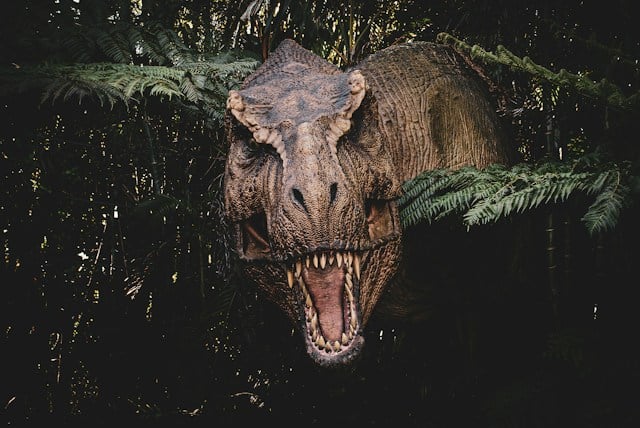
You can’t start anywhere else. Tyrannosaurus lived at the very end of the Cretaceous, around 68 to 66 million years ago, in what is now western North America.
Adults reached about 12 metres long and weighed several tonnes.
Its bite is the stuff of legend, and for once the legend holds up. Studies of its skull and jaw muscles put its bite force in the tens of thousands of newtons, enough to crush bone rather than just slice flesh.
Fossilised dung packed with bone fragments backs this up. T. rex didn’t pick at carcasses. It ate the skeleton too.
The most famous specimen, Sue, was found in South Dakota in 1990 and now stands in Chicago’s Field Museum. Her bones show healed injuries and infections, a reminder that being the biggest predator around never meant an easy life.
Spinosaurus
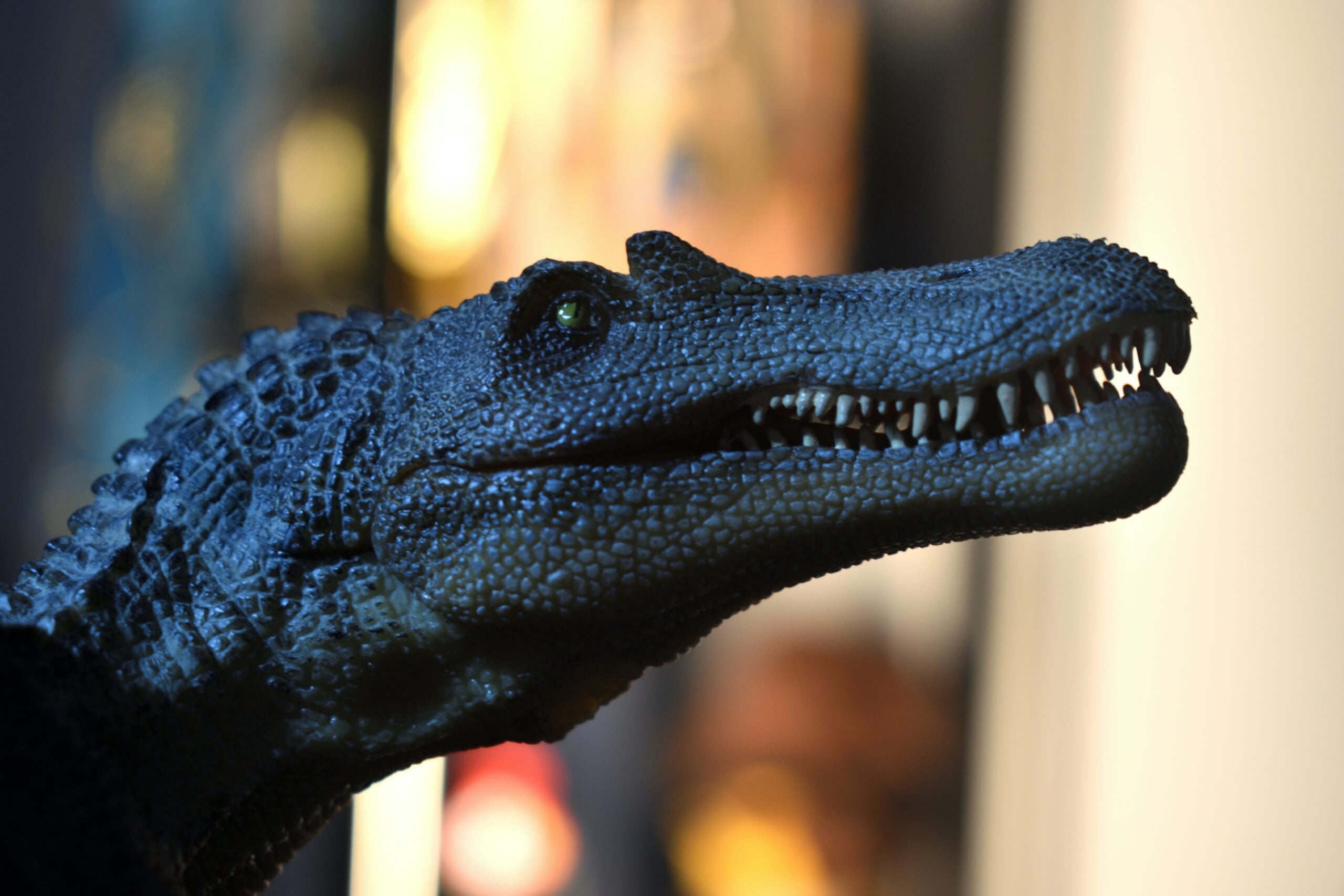
Spinosaurus ranks among the strangest large predators ever found. It lived in North Africa roughly 100 million years ago, carried a tall sail on its back, and had a long, narrow snout built for catching fish.
The German palaeontologist Ernst Stromer described it in 1915 from fossils found in Egypt. Then, in April 1944, an Allied bombing raid on Munich destroyed those original bones.
For decades, scientists worked from Stromer’s drawings and notes alone.
Newer finds from Morocco have reopened the debate. Some researchers argue Spinosaurus hunted in deep water like a giant crocodile.
Others say it waded in the shallows like a heron. Either way, it ranks among the longest meat-eating dinosaurs ever found.
Giganotosaurus
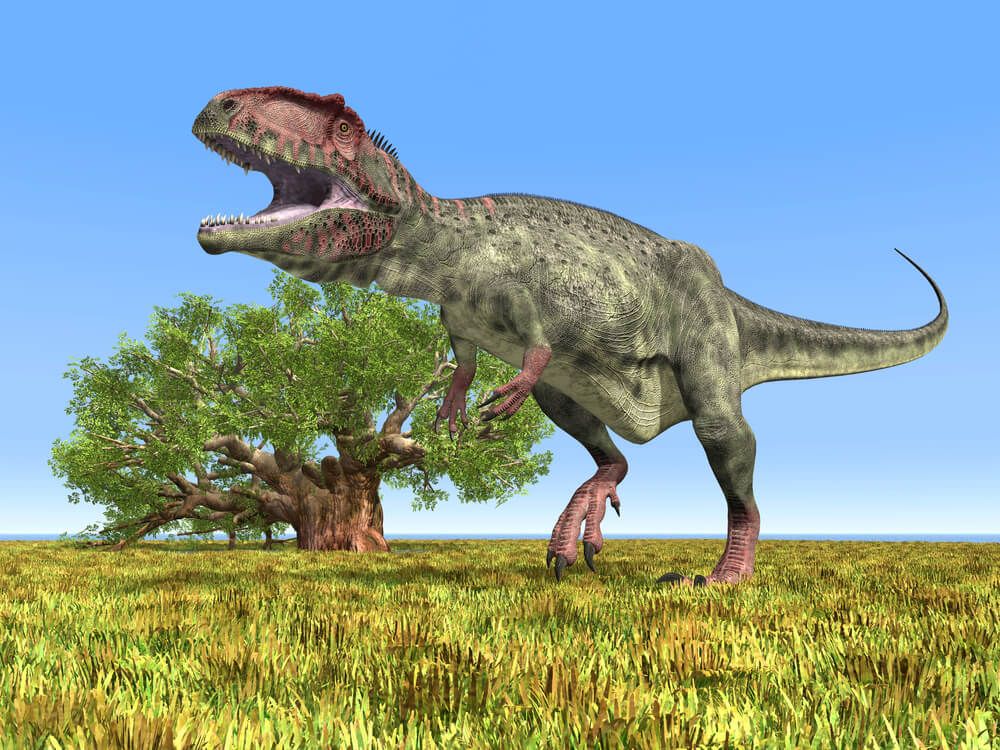
In 1993, an amateur fossil hunter named Rubén Carolini was driving a dune buggy through the badlands of Patagonia when he spotted a bone sticking out of the rock. That bone belonged to Giganotosaurus, one of the largest meat-eating dinosaurs on record.
It lived around 98 million years ago, well before T. rex appeared. Its skull was long and its teeth were thin and serrated, built for slicing rather than crushing.
That points to a hunter that wounded large prey and let blood loss finish the job. Patagonia also produced giant plant-eaters such as Argentinosaurus, which gives you a fair idea of what was on the menu.
Megalodon
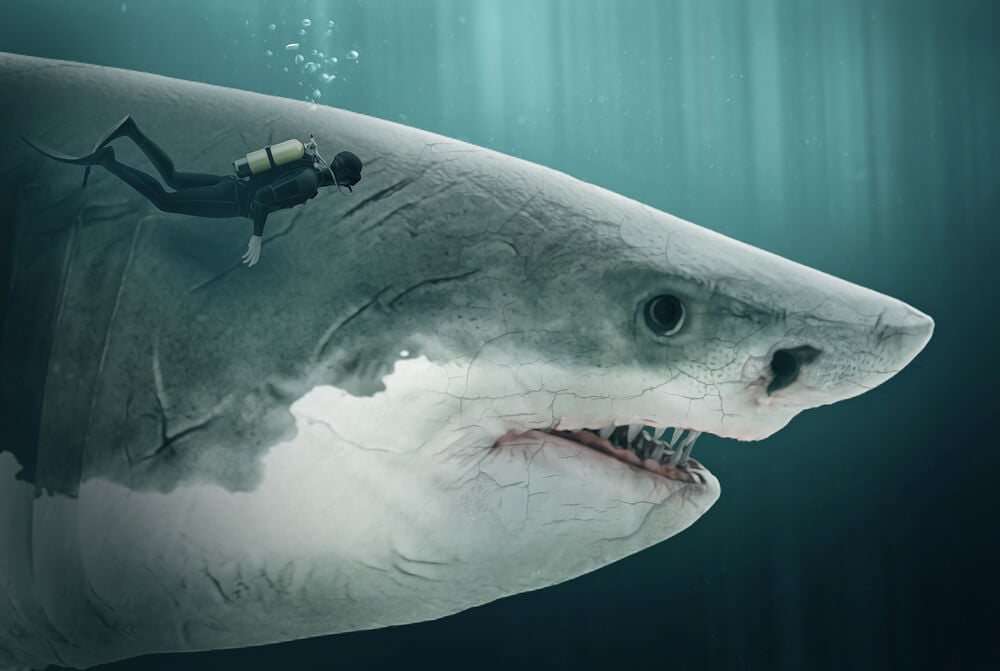
Megalodon swam the world’s oceans from about 23 million to about 3.6 million years ago. Its teeth can stretch past 15 centimetres in length, and they turn up on coastlines across the globe, South Africa included.
Because sharks have skeletons made of cartilage, almost nothing of Megalodon survives except teeth and a few vertebrae. That makes size estimates tricky.
Most serious studies place the largest individuals well past 15 metres.
Whale bones from the same period carry deep bite marks that match its teeth. A cooling climate and competition from newer predators, including the great white shark, likely pushed it out.
Mosasaurus
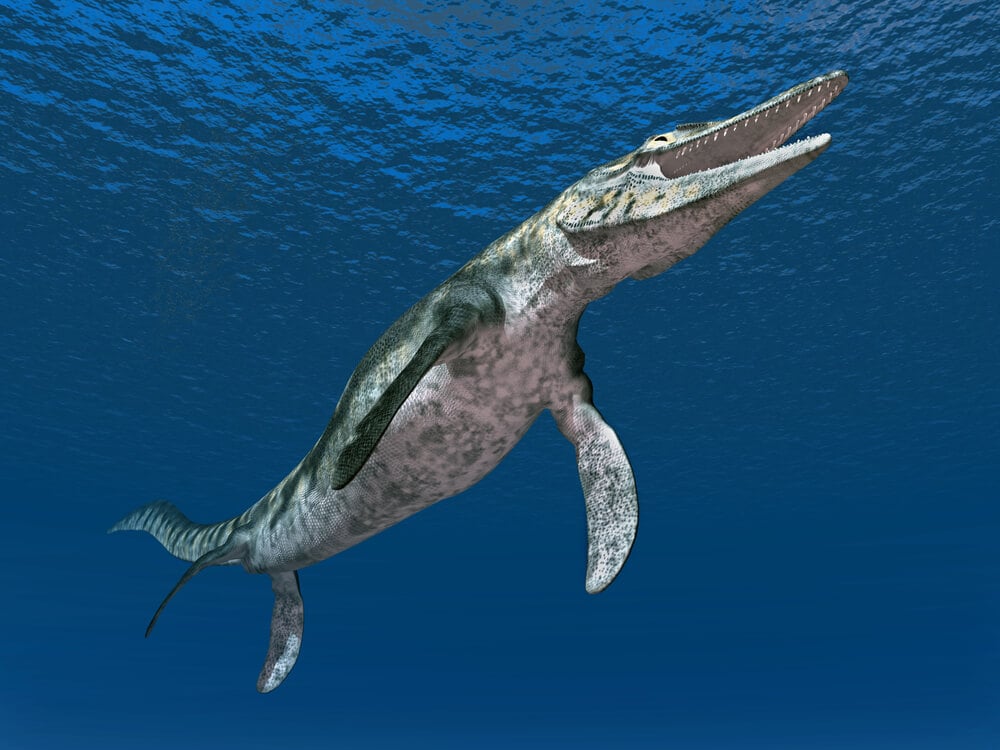
Long before anyone used the word dinosaur, quarry workers near Maastricht in the Netherlands dug a huge toothed jaw out of chalk in the 1760s. French troops seized that skull in 1795 and carried it to Paris as a prize of war. It turned out to be Mosasaurus, a giant marine reptile from the Late Cretaceous.
Mosasaurs were closer to monitor lizards and snakes than to dinosaurs. They had paddle-shaped limbs, a powerful tail fin and a second row of teeth on the roof of the mouth to grip slippery prey.
The largest species stretched well over 10 metres. Few things in the late Cretaceous seas were safe from them.
Liopleurodon
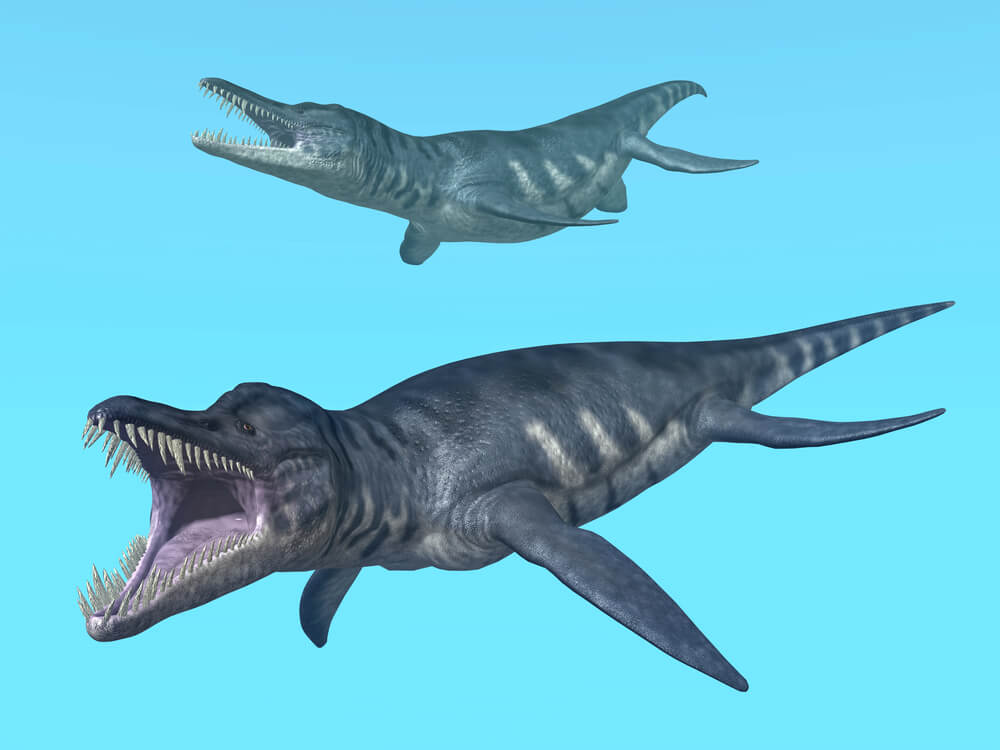
If you watched Walking with Dinosaurs in 1999, you remember a 25-metre Liopleurodon swallowing everything in sight. The real animal was smaller, somewhere around six or seven metres, but no less dangerous.
This pliosaur hunted the seas of Jurassic Europe about 160 million years ago. It had a massive skull, four powerful flippers and teeth designed to grip and tear.
Its nostrils may have let it smell prey underwater, a neat trick for an ambush hunter in murky water.
Dunkleosteus
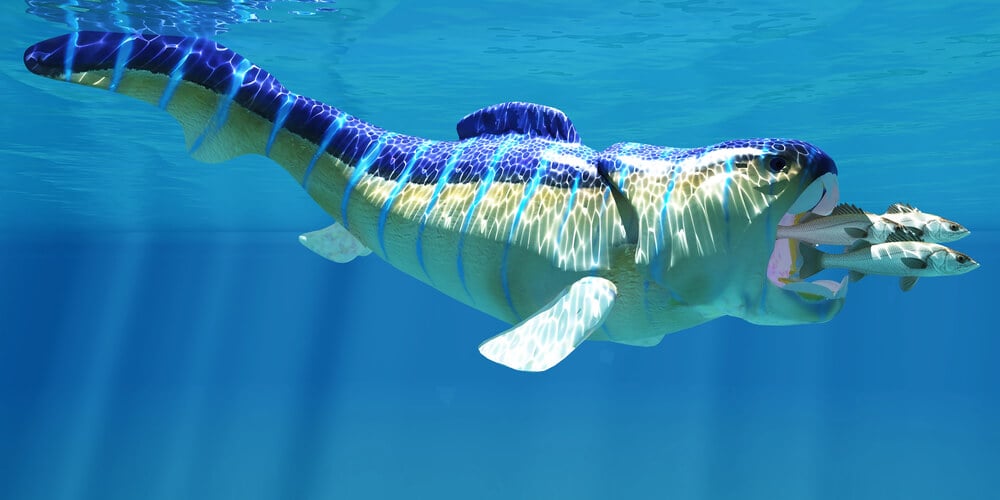
Dunkleosteus didn’t have teeth. It had bony plates that sharpened themselves as they ground together, like a pair of self-honing shears.
This armoured fish lived in the Late Devonian, around 360 million years ago, and many of the best fossils come from the Cleveland Shale in Ohio. Studies of its jaw show it opened its mouth extremely fast, creating suction that pulled prey straight in.
Recent research has trimmed its estimated length down considerably, but its head armour alone was enough to make it the top predator of its seas.
Inostrancevia
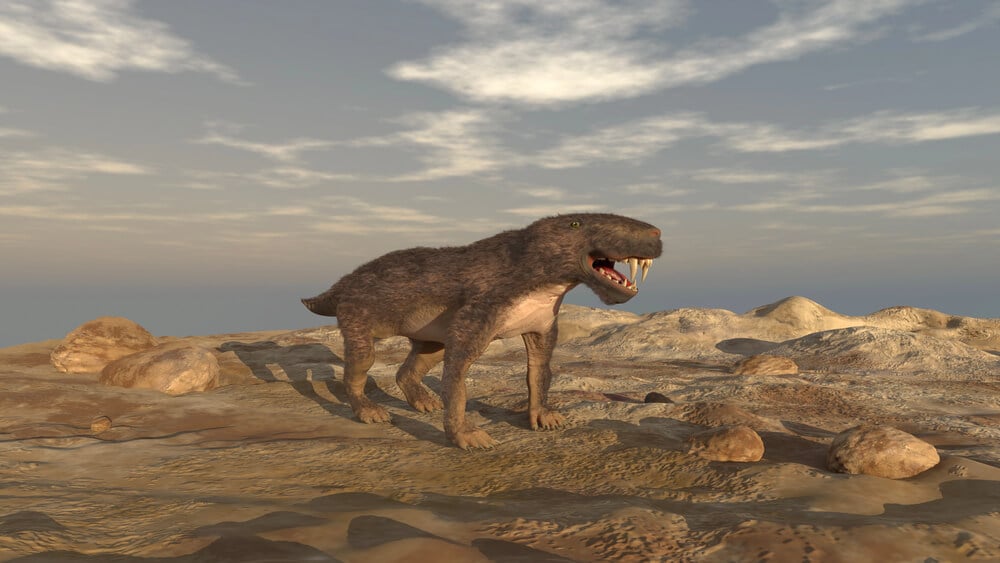
For over a century, Inostrancevia was known only from Russia. Then, in 2023, researchers announced that fossils from the Karoo belonged to the same genus, which they named Inostrancevia africana.
That finding changed how scientists read the end of the Permian period. Inostrancevia was a gorgonopsian, a sabre-toothed relative of early mammals, roughly the size of a modern tiger. In the Karoo, it appears to have moved into the top predator role after the local large gorgonopsians died out, just before the greatest mass extinction in Earth’s history wiped out most life on the planet.
The lesson stings a little. Being the apex predator in a collapsing ecosystem buys you very little time.
Anteosaurus
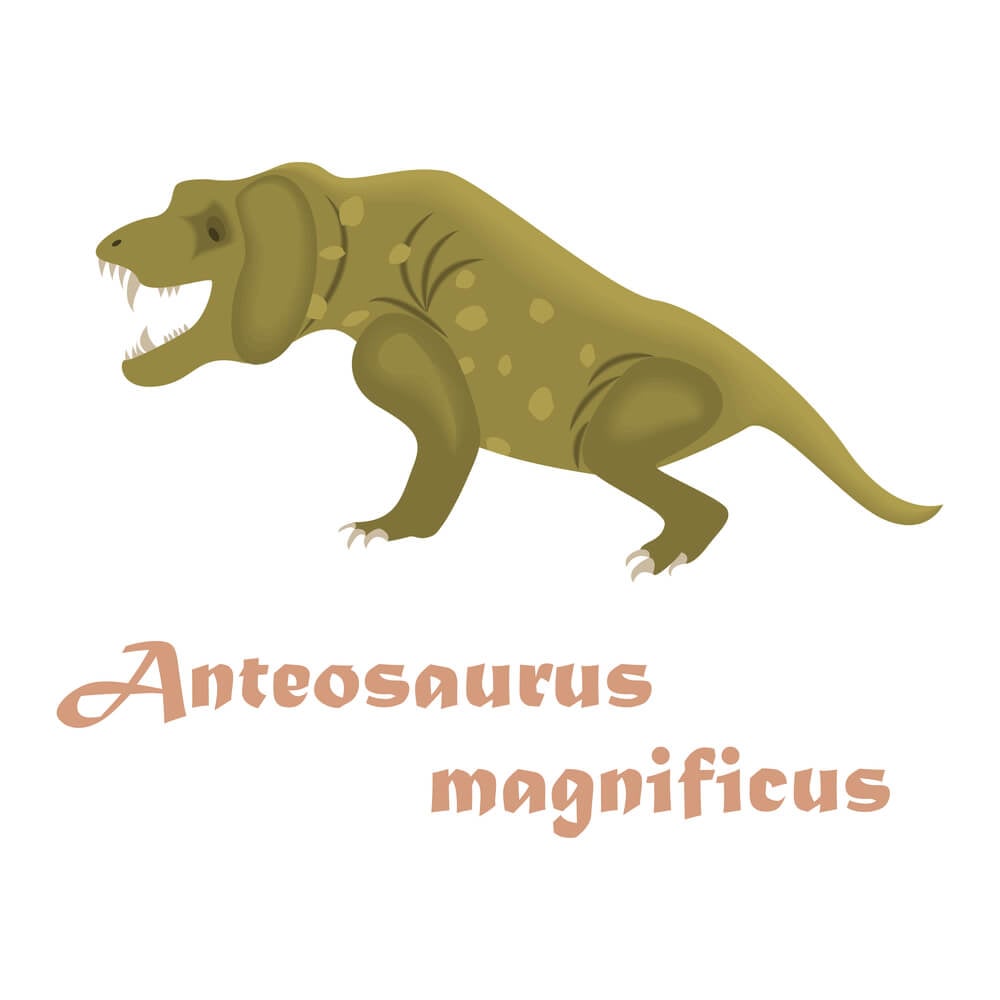
Anteosaurus roamed the Karoo about 265 million years ago, long before the first dinosaurs. It belonged to a group called dinocephalians, which means “terrible heads”, and the name fits.
Its skull was thick, heavy and lined with large canine teeth.
For years, scientists pictured it as a slow, crocodile-like animal that lurked near water. More recent work on its inner ear and braincase suggests it was a faster, more agile hunter than anyone assumed.
Fossils sit in collections at the Evolutionary Studies Institute at Wits and at museums across the Western and Eastern Cape. If you want to see what ruled South Africa before the dinosaurs, start there.
Smilodon
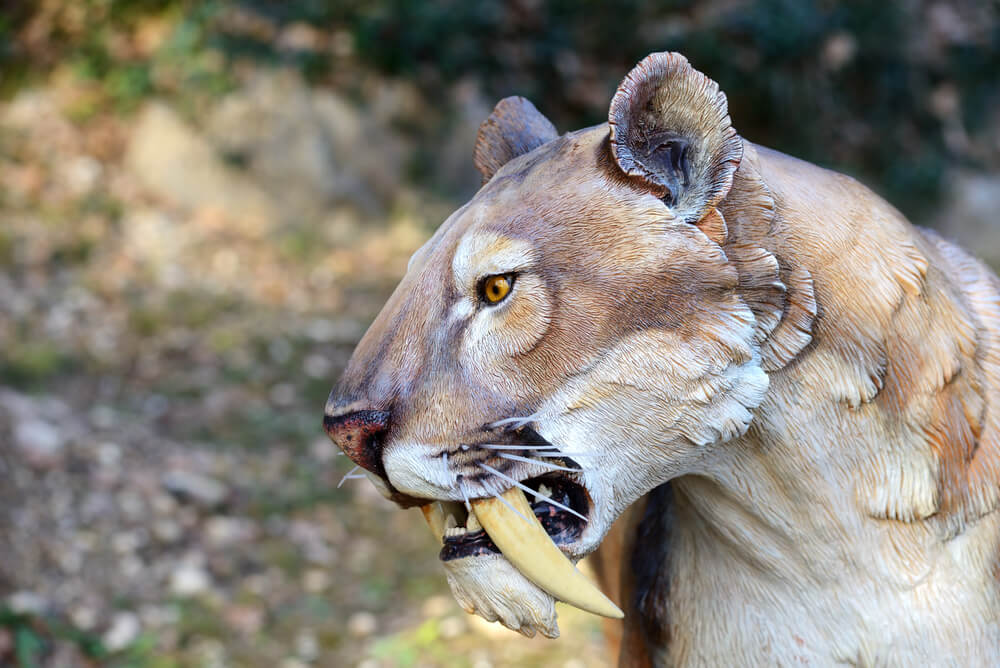
The sabre-toothed cat is the Ice Age’s poster animal, and the La Brea Tar Pits in Los Angeles are its trophy cabinet. The asphalt seeps there have produced remains of more than 2,000 individual Smilodon cats.
Smilodon wasn’t built like a lion. It was stockier, with powerful forelimbs for pinning prey and upper canines long enough to reach below its chin.
Those teeth were also fairly brittle. It likely held prey down first, then delivered a precise bite to the throat. Some La Brea skeletons show healed injuries severe enough that the cat must have relied on others while it recovered, which hints at social living.
Dinofelis
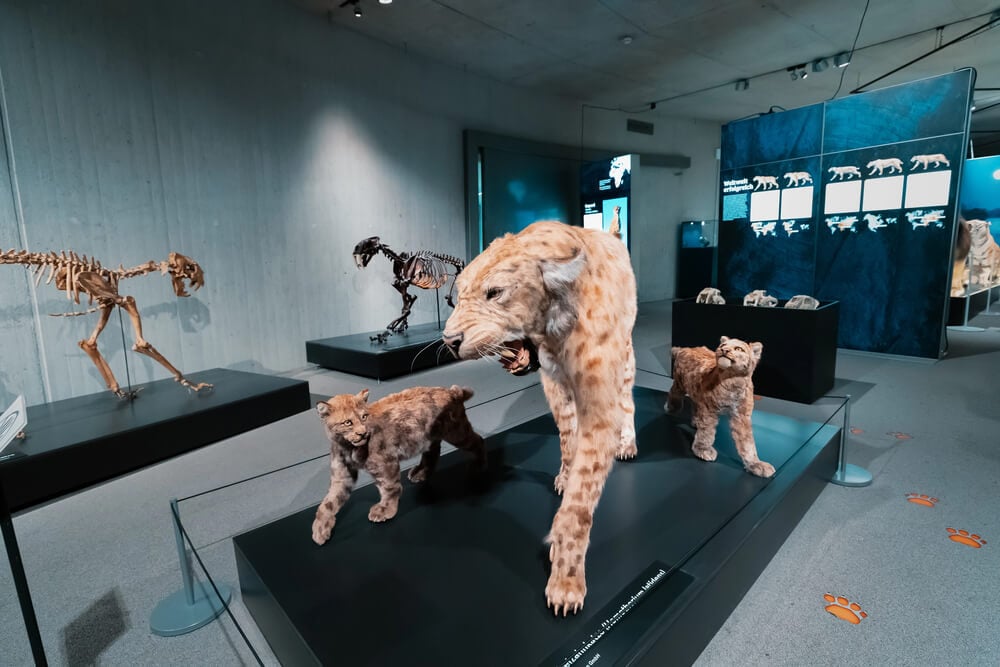
Walk through the Cradle of Humankind and you’re walking over one of the world’s richest records of early hominins. You’re also walking over the hunting grounds of the cats that ate them.
Dinofelis was a large, heavily built cat with flattened, dagger-like canines. Its fossils turn up in the same cave deposits at Swartkrans and Sterkfontein as those of early hominins.
In the 1970s and 1980s, palaeontologist Bob Brain argued that many of these hominin bones ended up in the caves because predators dragged them there. One Swartkrans skull, known as SK 54, carries two punctures that match the lower canines of a leopard almost perfectly.
The picture that emerges is humbling. Your distant ancestors weren’t always the hunters. Sometimes they were simply dinner.
Andrewsarchus
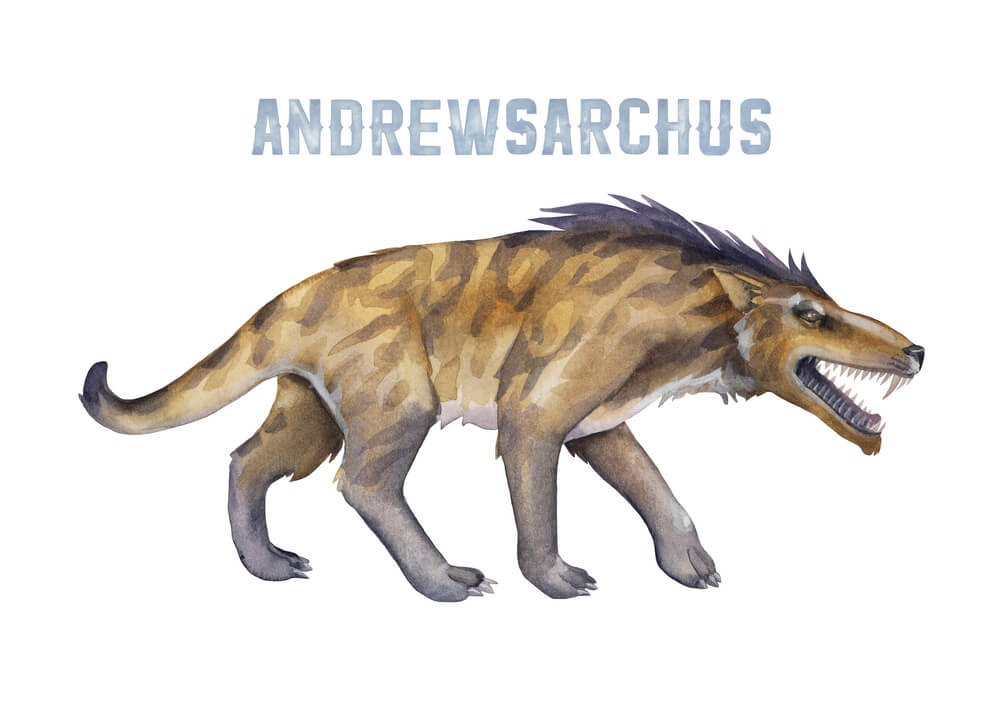
Andrewsarchus is known from a single skull, found in Inner Mongolia in 1923 during an expedition led by Roy Chapman Andrews. That skull measures over 80 centimetres long, which makes it one of the largest skulls of any land-dwelling meat-eating mammal.
Without the rest of the skeleton, nobody knows exactly what it looked like. Its relationships also remain debated, with recent studies placing it closer to hoofed mammals than to wolves or bears.
It lived around 45 million years ago, and whatever its body looked like, a head that size was not designed for eating leaves.
Titanoboa
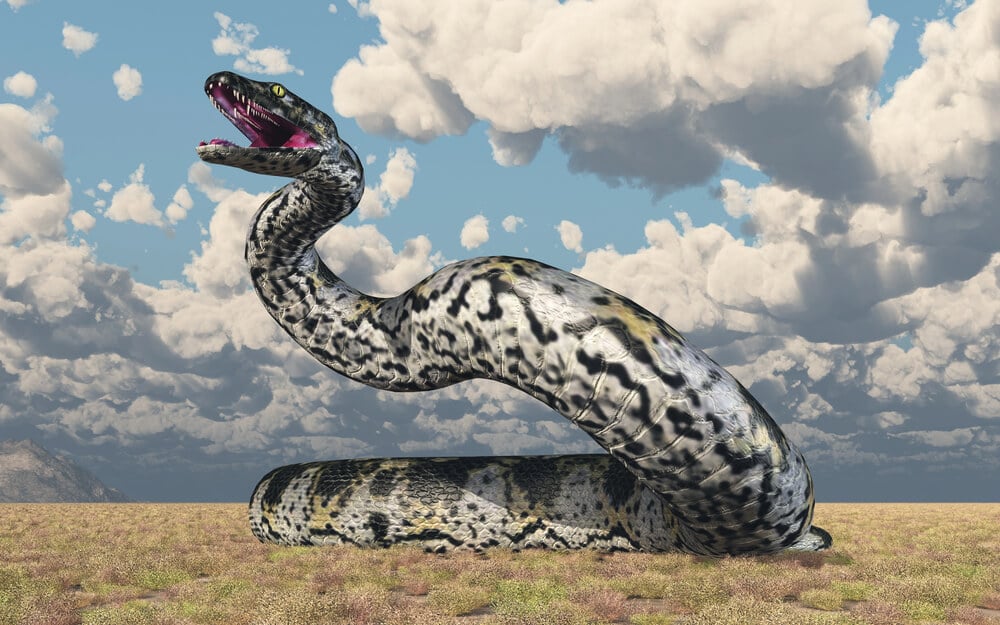
Coal miners at Cerrejón in northern Colombia uncovered something nobody expected: vertebrae from a snake around 13 metres long. Scientists described Titanoboa in 2009.
It lived roughly 60 million years ago, shortly after the dinosaurs disappeared. The region was a hot, swampy rainforest at the time, and Titanoboa likely spent much of its life in water, hunting fish and crocodile relatives.
A snake that size needs a hot climate to stay active, so its vertebrae also act as a rough thermometer for the ancient tropics.
Sarcosuchus
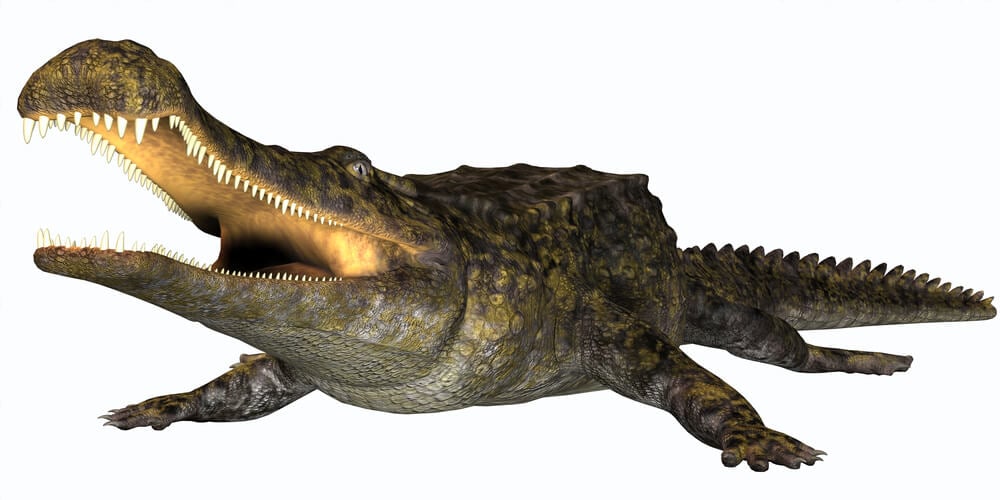
Nicknamed SuperCroc, Sarcosuchus hunted the rivers of what is now Niger around 112 million years ago. Paul Sereno’s team dug up its fossils in the Sahara, including a nearly complete skull.
The animal reached around 11 metres in length.
Its snout was long, with a bulbous tip, and its teeth didn’t meet neatly when the jaws closed. That arrangement suited a diet of fish but didn’t rule out a dinosaur that came too close to the water’s edge.
Today the spot is desert. Back then it was a broad river system full of large animals that needed to drink.
Deinosuchus
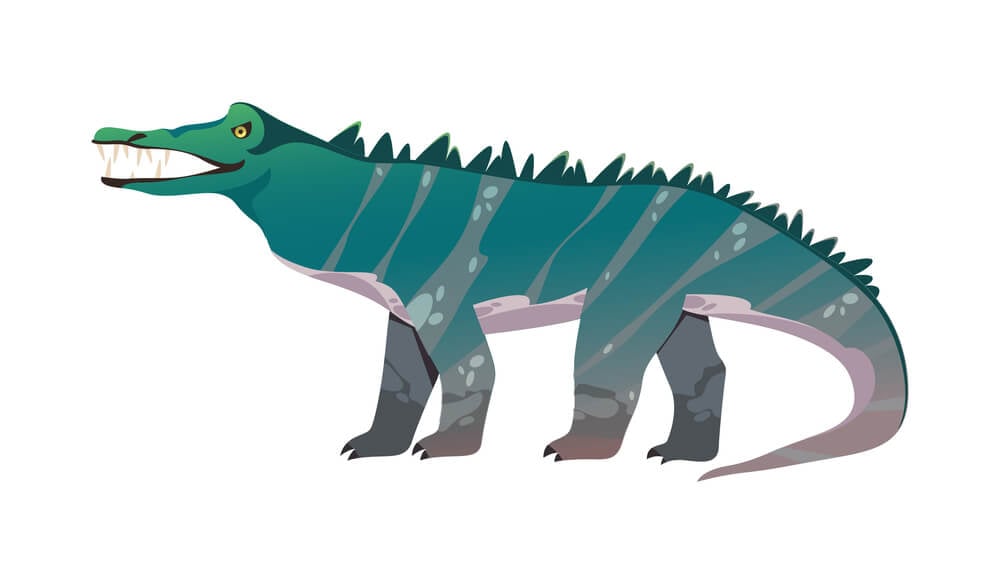
Deinosuchus was an alligator relative from Late Cretaceous North America, and it was enormous. Large individuals pushed past 10 metres.
The evidence for its diet comes from bite marks. Dinosaur bones from the same rocks carry tooth marks that match its teeth, including bones from large plant-eaters.
Its teeth were thick and blunt, ideal for crushing turtles as well. It lived alongside tyrannosaurs and, in parts of its range, likely competed with them for the same prey.
Purussaurus
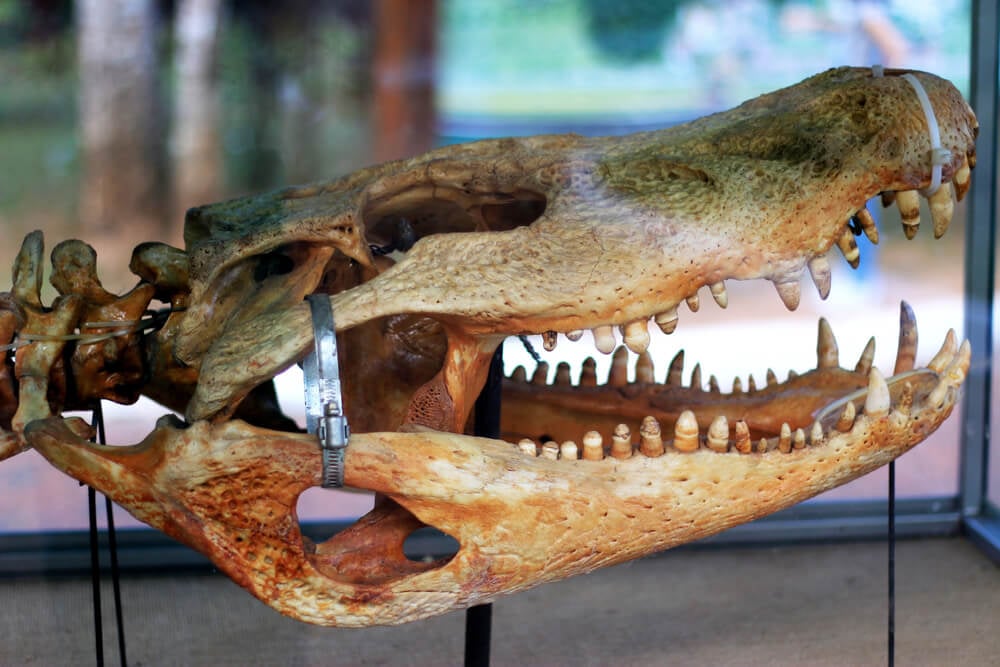
South America during the Miocene, around 8 to 13 million years ago, held a vast wetland system in the region of the western Amazon. Purussaurus ruled it.
This caiman relative reached around 10 metres long and carried a skull wide enough to take down large mammals.
Its sheer bulk created problems. Researchers have suggested it needed a huge daily intake of food just to keep going.
When the wetlands shrank as the Andes rose and drainage patterns changed, a predator this large and this hungry had nowhere to go.
Kelenken
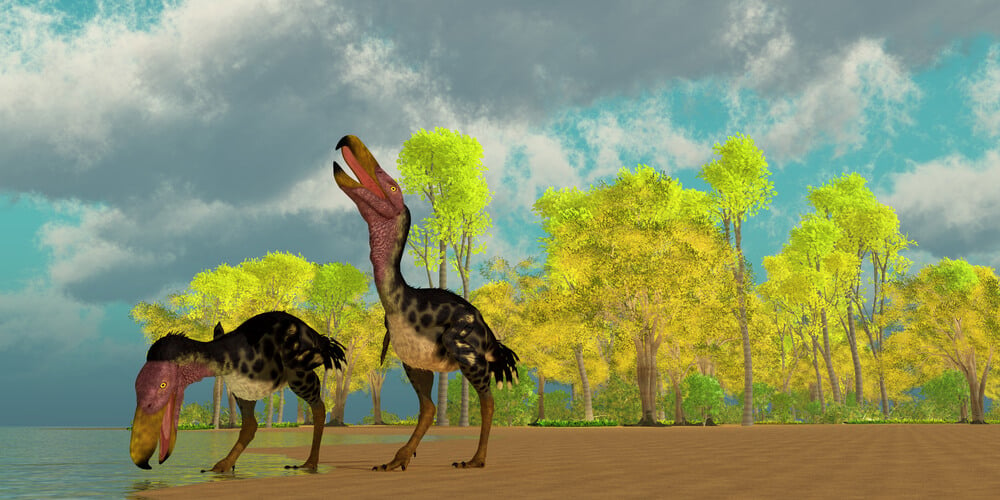
Picture a flightless bird standing taller than most adults, with a hooked beak the size of a horse’s head. That’s Kelenken, a terror bird from Patagonia that lived about 15 million years ago.
Its skull measures around 71 centimetres long, the largest of any known bird. Terror birds likely ran down prey on open ground, then struck with the beak like an axe.
South America was isolated from other continents for millions of years, and birds like this took the top predator slot that cats and dogs filled elsewhere.
Utahraptor
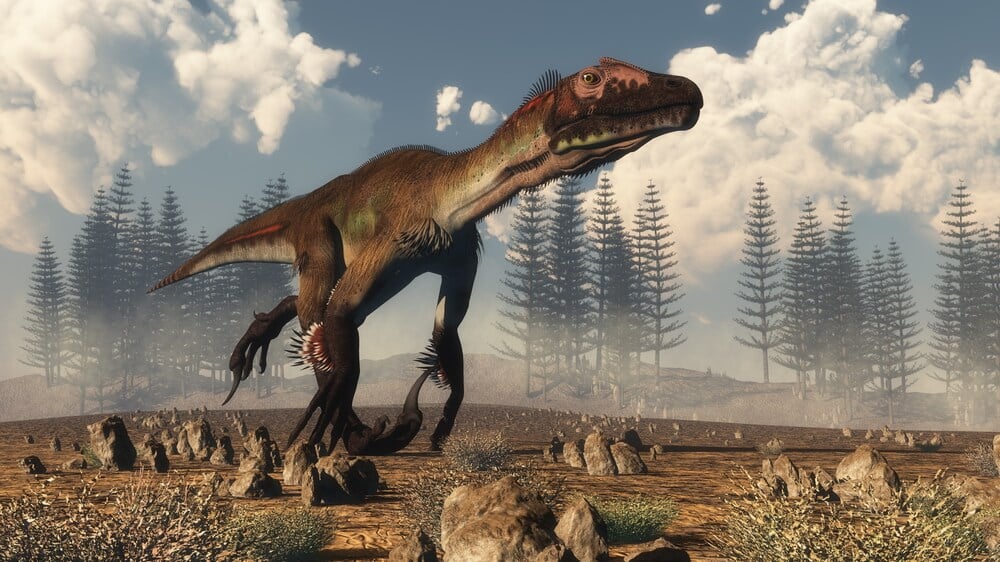
Utahraptor is what happens when you scale a raptor up to the size of a polar bear. It lived in Utah in the Early Cretaceous, around 130 million years ago, and carried a sickle-shaped claw on each foot that ranged past 20 centimetres.
Scientists have spent years carefully working through a sandstone block weighing several tonnes that holds the remains of multiple Utahraptors, from adults to juveniles. That find points to animals that either lived together or died together in the same trap, possibly quicksand.
Either way, you’d never want to meet more than one.
Velociraptor
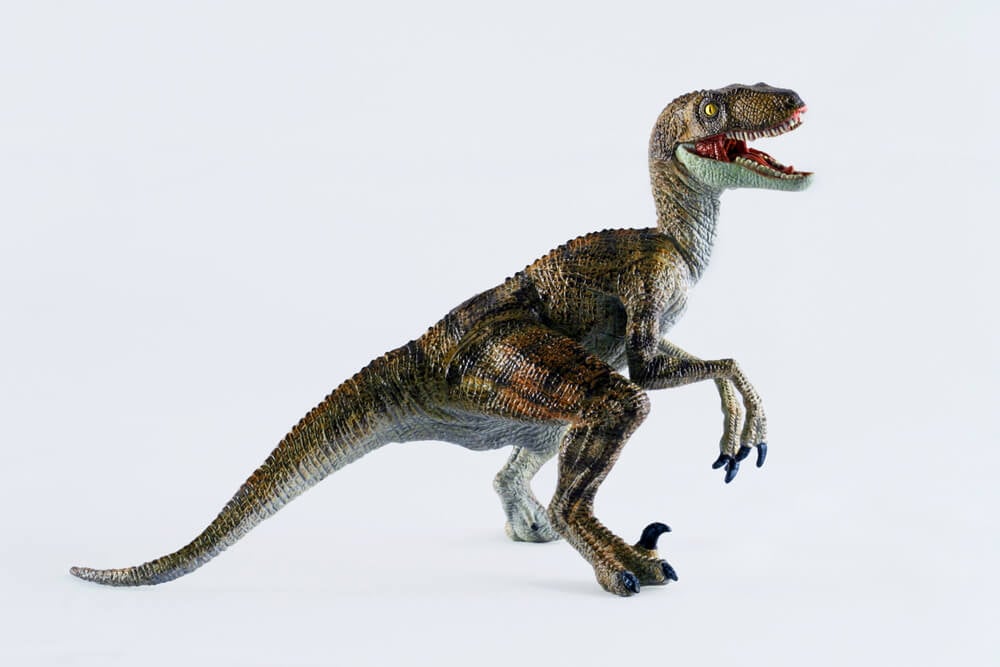
Hollywood made Velociraptor famous and then got almost everything wrong. The real animal was about the size of a turkey, lived in Mongolia around 75 million years ago, and was covered in feathers.
In 2007, researchers found quill knobs on a Velociraptor forearm, the bumps where large feathers attach to bone.
But it was still a capable killer. In 1971, a Polish-Mongolian expedition found the Fighting Dinosaurs fossil, a Velociraptor locked in combat with a Protoceratops. The raptor’s sickle claw sits in its opponent’s throat region, and the Protoceratops has the raptor’s arm clamped in its beak.
Both died where they fought, likely buried by a collapsing sand dune.
Allosaurus
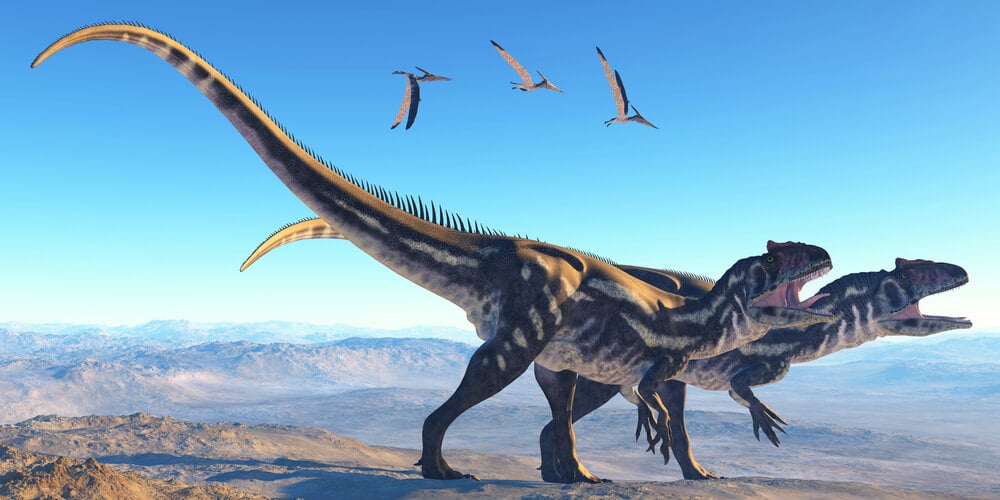
Allosaurus was the dominant predator of the Late Jurassic in North America, around 150 million years ago. It’s also one of the best understood, thanks to the Cleveland-Lloyd Dinosaur Quarry in Utah, which has yielded thousands of bones, most of them from Allosaurus.
A specimen nicknamed Big Al, found in Wyoming in 1991, shows broken ribs, infected toes and other injuries. Its life was rough.
Studies of its skull suggest Allosaurus attacked with its upper jaw like a hatchet, slamming its head down onto prey rather than relying on brute bite force.
Carnotaurus
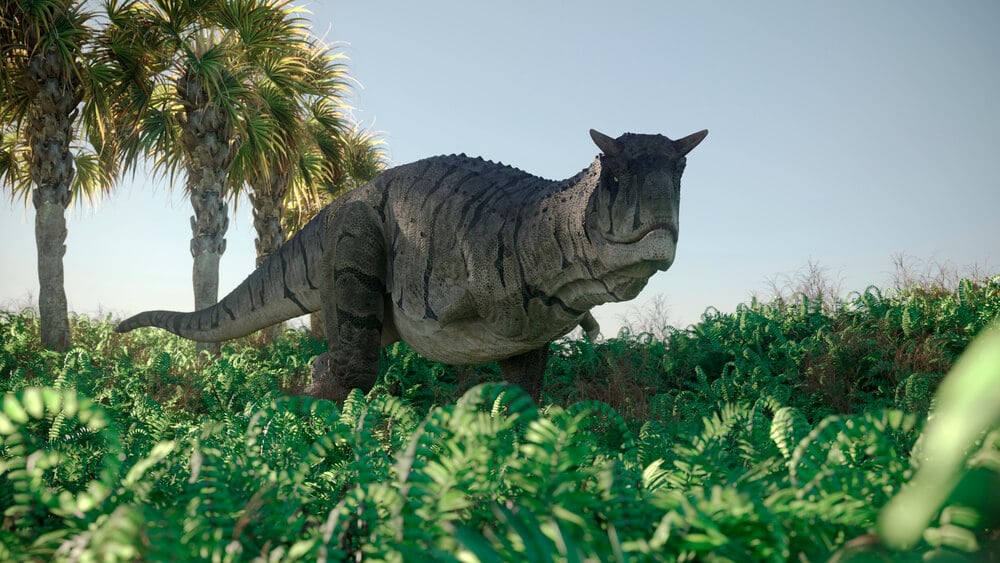
Carnotaurus had horns above its eyes and arms so small they make T. rex look well equipped. José Bonaparte described it from Argentina in 1985, and the specimen came with large patches of fossilised skin impressions, a rare bonus.
It lived about 70 million years ago and had long, powerful legs. Researchers think it was one of the faster large theropods, built for speed over open ground. Its tiny arms were close to useless. Its legs and jaws did all the work.
Anomalocaris
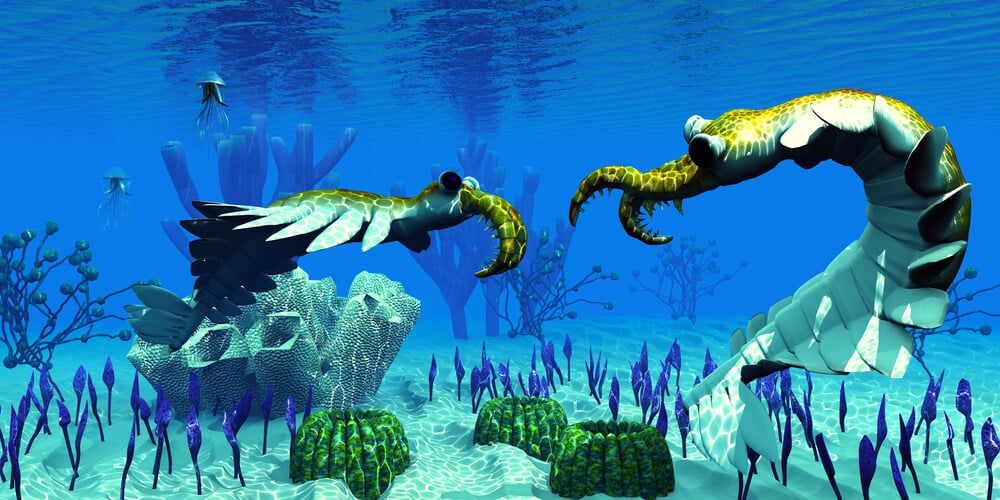
Over 500 million years ago, in the Cambrian seas, the top predator was a swimming arthropod with grasping front limbs and a circular mouth. Anomalocaris ruled oceans where most other animals barely reached the length of your finger.
Its fossils from the Burgess Shale in Canada caused decades of confusion. Scientists first described its front limbs as a shrimp-like animal and its mouth as a jellyfish.
Only later did researchers realise these were parts of the same creature. It was the first true giant of the animal world, and it set the template for every predator that followed.
Jaekelopterus
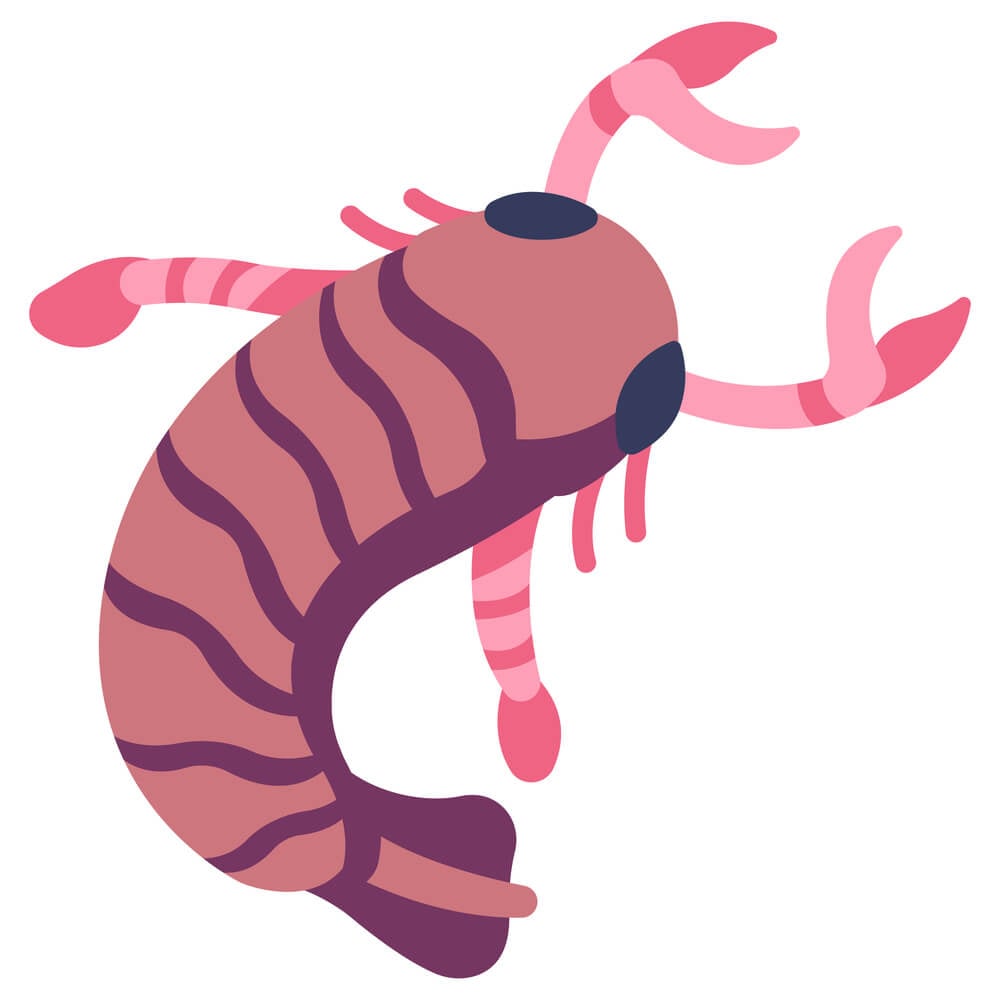
Sea scorpions, or eurypterids, were the terror of shallow Palaeozoic waters. Jaekelopterus was the biggest of them. In 2007, researchers described a fossil claw from Germany measuring 46 centimetres, which suggests an animal around 2.5 metres long.
That makes it one of the largest arthropods that ever lived. It hunted around 390 million years ago in brackish and freshwater settings, probably ambushing fish.
Its claws had long, spiny teeth for gripping. Picture a scorpion longer than a rugby prop is tall, waiting in the shallows.
Helicoprion
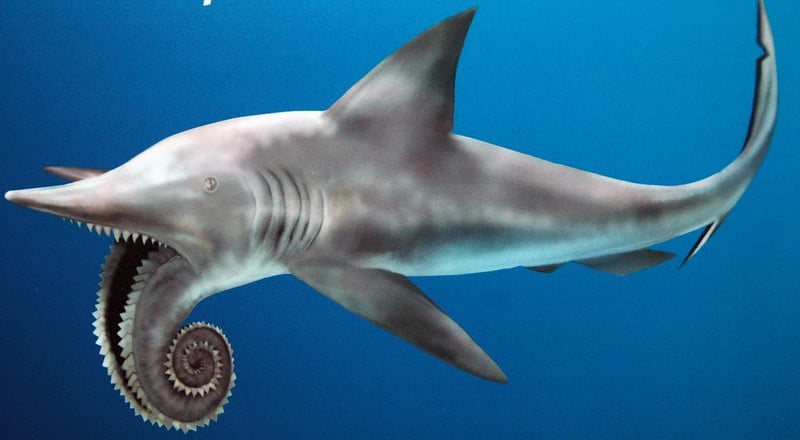
For a century, nobody knew what to do with the fossils of Helicoprion. They found spiral whorls of teeth, like a circular saw blade rolled up, and had no idea where the whorl sat in the animal’s body. Reconstructions put it on the snout, on the tail, even curling out of the lower lip.
In 2013, CT scans of an Idaho specimen solved the puzzle. The whorl sat inside the lower jaw, with new teeth growing at the back and older ones rolling forward.
Helicoprion lived in the Permian, around 290 to 270 million years ago, and was a relative of modern ratfish rather than a true shark. That spiral likely sliced through soft-bodied prey like squid.
Livyatan
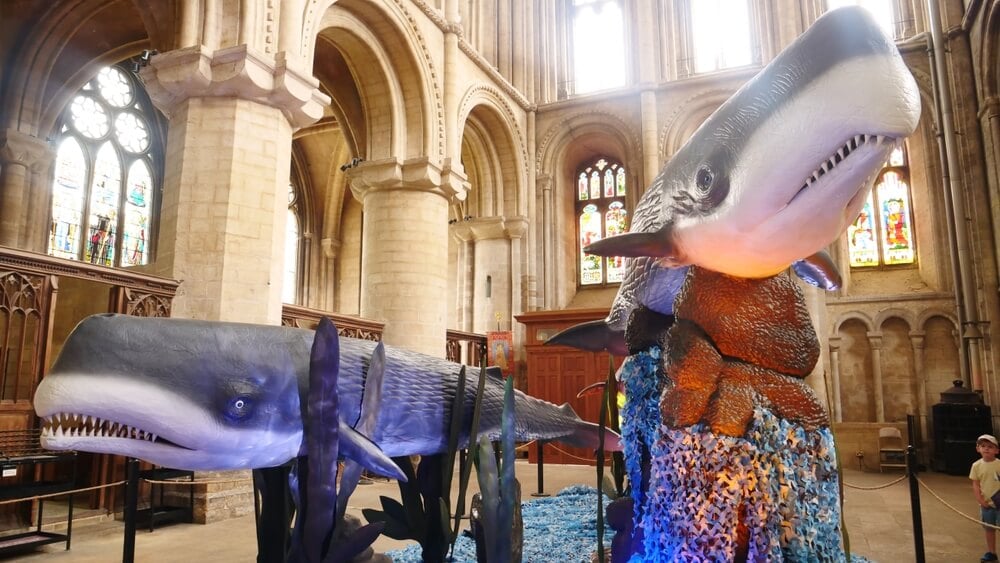
In 2010, scientists described a sperm whale relative from Peru with teeth up to 36 centimetres long. They named it Livyatan melvillei, after the Biblical sea monster and the novelist Herman Melville.
Modern sperm whales only have functional teeth in the lower jaw and feed mostly on squid. Livyatan had large teeth in both jaws, built for gripping and tearing big prey such as other whales.
It lived roughly nine to ten million years ago, in the same seas as Megalodon. Two giant predators, one ocean. The competition must have been fierce.
Thylacoleo
Australia’s marsupial lion wasn’t a lion at all. Thylacoleo carnifex was a marsupial, related to wombats and koalas, but it had one of the strongest bites relative to body size of any known mammal.
Instead of long canines, it used blade-like teeth in its cheeks to slice through flesh. It also had a large, semi-opposable thumb claw, likely for grappling prey or climbing trees. Thylacoleo survived until about 40,000 years ago, which means it shared the continent with the first Aboriginal Australians.
Arctodus
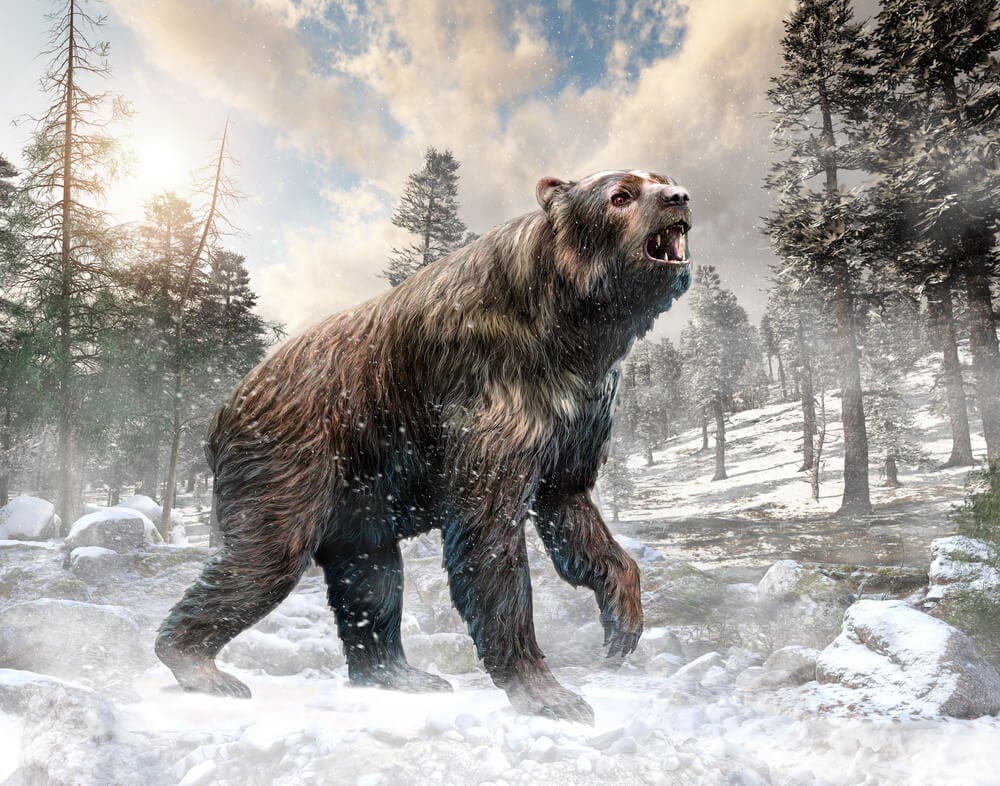
The short-faced bear of Ice Age North America stood taller than any grizzly. On its hind legs, a large Arctodus towered well over three metres.
For years, scientists painted it as a hyper-carnivore that ran down prey. More recent studies of its bones and teeth suggest a more flexible diet, including plenty of plant matter and scavenged carcasses. That doesn’t make it harmless. A bear that size could simply walk up to a wolf pack and take their kill.
Entelodonts
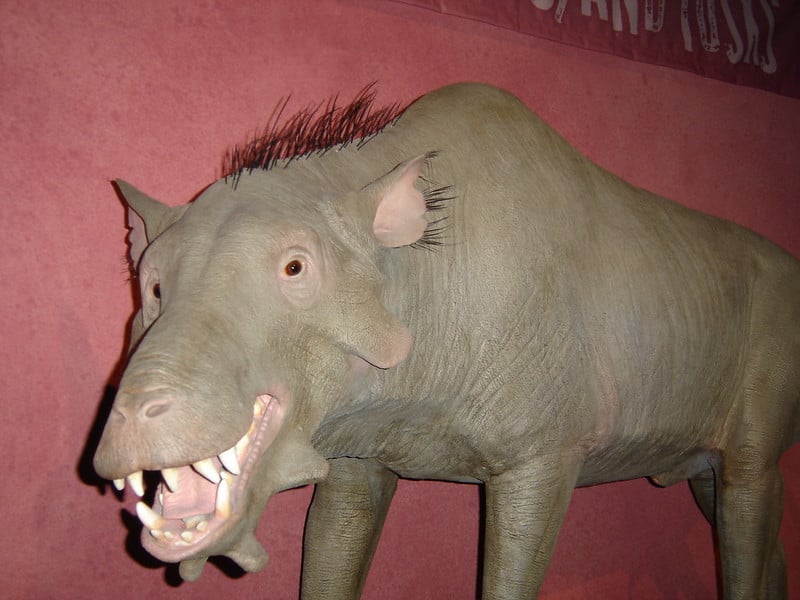
Entelodonts earned the nickname “hell pigs” for good reason. They looked a bit like pigs, with bony lumps on their cheeks and jaws, but they were more closely related to hippos and whales.
They lived across North America, Europe and Asia from around 37 to 16 million years ago. Their teeth and jaws were built to crush bone, and they ate meat, roots and almost anything else. One fossil site in North America preserved a cache of early camel remains with bite marks matching the entelodont Archaeotherium, suggesting it stored food for later.
Megalania
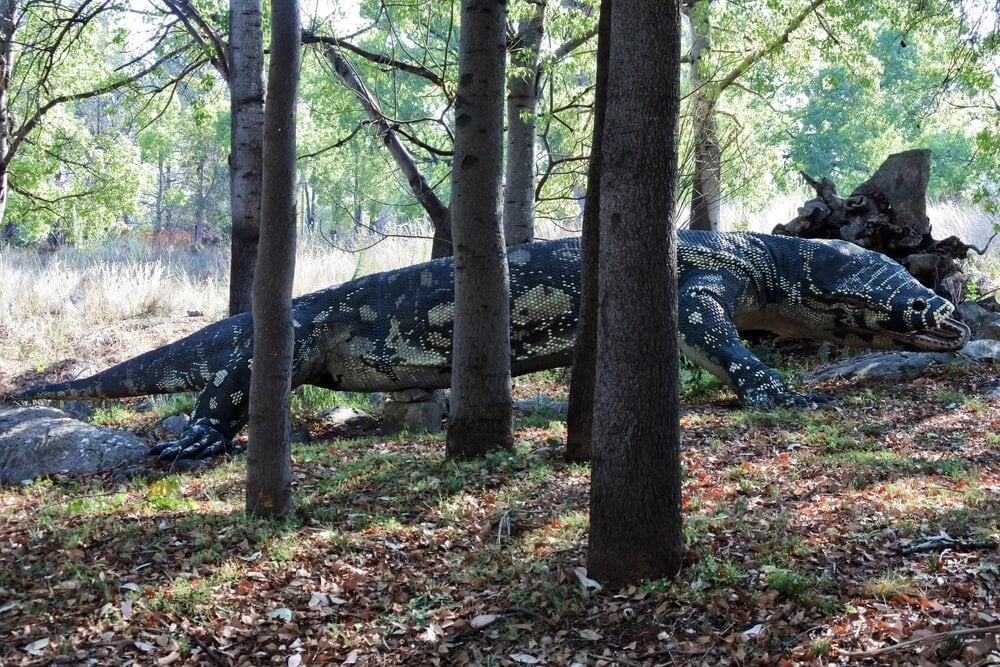
Megalania, now usually called Varanus priscus, was a giant monitor lizard from Pleistocene Australia. Estimates of its length vary widely, but it was far larger than the Komodo dragon, its living cousin.
Like other monitors, it likely hunted with a combination of serrated teeth and possibly venom. Megalania lived during the same period as early human settlement of Australia, and it disappeared around the same time as much of the continent’s large wildlife. Picture walking through the Australian bush and meeting a lizard bigger than your car.
Dimetrodon
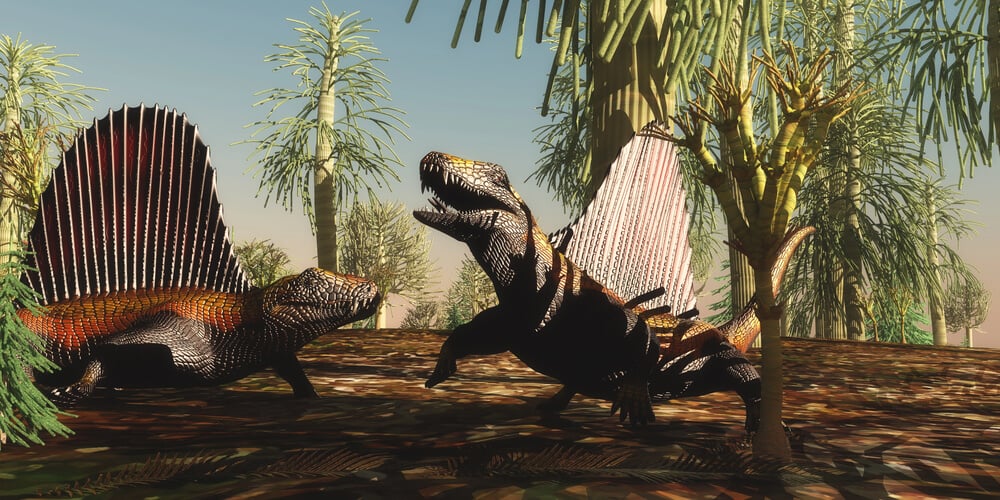
Dimetrodon shows up in plastic dinosaur toy sets all over the world, which is ironic because it wasn’t a dinosaur. It was a synapsid, part of the group that eventually led to mammals. That makes it more closely related to you than to T. rex.
It lived in the Early Permian, around 295 to 272 million years ago, mostly in what is now North America. Its sail likely helped with display, and its teeth came in different shapes, a feature that shows up again much later in mammals.
Dimetrodon was the top predator of its world, and its close relatives gave rise to the gorgonopsians and dinocephalians that would later rule the Karoo.
Where the Bones Still Speak
Every animal on this list was once the most dangerous thing in its world. Every one of them disappeared.
Climates shifted, seas rose and fell, prey vanished, rivals arrived. Being on top was never a guarantee of staying there.
If you want to see this story up close, you don’t need to fly to Patagonia or Mongolia. Visit the Kitching Fossil Exploration Centre at Nieu-Bethesda or the Karoo fossil displays at the Iziko South African Museum in Cape Town.
Walk the Cradle of Humankind and stand at the mouth of Sterkfontein. Look at the fossils, then look at the hills around you. The ground you’re standing on was once a hunting ground.
There’s a strange comfort in that. The predators that ruled the Earth left behind teeth, claws and tooth marks, and those small pieces have outlasted every one of them.
In the end, the rocks always keep the score.
More from Go2Tutors!

- The Romanov Crown Jewels and Their Tragic Fate
- 13 Historical Mysteries That Science Still Can’t Solve
- Famous Hoaxes That Fooled the World for Years
- 15 Child Stars with Tragic Adult Lives
- 16 Famous Jewelry Pieces in History
Like Go2Tutors’s content? Follow us on MSN.