Schoolyard Crazes That Swept the Nation
Every generation of American kids has had at least one object that mattered more than anything taught in the classroom. It might have been a pocketful of glass, a plastic egg that beeped during spelling tests or a stack of cardboard caps worth more than lunch money.
Adults rarely understood the appeal, and principals usually ended up banning it.
The pattern repeats with almost comic regularity. Something cheap appears, spreads from one lunch table to the next in a matter of weeks, sparks trading disputes and confiscations, then vanishes as suddenly as it arrived.
Marbles Played for Keeps

Long before plastic took over the toy aisle, marbles were the currency of the playground. Kids drew a circle in the dirt, knuckled down with a favorite shooter and tried to knock rivals’ glass out of the ring, and games played for keeps meant one bad afternoon could empty a pouch.
Much of the American supply came from West Virginia and Ohio, where companies such as Akro Agate, founded in Akron in 1910 and moved to Clarksburg a few years later, turned out machine-made marbles by the millions. Principals in many towns eventually treated keeps games as a form of gambling and pushed them off school grounds.
Jacks on the School Steps

Jacks needed almost nothing: a handful of six-pointed metal pieces, a small rubber bouncer and a patch of smooth pavement. A player tossed the bouncer, scooped up jacks one at a time, then two, then three, and caught it after a single bounce, moving through rounds that grew trickier as the count climbed.
The game descends from knucklebones, played in ancient Greece and Rome with the small ankle bones of sheep and goats. By midcentury it was a fixture on school steps across the country, and a skilled player could run through every round without a miss while classmates waited for a turn.
Duncan Yo-Yo Contests
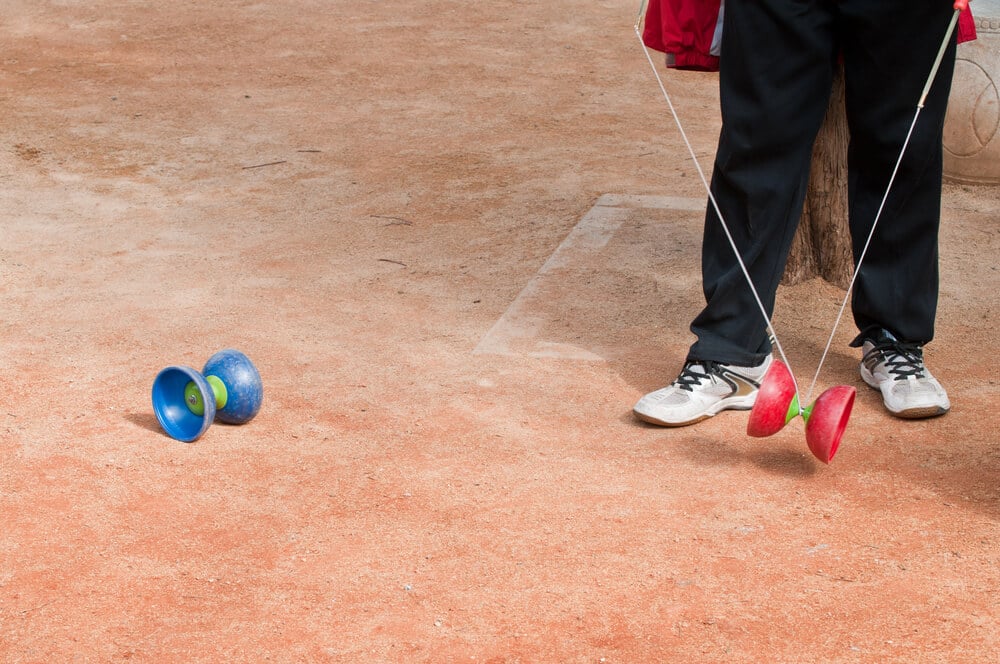
The American yo-yo craze traces to Pedro Flores, a Filipino immigrant who began manufacturing the toy in Santa Barbara, California, in 1928. Businessman Donald F. Duncan soon bought the company and sent touring demonstrators to schoolyards and candy stores, where contests rewarded tricks like walking the dog and rocking the cradle.
Duncan held the yo-yo trademark for decades until a 1965 federal court ruling declared the word generic, a loss that helped push the company into financial trouble. The toy never stayed away for long, though, with major revivals in the 1970s and again in the late 1990s, when new designs made tricks easier to land.
Wham-O Hula Hoops

Wham-O founders Richard Knerr and Arthur Melin did not invent the hoop, since children had twirled rings of wood and grapevine for centuries. What they did in 1958 was mold it from lightweight plastic, price it cheaply and hand samples out at Southern California playgrounds to build demand.
Sales exploded, with tens of millions sold within a matter of months, and the fad cooled almost as fast as it had arrived. Hoops never vanished from gym class, however, and the toy was later inducted into the National Toy Hall of Fame at The Strong museum in Rochester, New York.
Clackers and Their Shattering Racket
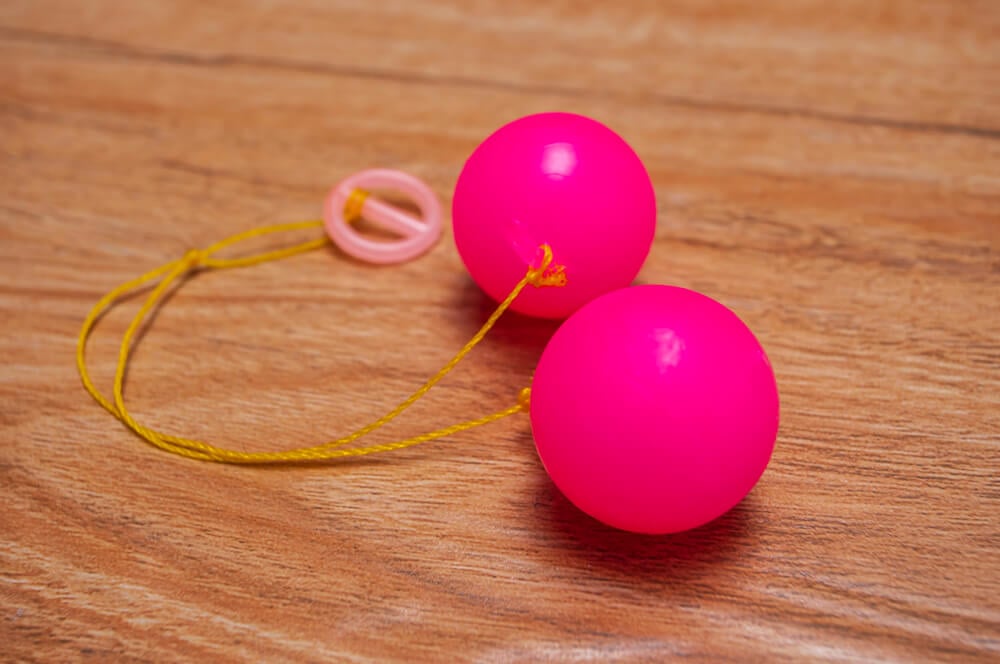
Clackers consisted of two hard acrylic spheres tied to the ends of a string, with a ring or tab in the middle for a grip. Swinging the spheres up and down made them smack together above and below the hand in a loud, rapid rhythm, and around 1970 and 1971 the racket filled playgrounds.
The trouble was that early versions could shatter, sending sharp fragments flying, and reports of eye and face injuries piled up. Federal regulators stepped in with safety requirements, many schools banned the toy outright, and the craze faded about as quickly as it had appeared.
Gary Dahl’s Pet Rock
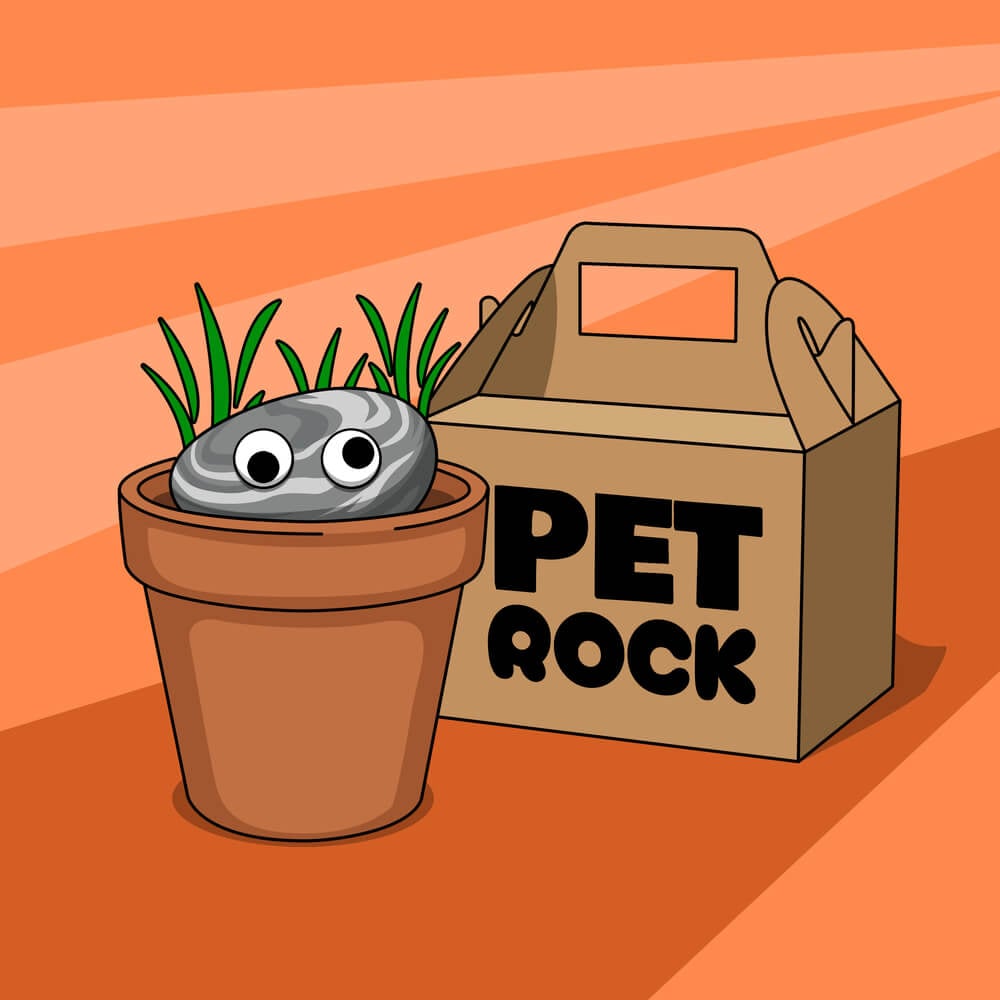
In 1975 Gary Dahl, a California advertising man, packaged ordinary stones from Rosarito Beach in Mexico inside cardboard carriers with breathing vents and a tongue-in-cheek training manual. The booklet explained how to teach a rock to sit, stay and play dead, commands it obeyed perfectly.
Priced at 3.95 dollars, the Pet Rock sold more than a million units during that holiday season and made Dahl a wealthy man within months. Kids carried them to school and compared notes on care and feeding.
By early 1976 the joke had run its course, but the name became shorthand for any fad that sells nothing but an idea.
Mood Rings That Read the Room
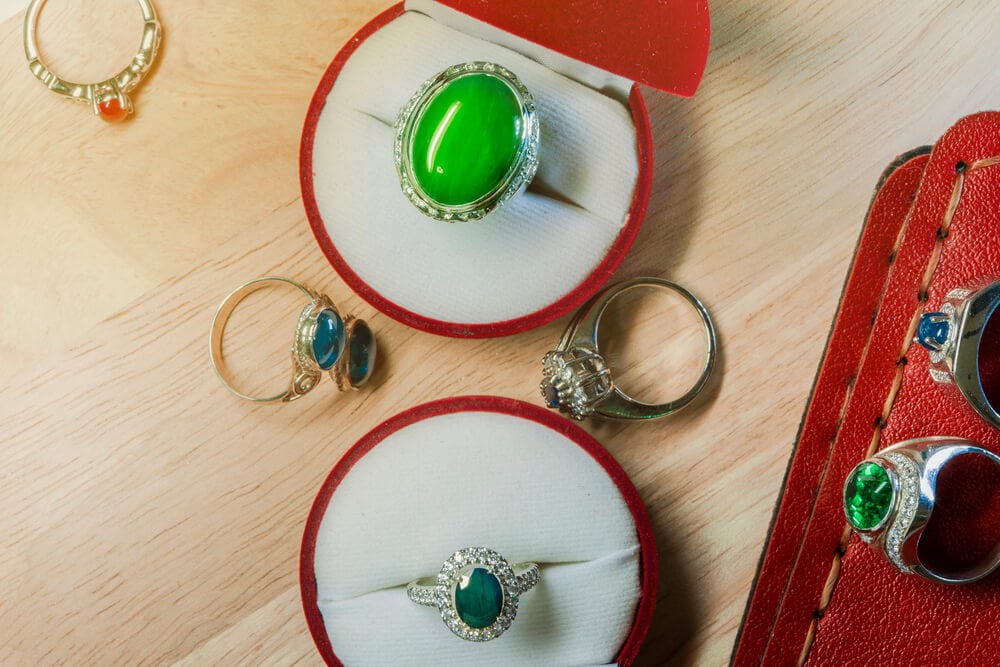
Mood rings arrived in 1975, credited to New York inventors Joshua Reynolds and Maris Ambats, and claimed to reveal the wearer’s emotional state at a glance. The stone was really a glass or quartz shell over a layer of thermochromic liquid crystals that shifted color with skin temperature, so a dark stone often signaled nothing more than cold fingers.
That did not stop classrooms full of kids from consulting little color charts that promised blue for calm and black for stress. Cheap copies soon filled drugstores and gift shops, and the rings became a staple of slumber parties and recess gossip alike.
Rubik’s Cube Obsession
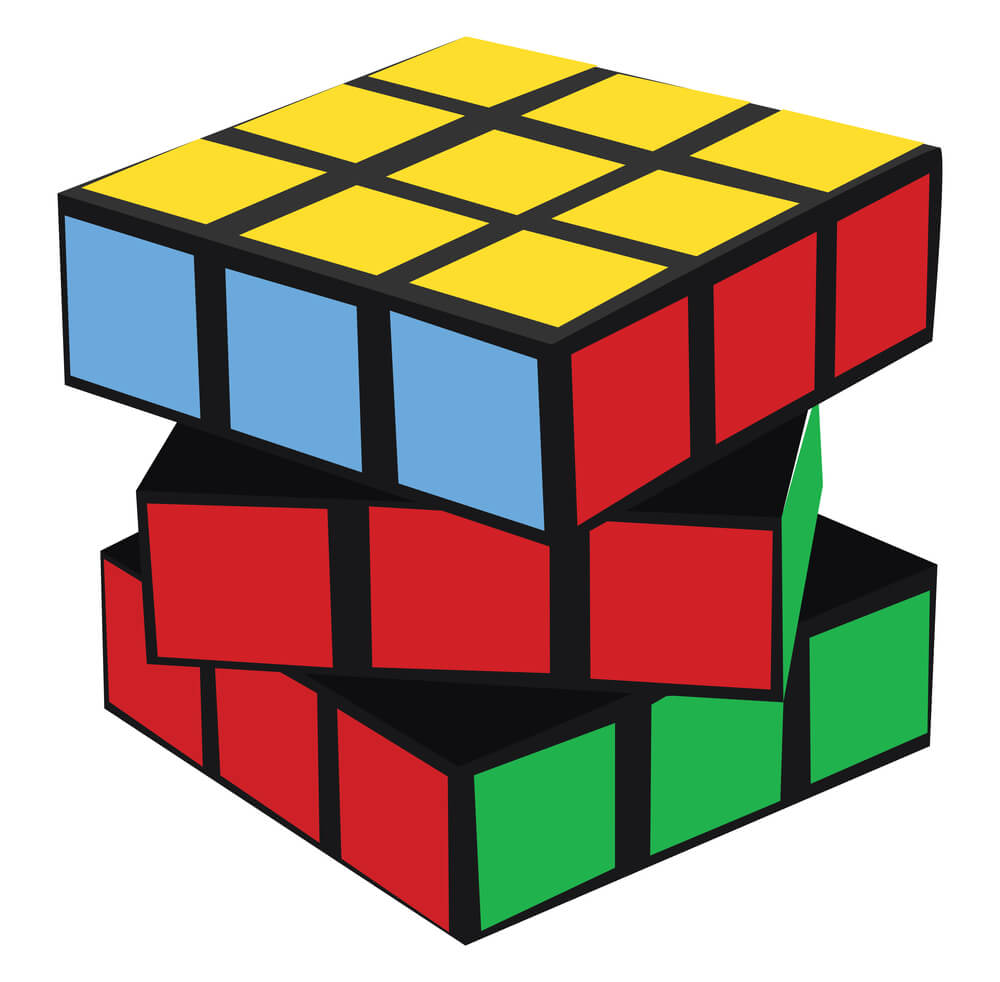
Hungarian architecture professor Erno Rubik built his first cube in 1974 as a teaching aid for three-dimensional thinking, and Ideal Toy Corporation launched it internationally in 1980. The puzzle has roughly 43 quintillion possible configurations, a figure that made its single solved state feel almost mythical to fourth graders.
Frustrated kids peeled off and swapped the colored stickers, pried pieces apart and memorized move sequences from paperback solution guides that crowded bookstore shelves in the early 1980s. The cube entered the National Toy Hall of Fame in 2014, and speedcubing clubs keep it alive in schools today.
Garbage Pail Kids Stickers
Topps released Garbage Pail Kids in 1985 as a gross-out parody of the wildly popular Cabbage Patch Kids dolls, with sticker cards featuring characters such as Adam Bomb. Cartoonist Art Spiegelman, then working for Topps, helped develop the series, and artist John Pound painted many of the early cards.
Schools across the country banned them as disruptive and distasteful, which only raised their value at recess. The company behind Cabbage Patch Kids sued, and after the case was settled out of court the card art was adjusted to look less like the dolls.
Original cards still trade among collectors, with prices depending heavily on condition.
Scratch-and-Sniff Sticker Albums
Scratch-and-sniff stickers relied on microencapsulation, a technique developed at 3M in the 1960s that sealed tiny droplets of fragrance inside capsules that burst when scratched. By the late 1970s and into the 1980s, teachers handed them out as rewards, and kids built sticker albums stuffed with scents like pizza, root beer and chocolate.
Trading was serious business, with rare or particularly convincing smells carrying more clout than common fruit flavors. The albums, often padded out with puffy and shiny prismatic stickers too, became a portable status display that rode along in backpacks and came out at every free moment.
Slap Bracelets That Snapped Into Place
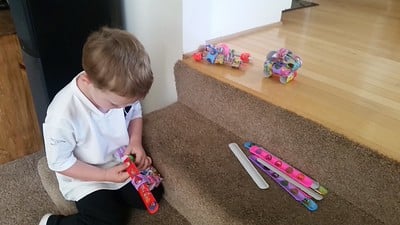
The slap bracelet was a layered strip of spring steel covered in fabric that curled around the wrist with a satisfying snap when smacked against it. Wisconsin shop teacher Stuart Anders came up with the idea, and his Slap Wrap reached stores in 1990, with sales climbing into the millions.
Cheap imitations followed, and when their covers wore through, the metal edges inside could cut skin. Several school districts banned them that year amid reports of minor injuries, which ended the fad almost as quickly as it had snapped into place.
Pogs and Their Slammers
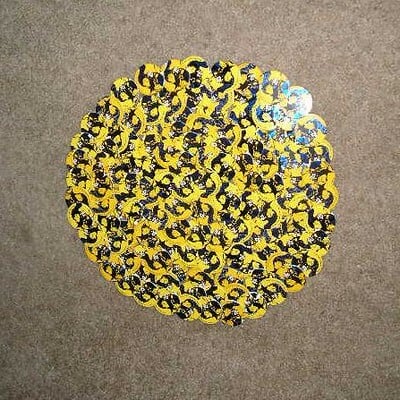
Pogs began as cardboard milk caps from Hawaii’s Haleakala Dairy, which also bottled a passion fruit, orange and guava juice blend called POG. Around 1991 an Oahu teacher named Blossom Galbiso reintroduced the old cap game to her students, and it spread across the islands and then the mainland.
Players stacked caps face down and struck the pile with a heavier slammer, claiming whatever flipped face up. Because playing for keeps looked a lot like gambling, many schools banned pogs by the mid-1990s, and the fad collapsed nearly as fast as it had grown.
Tamagotchi Pets in the Backpack
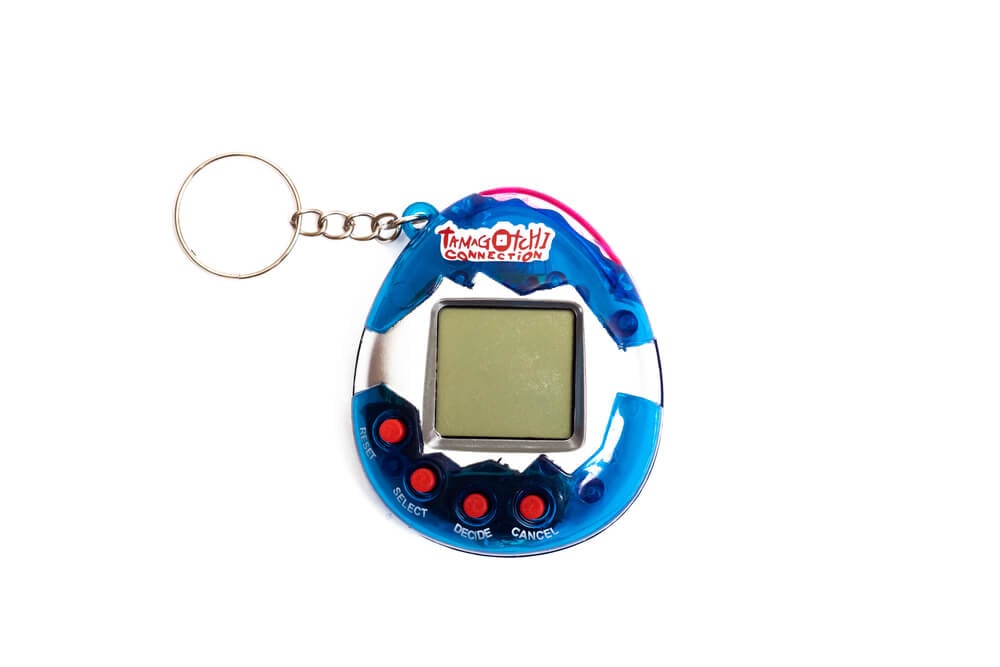
Bandai launched the Tamagotchi in Japan in 1996 and in the United States in 1997, an egg-shaped keychain housing a pixelated creature that needed feeding, cleaning and attention. Credited to Aki Maita and Akihiro Yokoi, the toy beeped for care at all hours, including during math class.
Neglected pets could die, which caused real distress among young owners and led some parents to babysit the gadgets during the school day. Many schools banned them outright, and rival virtual pets such as Tiger Electronics’ Giga Pets crowded store shelves within months.
Pokemon Cards at Lunch Tables
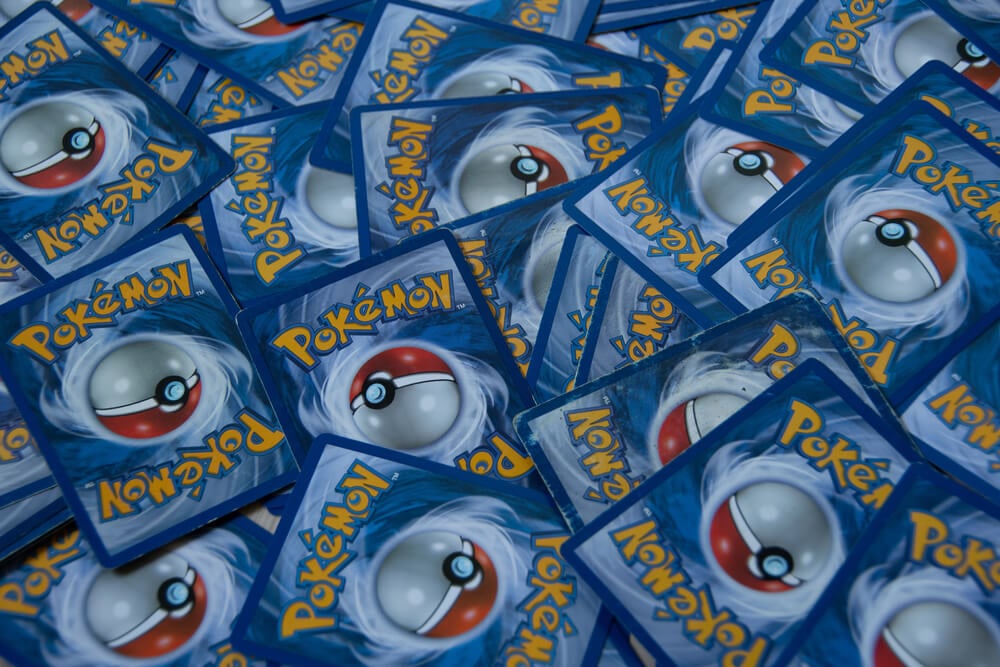
Pokemon trading cards arrived in North America in early 1999, published by Wizards of the Coast, and quickly became the most fought-over objects at recess. The holographic Charizard from the original Base Set was the card nearly every kid wanted, and well-preserved copies now sell for large sums, though value depends almost entirely on condition.
Schools across the country banned the cards that year after trades turned into disputes, thefts and the occasional scuffle. The franchise itself had begun with the Pokemon Red and Green games for Nintendo’s Game Boy in Japan in 1996.
Beanie Babies and Their Heart Tags
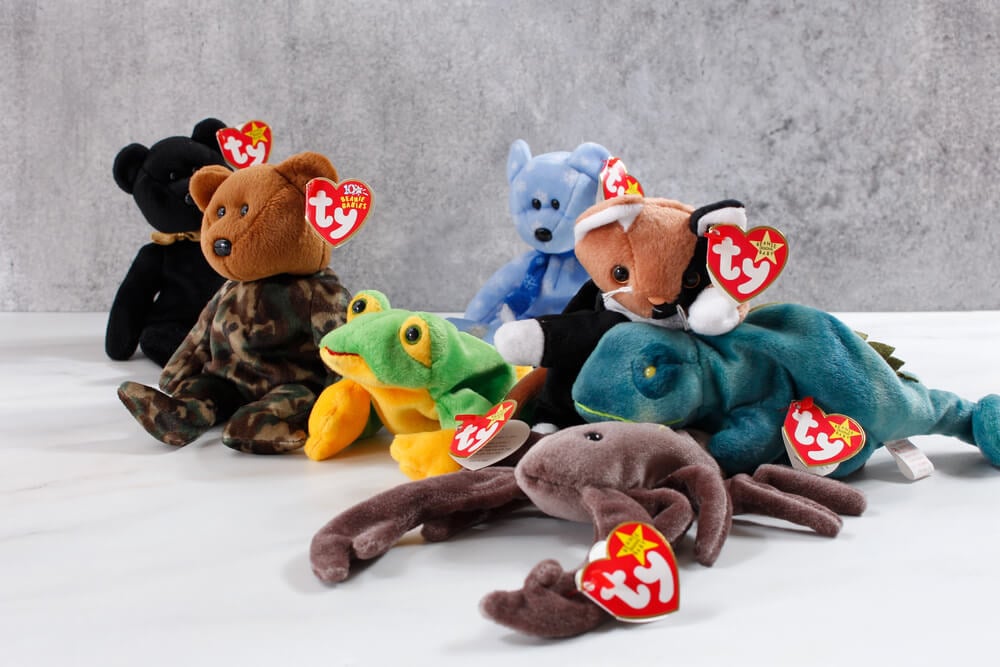
Ty Warner introduced Beanie Babies in 1993, filling them lightly with plastic pellets so they flopped in a hand. The real genius was scarcity, since Ty retired designs without warning and sold mainly through small gift shops rather than big chains, so kids hunted for rare animals with their heart-shaped tags intact.
A McDonald’s Teenie Beanie Babies promotion in 1997 drew enormous crowds and emptied restaurants of stock. Princess, a purple bear released after the death of Diana in 1997, became one of the most coveted, though most Beanies today sell for very little, with condition and tags deciding nearly everything.
Furby Chatter in Class
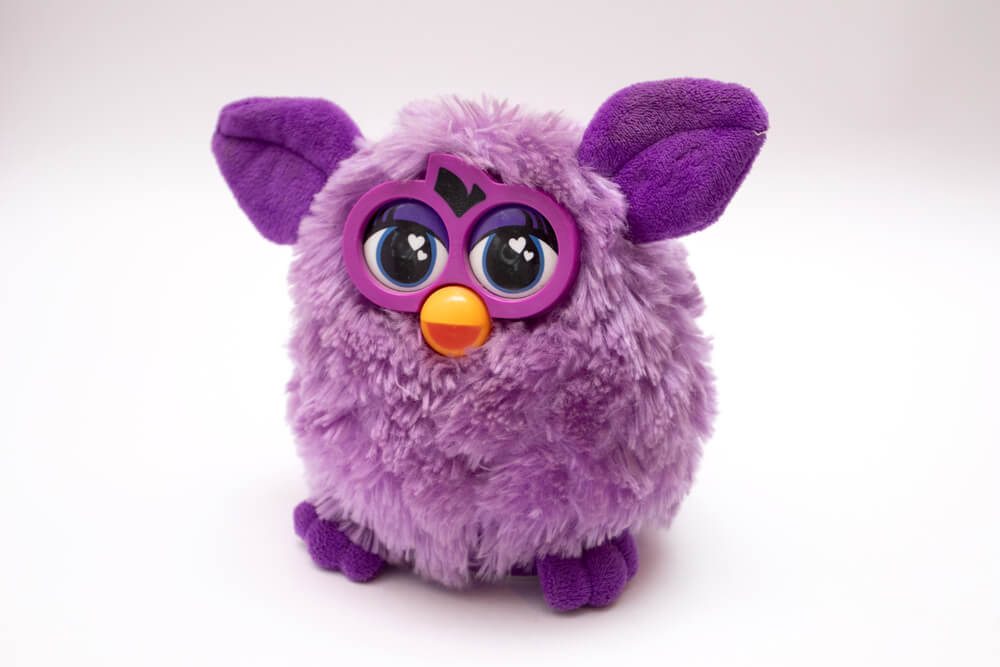
Tiger Electronics released Furby for the 1998 holiday season, an owl-like robot that appeared to learn English as kids played with it, gradually replacing its native Furbish. In reality the English words were preprogrammed to emerge over time, but the illusion worked well enough to cause shortages and frantic parents.
In 1999 the National Security Agency reportedly banned Furbies from its Maryland headquarters over fears they could record conversations, though the toy had no recording ability at all. Classrooms had their own complaint, since a Furby could wake up and chatter at the worst possible moment.
Gogo’s Crazy Bones
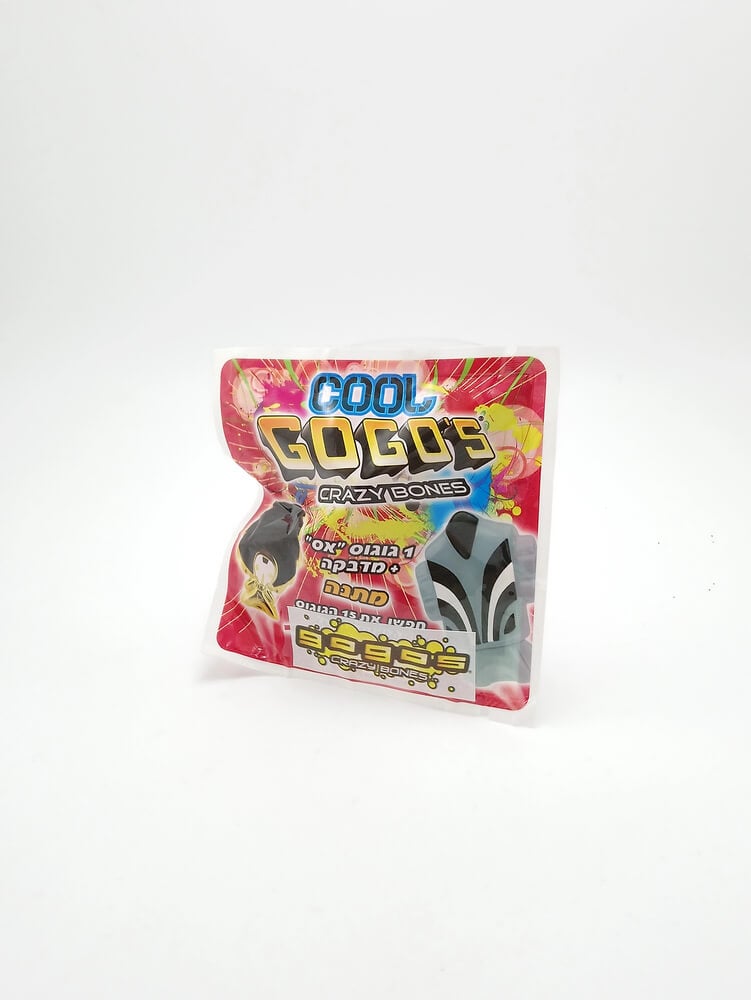
Gogo’s Crazy Bones came from Spain, where the small plastic figures were inspired by a traditional game once played with the knucklebones of sheep. Every little character came with its own name and look, and they were sold in blind packs that encouraged kids to buy more in search of duplicates to trade.
Toy Craze brought them to American stores around 1998, and children flicked them at targets or at each other in games that had no single official rule set. Their tiny size made them easy to hide in a desk and just as easy for teachers to confiscate.
Tech Deck Fingerboards
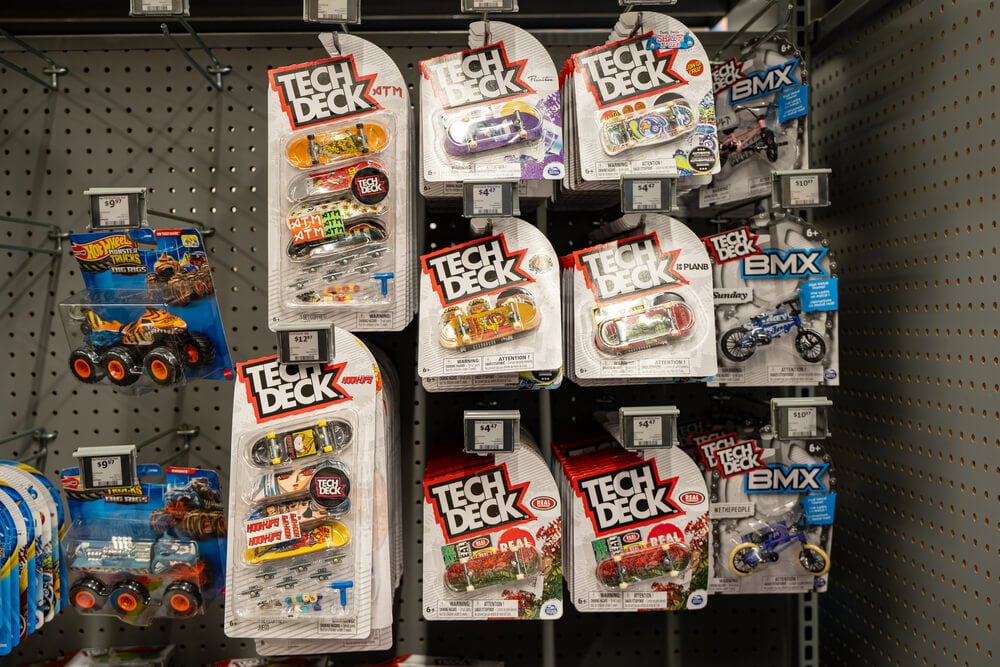
Tech Deck, launched by X-Concepts in the late 1990s, shrank the skateboard down to roughly the size of a finger, complete with grip tape, working trucks and licensed graphics from real skate companies. Kids practiced ollies and kickflips across desks, lunch tables and textbook spines, and the craze grew alongside the popularity of skateboarding video games around the turn of the century.
Accessories like miniature ramps and rails turned bedrooms into tiny skateparks. Teachers confiscated plenty of them, but the brand survived the fad and is still sold, now through Spin Master.
Beyblade Battles
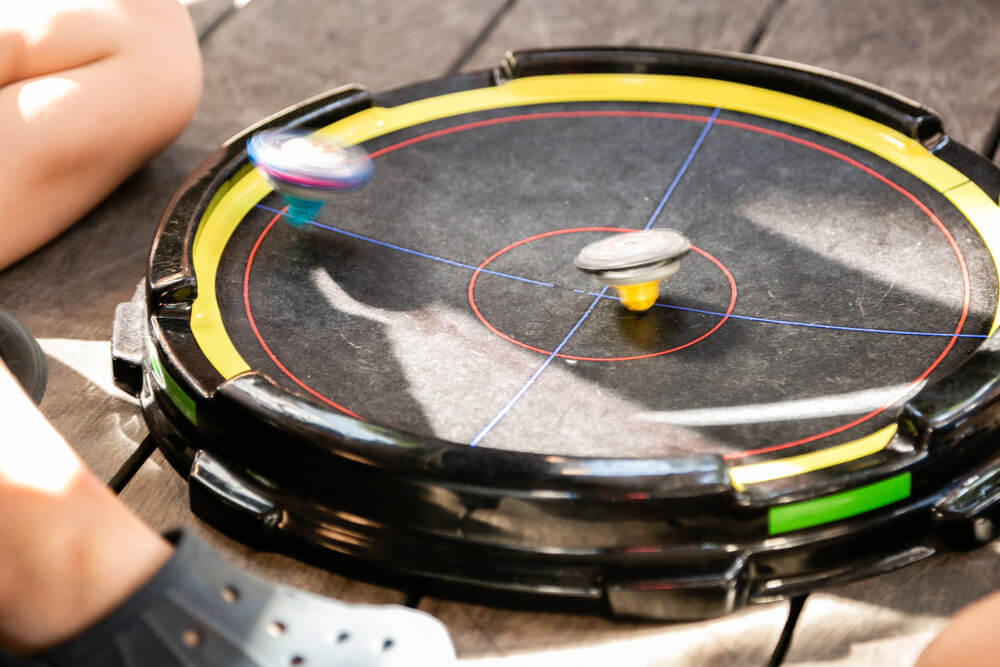
Takara launched Beyblade in Japan in 1999, building on the ancient spinning top, and Hasbro brought the line to American kids around 2002 alongside a dubbed anime series. Players loaded a top into a launcher, pulled a ripcord and sent it into a plastic stadium to knock out or outspin an opponent.
Customizable attack rings, weight disks and tips gave the game a tinkering side that appealed to kids who liked to tweak and test. Teachers confiscated launchers by the dozen, and the line has returned in several generations since, most recently with Beyblade X in 2023.
Yu-Gi-Oh Duels
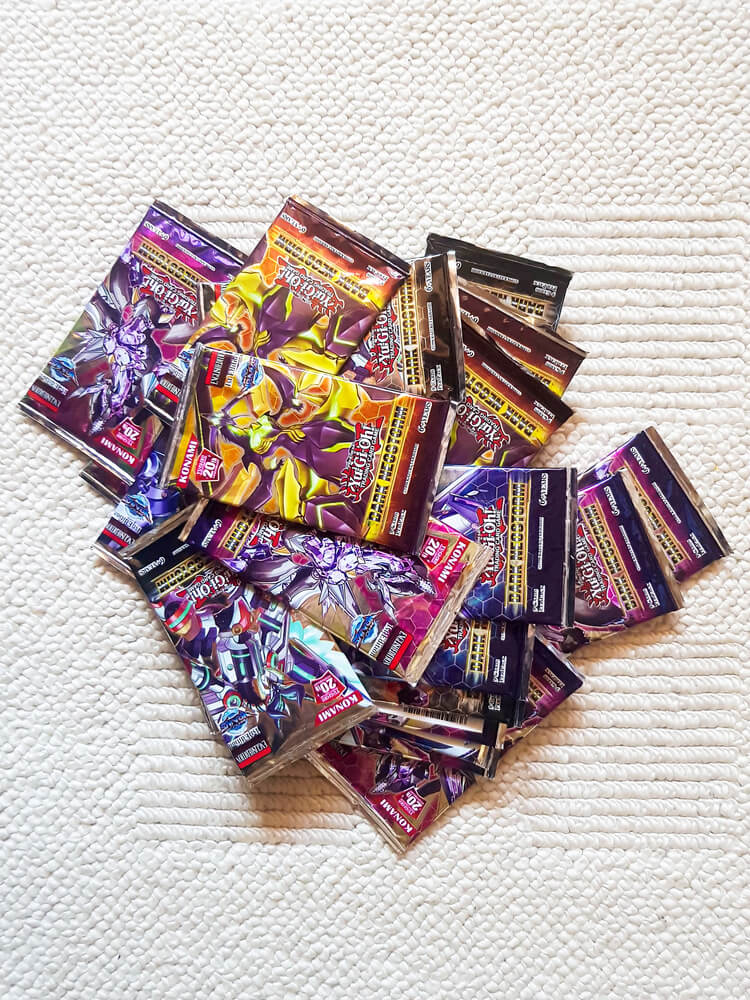
Kazuki Takahashi’s Yu-Gi-Oh manga debuted in Japan in 1996, and Konami’s trading card game based on it reached North America in 2002, riding a dubbed anime series on television. The game was more complex than Pokemon, with tribute summons, trap cards and life points to track, and lunch tables turned into makeshift tournaments.
Upper Deck initially distributed the English cards before a dispute with Konami ended up in court. Cards like Blue-Eyes White Dragon and Dark Magician became playground royalty, and older printings still change hands among collectors for prices tied closely to condition.
Heelys Rolling Down Hallways
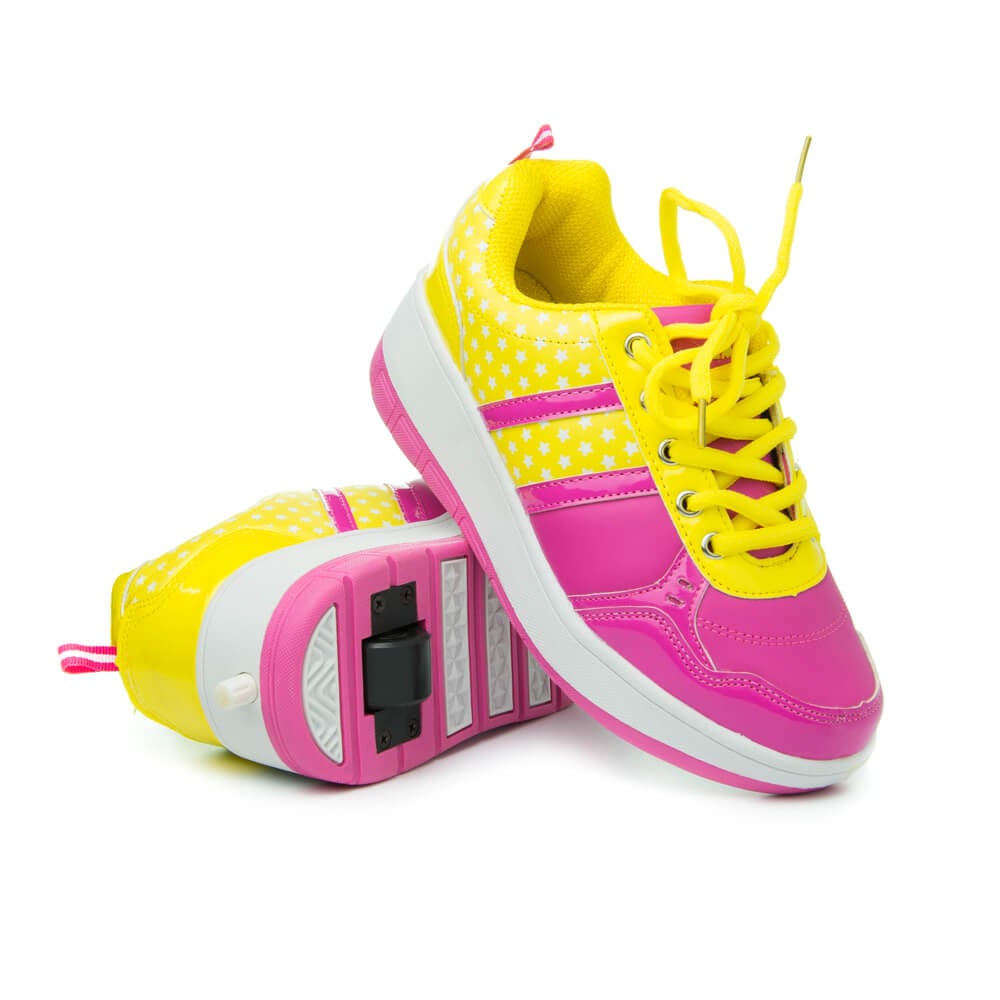
Heelys hid a single wheel in the heel of an ordinary-looking sneaker, letting kids glide down hallways and across store floors by shifting their weight backward. Roger Adams, a Texas inventor, launched the company around 2000, and sales surged through the middle of the decade, carrying Heelys Inc. to a public stock offering in 2006.
Schools and shopping malls banned them, and emergency doctors reported wrist fractures and other injuries among new riders. The shoes faded once the novelty wore off, though the brand has since staged a nostalgic comeback with a new generation of kids.
Silly Bandz Up to the Elbow
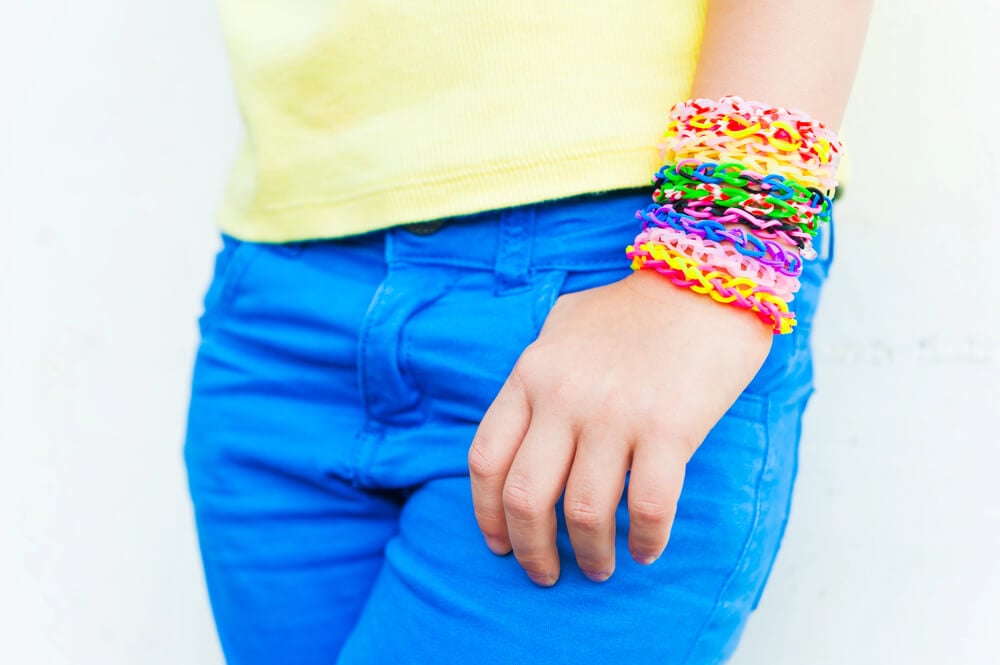
Silly Bandz were silicone rubber bands molded into shapes like animals and letters that sprang back into form when slipped off the wrist. Robert Croak’s BCP Imports, based in Toledo, Ohio, began selling them around 2008, and the craze peaked in 2010, when kids stacked dozens up each forearm and traded them constantly.
Schools across the country banned them for distraction, arguments over trades and the occasional band launched across a classroom. Croak reportedly got the idea after seeing similar shaped bands from a Japanese designer at a trade show in China.
Rainbow Loom Bracelets
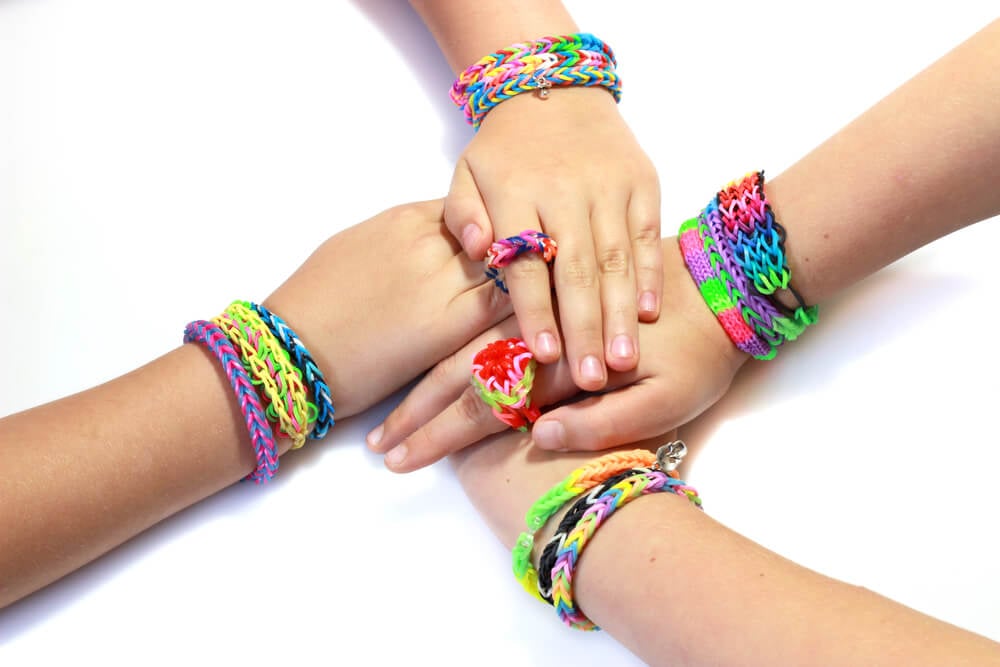
Cheong Choon Ng, a Nissan crash-test engineer in suburban Detroit, built the first Rainbow Loom in 2010 after watching his daughters weave rubber band bracelets and finding his own fingers too big for the job. He pegged pushpins into a board, refined the design, and began selling plastic looms in 2011, with his family assembling kits in their basement.
Sales took off in 2013 when major craft chains carried it, and kids filled school hallways with fishtail and starburst bracelets. Some schools banned the bands after trading disputes and lost class time, and the loom became one of the bestselling toys of its moment.
Fidget Spinners Everywhere
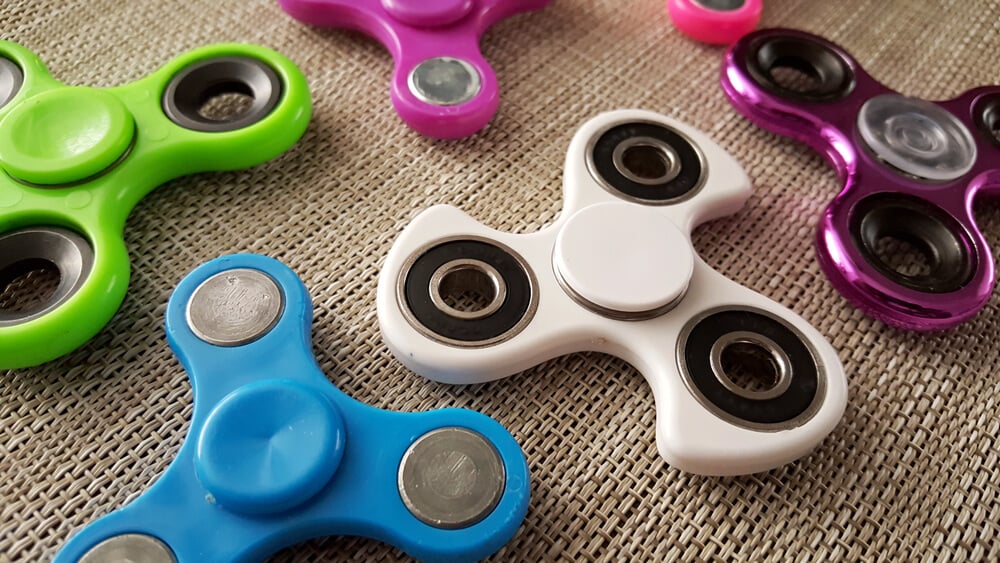
Fidget spinners went from obscure to everywhere in the spring of 2017, when a cheap three-armed toy spinning on a central bearing showed up in nearly every classroom. They were marketed as focus aids for students with attention problems or anxiety, a claim with little research behind it, and many schools banned them as distractions.
Florida inventor Catherine Hettinger received wide media credit for the concept, though her 1990s patent described a different device and had already lapsed. The fad burned out by the end of that summer, leaving millions of the gadgets in junk drawers.
Water Bottle Flipping
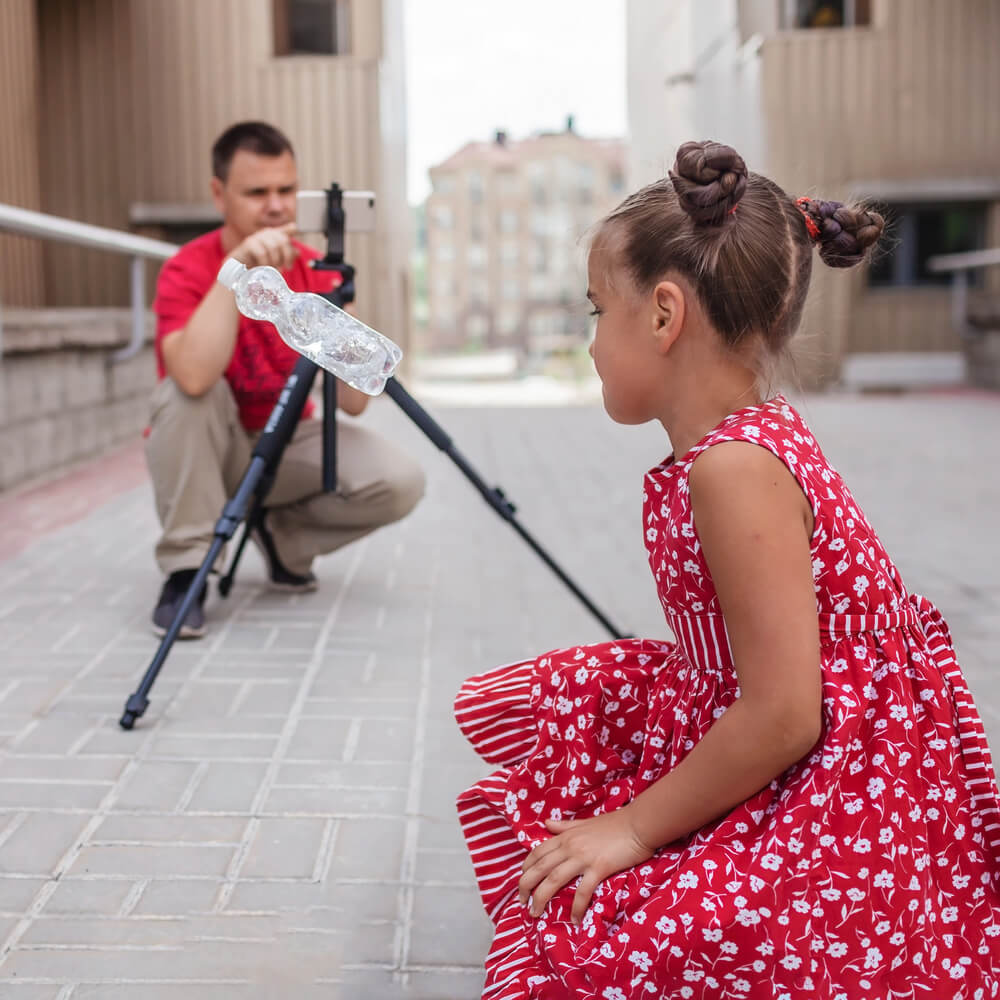
In May 2016, Mike Senatore, a high school senior in Charlotte, North Carolina, flipped a partly filled water bottle at a school talent show and landed it upright on a table. Video of the crowd erupting spread online, and by fall cafeterias nationwide echoed with the thud of plastic bottles.
The trick relies on the water sloshing to the bottom and slowing the rotation, a bit of physics that some teachers turned into lessons. Many others simply banned it because of the noise, making it the rare schoolyard craze that cost nothing beyond a drink.
Recess as the Real Economy

Nearly every entry here followed the same path from novelty to obsession to prohibition. Kids built their own rules, markets and status systems around objects adults considered trivial, and they did it without any instruction.
The bans tended to arrive just as the fad was peaking, which made them feel less like discipline and more like a closing bell.
Few of these crazes lasted more than a couple of school years, yet nearly all of them left a mark. A shoebox of pogs or a ring that once turned blue can carry more memory than a report card ever did.
That is the quiet lesson of the playground, where the things that mattered most were rarely on the syllabus.
More from Go2Tutors!

- The Romanov Crown Jewels and Their Tragic Fate
- 13 Historical Mysteries That Science Still Can’t Solve
- Famous Hoaxes That Fooled the World for Years
- 15 Child Stars with Tragic Adult Lives
- 16 Famous Jewelry Pieces in History
Like Go2Tutors’s content? Follow us on MSN.