Car Models Named After Animals
There’s a long tradition in the car industry of borrowing names from the animal kingdom. Some choices make obvious sense — speed, power, aggression.
Others are harder to explain. A few are genuinely puzzling in hindsight.
Either way, the names stick, and in some cases they end up defining the car more than any spec sheet ever could.
Ford Mustang

Few cars are as inseparable from their name as the Mustang. Ford introduced it in 1964, and the wild horse imagery was built into everything — the galloping pony badge, the long hood, the sense that this was a car that didn’t want to be tamed.
There’s actually some debate over whether the name came from the P-51 Mustang fighter plane or the horse itself, but the horse won out in the marketing. Over six decades later, it’s still in production, still wearing that badge.
Dodge Viper

The Viper didn’t try to be subtle. It was a long, low, aggressive two-seater with a truck engine stuffed into it, and the name matched perfectly.
Vipers strike fast and don’t give much warning — the car operated the same way. Dodge brought it back several times after periods off the market, and each return felt less like a product launch and more like a threat.
Chevrolet Impala

The Impala is an African antelope known for covering ground in long, graceful leaps. Chevrolet started using the name in 1958, and it became one of the best-selling cars in American history through the 1960s.
The animal itself doesn’t scream “family sedan,” but the name had a certain elegance that worked, and it outlasted dozens of competitors over the decades it remained in production.
Lamborghini and the Fighting Bulls

Lamborghini deserves its own category. Nearly every model the company has produced carries the name of a famous fighting bull — Miura, Espada, Urraco, Countach being an exception, Diablo, Murcielago, Gallardo, Aventador, Huracan.
The founder, Ferruccio Lamborghini, was a Taurus and had a deep connection to bullfighting. The naming convention became one of the most consistent in automotive history.
When you hear a Lamborghini name, you’re almost always hearing the name of a real bull that fought in an arena.
Plymouth Barracuda

Plymouth launched the Barracuda two weeks before Ford unveiled the Mustang in 1964 — a timing coincidence that didn’t work out well for Plymouth. The barracuda is a fast, predatory fish, which suited the car’s intentions.
But the Mustang overshadowed it almost immediately, and the Barracuda spent much of its life in the Mustang’s shadow despite being a legitimate muscle car in its own right. It was discontinued in 1974, and Plymouth never fully recovered its footing in the performance segment.
Pontiac Firebird
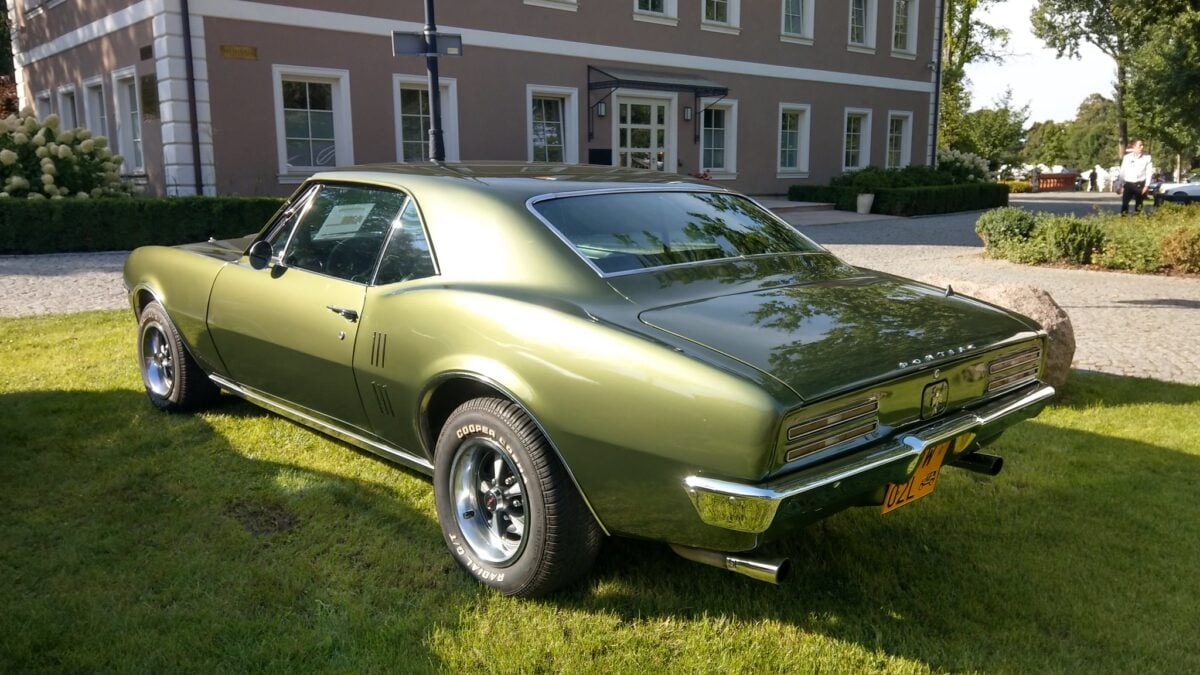
The Firebird was Pontiac’s answer to the Camaro — both cars launched in 1967 on the same platform. Where the Camaro kept things relatively grounded, the Firebird leaned into mythology.
The firebird is a creature from Slavic folklore, a blazing magical bird that brings both blessings and destruction depending on who’s asking. The car’s most famous version, the Trans Am with the screaming chicken hood decal, became a cultural icon in the 1970s and is now one of the most recognisable car images of that era.
Mercury Cougar
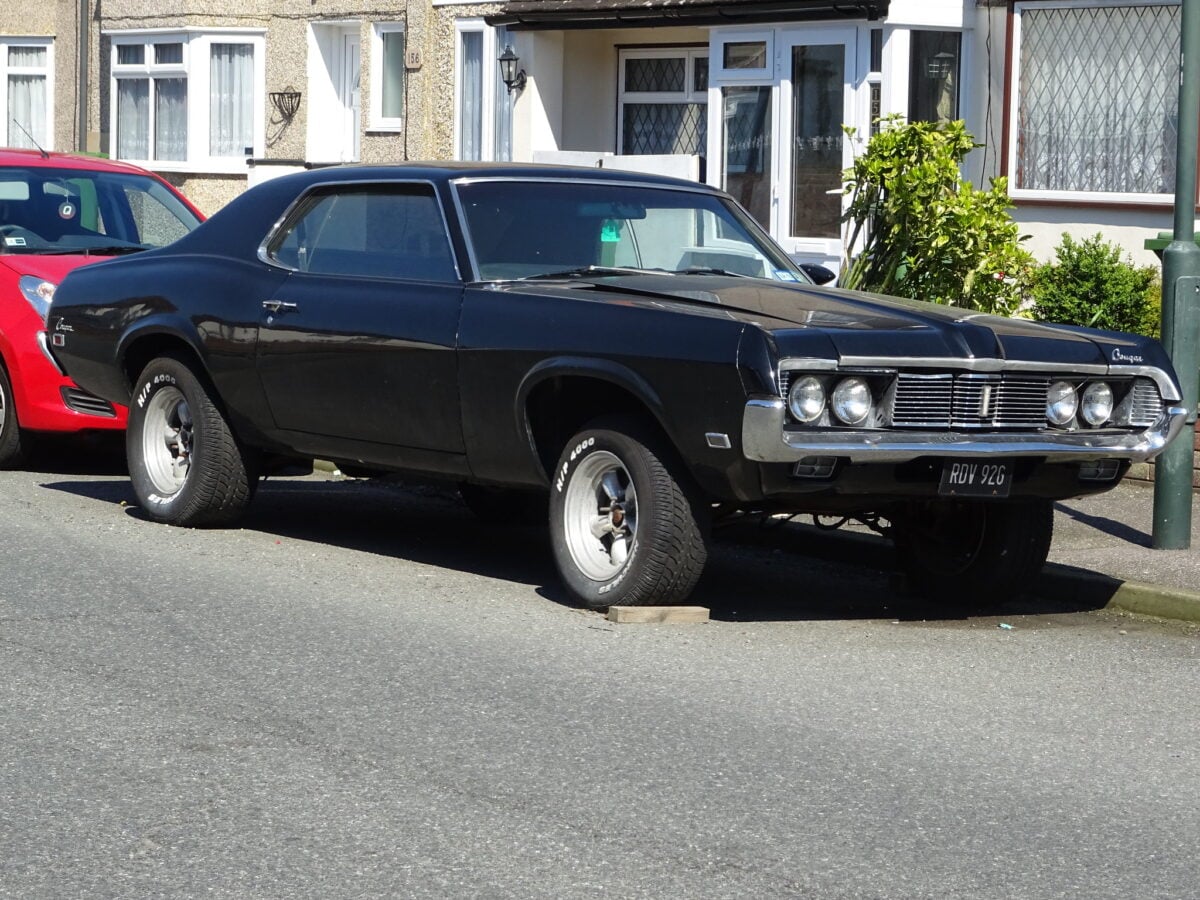
Ford’s Mercury division introduced the Cougar in 1967 as a stretched, slightly more refined version of the Mustang platform. The mountain lion association — speed, stealth, power — made sense for a sporty personal luxury coupe.
The Cougar sold well in its early years, but Mercury kept changing its direction, and by the time production ended in 2002 the car was a front-wheel-drive compact that had almost nothing in common with its origins. The name outlived the concept by a long stretch.
Ford Bronco

The bronco is an unbroken or partially tamed horse, and Ford used the name for a compact off-road vehicle starting in 1966. The original Bronco built a loyal following, and the full-size version that replaced it became famous for reasons Ford didn’t plan — O.J. Simpson’s low-speed chase in a white 1994 Bronco is probably the most-watched car footage of the 1990s.
Ford retired the name in 1996, then brought it back in 2021 to enormous commercial success. The horse imagery had aged well.
Volkswagen Beetle

The Beetle wasn’t named by Volkswagen — the company called it the Type 1. The beetle nickname came from the public, who looked at the rounded shape and saw a bug.
It stuck so thoroughly that Volkswagen eventually adopted it officially. The original ran from 1938 to 2003, making it one of the longest-produced car designs in history.
The New Beetle launched in 1997 and the final generation ended in 2019. Few cars have ever been as immediately and universally recognisable from a silhouette.
Shelby Cobra

Carroll Shelby claimed the name came to him in a dream. Whether that’s true or not, the Cobra — a small British roadster fitted with a large American V8 — became one of the most copied car designs in history. The original AC Cobra from the early 1960s remains one of the fastest and most dangerous cars of its era, with almost no safety equipment and an engine that could overwhelm the chassis if you weren’t careful.
Cobra kit cars and replicas have been built by enthusiasts for decades. The name and the snake badge became their own industry.
Ram Trucks

Dodge used a ram’s head hood ornament as far back as the 1930s, and the ram eventually became the official name for the truck division when it split from Dodge in 2010. The choice makes clear sense — rams charge hard, they’re built for rough terrain, and the image reads as tough without being overtly threatening.
Ram has since grown into one of the top-selling truck brands in North America, so the animal association has served it well.
Triumph Stag

British carmaker Triumph released the Stag in 1970 as a grand touring convertible — a stylish, four-seat open-top car with a distinctive T-bar roof. A stag is a mature male deer, typically associated with grace and wildness in equal measure.
The car looked the part. Unfortunately, the engine Triumph developed for it was unreliable, and the Stag spent much of its production life generating repair bills rather than praise. It was discontinued in 1977 but has since become a cult classic, with owners keeping the remaining examples running through sheer determination.
Chevrolet Corvette Stingray
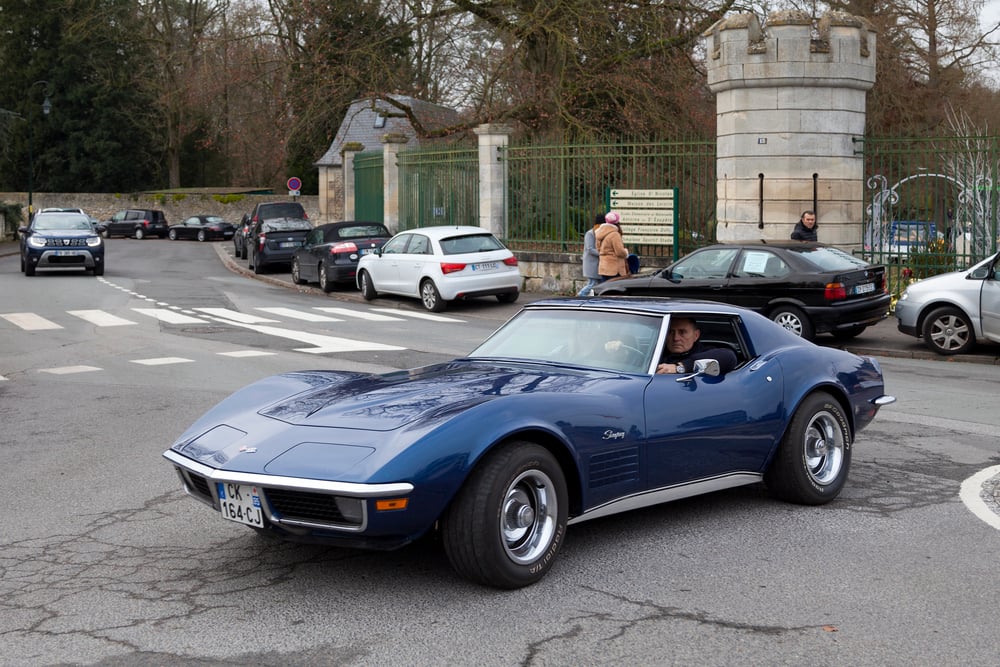
The Corvette has carried the Stingray name in two separate periods — the 1960s and again from 2014 onward. The stingray, a flat, fast, low-to-the-ground creature that moves silently through water, maps well onto a sports car that sits close to the road and moves quickly.
The second-generation Stingray from 1963 to 1967 is considered one of the most beautiful American cars ever built. When Chevrolet revived the name for the C7 generation, it was a deliberate nod to that reputation.
Ford Pinto

Not every animal name aged gracefully. Ford introduced the Pinto in 1971 — a pinto is a horse with patches of two colours, and the name was meant to suggest something lively and spirited. What the car became known for instead was a fuel tank design that, in certain rear-end collisions, could catch fire.
The resulting lawsuits and media coverage turned Pinto into a cautionary tale about corporate decision-making. The horse name was the least memorable thing about it.
AMC Eagle

American Motors Corporation launched the Eagle in 1979 as one of the first passenger cars with standard four-wheel drive. The bald eagle carries obvious American symbolism, and AMC was leaning into its identity as a domestic underdog.
The Eagle was ahead of its time — essentially a precursor to the crossover segment that would come to dominate the market decades later. AMC folded in 1988, but the Eagle name lived on briefly under Chrysler before disappearing entirely in 1998.
What the Animals Said About the Cars

What you see on your plate probably did not really grow in nature. Before each bite you have taken, there was a hidden chain of decisions, discussions, and even doubts. None of the fruits exactly turned out as originally planned.
People negotiated over them, changed their names, and transported them in different countries. Slowly, through small influences, they became known.
Your food was not only made by the sun but also by your decisions. The avocado, which was almost extinct, survived only after the animals that were its carriers disappeared.
The banana was doomed to failure except that it was fortuitous. For a long time, no one was aware of the real color of the orange.
Every segment of your meal has a story of the past decisions – which ones were attractive, made to care, and remained through time.
More from Go2Tutors!

- The Romanov Crown Jewels and Their Tragic Fate
- 13 Historical Mysteries That Science Still Can’t Solve
- Famous Hoaxes That Fooled the World for Years
- 15 Child Stars with Tragic Adult Lives
- 16 Famous Jewelry Pieces in History
Like Go2Tutors’s content? Follow us on MSN.



