26 Rare Photos From History’s Turning Points
Most of history happened with no camera in the room. The handful of moments that did get recorded often came down to one person, one plate or one roll of film, and a margin of luck so thin it still seems improbable.
Some of these images were nearly lost in a darkroom, hidden in a hotel toilet tank or misfiled for decades. Others were taken by people who had never held a camera before that day.
Each one exists because a shutter opened at the right second and could never open on that second again.
View From the Window at Le Gras
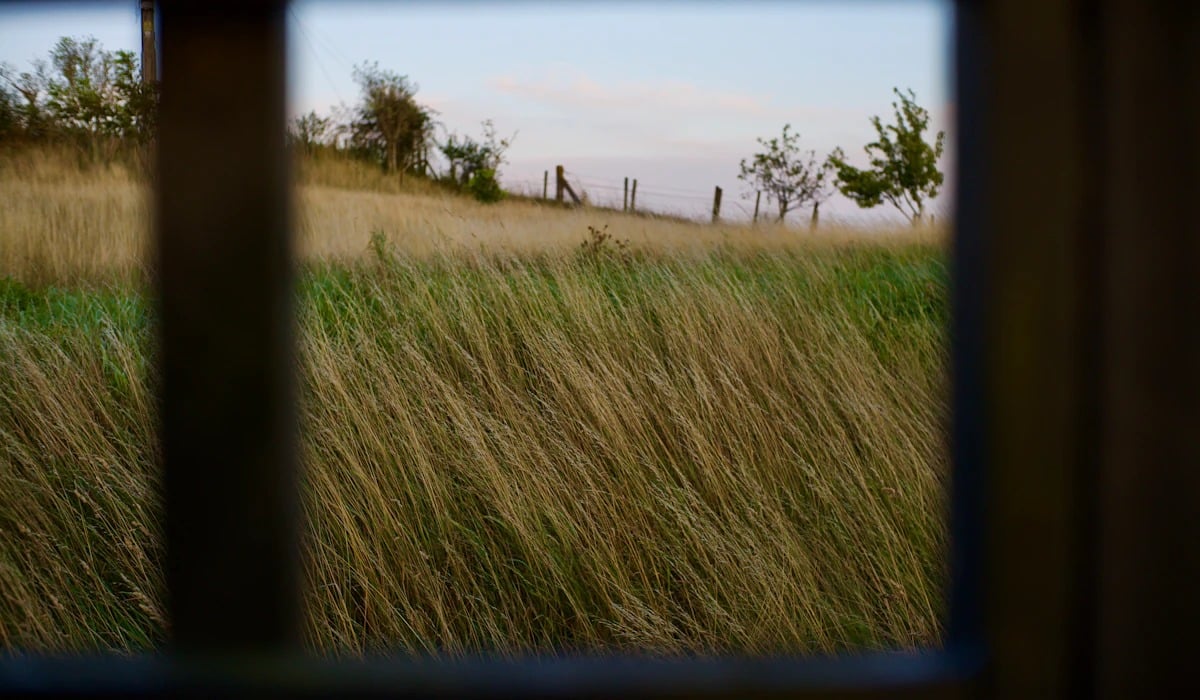
Joseph Nicephore Niepce made this image around 1826 or 1827 from an upstairs window of his family estate in Saint-Loup-de-Varennes, France. He coated a pewter plate with bitumen of Judea, a light-sensitive asphalt, and left it exposed for many hours, possibly days, which is why sunlight seems to strike buildings from both sides.
It is generally regarded as the oldest surviving camera photograph. The plate dropped out of sight for decades until historian Helmut Gernsheim tracked it down in 1952.
Today it sits in a sealed, oxygen-free case at the Harry Ransom Center at the University of Texas at Austin.
A Paris Boulevard With One Standing Figure
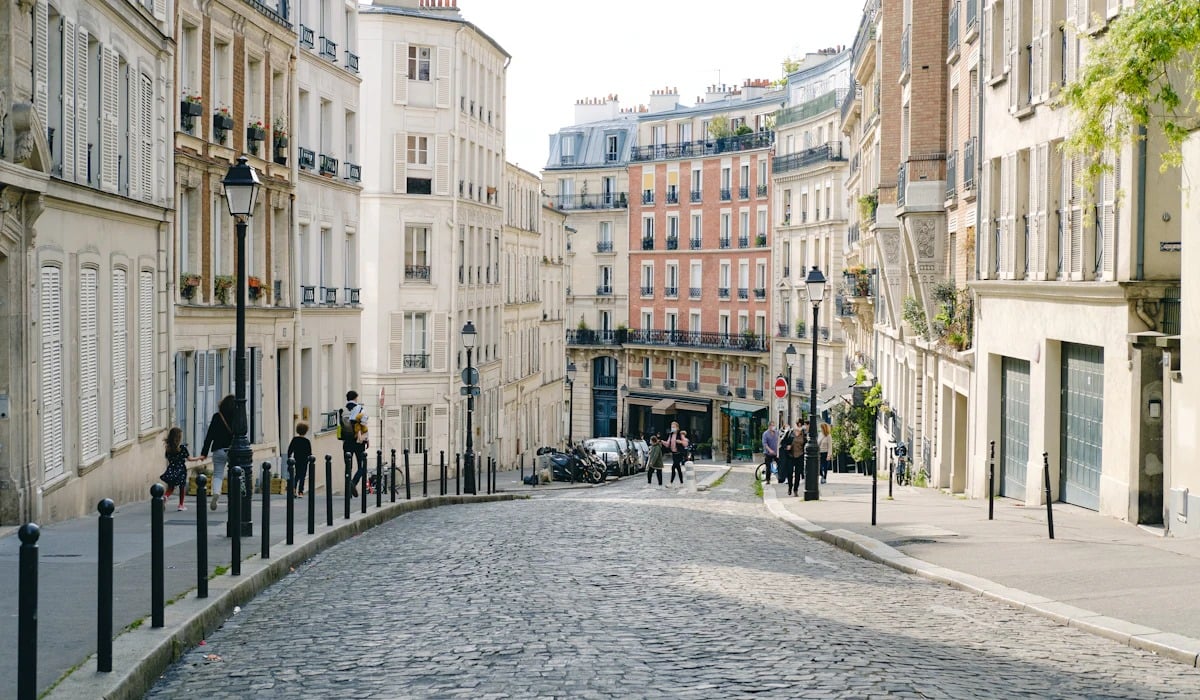
Louis Daguerre photographed the Boulevard du Temple in Paris in 1838 from a high window, and the street appears almost empty. It was in fact busy with carriages and pedestrians, but the exposure lasted several minutes, so anything moving simply failed to register.
In the lower left, a man stands still long enough to have his boots polished, and he became the first person known to appear in a photograph. The shoe shiner beside him is a faint blur.
Neither was ever identified, and no other image from that day exists to show who they were.
Roger Fenton’s Valley of the Shadow of Death
Roger Fenton made two photographs of the same stretch of road during the Crimean War in April 1855. In one, the road is clear and the iron cannon shot lies in the ditches beside it.
In the other, the shot is scattered across the road itself. For more than a century the pair has fueled debate over whether Fenton moved the shot to make a more dramatic picture, and analysis of shadows and pebble positions has persuaded many historians that the clear road came first.
The image is often cited as one of the earliest known cases of a staged or rearranged war photograph.
Abraham Lincoln at Gettysburg
Only one confirmed photograph shows Abraham Lincoln at Gettysburg on November 19, 1863, the day he delivered his address at the dedication of the Soldiers’ National Cemetery. For nearly 90 years nobody knew it existed.
In 1952, Josephine Cobb, a specialist at the National Archives, enlarged a glass plate negative from the Mathew Brady collection and spotted a tiny, hatless Lincoln among the crowd on the speakers’ platform. The plate is generally attributed to photographer David Bachrach.
Lincoln appears as a small face in a sea of people, likely taken before the speech rather than during it.
Wright Flyer Leaving the Ground
The photograph of the first powered airplane flight at Kill Devil Hills, North Carolina, on December 17, 1903, was taken by John T. Daniels, a member of the nearby lifesaving station.
Daniels had never operated a camera before. Orville Wright set up the tripod and aimed the lens at the end of the launch rail, then asked Daniels to squeeze the bulb if the machine left the ground.
Daniels did so at the exact instant, catching Orville at the controls and Wilbur running alongside. The glass plate negative is held today by the Library of Congress.
Lunch Atop a Skyscraper
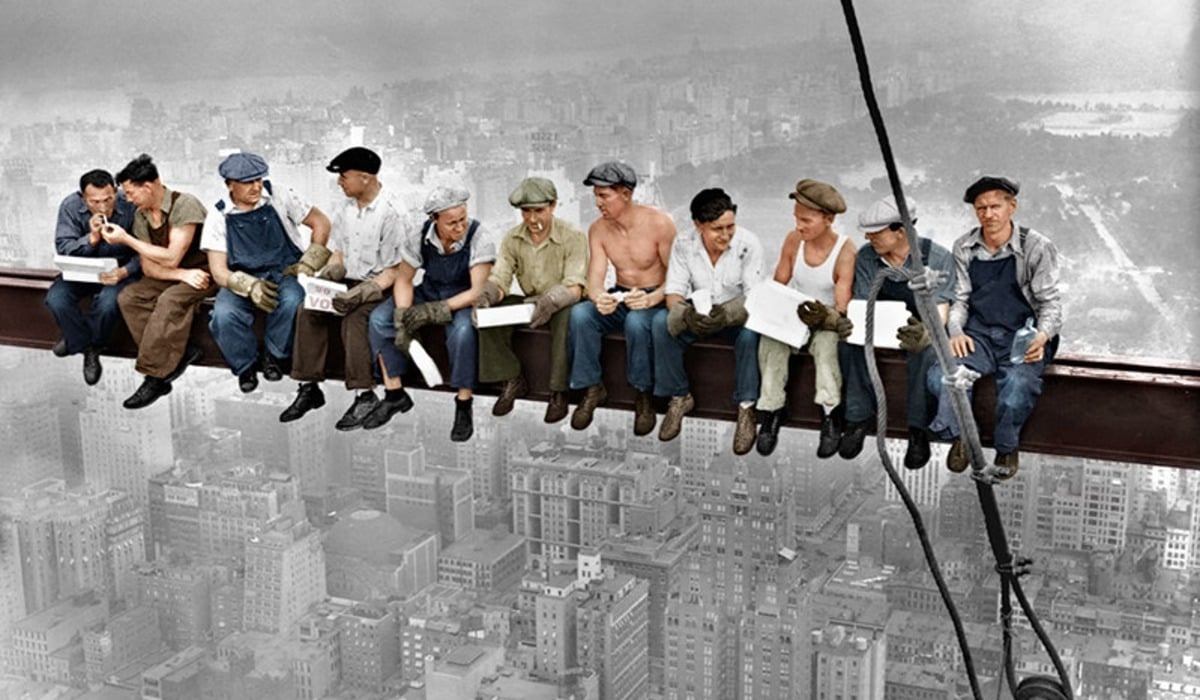
Eleven ironworkers eat lunch on a steel beam high above Manhattan in this image dated September 29, 1932, during construction of the RCA Building at Rockefeller Center. The scene was a publicity effort for the project, though the beam and the drop beneath it were real.
Credit for the photograph has been uncertain for decades. The Bettmann archive credited Charles C.
Ebbets in 2003, but later research cast doubt on that, and several photographers were working on the beams that day. Most of the men on the beam have never been firmly identified, though Irish and Basque families have each claimed relatives among them.
Migrant Mother in Nipomo
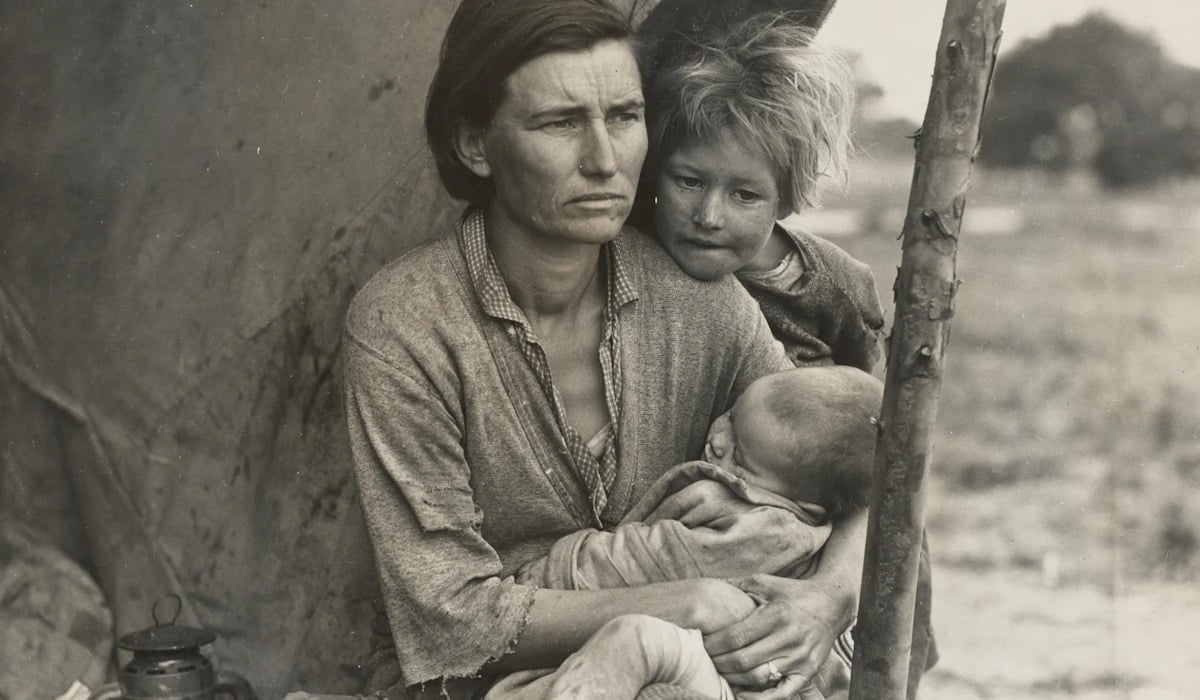
Dorothea Lange, working for the federal Resettlement Administration, stopped at a pea pickers’ camp in Nipomo, California, in March 1936 and spent only a few minutes photographing a mother and her children. She made a short series of exposures, and the final frame became the most famous image of the Great Depression.
The woman, Florence Owens Thompson, was not publicly identified until the late 1970s. Lange later had a thumb at the lower edge of the frame retouched out of the negative.
The original negatives are held by the Library of Congress, which makes the image freely available to the public.
Hindenburg Over Lakehurst
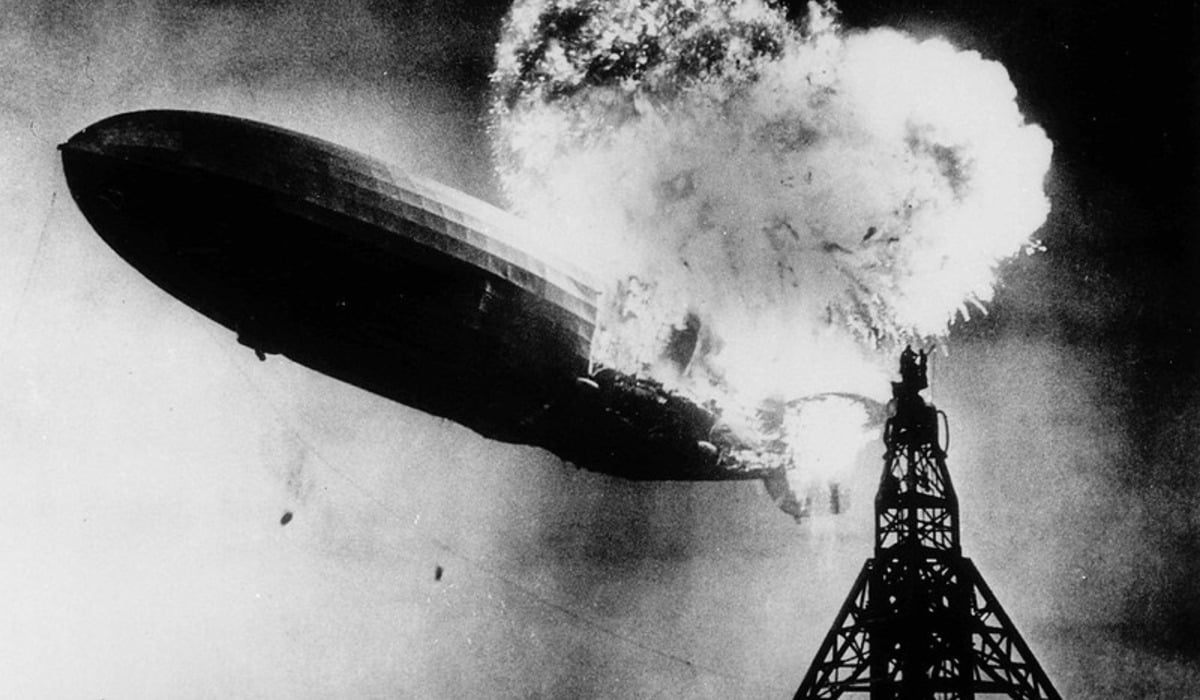
Sam Shere of International News Photos was among a group of photographers waiting at Naval Air Station Lakehurst, New Jersey, on May 6, 1937, for what was expected to be a routine airship landing. When the Hindenburg caught fire on approach, it was consumed in roughly half a minute.
Shere had time for very few exposures, and his frame of the airship’s tail section dropping toward the mooring area became the defining picture of the disaster. Of the 97 people aboard, 35 died, along with one member of the ground crew.
Commercial passenger airship travel never recovered from the loss.
Gandhi Beside His Spinning Wheel

Margaret Bourke-White photographed Mohandas Gandhi in 1946 for Life magazine, and her picture of him reading near his charkha became one of the best-known images of the independence era in India. Before she was allowed to photograph him, his secretaries reportedly told her she would need to learn to spin.
Gandhi was observing a day of silence when she arrived, and he disliked bright flash, so she worked with very little artificial light. Accounts of the session say her first attempts with the camera went wrong before she got the frame she wanted.
Gandhi was assassinated less than two years later.
Robert Capa on Omaha Beach
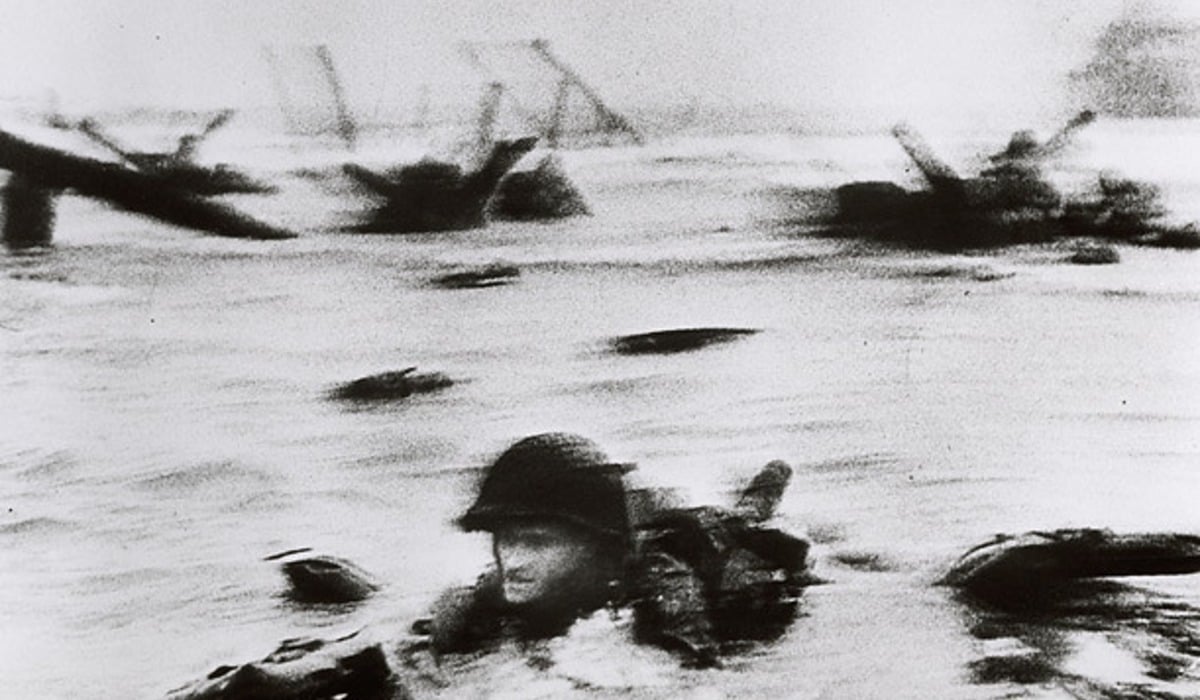
Robert Capa landed with American troops at Omaha Beach on June 6, 1944, and shot several rolls of film under fire. Back in London, a mishap in the Life magazine darkroom ruined most of them, and only about 11 frames survived, a set now known as the Magnificent Eleven.
The blurred, grainy quality of the remaining frames gives them a sense of motion that sharper pictures could not. Historians have since questioned how many rolls Capa actually exposed and how the damage happened, but the surviving images remain among the few photographs of the first wave landing.
Raising the Flag on Iwo Jima
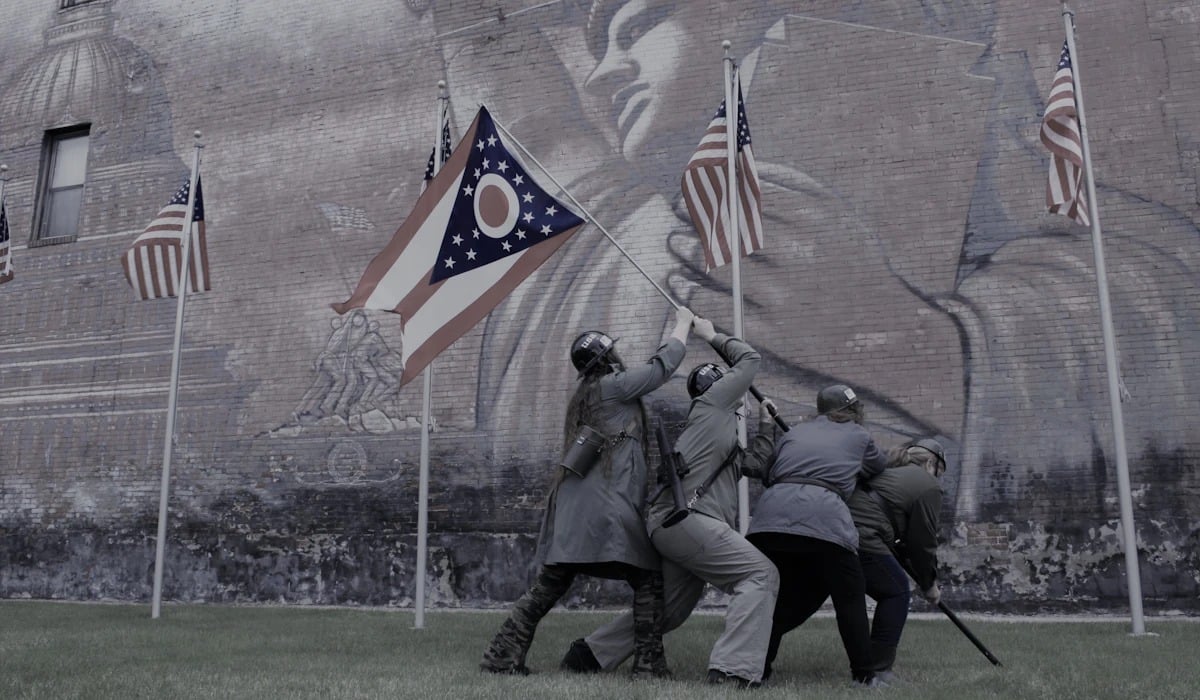
Joe Rosenthal of the Associated Press took his photograph atop Mount Suribachi on February 23, 1945, and it was not the first flag raising that day. Marines had raised a smaller flag earlier, and Rosenthal arrived as a larger replacement went up.
He captured the six men in a single frame without knowing whether he had the shot, and the image won the Pulitzer Prize for Photography that same year. Three of the six men in the picture were killed in the fighting that followed.
The image later became the model for the Marine Corps War Memorial in Arlington, Virginia.
Red Flag Over the Reichstag
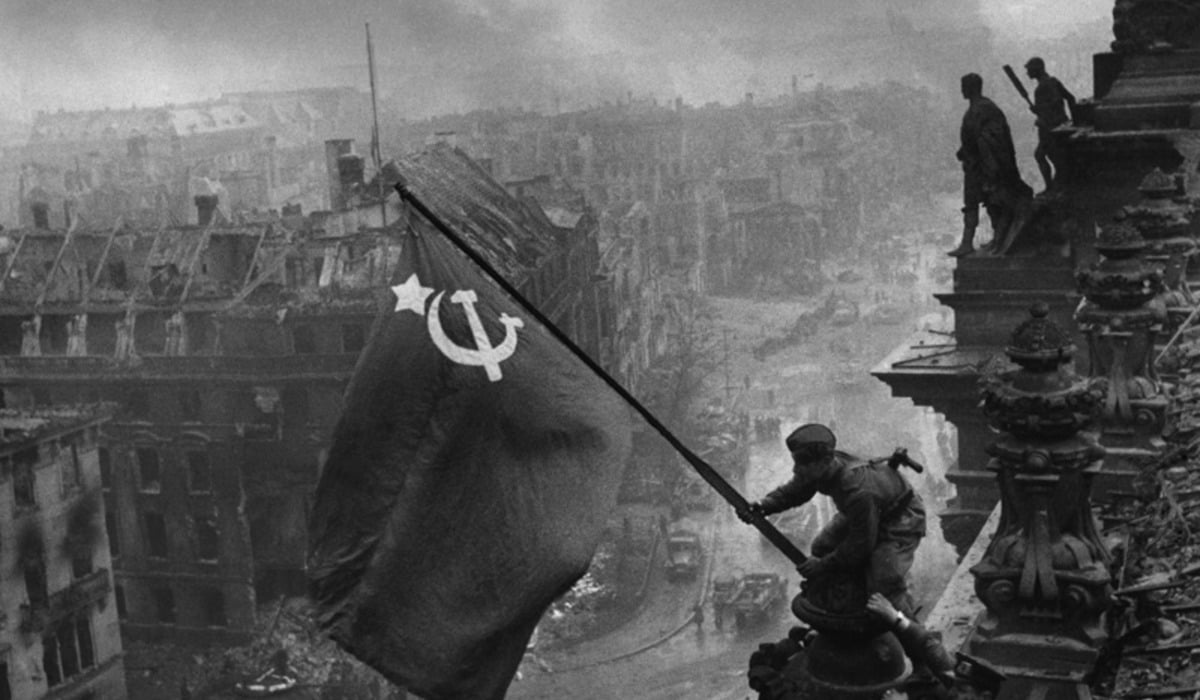
Soviet photographer Yevgeny Khaldei made his picture of a soldier raising a Soviet flag above the Reichstag in Berlin on May 2, 1945, after the building had already fallen. The scene was restaged for the camera, and Khaldei had carried the flag to Berlin himself, sewn from red tablecloths.
Before publication, editors noticed that one soldier appeared to be wearing a wristwatch on each arm, a detail that suggested looting, and the extra watch was retouched out. Khaldei also darkened the smoke in the sky for effect.
The altered version became the standard Soviet image of victory.
Two Cameras in Times Square on V-J Day
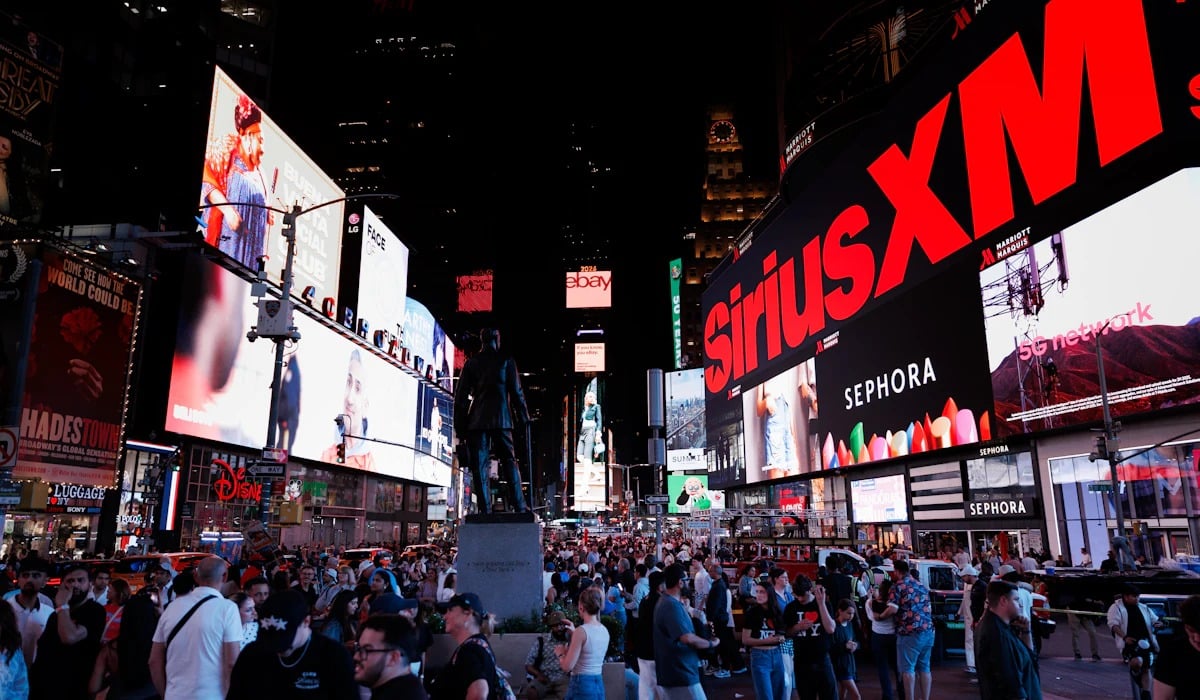
On August 14, 1945, as news of the Japanese surrender reached New York, a sailor kissed a woman in a nurse’s uniform in Times Square, and two photographers caught it from different angles. Alfred Eisenstaedt shot for Life magazine, while Navy photographer Victor Jorgensen made a frame from nearby that ran in The New York Times.
Eisenstaedt did not take names, and for decades several people claimed to be the pair. George Mendonsa and Greta Zimmer Friedman are now most widely accepted.
Friedman later said in interviews that the moment was not consensual or romantic, but a stranger’s spontaneous act.
Trinity at the Instant of Detonation
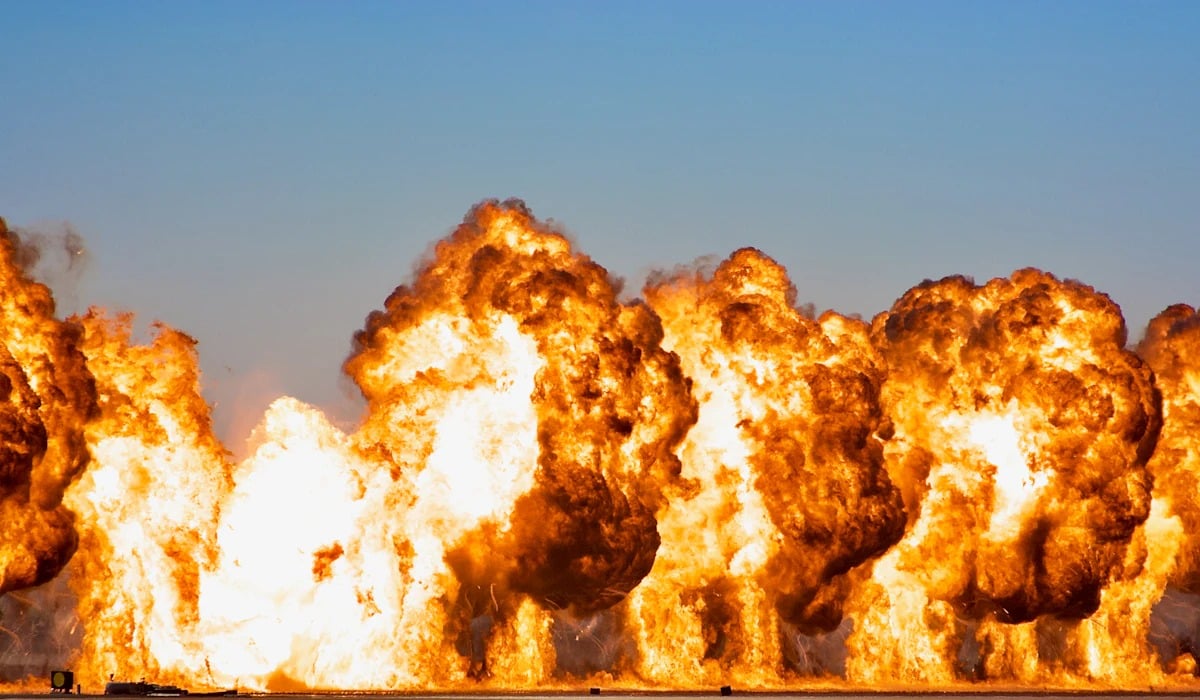
The first nuclear test took place in the Jornada del Muerto desert of New Mexico on July 16, 1945. Berlyn Brixner led the high-speed photography team and placed cameras capable of thousands of frames per second at distances of up to about 10 miles, recording the earliest fraction of a second of the explosion.
Most of the color film that day was overexposed or failed. Jack Aeby, a civilian physicist, brought his own camera and produced the only well-exposed color still of the test.
His frame shows the expanding cloud lit from within, an image no camera can ever repeat.
Earth From a Captured V-2 Rocket
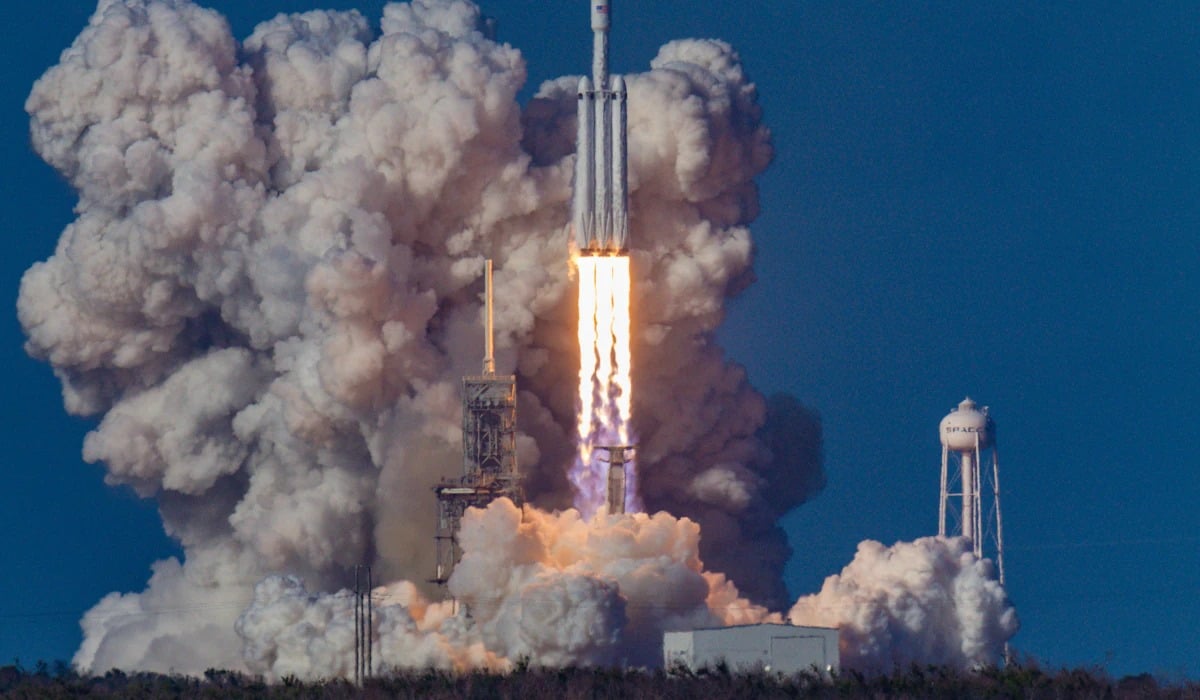
A captured German V-2 rocket launched on October 24, 1946, from White Sands Missile Range in New Mexico carried a 35mm motion picture camera in its nose. At about 65 miles above the surface, the camera recorded grainy black and white frames showing the curve of the Earth and a dark sky above it.
The rocket crashed back to the desert, but the film survived inside a steel cassette. Those frames are generally considered the first photographs of Earth taken from space.
They predate Sputnik by 11 years and the first human spaceflight by nearly 15.
Photo 51 at King’s College London
Photo 51 is an X-ray diffraction image of DNA made in May 1952 at King’s College London by graduate student Raymond Gosling, working under Rosalind Franklin. The exposure ran about 62 hours to record a crisp X-shaped pattern from a hydrated DNA fiber.
That X pointed clearly to a helical structure. In January 1953, Maurice Wilkins showed the image to James Watson without Franklin’s knowledge, and it helped Watson and Francis Crick build their double helix model that spring.
Franklin died in 1958 and was not included in the 1962 Nobel Prize for the discovery.
Elizabeth Eckford at Little Rock
Will Counts of the Arkansas Democrat photographed 15-year-old Elizabeth Eckford walking alone toward Little Rock Central High School on September 4, 1957. She had missed the message that the nine Black students would arrive together, so she faced the hostile crowd by herself.
Behind her, a white student named Hazel Bryan is shown shouting with her face twisted. The photograph circulated worldwide and became a defining image of school desegregation.
Bryan later called Eckford to apologize, and Counts photographed the two women together again at the school in 1997, four decades after the first frame.
Conrad Schumann’s Leap Over the Wire
Two days after East German authorities sealed the border in Berlin, 19-year-old border guard Conrad Schumann jumped over a low barbed wire barrier on Bernauer Strasse into West Berlin on August 15, 1961. Peter Leibing, also 19, had been waiting with his camera after noticing the guard pacing nervously.
He caught Schumann mid-jump, rifle slipping from his shoulder, before the barrier became a concrete wall. The image became one of the most widely reproduced photographs of the Cold War.
Similar escapes at that spot soon became impossible, which is part of why the frame has never been matched.
Lyndon Johnson Sworn In Aboard Air Force One
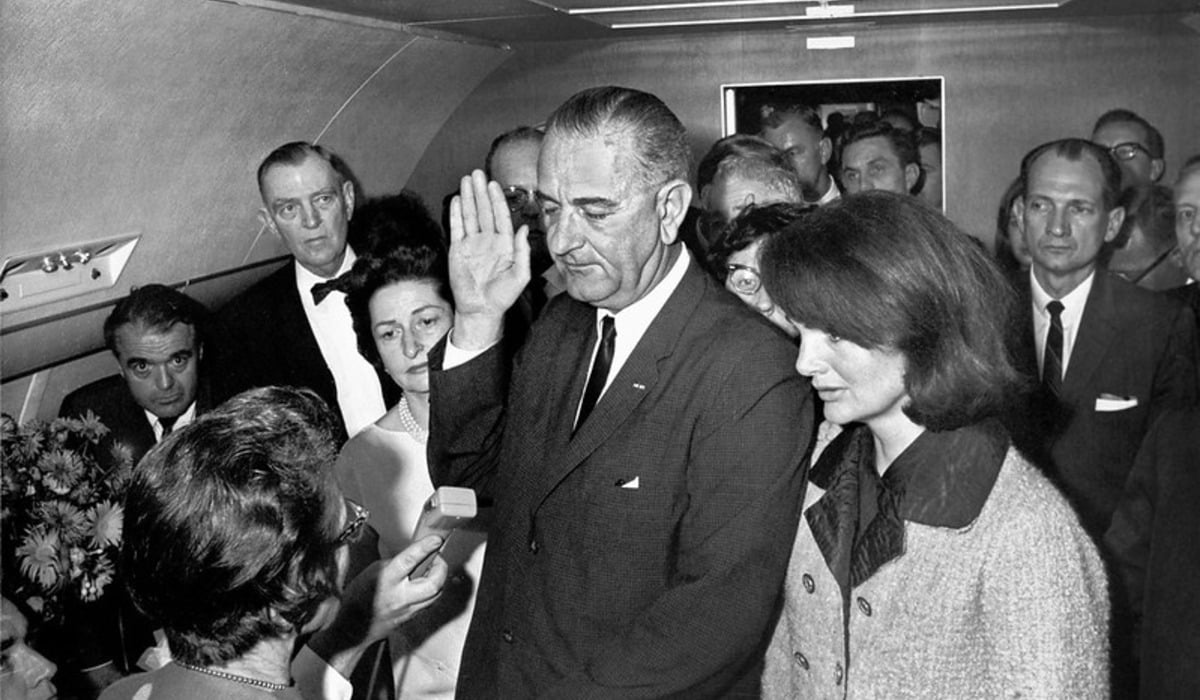
Cecil Stoughton, the first official White House photographer, was the only photographer aboard Air Force One at Love Field in Dallas on November 22, 1963, when Lyndon B. Johnson took the oath of office.
Judge Sarah T. Hughes administered it, the only woman ever to swear in a U.S. president.
Jacqueline Kennedy stood beside Johnson in the cramped cabin. Stoughton’s camera briefly jammed before he cleared it and kept shooting.
With no other cameras present, his frames became the only visual record of the first presidential oath ever administered on an airplane.
Earthrise Over the Lunar Horizon
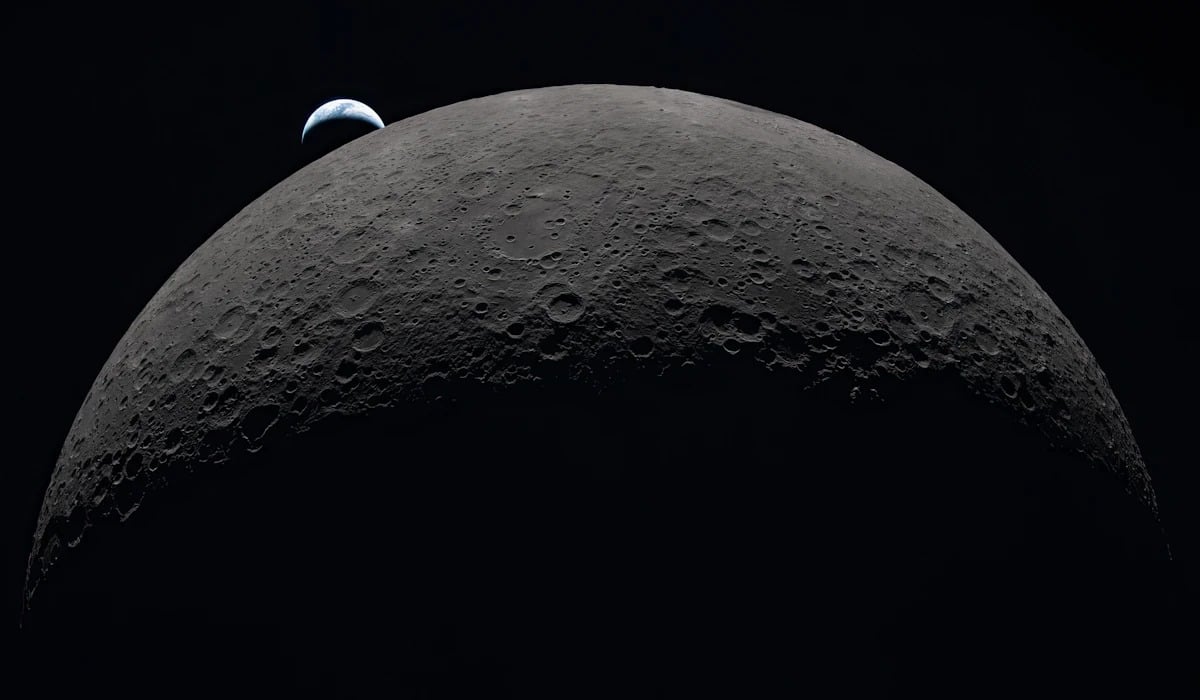
Apollo 8 astronaut William Anders made this photograph on December 24, 1968, while orbiting the Moon. The shot was not on the flight plan.
As the spacecraft came around the far side, Earth appeared over the lunar horizon, and Anders first took a black and white frame before the crew scrambled for a magazine of color film. The color frame was taken with a Hasselblad camera on the fourth orbit.
The image is widely credited with helping spur the environmental movement, and it appeared on a U.S. postage stamp in 1969.
Buzz Aldrin on the Sea of Tranquility
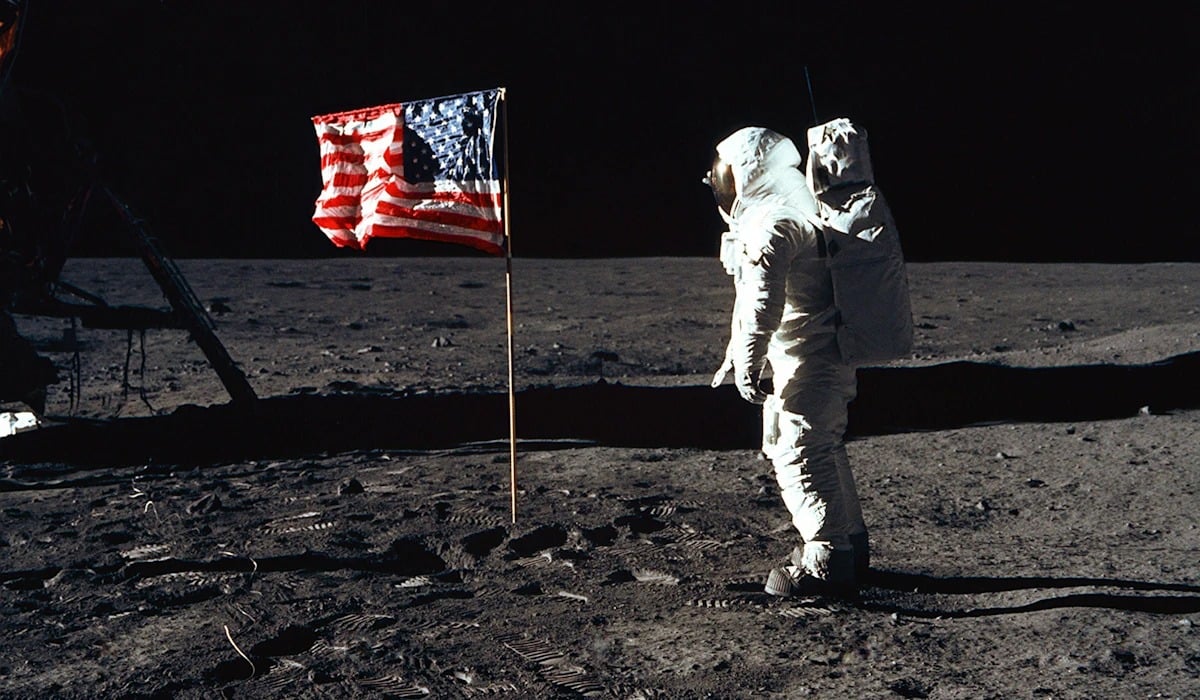
Neil Armstrong carried the main Hasselblad camera for most of the Apollo 11 moonwalk on July 20, 1969, which is why nearly all the famous surface photographs show Buzz Aldrin. In the best-known frame, Aldrin faces the camera, and Armstrong and the lunar module appear reflected in his gold visor.
Very few still photographs show Armstrong himself on the surface, and NASA did not identify the best of them until years later. The most recognizable image of the first Moon landing therefore shows the second man to step onto it, with the first visible only as a reflection.
Last Helicopter From a Saigon Rooftop
Hubert van Es, a Dutch photographer working for United Press International, photographed people climbing a ladder to a helicopter on a Saigon rooftop on April 29, 1975, the day before the city fell. For years the image was widely described as showing the U.S.
Embassy. It actually shows the roof of an apartment building at 22 Gia Long Street used by American officials, a detail van Es spent years correcting.
He shot it from the balcony of the UPI office, and the building still stands in what is now Ho Chi Minh City.
Tank Man in Beijing
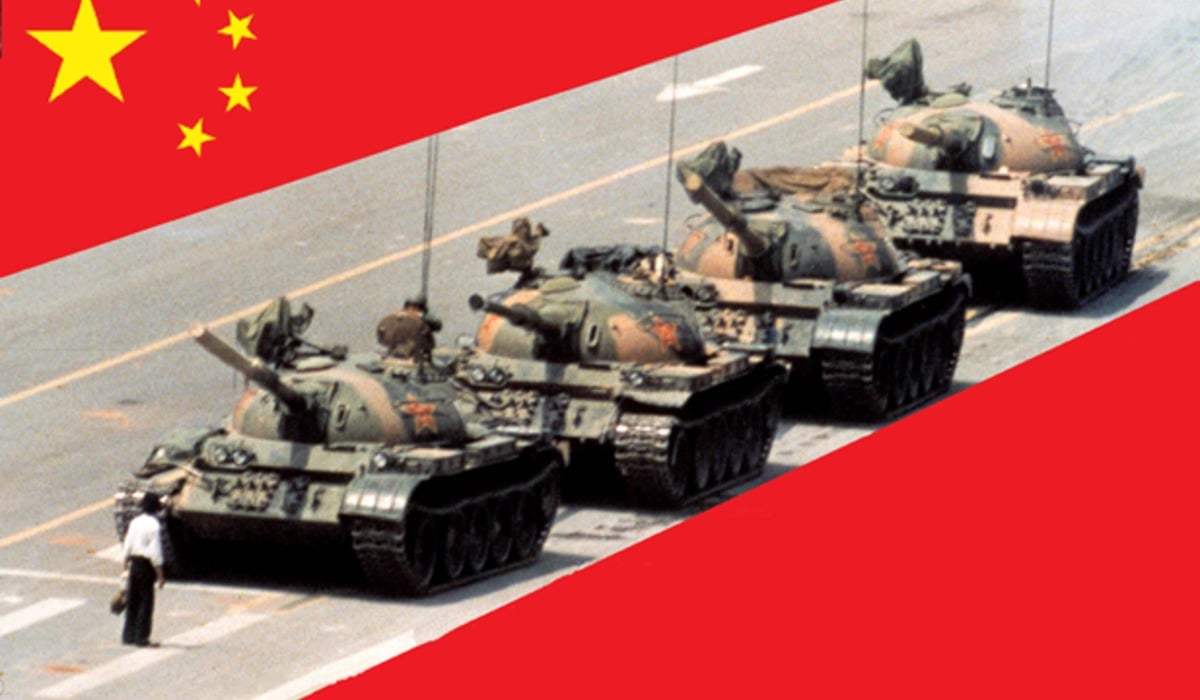
On June 5, 1989, a lone man in a white shirt stood in front of a column of tanks on Changan Avenue near Tiananmen Square. Several photographers recorded the moment from upper floors of the Beijing Hotel, including Jeff Widener of the Associated Press, Charlie Cole for Newsweek and Stuart Franklin of Magnum.
Security officers were searching rooms and seizing film. Cole hid his roll in a toilet tank, and Widener’s film was smuggled out of the hotel by an American student.
The man’s identity and fate have never been confirmed.
Pale Blue Dot From Voyager 1
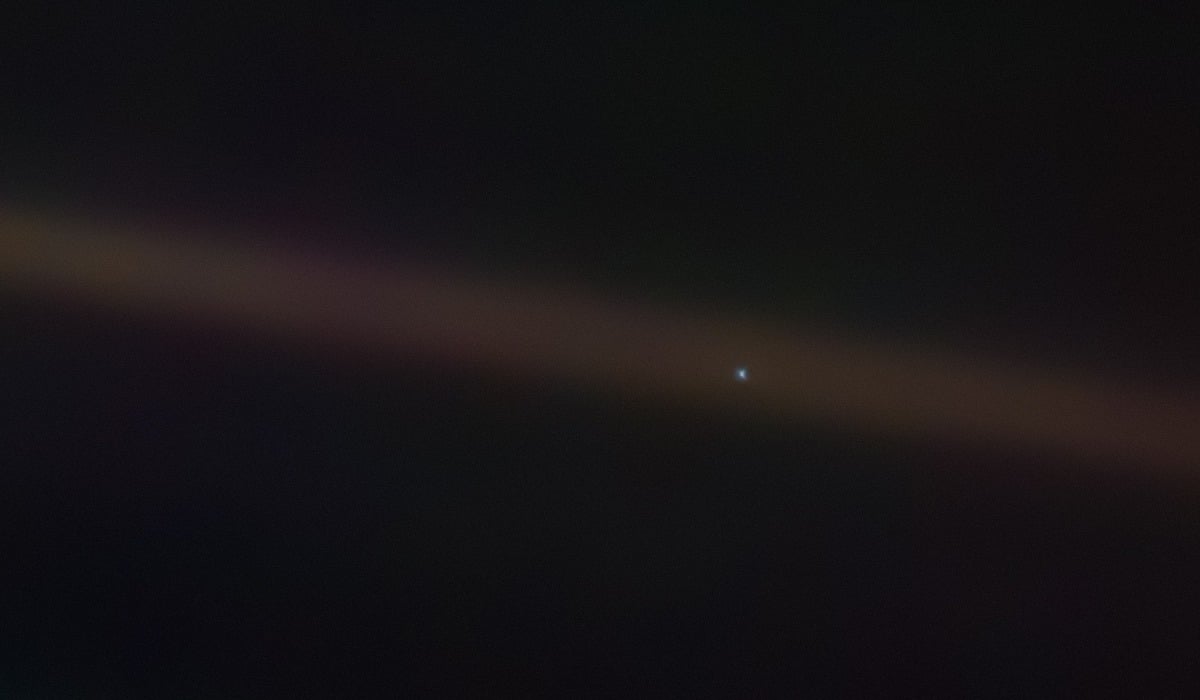
On February 14, 1990, at the urging of astronomer Carl Sagan, NASA turned Voyager 1 back toward the inner solar system and took a series of images about 6 billion kilometers from home. In one frame, Earth appears as a speck smaller than a single pixel, caught in a band of scattered sunlight.
Engineers had worried that pointing the cameras near the sun could damage them. Shortly after this sequence, the cameras were switched off to save power and memory, so these were among the last images Voyager 1 ever took.
Nelson Mandela Walks Free
When Nelson Mandela left Victor Verster Prison near Paarl, South Africa, on February 11, 1990, most South Africans had no idea what he looked like. Publishing photographs of him had been illegal for most of his 27 years in custody, and the last widely circulated images showed a much younger man.
Crowds of photographers lined the road outside the prison gates as he emerged with Winnie Mandela, his fist raised. Those pictures gave the world its first clear look at him in decades, and they reached front pages across the globe within hours.
Shutters Open Only Once
Each of these photographs depended on a camera being in the right spot for reasons that were often accidental. A lifesaver squeezed a bulb on cue, a darkroom wiped out most of a roll, an archivist looked closely at a glass plate nobody had studied.
Remove any one of those small events and the moment survives only in written accounts.
Photography is often treated as a record of what happened, yet these images show how much of the record rests on chance. The fame of a picture tends to hide the fragile chain that produced it.
Every one of these frames is unrepeatable, which is exactly why they still hold attention long after the events themselves.
MORE FROM GO2TUTORS!

- The Romanov Crown Jewels and Their Tragic Fate
- 13 Historical Mysteries That Science Still Can’t Solve
- Famous Hoaxes That Fooled the World for Years
- 15 Child Stars with Tragic Adult Lives
- 16 Famous Jewelry Pieces in History
Like Go2Tutors’s content? Follow us on MSN.