18 Sports Rules That Make No Sense
Sports are supposed to follow logic, right? Well, think again. Every sport has those head-scratching rules that make you wonder what the rule makers were thinking when they came up with them. From baseball’s bizarre dropped third strike to golf’s absurd scorecard signing requirement, these regulations seem designed to confuse rather than clarify.
Some of these rules are leftovers from a different era, while others appear to have been created by committee members who clearly hadn’t thought things through. Here are 18 sports rules that will leave you questioning the sanity of whoever invented them.
The Dropped Third Strike

Baseball’s most confusing rule happens when a batter swings and misses at strike three, but the catcher drops the pitch. Suddenly, the batter can run to first base like nothing happened, turning a clear strikeout into a potential baserunner.
The twist gets even weirder—if first base is occupied with less than two outs, the batter is automatically out anyway, making this rule selectively bizarre.
Calling Timeout While Airborne

Basketball players can call timeout while flying out of bounds, essentially getting a free pass for losing control. This makes zero sense because the player clearly doesn’t have possession if they’re sailing into the courtside seats.
It rewards poor handling and takes away the excitement of watching players make athletic saves to keep plays alive.
Second Serves in Tennis

Tennis is the only sport where you get a complete do-over for messing up your first attempt. Imagine if basketball players got two tries at every free throw or if golfers could retry every shot without penalty.
Professional tennis players have spent years perfecting their craft, yet they still get a mulligan on one of the most basic parts of the game.
Alternating Possession Instead of Jump Throws

College basketball replaced jump throws with alternating possession, which is like playing rock-paper-scissors to decide who gets the basketball. Two players tie up in an athletic battle, but instead of settling it with another jump, the refs just hand it to whoever’s ‘turn’ it is according to an arrow.
This removes skill and competition from the equation entirely.
Fair Catch Kicks

In football, after a fair catch, teams can attempt an uncontested field goal where the defense has to stand 10 yards away. This rule is so obscure that most fans don’t know it exists, and it’s almost never used because the situations where it makes sense are incredibly rare.
It’s essentially a free kick that 99% of people watching have never seen attempted.
Drop-Kick Conversions

The NFL still allows players to drop-kick extra points, a rule that made sense when footballs were rounder in the 1930s. Modern footballs are designed to fly through the air when thrown, not bounce predictably when dropped, making this rule practically useless.
Doug Flutie famously used it once in 2006, and it was the first successful attempt since 1941.
Signing Your Scorecard in Golf

Golfers can play a perfect round, break records, and win tournaments, but if they forget to sign a piece of paper afterward, they’re disqualified. This rule has nothing to do with actual golf skills and everything to do with paperwork management.
It’s like failing a driving test because you forgot to put your name on the form, despite driving flawlessly.
The Ground Can’t Cause a Fumble

In football, if a receiver catches and then drops it when hitting the ground, it’s ruled incomplete rather than a fumble. This protects players from their own clumsiness and removes consequences for poor football security.
Either you caught it or you didn’t—the ground shouldn’t get special treatment as a non-player that can’t cause turnovers.
Building a Stance in Golf

Golf rule 13.3 prohibits ‘building a stance,’ which sounds made up until you realize it means you can’t put a towel down to keep your pants clean. Craig Stadler was disqualified from a tournament for this exact violation, discovered by a TV viewer who called in to report him.
The rule essentially punishes golfers for basic hygiene while taking difficult shots.
One-Foot Catches in College Football

College football allows receivers to make catches with just one foot in bounds, unlike the NFL’s two-foot requirement. This seems like it should make the college game easier, but it actually creates more confusion during replays and reviews.
The simpler solution would be making receivers earn their catches by getting both feet down, just like the professionals do.
Offsides in Hockey

Hockey’s offsides rule stops fast breaks and exciting scoring opportunities, like outlawing fast breaks in basketball. If a team can get the puck through both defensive zones and catch opponents off guard, they’ve earned that advantage through skill and speed.
Instead, the whistle blows and kills the momentum every time someone’s skate crosses a line a split second too early.
Goalkeepers Can’t Handle Backpasses

Soccer goalkeepers can use their hands on every soccerball except when their own teammate passes it back to them. This forces keepers to suddenly play it with their feet, often creating awkward moments and potential scoring opportunities for the opposition.
If the goalkeeper wants to use their hands on any soccerball, they should be allowed to do so regardless of where it came from.
Technical Fouls for Extra Timeouts

Basketball teams get hit with technical fouls for calling timeouts they don’t have, which is like getting a penalty for asking a question. The referees could simply ignore the request or shake their heads, but instead they award free throws to the opponent.
Chris Webber’s infamous timeout call in the 1993 NCAA championship perfectly illustrates how this rule can decide games through mental mistakes rather than basketball skills.
Stroke-and-Distance Penalties

Golf’s stroke-and-distance rule is among the most punitive in all of sports. Hit your golfball out of bounds and you have to go back to where you hit it from, take a penalty stroke, and try again.
This can easily turn one bad shot into a three or four-stroke disaster, far exceeding the punishment for similar mistakes in other sports.
No Goalie Substitutions in Shootouts

Soccer teams can substitute any field player during a penalty shootout, but they’re stuck with their goalkeeper unless there’s an injury. This arbitrary restriction makes no strategic sense, especially since teams can make unlimited substitutions during regular play.
If a team wants to put in a specialist penalty-saving goalkeeper for the shootout, they should have that tactical option.
Imaginary Goalpost Extensions
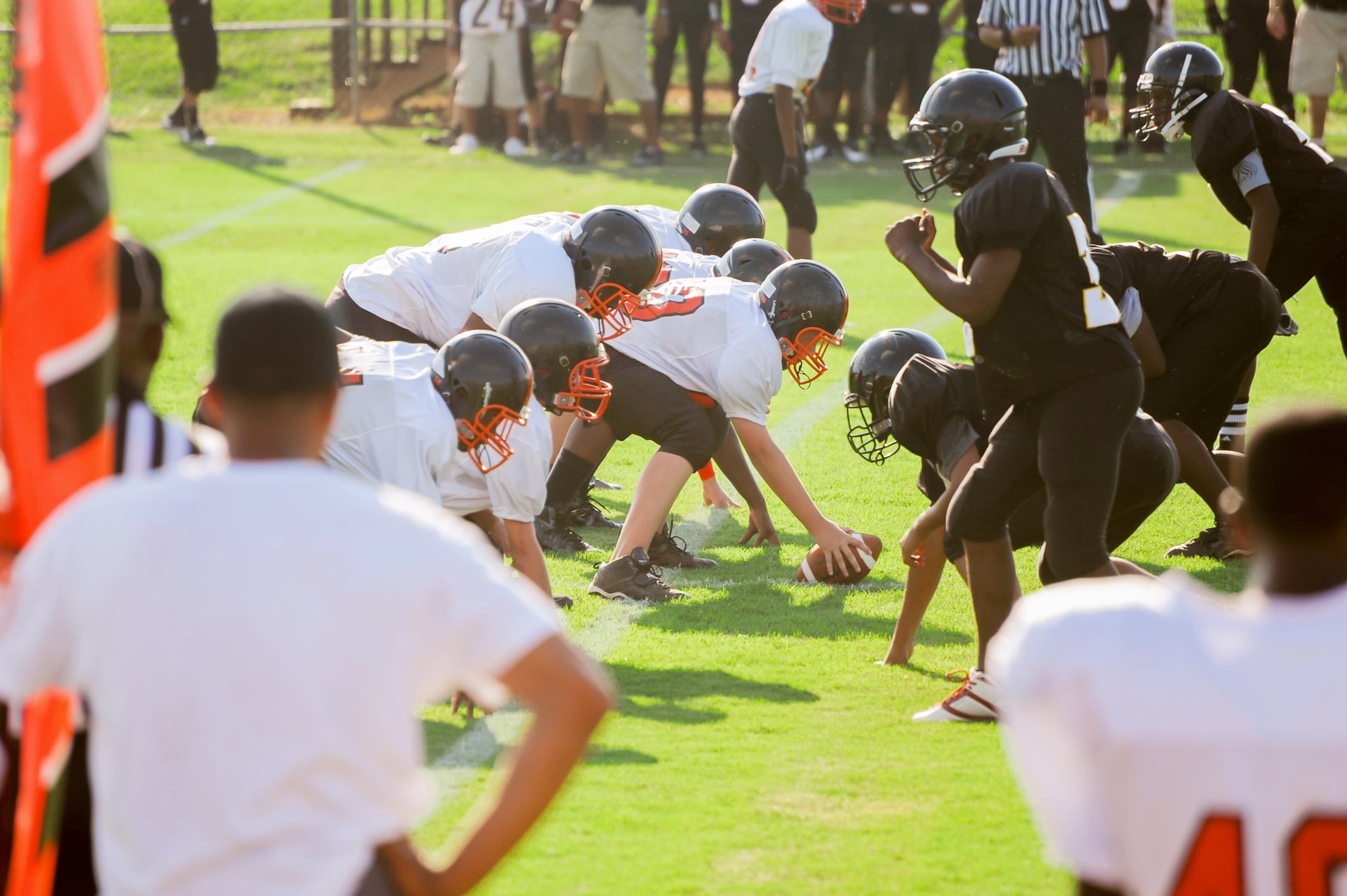
In football, field goals count even when they sail above the goalpost uprights, relying on referees to imagine invisible extensions into the sky. If the physical goalpost was extended higher, many of these kicks would clearly hit the crossbar and bounce back.
The ‘imaginary line’ concept creates unnecessary guesswork when the solution is simply making the uprights taller.
No Dunking in Warmups

College basketball prohibits dunking during pregame warmups, apparently to protect the rims from damage. This rule takes away one of the most exciting parts of warmups for fans and seems overly cautious for equipment that’s designed to handle the rigors of a full game.
Players can dunk during the actual game when points matter, but not when they’re just getting loose.
Ground-Rule Triples for Hat Catches

Baseball awards automatic triples if a fielder tries to catch a baseball with their hat or glove after it falls off. This oddly specific rule seems designed for a situation that almost never happens in modern baseball.
The rule assumes that using your hat gives an unfair advantage, when in reality it would probably make catching the baseball significantly harder.
When Rules Become Relics

These confusing regulations remind us that sports evolve much faster than their rule books. Many of these bizarre rules made perfect sense decades ago when equipment was different, athletes were smaller, and the games moved at a slower pace.
Today, they’re mostly curiosities that occasionally surface to confuse players, fans, and sometimes even the referees who have to enforce them. The beauty of sports lies in their simplicity, but these 18 rules prove that sometimes the rulebook can be the most confusing opponent of all.
More from Go2Tutors!

- The Romanov Crown Jewels and Their Tragic Fate
- 13 Historical Mysteries That Science Still Can’t Solve
- Famous Hoaxes That Fooled the World for Years
- 15 Child Stars with Tragic Adult Lives
- 16 Famous Jewelry Pieces in History
Like Go2Tutors’s content? Follow us on MSN.