Wedding Traditions From the ’50s
A 1950s wedding could be planned in a few weeks and finished by lunch. The bride’s mother addressed the envelopes, women from the congregation cut the cake, and the photographer packed up once the rice had been thrown.
Almost every step followed a script that families already knew by heart. Clergy, etiquette writers, department stores and the occasional movie studio all had a hand in writing it.
Marrying Before Twenty-One
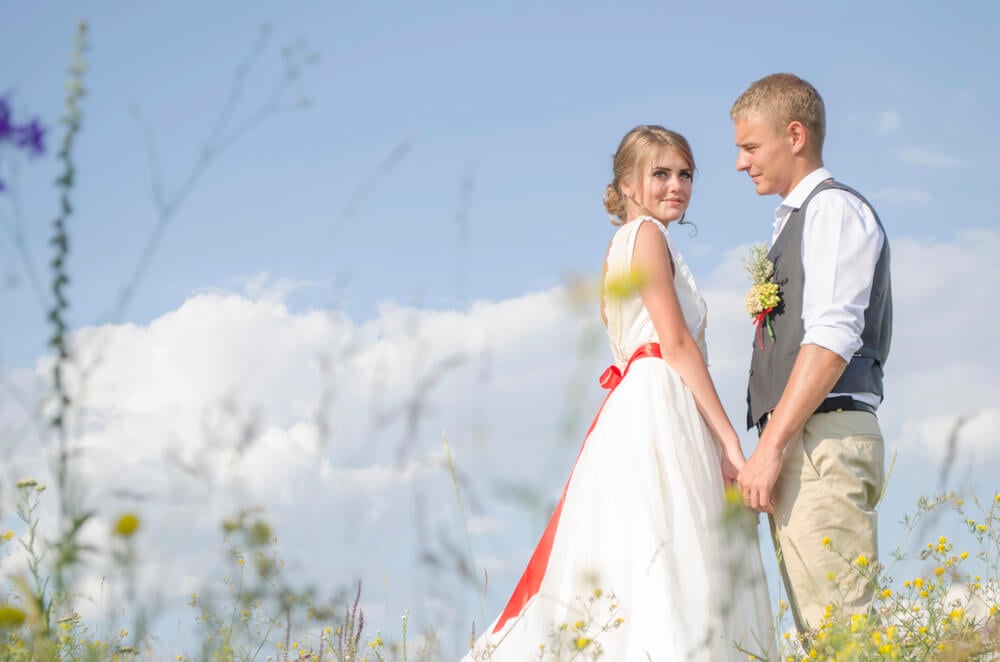
Census Bureau figures put the median age at first marriage near 20 for American brides through the 1950s and between 22 and 23 for grooms, the lowest readings of the twentieth century. Plenty of couples had met in high school, and an engagement announced around graduation surprised nobody.
Parental consent was still written into state law for the youngest applicants, with age thresholds that differed for brides and grooms in many states. The pattern held into the early 1960s and then reversed, and by the 2020s both medians had climbed by roughly eight years.
Morning Ceremonies and the Wedding Breakfast
Saturday morning was prime time at many parishes. Catholic couples marrying at a nuptial Mass had a practical reason, since the Communion fast ran from midnight until Pope Pius XII loosened the rule in 1953 and again in 1957.
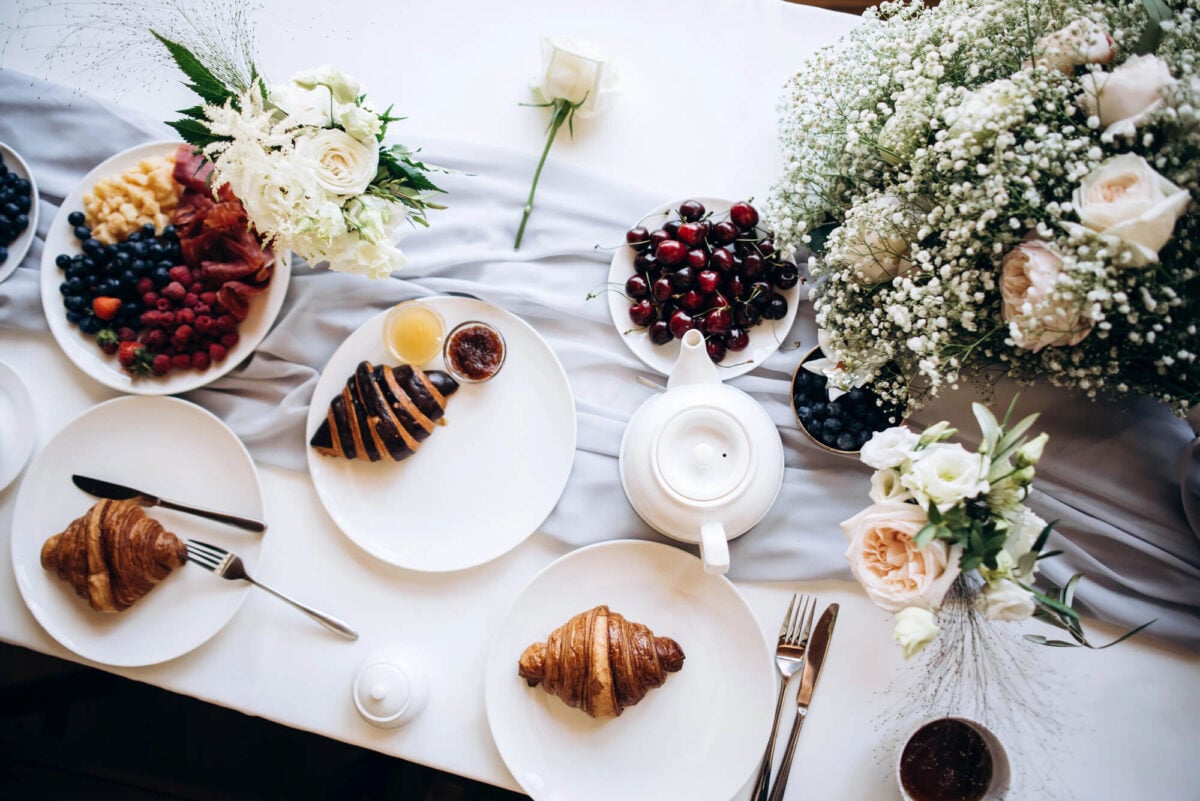
A ten o’clock ceremony let a hungry wedding party sit down by noon. The meal that followed kept the name wedding breakfast whatever the clock said, and etiquette books of the period used the term for a seated meal after a daytime ceremony.
Chicken, rolls, fruit cup and coffee made up a typical menu, served at a hotel dining room, a restaurant or the bride’s family home.
Cake and Punch in the Fellowship Hall
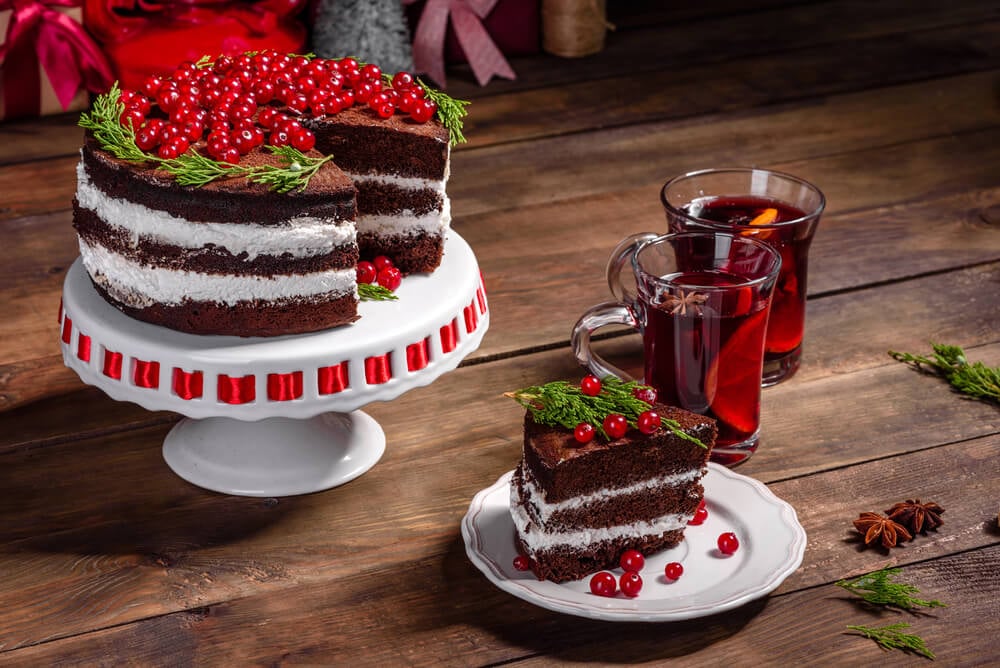
For a large share of Protestant weddings, the reception was a walk downstairs. Guests moved from the sanctuary to the church basement or fellowship hall, where folding tables held a tiered white cake, a cut-glass punch bowl, butter mints and dishes of mixed nuts.
Punch was commonly ginger ale poured over sherbet or fruit juice, since many congregations allowed no alcohol on the premises. Women from the church or the bride’s aunts cut and served.
There was usually no dinner, no band and no dancing, and the entire event could wrap up within an hour or two of the vows.
Tea-Length Hems at the Altar
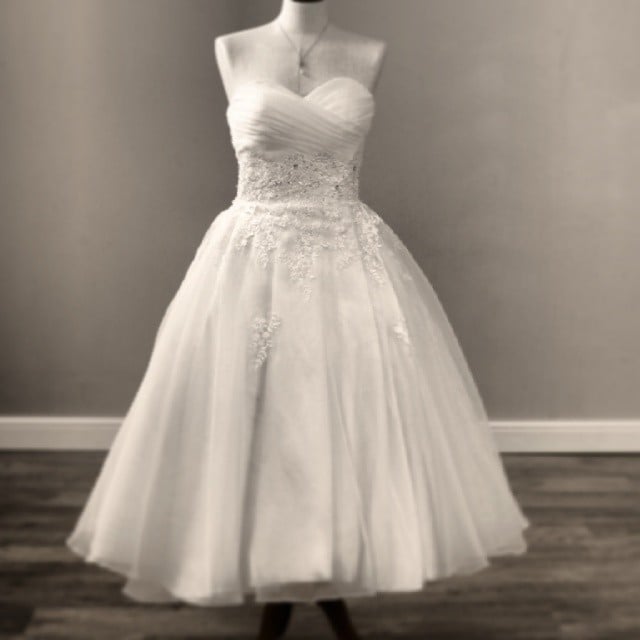
Not every bride wore a train. A hem that stopped at mid-calf, known as tea-length, suited smaller ceremonies, second weddings and budgets that could not stretch to yards of satin, and it showed off the shoes.
Hollywood gave the look its best advertisement in 1957, when Audrey Hepburn danced with Fred Astaire on the grounds of a small chateau north of Paris in Funny Face wearing a Givenchy wedding dress with a fitted bodice and a full skirt cut well above the ankle. Layers of stiff net crinoline held such skirts out.
Pattern companies such as Simplicity and McCall’s sold bridal designs that a capable home sewer could make for a fraction of the salon price.
Long Lace Sleeves After Grace Kelly
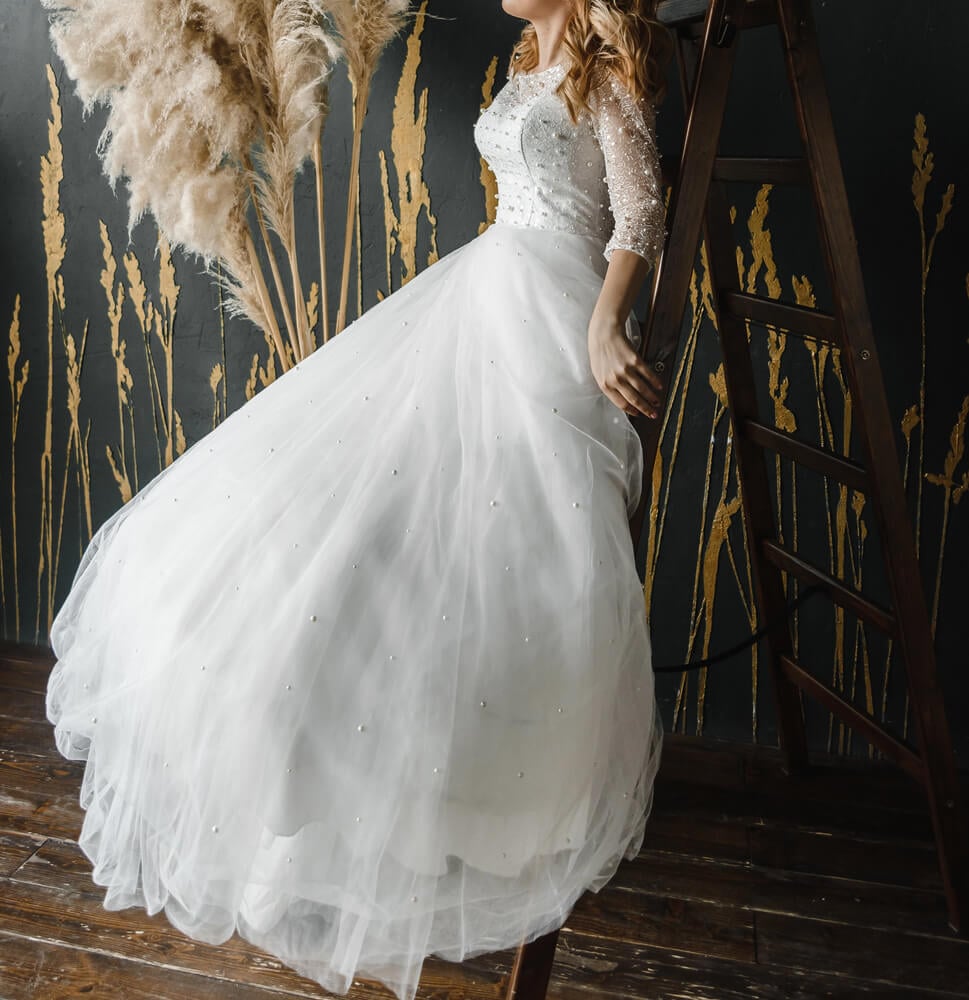
Helen Rose, a costume designer at MGM, made the gown Grace Kelly wore to marry Prince Rainier III in Monaco on April 19, 1956, and the studio gave it to its departing star as a wedding gift. The dress paired a high-necked, long-sleeved bodice of antique rose point lace with a wide silk skirt, and a lace-trimmed cap took the place of a tiara.
Bridal manufacturers copied the covered-up silhouette almost at once, and lace sleeves filled shop windows for years afterward. Kelly gave the original to the Philadelphia Museum of Art in her hometown, where it remains in the collection.
Society Dressmakers and the Bouvier Gown
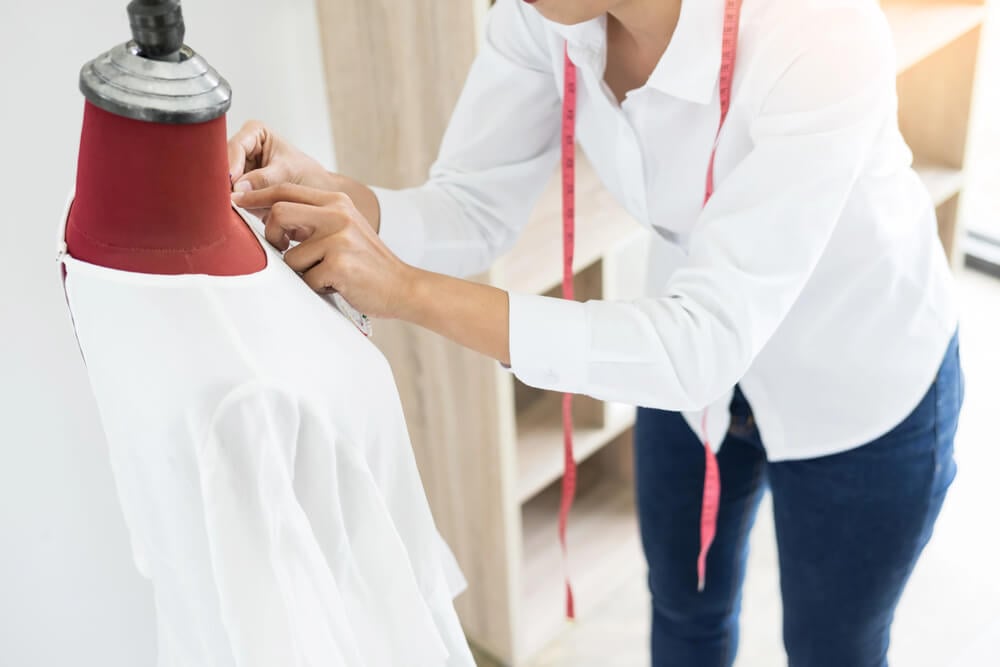
Wealthy families skipped the bridal salon and hired a dressmaker. When Jacqueline Bouvier married Senator John F. Kennedy at St. Mary’s Church in Newport, Rhode Island, on September 12, 1953, her portrait-neckline gown of ivory silk taffeta came from the New York workroom of Ann Lowe, a Black designer who had dressed society clients for decades.
A flood in Lowe’s studio days before the wedding ruined the dress and the bridesmaids’ gowns, and she remade them in time at her own expense. Press coverage at the time barely mentioned her name.
The gown is now held by the Kennedy presidential library in Boston.
Father Pays, as Hollywood Confirmed
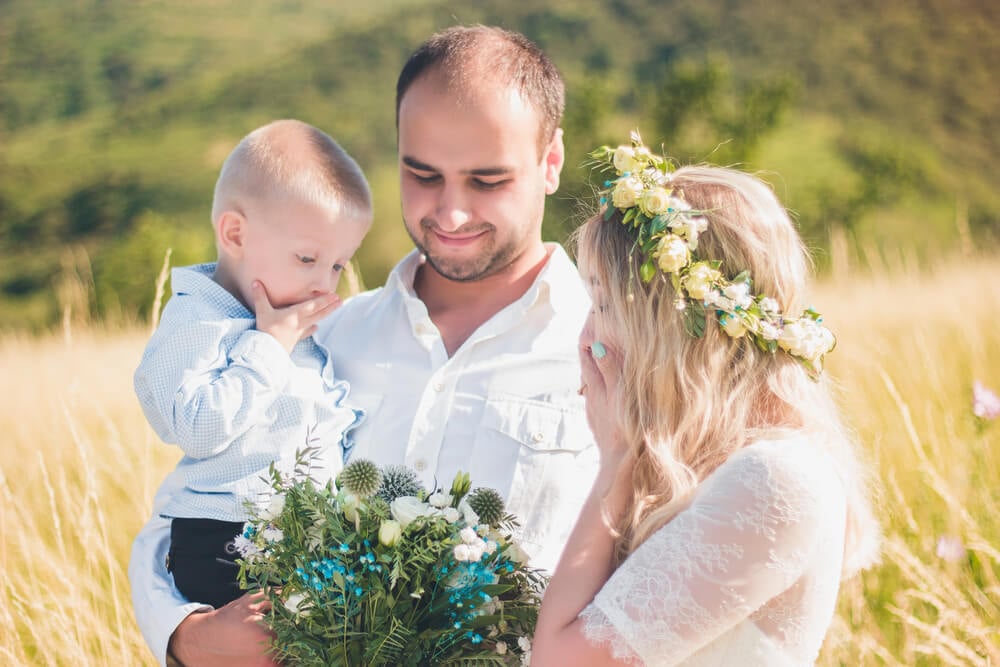
Etiquette placed nearly every bill with the bride’s parents, from invitations and flowers to the reception, while the groom covered the ring, the license, the clergyman’s fee and the honeymoon. MGM turned that arrangement into a comedy in 1950 with Father of the Bride, directed by Vincente Minnelli from Edward Streeter’s 1949 novel.
Spencer Tracy played the lawyer watching the guest list and the costs grow, and Elizabeth Taylor played his daughter. Taylor married hotel heir Nicky Hilton that May, close to the film’s release, in a gown by the studio’s Helen Rose.
A sequel, Father’s Little Dividend, followed in 1951.
Blusher Veils Lifted at the Altar
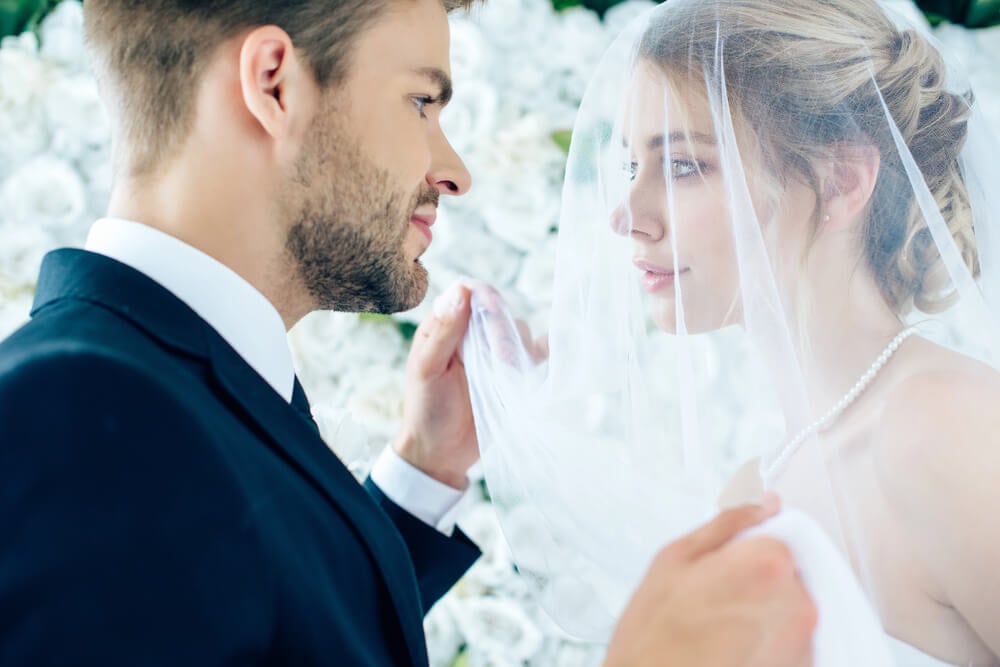
A short layer of tulle worn over the face, the blusher came down the aisle lowered and went back up the aisle folded away. Depending on the family and the denomination, the bride’s father lifted it when he gave her hand to the groom, or the groom lifted it before the kiss.
It was usually attached to a longer veil that fell to the fingertips or the floor. Helen Rose kept Grace Kelly’s 1956 veil especially sheer so that the bride’s face would not be obscured, a concern shared by local photographers working with flashbulbs in dim churches.
Hats and Gloves in Every Pew

Guests dressed for church first and for a party second. Women wore hats and gloves as a matter of course, and Catholic canon law of the period, the 1917 code, called for women to cover their heads at services.
Etiquette guides such as Amy Vanderbilt’s 1952 volume treated gloves as a standard part of a woman’s daytime dress. Short white cotton pairs were usual for morning and afternoon weddings, and they came off for eating.
Men wore dark suits with white shirts, and boys were put into jackets and clip-on ties. White was left to the bride, and black was widely considered too somber for a female guest.
Cedar Hope Chests From Lane
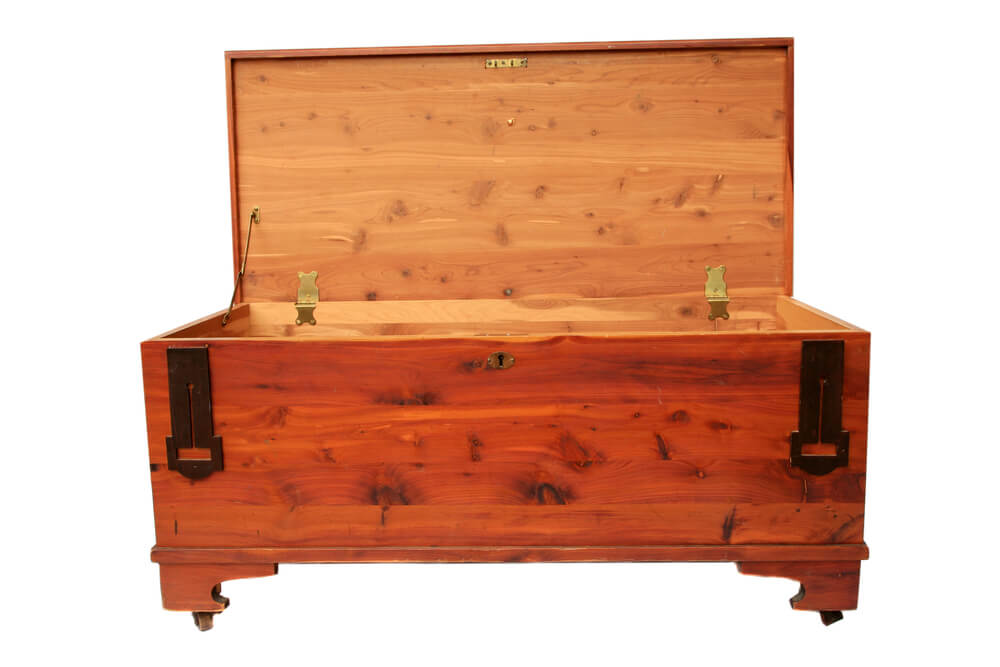
Long before an engagement, many girls were already collecting linens. Embroidered pillowcases, towels, quilts and a set of everyday dishes went into a cedar chest that would move with the bride to her first home.
The Lane Company of Altavista, Virginia, founded in 1912, dominated the trade and advertised its chests in national magazines as a gift from a sweetheart or a parent. Through furniture dealers, Lane also handed out miniature cedar boxes to girls graduating from high school, a promotion that put the brand in front of future customers in very large numbers.
Those small boxes still turn up regularly at estate sales.
Showers Stocked With Pyrex and Linens

Friends, neighbors or coworkers hosted the bridal shower, since etiquette frowned on the bride’s immediate family asking for gifts on her behalf. Many were themed.
A kitchen shower brought Pyrex baking dishes, copper-bottomed Revere Ware pans, measuring cups and dish towels, while a linen shower supplied sheets and tablecloths. Guests were all women, the setting was a living room, and the menu ran to finger sandwiches, cake and coffee.
Party games filled the afternoon, and a common one had someone write down the bride’s remarks as she opened packages for reading aloud later. Ribbons from the gifts were often gathered into a mock bouquet for the rehearsal.
China, Crystal and Silver Patterns on File
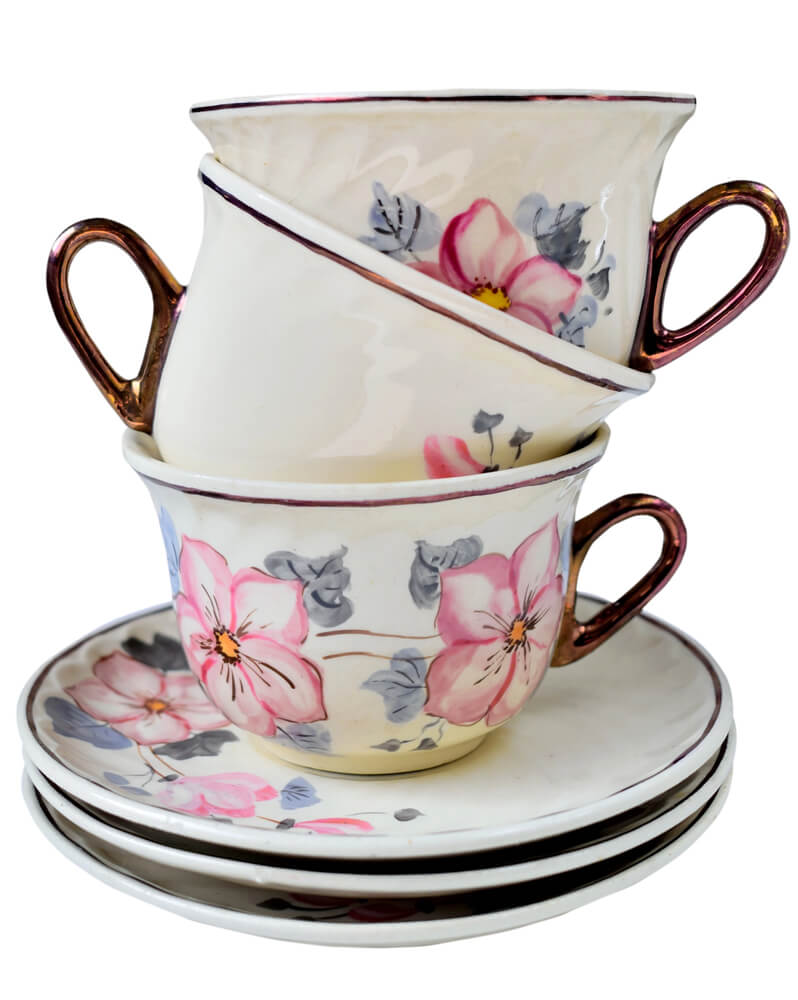
Department stores kept a card for each engaged customer listing her chosen china, crystal and sterling patterns, and clerks checked off place settings as relatives bought them. Marshall Field’s in Chicago is generally credited with launching the practice in 1924, and by the 1950s it was routine at stores across the country.
Picking a silver pattern was treated as a decision for life. Gorham’s Chantilly, introduced in 1895, was among the most popular choices, and Lenox supplied a great deal of the china.
A bride might receive her sterling one place setting at a time, with the remaining pieces filled in at anniversaries and Christmases.
Newspaper Write-Ups Describing the Gown

Local papers covered weddings as news. An engagement notice came first, often with a studio portrait, and a longer account followed the ceremony.
These reports named the church, the clergyman, the attendants and the out-of-town guests, and they described the bride’s dress in detail down to the fabric, the neckline and the flowers she carried. Bridesmaids’ colors got a sentence too.
The bride was typically identified by her new husband’s full name, and both sets of parents were listed. Big-city papers such as The New York Times were choosier and gave their society pages mostly to prominent families, while small-town weeklies printed nearly every wedding in the county.
Engraved Invitations by the Book
Wording, paper and even envelope etiquette came from two authorities. Emily Post’s Etiquette, first published in 1922 and revised repeatedly, and Amy Vanderbilt’s Complete Book of Etiquette, which arrived in 1952, both laid out the formal third-person invitation issued in the name of the bride’s parents.
Proper invitations were engraved from a copper plate on white or ivory stock, with a sheet of tissue, an inner envelope and an outer envelope addressed by hand. Crane of Dalton, Massachusetts, was a favored paper maker.
Cheaper raised-print thermography imitated the look, and it served many families who could not justify the cost of a plate.
Diamond Rings and a Four-Word Slogan
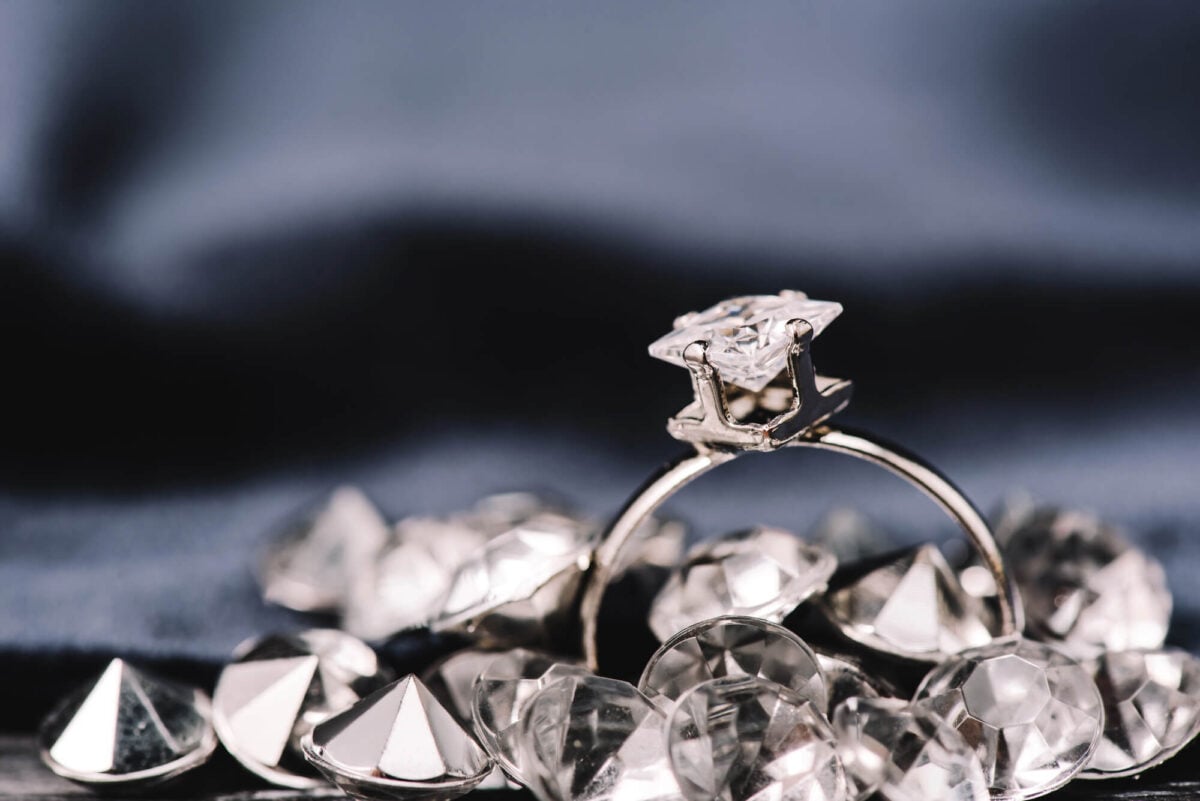
Copywriter Frances Gerety of the Philadelphia agency N. W. Ayer wrote “A Diamond Is Forever” for De Beers in 1947, and the line ran in the company’s advertising through the 1950s and long after. The campaign, which also placed diamonds on film stars and in magazine features, helped turn the diamond solitaire into the expected engagement ring for American couples of ordinary means.
Marilyn Monroe sang “Diamonds Are a Girl’s Best Friend” in the 1953 film Gentlemen Prefer Blondes. Advertising Age named Gerety’s line the slogan of the century in 1999.
Gerety herself never married.
Double-Ring Ceremonies as the New Normal
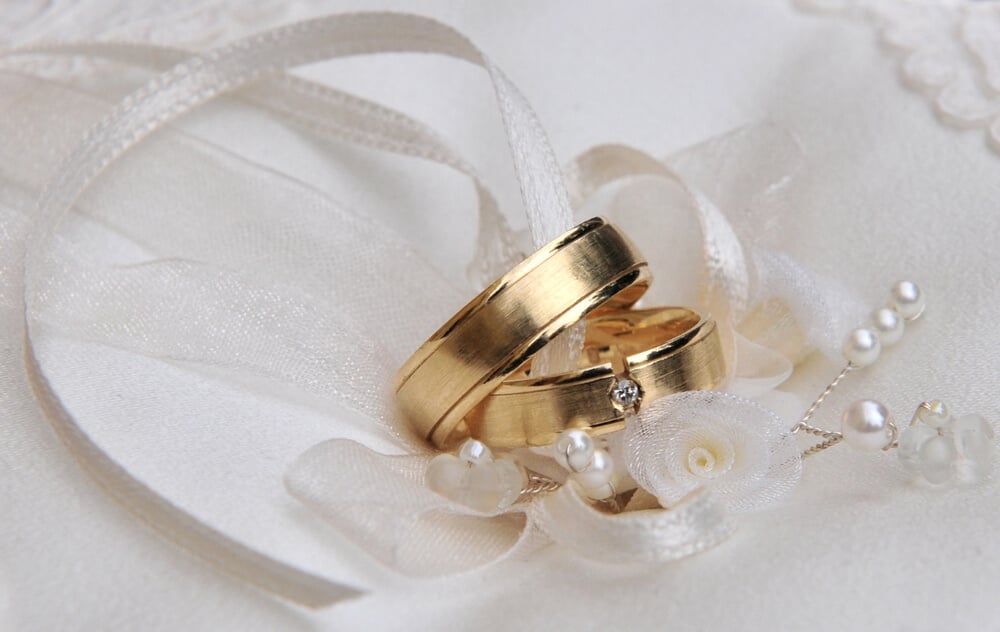
Before the Second World War, a wedding band for the groom was the exception in the United States. That changed in the 1940s, when servicemen heading overseas wanted a visible sign of the marriage and jewelers advertised matched sets.
Historian Vicki Howard, in her 2006 book Brides, Inc., traced how the jewelry industry promoted the groom’s ring until it seemed like an old custom. By the 1950s most ceremonies were double-ring, and newspaper wedding reports often said so in the first paragraph.
Clergy adjusted the service to include a second exchange, and matching his-and-hers bands became a standard jeweler’s display.
Promising to Obey
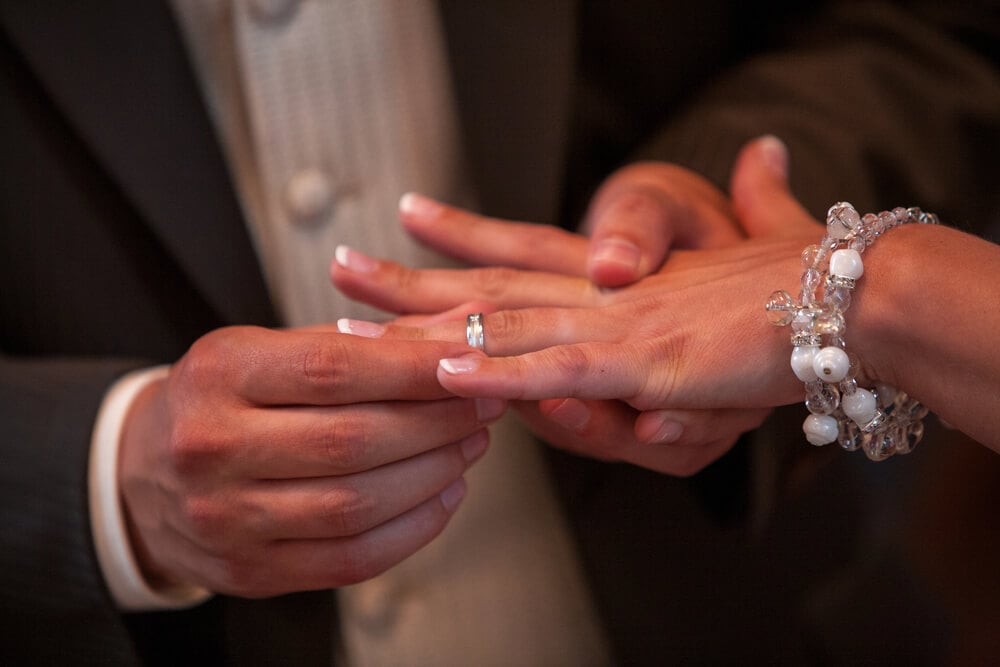
Whether a bride vowed to obey depended largely on her denomination. The Episcopal Church had removed the word from the bride’s promise in its 1928 Book of Common Prayer, and a number of other Protestant services had no such line.
Other churches kept older wording, and plenty of brides repeated it without comment. The most watched wedding of the postwar years kept it as well, when Princess Elizabeth promised to obey Philip at Westminster Abbey in 1947 using the traditional Church of England form.
Clergy generally read the service as printed, and couples writing their own vows was still close to unheard of in the 1950s.
Rice at the Church Steps
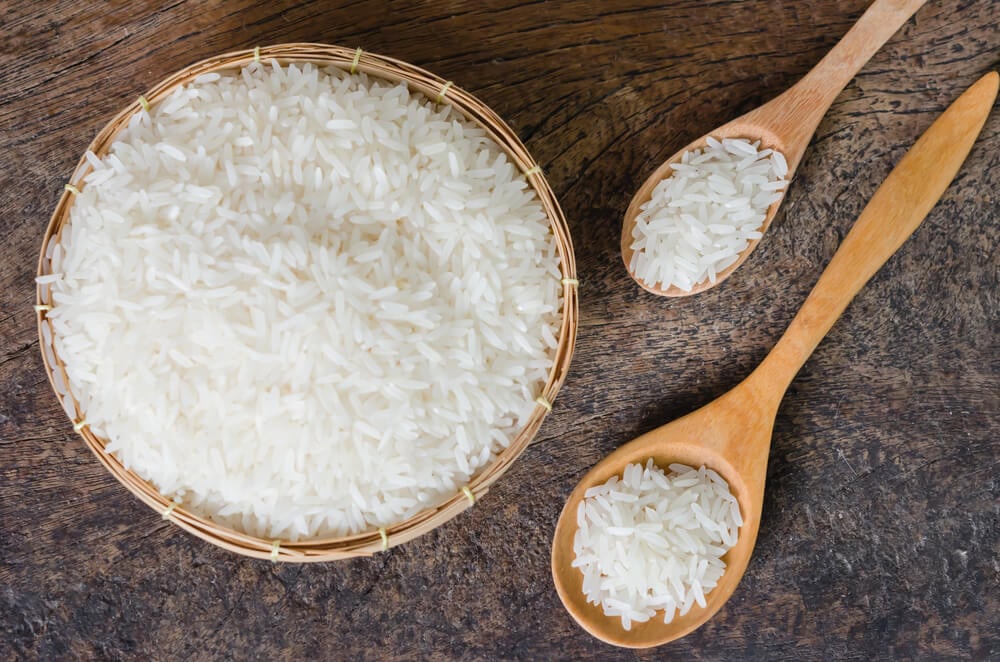
Outside the doors, guests waited with handfuls of uncooked rice. The newlyweds ran from the church to the car through a shower of it, an old gesture wishing the couple prosperity and children, and photographers considered it one of the required shots of the day.
Paper confetti was the usual substitute. Some churches discouraged both because of the sweeping involved.
The custom faded later for a different reason, after a rumor spread in the 1980s that rice harmed birds that ate it. Ornithologists disputed the claim, but birdseed, bubbles and flower petals took over anyway.
Bouquet Toss, Garter Toss and the White Bible
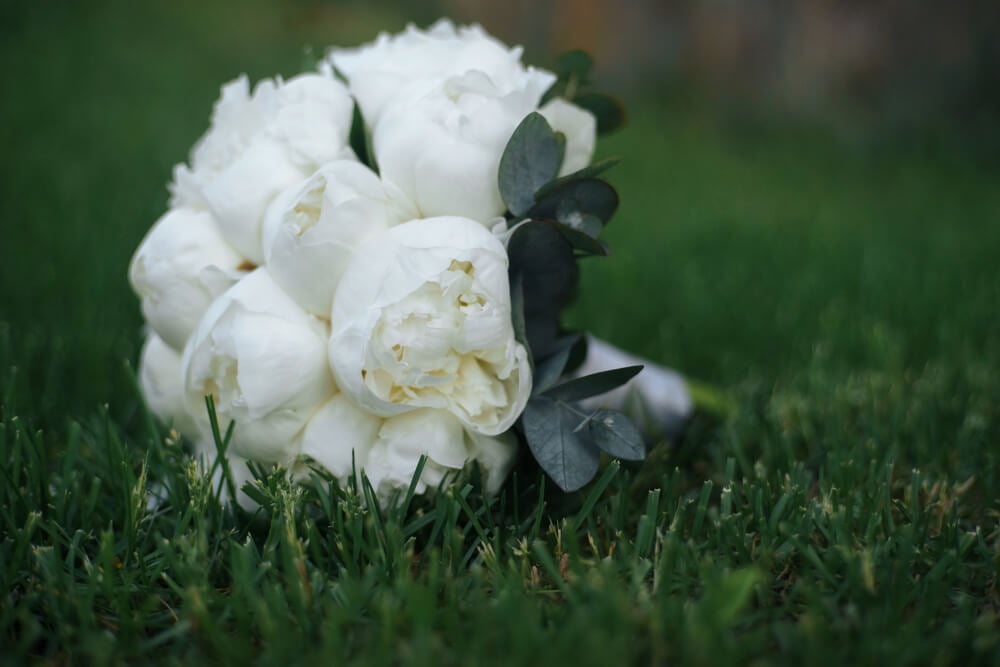
Near the end of the reception the bride turned her back and threw her bouquet to the unmarried women, and the one who caught it was said to be next. The groom then removed the bride’s garter and tossed it to the bachelors.
Many brides in the 1950s carried a small white Bible or prayer book in place of a large bouquet, topped with an orchid and trailing satin ribbons. The orchid was often made detachable so it could be pinned on as a corsage for the trip.
Florists advertised the arrangement by name, and mothers frequently kept the book afterward.
Top Tiers Saved and Slices Sent Home
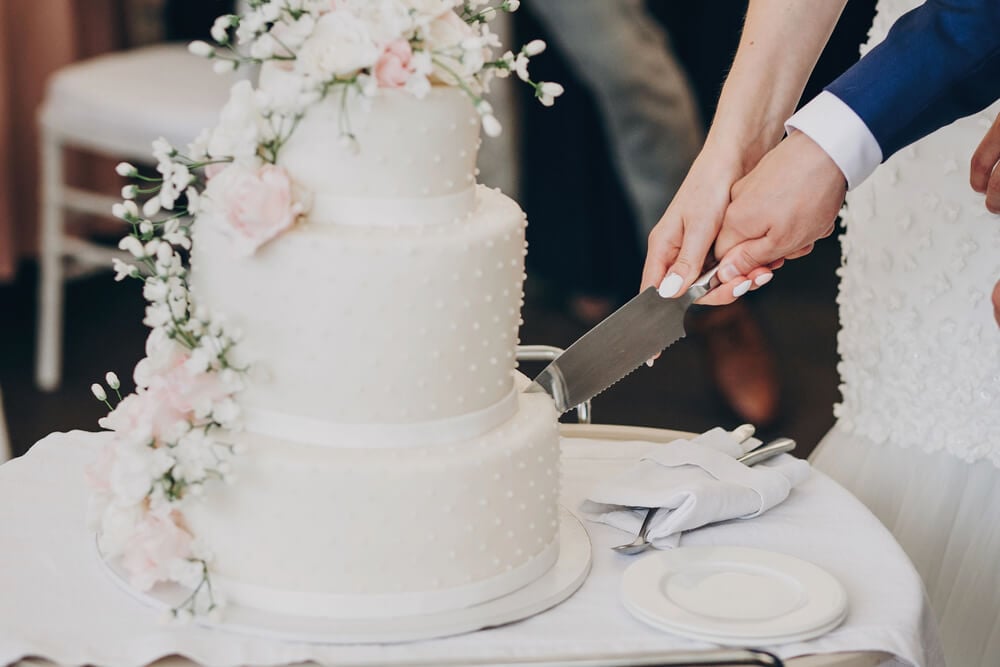
Two cake customs ran side by side. The dark fruitcake known as the groom’s cake was cut small, packed in little white boxes, often stamped with the couple’s initials, and handed to guests at the door.
Folklore held that an unmarried guest who slept with the box under a pillow would dream of a future spouse. Meanwhile the top tier of the white bride’s cake was set aside for the first anniversary or a first christening.
That second habit got easier as home freezers spread through American kitchens in the postwar years. Earlier generations had managed it with liquor-soaked fruitcake that kept on a shelf.
Tin Cans Tied to the Bumper
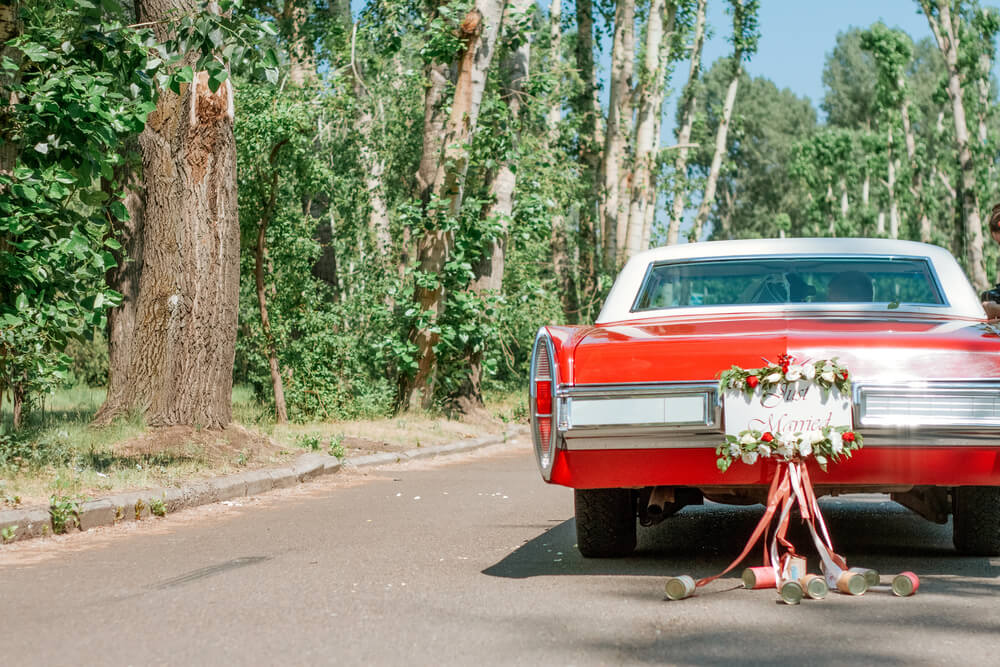
While the couple posed for pictures, the ushers went to work on the getaway car. Strings of tin cans and old shoes were tied to the rear bumper, streamers were taped to the antenna, and “Just Married” was written across the trunk and windows in white shoe polish or soap.
Tying shoes to the vehicle was an English good-luck custom far older than the automobile. The cans simply made noise.
Friends then followed in their own cars, horns sounding, for a lap through town. Chrome bumpers on a 1950s Chevrolet or Ford offered plenty of places to knot a string, which later molded bumpers did not.
Changing Into the Going-Away Suit

Brides rarely left the reception in the wedding gown. Partway through, the bride slipped out to change into a going-away outfit, usually a tailored suit with a nipped waist in the manner Christian Dior had made fashionable with his 1947 New Look collection.
A hat, gloves, a matching handbag and a corsage finished it. The outfit was the centerpiece of the trousseau, the new wardrobe assembled for married life, and newspaper accounts often described its color and fabric right after the gown.
The groom changed into a business suit, and the pair left while the guests were still present to wave.
Honeymoons at Niagara Falls

Niagara Falls had drawn newlyweds since the nineteenth century and promoted itself as the Honeymoon Capital of the World. Postwar car ownership and new motels put it within reach of couples from across the Northeast and Midwest, and a few days there with a ride on the Maid of the Mist was a standard trip.
Twentieth Century Fox added to the publicity in 1953 with Niagara, a thriller starring Marilyn Monroe and Joseph Cotten as a married couple staying beside the falls. Pennsylvania’s Pocono Mountains competed for the same travelers with resorts built specifically for honeymooners.
Most trips lasted a week or less, since the groom had limited vacation time.
Blood Tests Before the License

A marriage license in most states required a trip to the doctor first. Connecticut passed the first premarital testing law in 1935, and by the 1950s the large majority of states required both parties to show a negative syphilis test, typically the Wassermann test or a successor.
Results took a few days, which built in a waiting period and sent some impatient couples across state lines to places with looser rules. Penicillin made the disease readily curable after the war, and positive results were rare.
States repealed the laws one by one in later decades, and Montana dropped the last of them, a rubella test for brides, in 2019.
Vows First, Everything Else Second
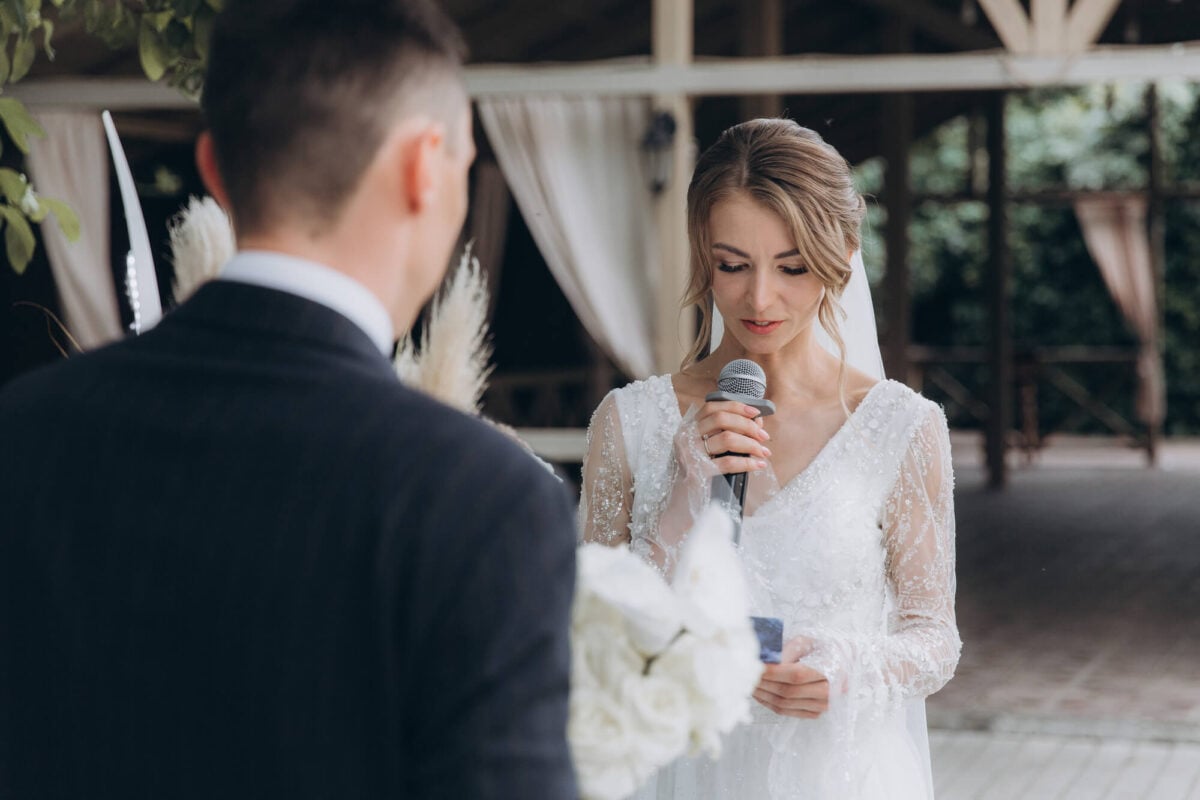
Seen together, these customs describe an event organized around the ceremony and the community that witnessed it. The church supplied the room, relatives supplied the labor, and etiquette books supplied the rules, so few decisions were left for the couple to make.
Cost and length stayed modest as a result. A reception could be over before the afternoon was.
Later decades moved the weight of the day toward the party, and the customs sorted themselves accordingly. Rings, registries, showers and the bouquet toss traveled easily into banquet halls and destination resorts.
Blood tests, boxed fruitcake and the going-away suit stayed behind with the fellowship hall. The script passed from the congregation to the couple, and each generation since has edited it again.
More from Go2Tutors!

- The Romanov Crown Jewels and Their Tragic Fate
- 13 Historical Mysteries That Science Still Can’t Solve
- Famous Hoaxes That Fooled the World for Years
- 15 Child Stars with Tragic Adult Lives
- 16 Famous Jewelry Pieces in History
Like Go2Tutors’s content? Follow us on MSN.