Playground Equipment Removed for Safety Reasons
The American playground of the mid-twentieth century was built from steel pipe, chain and concrete, and most of it sat on asphalt. Children loved it. Emergency rooms saw a great deal of it too.
Change came slowly, through a federal handbook first issued in 1981, a voluntary industry standard that followed in 1993, and a long series of recalls and quiet removals by school districts and parks departments. Each piece below disappeared, or was rebuilt into something tamer, for a reason somebody wrote down.
Giant Strides and Their Flying Chains
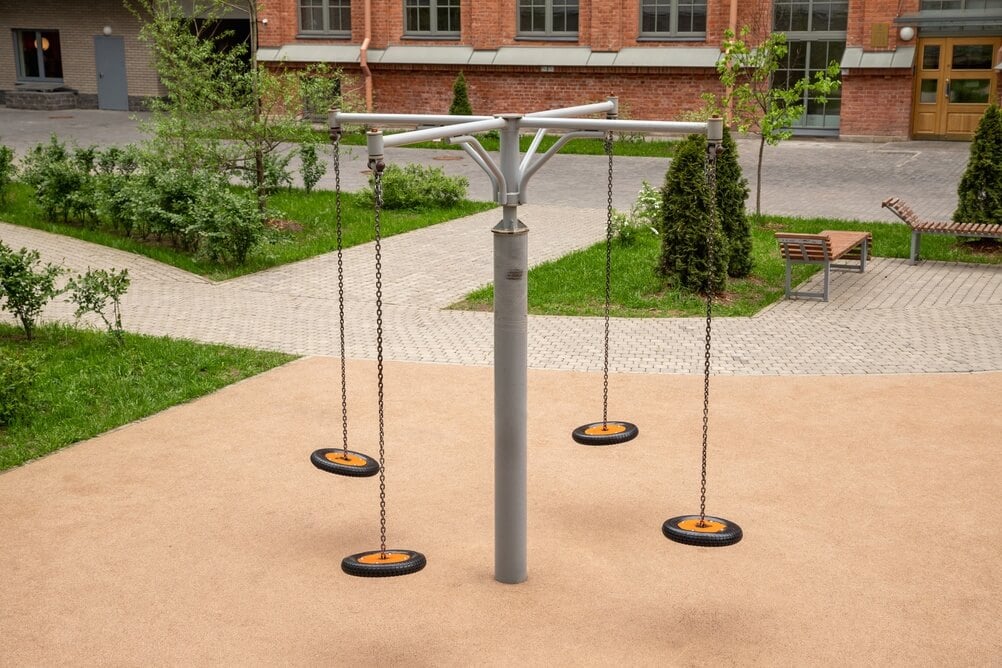
A giant stride was a tall steel pole with a rotating cap at the top and a ring of chains or short ladders hanging from it. Children grabbed a handle, ran in a circle and lifted off, which worked well until one rider let go and the loose chain swung into the next child.
Schools installed them widely in the early 1900s, and districts took most of them down over the decades that followed. The Consumer Product Safety Commission’s Public Playground Safety Handbook now lists giant strides by name among equipment not recommended for public playgrounds, and very few remain standing outside museums and photographs.
Tall Metal Slides That Burned in July
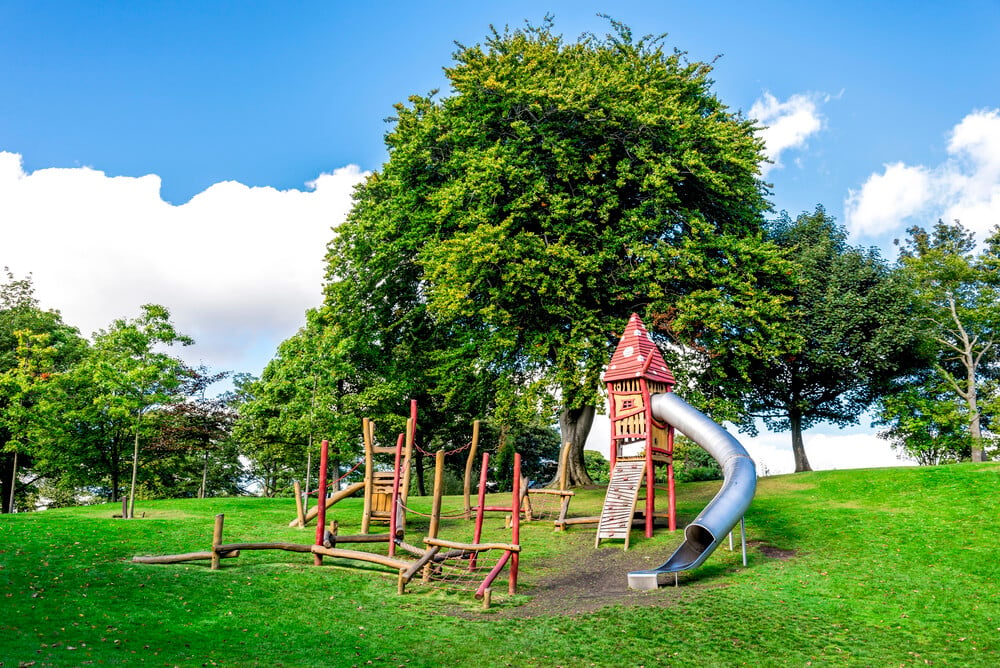
Older freestanding slides often rose well above ten feet, with a narrow ladder, a small platform and a bed of polished steel. Falls from the ladder and the top were the main injury, but heat was the second complaint.
The federal handbook warns that bare metal in direct sun can become hot enough to cause contact burns within seconds, and it advises shade or a different material. Manufacturers moved to molded plastic chutes and lower decks with enclosed sides.
The commission has since cautioned that plastic and rubber surfaces can also burn skin on a bright day, so the problem was reduced more than solved.
Push Merry-Go-Rounds With No Speed Limit
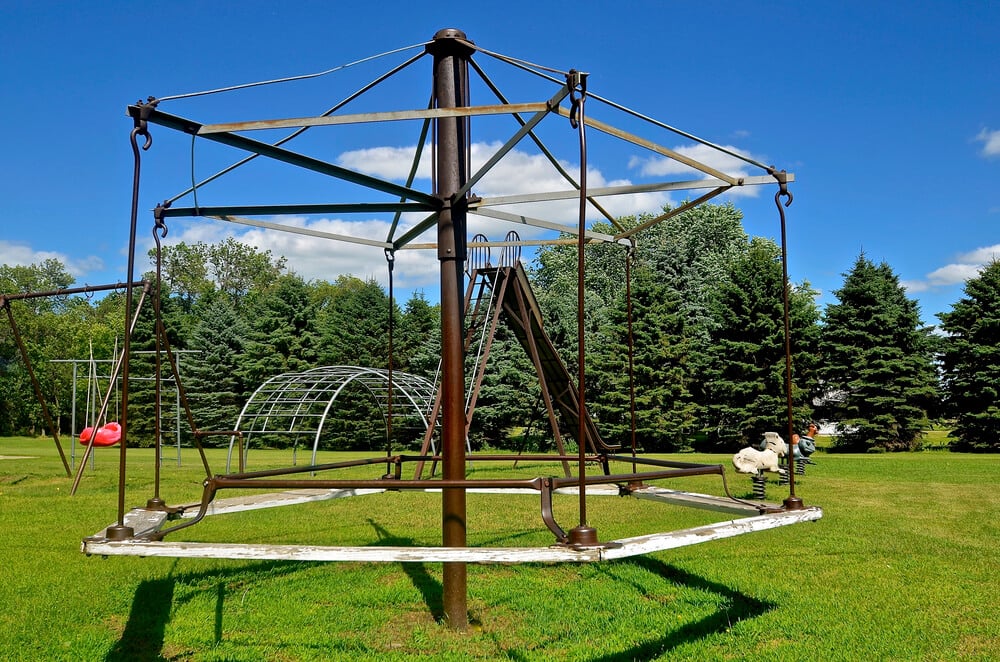
The classic merry-go-round was a steel platform on a center bearing that spun as fast as the biggest child could push it. Riders were thrown off, fell under the edge, or caught feet and fingers in gaps around the hub.
Federal guidance did not ban the equipment. Instead it called for a continuous, roughly circular platform with no openings, a set clearance beneath the rim, and a limit on how fast the perimeter may travel, commonly cited as 13 feet per second. Many towns found removal cheaper than retrofitting.
Newer spinners tend to be small, low and built for one or two riders.
Seesaws That Dropped One Rider Without Warning
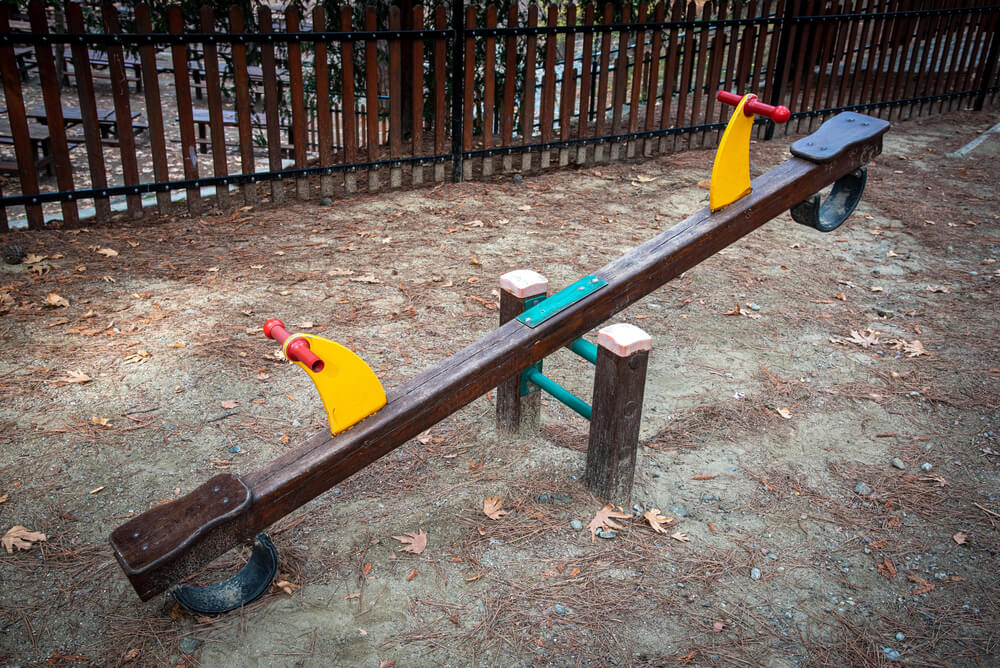
A plank on a central pivot depends on two children cooperating, and the trouble arrived when one of them stepped off. The remaining rider came down hard, and the jolt ran up the spine or tipped the child backward onto the ground.
The federal handbook steers preschool playgrounds toward spring-centered models that return gently to level, and for fulcrum seesaws it recommends a cushion such as a partly buried tire under each seat. It also limits how steep the board can tilt.
Long wooden teeter-totters set over bare dirt have largely given way to short spring rockers with handgrips and footrests.
Jungle Gyms Set Over Asphalt

Sebastian Hinton, a patent lawyer in Winnetka, Illinois, applied to patent the cube-shaped climbing frame in 1920 and the grant came in 1923, and the name Jungle Gym became a generic term within a generation. The frames themselves were sturdy.
The danger was the grid of bars inside, which a falling child struck on the way down, and the pavement waiting at the bottom. Federal guidance now advises against climbers with interior bars that a child could fall onto from more than about 18 inches.
Modern climbing structures are open underneath, often made of rope net or curved panels, and sit over engineered wood fiber or rubber.
Witch’s Hats That Crushed Against the Pole
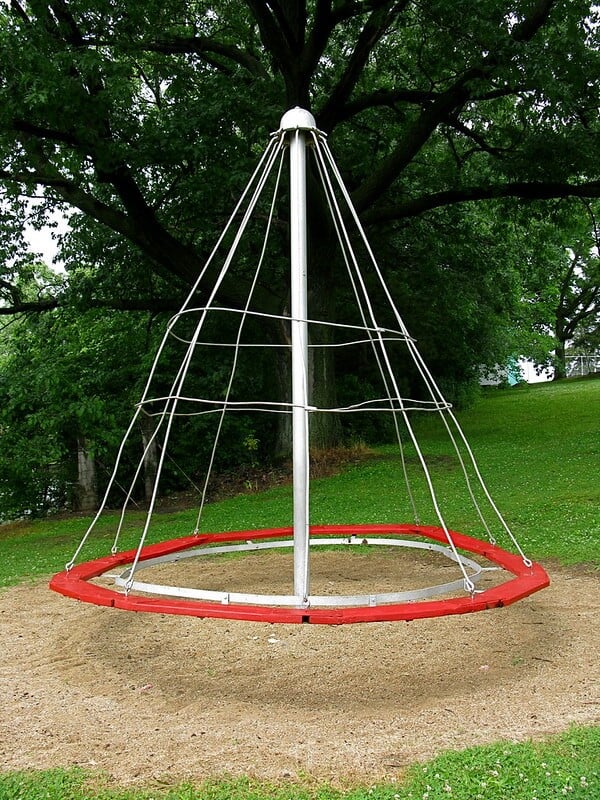
Known in American catalogs as the ocean wave, the witch’s hat was a cone-shaped frame hung from the top of a center pole, with a circular bench or rail at the bottom. It rotated and tilted at the same time, which was the entire attraction.
When the ring swung inward, legs and bodies could be trapped between the moving seat and the fixed pole, and children were thrown off at the high point of the sway. British and American park authorities pulled most of them during the later decades of the twentieth century.
A few survive or have been rebuilt in heritage playgrounds, sometimes modified to limit how far the frame can swing.
Swinging Gates Built for Riding
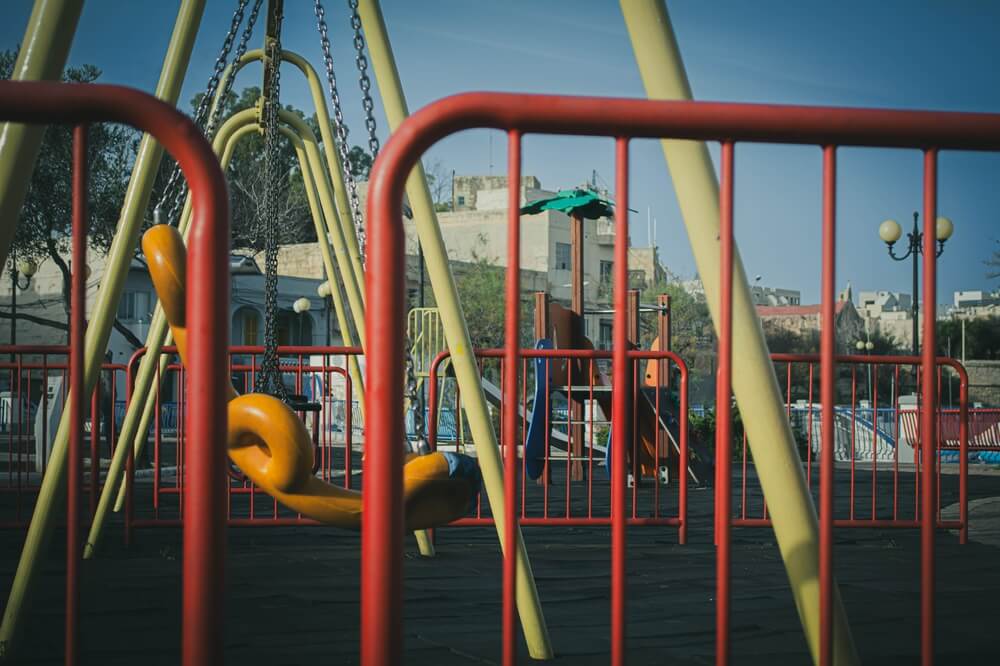
Some early playgrounds included a sturdy gate hung on a post, built so that children could stand on the bottom rail and ride as it swung. It looked harmless next to a twelve-foot slide.
The federal handbook does not spell out its reasoning, but the likely hazards are ordinary ones: fingers caught at the hinge, riders thrown from the rail, and bystanders hit by a moving frame. The Consumer Product Safety Commission includes swinging gates on its short list of equipment not recommended for public playgrounds, alongside giant strides and trampolines.
Few adults today remember ever seeing one.
Heavy Animal Swings Recalled in the 1990s
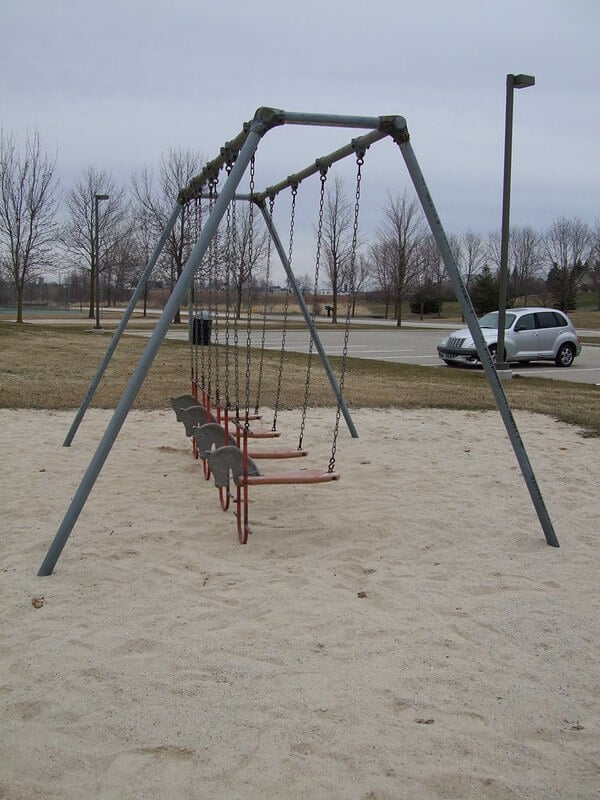
Rigid swings shaped like horses, ducks and elephants were common in parks from the 1950s onward. Made of cast aluminum or molded plastic, they weighed 30 to 80 pounds apiece, far more than an ordinary seat, and that full mass traveled through each arc.
A toddler who wandered into the path was struck by something closer to a battering ram than a swing. In January 1995 the Consumer Product Safety Commission and seven manufacturers urged playgrounds to remove them, citing two deaths and dozens of head injuries.
The handbook still names heavy animal-figure swings as equipment to avoid.
Trapeze Bars and Swinging Exercise Rings
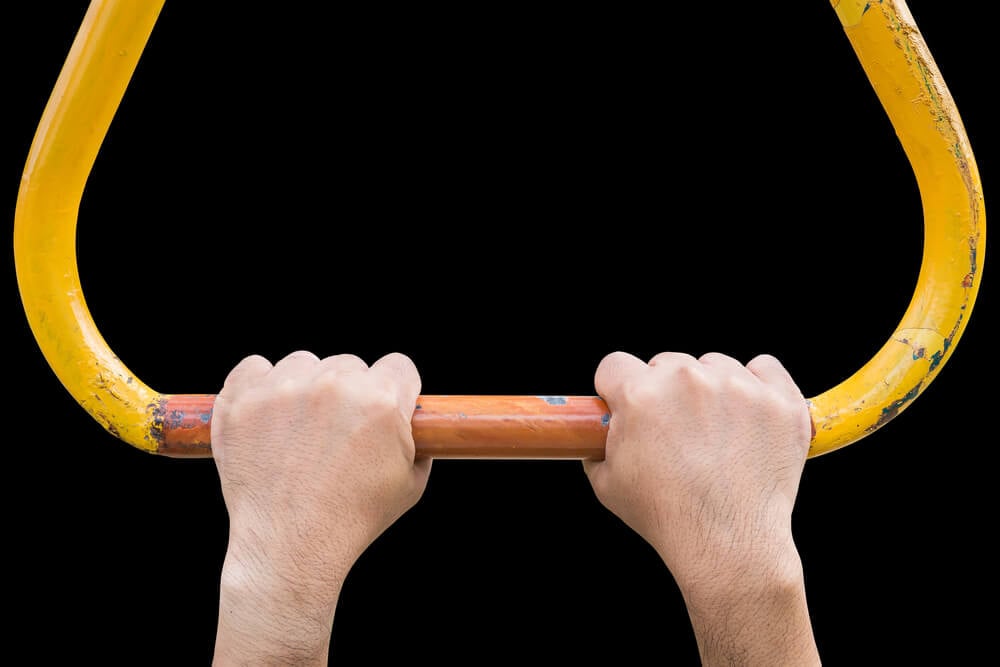
Borrowed from the gymnasium, trapeze bars and paired rings on long chains were standard on school swing frames for decades. Federal guidance singles out swinging dual exercise rings and trapeze bars as athletic equipment that does not belong on a public playground.
A child hanging by the knees has no way to break a fall, and a swinging steel bar is at face level for anyone walking past. The same handbook treats fixed overhead rings differently, since those hang on short chains and are meant for crossing hand over hand.
School districts generally removed the swinging versions and kept the stationary ones.
Rope Swings and Loose Climbing Ropes
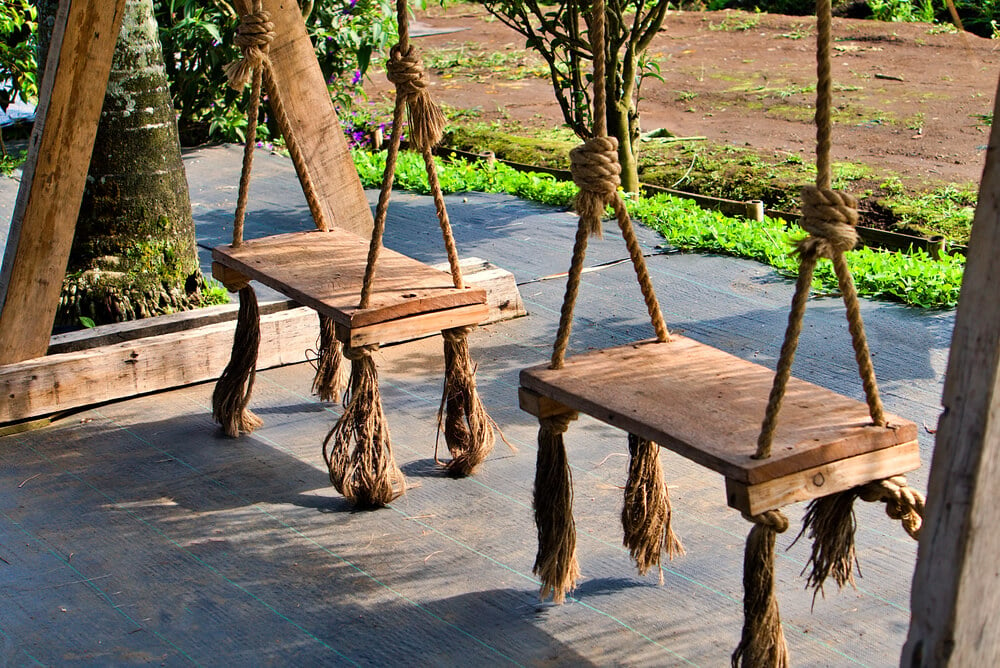
A knotted rope hanging from a beam is about the cheapest play feature ever devised. It is also one of the few that federal guidance rejects outright. The handbook advises against rope swings and against climbing ropes that are not anchored at both ends, because a free length of rope can fray, form a loop and tighten around a neck.
Strangulation is a rare playground injury compared with falls, but it is among the deadliest. Rope has not vanished from play areas.
It now appears as tensioned nets and cable climbers, fixed top and bottom so that no loop large enough to trap a head can form.
Glider Swings That Carried Four at Once
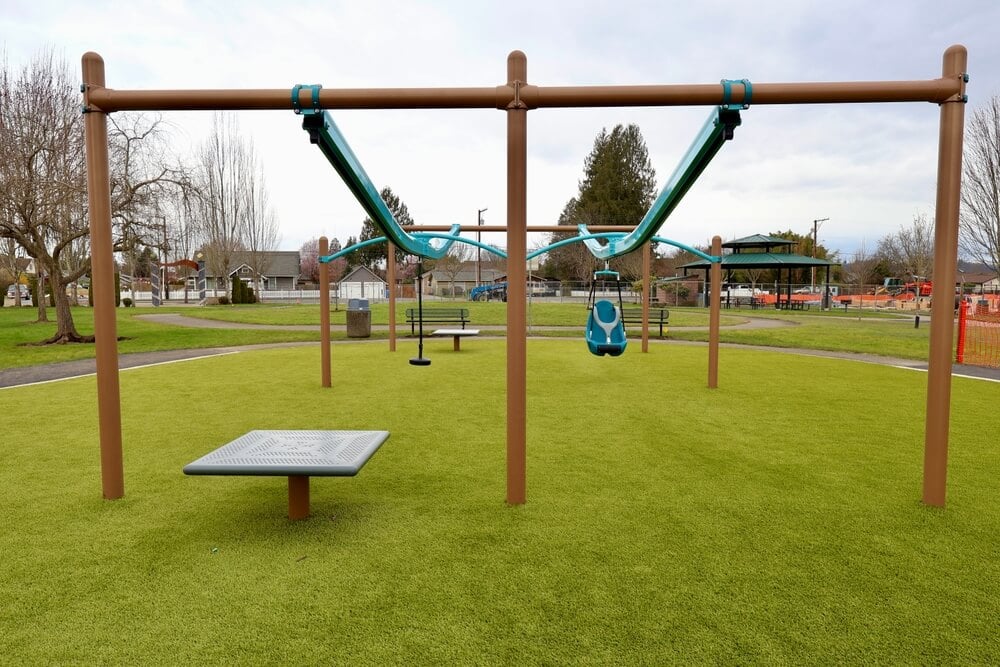
Glider swings seated two or four children facing one another on a rigid frame that moved back and forth as a unit. Public versions were heavy, and the combined weight of frame and riders gave them a great deal of momentum.
Anyone standing nearby could be hit, and legs could be pinched where moving bars crossed fixed ones. The federal handbook advises against multiple-occupancy swings on public playgrounds, with the tire swing as the stated exception.
Backyard sets kept lighter gliders far longer, since the public handbook does not cover home equipment, and the two-seat glider remained a fixture of metal swing sets sold for family yards.
Wooden Plank Swing Seats
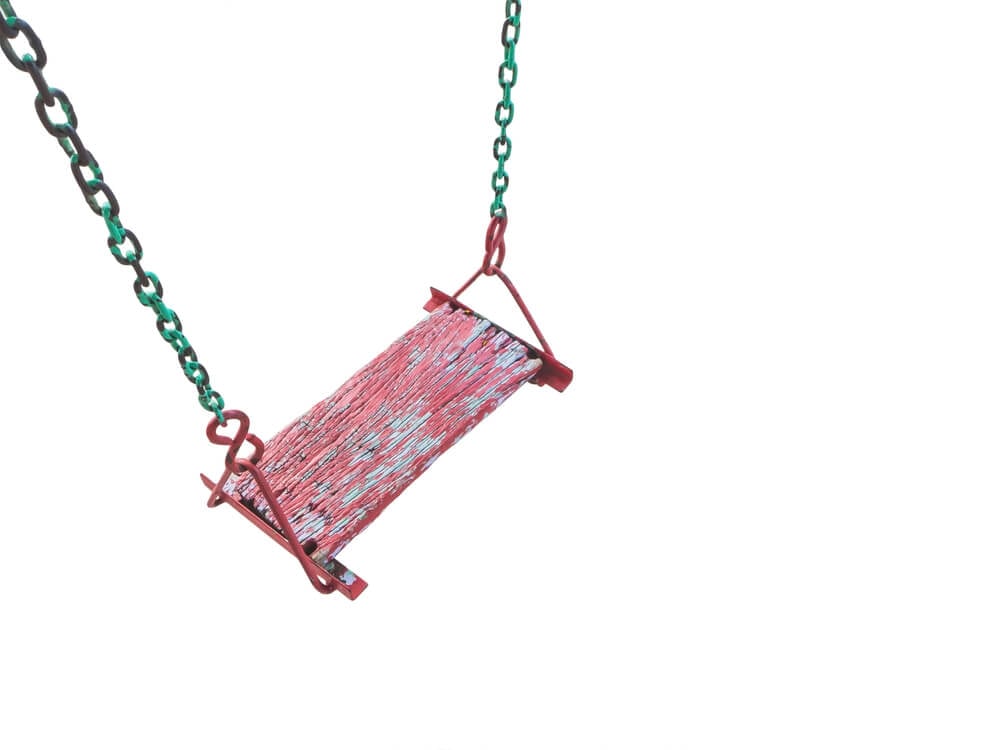
For generations the standard swing seat was a slab of hardwood. It was durable and cheap, and it hit like a board because it was one. An empty seat in motion, or an occupied one, could break teeth and fracture skulls of children who ran behind it.
Federal guidance calls for lightweight seats of rubber or plastic with smooth edges, and flexible belt seats became the norm on public swing sets. The same guidance asks that swings stand apart from climbing structures and that no more than two hang in a single bay, which limits how many children can cross a moving path.
Rocket Ship Climbers of the Space Age
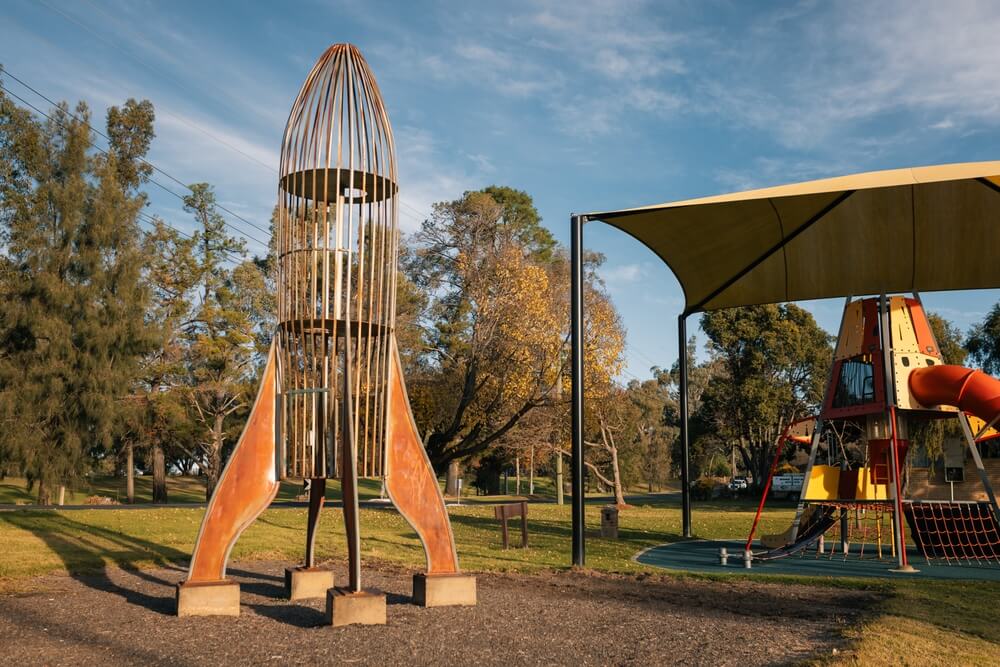
During the 1960s, playground makers such as Miracle Equipment of Grinnell, Iowa, and Game Time sold steel rockets three and four levels tall, with ladders inside a cage of bars and a slide out the side. Towns bought them in the years around the Moon landings.
By later standards the upper decks were too high and the internal ladders too steep. Many were dismantled in the decades that followed.
A number of communities fought to keep theirs, and some rockets have been restored or preserved as local landmarks.
Concrete Turtles and Culvert Tunnels

Cast concrete animals arrived in the 1950s and 1960s as indestructible sculpture that children could climb. Michigan sculptor Jim Miller-Melberg designed some of the best known, including a turtle that turned up in parks across the country.
Sections of drainage culvert, painted bright colors, did similar duty as crawl tunnels. Concrete does not rot, rust or need paint, which is why so much of it is still around.
It also does not give, and a fall of two feet onto a concrete shell is a fall onto pavement. Some pieces were moved out of play areas and kept as park ornaments.
Fire Poles With a Long Reach
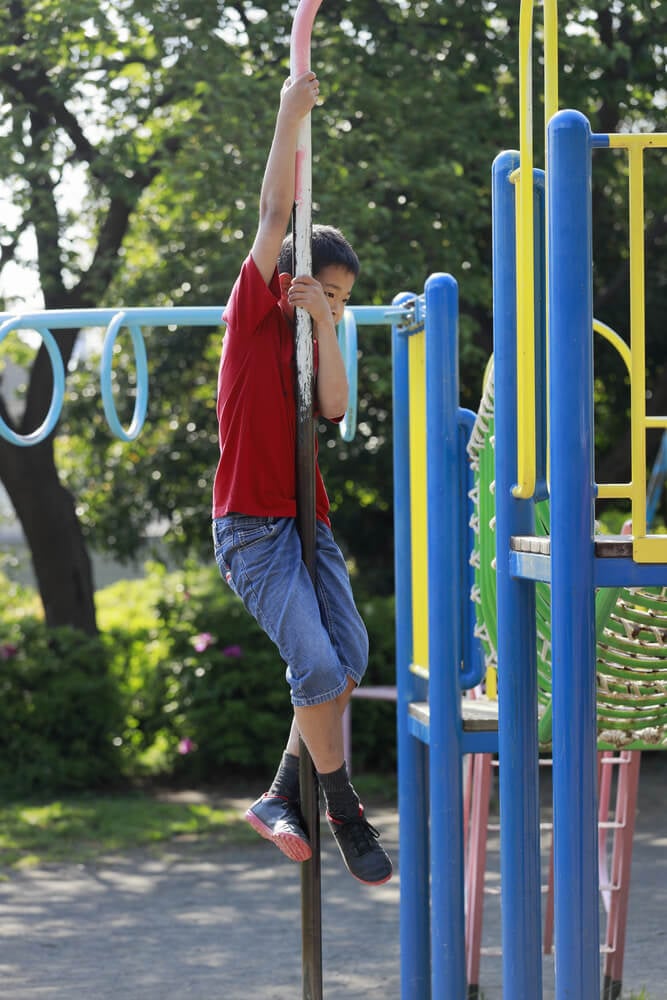
The sliding pole asks a child to step off a platform, reach across open space, grip a steel pipe and control a descent with arms and legs. Children who misjudged the gap fell the full height of the deck.
Federal guidance does not recommend sliding poles for toddlers or preschoolers, who lack the upper body strength and coordination. For older children it specifies how far the pole may stand from the platform edge, a range of about 18 to 20 inches, and asks for a continuous pole with no welds or seams along the sliding surface.
Poles on new structures are typically shorter.
Ladders and Railings With Head-Size Gaps

Some of the worst hazards on old equipment were spaces, the gaps between rungs, rails and platform edges. A child sliding feet first through an opening could pass the body through and be caught by the head.
Federal guidance and the ASTM standard treat any enclosed opening between 3.5 and 9 inches as a potential head entrapment, and inspectors carry probes shaped like a small torso and a large head to test for it. Older ladders, guardrails and climbing cages frequently failed.
Much equipment that looked sound was replaced for this reason alone, without any dramatic injury to prompt it.
Arsenic-Treated Wooden Play Structures
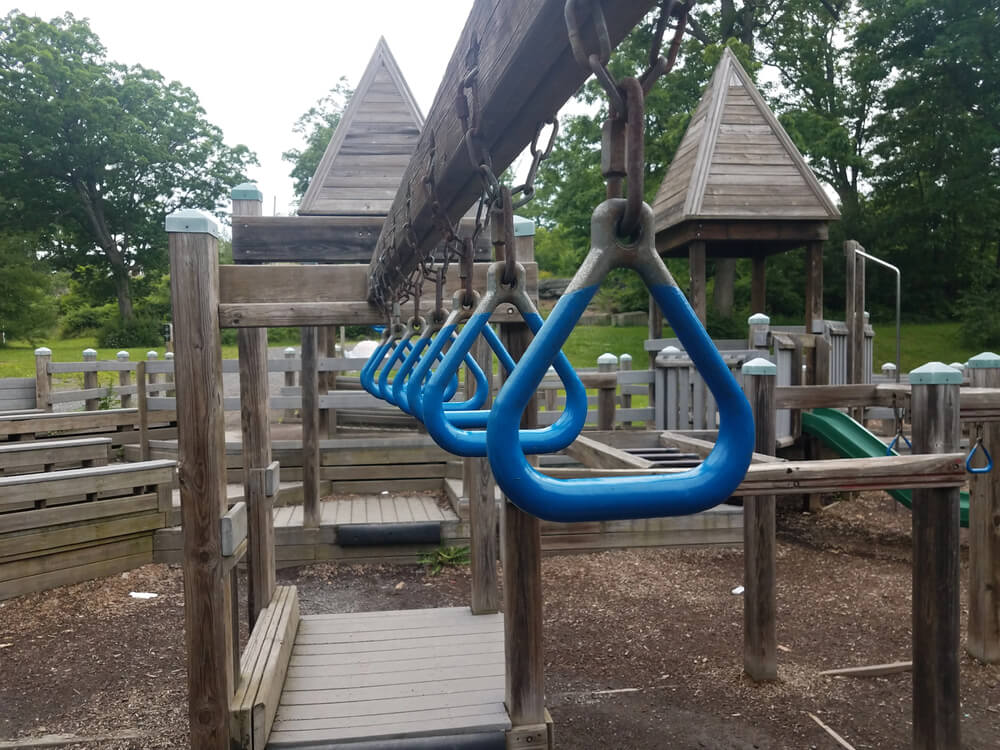
Wooden playgrounds boomed in the 1970s and 1980s, and most of the lumber was pressure treated with chromated copper arsenate to resist rot and insects. Studies later showed that arsenic could transfer from the wood surface to children’s hands.
Under a voluntary agreement between the Environmental Protection Agency and manufacturers, the preservative was withdrawn from most residential uses, including play structures, at the end of 2003. Regulators did not order existing playsets torn down.
They advised washing hands after play and suggested that regular sealing might reduce exposure, and many communities chose replacement anyway when the timbers came due for repair.
Lead Paint on Aging Steel
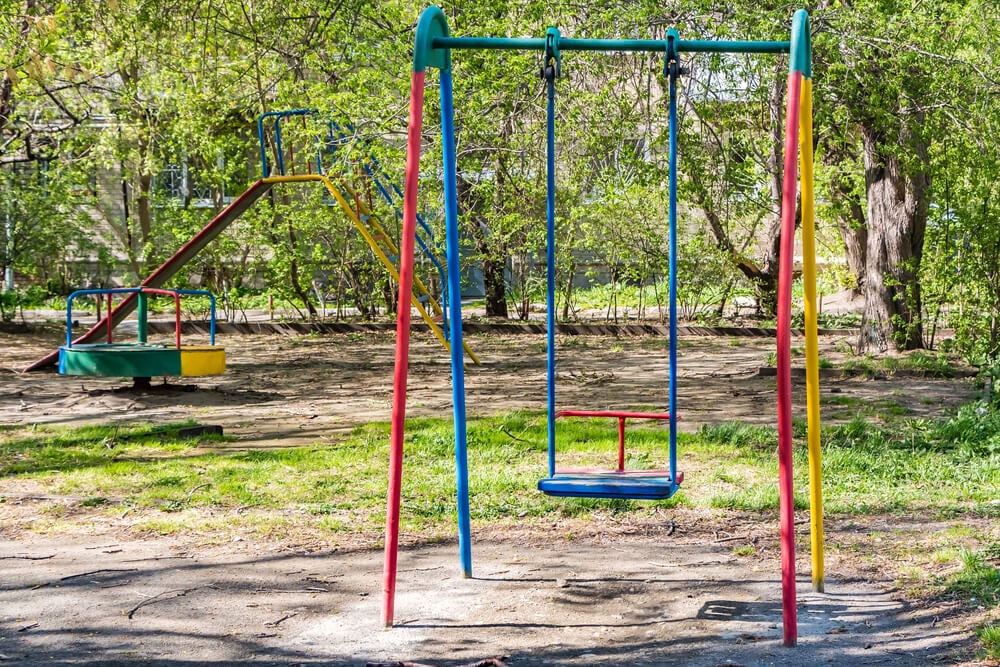
Consumer paint containing high levels of lead was banned in the United States in 1978, but playground equipment installed earlier stayed in service for decades. In 1996 the Consumer Product Safety Commission reported that testing in a number of cities had found chipping and peeling lead paint on older public equipment. The risk was to young children who put flakes or dusty hands in their mouths.
The commission advised local agencies to inspect painted equipment and to prioritize pieces where paint was deteriorating. Repainting was sometimes enough.
In other cases the discovery simply gave a town a final reason to retire swing frames and slides from the 1950s.
Asphalt and Packed Dirt Underfoot
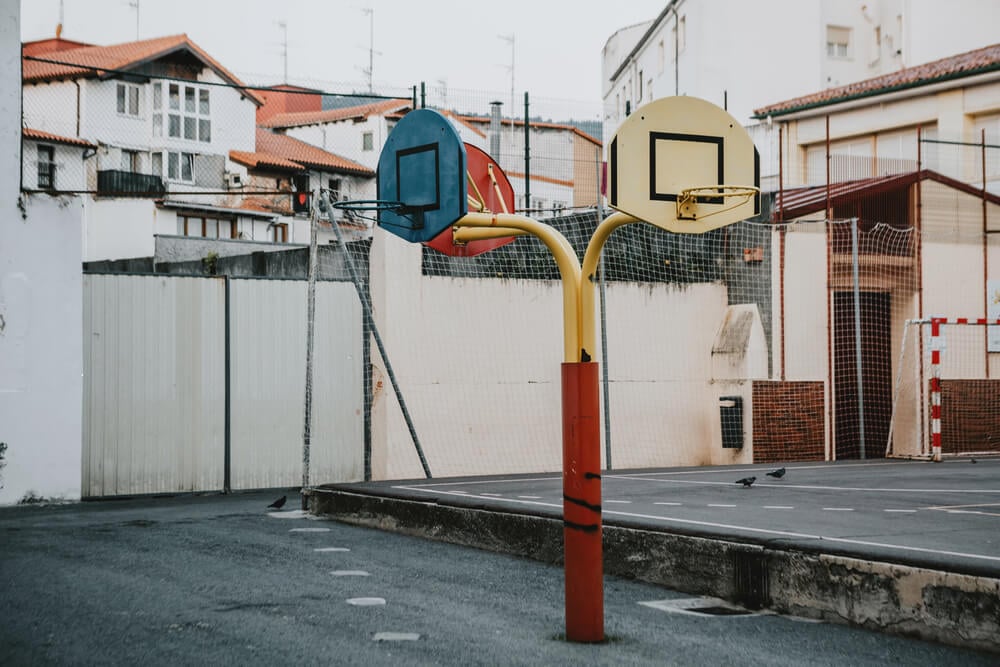
No single piece of equipment caused as many injuries as the ground beneath it. The commission estimates that playground injuries lead to more than 200,000 emergency room visits a year, and falls are the most common cause.
The handbook states plainly that asphalt, concrete, grass and dirt are not appropriate under equipment. Acceptable materials include wood chips, engineered wood fiber, sand, pea gravel, shredded rubber and poured rubber, each tested for the fall height it can cushion.
Resurfacing changed the look of playgrounds more than any recall did, and it likely prevented more serious head injuries.
Open Hooks on Swing Chains
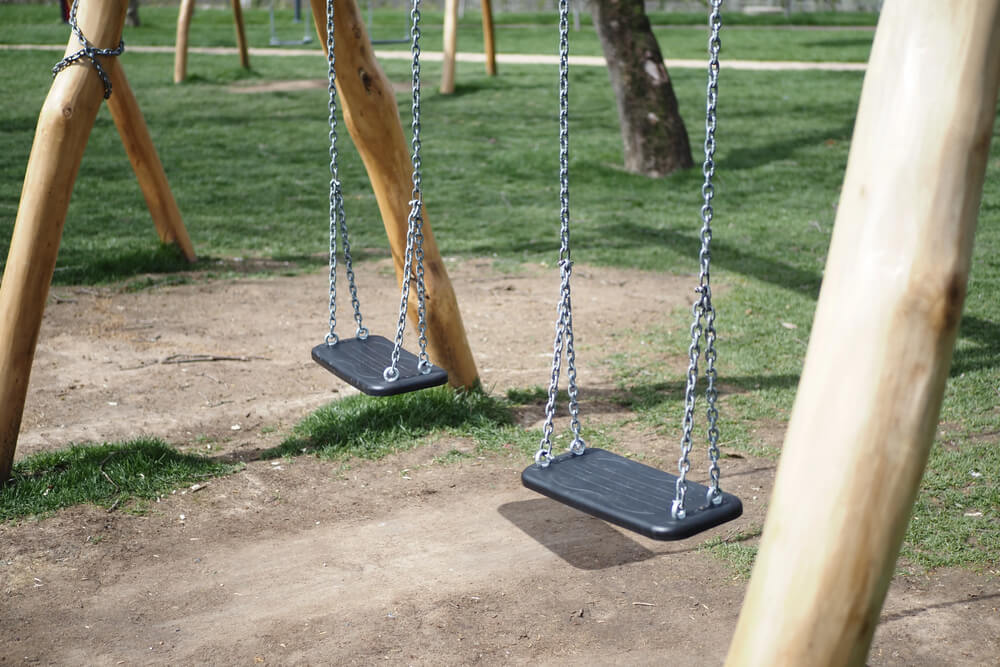
The small S-shaped hook that joins a swing chain to its hanger seems too minor to count as equipment. Left slightly open, it catches clothing.
Hood and neck drawstrings snagged on hooks and other protrusions were tied to a number of strangulation deaths, which led the commission to issue drawstring guidelines for children’s outerwear in 1996. For the hardware, the handbook says a hook is closed only when the gap is no wider than 0.04 inches, roughly the thickness of a dime.
Maintenance crews can check them with a coin or a feeler gauge, and worn or open hooks are replaced.
Trampolines in Public Play Areas
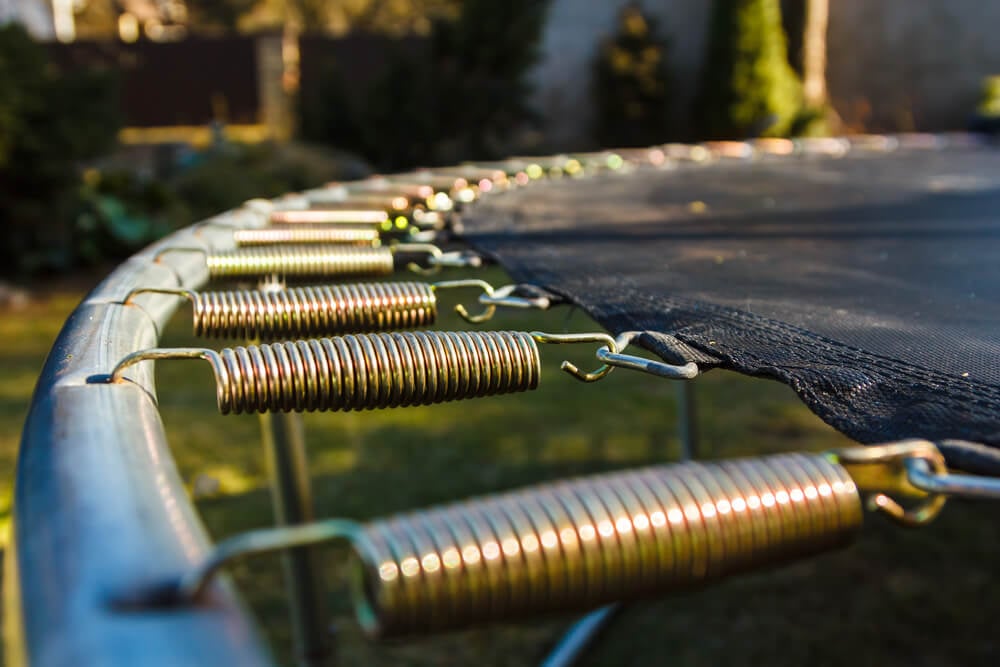
Trampolines appear on the same federal list as giant strides and swinging gates, equipment not recommended for public playgrounds at all. Injuries come from collisions when several children bounce together, from landing on springs and frames, and from awkward falls onto the neck.
The American Academy of Pediatrics has for years discouraged recreational trampoline use at home as well. Some parks have since installed small in-ground bounce pads, set flush with rubber surfacing and sized for one child at a time.
These are a different product from the backyard model, with no raised frame to fall from.
Tire Swings Rebuilt From the Inside Out

Unlike most of its neighbors, the tire swing survived, but only after changes. Hung flat from three chains on a swivel, it spins and swings in any direction and carries several riders, so the federal handbook gives it rules of its own.
Steel-belted radials must be examined regularly for exposed wire, drainage openings are advised so the tire does not collect water, and the swing needs at least 30 inches of clearance from its support posts at full extension. Truck tires once common in parks were heavy enough to injure a bystander.
Lighter passenger tires and molded plastic replicas took their place.
Scraped Knees and the Paper Trail Behind Them

Little of this equipment was removed in a single sweep. The handbook is guidance, and the ASTM standard is voluntary, though a number of states have written one or both into law.
Most removals happened one park at a time, when an insurer, an inspector or a parent pointed to a page number. That slow process is why a rusting giant stride or a concrete turtle can still be found in a small town.
Critics argue that the result is a playground too dull to hold a nine-year-old, and some designers have answered with taller nets, loose parts and supervised adventure playgrounds. The record supports both sides. Surfacing, entrapment rules and lighter swing seats addressed injuries that no child learns anything from.
The argument that remains is about height, speed and risk a child can see and choose.
More from Go2Tutors!

- The Romanov Crown Jewels and Their Tragic Fate
- 13 Historical Mysteries That Science Still Can’t Solve
- Famous Hoaxes That Fooled the World for Years
- 15 Child Stars with Tragic Adult Lives
- 16 Famous Jewelry Pieces in History
Like Go2Tutors’s content? Follow us on MSN.