27 Rules Sailors Followed on Old Warships
Life aboard a sailing warship ran on written regulations and unwritten customs, and the penalty for ignoring either could be a flogging or a rope. Crowded decks, open flames, and barrels of gunpowder left little room for improvisation.
Some of these rules were scribbled into Admiralty orders, others were absorbed through habit, and a few shaped the Royal Navy for centuries. Together they explain how hundreds of men lived inside a wooden ship without it falling apart.
The Articles of War Hung in Plain Sight
Under the Naval Discipline Act of 1749, the Articles of War were to be displayed in a public part of each ship and read aloud to the crew. Many sailors could not read, so hearing the penalties spoken was the only way to know them.
Numerous offenses ended with the same phrase, death or such other punishment as a court martial thought fit. A man could not claim ignorance when the sentence had been recited to him.
Public Worship Came First

The very first article required that public worship of Almighty God be performed solemnly, orderly, and reverently in every ship, according to the liturgy of the Church of England. Sunday services were held on the upper deck, with the crew mustered in clean clothes.
Captains without a chaplain often read the service themselves. A crew that skipped prayers could find the omission noted in the log.
Cowardice Carried a Mandatory Death Sentence

Article 12 of the 1749 Act prescribed death for any officer who failed to do his utmost against the enemy, with no alternative punishment allowed. Admiral John Byng learned its force after failing to relieve Minorca in 1756.
His court martial recommended mercy, but the wording left no discretion, and he was shot on the quarterdeck of HMS Monarch at Portsmouth on 14 March 1757. Parliament later added the words “or such other punishment” to soften the article.
Break the Line and Lose Your Commission
The Fighting Instructions required captains to keep their ships in a rigid line of battle, bow to stern, and not to leave it without orders. Admiral Thomas Mathews broke the line at Toulon in February 1744 to close with the Spanish flagship.
A court martial dismissed him from the service in 1746 for it, even though his gamble had tactical merit. The rule survived until Nelson’s era, when officers began to trust their own judgment.
Mutiny Meant the Yardarm

The Articles made mutiny a capital offense, and convicted ringleaders were hanged from a yardarm while the fleet watched. The great mutinies at Spithead and the Nore in 1797 broke out partly because seamen’s pay had barely changed since the 1650s.
Spithead was settled with a pay raise and a royal pardon. The Nore ended with the hanging of its leader, Richard Parker, on HMS Sandwich.
The Full Crew Watched the Punishment
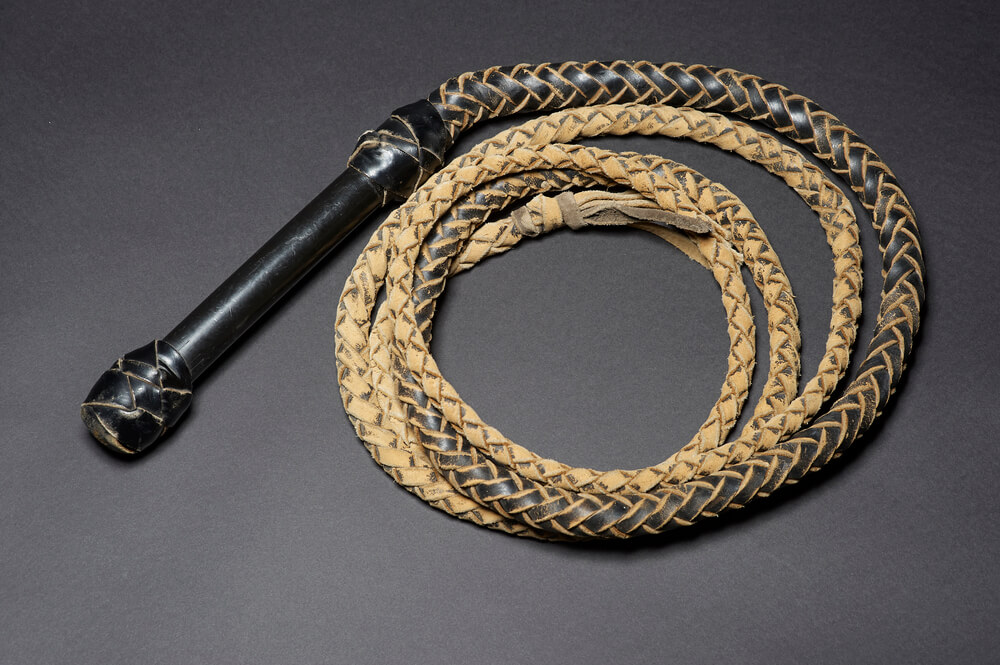
When a flogging was ordered, all hands were piped to witness it, officers in full uniform and marines under arms. The offender was seized up to a grating, and the boatswain’s mates took turns with the cat-o’-nine-tails.
The most extreme sentences were carried out as flogging round the fleet, with the prisoner rowed from ship to ship to receive part of the sentence at each. Flogging in the Royal Navy was abolished in 1879.
Vernon Ordered the Rum Watered Down

In 1740, Admiral Edward Vernon directed that the daily half pint of rum be mixed with a quart of water and issued in two servings. Sailors nicknamed him Old Grog after the grogram cloak he wore, and the mixture took his nickname.
The order was meant to curb drunkenness among men who had been drinking their rum straight. The sailors, predictably, grumbled and kept drinking it.
A Gallon of Beer and a Pound of Biscuit

The standard daily allowance for a seaman was a gallon of beer and a pound of ship’s biscuit. Beer was brewed weakly so that it kept for weeks, and it was preferred to water, which turned foul in casks.
When a ship sailed to warmer waters, wine or spirits replaced the beer ration. The biscuit, baked hard to last, was famously infested with weevils by the end of a long voyage.
Black Tot Day Ended the Rum Ration

The daily rum issue lasted in the Royal Navy until 31 July 1970, a date remembered as Black Tot Day. Sailors marked the occasion with mock funerals, and some wore black armbands.
The Admiralty Board had decided that men operating modern weapons and machinery could not safely drink every day. Savings from the ended ration went to fund improvements in the sailors’ welfare funds.
The Purser’s Pound Was Only Fourteen Ounces

Pursers, who were responsible for issuing food and clothing, commonly worked with a pound of fourteen ounces instead of sixteen. The difference was a customary allowance for waste and spoilage, and it also became a quiet source of profit.
Because pursers had to buy their provisions with their own funds and sign for them, the job was risky as well as lucrative. Complaints about short measures were a staple of lower-deck grievances.
Ratings Wore No Official Uniform Until 1857
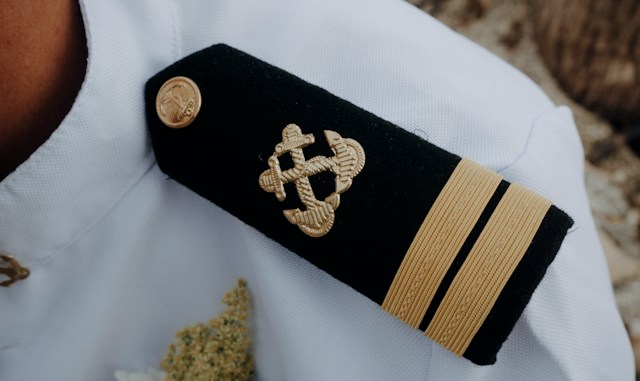
Royal Navy officers were given an official uniform in 1748, but ordinary seamen wore whatever the purser’s slop chest supplied. Many crews came to resemble one another because the same cloth was issued, yet nothing required it.
Regulations for a standard rating uniform did not appear until 1857. Until then, a sailor’s check shirt, short jacket, and wide trousers were custom rather than rule.
Mess Duty Rotated Among Eight Men

Seamen ate in messes, each of about eight men, at tables slung between the guns on the lower deck. Each day one member served as cook of the mess, drawing the food from the purser’s issue and carrying it to the galley to be boiled.
He brought it back, divided it fairly, and washed the utensils. Fairness mattered so much that a man who shorted his mates risked losing their trust.
Four Hours On, Four Hours Off
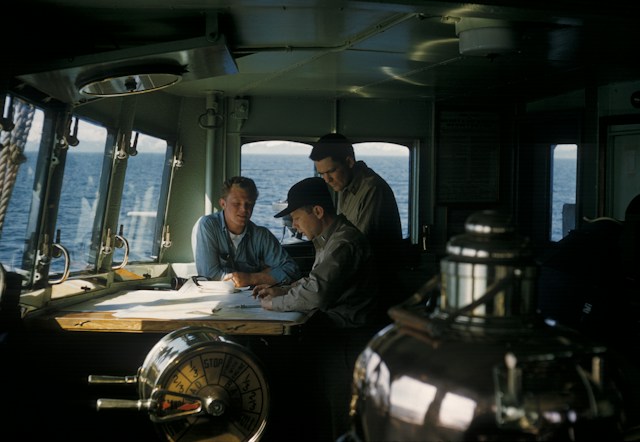
Crews were divided into two watches, larboard and starboard, each standing four hours at a time. The afternoon was split into two-hour dog watches, from four to six and six to eight, so that the same men did not stand the same watches every day.
All hands were called for maneuvers like tacking or shortening sail. Sleep came in fragments, and few sailors enjoyed an unbroken night.
Bells Counted the Half Hours
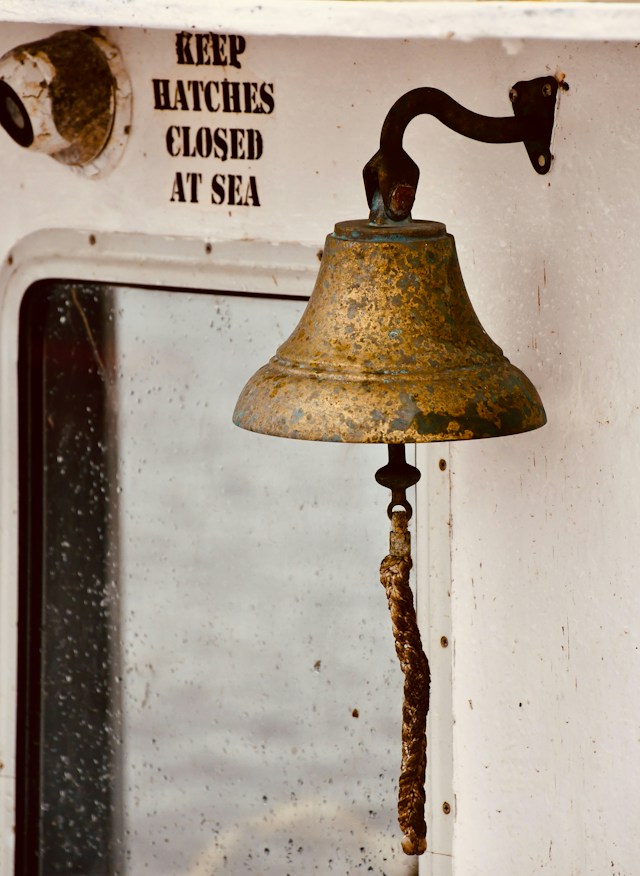
Time was kept with a half-hour sandglass, and the ship’s bell was struck once each time it was turned. A watch of four hours therefore ended with eight bells, and the new watch began the cycle again.
The bell also told the crew when to eat, change watch, or lower their hammocks. A sailor’s entire day was measured by its strokes.
The Log Line Was Knotted Every 47 Feet

Speed was measured by streaming a log line over the stern, with knots spaced about 47 feet 3 inches apart, and counting how many ran out in a 28-second sandglass. The count gave the ship’s speed in nautical miles per hour, which is why the unit is still called knots.
The log was heaved at regular intervals and recorded on the log board. Navigators relied on those readings to calculate their position through weeks of open water.
Each Man Got Fourteen Inches

In the Royal Navy, each man was given roughly fourteen inches of width in which to sling his hammock on the crowded gun deck. Because the two watches slept at different times, the arrangement worked better than the numbers suggest.
Hammocks were lashed with seven turns of line and stowed away in the morning. Sleeping so tightly spaced left sailors quick to learn the rule about getting along.
Hammocks Doubled as Armor

When the ship cleared for action, hammocks were rolled and stowed in netting along the bulwarks. The tight bundles were thought to help stop splinters and musket shot from reaching the men on deck. They also kept the lower decks clear for guns and crews. After a battle, soaked and torn hammocks were sometimes used to wrap the dead for burial at sea.
Holystones Scoured the Decks Daily
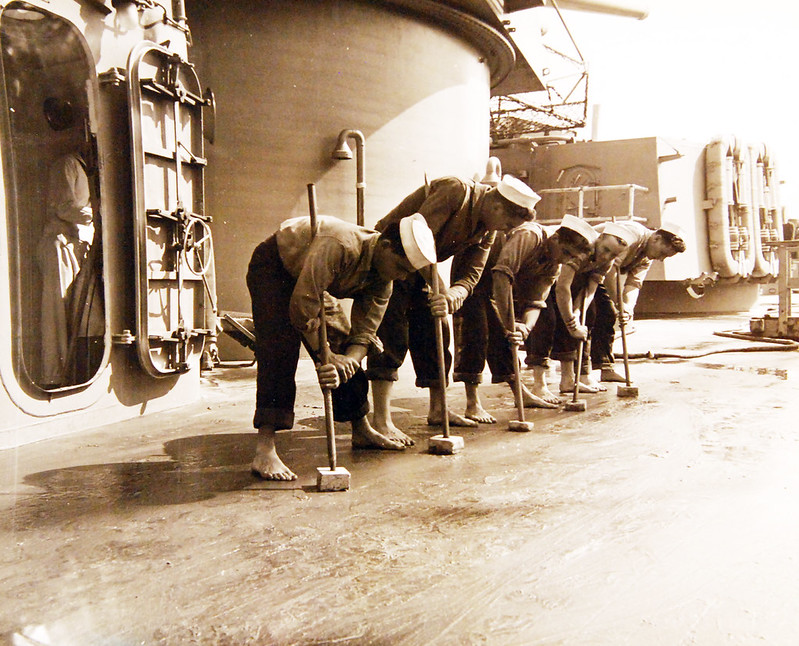
Every morning, sailors scrubbed the wooden decks with sand and sandstone blocks known as holystones. The large ones were called Bibles, and the small ones used in tight corners were called prayer books, because the work meant kneeling.
Clean decks were a mark of a well-run ship, and a captain’s reputation could rest on their whiteness. The routine also helped reduce the damp and rot that threatened a wooden hull.
Magazine Entry in Soft Slippers Only
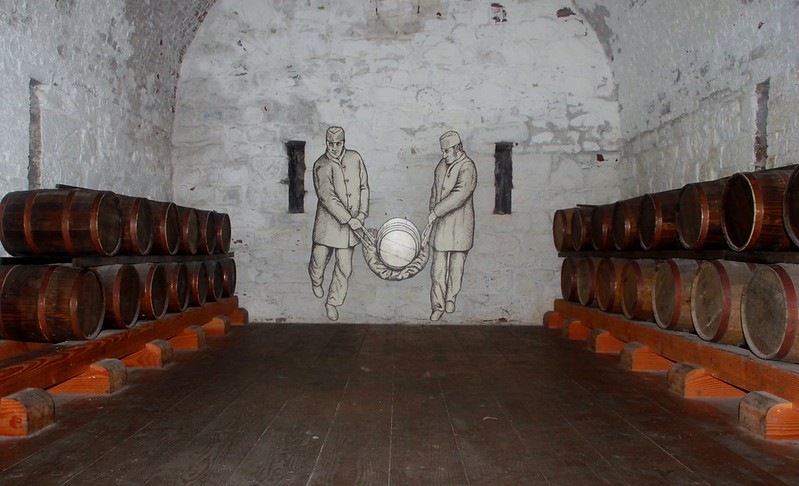
The gunpowder magazine sat deep in the hold, and nobody could enter it wearing shoes with nails or metal parts that might strike a spark. The gunner’s crew wore felt or soft slippers and used tools made of copper or wood.
The magazine had no lamp of its own; light came through thick glass from a separate light room next door. A single spark in that space could destroy the entire ship.
Lights Out Belonged to the Master-at-Arms

Below decks, open flames were forbidden, and lamps were enclosed in lanterns with panes of horn. At night the master-at-arms, the ship’s chief police officer, made rounds to make sure all lights were extinguished at the proper hour.
Only lanterns approved by the officer of the watch could remain lit. The rule reflected a plain fear that fire at sea left the crew nowhere to run.
The Galley Fire Had a Curfew

Cooking took place on a brick-lined hearth in the forecastle, and the fire was put out once the day’s meals were prepared. In 1781, the Royal Navy adopted the Brodie stove, an iron design by Alexander Brodie that was more efficient and safer than the old brick hearth.
Ships also carried leather fire buckets and conducted drills where each man had an assigned post.
Fire was the enemy that outranked even the French.
Clearing for Action Meant Taking the Ship Apart

When the drum beat to quarters, the crew removed partitions, including the captain’s cabin walls, to open the gun deck from one end to the other. Furniture was sent below, and the captain’s belongings were stowed in the hold.
Sand was scattered on the decks so that blood and water would not make footing treacherous. A well-drilled crew could clear a ship in a matter of minutes.
The Weather Side Belonged to the Captain

On the quarterdeck, the windward side was reserved for the captain, and other officers walked on the lee side unless invited across. Every person coming aboard saluted the quarterdeck itself, as a mark of respect for the ship’s authority.
Ratings were not to cross the area without business there. The custom turned a patch of planking into the center of command.
Lemon Juice Became Mandatory in 1795

James Lind tested citrus against scurvy on HMS Salisbury in 1747, dividing twelve sick sailors into pairs and giving each pair a different remedy. The two men given oranges and lemons recovered fastest.
It took until 1795, with prodding from the physician Gilbert Blane, for the Admiralty to order a daily lemon juice issue.
Scurvy then dropped sharply, and later the juice was replaced by limes, giving British sailors their nickname.
Sixpence a Month Supported Greenwich
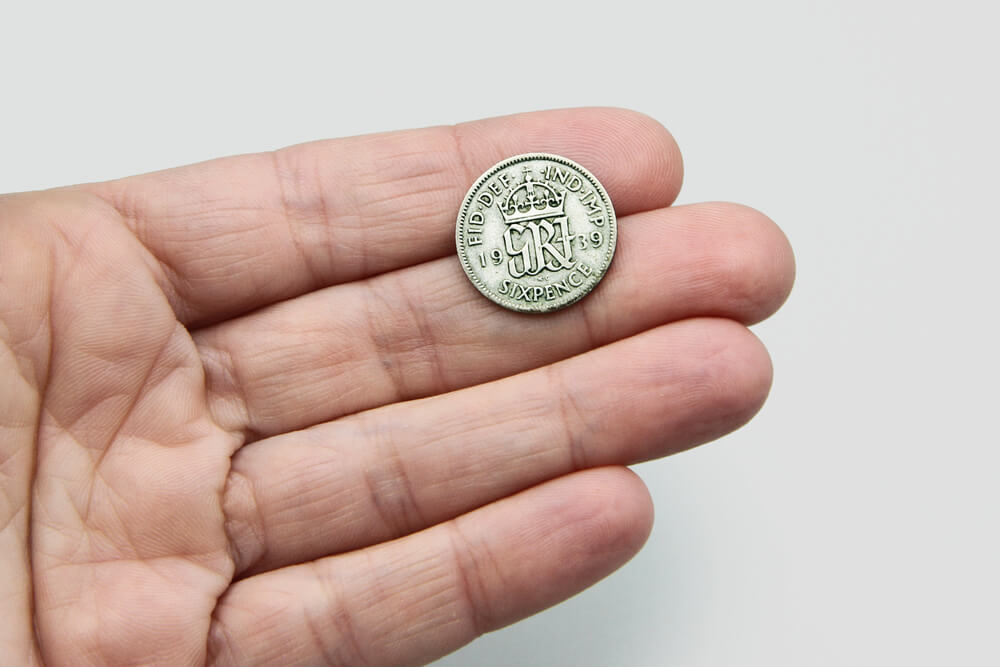
Beginning in 1696, every seaman had sixpence deducted from his monthly pay to support Greenwich Hospital, the Navy’s home for retired and disabled sailors. The deduction applied no matter his rank or the condition of his ship.
In return, a sailor who was injured or too old to serve could hope for a bed and meals ashore. It stands among the earliest compulsory pension schemes tied to employment.
Continuous Service Replaced Ship-by-Ship Hiring
Before 1853, sailors signed on for a single ship’s commission and were paid off when she returned home. The Continuous Service Act introduced a ten-year engagement, giving the Navy a permanent body of trained seamen.
Men in the new system received a pension and a career path. The change helped end dependence on the press gang and marked the beginning of a professional lower deck.
Early Steam Warships Kept Their Sails
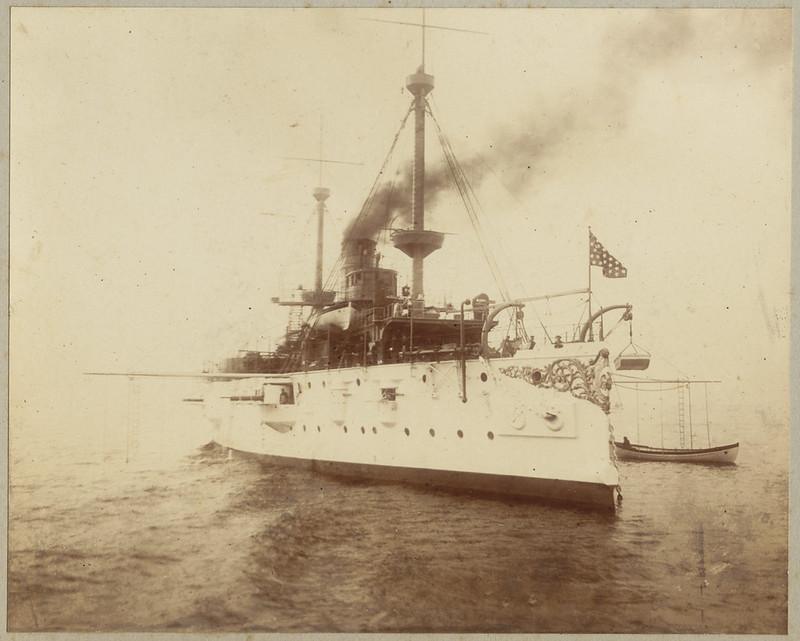
The ironclad HMS Warrior of 1860 had a steam engine, yet she also carried a full set of masts and sails, because early engines burned coal at a ruinous rate. Her funnel could be lowered when she sailed, so that it did not spoil the airflow.
Admiralty practice was to use steam sparingly and rely on canvas for long passages. Sail drill therefore stayed a core part of naval training deep into the steam age.
Discipline as an Engine of Survival

Every rule on this list came from some earlier disaster, whether a fire, a lost battle, or a ruinous outbreak of disease. The Navy wrote its lessons into regulations because ships at sea could not wait for a committee to decide.
A sailor who followed them had a better chance of surviving the voyage, though not always of enjoying it.
The harshness of the system is easy to condemn, and with good reason, but the logic behind much of it was practical. When hundreds of people share a wooden box surrounded by water, shared rules become the only thing keeping order.
Many modern safety codes at sea trace their descent from those old orders, minus the lash.
More from Go2Tutors!

- The Romanov Crown Jewels and Their Tragic Fate
- 13 Historical Mysteries That Science Still Can’t Solve
- Famous Hoaxes That Fooled the World for Years
- 15 Child Stars with Tragic Adult Lives
- 16 Famous Jewelry Pieces in History
Like Go2Tutors’s content? Follow us on MSN.