Things Pompeii Revealed About Roman Life
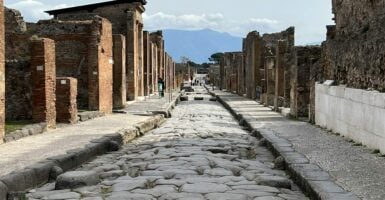
Vesuvius buried Pompeii under pumice and ash in 79 AD, and the city stayed buried for nearly seventeen centuries. Rome left behind marble temples and the writings of its elite, but Pompeii preserved the groceries, the plumbing, the wall scribbles and the unmade beds of ordinary people.
Each excavation season since the 1700s has turned up something that no ancient author bothered to write down. The picture that emerges is not grand.
It is a city of snack counters, campaign posters, barking dogs and tax receipts, and that is exactly why it matters.
Fast Food Counters With Painted Menus
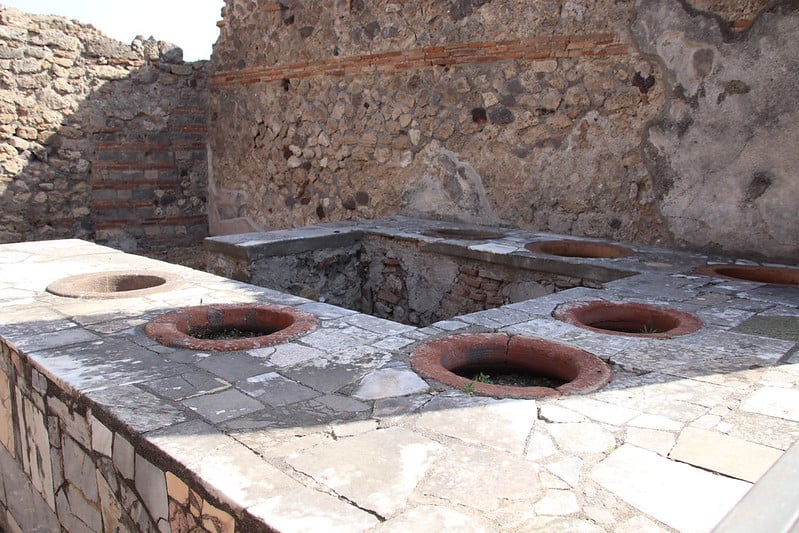
Archaeologists announced in December 2020 that a snack bar in Regio V had been uncovered with its painted counter almost intact. The frescoes show two mallard ducks hanging upside down, a rooster, and a dog on a leash, and they functioned as a menu for customers who could not read.
Deep terracotta jars set into the masonry still held traces of duck, goat, pig, fish and snails, apparently cooked together in a kind of Roman stew. The counter opened to the public in August 2021.
Pompeii has dozens of these thermopolia, which suggests that most residents ate lunch standing in the street rather than cooking at home.
Bread Loaves Stamped With the Baker’s Name
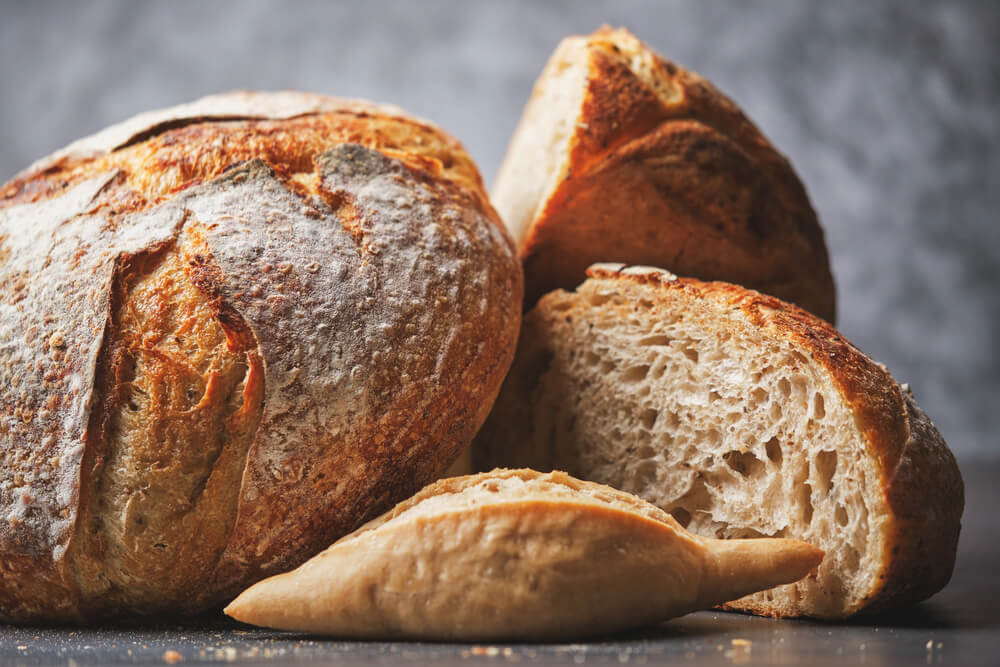
Carbonized loaves survived the eruption because the heat baked them to charcoal before anything could rot. The best known came from Herculaneum, the smaller town buried in the same eruption, and carries a stamp reading Celer, slave of Quintus Granius Verus, which told the communal oven whose bread was whose.
It is round, scored into eight wedges, and now sits in the National Archaeological Museum in Naples. Pompeii itself had more than thirty bakeries, and the oven of one of them, run by a man named Modestus, was found with dozens of loaves still inside.
Bread was the engine of the city’s diet, bought daily rather than baked at home.
Fish Sauce as a Branded Luxury
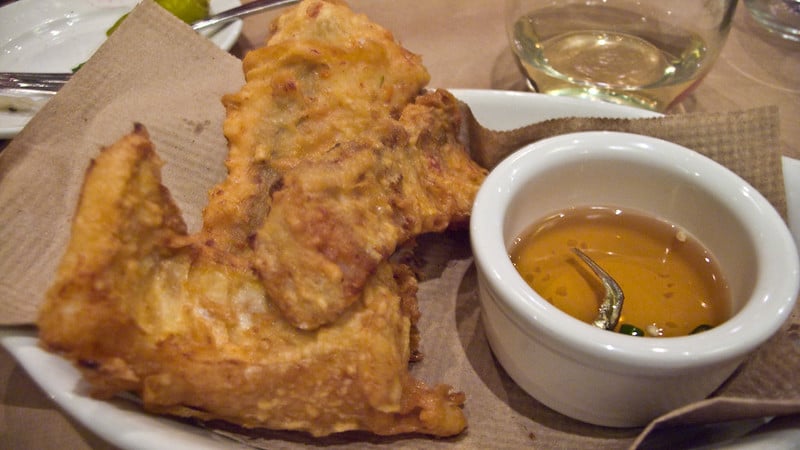
Garum, the fermented fish sauce Romans poured over nearly everything, was big business in Pompeii, and one man dominated the trade. Aulus Umbricius Scaurus the Younger had mosaics laid in the atrium of his house showing the one-handled jars his sauce shipped in, labeled as the flower of mackerel garum from the workshop of Scaurus.
Jars bearing his name turned up across the city and as far away as southern France. The decoration amounts to advertising inside a private home, a boast about the product that paid for the floor.
Scaurus was rich enough that the city voted him a public funeral and an equestrian statue.
Campaign Posters Painted on Every Street
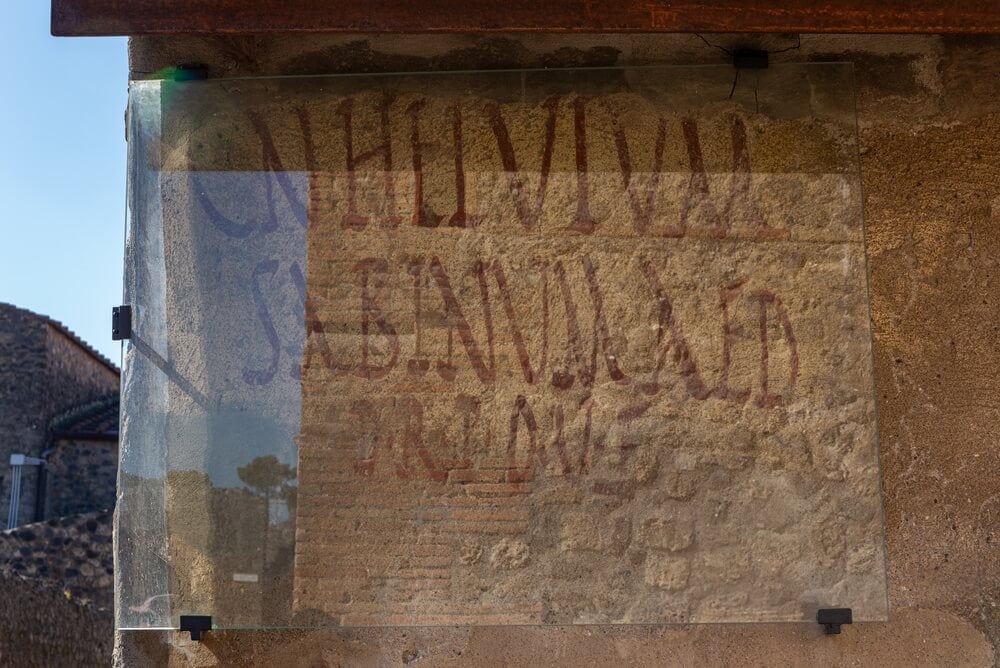
Pompeii held annual elections for its two chief magistrates and two aediles, and the walls carried the campaigns. Thousands of painted notices, known as programmata, survive, most of them following a formula that asks voters to elect a named candidate because he is a worthy man.
Professional sign painters worked at night by lamplight and sometimes signed their work. Groups of supporters identified themselves by trade, with fruit sellers, mule drivers, goldsmiths and dyers all endorsing candidates.
A few notices were clearly jokes, since the late drinkers and the petty thieves were also recorded as backing particular men for office.
Women Who Campaigned Without a Vote

Roman women could not vote or hold office in Pompeii, yet their names appear on the campaign walls as sponsors of male candidates. A woman named Taedia Secunda asked neighbors to support Lucius Popidius Secundus, and her notice identifies him as her grandson.
Other women endorsed candidates in their own names, sometimes alongside a husband or business partner and sometimes alone. Many of these notices were painted outside shops and bars the women ran.
The evidence shows that political influence in a Roman town ran through households and commerce, and that the formal rules about who voted left out a good deal of who actually mattered.
Cave Canem on the Doorstep
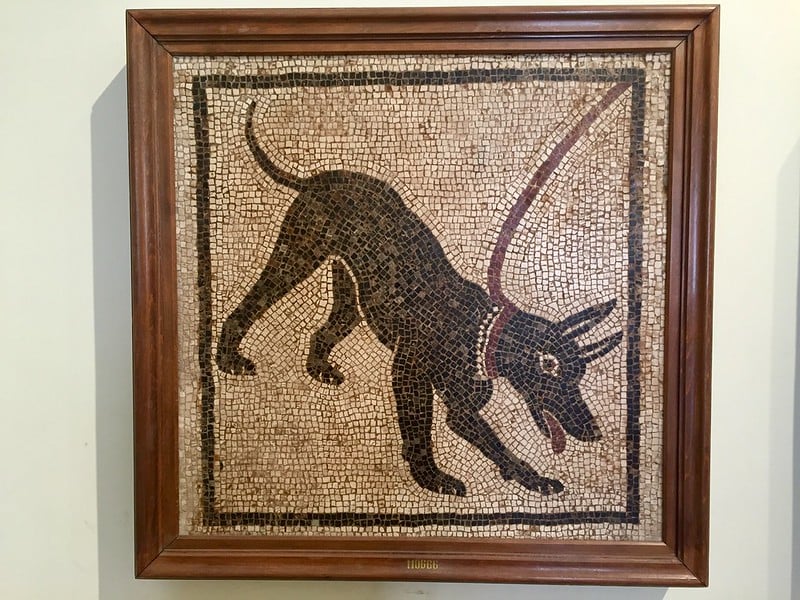
Visitors to the House of the Tragic Poet step over a black and white floor mosaic of a chained dog, teeth bared, above the words Cave Canem, which means beware of the dog. The house was excavated in 1824 and 1825 and became famous when Edward Bulwer-Lytton used it as a setting in his 1834 novel The Last Days of Pompeii.
Similar dog mosaics guard other doorways in the city. The warnings were not entirely decorative, since the 1874 excavation of the House of Orpheus produced the plaster cast of a dog that died straining against its collar chain.
Guard dogs were standard household equipment.
Lead Pipes and Public Fountains on the Corners
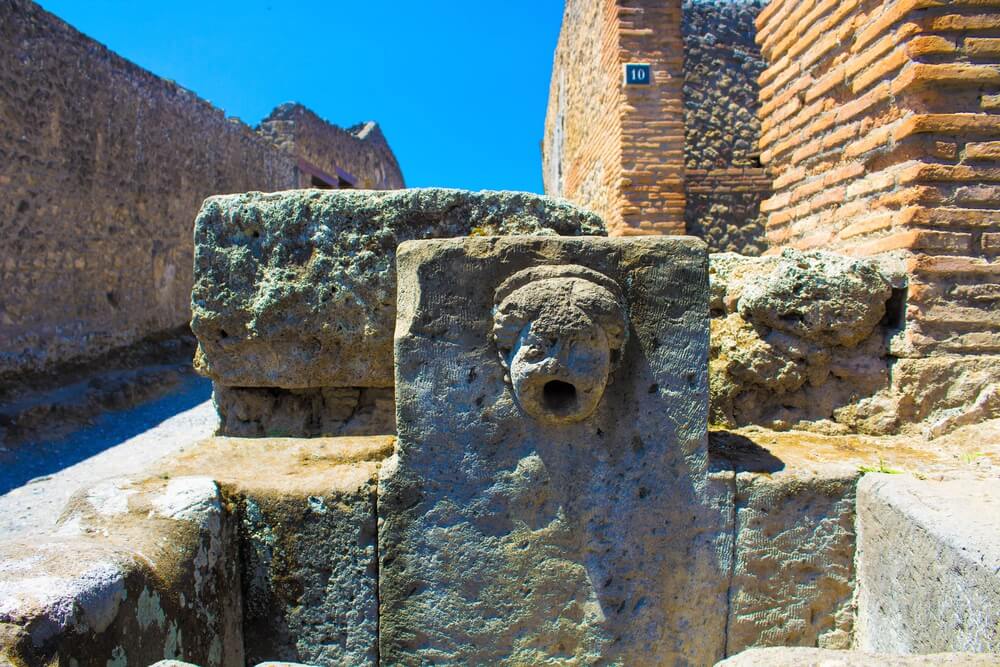
An aqueduct built in the reign of Augustus brought mountain water to a distribution tower at the Porta Vesuvio, where it split into three channels at different heights. From there, lead pipes ran under the sidewalks to public fountains, baths and the homes of residents who could pay for a private connection.
The fountains, dozens of them, sit at street intersections and were spaced so that most residents lived within a short walk of one. Their stone basins are worn smooth on the edges where people leaned to fill jugs.
When supply ran low, the lowest channel, feeding the fountains, was the last to be cut.
Public Baths Built for Men and Women Separately
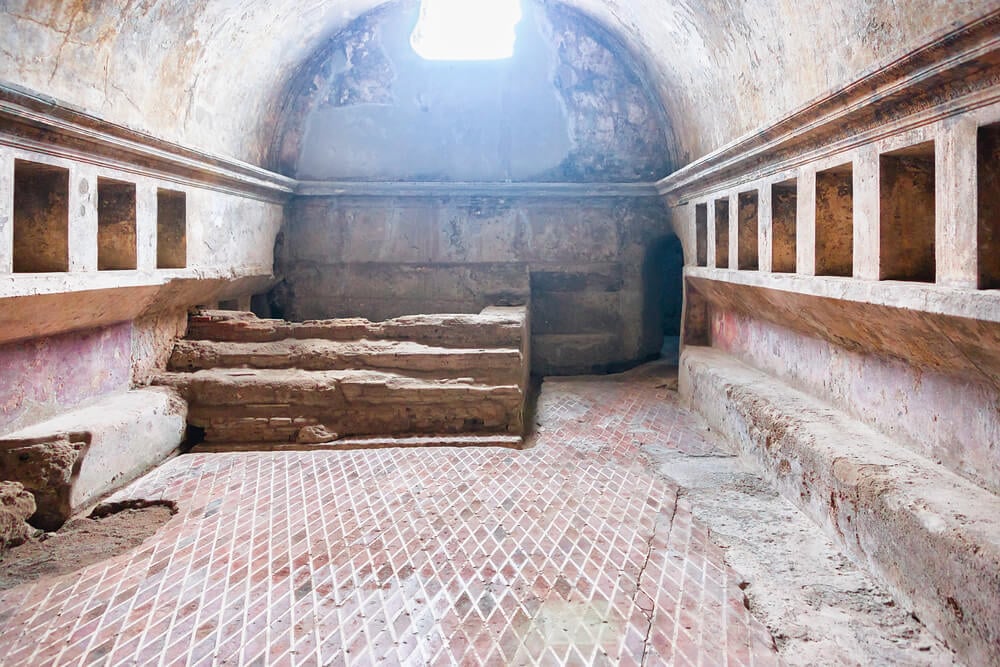
The Stabian Baths are the oldest bath complex in the city, with parts dating to the second century BC, and the Forum Baths were built after Sulla made Pompeii a Roman colony around 80 BC. Both have separate sections for men and women, each with a changing room, a warm room and a hot room, heated by a hypocaust that pushed furnace air under raised floors and up through the walls.
The Forum Baths have a cold plunge and a ribbed ceiling designed to carry condensation down to the walls instead of dripping on bathers. Entry cost very little, so bathing was a daily habit across classes.
Amphitheater Riot That Got the Games Banned
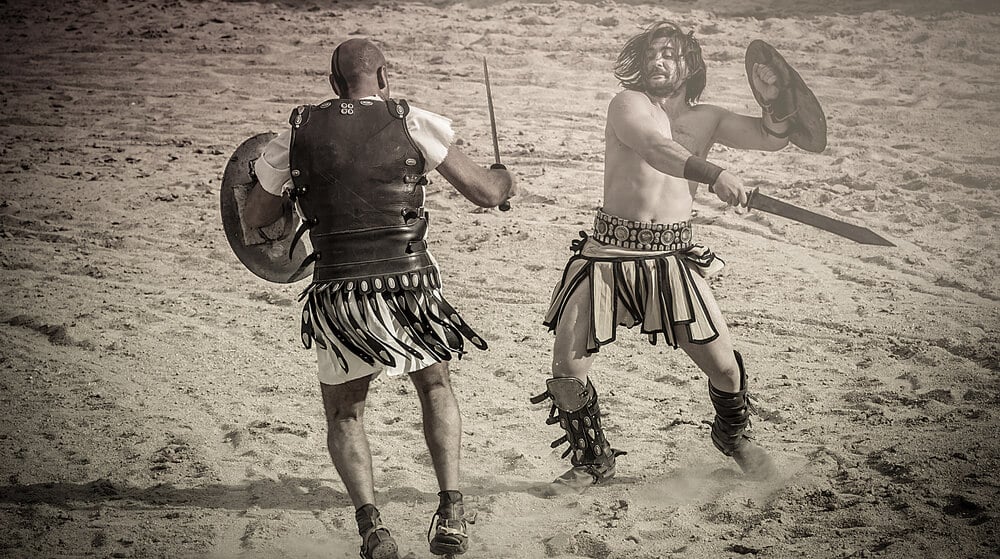
During a gladiator show in 59 AD, the crowd at the Pompeii amphitheater broke into a brawl between locals and visitors from the neighboring town of Nuceria. Tacitus reports that the trading of insults became stone throwing and then swords, and that Nucerians were carried home dead and maimed.
The Roman Senate responded by banning Pompeii from holding games for ten years. A fresco found in a house near the amphitheater shows the fight spilling across the arena, the seating and the surrounding streets, with the awning rigged overhead.
Graffiti on the walls also mocked the Nucerians afterward, which suggests the ban did little to improve relations.
House of the Faun and the Alexander Mosaic
Covering roughly 3,000 square meters, the House of the Faun takes up an entire city block, and its scale shows how much wealth a provincial town could hold. Its name comes from a bronze dancing faun found in the main pool.
In 1831 excavators lifted a floor mosaic from one of its rooms showing Alexander the Great charging at the Persian king Darius, composed of well over a million tiny tesserae. The mosaic, now in Naples, is thought to copy a lost Greek painting.
A household this rich kept dozens of enslaved workers, and the plan includes two atria and two peristyle gardens.
Villa of the Mysteries and Its Painted Rite
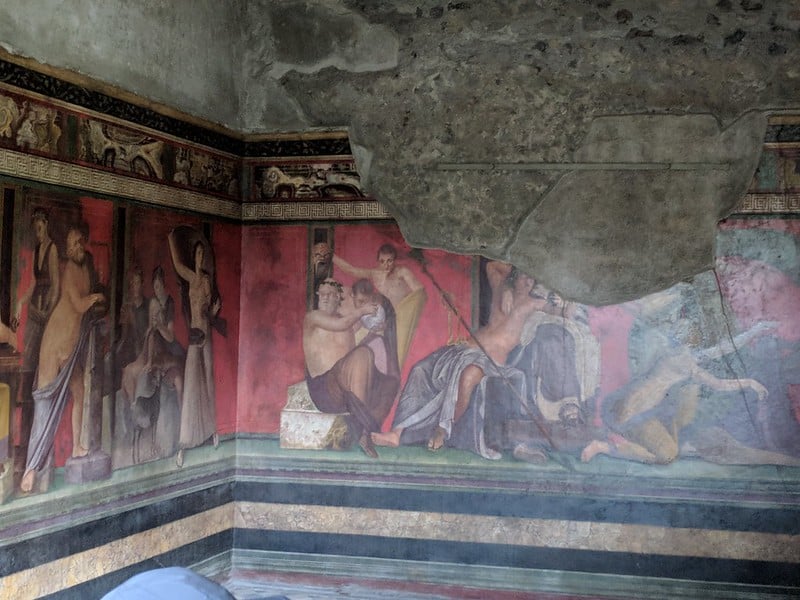
The Villa of the Mysteries, just outside the Herculaneum Gate, holds a room painted around 60 BC with life-size figures on a deep red ground. The scene runs around three walls and shows a young woman passing through stages of a ritual attended by women, satyrs and the god Dionysus.
Scholars still disagree about exactly what rite is depicted, and the room may have been a dining room rather than a sanctuary. What the frescoes do show is that private religion in a wealthy household could be elaborate, expensive and Greek in flavor.
The villa also contained a working wine press.
Sewers That Recorded What the Poor Ate
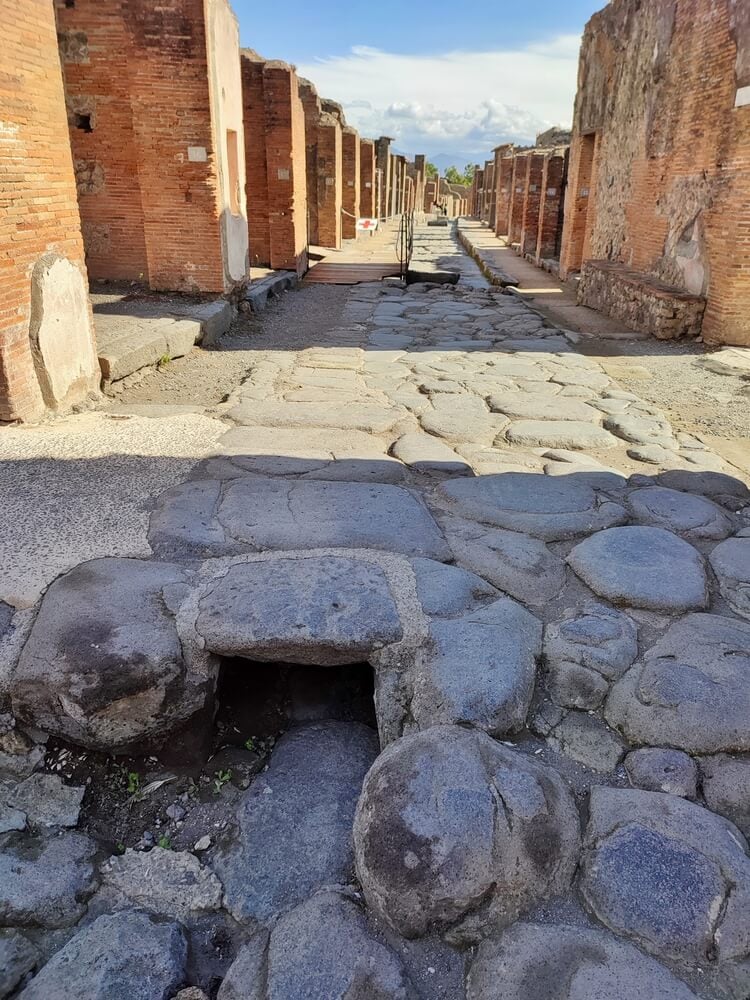
A University of Cincinnati team led by Steven Ellis spent a decade excavating a block of shops and modest houses near the Porta Stabia, and in January 2014 reported what the drains and latrines contained. Residents of ordinary means ate grains, lentils, olives, nuts, fish and eggs, which was expected.
Less expected were sea urchin, imported spices from as far away as Indonesia, and the butchered leg joint of a giraffe, the only such bone ever identified in Roman Italy. The findings undercut the assumption that exotic food belonged only to the rich.
The city’s waste, it turned out, kept better records than its elite.
Teeth in Better Shape Than Expected
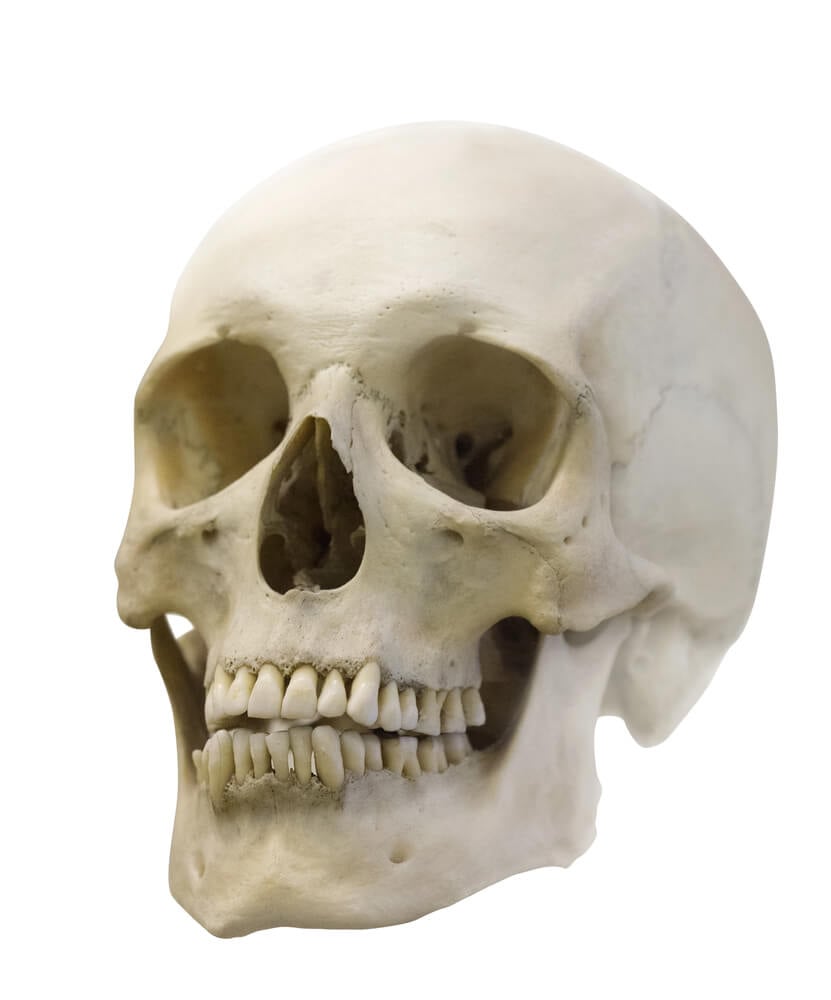
A team working with the Pompeii archaeological authority in 2015 ran CT scans on plaster casts of victims and found that the people inside had unusually good teeth. Cavities were rare, and researchers credited a diet low in sugar and high in fruit, vegetables and fiber, along with naturally high fluorine levels in the local water.
The scans also revealed healed fractures and the skeletons of children inside casts previously thought to be adults. Dentistry in Pompeii was crude, so the healthy mouths owed little to doctors.
The residents simply had never encountered refined sugar.
Laundries That Ran on Urine
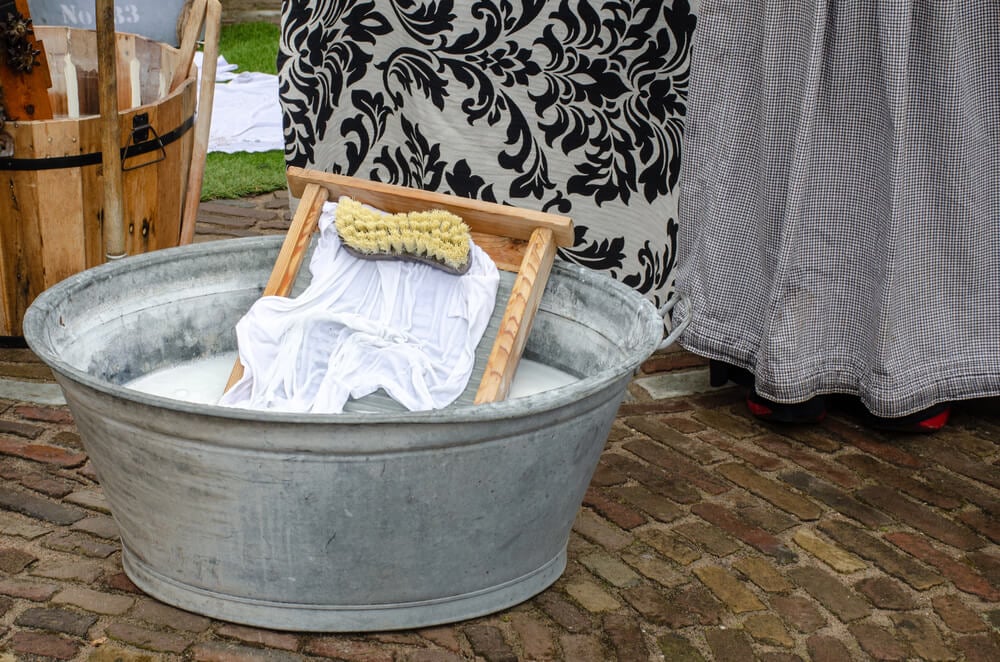
Fullers cleaned and finished woolen cloth, and the fullery of Stephanus on the Via dell’Abbondanza shows how. Workers stood in stone tubs treading garments in a mixture of water and stale urine, whose ammonia lifted grease from the fibers.
Jars were placed outside to collect the raw material from passersby. The cloth was then rinsed, stretched, brushed with teasels and bleached over sulfur fumes.
Pompeii had at least a dozen fulleries, and the trade was prosperous enough that the fullers set up a statue to the priestess Eumachia in the large building she gave the forum. The city’s cleanest togas, in other words, owed their condition to its dirtiest work.
Wax Tablets of the Banker Caecilius Jucundus
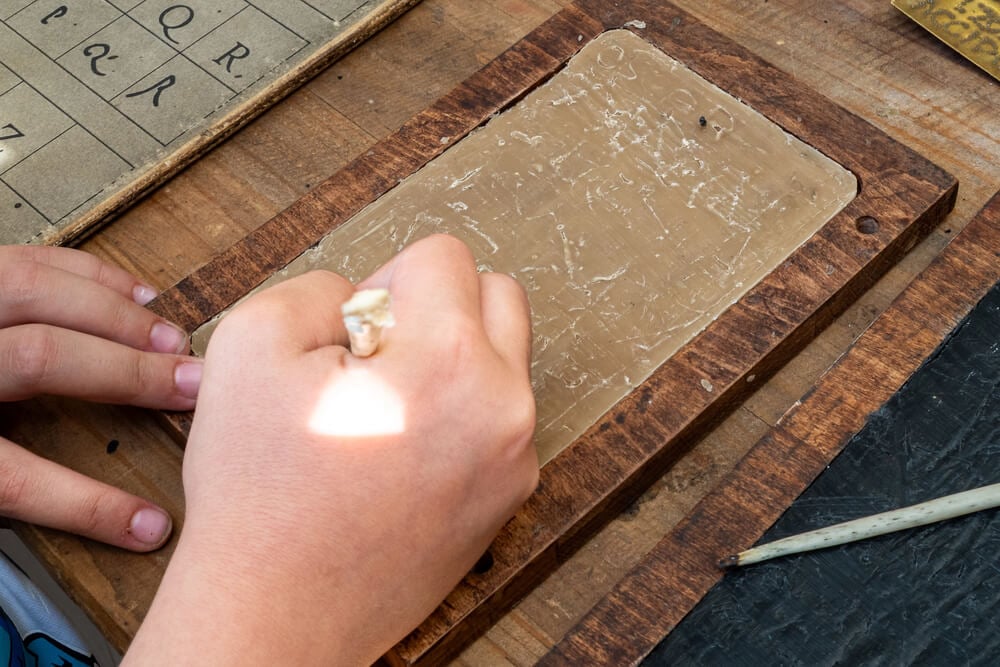
Excavators working in the house of Lucius Caecilius Jucundus in 1875 found a wooden chest holding more than 150 wax writing tablets. They were his business records, mostly receipts from auctions he arranged between 52 and 62 AD, in which he collected the money from buyers, deducted a commission and paid the seller.
The documents name hundreds of Pompeians, record the sale of mules, slaves, timber and linen, and list the witnesses who signed each deal in strict order of social rank. A bronze portrait bust of Jucundus, with a wart on his cheek, stood in his atrium.
The tablets show credit, commission and paperwork at work in a small-town economy.
Household Shrines in the Kitchen
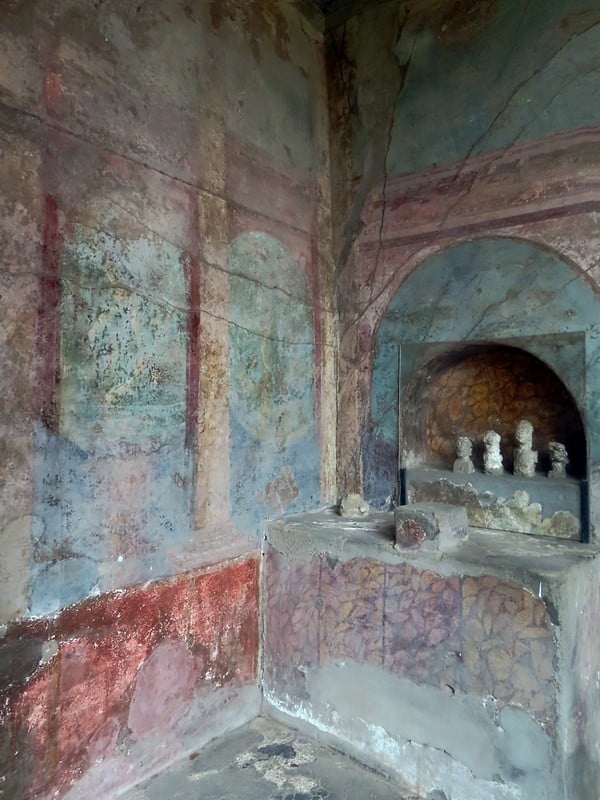
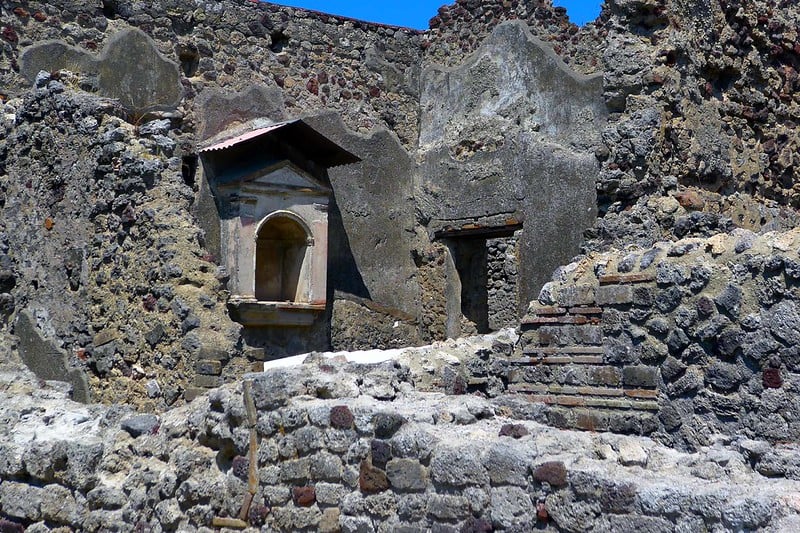
Nearly every house in Pompeii had a lararium, a small shrine to the Lares, the guardian spirits of the household, often placed in the atrium or near the kitchen. The best known, in the House of the Vettii, shows the genius of the head of the household in a toga, flanked by two dancing Lares pouring wine from drinking horns, with a serpent below representing the protective spirit of the place.
Families left offerings of fruit, cakes and incense on the altar. Shrines appear in shops, bakeries and bars as well as homes, which suggests that daily religion in Pompeii was less about temples than about the kitchen wall.
Gardens Reconstructed From Their Roots
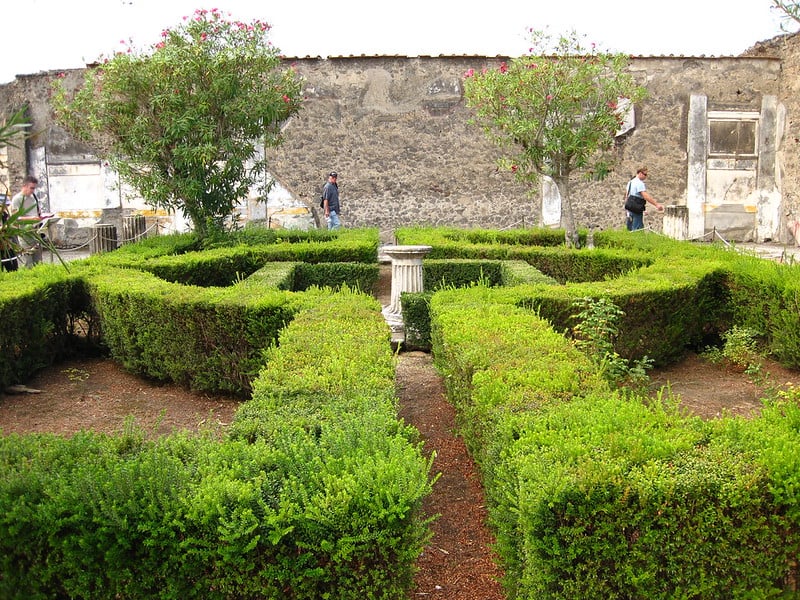
Wilhelmina Jashemski, an American archaeologist, spent decades from the 1960s onward excavating Pompeii’s open spaces rather than its buildings. Where roots had rotted in the volcanic fill they left cavities, and she filled them with plaster to recover the shape of each plant.
The technique revealed vineyards, orchards and vegetable plots inside the city walls. A large plot near the amphitheater proved to be a commercial vineyard with about two thousand vine root cavities, rows of stakes and a wine press.
Olive, fig, pear and chestnut trees were identified, and the results overturned the idea that an ancient town was built solid to its edges.
Ceremonial Carriage From Civita Giuliana
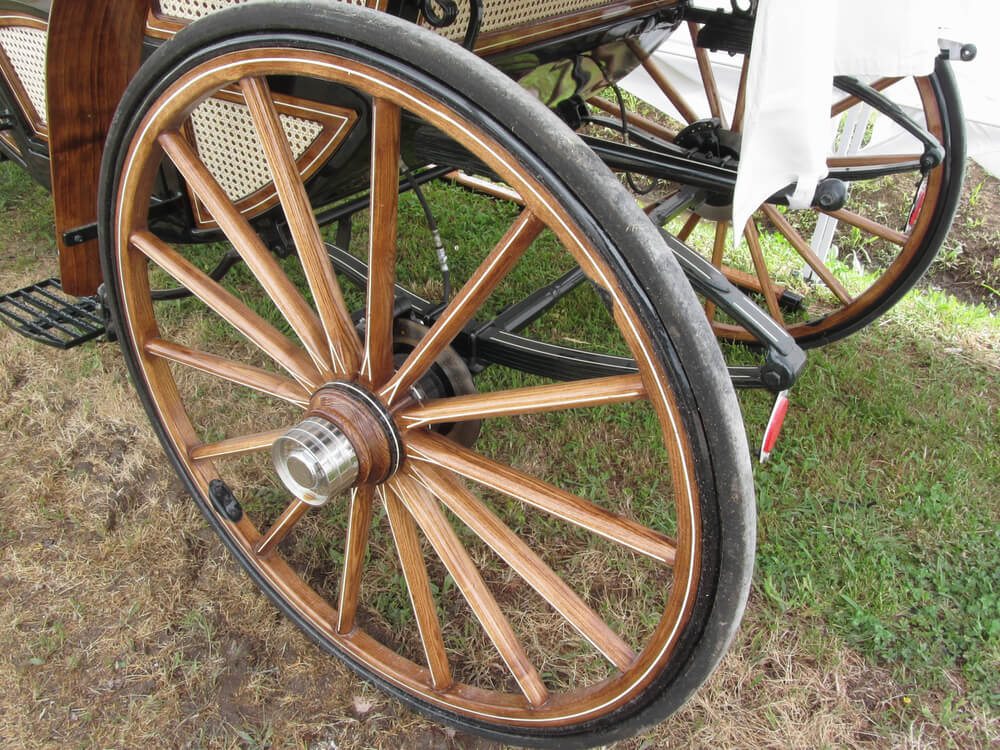
Early in 2021 the Archaeological Park of Pompeii announced the recovery of a four-wheeled ceremonial carriage from the villa at Civita Giuliana, just north of the city walls. The vehicle was found almost intact in a portico beside a stable where the remains of three horses had been found in 2018.
Its iron frame carried bronze and tin decorations, and excavators recovered the imprint of ropes and plant material from the ash. Scholars identified it as a pilentum, a carriage used by elite women for festivals and weddings.
Looters had tunneled within inches of it before the authorities took over the site.
Slave Quarters With Three Beds
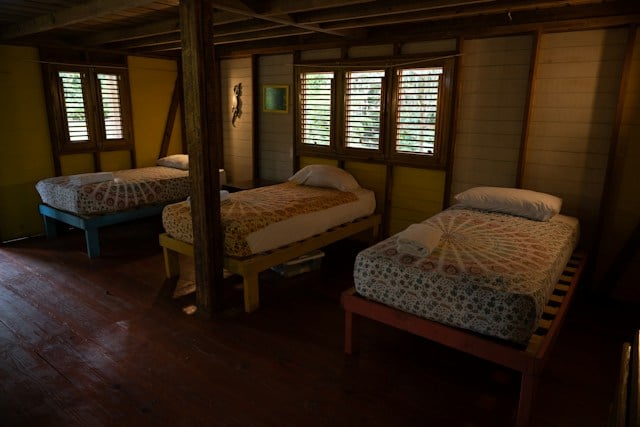
Later that year, in November 2021, the same villa at Civita Giuliana produced a small room of about sixteen square meters that had been home to enslaved workers. It held three beds, two sized for adults and one for a child, made of rope webbing on wooden frames.
A chamber pot stood beneath one bed, a wooden chest held fabric and metal fittings, and chariot parts were stored in a corner. Light came from a single high window, and there was no decoration at all.
The room served as both bedroom and storeroom. It is one of the few places where the living conditions of the enslaved can be seen directly rather than inferred.
Bakery Built Like a Prison
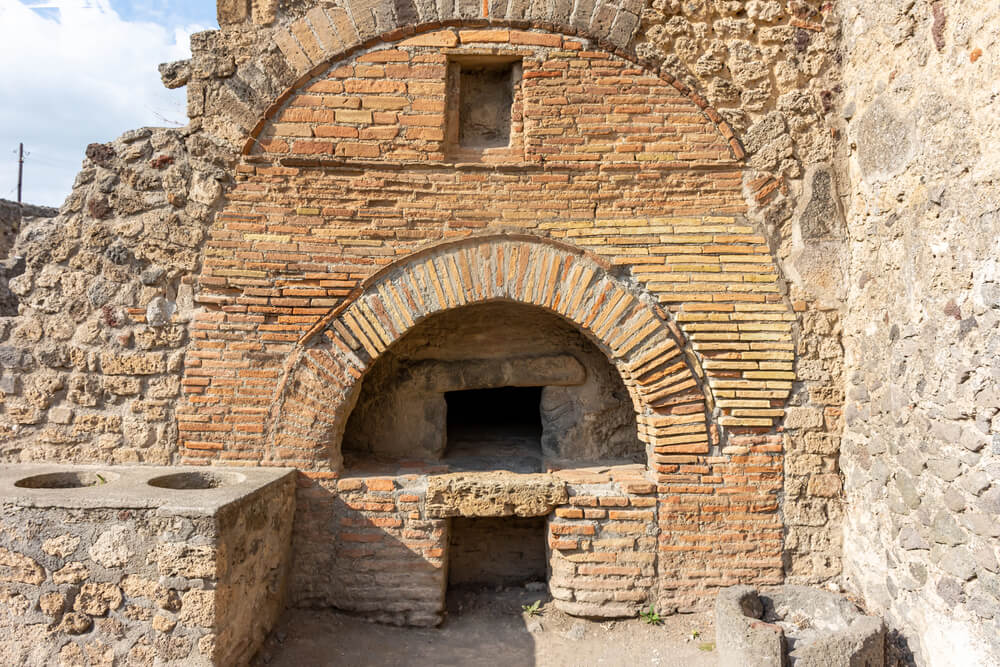
Excavators in Regio IX reported in December 2023 a bakery whose design left no doubt about who worked in it. The only windows were small, set high and barred with iron.
A single door led to the main house and could be locked from the outside. Grooves worn into the floor around the millstones showed where blindfolded donkeys walked in circles for hours, and the marks were cut to keep the animals on course.
Three skeletons had been found in the building during earlier work. The bakery shows the industrial side of a staple food, run on confined people and confined animals.
Black Room Painted for Dinner by Lamplight
Word came in April 2024 of a dining room in Regio IX with walls painted almost entirely black and set with mythological panels. One shows Helen of Troy meeting Paris, with their names written in Greek, and another shows Apollo pursuing the prophetess Cassandra.
The dark background was a practical choice, since lamp soot would not show against it, and the gold and red figures would have flickered by firelight. The floor is a mosaic of small white tiles.
The room was meant for dinner conversation about the Trojan War, which suggests that the owner’s guests were expected to know their Homer.
Shrine Painted in Egyptian Blue
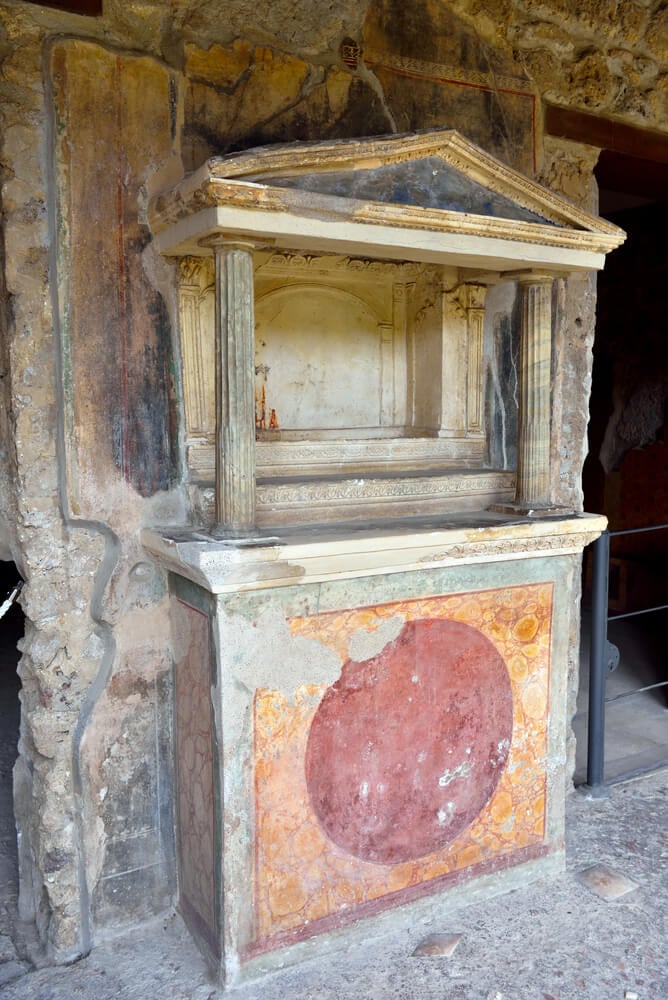
Two months later, in June 2024, the same excavation produced a small shrine with walls painted in Egyptian blue, a pigment so costly that it rarely appears on large surfaces in Pompeii. Female figures painted on the walls appear to represent the four seasons, and allegories of farming and shepherding fill the panels.
The room held fifteen amphorae, two bronze jugs, two bronze lamps and building materials, suggesting that renovation was under way when the eruption came. Piles of oyster shells had been set aside to be ground into plaster.
Even a sacred room was a work site in the city’s final year.
Tortoise Under a Shop Floor
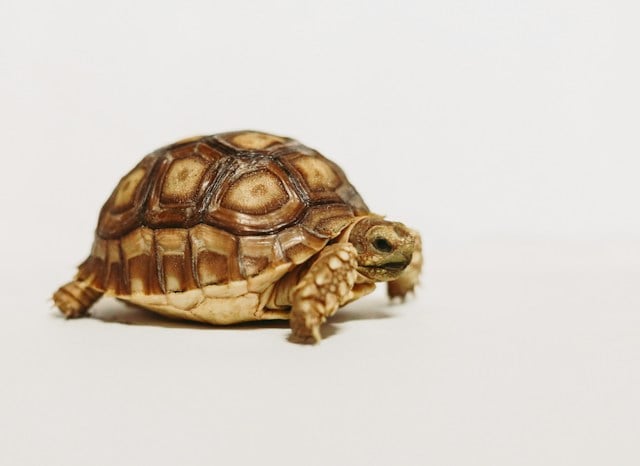
Archaeologists found, in June 2022, the shell of a Hermann’s tortoise, about fourteen centimeters long, beneath the floor of a shop near the Stabian Baths. The animal had an egg inside her, meaning she died before she could lay it.
The building had been damaged in the earthquake of 62 AD and never properly rebuilt, and the tortoise had burrowed into the rubble of an abandoned room. Her presence shows how much of Pompeii stood half-ruined in its last seventeen years, with wild animals moving into empty lots.
The city that Vesuvius buried was already a city in slow repair.
Plaster Casts of the Final Moments
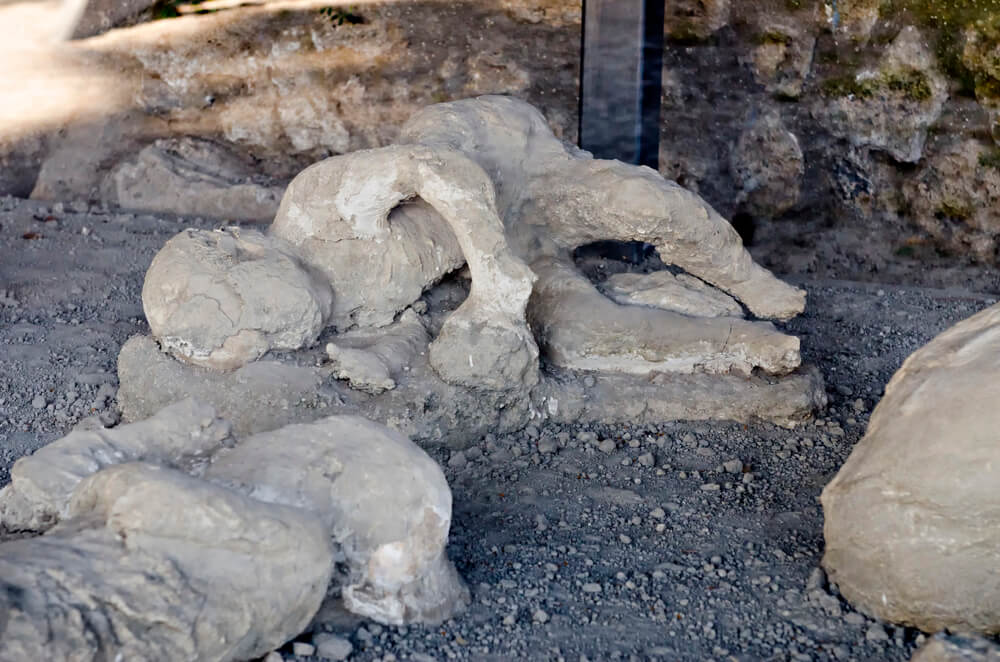
Giuseppe Fiorelli, who directed the excavations from 1863, noticed that the bodies of victims had rotted away inside hardened ash, leaving cavities in the shape of each person. He poured liquid plaster into the cavities and chipped away the ash, recovering the posture, clothing folds and sometimes the facial expressions of the dead.
More than a hundred casts have been made since, including dogs, pigs and the famous crouching figure covering his face. The method captured people where they fell, in cellars, on staircases and along the roads out of town.
It turned an excavation of buildings into an excavation of lives.
DNA That Rewrote the Family Stories

A study published in Current Biology in November 2024 reported genetic results from skeletal material inside several casts, and the findings contradicted long-standing assumptions. An adult cast in the House of the Golden Bracelet, holding a child and long described as a mother, was male and not related to the child.
A pair in the House of the Cryptoporticus, interpreted since their discovery as sisters or mother and daughter, included at least one man. The genomes also showed ancestry from the eastern Mediterranean, pointing to a diverse port population.
Earlier excavators, it seems, had assigned the dead the families they expected to find.
Ash as the Great Preserver
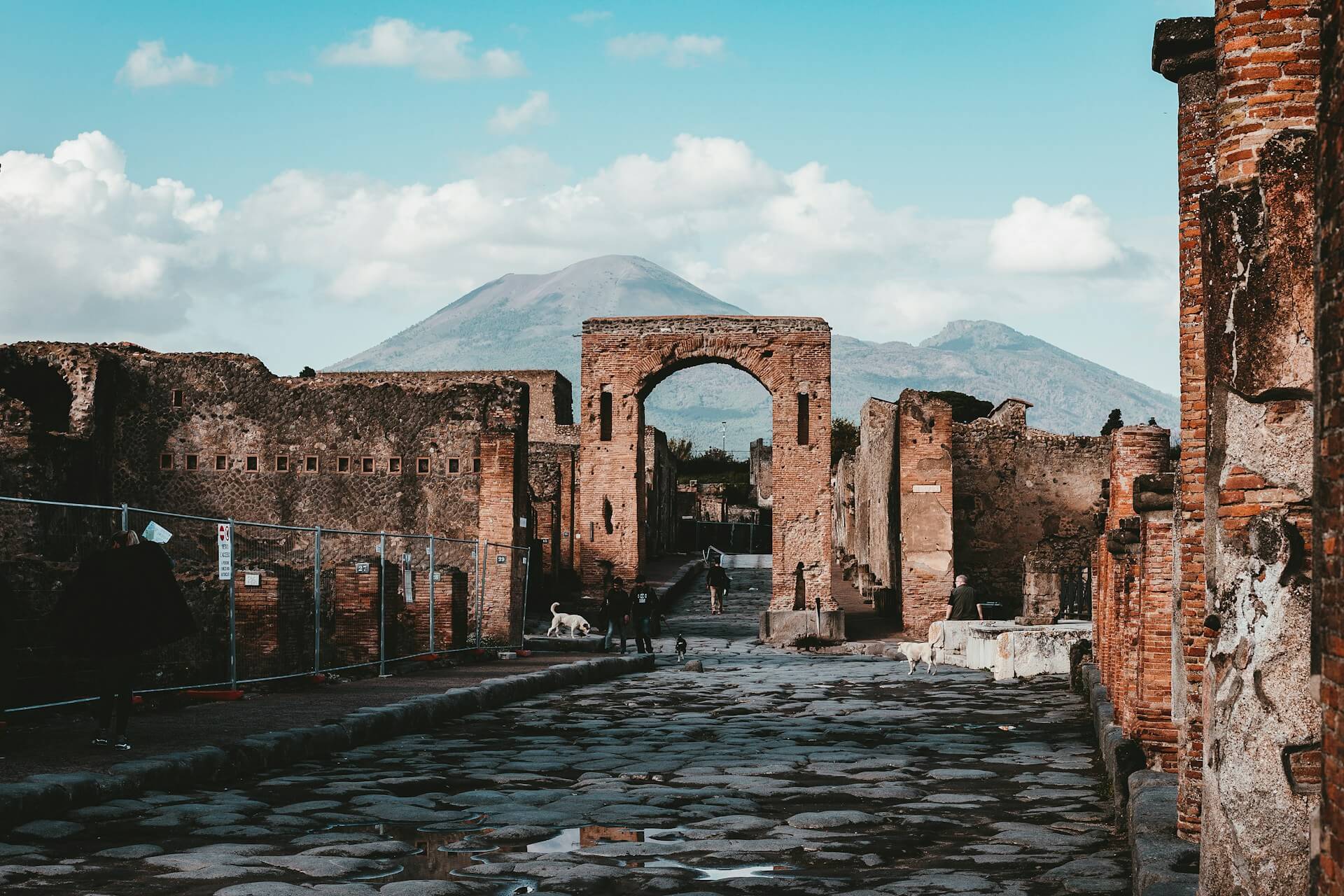
Pompeii did not survive because it was important. It survived because disaster sealed it in a few hours and nobody came back to rebuild.
Everything that time normally removes, the bread and the beds and the campaign slogans, stayed exactly where it fell.
What the ash preserved was the ordinary. Historians can read the emperors anywhere, but only here can they count the snack bars, read the election jokes and check the teeth of a baker.
The city keeps answering questions nobody thought to ask, and the newest excavations suggest it has not finished.
More from Go2Tutors!

- The Romanov Crown Jewels and Their Tragic Fate
- 13 Historical Mysteries That Science Still Can’t Solve
- Famous Hoaxes That Fooled the World for Years
- 15 Child Stars with Tragic Adult Lives
- 16 Famous Jewelry Pieces in History
Like Go2Tutors’s content? Follow us on MSN.