27 Ice Age Animals That Once Roamed North America
Twenty thousand years ago, a traveler crossing what is now Kansas or California could have met camels, lions, horses, giant sloths and elephants of several kinds. North America had its own version of the African savanna, only colder, stranger and far more crowded with oversized mammals.
Most of these animals disappeared between roughly 13,000 and 10,000 years ago, around the time the climate warmed and the first people spread across the continent. Their bones still turn up in riverbanks, caves, construction sites and the famous asphalt seeps of Los Angeles.
Columbian Mammoth
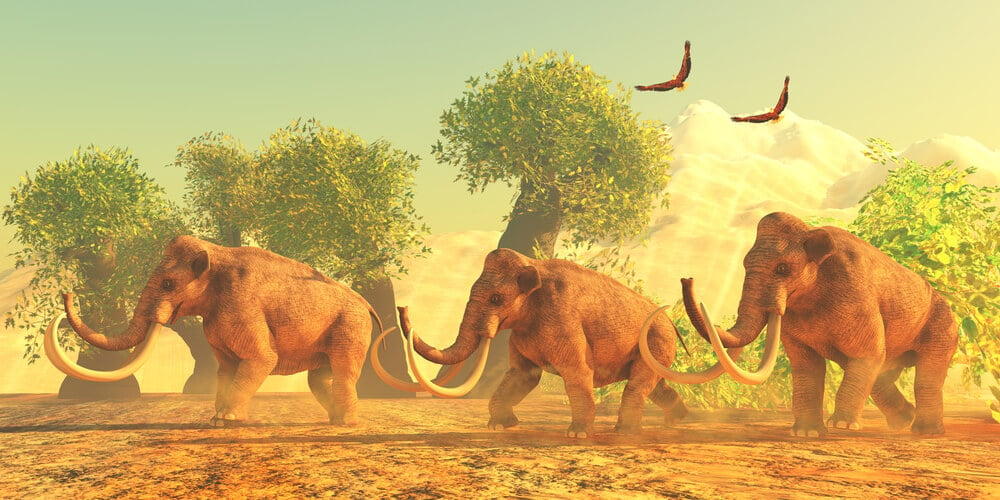
The Columbian mammoth was larger than its woolly cousin, standing up to about 13 feet at the shoulder and weighing as much as 10 tons. It ranged from the southern edge of Canada down into Central America and grazed open grasslands rather than tundra.
At Waco Mammoth National Monument in Texas, the remains of a nursery herd trapped by rising floodwaters tens of thousands of years ago are displayed where they were found. The site became a national monument in 2015.
Columbian mammoth fossils have been found in nearly every lower state.
Woolly Mammoth
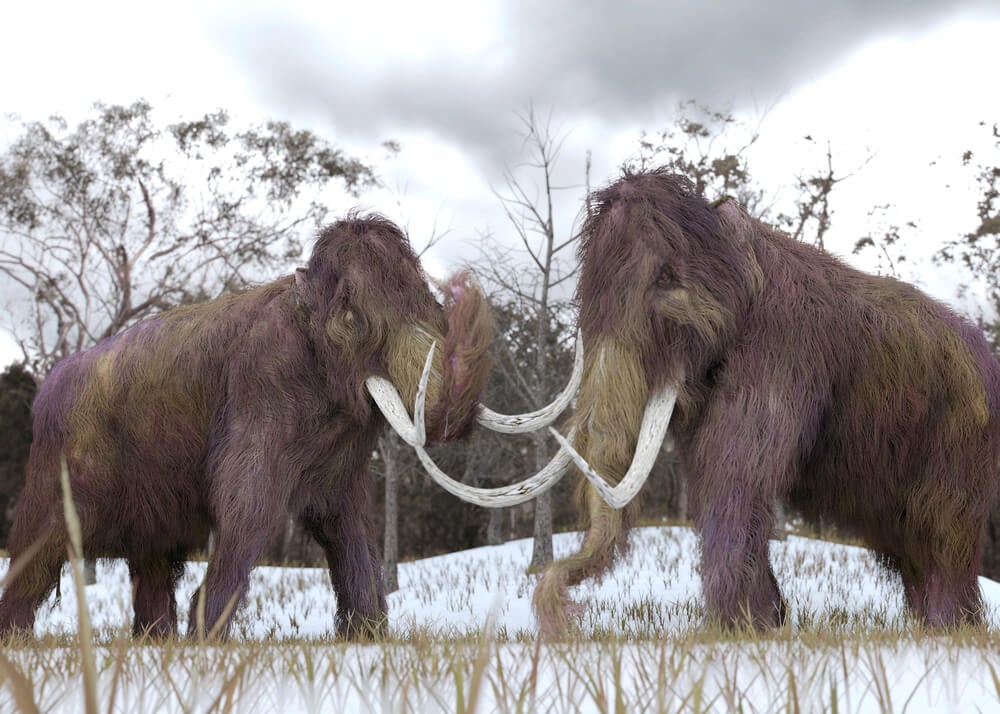
Woolly mammoths lived across the cold northern plains of Alaska, Yukon and the upper Midwest, protected by thick hair, small ears and a layer of fat. They were roughly the size of modern African elephants, smaller than Columbian mammoths.
In 2022, miners in the Klondike gold fields of Yukon uncovered a nearly complete frozen baby mammoth, later named Nun cho ga by the Tr’ondek Hwech’in First Nation, with skin, hair and trunk intact. The woolly mammoth is also the official state fossil of Alaska, where tusks still wash out of eroding riverbanks.
American Mastodon
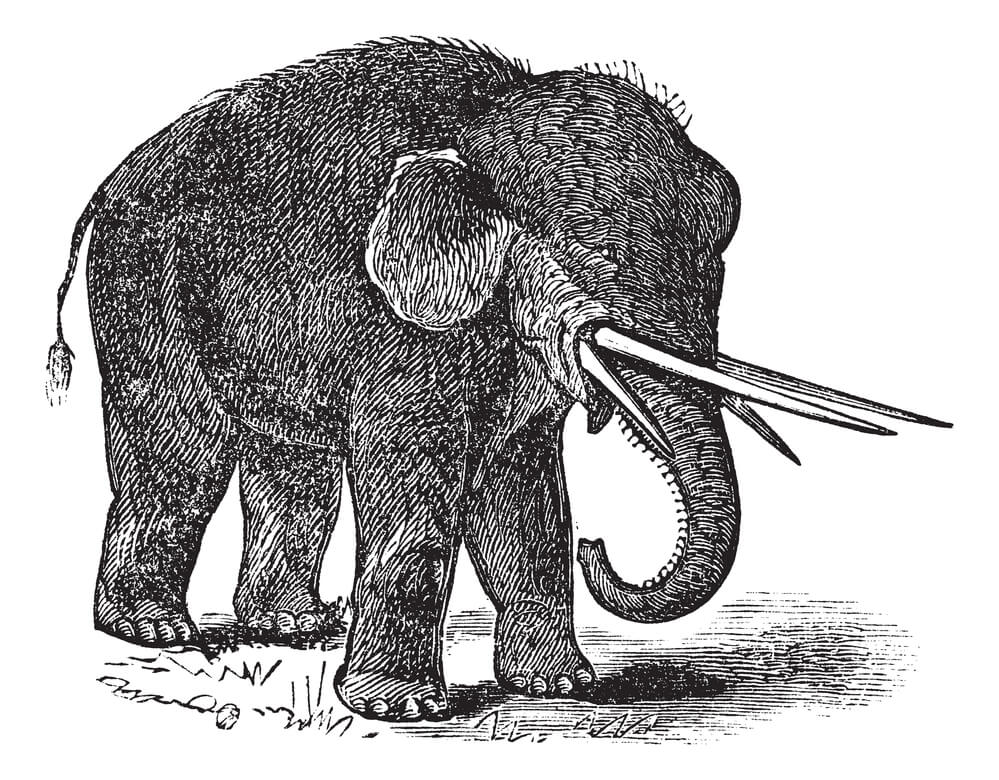
American mastodons were not mammoths but a separate branch of the elephant family, with shorter legs, a longer body and cone-shaped teeth suited to browsing twigs and leaves in forests. They were common from Alaska to Florida and lived until roughly 11,000 years ago.
In 1801, the painter Charles Willson Peale organized the excavation of a mastodon skeleton on a farm in New York, and its display in his Philadelphia museum became a national sensation. Mastodon remains are still found by farmers and pond diggers across the Great Lakes region.
Smilodon fatalis
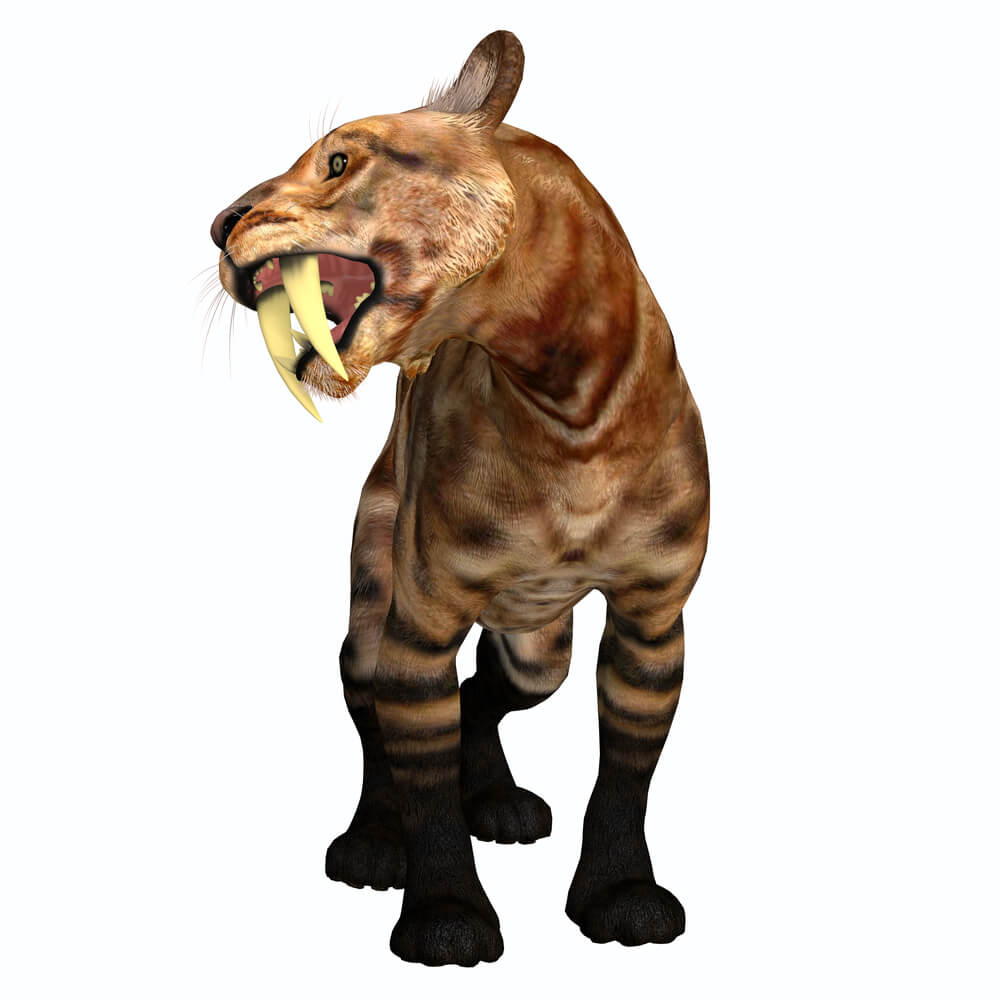
Smilodon fatalis, the best-known saber-toothed cat, carried upper canines about seven inches long and weighed as much as 600 pounds, heavier than a modern African lion. It had powerful forelimbs for pinning prey, which it probably killed with a precise bite to the throat.
The Rancho La Brea asphalt seeps in Los Angeles have produced the remains of thousands of individuals, giving scientists an unusually detailed look at its injuries and healed wounds. Smilodon is the state fossil of California, and many of the bones sit in the museum at the site.
Dire Wolf
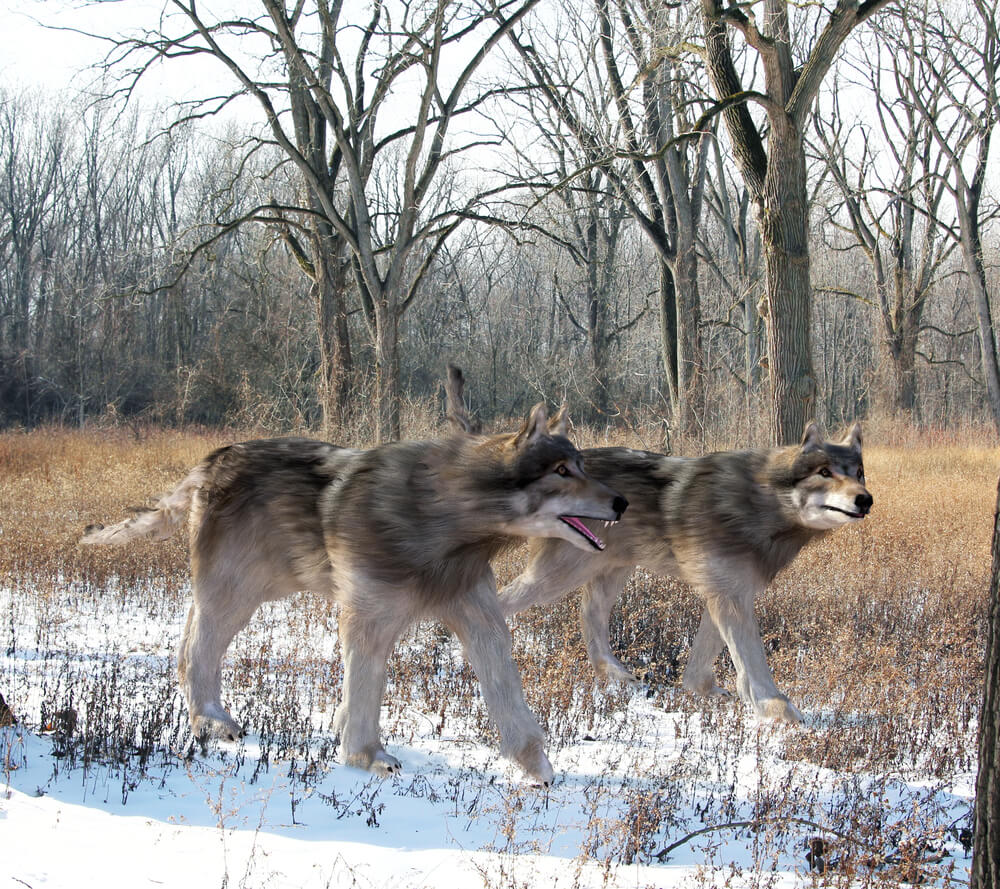
Dire wolves were larger and more heavily built than gray wolves, with massive skulls and teeth suited to crushing bone. More than 4,000 individuals have been recovered from the La Brea asphalt seeps alone, likely drawn by animals already stuck in the tar.
A 2021 genetic study found they belonged to a separate lineage that split from gray wolves millions of years ago. In 2025, a biotech company announced gene-edited gray wolf pups meant to resemble dire wolves, though many scientists argued the animals were not true dire wolves.
American Lion
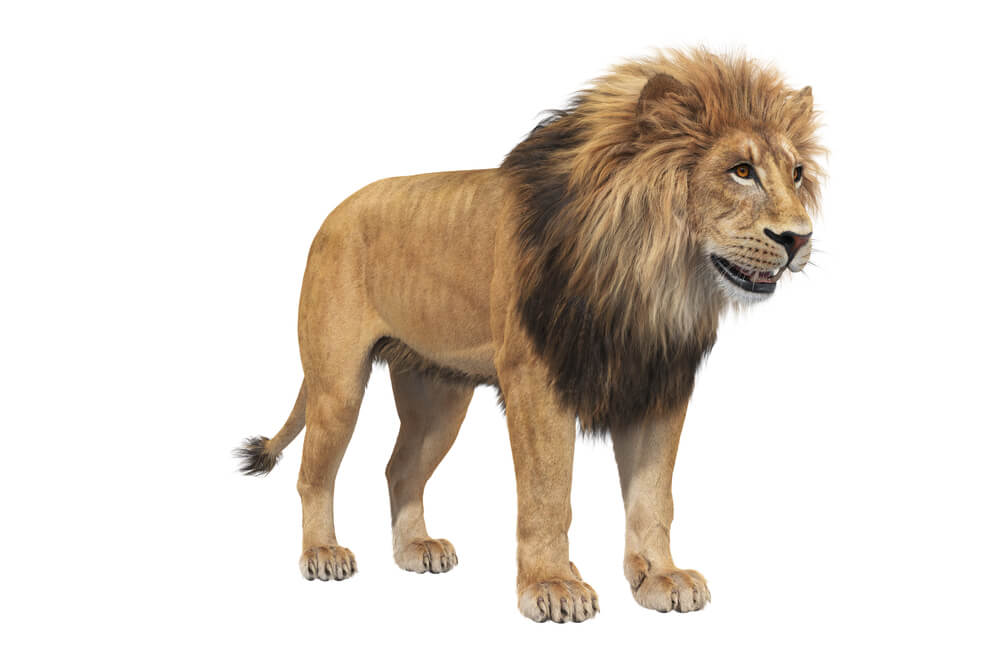
The American lion was one of the largest cats that ever lived, roughly a quarter larger than a modern African lion. It ranged from Alaska to Mexico and is now considered a close relative of the extinct Eurasian cave lion rather than the lions of Africa.
Fossils from La Brea suggest it had a relatively large brain for a cat. Like cave lions, it may have lacked a full mane, since ancient cave art in Europe shows related lions without one.
It disappeared around the end of the last glacial period.
Short-Faced Bear
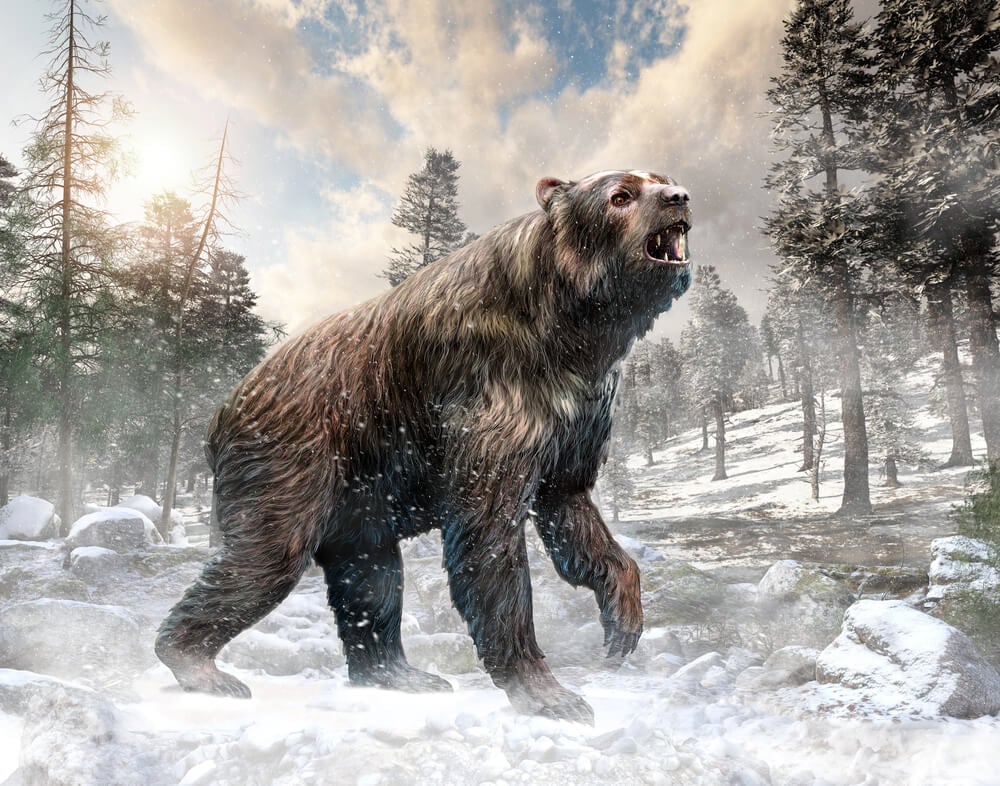
Arctodus simus, the giant short-faced bear, was among the largest land carnivores of the Ice Age, with long legs that made it far taller than a grizzly. Standing upright, a large male may have reached more than 10 feet, and some estimates put the heaviest individuals near a ton.
Scientists once pictured it as a speedy hunter, then as a scavenger that chased other predators from their kills. A 2017 study of its teeth and bones argued it was more likely an omnivore that ate plants as well as meat.
Its closest living relative is the small spectacled bear of South America.
Jefferson’s Ground Sloth

In 1797, Thomas Jefferson presented a paper on a set of huge claws found in a cave in what is now West Virginia, believing they came from a giant lion. The animal was later identified as a ground sloth and named Megalonyx jeffersonii in his honor.
It was about 10 feet long and weighed roughly a ton, and its fossils have been found from Mexico to as far north as Yukon and Alaska. It is the state fossil of West Virginia.
The discovery helped push early American science to take extinction seriously.
Harlan’s Ground Sloth
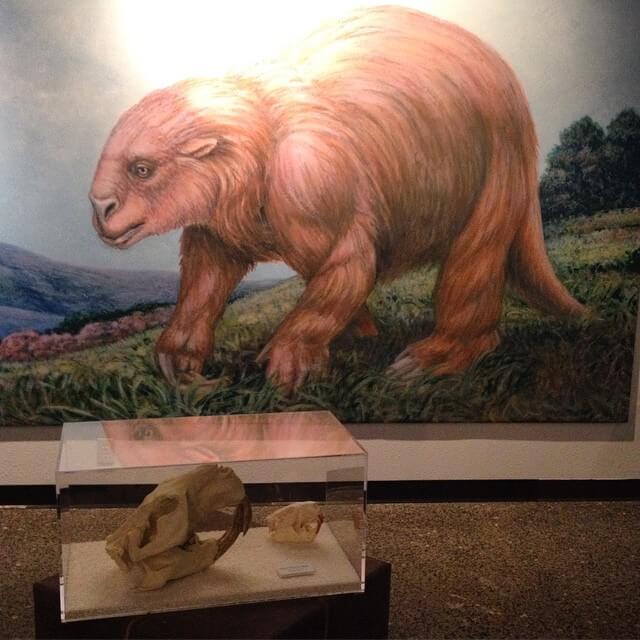
Harlan’s ground sloth was a heavy grazer about 10 feet long, and it carried an unusual form of armor, small bony nodules embedded in its skin. These pebble-like bones, called osteoderms, likely offered some protection against predator bites.
Many specimens come from the La Brea asphalt seeps, and fossils have been found across much of the United States. Its broad teeth and wide snout suggest it grazed on grasses and dug for roots with its strong claws.
It survived until near the end of the last glacial period.
Shasta Ground Sloth
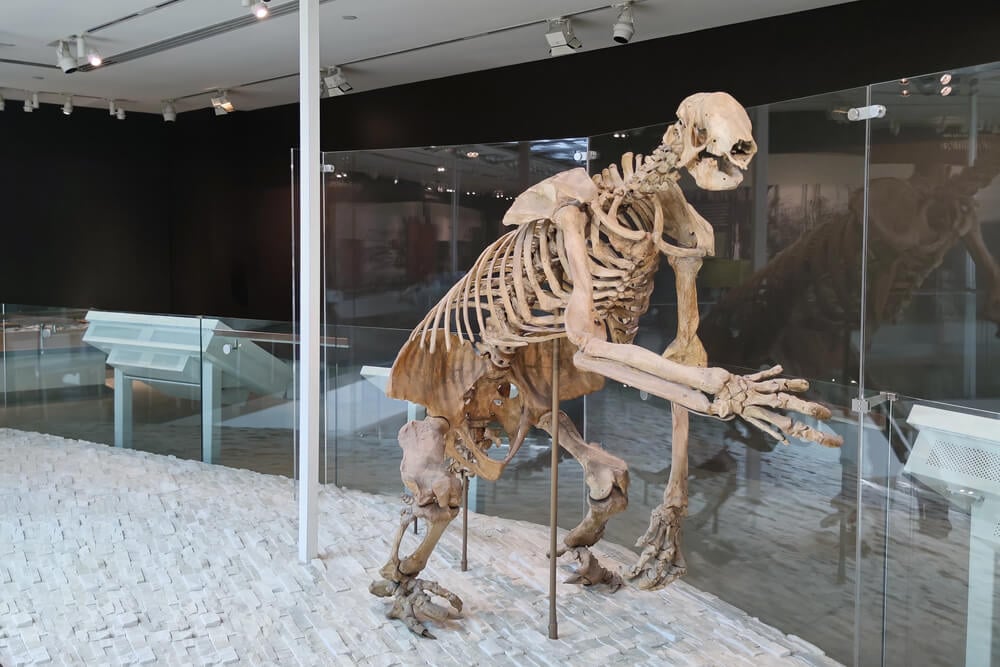
Smallest of the ground sloths in North America, the Shasta ground sloth weighed roughly 500 pounds and lived in the dry Southwest. Caves in Nevada, New Mexico and Arizona preserved its dung, hair and even skin, allowing scientists to reconstruct its diet of desert plants.
In Rampart Cave in the Grand Canyon, thick layers of sloth dung were accidentally set alight in 1976 and burned for months, destroying much of an irreplaceable record. The remaining samples still help researchers study the climate the sloths lived through.
Glyptotherium
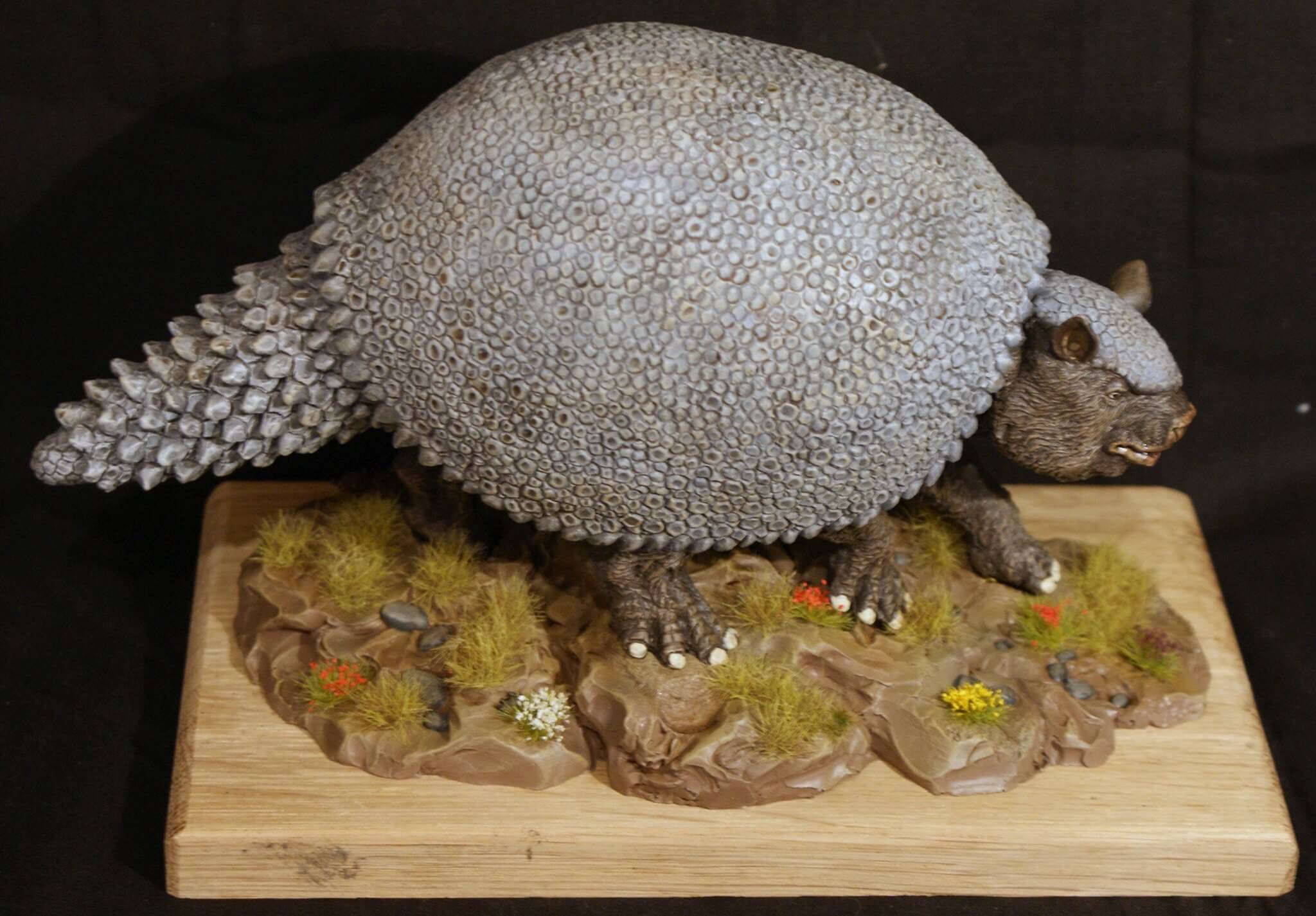
Glyptotherium was a glyptodont, a giant armadillo relative covered by a domed shell made of hundreds of fused bony plates. The shell was roughly the size of a small car, and the animal may have weighed around a ton.
Glyptodonts originated in South America and moved north after the land bridge through Panama formed, reaching Florida, Texas and Arizona. Its tail was also armored, and its head carried a bony cap.
Scientists think it grazed near water in warm lowlands, since fossils are concentrated in southern regions.
Giant Beaver
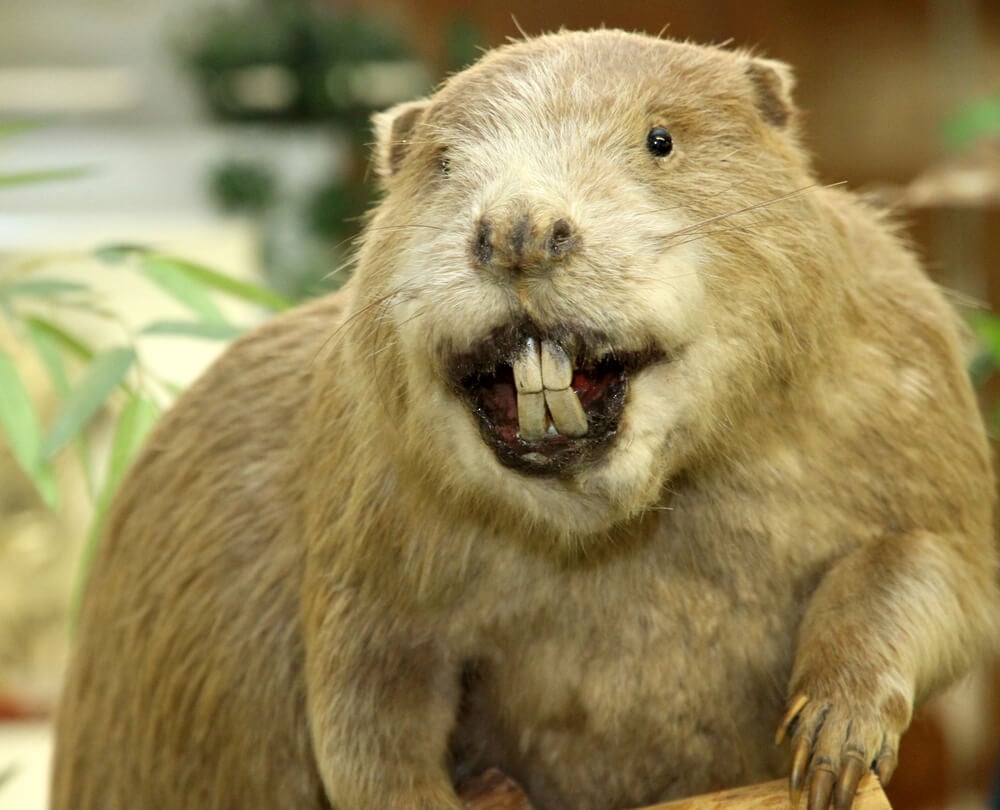
The giant beaver, Castoroides, reached about seven feet long and weighed around 200 pounds, roughly the size of a black bear. Its front teeth were up to six inches long, but a 2019 study of chemical signatures in its bones suggested it ate soft water plants rather than felling trees like modern beavers.
There is also little evidence that it built dams. Fossils are especially common around the Great Lakes, and the first specimen was described from Ohio in the 1830s.
The much smaller modern beaver survived where its giant relative did not.
Stag-Moose
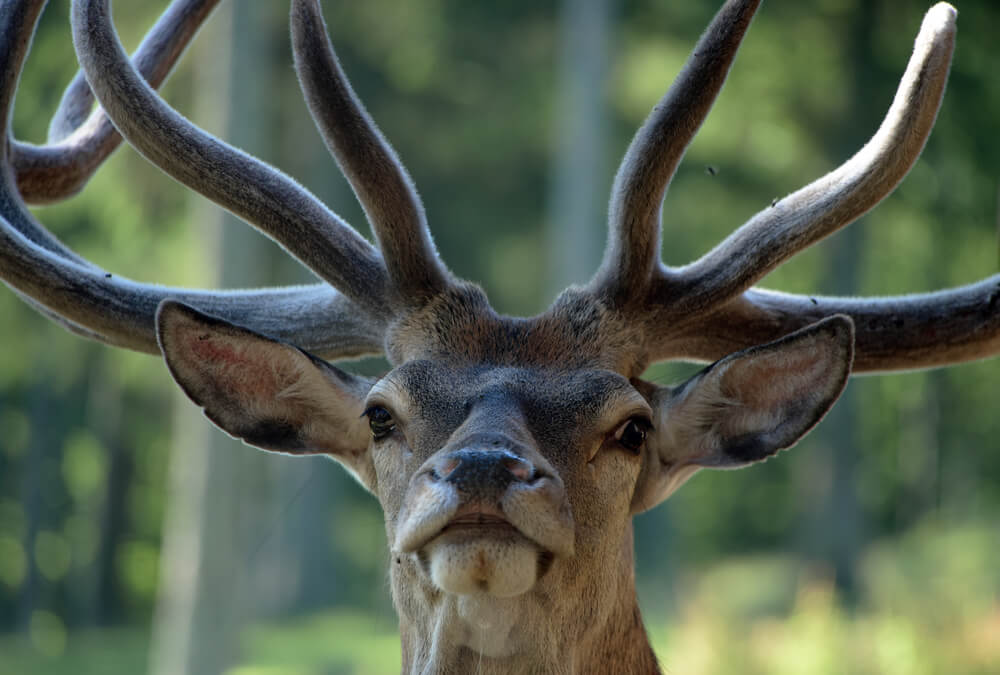
Cervalces scotti, the stag-moose, was about the size of a modern moose but had longer legs, a narrower face and elaborate antlers with complex branching palms. It lived in wetlands and spruce forests across the eastern and central parts of the continent.
The first well-preserved skeleton was found in New Jersey in the 1880s and was named after William Berryman Scott, the Princeton scientist who described it. It was not a direct ancestor of today’s moose, which arrived later from Asia.
It vanished at the close of the last glacial period.
American Cheetah
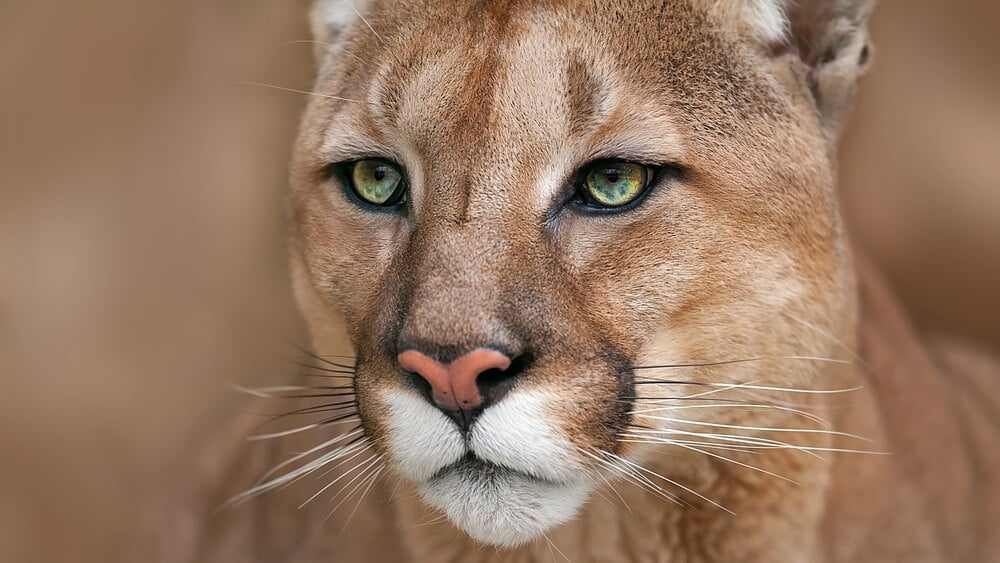
Miracinonyx, often called the American cheetah, was a lean, long-legged cat that looked remarkably like a modern cheetah despite being more closely related to the puma. Its body shape suggests it chased prey at high speed across open country.
Many researchers believe it helps explain why the pronghorn can run far faster than any living North American predator, since the pronghorn evolved alongside fast hunters that no longer exist. Fossils have been found in caves and plains sites across the western United States, and it disappeared roughly 12,000 years ago.
Scimitar-Toothed Cat
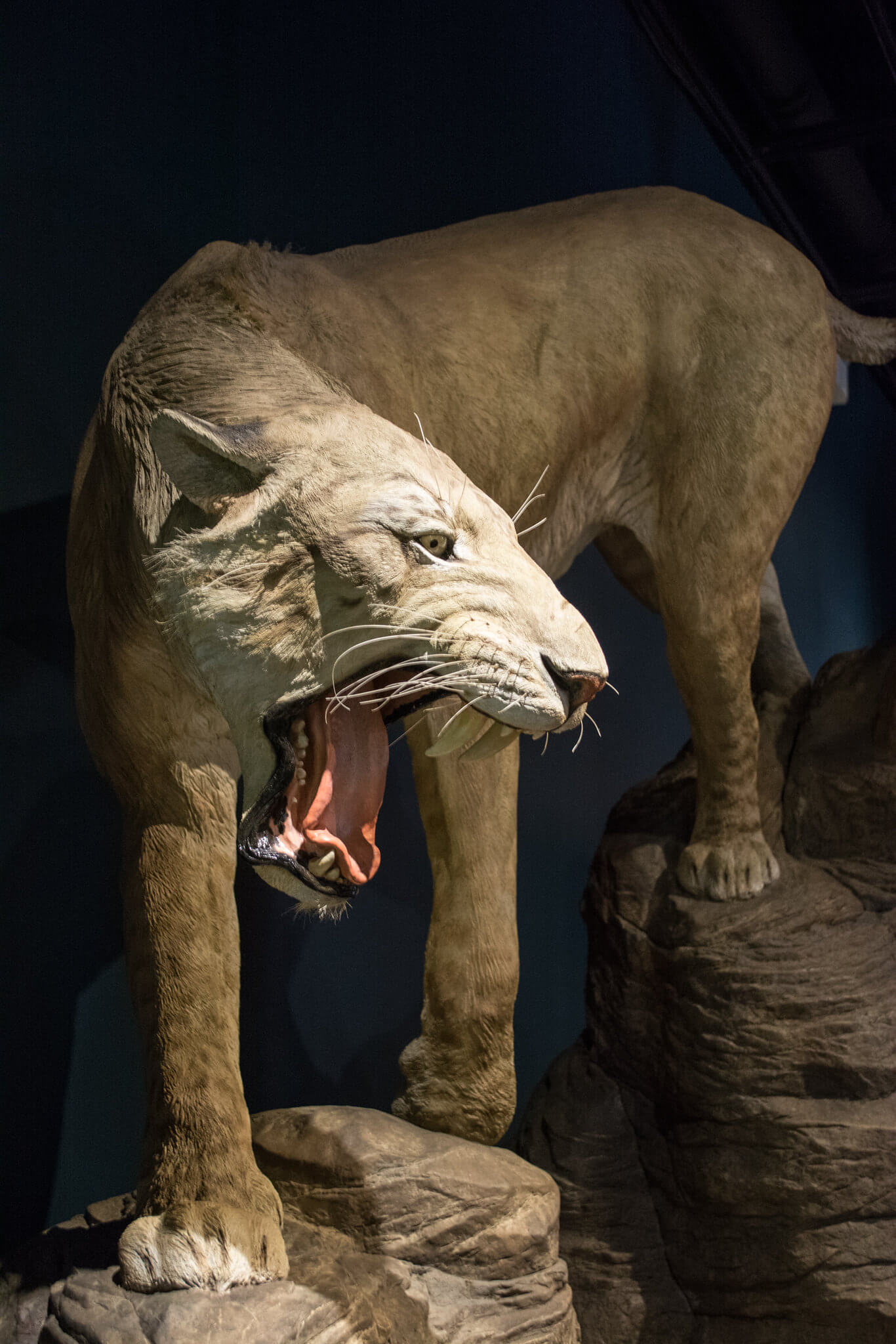
Homotherium serum, the scimitar-toothed cat, had shorter, flatter canines than Smilodon, with serrated edges suited to slicing flesh. Its long front legs and sloping back gave it the build of a pursuit hunter.
At Friesenhahn Cave in Texas, researchers found the remains of several of these cats alongside the teeth and bones of hundreds of young mammoths, suggesting they targeted calves and dragged them back to the cave. Genetic studies suggest the cats lived in social groups.
One North American population may have survived until about 12,000 years ago.
Western Camel

Camels originated in North America and lived here for tens of millions of years before any reached Asia. Camelops hesternus, the western camel, stood about seven feet at the shoulder and was taller than a modern dromedary.
It lived across the western plains and deserts and likely ate a mix of grasses and shrubs. At Wally’s Beach in Alberta, bones of camels and horses about 13,000 years old show cut marks from stone tools, evidence that early people hunted or butchered them.
Scientists still debate whether it carried a hump.
Ancient Bison
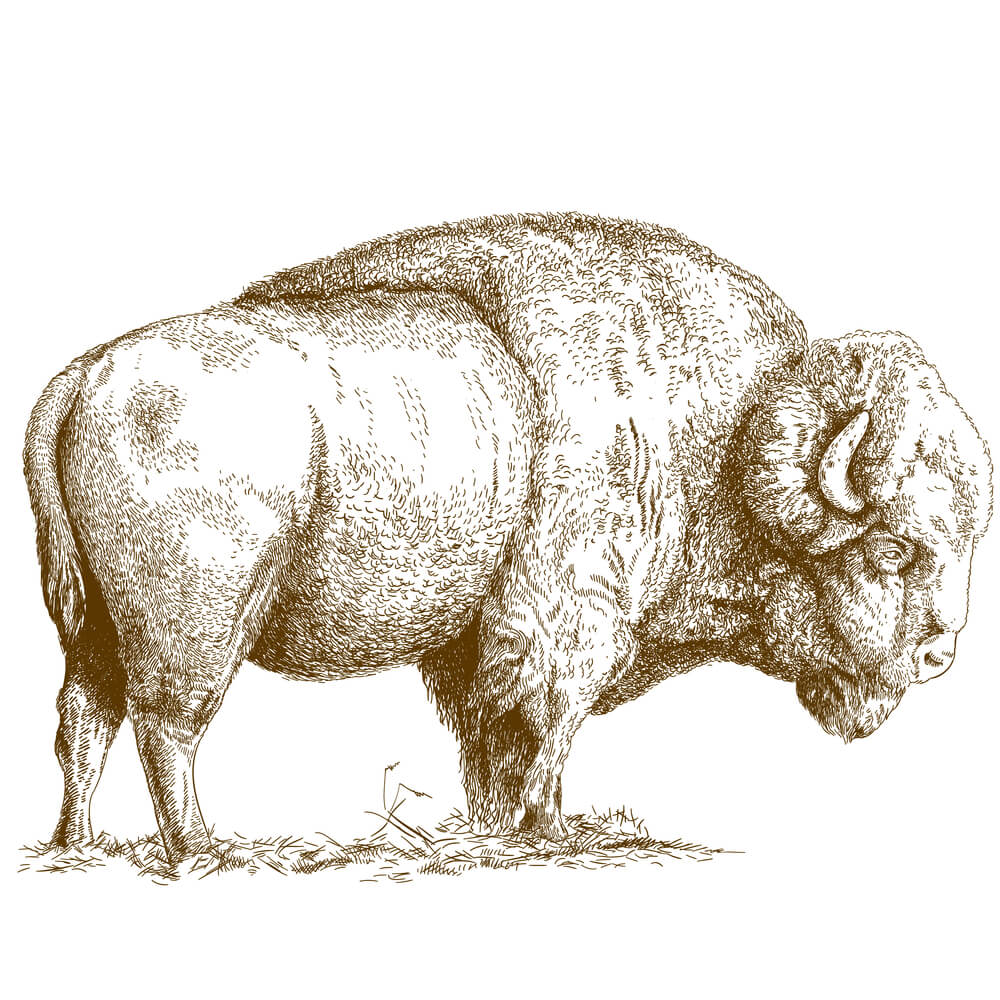
Bison antiquus was the direct ancestor of the modern American bison, but it was larger and carried straighter, longer horns. It was one of the most common large grazers on the plains near the end of the Ice Age.
At several famous archaeological sites, including Folsom in New Mexico, stone spear points have been found among its bones, proving people hunted it. Over thousands of years, as the climate changed and hunting pressure grew, the species gradually shrank and gave rise to the bison that survive today.
Giant Long-Horned Bison
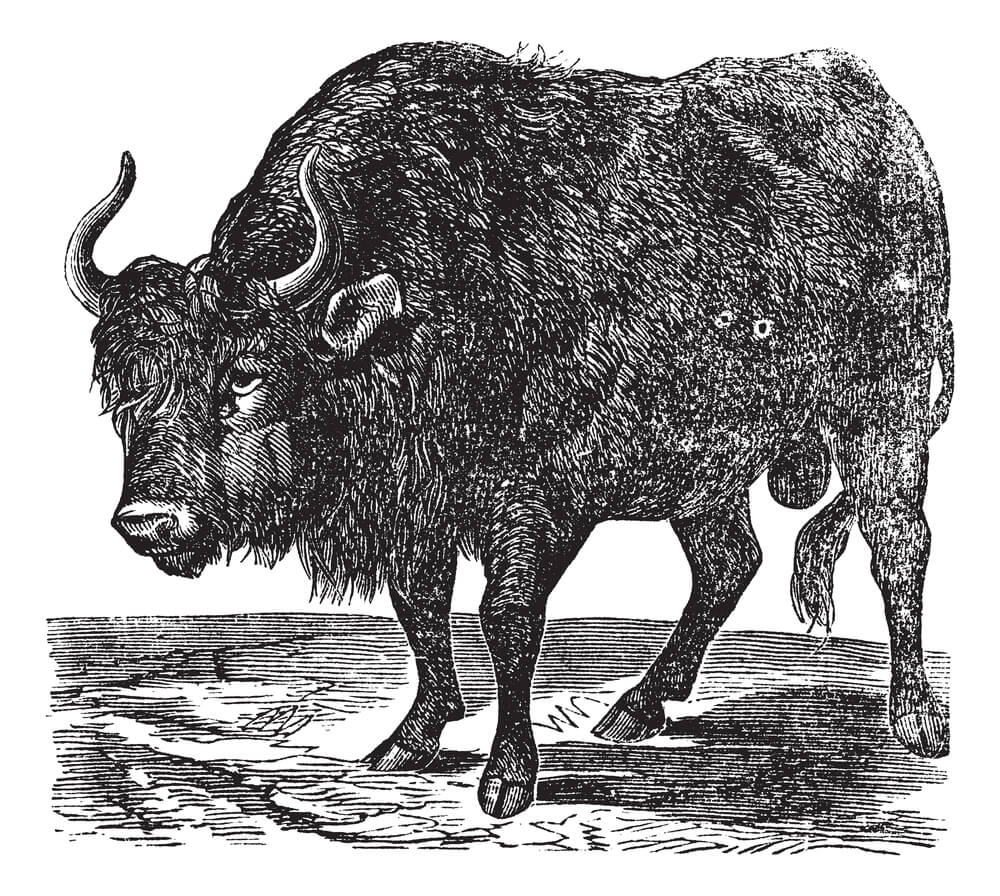
Bison latifrons was the largest bison ever known, standing roughly eight feet at the shoulder with horns that spanned about seven feet from tip to tip. It lived earlier in the Pleistocene than Bison antiquus and grazed in open woodlands and grasslands.
In 2010 and 2011, workers expanding a reservoir near Snowmass Village in Colorado uncovered a trove of Ice Age fossils that included this giant bison, along with mammoths, mastodons and ground sloths. Its huge horns may have been used for display and combat between males.
Native North American Horses
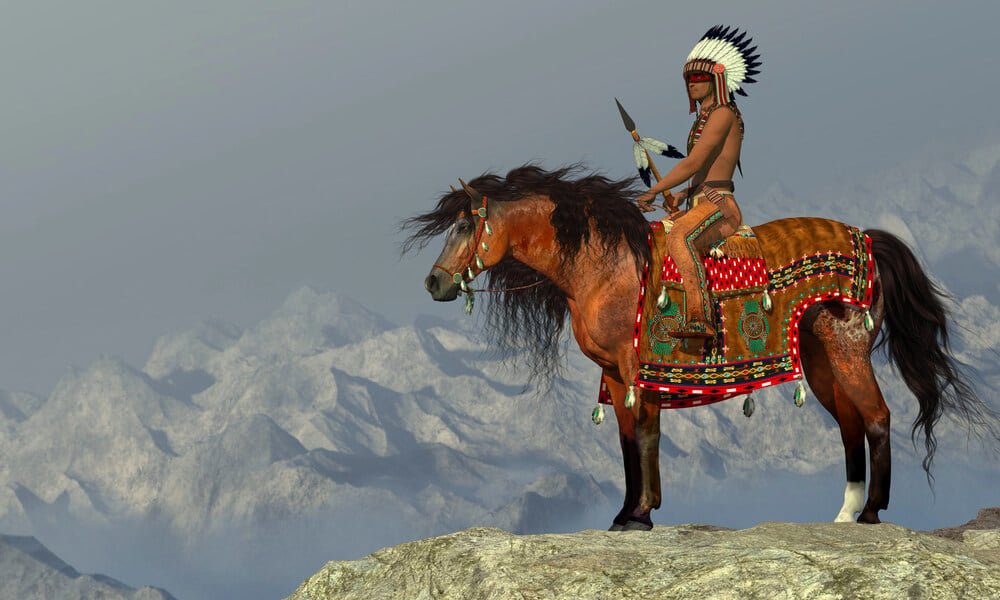
Horses evolved in North America over more than 50 million years, spreading to Asia across the Bering land bridge long before they vanished from their homeland. Several Ice Age horse species grazed the continent, including stocky forms in the north and slender ones in the south.
The last native horses disappeared from North America roughly 10,000 years ago. Horses returned only with Spanish expeditions in the sixteenth century, which means the mustangs of the American West are, in a sense, descendants of animals whose ancestors once left this continent.
Shrub-Ox
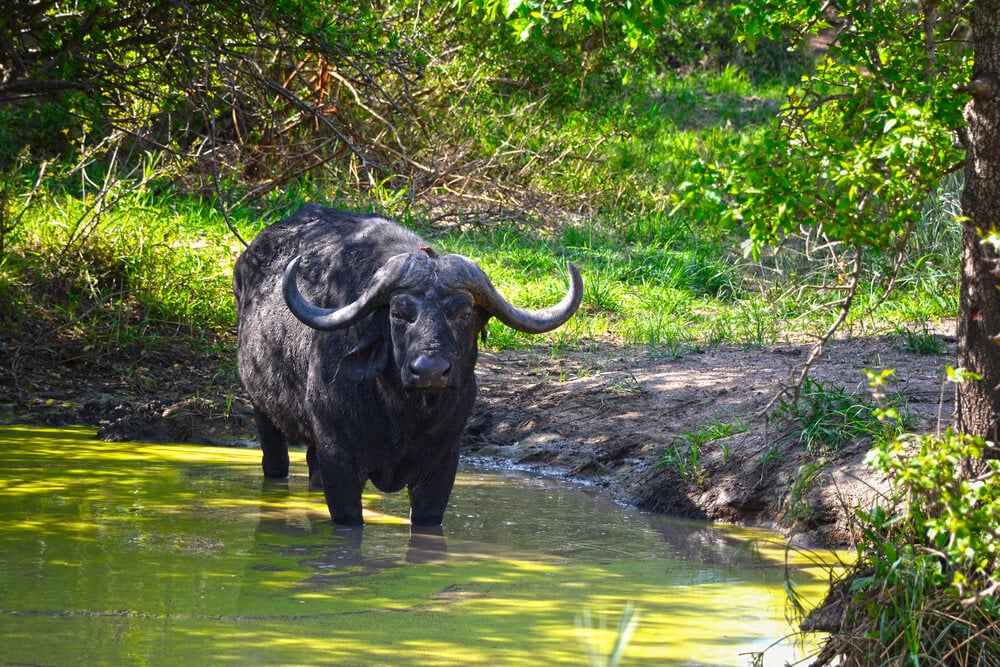
Euceratherium, known as the shrub-ox, was a stocky relative of the muskox and the Asian takin that lived in the hills and canyons of the American West and Mexico. It had thick, curving horns and short legs suited to rough terrain.
Preserved dung from dry caves in the Grand Canyon region shows it browsed on shrubs and small trees rather than grazing on grass. It arrived from Asia during the Pleistocene and disappeared around the end of the last glacial period, along with many other large browsers.
Helmeted Muskox
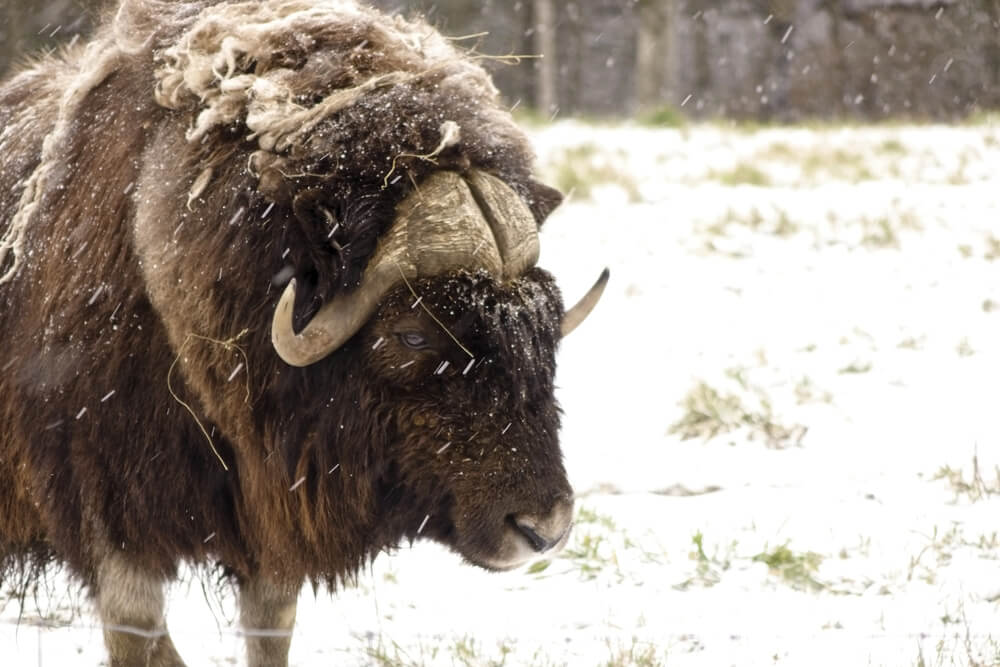
Bootherium bombifrons, the helmeted muskox, was taller and slimmer than the modern muskox, with horns that fused across the top of the skull into a thick bony helmet. That helmet likely protected the head during head-butting contests between males.
It ranged from Alaska to Mexico, much farther south than muskoxen live today. Fossils suggest it preferred open woodlands rather than tundra, and remains have turned up in states as far south as Texas.
The modern muskox, which survives in the Arctic, looks similar but belongs to a different genus.
Teratornis merriami
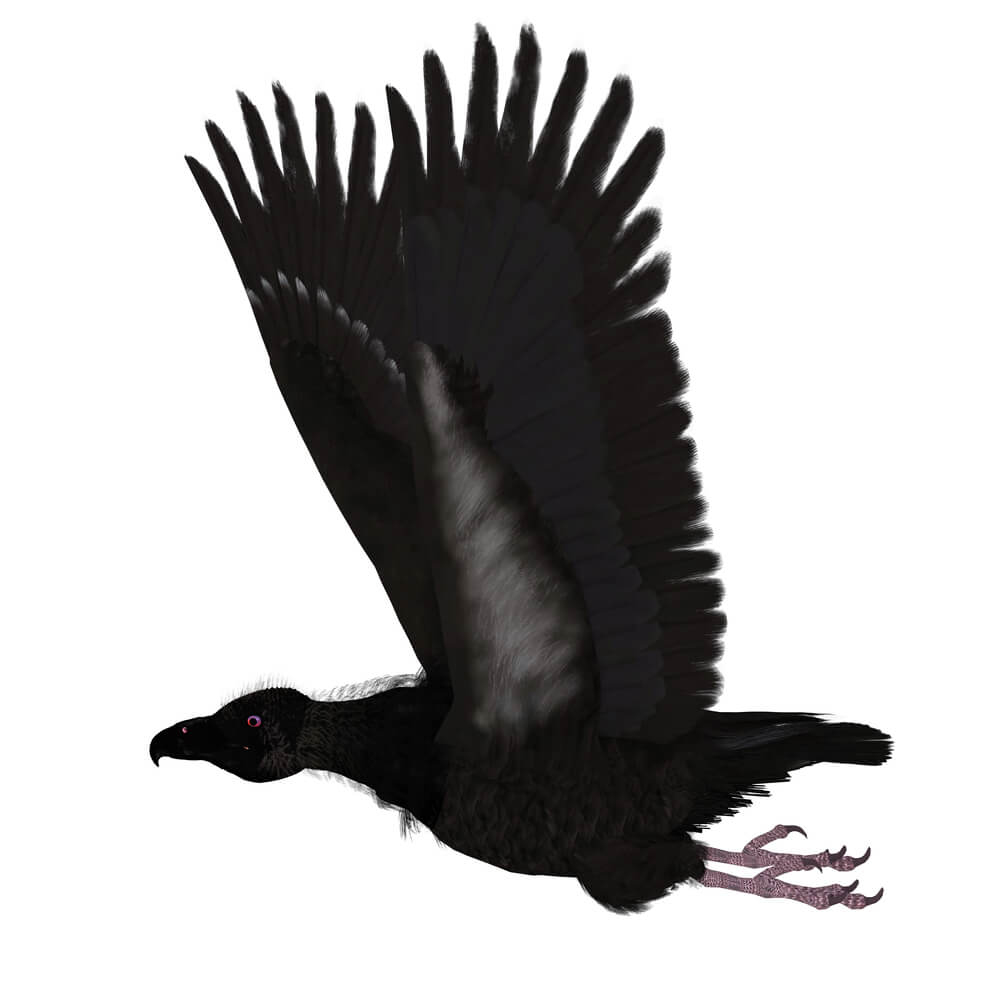
Teratornis merriami was a large bird of prey with a wingspan of roughly 11 to 12 feet and a weight of about 30 pounds. More than a hundred individuals have been recovered from the La Brea asphalt seeps, where they were likely lured by trapped animals.
Although it looked like a giant vulture, its hooked beak and jaw structure suggest it swallowed small prey intact, a habit that sets it apart from modern condors. Its relatives in South America included Argentavis, one of the heaviest flying birds known.
Pampathere
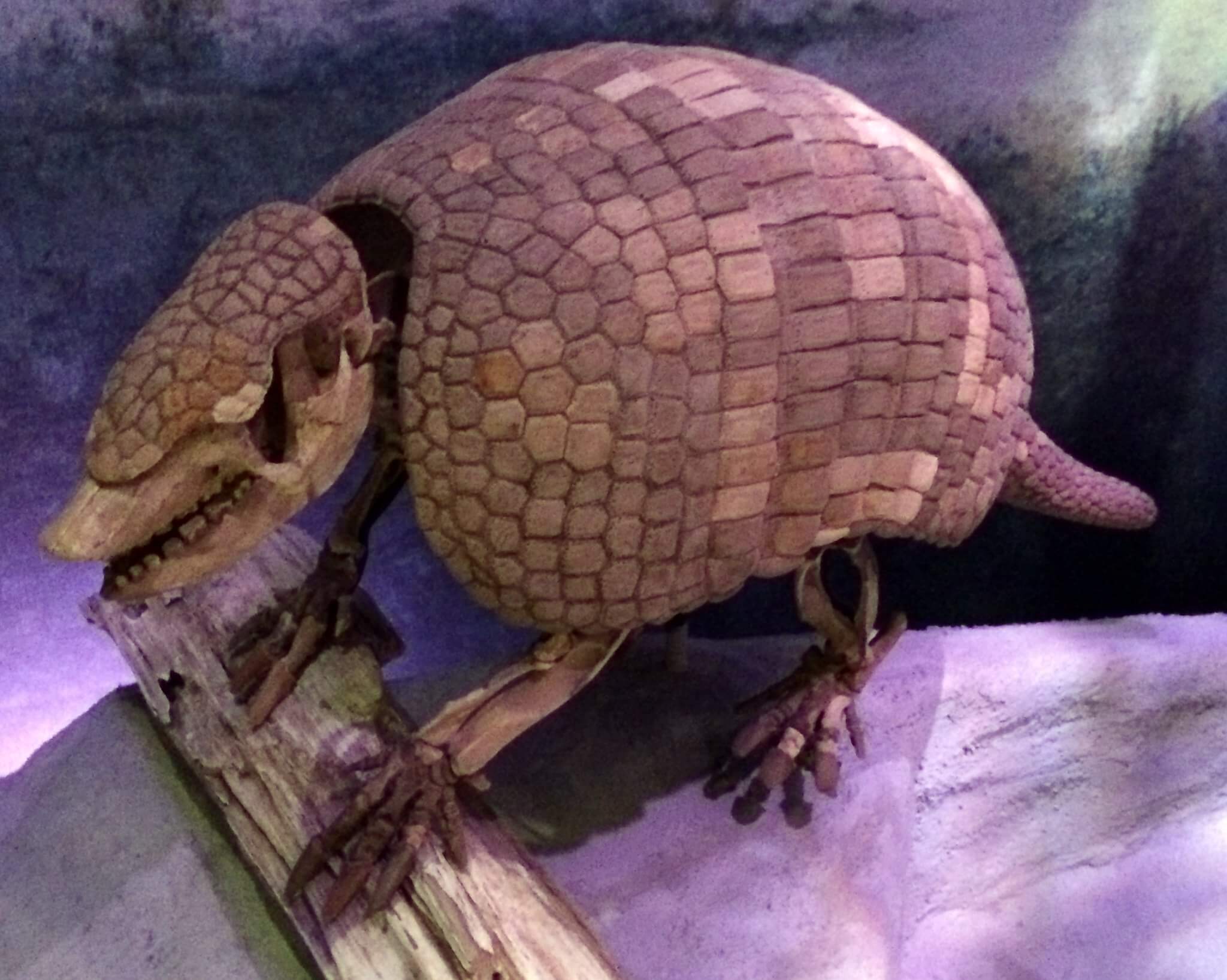
Holmesina, a pampathere, was a giant armadillo relative about six feet long and weighing several hundred pounds. Unlike glyptodonts, it had a flexible shell with movable bands, much like a modern armadillo, though far larger.
It lived in the southeastern United States and along the Gulf Coast, grazing on grasses and plants near water. Its ancestors came from South America after the land bridge formed.
The nine-banded armadillo, which now lives across much of the southern United States, is a distant relative that arrived far more recently.
Flat-Headed Peccary
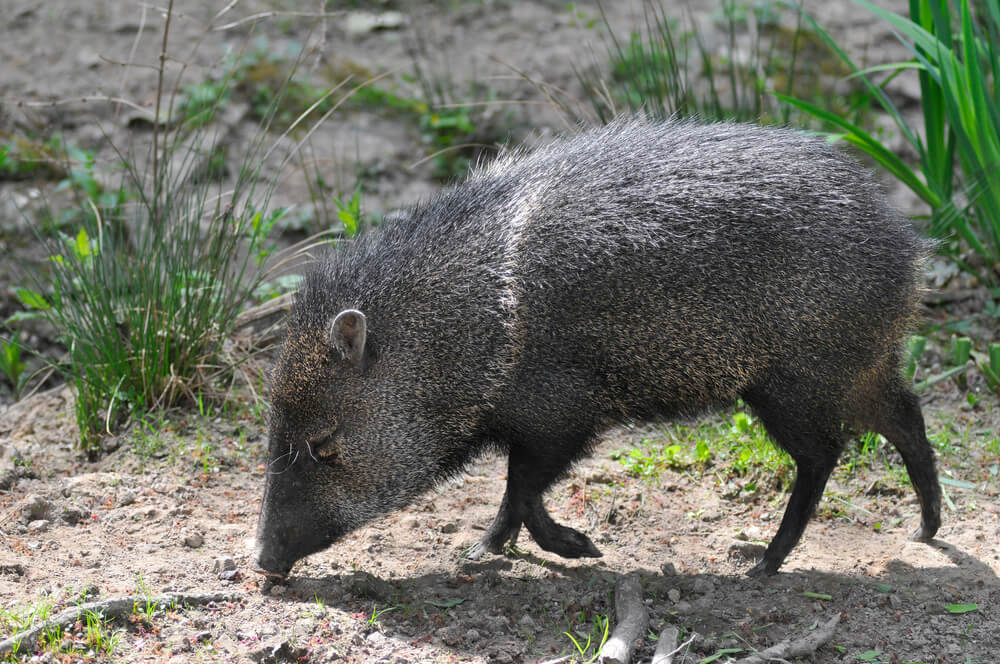
Platygonus compressus, the flat-headed peccary, was a pig-like animal with long legs and large tusks that lived across much of North America. It was larger than living peccaries and adapted to open, dry country.
Several fossil sites have produced groups of individuals found together, suggesting they lived and died in herds, sometimes sheltering in caves during harsh weather. Its long legs point to a runner rather than a forest dweller.
The collared peccary of the Southwest is a surviving relative, though it belongs to a different genus.
Stilt-Legged Llama
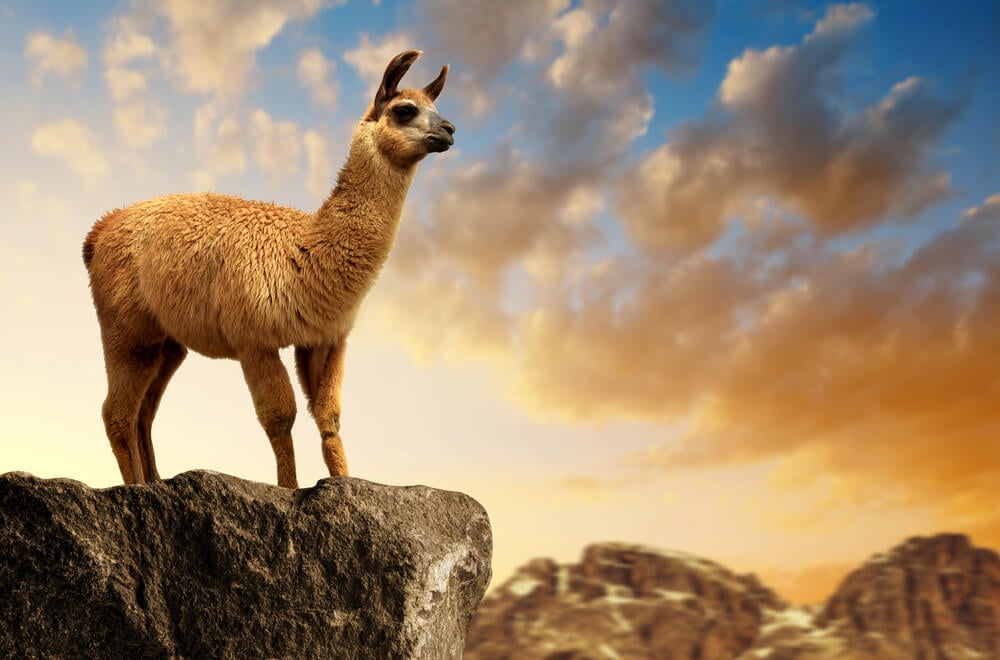
Hemiauchenia was a long-legged llama relative that lived across North America and moved into South America after the continents connected. Its slender limbs suggest it covered long distances across open grasslands.
Its lineage is closely tied to the ancestors of the llamas, alpacas, guanacos and vicunas that live in South America today. Fossils have been found from Florida to California.
Along with Camelops, it shows how deeply the camel family was rooted in North America before disappearing from the continent at the close of the Ice Age.
Four-Horned Pronghorn
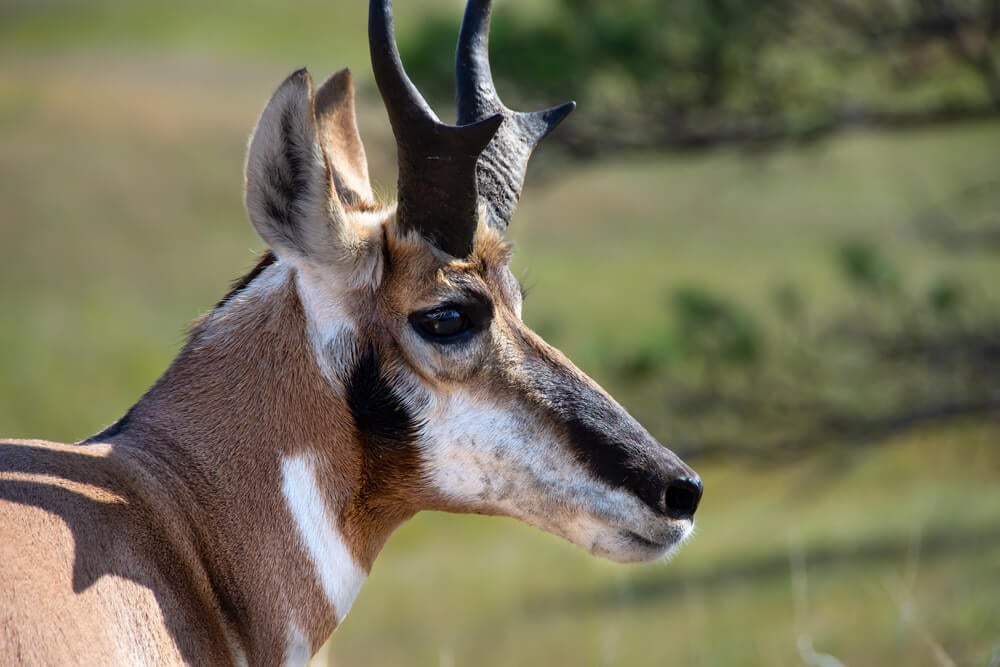
Stockoceros was a small pronghorn relative that carried four horns, two forked prongs on each side of its head. It lived in the grasslands and shrublands of Arizona, New Mexico and northern Mexico, and fossils have been found in caves where predators or flooding left their remains.
It stood shorter than today’s pronghorn and had a stockier build, likely suited to rocky slopes as well as flat ground. The modern pronghorn is the only surviving member of its family, a lone remnant of a once diverse group that thrived on the open plains.
Vero Tapir
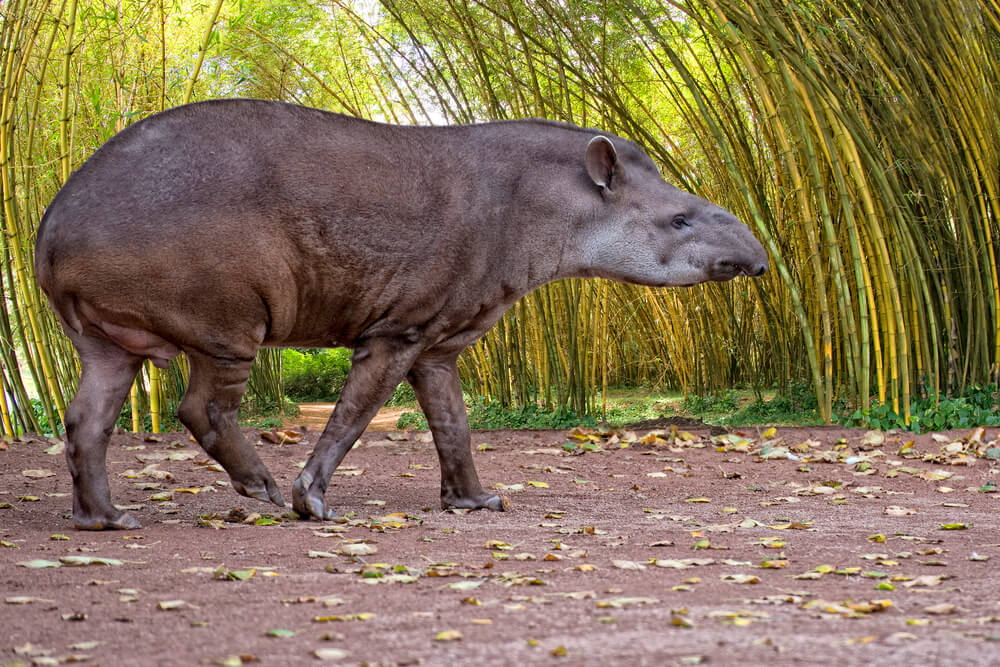
Tapirus veroensis, known as the Vero tapir, lived in the forests and wetlands of Florida and the southeastern United States during the Pleistocene. It was similar in size to modern Central American tapirs, with a short flexible trunk used to pull leaves and fruit toward its mouth.
It was named after Vero Beach, Florida, where early fossils were found. Tapirs have lived in North America for millions of years, and the Vero tapir was among the last of them north of Mexico.
Living tapirs survive in Central and South America and Southeast Asia.
A Continent That Lost Its Giants
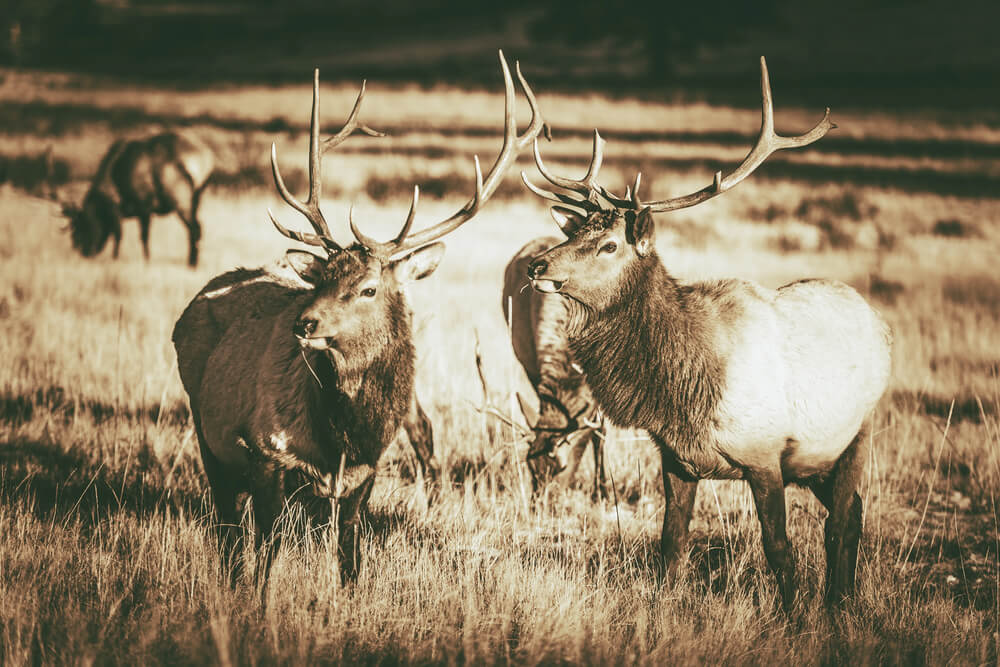
The disappearance of these animals remains one of the great puzzles of North American history. Climate change reshaped habitats as the glaciers retreated, while newly arrived human hunters added pressure on species that reproduced slowly.
Most scientists now suspect some combination of both, with the balance shifting from region to region. What remains is a quieter continent than the one early people first explored.
Pronghorn still run as though cheetahs were chasing them, and bison survive as smaller descendants of giant ancestors. The Ice Age did not vanish entirely, since traces of it are still grazing, running and waiting in riverbanks for the next dig.
More from Go2Tutors!

- The Romanov Crown Jewels and Their Tragic Fate
- 13 Historical Mysteries That Science Still Can’t Solve
- Famous Hoaxes That Fooled the World for Years
- 15 Child Stars with Tragic Adult Lives
- 16 Famous Jewelry Pieces in History
Like Go2Tutors’s content? Follow us on MSN.