Sports Records That May Never Be Broken
Athletes push boundaries every season. They train harder, eat better, and use technology that didn’t exist a decade ago.
Yet some achievements from the past stand so far above the rest that even with all our modern advantages, they seem impossible to touch. These records come from different eras and different sports, but they share something in common.
The circumstances that created them—whether it was a perfect storm of talent, opportunity, and sheer will—can’t really be replicated. The game has changed too much, or the feat itself demands something so extraordinary that we might never see it again.
Wilt Chamberlain’s 100-Point Game

On March 2, 1962, Wilt Chamberlain scored 100 points in a single basketball game. Not 50.
Not 70. One hundred.
The closest anyone has come since was Kobe Bryant’s 81 points in 2006, and even that feels like a distant second. The pace of the game was different back then, with more possessions per game.
Teams didn’t have the sophisticated defensive schemes they use today. Still, you need to understand what it takes to score 100 points.
You have to be hot from the field. Your teammates have to keep feeding you the rock.
The other team has to basically give up trying to stop you. And you need the conditioning to stay aggressive for 48 minutes.
Modern players might score 40 or 50 in a masterful performance, and we call it legendary. Doubling that number? It just doesn’t happen anymore.
Cal Ripken Jr.’s Iron Man Streak

Cal Ripken Jr. played 2,632 consecutive games for the Baltimore Orioles. That’s more than 16 straight seasons without missing a single game.
No rest days. No sitting out with a minor injury. No load management.
The previous record holder, Lou Gehrig, played 2,130 straight games, which itself seemed unreachable. Ripken shattered it.
Today’s sports culture has changed completely. Teams protect their investments.
Players understand the value of rest. The schedule is grueling, and nobody questions an athlete who takes a day off to prevent injury.
Load management is standard practice now, not a sign of weakness. Getting to even 1,000 consecutive games would be remarkable in the current era.
Doubling that while maintaining elite performance? The math doesn’t work anymore.
Joe DiMaggio’s 56-Game Hitting Streak
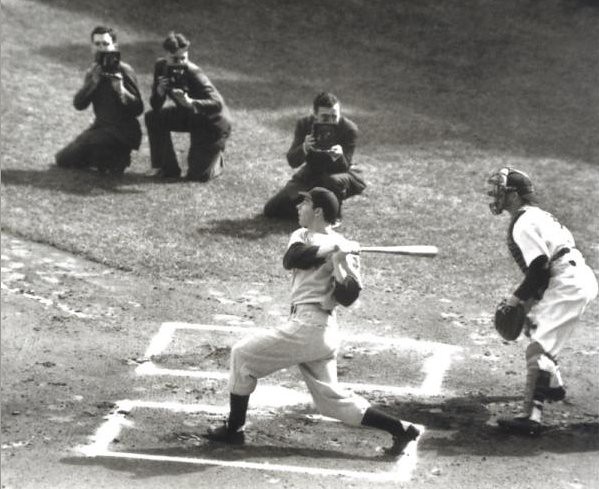
Joe DiMaggio got at least one hit in 56 consecutive games during the 1941 season. That’s nearly two full months of success every single day you step to the plate.
One hitless game ends everything, and you start over from zero. Pete Rose came closest in 1978 with 44 games.
Ted Williams, one of the greatest hitters ever, maxed out at 23. Even in an era when batting averages were higher and pitching wasn’t as specialized, nobody has seriously threatened DiMaggio’s streak in over 80 years.
Think about what has to go right. You can’t have an off day.
You can’t face three unhittable pitchers in a row. You can’t go 0-for-3 and then get intentionally walked in your final at-bat.
The pressure builds with each game, and somehow you have to ignore it. Modern baseball makes this even harder.
Relief pitchers specialize in facing specific types of hitters. Defensive shifts eliminate hits that would have dropped in decades ago.
Analytics have made pitchers smarter about attacking weaknesses. The game has evolved to prevent exactly this kind of sustained success.
Wayne Gretzky’s Scoring Records
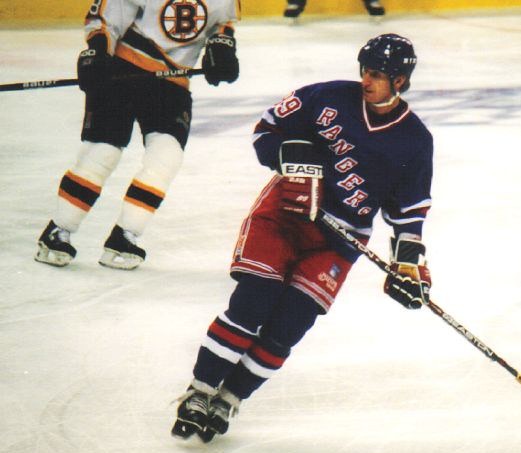
Wayne Gretzky holds 61 NHL records, but his career points total of 2,857 stands out as truly untouchable. He had 894 goals and 1,963 assists.
That’s so dominant that even if you took away every single goal he scored, he’d still be the all-time points leader based on assists alone. The next closest player is Jaromir Jagr with 1,921 points—almost 1,000 behind.
Alex Ovechkin, one of the greatest goal scorers in history, sits around 1,550 career points. He’s not even close, and he’s been playing at an elite level for nearly two decades.
Gretzky played in a higher-scoring era, but even accounting for that, his dominance was absurd. He won the scoring title ten times.
He had four seasons with over 200 points. The best players today peak around 130-140 points in an exceptional year.
Hockey has changed. Goaltending is better. Defensive systems are more sophisticated.
The gap between the best player and the 50th best player is smaller than it used to be. Nobody is lapping the field the way Gretzky did.
Byron Nelson’s 11 Consecutive PGA Tour Wins

In 1945, Byron Nelson won 11 consecutive PGA Tour events. Eleven. In a row.
That’s more than just being hot for a month. That’s sustaining perfection for an entire season.
Golf is a game of margins. Wind changes.
Greens break differently. One bad bounce can derail your round.
Winning once is hard. Winning twice in a row is remarkable.
Winning eleven times without a single tournament where you don’t finish first? That defies explanation.
Tiger Woods at his peak won seven consecutive PGA Tour events—which itself was extraordinary—and he still fell short by four. The fields are deeper now.
More countries produce elite golfers. The competition is fierce in every tournament.
You’re not just beating 20 good players anymore. You’re beating 100 great ones.
Nelson’s streak happened during World War II when many top golfers were serving overseas, but that doesn’t diminish the achievement. You still have to execute under pressure.
You still have to sink the putts. And doing it eleven times in a row? That’s a record that laughs at the idea of being broken.
Rocky Marciano’s Perfect Record
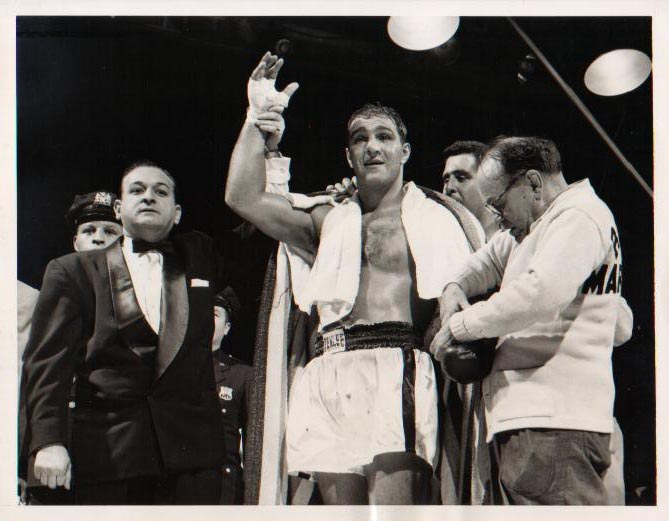
Rocky Marciano retired as the only heavyweight champion with a perfect professional record: 49 wins, 0 losses. He didn’t just win.
He never lost. Not once.
Modern boxing makes this nearly impossible. Champions have to face mandatory challengers.
The best fighters are encouraged to fight each other. Promoters want competitive matches, not predictable blowouts.
And heavyweights today have longer careers with more fights, which means more opportunities for an upset. Marciano fought in an era with dangerous competition.
He beat Joe Louis, Jersey Joe Walcott, and Archie Moore—legitimate legends. He didn’t pad his record with tomato cans.
And yet he never tasted defeat. Floyd Mayweather went 50-0, but he fought at lighter weight classes where careers can be carefully managed.
At heavyweight, where one punch can end everything, staying perfect for 49 fights is miraculous. Attempting it today would require both supreme talent and the kind of luck that rarely visits anyone.
Nolan Ryan’s 5,714 Career Strikeouts

Nolan Ryan struck out 5,714 batters over his 27-year career. The next closest pitcher is Randy Johnson with 4,875—almost 900 strikeouts behind.
That’s roughly five more seasons of elite strikeout pitching. Ryan threw hard for an incredibly long time.
He started 773 games and threw 222 complete games. Pitchers today don’t throw complete games anymore.
They’re on strict pitch counts. Teams protect their arms and don’t let them throw 130-140 pitches in a game like Ryan routinely did.
The game has changed in ways that make this record virtually impossible to approach. Modern pitchers are more efficient, which means fewer pitches per game.
They face fewer batters over the course of a season. And nobody pitches deep into their 40s anymore because the medical understanding of arm health has evolved.
You’d need to strike out 250 batters per season for 23 consecutive years to match Ryan. Nobody does that.
Nobody will do that. The structure of modern baseball won’t allow it.
Jahangir Khan’s 555-Match Winning Streak

From 1981 to 1986, Pakistani squash player Jahangir Khan won 555 consecutive matches. More than five years without a single loss.
Over 500 matches where he was the last man standing. Squash is an exhausting sport.
Matches can last over an hour of constant movement in a confined space. The physical demands are brutal.
Yet Khan just kept winning. Against the best players in the world.
In tournaments all over the globe. For five solid years.
The streak ended in 1986 when Khan lost to Ross Norman in the World Open. But by then he’d already done something that will never be repeated.
Sports psychology and competition levels have evolved. Players today don’t dominate single sports the way athletes did in previous generations.
The gap between first and tenth place has narrowed across almost every sport.
Winning 100 matches in a row would be incredible. Winning 555? That’s not a record. That’s a different category of achievement entirely.
Usain Bolt’s 100-Meter World Record
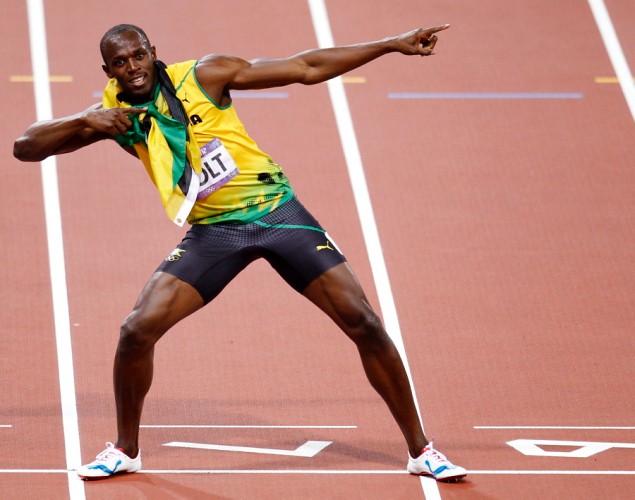
Usain Bolt ran 100 meters in 9.58 seconds at the 2009 World Championships in Berlin. That’s not just fast.
That’s physics-defying fast. The previous record holder, Asafa Powell, had run 9.74.
Bolt absolutely demolished it. Track and field records do get broken.
Training methods improve. Technology in shoes and track surfaces advances.
But Bolt’s time stands so far ahead that even with all our improvements, nobody has come close in 15 years. Bolt was 6’5″ tall, which shouldn’t work for sprinting.
Taller runners typically can’t get out of the blocks as quickly. But he combined that height with incredible power and near-perfect technique.
His stride length and frequency were optimal in ways that biomechanists still study. The current generation of sprinters is fast.
Christian Coleman, Noah Lyles, Fred Kerley—these guys are extraordinary athletes. They’re running in the 9.7s and 9.8s.
But nobody’s threatening 9.58. That number sits there like a taunt, daring someone to try.
Michael Phelps’ 23 Olympic Gold Medals
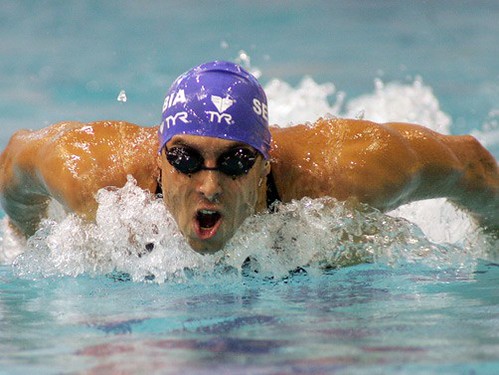
Michael Phelps won 23 Olympic gold medals in swimming. Twenty-three.
The next closest Olympian in any sport is gymnast Larisa Latynina with nine golds. Phelps more than doubled her total.
Swimming offered Phelps more opportunities than most Olympic sports because there are so many events. He competed in individual races, relays, different strokes, different distances.
But opportunity alone doesn’t explain this. You still have to win.
Consistently. Against the best in the world. At multiple Olympics.
Phelps competed in five Olympic Games from 2000 to 2016. He maintained peak performance for 16 years.
Most swimmers peak for one, maybe two Olympic cycles. The training is too demanding.
The competition is too fierce. Phelps just refused to slow down.
For anyone to break this record, they’d need to dominate their sport across five or six Olympic Games while winning in multiple disciplines. That’s a two-decade commitment to being the absolute best in the world.
It’s theoretically possible, but practically? We’re not seeing it again.
Cy Young’s 511 Career Wins
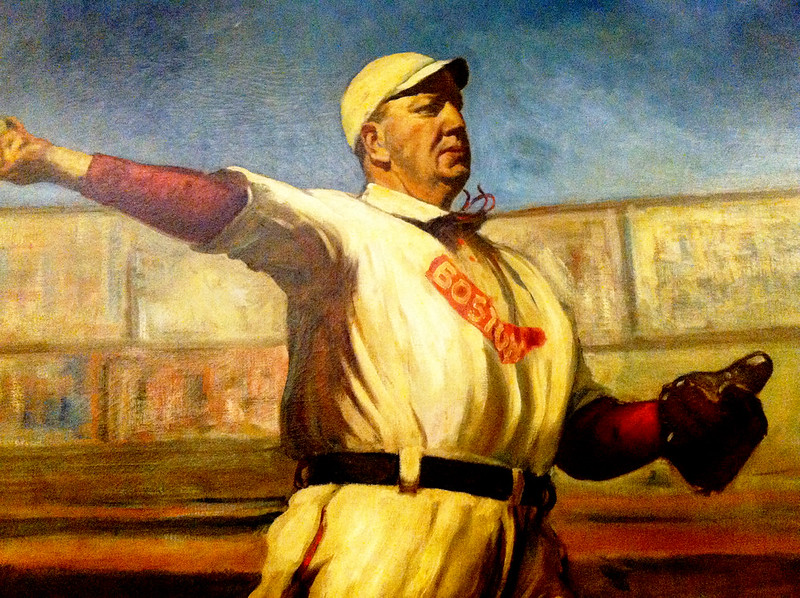
Cy Young won 511 games as a pitcher. The modern era leader is Walter Johnson with 417, and he retired in 1927.
Since 1990, Greg Maddux has come closest with 355 wins. That’s 156 wins short of Young’s total.
Baseball in Young’s era was different. Pitchers threw more innings. They started more games.
The season was shorter, but pitchers carried more of the load. Young started 815 games in his career and threw 749 complete games.
Today, a 20-win season is considered elite. Pitchers who win 200 games over their entire career get serious Hall of Fame consideration.
Getting to 300 wins is now seen as a historic achievement. So how do you get to 511?
You don’t. The game won’t let you.
Pitch counts limit how long starters stay in games. Relief pitchers take over in the sixth or seventh inning.
The medical understanding of arm health means teams protect their pitchers more carefully. And even with all that protection, pitchers still get injured and need surgery.
Young’s record exists in a time capsule that can’t be opened anymore.
Secretariat’s Belmont Stakes

Secretariat won the 1973 Belmont Stakes by 31 lengths. Thirty-one. He didn’t just win the race.
He annihilated the competition. His time of 2:24 for the mile-and-a-half distance still stands as the American record.
Horse racing has produced many great champions. American Pharoah. Justify. Citation. Man o’ War.
But none of them won a race the way Secretariat won the Belmont. He accelerated as the race went on, pulling further and further ahead with each furlong.
Jockey Ron Turcotte just let him run, and Secretariat kept finding another gear. The margin of victory is what makes this record special. Winning by two or three lengths is dominant.
Winning by ten lengths is historic. Winning by 31 lengths? That’s something else entirely.
It’s the kind of performance that makes you question if you’re watching the same species compete. Horses are bred more carefully now.
Training methods have improved. Yet nobody has run the Belmont in under 2:24, and nobody has won by anywhere near 31 lengths.
Secretariat exists in a category by himself.
J. Rice’s Receiving Yards
J. Rice ended up with 22,895 yards when he stopped playing. Behind him? Larry Fitzgerald at 17,492.
That gap – about 5,403 yards – is like stacking five strong years of play. One guy way ahead of the pack.
Rice lasted two decades – yet it’s his impact, not time, that seals the deal. Even past 35, he kept hauling in catches while others hung up their cleats.
One thousand yards? He hit that mark sixteen times. Nineteen seven scores went on the board thanks to him.
The NFL’s thrown way more passes lately compared to when Rice left, so you’d think someone might break his record soon. Still, modern wideouts rarely stick around that long.
Their bodies just wear out quicker. Coaches drop them once they start slowing down.
Even stars such as Julio Jones or Calvin Johnson call it quits while still fairly young. To beat Rice’s mark, you’d have to hit roughly 1,200 yards every year – year after year – for nearly twenty seasons.
Staying on the field, playing at a high level, while still being counted on – that kind of run is just unreal. No player will manage it. Football itself will get in the way.
When Numbers Tell Stories

These moments show people doing things that feel unreal. Talent played a role, but so did luck and rare conditions.
Sports aren’t the same now – rules, gear, everything’s different. Rivals are tougher today than they used to be.
Training methods? Totally new, plus safety matters more now.
Perhaps somebody’ll show we’re mistaken. Or maybe some kid training today’s building skills for what feels unachievable.
That’s the magic – sports keep shocking us. Yet these marks stayed strong through years of rivals trying hard.
They aren’t mere stats on paper. These are symbols of past limits shaped by older ways, tougher odds, unique moments.
Not every success gets topped. Some are simply looked at with wonder.
More from Go2Tutors!

- The Romanov Crown Jewels and Their Tragic Fate
- 13 Historical Mysteries That Science Still Can’t Solve
- Famous Hoaxes That Fooled the World for Years
- 15 Child Stars with Tragic Adult Lives
- 16 Famous Jewelry Pieces in History
Like Go2Tutors’s content? Follow us on MSN.