27 Vintage Bangles and Cuffs Dealers Want
A bangle is the piece most likely to get tossed in a drawer without a second look. The cuffs and bangles inside may be carved plastic from the 1930s, silver from the workshops of Taxco, or signed designs by makers whose names dealers recognize on sight.
Condition and the maker’s mark decide the price, as with any collectible. A crack, a replaced clasp, or a missing stone can erase most of the value, while an intact signed piece can bring several times more than an unsigned cousin.
These 27 types of vintage bangle and cuff are the ones dealers keep asking about.
Carved Bakelite Bangles
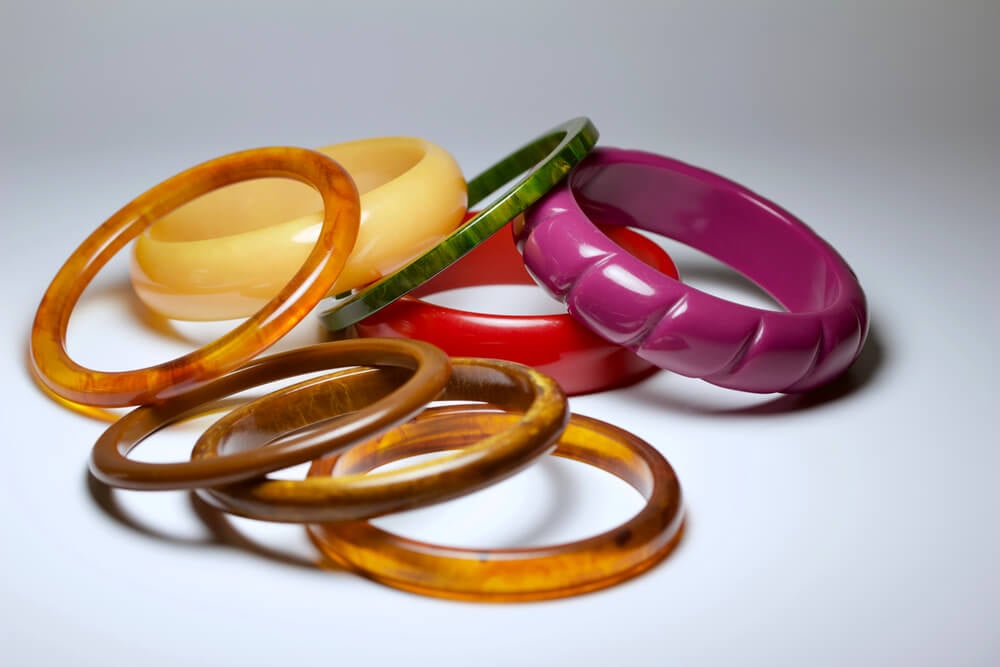
Leo Baekeland developed Bakelite, the first fully synthetic plastic, in the early 1900s, and jewelry makers turned it into deeply carved floral and geometric bangles in the 1930s. Dealers test a suspect piece by rubbing a spot with a cream metal polish such as Simichrome on a cloth, and real Bakelite turns the cloth yellow.
Deep carving without cracks brings the best prices, since a crack in a heavy bangle is almost impossible to hide.
Apple Juice Bakelite
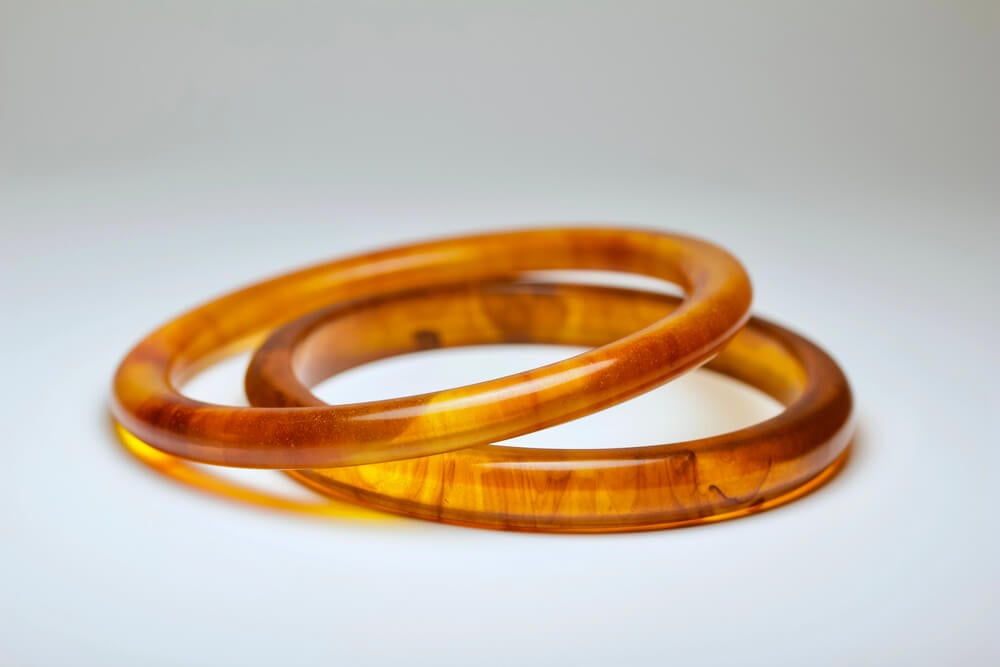
Collectors use the name apple juice for translucent amber-yellow Bakelite, one of the most sought-after colors in vintage plastic jewelry. Light passes through the material like a glass of cider, and the color tends to deepen with age. Wide, plain apple juice bangles often cost more than busier carved pieces in common colors, and a clean, even tone matters more than the carving.
Hinged Bakelite Cuffs
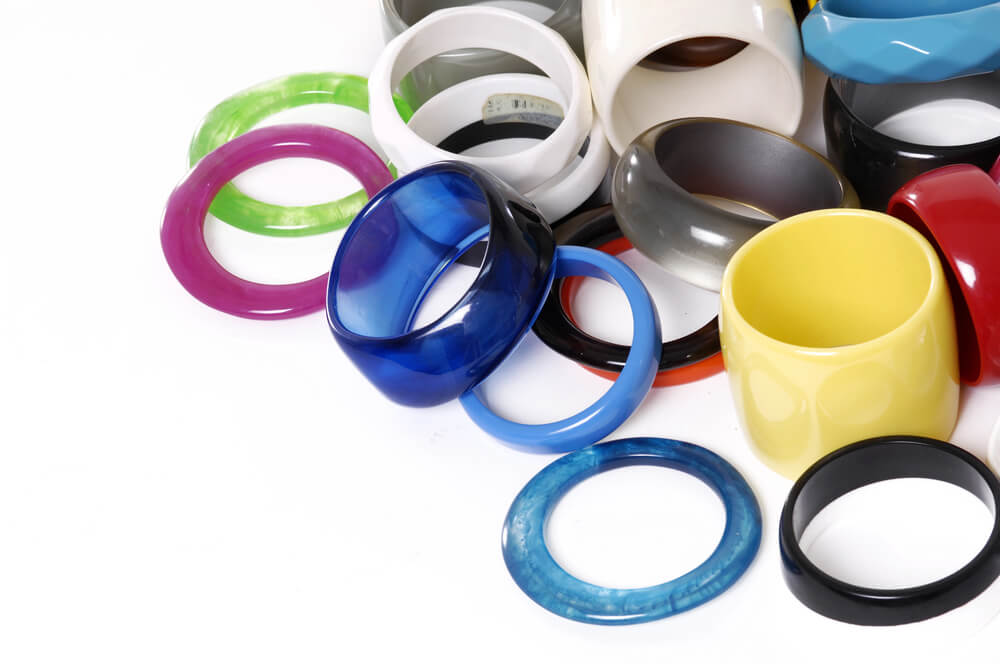
A hinged Bakelite cuff opens on a metal pin and closes with a small catch, which made it easier to wear than a solid bangle. The metal hardware is the weak point, because a replaced pin or a cracked hinge section cuts the value sharply.
Collectors prize the original hinge and check the plastic around it for hairline damage.
Catalin Bangle Stacks
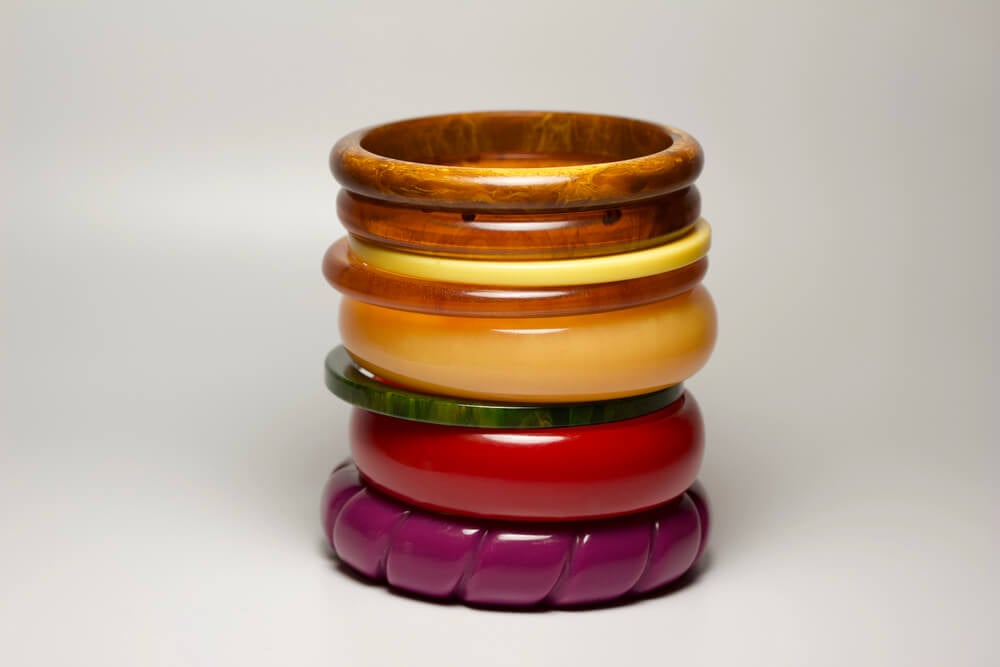
Catalin was a cast phenolic resin sold in bright, translucent colors that the American Catalin Corporation supplied to jewelry and radio makers. Wearers stacked bangles up the forearm in contrasting colors, and dealers still sell them that way, sometimes as matched sets.
A set of consistent age and color sells for more than the same bangles gathered one at a time.
Fred Harvey-Era Stamped Cuffs
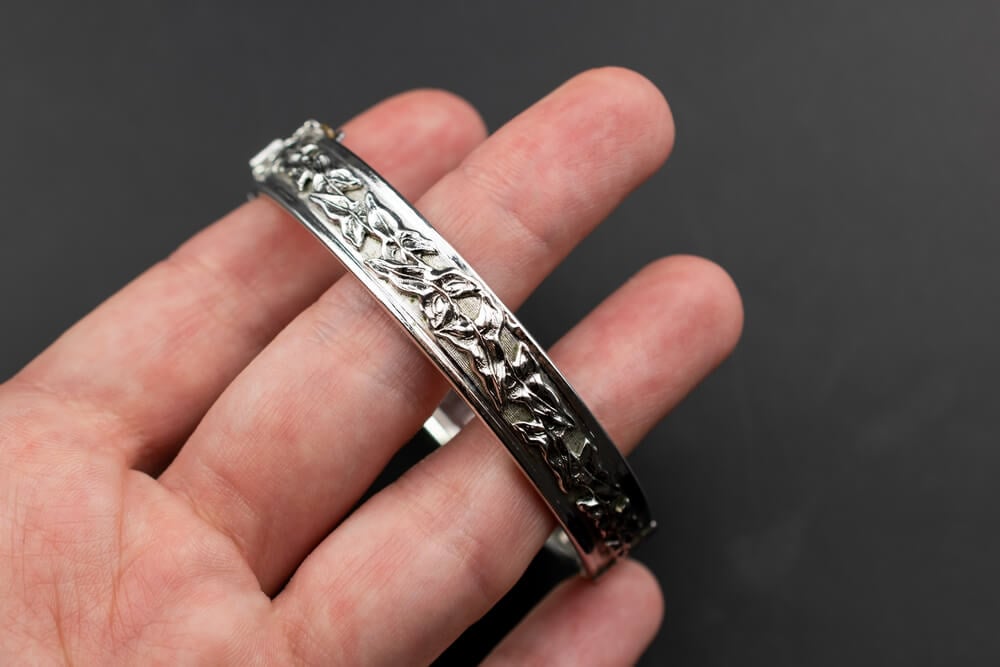
The Fred Harvey Company sold Native-made jewelry through its hotels, restaurants, and shops along the Santa Fe Railway in the Southwest. Thin silver cuffs stamped with arrows, thunderbirds, and snakes were made in quantity for tourists, and most were unsigned.
That makes the Harvey label a matter of style and age, which explains why dealers argue over it and why early pieces with period stamps bring the premium.
Navajo Turquoise Cuffs
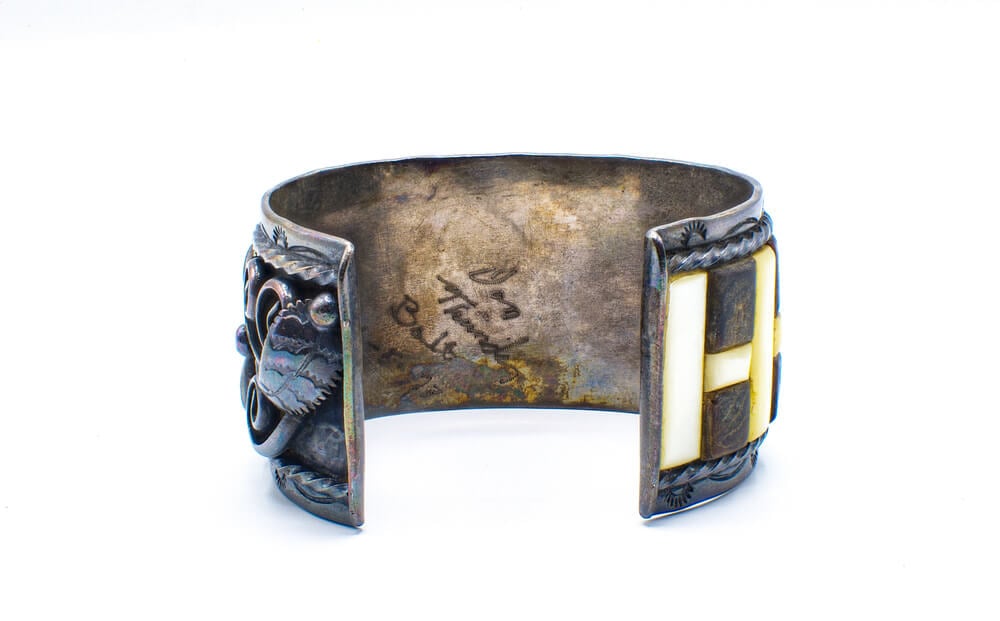
Navajo silversmithing dates to the 1800s, and heavy cuffs set with turquoise became one of the Southwest’s signature forms. Natural stones from named mines command more than stabilized or treated stones, and the difference can be dramatic.
A cuff with an artist’s hallmark, a good weight, and a stone with natural color fetches the highest prices.
Zuni Needlepoint Cluster Bracelets
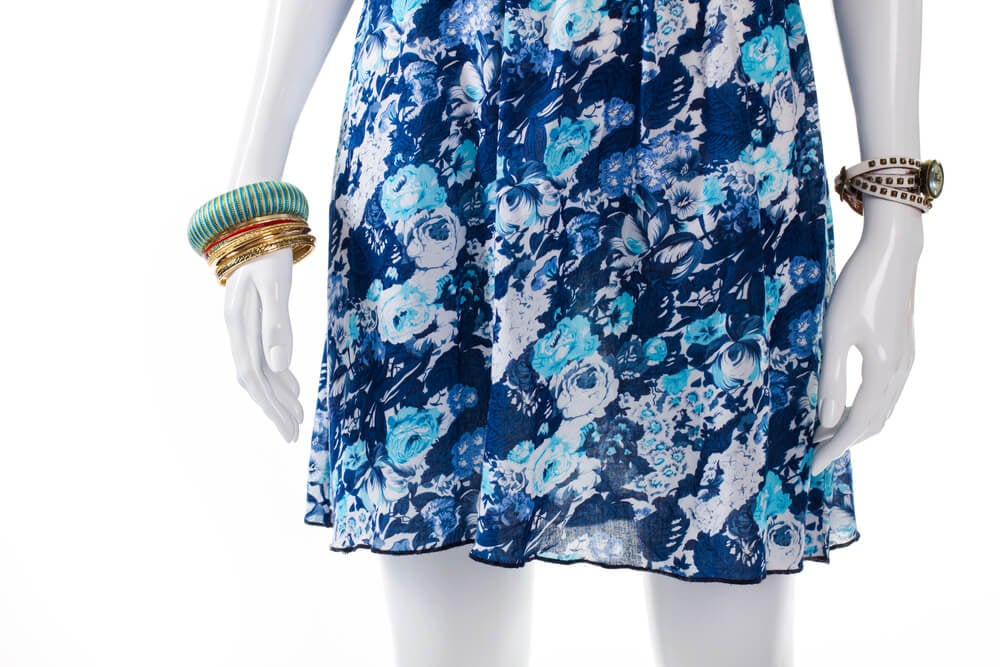
Zuni lapidary artists cut turquoise into slender slivers so narrow that they resemble needles, then set dozens of them in rows across a cuff. Each stone must be cut, shaped, and fitted by hand, which makes a large bracelet weeks of work.
Even stones, tight settings, and a sound back plate mark the pieces that dealers pay for.
Hopi Overlay Cuffs
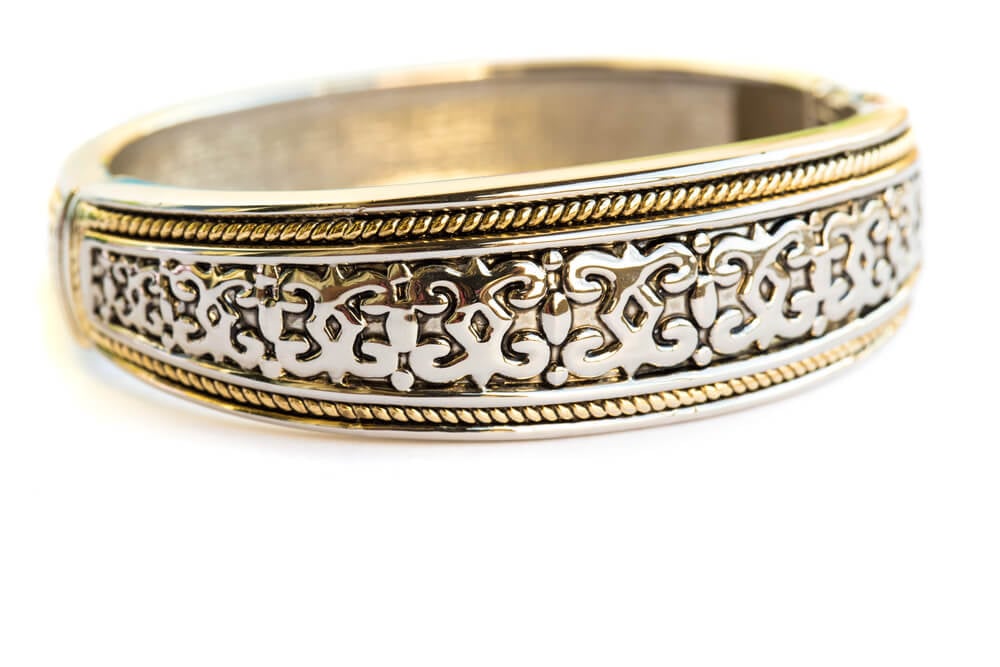
Hopi overlay jewelry is made from two sheets of silver, with the design sawn out of the top layer and set over a darkened bottom layer. After World War II, Hopi veterans studying on the GI Bill learned the technique, and it became the tribe’s signature style.
Overlay cuffs carry the maker’s hallmark, and a clearly stamped piece with sharp, crisp cutwork sells for the most.
Spratling Silver and Amethyst Cuffs
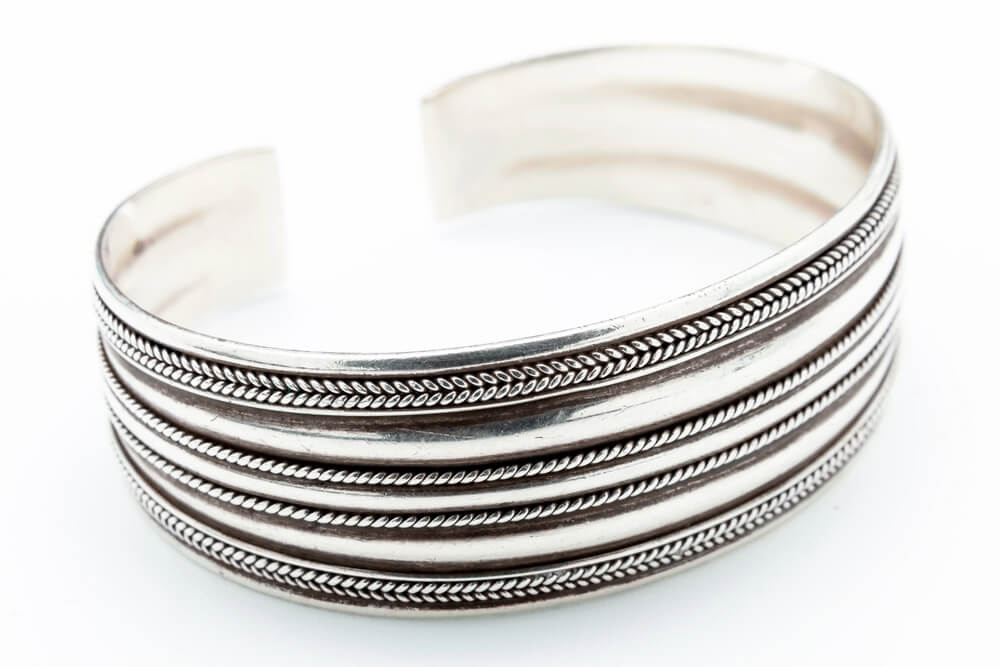
William Spratling, an American architect and designer, moved to Taxco, Mexico, in 1929 and is credited with reviving the town’s silver trade. His workshop produced cuffs and bracelets set with amethyst and other stones, stamped with his name and a Taxco mark.
Authentic Spratling pieces from his own workshop, rather than later copies, bring several times the price of general Taxco silver.
Los Castillo Mixed-Metal Bracelets
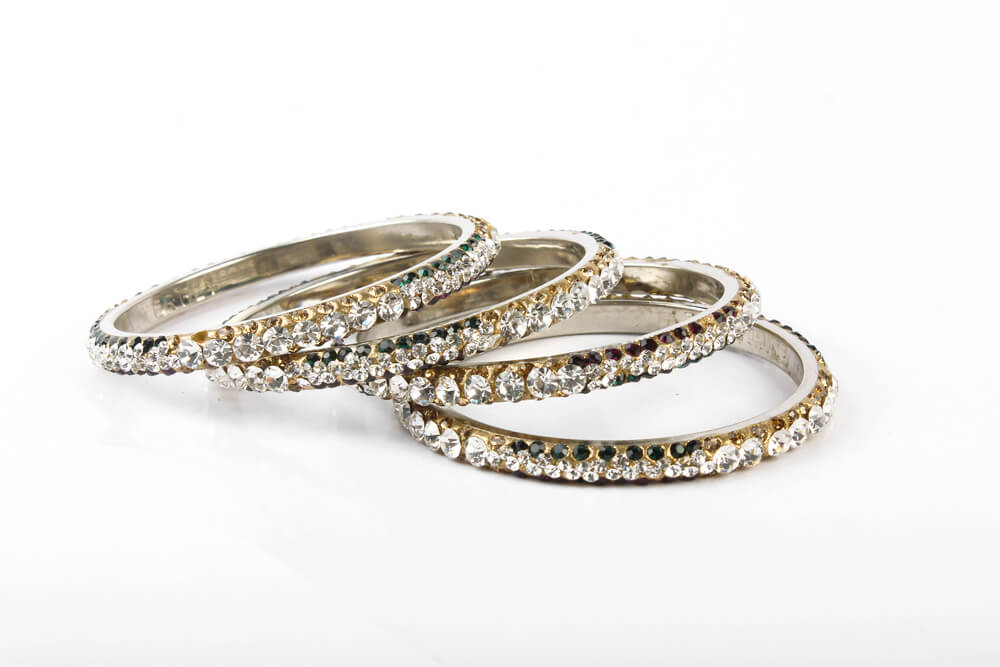
The Taxco workshop Los Castillo became known for combining silver with copper and brass in a single bracelet. The contrast of bright silver against warm metal gave its pieces a look that stood apart from the plain silver of the era.
Marked Los Castillo bracelets in good condition are collected by dealers who specialize in Mexican modernism.
Hector Aguilar Silver Cuffs
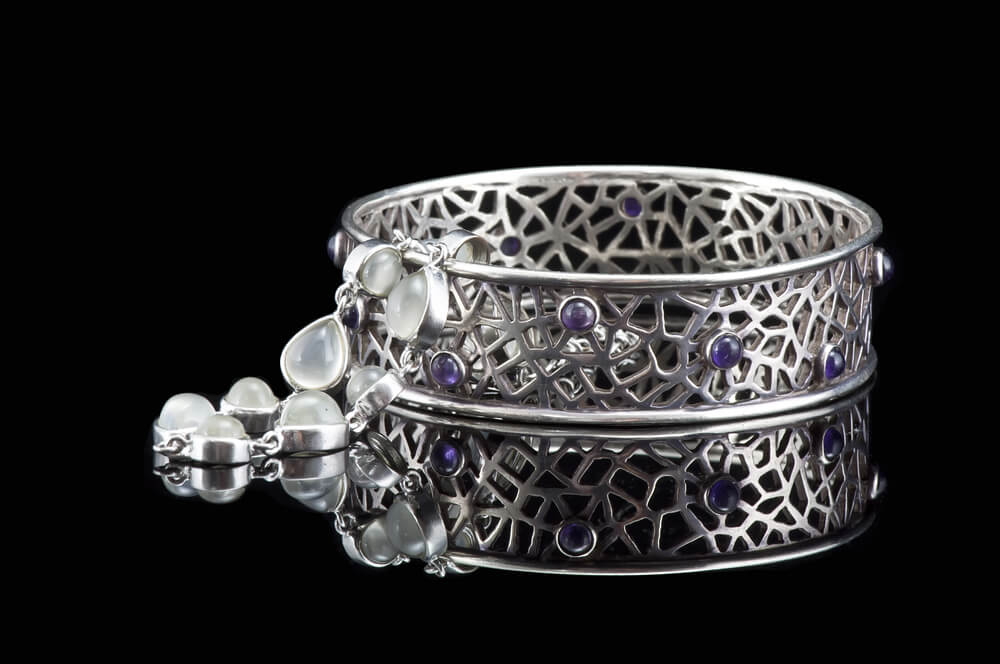
Hector Aguilar worked with William Spratling before establishing his own Taxco shop, and his cuffs and bracelets carry the clean lines of mid-century Mexican design. Dealers look for his name stamped on the back alongside the Taxco mark.
Because many Taxco makers imitated the style, a clear signature is the difference between a good bracelet and a valuable one.
Antonio Pineda Modernist Bracelets
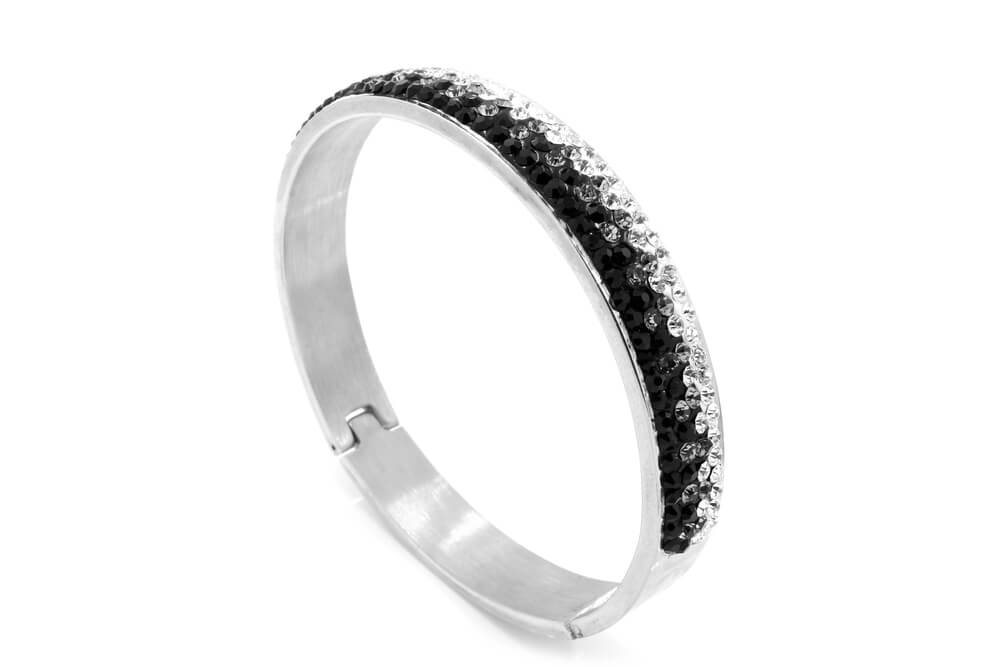
Antonio Pineda, who also worked in Spratling’s circle, left to open his own Taxco workshop and became known for bold, sculptural silver. His bracelets pair heavy silver with stones in modern, geometric settings that look current decades later.
Auction houses have featured his work in design sales, and signed Pineda pieces rank among the most expensive mid-century Mexican silver.
Margot de Taxco Enamel Bracelets
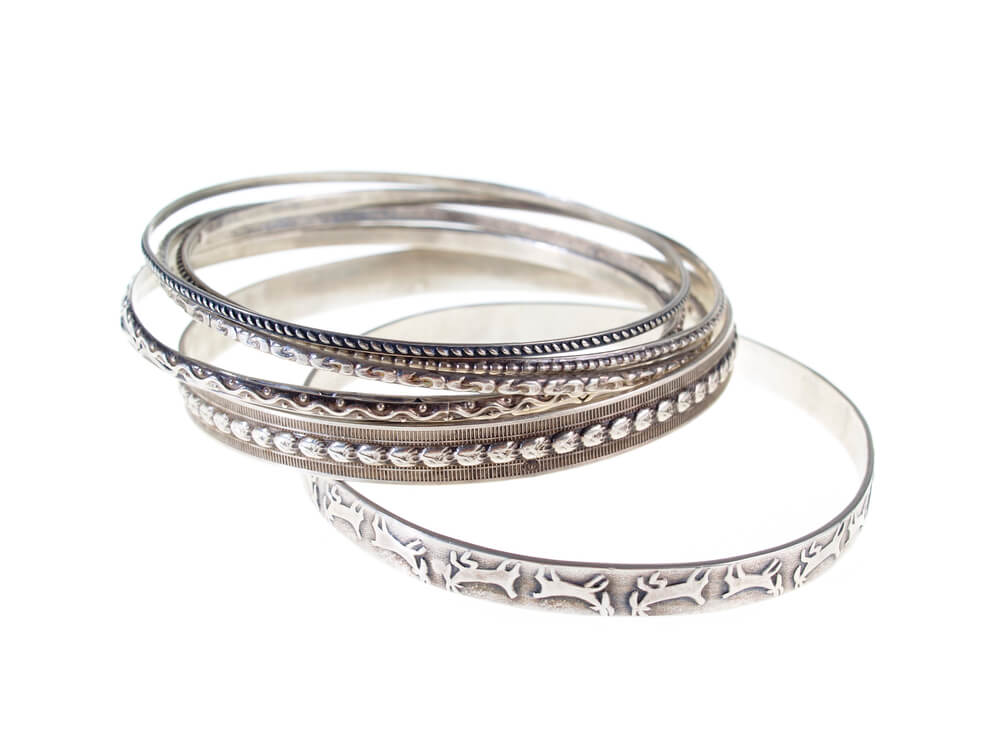
Margot de Taxco made sterling silver jewelry decorated with bright enamel in floral and abstract designs during the middle of the 20th century. Chipped enamel is the main enemy of value, and collectors pay the most for bracelets whose enamel has stayed intact.
Georg Jensen Torun Bangle
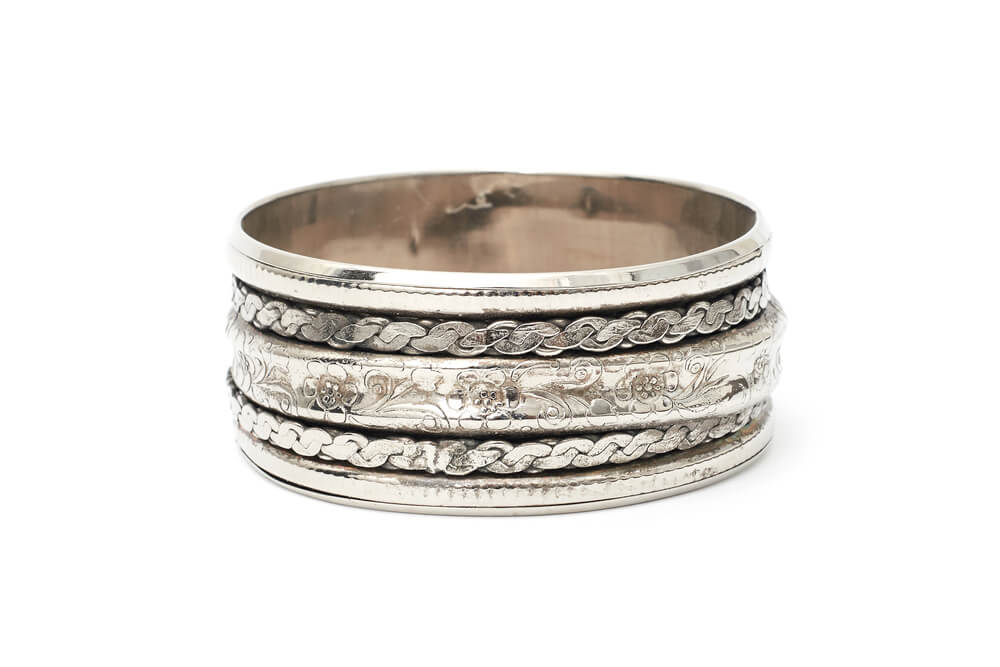
Vivianna Torun Bülow-Hübe, a Swedish designer, created sleek, flowing bangles for the Danish firm Georg Jensen beginning in the 1960s. The Jensen mark and a design number on the inside identify the genuine piece.
A Torun bangle in clean condition with no dents or deep scratches commands a strong price, and the smooth surface shows every flaw.
David-Andersen Enamel Bracelets
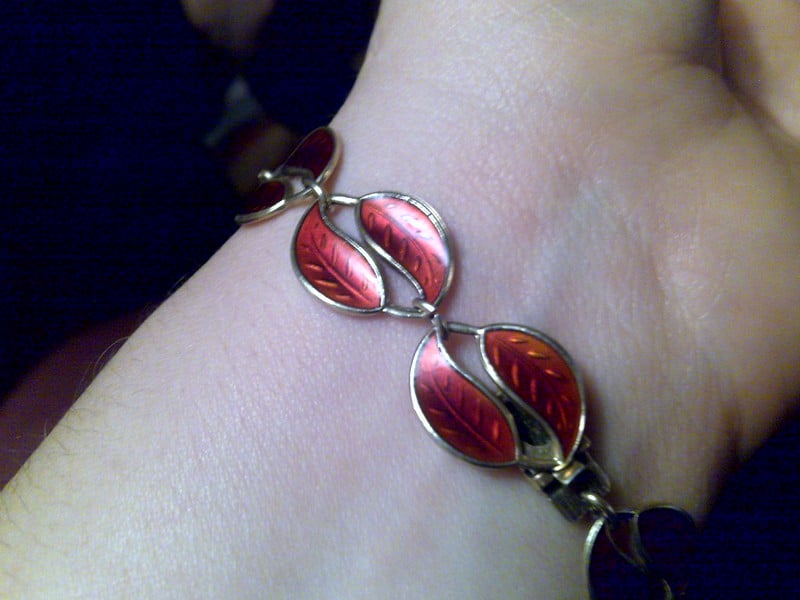
David-Andersen, a goldsmith firm based in Oslo, Norway, was known for guilloche enamel in vivid colors over engraved silver. The enamel catches light through a pattern cut into the metal beneath it.
Cracks in the enamel are common and costly, so a bracelet with unbroken color is the version dealers hold out for.
Whiting & Davis Mesh Bracelets
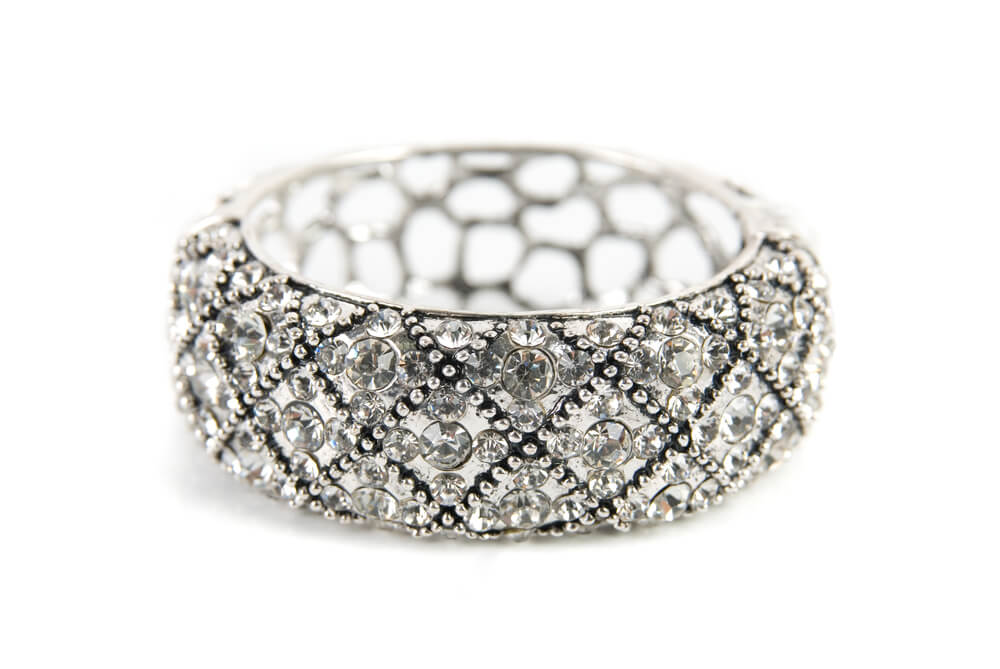
Whiting & Davis of Plainville, Massachusetts, is best known for its metal mesh bags, but the company also made mesh bracelets and cuffs in Art Deco styles. The mesh is built from tiny linked rings that flex around the wrist like fabric.
A mesh cuff with an intact clasp and unbroken enamel patterns sells for more than a plain one, and bent or kinked mesh cuts the value sharply.
Hobé Sterling Cuffs
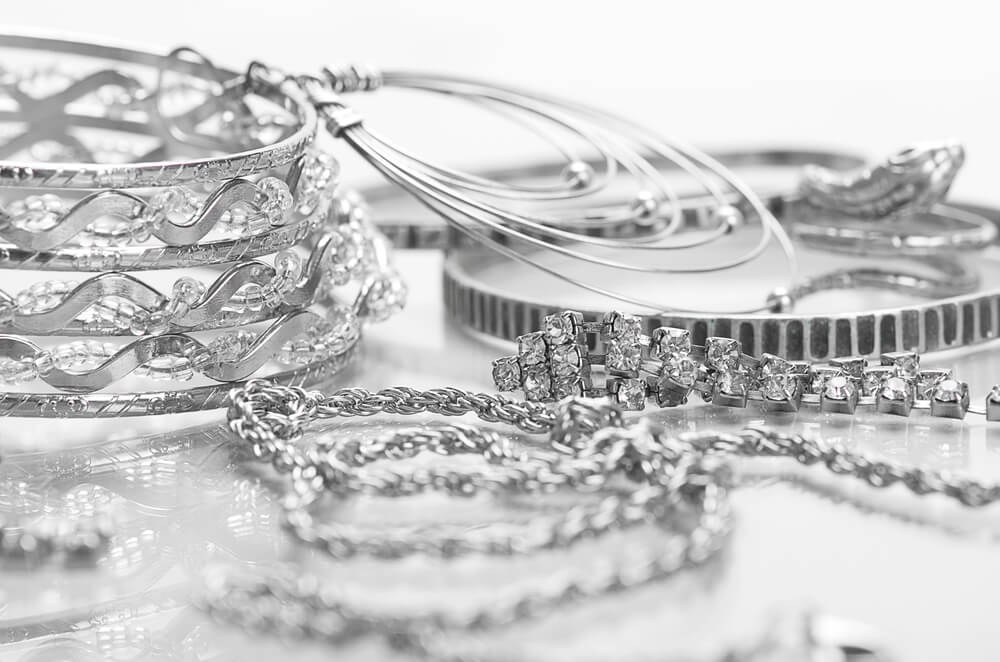
Hobé made sterling silver jewelry along with its costume line, and the sterling cuffs with floral and scrolled motifs from the 1940s are the prize. The company’s pieces are usually marked, which makes authenticating them easier than with many peers.
A sterling Hobé cuff in good condition has real metal value in addition to the maker’s premium.
Kenneth Jay Lane Enamel Cuffs
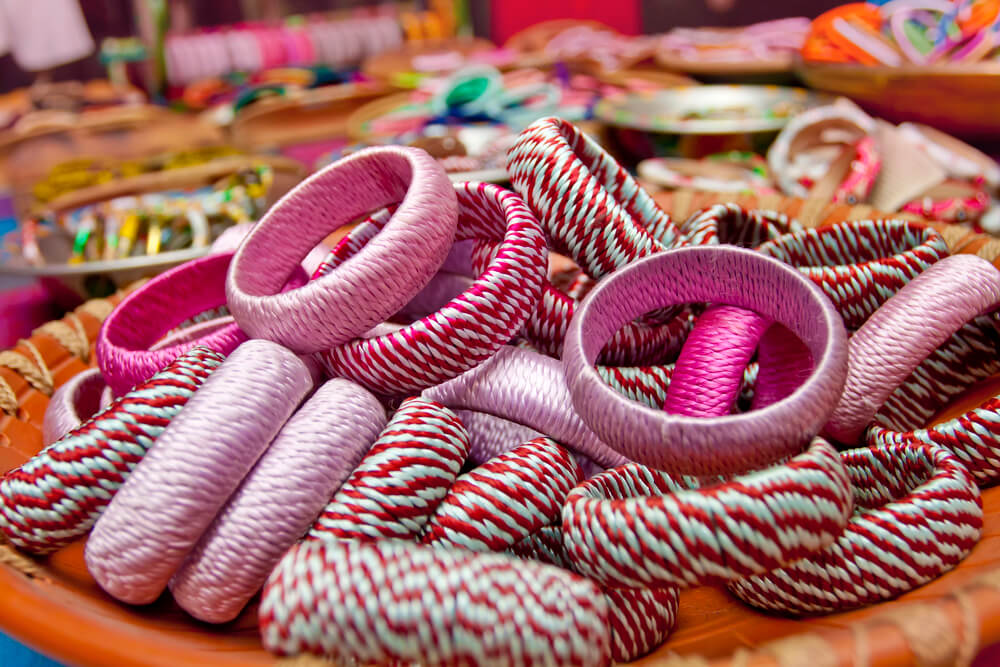
Kenneth Jay Lane made bold enameled cuffs in bright colors, often with a sculptural look that could pass for fine jewelry from across a room. His clients included socialites and actresses, and the jewelry offered glamour at costume prices.
Early signed cuffs in unchipped condition are the ones dealers want, since later production is more common.
Miriam Haskell Pearl Bracelets
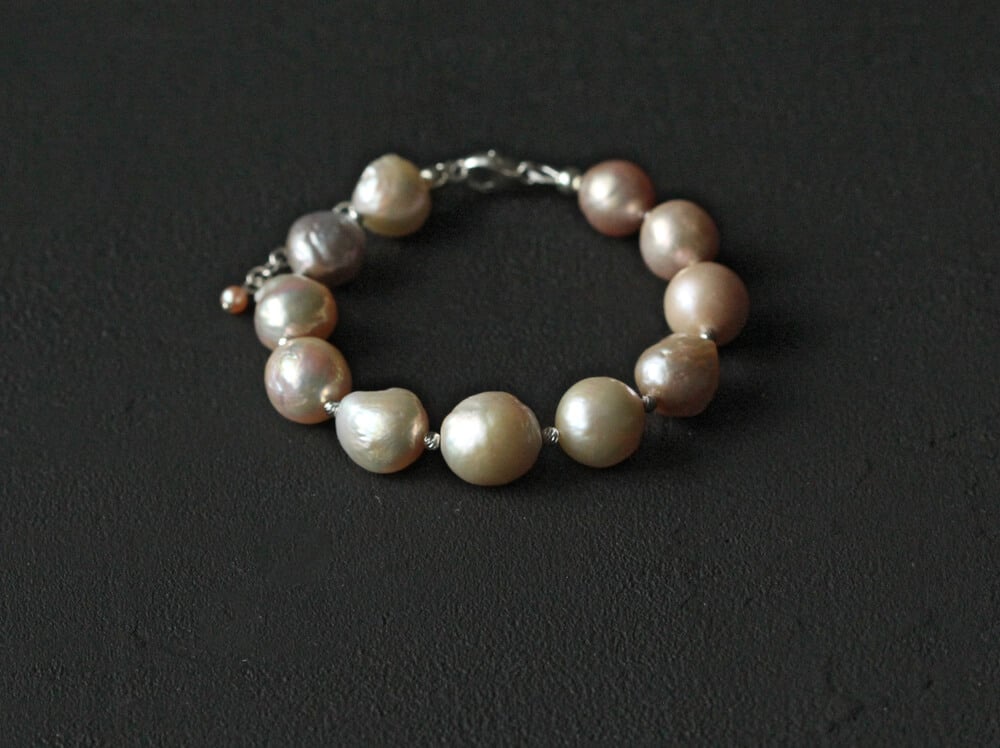
Miriam Haskell bracelets use hand-wired glass pearls and seed beads on a filigree backing, and each piece was assembled by hand. Many early pieces are unsigned, so a signed oval plaque or a documented design adds a premium.
Because the wiring is delicate, a bracelet with all its beads and an intact clasp is worth far more than one with gaps.
Weiss Rhinestone Bracelets
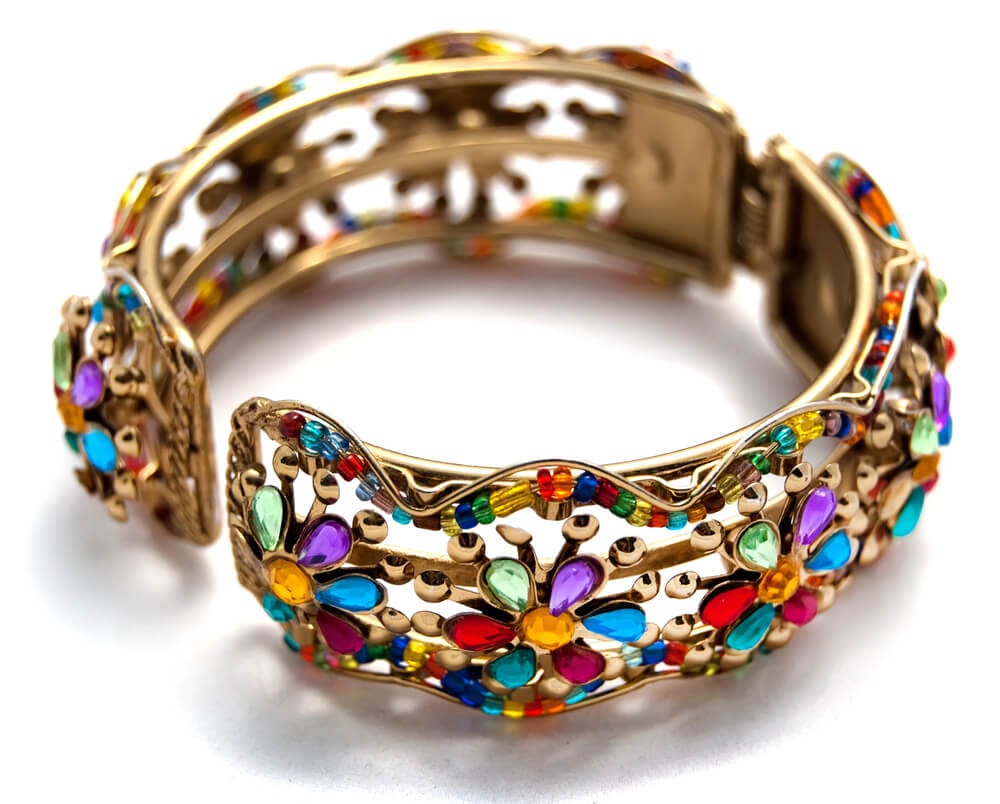
Weiss produced rhinestone bracelets that sparkle with dark gray stones as well as clear ones. The company operated only from 1942 to 1971, so output was limited and signed pieces turn up less often than more prolific brands.
Missing stones are the usual problem, and a bracelet with every stone in place is the version collectors want.
Eisenberg Ice Bracelets
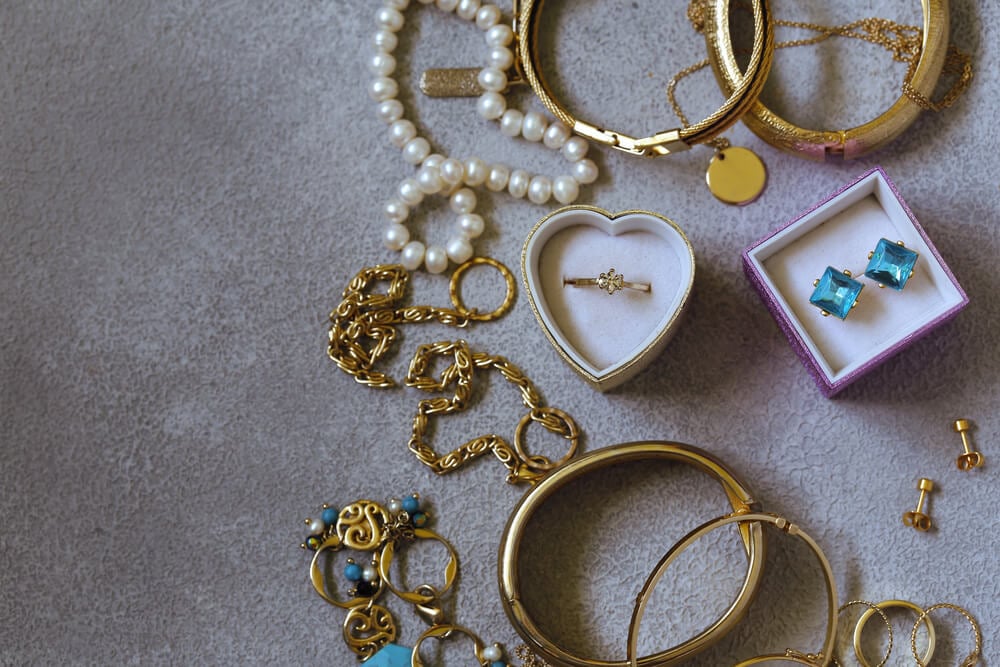
Eisenberg Ice was the name the company used for its clear rhinestone jewelry in the 1940s. The bracelets throw light like diamonds when new, and the best are made with large, perfectly cut stones.
Collectors check for the Eisenberg signature and for stone replacements, since a single mismatched stone is easy to spot.
Hollycraft Pastel Bracelets
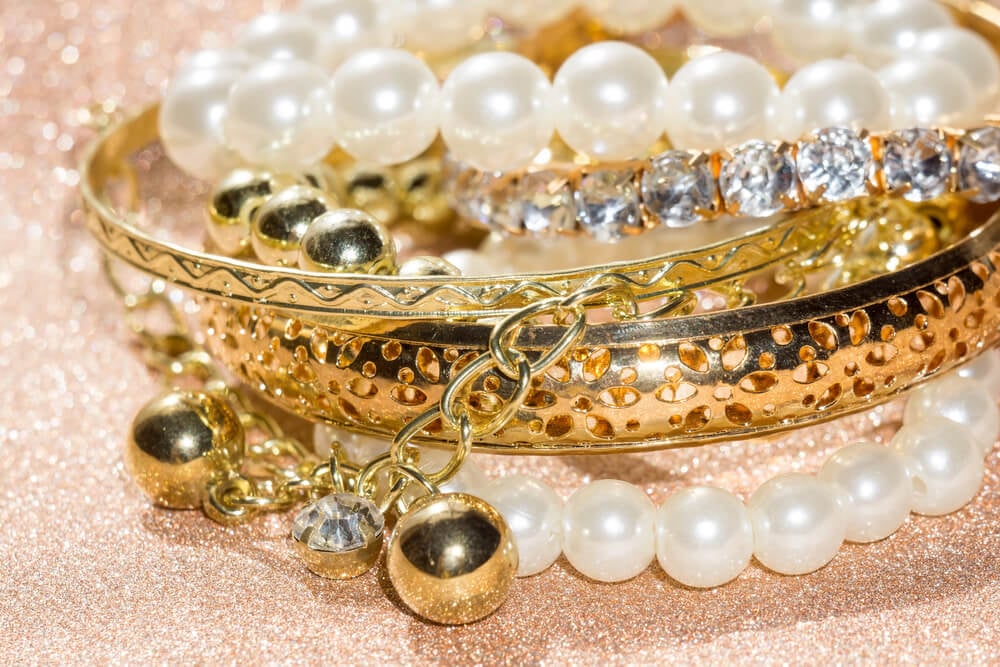
Hollycraft’s pastel rhinestone sets from the early 1950s, in soft pinks, blues, and greens, are the line collectors chase. A bracelet from the Hollycraft copyright-dated range can be traced by the stamped year on the back.
Matching bracelet, necklace, and earring sets sell for more than any single piece.
Juliana Five-Strand Bracelets
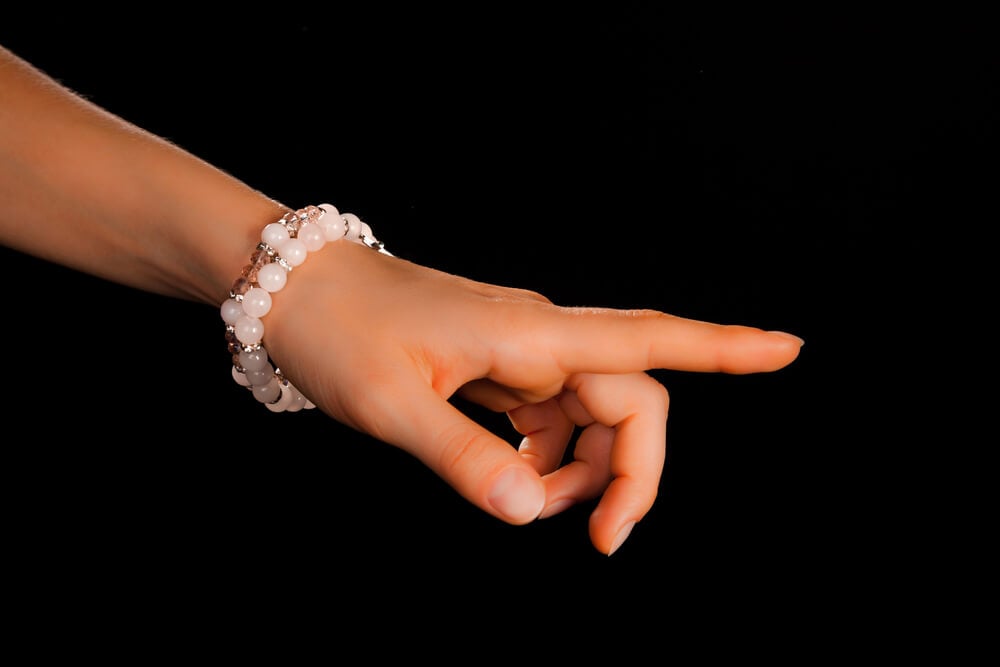
DeLizza & Elster, known as D&E or Juliana, made multi-strand bracelets with layered rhinestones that look rich and heavy. The pieces were rarely signed, so a bracelet with its original tag or documentation is worth much more than an unmarked look-alike.
Dealers and collectors rely on specialist books to confirm the construction details.
Joseff Russian Gold Cuffs
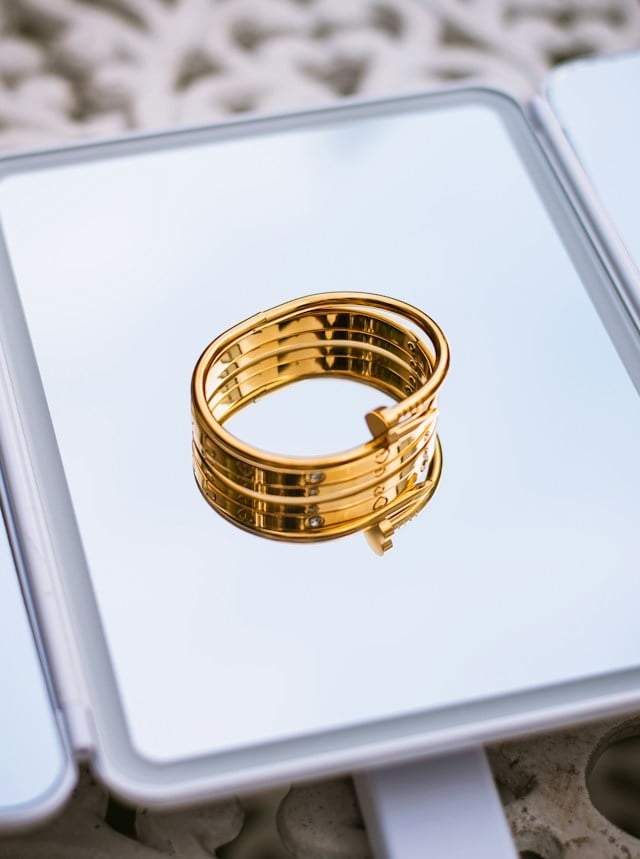
Joseff of Hollywood made jewelry for film studios, and its signature Russian gold finish was a matte surface that did not glare under stage lights. Cuffs marked Joseff Hollywood are among the more recognizable pieces from the house.
Collectors favor examples with the finish intact, since cleaning or replating can remove the original surface.
Elsa Peretti Bone Cuff
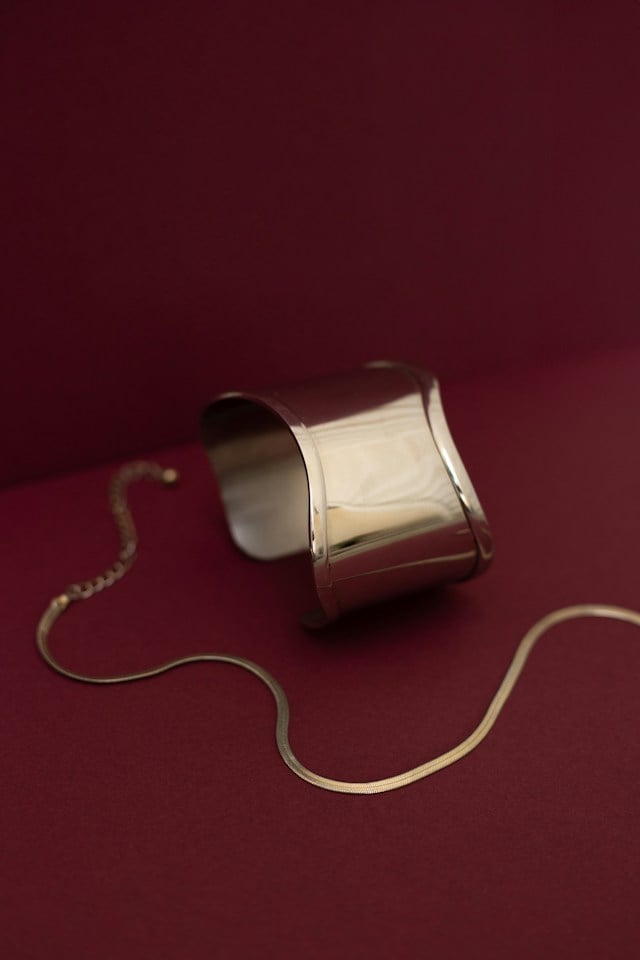
Elsa Peretti began designing for Tiffany & Co. in 1974, and her Bone cuff, shaped like a smooth, curved bone, became one of the company’s best-known silver pieces. The Peretti and Tiffany marks are stamped on the inside.
Older examples with a worn patina and no deep dents are sought, and the cuff’s simplicity means any damage shows.
Carved Lucite Bangles
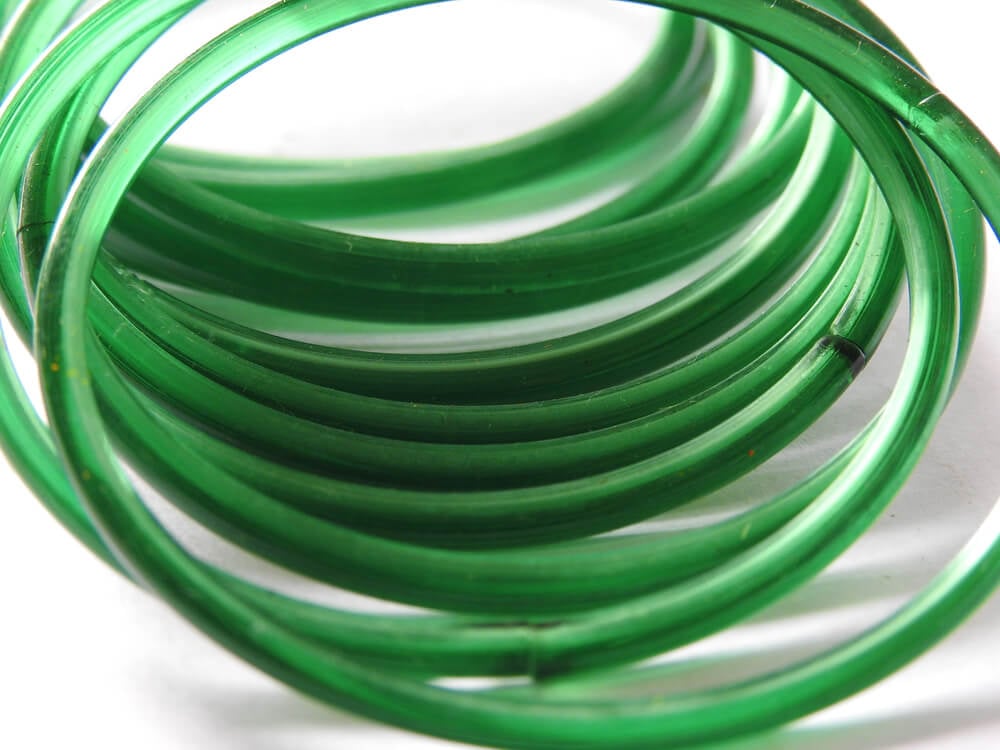
Lucite is the trade name for the acrylic plastic that DuPont introduced in 1937, and in the 1950s makers shaped it into clear and colored bangles with reverse carving. The carving was done on the underside, which gives the design depth when seen through the front.
Lucite scratches easily, so a bangle with a clear, unmarked surface sells for far more than a cloudy one.
Sandcast Navajo Cuffs
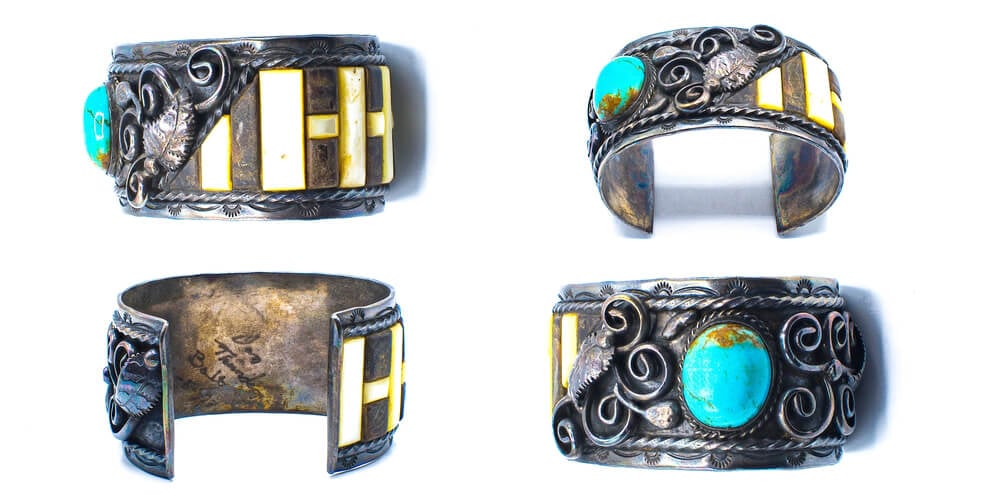
Sandcast jewelry is made by pouring molten silver into a mold carved from tufa stone, which leaves a rough, textured surface unlike hammered or stamped work. The mold can be used only once or twice, so every cuff is slightly different.
Large sandcast cuffs with natural stones and a maker’s hallmark rank among the more valuable Navajo pieces.
Why the Weight Matters
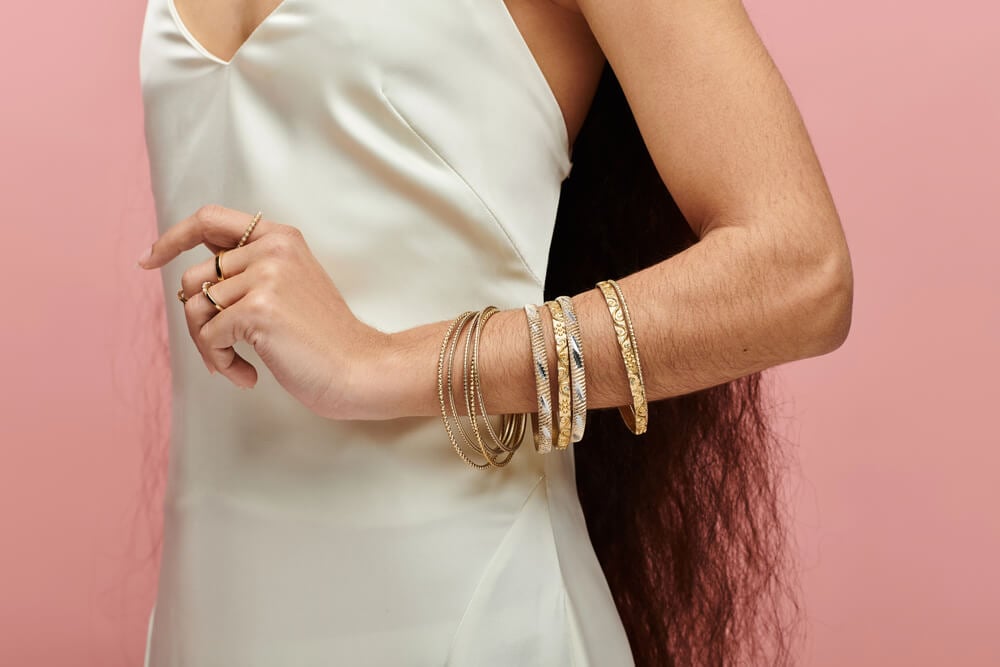
Across all of these categories, the same few traits decide the price. A heavy bangle in good condition with a legible mark will usually outsell a showier piece with damage.
Buyers who check the weight, the stamps, and the hardware before paying tend to do better than those who buy on looks alone.
The drawer at the back of a closet is where many of these pieces have waited. A bangle that seemed too plain or too heavy to wear may turn out to be the one a dealer asks about first.
A few minutes with a magnifier and a good light can tell a seller whether it is jewelry or a find.
More from Go2Tutors!

- The Romanov Crown Jewels and Their Tragic Fate
- 13 Historical Mysteries That Science Still Can’t Solve
- Famous Hoaxes That Fooled the World for Years
- 15 Child Stars with Tragic Adult Lives
- 16 Famous Jewelry Pieces in History
Like Go2Tutors’s content? Follow us on MSN.