13 Historic Bridges Still Carrying Traffic
Most bridges are replaced within a century or so, which makes the ones that remain in daily use remarkable. These thirteen carry cars, trains, or both across rivers and gorges, many of them for well over a hundred years.
None of them is a museum piece. Each one is still doing the job it was built for, and that is the best proof of the engineers behind them.
Pont Neuf, Paris
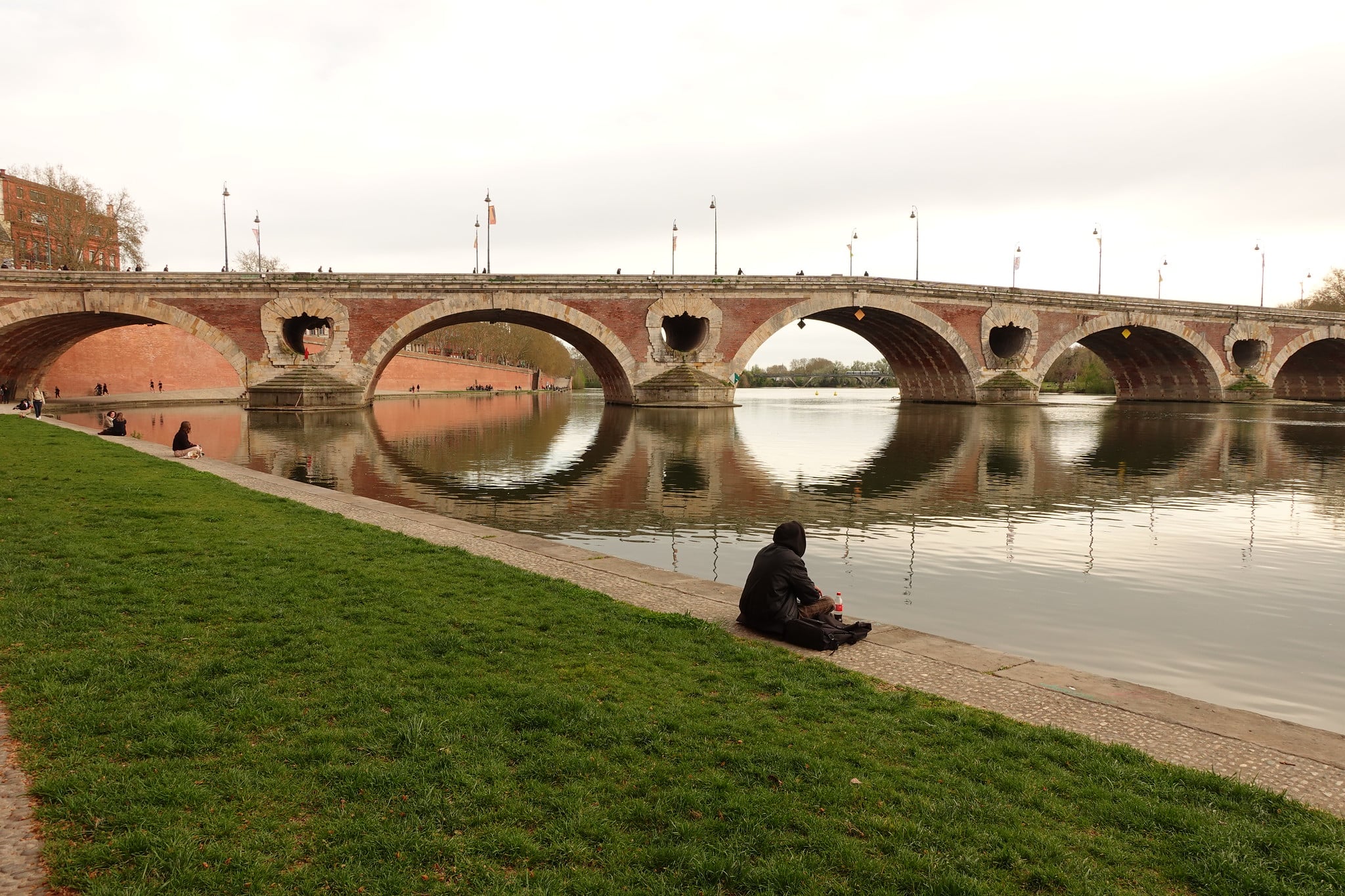
Completed in 1607, the Pont Neuf is the oldest standing bridge across the Seine in Paris, despite its name meaning New Bridge. It was one of the first Paris bridges built without houses along its sides.
Hundreds of carved stone faces line its arches, and cars and pedestrians still cross it daily.
Puente Nuevo, Ronda
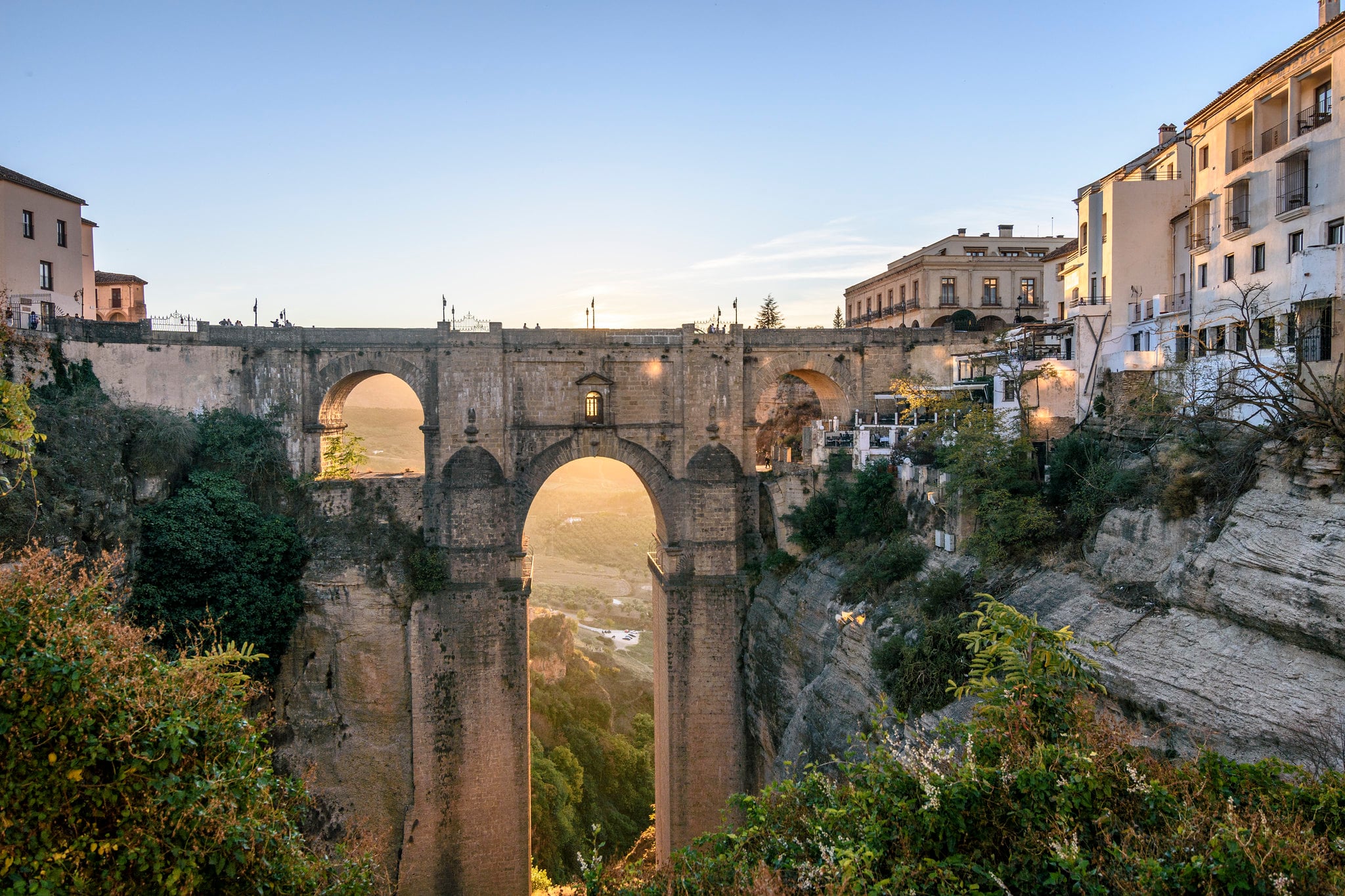
Finished in 1793, the Puente Nuevo spans a gorge about 120 meters deep in the Spanish town of Ronda. The bridge connects the old Moorish quarter with the newer part of the city.
A narrow room built into the structure once served as a prison.
Pont de Pierre, Bordeaux
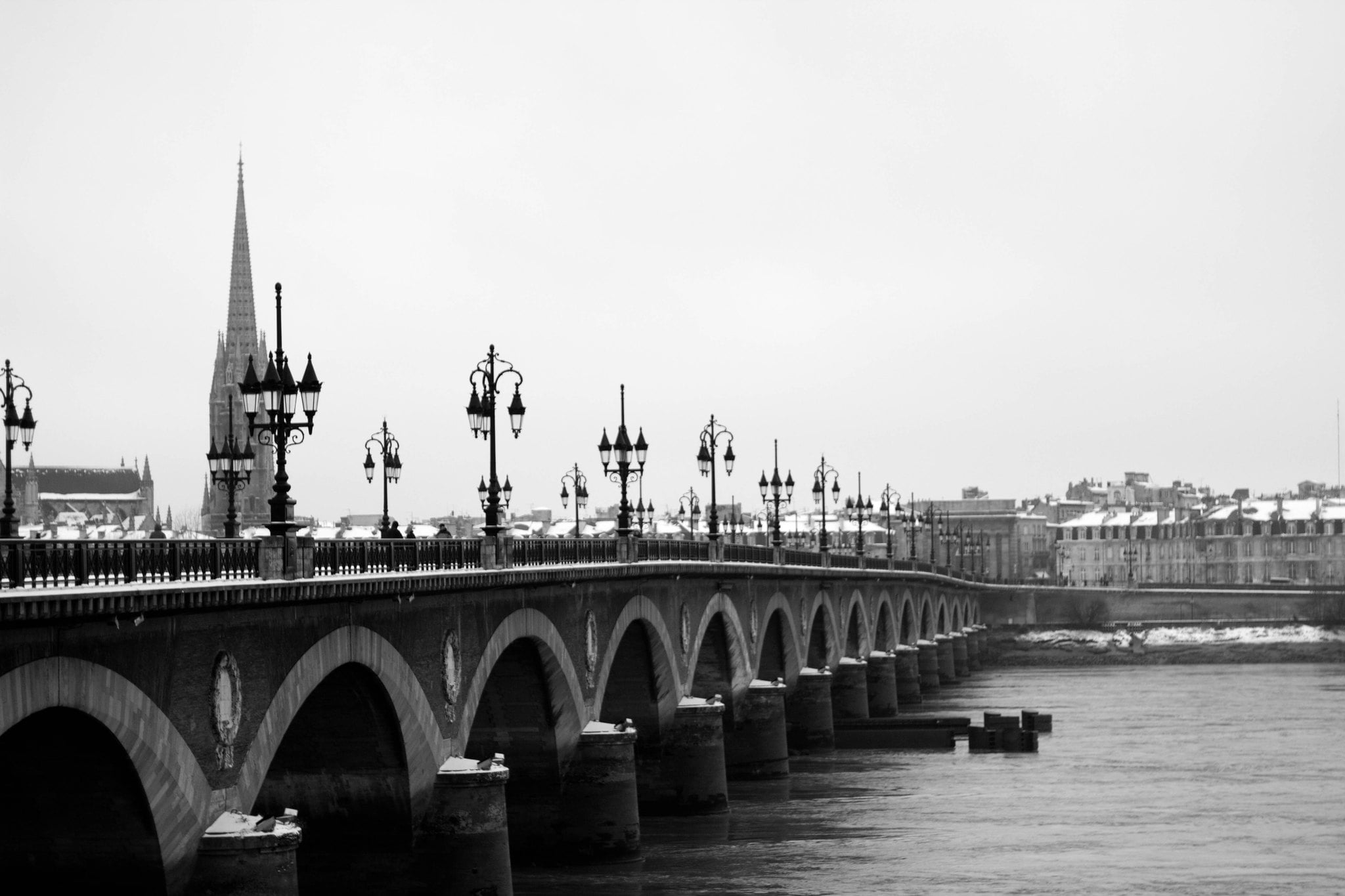
Opened in 1822, the Pont de Pierre crosses the Garonne River on seventeen arches. It was the first bridge to span the river in the city.
It carries road traffic and a tram line today.
Menai Suspension Bridge
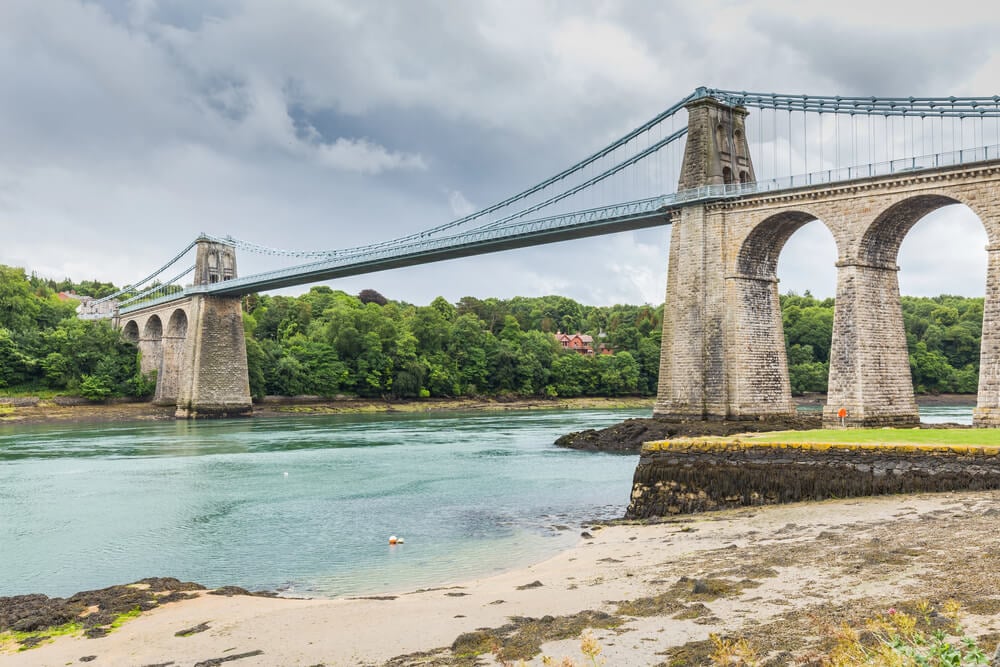
Thomas Telford’s bridge across the Menai Strait in Wales opened in January 1826, with a main span of 579 feet. It was the longest suspension bridge in the world at the time.
It connects the island of Anglesey to the mainland and still carries road traffic.
Chain Bridge, Budapest

Opened in 1849, the Chain Bridge was the first permanent crossing over the Danube in Budapest. German forces destroyed it in 1945, and it was rebuilt and reopened in 1949.
Cars and pedestrians cross it each day.
Wheeling Suspension Bridge
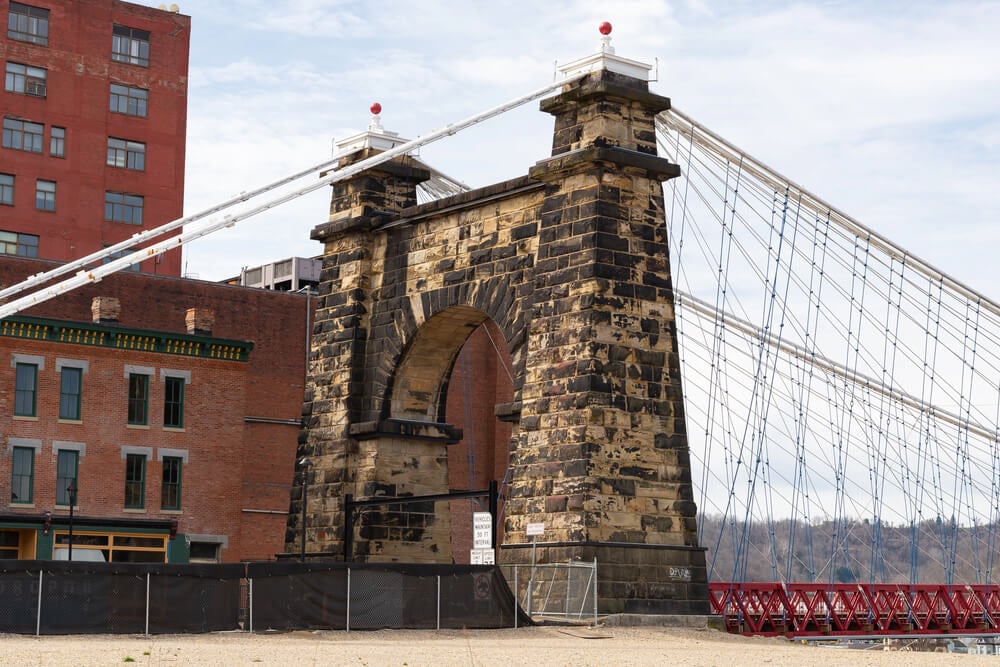
Charles Ellet Jr. built this bridge over the Ohio River in West Virginia, and it opened in 1849 with a span of 1,010 feet, the longest in the world at the time. A storm brought down the deck in 1854, and it was rebuilt.
It still carries light vehicles under a weight limit.
Clifton Suspension Bridge
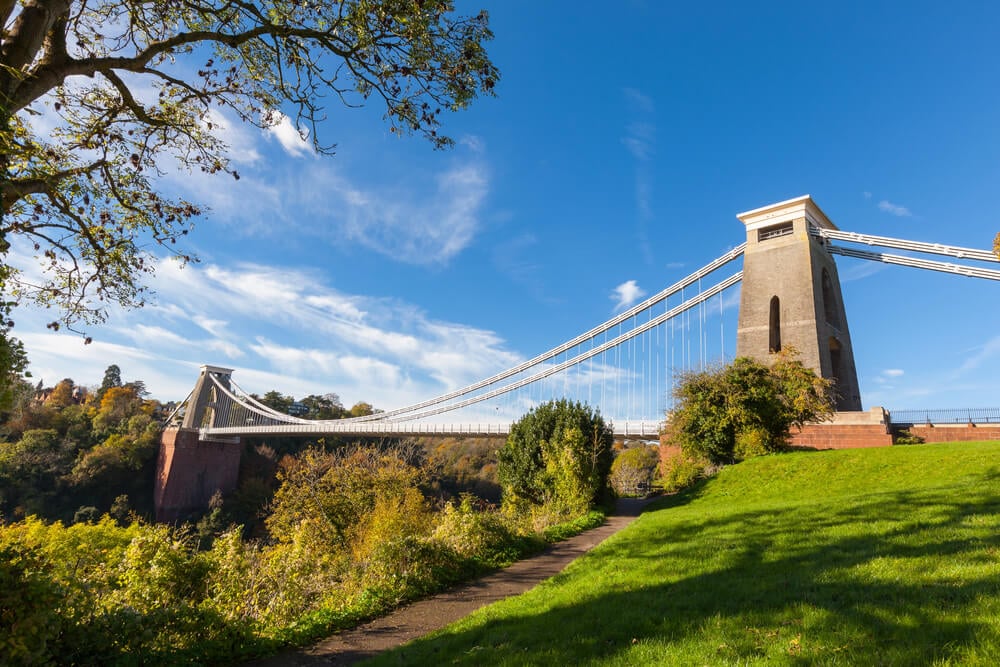
Isambard Kingdom Brunel designed the bridge over the Avon Gorge in Bristol, but it was completed in 1864, after his death. It sits about 75 meters above the river.
Drivers still cross it and pay a small toll.
John A. Roebling Suspension Bridge
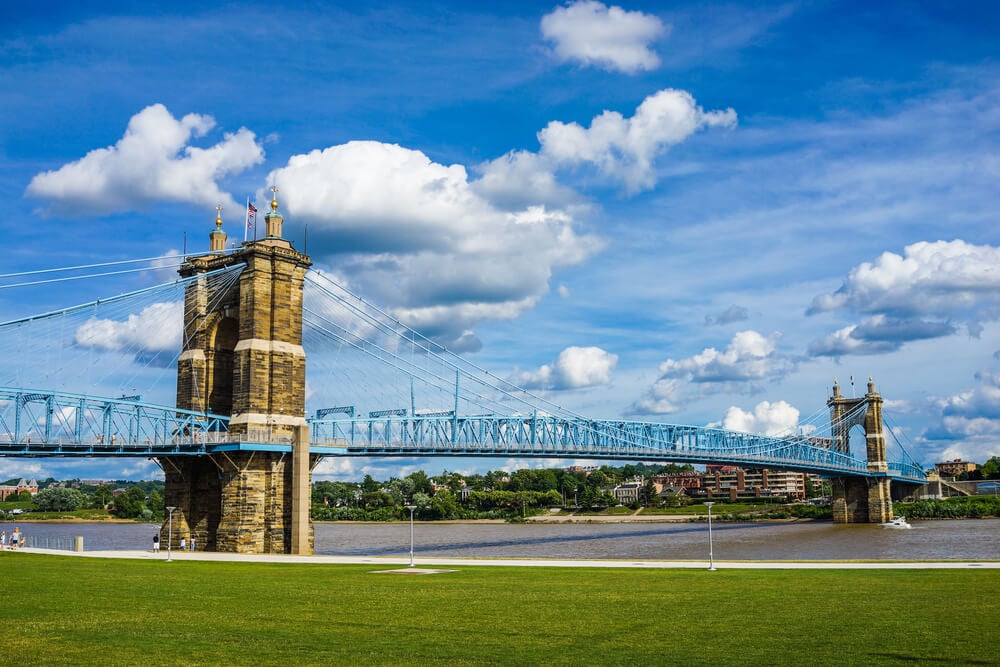
Opened in 1866 between Cincinnati and Covington, Kentucky, this bridge was the longest suspension span in the world at the time, at 1,057 feet. Its builder used many of the ideas he would apply to the Brooklyn Bridge.
It carries vehicles and pedestrians across the Ohio River.
Eads Bridge, St. Louis
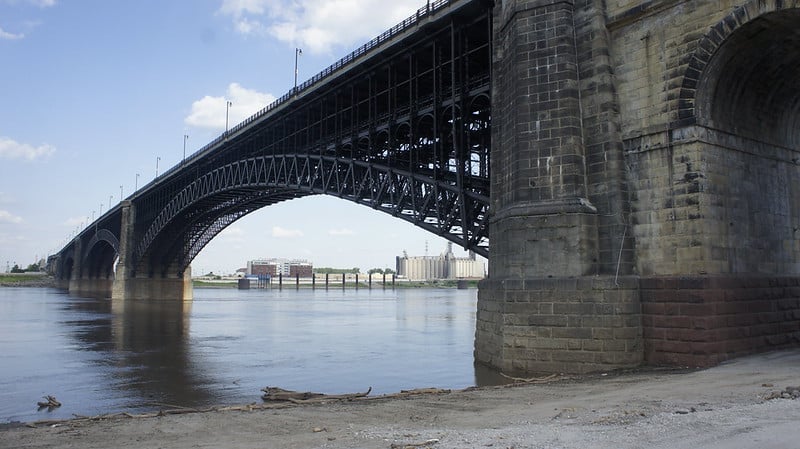
The Eads Bridge, completed in 1874, used steel in its arches in a major way and crossed the Mississippi at St. Louis. Skeptics doubted it would stand, so the builder had the first trains run across to test it.
It carries light rail trains and vehicles today.
Brooklyn Bridge

Opened in 1883, the Brooklyn Bridge carries traffic between Manhattan and Brooklyn. In 1884, the showman P. T. Barnum led twenty-one elephants across it to prove it was sturdy.
It still carries a heavy load of cars, cyclists, and walkers.
Forth Bridge
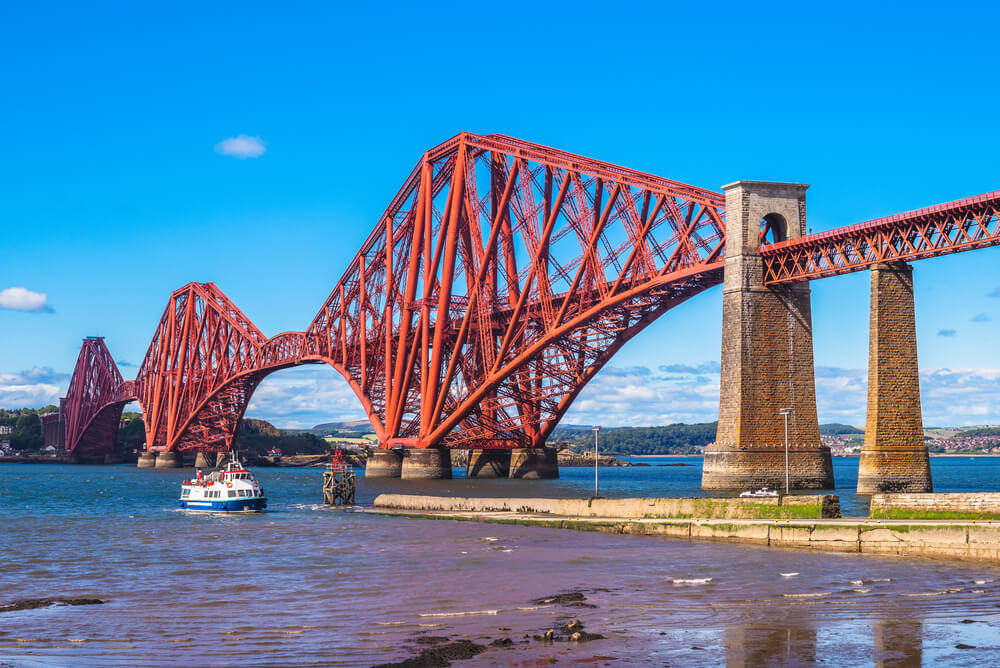
The Forth Bridge in Scotland opened in 1890 and carries railway traffic over the Firth of Forth with its distinctive cantilever design. It was named a UNESCO World Heritage Site in 2015.
The phrase painting the Forth Bridge came to mean a job that is never finished.
Tower Bridge
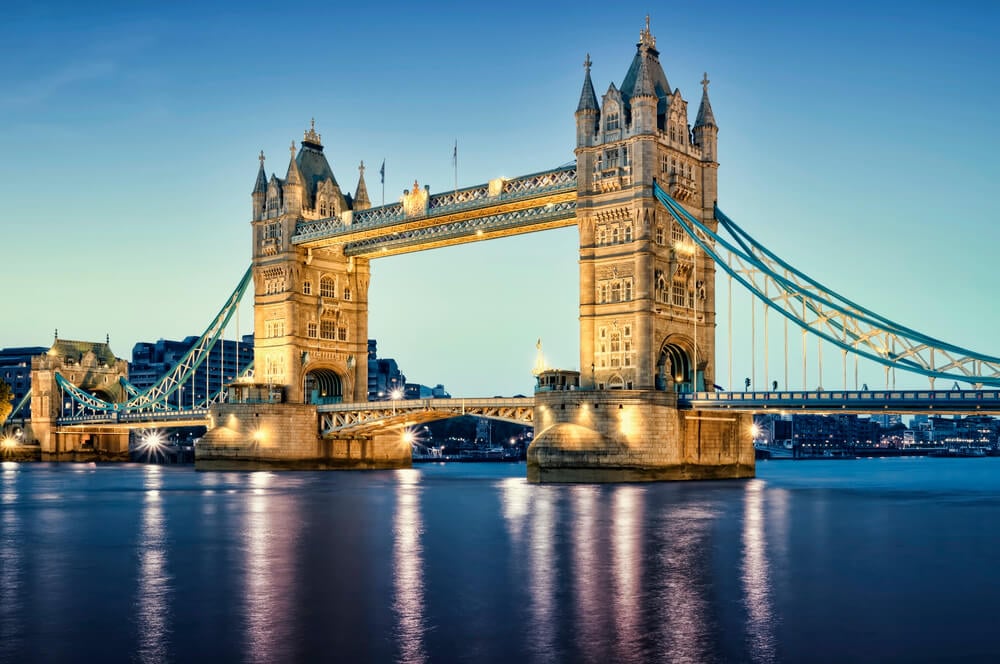
Opened in 1894, Tower Bridge crosses the Thames in London with a roadway that lifts for ships. In 1952, a bus driver named Albert Gunter faced a rising span and accelerated across the gap.
The bus landed safely, and the story is still told.
Pont Alexandre III
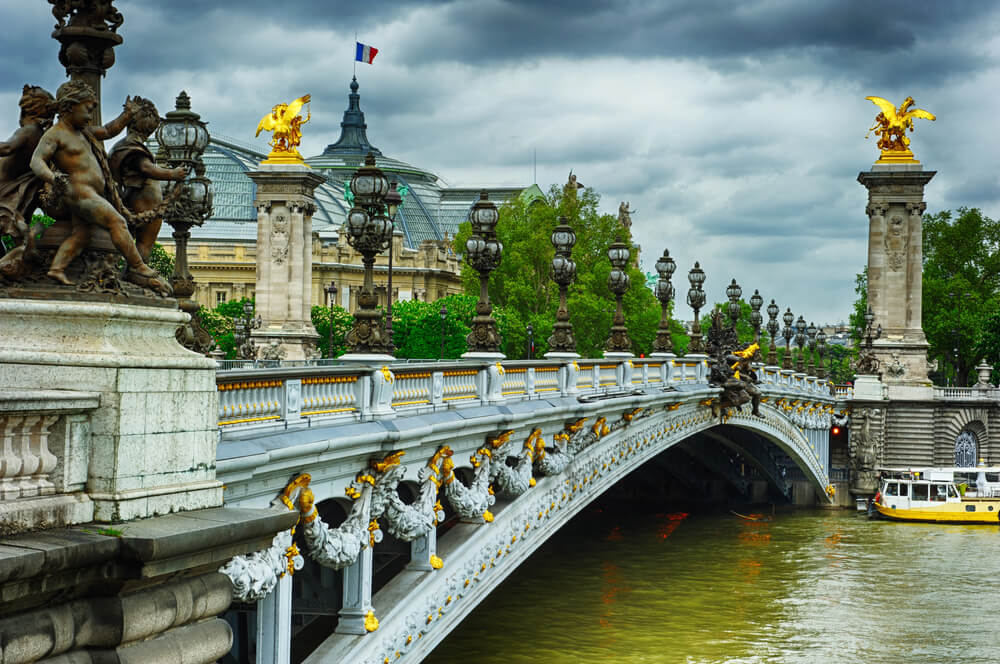
Built for the Exposition Universelle of 1900, the Pont Alexandre III spans the Seine in Paris with a single steel arch and gilded statues. It is named for the Russian emperor and marks the alliance between France and Russia.
Vehicles cross it every day.
The Quiet Argument for Overbuilding
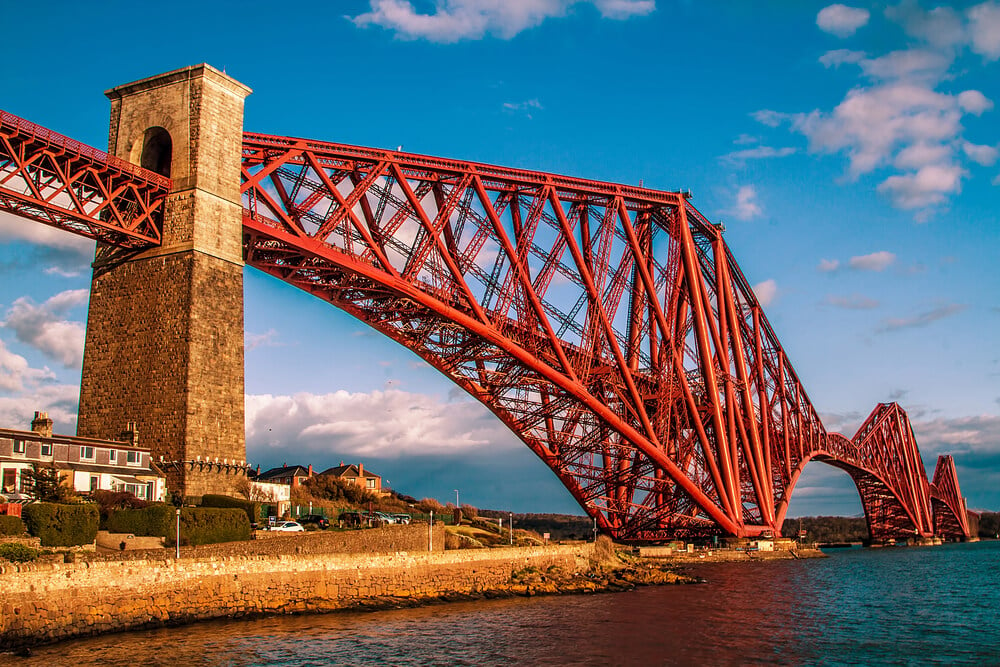
What these bridges share is not a style but an attitude: the engineers added more stone, iron, and steel than the loads of the day seemed to require. That extra margin is why they were able to take on far heavier traffic than their builders imagined.
The lesson is a plain one. Spending a little more at the beginning can buy a century or more of service, and the evidence is carrying a bus right now.
More from Go2Tutors!

- 27 Silver Dollars and Half Dollars Worth Keeping
- 28 Restaurant Menu Items Nobody Orders Anymore
- 17 Places Built in Seemingly Impossible Spots
- 27 Vintage Rings Worth More Than They Look
- 25 Restricted Sites Tourists Can’t Enter
Like Go2Tutors’s content? Follow us on MSN.