26 Gold Bracelets and Bangles From Estate Sales
Estate sale jewelry cases are a gamble. A tangle of tired chains can sit beside a signed bracelet from a Paris or Rome house, and the price tag rarely tells the difference. The people who do well are the ones who can read a hallmark, weigh a clasp in the hand, and recognize a design from across the room.
Gold bracelets reward that kind of attention more than almost anything else on the table. Some are worth little more than their metal, and some carry a maker premium that dwarfs the gold. Here are 26 types and named designs worth knowing before the doors open.
Cartier Love Bracelet
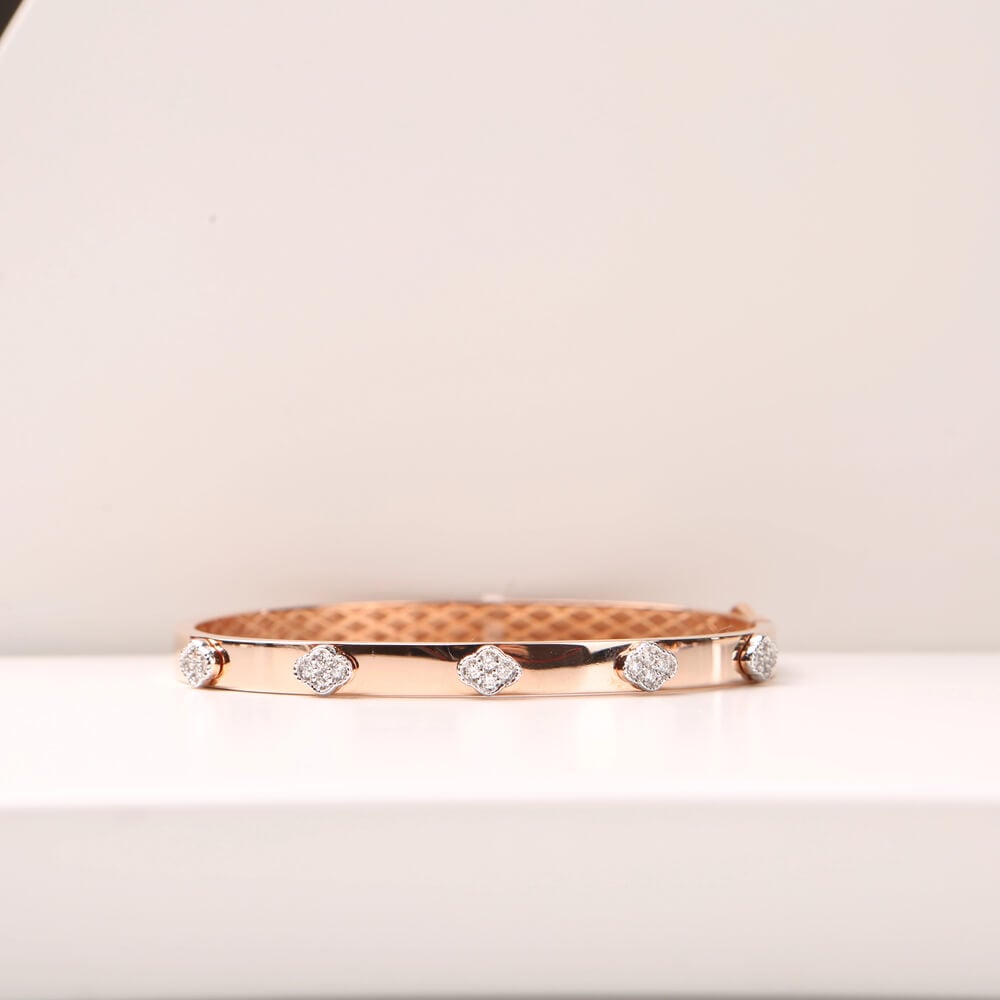
Aldo Cipullo designed the Love bracelet for Cartier in 1969, and its screw motifs and the screwdriver needed to close it have barely changed since. Real examples carry Cartier hallmarks, a serial number, and typically an 18k gold mark inside the band, which is where counterfeits tend to slip.
The screwdriver and original box matter to collectors, and so do deep scratches, dents, or a band that has been stretched or polished until the engraving softens. Even a worn Love bracelet is priced as a signed piece rather than as scrap, but condition and completeness still decide how far above the gold value it climbs.
Cartier Juste un Clou
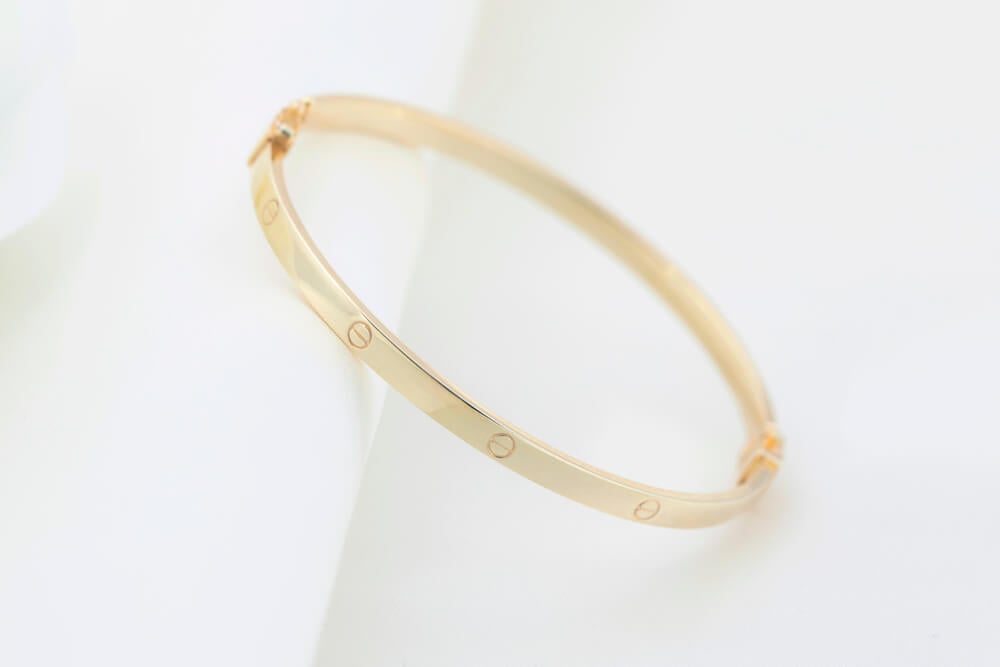
Cipullo followed the Love bracelet with the Juste un Clou, a gold band shaped like a bent nail, which Cartier introduced in the early 1970s. The look is deliberately industrial, with a pointed head and a tapering shank that wraps the wrist.
Vintage examples show up in yellow, rose, and white gold, and a bent or twisted nail that has been forced back into shape can lower the price. Buyers pay more for crisp, unpolished edges and for the original Cartier pouch or box than for a bracelet that has lost its sharpness to years of cleaning.
Cartier Trinity Rolling Bracelet
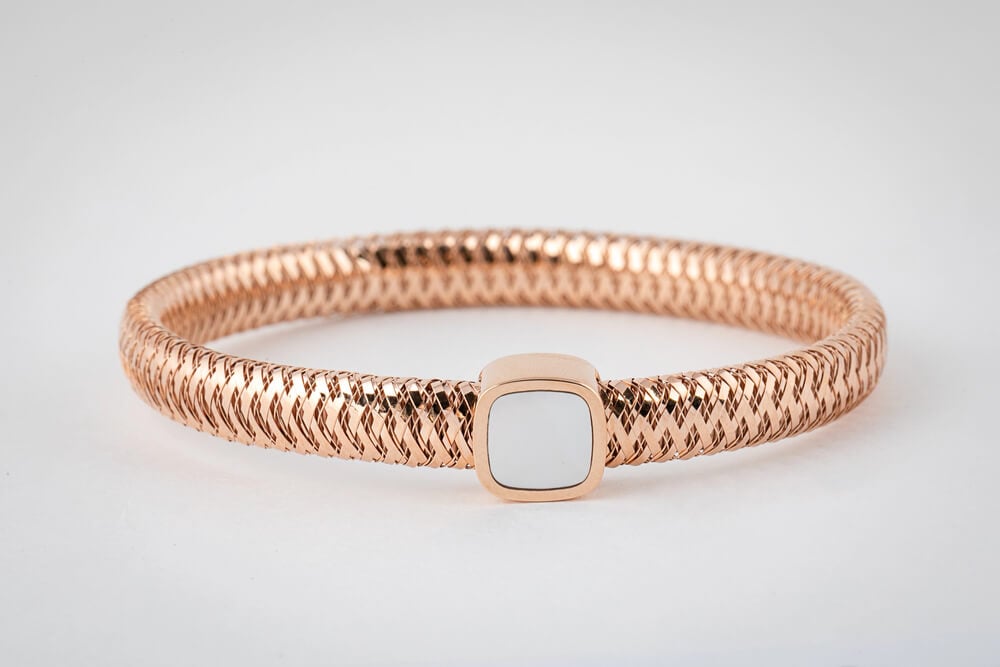
The Trinity design dates to 1924, when Louis Cartier combined bands of yellow, white, and rose gold into interlocking rings that spin freely around one another. Estate versions range from slim three-band bracelets to wide stacks of several bands, and the best ones turn smoothly without a hint of grinding. Dents, a flattened band, or a clasp that no longer closes cleanly will cost the seller, since the rolling motion shows every flaw.
A signed piece with its papers and case is worth noticeably more than the same bracelet arriving alone in a sandwich bag.
Bulgari Tubogas
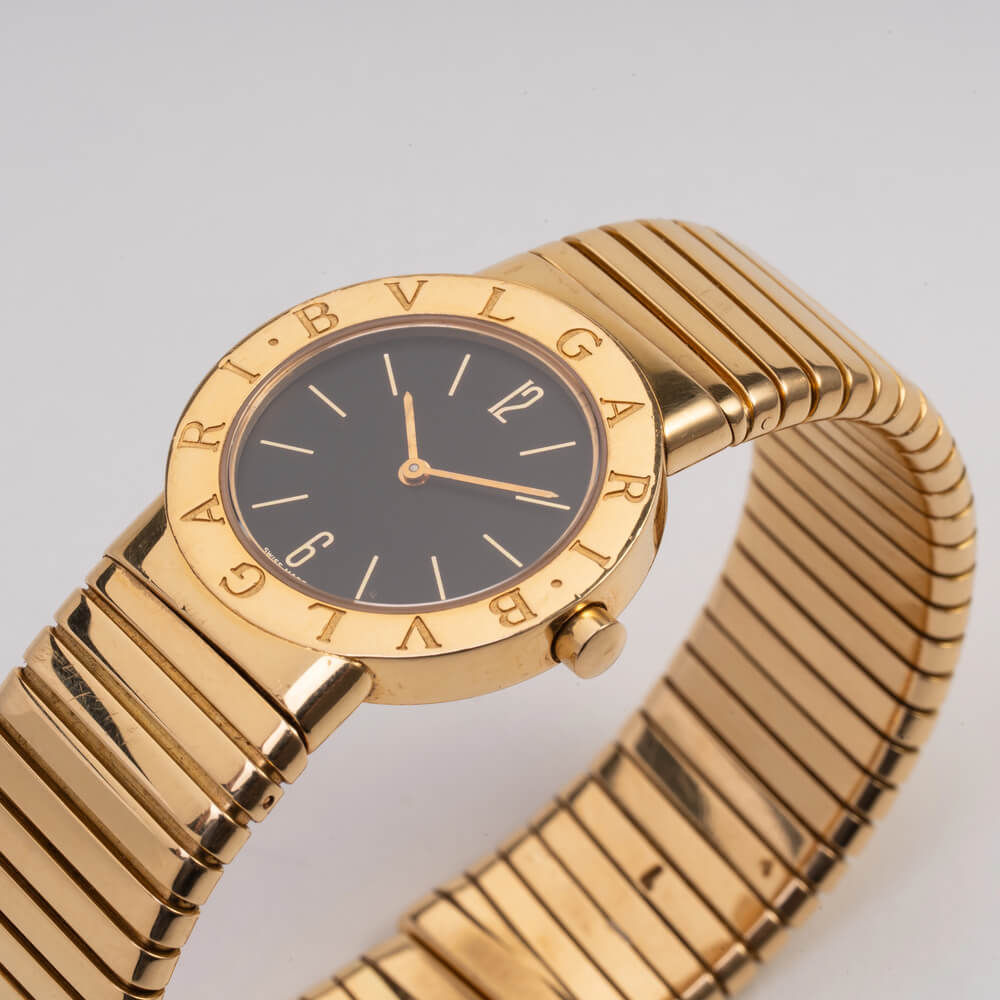
Bulgari took its name for this style from the gas pipe it resembles, a flexible tube of coiled gold strip with a smooth, almost liquid surface that rose to fame in the 1940s. The technique wraps the metal into a continuous spiral, so there are no visible links to catch on a sleeve.
Estate sale examples can be signed on the clasp or inside the band, and unsigned imitations in the same style are common, so the signature drives most of the premium. A dented or crushed section is difficult to fix, and buyers discount hard for coils that have been flattened or stretched.
Bulgari Parentesi
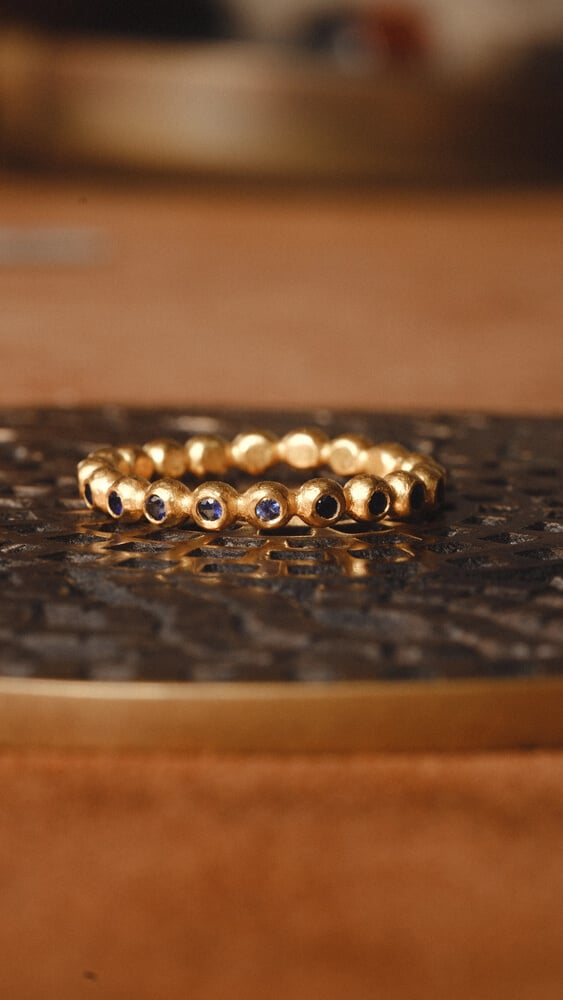
Parentesi is Italian for parenthesis, and the Bulgari bracelets of this name use a repeating geometric cut that gives the surface a pattern of clean-edged segments. Vintage versions turn up in 18k gold, some mixed with steel and some set with diamonds, and the 1980s examples are the ones collectors chase.
Because the design relies on crisp geometry, polishing that rounds the edges hurts the look and the price. A bracelet with its original Bulgari box and a clasp that still snaps firmly shut commands a better premium than a loose, scuffed one.
Van Cleef & Arpels Vintage Alhambra
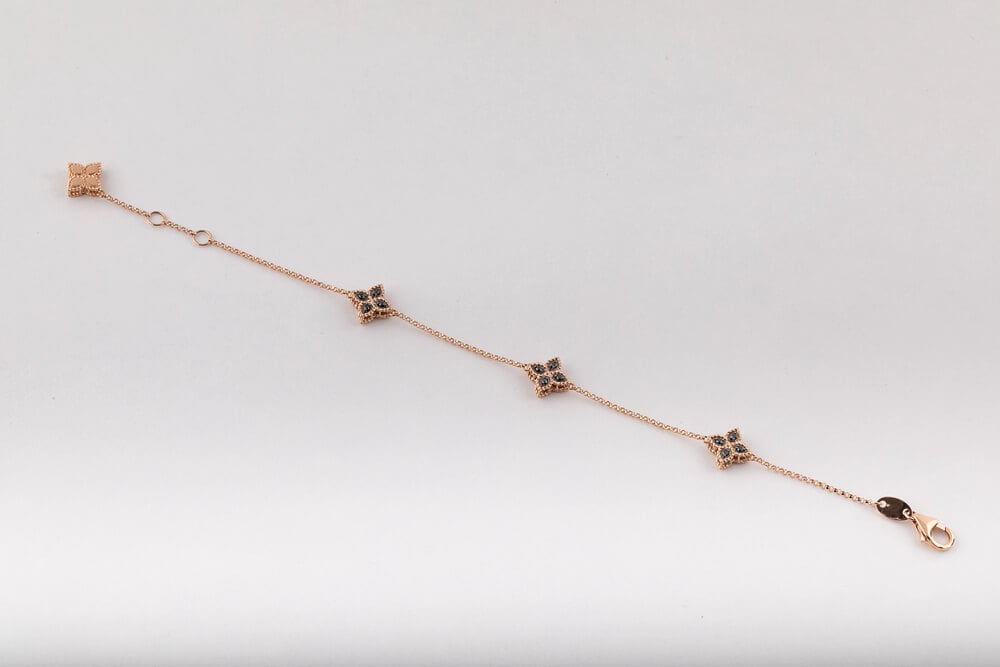
The Alhambra clover-shaped motif debuted at Van Cleef & Arpels in 1968, and the five-motif bracelet in 18k yellow gold with a beaded edge is the version most often seen on resale sites. Each motif is a quatrefoil with a border of tiny gold beads, and the beading flattens and wears away on pieces that were polished too many times.
The maker premium on a genuine example is steep compared with its gold weight, so a signature and serial number on the clasp are worth checking under a loupe. Complete sets of papers and the original pouch lift the value, while a bent link or a stone that has fallen out of an onyx or mother-of-pearl motif pulls it down.
Van Cleef & Arpels Hammered Manchette Cuff
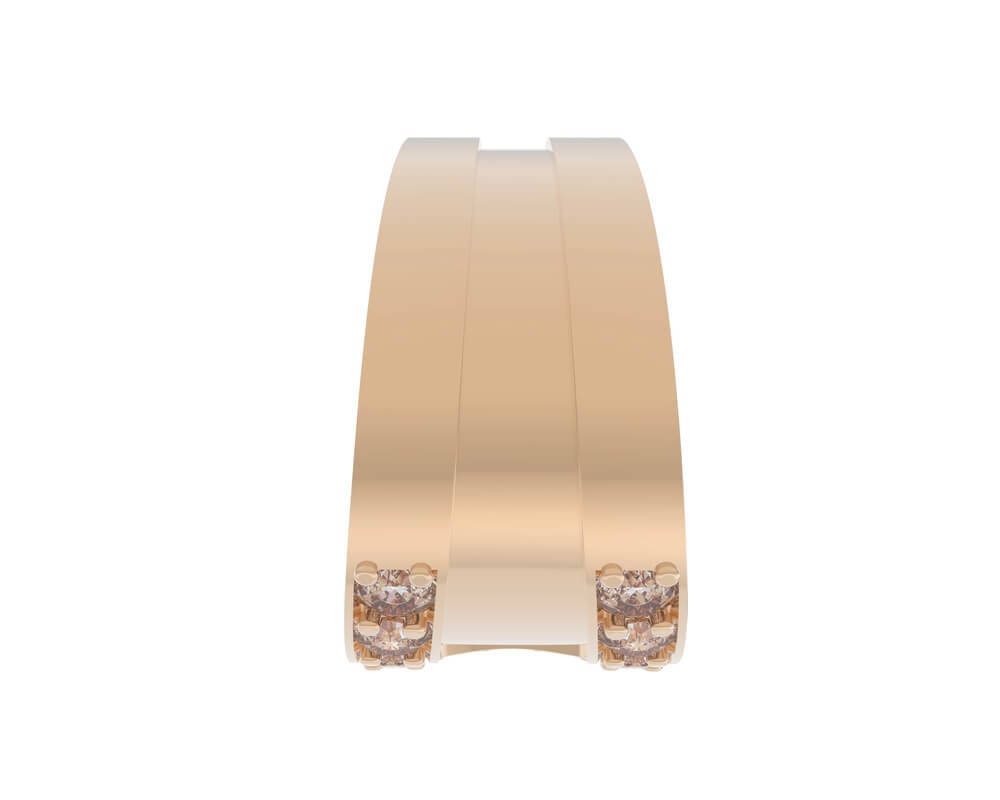
Van Cleef & Arpels made a wide, heavy cuff with a hammered finish in 18k gold, and one dealer listing for an example weighed about 160 grams. At that weight the metal alone is a serious amount of value, which makes it one of the rare bracelets where the gold content and the maker premium both matter.
The hammered texture hides small scratches well, but dents in the cuff and a distorted opening are harder to disguise. Buyers look for a clean signature and a cuff that still holds its shape without having been squeezed onto a wrist.
Hermès Chaîne d’Ancre
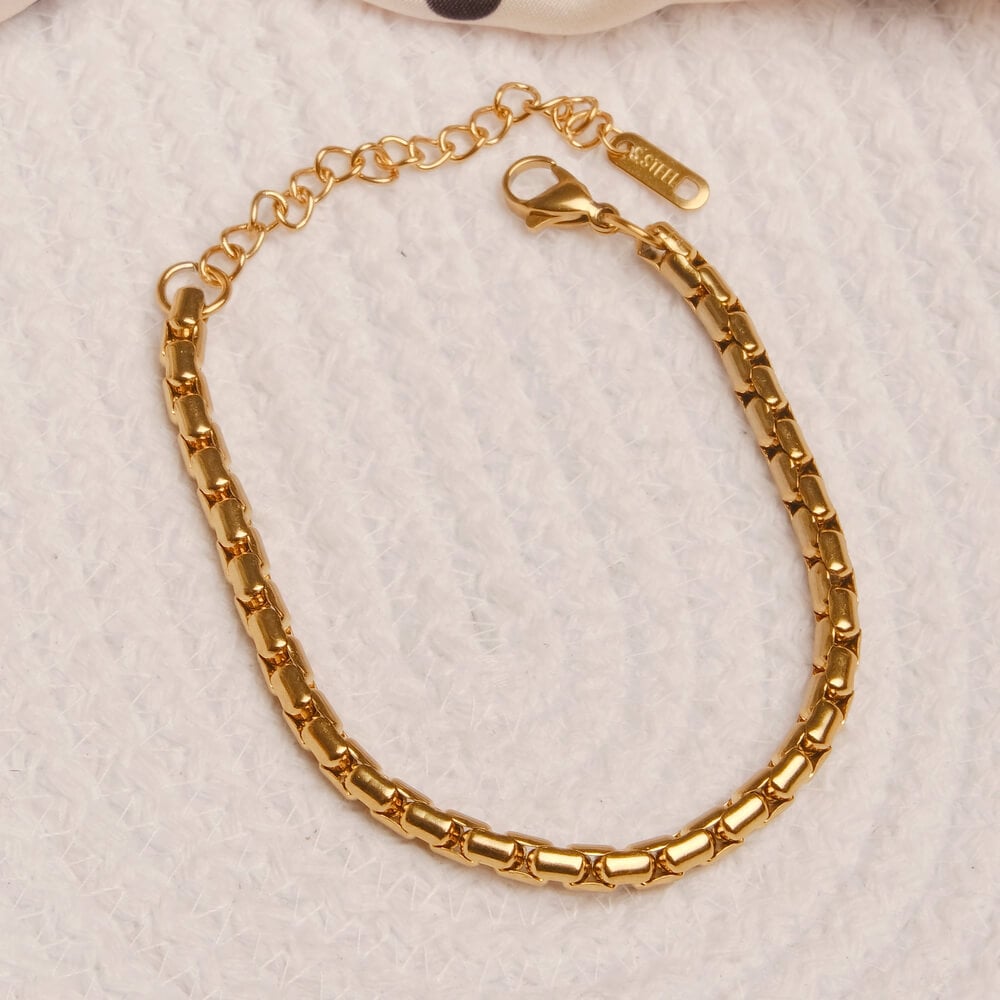
Hermès drew on an anchor chain for this design, which has been a house signature since its early years and appears in vintage 18k gold bracelets from the 1960s. The links are flat and elongated, with a bar across the center like the stud in a ship’s chain.
Older gold versions carry Hermès hallmarks and a number, and fakes in silver or gilt metal circulate widely, so the karat stamp is the first thing to check. Links that have stretched or twisted, a worn clasp, or a missing box reduce the price compared with a tight, matching example.
Gucci Horsebit Link Bracelet
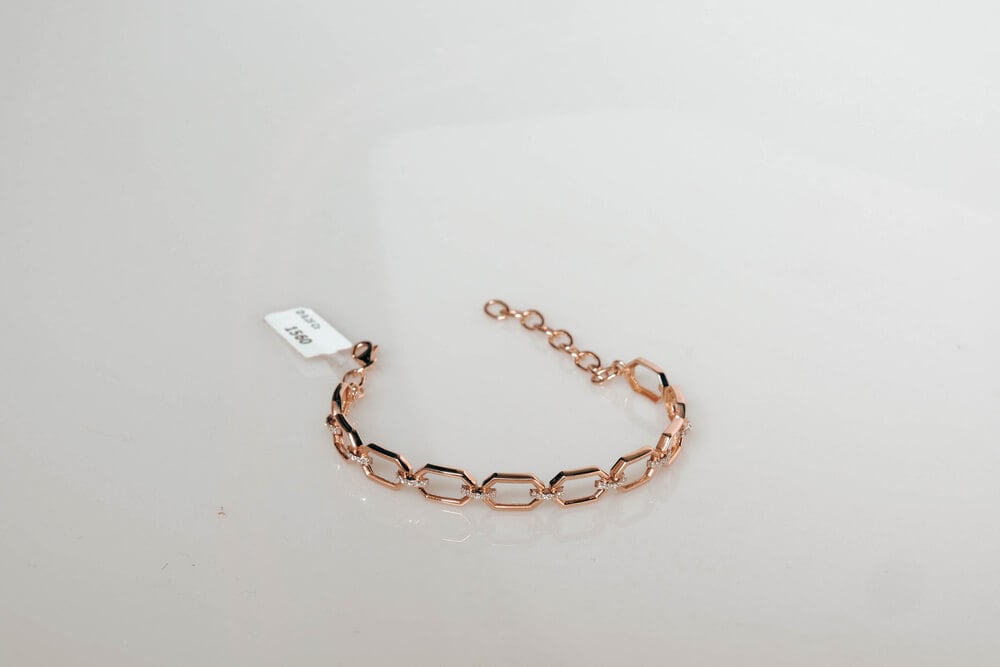
Gucci borrowed the horsebit from equestrian tack and used it as a house emblem, and vintage 18k gold link bracelets built from the shape are a staple of estate jewelry cases. Rose gold and yellow gold versions both appear, and the heavier chain links give the bracelet noticeable weight in the hand. Gold weight sets a floor under the price, but the Gucci name adds a premium that depends on the signature being legible and the links being uniform.
A bracelet with kinked links, a weak clasp, or a missing safety catch sells for less than a tidy example with its box.
Tiffany Elsa Peretti Gold Bangle
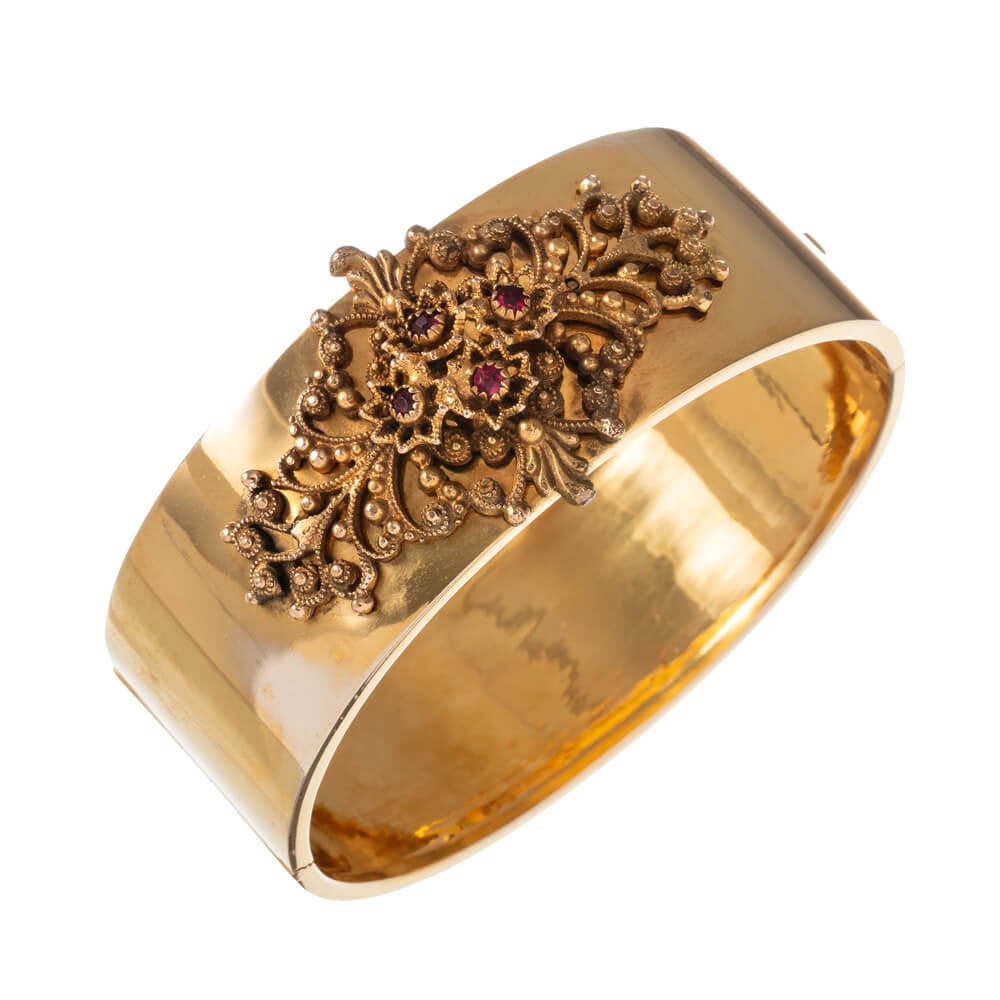
Elsa Peretti began designing for Tiffany & Co. in the 1970s, and her bangles in 18k gold are recognized for their smooth, sculptural, almost pebble-like forms. Pieces carry the Tiffany name, the Peretti signature, and a 750 mark for 18k gold, and the marks sit inside the band.
Because the surfaces are plain and glossy, dents and scratches show clearly, and a bangle that has been bent out of round is an obvious discount. The original blue pouch or box, along with minimal wear, helps a bangle sell closer to the top of the range.
Tiffany Paloma Picasso Gold Bangle
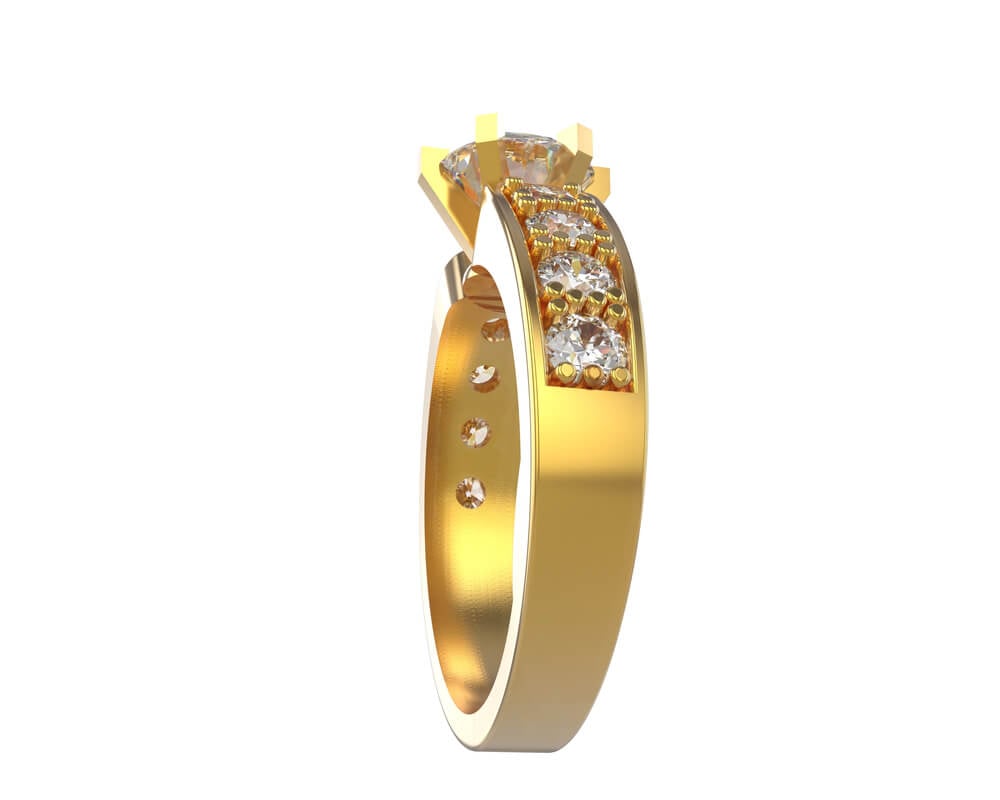
Paloma Picasso began her work for Tiffany in 1980, and her gold bangles, including open-worked and leaf-patterned versions, are some of the most distinctive pieces the company ever sold. Each is marked with her name, the Tiffany name, and the gold content, and the designs are bold enough to read from across a room.
Some are set with diamonds while others are plain gold, and the stone-set examples depend on tight settings and unchipped gemstones. The heavy open designs are vulnerable to bending, so a bangle that has kept its original shape sells better than one that has been squeezed.
Buccellati Engraved and Woven Gold Bracelets
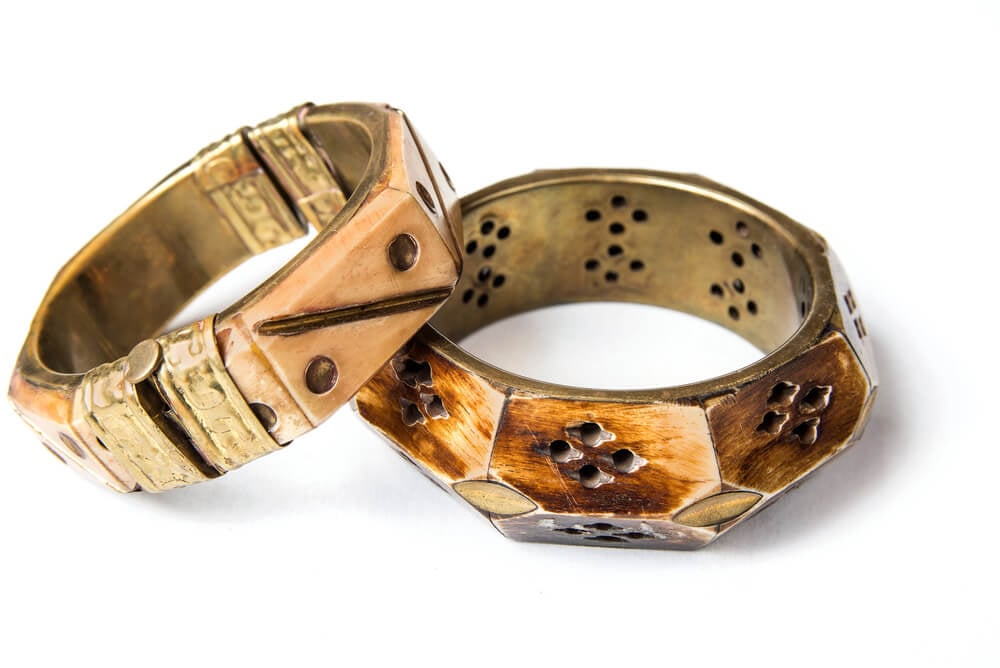
Mario Buccellati founded his Milan house in 1919, and the family later became known for engraved and textured gold work in styles like rigato, which uses fine parallel lines, and telato, which looks like woven fabric. Vintage bracelets signed Buccellati, some dating to the 1950s and 1960s, are made of 18k gold and show hand-engraved detail that sets them apart from machine work.
The signature is a major driver of the price, so a clear mark inside the clasp is important. Engraving that has been polished away, repairs with visible solder, or a clasp that has been replaced all reduce the value.
Georgian Gold and Gemstone Bracelets
Georgian jewelry covers the period roughly between 1714 and 1837, and gold bracelets from the era often feature garnets, pink topaz, or a hand-shaped clasp around the wrist. Many were made from low-karat gold or gold backed on silver, and their handwork gives them a softness that later machine-made pieces lack.
They are rare at estate sales and often wrongly labeled as later pieces, so seeing one is a lucky break. Original foil-backed stones, intact catches, and old repairs done in period style all matter, since condition at this age affects the price more than almost any other factor.
Victorian Hinged Gold Bangles
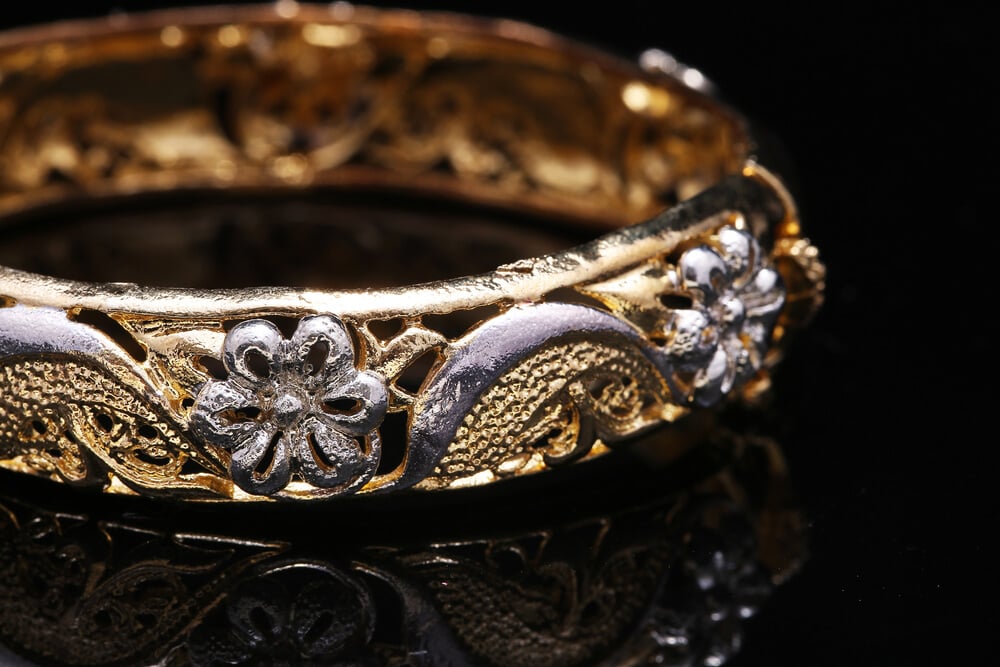
A hinged bangle opens along a side hinge and closes with a hidden pin and a safety chain, and British examples from the Victorian era are often stamped 9ct, 15ct, or 18ct with a date letter. The 15ct standard, marked 625, was used in Britain until 1932 and gives antique bangles a slightly warmer color than modern gold.
Many are plain and engraved, while others hold diamonds, rubies, or seed pearls, and a bangle that is still round and snaps shut cleanly is worth more than one with a wobbly hinge. Dents, thin worn spots, and later solder repairs are the usual faults to look for.
Victorian Coiled Snake Bracelets
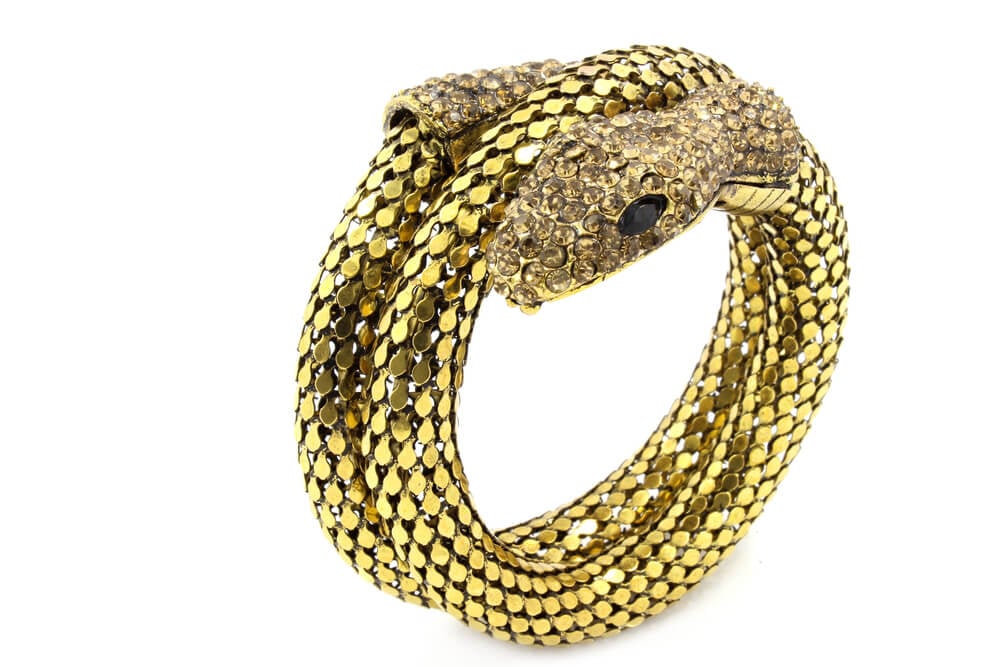
The serpent became a Victorian favorite after Queen Victoria received a snake ring from Prince Albert at their 1839 engagement, and coiled snake bracelets in gold followed in large numbers. The best have a flexible woven body that wraps the wrist several times, with a head that can be set with garnets, rubies, or diamonds. Many were finished with enamel, and the enamel is the first thing to chip or vanish with age.
A snake with an intact head, firm scales, and no stretched body sells for more than one with missing stones or a loose, sagging coil.
Victorian Gate Bracelets With Heart Padlocks
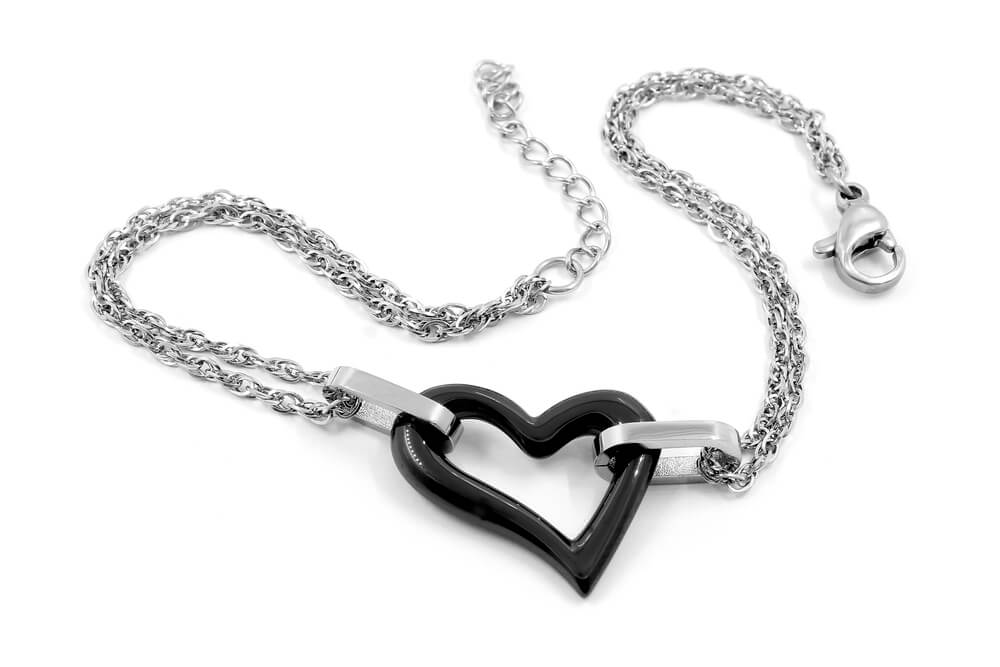
A gate bracelet is built from a chain of curb links with a small heart-shaped padlock as its clasp, and many antique versions in 9ct and 15ct gold survive from around 1900. The padlock often closes with a tiny key mechanism or a spring, and a working lock with a safety chain adds value.
Some were later hung with charms, and a bracelet that has kept its original padlock is easier to sell than one fitted with a replacement. Stretched links, worn solder joints, and a padlock that no longer locks all lower the price.
Etruscan Revival Gold Bracelets
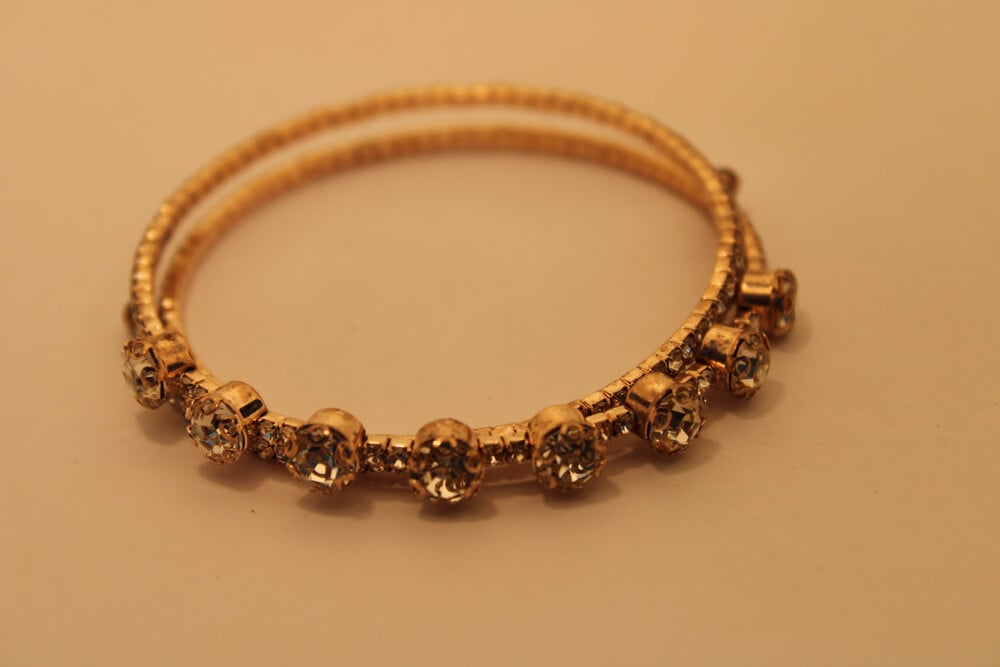
Etruscan Revival jewelry grew out of 19th-century fascination with ancient excavations, and the Castellani workshop in Rome became its best-known maker. The look relies on granulation, in which tiny gold beads are fused to the surface, and on wire filigree that imitates ancient techniques.
Estate pieces include hinged bangles in 15ct gold, such as one Chester-hallmarked example from 1867, and the best have crisp, even granulation. Crushed decoration, missing granules, and clumsy solder repairs are the main condition problems, and a signed Castellani piece is far rarer and costlier than an unsigned imitation.
Edwardian 15ct Gold Bangles
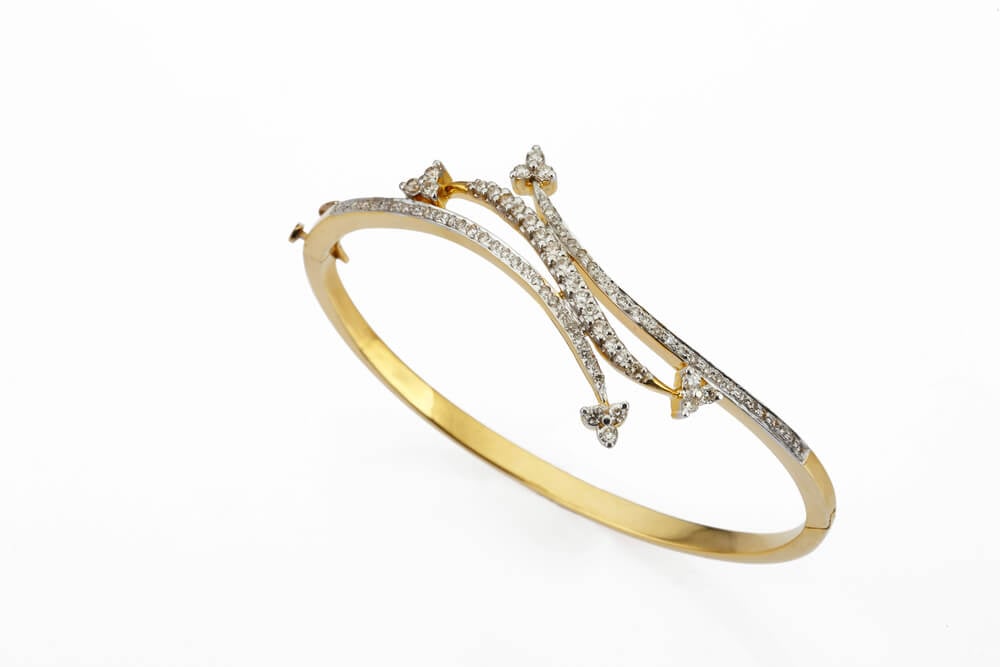
Edwardian bangles from the early 1900s were often made in 15ct gold, and many are set with split pearls, small sapphires, or old-cut diamonds in dainty patterns. British hallmarks include a date letter, and one Edwardian example in a dealer listing was hallmarked in Chester in 1907.
The thinness of these bangles makes them fragile, and dents, repairs, and loose settings are common. Pearls that have lost their luster or fallen out reduce the price, while an unrestored bangle with matching stones and a smooth hinge is the one buyers hope to find.
Art Deco Platinum and Gold Link Bracelets
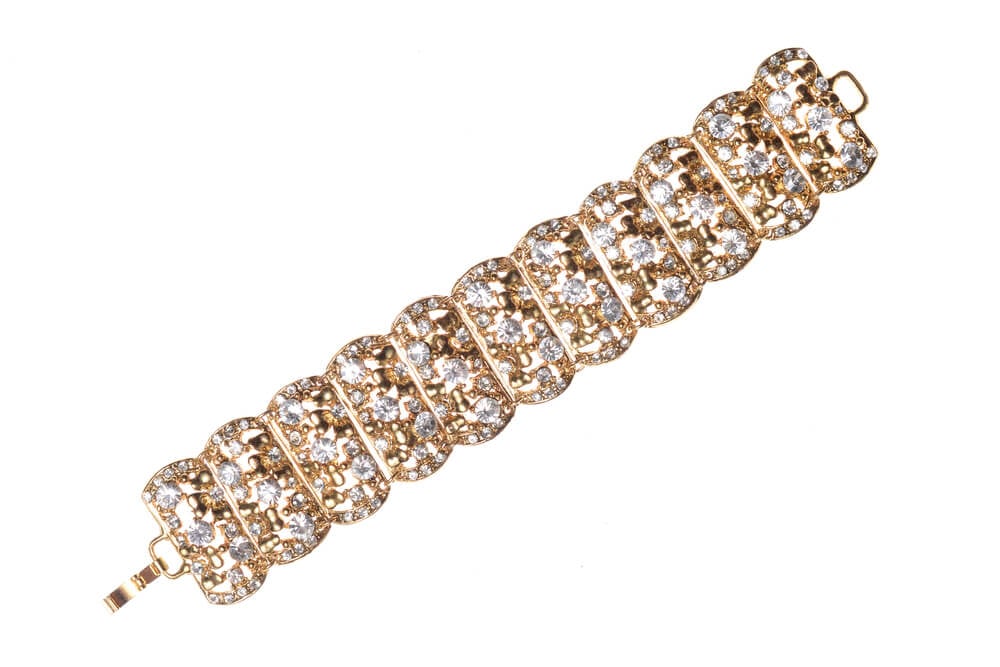
Art Deco bracelets from the 1920s and 1930s mix platinum with 14k or 18k gold in geometric links, and some have small diamonds or sapphires set into the pattern. The combination of metals is deliberate, since platinum gives strength where the design is delicate and gold adds warmth.
Hallmarks and metal tests are crucial because the white metal may be platinum, white gold, or silver. Bracelets with worn hinges, replaced links, or gaps in the stone setting lose value, while tight, unaltered ones with original catches bring the best prices.
Retro Tank Track Bracelets
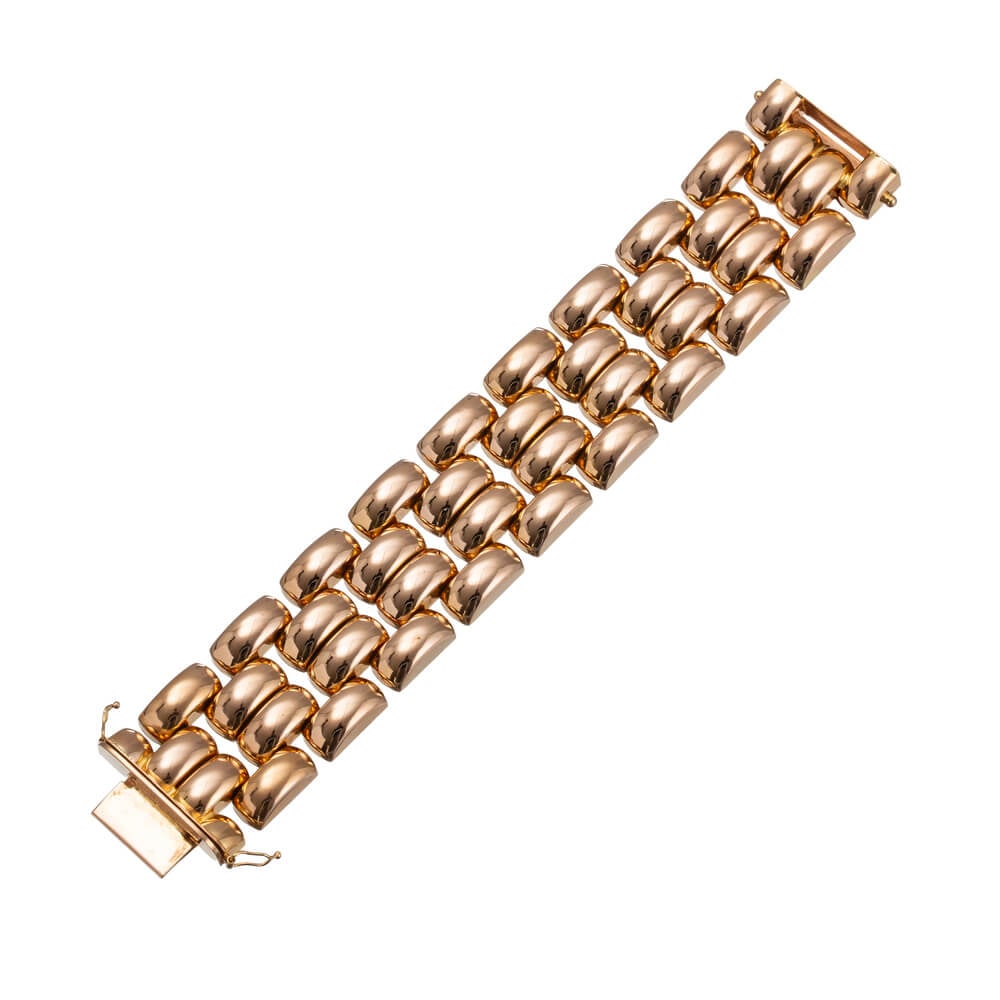
Retro jewelry from the 1940s favored bold, chunky gold, and tank track bracelets, which resemble the treads on a military vehicle, are among its defining shapes. Many are in 14k or 18k gold, often with rose gold accents, and even Tiffany & Co. made one in the style.
The links are heavy and flexible, which gives these bracelets considerable weight and a strong scrap floor. Stretched links, worn hinges, and clasps that no longer lock tightly affect the price, as do older solder repairs that stand out against the original work.
Italian 14k Herringbone Bracelets
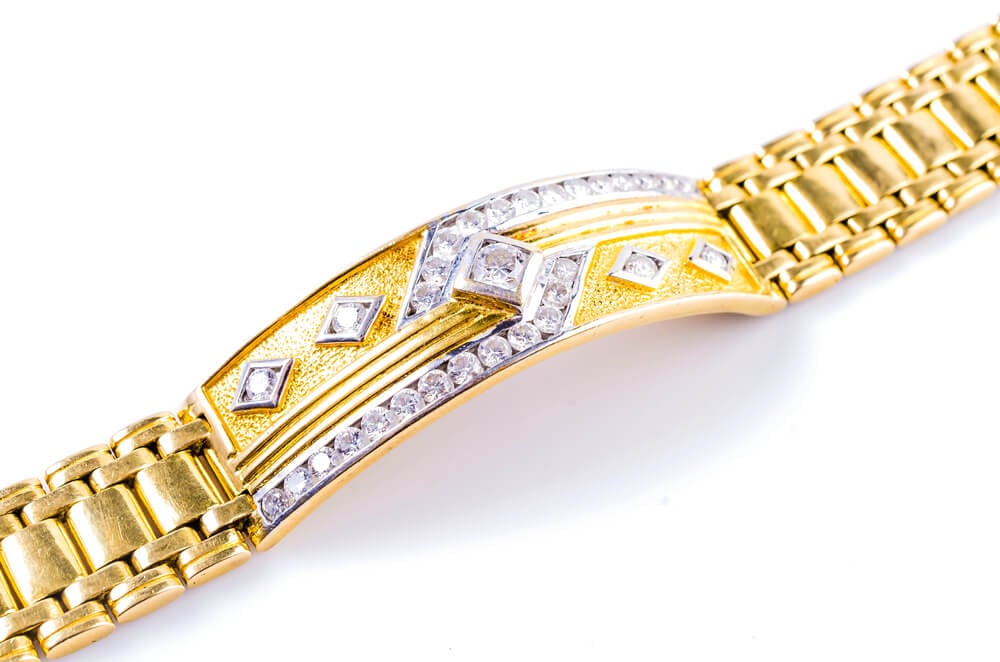
Herringbone chain is a flat, tightly packed chain with a V-shaped pattern that lies like a ribbon against the skin. Italian examples in 14k gold, often marked 585 along with the maker’s initials, appear regularly at estate sales, and some are graduated so the chain widens toward the center.
The value is largely weight, but kinks are the dealbreaker, because a kinked herringbone chain can almost never be repaired smoothly. A bracelet that lies flat and reflects light evenly sells above one that has been crimped, creased, or stretched.
Byzantine Chain Bracelets
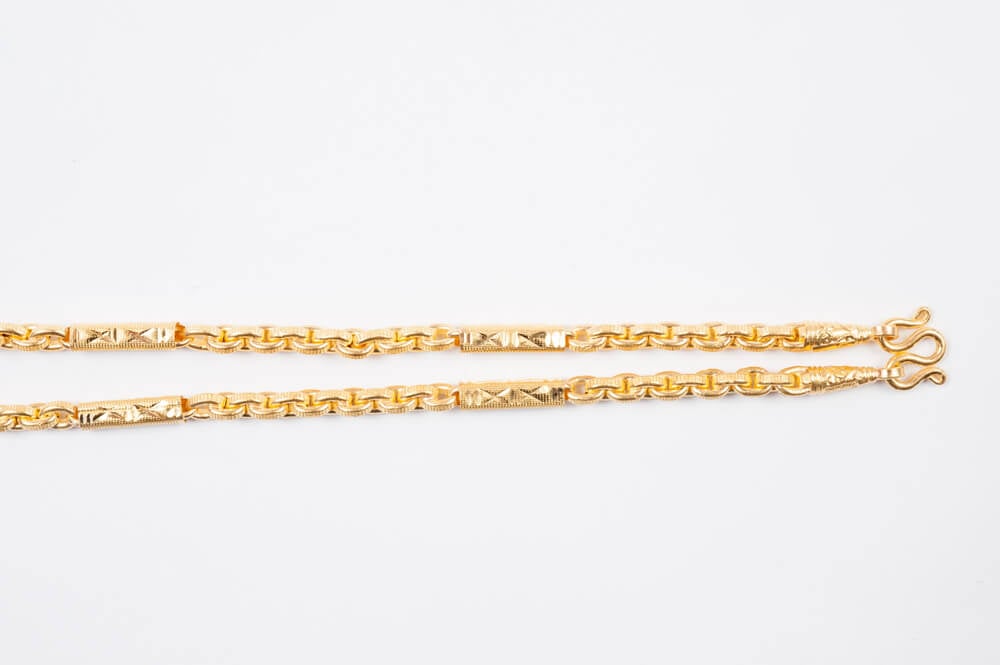
Byzantine chain is a dense, rope-like pattern in which the links are woven together in a repeating box formation, and it shows up often in Italian 14k gold bracelets. The chain has a thick, jewel-like look and a good deal of heft, so wide versions can carry real value in gold alone.
Look for a stamped karat mark near the clasp, and check that the weave has not loosened or twisted. A bracelet whose pattern has gaps, a crushed section, or a failing clasp is worth less than one that moves smoothly and holds its shape.
Bismark Woven Gold Bracelets
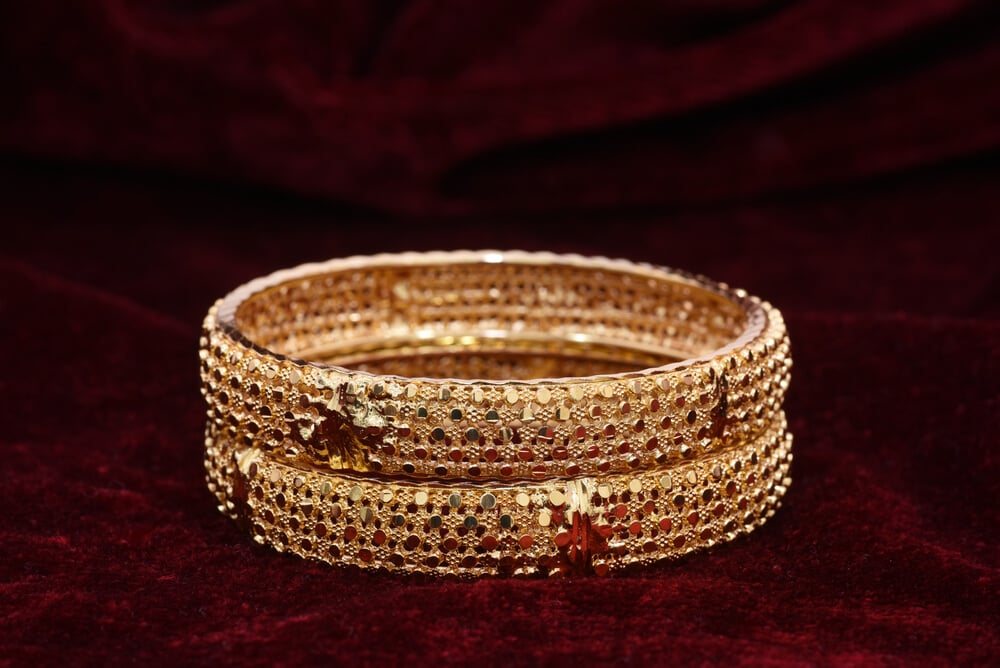
Bismark is a heavy woven pattern, often found in vintage Italian bracelets in 14k and 18k gold, and the links interlock densely enough that the chain feels almost like fabric. The pattern can be stamped inside the clasp along with a karat mark and sometimes a maker’s initials.
A tight, supple weave is a sign of quality, while bracelets with stiff sections often have damage inside the links that is hard to see. Dents, a clasp that no longer closes firmly, and visible repairs all reduce the price, and the gold weight sets the floor.
Gold Mesh and Milanese Bracelets
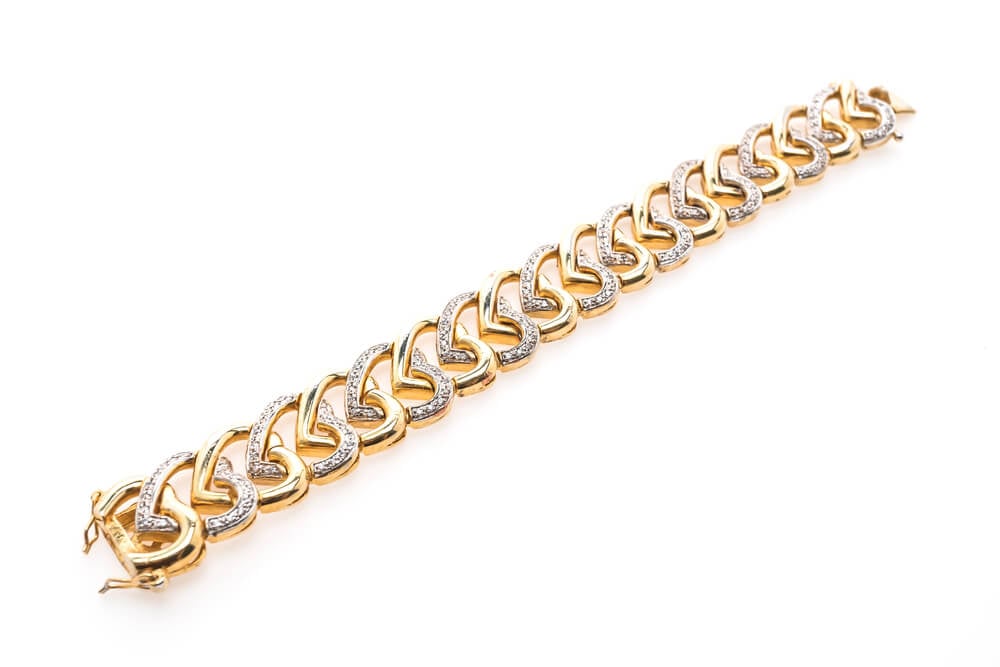
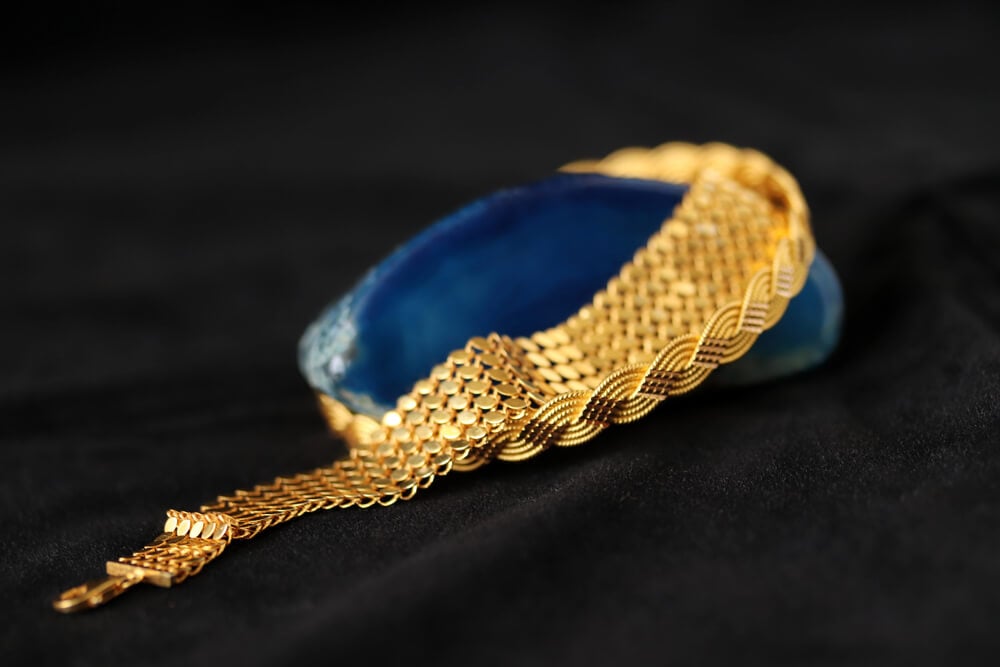
Mesh bracelets are made from fine woven bands of gold that form a flexible ribbon, and the Milanese style uses braided rows to create a smooth, textured surface. Italian examples in 18k gold from the 1960s often have a decorative clasp, and some are two-tone, mixing yellow and white metal.
Because the mesh is so fine, a single crushed section or snag can ruin the look, and repairs are expensive. Buyers favor mesh that drapes freely with no stiff spots, and a bright, even finish adds value over one that is dull or scratched.
14k Gold Charm Bracelets
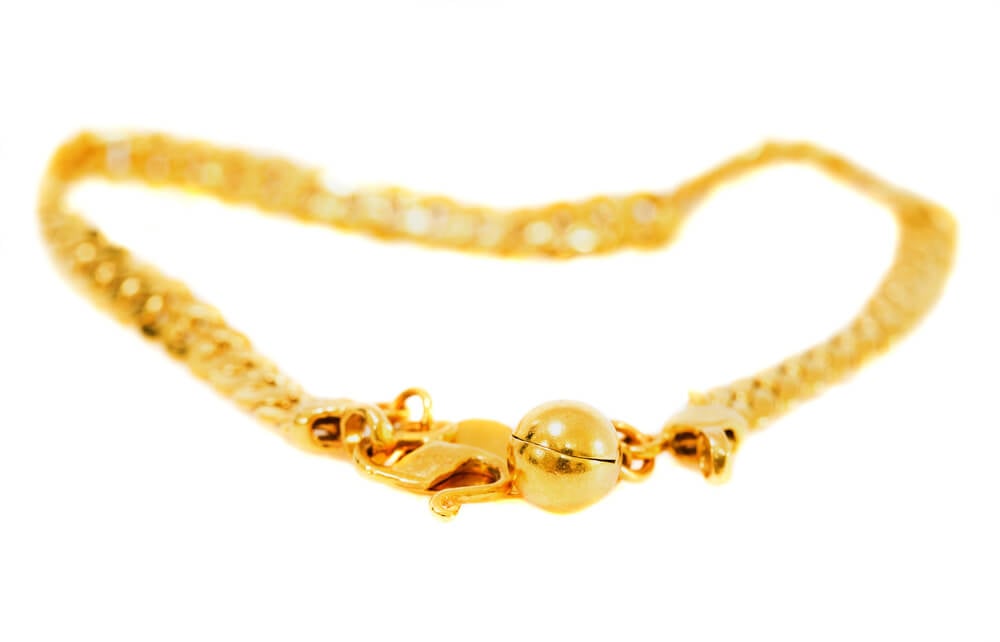
A 14k gold charm bracelet from the mid-20th century is a record of one person’s life, often with charms for a graduation, a wedding, a travel destination, or a child’s birth. The charms may be individually stamped with a karat mark, and some are enameled or have moving parts that add collector interest beyond the metal.
Value depends on the weight of the chain and charms, but unusual or finely made charms can be worth more than their gold. Missing enamel, broken jump rings, and a mix of gold and plated charms matter, so each piece should be checked separately.
Hammered Solid Gold Cuffs
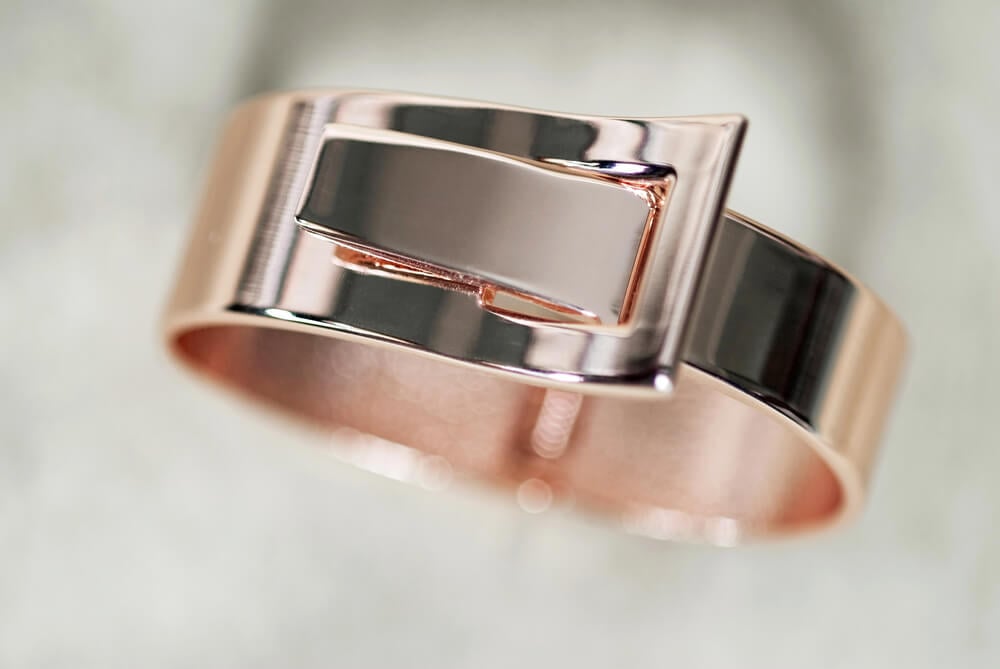
A hammered cuff has a surface covered in tiny dimples left by the tools used to shape it, which gives the gold a soft, light-catching texture. Solid 14k and 18k examples from artisan workshops turn up in estate collections, and the best are heavy enough to feel noticeably dense in the hand.
Because the finish is hand made, no two are identical, and an unsigned cuff may be valued mostly on weight while a signed one gets a premium. Dents, a cuff that has been squeezed out of shape, and heavy buffing that erases the hammer marks all pull the price down.
What the Gold Is Really Worth
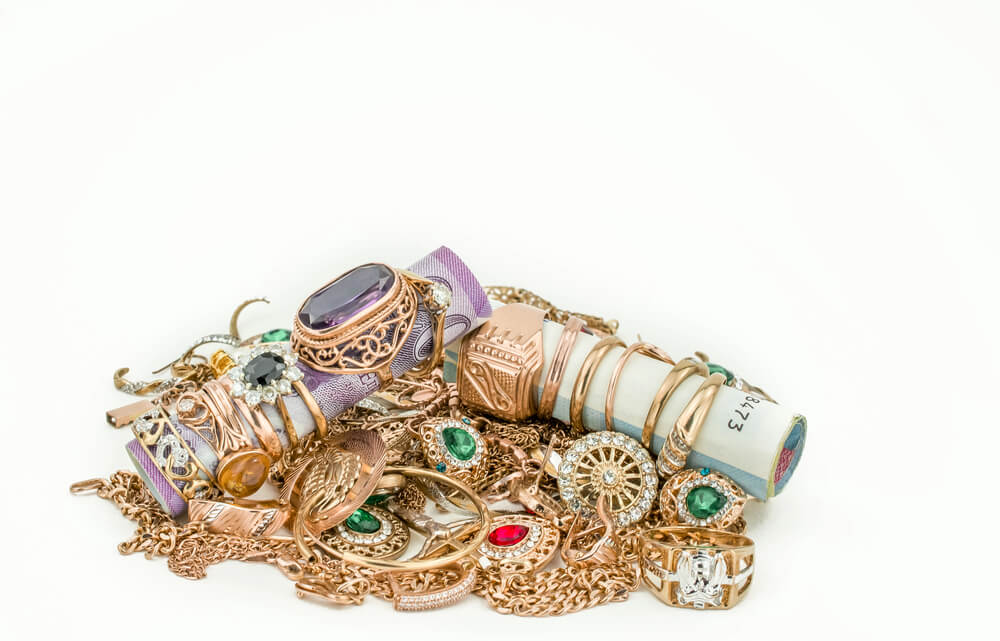
The thread running through all of these bracelets is a split between the metal and the name. A plain chain is worth roughly what its weight in gold is worth on the day it sells, while a signed Cartier or Van Cleef & Arpels can sell for far more than its metal. That gap is why hallmarks, serial numbers, and signatures deserve more attention than the glitter of the piece itself.
Condition and completeness widen or narrow the gap. A box, papers, a crisp clasp, and intact decoration can add real value, while dents, solder repairs, and stretched links erode it. A bracelet is both a piece of metal and an object with a history, and the buyers who learn to see both tend to leave with the best finds.
More from Go2Tutors!

- 27 Silver Dollars and Half Dollars Worth Keeping
- 28 Restaurant Menu Items Nobody Orders Anymore
- 17 Places Built in Seemingly Impossible Spots
- 27 Vintage Rings Worth More Than They Look
- 25 Restricted Sites Tourists Can’t Enter
Like Go2Tutors’s content? Follow us on MSN.