12 School Projects That Changed the World
Some of history’s most groundbreaking innovations didn’t emerge from corporate boardrooms or government labs—they started as simple classroom assignments. From garage experiments to dorm room brainstorming sessions, students have consistently proven that age and experience aren’t prerequisites for world-changing ideas. These young innovators saw problems others missed and created solutions that would reshape entire industries.
The following stories showcase how academic curiosity and youthful determination can spark global transformation. Here is a list of 12 school projects that didn’t just earn good grades—they revolutionized the way we live, work, and connect with each other.
Mark Zuckerberg’s Harvard dorm room project in 2004 began as a way to help students connect with classmates on campus. What started as ‘TheFacebook’—originally limited to college students—quickly expanded beyond university walls to become the world’s largest social media platform.
The site now connects over 3 billion people globally and has fundamentally altered how we communicate, share information, and maintain relationships across distances.

Stanford PhD students Larry Page and Sergey Brin developed their search engine algorithm as part of their dissertation research in the late 1990s. Their ‘PageRank’ system ranked web pages based on how many other sites linked to them, creating a more reliable way to find relevant information online.
This academic project grew into Google, which now processes over 8.5 billion searches daily and has become synonymous with finding information on the internet.
Like Go2Tutors’s content? Follow us on MSN.
Dell Computer
Michael Dell started his computer business from his University of Texas dorm room in 1984, initially just upgrading and customizing PCs for fellow students. His direct-to-consumer approach eliminated middlemen and allowed customers to order computers built to their exact specifications.
This dorm room operation evolved into Dell Technologies, revolutionizing how computers are manufactured and sold worldwide.
Snapchat
Stanford students Evan Spiegel, Bobby Murphy, and Reggie Brown developed the concept for disappearing photo messages during their time at the university in 2011. Their idea that digital messages should mimic real conversations—temporary rather than permanent—challenged the assumption that everything online lasts forever.
Snapchat now serves over 750 million monthly users and pioneered features like Stories that have been adopted across virtually every social media platform.
Microsoft
Harvard student Bill Gates and his childhood friend Paul Allen founded Microsoft in 1975 while Gates was still enrolled in college. Their first product was a BASIC programming language interpreter for the Altair 8800, an early personal computer that most people had never heard of.
Gates eventually dropped out to focus full-time on the company that would make personal computers accessible to everyday users and establish the software industry as we know it.
Like Go2Tutors’s content? Follow us on MSN.
FedEx

Yale undergraduate Fred Smith wrote his economics paper in 1965 about the need for a reliable overnight delivery service in the modern economy. His professor reportedly gave the paper a C, noting that while the idea was interesting, it wasn’t feasible.
Smith proved his professor wrong by founding Federal Express in 1971, creating an entire industry around express shipping that now moves millions of packages daily across the globe.
Kinko’s

University of California Santa Barbara student Paul Orfalea noticed that students constantly needed copies of class materials but had limited access to copy machines. In 1970, he opened a small copy shop near campus with a single xerox machine, naming it Kinko’s after his curly hair nickname.
His simple solution to a campus problem grew into a nationwide chain that became essential for students, small businesses, and anyone needing document services before digital files dominated.
Warby Parker
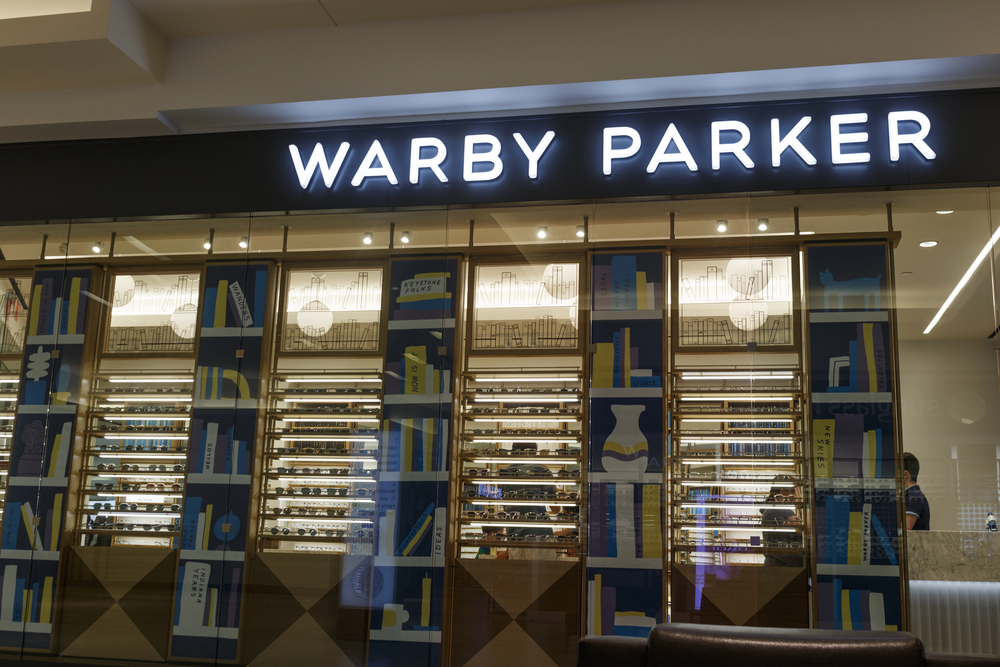
Four Wharton MBA students—Neil Blumenthal, Andrew Hunt, David Gilboa, and Jeffrey Raider—created their eyewear company in 2010 after one of them lost his glasses and was shocked by replacement costs. Their business school project focused on selling stylish, affordable glasses online while cutting out traditional retail markups.
Warby Parker disrupted the eyewear industry by proving that customers would buy glasses without trying them on first, forcing established companies to rethink their entire business model.
Like Go2Tutors’s content? Follow us on MSN.
WordPress
University of Houston student Matt Mullenweg developed WordPress in 2003 as an improved version of an existing blogging platform for his personal website. His college project aimed to make website creation accessible to people without programming knowledge.
WordPress now powers over 40% of all websites on the internet, democratizing online publishing and enabling millions of people to share their ideas with the world.
University of Virginia roommates Steve Huffman and Alexis Ohanian created Reddit in 2005 after attending a lecture by startup advisor Paul Graham. Their college project was designed as ‘the front page of the internet’—a place where users could submit and vote on content they found interesting.
Reddit became one of the most visited websites globally, fundamentally changing how news spreads and communities form around shared interests online.
Under Armour

University of Maryland football player Kevin Plank grew tired of his cotton t-shirts becoming soaked with sweat during practice and games. In 1996, he developed moisture-wicking athletic wear using synthetic fabrics in his grandmother’s basement.
His practical solution to a personal problem created Under Armour, which challenged Nike and Adidas by focusing specifically on performance rather than just style.
Like Go2Tutors’s content? Follow us on MSN.
Rent the Runway
Harvard Business School students Jenny Fleiss and Jennifer Hyman launched their designer dress rental service in 2009 after recognizing that women wanted access to expensive formal wear without the high purchase prices. Their MBA project addressed the reality that most formal dresses are worn only once or twice.
Rent the Runway created an entirely new business model that has expanded into everyday clothing rental and changed how people think about ownership versus access.
From Classrooms to Global Impact

These student innovations share a common thread—they identified everyday problems and refused to accept that existing solutions were good enough. Their academic environments provided the freedom to experiment, fail, and iterate without the pressure of immediate commercial success.
Many of these projects succeeded precisely because their creators approached problems without the assumptions and limitations that often constrain established industries. The next world-changing idea might be brewing in a classroom, dorm room, or study group near you right now.
More from Go2Tutors!

- 16 Historical Figures Who Were Nothing Like You Think
- 12 Things Sold in the 80s That Are Now Illegal
- 15 VHS Tapes That Could Be Worth Thousands
- 17 Historical “What Ifs” That Would Have Changed Everything
- 18 TV Shows That Vanished Without a Finale
Like Go2Tutors’s content? Follow us on MSN.



