Hidden Codes Inside Famous Artworks
Hidden Codes Inside Famous Artworks
Art has always been more than just pretty pictures on a wall. Throughout history, painters and sculptors have tucked secret messages, symbols, and mysteries into their work.
Some did it to avoid trouble with powerful people, while others wanted to leave puzzles for future generations to solve. These hidden elements turn masterpieces into treasure hunts that still fascinate people today.
Let’s look at some of the most interesting secrets that artists hid in plain sight.
The Last Supper’s musical score
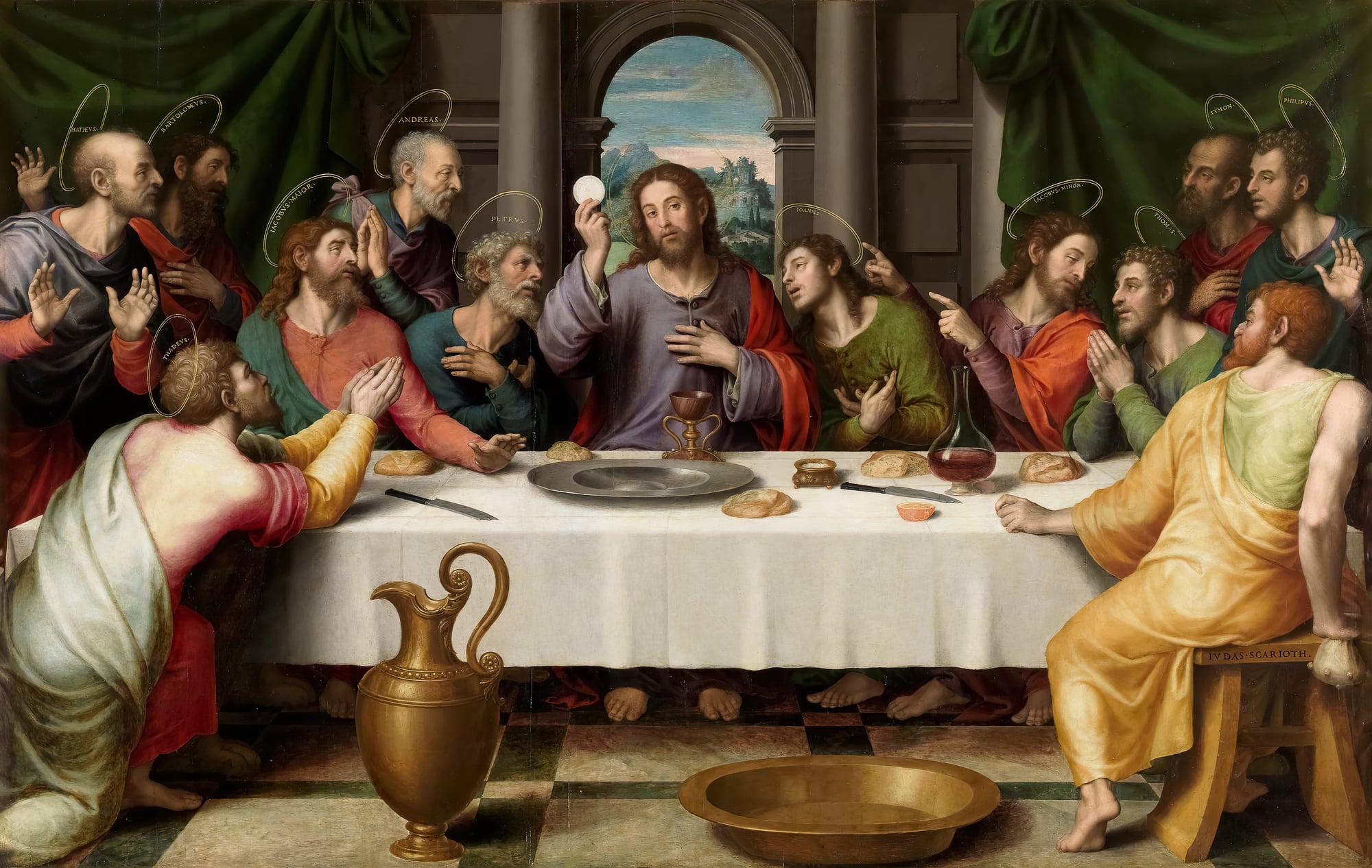
Leonardo da Vinci painted more than just a dinner scene in his famous mural. A musician named Giovanni Maria Pala discovered that the positions of the bread rolls and hands of the apostles line up with musical notes on a staff.
When you read them from right to left (the way Leonardo often wrote), they create a 40-second hymn-like composition. The piece sounds somber and reflective, which fits perfectly with the mood of Jesus’s final meal with his disciples.
Michelangelo’s brain in the Sistine Chapel
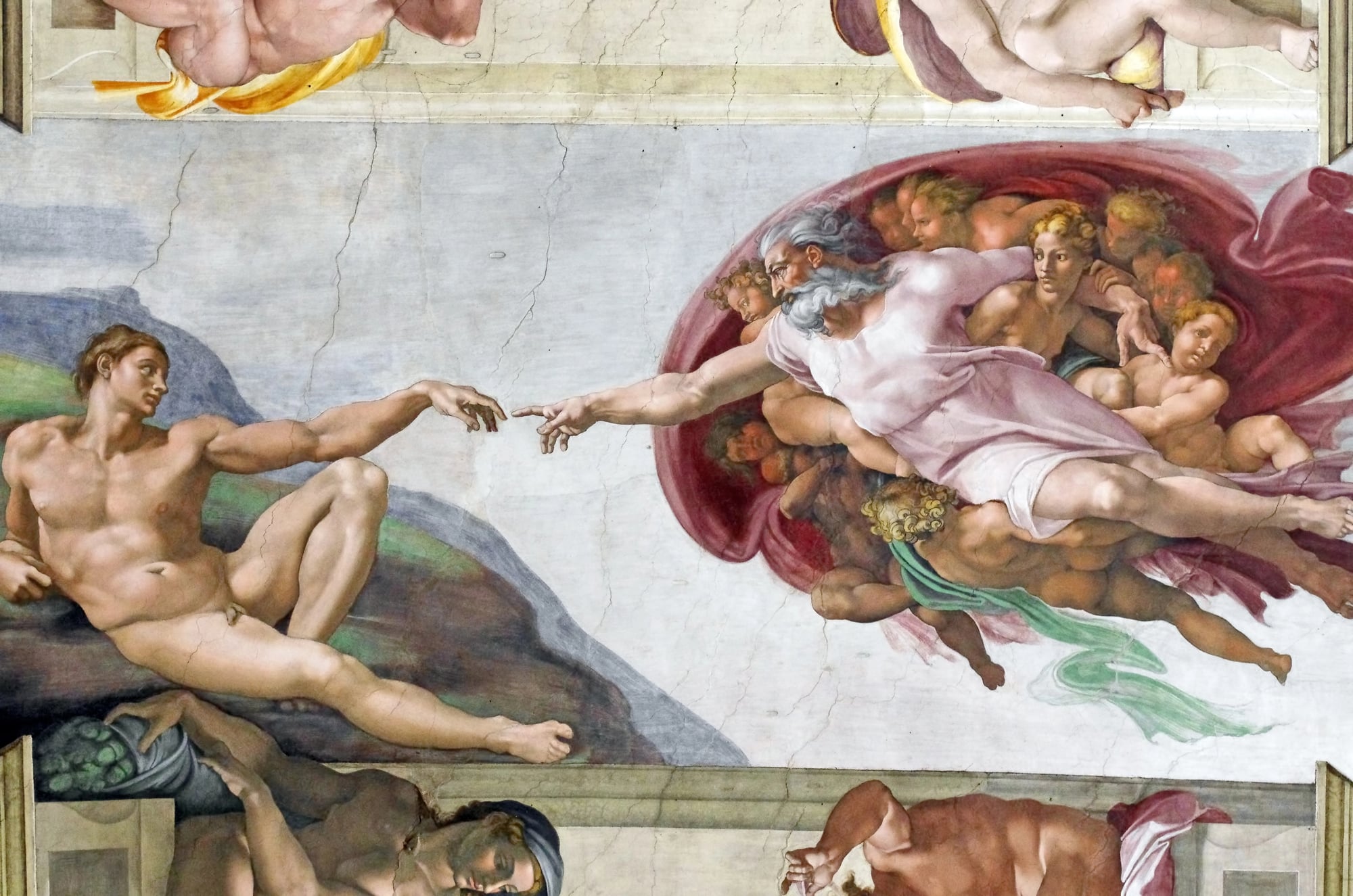
The Creation of Adam shows God reaching out to give life to the first man, but there’s something strange about the shape surrounding God and the angels. Two doctors noticed that the floating drapery and figures form a perfect anatomical diagram of a human brain, complete with the frontal lobe, brain stem, and optic nerve.
Michelangelo had dissected corpses to study anatomy, and he apparently couldn’t resist adding this scientific Easter egg to one of the most viewed ceilings in the world.
The Ambassadors and the stretched skull
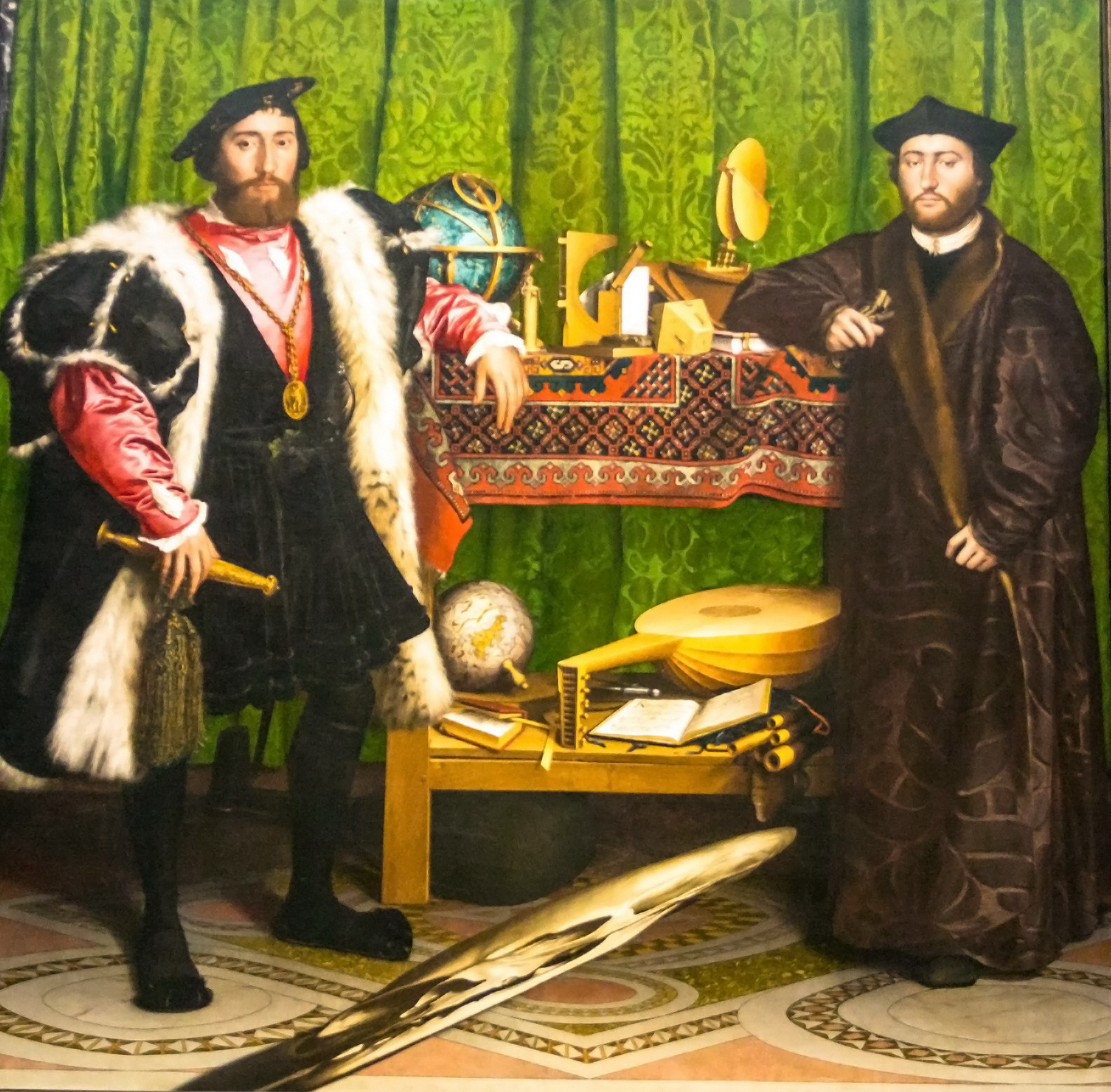
Hans Holbein the Younger painted two wealthy men surrounded by symbols of knowledge and power in 1533. At the bottom of the painting sits a weird, stretched blob that looks like a mistake.
Walk to the right side of the painting and look at it from an extreme angle, and suddenly the blob transforms into a detailed human skull. This technique, called anamorphosis, reminds viewers that death comes for everyone, no matter how rich or important they are.
Mona Lisa’s eyebrow message
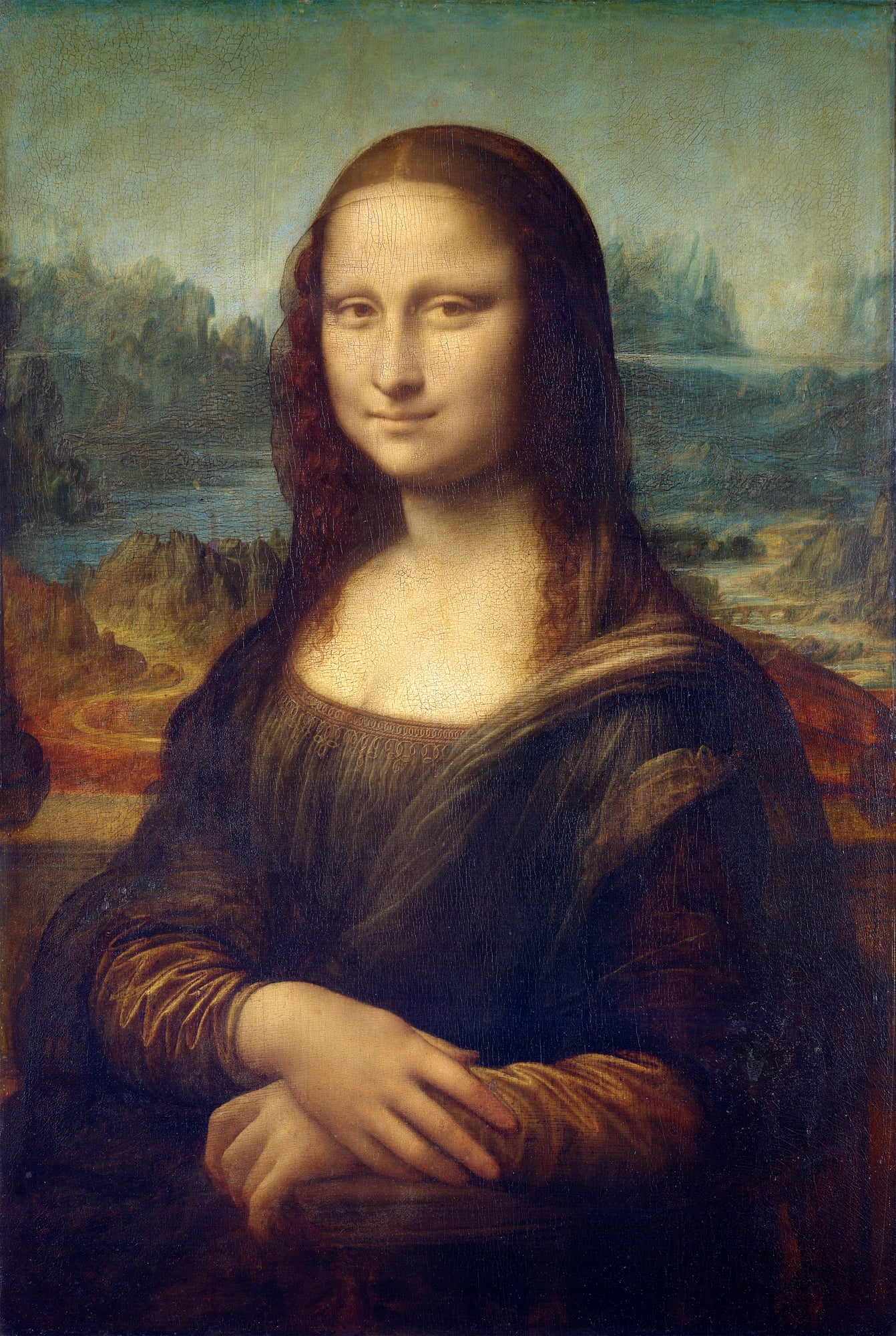
Lisa Gherardini’s famous portrait might contain tiny letters and numbers in her eyes and on the bridge behind her. An Italian researcher claimed to find the letters LV in her right eye, possibly Leonardo’s initials, along with other symbols that are almost too small to see without magnification.
The paint has cracked and faded over 500 years, making it hard to confirm what’s really there and what’s just wishful thinking or damage to the canvas.
The Garden of Earthly Delights’ music from hell
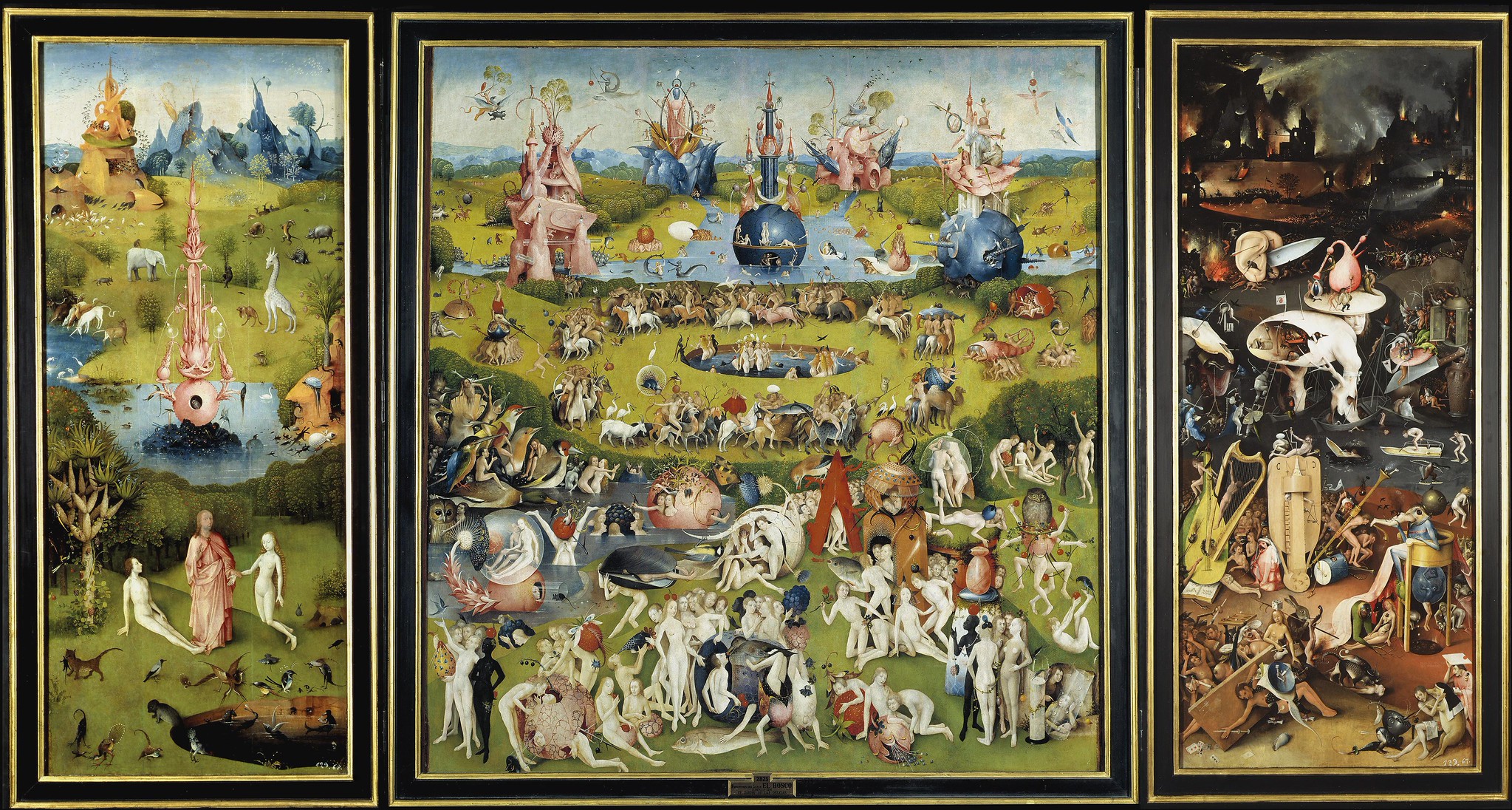
Hieronymus Bosch filled his triptych with bizarre creatures and chaotic scenes, but one detail stands out to musicians. In the hell panel, a person has musical notation tattooed or branded on their backside.
A student transcribed these notes and turned them into an actual song, which sounds surprisingly medieval and haunting. People have called it ‘the butt song from hell,’ and it’s become something of an internet sensation among classical music fans.
Caravaggio’s hidden self-portrait
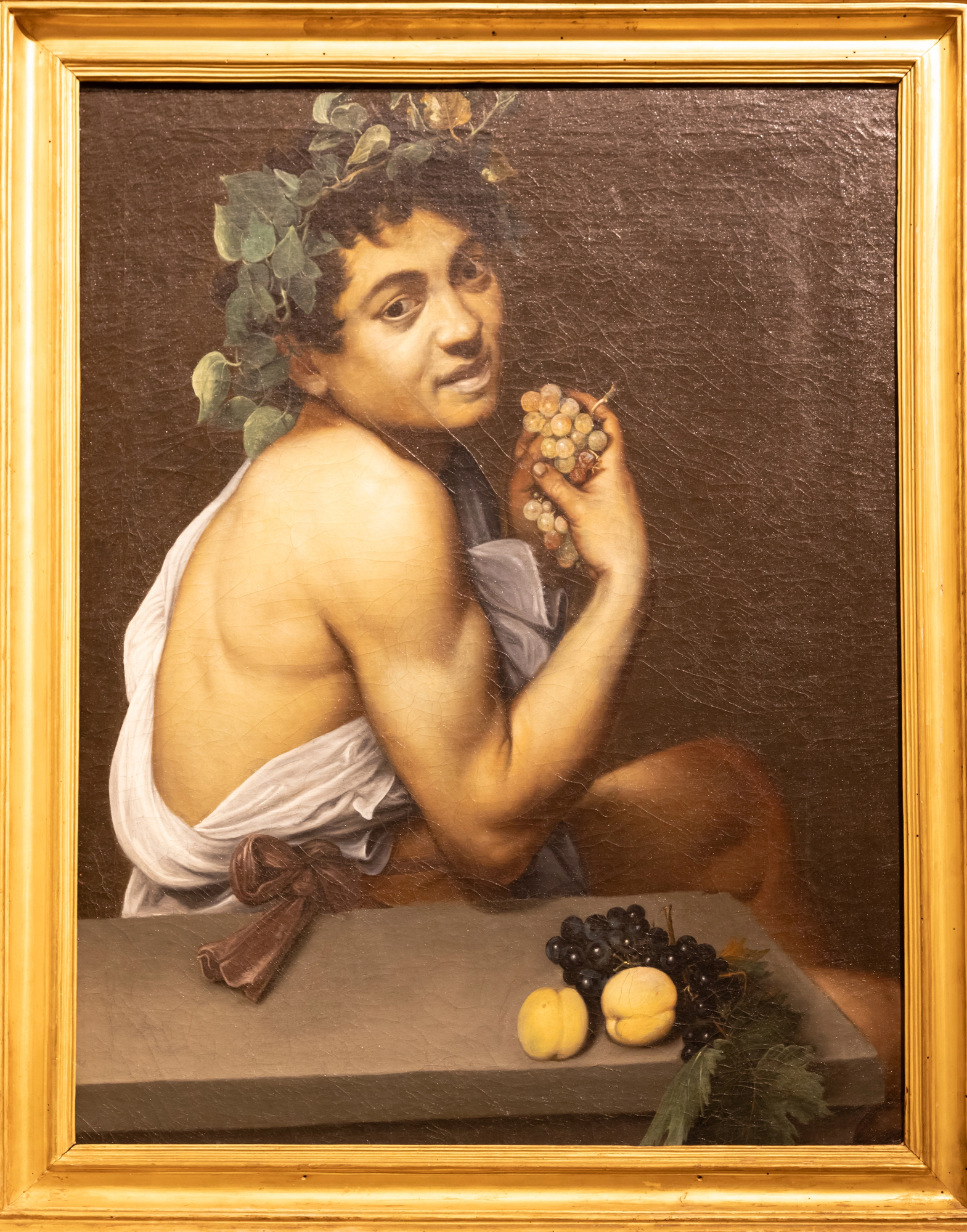
The Martyrdom of Saint Matthew shows a violent scene where soldiers attack an old man at an altar. Caravaggio painted himself into the crowd as one of the witnesses, but his expression tells a different story than everyone else’s.
He looks directly out at the viewer with a troubled, almost guilty face. Art historians think this was his way of commenting on his own violent life and brushes with the law.
The Arnolfini Portrait’s mirror secrets
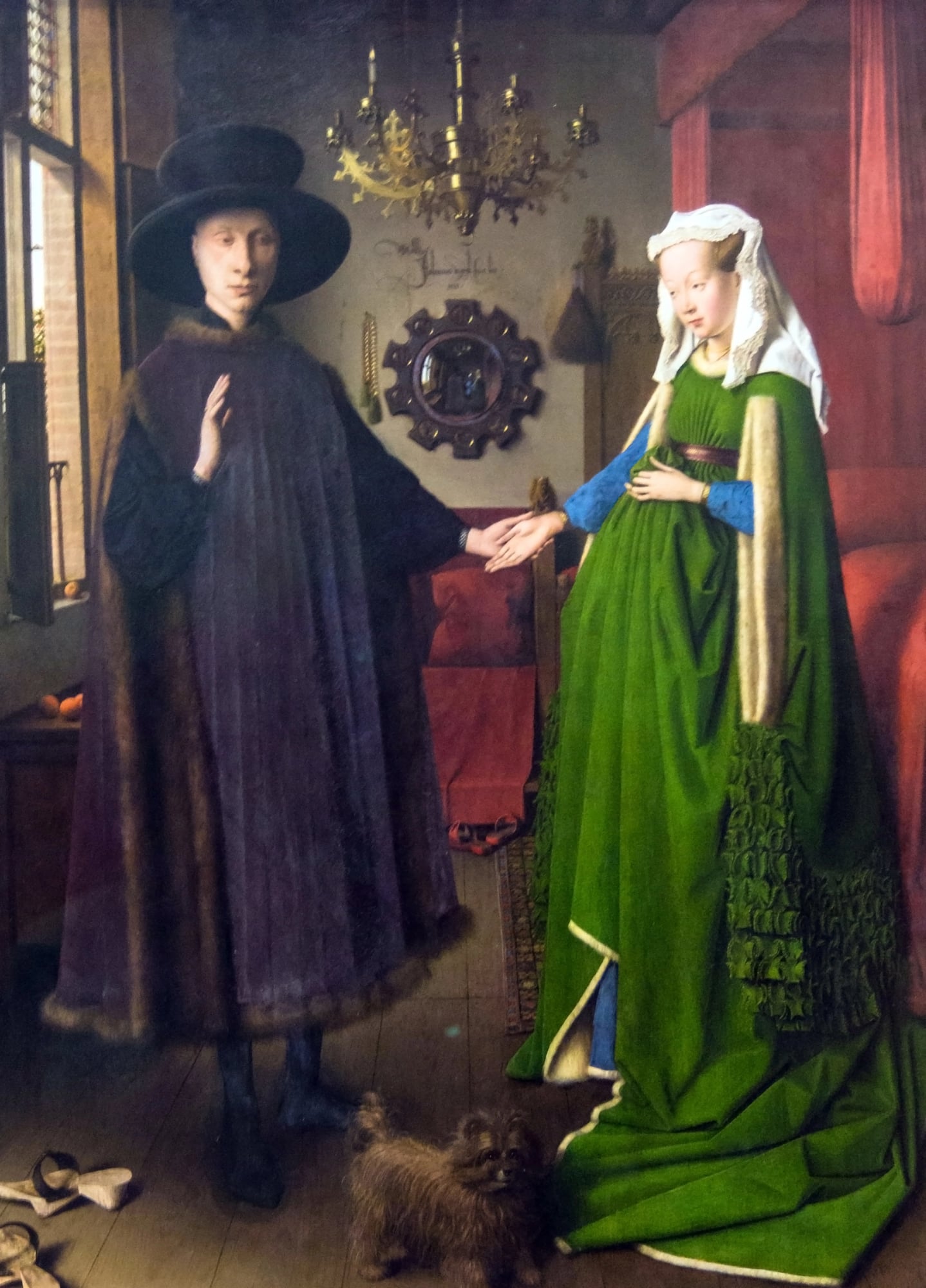
Jan van Eyck’s painting of a wealthy couple includes a convex mirror on the back wall that reflects the entire room. If you look closely at the mirror, you can see two additional figures standing in the doorway, possibly including the artist himself.
Above the mirror, van Eyck wrote ‘Jan van Eyck was here 1434’ in fancy script, turning his painting into both artwork and legal document of the marriage ceremony.
Vermeer’s camera obscura techniques
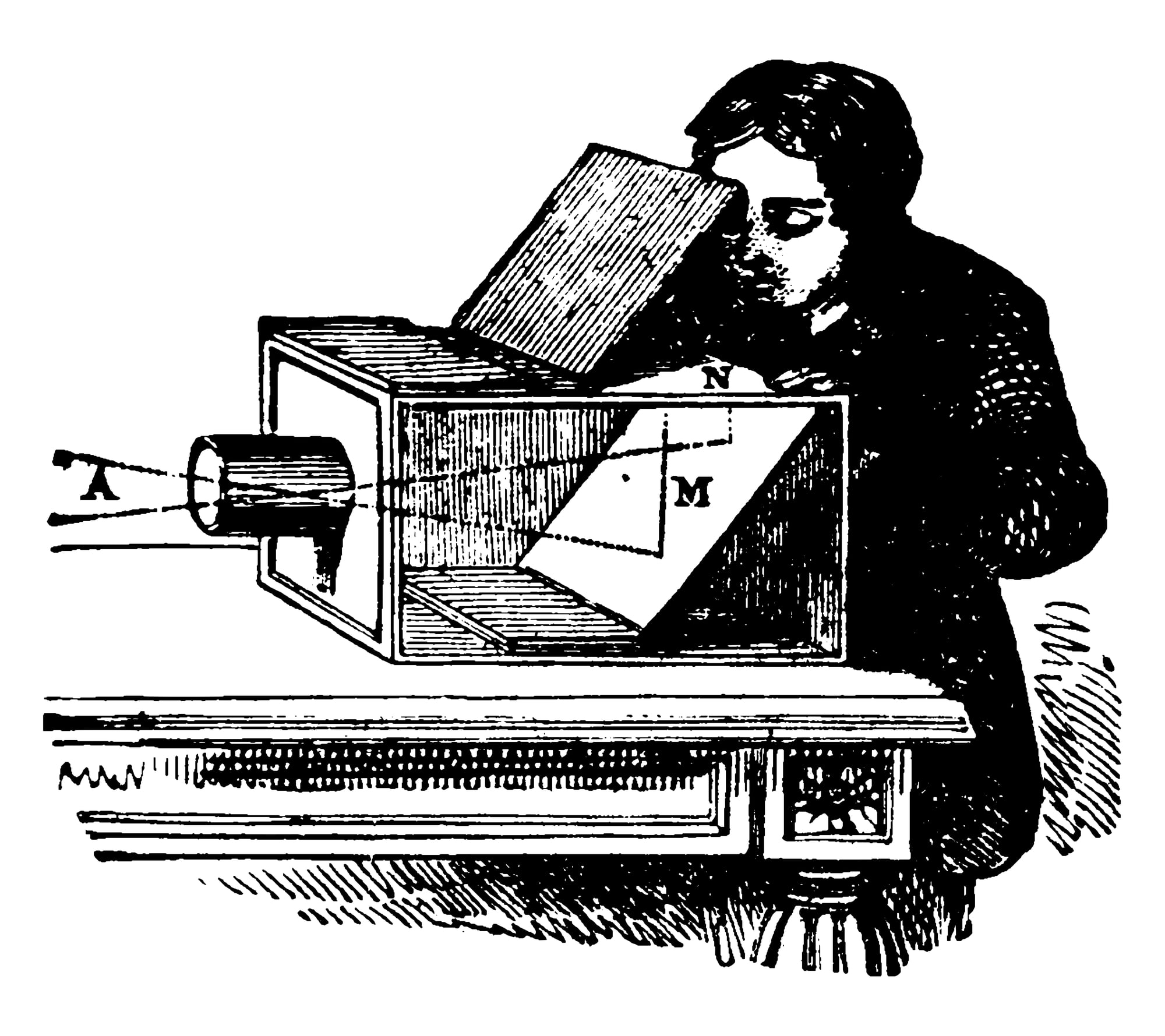
The Girl with a Pearl Earring and other Vermeer paintings show lighting effects that seem almost photographic. Technology wasn’t advanced enough in the 1600s for cameras, but artists did use camera obscuras, which are basically boxes with lenses that project images onto surfaces.
Vermeer likely traced or studied these projections, which explains why his highlights and shadows look so realistic and why some parts of his paintings are slightly out of focus, just like a photograph.
The Sistine Chapel’s Hebrew letters
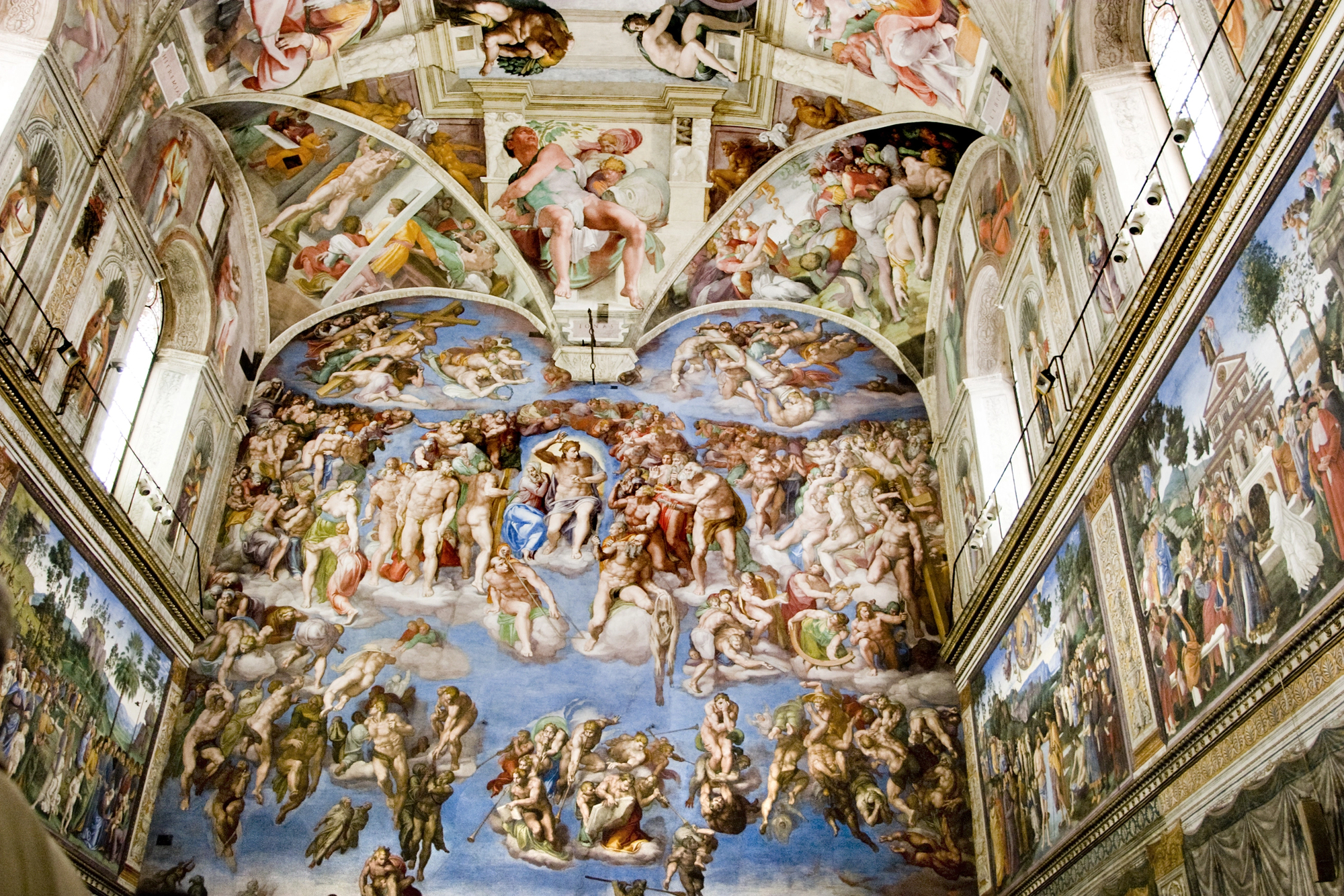
Michelangelo might have painted more than just Christian imagery on the famous ceiling. Some researchers believe they’ve found Hebrew letters woven into the drapery and folds of the prophets’ clothing.
If true, this would make sense because Michelangelo studied Jewish mysticism and Kabbalah, and he may have wanted to honor that knowledge without angering the Catholic Church that commissioned the work.
Picasso’s hidden paintings underneath
X-ray technology has revealed that Picasso often painted over his old work when he couldn’t afford new canvases. The Blue Room shows a woman bathing, but underneath it sits a completely different painting of a bearded man in a bow tie, his hand resting on his face.
Poor artists during Picasso’s early years frequently reused canvases, so many famous paintings probably have secret artworks trapped beneath their surfaces.
The prophecy in the School of Athens
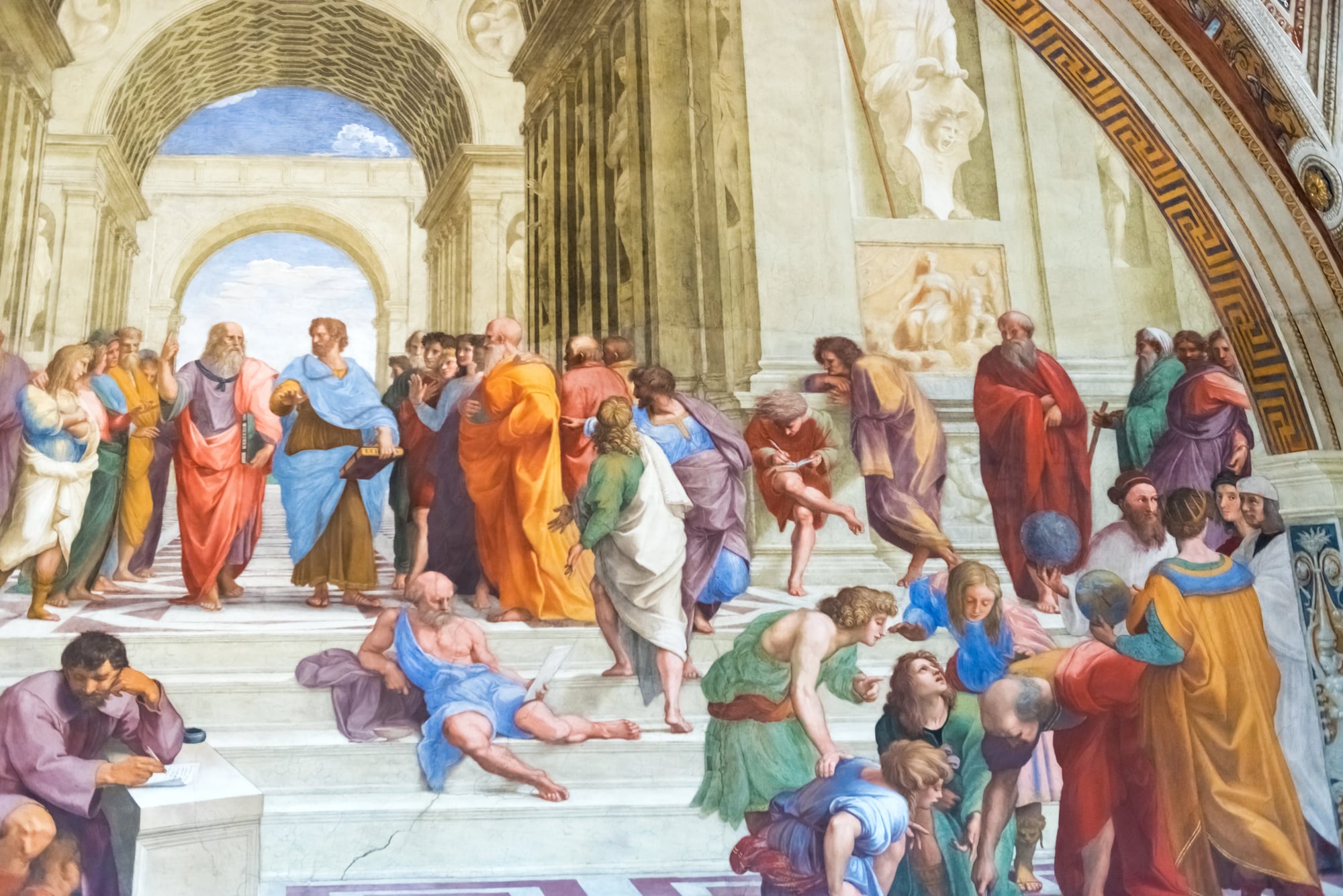
Raphael’s masterpiece shows ancient philosophers gathered together, but he painted faces of Renaissance people onto these historical figures. Plato has Leonardo da Vinci’s face, and Raphael himself appears on the far right, looking out at viewers.
The most interesting part is how Raphael arranged everyone to show which ancient ideas influenced which Renaissance thinkers, creating a map of how knowledge traveled through time.
Grant Wood’s American Gothic references
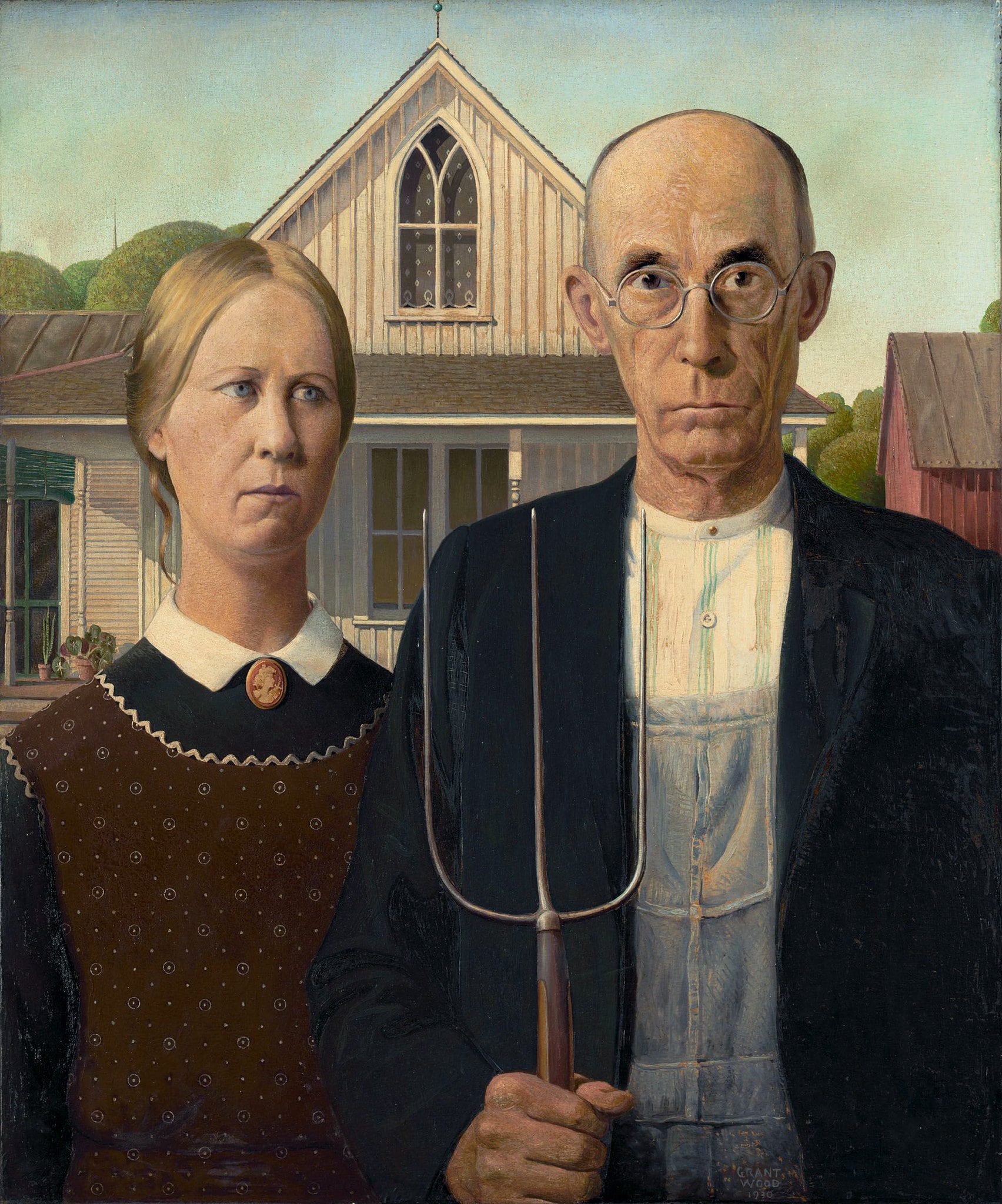
The famous painting of a farmer and his daughter (often mistaken for husband and wife) in front of a house contains subtle jabs at American rural life. Grant Wood based the house on a real building in Iowa that he thought was ridiculous, with its fancy Gothic window style completely out of place.
The pitchfork the man holds has three prongs that mirror the three Gothic points in the window and even the seams on his shirt, creating a repeating pattern that ties the stubborn man to his environment.
Botticelli’s mathematical proportions
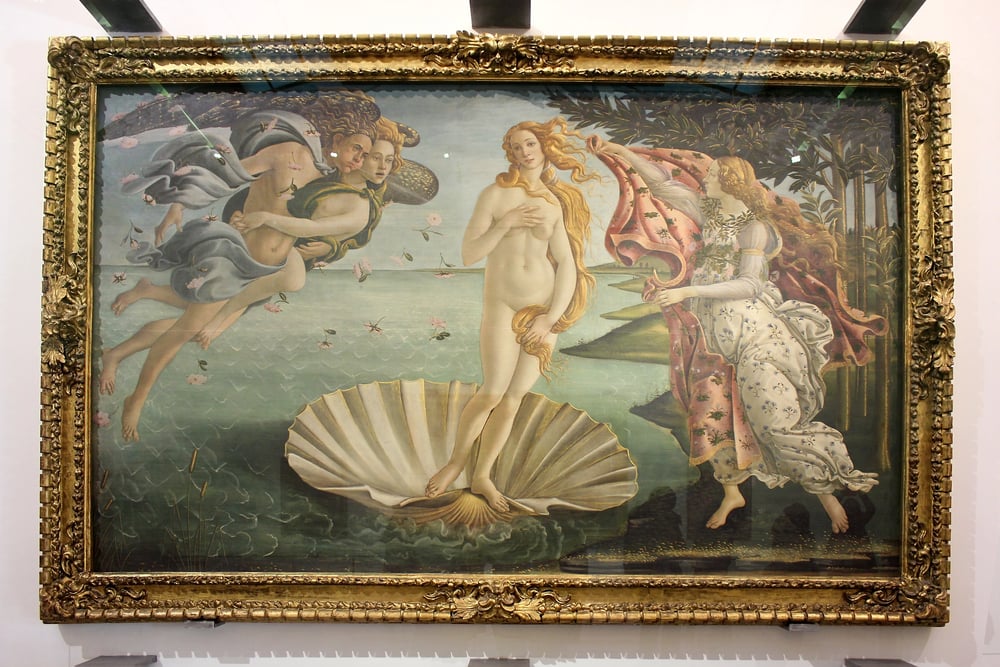
The Birth of Venus isn’t just beautiful by accident. Botticelli used mathematical ratios known as the Golden Proportion to position Venus’s body and the other figures.
Her navel sits at a key golden ratio point, and the shell she stands on follows these same mathematical rules. Renaissance artists believed these proportions existed throughout nature and represented divine perfection.
Dali’s optical illusions within illusions
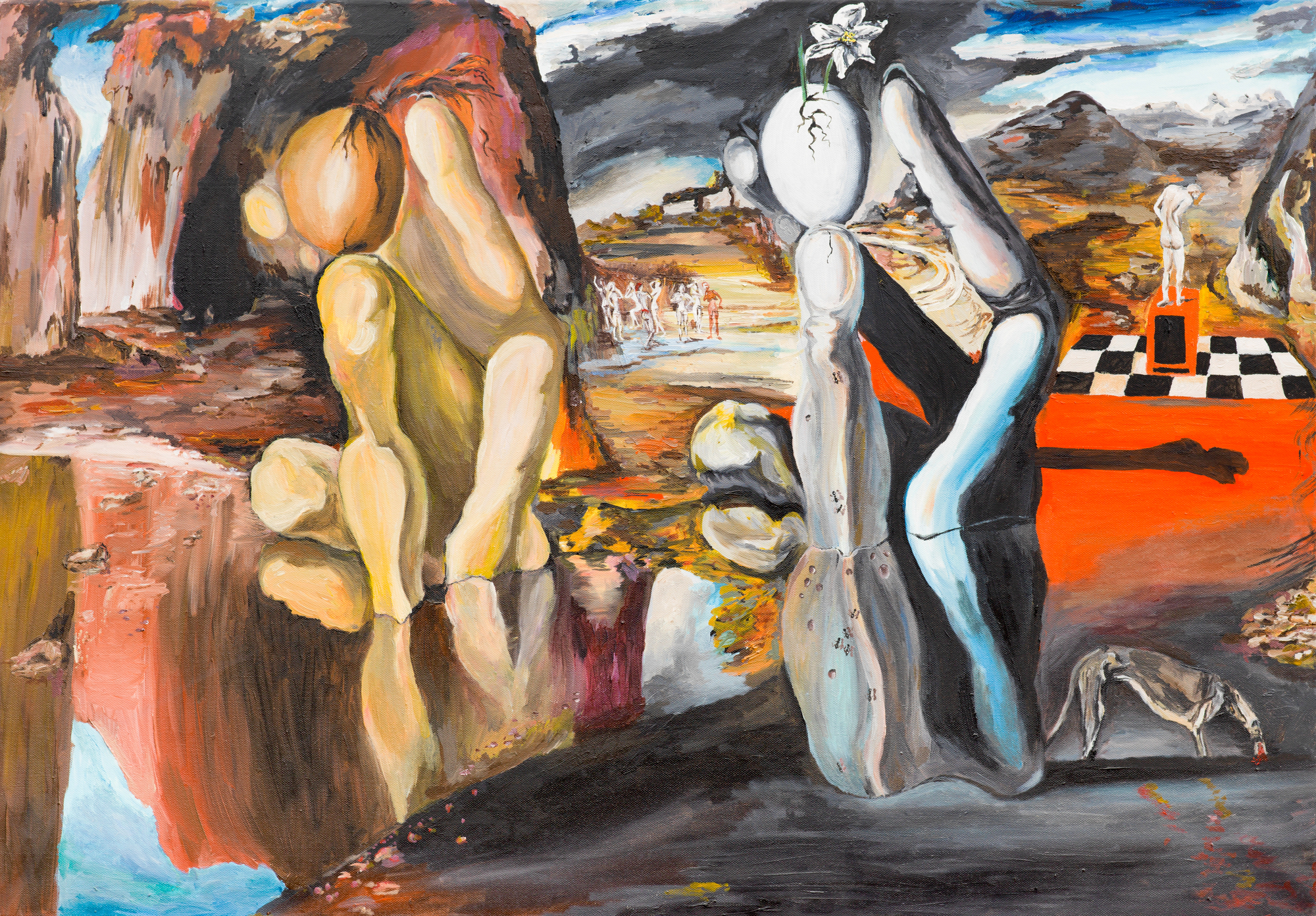
Salvador Dali filled his paintings with images that look like one thing up close and completely different from far away. Slave Market with the Disappearing Bust of Voltaire shows people in a marketplace, but when you step back, their arrangement forms the face of the French philosopher.
Dali created dozens of these double images, and some paintings contain three or four different scenes depending on how you look at them.
Van Gogh’s turbulence equations
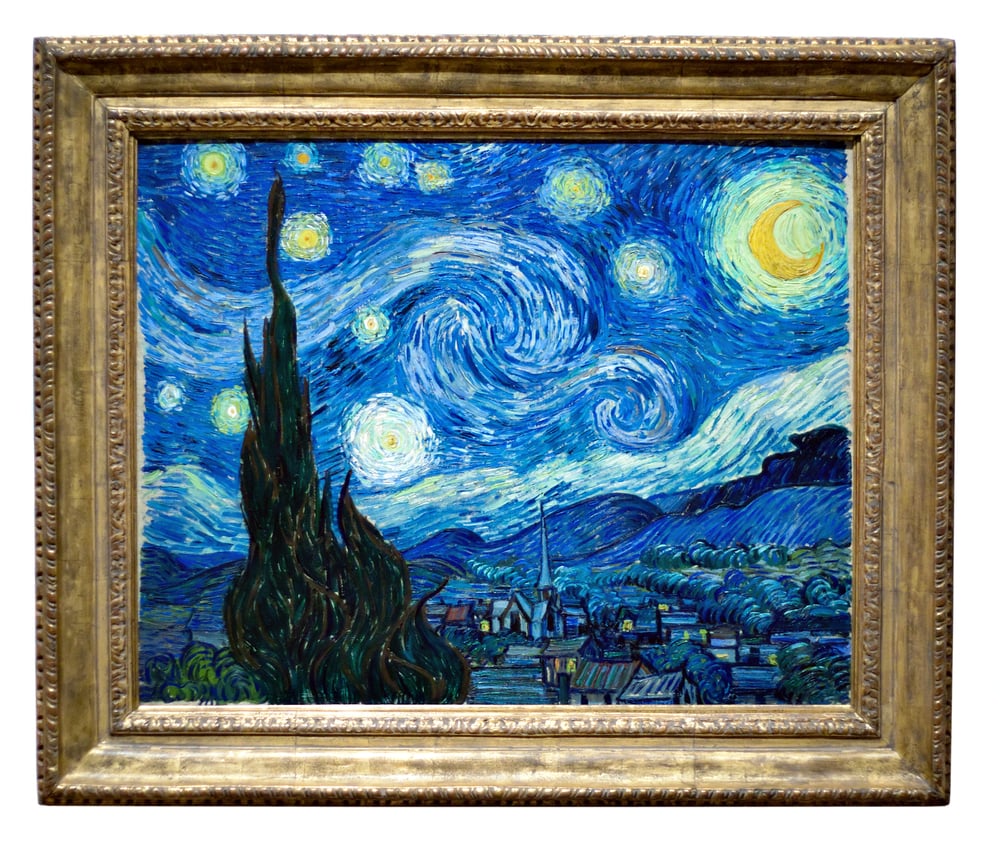
The Starry Night shows swirling clouds that seem to move across the canvas. Scientists discovered that these swirls match mathematical patterns found in real atmospheric turbulence and fluid dynamics.
Van Gogh painted during a time of mental distress, yet somehow his disturbed mind captured complex physics that wouldn’t be formally understood until decades later.
Bruegel’s proverb encyclopedia
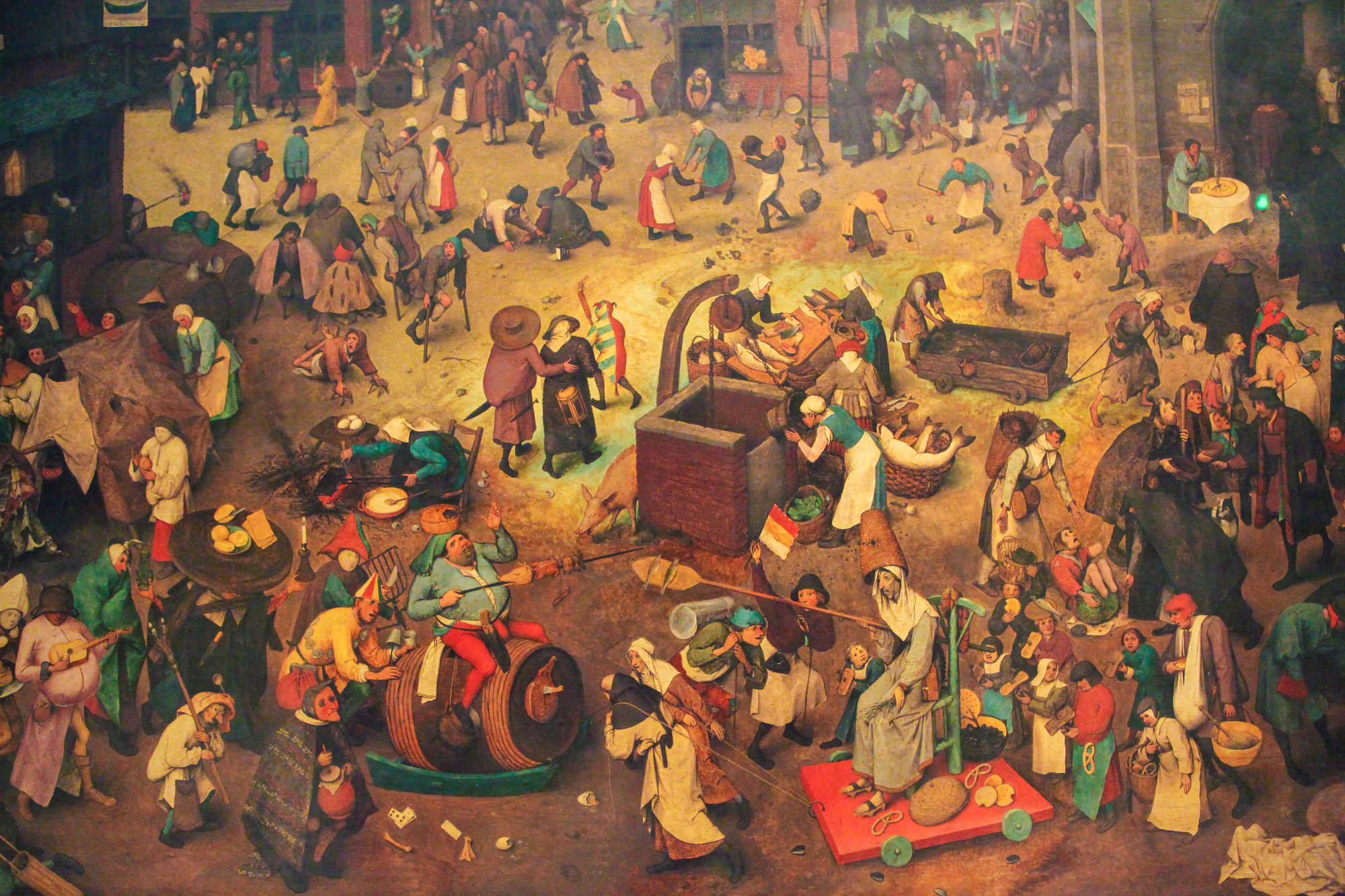
Netherlandish Proverbs by Pieter Bruegel the Elder looks like chaos at first glance. Look closer and you’ll find more than 100 Dutch proverbs and sayings illustrated literally throughout the village scene.
People bang their heads against walls, lead each other by the nose, and cast roses before swine. It’s basically a Where’s Waldo of 16th-century idioms.
The secret meaning behind The Scream
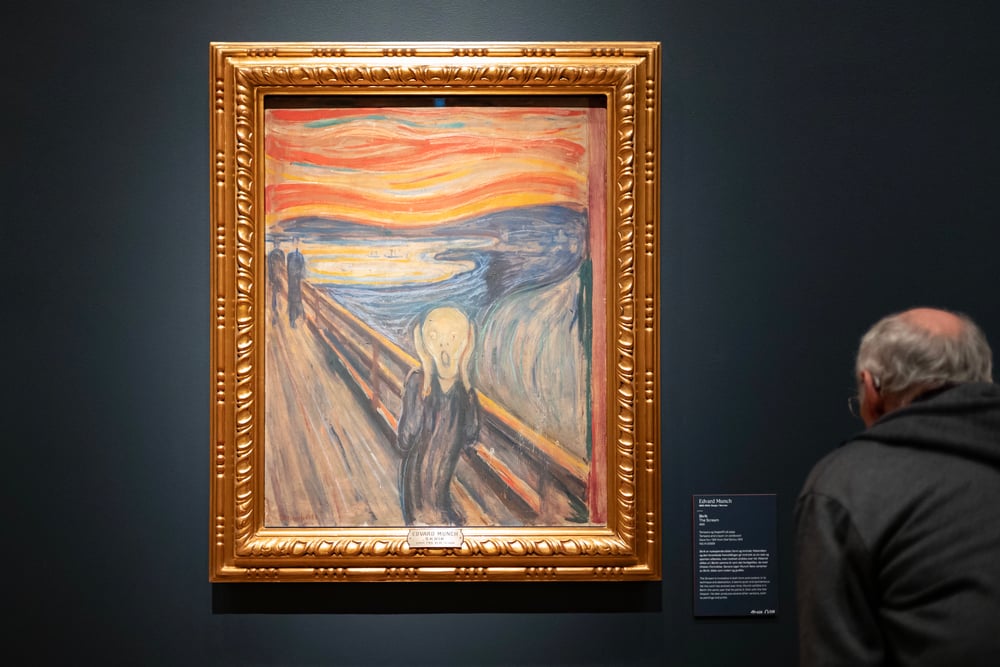
That scribble near the top left of Edvard Munch’s stormy sky? Hidden at first glance.
Someone muttered it in pencil: “Could only have been painted by a madman.” For years, guesses flew – tagged by strangers, maybe, or slipped there by the artist.
Then ink traces pointed back to Munch. Seems he answered his doubters quietly, brush still wet.
Whistler’s butterfly signatures
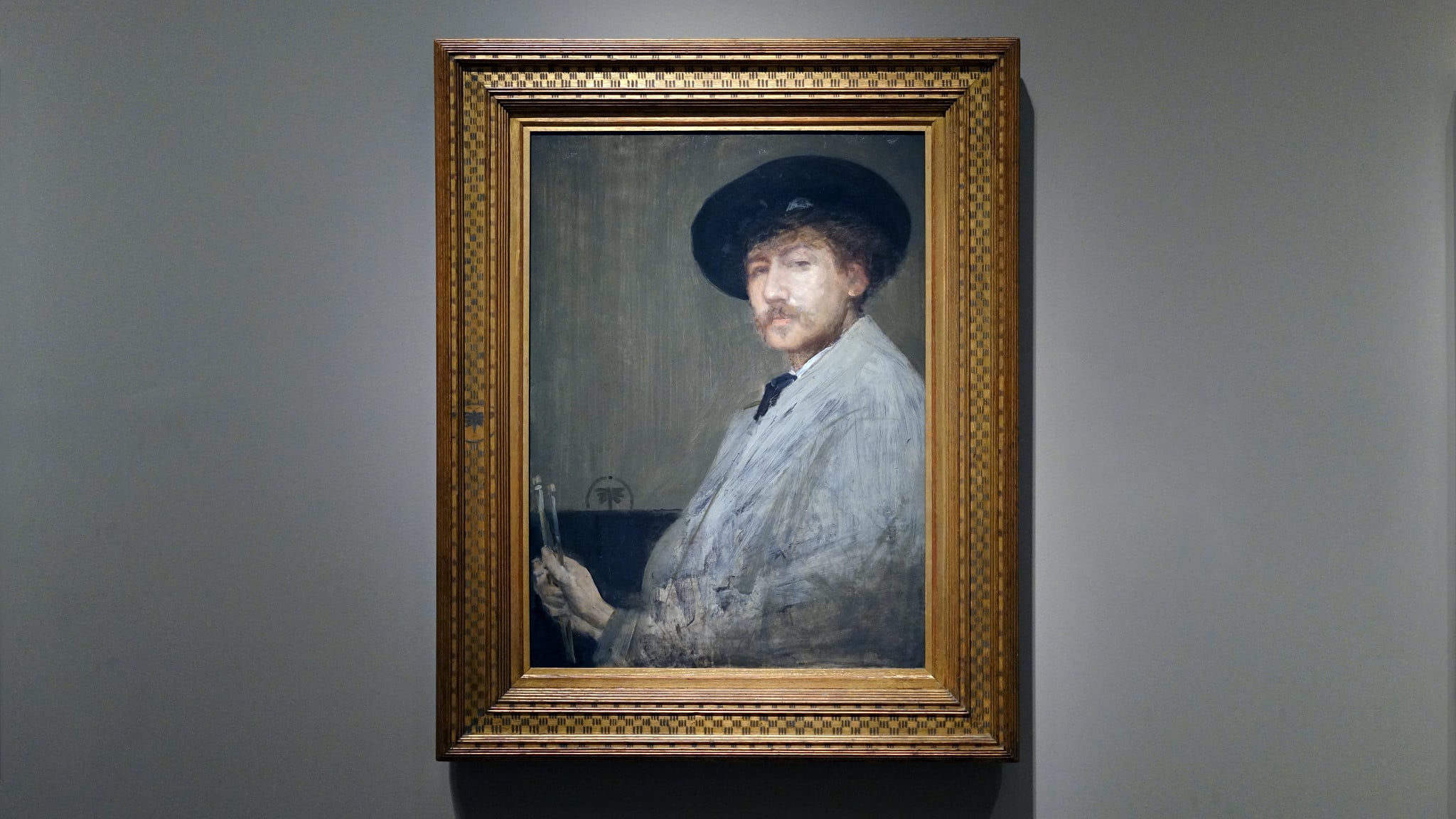
A tiny winged mark appeared on many of Whistler’s works instead of a written name. This unique emblem grew out of his need to blend identity with artistry.
Often, the shape hid letters within its delicate lines – clever yet quiet. Placement mattered just as much as form; each spot helped steady the image like a silent counterweight.
Legal protection followed, because others tried to mimic what he made. When copies surfaced, court became his next canvas.
Right here is what we learn today from those hidden truths
Secrets beneath the surface show how master creators planned deeply. Not merely applying color or shaping rock by habit.
Each decision held weight – sometimes faith, sometimes wit, sometimes words meant for eyes long after. Modern tools uncover what time tried to hide, layer by silent layer.
Who knows how many puzzles linger behind glass, untouched, unseen, ready.
More from Go2Tutors!

- The Romanov Crown Jewels and Their Tragic Fate
- 13 Historical Mysteries That Science Still Can’t Solve
- Famous Hoaxes That Fooled the World for Years
- 15 Child Stars with Tragic Adult Lives
- 16 Famous Jewelry Pieces in History
Like Go2Tutors’s content? Follow us on MSN.