Secrets of the Mona Lisa
There’s a painting in Paris that stops people in their tracks every single day. Leonardo da Vinci’s Mona Lisa sits behind bulletproof glass at the Louvre, watched by millions of visitors who crowd together just to catch a glimpse of her famous smile.
But what makes this particular portrait so special? The answer goes far deeper than most people realize, stretching back over 500 years and touching everything from Renaissance genius to modern science.
Let’s pull back the curtain on what makes this painting one of history’s most fascinating mysteries.
That smile isn’t what you think it is

The Mona Lisa’s expression has sparked debate for centuries, but scientists have finally figured out why it seems to change. When you look directly at her mouth, the smile appears to fade, but when your eyes drift to other parts of the painting, it seems to grow.
This happens because of how human vision works with peripheral sight. Leonardo understood something about human perception that wouldn’t be scientifically explained for hundreds of years.
He painted the smile using subtle shadows and soft edges that trick the brain into seeing different expressions depending on where you focus.
Leonardo never finished the painting

Despite working on it for years, Leonardo da Vinci never considered the Mona Lisa complete. He carried the painting with him everywhere he went, making tiny adjustments and refinements until his death in 1519.
Art historians have found evidence that he kept adding microscopic layers of glaze, sometimes less than two micrometers thick. The perfectionist in him simply couldn’t let it go.
When he died in France, the painting remained in his possession, still technically unfinished according to his own standards.
She has no eyebrows or eyelashes

Look closely at the Mona Lisa’s face and you’ll notice something odd. There’s not a single eyebrow hair or eyelash visible anywhere.
Some experts believe Leonardo originally painted them but they faded over time or were removed during early restoration attempts. Others think it was intentional, following a Renaissance beauty trend where women would pluck their eyebrows completely.
A 2007 study using high-resolution scans suggested traces of a left eyebrow might have existed at one point, but the evidence remains unclear.
The painting survived a bathroom hiding spot

During World War II, the Mona Lisa went on quite a journey to escape the Nazis. French officials moved the painting from château to château across the countryside, always staying one step ahead of German forces.
At one point, curators hid Leonardo’s masterpiece in a château bathroom. The painting traveled in a specially designed case marked with three red dots to indicate its importance.
It made five different stops before finally returning to the Louvre after the war ended.
Leonardo used a technique no one else could master

The soft, almost dreamlike quality of the Mona Lisa comes from a painting method called sfumato. Leonardo spent years perfecting this technique, which involves applying dozens of extremely thin layers of translucent paint.
Each layer was so thin that scientists estimated it would take months to dry before the next could be added. The result creates forms that seem to emerge from shadow without harsh lines or borders.
Other Renaissance artists tried to copy this method but none achieved Leonardo’s level of skill.
Her identity was a mystery for centuries

For hundreds of years, nobody knew for sure who the woman in the painting actually was. Art historians debated dozens of theories, from Italian noblewomen to Leonardo’s mother to the artist himself in disguise.
The most widely accepted answer came from a note discovered in 2005, written by a Florentine official in 1503. He identified the subject as Lisa Gherardini, wife of a wealthy silk merchant named Francesco del Giocondo.
That’s why Italians call the painting ‘La Gioconda,’ which means both ‘the happy one’ and a play on her married name.
The painting was stolen in 1911

A former Louvre employee named Vincenzo Peruggia walked into the museum on a Monday when it was closed to the public. He knew the building layout perfectly from his time working there.
Peruggia simply lifted the painting off the wall, removed its frame, hid it under his coat, and walked out a side door. The theft made front-page news around the world and turned the Mona Lisa into an international celebrity.
Police questioned everyone from Pablo Picasso to poet Guillaume Apollinaire, but Peruggia kept the painting hidden in his Paris apartment for two years.
The thief thought he was a patriot

Vincenzo Peruggia didn’t steal the Mona Lisa for money or fame initially. He genuinely believed Napoleon had stolen the painting from Italy and that he was returning it to its rightful home.
In 1913, he tried to sell it to an art dealer in Florence, claiming he wanted to give Italy back its treasure. The dealer seemed interested but called the police instead.
Peruggia was arrested and became an odd sort of folk hero in Italy, where many people actually sympathized with his motives even though his history was completely wrong.
It’s much smaller than people expect
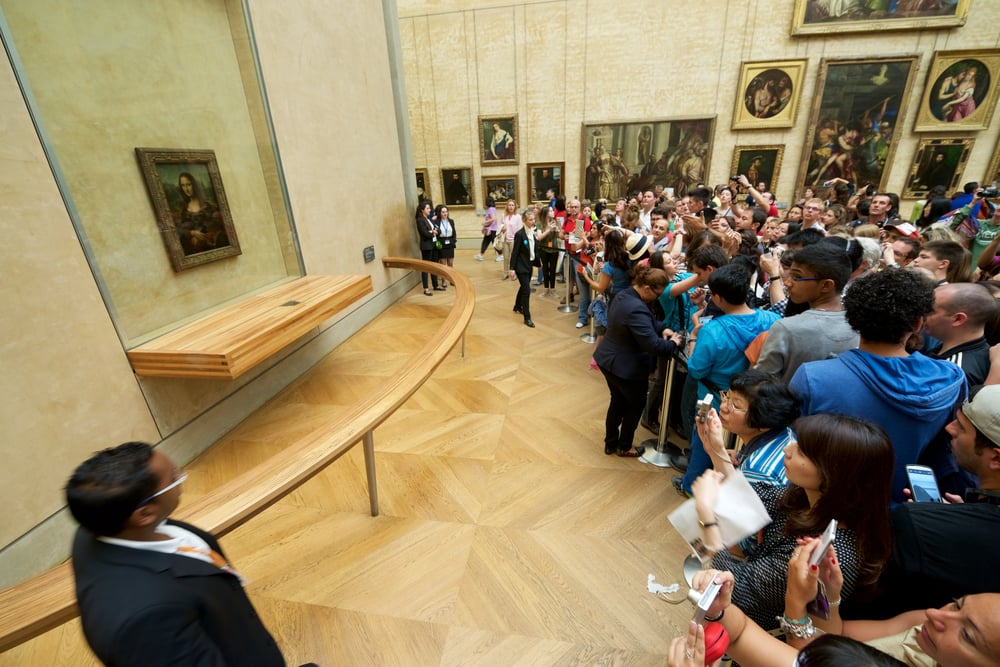
Tourists who finally see the Mona Lisa in person often express surprise at its size. The painting measures just 30 inches tall by 21 inches wide, about the size of a standard poster.
After seeing countless reproductions blown up to enormous sizes in books and online, visitors expect something grand and imposing. Instead, they find an intimate portrait that would fit comfortably on most living room walls.
The small scale actually adds to the painting’s magic, creating a sense of personal connection that a massive canvas couldn’t achieve.
The background holds geological secrets

Leonardo filled the landscape behind the Mona Lisa with rocky formations and winding paths that reflect his deep interest in geology. Art historians and geologists have spent years trying to identify the actual location.
Some believe it’s an imaginary combination of places near Florence. Others point to specific locations in Tuscany where similar rock formations exist.
Leonardo kept detailed notebooks about erosion, water movement, and rock layers, and all that knowledge shows up in the painting’s background. The landscape looks both real and impossible at the same time.
X-rays reveal hidden portraits underneath

Modern imaging technology has uncovered earlier versions of the painting hidden beneath the visible surface. Scientists using infrared and X-ray techniques discovered that Leonardo changed the position of the hands multiple times.
They also found evidence of a different head position and variations in the background landscape. These discoveries prove Leonardo experimented constantly while working, painting over his own work to achieve the exact effect he wanted.
Each change brought the painting closer to the mysterious quality that captivates viewers today.
Napoleon hung it in his bedroom

After the French Revolution, Napoleon Bonaparte became obsessed with the Mona Lisa. He had the painting removed from the Louvre and hung it in his private bedroom at the Tuileries Palace.
For four years, Napoleon lived with Leonardo’s masterpiece, seeing it first thing each morning and last thing each night. When he fell from power, the painting went back to the Louvre.
This personal connection between the military leader and the Renaissance portrait added another layer to the painting’s mystique.
The paint contains unusual materials

Chemical analysis of the Mona Lisa has revealed some surprising ingredients in Leonardo’s paint mixture. He used traditional pigments like lead white and vermillion, but also added unusual materials that helped achieve his special effects.
Researchers found traces of minerals and compounds that Leonardo likely experimented with in his workshop. Some of these materials were ground so fine that they bordered on powder, allowing him to create those incredibly thin layers.
The exact recipe died with Leonardo, though modern scientists continue trying to reverse-engineer his techniques.
She survived an acid attack and a rock throwing

The painting has been attacked multiple times throughout its history. In 1956, someone threw acid at the lower portion, damaging the area around the subject’s elbow.
Later that same year, a man threw a rock that chipped paint near her left elbow. These incidents led to the installation of bulletproof glass, which now keeps the painting safe from the millions of visitors who pass by each year.
Despite these attacks, skilled restorers managed to repair most of the damage, though tiny scars remain if you know where to look.
The eyes track your movement due to limited depth perception
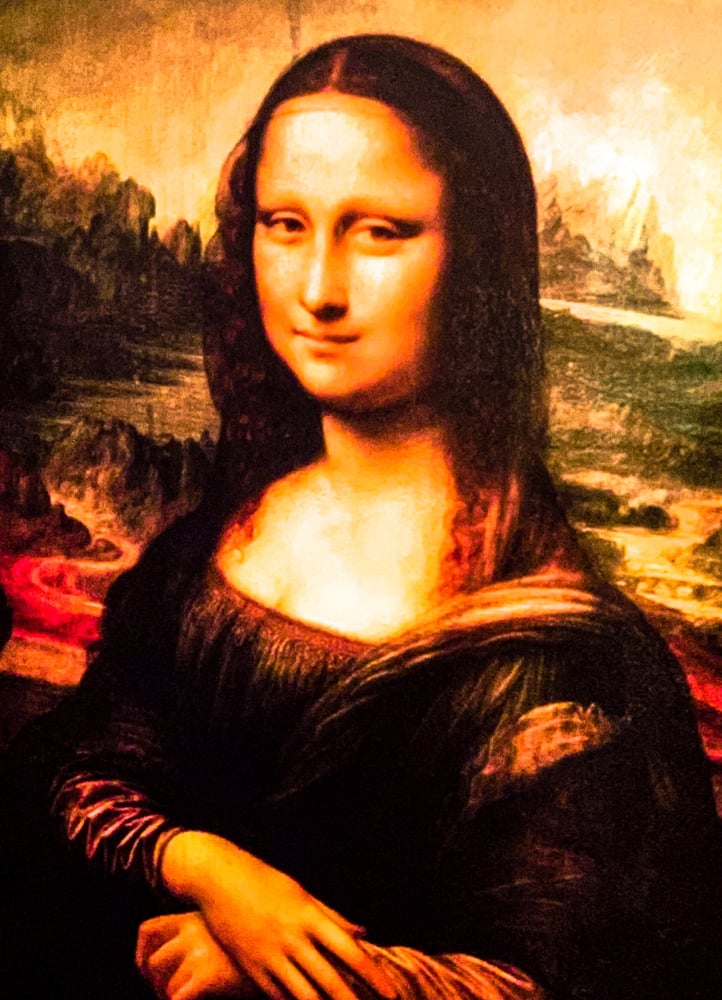
Some folks insist the Mona Lisa’s stare moves with them when they walk by. Scientists know why – it ties back to how da Vinci made her face look straight ahead.
Since painters freeze a single viewpoint, no matter where you stand, she still seems to lock eyes. Real humans would turn or glance away if you shifted spots, yet a painting stays fixed.
The mind tricks itself into thinking she’s watching, though really it’s just the flat canvas and unchanging perspective fooling your head.
The artwork sits in a space where temperature never changes

The Louvre houses the Mona Lisa in a custom-built enclosure with stable climate settings. Not only does it control heat, but also locks in steady moisture levels throughout the year to protect the half-millennium-old wooden base.
Instead of regular glass, it uses shatter-resistant panels that block damaging light rays – those which might dull the soft colors over time. Meanwhile, airflow tech stops dampness from forming and sweeps dust off the front side.
Because of these steps, people far ahead can view da Vinci’s masterpiece much like we do now.
Copies are everywhere around the globe
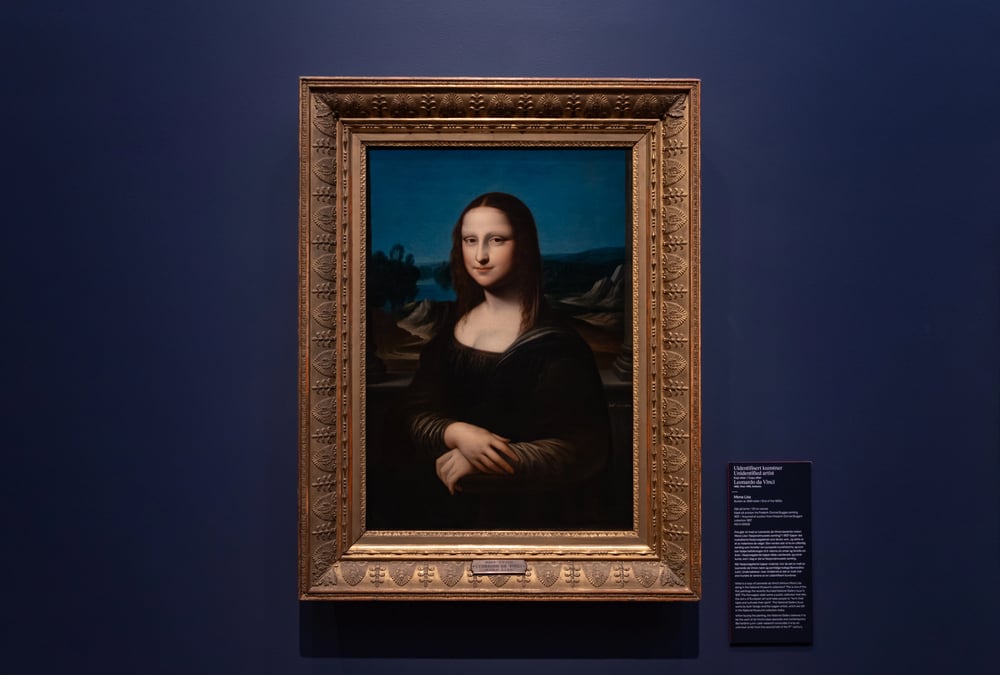
Over 300 versions of the Mona Lisa sit in museums or private hands across the globe. While Leonardo crafted the original, some were made by his pupils nearby.
Later painters, far removed in time, attempted to echo its mystery instead. Madrid’s Prado holds one painted alongside Leonardo’s own, maybe by someone learning under him.
Because old layers have dulled the real piece, these replicas help experts guess how it first appeared.
Insurance worth won’t figure out

The Mona Lisa’s never had insurance – too risky for any company to cover. Back in 1963, when it went to the U.S., officials set its worth at $100 million just for paperwork.
That sum today? Close to a billion bucks. Still, what it really means can’t be measured in cash.
France sees it as something you couldn’t swap, no matter the cost. Removing it from the Louvre needs top-level permission.
Since ’74, it hasn’t even left the country.
What makes it relevant right now

The Mona Lisa connects old-school Renaissance smarts with today’s fame obsession – somehow it doesn’t feel dated. Instead of just colors, Leonardo played with light and shade, plus how we see things, which later helped shape photos and movies.
When someone stole the artwork, it blew up in newspapers way back when Wi-Fi wasn’t even a thing, proving art can go viral without hashtags. Each snapshot snapped by visitors at the Louvre behind thick glass shows an ancient painting still holds power in our overloaded visual world.
There’s a reason people keep coming back – the piece somehow sidesteps time and hits different every single era.
More from Go2Tutors!

- The Romanov Crown Jewels and Their Tragic Fate
- 13 Historical Mysteries That Science Still Can’t Solve
- Famous Hoaxes That Fooled the World for Years
- 15 Child Stars with Tragic Adult Lives
- 16 Famous Jewelry Pieces in History
Like Go2Tutors’s content? Follow us on MSN.



