Oldest aLnguages Still Spoken
Most tongues do not endure forever. Shaped by movement, war, or shifts in culture, they twist slowly – becoming unrecognizable or fading into silence.
Sounds alter across generations. Rules either loosen or tighten without warning.
Old terms vanish like footprints in rain. Rare remnants linger on paper, pieced together later by careful minds.
Only a few tongues have pulled off an odd feat. Alive after ages, they’re not relics studied in silence but tools shaped daily by people who speak and write them.
Their endurance came not from staying fixed. Shifting slowly, they took in fresh thoughts yet kept enough familiarity to feel like themselves.
Older than most written histories, some tongues live on despite shifting times. What folks mean by “oldest” isn’t really about trophies or charts.
Instead, experts look at unbroken threads – speech passed down so steadily it links inscriptions of old to voices today. These sounds survived because communities held them close across generations.
Not merely grammar and vowels remain, but ways of seeing, remembering, belonging.
Peeking into ancient tongues still spoken today reveals quiet resilience across centuries. Each one carries old rhythms into current times without fanfare.
From daily talk in far villages to city streets, these sounds persist. Where empires faded, they held ground through stubborn habit.
Not because of power, but presence. Century after century, they shift slightly – never breaking.
Some survive by ritual, others through sheer number of speakers. A few thrive where borders changed often.
Their words adapt while keeping shape. Time bends around them.
Still heard. Still alive.
Tamil

Tamil is often highlighted as one of the oldest living classical languages still used in everyday life. Its written history stretches back more than two thousand years, supported by inscriptions, poetry, and grammatical works that remain remarkably accessible to modern speakers.
What makes Tamil exceptional is not simply its age, but its uninterrupted use across social classes and settings. It has never been confined solely to religious texts or elite scholarship.
From ancient poetry to modern cinema, from street conversations to formal literature, Tamil has remained embedded in daily life.
Over time, spoken Tamil has diversified into regional and social varieties, while classical Tamil continues to be studied and celebrated. This layered structure allows the language to honor its past without freezing itself there.
The result is a rare balance between continuity and flexibility that few languages manage to achieve over such long spans.
Sanskrit
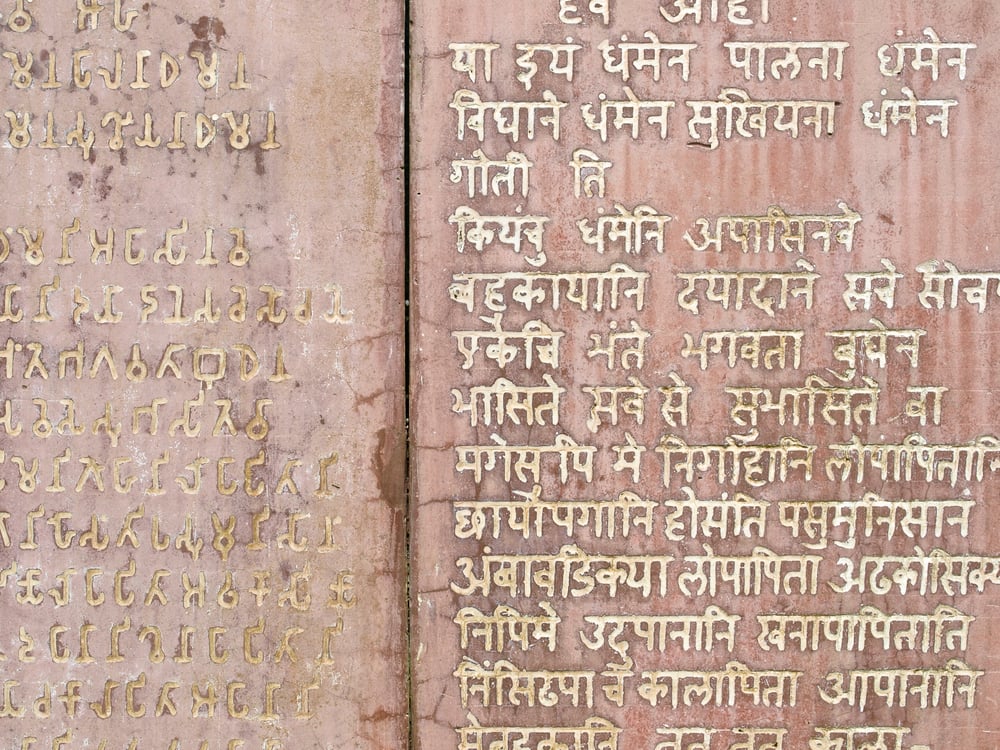
Sanskrit represents a different model of linguistic survival. Rather than functioning primarily as a community language, it has endured as a foundational language of knowledge, ritual, and philosophy for more than three millennia.
Ancient Sanskrit texts shaped fields ranging from mathematics and astronomy to ethics and storytelling. Its grammatical system was analyzed and formalized early, creating a stable structure that could be taught consistently across generations.
This precision helped preserve the language with remarkable clarity over time.
While Sanskrit is no longer widely used for daily conversation, it remains actively spoken in select communities and continues to influence modern languages across South Asia. Its survival rests not on numbers of speakers, but on cultural centrality.
Few languages have shaped so many others while remaining so clearly identifiable themselves.
Greek

Greek offers one of the clearest examples of gradual linguistic evolution rather than abrupt replacement. Written Greek appears in records dating back more than three thousand years, and while the language has changed significantly since then, it has never ceased to be used.
Ancient Greek produced foundational works in philosophy, science, drama, and history. As centuries passed, the language shifted through stages, adapting to political change and cultural exchange.
Instead of splintering into unrelated languages, Greek maintained a continuous thread connecting its earliest forms to its modern version.
Today’s speakers cannot simply read ancient texts without study, yet the relationship remains traceable and alive. Greek shows how a language can transform deeply while still preserving a shared identity across millennia.
Hebrew

Hebrew’s story is unusual even among ancient languages. Its earliest forms date back over three thousand years, preserved through religious texts, poetry, and legal writing.
For centuries, it functioned primarily as a written and ceremonial language rather than a spoken one.
What makes Hebrew remarkable is its modern revival. In the late nineteenth and early twentieth centuries, it was deliberately adapted for everyday use, becoming a spoken language once again.
New words were created, pronunciations standardized, and ancient structures reshaped to fit modern needs.
Despite this transformation, modern Hebrew remains clearly connected to its ancient roots. The revival demonstrates that linguistic continuity does not always require uninterrupted daily speech.
Sometimes, preservation through writing and identity can carry a language across long periods of dormancy.
Chinese

Chinese represents continuity through writing rather than uniform speech. Spoken forms have changed dramatically over time and vary widely across regions.
However, the written system has provided stability for more than three thousand years.
Early inscriptions already show structural similarities to later written forms. For centuries, a shared writing system allowed communication across vast territories, even when spoken language differed significantly.
This separation between speech and writing created resilience.
Modern readers cannot approach ancient texts without study, yet the visual and structural continuity remains striking. Chinese demonstrates that a language can endure through adaptation at different levels, preserving connection even amid immense diversity.
Arabic
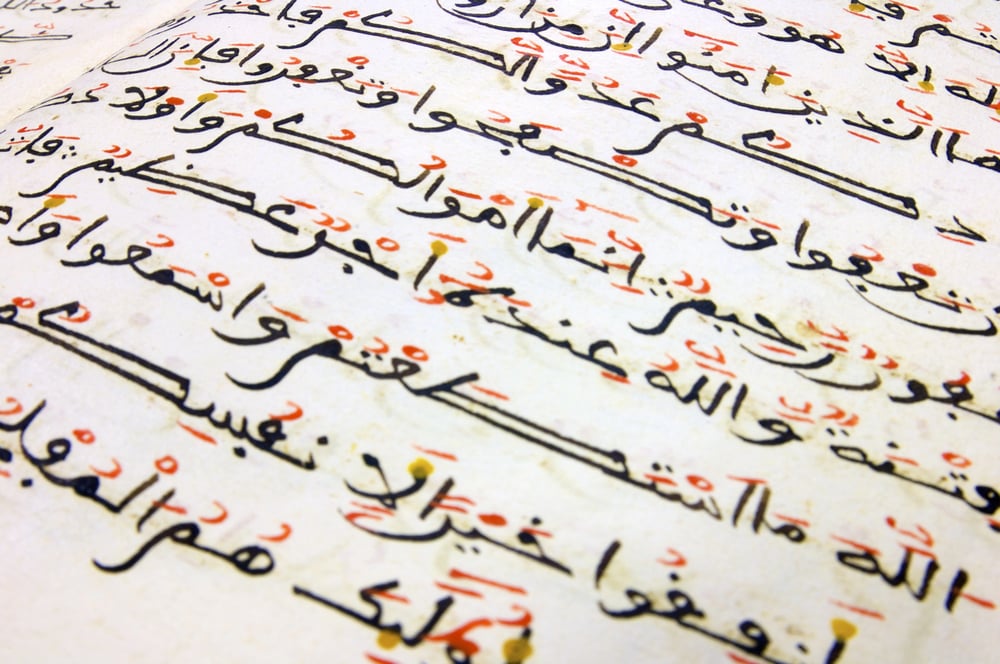
Arabic has been spoken in various forms for well over a thousand years, with its classical form preserved through religious and literary texts. The written standard used today remains closely aligned with early manuscripts, creating a strong sense of historical continuity.
Spoken Arabic exists as many regional varieties, shaped by geography and history. These varieties can differ significantly, yet a shared written form unites speakers across continents.
Education, media, and religion reinforce this connection.
Arabic’s endurance lies in this dual structure. Flexibility in speech allows adaptation, while stability in writing maintains coherence.
Together, they support a language that feels both ancient and current.
Persian
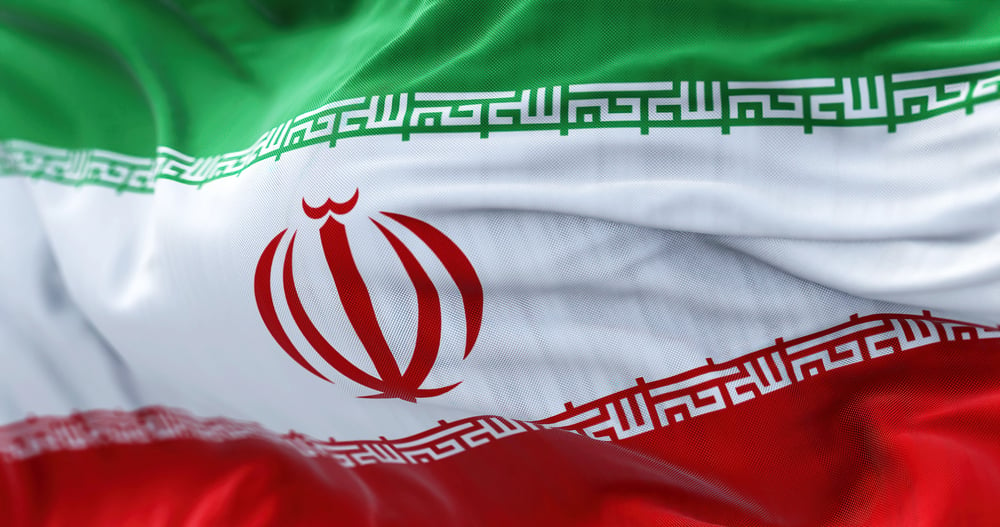
Persian traces its lineage back to ancient Iranian languages used in imperial administration more than two thousand years ago. While the earliest forms differ from modern usage, the transition unfolded gradually rather than through rupture.
Classical Persian literature flourished during the medieval period, producing poetry and prose still widely read today. Modern speakers can engage with these works with relatively little mediation, highlighting the language’s continuity.
Spoken across multiple countries and regions, Persian demonstrates how a language can survive political change by embedding itself in culture rather than borders. Its endurance is tied to literature, identity, and shared history.
Aramaic

Aramaic is among the oldest known languages still spoken, though today it survives in much smaller communities. It emerged more than three thousand years ago and once served as a common language across large parts of the ancient Near East.
Its historical influence was vast, appearing in administrative records, religious texts, and everyday correspondence. Over time, it fragmented into regional forms, many of which disappeared as political centers shifted.
Today, small communities continue to speak modern forms of Aramaic, preserving a fragile but direct link to antiquity. Its survival highlights how linguistic endurance often depends on community commitment rather than scale.
What allows a language to last

The survival of these languages is not accidental. Each benefited from social structures that reinforced transmission across generations.
Education, ritual, literature, and governance all played roles in maintaining continuity.
Equally important is adaptability. Languages that endure do so by absorbing change rather than resisting it.
New concepts require new words. New realities reshape usage.
Stability comes from relevance, not rigidity.
When a language remains useful, meaningful, and valued, it gains resilience. When it becomes isolated or ornamental, its future becomes uncertain.
Why these languages matter today

Ancient languages still spoken offer more than historical curiosity. They provide direct access to long chains of thought, creativity, and worldview.
Modern speakers are not merely inheriting words. They are participating in conversations that began thousands of years ago.
In an era of rapid change, these languages offer perspective. They remind us that continuity and adaptation are not opposites, but partners.
What survives is not what stays the same, but what learns how to endure.
That quiet persistence is what makes these languages remarkable. They are not echoes of the past.
They are living proof that human expression can stretch across time and still feel present.
More from Go2Tutors!

- The Romanov Crown Jewels and Their Tragic Fate
- 13 Historical Mysteries That Science Still Can’t Solve
- Famous Hoaxes That Fooled the World for Years
- 15 Child Stars with Tragic Adult Lives
- 16 Famous Jewelry Pieces in History
Like Go2Tutors’s content? Follow us on MSN.