Ancient Beauty Practices That Seem Shocking Now
Vanity is older than writing. Long before anyone set down a law code, people were grinding minerals, rendering animal fat and mixing pastes in seashells to change the face they showed the world.
Some of it worked, and some of it slowly poisoned the wearer. The ancient sources record all of it with the same calm, from Pliny’s recipe notes to the jars left beside the dead.
Lead Eyeliner That Egyptians Wore Every Day

Egyptian men, women and children lined their eyes with black kohl based on galena, a lead ore, and the practice ran for thousands of years. In 2010 a French team led by Philippe Walter and Christian Amatore reported in the journal Analytical Chemistry on 52 samples from makeup containers held at the Louvre.
They found two lead chlorides, laurionite and phosgenite, that rarely occur in nature and seem to have been made deliberately. The team suggested that very small doses might have triggered an immune response in the skin around the eye.
That idea remains debated, and nobody disputes that lead is toxic over time.
Wax Cones Worn on Top of the Head
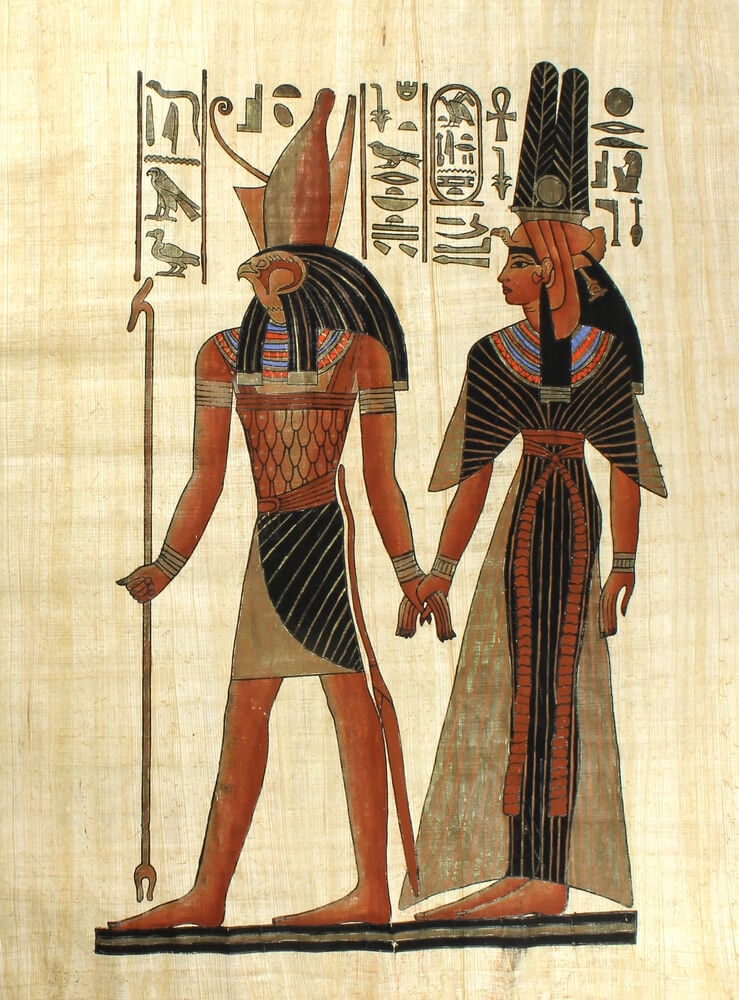
Tomb paintings show Egyptian banquet guests with pale cones perched on their heads, and for a century scholars argued over them. The usual guess was a lump of scented fat that melted into the hair through the evening.
Others thought the cones were only a painter’s symbol. Then two burials at Amarna, the short-lived capital of Akhenaten, turned up actual cones, and the find was published in the journal Antiquity in December 2019.
Scans showed that both were hollow shells of wax, one worn by a woman in her twenties. No trace of perfume or scented resin survived, so the melting theory is still unproven.
Shaved Scalps Under Heavy Wigs

Many well-off Egyptians cropped or shaved their own hair and wore someone else’s instead. Surviving wigs are made of human hair, sometimes padded with plant fiber, and set with a warm mix of beeswax and resin that hardened as it cooled.
The British Museum holds a New Kingdom example from Thebes with a mass of light curls over hundreds of thin plaits. Herodotus, visiting in the fifth century BC, wrote that Egyptian priests shaved the entire body every other day to stay clean of lice.
A wig could be taken off in the heat, and it kept the wearer’s own scalp easy to wash.
Black Calf Blood for Gray Hair

The Ebers Papyrus, a medical scroll written in Egypt around 1550 BC, runs to about 110 pages and treats gray hair as a problem with a remedy. Several of its prescriptions rely on a simple idea, that the color of a dark animal could pass into the patient.
One often-cited recipe calls for the blood of a black calf cooked in oil and rubbed into the scalp. Others in the same tradition use parts of black snakes or black bulls.
The scroll, bought by the German scholar Georg Ebers in the 1870s, is now kept at the university library in Leipzig.
Cosmetics Stored in Seashells at Ur

Around 2500 BC a woman named Puabi was buried in the Royal Cemetery at Ur, in what is now southern Iraq, with a headdress of gold leaves and a great deal else. When Leonard Woolley excavated the cemetery in the 1920s he found cockle shells in many graves still holding cakes of pigment in green, black, white and red.
Puabi’s tomb also held shell-shaped containers made of gold and silver. Popular accounts add that Sumerian women colored their lips with crushed gemstones.
That detail is repeated often and sourced poorly, so the pigments in the shells are the safer evidence.
Greek Faces Whitened With Corroded Lead
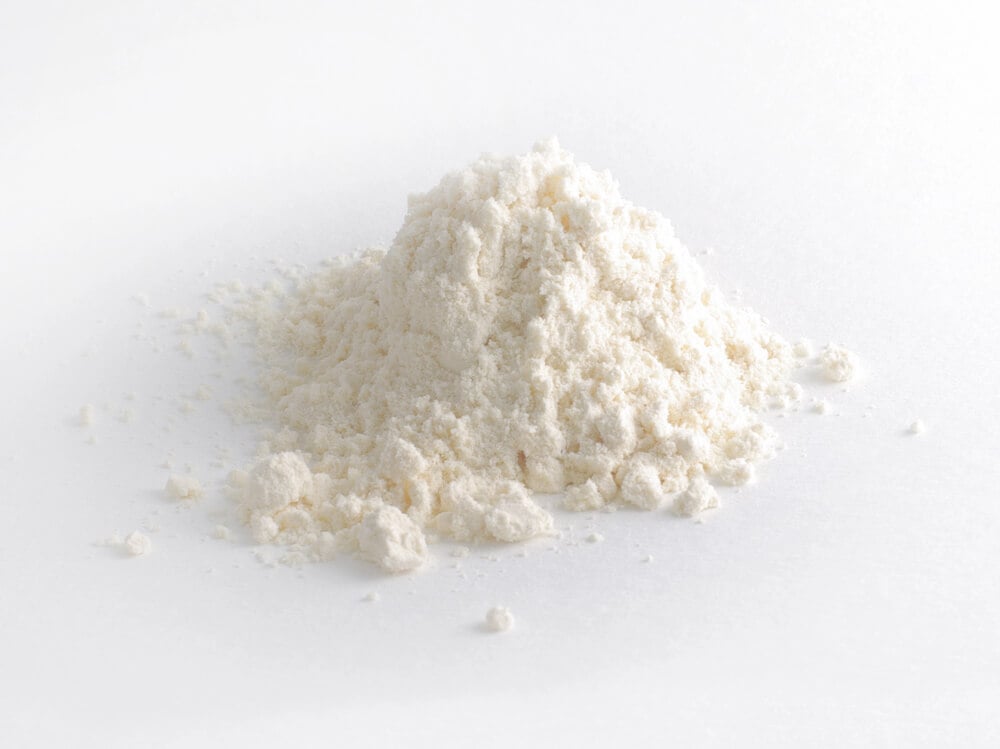
Pale skin signaled an indoor life in classical Athens, and the product that delivered it was psimythion, a white lead carbonate. Theophrastus, writing around 300 BC, described the method.
Lead was set over vinegar in a clay jar until a crust formed, and the crust was scraped off, ground and dried. Small cakes of it have been found in women’s graves in Attica.
In Xenophon’s Oeconomicus a husband named Ischomachus scolds his young wife for wearing white lead, red alkanet on her cheeks and raised shoes. Romans later used the same substance under the name cerussa.
Poppaea’s Traveling Herd of Donkeys

Pliny the Elder reports that Poppaea Sabina, wife of the emperor Nero, kept 500 she-donkeys with foals and took them along wherever she traveled. She bathed in the milk, he says, because she believed it smoothed the skin and kept it white.
Juvenal later joked about a rich woman who would take her donkeys along even into exile at the far north. Pliny adds that some women washed their faces with the milk many times a day.
Cleopatra’s milk baths are a much-loved tradition as well, but no ancient writer describes them, and the story may simply have been borrowed from Poppaea.
Rouge Made From Wine Dregs and Red Lead
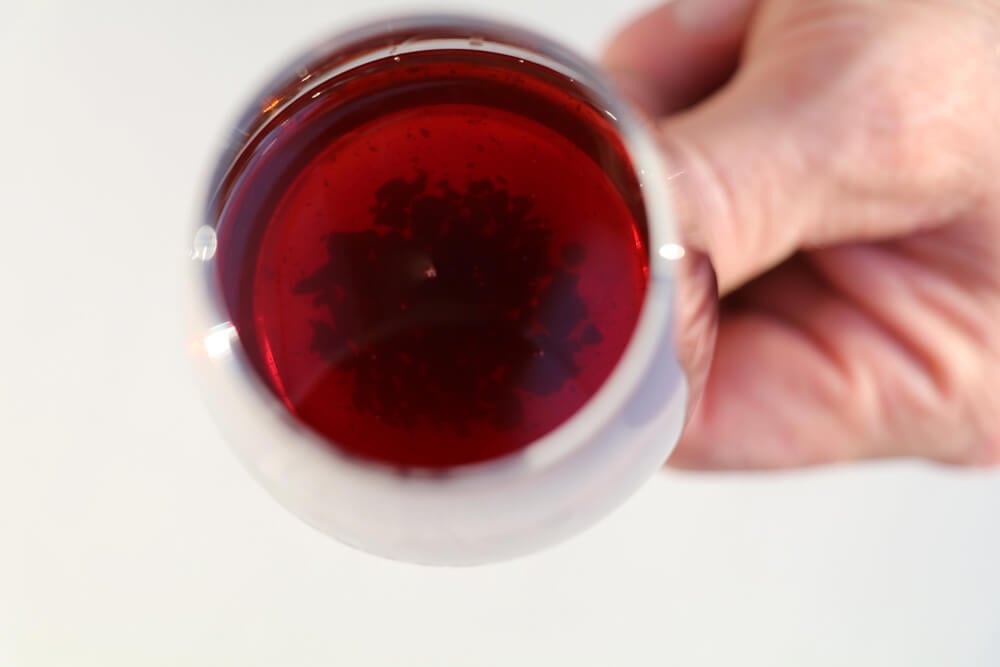
Roman cheeks were reddened with whatever gave a good color. Cheap options included red ocher, crushed mulberries and the dried lees left in a wine jar.
A costlier product called purpurissum was chalk soaked in purple dye, and Plautus mentions it in a comedy written around 200 BC. Red lead and cinnabar, a mercury ore, appear in the makeup kit too, though how widely is uncertain.
Pliny knew the ore was dangerous. He notes that workers who polished it in the workshops tied loose masks made of animal bladder over their faces so they would not breathe the dust.
Urine as a Tooth Whitener

Catullus, writing in the first century BC, mocked a man named Egnatius who grinned constantly to show off his white teeth. The poet’s explanation was that Egnatius came from Celtiberia in Spain, where people rinsed their mouths each morning with stale urine.
The geographer Strabo and the historian Diodorus say much the same about Iberian habits. Ammonia in aged urine does clean, which is why Roman fullers used it on cloth.
The frequent claim that Romans in general swished with it, or imported it from Portugal, rests on little more than this one insult.
Rotted Leeches as Black Hair Dye

Pliny’s Natural History preserves a hair dye that took patience and a strong stomach. Leeches were left to rot in red wine for 40 days, and the liquid was said to turn hair black.
A second version called for a lead vessel and vinegar, with the mixture rubbed into the hair in full sun. Pliny passes along a warning from a writer named Sornatius that the dye was so penetrating it would blacken the teeth as well.
The precaution was to hold a mouthful of oil while applying it. He records the recipe without any sign of surprise.
A Lead Paste That Darkened Hair From Within
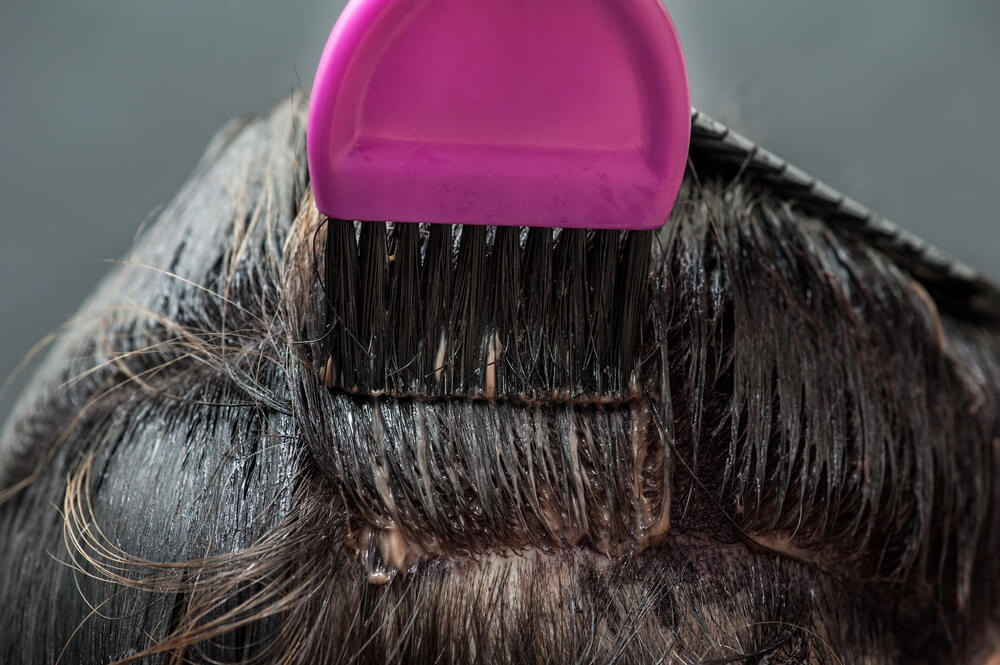
Greek and Roman recipes also describe a simpler black dye made by mixing lead oxide with slaked lime and water. In 2006 Philippe Walter and colleagues tested the old formula on blond hair and published the results in the journal Nano Letters.
Over about three days the hair darkened steadily. Under the microscope, the lead had reacted with sulfur in the hair’s own proteins to form crystals of lead sulfide roughly five nanometers across.
Ancient users had no idea of the chemistry, only that gray vanished. The same reaction survived into modern times in some gradual hair darkeners.
Gallic Soap and Hair Cut From Captives
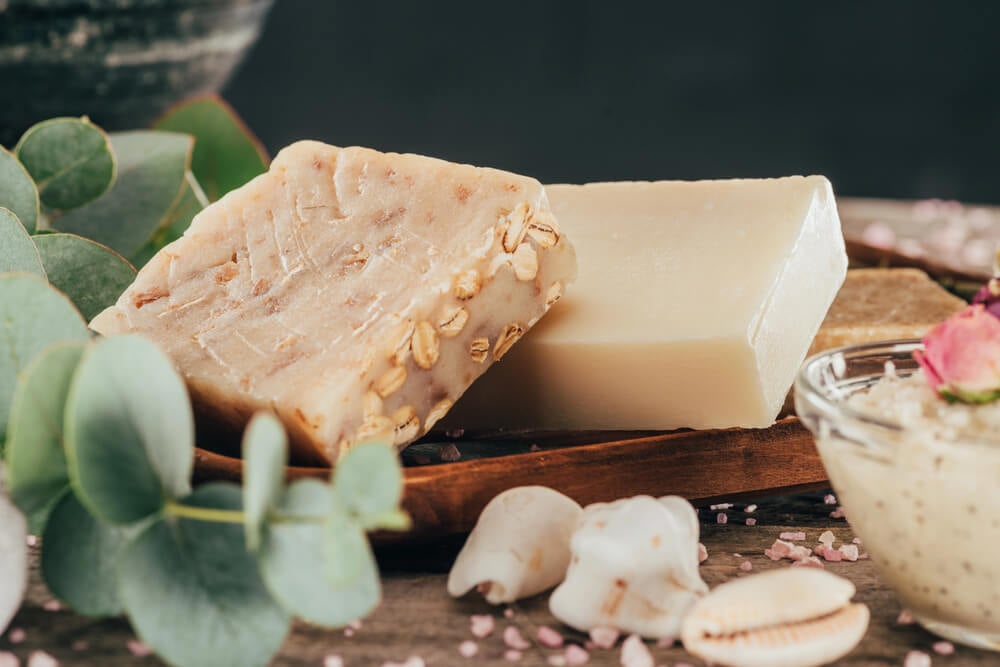
Soap first reached Rome as a hair product. Pliny calls sapo an invention of the Gauls for turning hair red, made from tallow and ashes, with beech ash and goat fat giving the best result. Among the Germans, he adds, men used it more than women.
Martial mentions a foam from the Batavians of the Rhine delta in the same role. Fashionable Roman women wanted that northern color, and the dyes were harsh.
In one of Ovid’s poems a woman’s hair falls out after too much dyeing, and the poet tells her she can now wear hair sent from conquered Germany.
Armpit Pluckers Working the Bathhouse

Seneca once rented rooms above a public bathhouse and listed the noises in a letter to his friend Lucilius. Among the grunting weightlifters and sausage sellers was the alipilus, a professional hair plucker who advertised in a thin, shrill voice.
He was never quiet, Seneca complains, except when he was plucking a customer’s armpits and making the customer shriek instead. Bronze tweezers are among the most common small finds on Roman sites.
Plasters of hot pitch and resin did the same job faster, and Juvenal and Martial both tease men who rubbed their skin smooth with pumice.
Grease From Unwashed Fleece as Face Cream

One of Rome’s favorite skin creams was oesypum, the oily residue boiled out of raw sheep’s wool. It is essentially crude lanolin, which is still used in ointments.
Pliny describes how it was skimmed from the water, and the prized grade was shipped from Athens. Its drawback was the smell.
Ovid, in the third book of his Art of Love, advises women to keep their cosmetic jars out of an admirer’s sight and singles out this ointment. Even when sent from Athens, he says, it is still oil drawn from the unwashed fleece of a sheep. He assumes every reader knows the product.
Crocodilea, the Complexion Cure From a Reptile
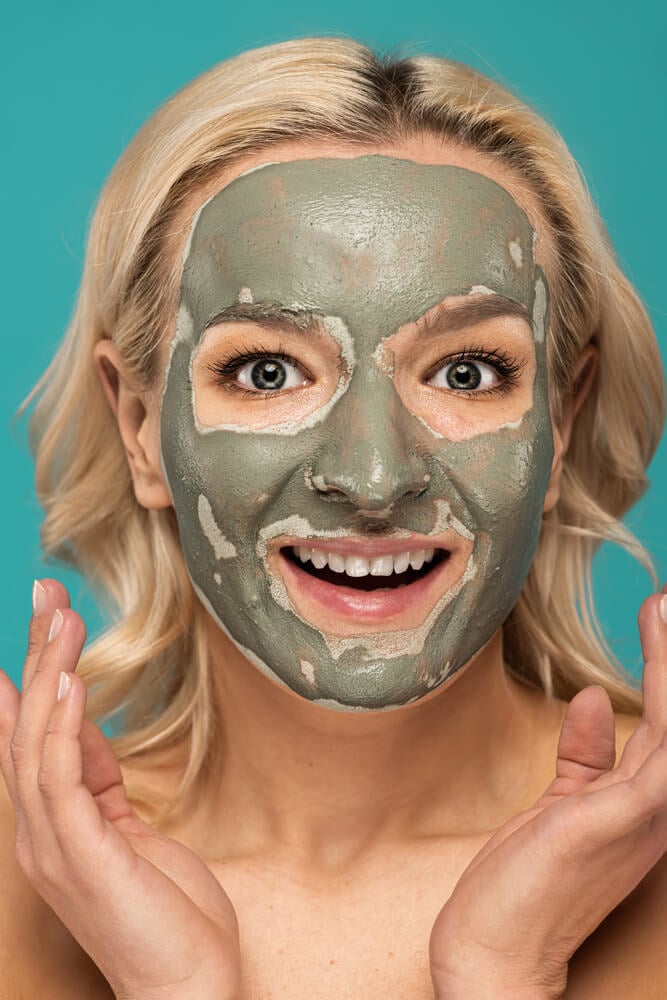
Horace sneers in one of his Epodes at a woman whose face paint, colored with crocodile dung, runs in the heat. He was not inventing the ingredient. Pliny describes a product called crocodilea, taken from the gut of a land reptile he calls a crocodile, which fed on fragrant plants.
Mixed with oil, it was said to clear blemishes and brighten the face. Demand was high enough that dealers faked it with chalk or with the droppings of starlings fed on rice.
Scholars suspect the animal was a large lizard such as a skink and that the Nile crocodile was never involved.
Scrapings From Athletes Sold as Medicine

Greek and Roman athletes oiled their skin, exercised in the dust, and then scraped the mixture off with a curved metal strigil. That gray sludge of oil, sweat and dirt had buyers.
Pliny says it was valued as a softening and warming ointment for joints and swellings, and that the managers of some Greek gymnasiums sold their scrapings for 80,000 sesterces. Scrapings from gymnasium walls and from statues were collected as well, by ancient medical accounts.
Modern retellings often claim Roman women bought gladiator sweat as a face cream. Pliny does not go that far, and the story appears to be an embellishment.
Leather Patches Stuck on the Face

Small patches called splenia, cut from soft leather or cloth, were worn on Roman faces centuries before the beauty spots of later Europe. They began as plasters over a sore or scar and became a fashion.
Ovid mentions women hiding their cheeks with little patches. Martial uses them for a sharper joke about a man in purple sitting in the front rows of the theater with patches dotting his forehead.
Peel them off, the poet says, and the reader would learn what he used to be. Runaway slaves were sometimes branded on the forehead, and a freed man could not erase it.
Curling Tubes Heated in Hot Ash

The calamistrum was a hollow metal rod, heated in the embers and wound with damp hair to set a curl. Varro, writing in the first century BC, explains the name and says the slave who warmed it in the ashes was called a cinerarius.
By the late first century AD court hairstyles rose in tiers of curls above the forehead, and each one had to be built by hand by enslaved hairdressers. The work carried real risk for them.
Martial describes a woman named Lalage who struck her maid Plecusa with a mirror because a single ringlet had been pinned out of place.
Antler and Narcissus Bulbs in Ovid’s Face Pack

Ovid wrote an entire poem of cosmetic recipes, the Medicamina Faciei Femineae, of which only about 100 lines survive. One mask begins with two pounds of barley and an equal amount of vetch, bound with ten eggs, dried and ground.
To this the reader adds powdered antler from a stag’s first shedding, twelve peeled narcissus bulbs, gum, Tuscan spelt and a large measure of honey. Any woman who uses it, he promises, will shine smoother than her own mirror.
Narcissus bulbs contain irritants, so the glow may have owed something to mild inflammation.
Etruscan Gold Bands Across the Front Teeth

About twenty gold dental appliances survive from Etruscan Italy, the oldest dating to the seventh century BC. Each is a flat gold band that loops around several teeth and holds a replacement tooth, sometimes carved from an animal tooth, in a gap at the front.
They used to be described as early dentures. The anthropologist Marshall Becker, who studied them for decades, argues that they were worn by wealthy women and that the missing incisors were often healthy teeth removed on purpose so the gold could be shown.
His reading is widely cited but hard to prove from so few examples.
Maya Infants With Bound Heads

Among the ancient Maya a high, sloping forehead was made in the first months of life. Mothers or midwives bound a newborn’s head between boards or wrapped it tightly with cloth while the skull was still soft, and the shape set permanently within a few years.
Studies of burials by the anthropologist Vera Tiesler found the practice in a large majority of skulls examined, among commoners as well as nobles. The skull of the Palenque king Pakal, who died in AD 683, shows it clearly.
The pressure altered the head’s outline and, as far as researchers can tell, did no harm to the brain.
Jade Set Into Living Teeth
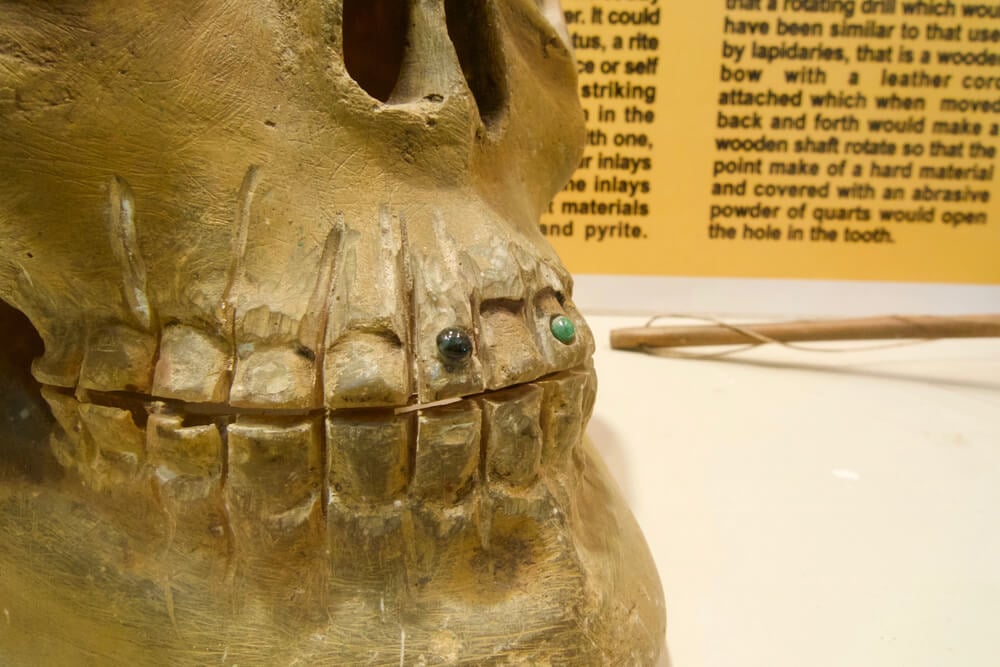
Maya adults also had their front teeth drilled and fitted with small round inlays of jade, pyrite, hematite or turquoise. The work was done with a hard drill and an abrasive, and it stopped just short of the nerve often enough to suggest practiced hands.
Many inlays are still in place more than a thousand years later. A 2022 study in the Journal of Archaeological Science: Reports analyzed the cement from eight teeth and found plant resins, including pine.
Those ingredients may have fought decay as well as holding the stone. Filing teeth into points and notches was common too.
Han Women Who Shaved Their Eyebrows to Paint New Ones
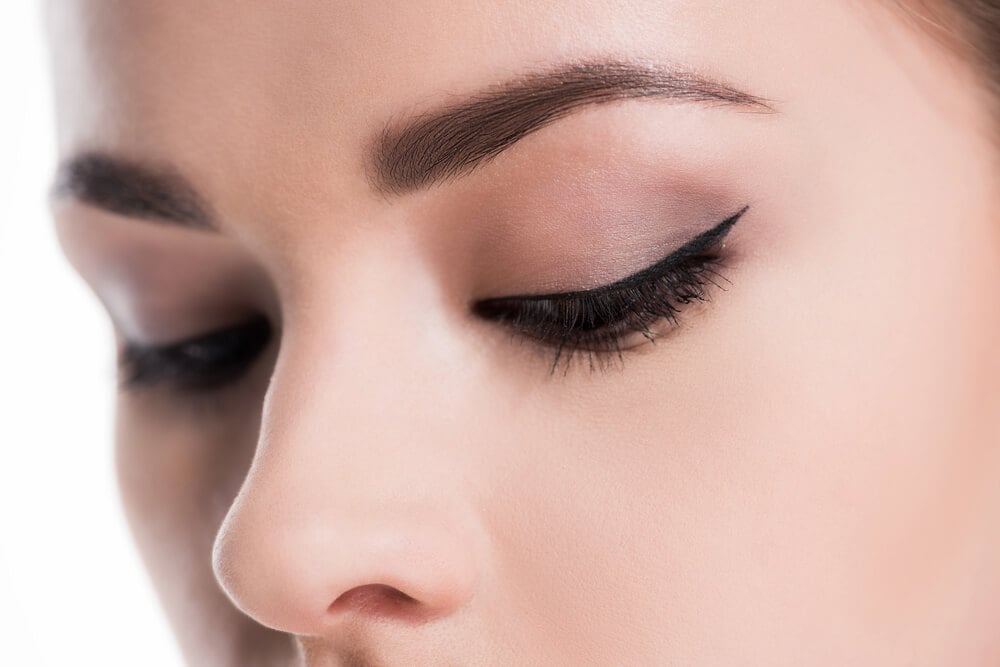
Fashionable women in Han dynasty China removed their natural eyebrows and drew on new ones with dai, a blue-black pigment. Styles changed often, from long thin arcs to short broad strokes.
The Book of Han records that Zhang Chang, a capital official under Emperor Xuan in the first century BC, was reported to the throne for painting his wife’s eyebrows himself. He replied that married couples did far more private things than that.
The tomb of Lady Dai at Mawangdui, who died in the 160s BC, held a lacquer toiletry case with rouge, a silk powder puff, two combs and a hairpiece.
Teeth Blackened With Iron and Vinegar
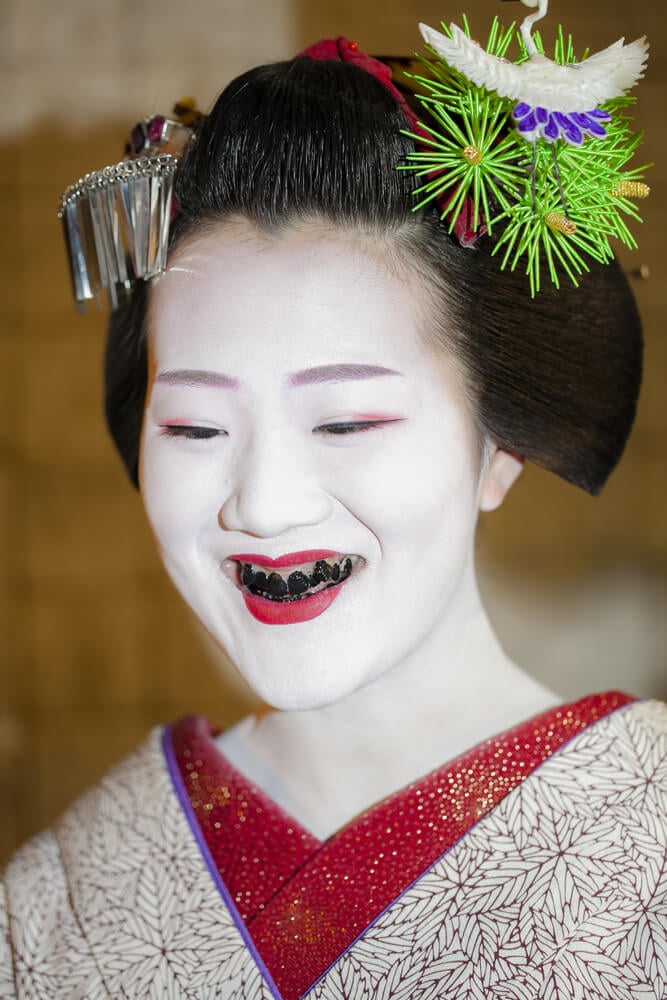
Japanese ohaguro produced a glossy black smile by painting the teeth with a liquid of iron filings steeped in vinegar or tea and mixed with powdered gallnut. It is best documented from the Heian court onward and was banned by the government only in 1870.
Its roots appear to be far older. Early Chinese texts mention a land of black-toothed people somewhere beyond their shores, though its location is disputed, and traces of the custom have been reported on bones and clay haniwa figures from the Kofun period.
That early evidence is thin. The coating was long believed to protect teeth from decay by sealing them.
Mirrors Rarely Show the Risk

Read as a set, these practices are less strange than they first appear. People wanted smoother skin, darker hair, whiter teeth and a face that announced rank, and they reached for what was at hand.
Lead, mercury ore, animal fat and stale urine were the materials the ancient world had to work with. Many users could see the damage and carried on.
The modern reader has little room to feel superior. Ancient writers already made fun of the effort, from Xenophon’s lecturing husband to Martial’s patched theatergoer, and the mockery changed nothing.
Each age decides what a good face looks like and then finds a chemistry to match. Only the ingredient list has been revised.
More from Go2Tutors!

- The Romanov Crown Jewels and Their Tragic Fate
- 13 Historical Mysteries That Science Still Can’t Solve
- Famous Hoaxes That Fooled the World for Years
- 15 Child Stars with Tragic Adult Lives
- 16 Famous Jewelry Pieces in History
Like Go2Tutors’s content? Follow us on MSN.