Animal Migrations That Defy Logic
Some animals travel in ways that just don’t make sense at first glance. They cross oceans, deserts, and even entire continents—often without getting lost.
With no GPS, no maps, and no travel guides, they somehow know exactly where to go. Scientists study them, guess how they do it, and still get surprised every year.
It’s hard to believe these journeys are real until you see what some of these animals actually pull off. Let’s take a look at some migrations that feel more like a mystery than science.
Arctic terns go from pole to pole

These small birds make the longest known migration of any animal. They fly from the Arctic all the way to Antarctica and back—over 40,000 miles each year.
That’s almost like circling the entire planet. They do it for food and better weather, using wind and sun to guide them.
Despite their size, they never seem to get tired.
Salmon swim upstream against all odds

Salmon are born in freshwater rivers, travel to the ocean, then swim back upstream to the exact place they were born. Along the way, they fight strong currents and leap over waterfalls.
Some even travel over 1,000 miles. Scientists think they use smell to find their birth stream.
It’s a journey full of obstacles, but they do it anyway.
Monarch butterflies take four generations to finish the trip

Monarchs migrate thousands of miles between the U.S., Canada, and Mexico. But here’s the wild part—the butterflies that leave in spring aren’t the ones that return in the fall.
It takes about four generations to complete the full round trip. Somehow, the great-grandchildren know exactly where to go, even if they’ve never been there before.
Wildebeests race across Africa in massive herds
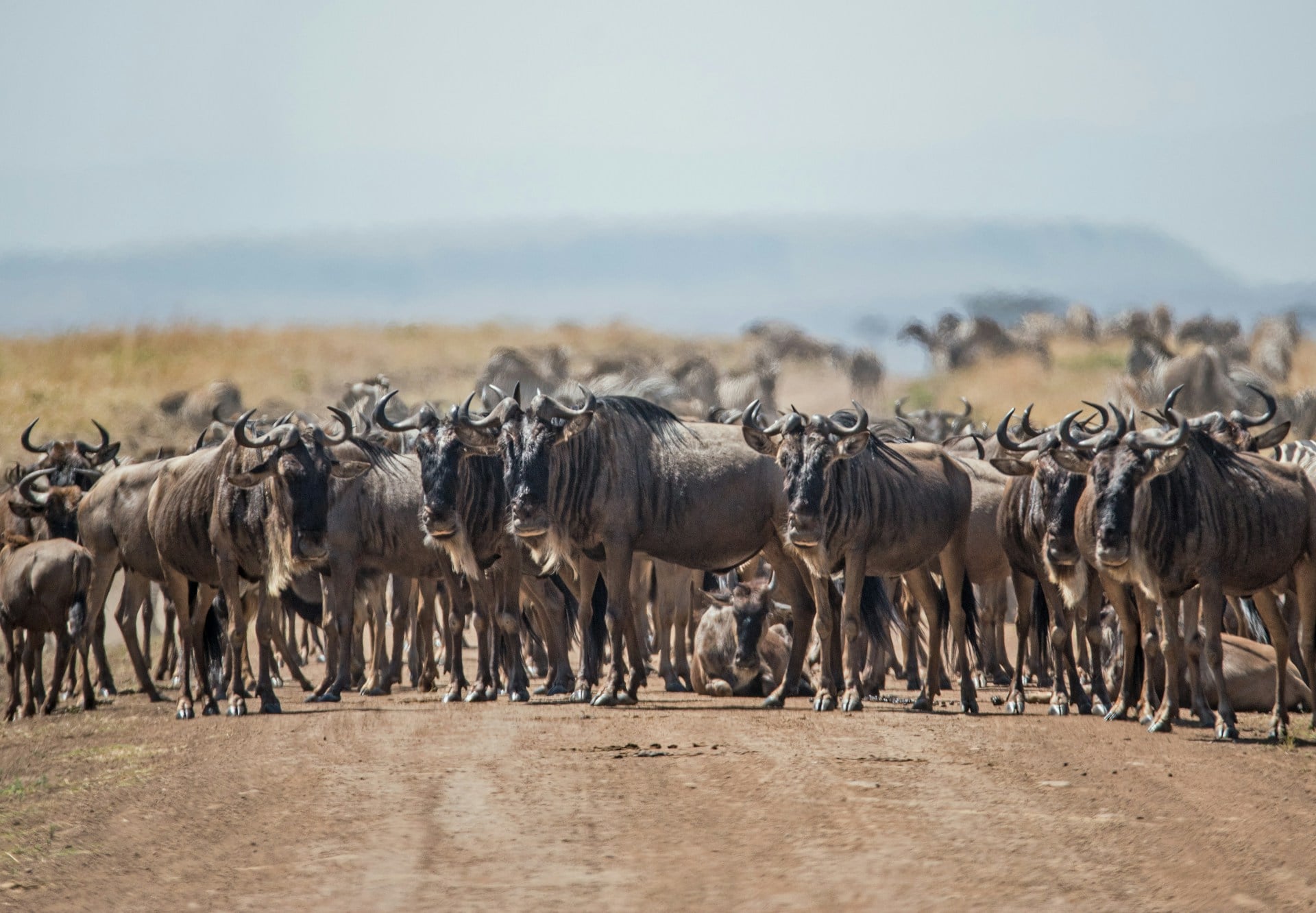
Over a million wildebeests move through the Serengeti each year. They’re followed by zebras and other animals, all in search of fresh grass and water.
The route is full of predators and dangerous rivers, but they keep going. Their timing matches the seasons so well, it’s almost like they have a built-in calendar.
Green sea turtles return to the same beach where they were born

Green sea turtles travel thousands of miles across the ocean, then somehow return to lay their eggs on the very beach where they hatched. No one knows exactly how they find it.
They may use the Earth’s magnetic field like a map. Either way, it’s a perfect example of memory most humans would envy.
Caribou travel up to 3,000 miles through harsh land

Caribou in North America take one of the longest land migrations. They move through deep snow, frozen rivers, and rough terrain.
They go to find food and safer places to have their calves. The entire herd moves together, sometimes in groups of over 50,000.
It’s a cold and tiring trip, but they repeat it every year.
Humpback whales sing across the oceans

Humpbacks travel thousands of miles between feeding grounds in cold waters and breeding areas in warmer seas. Their songs can be heard for miles and seem to play a part in the migration.
Each year, they follow similar routes, even though they spend months without eating. These gentle giants rely on fat stored in their bodies to make it through.
Dragonflies cross oceans with no plan B

The globe skimmer dragonfly holds the record for the longest insect migration. It travels from India to Africa, crossing
the Indian Ocean—about 4,000 miles.
There’s no place to stop mid-ocean, but they still make it. Wind helps carry them, and they somehow time their flight with the weather.
Elephants follow ancient trails remembered for generations

Elephants migrate to find water and food, especially in dry seasons. What’s amazing is that they often follow the same paths their ancestors used.
These routes aren’t marked on any map, but older elephants seem to remember every detail. The young ones learn just by following.
Arctic foxes walk across frozen seas

An arctic fox once walked over 2,000 miles from Norway to Canada in just 76 days. It crossed ice, snow, and harsh weather.
Scientists tracked it with a collar and were shocked at the speed and distance. These foxes don’t fly or swim—they just keep walking.
It’s survival through pure determination.
Sandhill cranes fly in huge groups with perfect timing

Sandhill cranes travel in massive flocks during their migration, often flying thousands of miles. They know exactly when to leave and return, even if the weather changes.
Their calls can be heard from far away, and they use air currents to glide and save energy. They’ve been doing this for millions of years.
Leatherback turtles cross entire oceans

The leatherback is the largest sea turtle, and it travels across the Atlantic Ocean from Africa to the Americas. These turtles eat jellyfish and dive deep—over 3,000 feet at times.
Despite being slow swimmers, they make these long journeys year after year. The distance doesn’t stop them.
Bar-headed geese fly over the Himalayas

These geese cross one of the highest mountain ranges on Earth. They fly at altitudes where there’s barely any oxygen—higher than many airplanes.
Most birds can’t survive there, but these geese manage it. Scientists are still studying how they breathe at such heights.
Eels go to the Sargasso Sea to start life

European and American eels live in rivers and lakes but travel all the way to the Sargasso Sea to breed. It’s a mystery how they find it since no one has seen them mate.
After they lay eggs, the adults die, and the babies swim all the way back. It’s a one-way trip with a strange beginning.
Hummingbirds fly nonstop across the Gulf of Mexico

Some hummingbirds travel over 500 miles across open water without stopping. They flap their wings up to 70 times per second.
Before migrating, they eat constantly to store energy. It’s a risky trip, but they do it every year like clockwork.
Reindeer follow the sun in Arctic regions

Reindeer migrate between feeding areas in the Arctic, covering hundreds of miles. They often travel at night or during twilight, using their sharp eyesight to move through snowy terrain.
They follow the light and changing seasons, sticking to paths that give them the best chance to find food.
Shoals of sardines create underwater storms

Sardines in South Africa take part in one of the largest migrations in the ocean. Millions of them swim together in tight groups, drawing in predators like dolphins, sharks, and birds.
The water boils with activity. It’s loud, fast, and full of danger, but sardines keep moving forward.
Nature’s compass never stops working

Even without maps, machines, or instructions, these animals find their way with stunning accuracy. What seems impossible to humans is just part of life for them.
These migrations have been happening for thousands of years, guided by instinct, experience, and maybe a little luck. While people rely on technology to get around, animals prove that nature has its own way of knowing the road ahead.
Watching these journeys reminds everyone just how wild and smart the natural world really is.
More frMore from Go2Tutors!

- The Romanov Crown Jewels and Their Tragic Fate
- 17 Halloween Costumes Once Considered Taboo
- Famous Hoaxes That Fooled the World for Years
- 15 Child Stars with Tragic Adult Lives
- 16 Famous Jewelry Pieces in History
Like Go2Tutors’s content? Follow us on MSN.