Authors Who Loathed Their Own Books
Writing a book is like raising a child—you pour everything into it, hope for the best, and sometimes watch in horror as it takes on a life of its own. Most authors have complicated feelings about their work, but some go beyond the usual self-criticism.
They actively despise what they’ve created, sometimes to the point of trying to erase it from existence. The reasons vary wildly.
Some writers grow to hate the monster they’ve unleashed on society, while others simply cringe at their earlier efforts once they’ve developed better skills. Here is a list of 17 authors who loathed their own books.
Peter Benchley

The man who made everyone afraid to go in the water spent the rest of his life regretting it. Benchley didn’t hate the writing quality of Jaws—he hated what it did to sharks.
After the 1975 film adaptation turned his thriller into a cultural phenomenon, shark populations plummeted as panicked humans launched a war against these ancient predators. Benchley became a passionate shark conservationist and educator, trying to undo the damage his fiction had caused.
He openly admitted that knowing what he knew later, he could never write that book again. Sharks don’t target humans, he explained, and they certainly don’t hold grudges like the villain in his story.
Franz Kafka

Throughout his diaries and letters, Kafka made it crystal clear that he despised most of what he wrote. The Metamorphosis, now considered one of the greatest works of 20th-century literature, was among the pieces he wanted destroyed.
On his deathbed, he asked his best friend Max Brod to burn all his unpublished work, including his journals filled with personal thoughts. Luckily for literature lovers everywhere, Brod ignored this request entirely.
Kafka’s self-loathing was so intense that he couldn’t even recognize the genius in his own writing, seeing only flaws where the world saw brilliance.
Arthur Conan Doyle

Creating the world’s most famous detective turned out to be Doyle’s greatest regret. He grew to resent Sherlock Holmes because the character’s fame eclipsed his own identity as a writer.
Doyle had written historical novels, plays, and other works he considered far more important, but nobody cared—they only wanted more Holmes. His frustration reached a breaking point when he literally killed off the detective in one story, pushing him over Reichenbach Falls.
The public outcry was so intense that Doyle had to resurrect Holmes, which only deepened his resentment of the character who refused to stay dead.
A.A. Milne

The creator of Winnie the Pooh never quite recovered from being known only for children’s books. Before Pooh became a phenomenon, Milne had established himself as a successful adult writer with seven novels, five nonfiction books, and thirty-four plays to his name.
He’d even worked as an assistant editor at Punch magazine. But once Pooh took off, his other work faded into obscurity, and readers seemed disappointed when he tried to publish anything else.
His son Christopher Robin shared the bitterness, eventually growing to hate the childhood fame that came from being the inspiration for the stories. The Milne family learned that literary immortality sometimes comes at a steep personal cost.
Agatha Christie

The queen of mystery novels absolutely detested her most famous creation. Christie found Hercule Poirot to be insufferable—she described him as a ‘detestable, bombastic, tiresome, egocentric little creep.’ The problem was that her publisher wouldn’t let her stop writing about him because he was too popular and too profitable.
She was essentially trapped in a literary marriage she desperately wanted to escape. Over her career, she wrote 33 novels and 56 short stories featuring the pompous Belgian detective, all while privately wishing she could kill him off.
She finally got her wish in 1975 with Curtain, where Poirot died, and Christie made sure there was no possibility of resurrection this time.
Ian Fleming
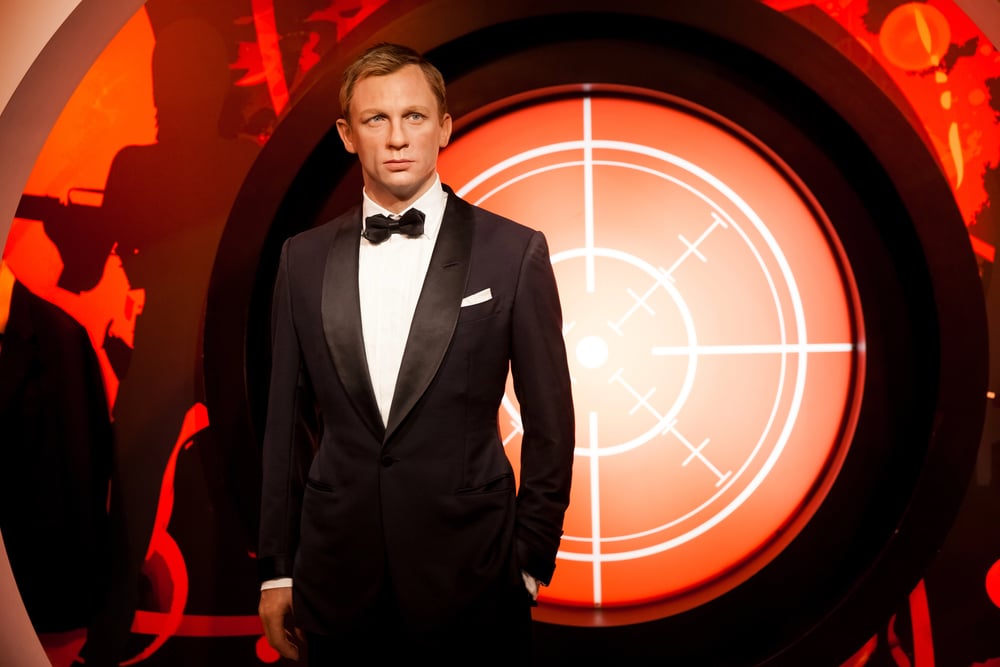
Fleming tried to course-correct his famous spy but ended up hating the result. The Spy Who Loved Me was his attempt to address criticism of James Bond’s misogyny by telling a Bond story from a woman’s perspective, making 007 a secondary character.
Fleming wanted to show that his creation had problematic tendencies, especially as young readers were making Bond into a hero. The experiment backfired spectacularly in his own eyes—he despised the finished book so much that he refused to allow it to be reprinted.
The movie adaptation went ahead decades later, but it kept only the title and discarded Fleming’s entire plot.
Anthony Burgess

The author of A Clockwork Orange spent years frustrated that his dystopian novel overshadowed everything else he’d written. Burgess claimed he’d banged out the manuscript in just three weeks, treating it as a quick project rather than his magnum opus.
He believed society completely misunderstood the book, seeing it as glorifying the violence and depravity it was meant to critique. The fact that Stanley Kubrick’s film adaptation became more famous than the novel itself only added salt to the wound.
Burgess described A Clockwork Orange as a novel he was ‘prepared to repudiate,’ wishing his dozens of other works would get the same attention.
Virgil

One of the most influential poets in Western civilization wanted his masterwork burned. After spending eleven years writing The Aeneid, Virgil traveled to Greece in 19 BCE, planning to spend three more years perfecting the epic poem.
He fell ill on the journey and died shortly after returning to Italy, but not before making a deathbed request that the manuscript be destroyed. Emperor Augustus refused to honor this wish and immediately had the work published.
Scholars still debate why Virgil wanted it gone—was it perfectionism over the incomplete lines scattered throughout, or did he regret creating propaganda for Augustus’s regime? We’ll never know for sure, but the world would be vastly different if Augustus had respected his friend’s final request.
Stephen King

King has written over 60 novels and countless short stories, but he actively regrets only one. Rage, written when King was a teenager and published under his Richard Bachman pseudonym, tells the story of a high school student who brings a gun to school and takes his class hostage.
After several real-life school shooters were found to have been influenced by the book, King made the painful decision to pull it from publication. He’s been vocal about his remorse, asking that the book remain out of print.
Unlike most authors on this list who hate their work for artistic reasons, King’s regret stems from the real-world harm his fiction may have inspired.
William Powell
Powell was only 19 when he wrote The Anarchist Cookbook in 1971, a how-to guide filled with dangerous and illegal information. By the time he matured into adulthood, he desperately wanted the book to disappear.
The problem is that he doesn’t own the copyright—the publisher does—so he has no power to take it out of print. After multiple tragedies where shooters had copies of his book, Powell publicly pleaded for the publisher to stop printing it, calling it irresponsible and indefensible.
He even wrote another book in 2011 as an implicit refutation of his youthful work. It’s a cautionary tale about how what you create at 19 can haunt you for the rest of your life.
Louisa May Alcott

The author of Little Women found success to be a double-edged sword. She resented that readers obsessed over which character her heroine Jo would marry, completely missing the point of the novel.
Alcott had written about women’s independence and life goals beyond finding a husband, but Victorian society could only focus on romance. She also grew exhausted writing about the March family, churning out sequels because publishers and fans demanded them.
Like Conan Doyle with Sherlock Holmes, Alcott felt trapped by her own creation, forced to write more stories about characters she’d grown tired of when she wanted to explore other themes.
Henry James
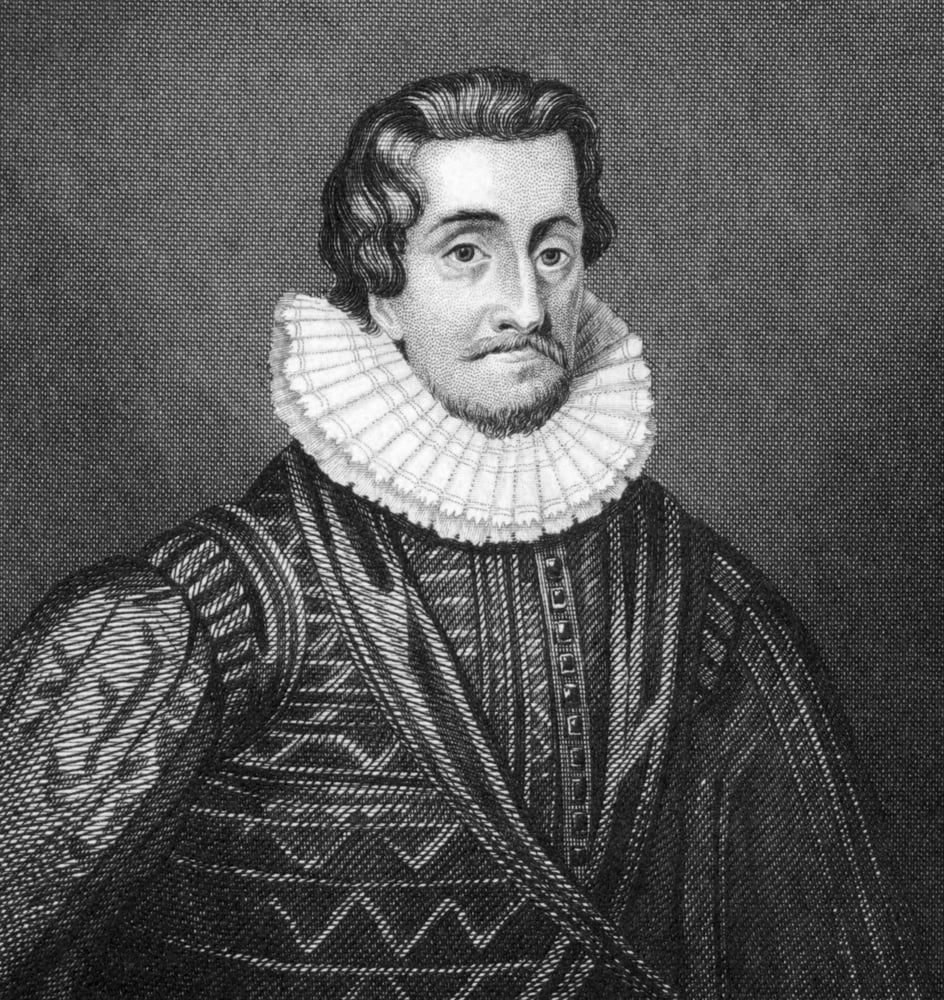
The master of psychological fiction dismissed one of his own novels as barely worth the paper it was printed on. James called Washington Square ‘poorish’ and told his brother William that ‘the only good thing in the story is the girl.’
When he was compiling his New York Edition late in life, carefully selecting and revising his best work, he deliberately excluded Washington Square. He considered it one of his ‘unhappy accidents,’ not worthy of inclusion among his serious literary achievements.
The novel has since been recognized as a sharp psychological study, but James went to his grave thinking it was a failure.
Jeanette Winterson

Sometimes authors write books purely for cash, and they’re not proud of it. Winterson penned Boating for Beginners as a comedic novel about a man who accidentally creates God while building a boat, but she only did it because she was broke and needed money while waiting for her serious debut to be published.
The book is full of magical realism and biblical satire, but Winterson found it embarrassing once she’d established herself as a literary force. She spent years trying to get it out of print, and largely succeeded.
It’s a reminder that even talented writers sometimes produce work they consider beneath their standards.
George Orwell

The man who gave us ‘Big Brother’ and the Thought Police considered 1984 a creative failure. Orwell was suffering from tuberculosis while writing his dystopian masterpiece, and the experience was absolutely miserable.
He privately told friends he thought it was ‘a good idea ruined’ and felt that Animal Farm was a much better achievement. He believed 1984 was too heavy-handed and lacked the elegant allegory of his earlier work about farm animals.
Tragically, Orwell died just months after publication, never knowing that his ‘failed’ novel would become one of the most influential books in modern history. Sometimes the artist is too close to the work to see its true impact.
J.G. Ballard

The British science fiction writer practically disowned his first novel. The Wind from Nowhere was written in about two weeks, and Ballard later dismissed it as ‘a piece of hack work.’
He was so embarrassed by it that he claimed The Drowned World was actually his first novel, essentially trying to erase the earlier book from his bibliography. It’s the literary equivalent of pretending your awkward middle school photos don’t exist.
Ballard went on to write challenging, provocative novels like Crash and Empire of the Sun, but that rushed first effort remained a source of shame throughout his career.
Octavia Butler
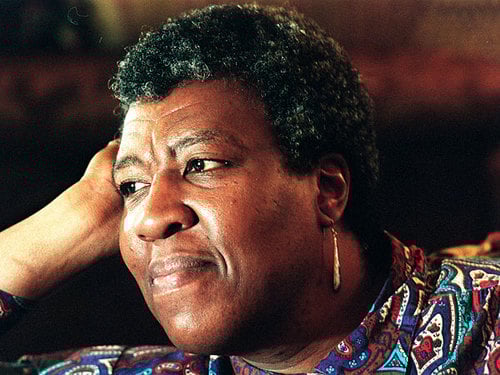
The pioneering science fiction writer regretted her 1978 novel Survivor so much that she never allowed it to be reprinted after its initial run. Butler felt the book relied too heavily on tired genre clichés and found it ‘offensive’ in retrospect.
She called it ‘my Star Trek novel’ in a dismissive tone, suggesting it lacked the originality and depth she demanded from herself. Butler was known for her groundbreaking exploration of race, gender, and power in speculative fiction, and Survivor simply didn’t meet the high standards she set with her acclaimed Patternist series.
She wanted it forgotten, and for the most part, she got her wish.
F. Scott Fitzgerald

Years after This Side of Paradise launched him to instant fame at age 23, Fitzgerald looked back at his debut novel with crushing embarrassment. The book that made him famous and helped him win Zelda’s hand in marriage later struck him as amateurish and overwritten.
He felt the writing was pretentious and the structure was messy—everything he’d learned to avoid by the time he crafted the lean, perfect prose of The Great Gatsby. Fitzgerald called his first work ‘a textbook case of what a first novel should not be.’
It’s like looking at your high school yearbook photo and wondering what you were thinking, except the whole world has a copy and won’t stop talking about it.
When Perfection Becomes the Enemy

Literary history is littered with authors who couldn’t appreciate their own genius. Some were perfectionists who saw only flaws where readers found brilliance, while others watched their creations cause real harm in the world.
The common thread is that distance and perspective matter—what seems like a failure up close often becomes a classic with time. These writers remind us that success and satisfaction don’t always go hand in hand, and sometimes the work that defines your legacy is the very work you wish you could erase.
More from Go2Tutors!

- The Romanov Crown Jewels and Their Tragic Fate
- 13 Historical Mysteries That Science Still Can’t Solve
- Famous Hoaxes That Fooled the World for Years
- 15 Child Stars with Tragic Adult Lives
- 16 Famous Jewelry Pieces in History
Like Go2Tutors’s content? Follow us on MSN.