Bizarre Property Laws and Ownership Stories from History
Property ownership seems straightforward today, but history tells a different story. Throughout the centuries, people have claimed ownership over the strangest things imaginable, from shadows cast by buildings to the air above someone’s land.
Laws evolved in peculiar ways, often creating situations that sound completely absurd by modern standards. Some wealthy landowners exercised rights that seem almost tyrannical now, while others lost everything over technicalities that make no sense today.
These bizarre rules shaped how societies functioned and often led to conflicts that lasted generations. Here are some of the most unusual property laws and ownership tales that actually happened throughout history.
The right to ancient lights in England

English property law once protected something called ‘ancient lights,’ which meant landowners could legally stop neighbors from building anything that blocked sunlight to their windows. If sunlight had reached a window continuously for 20 years, that light became a property right as valuable as the land itself.
Neighbors planning construction had to carefully calculate shadow patterns throughout the day and across seasons to avoid lawsuits. This law caused countless disputes in crowded London neighborhoods where every inch of building space mattered.
The Prescription Act of 1832 formalized these rules, and they remained enforceable well into the 20th century.
Adverse possession allowing squatters to claim land

Property laws in many countries allowed squatters to become legal owners if they occupied land long enough without the real owner objecting. In England, someone living openly on abandoned property for 12 years could file paperwork and take ownership away from the original titleholder.
The United States adopted similar rules, though the required time period varies by state from as few as five years to as many as 30. This created situations where families discovered their vacation home or inherited property now belonged to complete strangers.
The logic behind these laws rewarded people who actually used land rather than letting it sit empty.
Air rights sold separately from land

New York City pioneered the concept of selling air rights, meaning the empty space above a building became property someone could buy and sell. Churches and historic buildings that couldn’t be demolished started selling the unused development rights floating above them to developers next door.
A company might pay millions for the right to build 20 stories higher by purchasing air from the shorter building beside them. This created a market for literal nothingness, where square footage of empty sky had monetary value.
Today, air rights trades happen regularly in major cities, with some properties worth more for their air than their actual buildings.
The doctrine of riparian rights to flowing water

Property owners whose land touched rivers or streams gained automatic rights to use that water under riparian doctrine that traces back to Roman law. However, they couldn’t do anything that substantially changed the water’s quantity or quality before it flowed to the next property downstream.
This meant a farmer upstream couldn’t dam a creek to irrigate crops if it reduced flow to neighbors below. Western U.S. states eventually abandoned this system because it didn’t work in arid climates where water scarcity made every drop precious.
The doctrine still applies in most eastern states, creating ongoing legal battles when someone’s water use affects their neighbors.
Treasure trove laws giving finds to the Crown

Medieval English law declared that any gold or silver found hidden in the ground belonged to the monarch, not the property owner or the person who discovered it. The Crown claimed these ‘treasure troves’ based on the assumption that the original owner intended to retrieve the valuables eventually.
People who found ancient coins while plowing fields had to surrender them to the king or face serious charges. Modern versions of this law still exist in Britain, though the government now compensates finders with rewards based on the treasure’s value.
Other countries adopted similar rules, creating ongoing debates about who really owns artifacts dug from private land.
Spite fences built purely to annoy neighbors

Property law once allowed landowners to build enormous fences for no purpose except making their neighbor’s life miserable. These ‘spite fences’ could reach 30 or 40 feet tall, blocking all light and views from the adjacent property.
Famous feuds resulted in walls that served no practical function beyond expressing anger, with some homeowners bankrupting themselves just to irritate the people next door. California passed the first spite fence law in 1885, limiting fence heights after particularly nasty disputes.
Most states now restrict fence height to around six or eight feet, though neighbors still find creative ways to legally annoy each other.
Mineral rights severed from surface ownership

American property law allows someone to own the land surface while a completely different person owns everything underneath it. Oil companies and mining operations bought mineral rights from farmers who kept living on the surface, creating an odd split ownership situation.
This meant a family could own their house and yard but have zero say when a drilling operation set up equipment in their backyard to extract resources from below. The surface owner couldn’t stop the drilling as long as the mineral rights holder provided reasonable access.
Texas and other resource rich states have thousands of properties with severed mineral rights, leading to constant conflicts between surface owners and extraction companies.
The Rule Against Perpetuities confusing everyone

English common law created the Rule Against Perpetuities to prevent wealthy families from controlling property forever through complicated trusts and conditions. The rule stated that property interests must vest within a life in being plus 21 years, a phrase that has confused law students for centuries.
Violating this rule could invalidate entire inheritance plans, sometimes transferring property to unintended heirs generations later. Even experienced lawyers struggled to apply it correctly, leading some states to abolish or modify the rule.
The complexity became legendary, with one judge famously writing that ‘the rule is not a rule of construction, but a remorseless rule of destruction.’
Beach access rights varying wildly by state

Coastal property laws create bizarre situations where homeowners can own the beach down to the water in some states but not others. Texas guarantees public access to all beaches up to the vegetation line, meaning no one can block people from walking along the shore.
Maine allows private beach ownership down to the low tide mark, letting homeowners exclude the public from dry sand. Oregon took an unusual approach by declaring all beaches public highways back in 1967, making it illegal to restrict access anywhere.
These conflicting rules cause endless confusion for tourists who don’t realize that walking on a beach might be trespassing depending on which state they’re visiting.
Chancel repair liability in English churches

An obscure English law dating to Henry VIII’s time required certain property owners to pay for repairs to their local church chancel, the area around the altar. This obligation transferred with the property through centuries, often without the current owner having any idea the responsibility existed.
Homeowners discovered they owed thousands of pounds to fix church roofs after laws they never knew about suddenly got enforced. The Church of England maintained a register of properties with this liability, catching buyers off guard during title searches.
Parliament finally allowed property owners to buy insurance against these claims, though some obligations remain attached to land after 500 years.
Tree ownership rules causing neighborhood wars

Property laws about trees straddling property lines created situations where neighbors jointly owned a single trunk, requiring both parties to agree before trimming or removing it. If roots or branches crossed into someone’s yard, that person could cut them but only up to the property line, not touching anything on the neighbor’s side.
Trees that fell and damaged property led to complex questions about liability depending on whether the tree was healthy or diseased. Some areas developed elaborate point systems to determine tree value for damage calculations, assigning dollar amounts per inch of trunk diameter.
California’s tree laws became so contentious that specialized attorneys now handle nothing but tree disputes between neighbors.
The ad coelum doctrine claiming ownership to the sky

Roman law included the phrase ‘cuius est solum, eius est usque ad coelum et ad inferos,’ meaning whoever owns the soil owns up to the heavens and down to the depths. Property owners literally claimed to own the column of space above their land extending infinitely into the sky.
This became problematic when airplanes started flying, as technically every flight violated thousands of property rights. Courts eventually limited the doctrine, ruling that landowners only controlled the immediate space necessary to use their property.
The advent of drones has revived these debates, with property owners arguing they still own enough sky above their homes to exclude unmanned aircraft.
Fixtures versus chattels determining what stays with a house
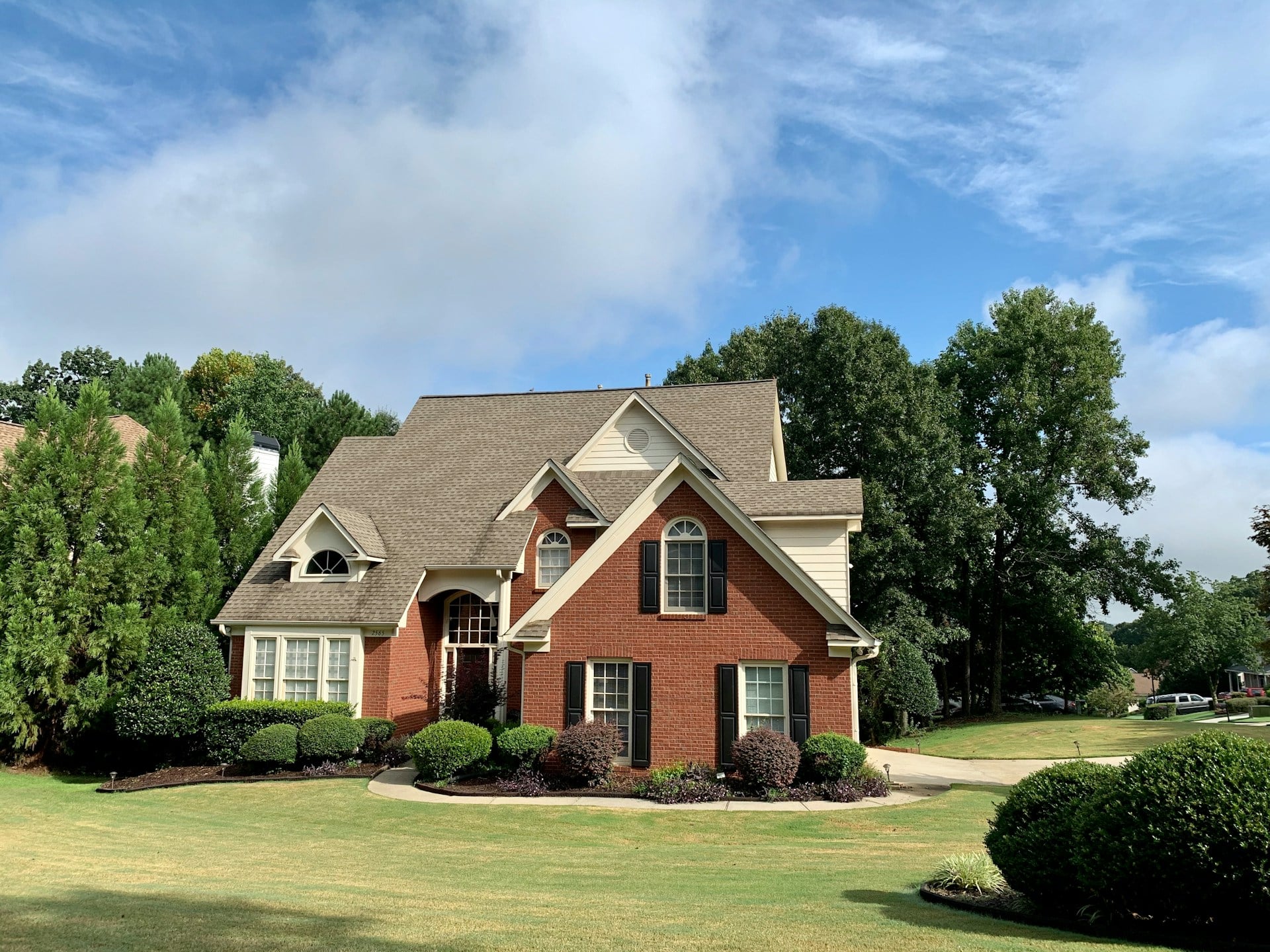
Property law draws confusing lines between fixtures that become part of the real estate and chattels that remain personal property. A chandelier hanging from the ceiling might be a fixture that stays with the house or personal property the seller can take, depending on how permanently it’s attached.
Dispute after dispute erupted over whether items like mirrors, appliances, and even rose bushes transferred with property sales. Courts developed tests examining the annexor’s intent and the degree of attachment, but these guidelines still leave room for interpretation.
Real estate contracts now typically list everything that stays or goes, but disagreements still arise when sellers strip houses of items buyers assumed were included.
Squatters’ rights in abandoned Detroit homes

Detroit’s population collapse left tens of thousands of abandoned homes that squatters occupied and sometimes improved dramatically. Michigan’s adverse possession law required 15 years of occupation, but some squatters invested thousands of dollars renovating houses they didn’t legally own.
A few succeeded in claiming ownership through the courts after maintaining properties longer than the absent owners. The city eventually changed tactics, selling abandoned homes for as little as one dollar to encourage legal ownership rather than squatting.
These situations highlighted how property laws designed for different circumstances created unintended consequences when neighborhoods emptied out.
Homestead exemptions protecting primary residences

Many states passed homestead laws protecting a family’s primary residence from creditors, meaning someone could owe huge debts but keep their house. Texas and Florida offered particularly generous protections, with no dollar limit on the home value that creditors couldn’t touch.
This created situations where people facing bankruptcy moved to expensive Florida mansions that remained completely protected from debt collection. O.J. Simpson famously relocated to Florida partly because homestead exemptions would protect his residence from the massive civil judgment against him.
Critics argued these laws let wealthy people shield assets while regular creditors went unpaid, but supporters maintained that families deserved to keep a roof over their heads regardless of financial troubles.
Party wall agreements requiring neighbor cooperation

English property law developed party wall rules for the shared walls between attached row houses, requiring both owners to cooperate on maintenance and repairs. Either neighbor could force the other to contribute to necessary work on the shared structure, even if one owner didn’t want to spend the money.
Disputes arose constantly over what repairs were truly necessary versus what one neighbor simply preferred. The Party Wall Act of 1996 created formal procedures but also increased the complexity and cost of simple home improvements.
Homeowners planning renovations now had to serve notices and sometimes hire surveyors just to work on walls they thought they owned.
Eminent domain seizures for private development

Government power to seize private property for public use through eminent domain took a controversial turn when cities started taking land for private developments they claimed benefited the community. The 2005 Supreme Court case Kelo v. City of New London upheld Connecticut’s seizure of homes to make way for a pharmaceutical company complex, ruling that economic development counted as public use.
The decision sparked outrage as people realized their homes could be taken so private companies could build on the land. Several states responded by passing laws limiting eminent domain, but the practice continues in various forms.
The seized New London properties never became the promised development and now sit empty, adding insult to the displaced homeowners’ injury.
Property rights still shaping modern life

These strange laws might seem like ancient history, but many principles from centuries past still affect property ownership today. Modern homeowners deal with easements, covenants, and restrictions that echo medieval rights and obligations that seem completely out of place now.
The foundation of property law remains built on concepts developed when societies operated completely differently than they do in the 21st century. Understanding these bizarre historical rules helps explain why buying a house involves so much paperwork and why neighbor disputes can become so legally complicated.
Property ownership will always be more complex than simply buying something and owning it forever.
More from Go2Tutors!

- The Romanov Crown Jewels and Their Tragic Fate
- 13 Historical Mysteries That Science Still Can’t Solve
- Famous Hoaxes That Fooled the World for Years
- 15 Child Stars with Tragic Adult Lives
- 16 Famous Jewelry Pieces in History
Like Go2Tutors’s content? Follow us on MSN.



