Classic Vehicles That Reshaped Transportation
Cars have always been more than just machines that get us from point A to point B. Some vehicles came along at exactly the right moment and changed everything about how we think about transportation.
They made cars affordable, proved that small could be mighty, or showed us that going green didn’t mean sacrificing performance. Here is a list of classic vehicles that genuinely reshaped how we move around this planet.
Volkswagen Beetle

Ferdinand Porsche designed this quirky little car in the 1930s with a simple goal in mind – create an affordable vehicle for the average family. The Beetle’s air-cooled, rear-mounted engine and distinctive rounded shape made it instantly recognizable.
After World War II, the car became a global phenomenon, eventually overtaking the Model T as the world’s best-selling car in 1972 with over 21 million units sold. It proved that small, efficient cars could be both practical and beloved, paving the way for compact vehicles worldwide.
Willys Jeep

When the U.S. military needed a lightweight, rugged reconnaissance vehicle for World War II, three companies competed for the contract. Willys ultimately won with its MB model, delivering a 60-horsepower workhorse that could handle any terrain.
General George Marshall called it ‘America’s greatest contribution to modern warfare.’ After the war, Willys created the civilian CJ-2A, essentially kickstarting the entire SUV and off-road vehicle market.
That boxy, go-anywhere attitude influenced everything from the Land Rover to modern crossovers.
BMC Mini

British designer Alec Issigonis had a brilliant idea in 1959 during a fuel crisis – maximize interior space while minimizing the car’s footprint. The Mini’s transverse engine layout and front-wheel drive were revolutionary, allowing 80% of the vehicle’s floor space to be dedicated to passengers and cargo.
At just 10 feet long, it could seat four adults comfortably and handle like a go-kart. The Mini Cooper S won the Monte Carlo Rally three times, proving that small cars could be both practical and thrilling.
Its space-efficient design influenced nearly every compact car that followed.
Toyota Corolla
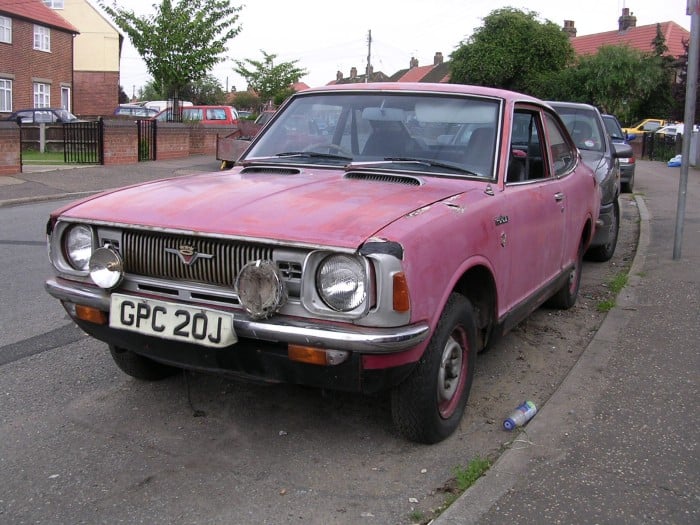
Since its debut in 1966, the Corolla has quietly become the best-selling car of all time with over 50 million units sold. There’s nothing flashy about that achievement. The Corolla simply offered reliable, affordable transportation that lasted seemingly forever.
Everyone knows someone whose Corolla made it past 200,000 miles without major issues. That reputation for longevity and quality control helped reshape global perceptions of Japanese engineering and set new standards for what consumers should expect from a car.
Honda Civic

The 1973 oil crisis changed what Americans wanted in a car, and Honda was ready. The Civic arrived in 1972 with remarkable fuel economy and an innovative CVCC engine that met emissions standards without needing a catalytic converter.
It was small, well-built, and just plain smart at a time when domestic cars were getting bloated. By the 1990s, the Civic had also become the ultimate tuner car, showing that practical and fun didn’t have to be enemies.
It established Japan’s reputation for reliability in the U.S. market.
Ford Mustang

When Ford unveiled the Mustang at the 1964 World’s Fair, it struck a chord with baby boomers looking for something that captured their youthful energy. The car launched an entirely new category called ‘pony cars’ by blending sports car styling with mass-market affordability.
Starting at just $2,368, buyers could customize everything from a practical six-cylinder to a powerful V8. Ford sold 400,000 Mustangs in the first year and inspired competitors like the Chevrolet Camaro and Dodge Challenger, creating the American muscle car era.
Chevrolet Corvette

When America’s sports car debuted in 1953, it made a statement – the U.S. could compete with European sports cars on their own turf. The Corvette’s fiberglass body was revolutionary for automotive engineering, paving the way for lighter, more aerodynamic designs.
Over the decades, it continuously evolved with cutting-edge technology, from fuel injection in the 1950s to supercharged engines in modern times. The Corvette proved that American innovation could deliver both soul and performance.
Porsche 911

Introduced in 1963, the 911 has remained one of the most enduring sports cars in history despite its unusual rear-engine layout. What makes it revolutionary is its ability to continuously innovate while maintaining its essential character.
Each generation brought refinements in engineering and design without losing what made the original special. The 911 became the benchmark by which performance cars are judged, showing that staying true to core principles while evolving technologically could create something timeless.
Toyota Prius

The Prius wasn’t the first hybrid car, but it was the first to achieve mass-market success when it launched globally in 2000. Critics initially dismissed it as a novelty, but the Prius completely changed expectations for efficient vehicles.
It combined a gasoline engine with an electric motor to prove that fuel efficiency and reduced emissions could coexist without sacrificing practicality. The car paved the way for the entire hybrid movement, and its success helped make batteries affordable enough for the electric vehicles that followed.
Chrysler Minivan
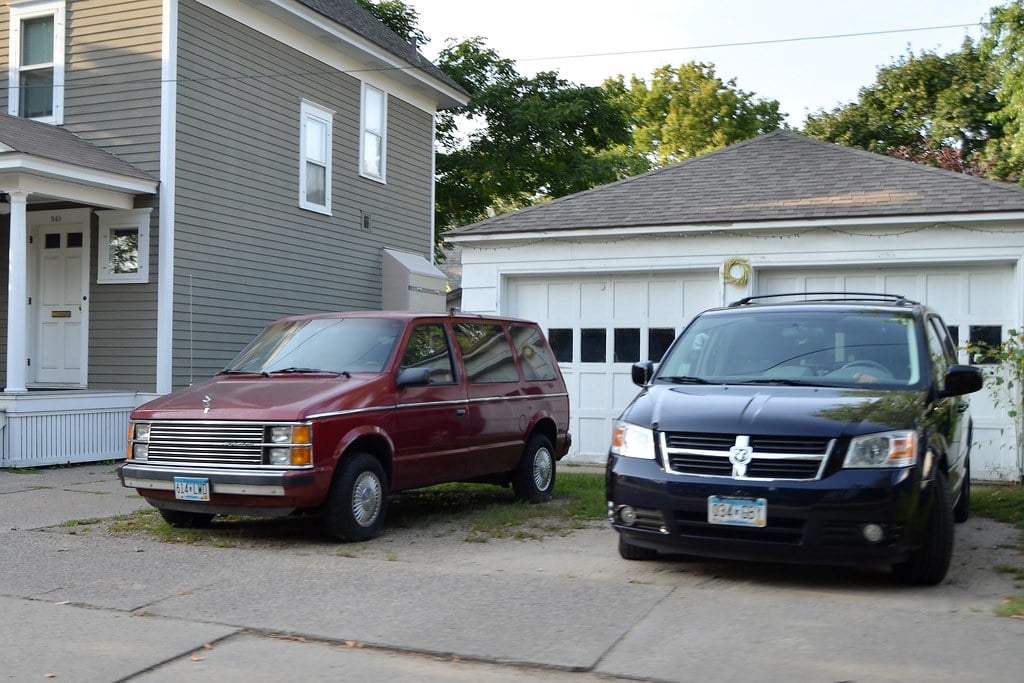
Lee Iacocca and his team at Chrysler took a massive gamble in 1983 when they introduced the Dodge Caravan and Plymouth Voyager. These weren’t just smaller vans – they were entirely new vehicles designed specifically for families.
Front-wheel drive provided a flat floor, sliding doors made access easy, and removable seats offered flexibility. The minivan could park in a standard garage and drove like a car while providing the space families needed.
Chrysler sold 290,000 units in the first year and created a segment that dominated family vehicle sales throughout the 1980s and 1990s.
Tesla Model S

When Tesla’s luxury sedan debuted in 2012, skeptics thought electric vehicles would always be slow, impractical novelties. The Model S shattered those assumptions with over 300 miles of range, acceleration that rivaled supercars, and over-the-air software updates that improved the car after purchase.
Tesla proved electric vehicles could compete with traditional luxury sedans and positioned the company as a serious player in the auto industry. The Model S legitimized electric vehicles and pushed the entire industry toward electrification.
Land Rover

Originally designed in 1948 as a British farm vehicle using leftover aluminum from aircraft production, the Land Rover quickly became the default choice for explorers, humanitarian missions, and anyone heading into unknown territory. Its simple, rugged construction and go-anywhere capability made it invaluable across Africa, Australia, and remote regions worldwide.
The design influenced off-road vehicles globally, and its evolution into the luxury Range Rover showed that capability and comfort could coexist.
Toyota Land Cruiser

After World War II, Toyota received blueprints for a quarter-ton 4×4 based on the Willys Jeep to supply vehicles for the Korean War. The resulting BJ prototype climbed to the sixth station of Mount Fuji in 1951, proving its capabilities.
When Willys objected to the ‘Jeep’ name, Toyota renamed it Land Cruiser in 1954, directly competing with Land Rover. The FJ40 series became legendary for reliability and ruggedness, helping establish Toyota’s reputation for building vehicles that could handle extreme conditions for decades without breaking down.
Chevrolet Suburban

Long before SUVs became family haulers, Chevrolet introduced the Suburban in 1935 as a truck-based wagon. It’s the longest continuously produced automobile nameplate in history.
The Suburban pioneered the concept of combining passenger comfort with cargo capacity and towing capability, essentially creating the blueprint for modern SUVs. Its longevity and consistent sales proved there was sustained demand for large, versatile family vehicles that could handle both daily duties and weekend adventures.
Mercedes-Benz 300SL

The 1954 300SL became instantly iconic with its distinctive gullwing doors, but the real innovation was underneath. Its tubular space frame construction and fuel-injected engine represented cutting-edge engineering that influenced sports car design for decades.
With a top speed exceeding 160 mph, it was the fastest production car of its era. The 300SL proved that advanced engineering and beautiful design could create something that was both a technological showcase and a desirable automobile.
Range Rover

When Land Rover introduced the Range Rover in 1970, it invented the luxury SUV segment. The vehicle combined genuine off-road capability with comfortable interiors, refined ride quality, and upscale appointments.
This was revolutionary – vehicles were either rugged workhorses or comfortable luxury cars, not both. The Range Rover showed wealthy buyers they didn’t need to sacrifice capability for comfort, creating a template that BMW, Mercedes-Benz, and others would eventually follow decades later.
The Road Behind and Ahead

These vehicles didn’t just sell well or look good – they fundamentally changed how we think about transportation. Some made cars accessible to millions, others proved new technologies could work, and a few simply showed that there was a better way to solve problems.
The assembly line, front-wheel drive, hybrid powertrains, and countless other innovations became standard because these vehicles proved they worked. What started as bold experiments became the foundations that modern transportation is built upon, and their influence continues shaping the vehicles we drive today.
More from Go2Tutors!

- The Romanov Crown Jewels and Their Tragic Fate
- 13 Historical Mysteries That Science Still Can’t Solve
- Famous Hoaxes That Fooled the World for Years
- 15 Child Stars with Tragic Adult Lives
- 16 Famous Jewelry Pieces in History
Like Go2Tutors’s content? Follow us on MSN.



