Classroom Rules Schools Dropped Long Ago
Walk into an American classroom from seventy years ago and the differences go far beyond the chalkboard. Rules that once felt permanent, backed by tradition, religion, or simple habit, disappeared through court rulings, changing science, and shifting attitudes about what school was actually supposed to teach a child.
Corporal Punishment With a Paddle

Teachers and principals in many public schools once had explicit authority to strike students with a wooden paddle for infractions ranging from talking back to failing to complete homework. The practice was upheld by the Supreme Court in the 1977 case Ingraham v. Wright, which found that corporal punishment in schools did not violate constitutional protections.
Individual states and districts phased it out gradually rather than through a single national ban, and by the 2020s most states had prohibited it entirely, though a handful still permit it in certain districts.
Forcing Left-Handed Students to Write With Their Right Hand

For much of the early twentieth century, teachers routinely corrected left-handed students by physically moving the pencil to their right hand, sometimes tying the left hand down or slapping it when it reached for the pen. The practice stemmed from outdated beliefs linking left-handedness to poor character or lower intelligence, beliefs with no scientific basis.
Educational research through the mid-twentieth century gradually discredited the practice, and by the 1960s and 1970s most schools had abandoned it in favor of letting students write with their natural hand.
The Dunce Cap
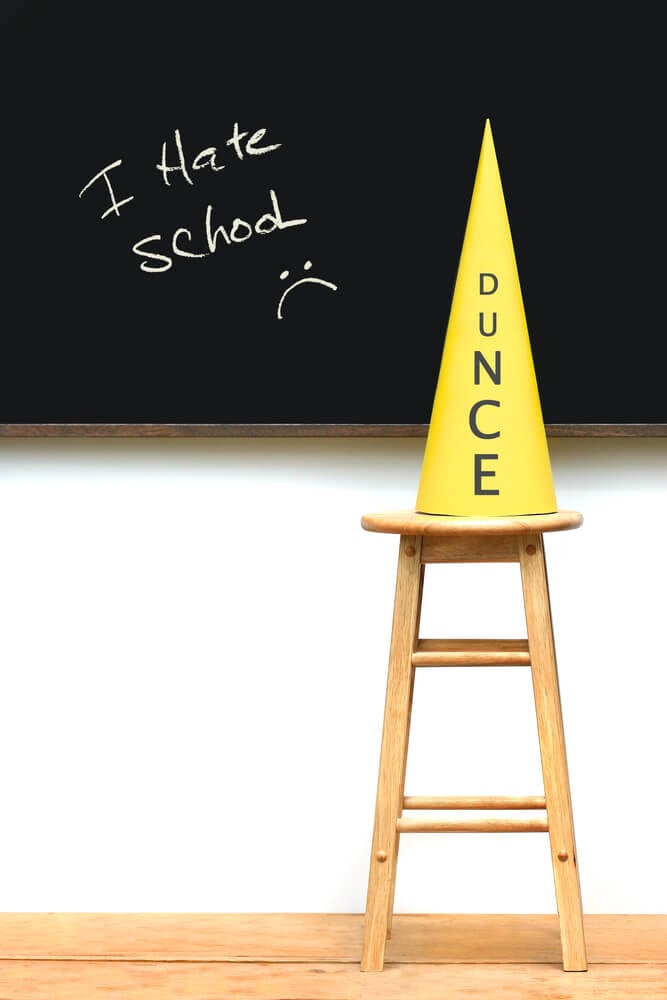
A tall paper cone marked with a large letter D was placed on a struggling student’s head as a public marker of poor performance, a practice dating back to at least the nineteenth century. The student typically had to sit or stand in a corner while wearing it, in full view of classmates.
Changing attitudes about public humiliation as a teaching tool, combined with early research into child psychology, pushed the practice out of mainstream classrooms by the early twentieth century, though isolated reports of similar tactics persisted for decades after.
Standing Up When a Teacher Entered the Room

Students in many mid-century classrooms were expected to rise from their seats the moment a teacher, principal, or other adult authority figure entered, remaining standing until given permission to sit. The practice mirrored military and formal social customs of the era and was treated as basic respect rather than an optional courtesy.
As classroom culture shifted toward less formal teacher-student relationships from the 1960s onward, the custom faded out of most American schools.
Mandatory Prayer and Bible Reading

Many public schools once opened the day with a recited prayer or a passage read aloud from the Bible, treated as a routine part of the morning schedule alongside the Pledge of Allegiance. The Supreme Court ruled this practice unconstitutional in two landmark cases, Engel v. Vitale in 1962 and Abington School District v. Schempp in 1963, finding that state-sponsored religious exercises in public schools violated the First Amendment.
Compliance varied by region for years afterward, but the legal basis for mandatory school prayer effectively ended with those rulings.
Racially Segregated Classrooms

Public schools across much of the country, particularly in the South, legally separated students by race into entirely different school buildings with unequal funding and resources, a system upheld by the 1896 Supreme Court decision in Plessy v. Ferguson. The Supreme Court reversed course in the 1954 case Brown v. Board of Education, ruling that separate educational facilities were inherently unequal.
Actual desegregation took years and, in many districts, direct federal enforcement to implement, but the legal foundation for segregated classrooms ended with that ruling.
Gender-Segregated Home Economics and Shop Class

Middle and high schools once automatically tracked girls into home economics courses covering cooking and sewing, while boys were tracked into shop classes covering woodworking and metalworking, with little flexibility for students who wanted the other track. Title IX, passed in 1972, prohibited discrimination based on gender in federally funded education programs, which eventually forced schools to open both types of courses to all students regardless of gender.
Many schools took years to fully comply, and some smaller districts eliminated both programs entirely rather than integrate them.
Writing Lines as Punishment
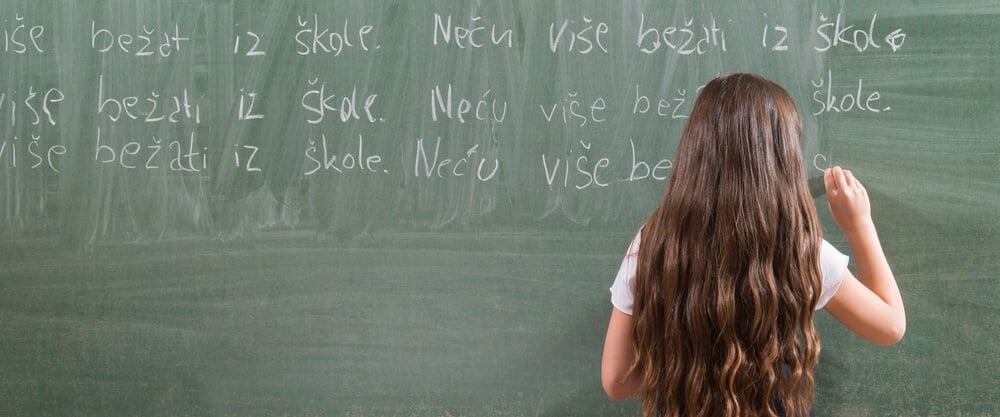
A student who broke a classroom rule was often assigned to write a single sentence, such as “I will not talk in class,” dozens or hundreds of times as a form of discipline meant to reinforce the lesson through repetition. Teachers sometimes checked the lines individually for legibility, requiring a student to start over if the handwriting looked rushed or sloppy.
As discipline approaches shifted toward positive behavior support and restorative practices from the 1990s onward, the line-writing punishment mostly disappeared from mainstream classrooms.
Silent Lunch for the Entire Cafeteria

Some schools enforced a rule requiring the entire cafeteria to eat in complete silence, either as a standing daily policy or as a punishment applied to an entire grade after a behavioral incident involving only a few students. Teachers monitored the room and called out individual students who whispered or made noise.
The practice drew increasing criticism from parents and education researchers over its effectiveness and fairness, and most districts moved away from blanket silent lunch policies by the 2000s in favor of more targeted discipline.
Air Raid Duck-and-Cover Drills
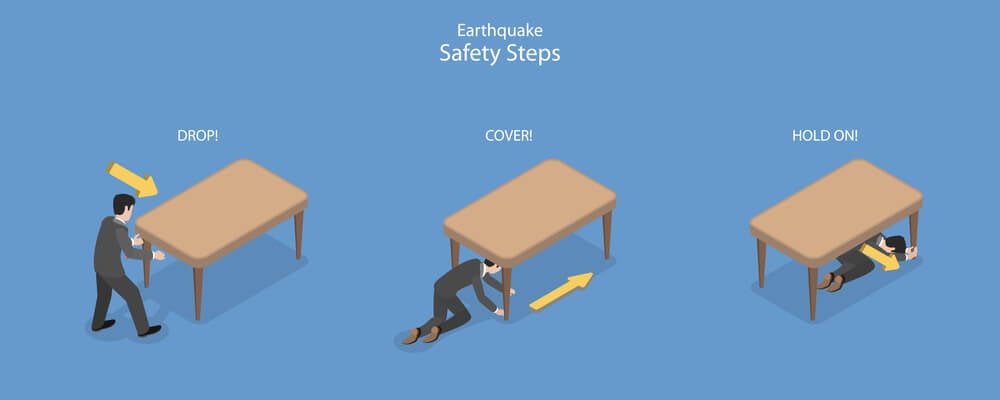
During the height of Cold War tensions in the 1950s and early 1960s, schools regularly practiced drills in which students dropped to the floor and covered their heads under desks in preparation for a potential nuclear attack, often prompted by an animated civil defense film featuring a cartoon turtle named Bert. The drills were treated with the same routine seriousness as fire drills at the time.
As Cold War anxieties eased and the practical value of the drills came under scrutiny, most schools phased them out by the late 1960s and 1970s.
Posting Class Rank on Report Cards

Report cards in many schools once listed a student’s exact numerical rank compared to every other student in the grade, information that was sometimes posted publicly on a bulletin board for the entire class to see. The practice was intended to motivate competition but frequently caused significant stress and embarrassment for students near the bottom of the ranking.
Concerns about student mental health and privacy pushed most schools to stop publicly posting rankings by the latter half of the twentieth century, even as some schools still calculate rank privately for college applications.
Strict Rules on Boys’ Hair Length

Many school dress codes through the 1950s and 1960s specified a maximum hair length for boys, sometimes down to the exact distance hair could extend past the collar or over the ears, with violations resulting in suspension or a forced haircut. The rules became a flashpoint during the 1960s and 1970s as longer hairstyles became associated with youth culture and protest movements.
Numerous legal challenges throughout the 1970s gradually weakened schools’ ability to enforce strict hair length codes, and most had abandoned the rule by the 1980s.
Girls Required to Wear Skirts or Dresses
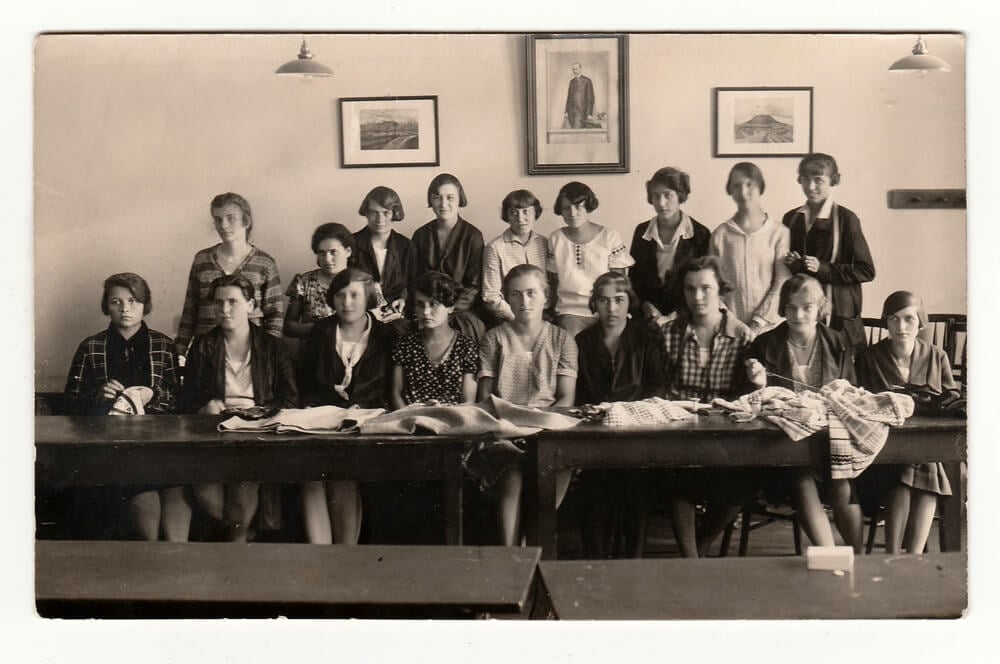
Dress codes in many public schools once prohibited girls from wearing pants at all, requiring skirts or dresses regardless of weather, an especially difficult rule in colder climates during winter months. Some districts only relaxed the rule after organized protests from students and parents during the late 1960s and early 1970s.
By the mid-1970s, most schools had dropped the restriction entirely, allowing pants as standard attire for girls.
Mandatory Cursive Handwriting Instruction

Cursive writing was once a required subject with its own dedicated instructional time, tested and graded separately from general handwriting or spelling. When the Common Core State Standards were introduced starting in 2010, cursive instruction was left out of the core requirements, and many states and districts subsequently dropped it from their curriculum entirely.
Some states have since reintroduced cursive requirements in response to parent advocacy, making it one of the few dropped rules to see a partial return.
Standing in the Corner Facing the Wall

A student who misbehaved was often sent to stand facing a corner of the classroom, sometimes for a set number of minutes and sometimes for the remainder of a class period, visible to classmates the entire time. The practice functioned similarly to the dunce cap, relying on public visibility as the primary disciplinary mechanism.
As educational psychology research increasingly documented the negative effects of public shaming on child development, the practice faded out of most classrooms by the mid-twentieth century.
Separate Recess Time for Boys and Girls

Many elementary schools through the early and mid-twentieth century scheduled separate recess periods for boys and girls, based on assumptions about differing physical needs and appropriate behavior between the groups. Playground equipment and available space were sometimes divided along the same lines.
As coeducational values became more standard in American public education through the later twentieth century, separate recess scheduling largely disappeared in favor of shared playground time.
Mandatory Daily Calisthenics

Many schools once opened the day, or a designated physical education period, with a set routine of standardized group exercises performed in unison, often led by a teacher counting out repetitions from the front of the room. The routines were sometimes broadcast over school radio systems in the mid-twentieth century, allowing an entire building to exercise simultaneously from individual classrooms.
As physical education curriculum diversified to include more varied sports and activities from the 1970s onward, rigid daily calisthenics routines mostly disappeared in favor of more flexible programming.
Teachers Reading Confiscated Notes Aloud to the Class

A note passed between students and intercepted by a teacher was sometimes read aloud to the entire class as both a punishment and a public deterrent against future note-passing. The practice offered no privacy protection for the students involved, regardless of the note’s content.
Growing awareness of student privacy concerns, along with changing views on public humiliation as a disciplinary tool, largely ended the practice by the later twentieth century.
Seating Charts Arranged by Test Scores

Some classrooms organized seating charts so that the highest-scoring students sat in the front rows, with seat position shifting after each graded test or exam based on updated rankings. The visible, constantly shifting arrangement made academic standing impossible to hide from classmates.
As educators increasingly recognized the anxiety and social stigma this created, particularly for students in typically lower-ranked seats, most schools abandoned the practice in favor of seating charts based on other factors like behavior management or alphabetical order.
Neckties Required as Part of the Boys’ Uniform

Many schools with formal dress codes, including a number of public schools with uniform policies, once required boys to wear a necktie as a mandatory daily component of the uniform, checked each morning during inspection. Ties were frequently cited by students and parents as impractical, particularly for younger children who struggled to tie or maintain them throughout an active school day.
As uniform policies modernized and schools weighed practicality against tradition, most dropped the necktie requirement by the later twentieth century, retaining it mainly for special formal occasions rather than daily wear.
What the Rulebook Used to Assume
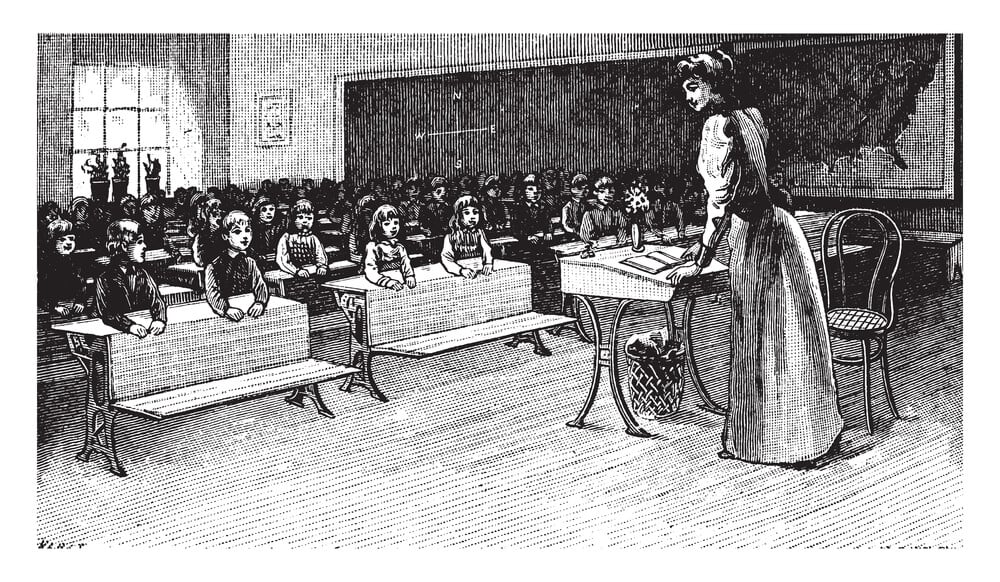
Every rule on this list rested on an assumption that seemed obvious at the time it was written. Left-handed writing looked wrong because right-handed writing was the only version anyone had bothered to study.
Segregated classrooms looked normal to the people enforcing them because the law told them it was constitutional, right up until it wasn’t. A rule survives only as long as the assumption underneath it goes unquestioned.
What actually changed these classrooms was rarely a single dramatic reform. It was slower than that: a court case here, a piece of child psychology research there, a generation of parents who simply refused to accept what their own parents had accepted without complaint.
The classroom rulebook keeps getting rewritten because the people sitting in the desks keep growing up to ask why the old rule was ever there in the first place.
More from Go2Tutors!

- The Romanov Crown Jewels and Their Tragic Fate
- 13 Historical Mysteries That Science Still Can’t Solve
- Famous Hoaxes That Fooled the World for Years
- 15 Child Stars with Tragic Adult Lives
- 16 Famous Jewelry Pieces in History
Like Go2Tutors’s content? Follow us on MSN.



