Deep-Sea Volcanoes and the Life They Hide
Have you ever wondered what goes on in our oceans’ deepest, most enigmatic regions? Imagine yourself traveling miles below the surface, where there is complete darkness and the pressure could crush you at any moment.But all of a sudden, you come across what appears to be an impossibility: superheated water ejected from volcanic chimneys, encircled by flourishing communities of strange animals that shouldn’t be there.
Greetings from deep-sea hydrothermal vents, one of the planet’s most remarkable ecosystems. Our knowledge of where and how life can flourish on our planet has been completely transformed by these underwater volcanoes, which weren’t even discovered until 1977.
Here are the most fascinating facts about deep-sea volcanoes and the incredible life they support in Earth’s most extreme environments.
The Greatest Discovery of the Deep

Imagine being a scientist in 1977, expecting to find barren seafloor, and instead stumbling upon an alien world teeming with life. That’s exactly what happened when researchers exploring the Galápagos Rift noticed strange temperature spikes in their data.
They’d discovered hydrothermal vents—underwater hot springs that shoot superheated water up to 750°F (400°C) from cracks in the ocean floor. What shocked them even more was finding hundreds of unknown species thriving around these hellish conditions.
It was like discovering life on Mars, except it was right here in our own backyard, hidden beneath miles of water.
Life Without Sunlight Changes Everything
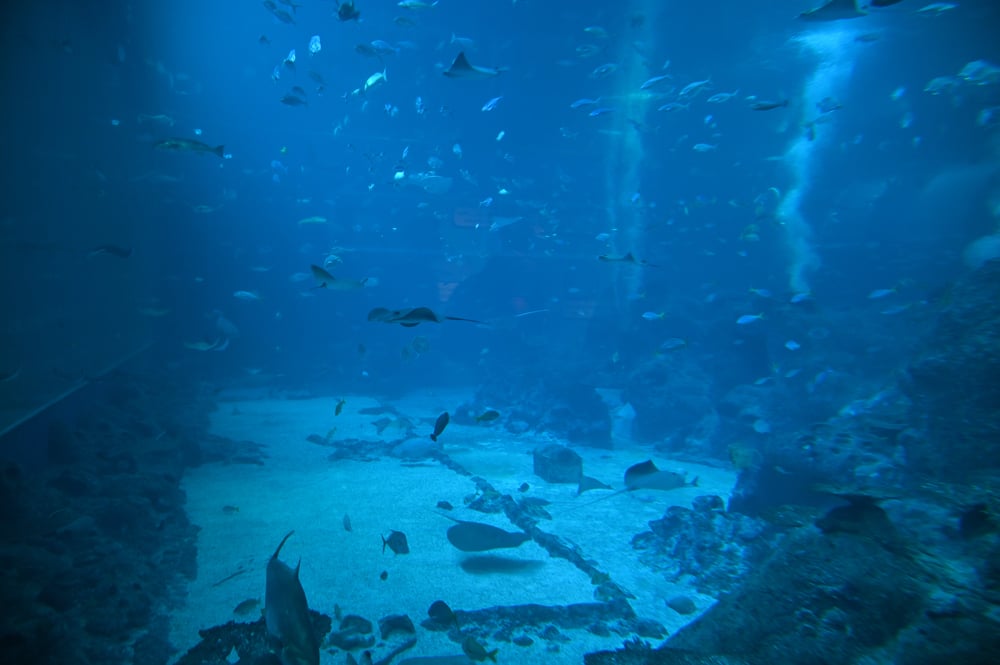
Here’s what blew scientists’ minds: these deep-sea communities operate on a completely different energy system than every other ecosystem on Earth. While surface life depends on photosynthesis (plants turning sunlight into food), hydrothermal vent ecosystems run on chemosynthesis.
Specialized bacteria convert toxic chemicals like hydrogen sulfide into usable energy, basically eating poison and turning it into food for an entire ecosystem. This discovery proved that life doesn’t need sunlight to flourish—it just needs chemistry.
Think about the implications: if life can thrive in these conditions, where else might it exist in our universe?
Like Go2Tutors’s content? Follow us on MSN.
Black Smokers Create Underwater Cities
The most dramatic hydrothermal vents are called “black smokers”—towering mineral chimneys that look like underwater smokestacks belching dark, particle-laden water. These aren’t small features; some grow several stories tall and create complex structures that become the foundation for entire communities.
As the superheated water hits the near-freezing ocean water, minerals precipitate out and build these chimney-like formations. White smokers do the same thing but with different minerals, creating ghostly pale towers.
These structures become the apartment buildings of the deep sea, providing surfaces for creatures to attach to and spaces to hide.
Microbes That Love Extreme Heat

Meet some of the toughest organisms on Earth: thermophilic bacteria that actually thrive at temperatures that would kill almost any other life form. Methanopyrus kandleri, for example, can survive and reproduce at 122°C (252°F)—that’s hot enough to sterilize medical equipment.
These microscopic extremophiles don’t just tolerate the heat; they require it. They harvest energy from hydrogen gas and release methane, earning the nickname “methane fire.”
These heat-loving microbes form the foundation of the entire vent ecosystem, proving that life’s limits are far beyond what we ever imagined possible.
Giant Tube Worms Build Underwater Forests
Picture worms that grow up to eight feet long, have no mouth, no stomach, and no way to eat—yet they thrive in one of Earth’s harshest environments. Giant tube worms (Riftia pachyptila) have formed one of the most remarkable partnerships in nature.
Their bodies house billions of symbiotic bacteria that process toxic chemicals and create food directly inside the worm’s tissues. The worms provide shelter and chemicals to their bacterial partners, while the bacteria provide all the nutrition the worms need.
It’s like having a built-in chemical processing plant that turns poison into food.These tube worms create massive colonies that form underwater forests visible in submersible cameras, creating entire communities around active vents.
Like Go2Tutors’s content? Follow us on MSN.
A Hidden World Beneath the Seafloor
In 2023, scientists made a mind-blowing discovery: there’s an entire ecosystem living beneath hydrothermal vents. Using robotic submarines, researchers literally flipped over chunks of volcanic crust and found cave systems teeming with worms, snails, and bacteria living in the spaces between rocks.
This subterranean ecosystem exists in comfortable 75°F water, fed by the same chemical-rich fluids that power the vents above. It’s like finding a hidden basement full of life beneath an already incredible ecosystem.
Scientists believe these underground chambers might serve as nurseries where young creatures develop before moving up to the harsh world of active vents.
Creatures That Shouldn’t Exist
The animals living around hydrothermal vents look like they came from another planet. Yeti crabs wave their furry arms through toxic water to collect food on their hairy appendages.
Pompeii worms live in tubes right next to scorching vent water, with heat-resistant bacteria coating their backs like a protective blanket. Scaly-foot snails have shells reinforced with iron sulfide—they’re literally wearing armor made from the same minerals that build the vent chimneys.
Ghostly white eelpout fish and transparent sea cucumbers drift through waters so toxic they would kill surface creatures instantly.Each species has evolved incredible adaptations to not just survive, but thrive in conditions that would be lethal to almost any other life form.
The Deep Sea’s Chemical Factories

Hydrothermal vents are like underwater chemical plants that dramatically alter ocean chemistry on a global scale. These volcanic systems pump massive quantities of minerals, metals, and gases into the world’s oceans, influencing marine chemistry far beyond their immediate vicinity.
Iron, sulfur, copper, zinc, and dozens of other elements get dispersed through deep ocean currents, affecting marine ecosystems thousands of miles away. Some scientists believe hydrothermal vents may have been crucial in providing the chemical building blocks necessary for life to evolve on early Earth, essentially serving as the planet’s original chemical factories.
Like Go2Tutors’s content? Follow us on MSN.
Vent Communities Live Fast and Die Hard
Unlike stable ecosystems on land, hydrothermal vent communities exist in a constant state of boom and bust. These underwater cities can be completely wiped out by volcanic eruptions, then recolonized within months by new species arriving as larvae carried by deep ocean currents.
Some vents remain active for decades, while others shut down permanently when the underlying magma shifts. This creates a dynamic environment where species must be incredibly adaptable and have amazing dispersal abilities.
Young animals can travel hundreds of miles through the abyss to colonize new vents, making these isolated habitats more connected than anyone expected.
The Mystery of Vent Animal Superpowers
Many vent animals possess biological adaptations that seem impossible. Some can withstand pressure equivalent to having 50 jumbo jets stacked on top of them.
Others have blood that carries oxygen more efficiently than human blood in oxygen-poor environments. Certain species can completely shut down their metabolism during times when vent activity decreases, essentially hibernating until conditions improve.
While some microbes related to vent organisms show incredible resilience—like surviving complete dehydration in laboratory conditions—most vent specialists are adapted to the stable, high-pressure underwater environments where they thrive. These adaptations aren’t just fascinating—they’re providing insights for medical research and biotechnology applications.
Capturing Light in Absolute Darkness
In one of the strangest discoveries at hydrothermal vents, scientists found bacteria that can capture extremely faint light in the absolute darkness of the deep sea. Green sulfur bacteria contain incredibly efficient light-harvesting organelles that can detect the weak thermal glow emitted by geothermally heated vent fluids.
They’re essentially using the dim light from superheated water as an energy source for photosynthesis, combining it with chemical energy from hydrogen sulfide. It’s the only ecosystem on Earth where organisms use both chemosynthesis and a form of photosynthesis simultaneously, powered by the faintest imaginable light instead of sunlight.
Like Go2Tutors’s content? Follow us on MSN.
Vents as Time Machines to Early Earth
Studying hydrothermal vents gives us a window into what early Earth might have looked like billions of years ago. The chemical conditions, temperature gradients, and types of microorganisms found at vents may closely resemble the environments where life first evolved on our planet.
The discovery that complex ecosystems can thrive without sunlight has profound implications for understanding how life might have originated in Earth’s ancient oceans and how it might exist on other worlds. Some astrobiologists believe similar hydrothermal systems on Jupiter’s moon Europa or Saturn’s moon Enceladus could harbor life.
The Deep Connection
The tale of deep-sea hydrothermal vents serves as a reminder that even in areas we once believed to be lifeless and arid, our planet still harbors amazing mysteries. These underwater volcanoes and their remarkable occupants demonstrate to us that life is more inventive, resilient, and flexible than we could have ever dreamed.
By rewriting the rules for where life can exist and how ecosystems can work, they have demonstrated that communities of organisms can coexist and adapt to survive in even the most harsh environments. Gaining knowledge of these amazing ecosystems broadens our understanding of the potential for life and strengthens our ties to the most remote regions of our own blue planet, in addition to satiating scientific curiosity.
More from Go2Tutors!

- 16 Historical Figures Who Were Nothing Like You Think
- 12 Things Sold in the 80s That Are Now Illegal
- 15 VHS Tapes That Could Be Worth Thousands
- 17 Historical “What Ifs” That Would Have Changed Everything
- 18 TV Shows That Vanished Without a Finale
Like Go2Tutors’s content? Follow us on MSN.



